The Ultimate Smoked Brisket (Texas Style)

title 1
The Ultimate Smoked Brisket (Texas Style)
⏱️ cook time 12 hours
🍽️ servings 8
⚡ Difficulty hard

intro

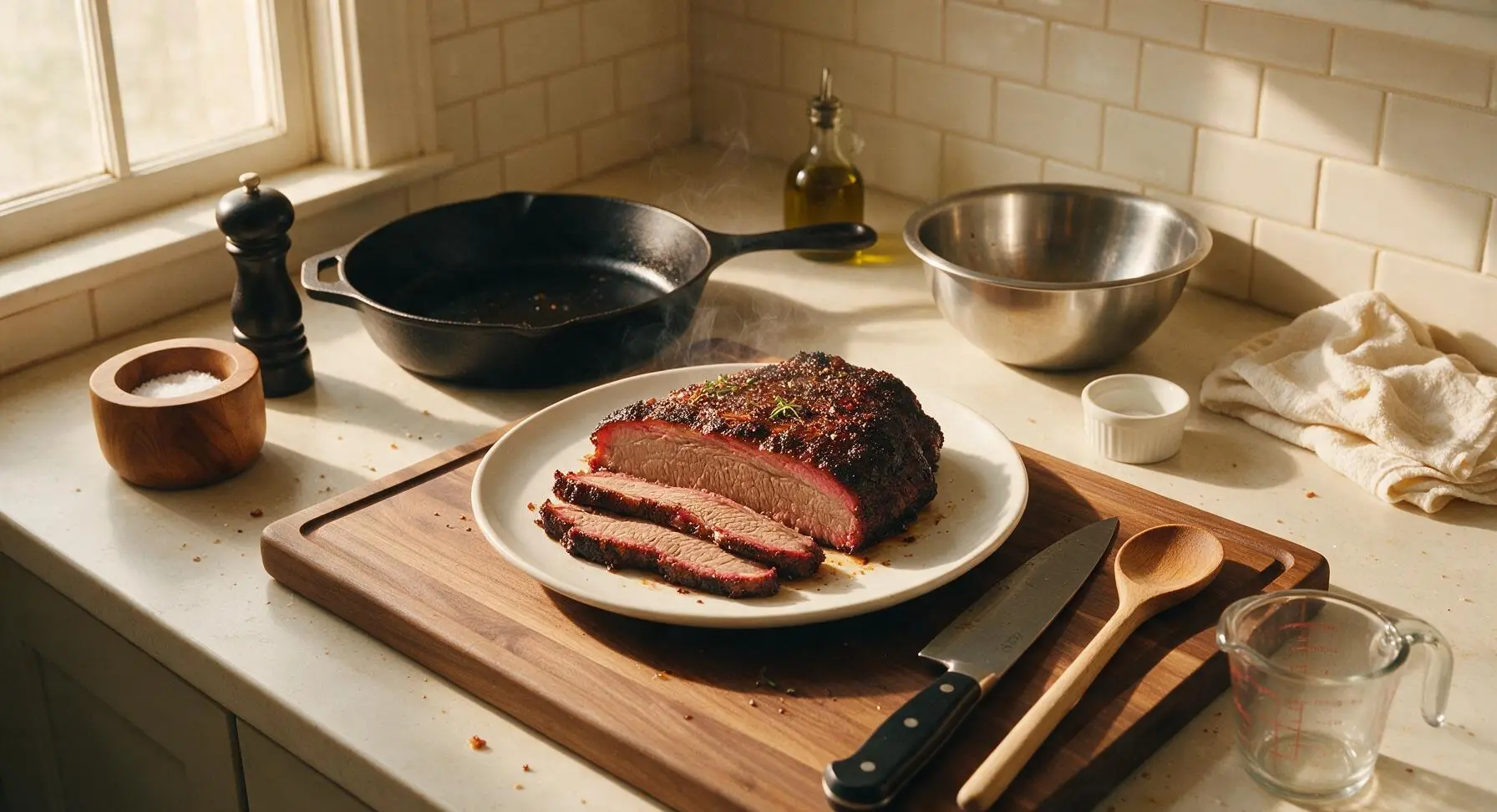
Tender, melt-in-your-mouth Central Texas smoked brisket with a crackling mahogany bark, distinct pink smoke ring, and deep beefy flavor, cooked low and slow the traditional no-fuss way.

Ingredients
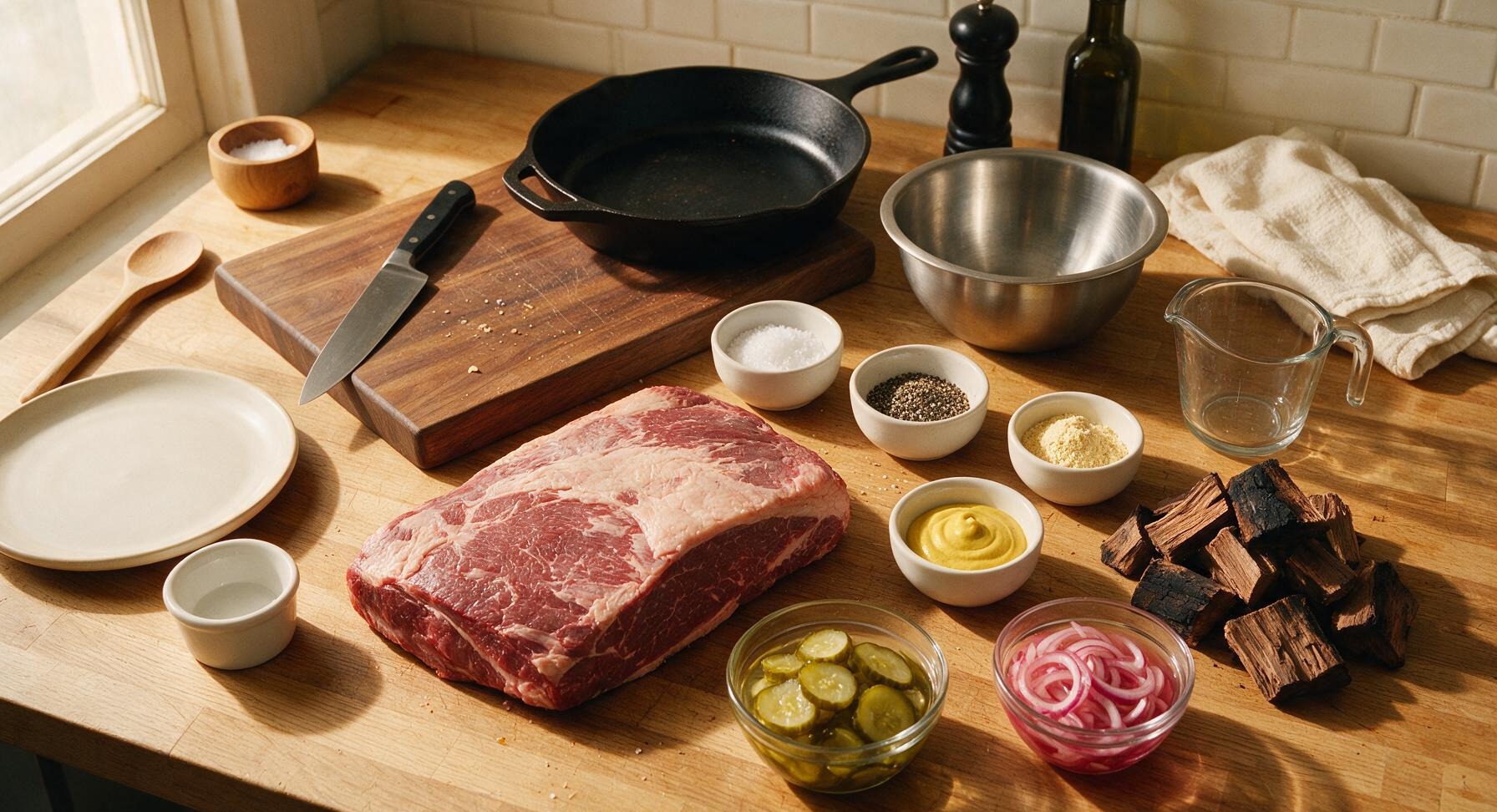
Whole packer beef brisket 8lb / 3.6kg
Coarse kosher salt 1/4 cup
16-mesh freshly cracked black pepper 1/4 cup
Garlic powder 2 tbsp
Yellow mustard 2 tbsp
Post oak wood chunks 2lb / 900g
Dill pickle slices 1 cup
Pickled red onions 1/2 cup

Steps

1

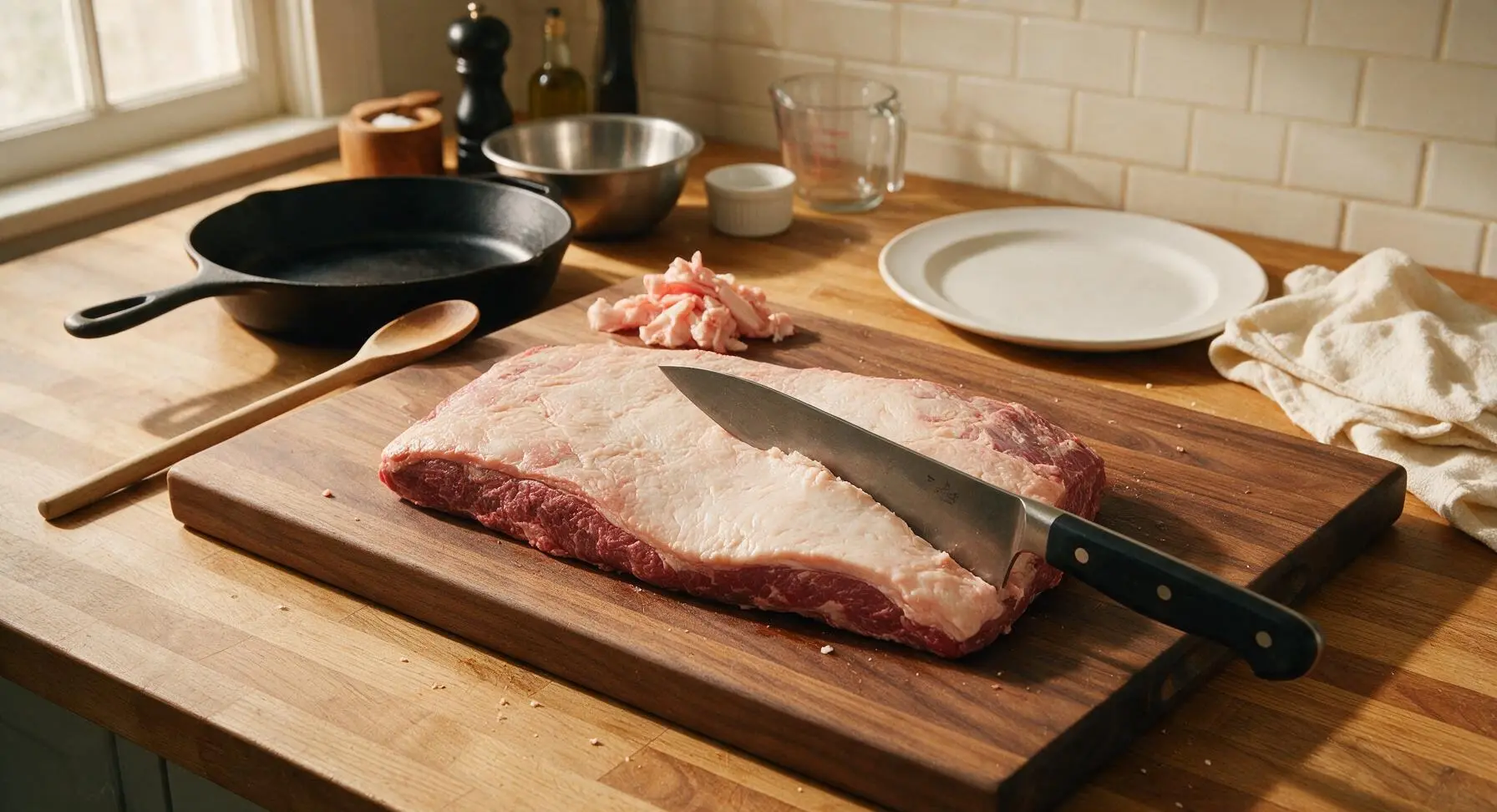
Trim the Brisket Fat

Place the cold raw brisket fat-side up on the dark walnut cutting board. Use the 8-inch carbon steel chef knife to trim the hard outer fat cap to a uniform 1/4-inch thickness, removing all thick, waxy hard fat deposits and silver skin from the meat side. Trim excess fat from the seam between the point and flat muscles, leaving a smooth, even surface across the entire brisket with no loose fat flaps hanging off edges.
Step 1
step1:Trim the Brisket Fat
2

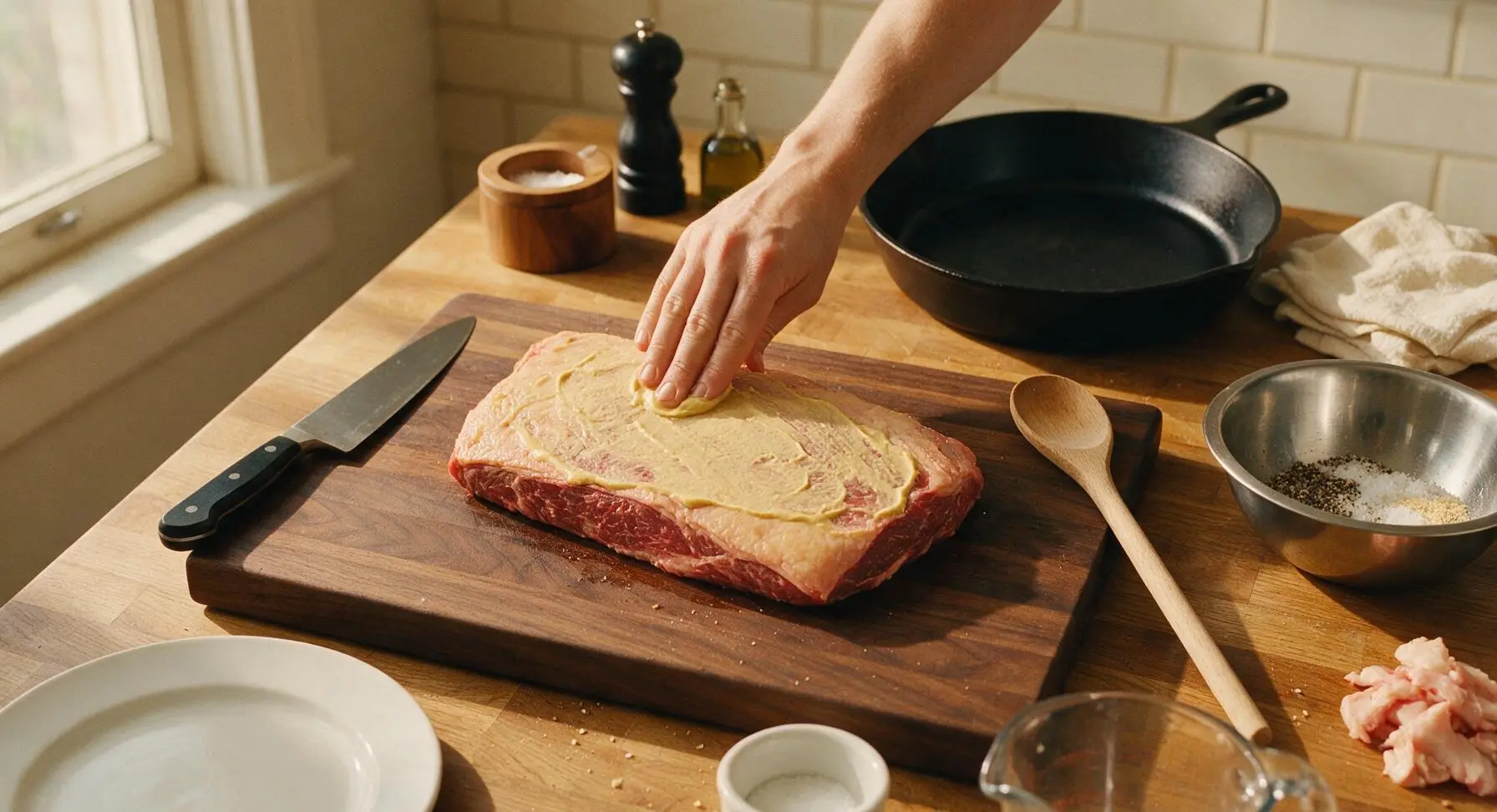
Apply Mustard Binder

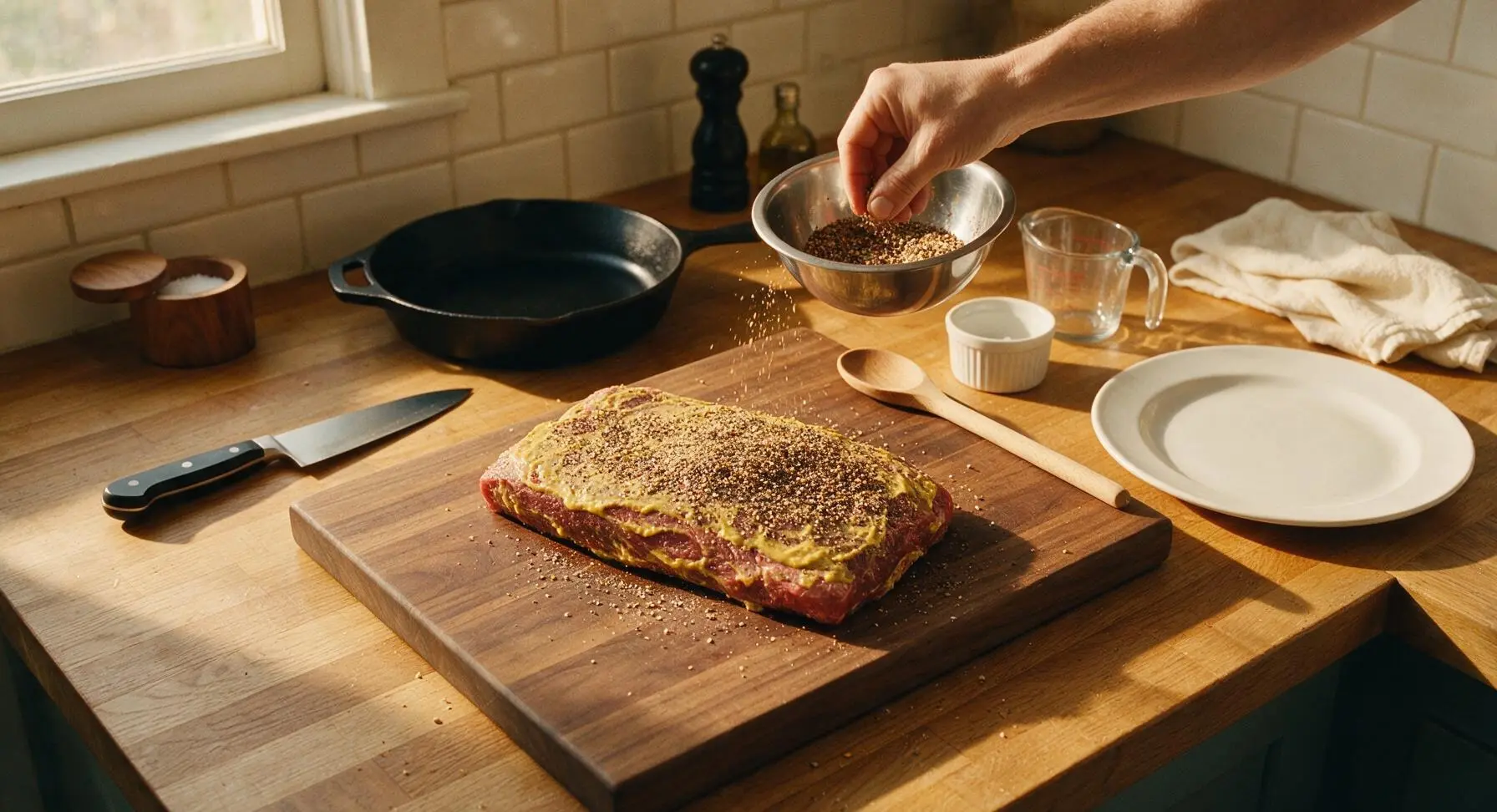
Spoon 2 tablespoons of yellow mustard across the entire surface of the trimmed brisket. Use clean hands to rub the mustard into a thin, even coating across every side of the meat, including edges and the seam between point and flat. The mustard layer should be thin enough that red meat is still visible through it, with no thick globs remaining; this helps dry rub adhere without adding noticeable finished flavor.
Step 2
step2:Apply Mustard Binder
3

Coat with Dry Rub

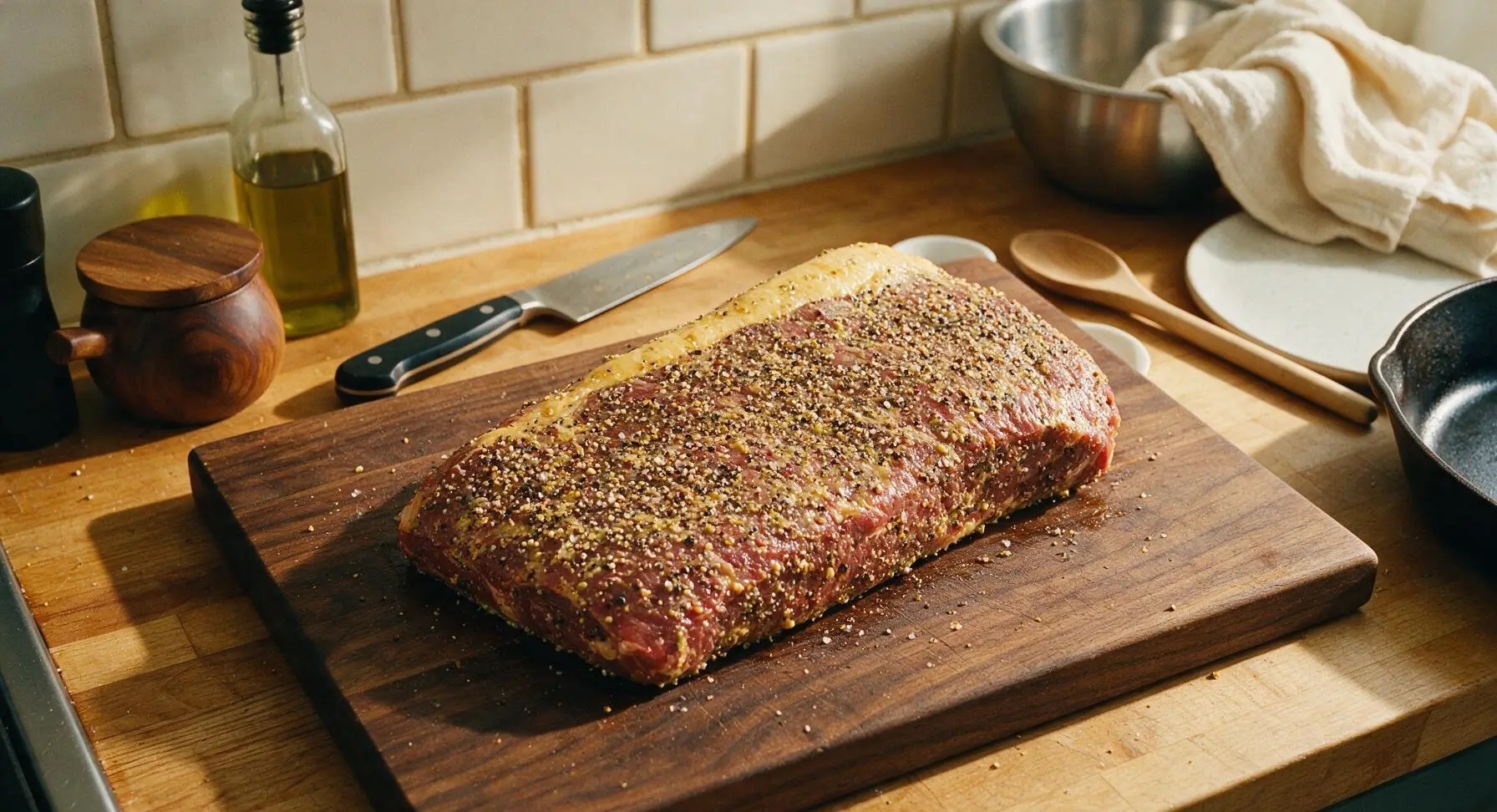
Generously sprinkle the mixed salt, pepper, and garlic powder rub across every surface of the mustard-coated brisket, pressing gently to help spices adhere. Build a uniform, even layer of rub across all sides, with no bare patches of meat visible. Let the rubbed brisket rest at room temperature for 30 minutes to allow spices to set and the meat to warm slightly before smoking.
Step 3
step3:Coat with Dry Rub
Step 3
step3:Coat with Dry Rub
4

Smoke Low and Slow

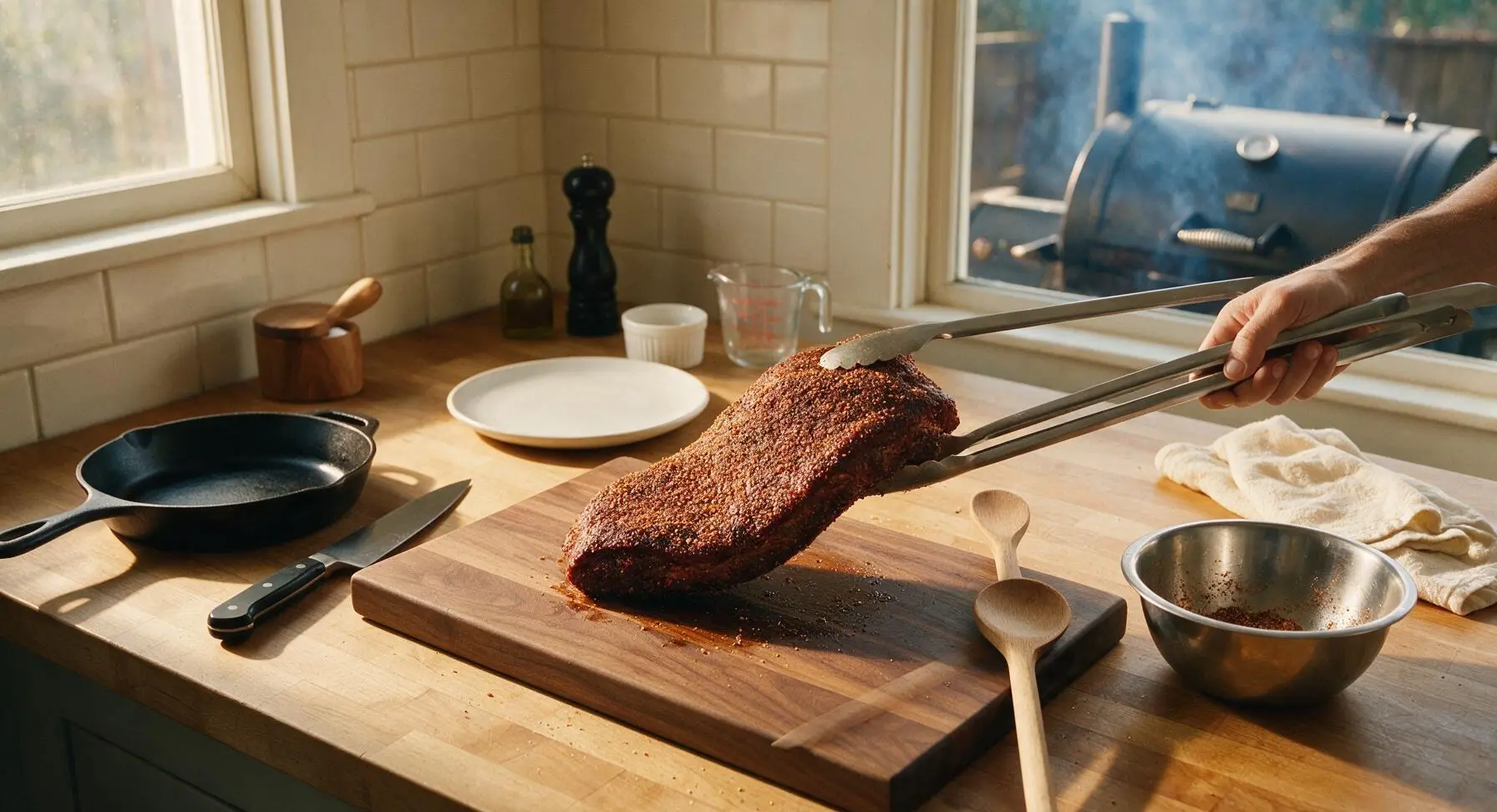
Preheat your offset smoker (visible through the right kitchen window) to 225°F, using 2 post oak wood chunks to produce a thin, steady wisp of blue smoke—avoid thick white smoke, which creates bitter, acrid flavor. Use the long-handled stainless steel tongs to lift the rubbed brisket from the cutting board, carry it to the smoker, and place it fat-side up on the grate away from direct heat. Close the smoker lid and maintain a consistent 225–250°F internal smoker temperature for 6 hours, adding small wood chunks as needed to sustain thin blue smoke. Resist frequent lid openings, which drop temperature and disrupt smoke flow.
Step 4
step4:Smoke Low and Slow
5

Wrap in Butcher Paper

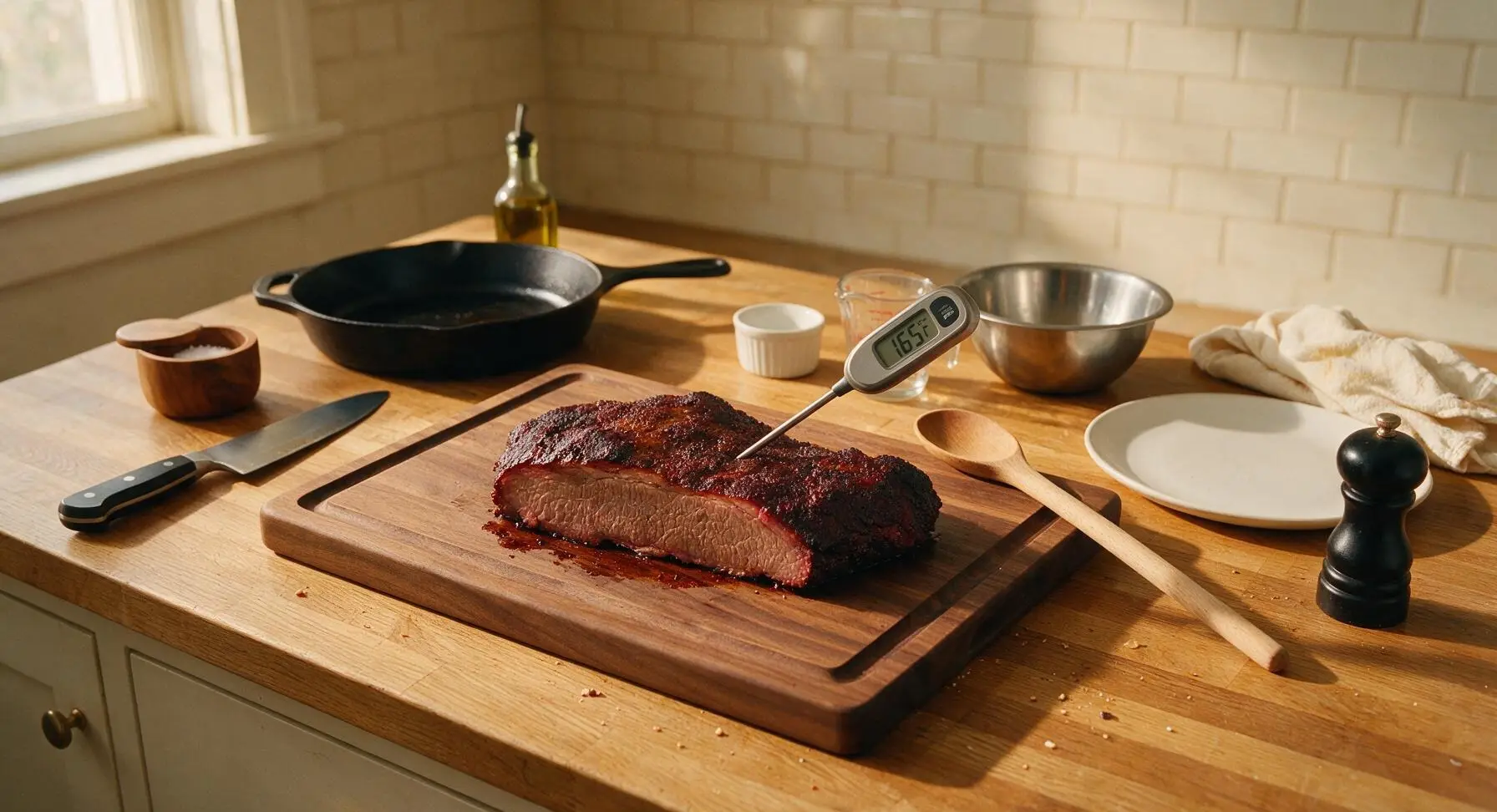
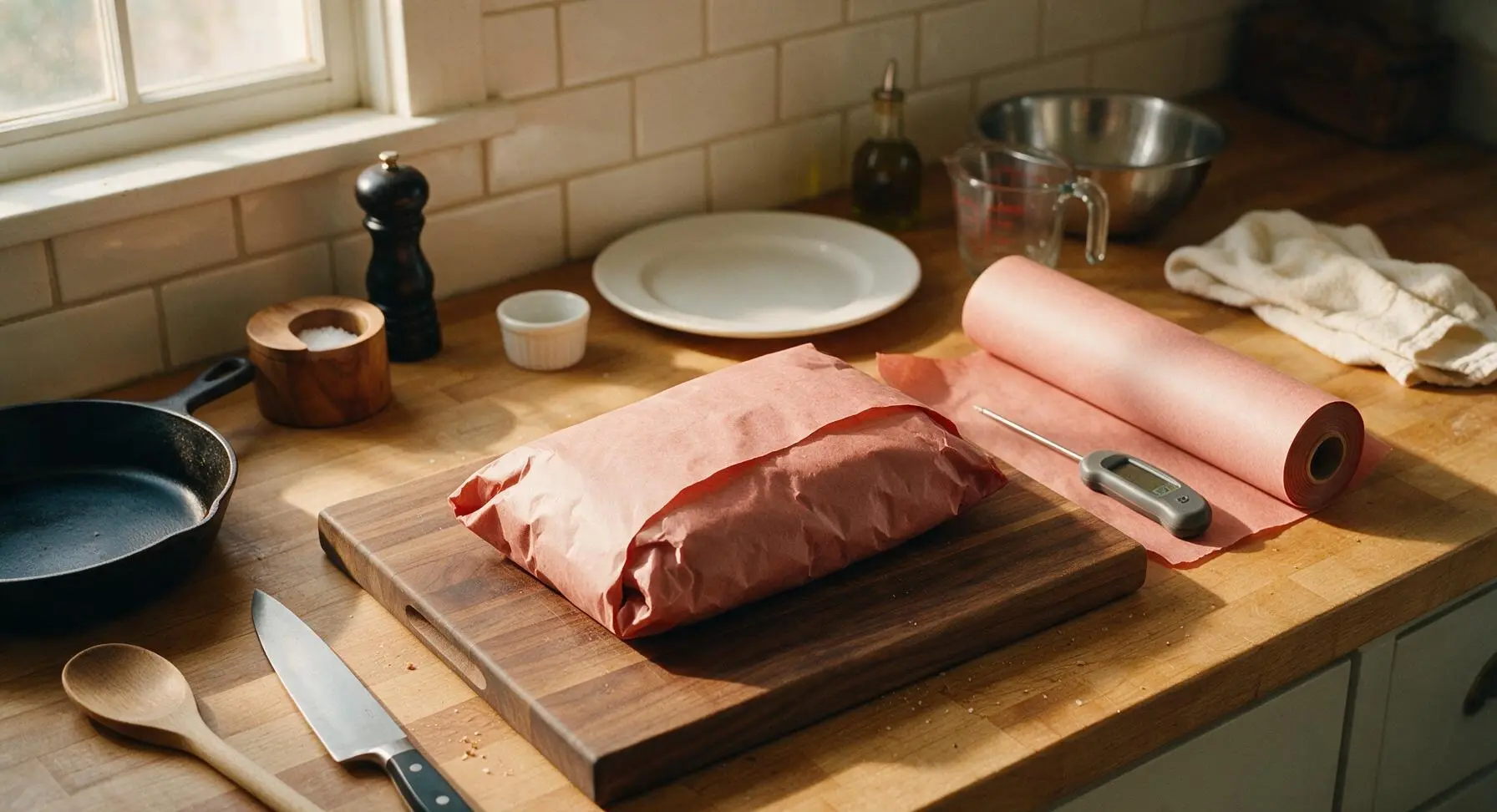
After 6 hours of smoking, when the brisket has developed a deep, dark mahogany bark and reaches an internal temperature of 165°F (measured with the digital instant-read thermometer), remove it from the smoker and return it to the kitchen cutting board. Tear a 4-foot length of uncoated pink butcher paper, then wrap the brisket tightly in 2 layers of paper, ensuring no open gaps where steam can escape. The paper holds in moisture while allowing the bark to stay crisp, unlike tight foil which softens bark texture.
Step 5
step5:Wrap in Butcher Paper
Step 5
step5:Wrap in Butcher Paper
6

Cook to Target Temp

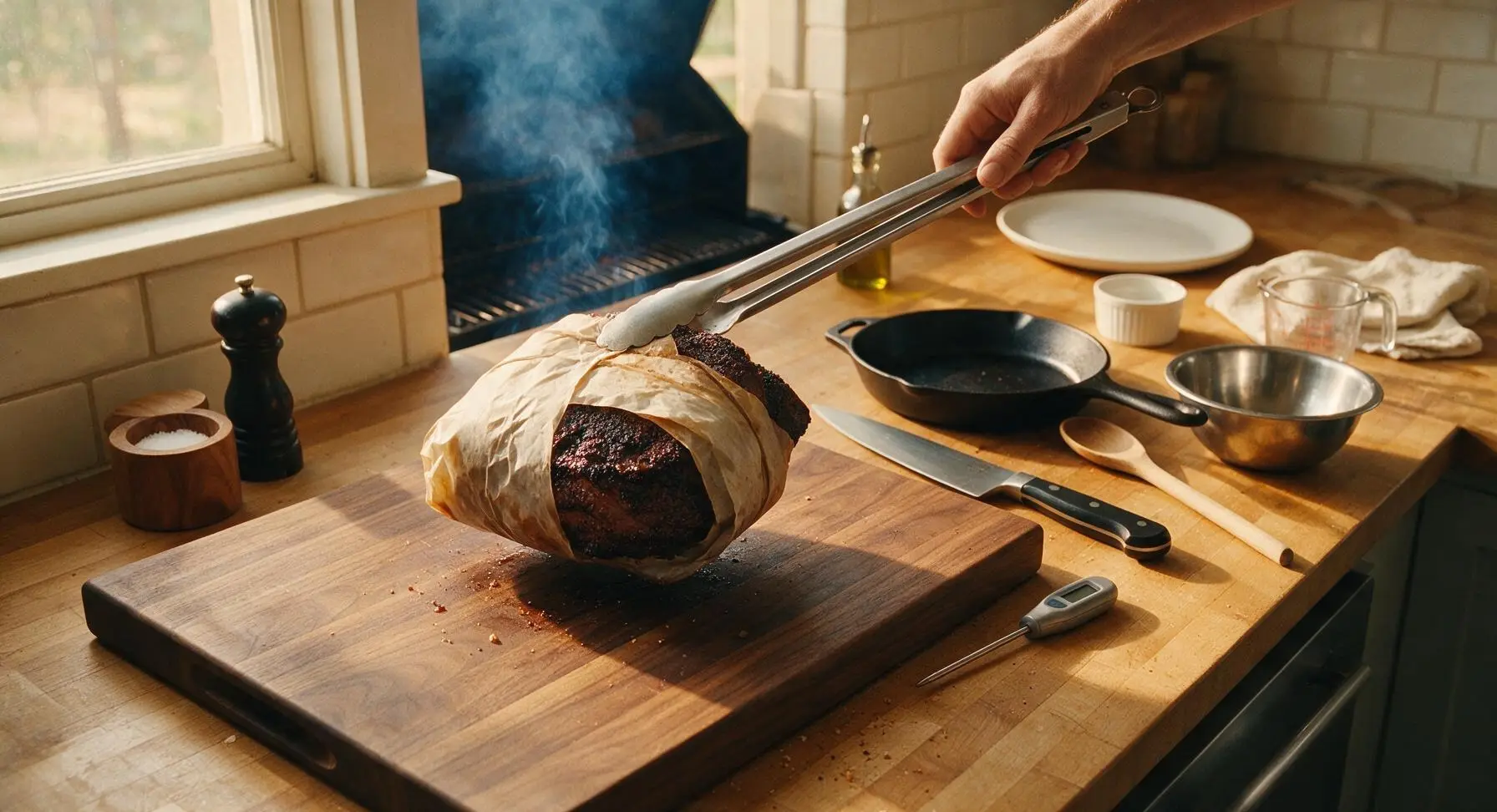
Return the paper-wrapped brisket to the smoker, maintaining the same 225–250°F temperature. Continue cooking until the brisket reaches an internal temperature of 203°F in the thickest part of the point muscle, and the thermometer probe slides into the meat with no resistance, like sliding a knife into soft room-temperature butter. This typically takes an additional 5–6 hours, depending on brisket size and smoker temperature consistency.
Step 6
step6:Cook to Target Temp
7

Rest Brisket Properly

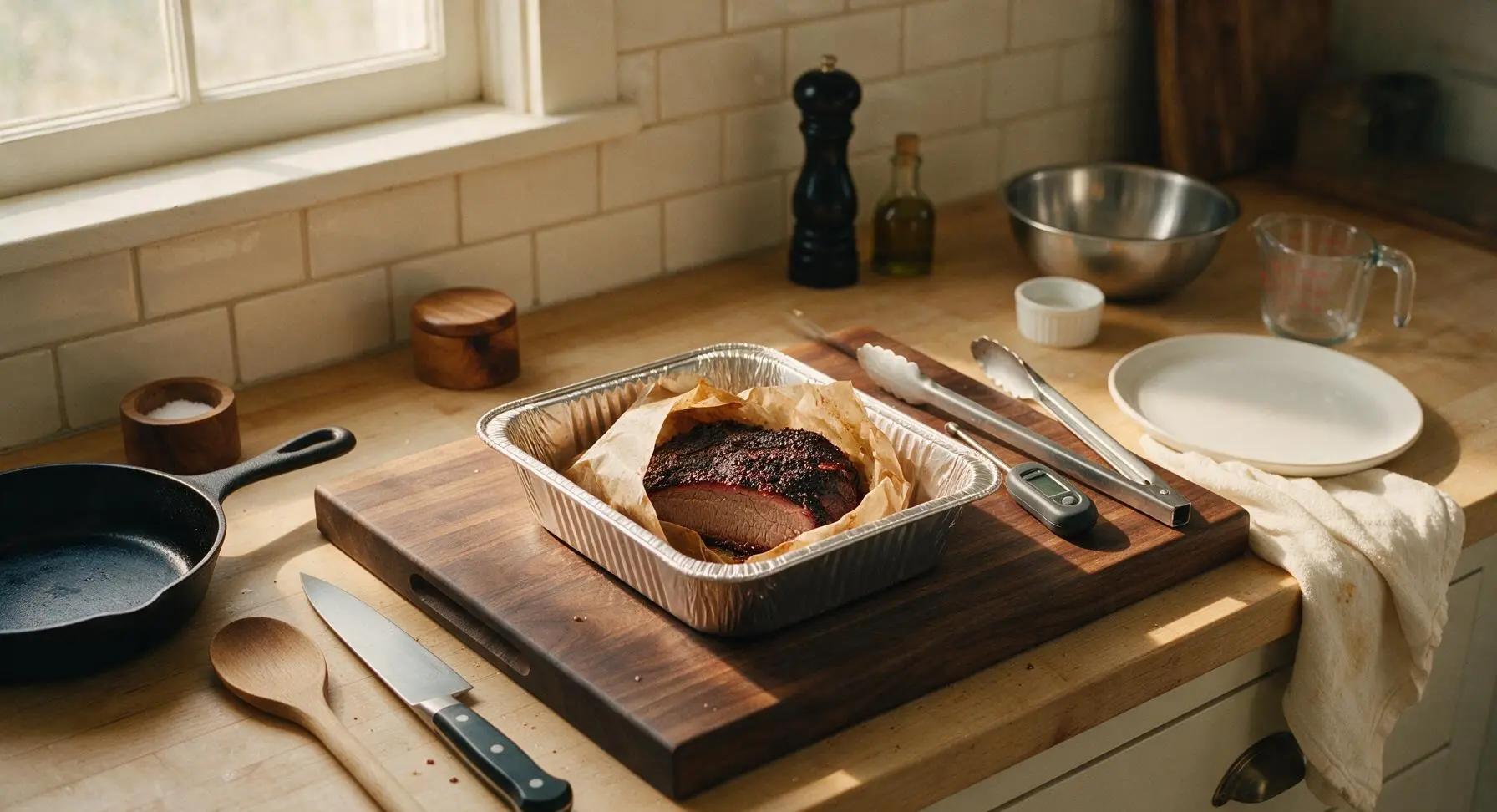
Once the brisket hits 203°F and passes the probe tenderness test, remove it from the smoker and place the wrapped brisket in the disposable aluminum foil half-pan. Let it rest on the kitchen counter for a minimum of 1 hour, up to 2 hours, allowing it to hold a steady 140–150°F internal temperature. Resting lets muscle fibers relax and reabsorb juices, so every slice is moist instead of leaking juice onto the board when cut.
Step 7
step7:Rest Brisket Properly
8

Slice Against the Grain

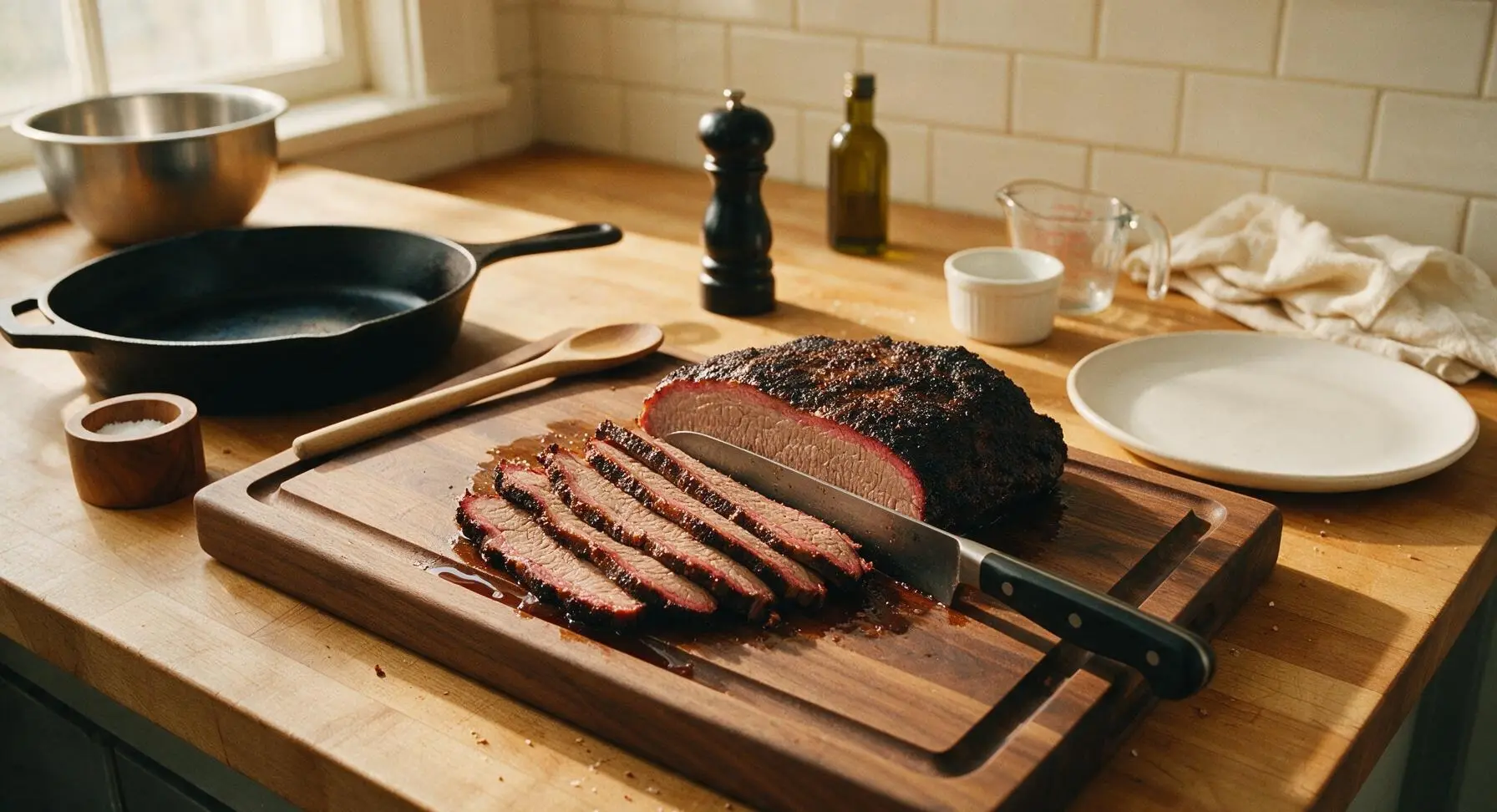
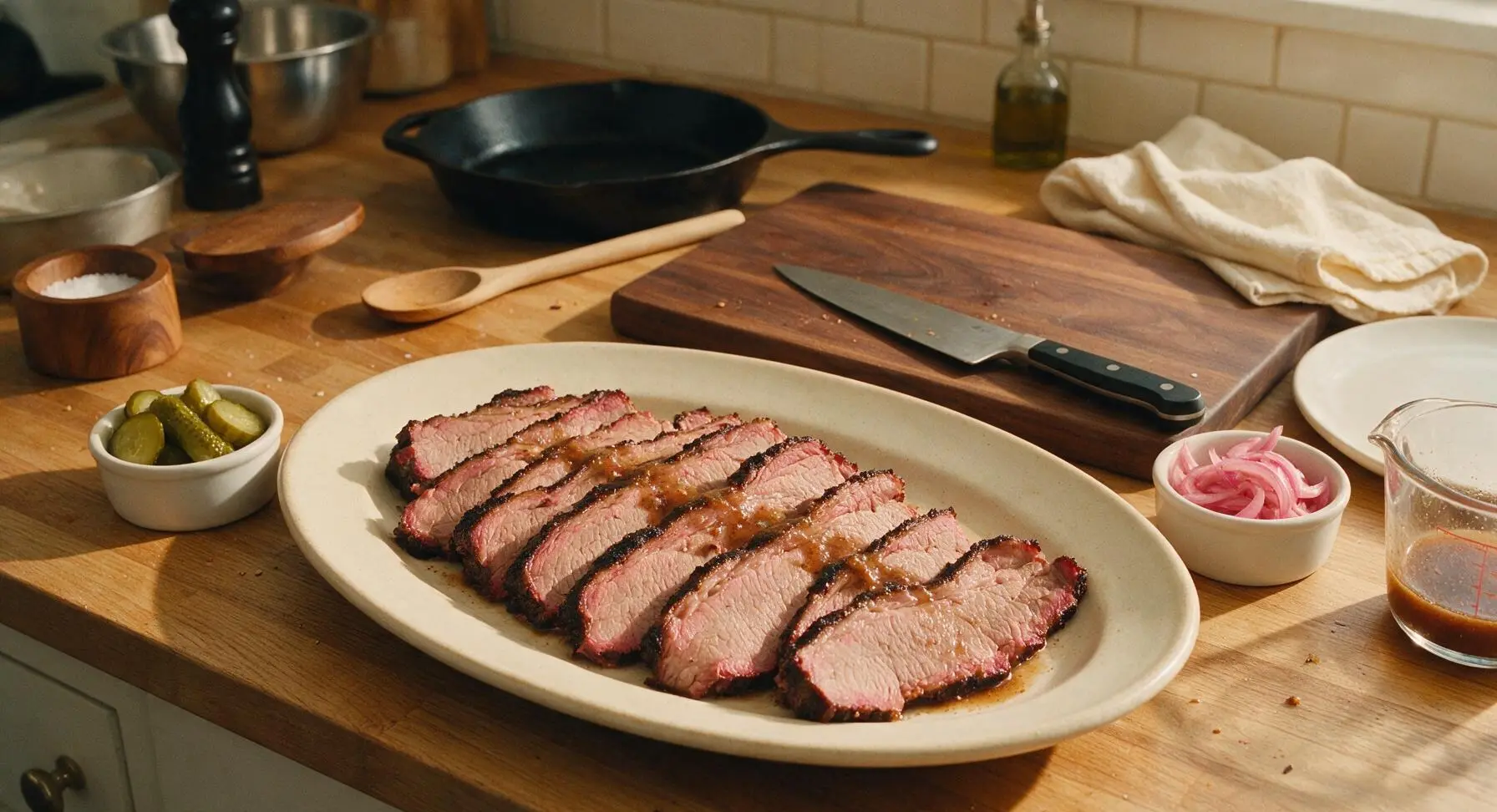
After resting, unwrap the brisket and pour any collected juices from the paper into the clear glass measuring cup for serving. Separate the point muscle from the flat, then slice the flat against the grain into uniform 1/4-inch thick slices. Slice the point into slightly thicker 1/2-inch pieces, if desired. Arrange the slices on the large oval matte cream ceramic serving platter, spoon a small amount of reserved juices over the top, and serve alongside dill pickles and pickled red onions in the small white ramekins.
Step 8
step8:Slice Against the Grain
Step 8
step8:Slice Against the Grain

Tips

1.Always trim brisket when it is fridge-cold: firm cold fat slices cleanly with a sharp knife, while warm room-temperature fat becomes soft and slippery, leading to uneven trimming and accidental cuts into the lean meat that cause juice loss during cooking.
2.Prioritize thin blue smoke over heavy smoke volume: thick, billowing white smoke contains creosote, a bitter compound that leaves an ashy, unpleasant taste on the brisket bark. Thin, almost invisible blue smoke from post oak delivers the classic mild, nutty Central Texas smoke flavor.
3.Resist the urge to slice brisket immediately after cooking: the high heat of smoking pushes muscle juices to the surface of the meat, and slicing right away will cause all those juices to run out onto the cutting board, leaving dry meat. A minimum 1-hour rest lets fibers relax and reabsorb juices for moist, tender slices.
✨ You May Also Like

BBQ & Grilling
🍜 United States

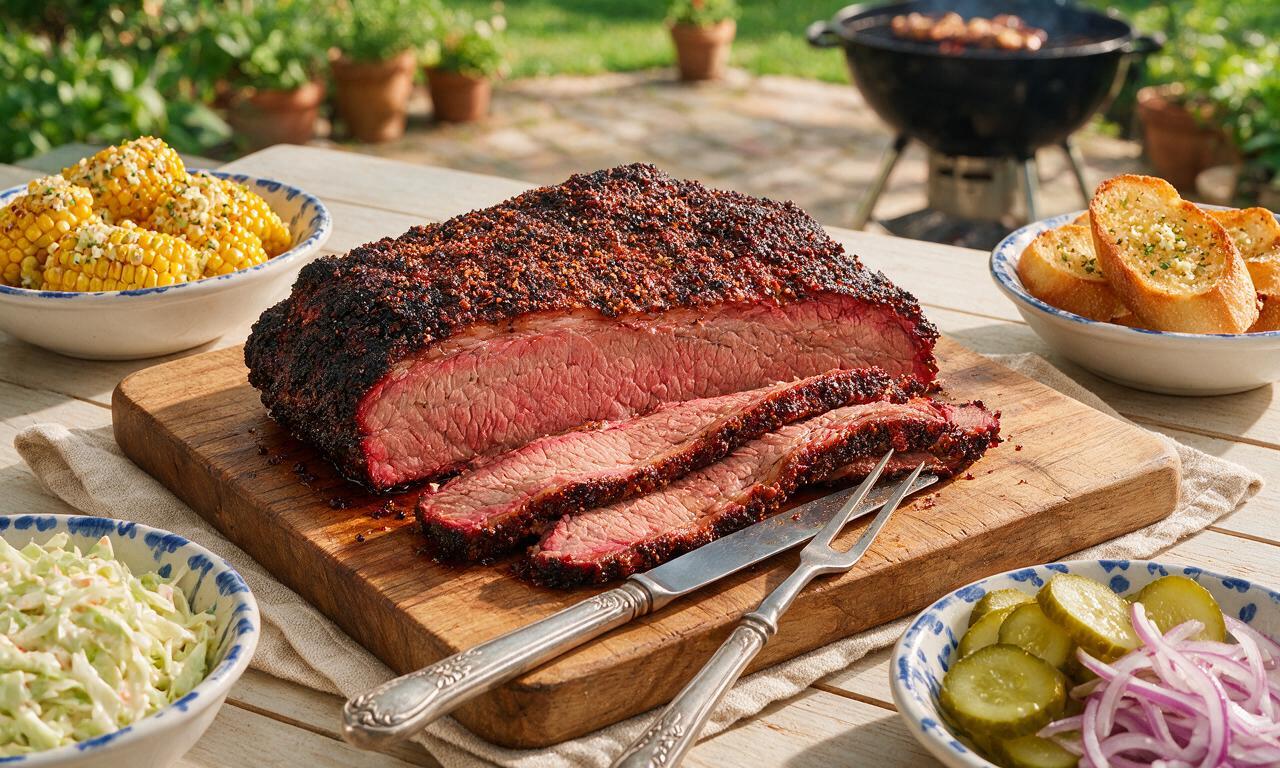
Tender, melt-in-your-mouth beef brisket with a crisp, spiced bark, slow-smoked to deep smoky perfection, the iconic centerpiece of Texas backyard barbecue.

⏱️ 12 hours BBQ & Grilling ★ 4.4
BBQ & Grilling
🍜 Korea

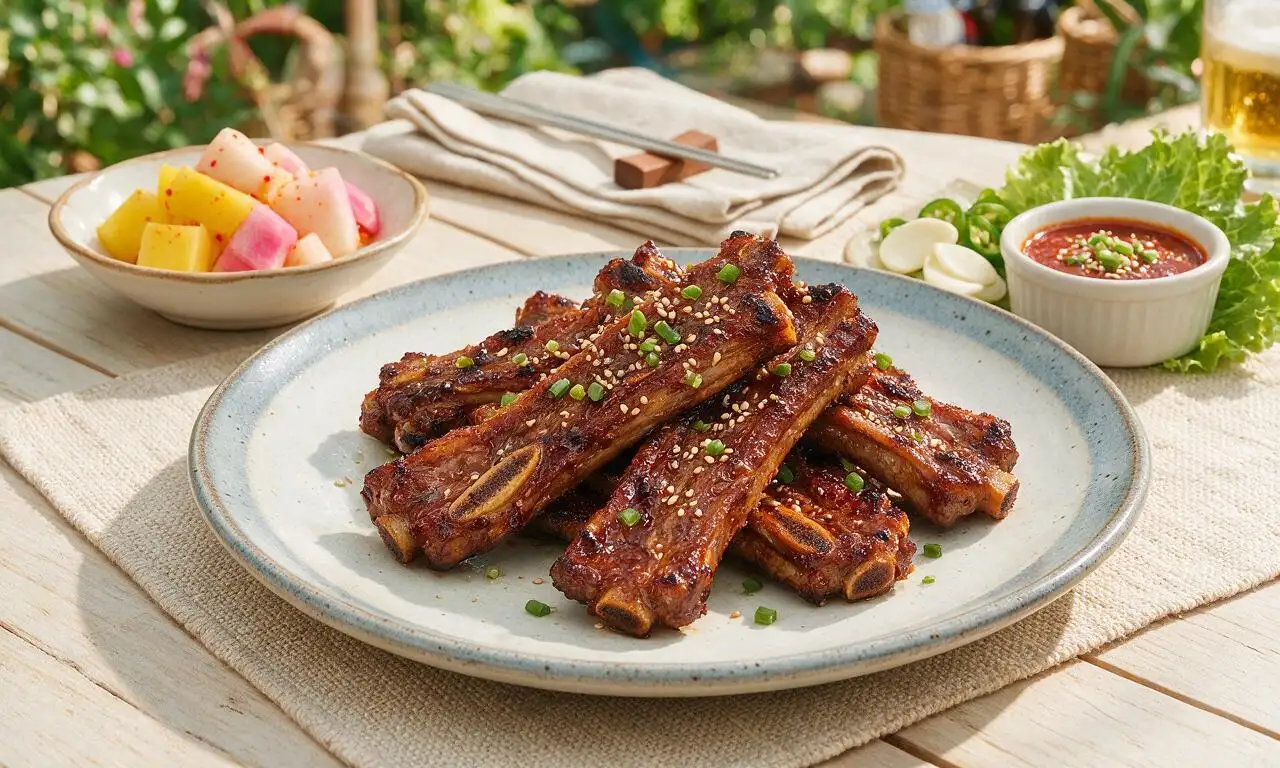
Tender, sweet-savory marinated beef short ribs, a beloved Korean BBQ staple with caramelized, slightly charred edges and deep umami flavor, perfect for outdoor summer gatherings.

⏱️ 4 hours 2BBQ & Grilling ★ 4.8
BBQ & Grilling
🍜 United States

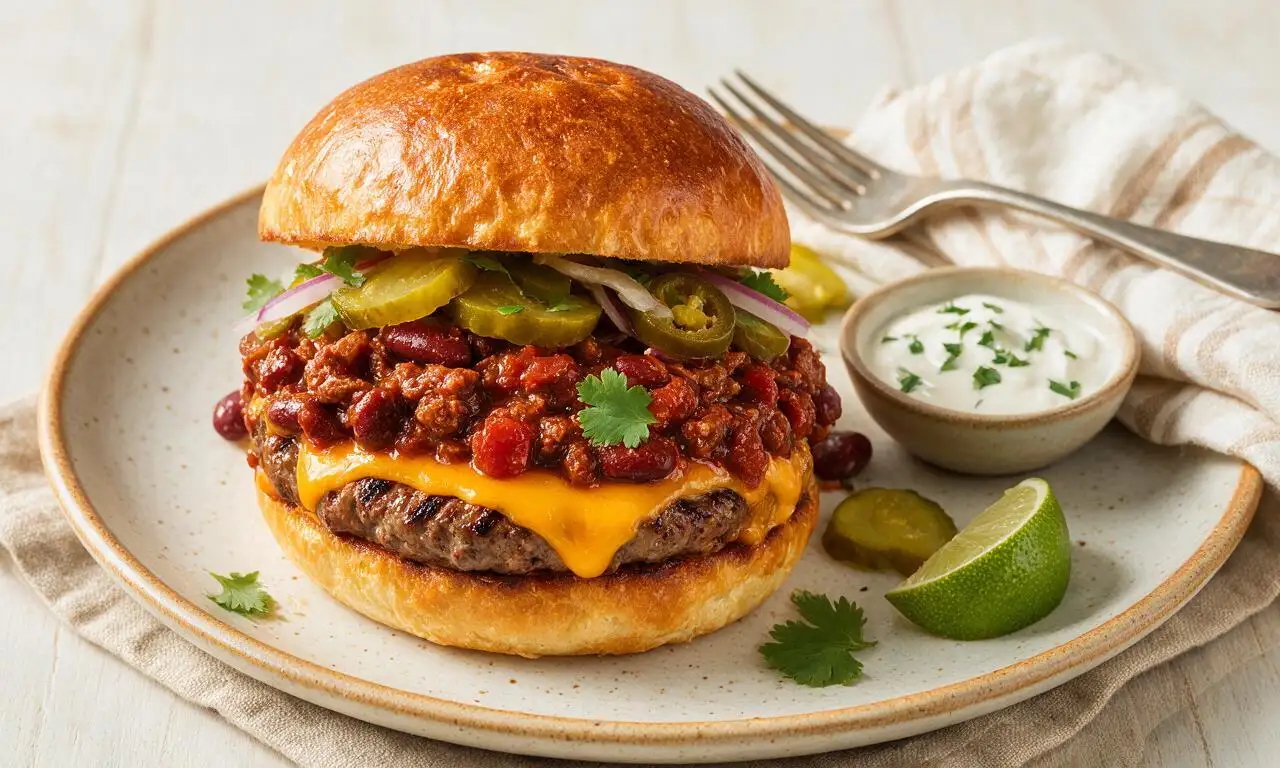
Juicy grilled beef patties topped with smoky homemade chili, melted cheddar, and tangy pickles on toasted brioche buns for a hearty, flavor-packed handheld meal.

⏱️ 40 minuteBBQ & Grilling ★ 4.7
BBQ & Grilling
🍜 United States

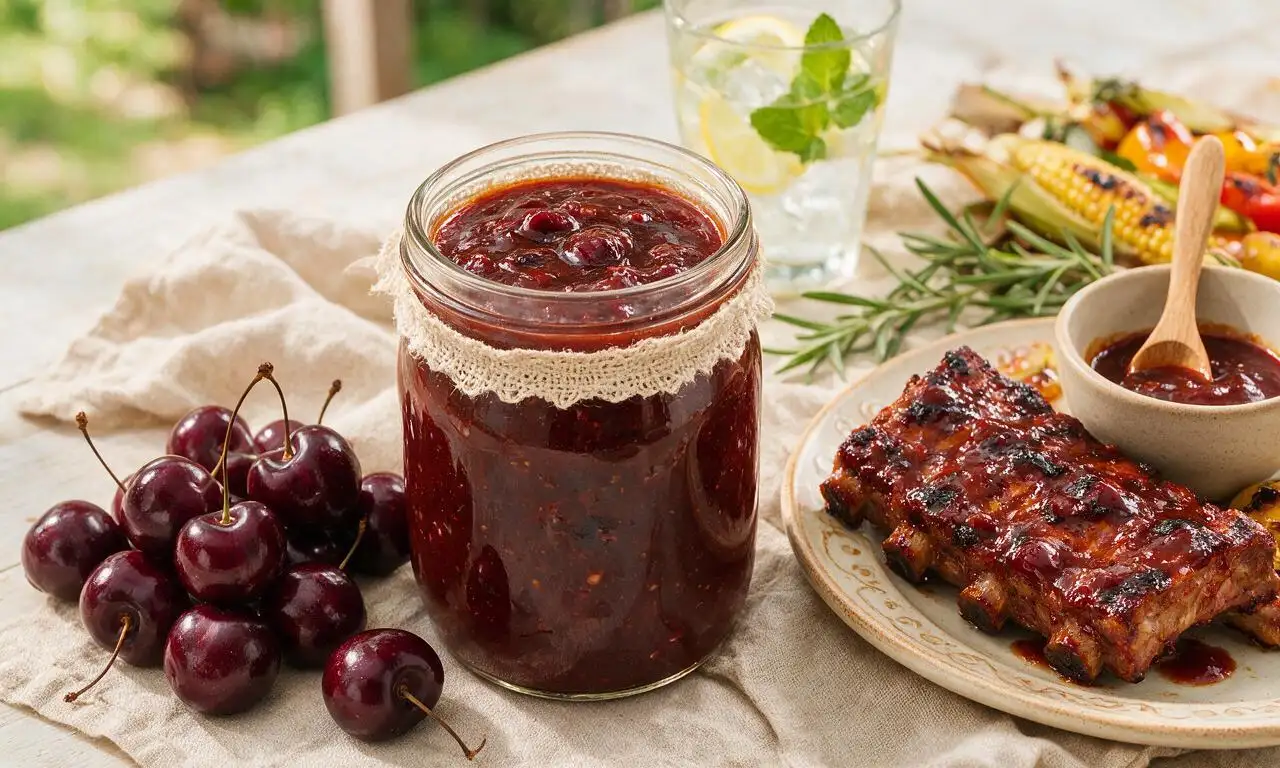
A sweet, smoky, tangy BBQ sauce brightened with peak-season dark cherries, ideal for glazing grilled ribs, chicken, pork, or summer roasted veggies.

⏱️ 35 minuteBBQ & Grilling ★ 4.7
BBQ & Grilling
🍜 United States

Rich, smoky, slightly sweet homemade bourbon BBQ sauce with deep caramel notes, ideal for glazing grilled ribs, chicken, and burgers at cookouts.

⏱️ 25 minuteBBQ & Grilling ★ 4.7
BBQ & Grilling
🍜 United States

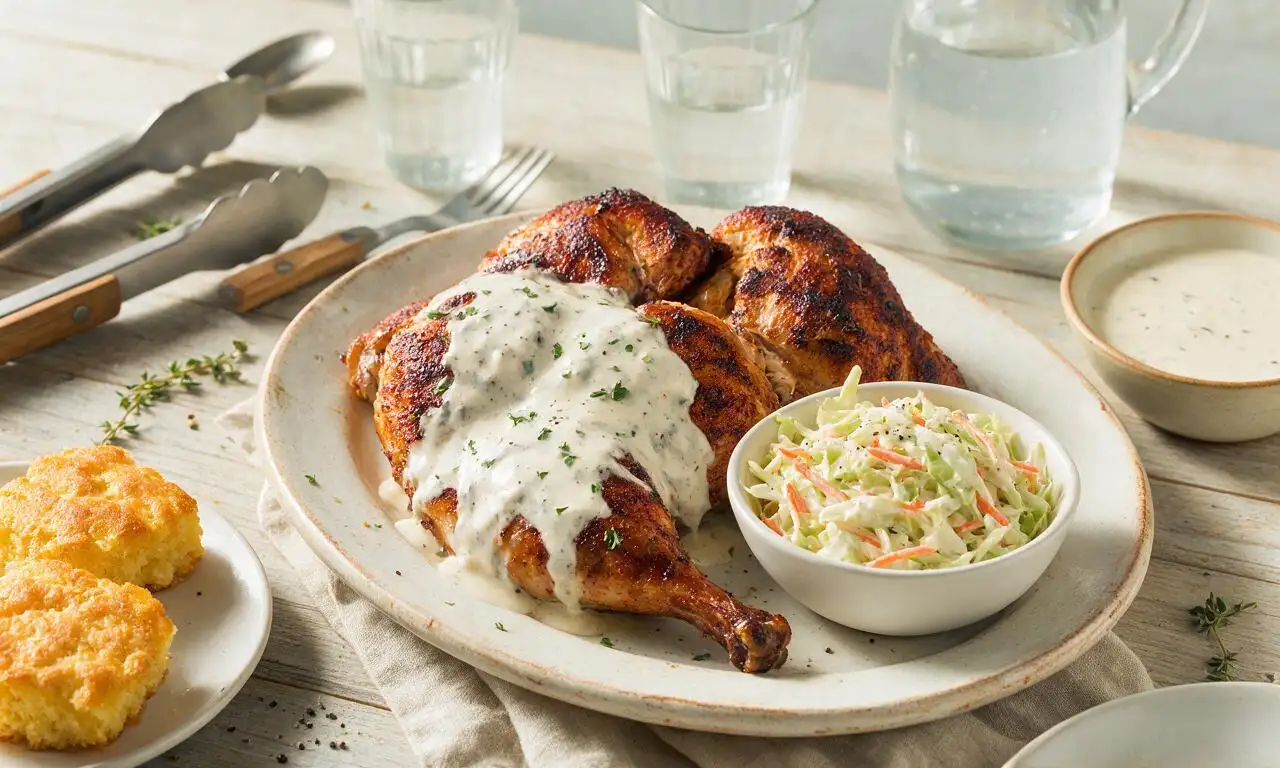
Iconic Alabama-style BBQ featuring tender hickory-smoked chicken slathered in tangy creamy white sauce, a beloved regional Southern cookout staple.

⏱️ 3 hoursBBQ & Grilling ★ 5

The Ultimate Smoked Brisket (Texas Style):Frequently Asked Questions

1.What is a whole packer brisket, and why is it required instead of a pre-trimmed flat cut? ▾
A whole packer brisket is the untrimmed full cut that includes both the lean, dense flat and the rich, marbled point connected by a natural fat cap. Pre-trimmed flats dry out far easier during long smokes, while the packer’s fat renders slowly to baste the meat, lock in juiciness, and build that signature Texas-style bark without extra fuss.
2.Why does the recipe specify 16-mesh freshly cracked black pepper instead of finer ground pepper? ▾
16-mesh is a coarse, uniform crack that’s a Texas brisket staple—it doesn’t burn to bitter ash during 10+ hours of low heat, and it creates that iconic pebbly, crunchy mahogany bark. Finer pepper blows off easily in smoker airflow and turns acrid, while extra-cracked pepper creates uneven, overly sharp bites in the final bark.
3.Will the yellow mustard binder make my finished brisket taste like mustard? ▾
That thin slather of yellow mustard won’t leave any tangy mustard flavor once the brisket finishes smoking, I promise. It’s just a traditional, cheap, reliable binder that helps the salt, pepper, and garlic powder stick tight to every nook of the meat, so you don’t end up with bald, bark-free patches when the rub shifts during cooking.
4.What smoker temperature is ideal for authentic Central Texas style brisket? ▾
Stick to a steady 225°F to 250°F for the entire cook—this is the low-and-slow sweet spot for classic Texas brisket. Running hotter makes fat render too fast and leaves you with tough, dry meat, while temps under 225°F drag the cook out too long and lead to soft, mushy bark instead of that perfect crackle.
5.How do I tell when my brisket is done, instead of relying on a set cook time? ▾
Ditch rigid cook time clocks entirely. Start checking for doneness when your instant-read thermometer slides into the thickest part of the flat like it’s cutting soft butter, usually between 200°F and 205°F internal temp. You’ll also notice the whole brisket jiggles slightly when nudged, like well-set Jell-O, when it’s perfectly tender.
6.What is the pink ring under the bark, and does it mean my brisket is undercooked? ▾
That soft pink layer right under the bark is the famous smoke ring, and it’s a sign of a great smoked brisket, not undercooked meat! It forms when smoke reacts with natural moisture on the meat’s surface to lock in that pink hue, even when the rest of the brisket is cooked to a safe, pull-apart tender temperature all the way through.
7.Do I need to wrap my brisket, and when is the right time to do it? ▾
Wrapping isn’t mandatory, but it helps you power through the “stall”—the point where internal temp plateaus for hours—without drying out the bark. Wrap tightly in uncoated butcher paper when your brisket hits 165°F internal and has a deep, set mahogany bark; skip foil, which traps too much steam and turns bark soggy.
8.How long do I need to rest my brisket, and why is that step so important? ▾
Rest your wrapped brisket for a minimum of 1 hour, and up to 4 hours in an insulated dry cooler, before slicing. When you pull brisket off the smoker, all the hot, juicy moisture is pooled right at the surface; resting lets those juices redistribute evenly through every fiber, so you don’t lose all that delicious beefy liquid onto your cutting board.
9.What ratio of seasonings should I use for the classic Texas brisket rub? ▾
Stick to the simple, no-fuss traditional ratio: 2 parts coarse kosher salt, 2 parts 16-mesh black pepper, and 1 part garlic powder. Skip sugary rubs, paprika, or fancy spice blends common in other barbecue styles—Central Texas brisket lets deep, smoky beef flavor take center stage, with just enough seasoning to amp it up.
10.How much fat should I trim off the packer brisket before applying the rub? ▾
Trim the hard, waxy fat chunks off the point and flat completely, then leave a uniform 1/4-inch thick layer of soft, renderable fat cap across the top. That thin fat layer slowly melts as the brisket smokes to baste the meat, but any thicker than 1/4 inch and it won’t fully render, leaving chewy, unpleasantly fatty bites under the bark.
11.What type of wood works best for authentic Texas brisket, and which should I avoid? ▾
Stick to mild hardwoods native to Central Texas: post oak is the undisputed gold standard, with hickory or a small amount of mesquite as acceptable backups. Skip sweet, fruity woods like apple or cherry, and avoid overusing mesquite, which pumps out bitter, acrid smoke that overpowers the brisket’s clean, beefy flavor.
12.Why did my brisket turn out tough and dry even when I cooked it to the recommended temperature? ▾
The most common culprits are cooking too hot too fast, skipping the proper rest step, or slicing incorrectly. If you crank smoker temps above 275°F, muscle fibers seize up and squeeze out all their moisture; if you slice immediately after pulling it, juice runs onto the board; if you cut with the grain, even perfectly cooked brisket will feel chewy and tough.
13.What’s the right way to slice a finished brisket for the best texture? ▾
Separate the point from the flat first, since their muscle grains run in totally different directions. Slice the flat against the grain into uniform 1/4-inch thick slices, and cut the marbled point into thicker chunks if you want quick, easy burnt ends. Slicing against the grain shortens long muscle fibers, so every bite is tender instead of stringy and chewy.

Comments (11)

2 days ago

OMG y’all, I was so intimidated to try smoked brisket because everyone says it’s so easy to mess up, but this recipe was an absolute game changer! Cooked it for my husband’s birthday cookout last weekend, all our neighbors were raving and asking for the recipe. Got that perfect Texas-style bark, the fat rendered perfectly so it melted in your mouth, no dry spots at all even on the flat! 12 hours sounds like forever but it was 100% worth every minute. SO good.

yesterday

Did you spritz it at all during the cook? I’m making this for a potluck next weekend and trying to nail down all my steps ahead of time!

yesterday

Great question! I stick to a simple spritz of equal parts apple cider vinegar and water every 90 minutes once the brisket hits 160°F, just enough to keep the surface moist while that bark builds. Good luck with the potluck!

3 days ago

Tried this for our Sunday family dinner and while the flavor was incredible, my brisket came out a little tougher than I expected on the point end. I followed the temp guide exactly, so I’m not sure where I went wrong! Still, my kids loved the chopped bits for brisket sandwiches the next day, so it wasn’t a total loss.

2 days ago

Sorry to hear the point was a little tougher, Liz! Most often that comes from pulling it just a touch too early before all the connective tissue has time to break down. Next time, don’t rely solely on temp—give it a little probe test, it should slide in like soft butter when it’s ready! So glad the kids enjoyed the sandwiches though, that’s the best part of leftover brisket.

1 week ago

12 hours, zero regrets. This is the real Texas brisket deal, no fancy sauces needed, just that simple salt and pepper rub and good smoke. Took this to my buddy’s tailgate last week and people were coming back for thirds. Already planning to make two for our Memorial Day cookout so I don’t run out!

5 days ago

Full transparency, this is the first brisket I’ve ever smoked in my life. I was SO nervous because I know brisket is unforgiving, but I followed every single step to the letter and it came out perfect! My whole family was shocked, my dad (who’s been smoking meat for 30 years) said it was better than his. Wild. Worth every single minute of tending the smoker.

3 days ago

Wait, what kind of wood did you use? I only have a small electric smoker on my apartment patio, would this still work?

2 days ago

That’s such an awesome win for your first brisket—seriously, congrats! Winning over a 30-year smoking vet is the highest possible praise. To answer the question below too, this recipe works perfectly in an electric apartment smoker! Just stick to post oak or hickory wood chips for that authentic Texas smoke flavor.

1 week ago

Made this on Sunday for the week and it’s been holding up so great! Chopped up the leftovers for brisket tacos, loaded baked potatoes, even a quick breakfast hash with eggs. The rub is perfect, not too salty, just enough pepper to give it that classic bite. Saved me so much time on weeknight dinners!

5 days ago

Oh the breakfast hash idea is genius! I usually just do sandwiches with leftover brisket, definitely trying that next time.

2 weeks ago

I’ve tried probably a dozen Texas brisket recipes online over the years and this is hands down the best one. No weird sugary rubs, no gimmicks, just straight up traditional brisket like I get when I visit family in Austin. The tip about wrapping in butcher paper instead of foil? Game changer for the bark, didn’t get that soggy steamed texture I always used to fight.

1 week ago

Agreed on the butcher paper! I was a foil guy for years until I tried paper, the bark difference is night and day. Did you use post oak like the recipe says?

yesterday

Flavor was great but 12 hours is no joke, y’all. I started too late on Saturday and ended up having to finish it in the oven to get dinner on the time, so I didn’t get the full smoke effect. My bad for not reading the cook time all the way through first! Definitely blocking off a full weekend day to try this again the right way.

30 minutes ago

Quick question! I’m picking up a 14lb packer brisket tomorrow to make this for my in-laws visiting next week. The recipe says 1.5 hours per pound, but should I budget extra time just in case? I don’t want to be stressing about dinner being late when they’re here!

5 minutes ago

Smart question! Always budget an extra 2-3 hours of buffer time when smoking brisket—every smoker runs a little different, and weather can impact cook time too. If it finishes early, you can wrap it in towels and hold it in a cooler for up to 4 hours without it losing temp or quality. You’ve got this!

2 weeks ago

Made this for our office potluck last week and I swear people were talking about it for days. Even the guy from Texas who swears no one outside the state makes good brisket went back for a second slice. I will say, it is a labor of love—set an alarm to check the smoker temp through the night if you start it early, but it is so beyond worth the effort.

1 week ago

I was at that potluck! Can confirm, that brisket was unreal. I’ve been bugging her for the recipe all week, so glad I found it here!

5 days ago

That’s the ultimate compliment winning over the Texas brisket snob, congrats! Holding the brisket in a cooler after the cook makes it way easier to serve at potlucks too, no last minute rushing. Thanks for sharing!

2 hours ago

Pro tip from my first go at this: don’t cheap out on the kosher salt and coarse black pepper for the rub. I tried using regular table salt on my first test run and it was way too salty, messed up the whole bark. Grabbed the good stuff for my second try and it was perfect, just like the recipe says. Made it for Father’s Day with my dad and he said it was the best brisket he’s ever had.

30 minutes ago

Couldn’t agree more! The simple S&P rub is non-negotiable for Texas style. People overcomplicate it with all kinds of fancy seasonings and it just takes away from the smoke and beef flavor.

just now

Me and my roommates smoked this for our end of semester party last weekend and it was gone in 20 minutes flat. We had to run to the store for extra buns and pickles because everyone brought sides but no one could get enough of the brisket. 10/10, will be making this for every big get together from now on, even if it means getting up at 6am to start the smoker.