
Trappist Ale
intro
Rich, malty Trappist ale with notes of dark fruit, caramel, and subtle spice, brewed in monastic tradition for smooth, sippable warmth perfect for slow, cozy autumn gatherings.
Ingredients
Steps
Sanitize All Equipment
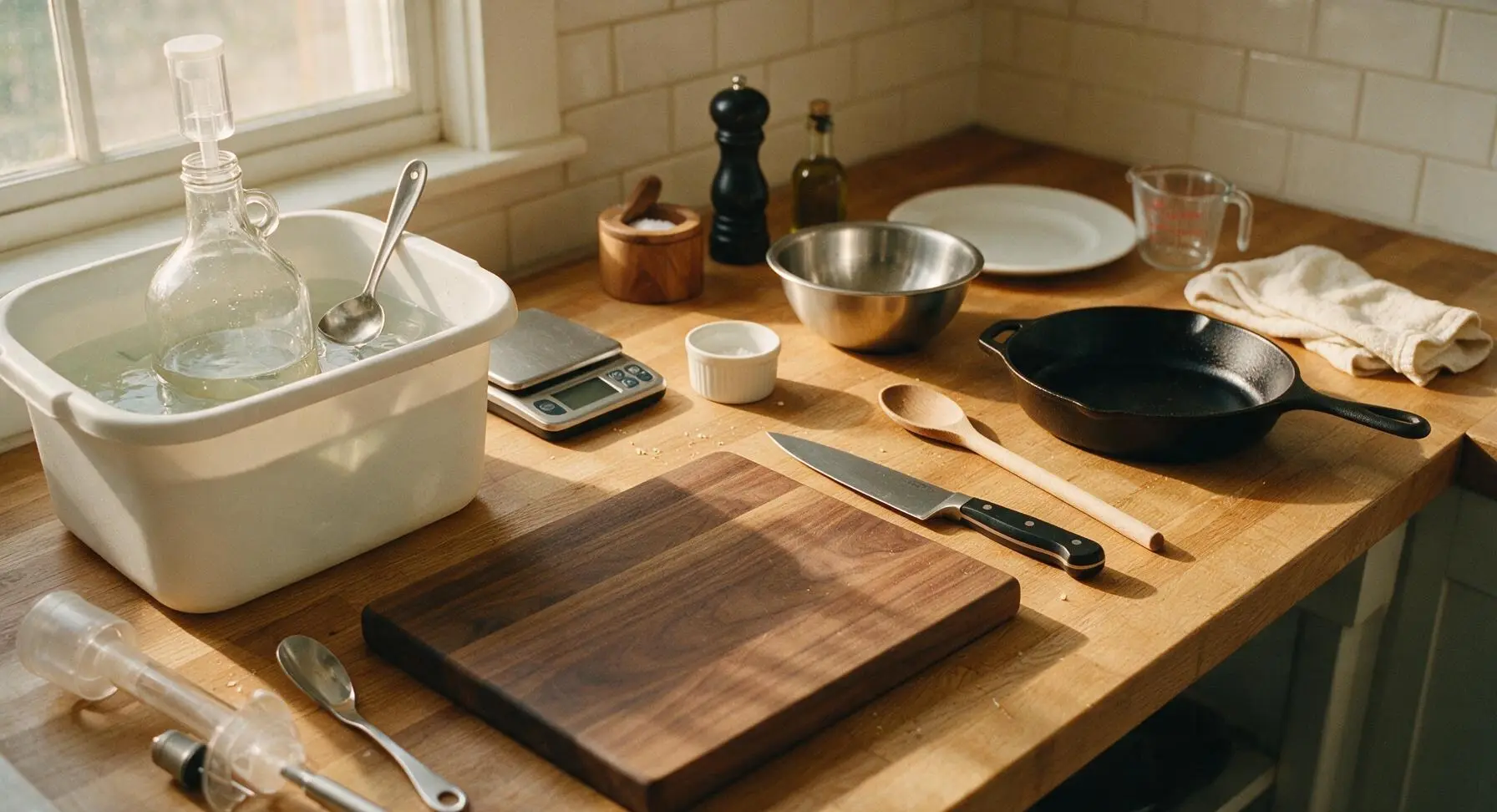
Fill the matte white sanitizing tub with cool filtered water, mix in 1 tablespoon no-rinse brewing sanitizer per package directions. Submerge the fermentation jug, stirring spoon, siphon, airlock, stopper, grain bag, and bottles for 60 seconds, then remove and air-dry on the clean counter. Ensure no residual soap or sanitizer suds remain — every surface that touches cooled wort must be fully sanitized to prevent bacterial growth and off-flavors.
Heat Mash Water
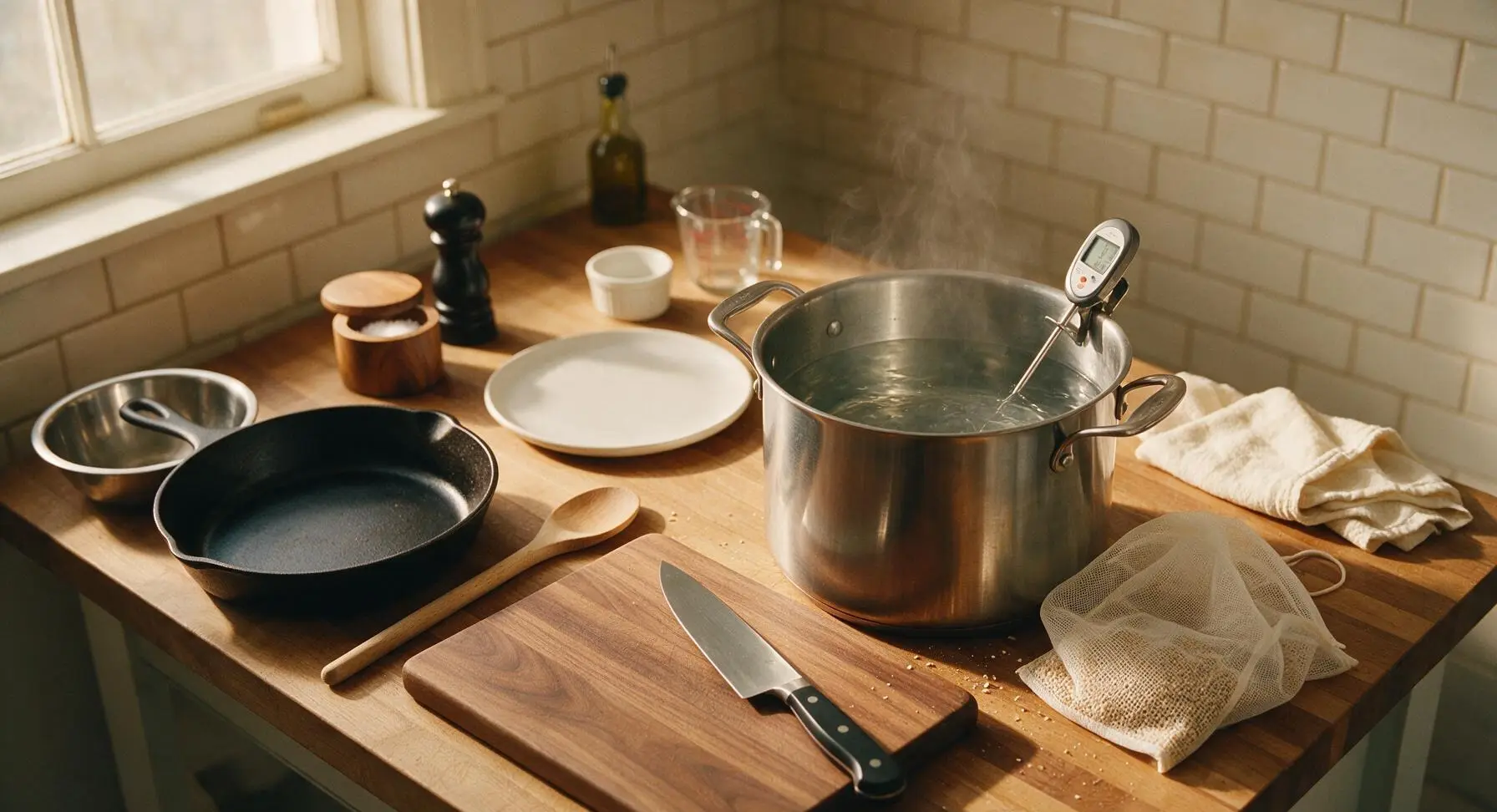
Pour 3L of filtered non-chlorinated water into the 1-gallon stainless steel brew kettle, set over medium heat. Clip the digital instant-read thermometer to the kettle rim, and heat the water to a steady 67C (153F). Do not bring to a boil; hold this temperature within a 2C range in preparation for mashing.
Mash the Crushed Grains
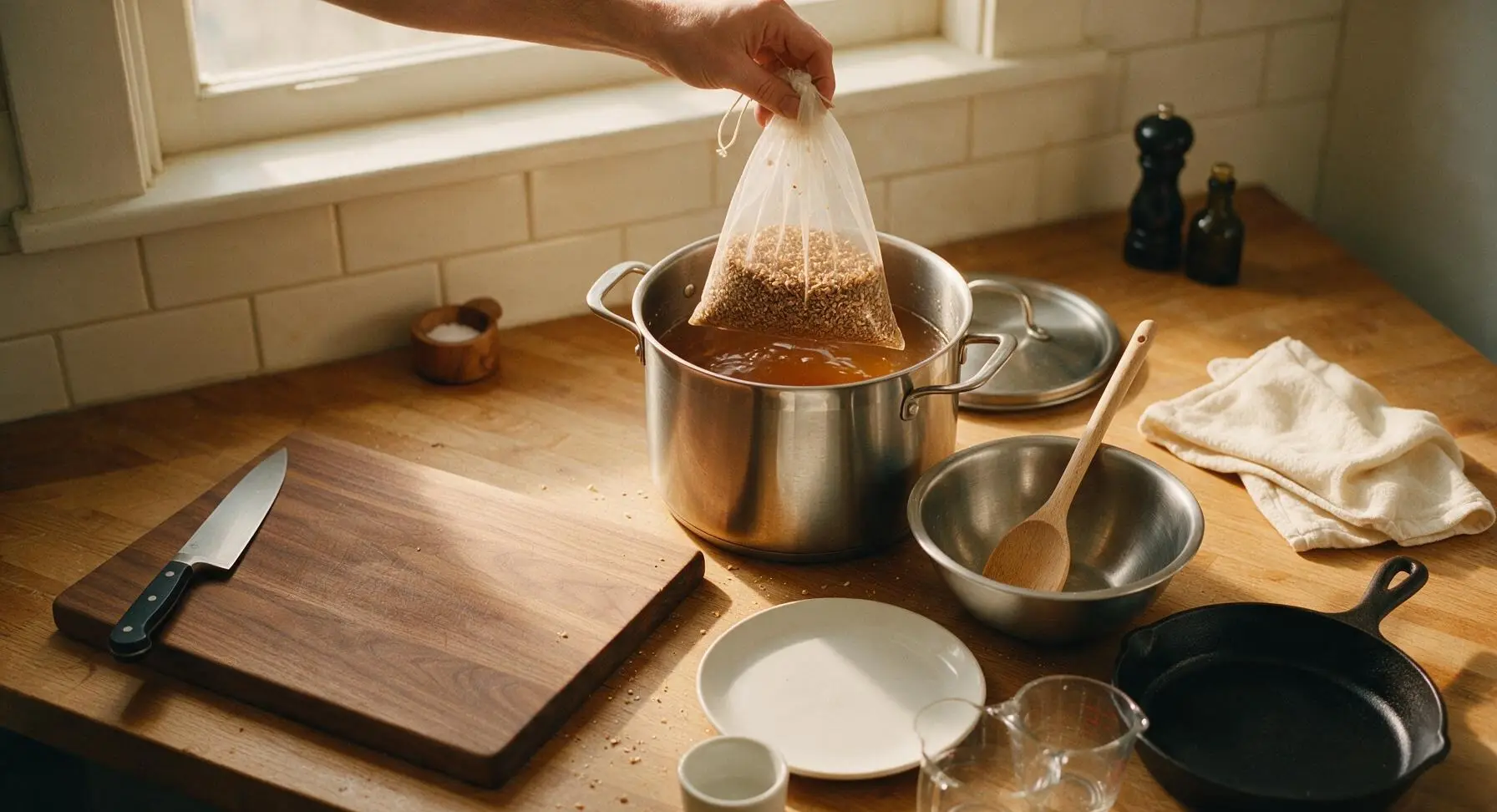
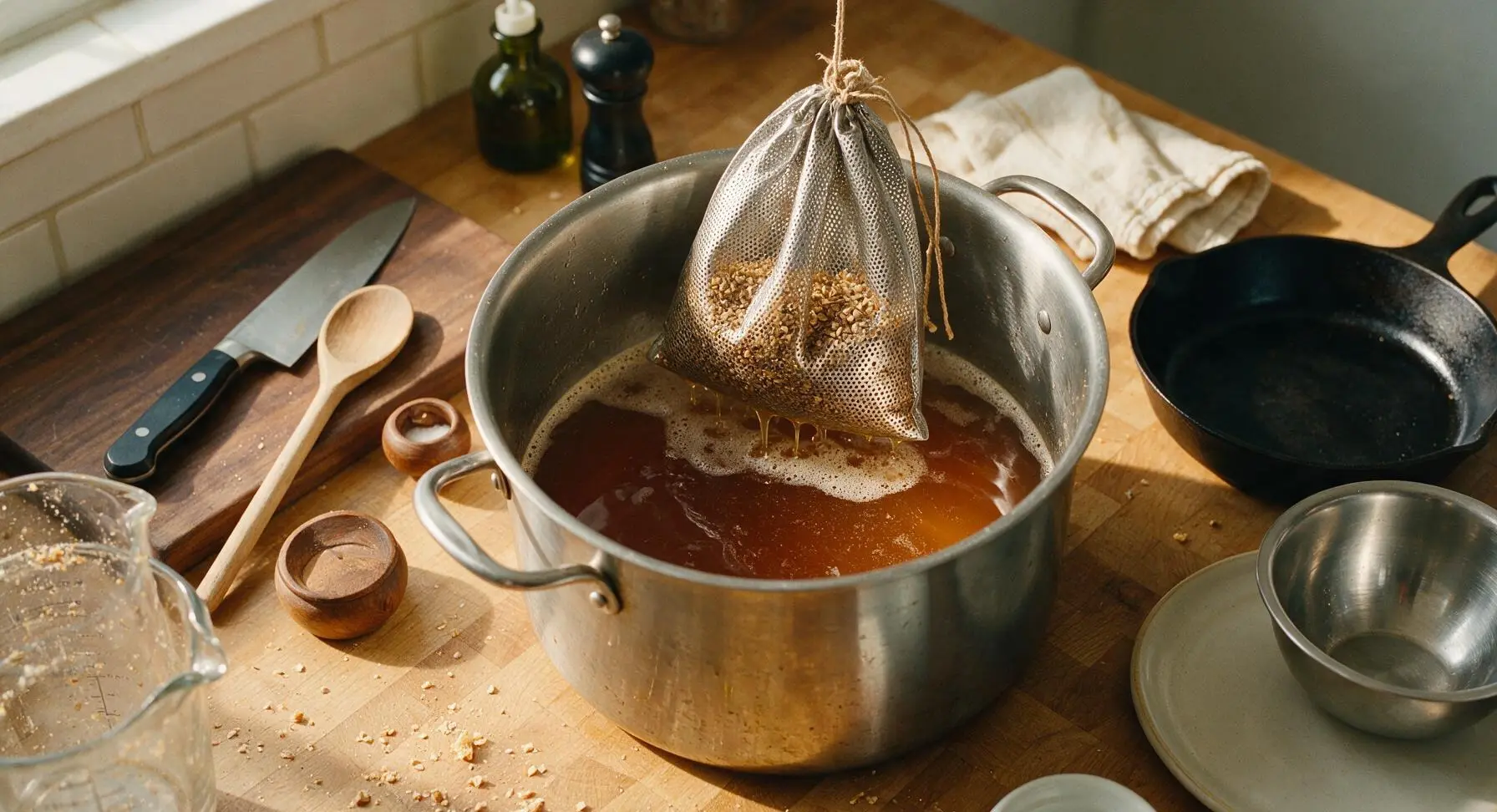
Combine all crushed malts (2-row pale, Munich, CaraMunich, Special B) in the stainless steel mesh grain bag, tie the drawstring loosely, and lower the bag fully into the 67C water. Cover the kettle, hold the temperature steady at 65-68C for 60 minutes. As starches convert to sugar, the wort will deepen to a rich amber color and develop a sweet, bready aroma. After 60 minutes, lift the grain bag and let it drain fully into the kettle — do not squeeze the bag, as this extracts harsh tannins.
Boil and Add Hops
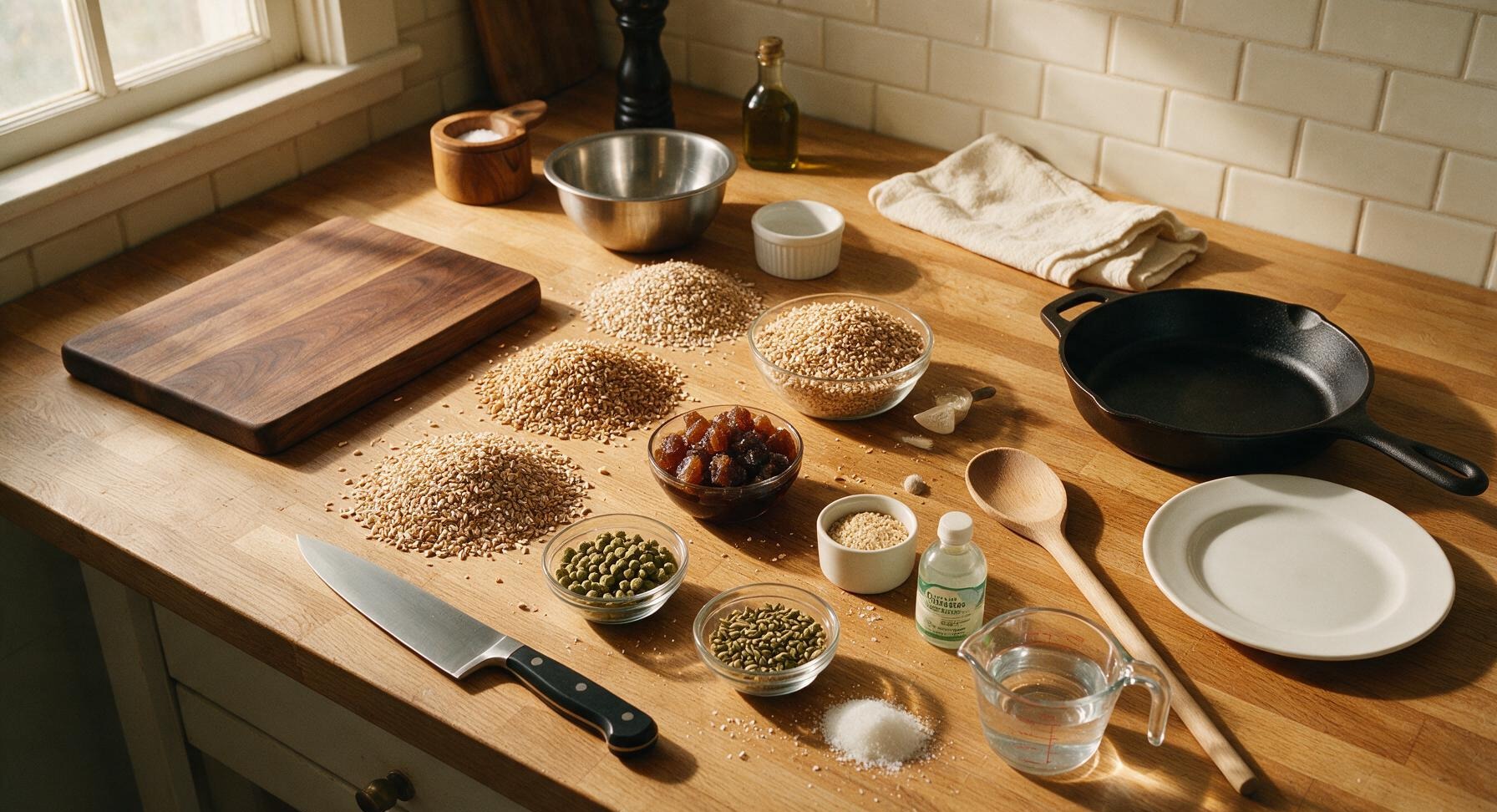
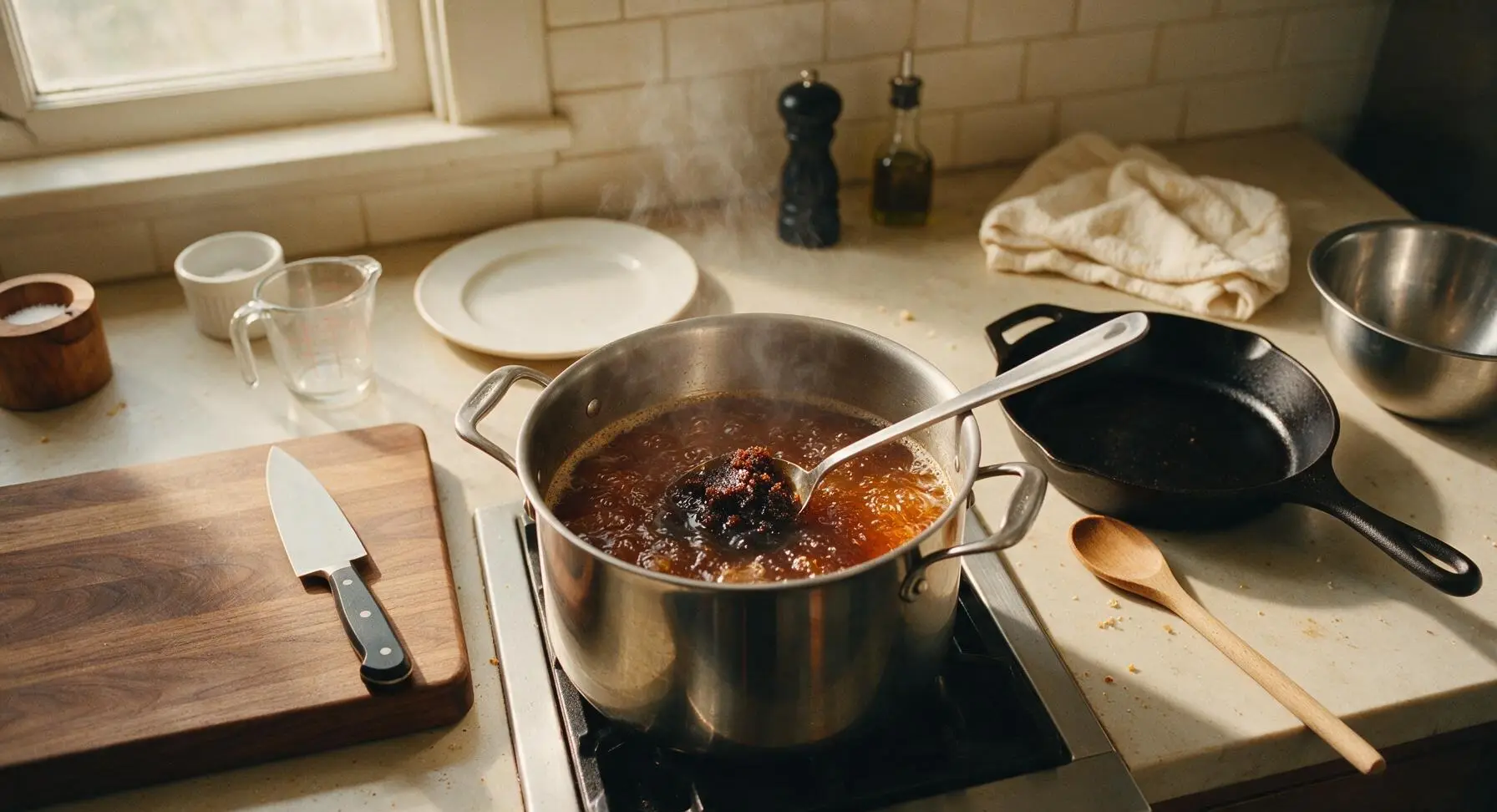
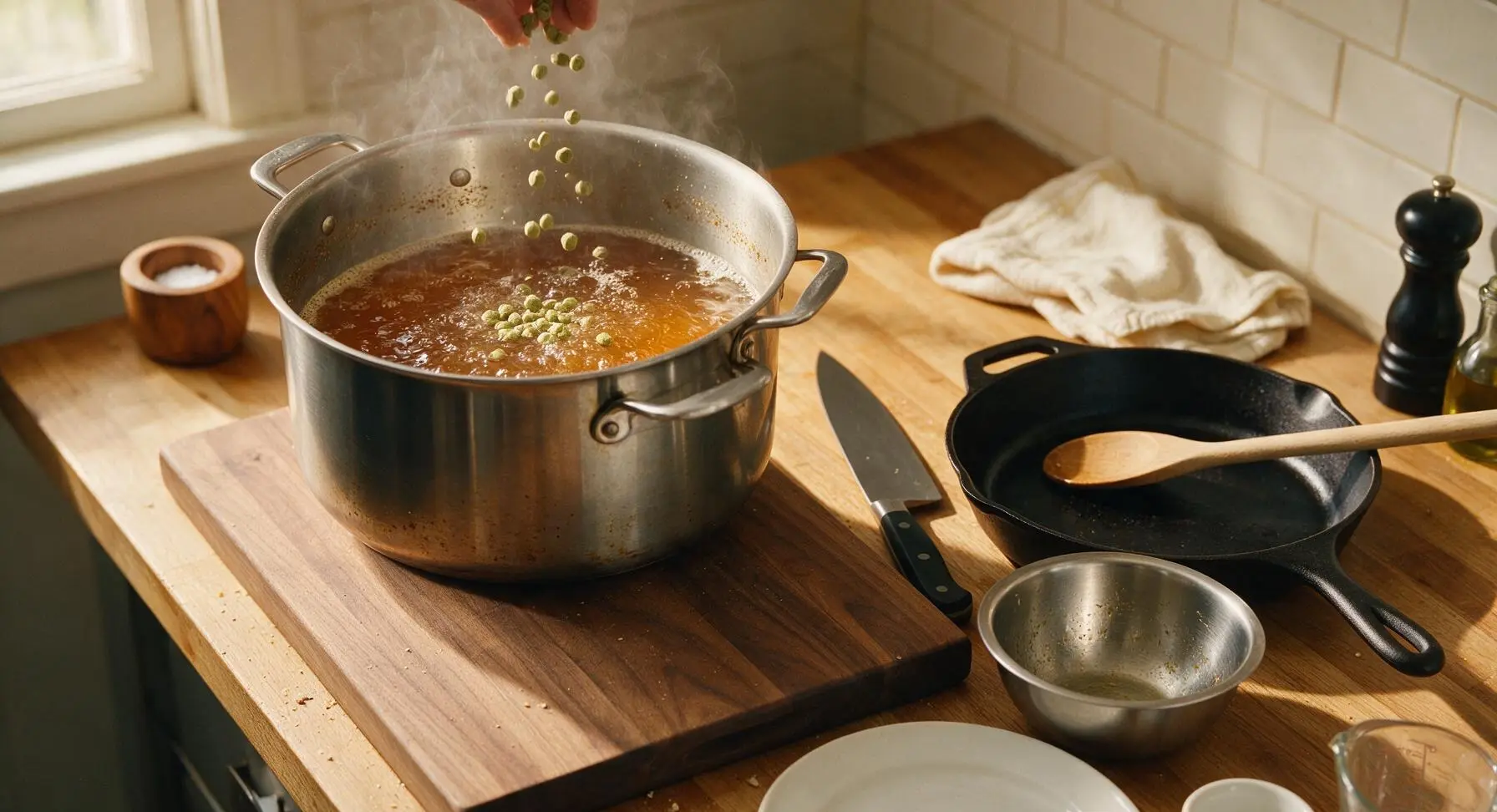
Remove the grain bag from the kettle, increase heat to bring the wort to a gentle rolling boil (100C/212F). Once boiling, stir in the dark Belgian candi sugar with the long stainless steel spoon until fully dissolved. Add 10g of Hallertau hops at the start of the 60-minute boil, then add the remaining 4g Hallertau and all 7g Saaz hops in the final 5 minutes of the boil to preserve bright, herbal aroma. Adjust heat as needed to prevent boilovers.
Cool Wort, Pitch Yeast
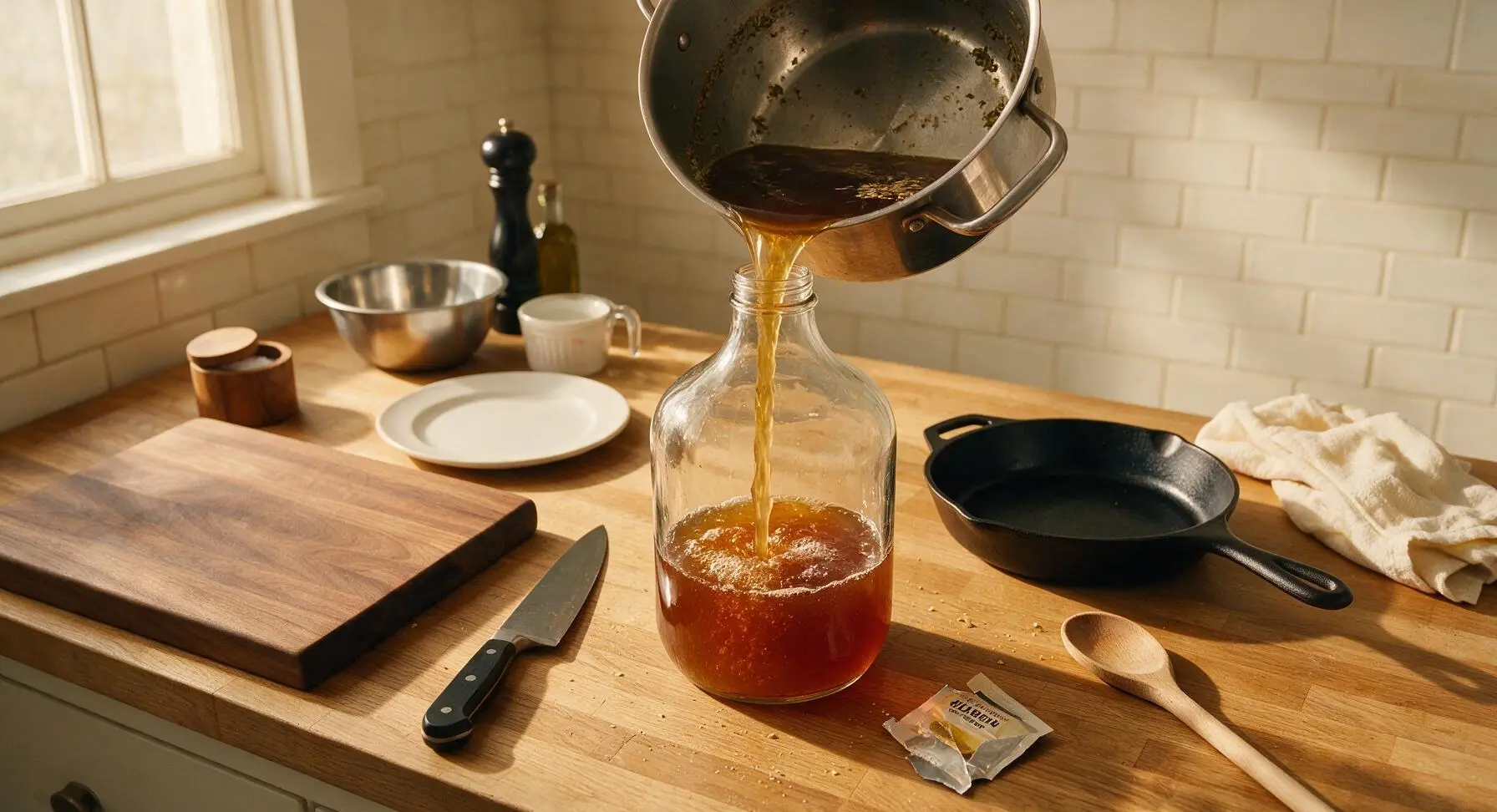
After the 60-minute boil finishes, remove the kettle from heat, cover tightly, and set in an ice bath to cool the wort rapidly to 21C (70F), approximately 20 minutes. Once cooled, pour the wort into the sanitized 1-gallon glass fermentation jug, top up with remaining filtered water to reach the 3.8L (1 gallon) mark, and sprinkle the full packet of Trappist ale yeast evenly over the wort surface. Do not stir the yeast in.
Seal for Fermentation
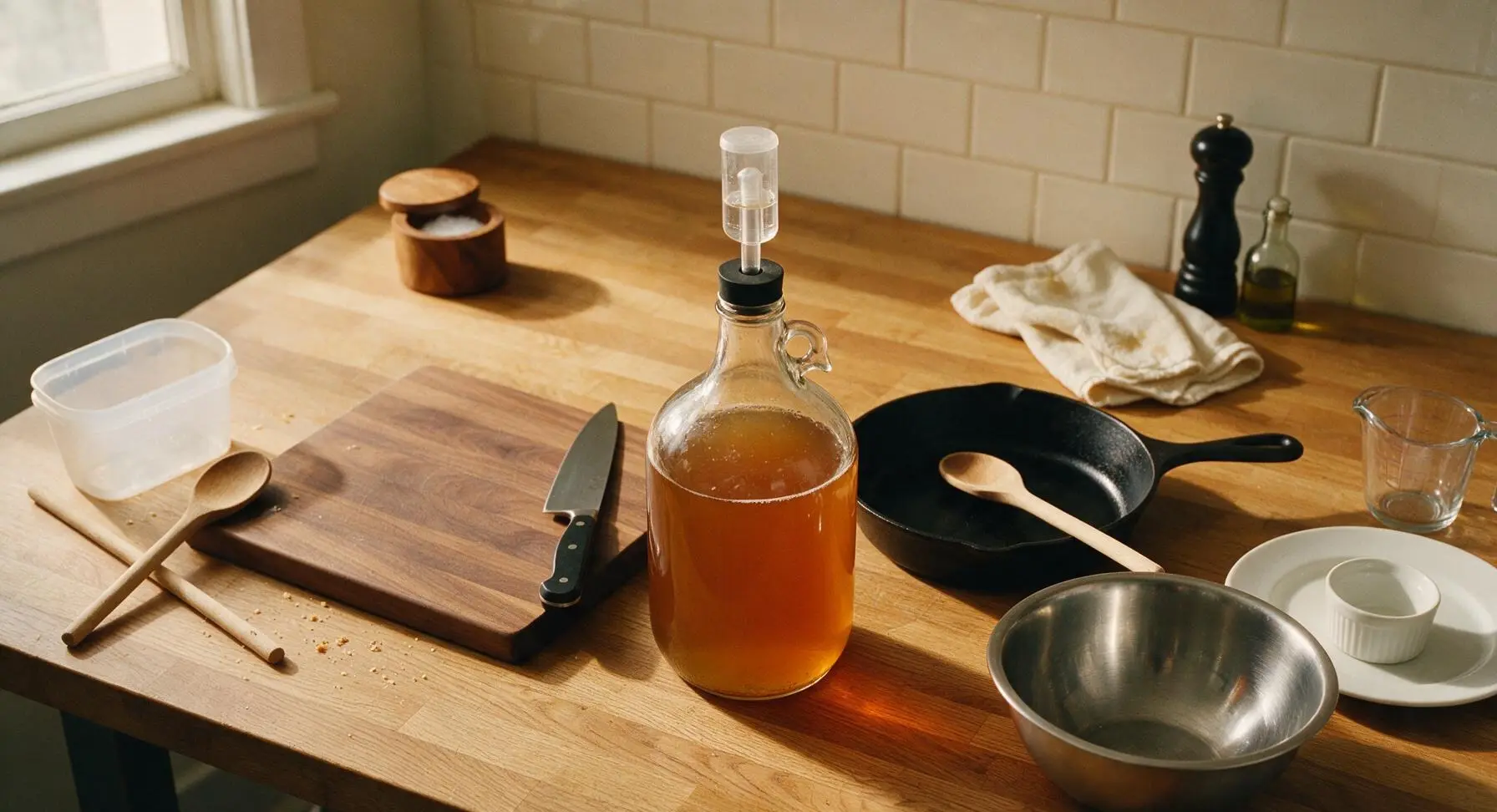
Press the drilled black rubber stopper snugly into the neck of the fermentation jug, fill the clear airlock halfway with sanitizer solution, and seat the airlock firmly in the stopper hole. Move the jug to a dark, temperature-stable spot held at 18-22C (65-72F) for 14 days of primary fermentation. Bubbles will rise through the airlock within 24-48 hours, signaling active fermentation; avoid moving or disturbing the jug during this time.
Bottle for Carbonation
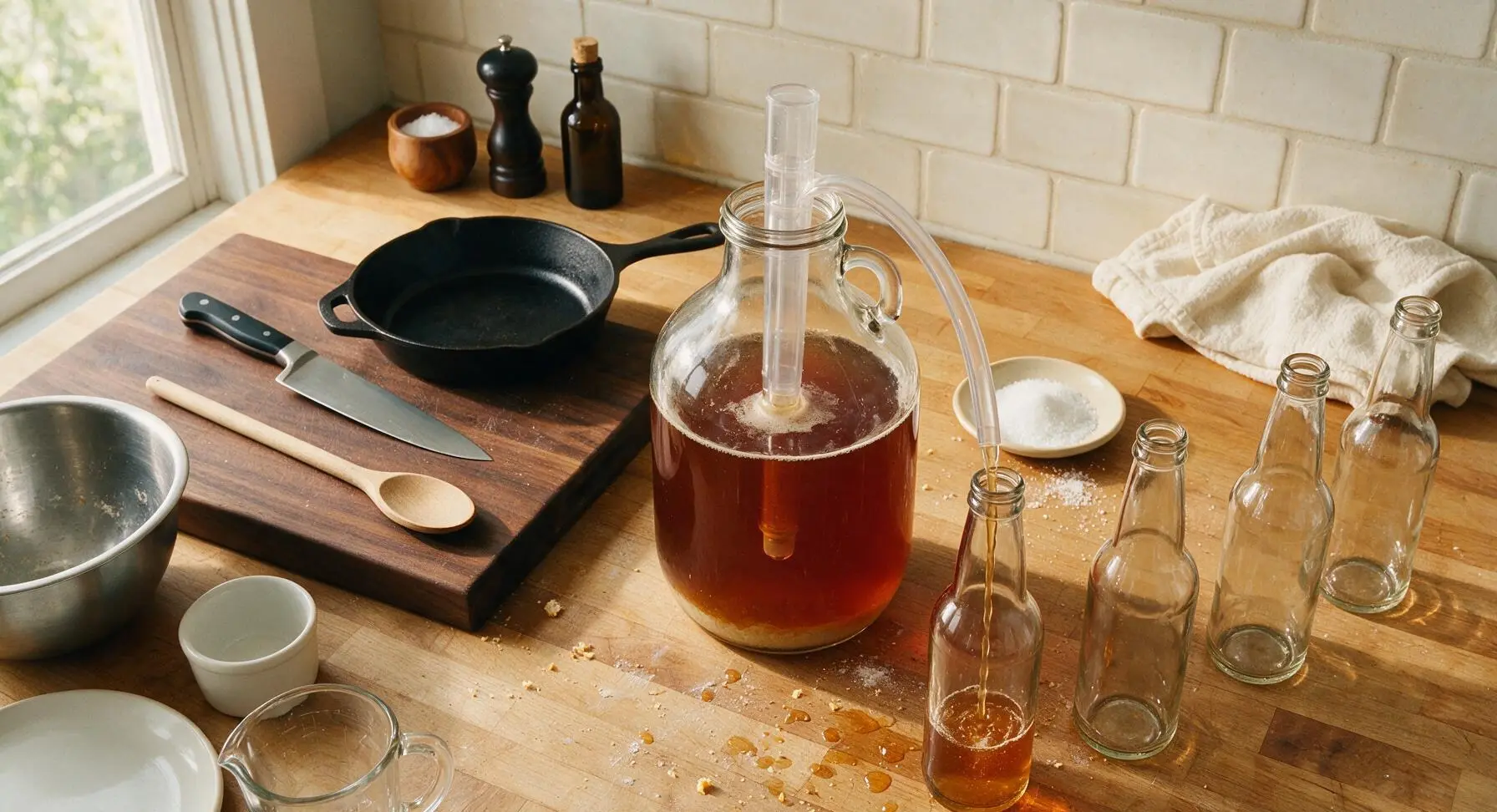
After 14 days, when airlock activity slows to less than one bubble per minute, use the sanitized auto-siphon to transfer the finished ale into sanitized glass bottles, adding 1 tsp of corn priming sugar per 355ml (12oz) bottle to create natural carbonation. Cap bottles tightly with sanitized metal crown caps using the bottle capper, then return bottles to the dark, temperature-stable space for 21 days to carbonate and condition.
Chill and Pour to Serve
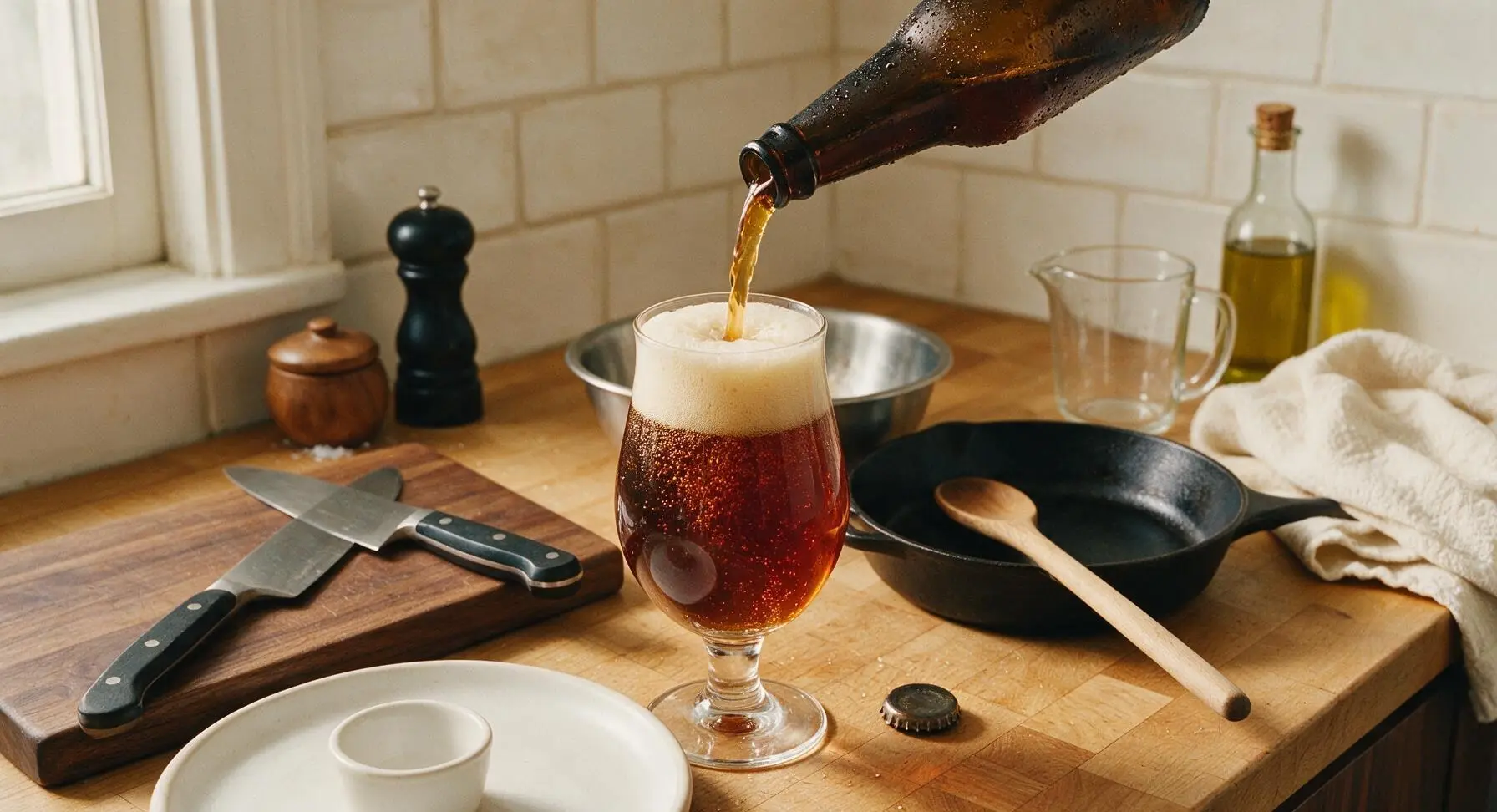
After 21 days of bottle conditioning, chill one bottle of Trappist ale to 10C (50F) — avoid serving ice-cold, as this mutes the rich dark fruit and caramel flavors. Pour slowly into the tulip beer glass, tilting the glass at 45 degrees to build a 2cm thick foam head, straightening the glass as you finish pouring. Let the beer rest 1 minute before sipping to allow aromas to open.
Tips
2.Never squeeze the grain bag after mashing: squeezing presses bitter, astringent tannins from grain husks into the wort, creating a dry, puckering aftertaste that overpowers the ale's smooth, malty sweetness. Let the bag drain naturally for 2 minutes instead.
3.Resist the urge to disturb fermentation or conditioning: temperature swings, oxygen exposure, or early movement can cause stalled fermentation, off-flavors, or flat beer. The long, undisturbed 5-week total rest is key to developing Trappist ale's signature smooth, complex dark fruit and caramel notes.






OMG, this Trappist ale recipe is a total game changer! I brought my first batch to our neighborhood potluck last weekend and everyone was begging for the recipe. It’s got that perfect rich, malty sweetness with just the right hint of fruitiness you want from a traditional Trappist, no weird off-flavors at all. I was nervous about the medium difficulty rating as someone who’s only brewed 3 batches before, but the steps were super clear!
SO good. My husband and I brewed this for our annual fall bonfire and it went faster than the store-bought craft beer we brought as backup. The 2.5 hour cook time was totally manageable even on a lazy Sunday, no crazy all-day brew session required. Will absolutely be adding this to our regular rotation.
Tried this last weekend, flavor turned out amazing but I messed up the carbonation a little when I bottled. Any tips for getting that perfect fizz level like commercial Trappist ales? I don’t want my next batch to come out flat like half of these bottles did 😅
I’ve been homebrewing for 12 years and I’ve tried so many copycat Trappist recipes, and this one is hands down the closest to the real monastery-brewed stuff I’ve ever made. The balance of dark candi sugar and the noble hops is spot on. Don’t sleep on this one, fellow brewers.
I was worried I wouldn’t have time to fit this in between school drop offs and my work schedule, but the 2.5 hour cook time was totally doable on a Saturday afternoon once the kids were at their soccer practice. My oldest son who’s in college said it’s better than the expensive imported Trappist he buys at the liquor store near campus. Win!
Flavor is great, but I wish the recipe noted how strong this turns out! I drank two pints at my friend’s BBQ and was way more buzzed than I expected, oops. Next time I’ll make sure to pace myself, ha. Overall solid recipe, just a heads up for anyone who’s used to lighter session beers.
Brewed this with my brother when he visited from out of state last month, we just cracked our first bottle last night and it’s perfect. Tastes like the Trappist we tried when we visited a Belgian beer bar in Denver a few years back. 10/10, will brew again.
Brought a growler of this to our office potluck and it was the talk of the party! Even people who say they don’t like dark beer were going back for seconds. The hint of plum and raisin flavor from the yeast is chef’s kiss. Already planning my next batch for the holiday party in December.
Has anyone tried making this with a gluten-free malt blend? I have celiac but I miss drinking Trappist style ales so bad, and this recipe looks too good not to test out.
The medium difficulty rating is totally fair, but don’t let that scare off new brewers! The instructions are so straightforward, I walked my 16 year old through the whole process for his first ever homebrew and it turned out incredible. He’s already planning to brew a batch for his grandpa for Christmas.
I was skeptical that a homebrew recipe could nail that authentic Trappist complexity without fancy monastery equipment, but wow. The notes of dark fruit, caramel, and that subtle peppery yeast finish are exactly what I look for. I even did a blind taste test with my homebrew club and 8 out of 10 people thought it was a commercial import. Wild.
Made this for our Sunday football watch party last weekend and everyone was raving. My only note is that I added a tiny extra bit of hops because I like a little more bite, and it still balanced really well with the malty sweetness. Super versatile recipe!
I love that I can knock out the brewing process in 2 and a half hours on a Sunday and then just let it do its thing while I’m at work all week. No constant monitoring required once you get past the cook step, which is perfect for my busy schedule. I’ve already got two batches bottled and ready for our Halloween party.
Y’all, this was my FIRST ever homebrew attempt and it did NOT disappoint! I was so intimidated because I thought brewing good beer required years of experience, but the step-by-step instructions were so easy to follow. My roommates are already asking when I’m making another batch.
Great recipe overall, but I had a little trouble getting the mash temp to stay steady on my stovetop. Ended up with a slightly thinner body than I wanted, but the flavor was still spot on. Any tricks for keeping that temp consistent without a fancy mash tun?