
Vermont IPA
intro
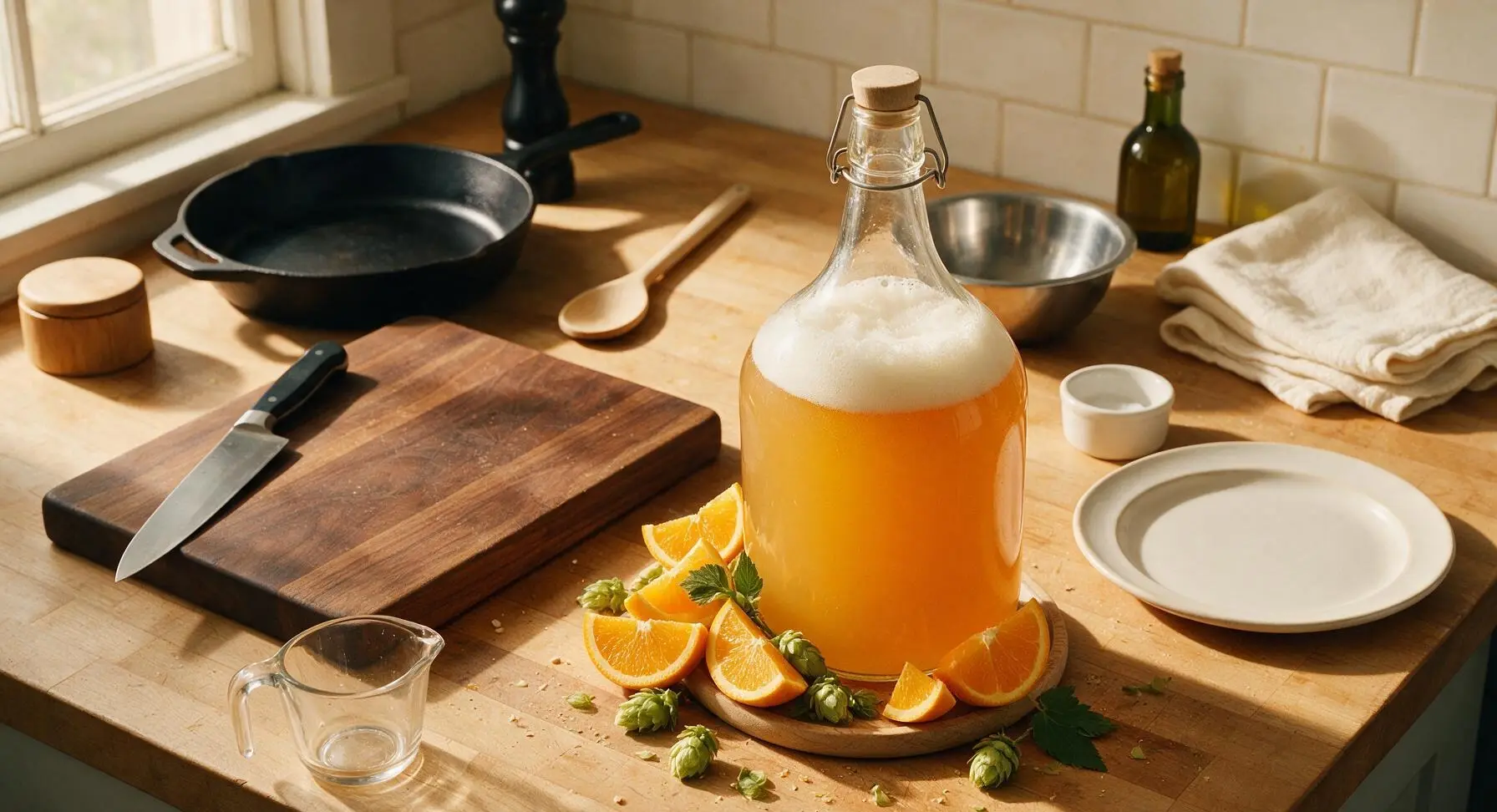
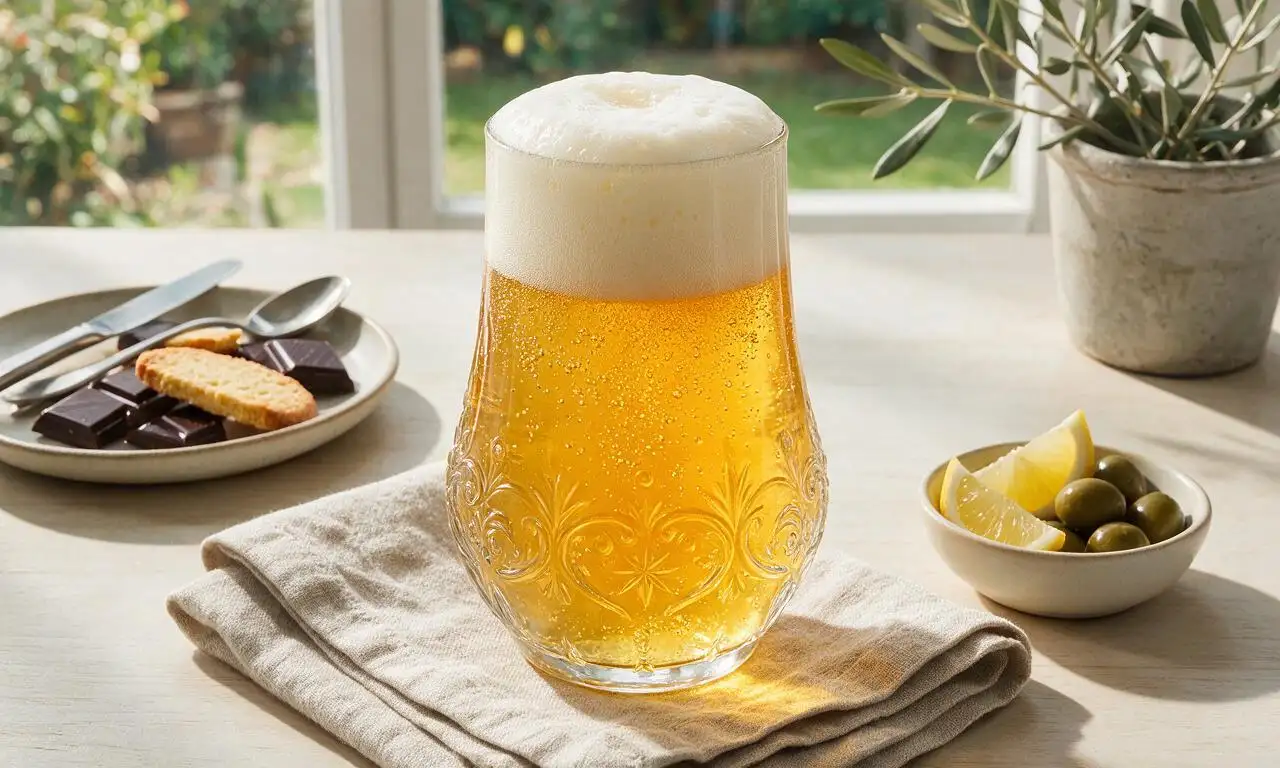
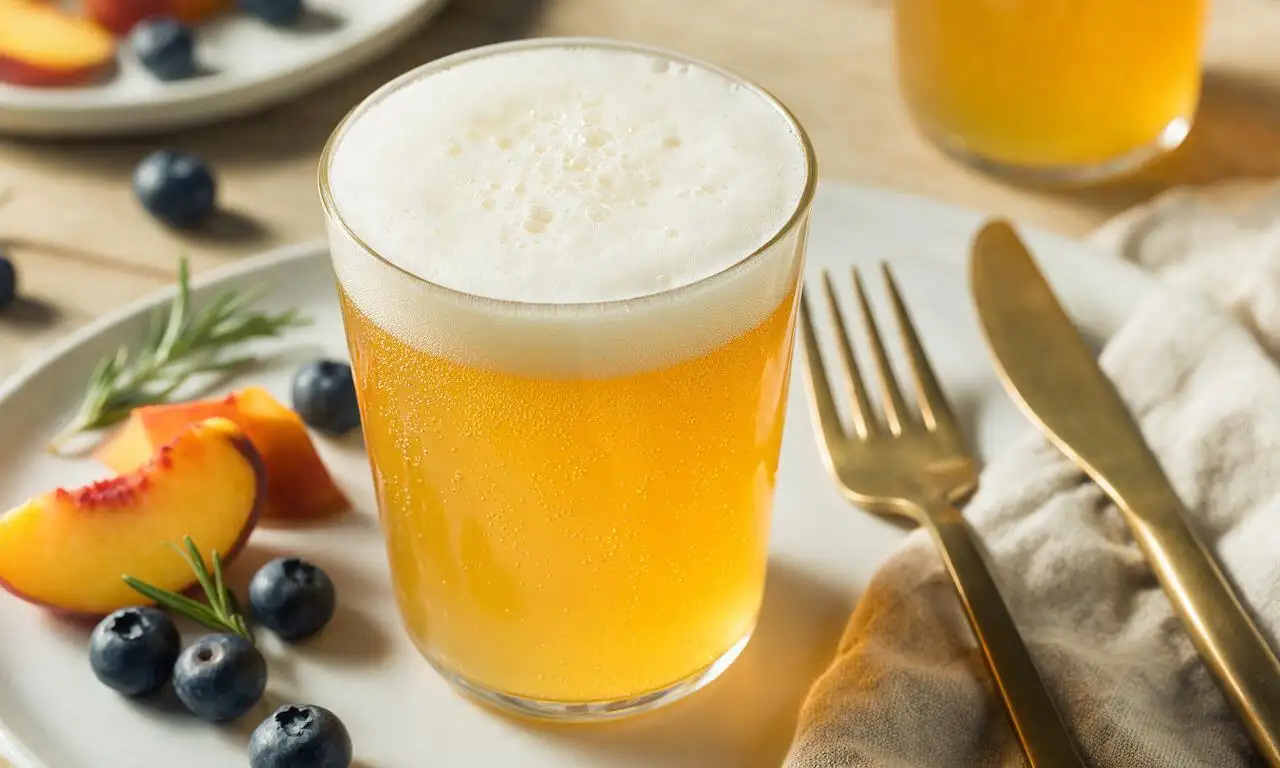
Hazy, golden-orange, and bursting with bright tropical hop aroma, this classic Vermont-style IPA balances soft malt sweetness with smooth citrus and pine notes for an incredibly drinkable craft brew.
Ingredients
Steps
Sanitize Brewing Gear
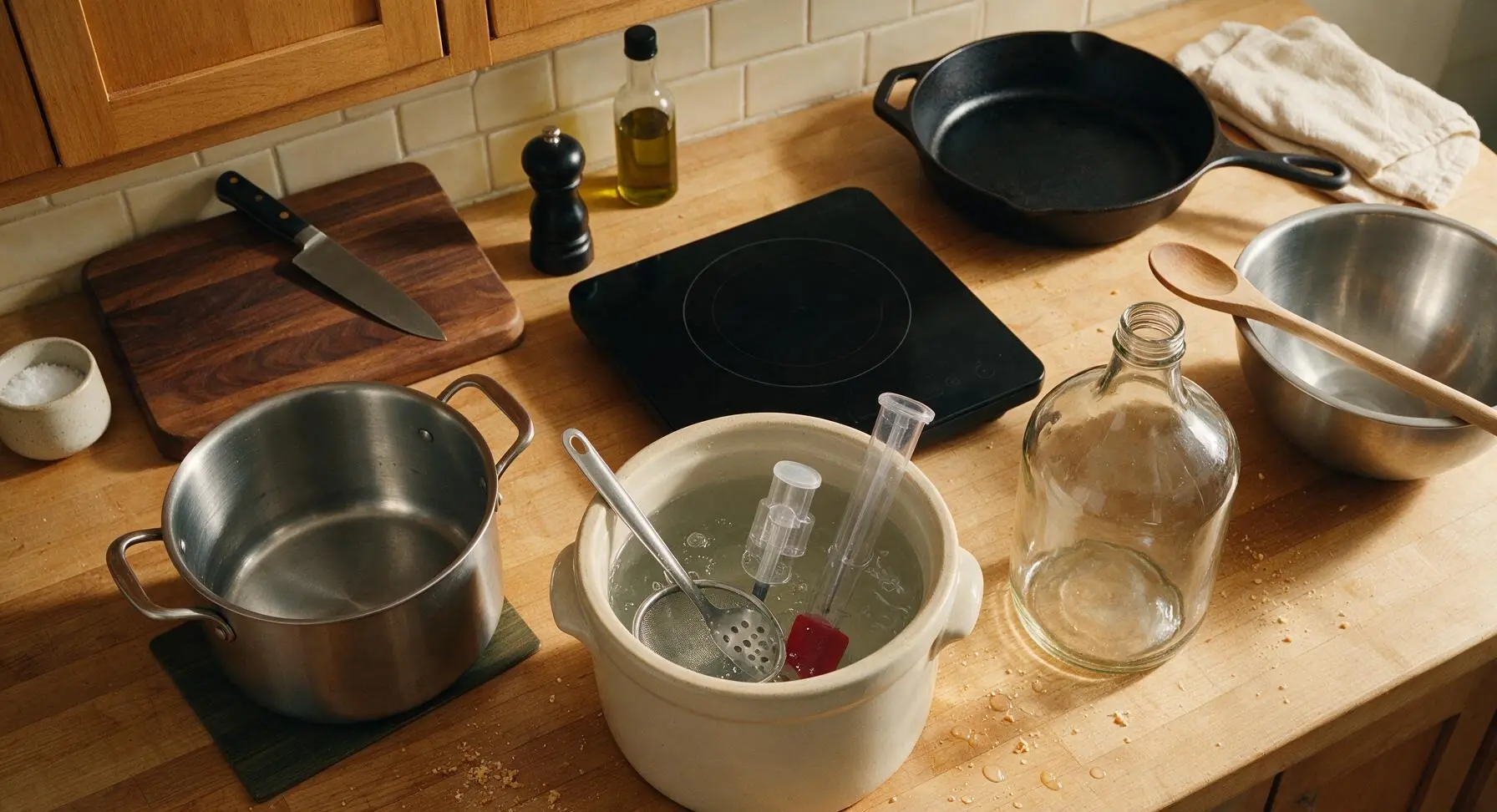
First, fill the fixed matte cream ceramic crock with 1 gallon of cool water and 1 tablespoon of no-rinse brewing sanitizer. Submerge the slotted stainless steel stirring spoon, fine mesh strainer, 3-piece airlock, auto-siphon, and silicone spatula in the solution for 60 seconds. Wipe the interior of the 1-gallon glass carboy and 5-quart stainless steel brew pot with sanitizer solution using a clean lint-free cloth. Ensure every surface that will touch cooled wort is fully sanitized to prevent bacterial contamination and off-flavors. Air-dry tools on the folded oatmeal cotton towel for 2 minutes before use.
Heat Mash Water
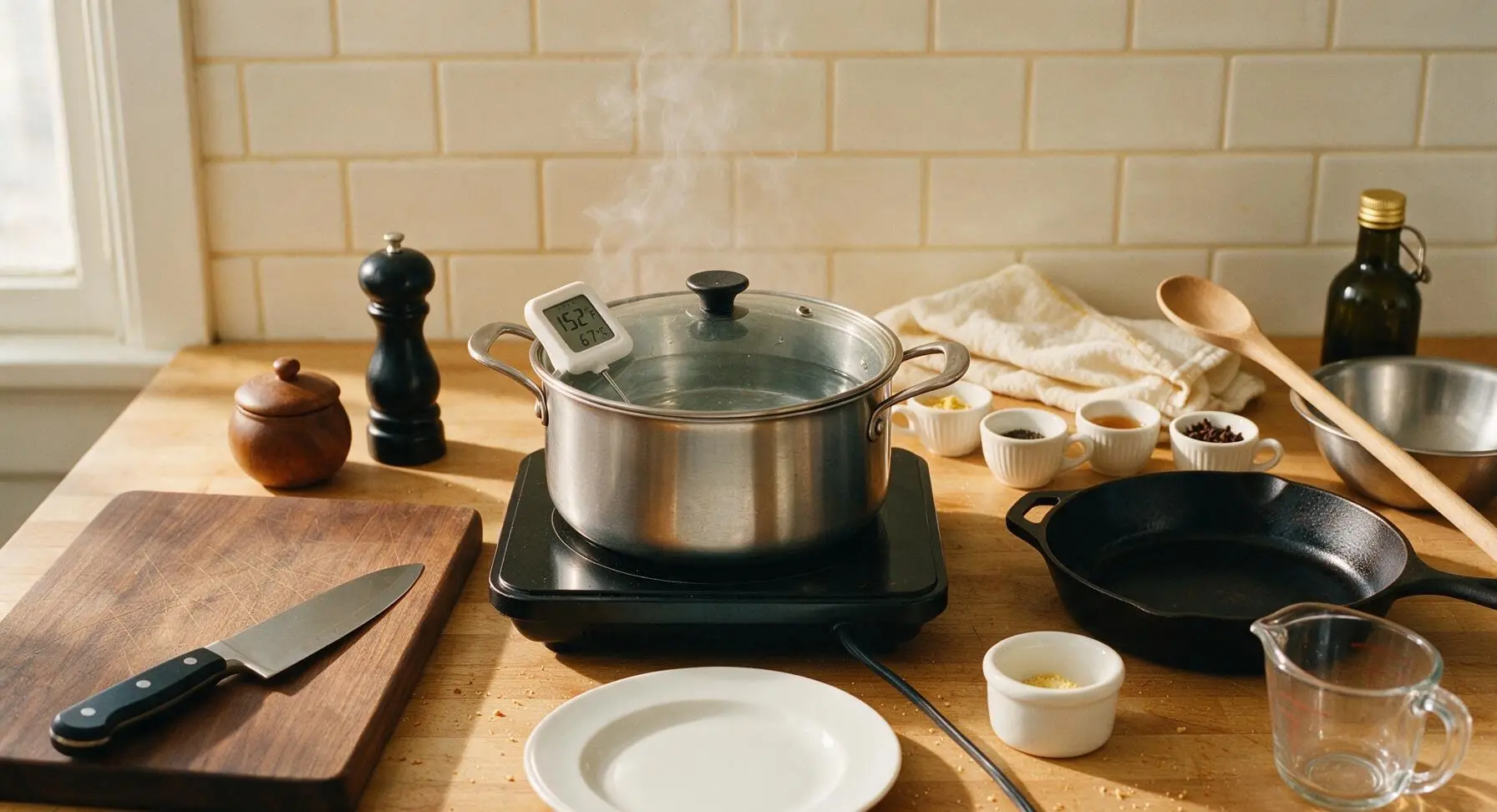
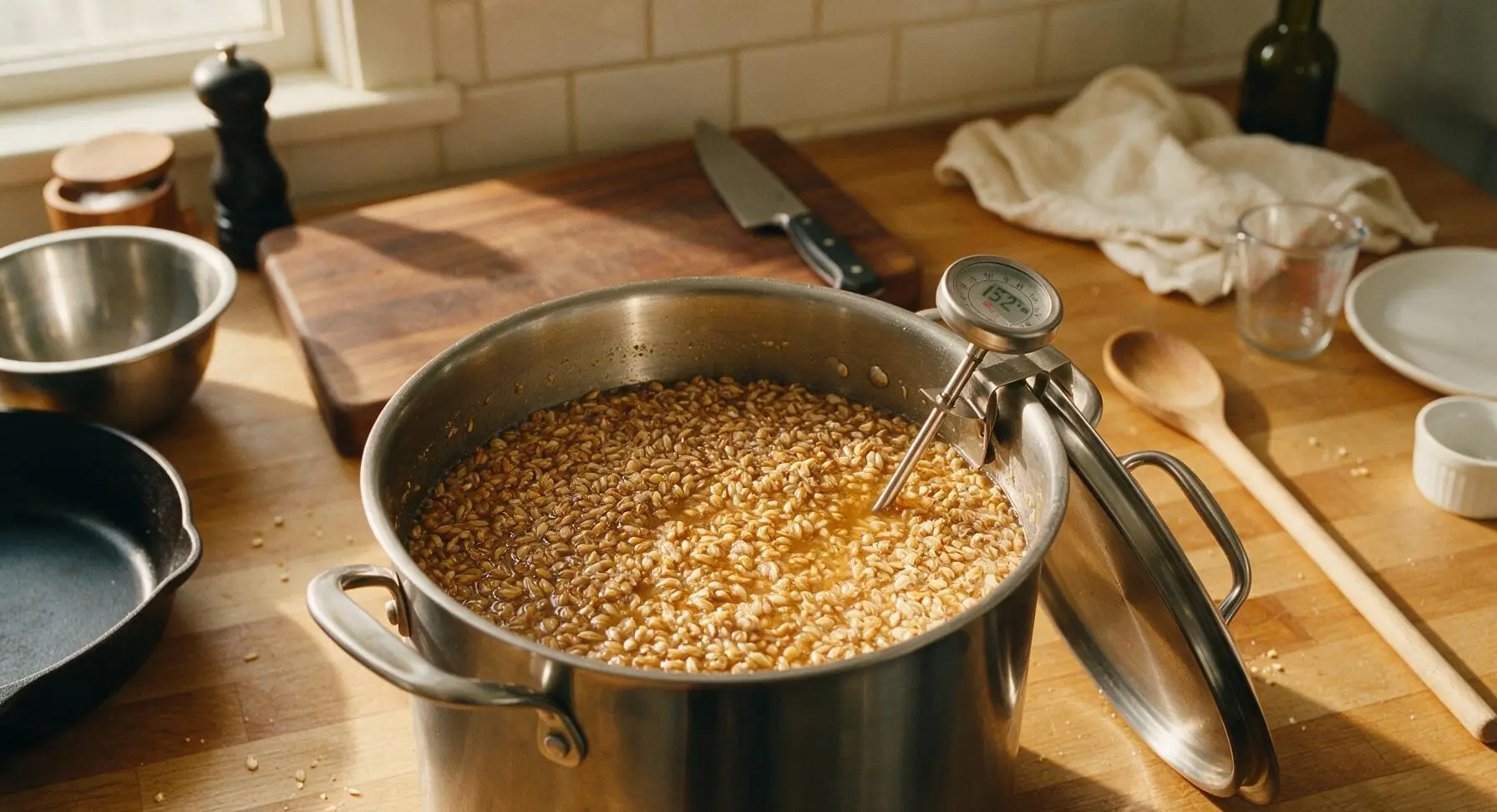
Pour 1 gallon of filtered water into the 5-quart stainless steel brew pot, add the single Campden tablet to neutralize chlorine that can cause medicinal off-flavors, and set the pot on the matte black induction burner over medium heat. Clip the digital instant-read thermometer to the pot rim to monitor temperature, heating until the water reaches a steady 152°F (67°C), the ideal temperature for starch conversion. Do not let the water reach a boil at this stage.
Steep Milled Grains
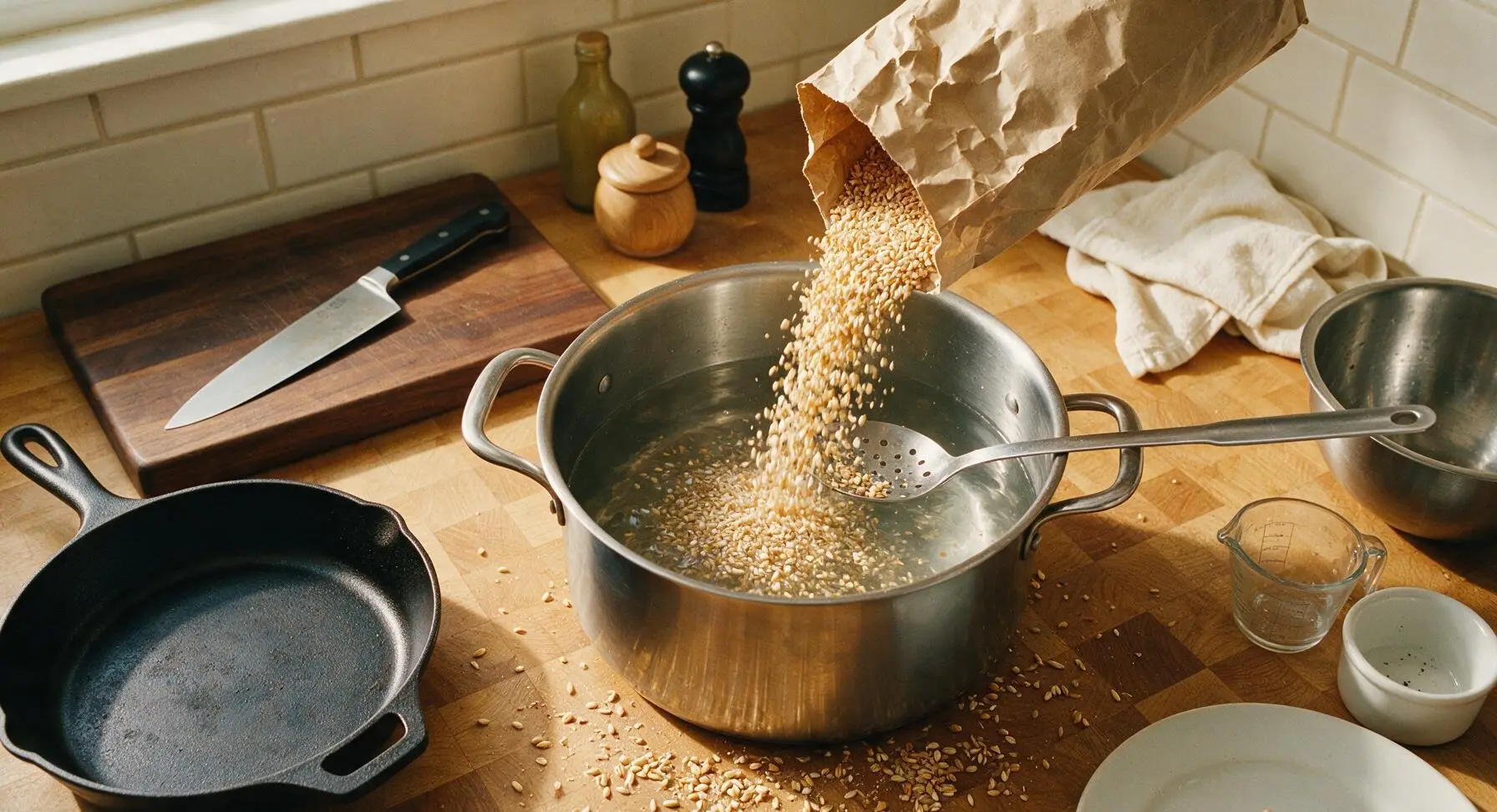
Add all milled 2-row pale malt, wheat malt, and Carapils malt to the heated water, stirring thoroughly with the long slotted stainless steel spoon to break up any dry clumps of grain. Hold the mash temperature steady at 150-155°F for 60 minutes, covering the pot with its stainless lid and adjusting burner heat as needed. Over the hour, the liquid will turn a deep honey gold, smell sweet and bready, as grain starches convert to fermentable sugar. After 60 minutes, pour the mash through the fine mesh strainer to separate the sweet liquid (wort) from the spent grain solids.
Boil and Add Hops
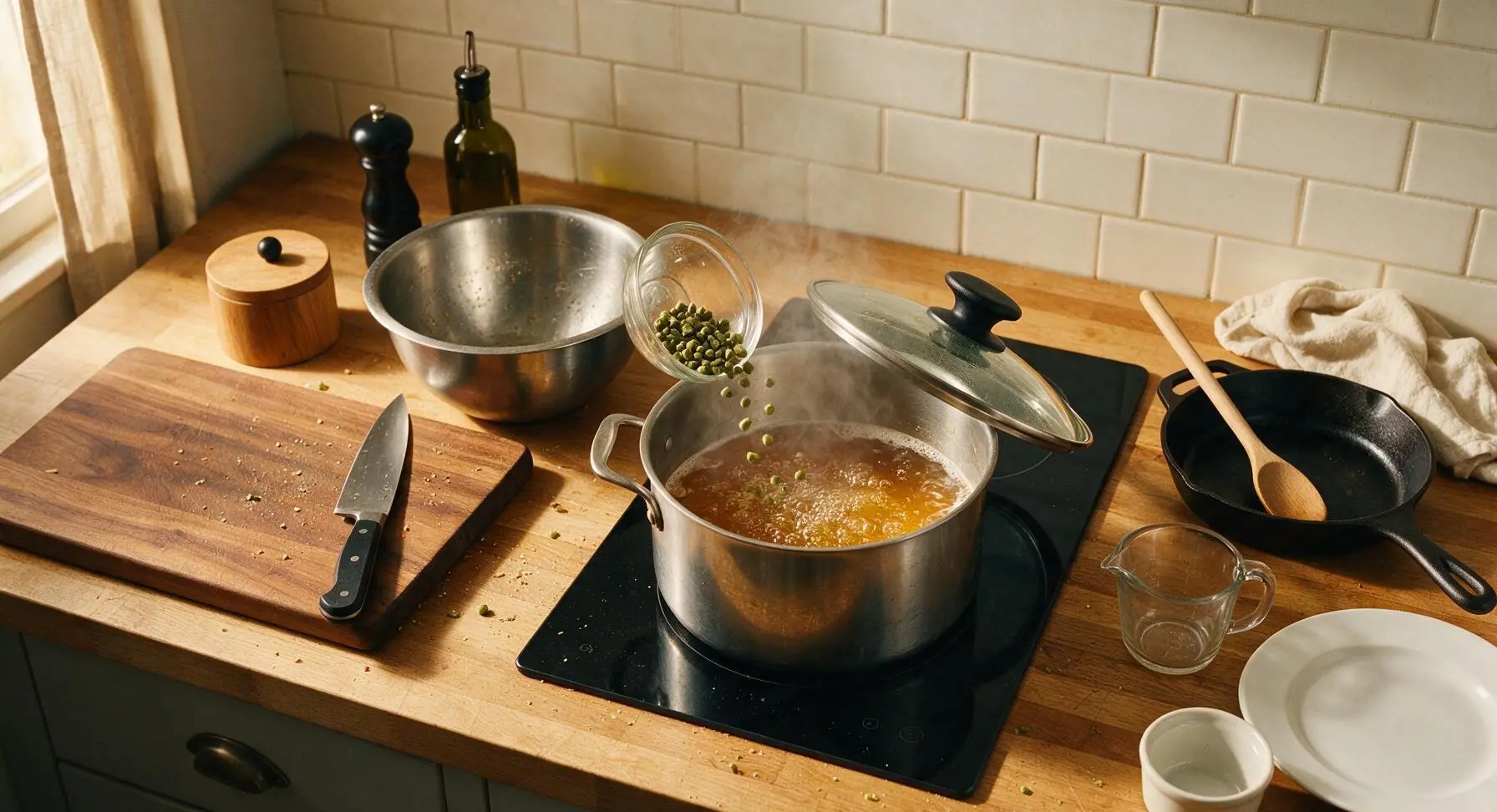
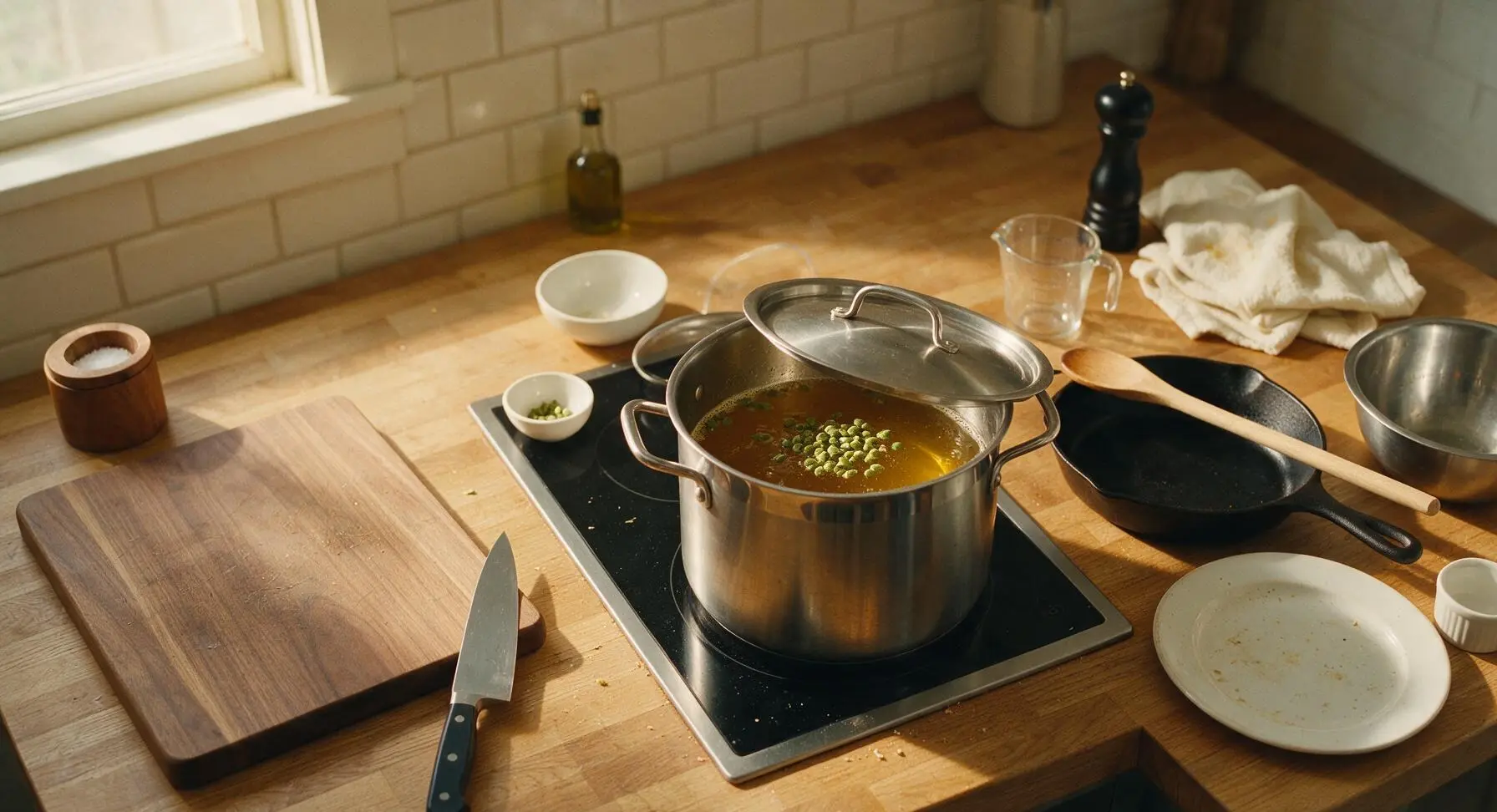
Return the strained sweet wort to the brew pot on the induction burner, and bring to a gentle, rolling boil (212°F). Once boiling is steady, add 0.5 oz of Cascade hops for balanced bitterness, then set a timer for 60 minutes. With 15 minutes remaining in the boil, add 0.25 oz of Citra hops. When the 60-minute timer expires, turn off the burner completely, add the remaining 0.75 oz Citra and all 0.5 oz Mosaic hops for bright tropical aroma, cover the pot, and let rest for 20 minutes (whirlpool steep) to lock in juicy hop flavor without adding harsh bitterness.
Cool and Pitch Yeast
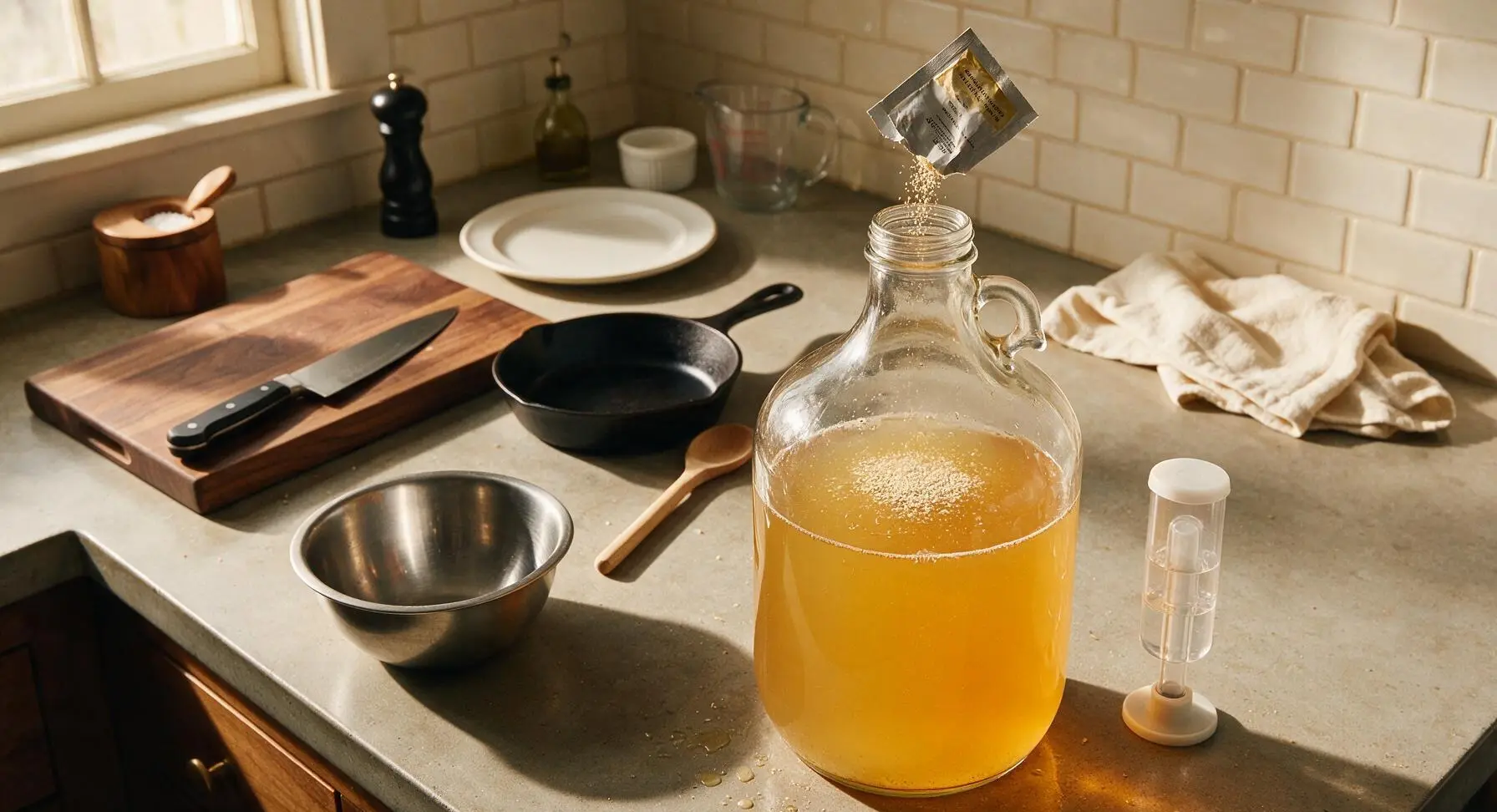
Move the covered pot of wort to an ice bath to cool rapidly to 70°F (21°C), monitored with the digital thermometer (this takes approximately 20 minutes; rapid cooling prevents off-flavors and contamination). Once cool, pour the wort through the sanitized fine mesh strainer into the 1-gallon glass carboy to remove hop solids, topping off with extra filtered water if needed to reach the 1-gallon volume mark. Sprinkle the entire packet of US-05 American ale yeast over the surface of the wort, then seal the carboy neck with a sanitized rubber stopper and fit the 3-piece airlock filled halfway with sanitizer solution.
Ferment Two Weeks
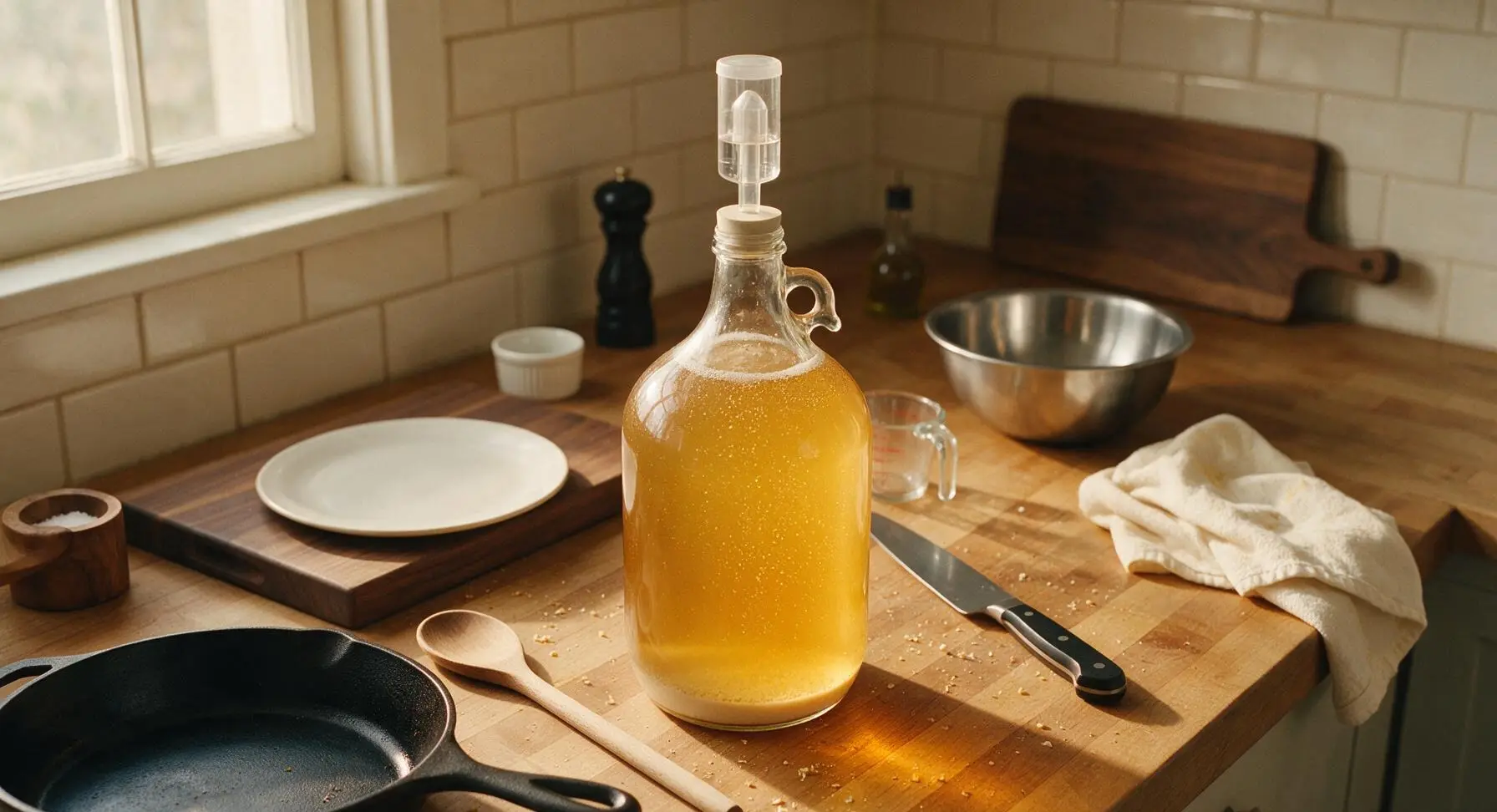
Leave the sealed carboy on the counter (or move to a dark, temperature-stable spot held at 65-70°F / 18-21°C) away from direct sunlight. Over the first 3-5 days, steady bubbles will rise through the airlock as yeast converts sugar to alcohol and carbon dioxide. Let fermentation continue for 14 full days, until bubbling in the airlock stops completely, the beer clarifies slightly, and a thin, pale layer of yeast sediment settles at the bottom of the carboy. Do not open the carboy during fermentation to avoid oxygen exposure or contamination.
Bottle and Carbonate
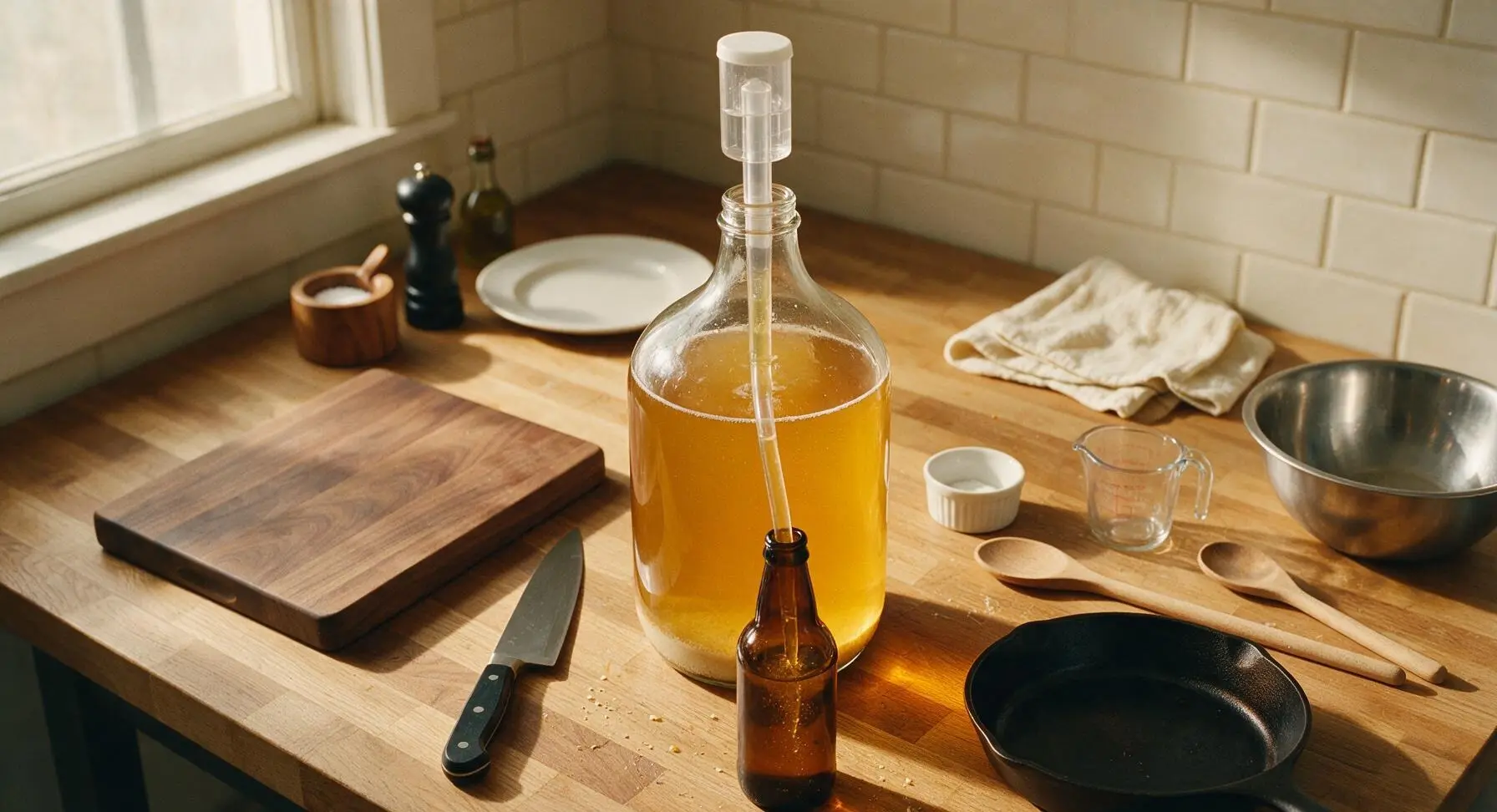
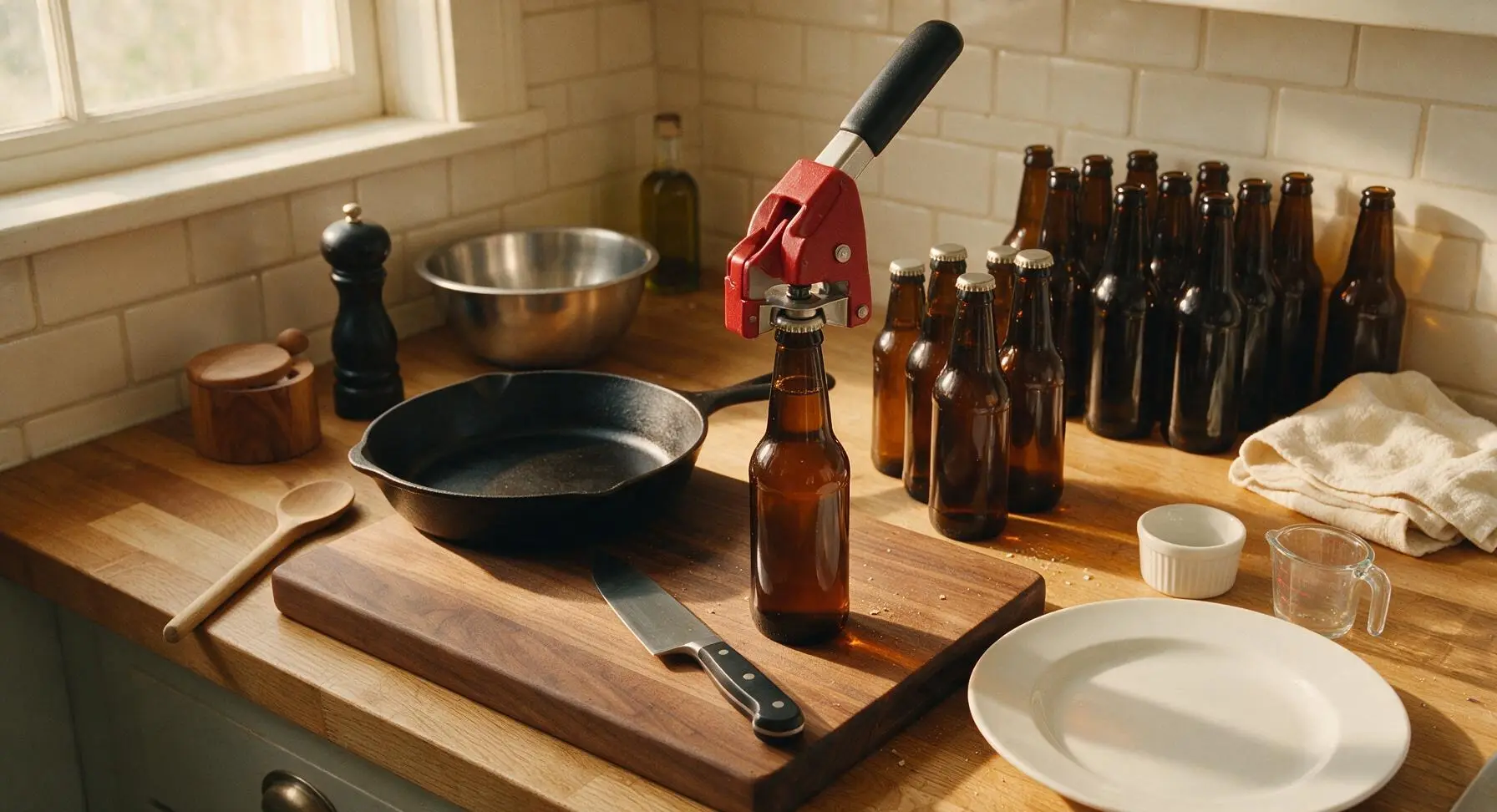
Once fermentation is complete, use the sanitized auto-siphon to gently transfer the beer from the carboy into a sanitized container, stirring in 1 oz of corn priming sugar with the silicone spatula to create natural carbonation. Siphon the beer into clean, sanitized 12oz amber glass bottles, leaving 1 inch of headspace at the top of each bottle, taking care not to siphon the yeast sediment at the carboy base. Use the red bench capper to seal each bottle with a metal crown cap. Store sealed bottles at room temperature (65-70°F) for 7 days to carbonate fully, then chill for at least 24 hours before pouring.
Tips
2.Hold fermentation temperature steady between 65-70°F: temperatures above 75°F cause the US-05 yeast to produce harsh solvent-like off-flavors (reminiscent of banana or nail polish remover) that disrupt the beer’s smooth, balanced profile.
3.Avoid siphoning the pale yeast sediment layer at the bottom of the fermenter when bottling: this sediment will cause excess murkiness and yeasty, bread-like off-flavors that overpower the bright hop character of the finished beer.
OMG this is my third 1-gallon batch ever and this Vermont IPA came out SO good! Juicy, not too bitter, exactly that hazy New England vibe I was chasing without dropping a ton on fancy equipment. My roommates and I crushed the whole bottle share last weekend at our potluck, everyone kept asking for the recipe. Total game changer for small batch homebrewing!
First time trying an IPA after making a bunch of basic ciders last year. Medium difficulty was no joke! I messed up my first gravity reading because I forgot to cool the wort all the way down, but I followed the rest of the steps to a T and the final beer is way better than I expected. Not overly piney, super smooth, even my partner who hates IPAs liked it!
Made this for our neighborhood block party last Saturday and it was the first growler to kick! Everyone was shocked it was a small batch homebrew, thought I bought it from the local craft brewery down the street. Will absolutely be making a double batch next time once I grab a bigger fermenter.
Wait, quick question — I don’t have the specific yeast the recipe calls for, can I substitute a regular US-05 ale yeast and still get that classic Vermont hazy flavor? I don’t want to run to the homebrew shop across town if I don’t have to, I already have like 3 packs of US-05 in my fridge.
21 days total wait time felt like FOREVER but let me tell you, it was 100% worth the patience. I almost caved and bottled early on day 14 because I was so excited, but I stuck it out and the carbonation is perfect, no gushers, no flat bottles. Game changer.
Super straightforward for a medium difficulty recipe! I’ve been brewing 5 gallon batches for years and wanted something small to test out new hop combinations, this base recipe is perfect to tweak. I added a little orange peel at knockout and it’s chef’s kiss, tastes like summer in a glass.
Help! I did my boil today and I think I boiled off a little too much water, ended up with only 0.8 gallons of wort instead of 1 full gallon. Am I screwed? Should I top it off with distilled water before I pitch the yeast?
Made this with my teen kid last weekend as a little mom-kid project and we had such a blast! They loved learning about the fermentation process, and we’re counting down the days until we can bottle and taste it. We made custom labels for the bottles too, it’s going to be so fun to give a few out to family for Christmas.
Skip the overpriced homebrew shop recipe kits, this is better and way cheaper to source ingredients for individually. I priced it out and the whole batch cost me like $12, which is wild compared to $18 for a 4 pack of good hazy IPA at the liquor store. Saving so much money making this at home!
I was worried the 1 hour boil would make my whole apartment smell like hops for days but it was totally fine, I just had the range hood on the whole time and opened a window. The final beer is smooth, juicy, has that perfect little bite at the end, zero off flavors. 10/10, will make again.
Took a bottle of this to my monthly homebrew club meetup last night and it got second place in the hazy IPA category! I’ve only been brewing for 6 months so I was totally shocked, I thought for sure the guys who have been brewing for 20 years would sweep the category. Can’t thank you enough for this easy, reliable recipe!
Quick question for folks who have made this — how long do the bottles stay good for after carbonation is done? I made a batch 2 weeks ago (so it’s fully carbed now) but I’m going out of town for 10 days, will it still taste fresh when I get back?
I don’t have a fancy wort chiller, will this recipe still work if I just do an ice bath in my sink to cool the wort down after the boil? I’ve seen people say you need a chiller for IPAs to avoid off flavors but I don’t want to buy more gear right now.
Brewed a batch of this to have on hand for football watch parties this fall and it’s the perfect crowd pleaser! Not too bitter for people who only drink light beer, but hoppy enough to satisfy the craft beer fans in my friend group. Already planning my second batch.
As someone who’s messed up so many homebrew batches by overcomplicating recipes, this was such a breath of fresh air. Clear step-by-step instructions, no weird hard-to-find ingredients, and the end result is genuinely better than a lot of commercial IPAs I’ve paid way too much for. SO good, will be a staple in my brew rotation.