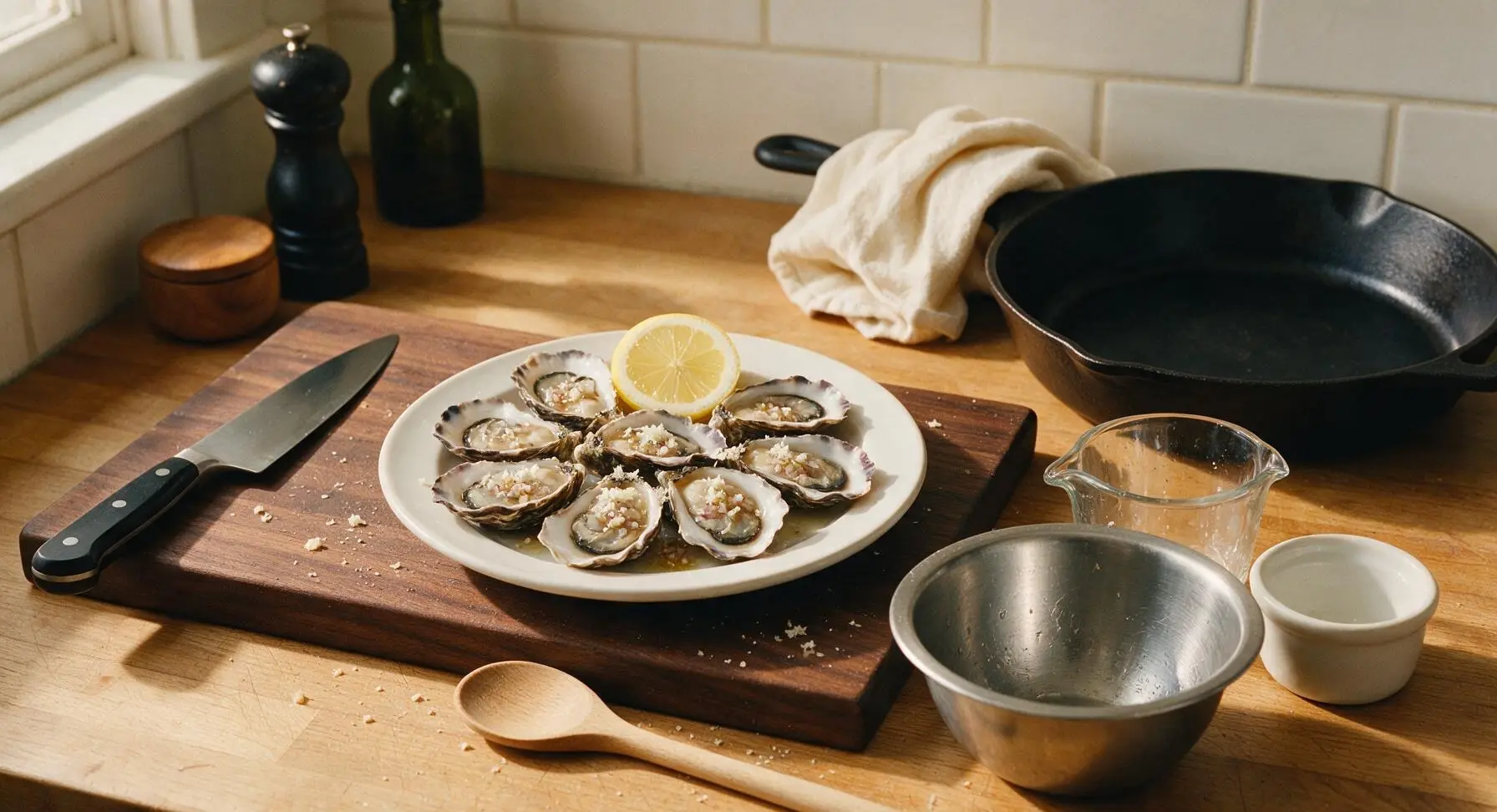
West Coast Oysters

title 1
West Coast Oysters
⏱️ cook time 0 minutes (served raw, no heat required)
🍽️ servings 4
⚡ Difficulty medium

intro

Briny, sweet, ice-cold West Coast oysters on the half shell, served with classic shallot mignonette, fresh horseradish, and lemon for a bright, pure taste of the Pacific coast.

Ingredients
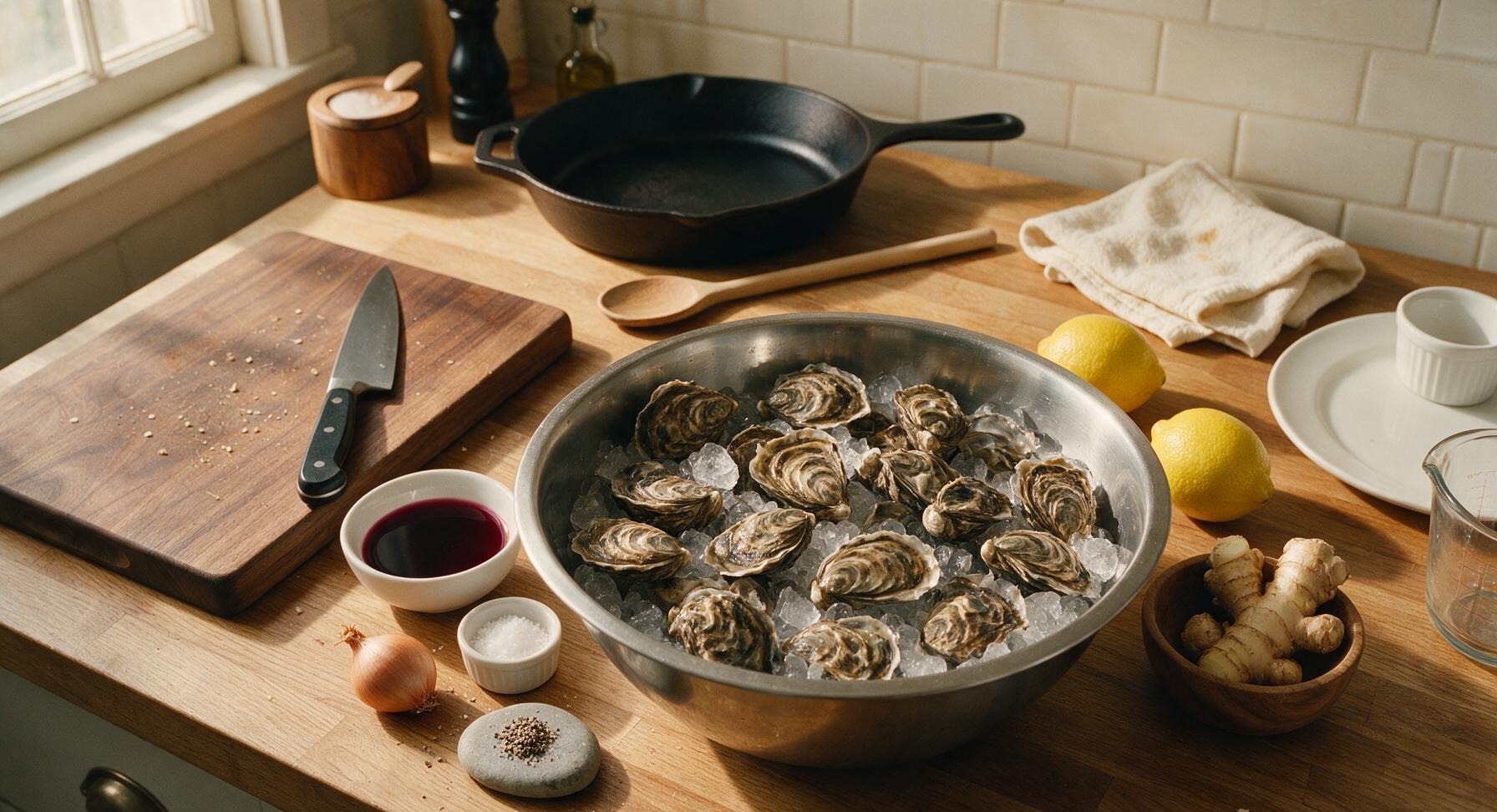
Live West Coast oysters (Pacific/Kumamoto mix) 24 count (approx 1.5kg)
Red wine vinegar 120ml (1/2 cup)
Shallot 1 small (30g)
Freshly cracked black pepper 1 tsp
Fresh horseradish root 60g (1 small piece)
Lemons 2 medium
Flaky sea salt 1 tbsp
Crushed ice 1L (4 cups)

Steps

1

Make Mignonette Sauce

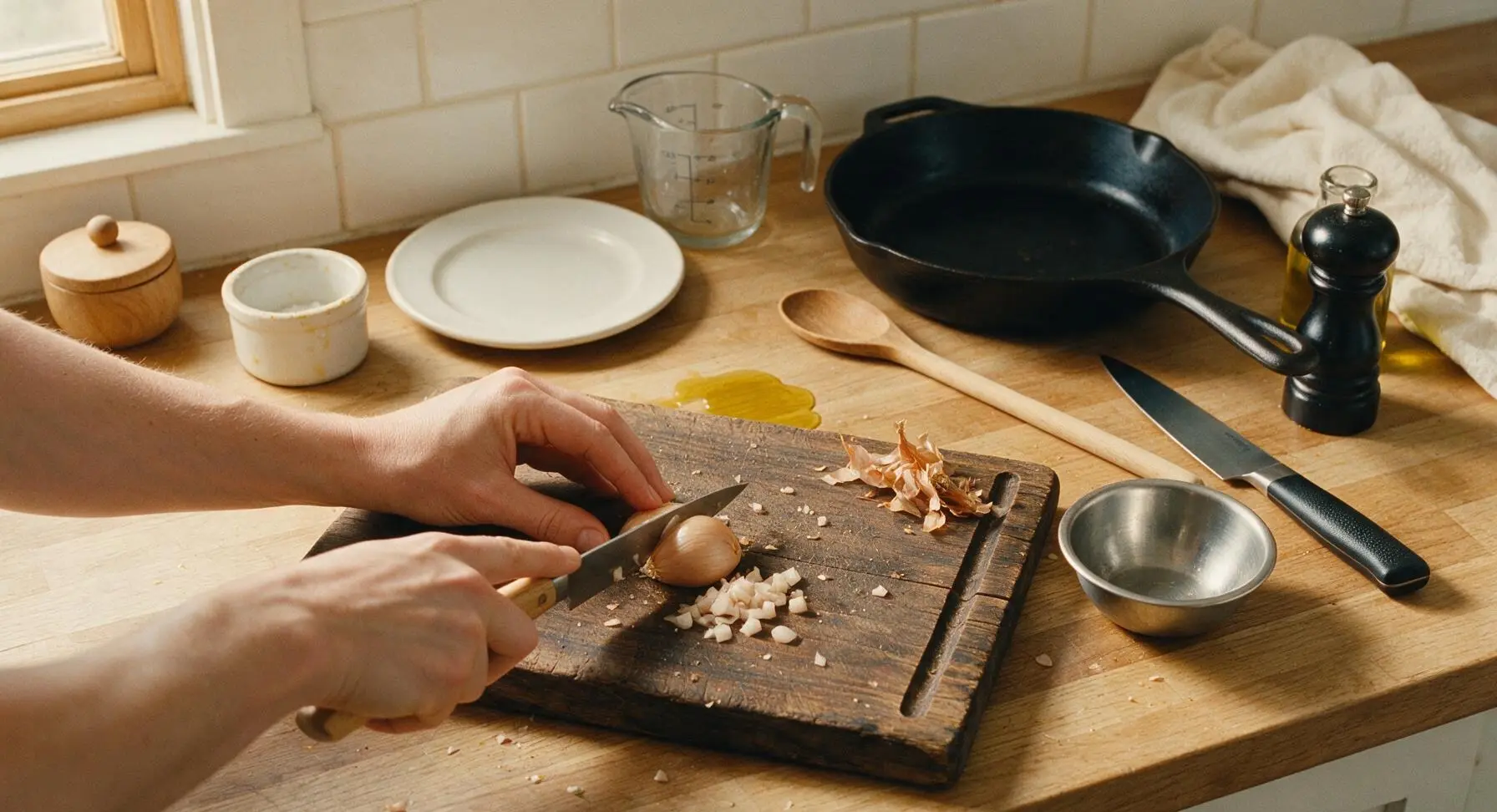
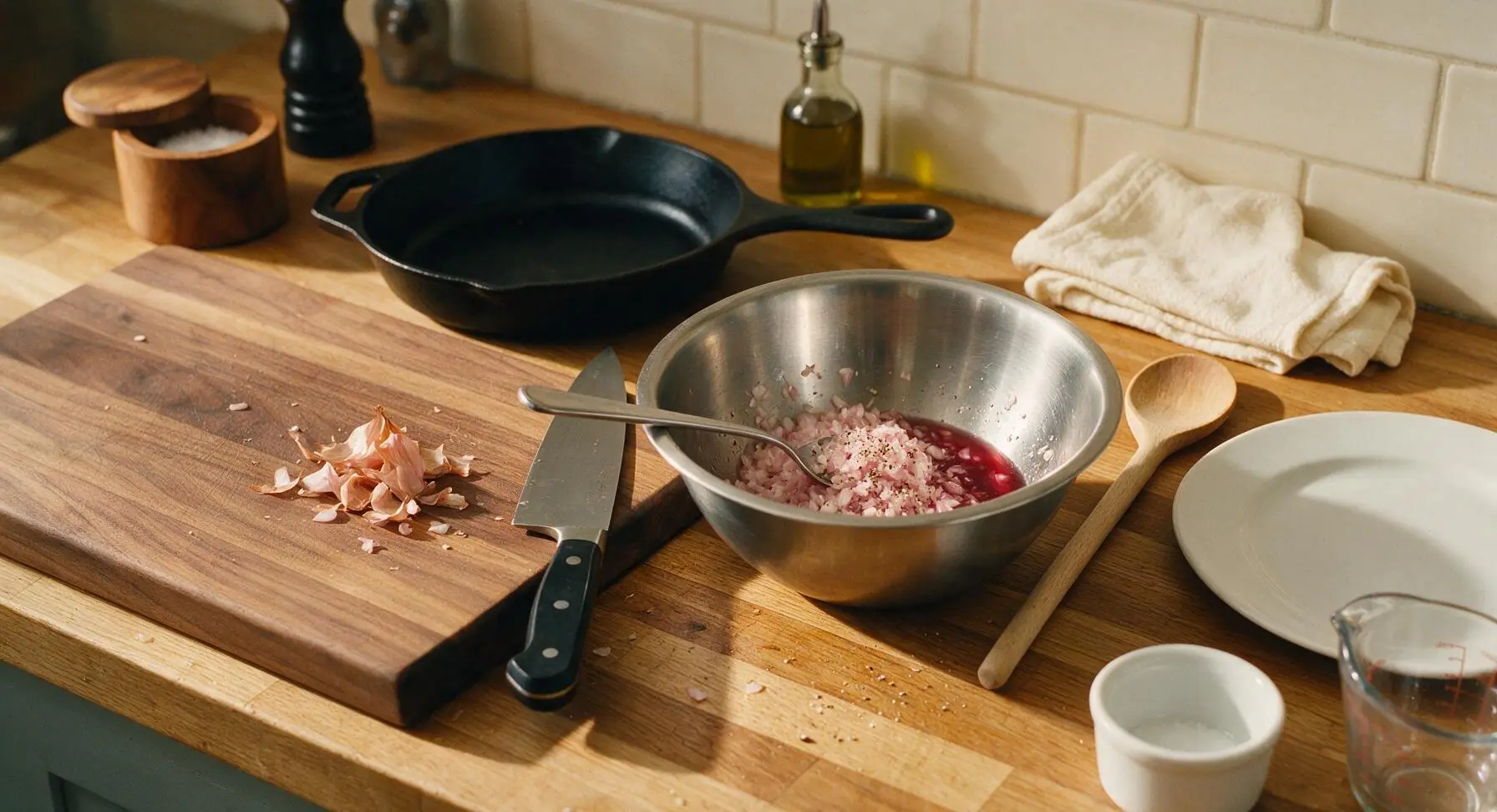
Peel the small shallot and set it on the weathered cedar cutting board. Use the 8cm paring knife to mince the shallot into uniform 1mm fine dice, discarding the dry outer peel and root end. Transfer the minced shallot to the small brushed stainless steel mixing bowl, pour in 120ml (1/2 cup) red wine vinegar, add 1 tsp freshly cracked black pepper, and stir to combine with the 12cm stainless steel stirring spoon. Set the bowl aside for 15 minutes at room temperature to let flavors meld; the shallot will turn soft pale pink as it lightly pickles in the vinegar.
Step 1
step1:Make Mignonette Sauce
Step 1
step1:Make Mignonette Sauce
2

Prep Garnishes and Sides

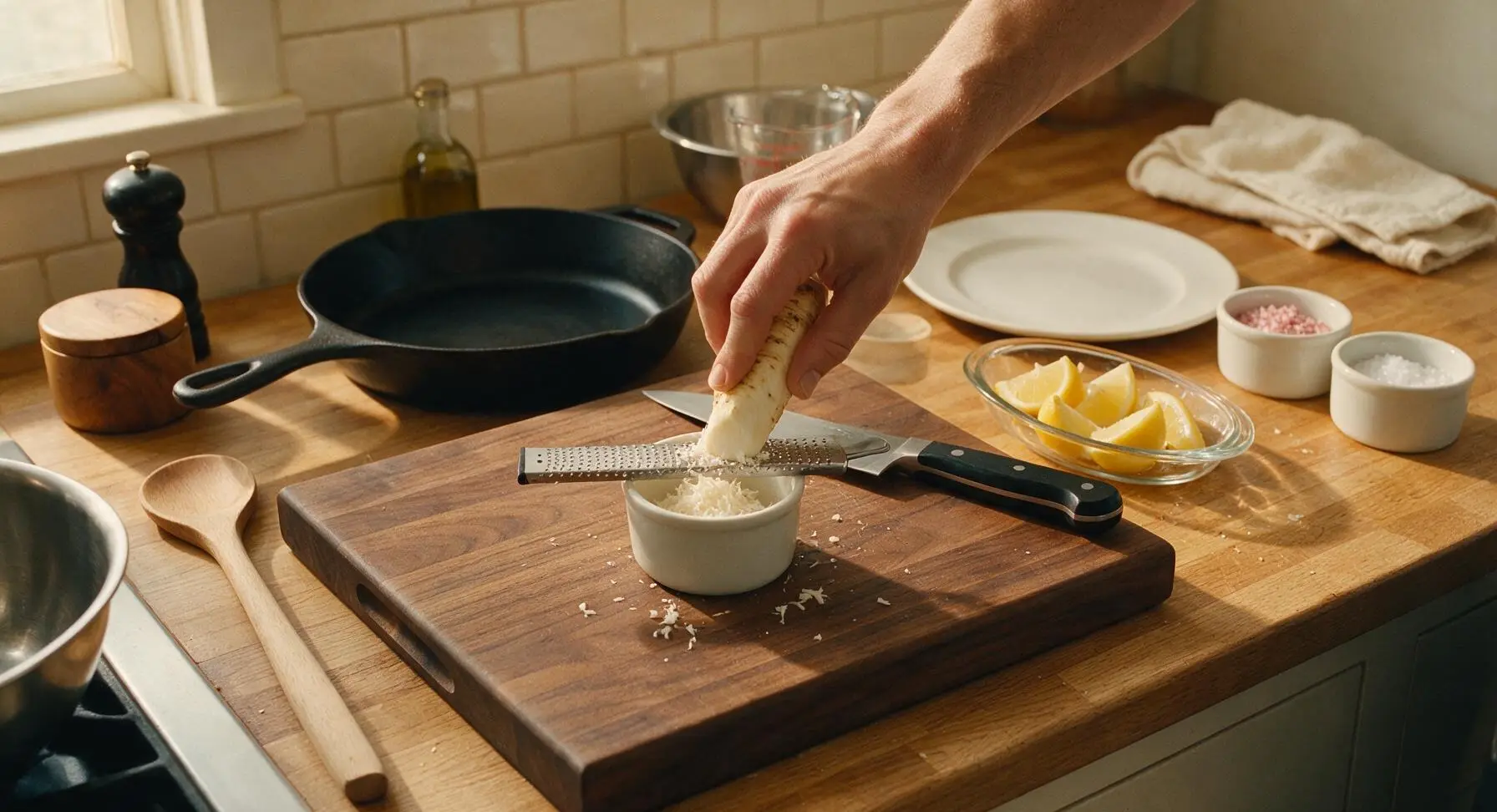
Use the paring knife to trim and peel the rough outer skin from the horseradish root, then cut the two lemons into 8 equal wedges, picking out any visible seeds with the knife tip and placing the wedges in the small oval clear glass dish. Hold the microplane grater over one matte off-white ramekin and grate the peeled horseradish into light, fluffy shreds until you have 3 tablespoons, filling the ramekin. Spoon the rested mignonette into a second ramekin, and add flaky sea salt to the third ramekin.
Step 2
step2:Prep Garnishes and Sides
3

Set Up Shucking Station

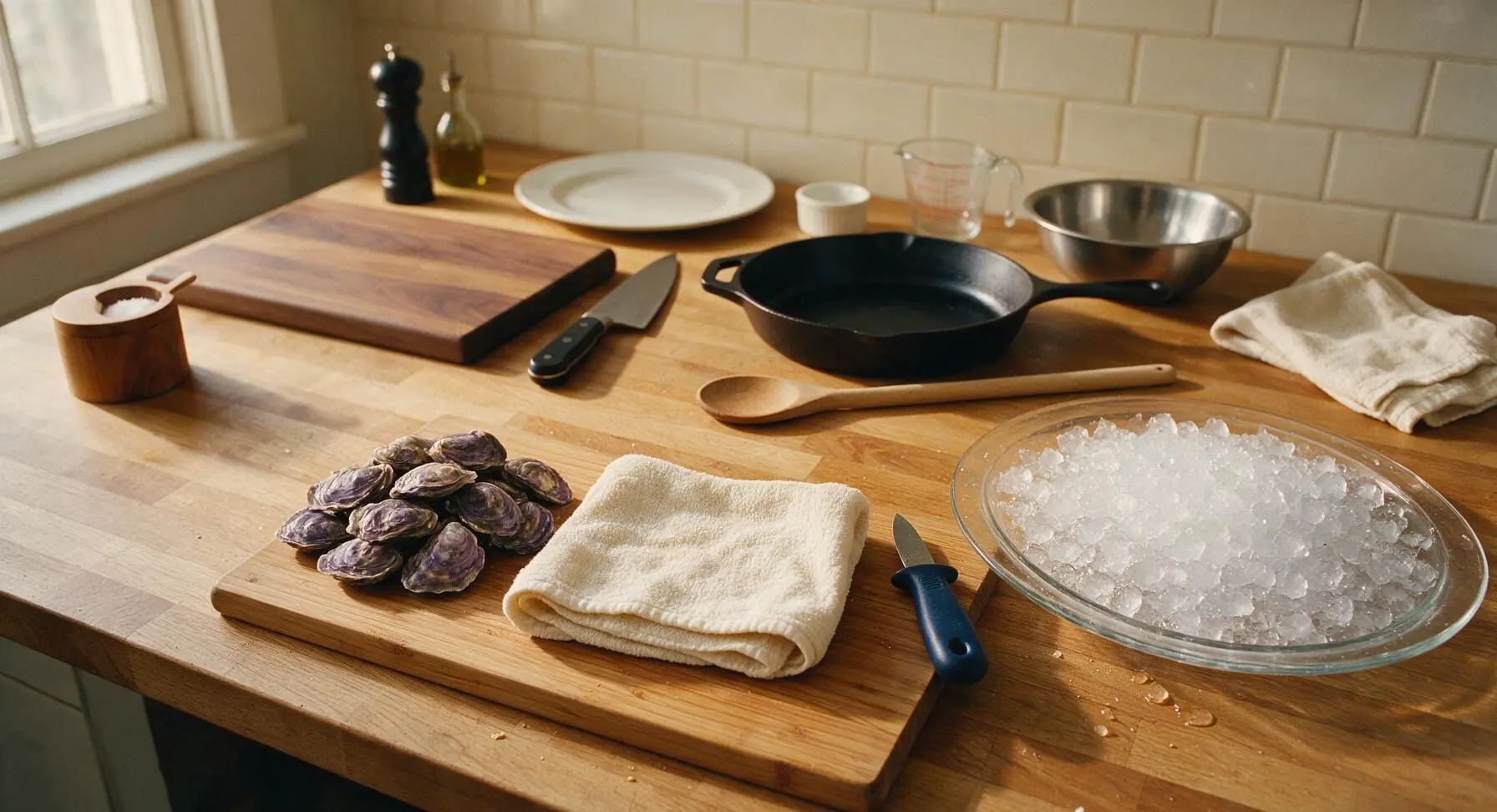
Fold the thick cream striped cotton kitchen towel into a thick 15cm square pad and place it in the center of the cedar cutting board to protect your hand during shucking. Pile the unshucked oysters to the left of the towel pad, and set the navy-grip oyster shucking knife to the right of the towel within easy reach. Fill the large clear glass serving platter with 1L (4 cups) of crushed ice, spreading it into an even 2cm layer across the platter base, and set the platter to the right of the cutting board to receive shucked oysters.
Step 3
step3:Set Up Shucking Station
4

Shuck Oysters Carefully

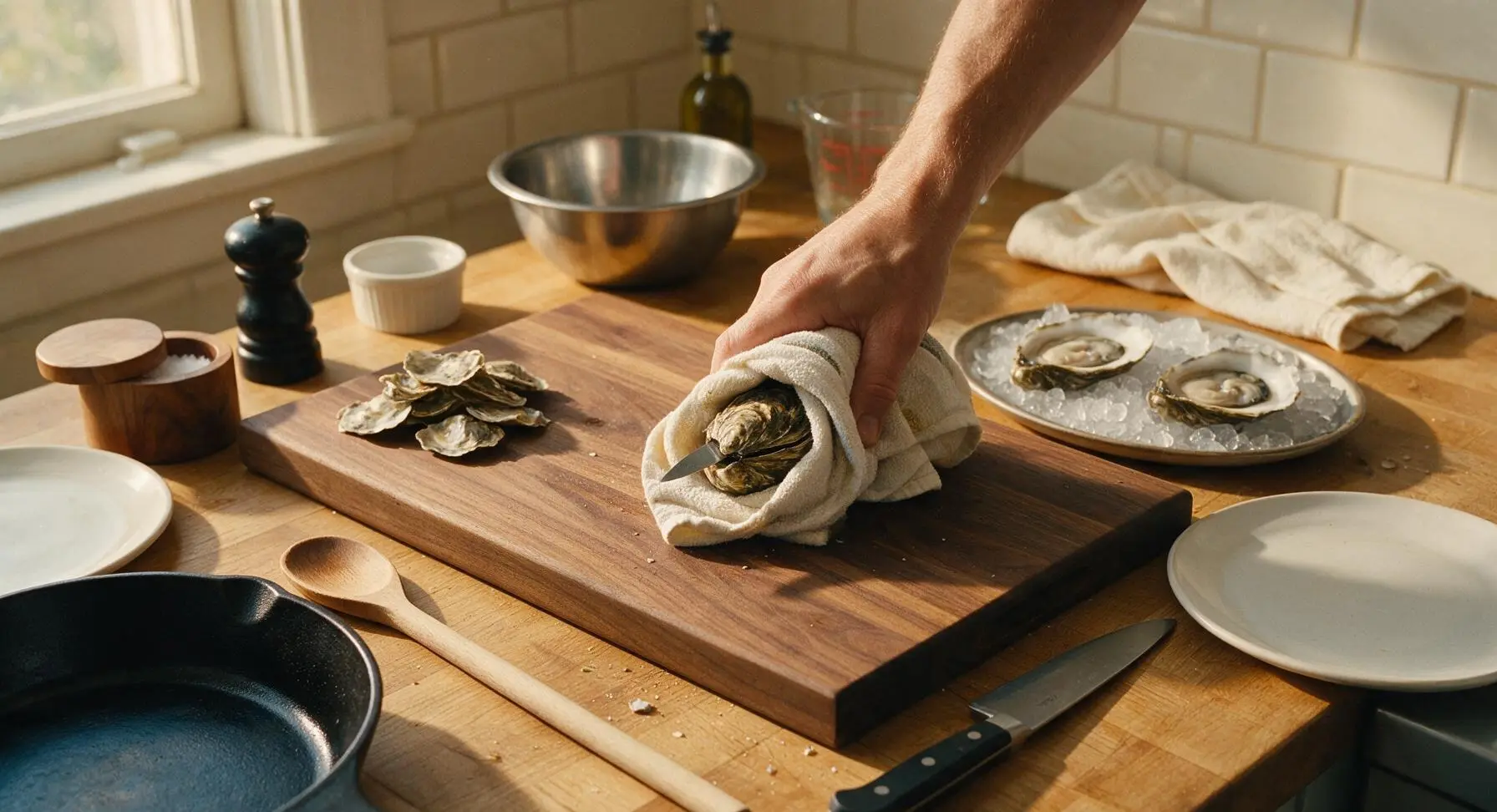
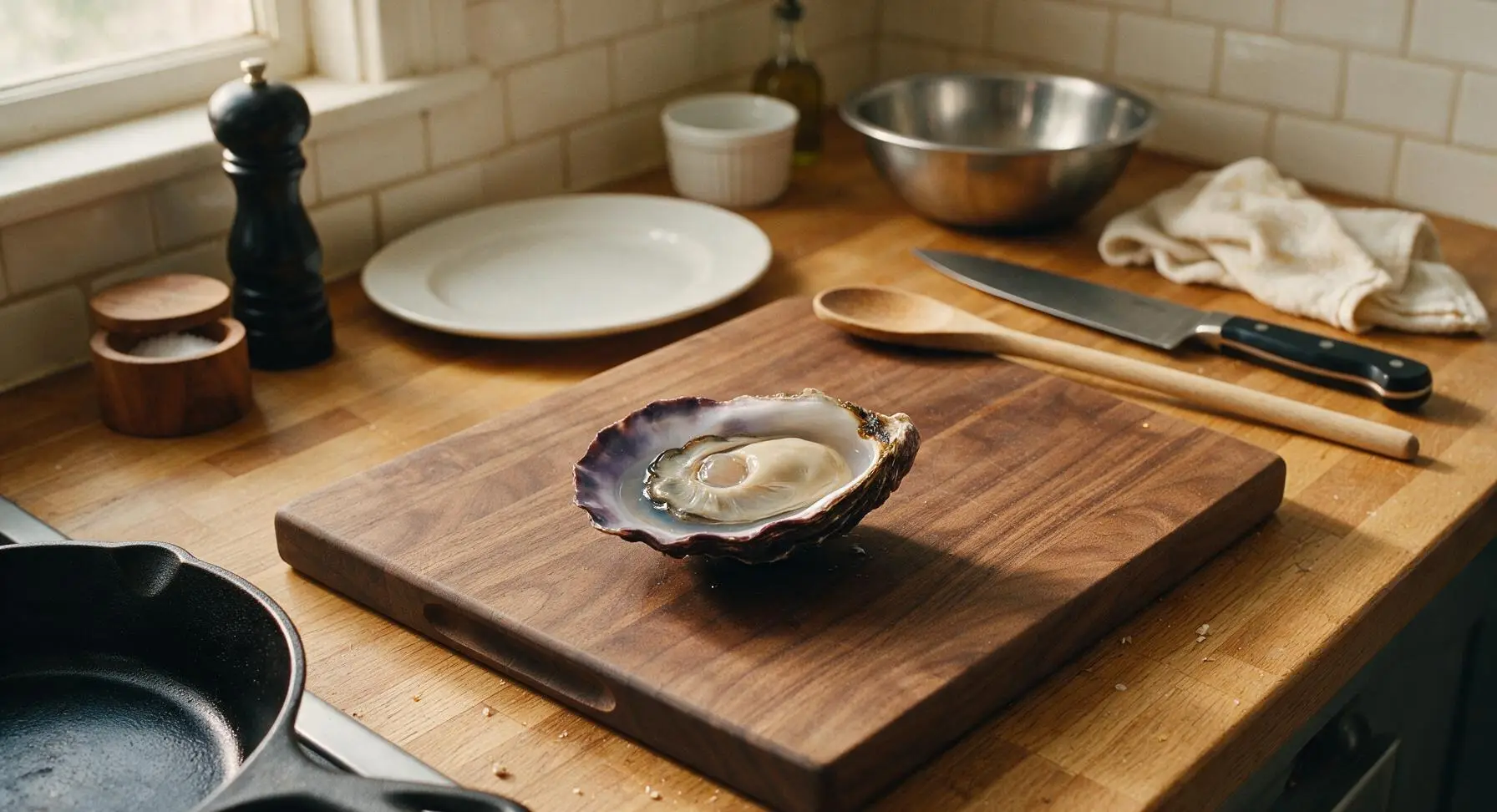
Hold one oyster cupped-side down, wrapped securely in the folded towel pad, with the oyster’s pointed hinged end facing you. Wedge the sharp tip of the oyster shucking knife into the small natural gap in the hinge, applying firm steady pressure and twisting the knife 1/4 turn to pop the hinge seal. Run the knife blade along the inside of the flat top shell to sever the adductor muscle, then lift off and discard the top shell. Run the knife under the oyster meat in the cupped bottom shell to free it, taking great care not to spill the clear briny liquor inside; pick out any tiny broken shell fragments with the knife tip.
Step 4
step4:Shuck Oysters Carefully
Step 4
step4:Shuck Oysters Carefully
5

Arrange Oysters on Ice

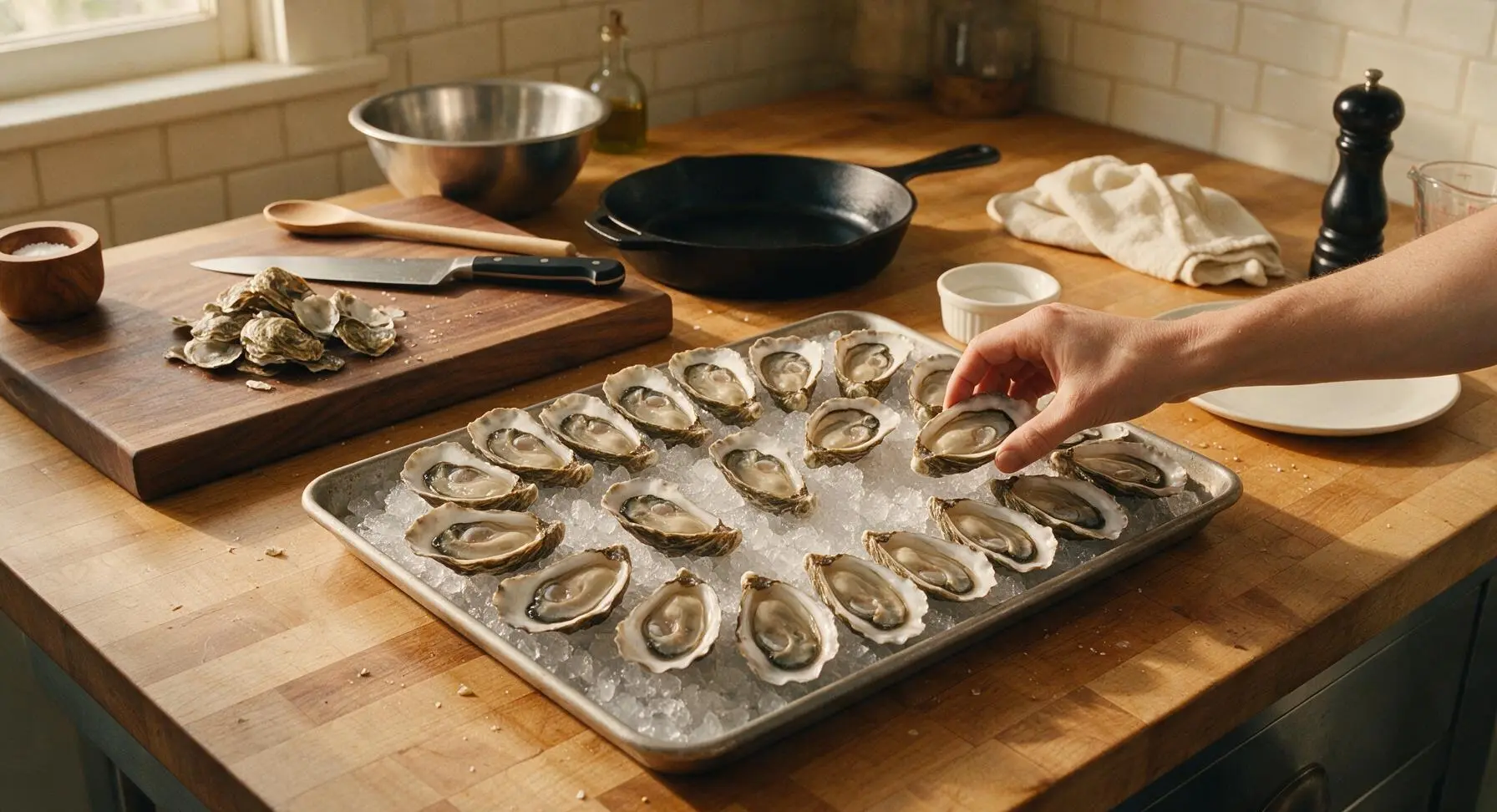
As each oyster is shucked, nestle its cupped shell firmly into the crushed ice on the serving platter, angling the shell slightly so the briny liquor does not spill out. Arrange the oysters in a tight, even circular pattern around the platter, leaving a 10cm wide empty space in the center for the garnish ramekins. Discard any oysters that were gaping open and unresponsive to tapping before shucking, or that have a strong sour odor, as these are unsafe to eat.
Step 5
step5:Arrange Oysters on Ice
6

Add Accompaniment Ramekins

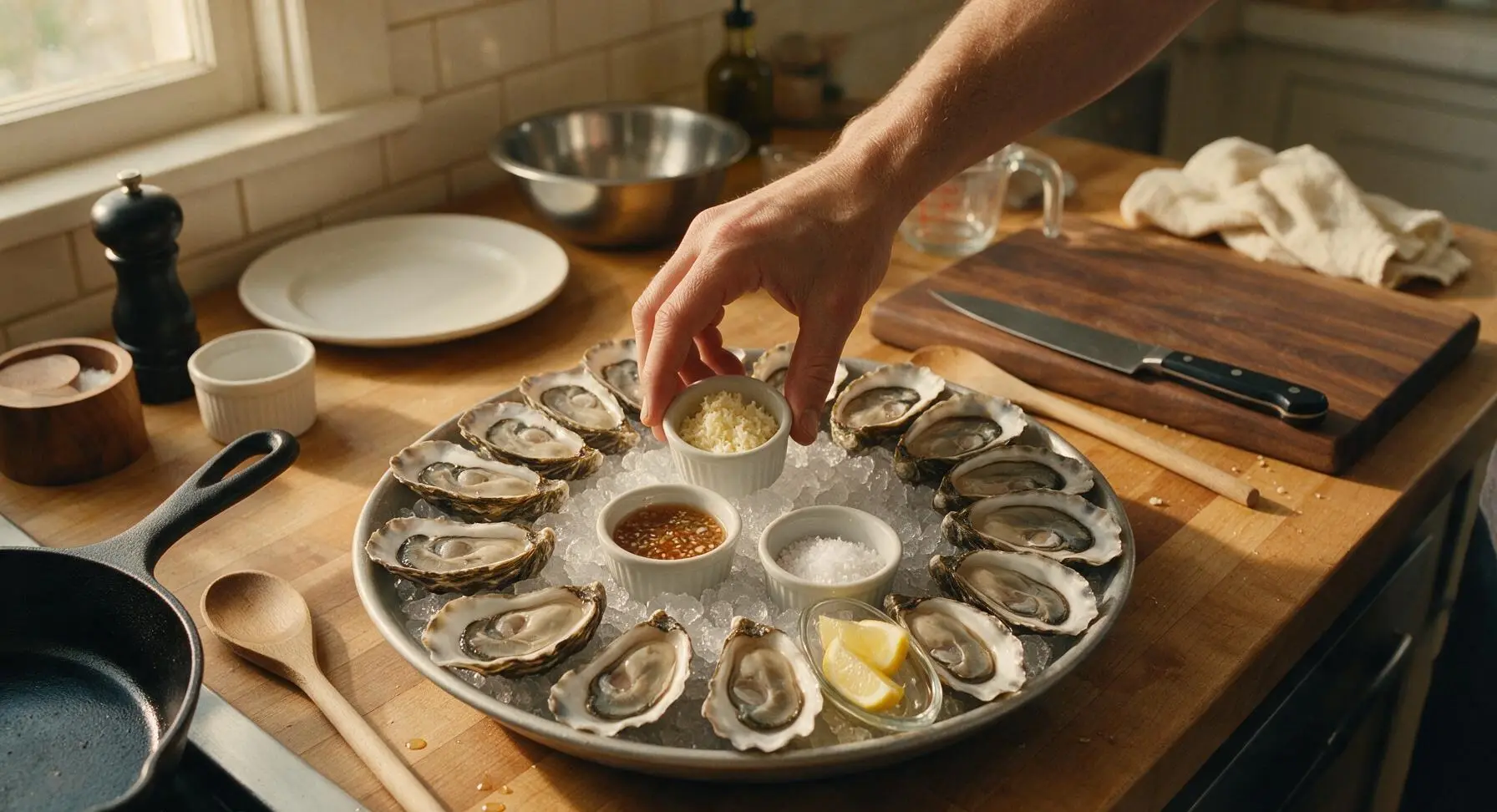
Once all oysters are arranged in a full circle on the ice, nestle the three prepared matte off-white ramekins (mignonette, grated horseradish, flaky sea salt) into the crushed ice in the empty center of the platter, pressing them down gently so they sit level and do not tip. Tuck the small oval glass dish of lemon wedges into a gap between two oysters on the platter’s outer edge for easy access.
Step 6
step6:Add Accompaniment Ramekins
7

Finish and Serve Immediately

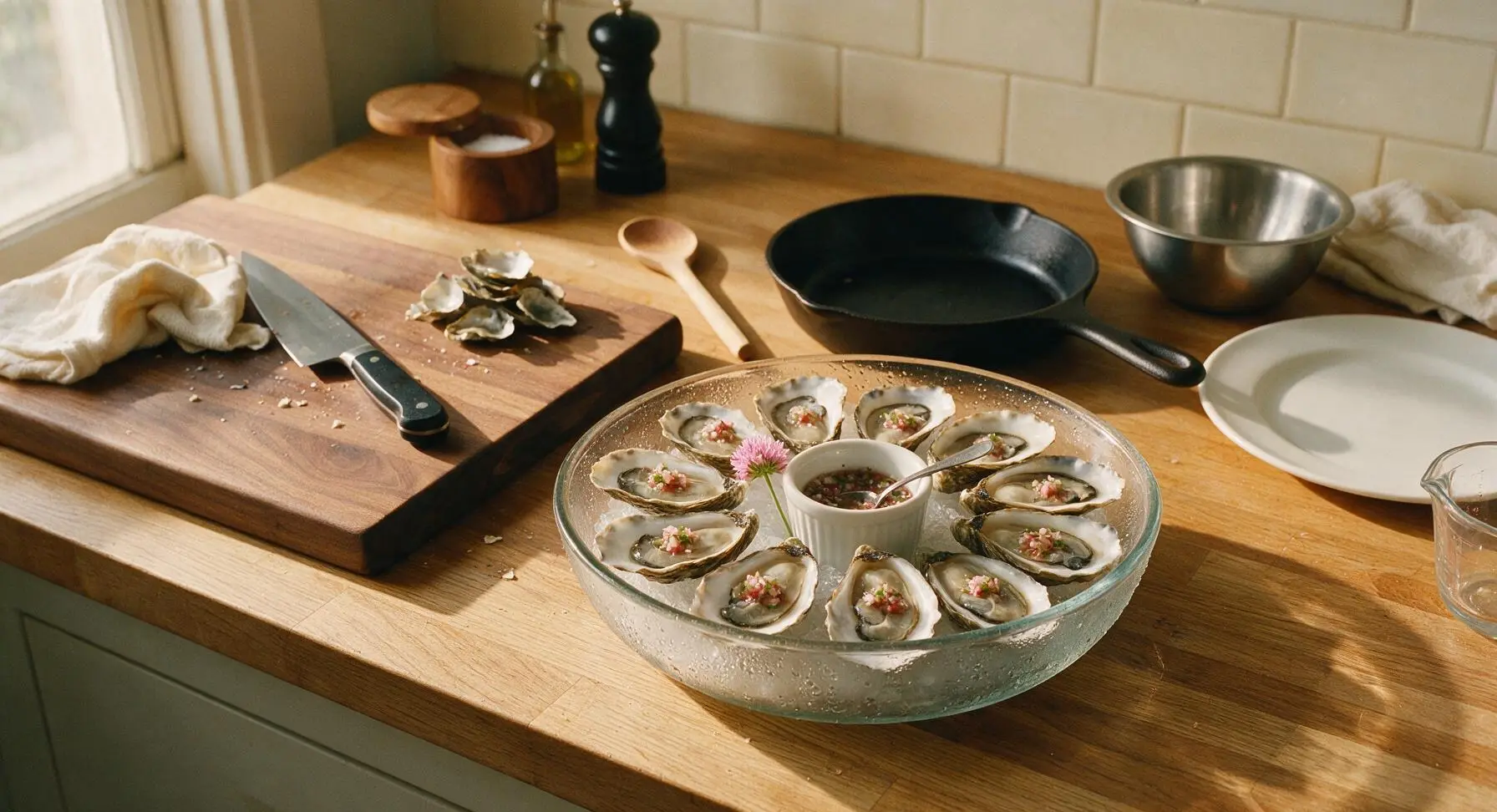
Give the mignonette sauce a quick stir with the stainless steel spoon to redistribute the shallots, and tuck a tiny sprig of fresh sea thrift between two oysters as a subtle, coastal garnish if desired. Serve immediately while the oysters are ice-cold, providing small seafood forks for guests to top oysters with mignonette, a dollop of horseradish, a squeeze of lemon, or a pinch of flaky salt to taste.
Step 7
step7:Finish and Serve Immediately

Tips

1.Always tap unshucked oysters firmly before shucking: if the shell is gaping open and does not snap closed when tapped, the oyster is dead and unsafe to eat, as harmful bacteria multiply rapidly in dead shellfish even when refrigerated.
2.Never hold an oyster in a bare hand while shucking: the thick folded towel creates a protective barrier between your hand and the extremely sharp, jagged oyster shell and slipping knife, preventing common painful cuts.
3.Do not rinse shucked oysters under running water: this washes away the sweet, briny natural oyster liquor that gives West Coast oysters their signature bright, ocean-forward flavor; simply pick out any tiny broken shell fragments with the tip of your shucking knife instead.
✨ You May Also Like

Seafood
🍜 United States

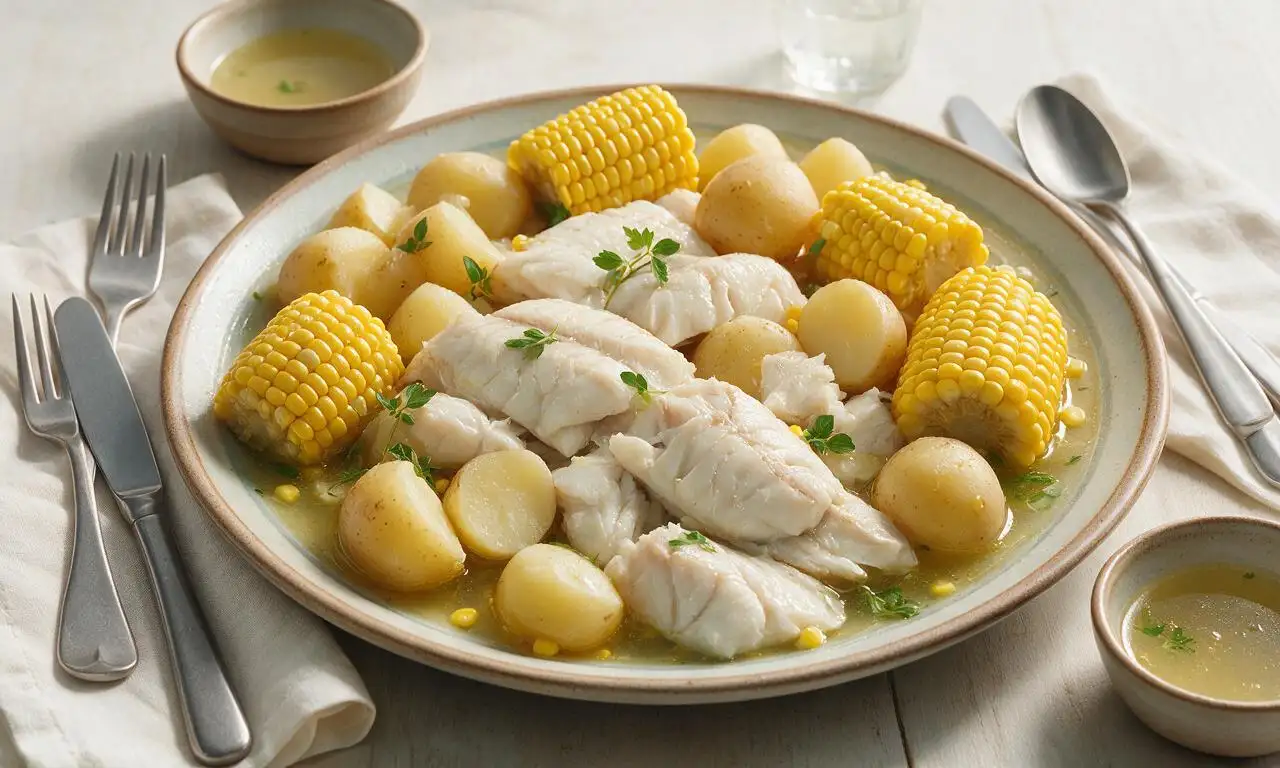
An iconic Door County, Wisconsin tradition of flaky boiled whitefish, tender potatoes, and sweet corn, cooked outdoors for casual, communal summer gatherings.

⏱️ 45 minuteSeafood ★ 4.7
Seafood
🍜 United States

Tender, briny soft-shell clams steamed in garlicky white wine broth, served with warm broth and melted butter for dipping—classic coastal comfort food.

⏱️ 30 minuteSeafood ★ 4.7
Seafood
🍜 United States

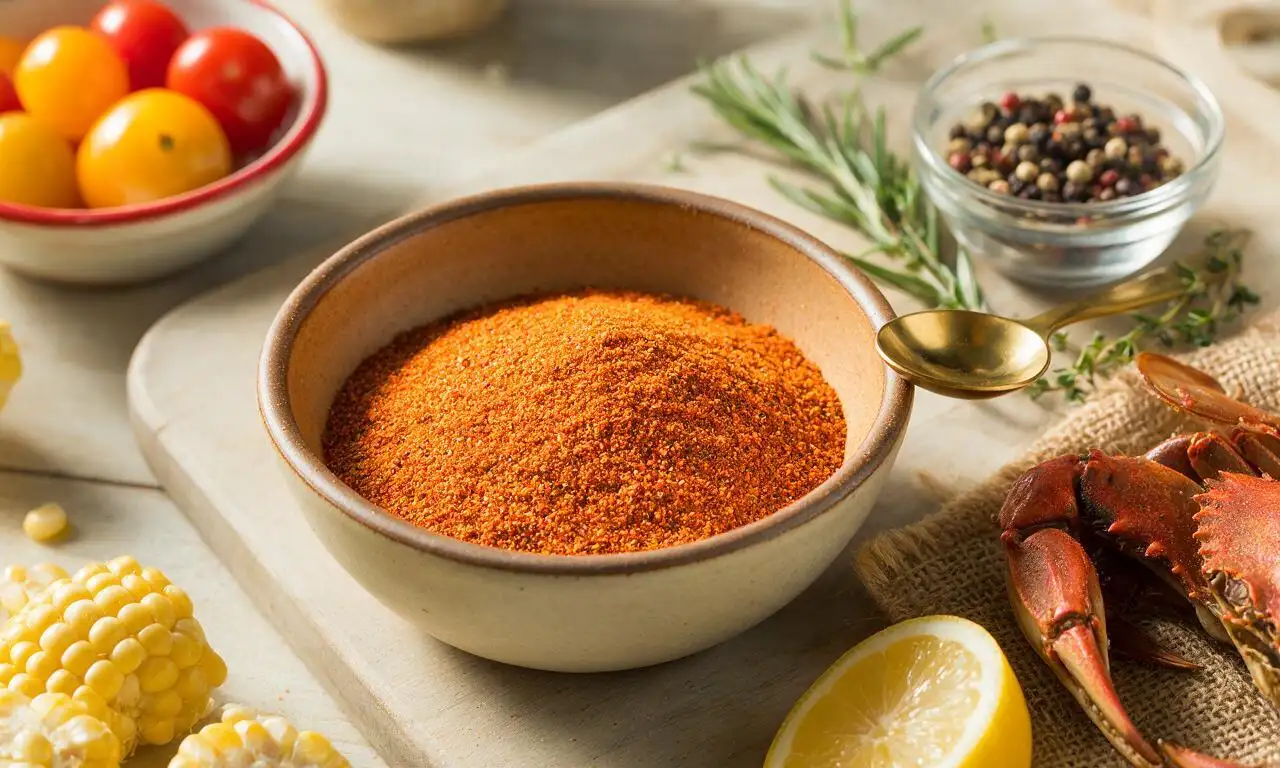
Iconic zesty, savory spice blend from Maryland’s Chesapeake Bay, perfect for seafood boils, grilled fare, fries, and corn, made fresh without preservatives.

⏱️ 10 minuteSeafood ★ 4.9
Seafood
🍜 China

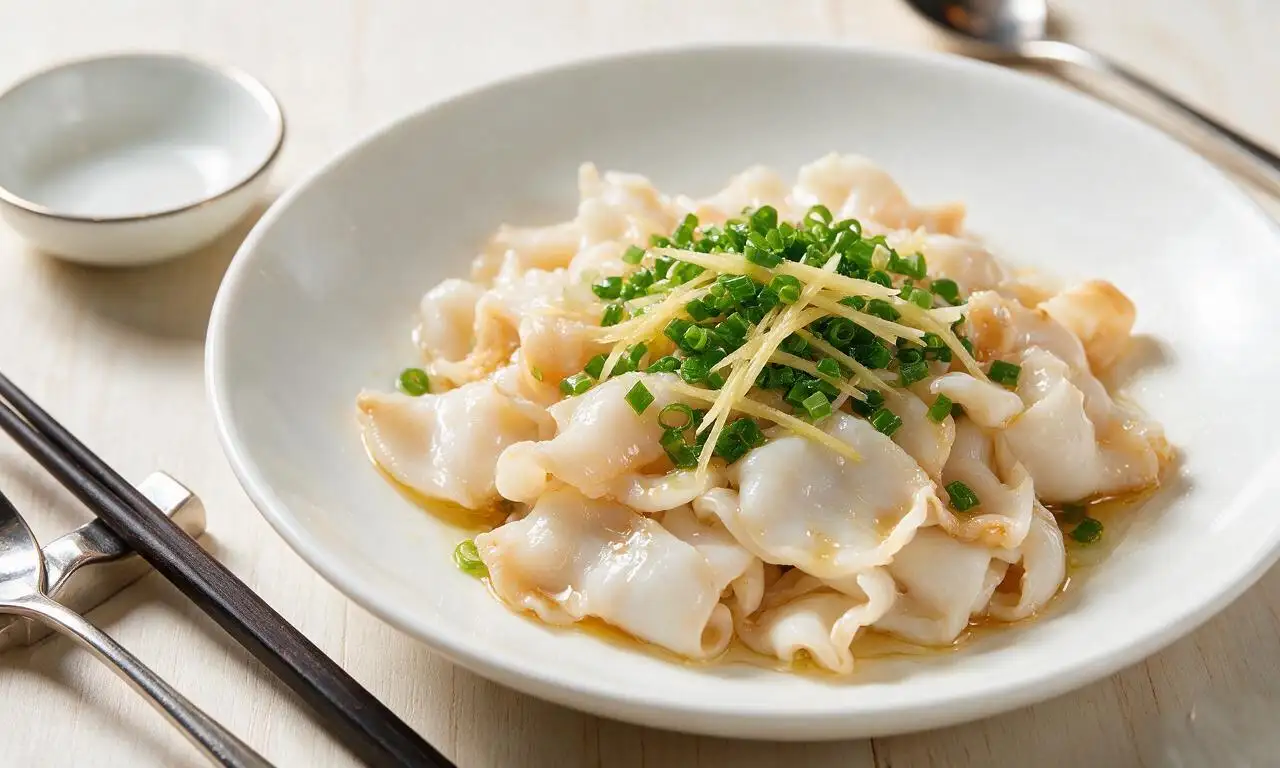
Tender, crisp, sweet blanched geoduck topped with fragrant sizzled ginger and scallion, a luxurious Cantonese dish highlighting the clam’s natural briny, delicate flavor.

⏱️ 30 minuteSeafood ★ 4.7
Seafood
🍜 United States

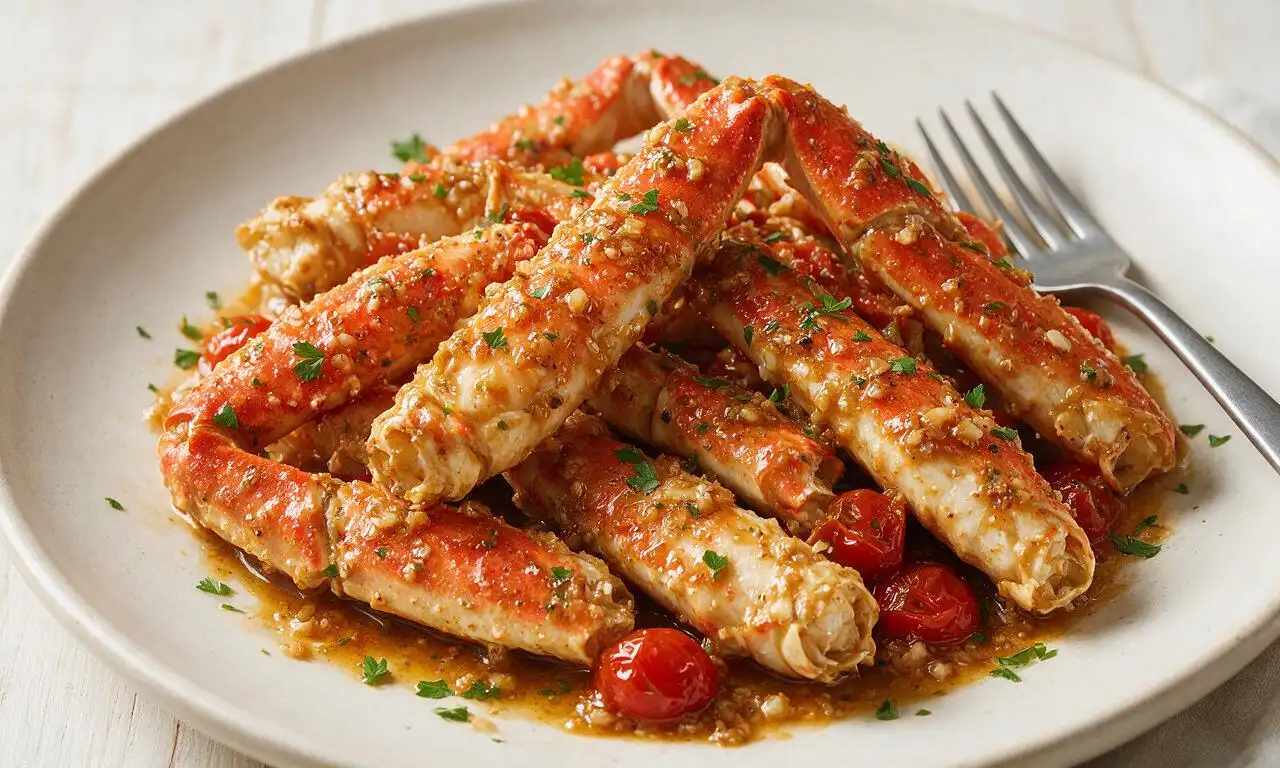
Succulent sweet crab legs coated in rich garlic butter, steamed to tender perfection for a juicy, indulgent seafood feast that requires minimal prep and cook time.

⏱️ 25 minuteSeafood ★ 4.7
Seafood
🍜 United States

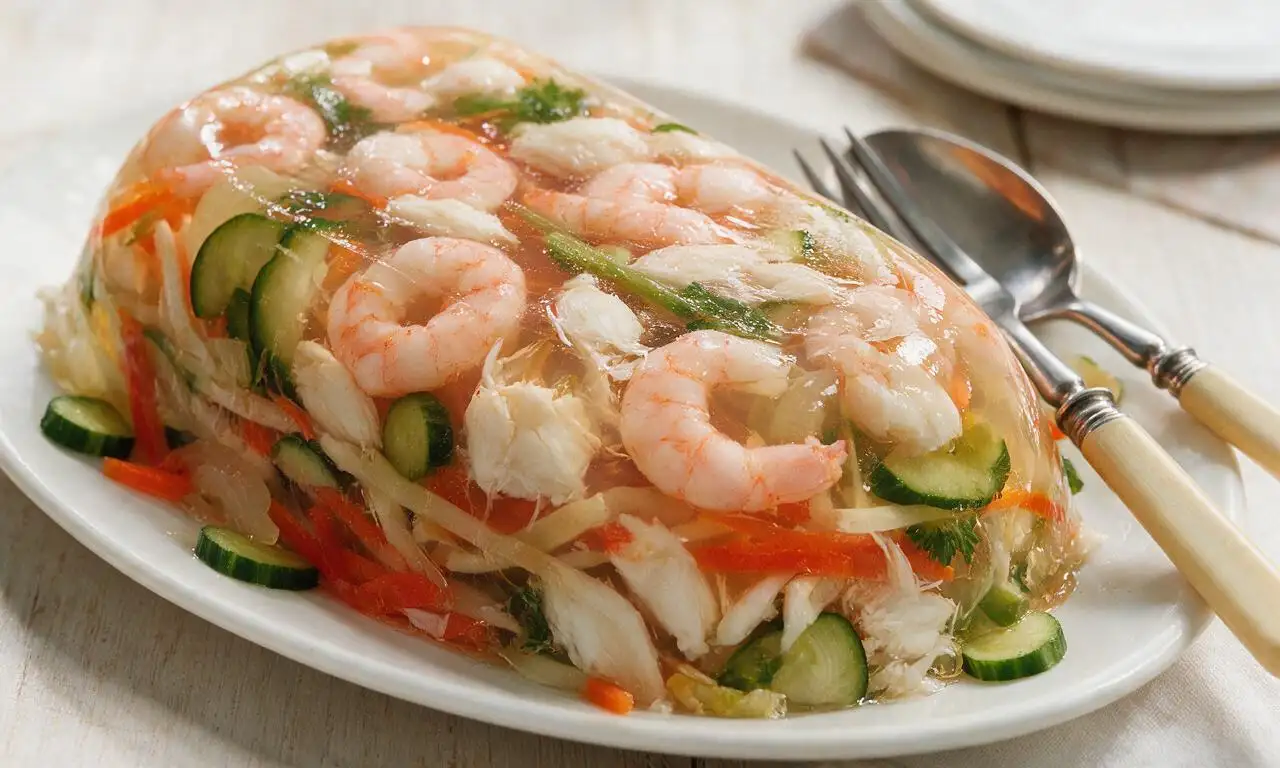
A nostalgic chilled jellied seafood staple of 1950s American potlucks, loaded with tender shrimp, lump crab, crisp veggies, and bright creamy tang.

⏱️ 4 hours 2Seafood ★ 4.6

West Coast Oysters:Frequently Asked Questions

1.How do I pick the freshest live West Coast oysters for this recipe? ▾
Look for tightly closed, heavy-for-their-size shells that smell like clean ocean brine, with no strong, fishy off-odor. If a shell is slightly gaping, tap it firmly—it should snap shut immediately. Discard any that stay open, as they’re dead and unsafe to eat. A Pacific/Kumamoto mix balances briny, cucumber-kissed Pacifics and sweet, buttery Kumamotos perfectly.
2.What’s the safest, easiest way to shuck oysters without cutting myself? ▾
Start by scrubbing shells under cold running water to remove grit, then wrap each oyster in a thick kitchen towel, leaving only the hinge exposed. Hold it firmly on a cutting board, wedge a sturdy oyster knife into the hinge, twist to pop the shell, then slide the knife along the top to release the meat. Always keep your holding hand fully covered to avoid slips.
3.Can I make the shallot mignonette ahead of time, and how long does it keep? ▾
Absolutely—mignonette actually tastes better after a short rest to let flavors meld. Mix finely minced shallot, red wine vinegar, and cracked black pepper 1 to 24 hours before serving, stored covered in the fridge. It will keep for up to 1 week refrigerated, though it has the brightest, sharpest shallot flavor within the first 3 days.
4.Why do you call for fresh horseradish root instead of jarred prepared horseradish? ▾
Freshly grated horseradish has a bright, zingy, sinus-clearing heat that’s far more vibrant than jarred versions, which are often muted from sitting in vinegar and preservatives. Grate the peeled root right before serving for best results. If you must use jarred, pick an unflavored, unsalted variety and drain off excess vinegar so it doesn’t overpower the oysters.
5.How long can I store live unshucked oysters before serving? ▾
Store live, unshucked oysters in a 34–38°F fridge in a single layer, curved-side down, covered with a damp paper towel for up to 3 days. Never seal them in an airtight container or submerge them in fresh water, as that will kill them. Do the tap test right before shucking, and discard any oysters with a sour, off odor once opened.
6.What’s the best way to keep shucked oysters ice-cold for serving? ▾
Pile crushed ice (not cubed, which leaves wobbly gaps) high on a serving platter, then nestle the shucked oysters half-shell down into the ice so they sit level to keep their precious brine from spilling out. Tuck lemon wedges and small ramekins of mignonette and horseradish into the ice too, to keep all accompaniments chilled during service.
7.How are West Coast oysters different from East Coast oysters for raw half-shell service? ▾
West Coast varieties like Pacifics and Kumamotos tend to be sweeter, milder in brine, with subtle notes of cucumber, melon, or fresh seaweed, and deep, fluted shells. East Coast oysters are usually saltier, firmer, with a bright mineral finish. This recipe leans into that signature West Coast gentle sweetness that pairs so well with tangy mignonette.
8.Should I rinse the oyster meat after shucking it? ▾
Skip rinsing shucked oysters unless you spot tiny bits of broken shell in the meat—if you do, just pick those out with the tip of your oyster knife. Rinsing washes away the natural, briny oyster liquor that carries so much of that fresh Pacific coast flavor. You want that clear, salty juice in the shell with the meat for the best taste.
9.What are good substitutions if I can’t find a Pacific/Kumamoto oyster mix? ▾
If you can’t source Pacifics or Kumamotos, look for other West Coast varieties like Olympias or Willapa Bay oysters, which have a similar sweet, mild brininess. Skip extra-large, tough cooking oysters, which are too strong for raw service. If West Coast oysters are unavailable, small, mild East Coast varieties like Wellfleets work in a pinch, though they’ll be a bit saltier.
10.What’s the best way to eat these oysters to get the full, intended flavor? ▾
First, fully loosen the oyster from its shell for easy eating. Add just a tiny dab of horseradish or single drop of mignonette—don’t douse it, or you’ll mask the oyster’s natural taste. Tip the shell to your mouth to slurp the oyster and its briny liquor, chew it 1 to 2 times to pick up all the sweet, oceanic notes, then add a squeeze of lemon if you’d like extra brightness.

Comments (14)

2 days ago

OMG these West Coast oysters on the half shell are SO good! I foraged my own kumamotos last weekend up near Puget Sound and used the serving suggestions here for our family dinner last night. The little shallot mignonette tip? Total game changer, even my teen who swears he hates raw seafood went back for thirds. Zero cook time is perfect for these 90 degree summer days we’ve been having out here.

1 day ago

So glad your teen was a fan! Kumamotos are such a great pick for first-time raw oyster eaters because of that mild, sweet flavor — smart call foraging your own, just make sure you’re always checking local shellfish safety advisories before you dig!

1 week ago

Made these for our backyard potluck last weekend and they were the first platter to get wiped clean! I was nervous about shucking a whole dozen for guests at first (definitely earns that medium difficulty rating, wow my wrist was sore after) but everyone raved so much it was totally worth it. Served with lemon wedges, hot sauce, and that quick horseradish cream the recipe mentions, chef’s kiss.

5 days ago

Pro tip for shucking: pop them in the fridge for 20 minutes right before you shuck, they relax a little and the shell pops open way easier! Saved my wrist last time I made oysters for a cookout.

2 weeks ago

Usually I’m all about grilled oysters with garlic butter, but I gave these raw West Coast ones a shot for our Father’s Day cookout and I’m a convert. Briny, cold, so fresh — paired great with cold IPA. My kids loved it too, which I never would’ve guessed! 10/10 will make again.

30 minutes ago

First time ever making raw oysters at home! I was super intimidated because I thought shucking would be impossible, and I nicked my thumb once (oops, wear a thick kitchen towel folks!) but they turned out so good. Wait — quick question, how long can you keep shucked oysters on ice before they go bad? I had a few left over after my date night and didn’t want to waste them.

20 minutes ago

I usually don’t keep them longer than 2 hours max on ice, especially if it’s warm out! Raw shellfish goes bad fast, better safe than sorry.

5 minutes ago

Great question! As long as they’re kept on a bed of crushed ice (not sitting in melted ice water) and held below 40°F, they’re good for up to 2 hours for serving. If you have unshucked leftovers, keep them in the fridge in a breathable bag for up to 2 days, but I don’t recommend saving pre-shucked raw oysters for later. Also so glad you gave them a go — that little nick is a right of passage for home oyster shuckers!

yesterday

Picked up a dozen Willapa Bay oysters from the fish market near my apartment yesterday and made these for a quick happy hour with my roommates. No cook time means literally zero cleanup which is a dream for my tiny NYC kitchen. The only thing I did different was add a little splash of yuzu to the mignonette because I had it on hand, *chef’s kiss*.

yesterday

Yuzu in the mignonette sounds incredible, I’m definitely stealing that swap for my next batch! Willapa Bay oysters have that perfect crisp, briny flavor that pairs so well with bright citrus — great call.

3 days ago

Made these for my book club meeting last night and half the group had never tried raw oysters before! I was worried they’d be weirded out, but everyone asked for the recipe. Served them with a side of saltine crackers like my grandma used to, super nostalgic. Only bummer is my grocery store only had East Coast oysters, so I had to use those instead — still slapped though.

2 days ago

Wait saltines with oysters is such a classic! I thought I was the only one who still did that, everyone I know uses fancy crostini now lol

2 days ago

I used East Coast oysters for this too when I couldn’t find West Coast ones! They’re a little brinier but still work so well with the mignonette, no one noticed the difference at my party.

5 days ago

I was so worried I wouldn’t be able to get good fresh oysters living in Arizona, but my local fish market gets overnight shipments from Washington twice a week! Made these last night for my anniversary dinner and they tasted just like the ones I had on a trip to Seattle last summer. So easy, no cooking needed, perfect for a special at-home date night.

1 week ago

Took me a minute to get the hang of shucking (def medium difficulty, don’t let the no-cook thing fool you into thinking this is zero effort!) but once I got going it was smooth sailing. Made these for Sunday dinner with my parents and my dad said they were better than the oysters he gets at our local steakhouse. Win!

6 days ago

Right?! I thought it’d be super easy because there’s no cooking, but shucking is such a learned skill. My first batch I mangled half the oysters, now I can do a whole dozen in 10 minutes lol

2 hours ago

I was so excited for this recipe, but I have to say — if you’re a total beginner, budget way more time for shucking than you think! I budgeted 15 minutes and it took me almost 45 to get through a dozen, so my guests were waiting around for appetizers. They tasted great once they were done, but the time estimate didn’t mention shucking time so I was caught off guard. Rating a 3 because of that, but flavor is 10/10.

1 hour ago

Oh I feel this! My first time shucking I took almost an hour too, now I keep an oyster knife with a good grip and it’s way faster. Don’t give up!

30 minutes ago

Thank you so much for the honest feedback! You’re totally right — the 0 minute cook time only refers to heat-based cooking, and shucking can absolutely take 30-45 minutes for beginners if you’re still getting the hang of it. I’ll update the recipe notes to call that out more clearly so other home cooks don’t get caught off guard like you did! So glad the flavor still landed for you and your guests.

2 weeks ago

Made these for our lake day trip last weekend! Kept them on ice in a big cooler and they were the perfect refreshing snack out on the boat. I brought a little bottle of hot sauce and some lemon wedges, everyone kept saying it felt like we were at a fancy coastal restaurant even though we were hours from the ocean. SO good.

5 days ago

Hosted a seafood boil last weekend and added these raw oysters as a starter option, and they were such a hit! I was worried they’d be overlooked next to all the boiled crab and shrimp, but people kept coming back for more. The tip to serve them on a bed of crushed rock salt so they don’t tip over and spill the liquor? Game changer, I used that trick and there was zero mess on the platter.

4 days ago

The rock salt trick is one of my oldest serving hacks! Nothing worse than a platter of tilted oysters spilling all that delicious briny liquor before people get to eat them. So glad they were a hit at your seafood boil — that sounds like such a fun spread!

5 minutes ago

Quick question — I have a guest with a shellfish allergy coming to our big family reunion next weekend, can I serve these on the same platter as other appetizers or do I need to keep them separate to avoid cross contamination? I want to make sure everyone stays safe and has a good time.

just now

Great safety question! If you’re serving guests with shellfish allergies, I highly recommend keeping the oysters on a separate, clearly labeled platter with their own serving utensils, and set them out away from other appetizers to avoid cross-contamination. It’s always better to err on the side of caution when food allergies are involved!

just now

Seconding this! I have a shellfish allergy and I can’t tell you how many times I’ve had to skip appetizers because seafood was touching all the other food. Your family member will really appreciate you taking that extra step to keep them safe!

1 week ago

I was looking for a no-heat appetizer for our weekly potluck at work and these were perfect! I shucked all the oysters the night before, kept them cold in the fridge, and set them out on ice with a bunch of different topping options when I got to the office. My coworkers were all shocked I made something that fancy at home, it was so easy.

2 weeks ago

Y’all, I made these for our Fourth of July block party and people are still texting me asking for the recipe! I set up a little topping bar with horseradish, cocktail sauce, hot sauce, mignonette, and lemon wedges so people could customize their oysters however they liked. Zero cook time meant I didn’t have to heat up my whole kitchen in the July heat, which was a total win.

1 week ago

The topping bar idea is genius! I’m stealing that for my next cookout, I usually just put out lemon and hot sauce but having all the options sounds way better.