
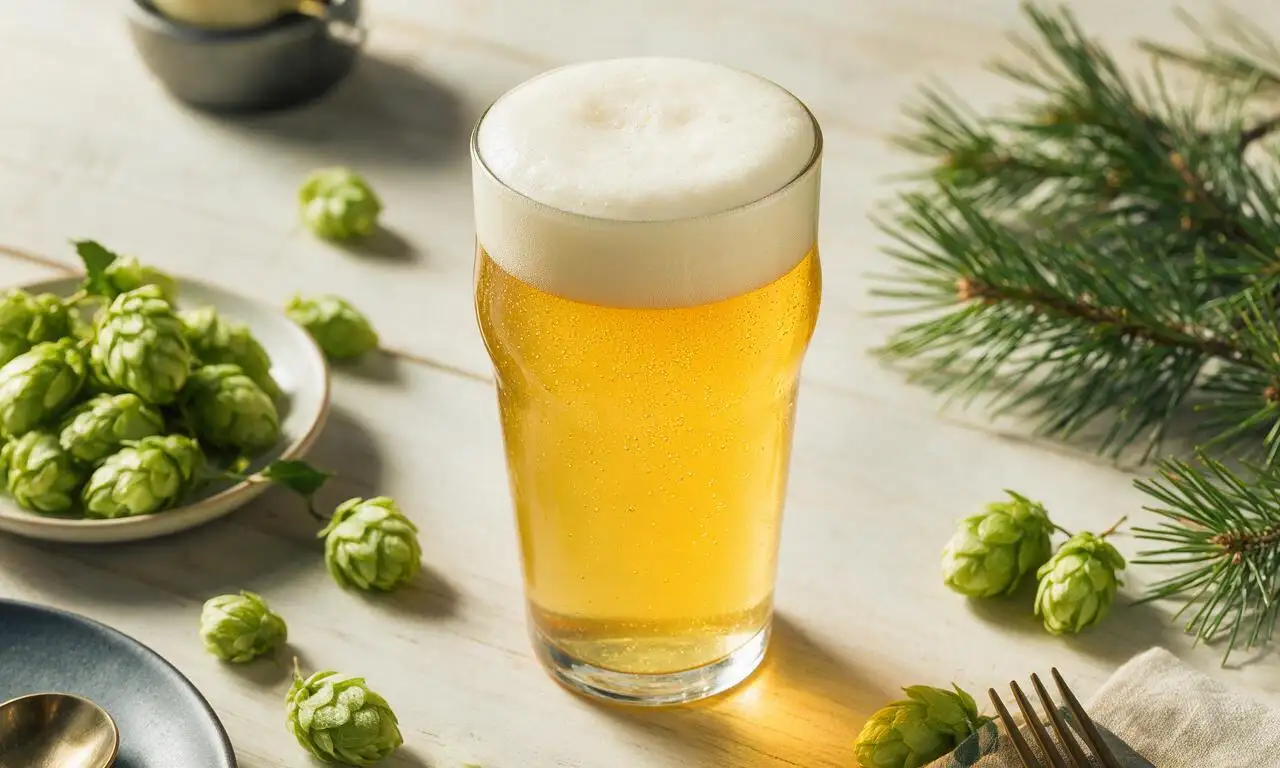
American IPA

title 1
American IPA
⏱️ cook time 2.5 hours active, 21 days total (fermentation & carbonation)
🍽️ servings 48
⚡ Difficulty medium

intro

Bright, citrus-pine forward homemade American IPA with a crisp, balanced malt backbone, showcasing classic American hop character for casual summer gatherings.

Ingredients

Filtered brewing water 19 L (5 US gallons)
Crushed 2-row pale malt 4.5 kg (9.9 lbs)
Crushed Crystal 15L malt 225 g (8 oz)
Cascade hop pellets 85 g (3 oz)
Centennial hop pellets 57 g (2 oz)
US-05 American ale yeast 11 g (1 standard packet)
Priming corn sugar 113 g (4 oz)

Steps

1

Heat mash water

Heat 11.4 L (3 US gallons) of filtered brewing water in a stainless steel brew kettle over medium-high heat, monitoring closely with a clipped-on digital thermometer until the water reaches 71°C (160°F), about 15-20 minutes total.
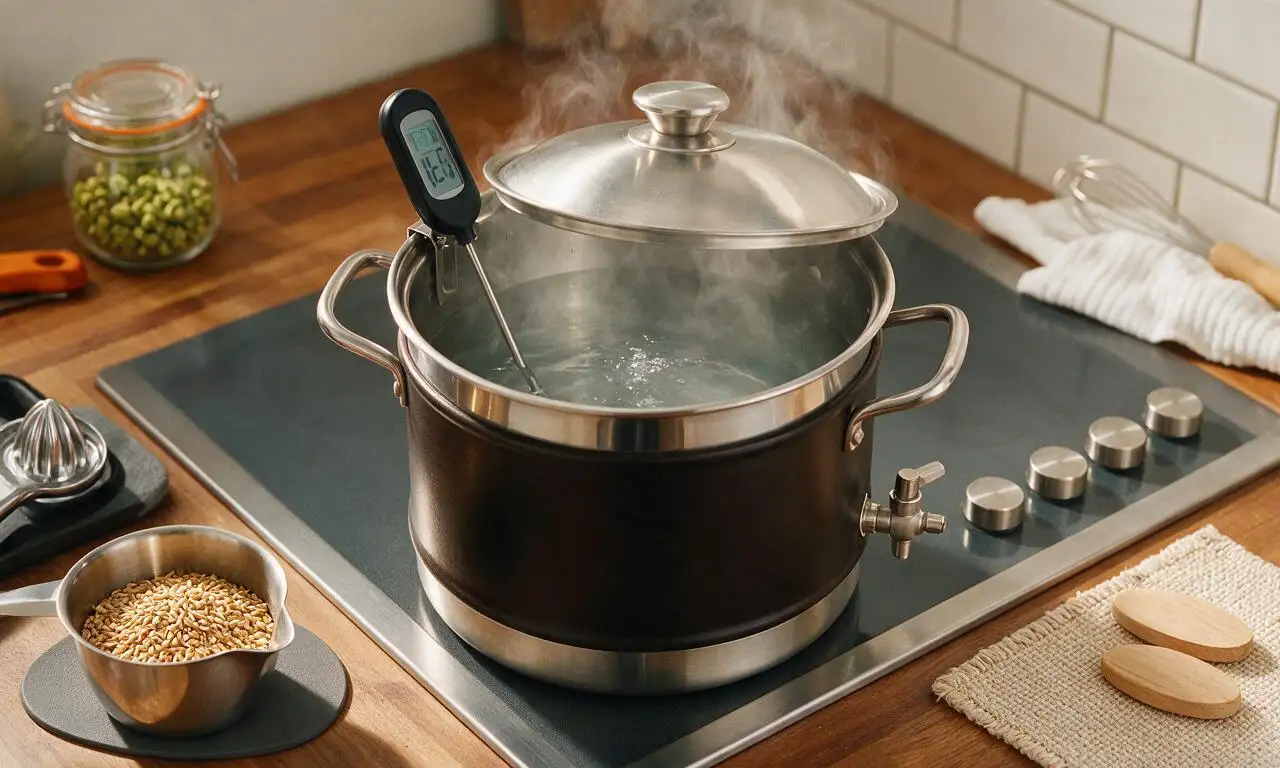
Step 1
step1:Heat mash water
2

Mash the grain bill

Slowly stir all crushed 2-row pale malt and Crystal 15L malt into the heated water to form a thick, evenly moistened porridge-like mash. Cover the kettle, adjust heat to low, and hold a steady temperature of 67°C (152°F) for 60 minutes, avoiding unnecessary stirring during the rest period.
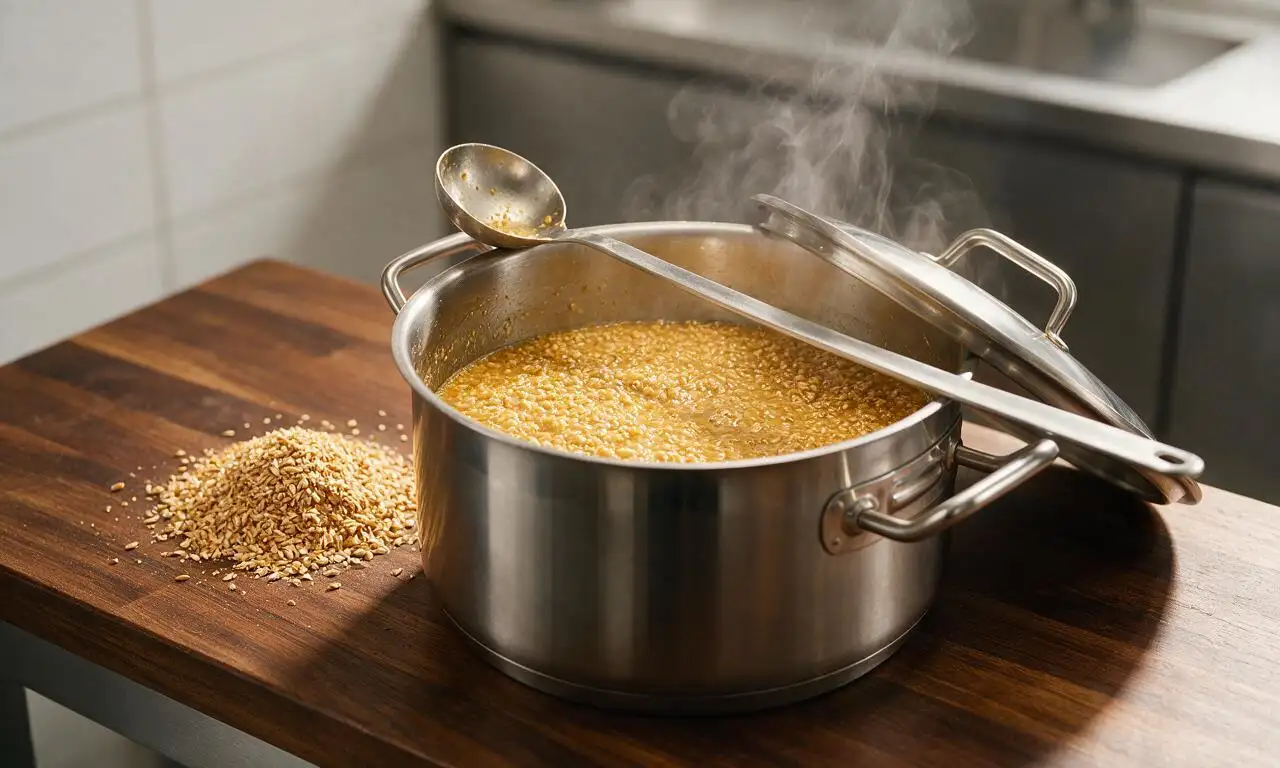
Step 2
step2:Mash the grain bill
3

Drain and sparge wort

Slowly drain the sweet, sugar-rich wort from the mash through a fine mesh strainer into a sanitized container, then gently pour 7.6 L (2 US gallons) of 77°C (170°F) filtered water over the spent grain bed to rinse remaining sugars. Collect a total of 19 L (5 US gallons) of wort back in the brew kettle, then discard the drained spent grains.
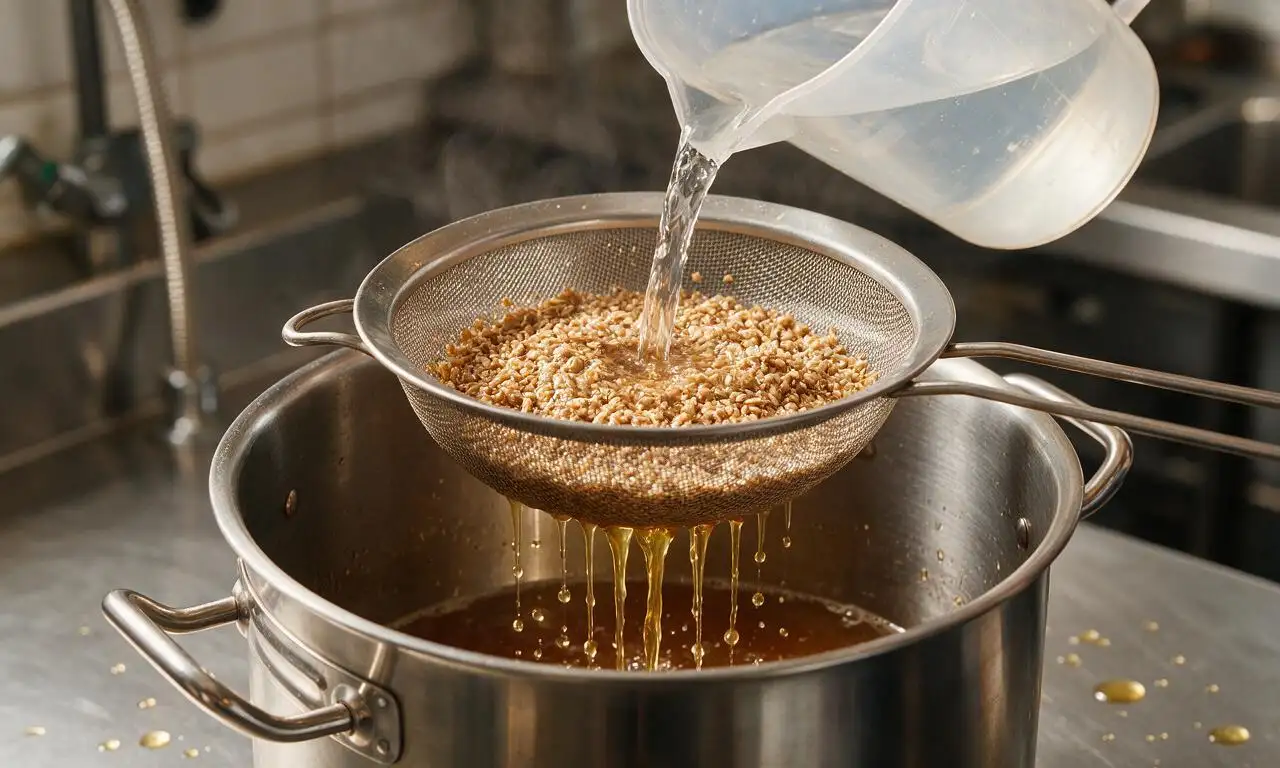
Step 3
step3:Drain and sparge wort
4

Boil wort with hops

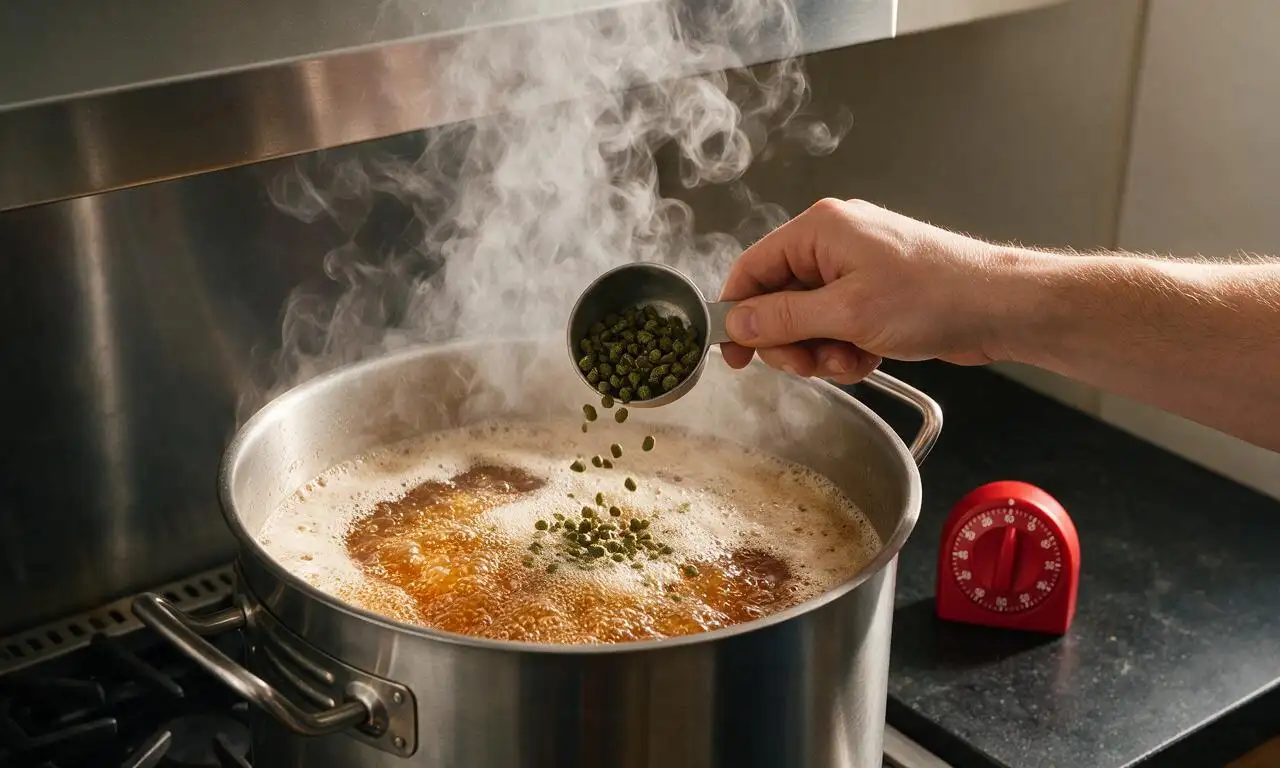
Bring the collected wort to a rolling, vigorous boil over high heat, then set a 60-minute timer. Add 28 g (1 oz) of Cascade hops at the start of the boil for bittering; add 28 g (1 oz) Cascade and 28 g (1 oz) Centennial hops when 15 minutes remain on the timer; add the remaining 29 g (1 oz) Cascade and 29 g (1 oz) Centennial hops the second the timer hits 0 to preserve bright citrus-pine aroma.
Step 4
step4:Boil wort with hops
5

Cool wort, pitch yeast

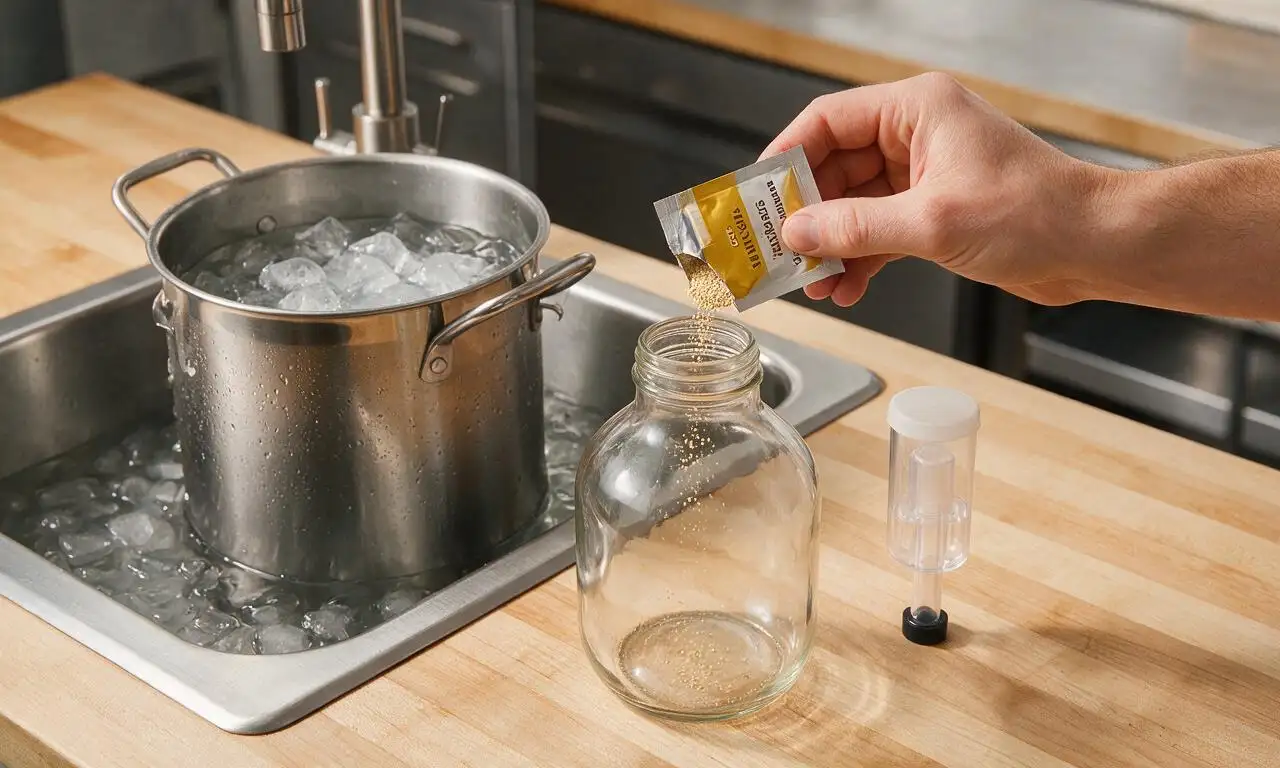
Move the kettle off heat immediately after the final hop addition, and cool the wort quickly to 20°C (68°F) by submerging the kettle in an ice water bath, about 20-30 minutes. Transfer cooled wort to a sanitized glass fermentation carboy, aerate by shaking the sealed carboy vigorously for 1 minute, then sprinkle the full 11 g packet of US-05 American ale yeast over the wort surface and seal the carboy with a sanitizer-filled airlock.
Step 5
step5:Cool wort, pitch yeast
6

Ferment and carbonate

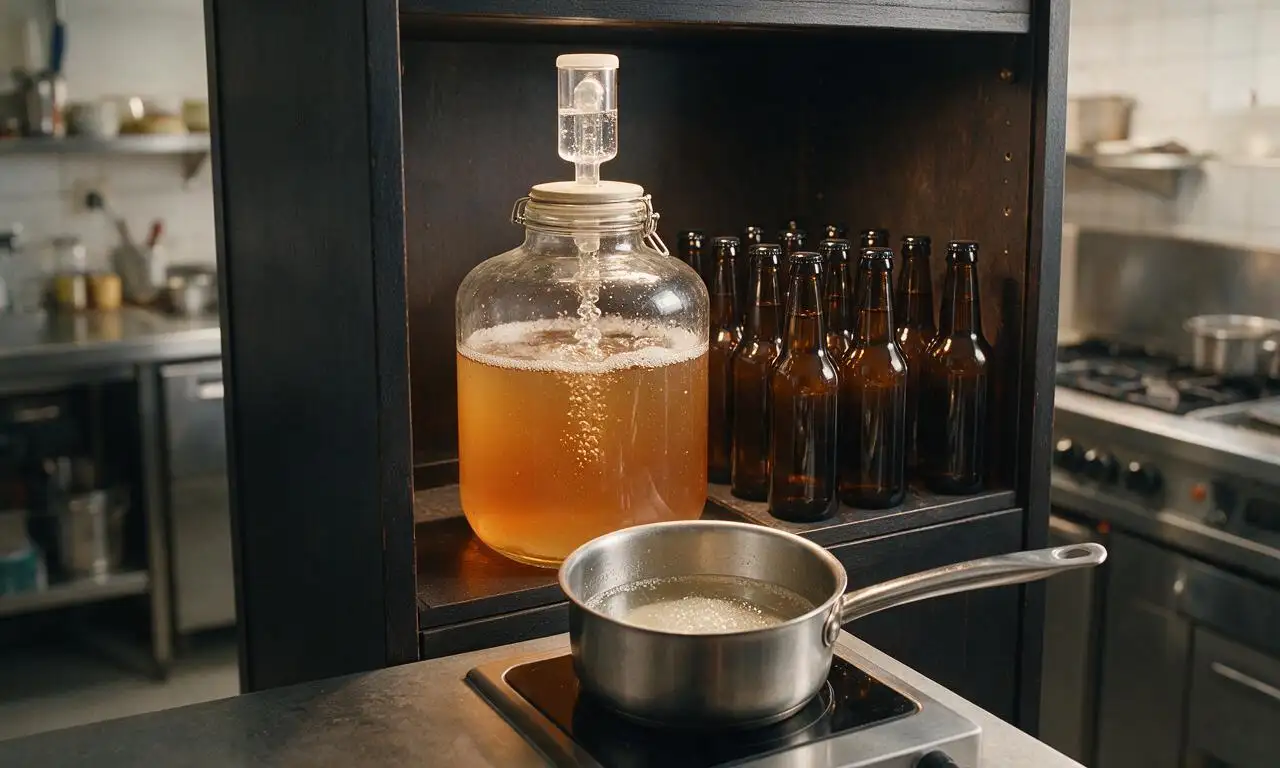
Store the sealed carboy in a dark, temperature-stable closet held at 18-20°C (65-68°F) for 14 days to complete primary fermentation, until bubbling in the airlock stops entirely. Boil 113 g (4 oz) of priming corn sugar in 240 ml (1 cup) of water for 5 minutes, stir the cooled sugar mixture into the fermented beer, then bottle in sanitized capped glass bottles and rest at room temperature for 7 days to build natural carbonation before chilling to 4°C (40°F) to serve.
Step 6
step6:Ferment and carbonate

Tips

1.Sanitize every piece of equipment that touches cooled wort or beer with a no-rinse brewing sanitizer; even small amounts of bacteria can cause off-flavors or ruin an entire batch.
2.Never add aroma hops earlier than the final minutes of the boil, as sustained high heat will destroy the delicate citrus, pine, and floral hop oils that define American IPA flavor.
3.For an extra punch of hop aroma, add 14 g (0.5 oz) of extra Cascade hops directly to the fermentation carboy 3 days before bottling (dry hopping) for brighter, juicier flavor.


✨ You May Also Like

Drinks & Beverages
🍜 Mexico

A bright, balanced tequila-based cocktail with zesty fresh lime, smooth orange liqueur, and a signature salt rim, perfect for warm summer sipping.

⏱️ 5 minutesDrinks & Beverages ★ 4.9
Drinks & Beverages
🍜 United States

Thick, creamy, nostalgic classic vanilla milkshake with a rich, smooth texture, topped with whipped cream and a cherry for cool, sweet refreshment.

⏱️ 5 minutesDrinks & Beverages ★ 4.7
Drinks & Beverages
🍜 United States

A bright, golden strong ale with fruity banana-clove notes, subtle hop spice, and soft carbonation, brewed in classic Trappist Tripel tradition.

⏱️ 2 hours aDrinks & Beverages ★ 4.5
Drinks & Beverages
🍜 United States

A frothy, nostalgic American soda fountain treat pairing bubbly cold root beer with creamy vanilla ice cream, perfect for cooling down at warm weather gatherings.

⏱️ 20 minuteDrinks & Beverages ★ 4.8
Drinks & Beverages
🍜 United States

Tart, funky, effervescent American Wild Ale is a complex fruity craft beer brewed with wild yeast, delivering bright, zesty notes perfect for warm-weather sipping.

⏱️ 2 hours aDrinks & Beverages ★ 4.4
Drinks & Beverages
🍜 United States

Bright, bubbly copycat of the iconic American caramel cola, balanced with citrus and warm spice, perfect for sipping ice-cold on hot days.

⏱️ 15 minuteDrinks & Beverages ★ 4.8

American IPA:Frequently Asked Questions

1.Why do I need filtered brewing water instead of regular tap water for this IPA? ▾
Tap water often contains chlorine or chloramine that creates harsh, medicinal off-flavors that mute this IPA’s bright citrus-pine hop character. Filtered water removes those compounds while retaining helpful trace minerals that support healthy yeast fermentation and a clean, crisp malt backbone, with no distracting off-notes to ruin your batch.
2.Can I substitute whole-leaf hops for the Cascade and Centennial pellets the recipe calls for? ▾
You absolutely can, but you’ll need to use 10-15% more whole-leaf hops by weight to match the bittering and aroma contribution of pellets, since pellets are more concentrated. Whole-leaf hops also leave more sediment at the bottom of your fermenter, so take extra care when racking to keep your final beer clear.
3.What does the small amount of crushed Crystal 15L malt add to this IPA? ▾
That modest Crystal 15L addition adds subtle, soft caramel-toast sweetness that balances the bold, zesty bitterness from Cascade and Centennial hops, so your IPA doesn’t taste harsh or one-note. It also adds a light golden-amber hue and smooth mouthfeel that makes the beer ultra-drinkable for summer gatherings.
4.How long does this 5-gallon IPA take to ferment before it’s ready to drink? ▾
For the best flavor, ferment at a steady 65–68°F (the sweet spot for clean American ale yeast) for 10–14 days, then bottle or keg with priming sugar and condition 7–10 days at room temp to build carbonation. That 3-week total timeline lets hop flavors mellow into the bright, balanced profile the recipe targets.
5.I don’t have Centennial hops on hand—what’s a reliable swap for this recipe? ▾
The closest flavor match for Centennial is Columbus or Chinook, though those lean slightly more piney than Centennial’s signature grapefruit-citrus edge. For a fruitier twist, Amarillo works beautifully too; just stick to the same weight the recipe calls for to keep bitterness and balance consistent with the malt base.
6.Why does the recipe specify crushed malt instead of whole, uncrushed grain? ▾
Crushing cracks open the malt’s hard, starchy inner kernel so hot brewing water can access and convert those starches into fermentable sugar during the mash step. Using uncrushed malt leads to almost no sugar extraction, resulting in low alcohol, weak flavor, and a watery beer missing that signature balanced malt backbone.
7.How do I get that bright, forward citrus-pine hop aroma this IPA is known for? ▾
Save 60% of your Cascade and Centennial additions for the last 15 minutes of the boil, plus a 3–5 day dry hop addition once primary fermentation slows. Adding hops late avoids boiling off their delicate aromatic oils, so you get punchy grapefruit, pine, and citrus notes instead of just flat bitter bite.
8.What ABV does this recipe produce, and can I adjust it to make a stronger beer? ▾
As written, this batch lands at a very sessionable 6.2–6.5% ABV, perfect for casual summer sipping. If you want a stronger beer, add up to 1 extra pound of crushed 2-row pale malt during mashing; skip extra Crystal 15L, as that will make the final beer overly sweet and throw off hop balance.
9.Do I need fancy professional brewing equipment to make this 5-gallon batch at home? ▾
You don’t need high-end gear! The basics are a 5+ gallon brew kettle, fermenter with an airlock, auto-siphon for racking, bottling wand, and bottles or kegs. The only non-negotiable is a reliable thermometer to hit correct mash and boil temps, so you don’t ruin malt conversion or burn off delicate hop oils.
10.How should I store my finished IPA to keep its hop flavor fresh as long as possible? ▾
Keep sealed bottles or kegs cold (35–40°F) and away from direct light, since UV rays create skunky off-flavors extremely fast in hoppy beers. Unlike hearty stouts, this IPA is best drunk within 3 months of bottling; after that, bright citrus-pine notes fade quickly, leaving flat, stale, overly bitter beer.
11.Why does my beer taste extra sharp and bitter right after fermentation finishes? ▾
That’s totally normal! Freshly fermented IPA has harsh, ‘green’ bitter notes that haven’t had time to mellow during conditioning. After 7–10 days of bottle conditioning, those sharp edges soften, the light malt sweetness from Crystal 15L comes forward, and flavors integrate into that smooth, balanced profile the recipe is designed for.
12.Can I scale this recipe down to a 1-gallon test batch before making a full 5 gallons? ▾
Absolutely! Just divide all ingredient weights by 5 to keep the exact same malt and hop ratio, using proportionally less crushed 2-row, Crystal 15L, Cascade, and Centennial pellets, and cut your water volume to match. Keep fermentation temps and timelines identical to the full batch for the same great bright, summer-ready flavor.

Comments (7)

2 weeks ago

OMG, this is the first IPA I’ve brewed that didn’t come out either too bitter or weirdly flat! Followed the recipe exactly, used Cascade and Centennial hops like it said, and my whole homebrew club went crazy for it at last weekend’s potluck. Total game changer for my brew days, already planning my second batch this Saturday.

1 week ago

Wait did you nail the dry hop addition? I’m nervous about messing that step up, last time I added hops too early and it tasted like I was drinking lawn clippings lmao

1 week ago

So glad your club loved the batch! For the best bright, citrusy hop flavor without that grassy off-note, make sure to add your dry hops 3 days into active fermentation when the wort is holding steady at 65-70°F. Be sure to swing back and tell us how batch two turns out!

30 minutes ago

I was so intimidated to try all-grain brewing for the first time but this recipe walked me through every single step! I don’t have a fancy mash tun yet and used a cheap DIY cooler setup, and it still worked perfectly. My first batch is carbonating right now, I snuck a tiny sip while bottling and it already tastes better than most of the IPAs I buy at the grocery store. SO excited to share these with my family at our next backyard cookout!

3 days ago

Was worried the 2.5 hour active time would be too much for a lazy weekend project, but the steps are laid out so clearly the whole brew day flew by! Just bottled mine yesterday, counting down the 21 days till fermentation and carbonation is done. Quick question: how long do you recommend leaving bottles in the fridge after carbonating before cracking the first one?

2 days ago

Great question! Once carbonation is complete, we recommend letting bottles chill in the fridge for 48 hours before opening to let sediment settle and the bright hop flavors mellow out. Enjoy that first frosty pour!

2 days ago

Tried this for my last batch, followed all the temperature controls for fermentation but mine came out a little more malty and sweet than I expected for a classic American IPA. Did I do something wrong? I measured out the exact hop amounts listed, so I’m totally confused why it doesn’t have that crisp bite.

yesterday

Oh I had that exact same issue on my first go with this recipe! Turned out my mash temp was 10 degrees too high, which makes the beer finish way sweeter and maltier. Did you calibrate your thermometer right before brew day?

yesterday

Great callout from PeachStateBrew! Holding mash temps over 155°F can absolutely lead to a maltier, sweeter final product. For that classic hop-forward IPA balance, aim to hold a steady 152°F during the mash. Your next batch will be spot on!

yesterday

Game. Changer. Kegged a batch of this for our neighborhood college football tailgate last weekend and people were hounding me for the recipe left and right. It’s got the perfect balance of pine and bright citrus, not so aggressively bitter that folks who usually stick to lighter beers couldn’t enjoy it. 10/10, this is going to be my permanent house IPA recipe from now on.

2 hours ago

How long did you keg condition it for? I’m making the switch from bottling to kegging next month and want to use this as my first ever kegged batch, super stoked!

2 hours ago

Really solid base IPA recipe! I tossed in an extra half ounce of Simcoe hops at whirlpool because I’m obsessed with that dank, tropical note, and it turned out absolutely incredible. Quick heads up for new brewers: make sure you have plenty of ice on hand to cool the wort fast, I almost botched that step on my first run.

30 minutes ago

Love that Simcoe addition! That’s one of our go-to easy customizations to make this recipe your own. Great tip about the ice bath for fast wort cooling too—chilling quickly is key to avoiding off flavors and locking in that bright, fresh hop taste. Cheers!

5 minutes ago

Made this for my partner’s birthday house party last weekend, and every single guest was raving about it! I accidentally added a little too much priming sugar so it’s a touch fizzier than I planned, but honestly no one even noticed or cared. Will definitely be dialing this in for future batches, the hop profile is exactly what I look for in a go-to American IPA. My roommate already begged me to brew another batch before our college friends come to visit next month!



