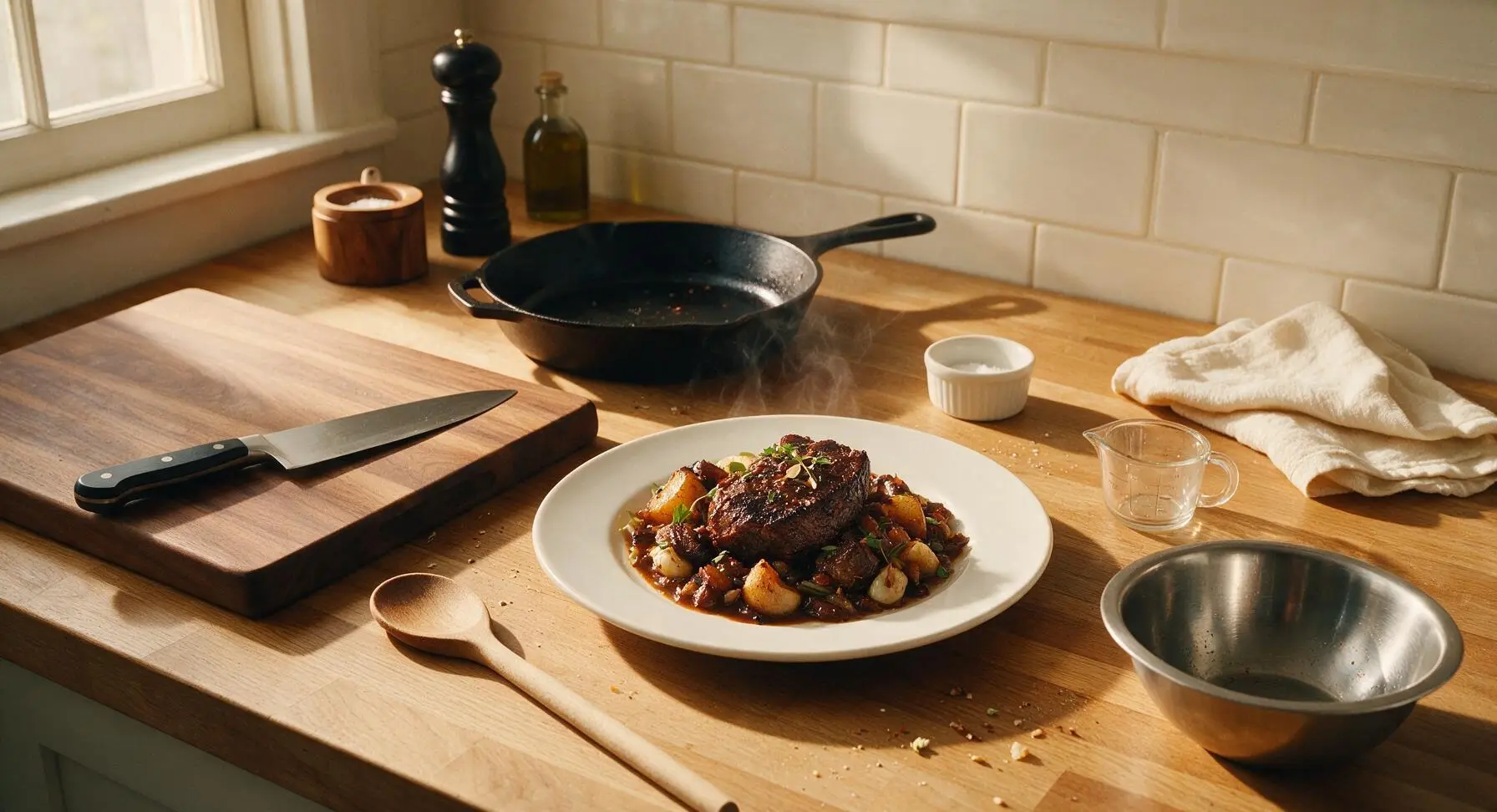
American Porter

title 1
American Porter
⏱️ cook time 1 hour 30 minutes
🍽️ servings 10
⚡ Difficulty medium

intro

Rich, roasty American Porter with deep notes of dark chocolate, toasted caramel, and subtle citrus hop bite. Smooth, medium-bodied, and perfectly carbonated for sipping with hearty meals or on its own.

Ingredients
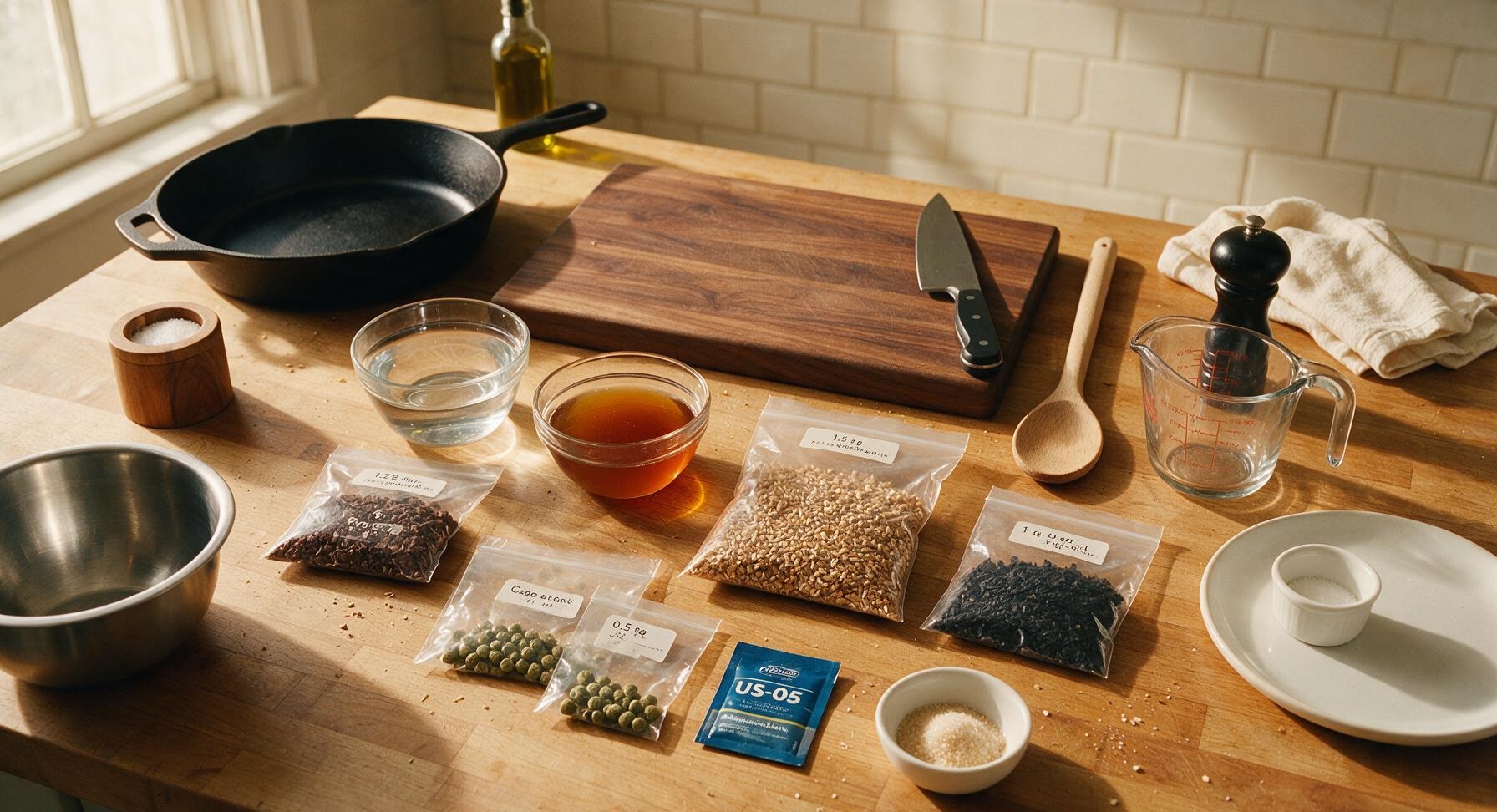
Cold filtered water 1.25 gallons
Pale liquid malt extract 1.5 lbs
Crushed chocolate malt 4 oz
Crushed crystal 60L malt 2 oz
Crushed black patent malt 1 oz
Cascade hop pellets 0.5 oz (divided)
US-05 American ale dry yeast 1 packet (5g)
Priming sugar (for carbonation) 2.5 tsp

Steps

1

Sanitize All Equipment

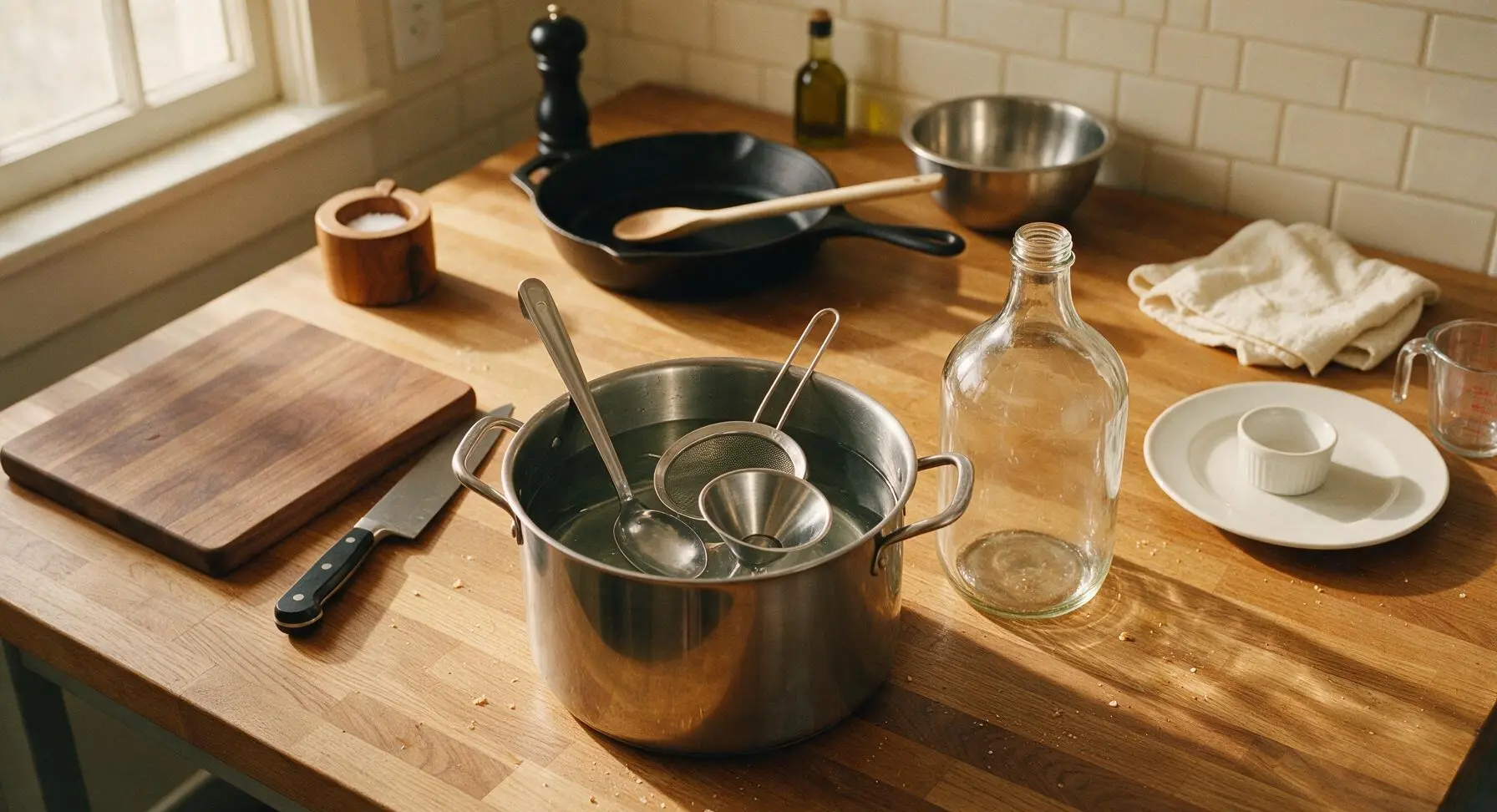
Mix 1 tablespoon of no-rinse brewing sanitizer with 1 gallon of cool water in the 2-gallon stainless steel brew pot. Submerge the stainless steel stirring spoon, fine-mesh strainer, funnel, airlock, and rubber stopper in the solution for 2 full minutes, then drain completely (no rinsing required). Wipe the interior of the glass carboy with sanitizer solution as well. Every surface that will touch cooled wort must be sanitized to prevent off-flavors or bacterial infection. Set sanitized tools on a clean section of the counter.
Step 1
step1:Sanitize All Equipment
2

Steep Specialty Grains

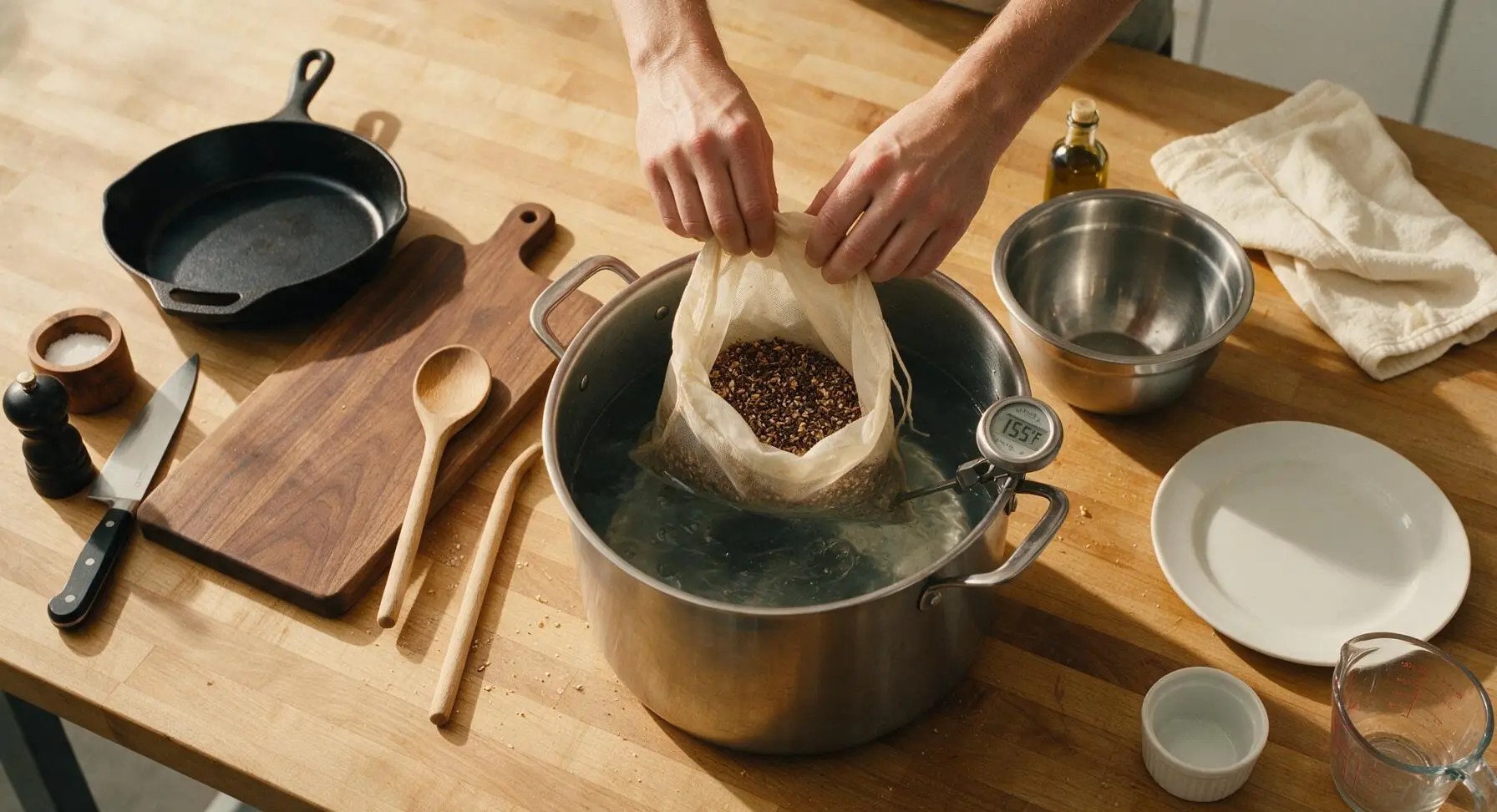
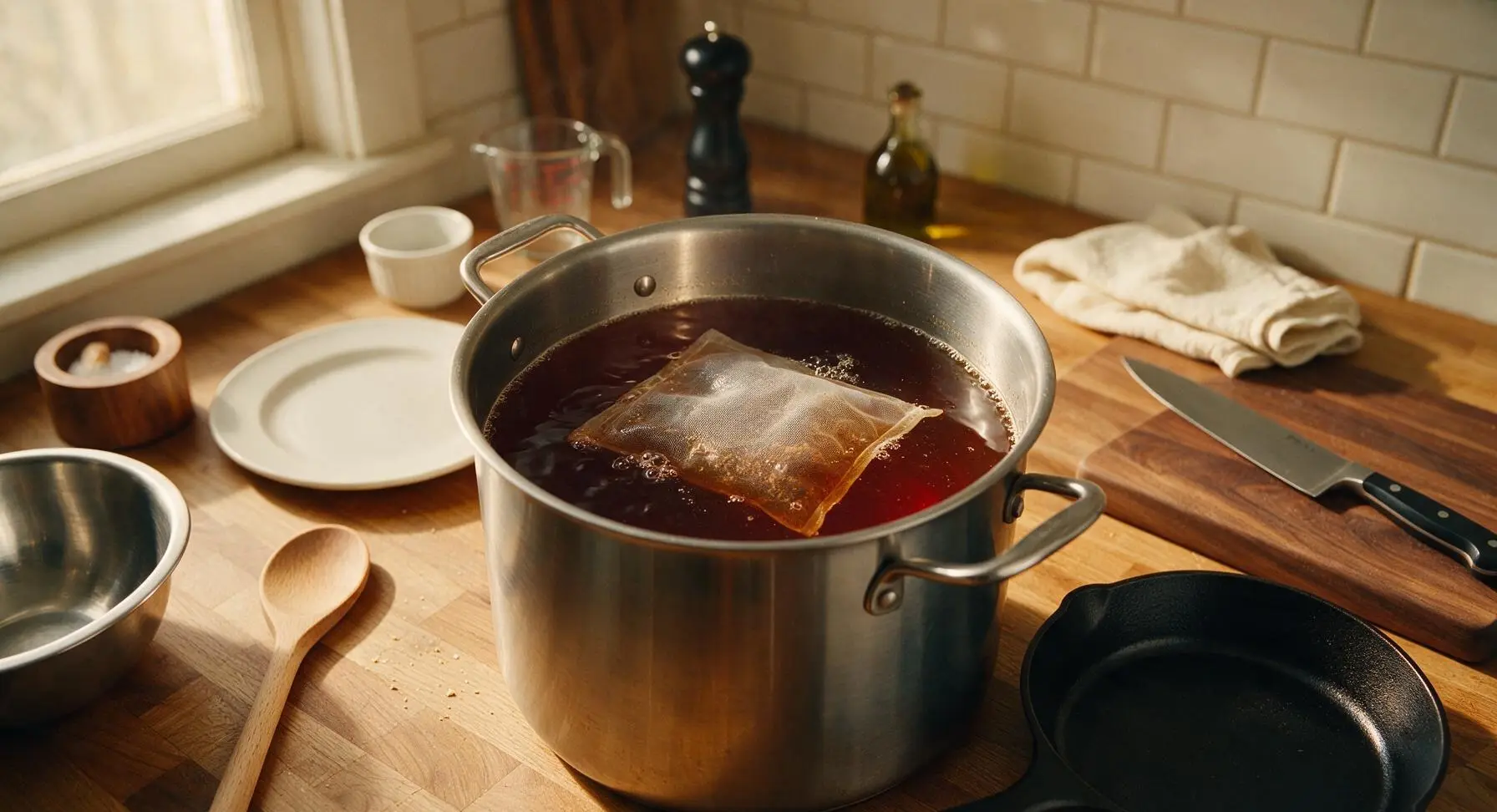
Pour 1 gallon of cold filtered water into the rinsed brew pot, and heat over medium heat to 155°F (68°C), monitored with the clipped digital thermometer. Place all crushed chocolate malt, crystal 60L malt, and black patent malt into the nylon mesh grain bag, tie the drawstring loosely, and submerge fully in the heated water. Hold the temperature steady between 150-155°F for 30 minutes, never letting the water reach a boil. The water will darken to a deep ruby-brown as malt flavors and color leach out.
Step 2
step2:Steep Specialty Grains
Step 2
step2:Steep Specialty Grains
3

Add Malt Extract

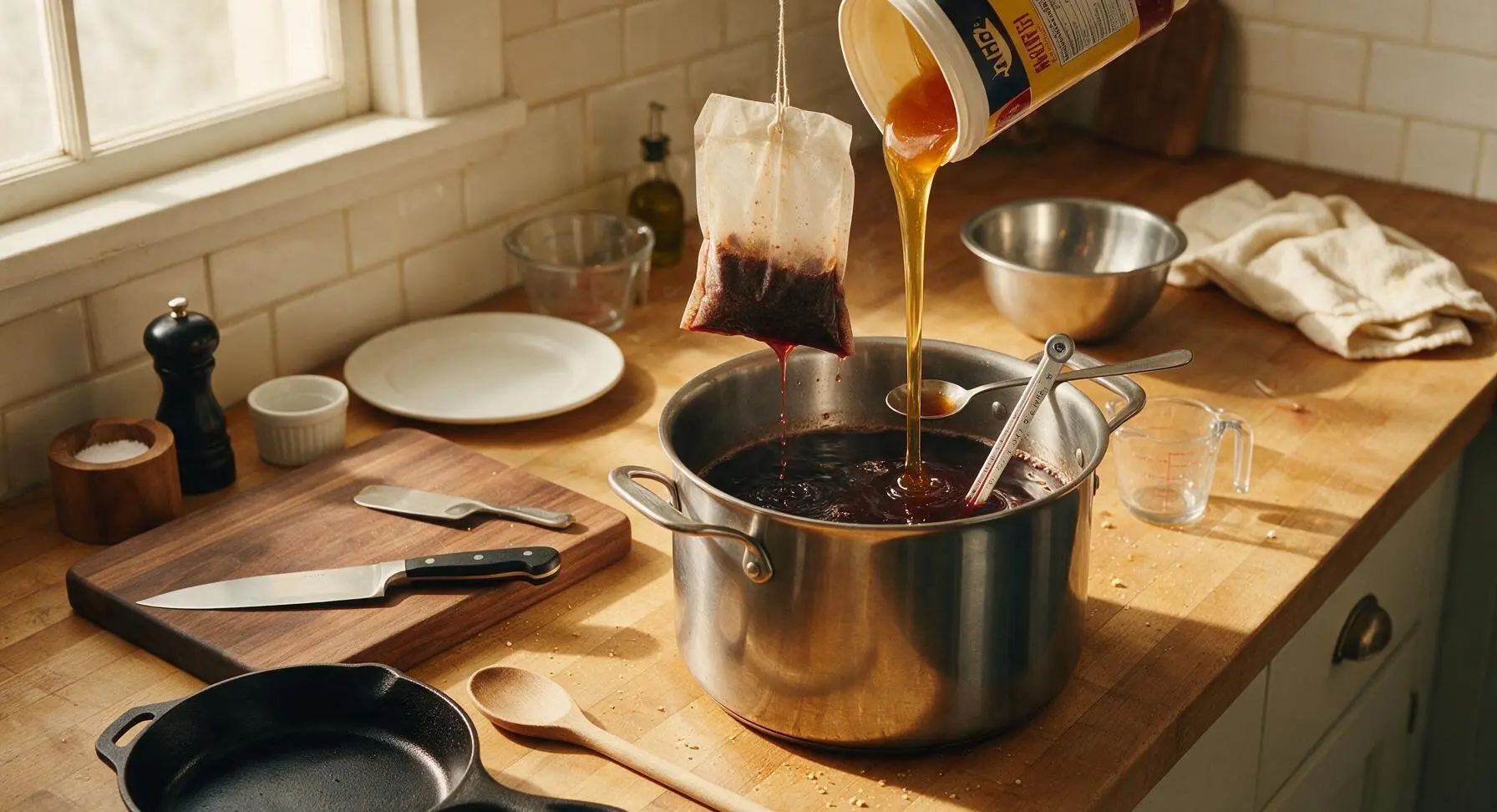
After 30 minutes of steeping, lift the grain bag out of the pot and hold it above the liquid to drain fully for 1 minute. Do not squeeze the bag, as this will extract harsh, astringent tannins that make the beer taste dry and bitter. Bring the remaining wort to a gentle rolling boil, then turn off the heat temporarily. Stir in all of the pale liquid malt extract with the stainless steel stirring spoon until fully dissolved, with no thick clumps stuck to the pot bottom.
Step 3
step3:Add Malt Extract
4

Boil and Add Hops

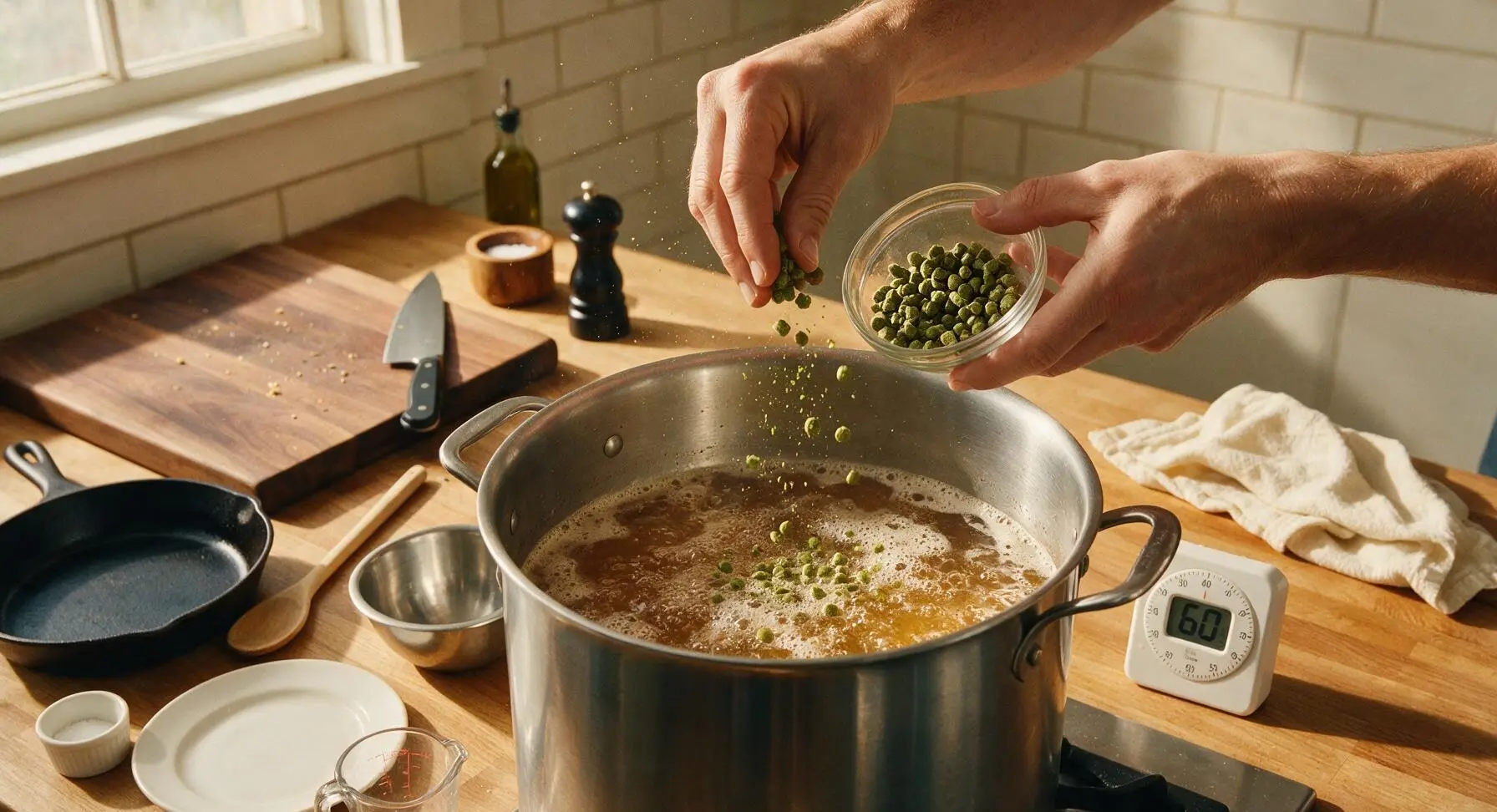
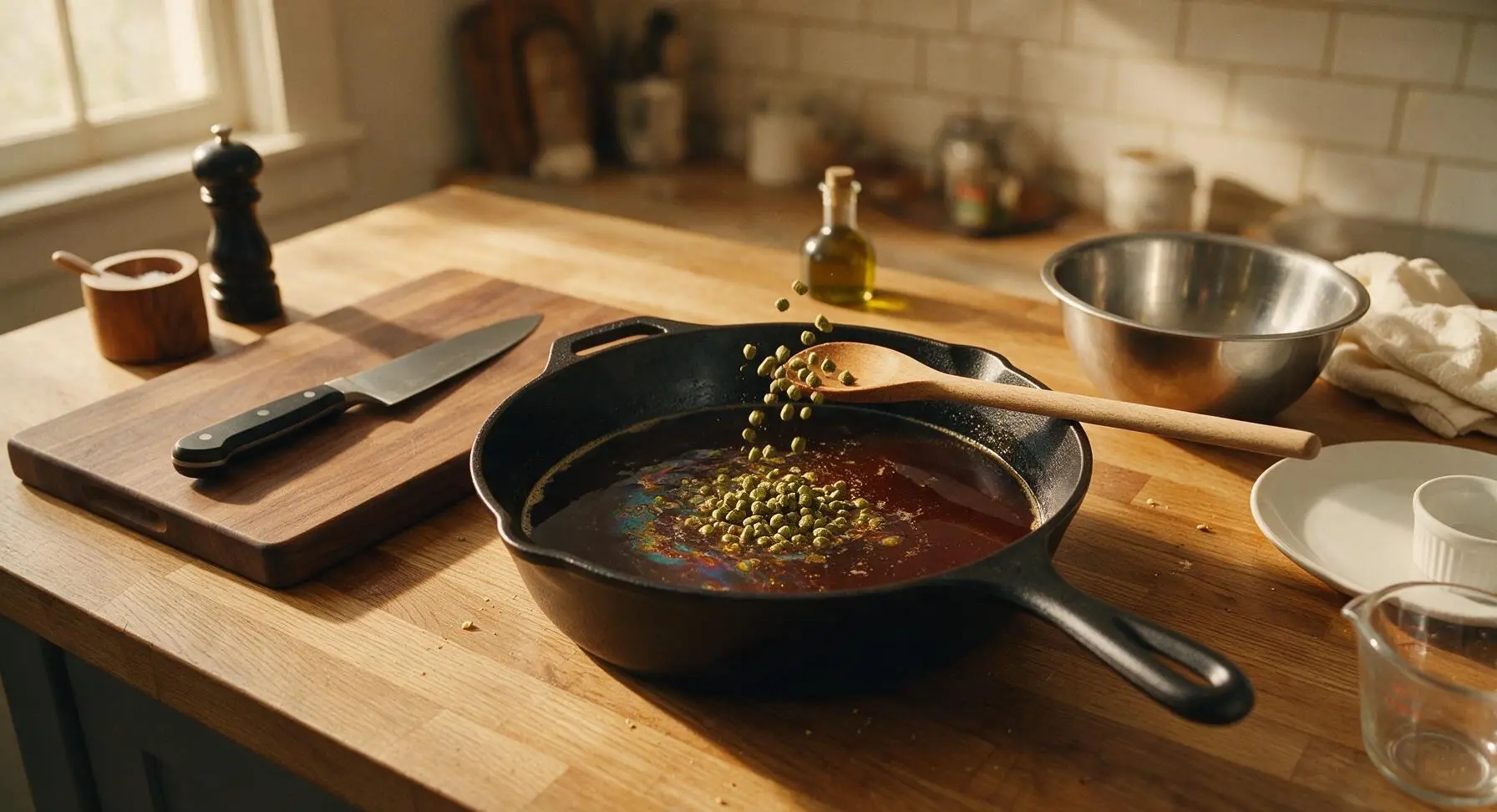
Return the wort to a steady, controlled rolling boil (212°F at sea level) and set a timer for 60 minutes. At the start of the boil (60 minutes remaining), add 0.3 oz of Cascade hop pellets to provide balanced bitterness. Adjust heat as needed to prevent messy boil-overs, stirring occasionally. When 5 minutes remain on the timer, add the final 0.2 oz of Cascade hop pellets to add bright, citrusy aroma without extra bitterness.
Step 4
step4:Boil and Add Hops
Step 4
step4:Boil and Add Hops
5

Cool Wort Rapidly

When the 60-minute boil finishes, turn off the heat immediately and cover the pot with its lid. Set the pot inside the stainless steel ice bath tub filled with ice and cold tap water, placed on the counter. Cool the wort as quickly as possible to 70°F (21°C), which takes roughly 20 minutes. Rapid cooling reduces the risk of bacterial contamination and prevents unwanted off-flavors. Do not open the lid unnecessarily while cooling.
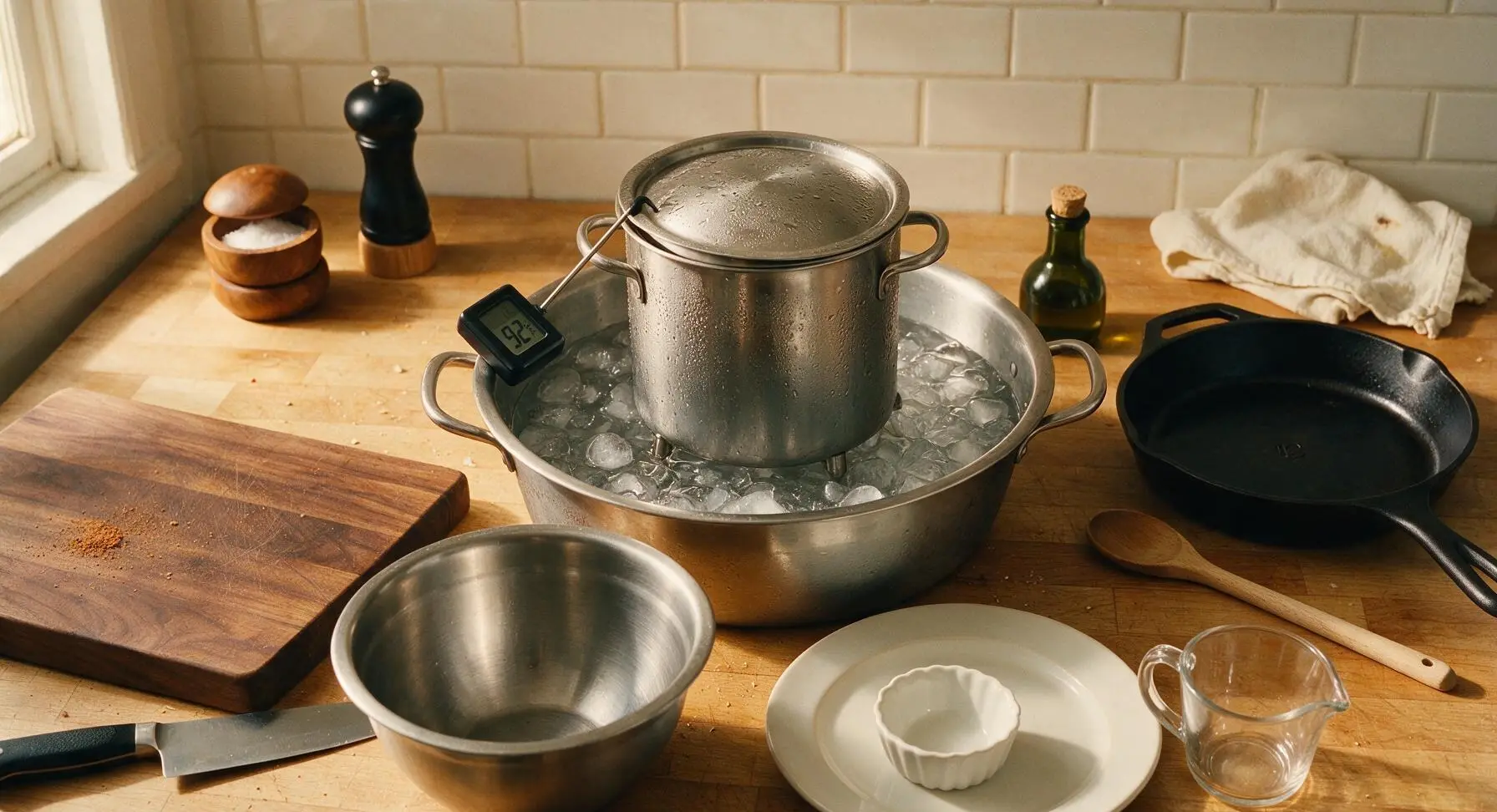
Step 5
step5:Cool Wort Rapidly
6

Transfer to Fermenter

Once the wort holds a steady 70°F, remove the pot from the ice bath. Place the stainless steel funnel in the mouth of the sanitized glass carboy, and set the fine-mesh strainer inside the funnel to catch hop debris and coagulated protein (trub). Pour the cooled wort slowly through the strainer into the carboy, then top up with extra cold filtered water if needed to reach the etched 1-gallon volume mark on the carboy.
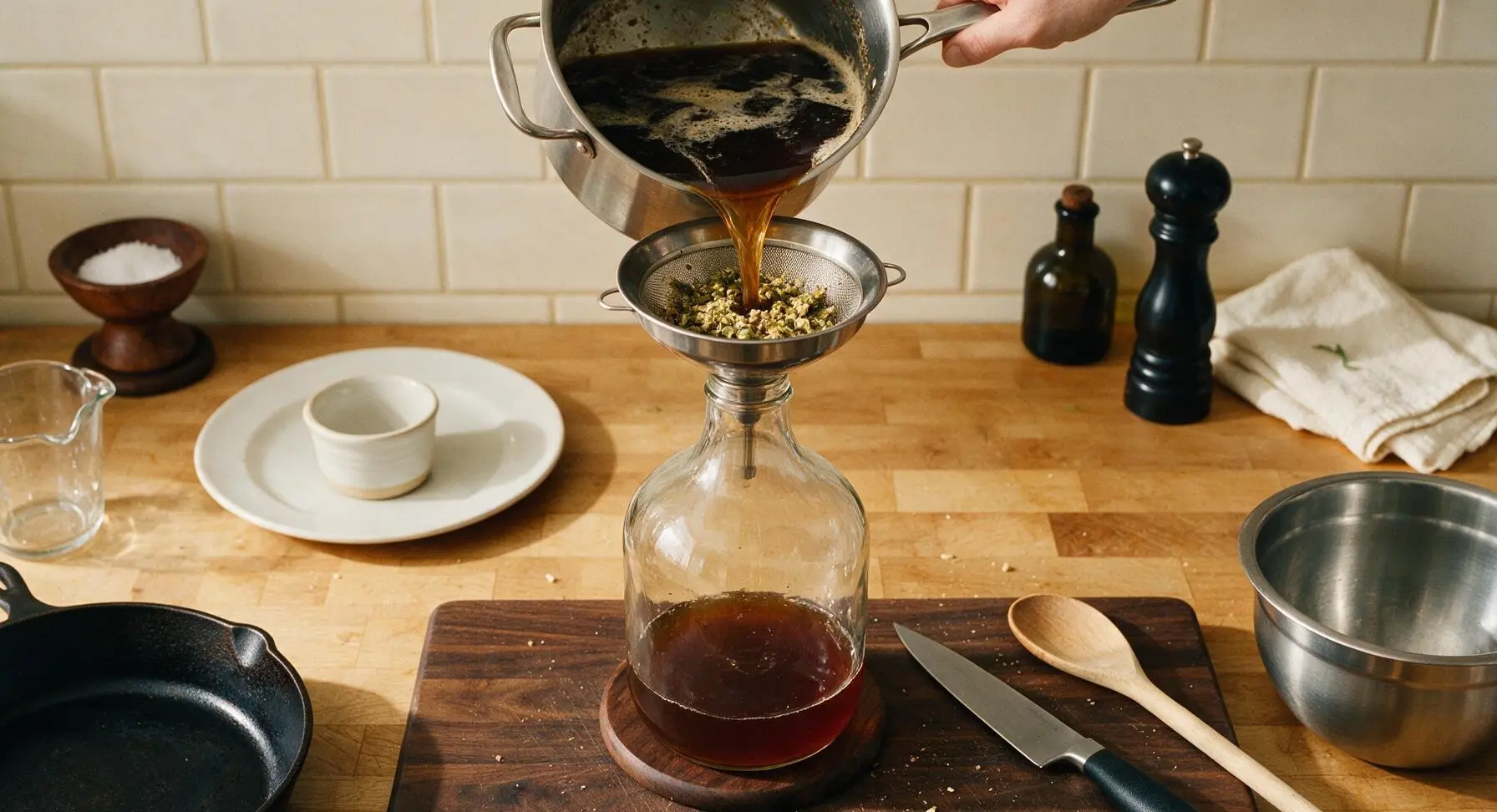
Step 6
step6:Transfer to Fermenter
7

Pitch Ale Yeast

Sprinkle the entire 5g packet of US-05 American ale yeast evenly across the surface of the wort in the carboy; no stirring is needed, as the yeast will rehydrate on its own. Fit the sanitized rubber stopper and 3-piece airlock into the carboy neck, and fill the airlock halfway with sanitizer solution. Move the carboy to a dark, temperature-stable spot held at 65-70°F (18-21°C) to ferment for 2 weeks, until bubbling in the airlock stops completely and the wort clears.
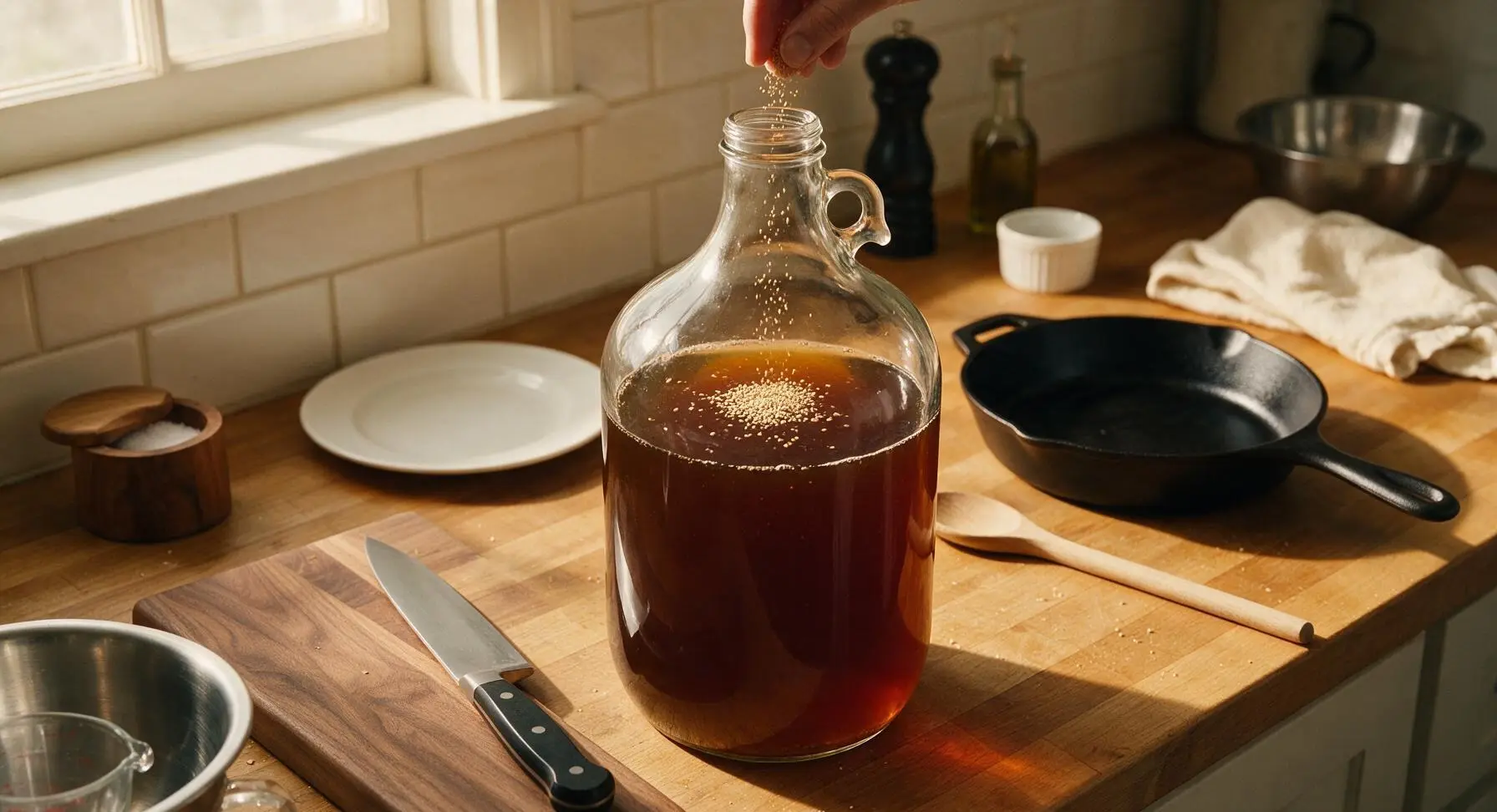
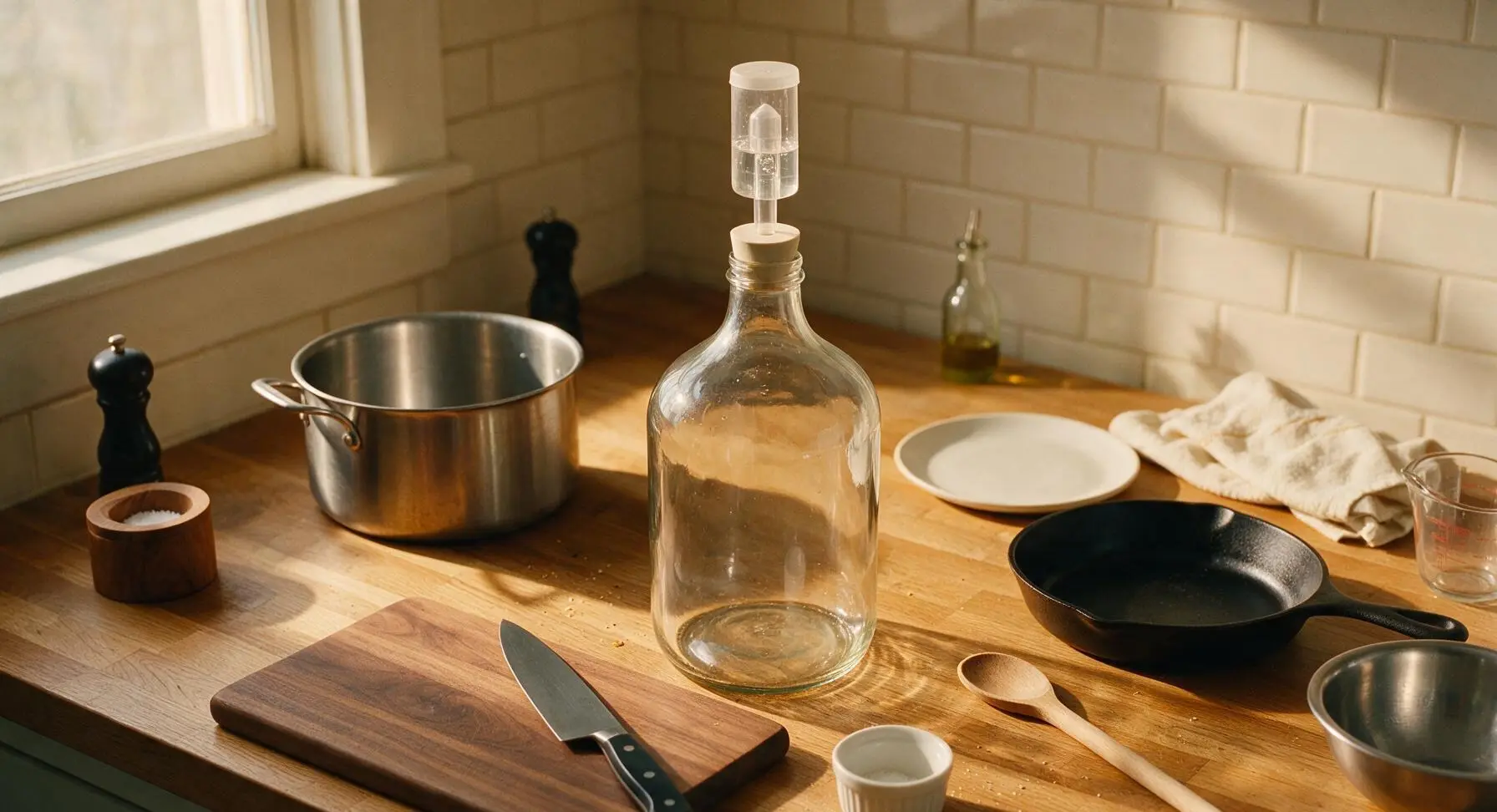
Step 7
step7:Pitch Ale Yeast
Step 7
step7:Pitch Ale Yeast
8

Bottle and Condition

After 2 weeks of fermentation, siphon the clear, finished porter into sanitized 12oz amber glass bottles using the food-grade auto-siphon, leaving 1 inch of headspace at the top of each bottle. Add 1/4 teaspoon of priming sugar to each bottle to create natural carbonation, then seal each bottle tightly with a metal crown cap using the bench bottle capper. Store bottles at room temperature for 2 additional weeks to carbonate and mellow, then chill before serving.
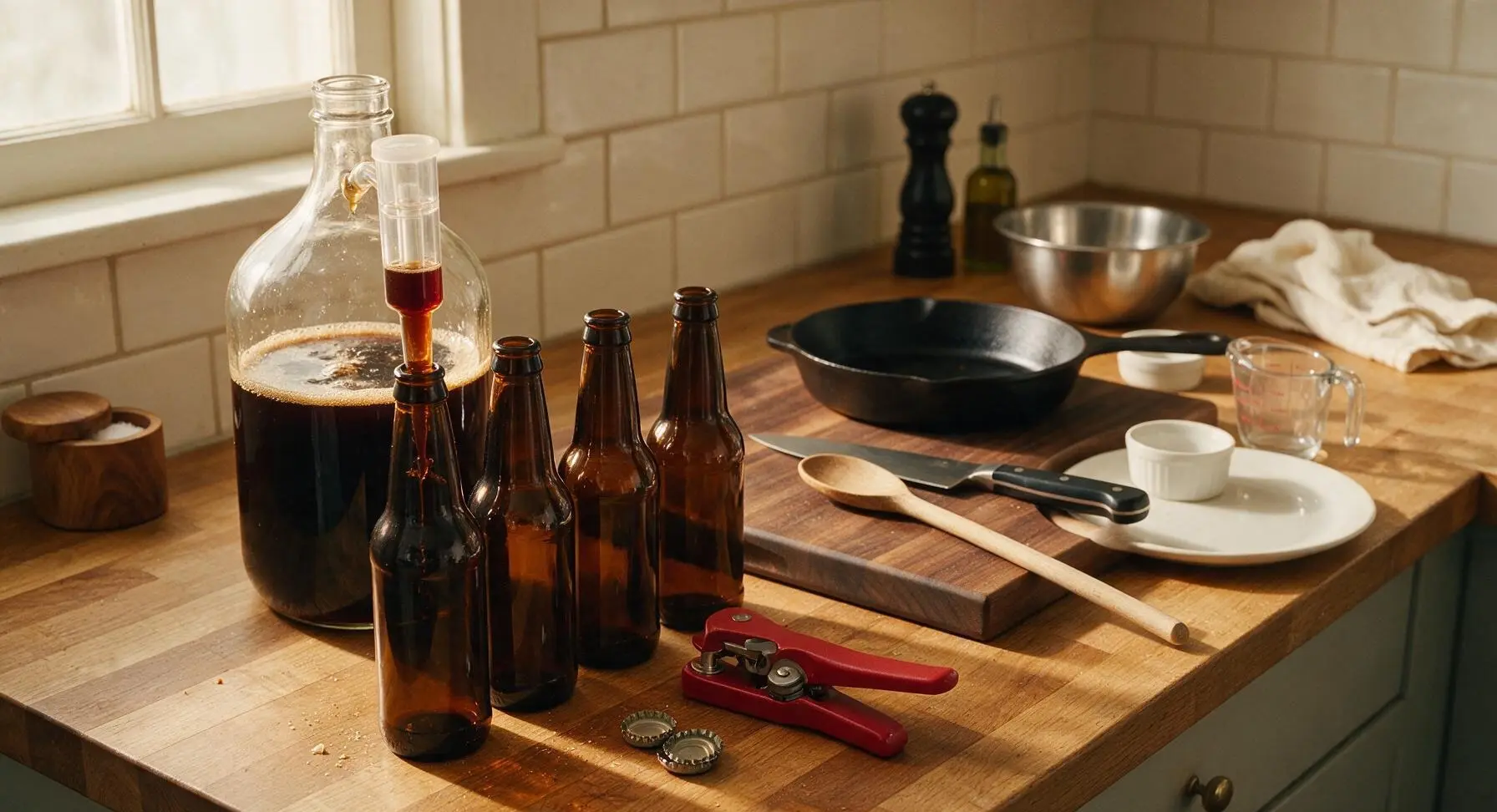
Step 8
step8:Bottle and Condition

Tips

1.Avoid squeezing the grain bag after steeping—squeezing presses bitter, astringent tannins from grain husks into the wort, which will leave your porter with a harsh, dry aftertaste instead of a smooth, roasty finish.
2.Never pitch yeast into wort warmer than 75°F—high temperatures kill active yeast cells, leading to stuck fermentation and unpleasant off-flavors like solventy alcohol or overripe fruit notes. Always confirm temperature with your thermometer before adding yeast.
3.Resist the urge to open your fermenter or bottles early—exposing young, unfinished beer to oxygen before conditioning is complete causes stale, cardboard-like flavors. Allow the full 4-week total fermentation and conditioning time before sampling for the smoothest, best-tasting porter.
✨ You May Also Like

Drinks & Beverages
🍜 Mexico

A bright, balanced tequila-based cocktail with zesty fresh lime, smooth orange liqueur, and a signature salt rim, perfect for warm summer sipping.

⏱️ 5 minutesDrinks & Beverages ★ 4.9
Drinks & Beverages
🍜 United States

Thick, creamy, nostalgic classic vanilla milkshake with a rich, smooth texture, topped with whipped cream and a cherry for cool, sweet refreshment.

⏱️ 5 minutesDrinks & Beverages ★ 4.7
Drinks & Beverages
🍜 United States

A bright, golden strong ale with fruity banana-clove notes, subtle hop spice, and soft carbonation, brewed in classic Trappist Tripel tradition.

⏱️ 2 hours aDrinks & Beverages ★ 4.5
Drinks & Beverages
🍜 United States

A frothy, nostalgic American soda fountain treat pairing bubbly cold root beer with creamy vanilla ice cream, perfect for cooling down at warm weather gatherings.

⏱️ 20 minuteDrinks & Beverages ★ 4.8
Drinks & Beverages
🍜 United States

Tart, funky, effervescent American Wild Ale is a complex fruity craft beer brewed with wild yeast, delivering bright, zesty notes perfect for warm-weather sipping.

⏱️ 2 hours aDrinks & Beverages ★ 4.4
Drinks & Beverages
🍜 United States

Bright, bubbly copycat of the iconic American caramel cola, balanced with citrus and warm spice, perfect for sipping ice-cold on hot days.

⏱️ 15 minuteDrinks & Beverages ★ 4.8

American Porter:Frequently Asked Questions

1.What does the '60L' on the crushed crystal 60L malt mean for this porter? ▾
The 'L' stands for Lovibond, the scale that measures malt roast depth, color, and flavor contribution. 60L crystal malt delivers that rich, toasted caramel note highlighted in the recipe without adding the harsh, burnt bitterness that would throw off the porter’s signature smooth, approachable balance.
2.Can I substitute a different malt if I can’t find black patent malt? ▾
Absolutely! If black patent malt is out of stock, swap it for an equal weight of roasted barley, though you’ll get a slightly softer, less ashy roasty note. Avoid swapping in extra chocolate malt, as that will amp up dark chocolate flavor too much and mute the bright, subtle citrus hop balance we’re going for.
3.How long do I need to steep the crushed specialty malts for this recipe? ▾
Steep your crushed chocolate, crystal 60L, and black patent malts in 150–155°F water for 20 to 30 minutes, max. Steeping longer than that, or using water hotter than 170°F, pulls harsh, astringent tannins from grain husks that will make your finished porter taste dry and puckery instead of smooth.
4.Why does the recipe call for cold filtered water instead of regular tap water? ▾
Unfiltered tap water often has chlorine, chloramine, or unbalanced mineral content that creates obvious off-flavors in finished beer, since porter is over 90% water. Cold filtered water removes those chemical, stale notes, letting the rich chocolate, caramel, and subtle hop flavors shine without any weird, medicinal aftertaste.
5.How do I get that perfect, smooth carbonation noted in the recipe intro? ▾
For that ideal, gentle fizz, add 3/4 cup of corn priming sugar to your fully fermented porter right before bottling. Seal bottles tightly and let them condition at 65–70°F for 2 weeks; this lets residual yeast eat the sugar and produce consistent carbonation without the harsh, over-fizzy bite of over-carbonation.
6.What kind of hops work best to get that subtle citrus hop bite? ▾
Stick with classic American citrus hops like Cascade, Centennial, or Citra, added in the last 10–15 minutes of the boil to preserve their bright, zesty note without amping up harsh bitterness. Skip heavy, earthy European hops, as they will clash with the roasty chocolate and caramel malt profile of this porter.
7.How long does primary fermentation take for this American Porter? ▾
Expect primary fermentation to take 7 to 10 days when you hold your fermentation space at a steady 65–68°F, the ideal temp for clean American ale yeast. You’ll know it’s done when your airlock stops bubbling for 48 straight hours, and hydrometer readings stay consistent across two consecutive days.
8.Can I make this recipe with all-grain instead of pale liquid malt extract? ▾
You absolutely can! Swap the pale liquid malt extract for 10 lbs of crushed 2-row pale malt, and mash it alongside your specialty malts at 152°F for 60 minutes before sparging. The finished beer will have a nearly identical rich, smooth profile, just with a slightly softer, more integrated malt flavor than the extract version.
9.What are the best hearty meals to pair with this finished porter? ▾
This medium-bodied porter pairs beautifully with rich, savory dishes like smoked brisket, short rib chili, sharp aged cheddar burgers, or even dark chocolate brownies for dessert. It’s smooth enough to sip on its own too, with roasty malt cutting through rich food and subtle citrus hops cleansing your palate between bites.
10.Why are the specialty malts pre-crushed, and can I crush them at home? ▾
Pre-crushed malts are milled to crack grain kernels open so their sugars and flavors can steep out easily, without grinding husks into fine bits. If you have a home grain mill, you can crush whole malts yourself—just aim for a coarse crack, not a fine powder, to avoid extracting harsh tannins during steeping.
11.How long will this porter stay fresh after it finishes carbonating? ▾
When stored in a cool, dark place away from direct sunlight and temperature swings, this porter will taste fresh for up to 6 months after bottling. Roasty malt flavors will mellow slightly over time, but the bright citrus hop note will fade after 3–4 months, so drink it within that window for best flavor.
12.My porter turned out much more bitter than I expected—what went wrong? ▾
Harsh, off-putting bitterness usually comes from one of two common missteps: either you steeped specialty malts in water hotter than 170°F, which pulled astringent tannins from husks, or you added hops too early in the boil, amping up resinous bitterness instead of bright citrus flavor. Stick to the posted temp and timing guidelines for a smoother finish next batch.
13.Do I need to add extra yeast, or is there active yeast in the liquid malt extract? ▾
Pale liquid malt extract doesn’t contain active brewing yeast, so you’ll need one packet of clean American ale yeast (like US-05 or Wyeast 1056) added once your boiled wort cools to 70°F or below. Always rehydrate dry yeast per package instructions first to kickstart a healthy, fast fermentation that avoids off-flavors.
14.Can I add extra chocolate malt to amp up the dark chocolate flavor? ▾
You can add up to 2 extra ounces of crushed chocolate malt for a deeper dark chocolate note, but don’t go overboard. More than 4 extra ounces will add dry, ashy roast flavor that overwhelms the smooth caramel and subtle hop notes, making the porter taste overly bitter and unbalanced instead of rich.
15.What makes this an American Porter instead of a traditional English Porter? ▾
Unlike malty, low-bitterness English porters that use earthy, floral UK hops, this American version uses bright, citrusy domestic hops and a touch of crisp black patent malt for a brighter, more assertive roast profile. It ferments cleaner, with less fruity ester character, and has crisp carbonation made for casual sipping.
16.What temperature should I serve this porter at to get the best flavor? ▾
Skip serving it ice-cold straight from the fridge! Let it warm to 50–55°F before sipping, which lets the dark chocolate, toasted caramel, and subtle citrus hop notes come to the front. Ice-cold temperatures mute all those nuanced flavors, leaving you with just a generic cold, roasty beer instead of the balanced, medium-bodied profile we built.
17.Can I brew a smaller partial batch if I don’t have a 5-gallon setup? ▾
Absolutely! Scale all ingredients down by 50% to make a 2.5-gallon batch, perfect for smaller fermentation setups or apartment brewers. Just keep all steep times, boil times, fermentation temps, and priming sugar ratios proportional to the smaller volume to keep the flavor profile exactly consistent with the full batch.
18.Do I need to boil the full 5-gallon wort volume when using liquid malt extract? ▾
You only need a full rolling boil for 60 minutes total, but you don’t have to boil the full 5 gallons if your stockpot is too small. Boil 2–3 gallons of wort with your malt extract and late hop additions, then top it up with cold filtered water in your fermentation bucket to hit full volume once the wort cools.
19.My finished porter is hazy instead of deep, clear brown—did I make a mistake? ▾
Mild haze is totally normal for fresh homebrewed porter, especially if you didn’t add fining agents to clear suspended yeast and grain particles. For a crystal-clear pour, add a teaspoon of Irish moss to the boil in the last 15 minutes, and let bottles condition an extra week to let sediment settle fully to the bottom.
20.Can I add coffee or vanilla to this porter without ruining its core flavor? ▾
Absolutely! For a coffee twist, add 4–6 oz of cold-brewed coffee to the wort right before bottling, or add one split vanilla bean to secondary fermentation for 3–4 days for a warm, sweet note. Keep additions small so they complement, not overpower, the core chocolate, caramel, and citrus hop profile.

Comments (9)

2 days ago

OMG y’all, this American Porter is a total game changer! I made it for our Sunday family dinner last weekend and every single person went back for seconds. The deep, rich flavor is SO good, even my super picky 8 year old cleaned his plate. I was a little nervous about the medium difficulty rating since I’m still pretty new to cooking, but the steps were way easier to follow than I expected. 10/10 will be making this for our next neighborhood potluck too!

1 day ago

Wait did you serve it with mashed potatoes or crusty bread? I’m making this tomorrow for my husband’s birthday dinner and can’t decide what side pairs best!

20 hours ago

So glad your family loved it! Both mashed potatoes and crusty bread work fantastically as sides—crusty bread is perfect for sopping up that delicious savory sauce, if that’s your vibe!

3 days ago

I’ve tried so many porter-based savory recipes over the years and this one knocks it out of the park. I used a local Texas porter instead of the national brand suggested and it added such a nice hoppy little kick that balanced out the sweetness perfectly. Cook time was exactly 1 hour 30 minutes like the recipe said, no surprises there. My only tiny note is I’d add a pinch more smoked paprika next time for extra depth.

2 days ago

Love that swap for a local porter! Smoked paprika is such a great addition too—thanks for the tip for other folks looking to customize the recipe!

1 week ago

Total meal prep win for me! I made a double batch on Sunday and portioned it out for lunches all week. It holds up so well in the fridge, and the flavor actually gets better each day as the spices meld. Super filling too, I don’t hit that 3pm slump at work when I have this for lunch. Will be on my regular rotation for sure.

5 days ago

Wait, has anyone tried making this in a slow cooker instead of the stovetop? I work long days and would love to throw it on in the morning so it’s ready when I get home. The stovetop version I tested last week was incredible, so I don’t want to mess it up by switching methods!

4 days ago

I did it on low in my slow cooker for 6 hours last week and it turned out perfect! Just seared the meat first before tossing everything in like the recipe says, no other changes needed.

3 days ago

Great question! The slow cooker method works beautifully, just as HikingFoodie mentioned—sear the meat first, cook on low for 6-7 hours, and you’ll get that same fall-apart tender result. Enjoy!

yesterday

Brought this to my buddy’s football watch party last weekend and people were begging me for the recipe before halftime. The depth from the porter is unreal, it doesn’t taste like beer at all just this rich, savory, slightly smoky goodness. I will say, make sure you give it the full 15 minutes to simmer at the end like the recipe says— I rushed that part the first test batch and it was watery, no bueno.

12 hours ago

Oh that’s such a good call about the end simmer! I almost skipped that step last time I made it, will definitely make sure I budget time for it when I make this for our next tailgate.

2 weeks ago

So happy I found this! I swapped the regular porter for a gluten-free porter from my local brewery and used cornstarch instead of flour to thicken, and it turned out absolutely perfect. My whole family (none of whom are gluten free!) didn’t even notice a difference. My kids loved it so much they asked for seconds before they even finished their first helping. This is going to be my go-to cold weather dinner all winter long.

30 minutes ago

First time making something that wasn’t boxed mac and cheese or frozen pizza, and this turned out way better than I thought it would! The instructions were super clear, I didn’t get lost at any point even with the medium difficulty rating. My roommate said it tasted like something from a fancy gastropub, which is the biggest compliment I’ve ever gotten for cooking lmao. Only thing is I burned the onions a little at the start, oops, but it still tasted great.

20 minutes ago

So proud of you for giving this a go! Burnt onions happen to the best of us, no shame at all. Next time just turn the heat down a touch when you’re caramelizing them and you’ll be golden. Can’t wait to hear what you cook next!

5 minutes ago

This recipe is a total lifesaver for busy weeknights! I prepped all the veggies the night before, so when I got home from work all I had to do was sear the meat and throw everything in the pot. 90 minutes total cook time is totally manageable even on a Tuesday night, no fancy equipment needed. The leftovers make amazing sliders the next day too, just pile it on a toasted bun with a little pickles and cheese. *Chef’s kiss*

just now

Loved this! I added a diced jalapeño and a splash of hot sauce when I added the broth to give it a little extra heat, and it was chef’s kiss. If you love spicy food like I do, that little tweak is so worth it. The flavor profile is so rich and deep, it stands up really well to the extra spice without getting overpowered.

just now

That sounds like a delicious tweak! A little heat goes so well with the malty notes from the porter, we might just have to test that variation for the blog soon. Thanks for sharing!