
American Stout
intro
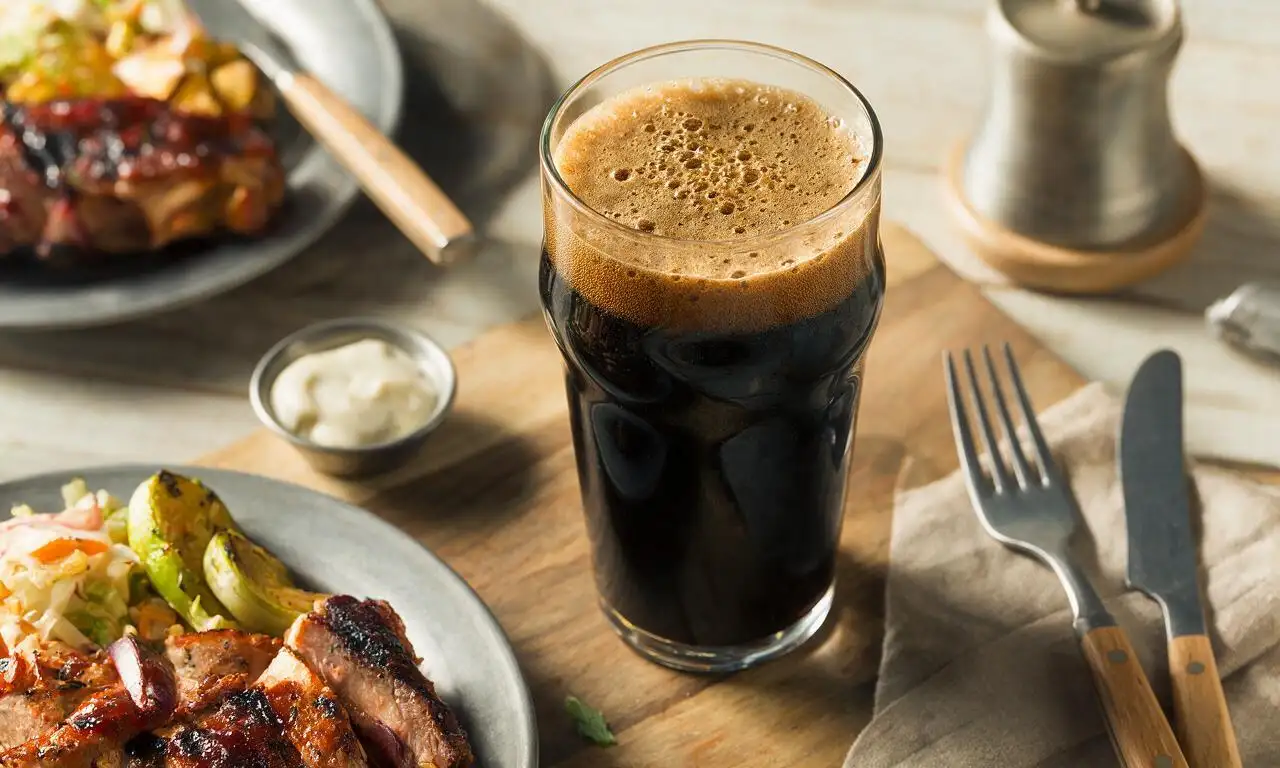
Bold, roasty American stout with dark chocolate, roasted coffee, and piney hop notes, ideal for sipping alongside hearty grilled fare at casual outdoor gatherings.
Ingredients
Steps
Mill the grain bill
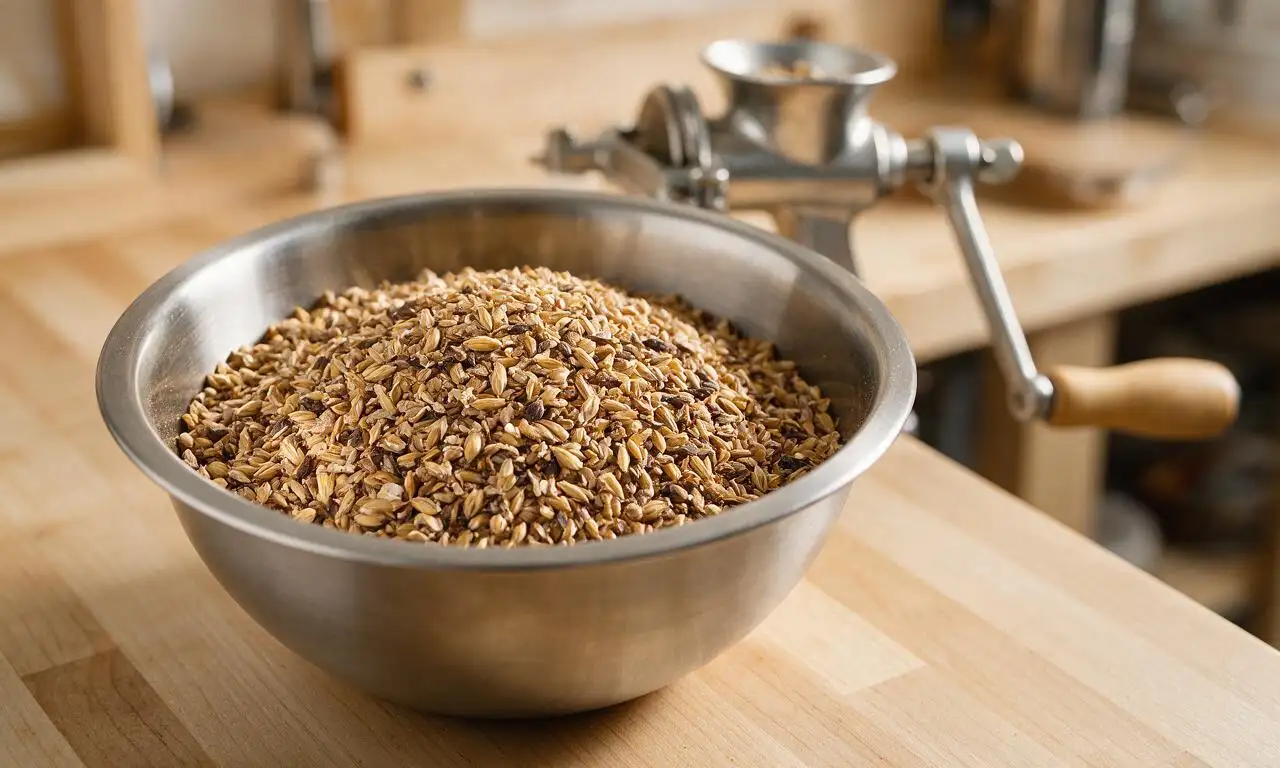
Set your grain mill to a coarse crush (1mm / 0.04 inch gap) so grain kernels are cracked but outer husks remain largely intact. Weigh out all malts and roasted barley, then run the grains through the mill into a clean food-safe bucket. Do not over-mill to a fine powder, as this causes stuck sparges and harsh off-flavors.
Perform the mash
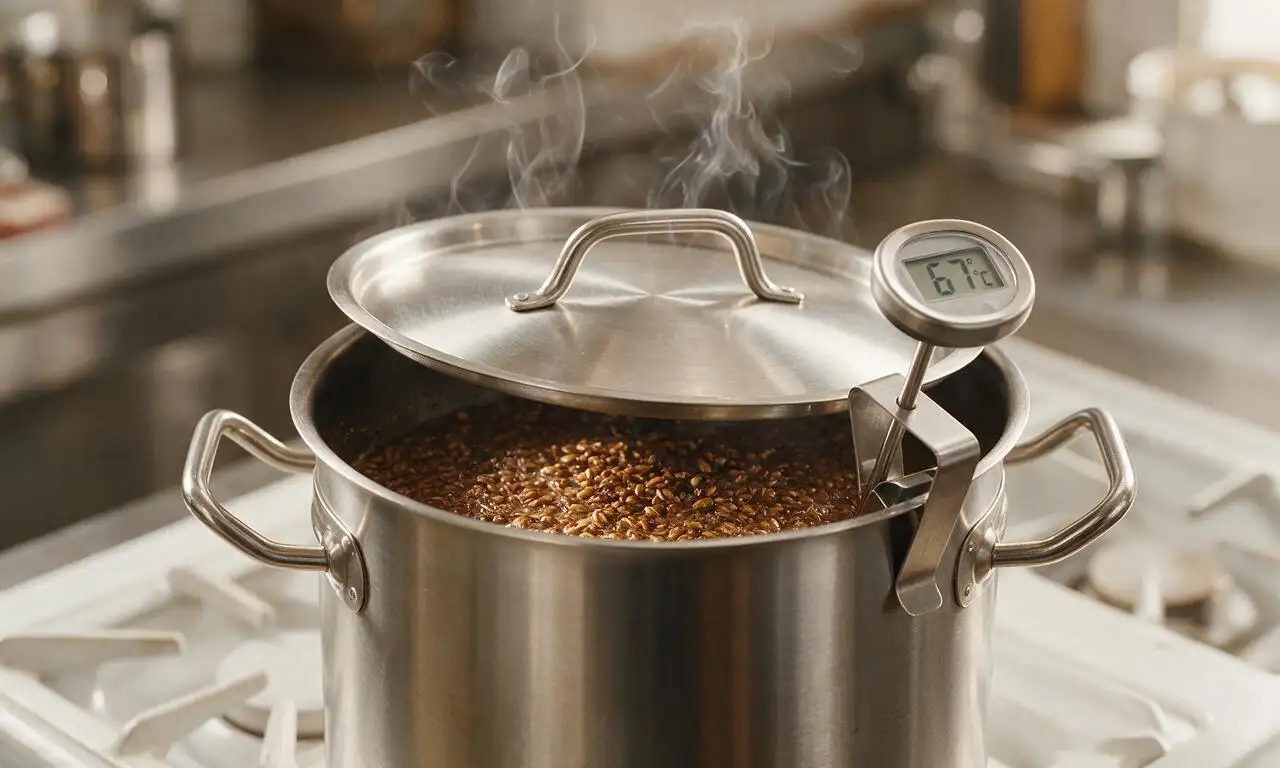
Heat 3 liters of filtered water to 71°C (160°F) in a 5-liter stainless steel brew pot, then stir in all crushed grains. Adjust heat to low to hold a consistent mash temperature of 67°C (153°F) for 60 minutes, keeping the pot covered and stirring every 10 minutes to prevent hot spots. The mash will smell like warm, toasty cereal as starches convert to sugar.
Sparge and collect wort
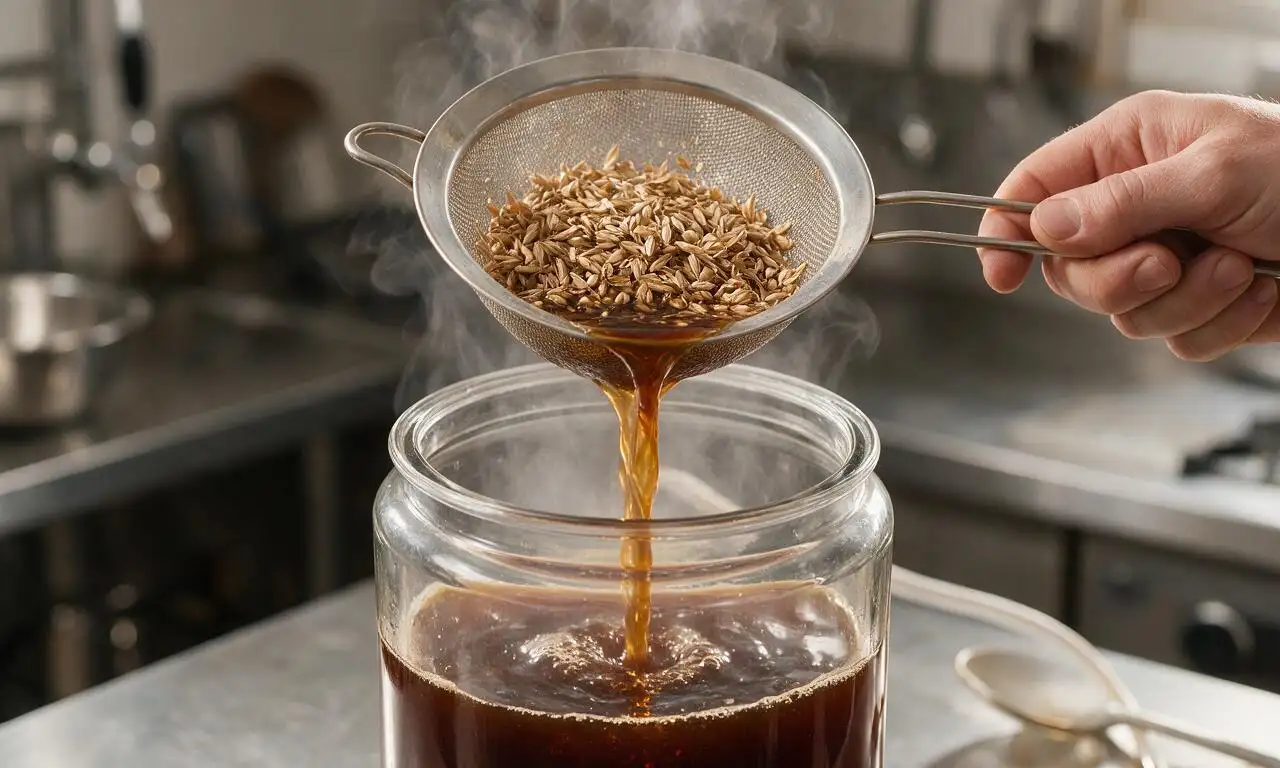
After the 60-minute mash completes, heat the remaining 2 liters of filtered water to 77°C (170°F) for sparging. Slowly pour the hot sparge water over the grain bed while straining through a fine mesh colander into a second pot, collecting 4.2 liters of sweet, dark brown wort. Discard spent grains once all liquid drains; do not squeeze the grain bed, as this extracts harsh tannins.
Boil wort with hops
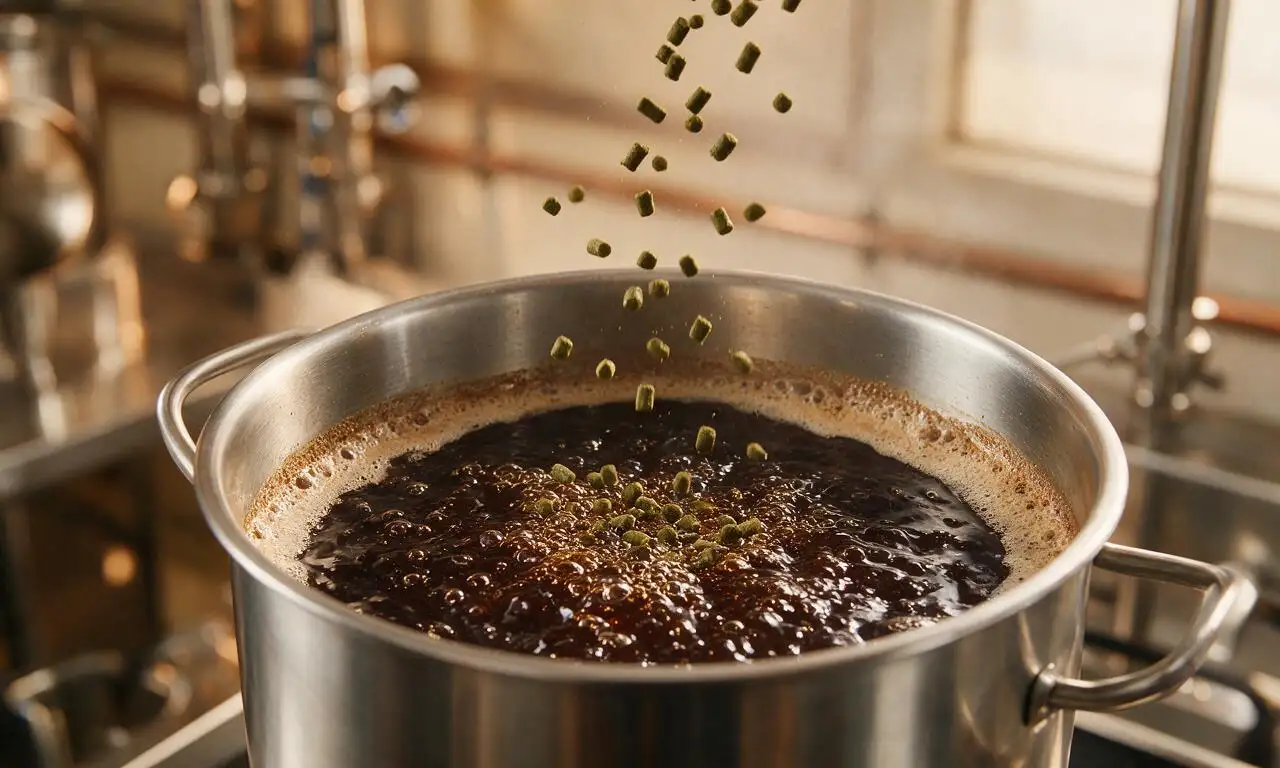
Place the pot of collected wort on the stovetop over high heat, bring to a rolling gentle boil, then reduce heat to medium-high to avoid boilovers (lower heat further if thick foam rises quickly). Once boiling starts, add 15g of Cascade hop pellets, set a timer for 60 minutes, and maintain a steady rolling boil. With 5 minutes left on the timer, add 10g of Centennial hop pellets for bright piney aroma, then turn off heat when the timer ends.
Cool wort and pitch yeast
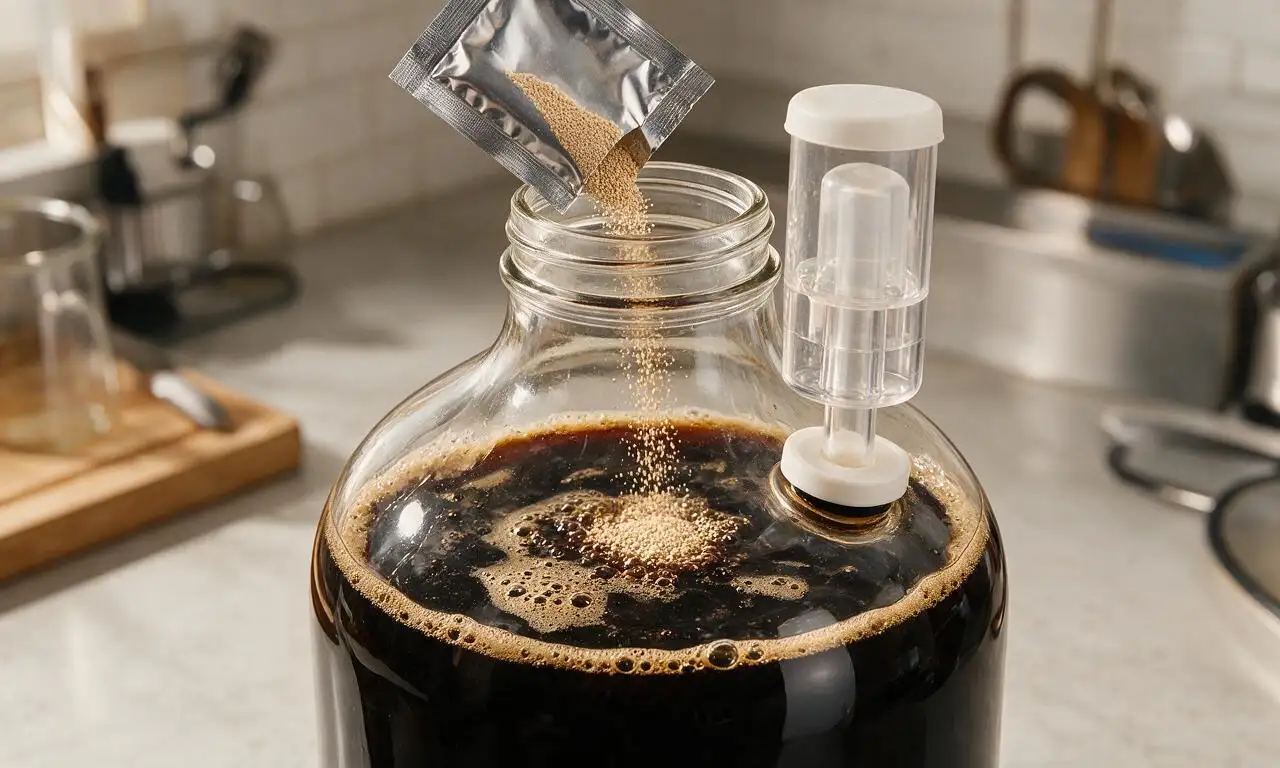
Submerge the sealed bottom of the brew pot in an ice bath filled with cold water and ice packs, stirring the wort occasionally until it drops to 20°C (68°F), which takes roughly 20 minutes. Sanitize all equipment that will touch cooled wort, then pour the wort into a sanitized 1-gallon glass fermenter, sprinkle the full 11g packet of US-05 yeast on top, and seal the fermenter with an airlock filled halfway with sanitizer.
Ferment the beer
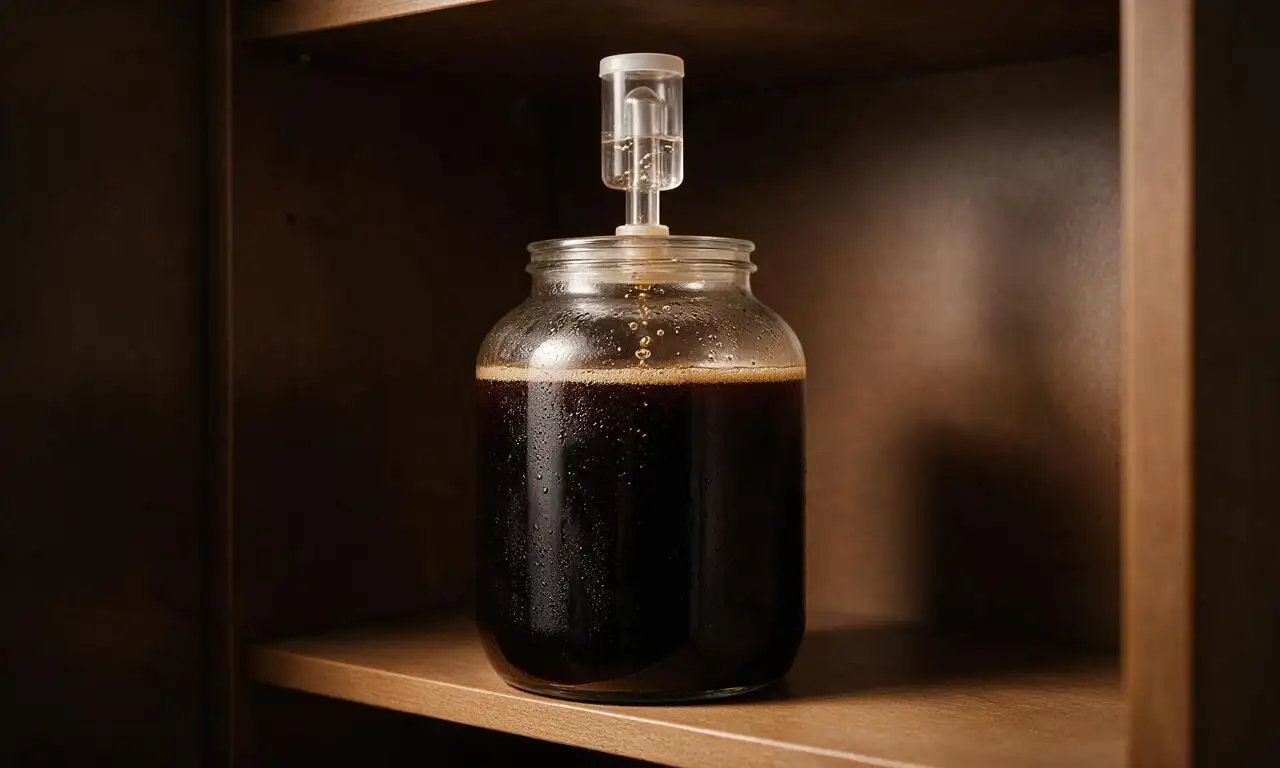
Store the sealed fermenter in a dark, temperature-controlled space held steady at 18–20°C (65–68°F) for 14 days. You will see bubbles rising through the airlock within 24–48 hours as active fermentation begins; do not open the fermenter during this period to avoid contamination. Fermentation is complete when no bubbles pass through the airlock for 48 consecutive hours.
Bottle and condition
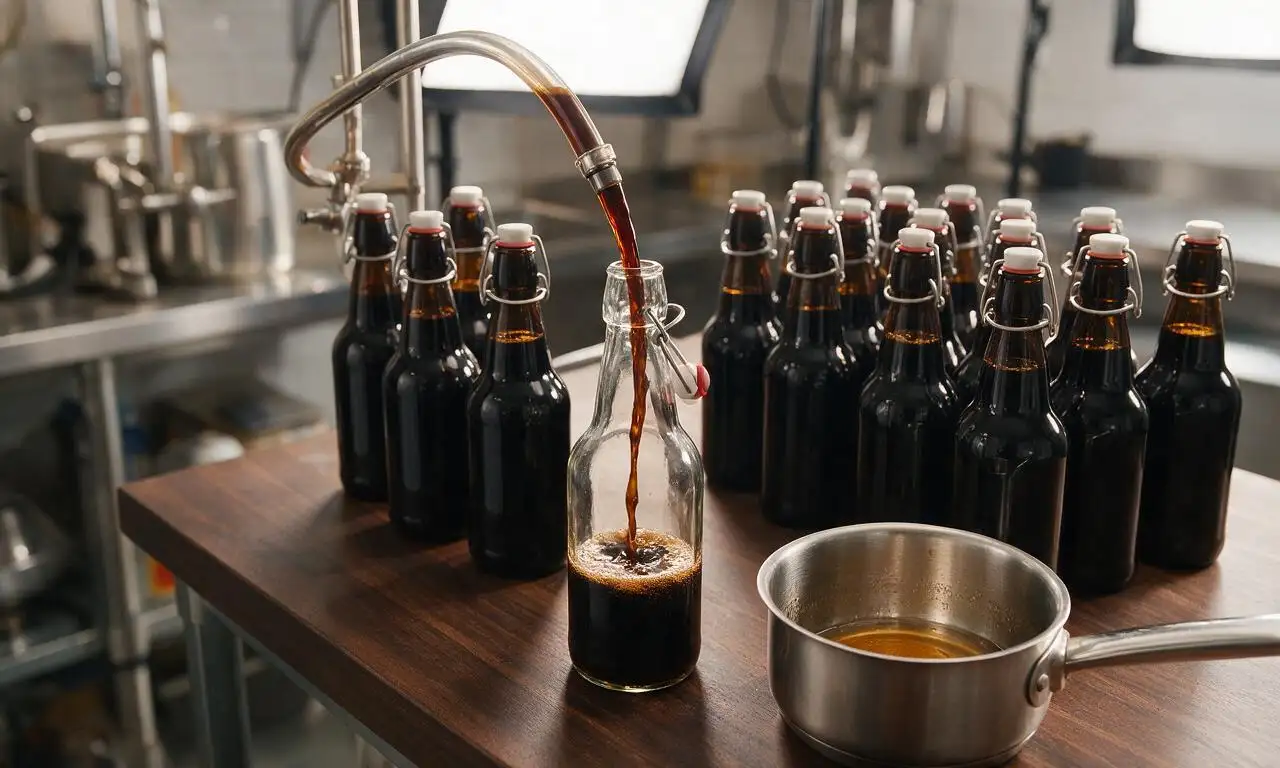
Sanitize 8 swing-top 473ml (16oz) glass bottles. Boil 30g of corn sugar in 60ml of filtered water for 5 minutes, then stir this priming sugar solution into the flat, fermented stout in a sanitized bottling bucket to create natural carbonation. Fill each bottle to 2.5cm (1 inch) below the rim, cap tightly, and store in the same dark, 20°C (68°F) space for 7 days to carbonate, then chill for 24 hours before serving.
Tips
2.Never squeeze the grain bed during sparging, as this extracts harsh, astringent tannins from grain husks that will leave your stout with a dry, puckering aftertaste.
3.Resist the urge to open your fermenter early or rush bottle conditioning: the full 14-day fermentation and 7-day room-temperature rest are required for clean flavor and even, consistent carbonation.




OMG this stout recipe is an absolute game changer! I’ve messed up 3 previous homebrew batches that came out way too bitter or watery, but this one turned out perfectly roasty with that smooth coffee and chocolate note everyone raves about. Brought a growler to our neighborhood potluck last weekend and all my buddies were begging for the recipe. The 90 minute active prep was totally manageable even as an intermediate homebrewer, no fancy extra equipment needed. 10/10 will be making this again for our fall camping trip!
This came out SO good! I was a little intimidated by the medium difficulty rating since I’ve only done two extract brew kits before, but the step-by-step instructions were super clear. My husband is a huge stout fan and said it’s better than most of the local brewery options we buy. Only tiny knock is I wish the fermentation temp notes were a little more specific for people who don’t have a temp-controlled fridge—my first gravity reading was a little off because my garage got colder than expected a few nights in.
Just cracked my first bottle after the full 3 weeks and wow, worth every second of the wait! Brought a couple over to my brother’s family dinner last night and even my sister-in-law who swears she hates dark beer loved how smooth it was, no harsh aftertaste at all. Already planning a second batch to age a little longer for our holiday party in December, this is going to be my new go-to stout recipe.