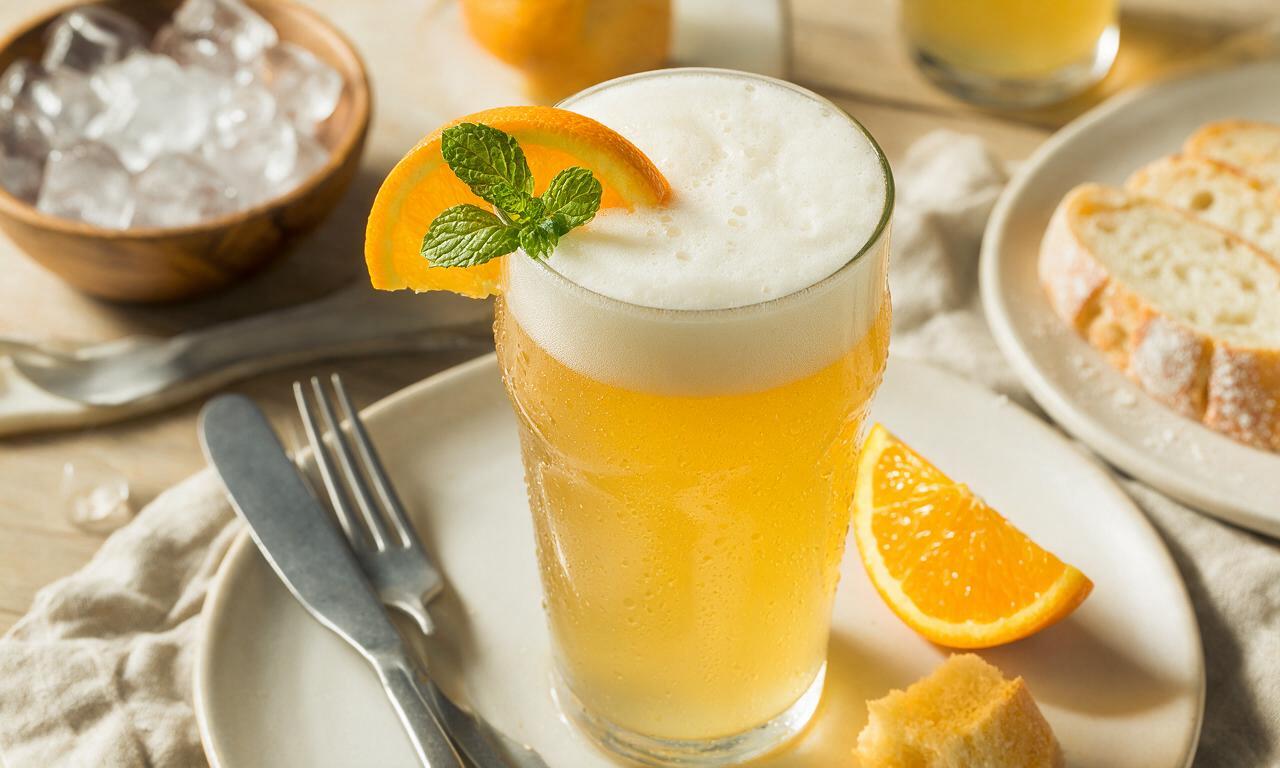
American Wheat Beer

American Wheat Beer
⏱️ cook time 2 hours active brewing, 2 weeks total fermentation & conditioning
🍽️ servings 8
⚡ Difficulty medium

intro

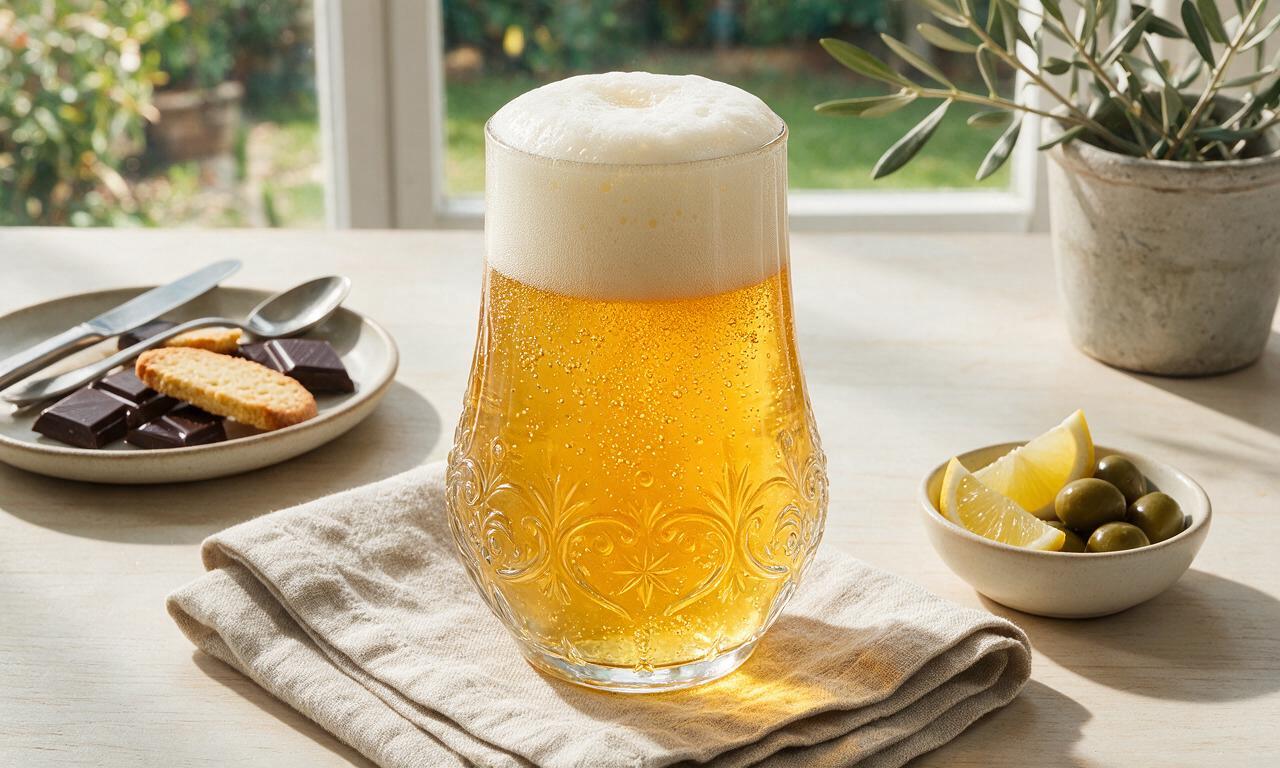
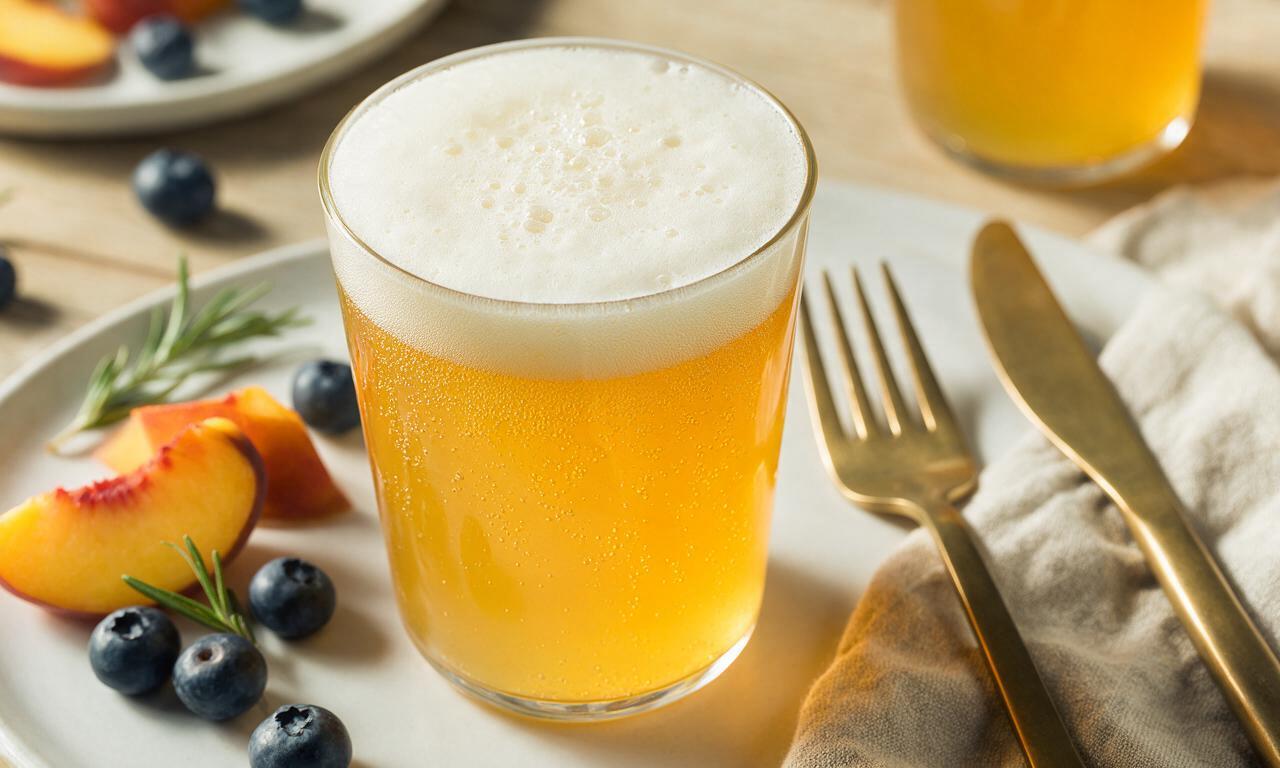
Lightly hazy, citrus-kissed homemade American wheat beer with a soft bready finish, ideal for cold sipping at warm-weather gatherings.

Ingredients

Crushed American white wheat malt 680 grams (1.5 lbs)
Crushed American 2-row pale malt 225 grams (0.5 lbs)
Cascade hop pellets 14 grams (0.5 oz)
US-05 American ale yeast 11 grams (1 standard packet)
Corn sugar (for priming) 30 grams (2 tablespoons)
Filtered water 4.5 liters (1.2 gallons)

Steps

1

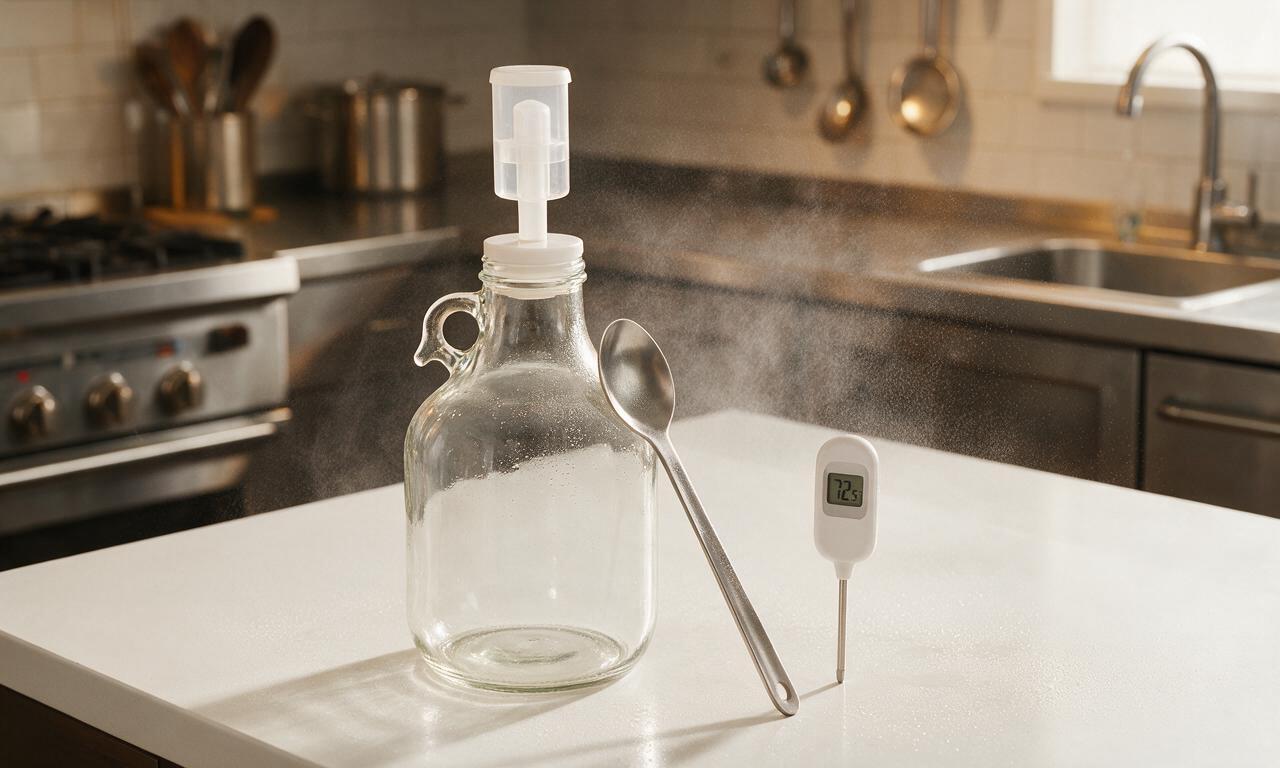
Sanitize brewing equipment

Wash and fully sanitize all brewing gear (1-gallon glass fermenter, airlock, long stirring spoon, siphon, thermometer, bottling wand) with no-rinse food-grade brewery sanitizer per manufacturer directions; air dry completely on a clean wire rack for 10 minutes to eliminate wild bacteria and yeast that can spoil finished beer.
Step 1
step1:Sanitize brewing equipment
2

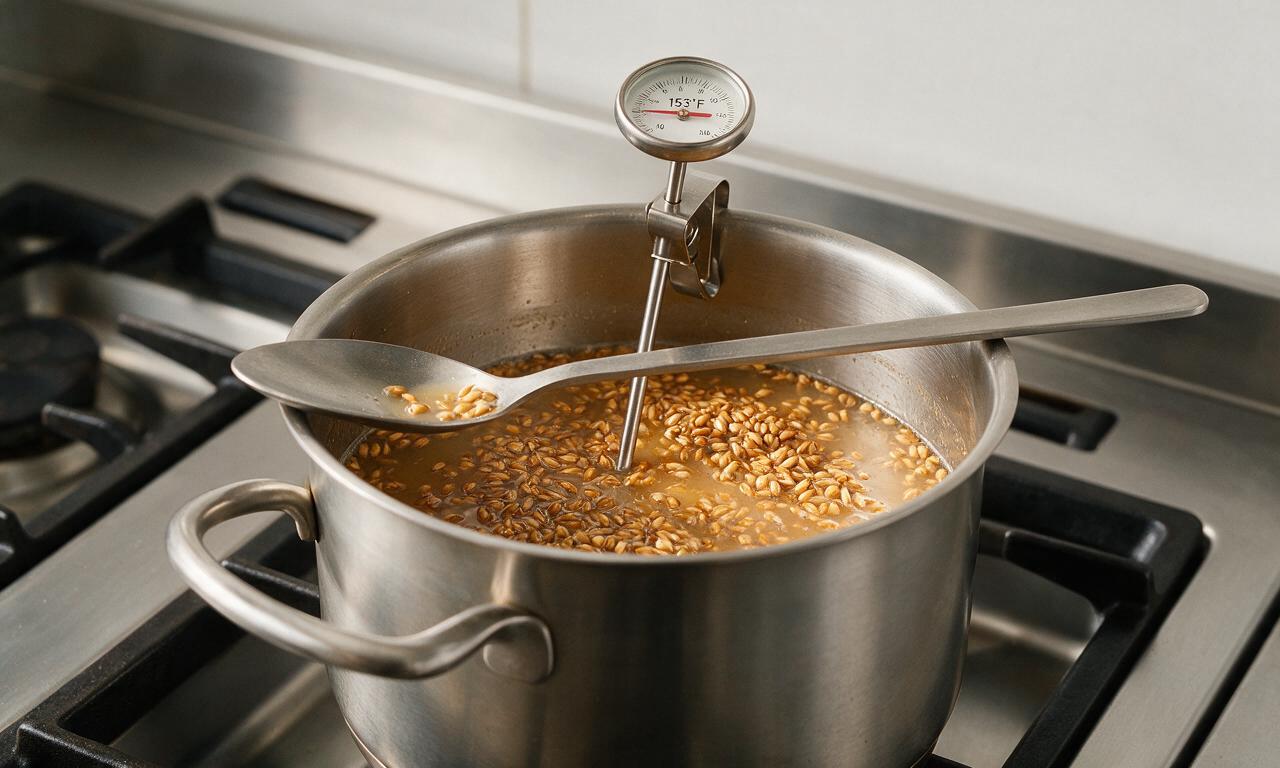
Mash the grain bill

Heat 3 liters (12.7 cups) of filtered water to 67°C (153°F) in a large 8L stockpot over medium-low heat, add pre-crushed 680g American white wheat malt and 225g 2-row pale malt, stir thoroughly to break up dry clumps, hold a steady temperature of 65-68°C (149-154°F) for 60 minutes, keeping the pot covered and adjusting stovetop heat as needed to stay in range.
Step 2
step2:Mash the grain bill
3

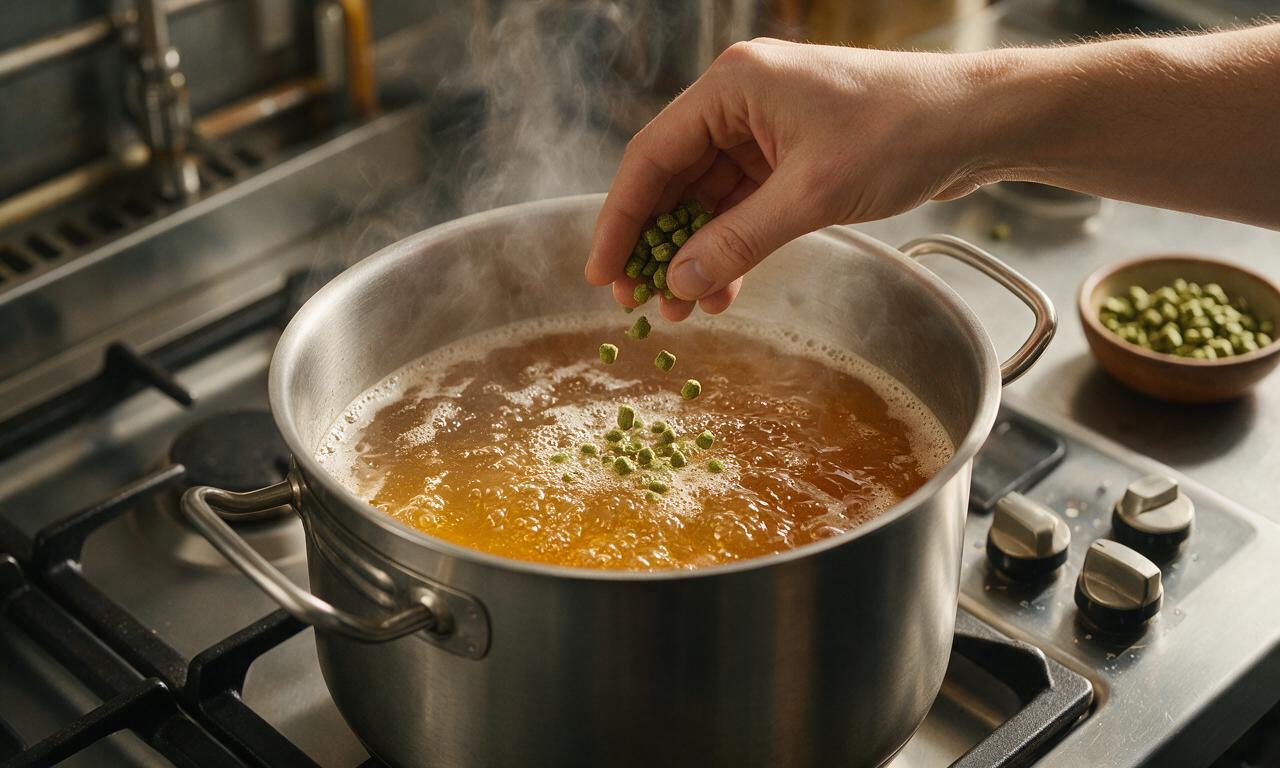
Sparge and boil wort

After the 60-minute mash, slowly pour grain and liquid through a fine-mesh stainless strainer into a second stockpot, rinse the spent grains with 1.5 liters (6.3 cups) of 77°C (170°F) filtered water to extract remaining sugars, then bring the collected sweet wort to a gentle rolling boil over medium-high heat; maintain the boil for 60 minutes total, adding 7g (0.25 oz) of Cascade hop pellets at the start of the boil, and the remaining 7g (0.25 oz) of Cascade hops with 10 minutes left in the boil.
Step 3
step3:Sparge and boil wort
4

Cool and pitch yeast

Once the 60-minute boil ends, remove the pot from heat, set it in an ice bath in a clean kitchen sink to rapidly cool the wort to 21°C (70°F) over 15-20 minutes, pour the cooled wort into the sanitized fermenter, top up with extra filtered water if needed to reach a 3.8 liter (1 gallon) total volume, sprinkle the full 11g packet of US-05 American ale yeast across the wort surface, seal the fermenter lid, and fill the airlock halfway with sanitizer.

Step 4
step4:Cool and pitch yeast
5

Primary fermentation

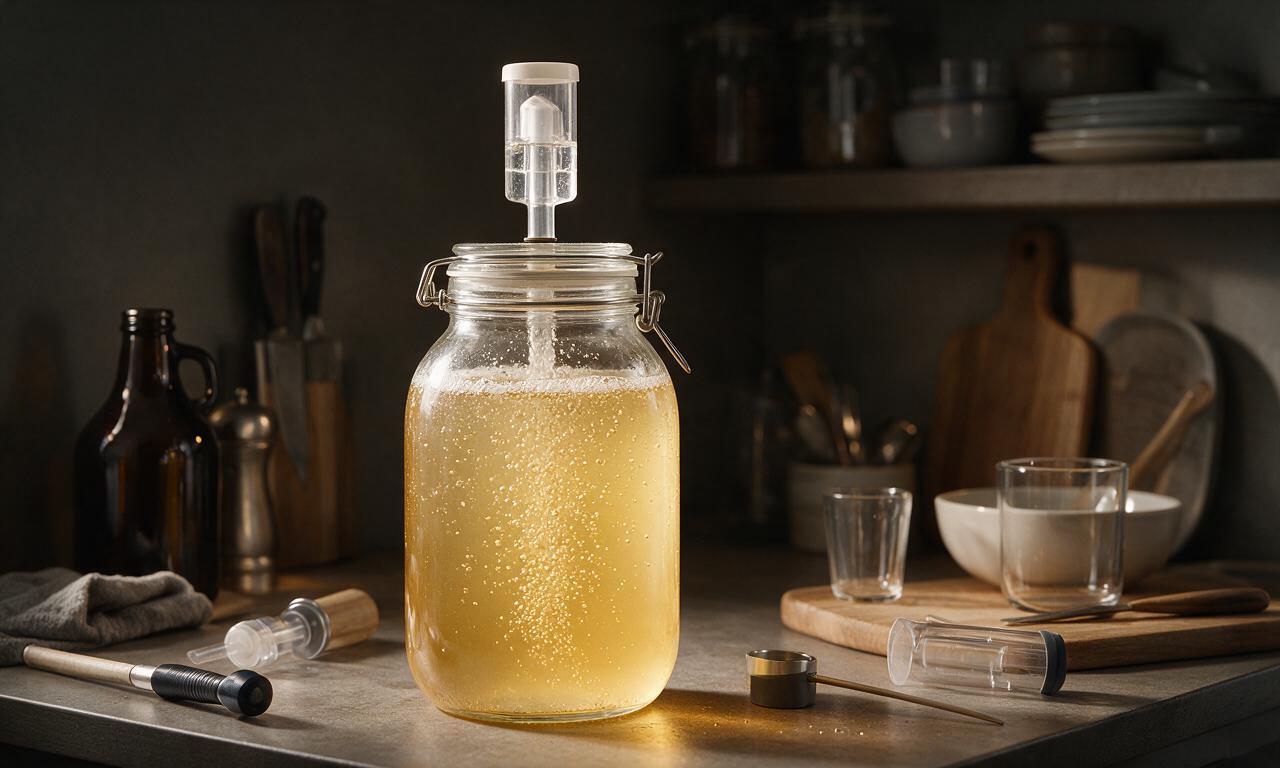
Move the sealed fermenter to a dark, temperature-stable closet or cabinet held at 18-22°C (65-72°F) for 7 full days; fermentation is complete when airlock bubbling slows to fewer than 1 bubble per 60 seconds. Do not open the fermenter during this period to avoid airborne contamination.
Step 5
step5:Primary fermentation
6

Bottle with priming sugar

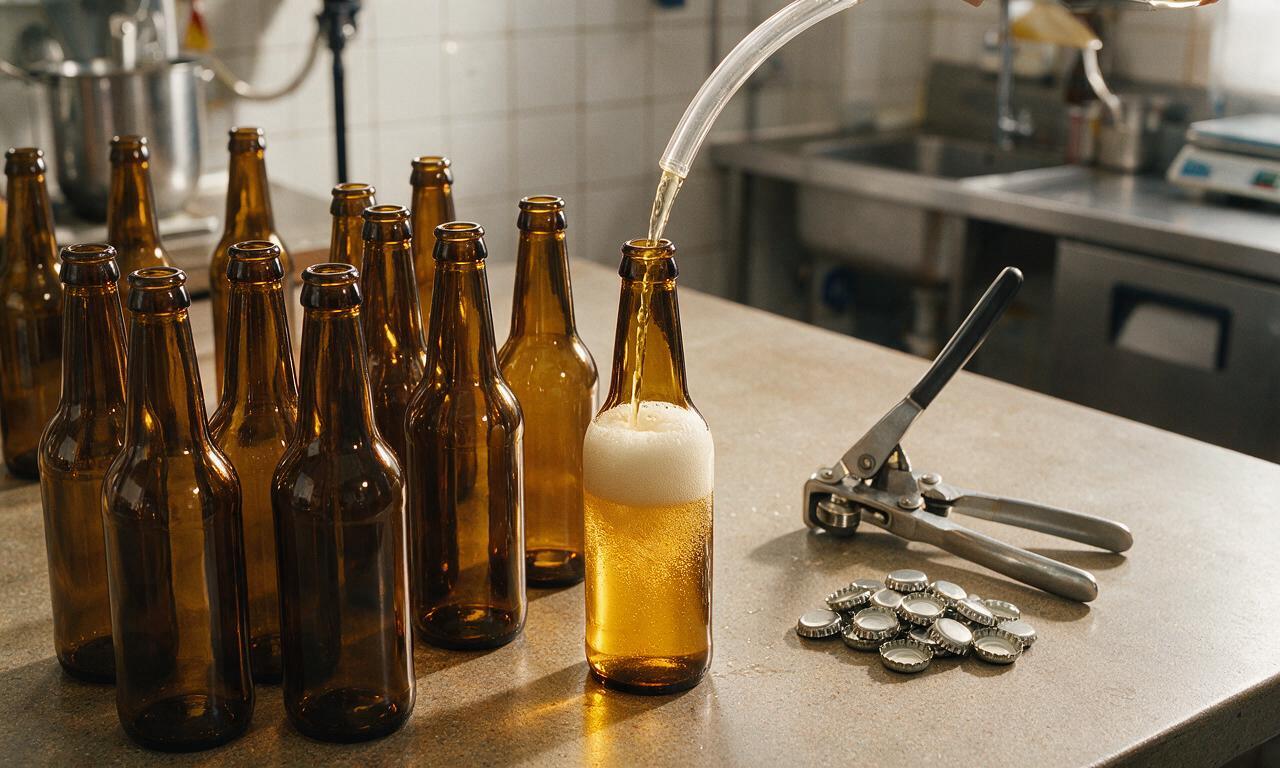
Boil 30g (2 tbsp) of corn sugar in 60ml (1/4 cup) filtered water for 5 minutes over high heat to make a priming solution, pour the cooled solution into a sanitized food-grade plastic bottling bucket, siphon the fully fermented beer into the bucket to mix evenly with the sugar, fill sanitized 355ml (12oz) amber glass bottles to 2.5cm (1 inch) below the rim, and crimp on sanitized metal crown caps tightly with a bottle capper.
Step 6
step6:Bottle with priming sugar
7

Condition, chill, serve

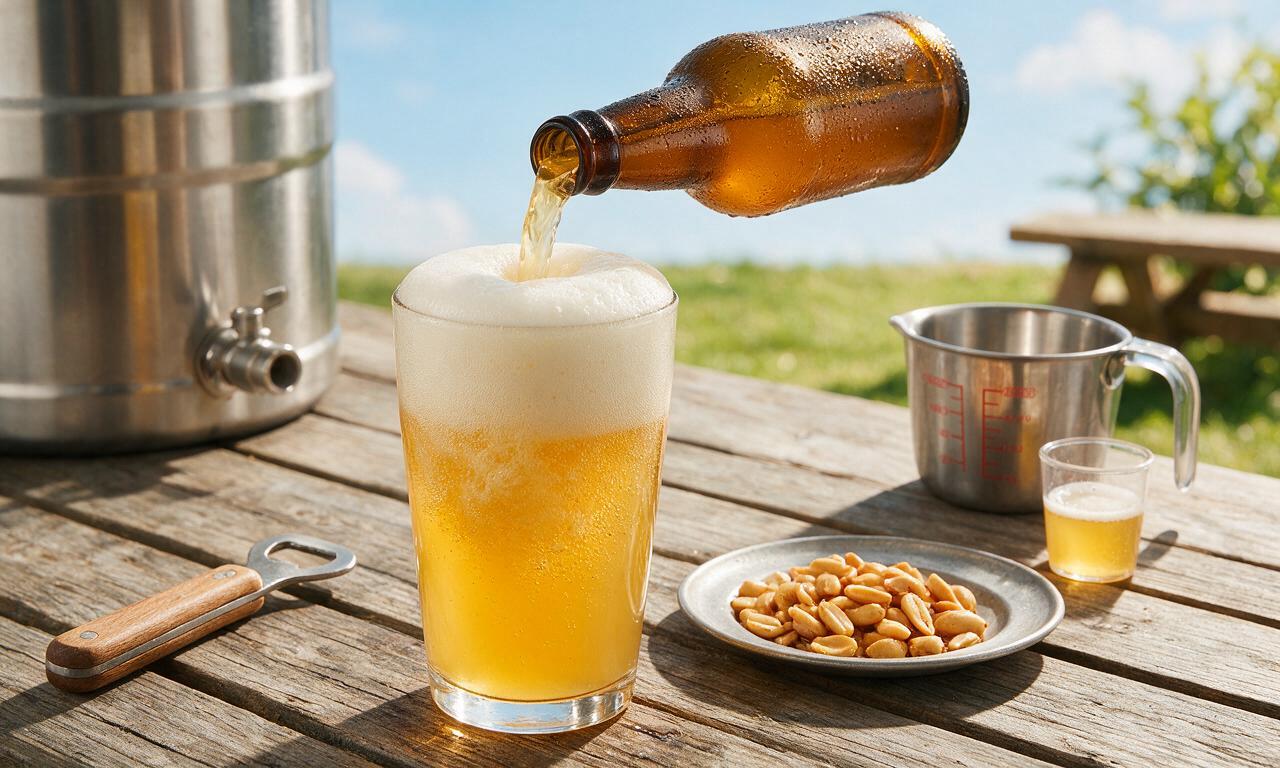
Store capped bottles upright in the same 18-22°C (65-72°F) dark space for 7 additional days to allow natural carbonation to develop, then move bottles to a refrigerator set to 4°C (39°F) to chill for a minimum of 24 hours before serving; pour slowly to leave the thin layer of yeast sediment at the bottom of each bottle undisturbed.
Step 7
step7:Condition, chill, serve

Tips

1.Sanitize every single item that will touch cooled wort or beer—even a tiny amount of unrinsed soap, food residue, or wild bacteria can create sour, off-flavors that ruin an entire batch.
2.Monitor mash temperature closely: holding the mash above 71°C (160°F) will create a thick, sweet, heavy beer, while temps below 63°C (145°F) will produce a thin, overly dry, watery final product.
3.Avoid shaking or tilting bottles during the final chill period, as this will stir up the yeast sediment at the bottom; pour beer in one smooth, slow motion for the clearest, best-tasting glass.
✨ You May Also Like

Drinks & Beverages
🍜 Mexico

A bright, balanced tequila-based cocktail with zesty fresh lime, smooth orange liqueur, and a signature salt rim, perfect for warm summer sipping.

⏱️ 5 minutesDrinks & Beverages ★ 4.7
Drinks & Beverages
🍜 United States

Thick, creamy, nostalgic classic vanilla milkshake with a rich, smooth texture, topped with whipped cream and a cherry for cool, sweet refreshment.

⏱️ 5 minutesDrinks & Beverages ★ 4.6
Drinks & Beverages
🍜 United States

A bright, golden strong ale with fruity banana-clove notes, subtle hop spice, and soft carbonation, brewed in classic Trappist Tripel tradition.

⏱️ 2 hours aDrinks & Beverages ★ 4.7
Drinks & Beverages
🍜 United States

A frothy, nostalgic American soda fountain treat pairing bubbly cold root beer with creamy vanilla ice cream, perfect for cooling down at warm weather gatherings.

⏱️ 20 minuteDrinks & Beverages ★ 4.9
Drinks & Beverages
🍜 United States

Tart, funky, effervescent American Wild Ale is a complex fruity craft beer brewed with wild yeast, delivering bright, zesty notes perfect for warm-weather sipping.

⏱️ 2 hours aDrinks & Beverages ★ 4.5
Drinks & Beverages
🍜 United States

Bright, bubbly copycat of the iconic American caramel cola, balanced with citrus and warm spice, perfect for sipping ice-cold on hot days.

⏱️ 15 minuteDrinks & Beverages ★ 4.8

American Wheat Beer:Frequently Asked Questions

1.How is this American wheat beer different from a traditional German hefeweizen?
Great question! Unlike German hefeweizens that use specialized yeast producing clove and banana notes, this recipe uses clean US-05 ale yeast and citrusy Cascade hops. It has a soft bready wheat backbone, bright mild citrus character, light haze, and a crisp, easy-drinking profile perfect for warm weather sipping.
2.Can I use pre-crushed malt if I don’t have a grain mill at home?
Absolutely! Pre-crushed white wheat and 2-row pale malt works perfectly here, as long as it’s been crushed within the last 3 months and stored in an airtight, cool, dark place. Avoid pre-crushed malt that smells stale, musty, or like cardboard, as that will lead to flat, off-flavors in your finished beer.
3.What fermentation temperature works best for US-05 yeast in this recipe?
Aim for a steady 65–70°F (18–21°C) for primary fermentation with US-05. This temperature range lets the yeast produce its signature clean, neutral profile without unwanted fruity esters or solvent-like off-flavors, letting the soft wheat malt and bright Cascade hop notes take center stage.
4.Why do I need corn sugar specifically for priming this beer?
Corn sugar is highly fermentable, neutral-tasting, and dissolves easily, making it ideal for creating consistent, crisp carbonation without adding extra residual flavor that would muddle the beer’s soft bready and citrus profile. It produces a smooth, lively 2.3–2.5 volumes of CO2, perfect for this wheat beer style.
5.How should I add Cascade hop pellets to get that signature citrus kiss without harsh bitterness?
For a balanced, not overly bitter citrus profile, add 75% of your Cascade pellets late in the boil (last 10–15 minutes) and at flameout, with only a small 25% addition for early bittering. This preserves the hops’ bright grapefruit and lemon notes without adding harsh, resinous bitterness that overwhelms the soft wheat base.
6.Why is my finished wheat beer completely clear instead of lightly hazy as described?
That usually happens if you over-filter your beer, let it sit in secondary for too long, or used a higher ratio of 2-row pale malt to white wheat malt. For that classic light haze, skip fine filtration, avoid extended cold crashing longer than 3 days, and stick to a balanced wheat-to-pale malt grain bill.
7.Can I add fresh citrus to this beer to amp up the citrus notes?
You absolutely can! Add 2–3 ounces of fresh, properly sanitized grapefruit or lemon zest during the last 2 minutes of the boil, or at packaging for brighter, zippier citrus flavor. Avoid adding unsanitized raw citrus juice directly, as that can introduce unwanted bacteria that spoils your batch during storage.
8.How long does primary fermentation usually take for this recipe?
For a standard 5-gallon batch with US-05 yeast, primary fermentation will wrap up in 7–10 days at the recommended 65–70°F temperature. You’ll know it’s done when your airlock stops bubbling consistently, and the beer hits a stable final gravity for 2 consecutive days before priming and bottling.
9.Do I need a secondary fermenter for this wheat beer recipe?
No, you don’t! This beer is designed to be straightforward for homebrewers of all levels, so you can complete the entire fermentation in your primary bucket or carboy. Skipping secondary also reduces the risk of oxidation and contamination, and helps retain that nice light haze from the wheat malt.
10.What carbonation level is ideal for this American wheat beer?
Aim for 2.3–2.5 volumes of CO2, which is slightly bubblier than a standard pale ale but less fizzy than a German hefeweizen. This carbonation level lifts the bright citrus hop notes, keeps the soft bready finish smooth, and makes the beer extra refreshing when served cold at backyard gatherings.
11.Can I use a different hop variety if I don’t have Cascade pellets on hand?
If you don’t have Cascade, reach for other American citrus-forward hops like Centennial, small amounts of Citra, or Willamette as a 1:1 substitute. Avoid heavy, piney, or earthy hops like Chinook or noble German hops, as those will overpower the soft wheat base and throw off the classic profile.
12.How long do I need to bottle condition this beer before it’s ready to drink?
After bottling with priming sugar, let your bottles sit in a cool, dark 65–70°F space for 2 full weeks to let the yeast carbonate the beer and clean up any small off-flavors. You can sample a bottle after 10 days, but flavor will be smoother and more balanced if you wait the full 2 weeks before chilling.
13.What causes off-flavors that taste like green apple or buttered popcorn in my batch?
Those off-flavors come from either fermenting too cold (which produces acetaldehyde, that sharp green apple taste) or cutting fermentation short before bottling (which leaves diacetyl, that buttered popcorn note). Stick to the recommended 65–70°F temp, and confirm stable final gravity before bottling to avoid these issues.
14.What’s the ideal serving temperature for this homemade wheat beer?
Serve this beer at 40–45°F (4–7°C), which is cold enough to feel crisp and refreshing on hot days, but not so ice-cold that you mute the soft bready wheat notes and bright Cascade citrus character. Serve it in a tall, wide-mouthed wheat beer glass to show off its light haze and fluffy white head.
15.Can I use regular bread yeast instead of US-05 ale yeast if I’m in a pinch?
I don’t recommend it. Regular bread yeast is designed for rising dough, not fermenting beer, and will produce odd, overly bready, sometimes cidery off-flavors, plus it often stalls out before reaching the target final gravity. US-05 is affordable, widely available, and reliable for that clean classic American ale profile.
16.How long will this homemade wheat beer stay fresh after bottling?
Stored in a cool, dark place away from direct sunlight and temperature swings, this beer will taste fresh for up to 4 months after bottling. The bright citrus hop notes will fade first after the 3-month mark, so it’s best enjoyed within that window for the perfect balance of bready wheat and zesty Cascade flavor.
17.Why is there a thin layer of sediment at the bottom of my finished bottled beer?
That’s totally normal! That sediment is dormant yeast left over from bottle conditioning, which ate the priming corn sugar to create carbonation. For a clearer pour, pour slowly in one steady motion, leaving the last half-ounce of sediment-heavy beer in the bottle, or swirl it in for extra haze and wheat character.
18.What grain ratio gives that soft bready finish without making the beer feel too heavy?
Stick to a roughly 50/50 split of crushed American white wheat malt to American 2-row pale malt for perfect balance. The white wheat adds that soft, bready, slightly creamy mouthfeel, while the 2-row pale malt keeps the body light enough for easy sipping, so the beer never feels heavy or cloying on hot days.

Comments (3)

1 week ago

OMG, this homemade American wheat beer recipe is a total game changer! I’ve messed up 3 prior homebrew batches that came out either too bitter or weirdly murky, but following this step-by-step got me a crisp, citrusy brew that was the absolute hit of my backyard potluck last weekend. All my friends kept asking which local brewery I picked it up from, they couldn’t believe I brewed it in my garage! One quick heads up for new brewers: don’t rush the wheat mash step, I almost cut that 10 minutes short on my first pass and would’ve totally messed up the sugar conversion. 10/10 will be making this on repeat all summer long.

5 days ago

Quick question! I’m prepping to make my first batch this weekend and was wondering if tossing in a little extra orange peel during the boil would throw off the flavor balance? I love that bright citrus note in wheat beer!

3 days ago

So stoked this was a potluck favorite! Great callout on not rushing the mash—that’s easily the most common spot new homebrewers cut corners and end up with off-flavors. To answer your question, HoppyHiker: you can absolutely add 1 oz of fresh orange zest (just avoid the bitter white pith!) during the last 10 minutes of the boil for an extra bright citrus kick without throwing off the recipe balance. Happy brewing!

3 days ago

This was my very first time trying homebrewing, and I was so worried the medium difficulty rating would be way over my head as a total newbie! The 2 hours of active brewing time was totally manageable even with my two kids popping in every 10 minutes asking for popsicles or help with their sidewalk chalk, haha. My batch finished conditioning yesterday and it’s SO good—super smooth, not heavy or overly hoppy at all. I’m only knocking off one star because I wish there was a troubleshooting note for when your fermentation airlock doesn’t start bubbling right away; I panicked for a solid 12 hours thinking I’d killed all the yeast!

2 days ago

Thanks so much for giving the recipe a shot, Liz! That is such great feedback about the airlock troubleshooting note, I’m adding that to the recipe tips section today. Quick pro tip for your next batch: airlock bubbling isn’t always a reliable sign of active fermentation! As long as you kept your fermentation temp steady between 65-70°F, your yeast is almost always hard at work even if you don’t see immediate bubbles. So glad your first batch turned out tasty!

2 hours ago

Just bottled my second batch of this yesterday and had to hop on to leave a review! I added a half ounce of Cascade hops for dry hopping this time around and it gave the beer the perfect subtle piney kick that pairs insanely well with cheeseburgers and brats hot off the grill. This recipe is now my permanent go-to base for all my summer wheat brews—it’s forgiving enough to tweak with little add-ins but solid enough that it comes out great every single time. Already planning to bring a couple growlers of it to our extended family dinner next week for my dad’s birthday, he’s a huge wheat beer fan and he’s gonna lose his mind over how fresh this tastes.