
APA

title 1
APA
⏱️ cook time 1 hour 10 minutes (plus 3 weeks passive fermentation and carbonation)
🍽️ servings 8
⚡ Difficulty medium

intro

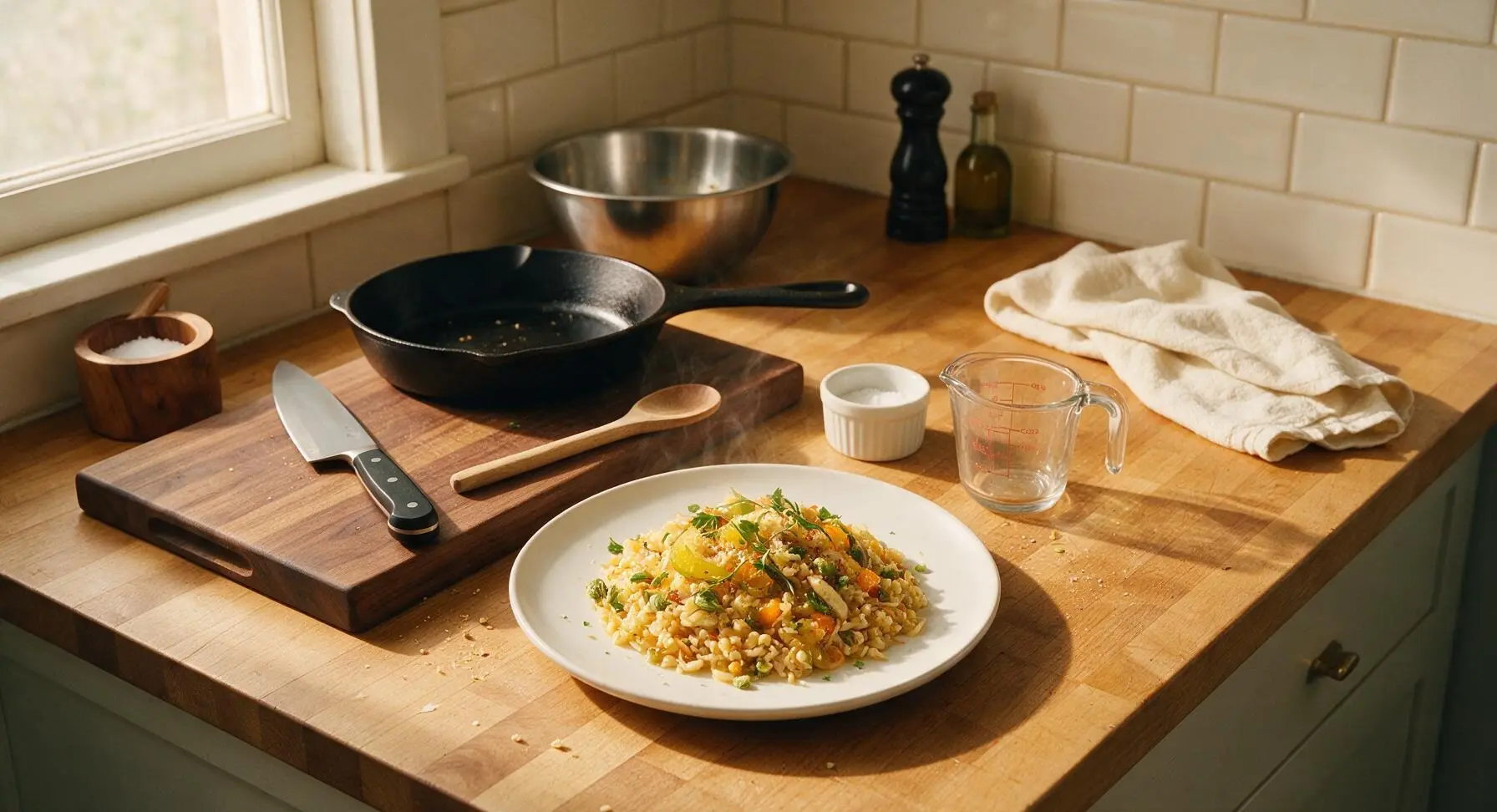
Bright, hop-forward small-batch American Pale Ale (APA) with zesty citrus-pine notes, smooth bready malt backbone, and crisp carbonation, perfect for warm-weather gatherings.

Ingredients
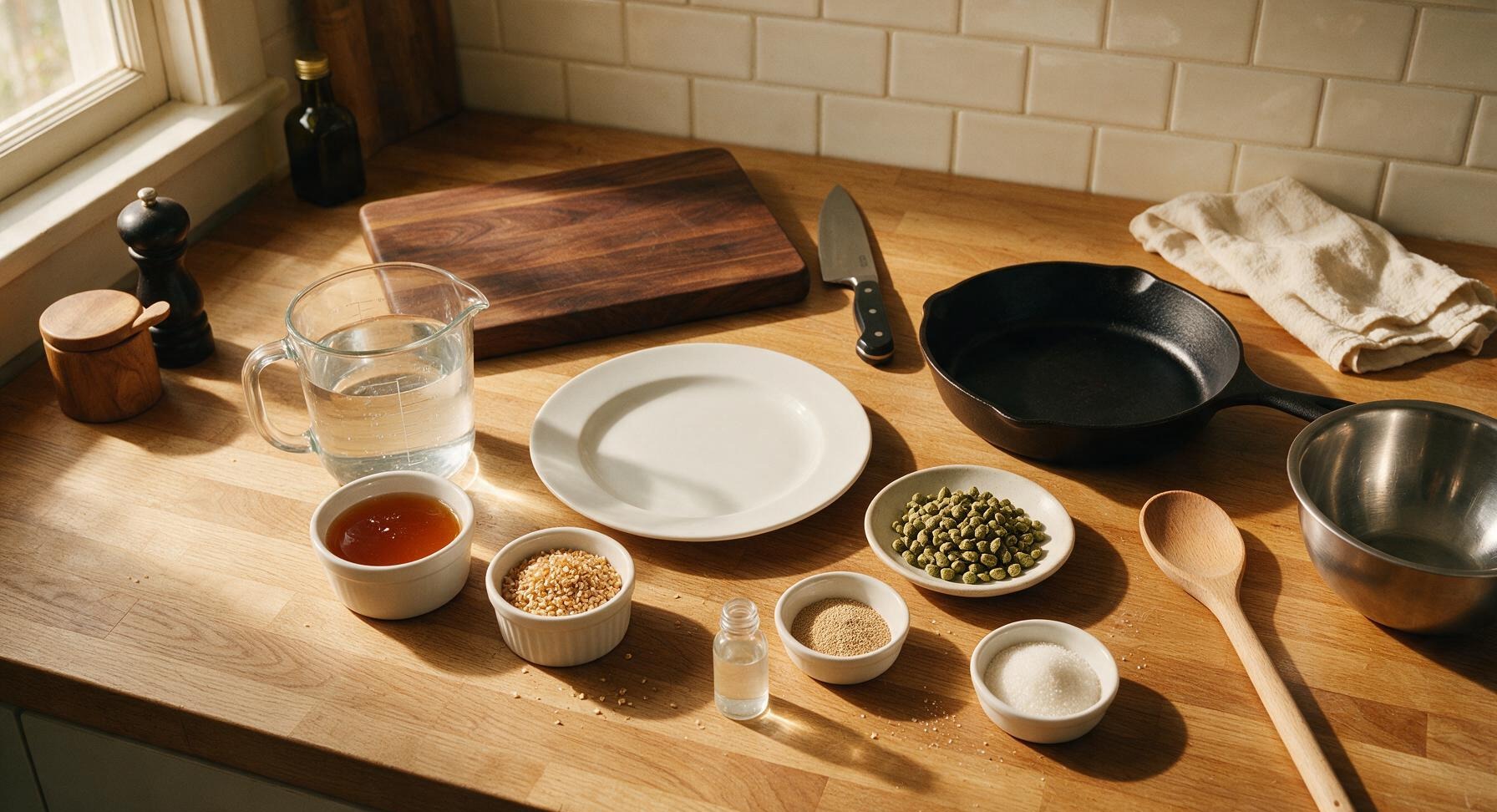
Filtered cold water 4 liters
Light liquid pale malt extract 1.2 kg
Crushed light crystal malt (10L) 113g
Whole leaf Cascade hops 28g, divided
Dry American ale yeast (US-05 strain) 7g (1 packet)
Corn sugar (for carbonation) 28g
No-rinse food-grade brewing sanitizer 15ml

Steps

1

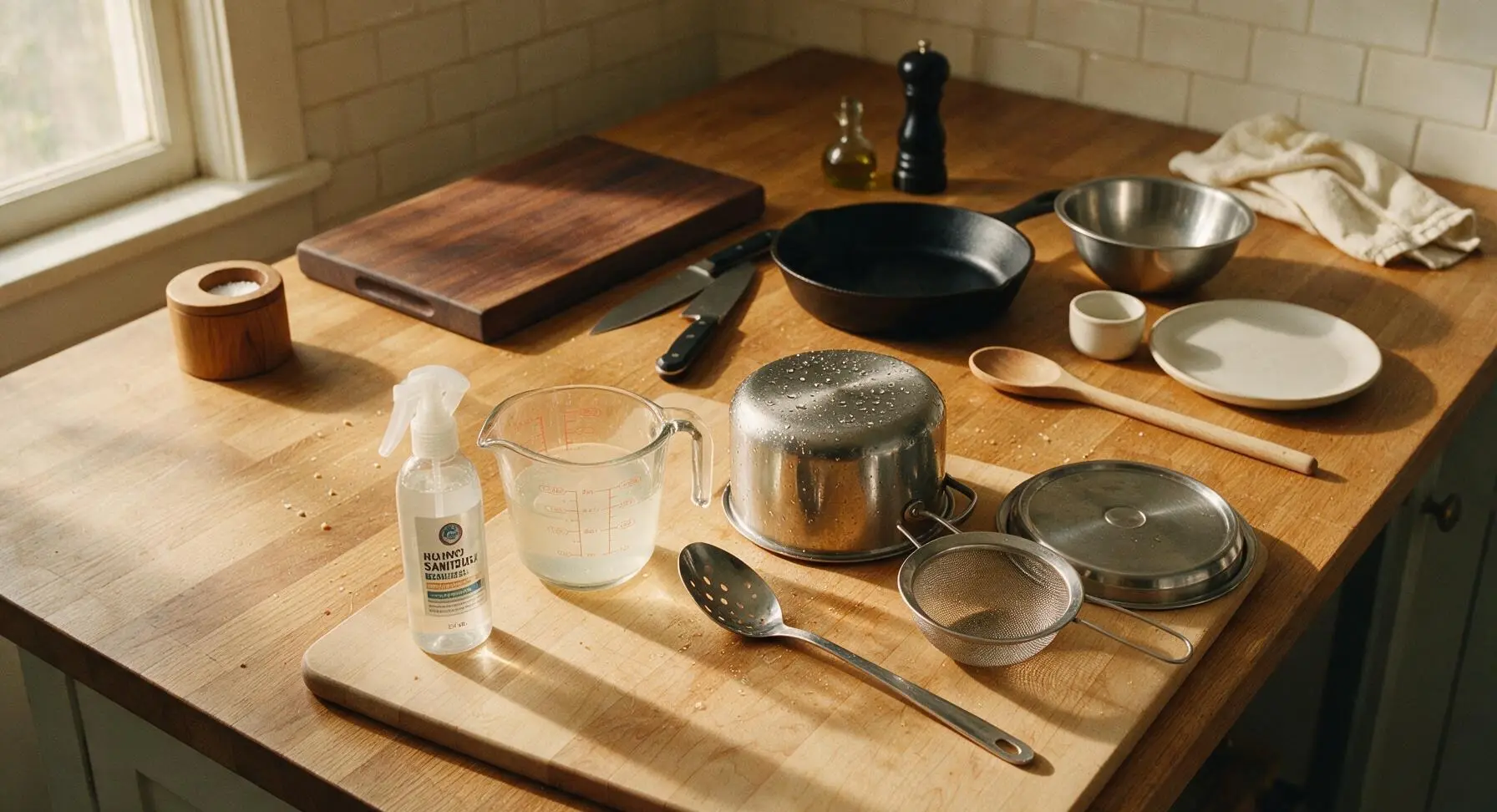
Sanitize Brewing Gear

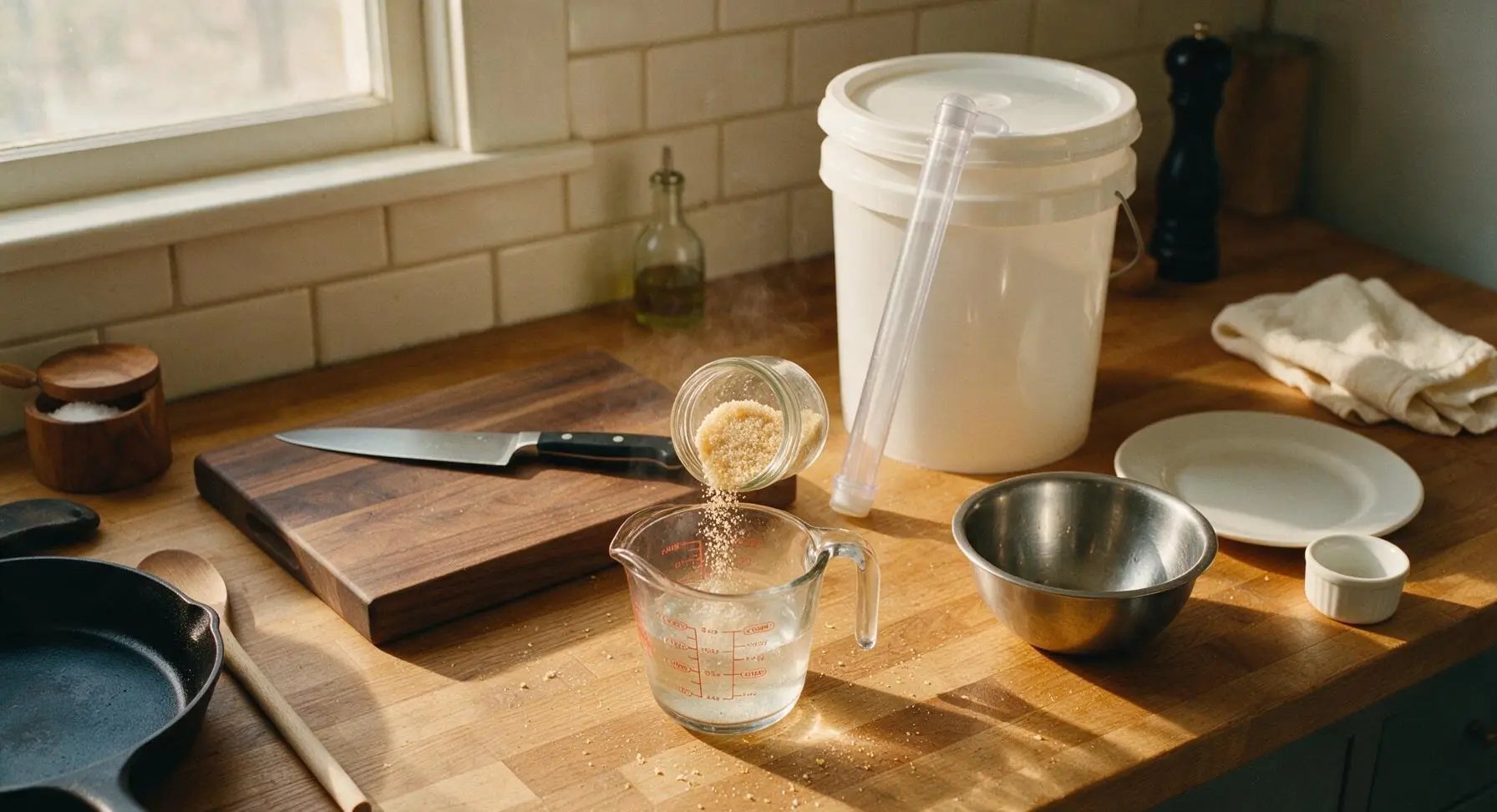
Mix 15ml no-rinse brewing sanitizer with 1 liter of cool filtered water in the 4-cup clear glass measuring cup. Wipe down the stainless steel brew pot, slotted stirring spoon, fine mesh strainer, fermentation bucket, airlock, auto-siphon, and glass ramekins with the sanitizer solution. Allow all pieces to air dry completely on the maple wood cutting board before use; any residual soap or unsanitized surface can introduce bacteria that creates off-flavors in the finished beer.
Step 1
step1:Sanitize Brewing Gear
2

Steep Crystal Malt

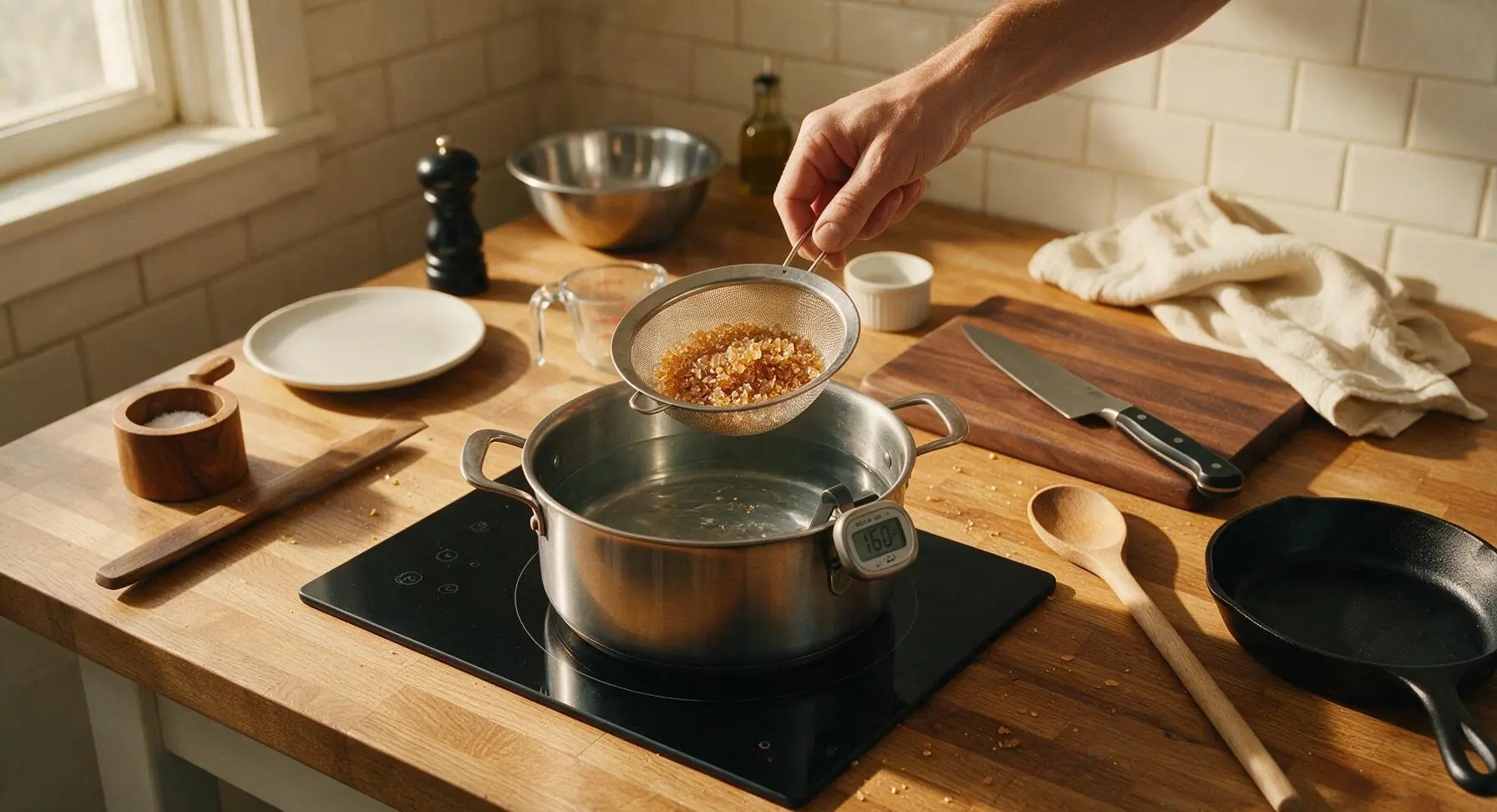
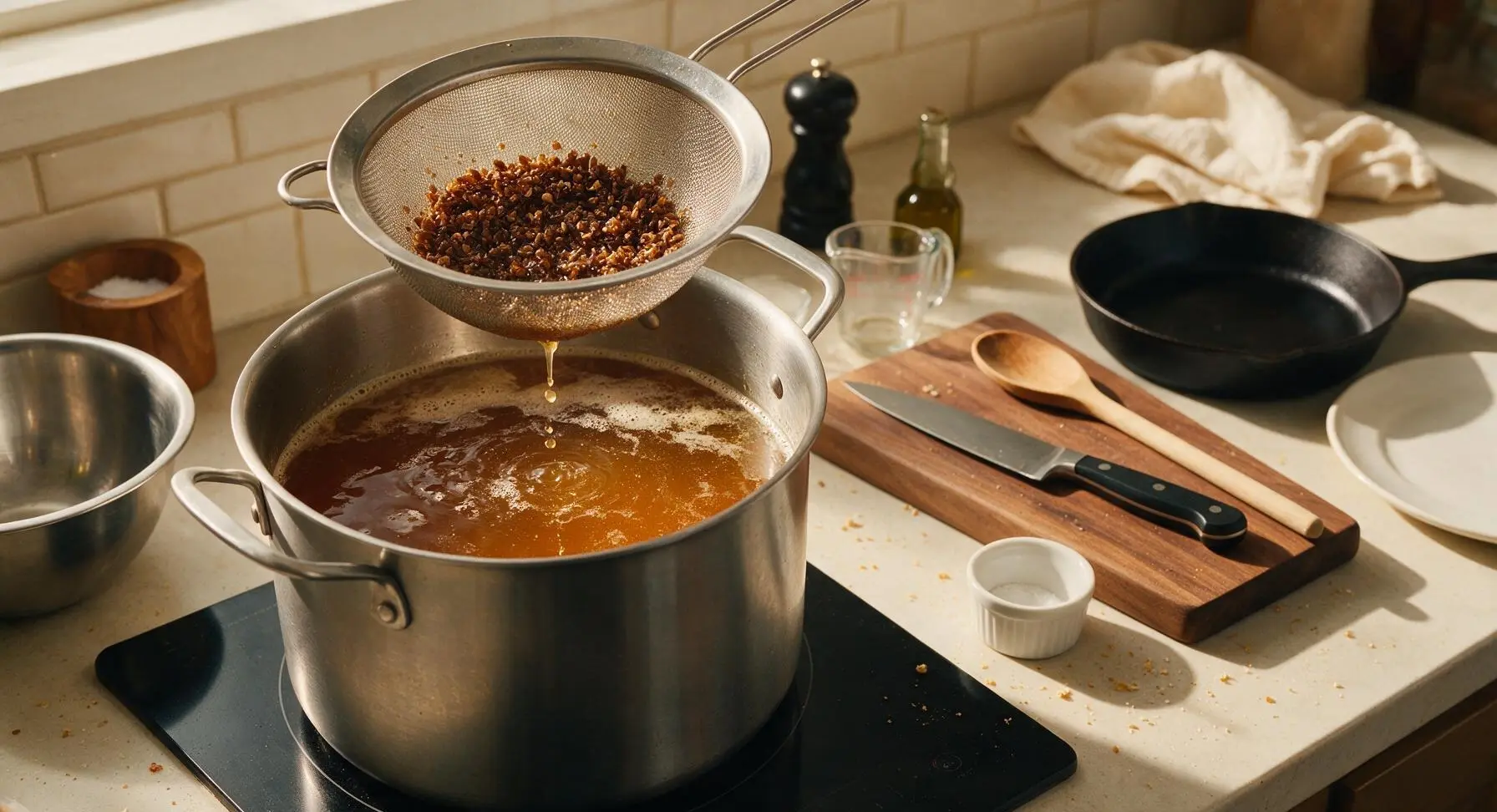
Pour 3 liters of filtered water into the stainless steel brew pot set on the matte black induction burner, and heat to 70C (160F) over medium heat. Place the crushed crystal malt in the fine mesh strainer, lower into the warm water, and steep for 20 minutes, maintaining a steady 65-70C temperature. Do not allow the water to boil, as this extracts harsh, bitter tannins from the grain husks. After 20 minutes, lift the strainer and let all liquid drain back into the pot, discarding the spent grain.
Step 2
step2:Steep Crystal Malt
Step 2
step2:Steep Crystal Malt
3

Add Malt, Bring to Boil

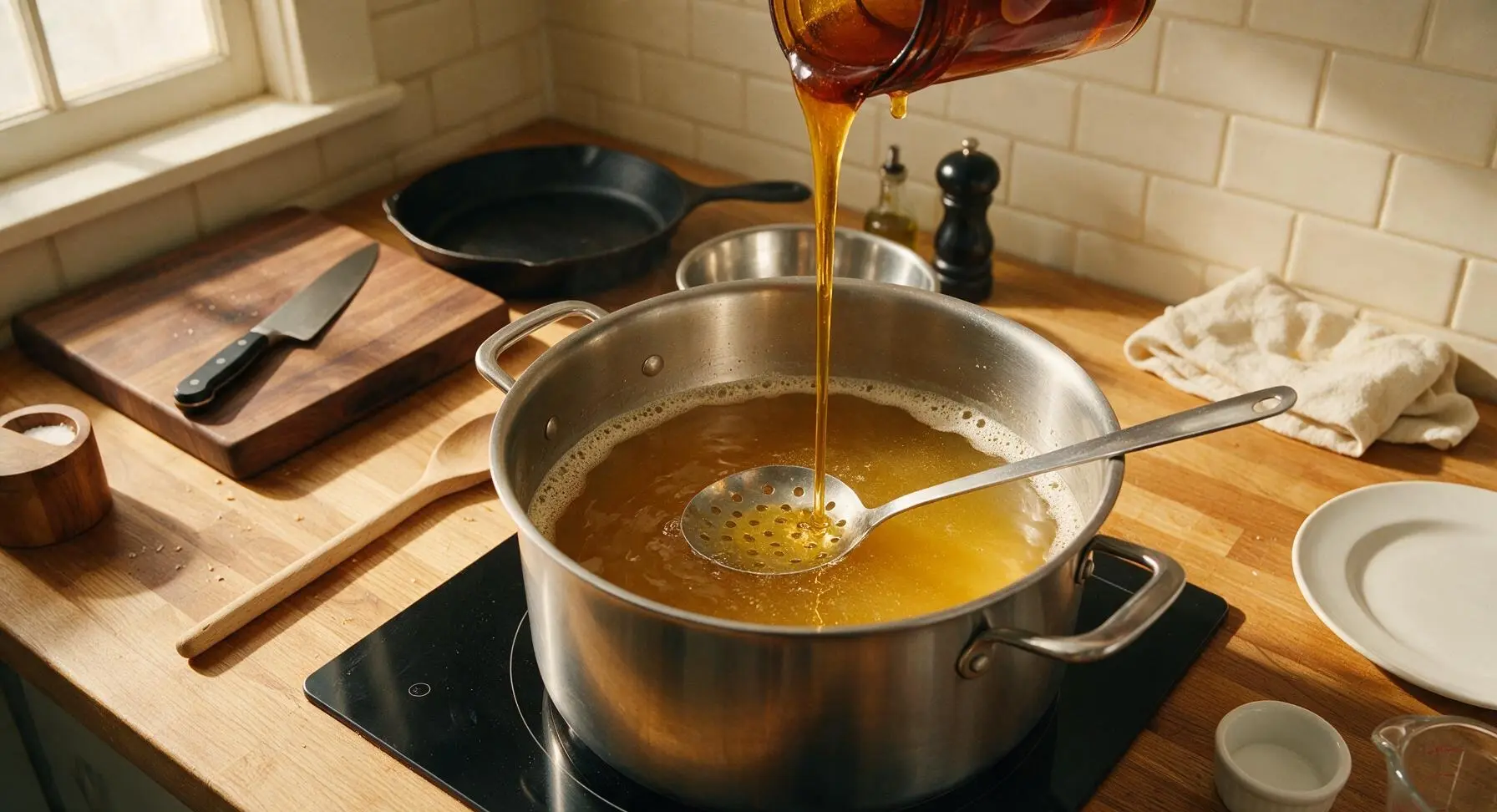
Remove the pot from heat briefly, stir in all of the light liquid pale malt extract with the long slotted stainless steel spoon, stirring constantly to prevent the thick malt from sinking and burning on the pot bottom. Return the pot to the induction burner, bring to a gentle, rolling boil over medium-high heat. Watch closely for foaming that can lead to messy boil-overs as the wort heats.
Step 3
step3:Add Malt, Bring to Boil
4

Add Bittering Hops

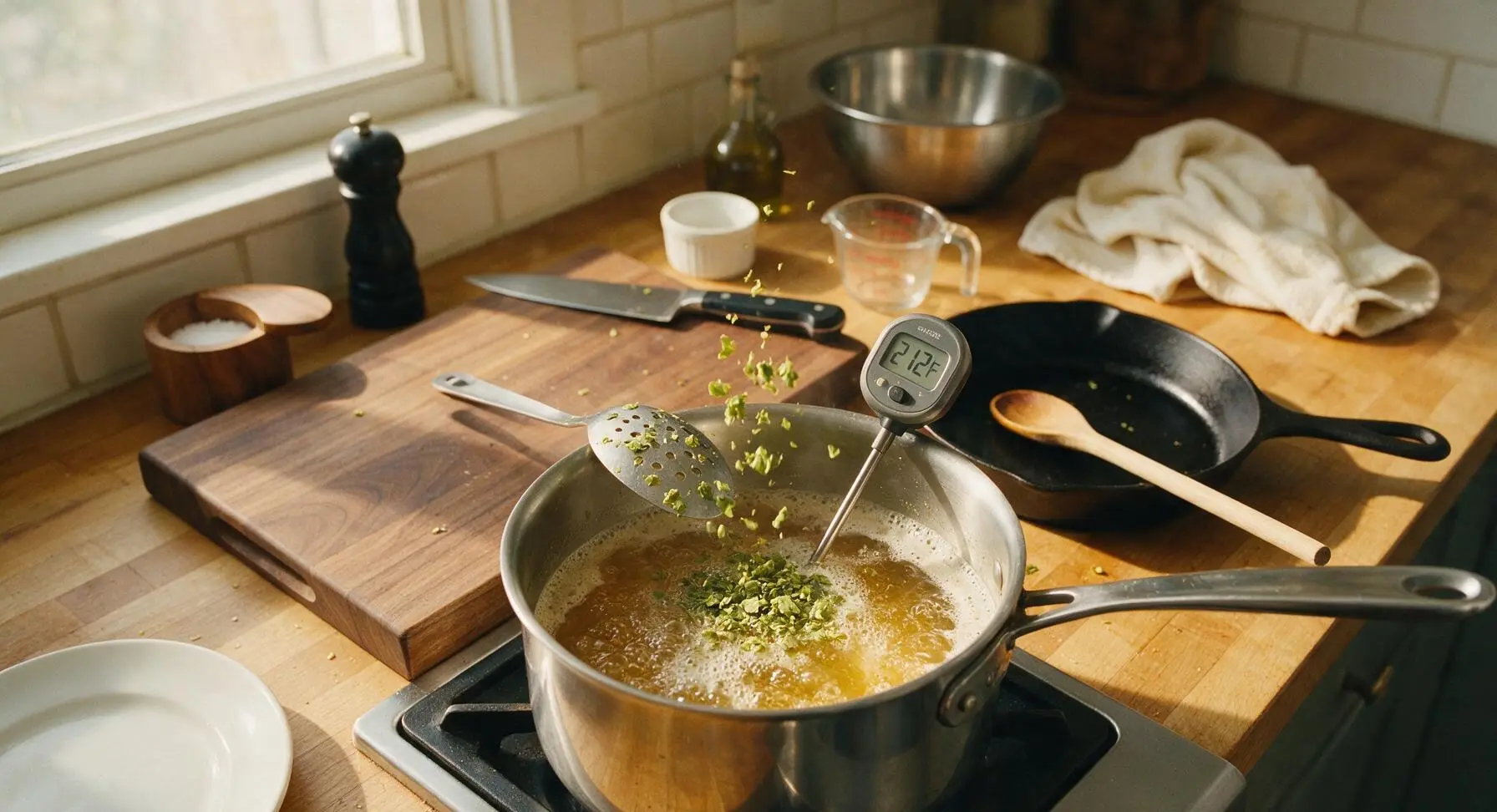
Once the wort reaches a steady, gentle rolling boil, add 14g of the Cascade hops directly to the liquid. Set a timer for 45 minutes, maintaining a consistent soft boil (avoid violent, high bubbling that causes boil-overs) for the full duration. Stir occasionally with the slotted spoon to prevent hops from clumping on the wort surface.
Step 4
step4:Add Bittering Hops
5

Add Late Aroma Hops

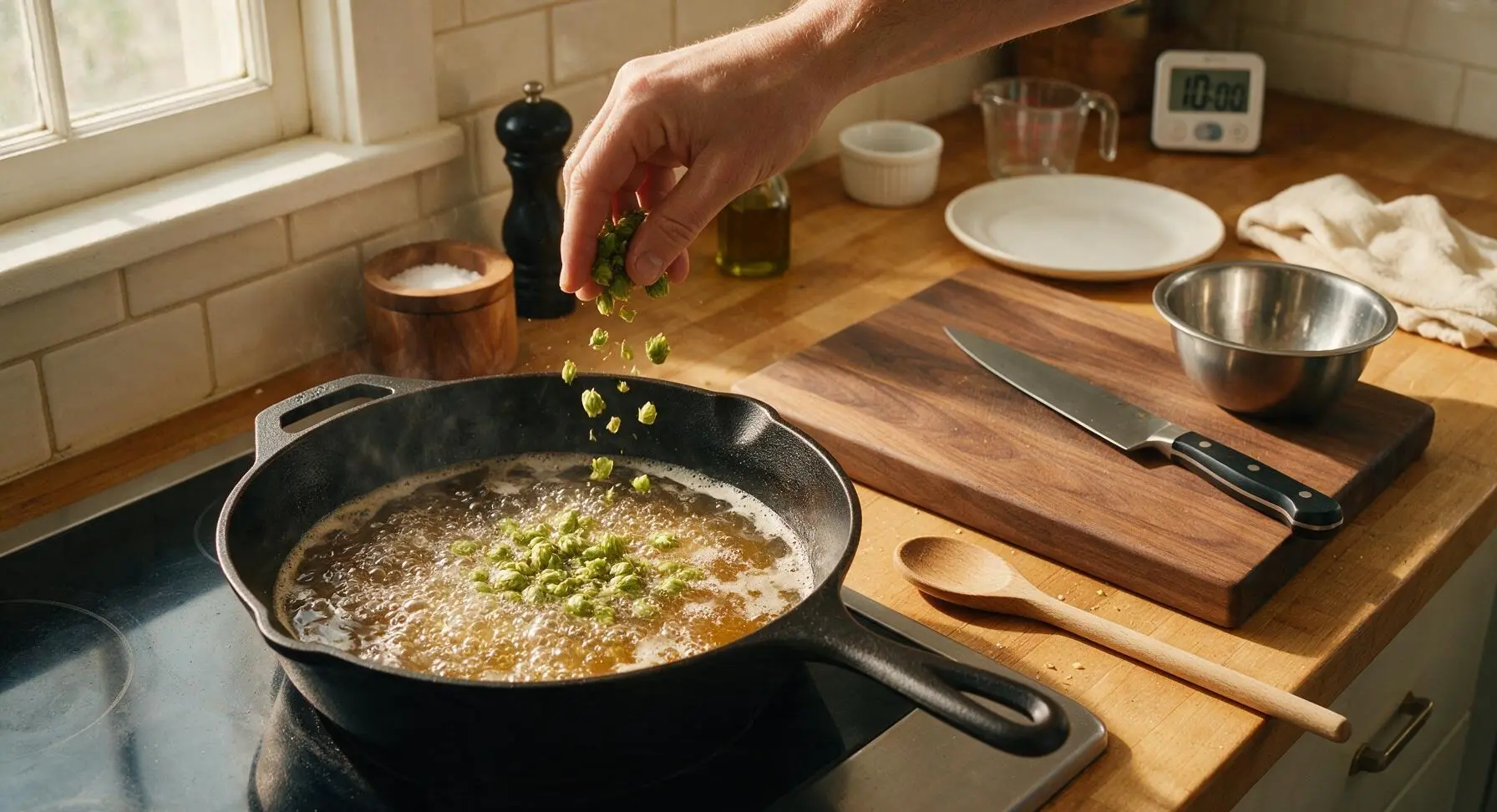
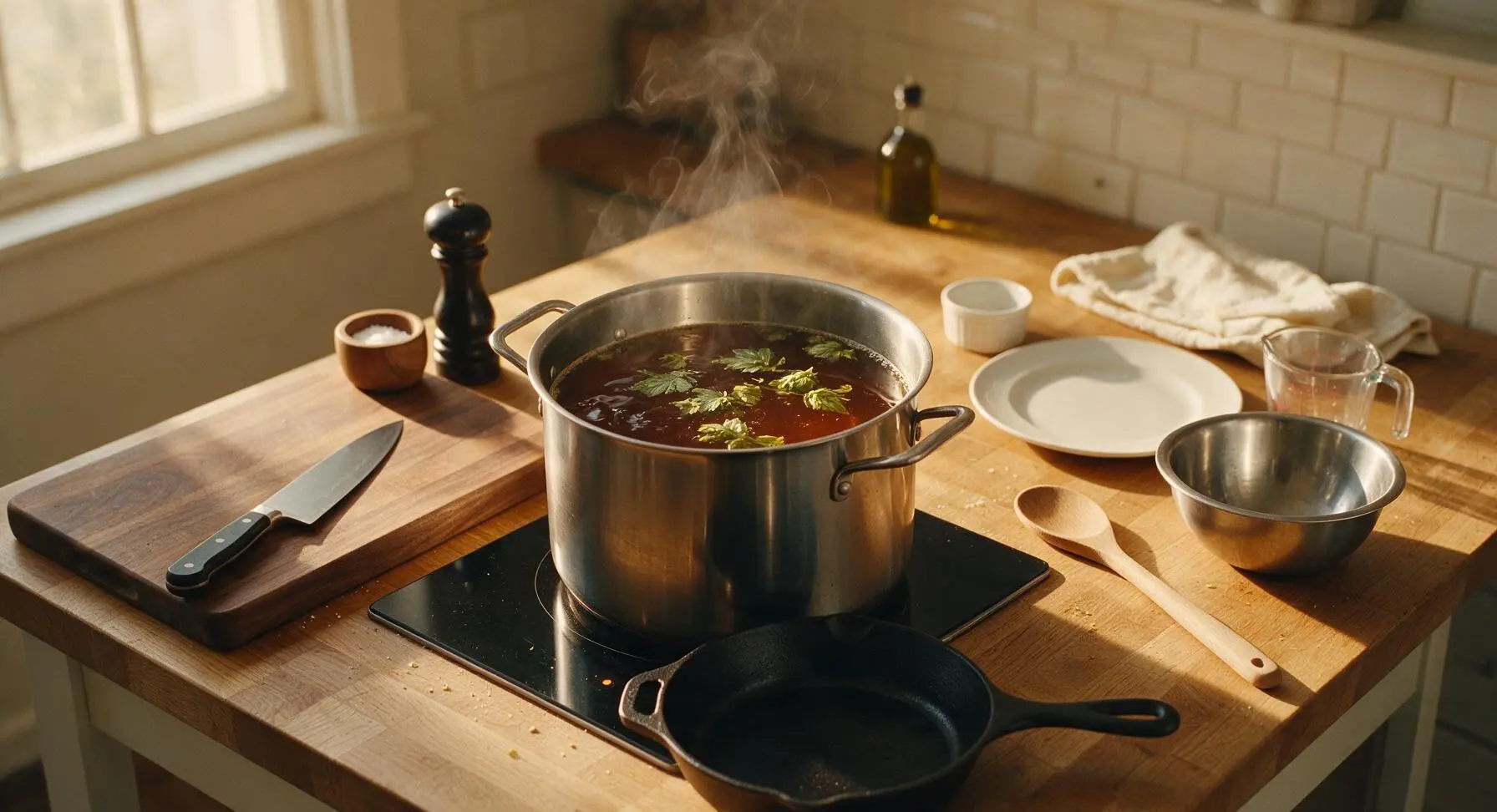
When 10 minutes remain on the 45-minute boil timer, add an additional 6g of Cascade hops to the wort. These late-add hops contribute bright citrus and pine aroma without adding harsh, heavy bitterness. When the full 45-minute boil is complete, turn off the induction burner immediately.
Step 5
step5:Add Late Aroma Hops
Step 5
step5:Add Late Aroma Hops
6

Cool and Strain Wort

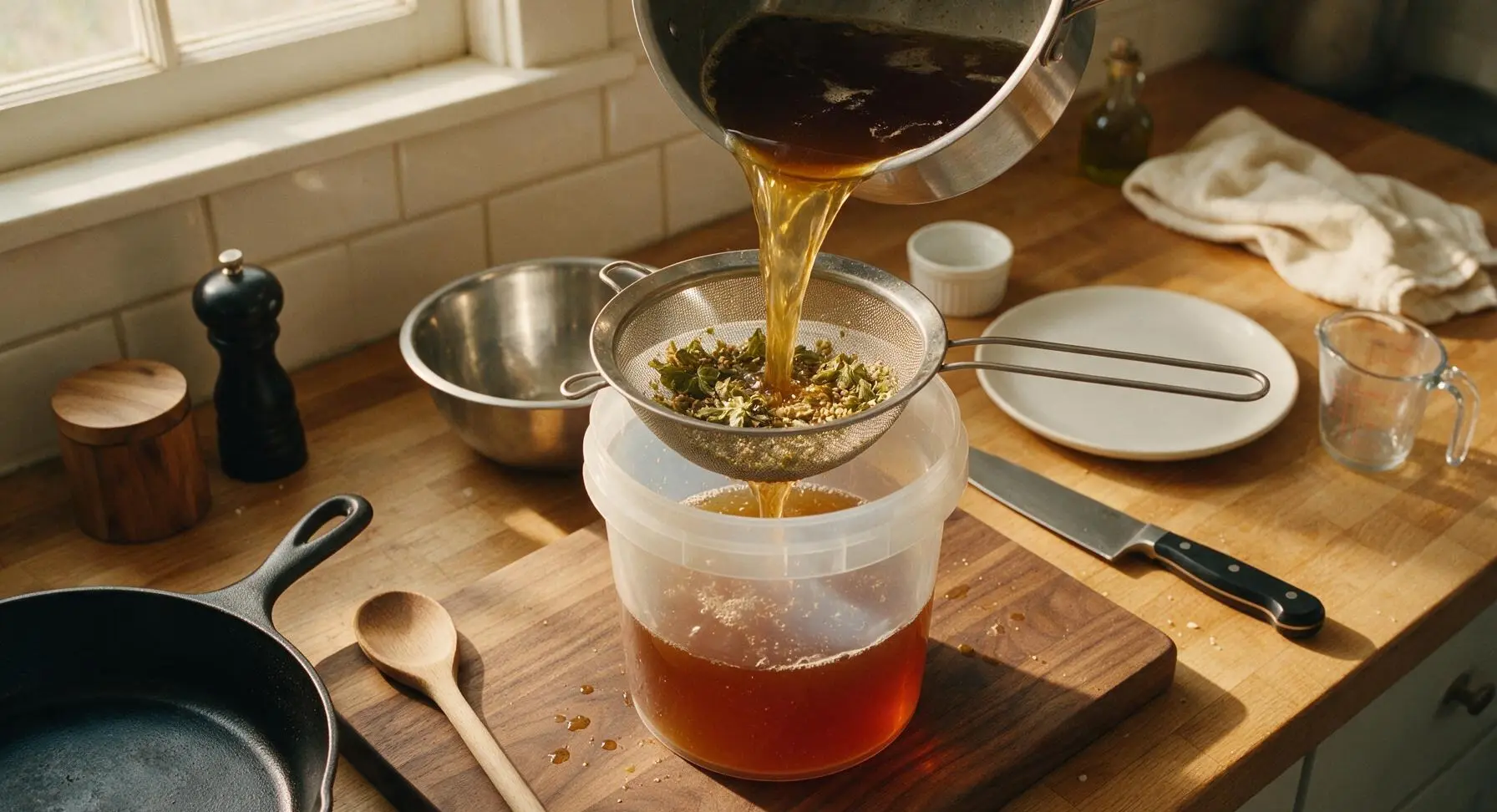
Place the covered brew pot in a sink of ice water to cool the wort quickly to 21C (70F), which takes approximately 20 minutes. Rapid cooling prevents off-flavors and reduces the risk of bacterial contamination. Once cooled, pour the wort through the fine mesh strainer into the sanitized translucent fermentation bucket, filtering out all hop leaves and solid grain sediment. Top up with additional filtered cold water to reach a total volume of 3.8 liters (1 gallon).
Step 6
step6:Cool and Strain Wort
7

Pitch Yeast, Ferment

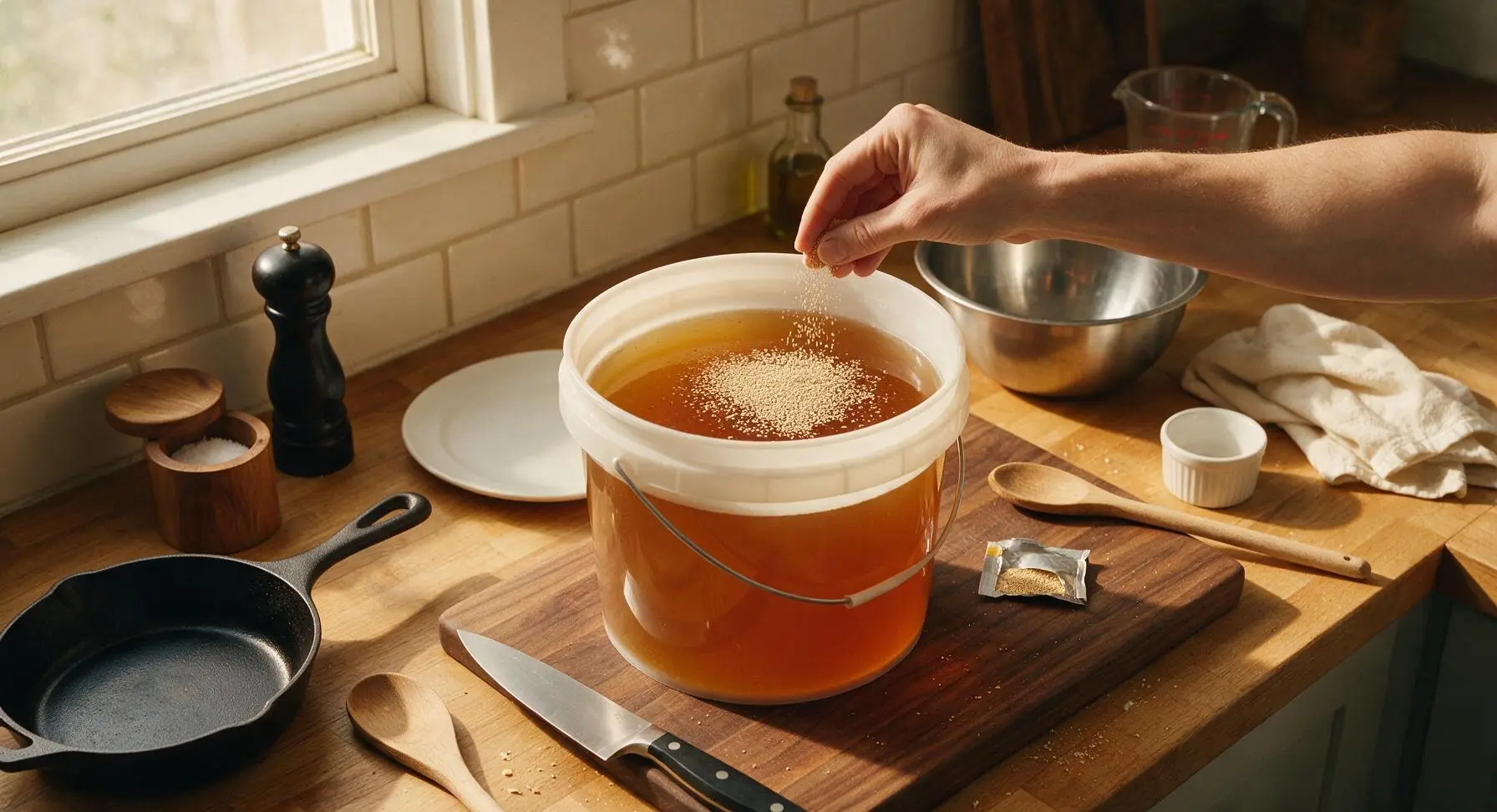
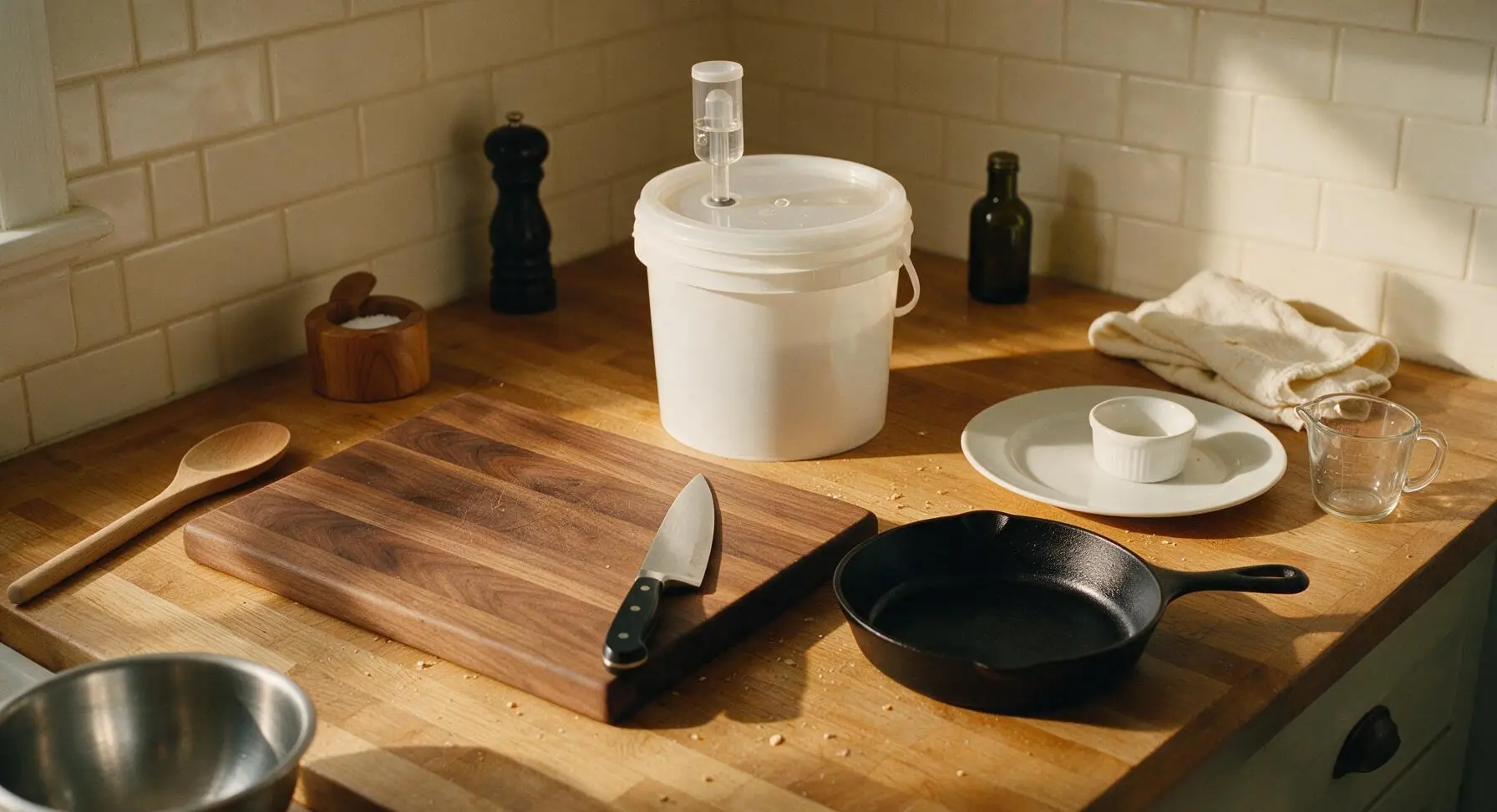
Sprinkle the entire 7g packet of dry American ale yeast evenly over the surface of the cooled wort in the fermentation bucket. Seal the bucket with the airtight lid, fill the airlock halfway with sanitizer solution, and insert it into the lid hole. Move the bucket to a dark, temperature-stable 18-21C (65-70F) spot. After 1 week of active fermentation, when bubbling in the airlock slows, open the bucket, add the remaining 8g of Cascade hops for dry hopping, then re-seal and ferment for 1 additional week until all bubbling ceases.
Step 7
step7:Pitch Yeast, Ferment
Step 7
step7:Pitch Yeast, Ferment
8

Carbonate and Serve

After 2 weeks of fermentation, dissolve 28g of corn sugar in 60ml of boiling water, cool completely, and stir into the finished flat beer to prime for natural carbonation. Use the food-grade auto-siphon to transfer the beer into sanitized, sealable glass bottles, cap tightly, and let sit at room temperature for 1 week to build carbonation. Chill bottles for 24 hours before serving, pouring into the clear pint glass to leave a 1cm thick frothy white head.
Step 8
step8:Carbonate and Serve

Tips

1.Never skip full sanitization of every surface that touches cooled wort: wild yeast and bacteria from unsanitized gear create off-flavors like sourness or mold that ruin the final beer. No-rinse brewing sanitizer is affordable and eliminates the need for rinsing, which can reintroduce bacteria from tap water.
2.Avoid over-heating the crystal malt during steeping: temperatures above 75C (170F) leach harsh, astringent tannins from grain husks that make the beer taste dry and bitter, like over-steeped black tea. Keep a close eye on the clip-on thermometer to hold a steady 65-70C for the best smooth malt flavor.
3.Resist the urge to open the fermentation bucket unnecessarily before fermentation is complete: exposing young beer to oxygen before bubbling stops causes stale, cardboard-like off-flavors. Watch the airlock—when no bubbles rise for 2 full days, fermentation is finished and the beer is ready to bottle.


✨ You May Also Like

Drinks & Beverages
🍜 Mexico

A bright, balanced tequila-based cocktail with zesty fresh lime, smooth orange liqueur, and a signature salt rim, perfect for warm summer sipping.

⏱️ 5 minutesDrinks & Beverages ★ 4.9
Drinks & Beverages
🍜 United States

Thick, creamy, nostalgic classic vanilla milkshake with a rich, smooth texture, topped with whipped cream and a cherry for cool, sweet refreshment.

⏱️ 5 minutesDrinks & Beverages ★ 4.7
Drinks & Beverages
🍜 United States

A bright, golden strong ale with fruity banana-clove notes, subtle hop spice, and soft carbonation, brewed in classic Trappist Tripel tradition.

⏱️ 2 hours aDrinks & Beverages ★ 4.5
Drinks & Beverages
🍜 United States

A frothy, nostalgic American soda fountain treat pairing bubbly cold root beer with creamy vanilla ice cream, perfect for cooling down at warm weather gatherings.

⏱️ 20 minuteDrinks & Beverages ★ 4.8
Drinks & Beverages
🍜 United States

Tart, funky, effervescent American Wild Ale is a complex fruity craft beer brewed with wild yeast, delivering bright, zesty notes perfect for warm-weather sipping.

⏱️ 2 hours aDrinks & Beverages ★ 4.4
Drinks & Beverages
🍜 United States

Bright, bubbly copycat of the iconic American caramel cola, balanced with citrus and warm spice, perfect for sipping ice-cold on hot days.

⏱️ 15 minuteDrinks & Beverages ★ 4.8

APA:Frequently Asked Questions

1.What size batch does this APA recipe yield, and what basic equipment do I need as a homebrewer? ▾
This recipe makes 1 gallon (roughly 10 12-oz bottles) of finished APA, ideal for new brewers without bulky professional gear. You’ll only need a 2-gallon stockpot, 1-gallon glass fermenter, airlock, siphon, bottling wand, and no-rinse brewer’s sanitizer to get started.
2.Can I substitute pellet Cascade hops if I don’t have whole leaf Cascade on hand? ▾
Absolutely—swap whole leaf Cascade for pellet hops at a 15-20% lower weight, since pellets are more concentrated and deliver slightly higher bittering utilization. Keep the exact same addition timings to preserve that classic citrus-pine hop profile this recipe is designed for.
3.Why does the recipe call for filtered cold water instead of regular tap water? ▾
Most unfiltered tap water has chlorine or chloramine additives that create harsh, medicinal off-flavors in finished beer, which are extra noticeable in a bright, hop-forward APA. Filtered cold water lacks those additives, and its consistent, neutral mineral profile lets malt and hop flavors shine clearly.
4.What does the crushed 10L light crystal malt add, and can I skip it to simplify? ▾
That small addition of 10L crystal malt adds subtle toasty, light caramel notes that complement the clean, bready base from the light liquid pale malt extract, rounding out sharp citrus hop bite for that smooth malt backbone noted in the intro. Don’t skip it—even a tiny 2-oz addition keeps the beer from tasting thin or one-note bitter.
5.How do I avoid off-flavors when using US-05 dry American ale yeast? ▾
First, rehydrate the yeast in 4 oz of 95°F filtered water for 10 minutes before pitching, rather than sprinkling it directly on cold wort, to reduce yeast stress. Hold fermentation steady at 65–68°F for the first 3 days to avoid unwanted solvent-like or overly fruity off-notes.
6.When should I add the Cascade hops to get bright citrus-pine flavor without harsh bitterness? ▾
Reserve ⅓ of your Cascade hops for the last 10 minutes of the boil, and another ⅓ for a post-boil whirlpool addition right after you turn off the heat, to lock in bright aroma. Add the remaining ⅓ early in the 60-minute boil for smooth, balanced base bitterness.
7.How long does this APA need to ferment and condition before it’s ready to drink? ▾
Let the beer ferment for 7 days at 65–68°F until all bubbling in the airlock stops, then bottle with a measured amount of priming sugar for carbonation. Let bottles condition at room temperature for 2 full weeks to build crisp carbonation and mellow sharp, unaged green beer flavors.
8.What carbonation level is ideal for this APA to get that signature crisp finish? ▾
Target 2.3–2.5 volumes of CO2, the classic level for American pale ales: bright enough to lift zesty citrus hop notes, but not so bubbly that it tastes like hard seltzer. That translates to roughly 0.8 oz of corn priming sugar per 1-gallon batch for consistent, reliable carbonation.
9.Can I dry hop this small-batch APA for extra hop aroma without ruining the batch? ▾
Absolutely! Add 0.25 oz of extra whole leaf Cascade hops to your fermenter 3 days before bottling for an extra punch of fresh pine and grapefruit aroma, no special gear required. Just make sure any tools you use to add the hops are fully sanitized to avoid contamination.
10.How should I store finished bottled APA to keep it tasting as fresh as possible? ▾
Store sealed bottles in a cool, dark spot away from direct sunlight, since UV light creates skunky off-flavors in hoppy beer in as little as a few hours. Keep long-term storage at 55–60°F, and chill individual bottles to 40–45°F for 2 hours before serving.
11.I’m a total beginner to homebrewing—what’s the most critical mistake to avoid with this recipe? ▾
The most common beginner misstep is skipping thorough sanitization of every piece of equipment that touches cooled wort or finished beer. Unsanitized tools introduce bacteria that create sour, moldy off-flavors that can ruin an entire batch. Take 10 extra minutes to sanitize all gear before starting to set yourself up for success.

Comments (7)

2 days ago

OMG this small-batch APA is a total game changer! I’ve been nervous to try homebrewing for years because I didn’t want to waste a ton of ingredients on a bad batch, but this 1 hour 10 minute active cook time was so doable. Cracked open my first bottle last weekend after the 3 week ferment/carb wait, brought it to my neighbor’s potluck and everyone was asking for the recipe! SO good, perfectly citrusy without being overly bitter, exactly what I want in a weeknight drinking beer.

yesterday

So stoked this was your first successful homebrew! Small batches are perfect for new brewers because there’s way less risk if something goes sideways, and that citrus punch comes from the Cascade hops we call for – glad it hit the spot for your potluck!

5 days ago

Really solid recipe overall, my batch turned out great except I think I messed up the carbonation a little – it’s a touch flatter than I expected even after waiting the full 3 weeks. Flavor is spot on though, my wife and I have been sipping it with our backyard grill nights all week. Definitely going to make it again, just need to nail the carb step next time.

3 days ago

Oh I had that same issue my first go around! Turned out I didn’t give the priming sugar enough time to mix evenly when I bottled. Gave it another 4 days in a warm dark spot and it carbed up perfectly!

2 days ago

Great catch from Penny! Uneven priming sugar distribution is the #1 cause of flat batches on this recipe. Next time, give your bottling bucket a really gentle stir after adding the sugar to make sure it’s fully mixed, and store bottles at 68-72°F while carbing – you’ll get perfect fizz every time.

1 week ago

Made this for my husband’s birthday cookout and he was OBSESSED. He’s been talking about getting into homebrewing for ages so I thought I’d surprise him by making a batch myself, and it turned out way easier than I thought! The kids even helped me measure out the hops (super closely supervised, obviously) and thought it was the coolest thing ever that we made our own beer. 10/10, will be a staple in our house from now on.

30 minutes ago

Wait, quick question for anyone who’s made this – do I *have* to use the specific hops listed? My local homebrew shop was out of Cascade and I picked up some Centennial instead, will that totally ruin the batch?

5 minutes ago

I swapped Centennial for Cascade on my second batch and it turned out awesome! It’s a little more piney and a touch less citrusy, but it’s still totally a classic APA vibe. Go for it!

2 weeks ago

Game. Changer. I did a tiny twist and added a half ounce of fresh grapefruit zest during the last 10 minutes of the boil, and it came out tasting like summer in a glass. Perfectly balanced, not too heavy, exactly the small batch size I needed since I don’t have a ton of storage for full 5 gallon batches. Already planning my next brew day this weekend!

1 week ago

Oh that grapefruit twist sounds insane! I’ve been wanting to mess around with fruit additions in my APAs, did you notice any weird sediment from adding the zest?

5 days ago

No weird sediment at all! I just made sure to only zest the bright yellow part, none of the bitter white pith, and strained it really well when I transferred to the fermenter. Came out crystal clear!

yesterday

SO good. I’ve brewed probably a dozen different APA recipes over the years and this is easily one of my top 3. The small batch size is perfect for testing out tweaks without committing to a full case, and the hop schedule is perfectly dialed in for that classic, not-too-hoppy APA flavor that even my friends who don’t love super bitter craft beer enjoy. Brought a six pack to our last fantasy football draft and it was gone by the end of the first quarter.

2 hours ago

How hard is this really for someone who’s never brewed beer before? The difficulty says medium, but I can make sourdough and jam no problem, do I need any super fancy equipment to pull this off? I’ve been dying to try homebrewing but all the full-batch recipes make it sound like I need a whole dedicated garage setup.

30 minutes ago

Great question! If you’re comfortable making sourdough and canning, you’ve already got 90% of the skills you need for this recipe. You don’t need a fancy professional setup either – a basic 2-gallon stock pot, a food-grade fermentation bucket, some siphon tubing, and bottles + caps are all you need for this small batch. The “medium” difficulty is mostly because fermentation takes a little patience, but the active work is super straightforward!



