
Applejack Barrel Aged IPL

title 1
Applejack Barrel Aged IPL
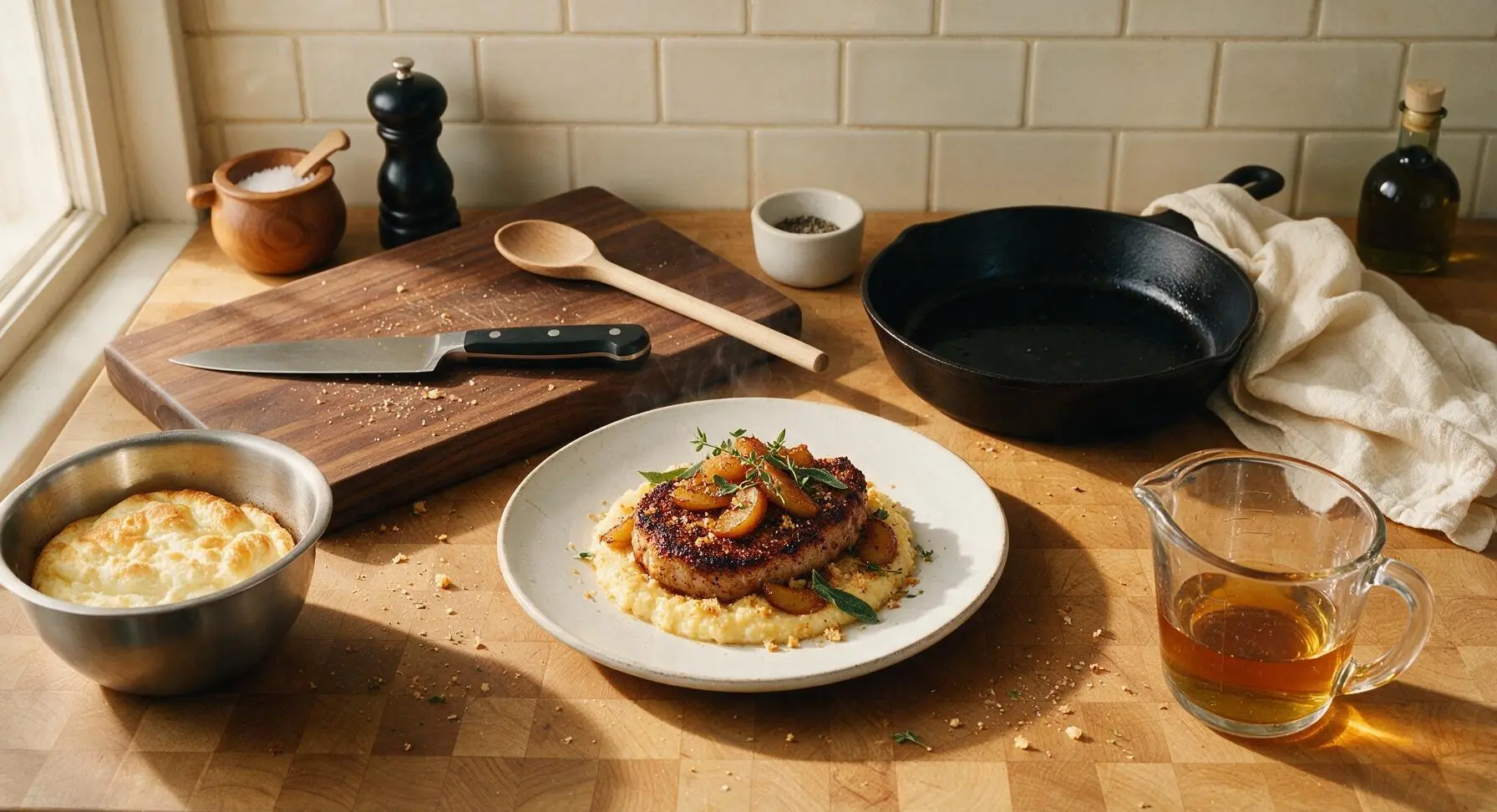
⏱️ cook time 28 days total (1 hour active wort boil, 21 days primary fermentation, 7 days oak aging)
🍽️ servings 10
⚡ Difficulty medium

intro

Crisp, hop-forward India Pale Lager aged on applejack-soaked oak, with bright citrus hops, caramel malt sweetness, and subtle apple brandy warmth, perfect for cool autumn sipping.

Ingredients
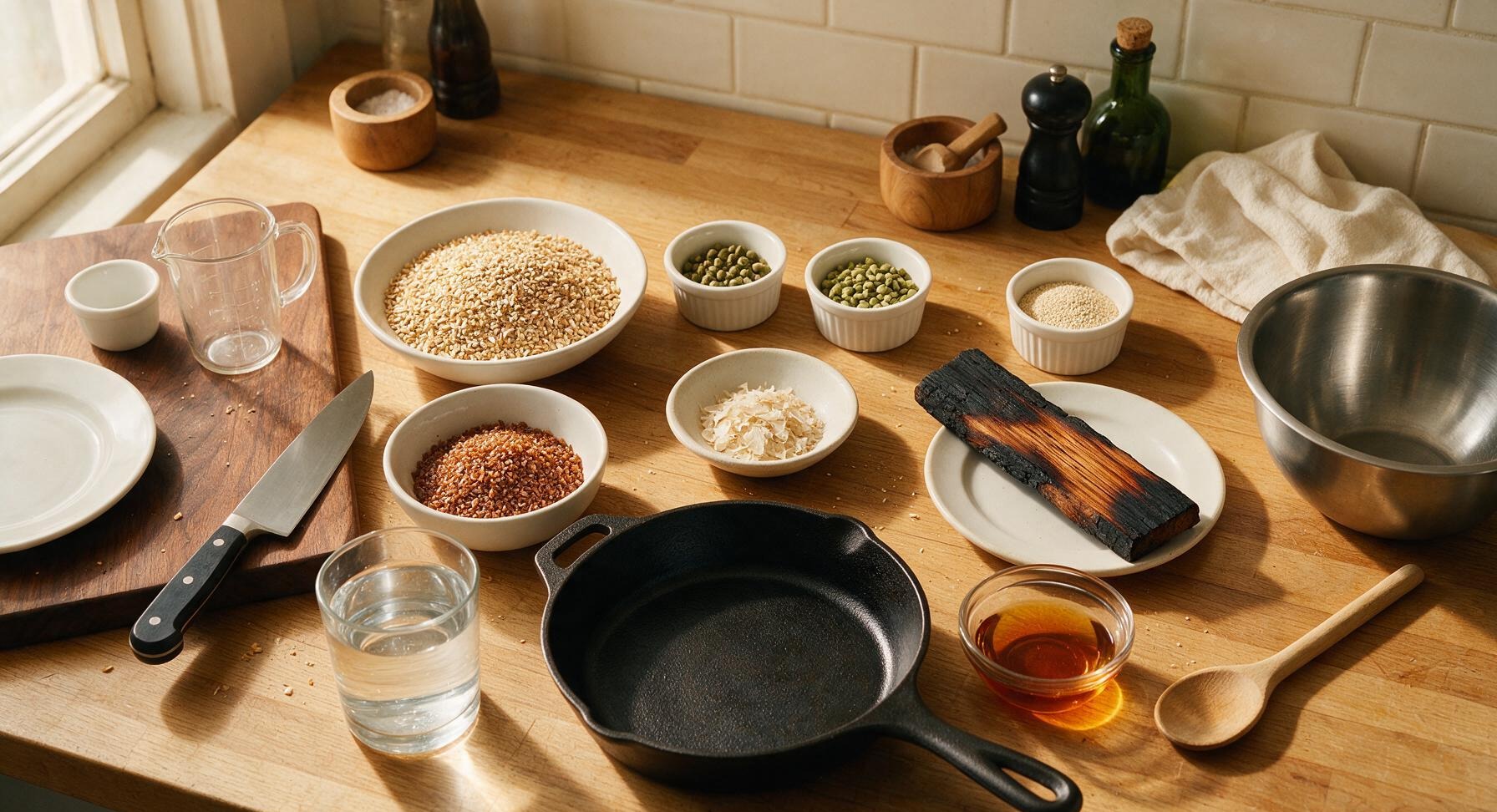
Crushed 2-row pale malt 2 lbs
Crushed caramel 60L malt 4 oz
Magnum hop pellets (12% AA) 0.25 oz
Cascade hop pellets (5.5% AA) 0.5 oz
Dry lager yeast (W-34/70 strain) 1 (5g packet)
Applejack-soaked charred oak stave 1 (12 inch)
Laird's Applejack 2 oz
Irish moss 1 tsp
Cold filtered water 1.25 gallons

Steps

1

Sanitize Brewing Gear

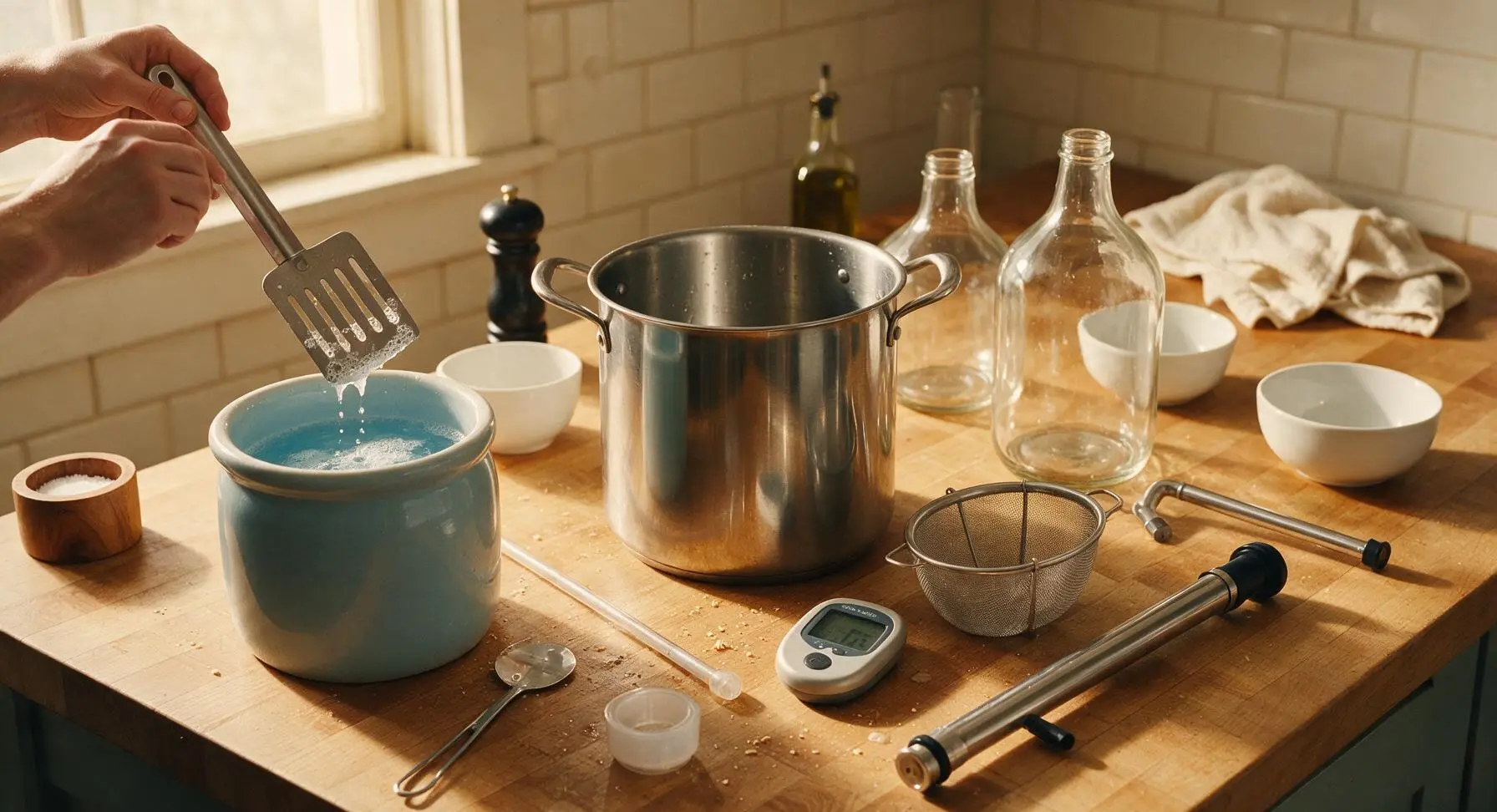
Fill the pale blue sanitizer crock with cold water and no-rinse brewing sanitizer per package directions. Submerge the brew kettle, mash paddle, thermometer, hop spider, carboys, siphon, and airlock for 2 full minutes, then set on the clean counter to air dry. Any surface that touches cooled wort must be fully sanitized to avoid off-flavors or infection.
Step 1
step1:Sanitize Brewing Gear
2

Mash Base Grains

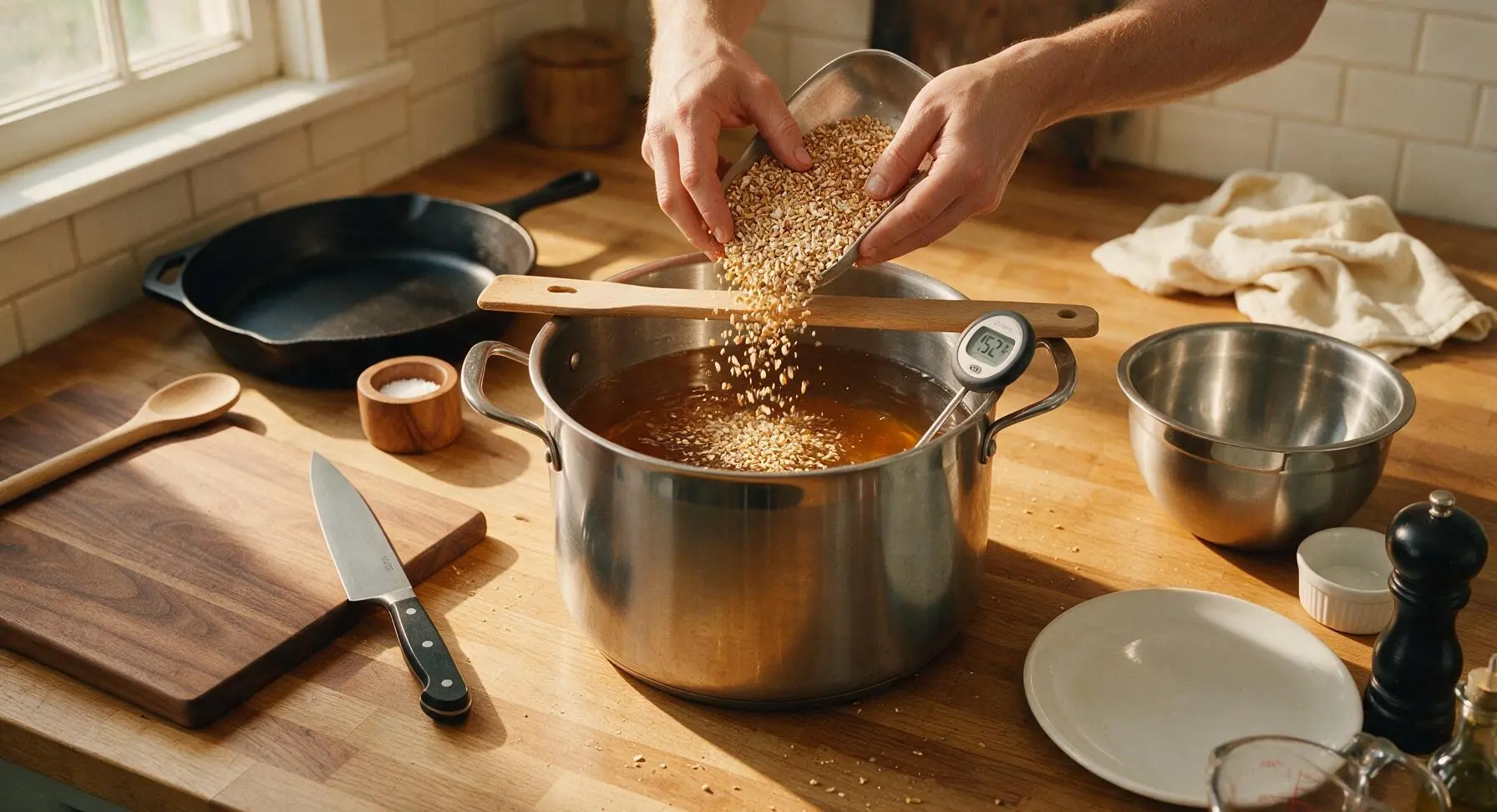
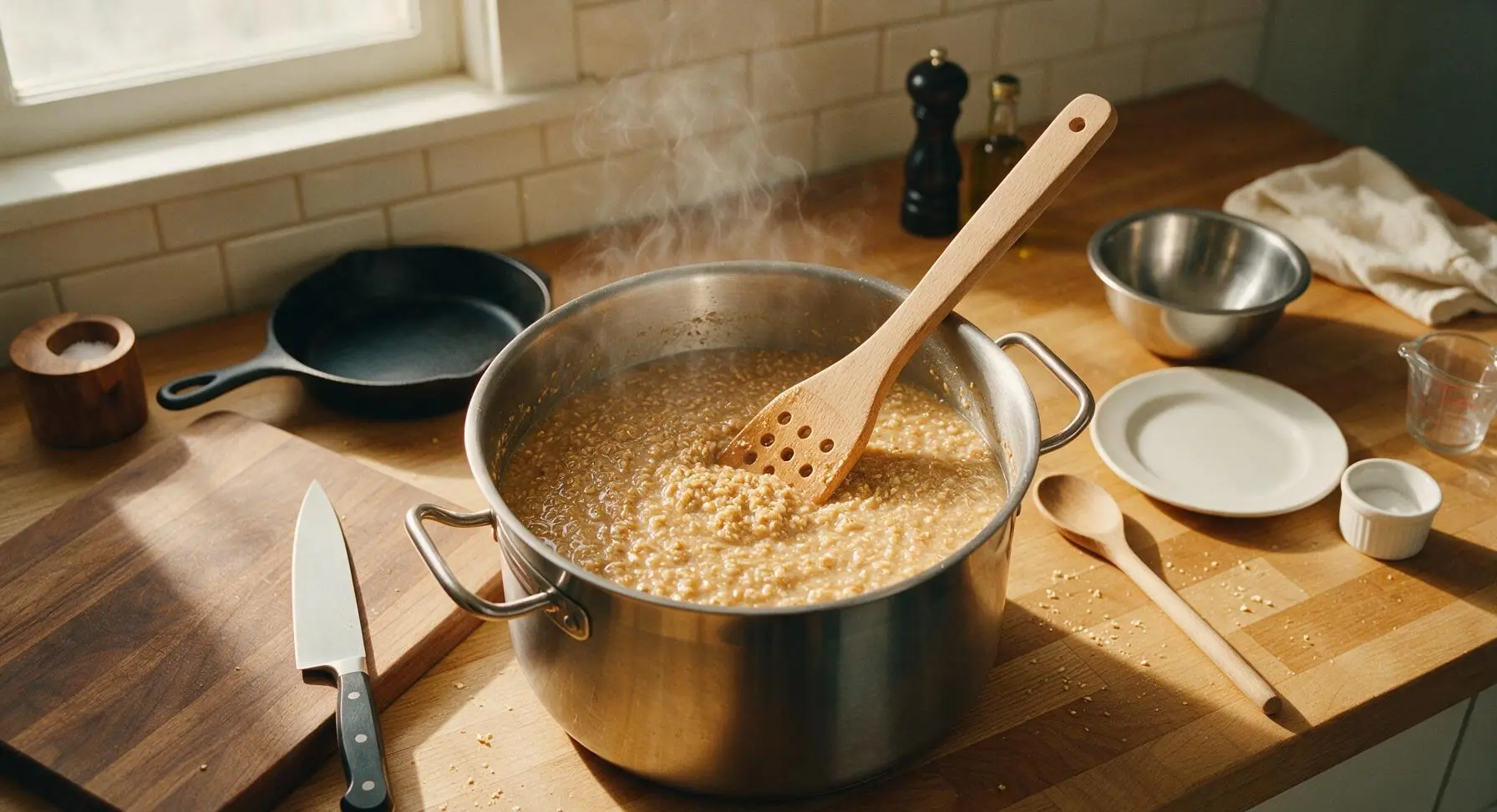
Heat 3 quarts of filtered water in the stainless steel brew kettle to 152°F, monitored with the digital instant-read thermometer. Add crushed 2-row pale malt and caramel 60L malt, stirring thoroughly with the mash paddle to eliminate dry clumps. Hold temperature steady at 150-154°F for 60 minutes, covering the kettle to retain heat, until the wort tastes sweet and grainy with no raw starch flavor.
Step 2
step2:Mash Base Grains
Step 2
step2:Mash Base Grains
3

Boil and Add Hops

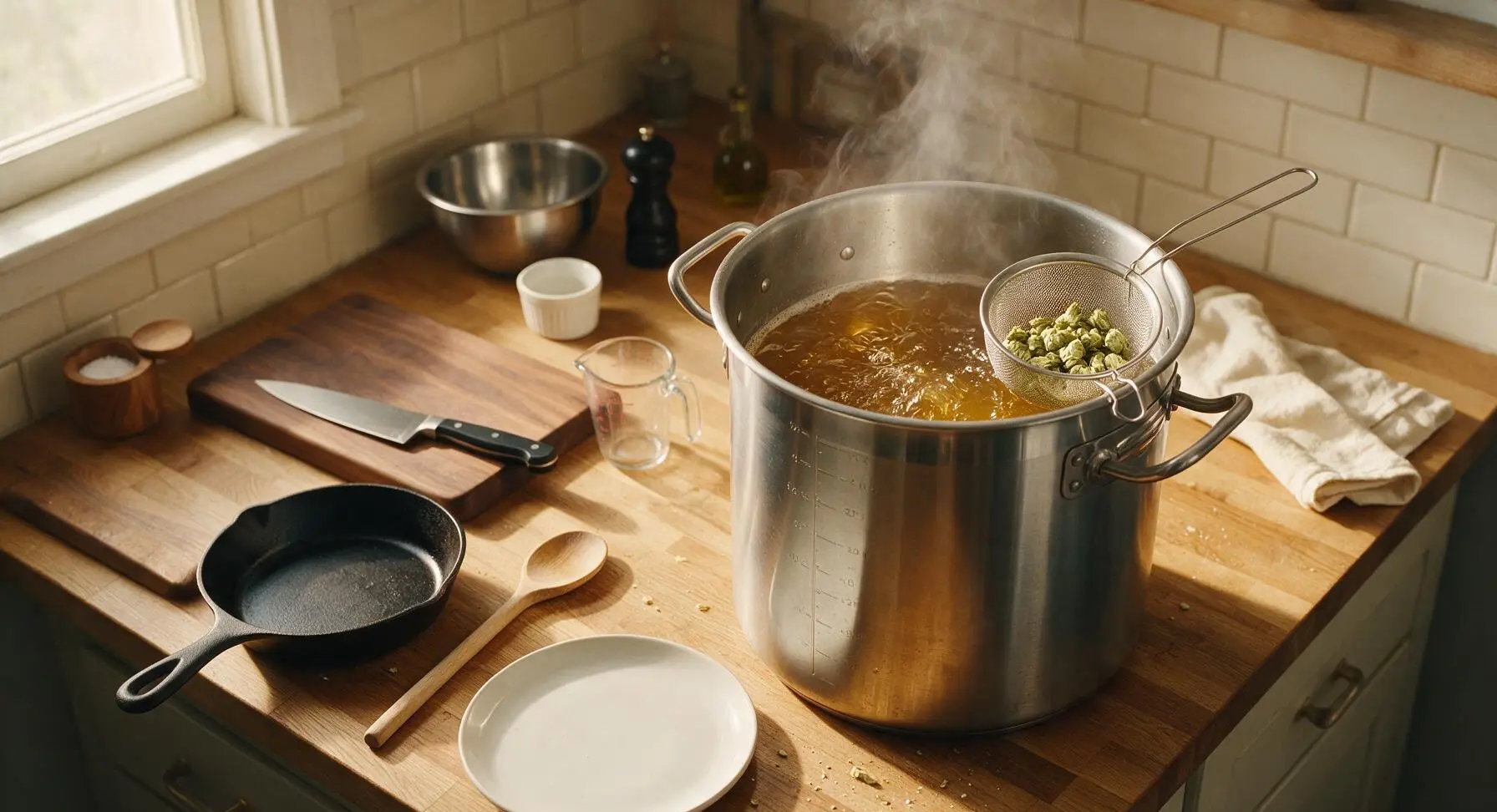
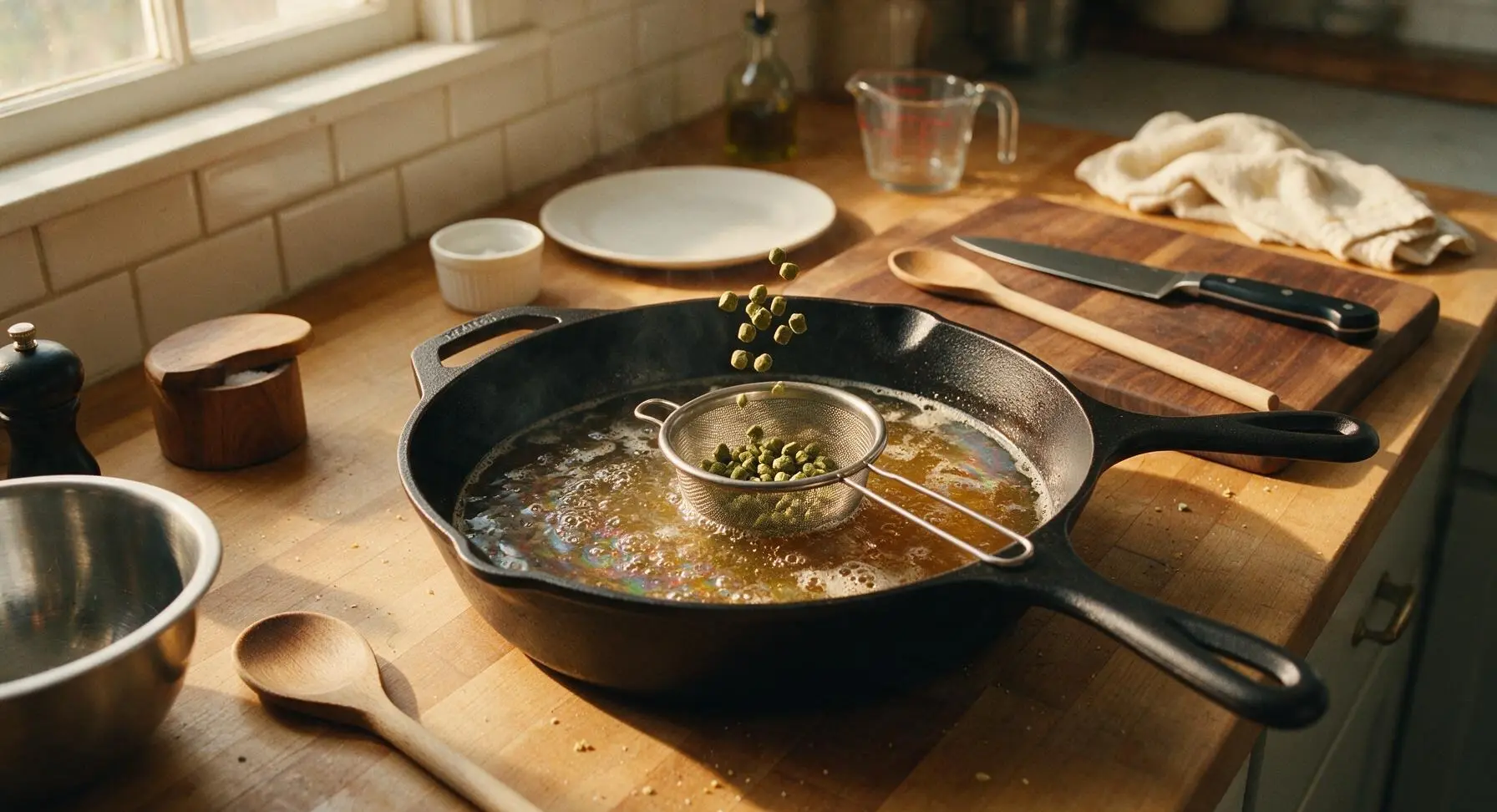
Strain grains out of the kettle to collect 1 gallon of clear sweet wort. Bring wort to a rolling, gentle boil (212°F at sea level) and hold for 60 minutes total. Add 0.25 oz Magnum hops at the start of the boil for clean bittering, add 1 tsp Irish moss with 15 minutes left in the boil to clarify beer, and add 0.25 oz Cascade hops with 5 minutes left for bright citrus aroma. Adjust heat as needed to prevent boilovers.
Step 3
step3:Boil and Add Hops
Step 3
step3:Boil and Add Hops
4

Cool Wort, Pitch Yeast

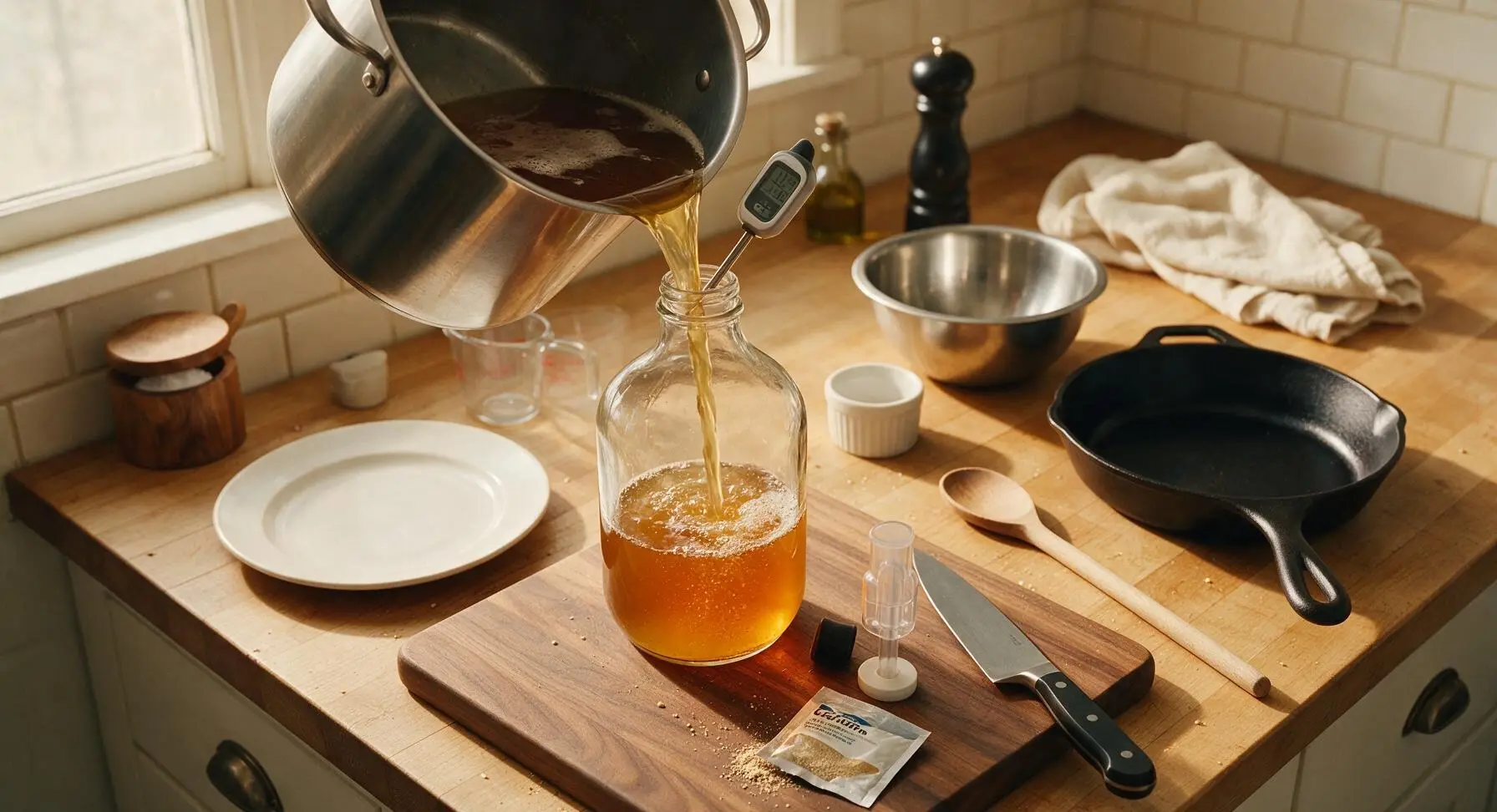
Remove kettle from heat and cool wort as quickly as possible to 65°F by setting the kettle in an ice bath, stirring occasionally with the sanitized mash paddle. Once temperature hits 65°F, pour sanitized wort into one of the 1-gallon clear glass carboys, sprinkle the full packet of dry lager yeast on top, and seal the carboy with the sanitized airlock filled halfway with sanitizer solution. Store in a dark, 60°F space for primary fermentation.
Step 4
step4:Cool Wort, Pitch Yeast
5

Monitor Fermentation

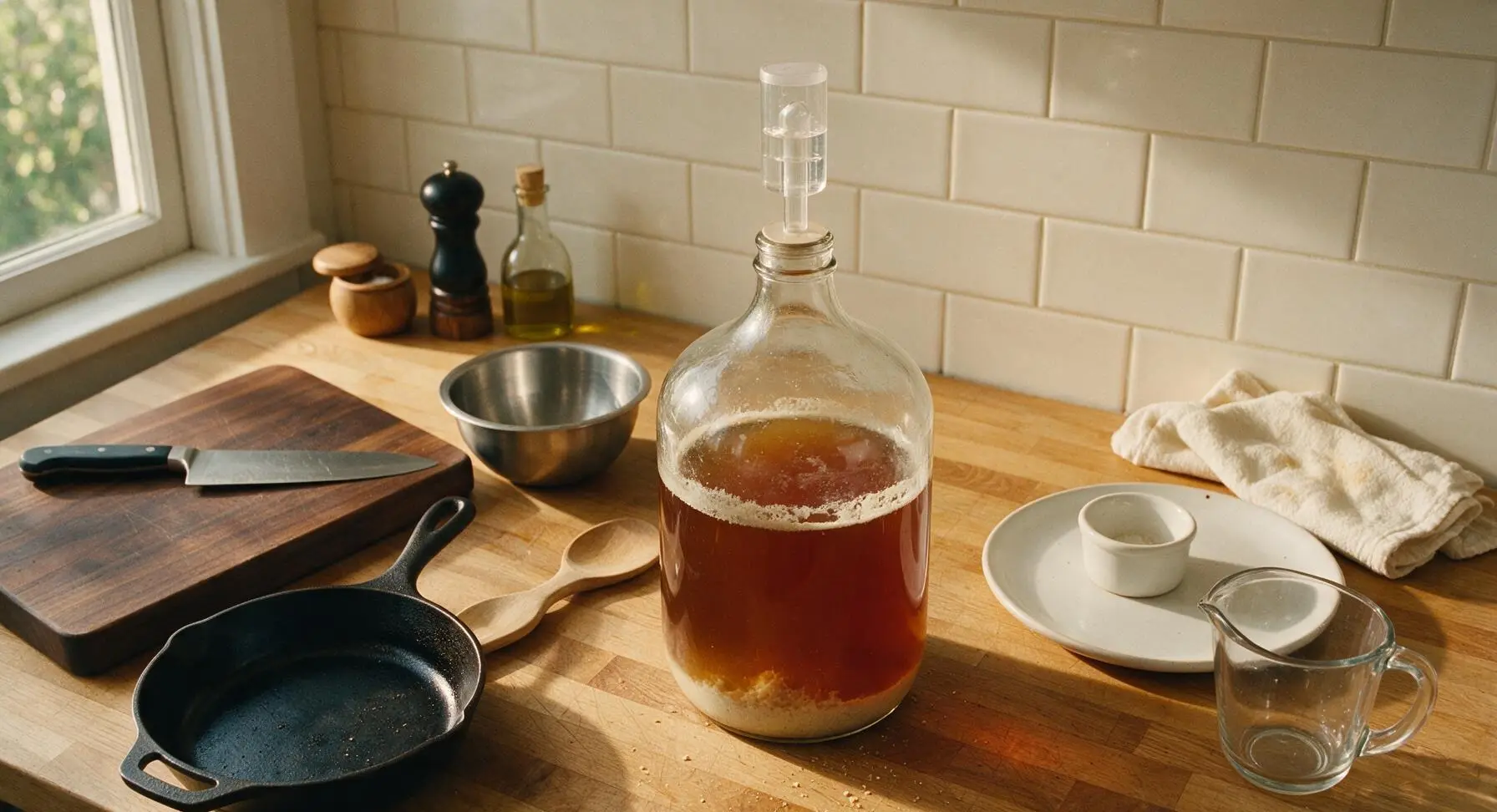
Check the airlock daily for steady bubbling, which signals active fermentation. Over 14-21 days, bubbles will slow from 1-2 per second to 1 every 2-3 minutes, and the wort will turn from hazy golden to clear deep amber, with a layer of pale yeast sediment settled at the bottom of the carboy. Take a hydrometer reading to confirm final gravity is stable (1.010-1.012) for 3 consecutive days before moving to aging.
Step 5
step5:Monitor Fermentation
6

Age With Oak and Applejack

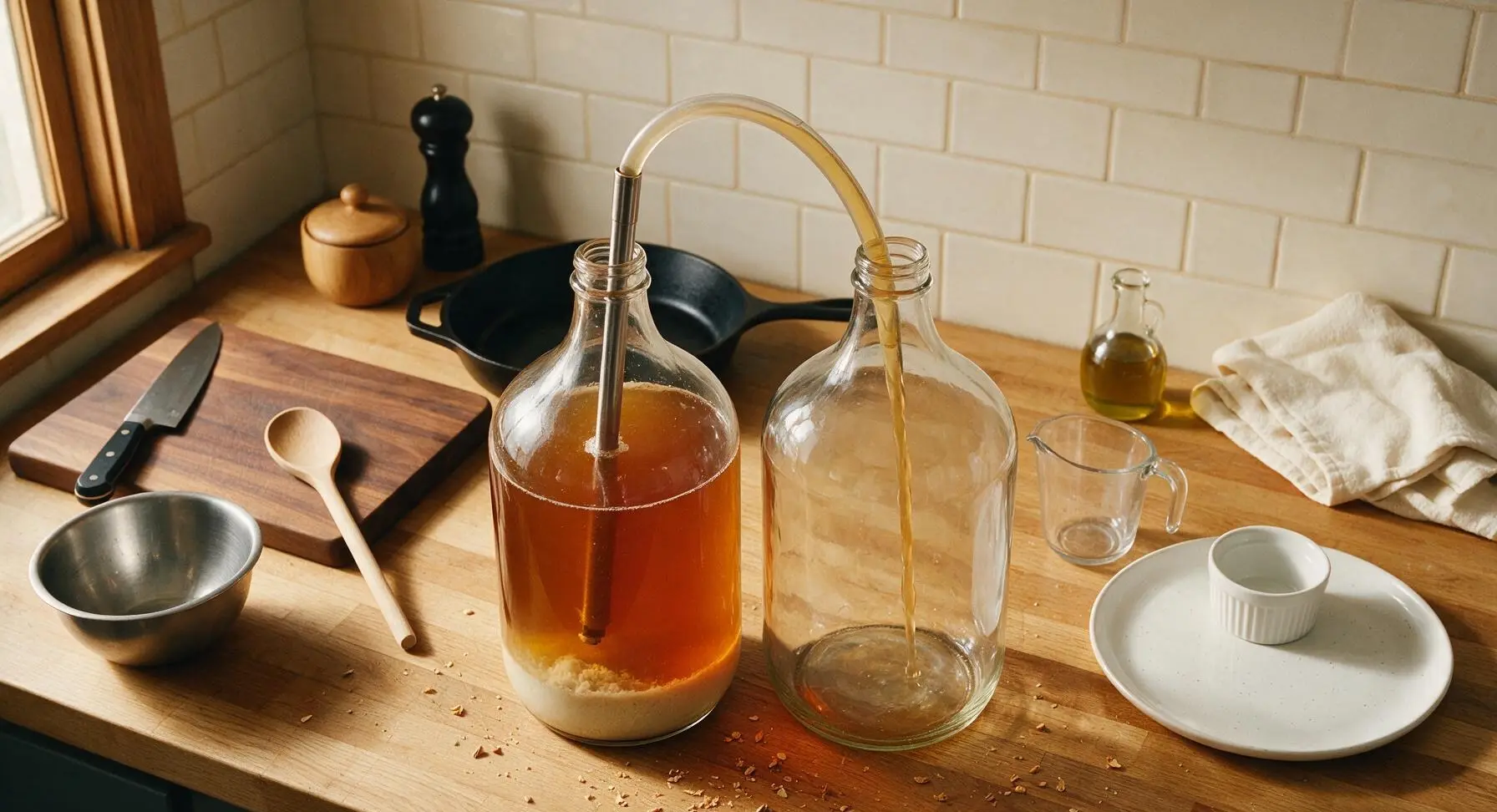
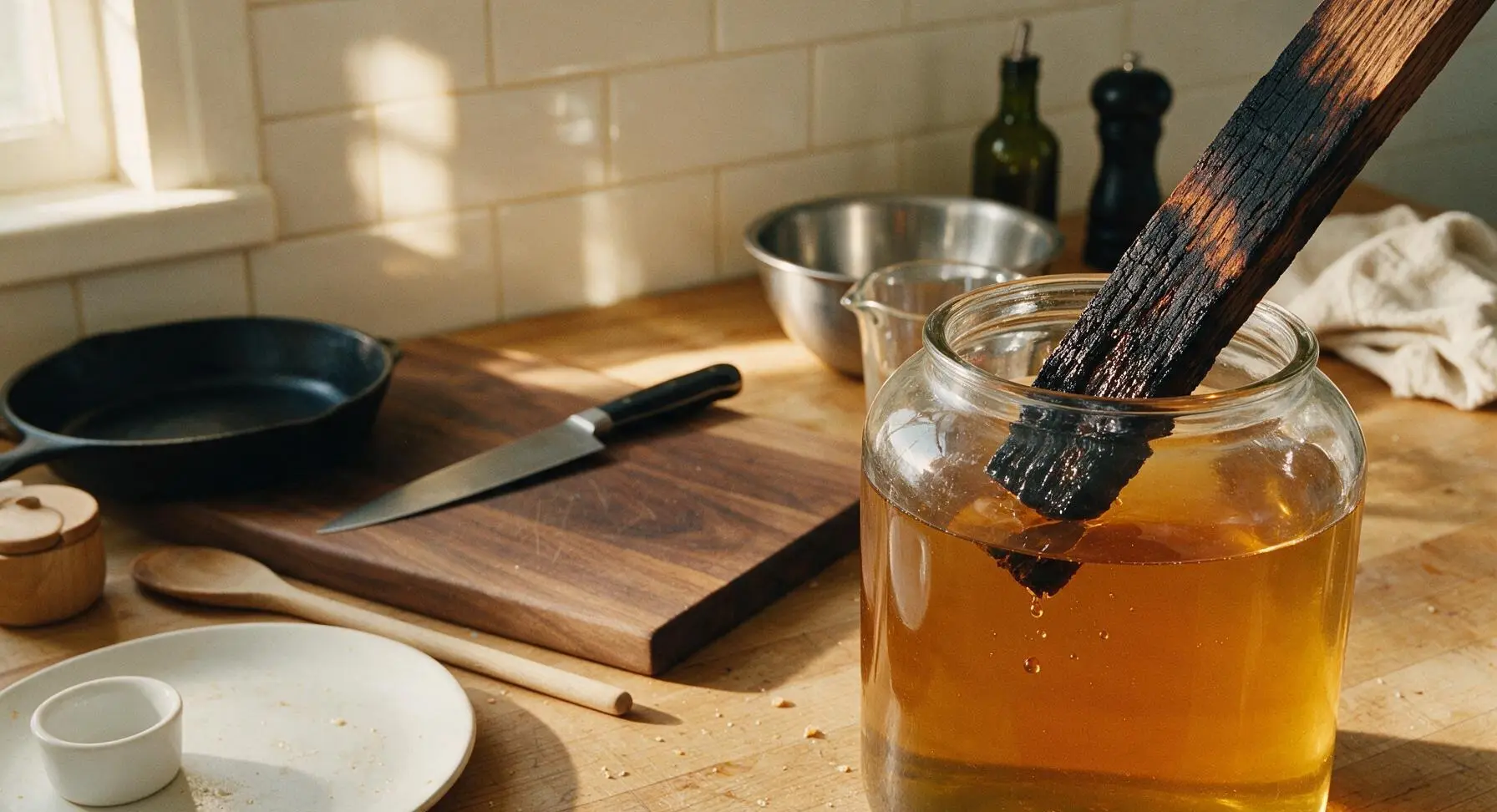
Once primary fermentation is complete, use the sanitized auto-siphon racking cane to transfer clear beer off the yeast sediment into the second sanitized glass carboy. Add the pre-soaked applejack oak stave (soaked 48 hours in 2 oz Laird's Applejack, residual applejack poured in with the stave) to the carboy. Seal again with a sanitized airlock, and age for 7-10 days at 60°F, tasting daily to avoid over-oaking, until soft vanilla, ripe apple, and subtle warm brandy notes come through.
Step 6
step6:Age With Oak and Applejack
Step 6
step6:Age With Oak and Applejack
7

Cold Condition Beer

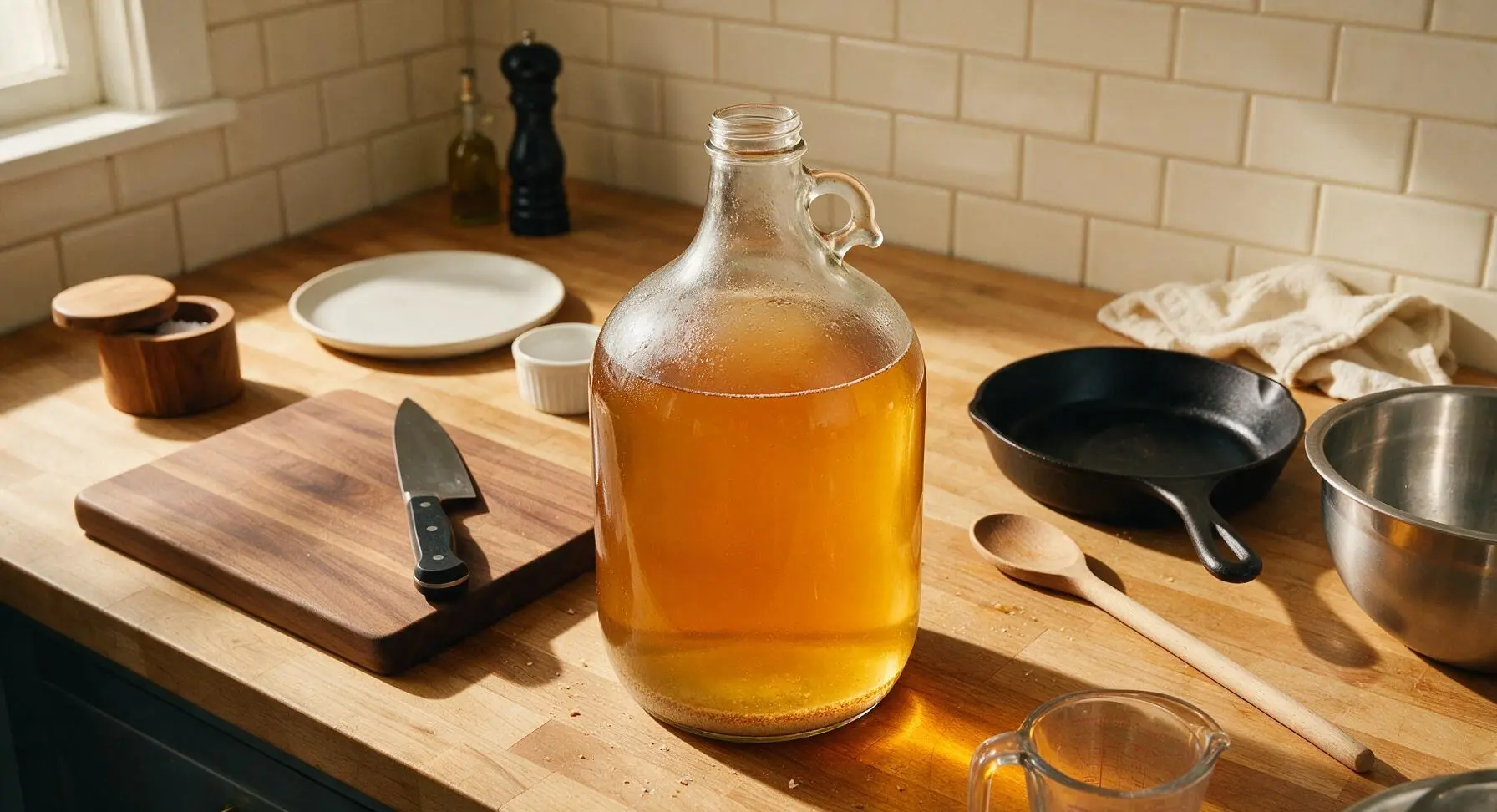
Once the desired oak and applejack flavor is reached, seal the carboy tightly and move it to a 38-42°F refrigerator for 5 days to cold condition. This will drop remaining yeast and hop sediment to the bottom, creating a crisp, smooth final beer with no harsh bite, and allow flavors to meld fully. Do not freeze the beer.
Step 7
step7:Cold Condition Beer
8

Pour and Garnish

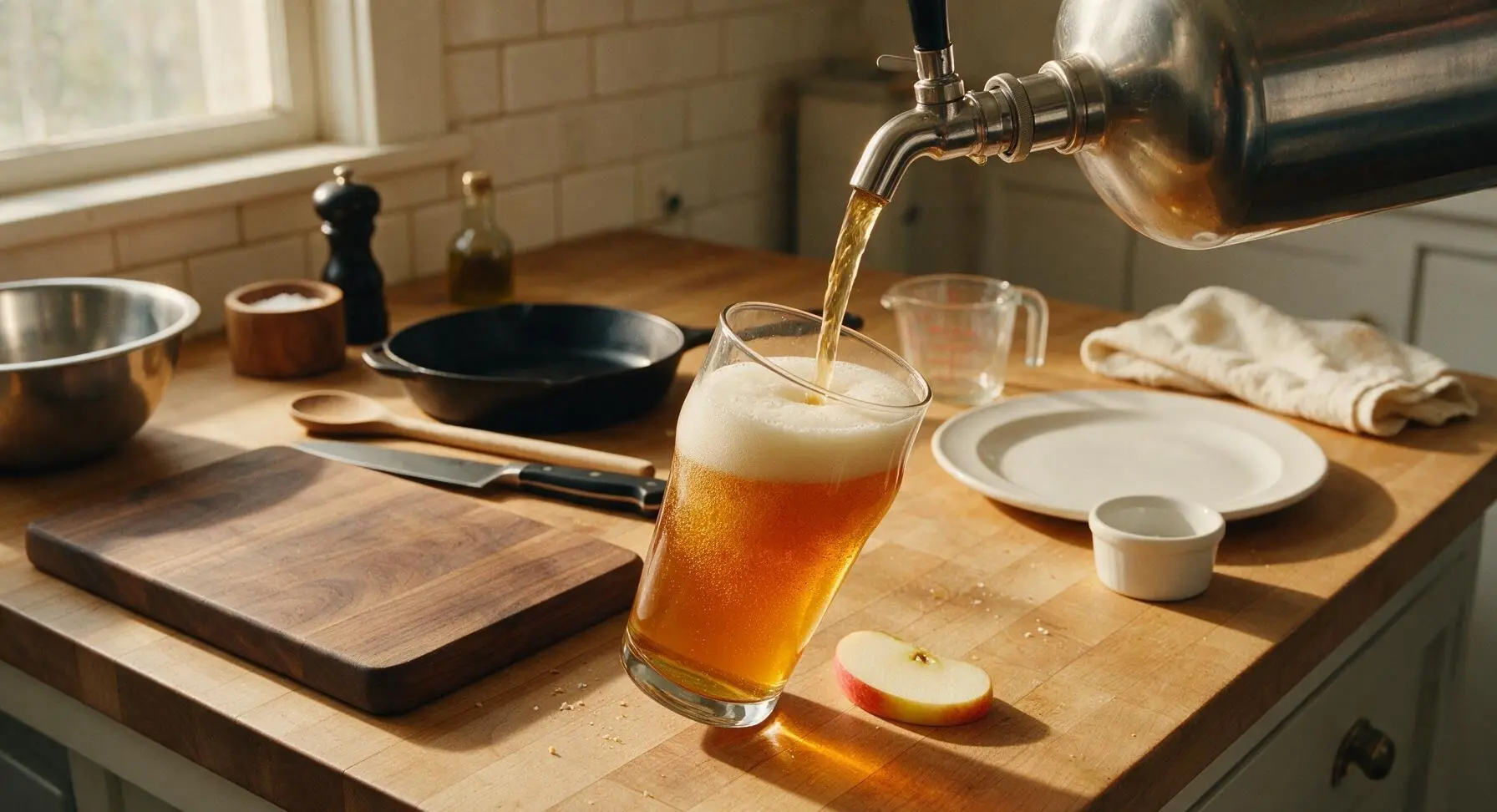
Chill the 16oz nonic pint glass in the freezer for 10 minutes before serving. Pour beer slowly down the side of the tilted glass to create a 1-inch tight foam head, garnish with a thin slice of fresh Honeycrisp apple on the rim if desired. Serve at 45°F to highlight bright hop citrus, sweet caramel malt, apple, and warm oak notes.
Step 8
step8:Pour and Garnish

Tips

1.Sanitize every surface that touches cooled wort: wild yeast and ambient bacteria on un-sanitized gear will create sour, vinegary, or musty off-flavors that ruin the clean, crisp hop and apple profile of the IPL, even if all other steps are followed perfectly.
2.Taste the beer daily during oak aging: oak and applejack flavor extracts quickly, and leaving the stave in longer than 10 days will create harsh, woody, astringent notes that overpower delicate citrus hop and sweet malt flavors; remove the stave as soon as you detect soft vanilla and subtle warm apple brandy notes.
3.Maintain a steady 60°F fermentation temperature for the lager yeast: fluctuating or too-warm temperatures will create solvent-like, overly fruity off-flavors that clash with the smooth, clean character of an IPL, so avoid storing the fermenting beer near ovens, windows, or heaters.


✨ You May Also Like

Drinks & Beverages
🍜 Mexico

A bright, balanced tequila-based cocktail with zesty fresh lime, smooth orange liqueur, and a signature salt rim, perfect for warm summer sipping.

⏱️ 5 minutesDrinks & Beverages ★ 4.9
Drinks & Beverages
🍜 United States

Thick, creamy, nostalgic classic vanilla milkshake with a rich, smooth texture, topped with whipped cream and a cherry for cool, sweet refreshment.

⏱️ 5 minutesDrinks & Beverages ★ 4.7
Drinks & Beverages
🍜 United States

A bright, golden strong ale with fruity banana-clove notes, subtle hop spice, and soft carbonation, brewed in classic Trappist Tripel tradition.

⏱️ 2 hours aDrinks & Beverages ★ 4.5
Drinks & Beverages
🍜 United States

A frothy, nostalgic American soda fountain treat pairing bubbly cold root beer with creamy vanilla ice cream, perfect for cooling down at warm weather gatherings.

⏱️ 20 minuteDrinks & Beverages ★ 4.8
Drinks & Beverages
🍜 United States

Tart, funky, effervescent American Wild Ale is a complex fruity craft beer brewed with wild yeast, delivering bright, zesty notes perfect for warm-weather sipping.

⏱️ 2 hours aDrinks & Beverages ★ 4.4
Drinks & Beverages
🍜 United States

Bright, bubbly copycat of the iconic American caramel cola, balanced with citrus and warm spice, perfect for sipping ice-cold on hot days.

⏱️ 15 minuteDrinks & Beverages ★ 4.8

Applejack Barrel Aged IPL:Frequently Asked Questions

1.Do I need a full-size applejack barrel to make this recipe at home? ▾
You don’t need a costly full-size applejack barrel! For a standard 5-gallon batch, soak 2–3 oz of medium-toast American oak cubes in 8 oz of bonded applejack for 3–5 days, then add both the oak and residual spirit to secondary fermentation. This delivers that signature warm brandy-oak note, and you can tweak oak levels to taste without the hassle of barrel maintenance.
2.Why is W-34/70 dry lager yeast recommended instead of a classic ale yeast for this hoppy recipe? ▾
W-34/70 is a reliable workhorse lager strain that ferments ultra-clean and crisp, without the bold fruity ester notes common to ale yeast. That neutral base lets bright Cascade citrus hops, soft caramel malt sweetness, and applejack oak take center stage instead of competing for attention, and it ferments steadily at 50–55°F for that signature smooth lager finish.
3.How long should I age this IPL on applejack-soaked oak to avoid overpowering hop flavor? ▾
Aim for 7–14 days of oak contact at secondary fermentation temperature, and pull a small taste sample every 3 days after the first week. Oak flavor builds quickly, and you want it to be a subtle background note, not a harsh woody punch that masks bright Cascade citrus. Remove the oak cubes as soon as you pick up that soft vanilla-apple brandy warmth.
4.Can I substitute fresh whole-cone hops for the recommended pellet hops? ▾
You absolutely can, just adjust quantities to account for utilization differences. For bittering additions with Magnum, use 20% more fresh cone hops than the listed pellet weight to hit your target bitterness, and for late-addition Cascade, use 15% more fresh hops. Keep fresh hops frozen right up until use to lock in their bright, zesty citrus aroma.
5.What’s the ideal fermentation temperature for W-34/70 yeast to get that crisp lager profile? ▾
Hold primary fermentation steady at 50–54°F for the first 7–10 days, until visible krausen falls and gravity hits 1.012. Let the temperature rise 2–3°F for a 3-day diacetyl rest, then rack to secondary and drop temps to 38–42°F for lagering and oak contact. Avoid sharp temperature swings to prevent off-flavors like sulfur or solventy notes.
6.How much caramel 60L malt should I use to get balanced sweetness without making the beer cloying? ▾
For a 5-gallon batch, use 8 oz of crushed caramel 60L malt paired with 9 lbs of crushed 2-row pale malt. That ratio adds just enough soft caramel, toffee-like sweetness to balance firm Magnum hop bitterness and subtle applejack warmth, without weighing down the crisp, drinkable lager body or masking bright Cascade hop notes.
7.Can I use regular apple brandy instead of applejack to soak my oak cubes? ▾
Yes, but stick to bonded, 100-proof straight apple brandy for the closest flavor match. Applejack is a traditional American apple brandy with bright, fresh apple character, so skip heavily oaked, sweetened apple brandies that add too much vanilla or sugary apple flavor. If using lower-proof brandy, extend oak soak time by 2 days to pull enough spirit character.
8.When should I add Cascade hops to lock in that bright citrus aroma without losing it to boil-off? ▾
Add 70% of your Cascade hop charge in the last 10 minutes of the boil, and reserve the remaining 30% for a dry hop addition 3 days before you plan to package the beer. This schedule preserves delicate, volatile hop oils that create that signature zesty grapefruit and orange Cascade aroma, instead of boiling them off during a long steep.
9.How long do I need to lager this beer after oak aging before it’s ready to drink? ▾
After oak contact is complete and you’ve removed the oak cubes, hold the beer at 35–40°F for 3–4 weeks of cold lagering. This slow, cold conditioning smooths out rough hop edges, blends applejack and oak notes seamlessly with malt and hops, and creates that ultra-crisp, clean finish that makes this beer perfect for cool autumn sipping.
10.What ABV should I target to keep the applejack warmth balanced, not boozy? ▾
Aim for a base beer ABV of 5.8–6.2% before adding oak and applejack. The small amount of spirit pulled in from soaked oak will bump final ABV by roughly 0.3–0.5%, landing you at 6.1–6.7% total. That’s strong enough to carry subtle brandy warmth, but light enough to stay crisp and approachable for fall afternoons.
11.I’m short on time—can I skip long oak aging and add applejack flavor a faster way? ▾
If you’re crunched for time, skip the multi-day oak soak and add 1 oz of medium-toast oak extract and 2 oz of bonded applejack directly to secondary 3 days before packaging. Pull a sample after 48 hours, and adjust extract or applejack in small increments to avoid overdoing it. It won’t have the exact layered oak depth, but it hits that core applejack-oak note fast.
12.How do I avoid harsh, woody, astringent flavors from the oak cubes? ▾
First, buy pre-toasted medium American oak cubes instead of toasting your own at home, which can easily create burnt, harsh notes. Second, don’t leave oak in contact with beer for longer than 2 weeks, and taste samples every 3 days after the 7-day mark. If you do pick up woody astringency, age the beer cold for an extra 2 weeks to let those flavors mellow.
13.Is there a non-alcoholic way to get that applejack barrel note for a low-ABV version? ▾
For a low-ABV take, soak oak cubes in 8 oz of unfiltered spiced fresh apple cider reduced by half (to concentrate flavor) mixed with 1/4 tsp of natural brandy flavor extract, instead of using alcoholic applejack. Add the soaked oak and reduced cider to secondary for 10 days to get that soft, spiced apple-oak note without extra spirit alcohol.
14.What carbonation level works best to highlight all of this IPL’s layered flavors? ▾
Carb this beer to 2.4–2.6 volumes of CO2, which is slightly higher than a standard ale but a touch lower than a crisp mass-market lager. That carbonation level lifts bright Cascade citrus aroma to your nose, carries soft caramel malt sweetness, and keeps applejack warmth smooth instead of sharp or boozy across your palate.
15.Can I age this beer long-term, or is it best drunk fresh to preserve hop flavor? ▾
Bright Cascade hop aroma fades quickly, so drink 75% of your batch within 3 months of packaging to get that signature zesty hoppy punch. You can set aside 2–3 bottles for aging up to 8 months, where applejack and oak notes will mellow and blend with caramel malt, but the bright hop character will soften significantly after the 3-month mark.
16.What’s the best way to serve this Applejack Barrel Aged IPL for maximum enjoyment? ▾
Serve it in a tall, narrow pilsner glass at 42–45°F—slightly warmer than ice-cold macro lager, so you can pick up subtle apple brandy, caramel, and citrus hop notes instead of numbing your palate. Pair it with sharp cheddar, smoked sausage, or spiced apple fritters for a cozy, perfect autumn spread that complements every flavor note.
17.I’m picking up a faint buttery off-flavor in my test sample—what went wrong, and can I fix it? ▾
That buttery note is diacetyl, a common lager byproduct that pops up if you skip the post-primary diacetyl rest. Fix it by raising the beer temperature to 58°F for 3 days, letting active yeast reabsorb the diacetyl, before dropping temps back to lagering range. Mark your brew log to add that short warm rest to avoid this issue on future batches.
18.Can I use liquid lager yeast instead of the recommended dry W-34/70 strain? ▾
Absolutely—W-34/70 is sold in both dry and liquid form, and the liquid version works identically if you make a proper 1L starter 2 days before brew day to hit the right yeast cell count. If you pick a different lager strain, choose a clean, neutral option like WLP830, and avoid fruity, estery strains that will compete with apple and hop notes.
19.How do I calculate the right Magnum hop addition to hit balanced bitterness for this recipe? ▾
For a perfectly balanced 40–45 IBUs (the sweet spot for this recipe), add 0.75 oz of 12% AA Magnum pellets at the start of a 60-minute boil for a 5-gallon batch. That early addition delivers smooth, clean bittering that balances caramel malt sweetness, without adding harsh, grassy hop notes that clash with soft applejack and oak character.

Comments (20)

2 days ago

OMG this Applejack Barrel Aged IPL turned out so much better than the overpriced craft version I picked up at the liquor store last month! That subtle apple sweetness cutting through the crisp hop bite? Game changer. Brought a growler to my weekend camping trip and every single person asked for the recipe. 10/10 would brew again.

yesterday

Wait did you use medium toast oak cubes for the aging step? I’m trying this next weekend and don’t want to mess up that wood flavor!

yesterday

Great question! We recommend medium toast American oak cubes for this batch to complement the applejack notes without overpowering the clean lager base. Soak them in a splash of applejack for 24 hours before adding to the secondary for the best results!

1 week ago

I was nervous this would be too complicated for a casual homebrewer like me, but the step-by-step wort boil instructions were so easy to follow! The end result has this perfect warm apple finish that made our fall backyard potluck feel so cozy. My husband already asked me to brew a double batch for Thanksgiving.

3 days ago

SO good! I did a little twist and added a pinch of cinnamon stick during the last 5 minutes of the boil, and it paired unbelievably well with the applejack barrel notes. Don’t sleep on this recipe if you’re a fan of crisp, not-too-boozy fall beers.

2 days ago

Love that cinnamon twist! We’ve tested that variation too, and it works beautifully — just be careful not to add too much cinnamon, or it can overpower the delicate hop and apple flavors.

5 days ago

Wait, 21 days primary fermentation — has anyone tried cutting that short to 14 days? I’m in a pinch to have this ready for our annual homebrew club meeting and I’m stressing about timelines.

3 days ago

I tried rushing primary once on a similar lager and it came out super yeasty and off-flavored. Worth waiting the extra week if you can! I bet your club would wait an extra week to try this, it’s that good.

2 days ago

We don’t recommend cutting primary fermentation short for this recipe! Lagers need that extra time to clean up off-flavors and get that signature crisp finish. If you’re crunched for time, you can skip the oak aging step for a solid un-barreled IPL that’s ready in 22 days total, but the barrel version is absolutely worth the wait.

2 weeks ago

My first ever lager brew and I nailed it thanks to this recipe! The applejack notes are subtle enough that it doesn’t taste like spiked apple cider, but present enough to make it feel special. Drank a pint on my porch last night while watching the leaves fall and it was pure fall bliss.

1 week ago

Took this to our neighborhood block party last weekend and people were lining up to fill their cups! I will say, make sure you properly sanitize everything when you’re doing the oak aging step — I almost messed up my first batch by skipping a quick sanitizer wipe on the bung. Learned my lesson!

5 days ago

That’s such an important tip! Sanitation is non-negotiable during the aging step, since any stray bacteria can turn your hard work into vinegar. Thanks for sharing that reminder for other brewers!

yesterday

I was worried the applejack flavor would be too strong since I’m not a huge sweet beer fan, but it’s perfectly balanced! Super crisp, hoppy enough to feel like a proper IPL, just a hint of warm apple and oak on the backend. Will be making this on repeat all fall and winter.

30 minutes ago

Same! I hate overly sweet fruity beers, so I was hesitant, but the balance is chef’s kiss. You’re gonna love it!

2 hours ago

Quick question — I don’t have access to actual applejack barrels, are the oak cubes soaked in applejack a good enough dupe? I don’t want to drop a ton of money on a whole barrel for a 5 gallon batch.

30 minutes ago

I did the oak cube + applejack soak method for my batch and you literally cannot tell the difference from a barrel aged version! Used about 2 oz of cubes soaked in 4 oz of Laird’s applejack for 2 days, perfect flavor.

5 minutes ago

Beth is exactly right! The oak cube and applejack soak method is what we use for homebrew batches too, since full barrels are impractical for most small-scale brewers. 2 oz of medium toast oak soaked in 3-4 oz of good quality applejack will give you that authentic barrel aged flavor without the huge price tag.

5 days ago

Made this for my dad’s birthday since he loves both IPAs and applejack, and he said it’s the best homebrew I’ve ever made! Even my sister who hates hoppy beers thought it was smooth and easy to drink. Win for the whole family.

3 days ago

Game changer for real. I’ve brewed a dozen different IPLs over the years and this one is easily top 3. The oak aging adds such a nice smoothness that takes the edge off the hop bite, and the applejack adds this lovely depth I haven’t gotten from any other recipe.

2 days ago

Totally agree! I’ve brewed it twice now and the second batch was even better than the first — I let the oak go an extra 2 days and it was chef’s kiss.

30 minutes ago

Wait, what hop profile did you all use? I have a bunch of Cascade and Centennial left over from my last IPA, would those work here or do I need to grab something specific?

5 minutes ago

Cascade and Centennial work perfectly for this recipe! Those classic citrusy, piney American hops pair beautifully with the apple and oak notes, so no need to run out for special hops if you already have those on hand.

just now

Meal prepped? More like brew prepped! Got this going in my fermentation chamber right now, just hit day 10 of primary and the airlock is bubbling away like crazy. Smells so good already when I sneak a quick sniff, can’t wait to taste the finished product in a couple weeks.

1 week ago

Tried this recipe last month and messed up the oak aging step — left the cubes in for 12 days instead of 7 and it came out way too woody, like drinking a tree. ? Gonna give it another go this weekend and stick to the timeline this time!

5 days ago

Oh no, I did the exact same thing my first try! I found that if you over-oak, you can blend a little bit of the un-aged base lager in to mellow it out. Saved my batch!

3 days ago

So sorry your first batch was over-oaked! That’s such a common misstep. We recommend tasting a sample every day once you add the oak so you can pull the cubes as soon as the flavor hits that perfect sweet spot, since different oak cubes can impart flavor faster than others. Blending in a little un-aged beer is a great fix if you do go too long!

2 weeks ago

My kids loved helping me measure out the grains for this! Obviously they didn’t taste the finished product, but they thought it was so cool to watch the fermentation process and see the bubbles in the airlock. Fun family weekend activity, and we got great beer out of it too.

1 week ago

That’s such a fun way to get kids involved in the kitchen (even if they can’t enjoy the final pour)! We love hearing about families making memories while cooking and brewing together.

yesterday

Is there a non-alcoholic version of this? My partner is sober but loves hoppy drinks and apple flavors, I’d love to make a batch we can both enjoy.

2 hours ago

I made a NA version! Used a NA lager base, added apple cider reduction and a tiny bit of oak extract, hopped it the same way, and it came out amazing. No applejack needed, obviously!

30 minutes ago

Thanks for sharing that NA hack! We’re actually testing a full non-alcoholic version of this recipe now and will be posting it in the next couple weeks, so stay tuned. The apple cider reduction and oak trick is a great shortcut in the meantime!

5 days ago

Brought a 6 pack of this to my friend’s fall bonfire last weekend and it was gone in 20 minutes. Everyone kept asking if I bought it at the fancy new brewery downtown, felt so proud to say I made it myself from this recipe. 10/10, will brew every fall from now on.

2 days ago

Medium difficulty my foot — this was way easier than I thought it would be! I was intimidated by the multi-step process and long timeline, but most of the time is just waiting around for fermentation and aging. The active work is really only that 1 hour boil, which is totally manageable even for new brewers.

yesterday

This makes me feel so much better! I’ve only ever done kit brews before and was scared to try this, but I’m gonna grab the supplies this weekend.

5 minutes ago

Wait, I’m about to start the boil — does the recipe call for a dry hop addition? I don’t see it in the instructions but I feel like an IPL should have a little dry hop for that bright hop aroma.

just now

I did a 1 oz dry hop of Mosaic on day 18 of primary and it was chef’s kiss! Added that perfect tropical aroma without messing with the crisp finish.

just now

We intentionally kept dry hop optional for this recipe to keep that clean lager base, but adding 1 oz of your favorite American hop during the last 3 days of primary is a fantastic addition if you love that big hop aroma! Just don’t overdo it, or you’ll cover up those delicate apple and oak notes.

1 week ago

I’m not usually a lager guy, I’m all about thick, hazy IPAs, but this recipe converted me. It’s so crisp and drinkable, the apple and oak add just enough complexity to keep it interesting, and it’s not heavy at all. Perfect for those 70 degree fall afternoons we get here in AZ.

3 days ago

Did a test pour of my batch last night after finishing the 7 days of oak aging, and OMG it’s even better than I imagined. The apple is subtle, the oak is smooth, the hops are bright, the lager is crisp. I’m already mentally planning my next batch, might add a little caramel malt next time for extra depth.

2 days ago

That caramel malt addition sounds incredible! A little bit of 20L caramel malt would add a nice toasty, sweet note that pairs perfectly with the applejack and oak. Let us know how it turns out if you try it!



