au jus sauce

title 1
au jus sauce
⏱️ cook time 20 minutes
🍽️ servings 4
⚡ Difficulty easy

intro

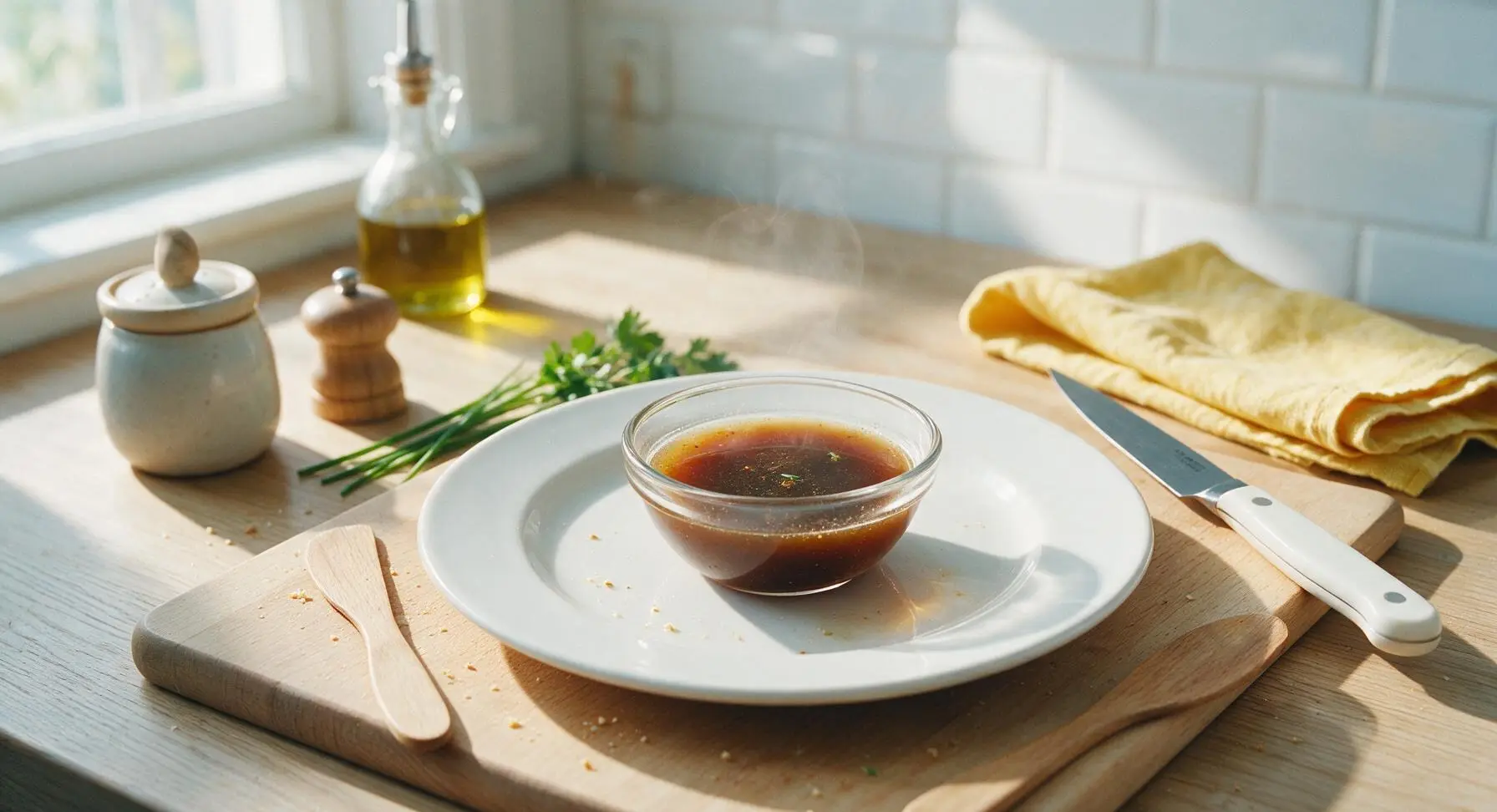
Rich, deeply savory classic au jus, the light, unthickened pan sauce perfect for prime rib, roast beef, or French dip sandwiches, balanced with subtle aromatic depth.

Ingredients
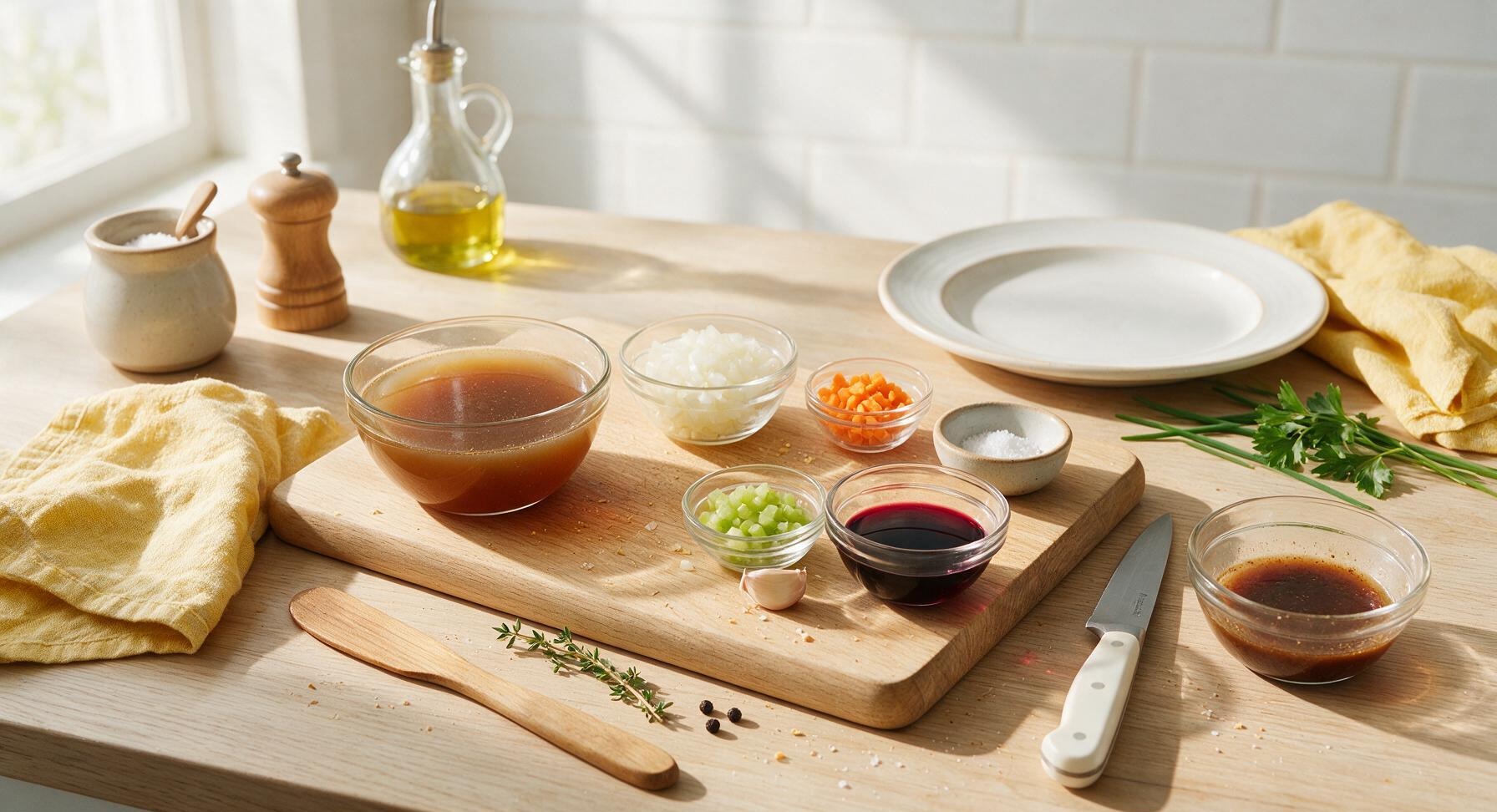
Reserved beef pan drippings (skimmed of excess fat) 1/4 cup
Low-sodium beef broth 2 cups
Yellow onion (finely diced) 1/4 cup
Carrot (finely diced) 2 tbsp
Celery (finely diced) 2 tbsp
Garlic clove (crushed) 1 whole
Fresh thyme sprigs 2 sprigs
Whole black peppercorns 4 each
Dry red wine (Cabernet Sauvignon, optional) 1/4 cup
Kosher salt 1/4 tsp (to taste)

Steps

1

Sauté Aromatic Mirepoix

Place the small stainless steel saucepan on the center trivet over medium heat (350°F/175°C). Add 1 tablespoon of reserved beef fat skimmed from the pan drippings to the pan. Once the fat shimmers (about 1 minute), add the diced onion, carrot, and celery. Cook for 5 minutes, stirring occasionally with the oak wooden spoon, until vegetables soften and turn pale golden at the edges; take care not to let them darken to a deep brown, as this will make the jus taste bitter.
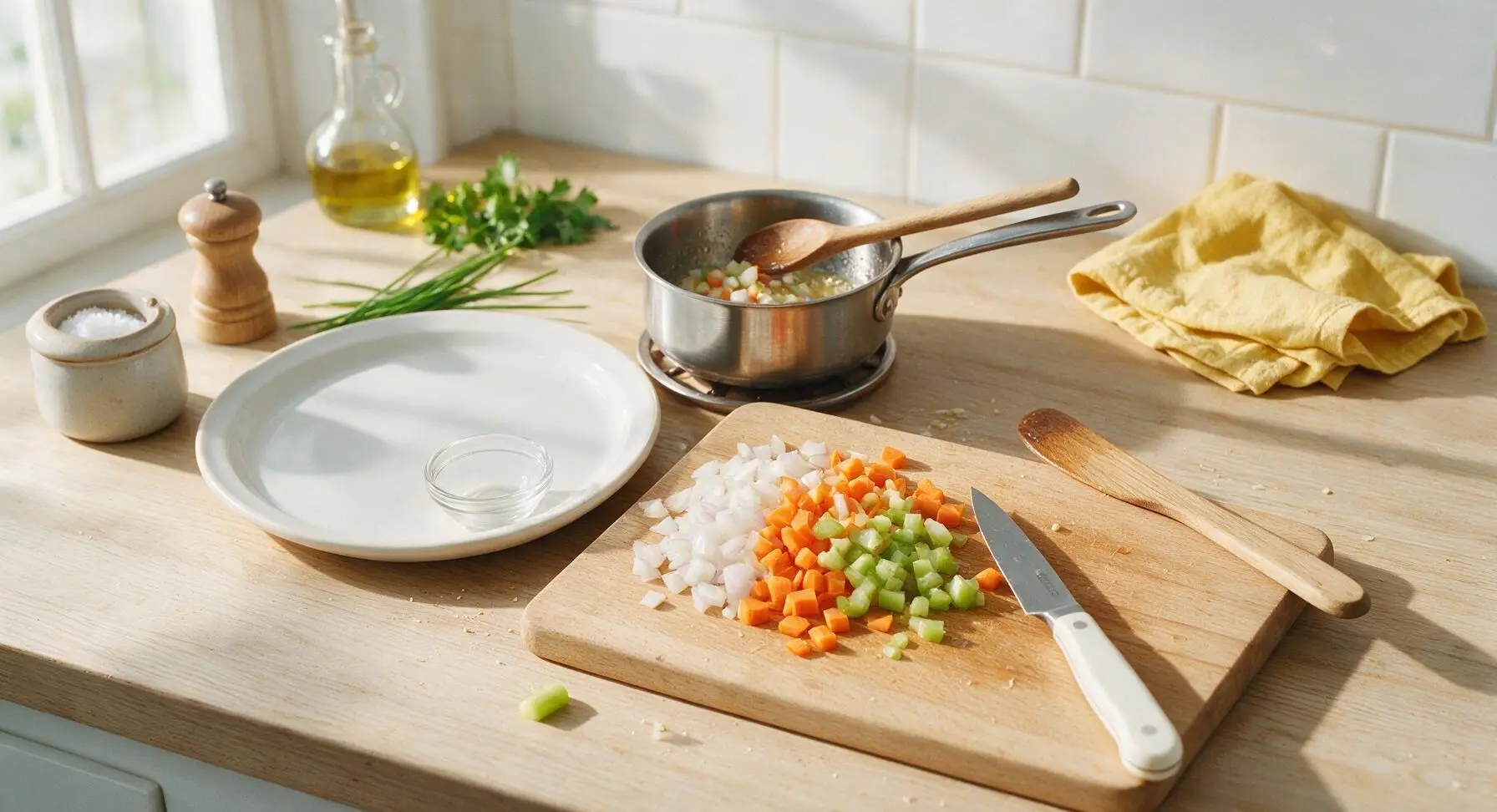
Step 1
step1:Sauté Aromatic Mirepoix
2

Add Garlic and Herbs

Add the crushed garlic clove, whole black peppercorns, and fresh thyme sprigs to the saucepan with the softened mirepoix. Stir continuously with the wooden spoon for 30 seconds, until a bright, nutty garlic aroma rises from the pan. Stop cooking immediately if the garlic starts to turn pale brown, as burnt garlic will add an unpleasant bitter note to the finished jus.
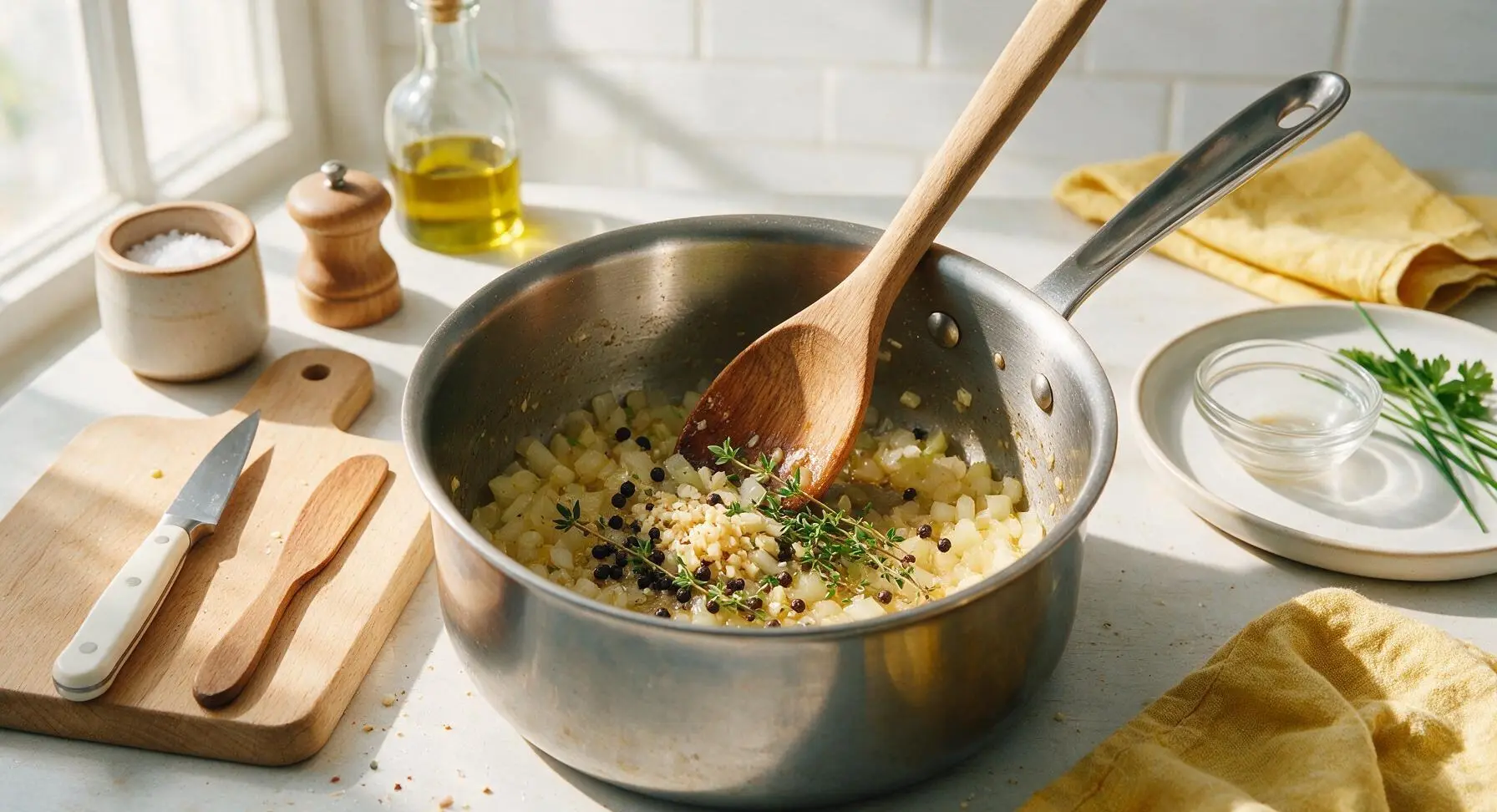
Step 2
step2:Add Garlic and Herbs
3

Deglaze with Red Wine

Pour the 1/4 cup dry red wine into the hot saucepan, pressing the wooden spoon firmly against the pan bottom to scrape up all the dark brown caramelized fond bits stuck to the surface. Simmer for 3 minutes, until the wine is reduced by half, with a rich fruity aroma and no sharp, raw alcohol scent remaining.
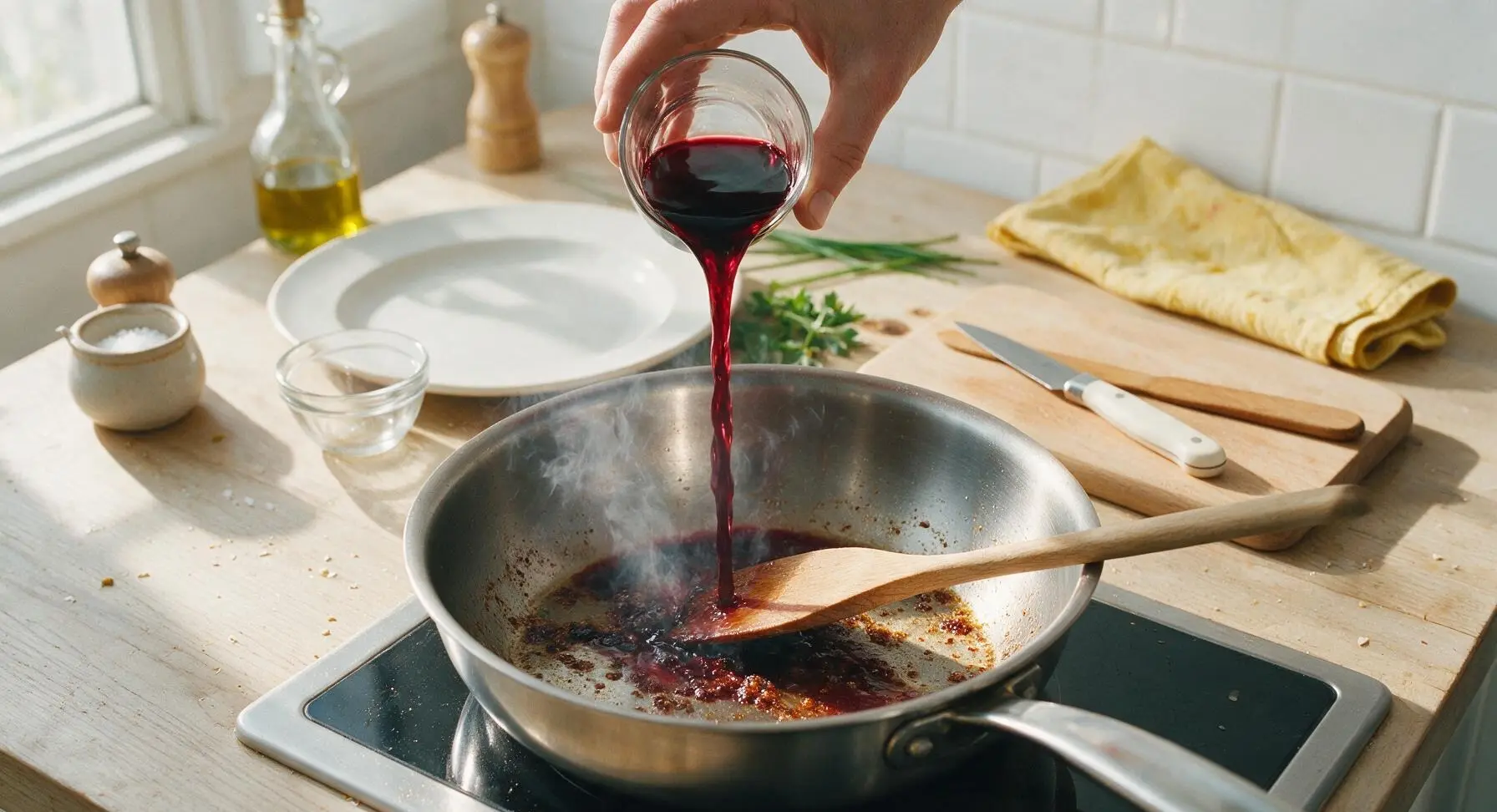
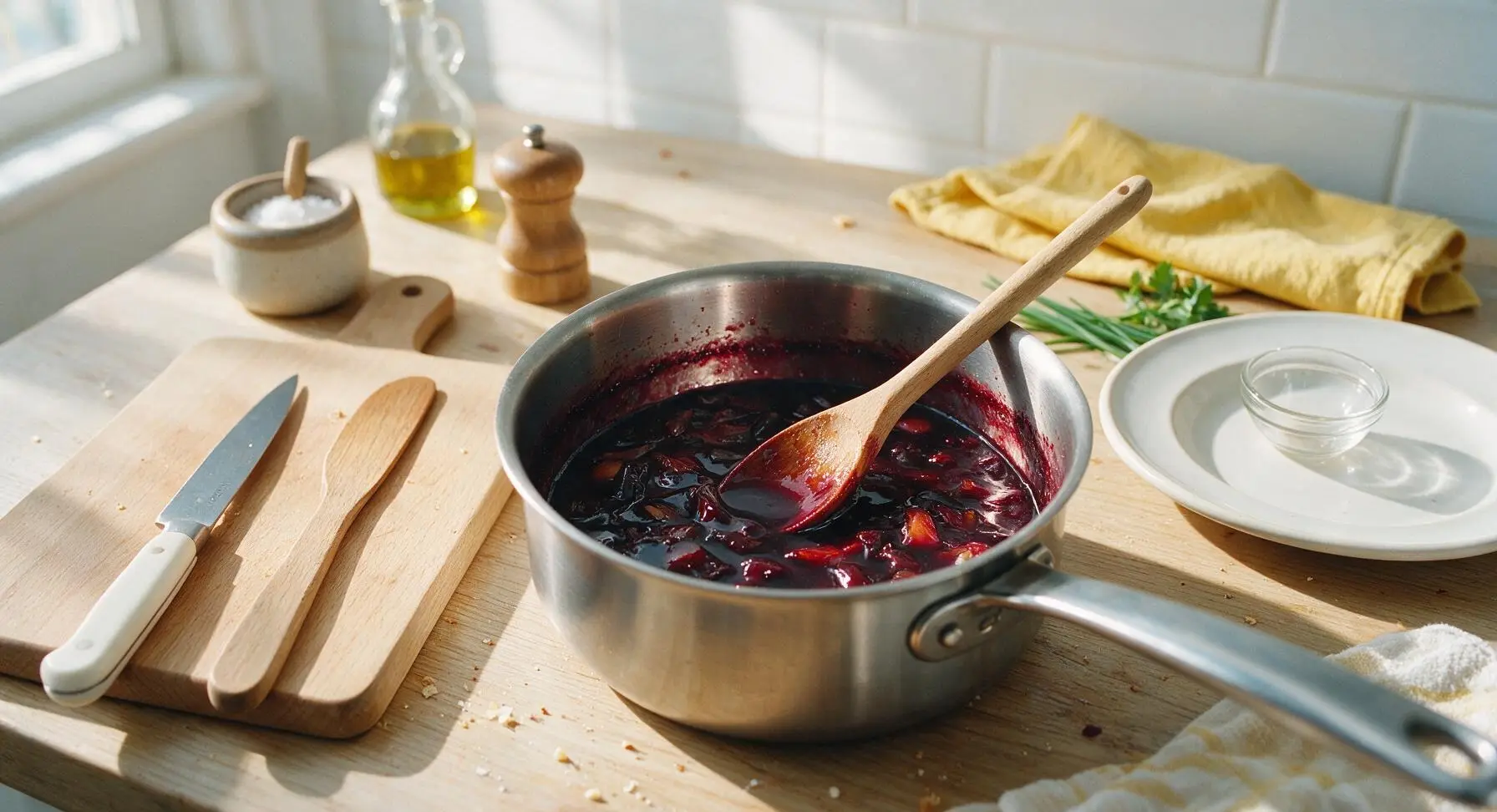
Step 3
step3:Deglaze with Red Wine
Step 3
step3:Deglaze with Red Wine
4

Add Broth and Drippings

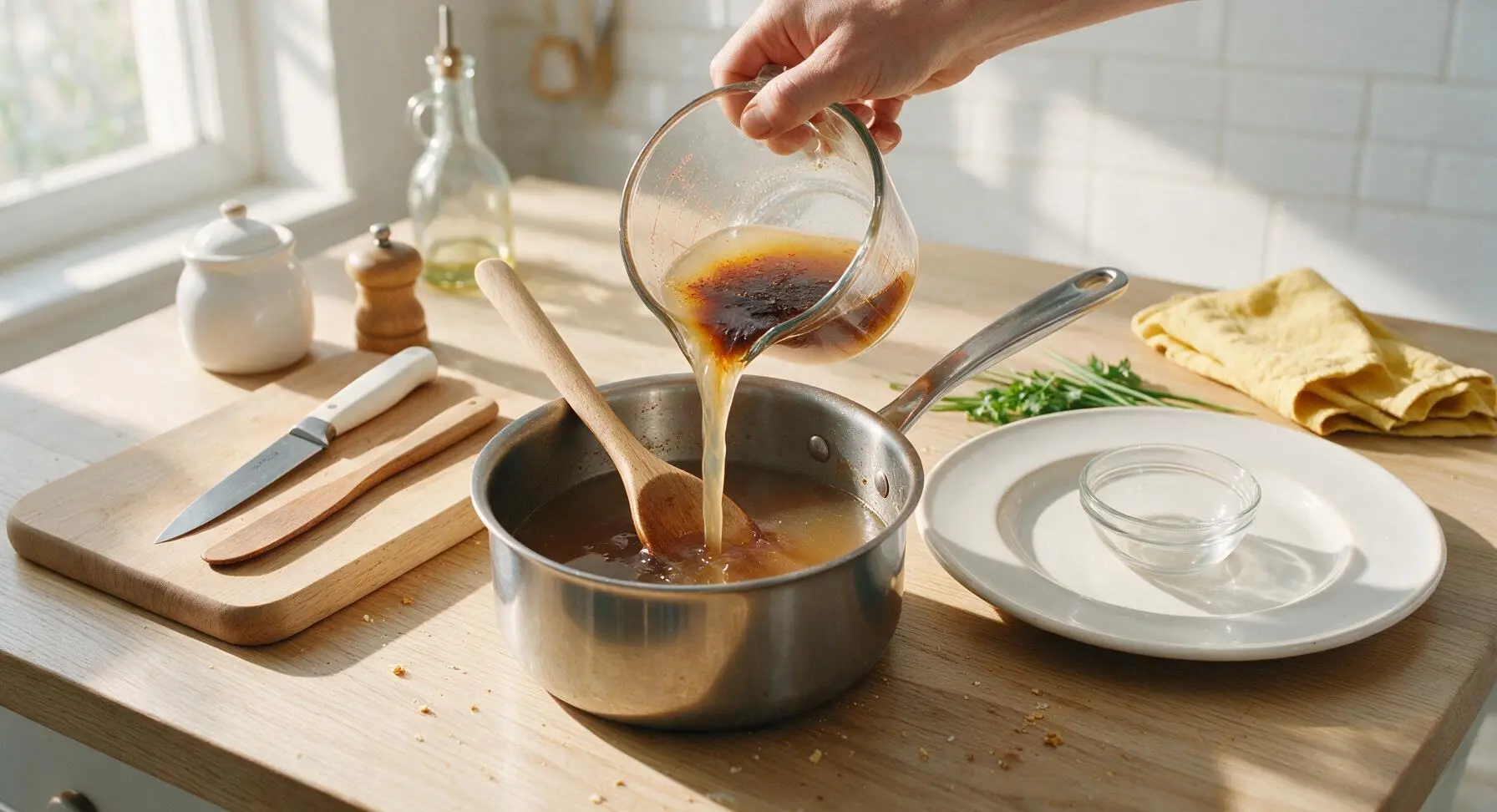
Pour the 2 cups low-sodium beef broth and remaining beef pan drippings into the saucepan, stirring once with the wooden spoon to combine. Bring the liquid to a gentle, slow simmer—do not let it come to a rolling, violent boil. Reduce heat to medium-low to maintain the gentle simmer.
Step 4
step4:Add Broth and Drippings
5

Simmer for Depth

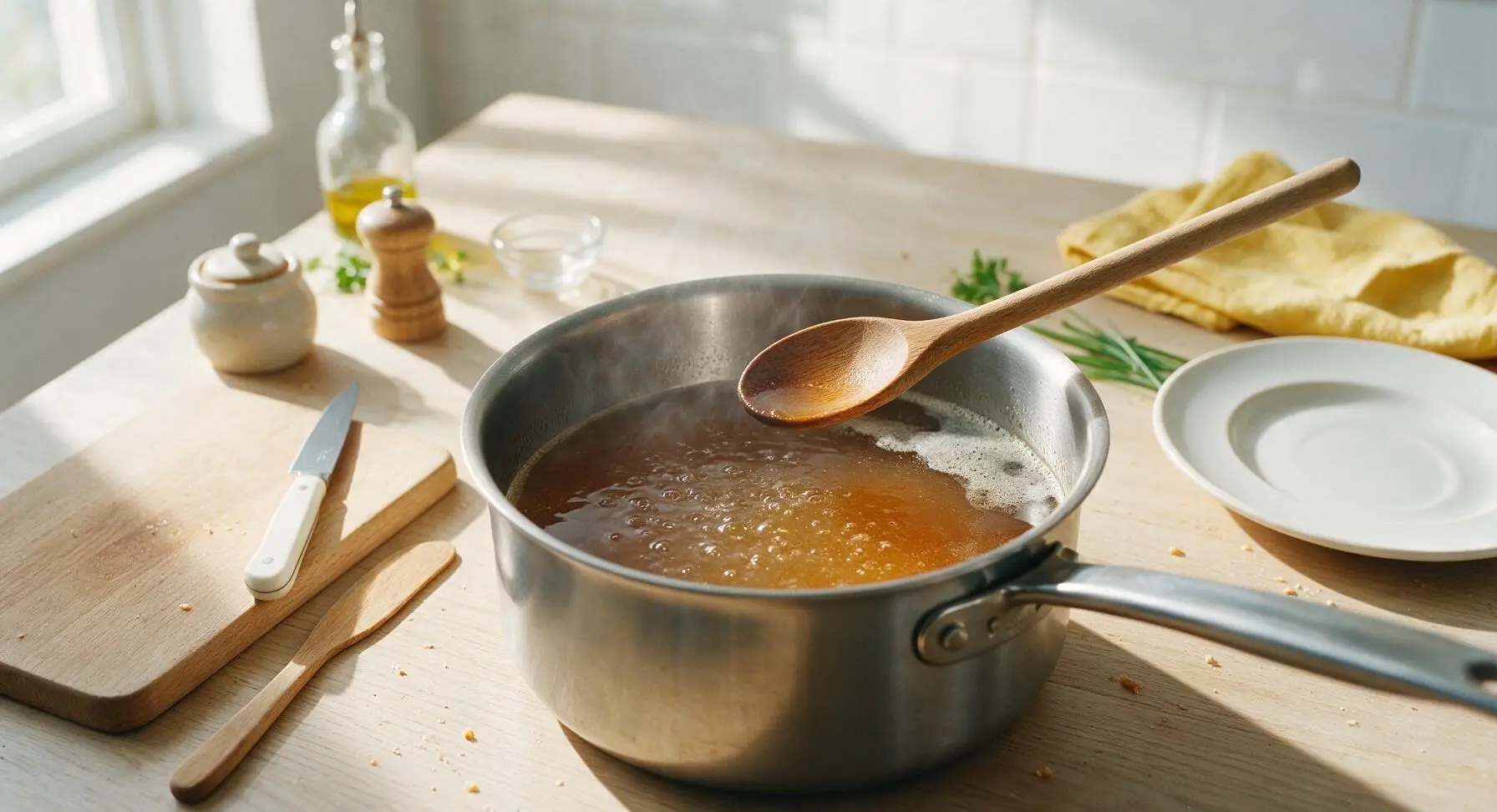
Let the jus simmer gently, uncovered, for 10 minutes. Small, slow bubbles will break across the liquid surface as it cooks; the liquid will reduce by roughly one quarter, deepening to a clear, rich amber color. Use the wooden spoon to skim any thin patches of pale grey foam that rise to the surface for a cleaner, smoother flavor.
Step 5
step5:Simmer for Depth
6

Strain Out Solids

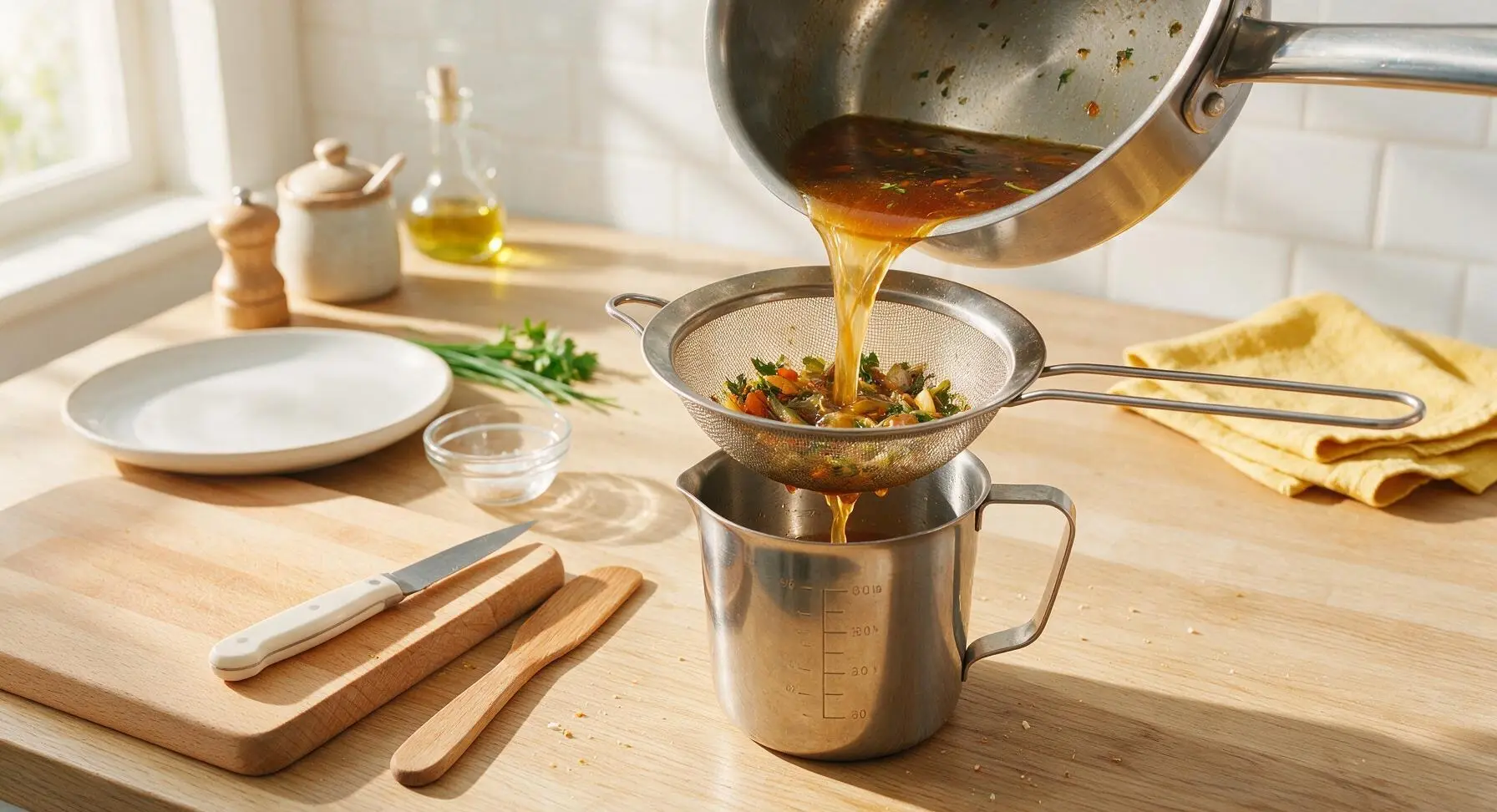
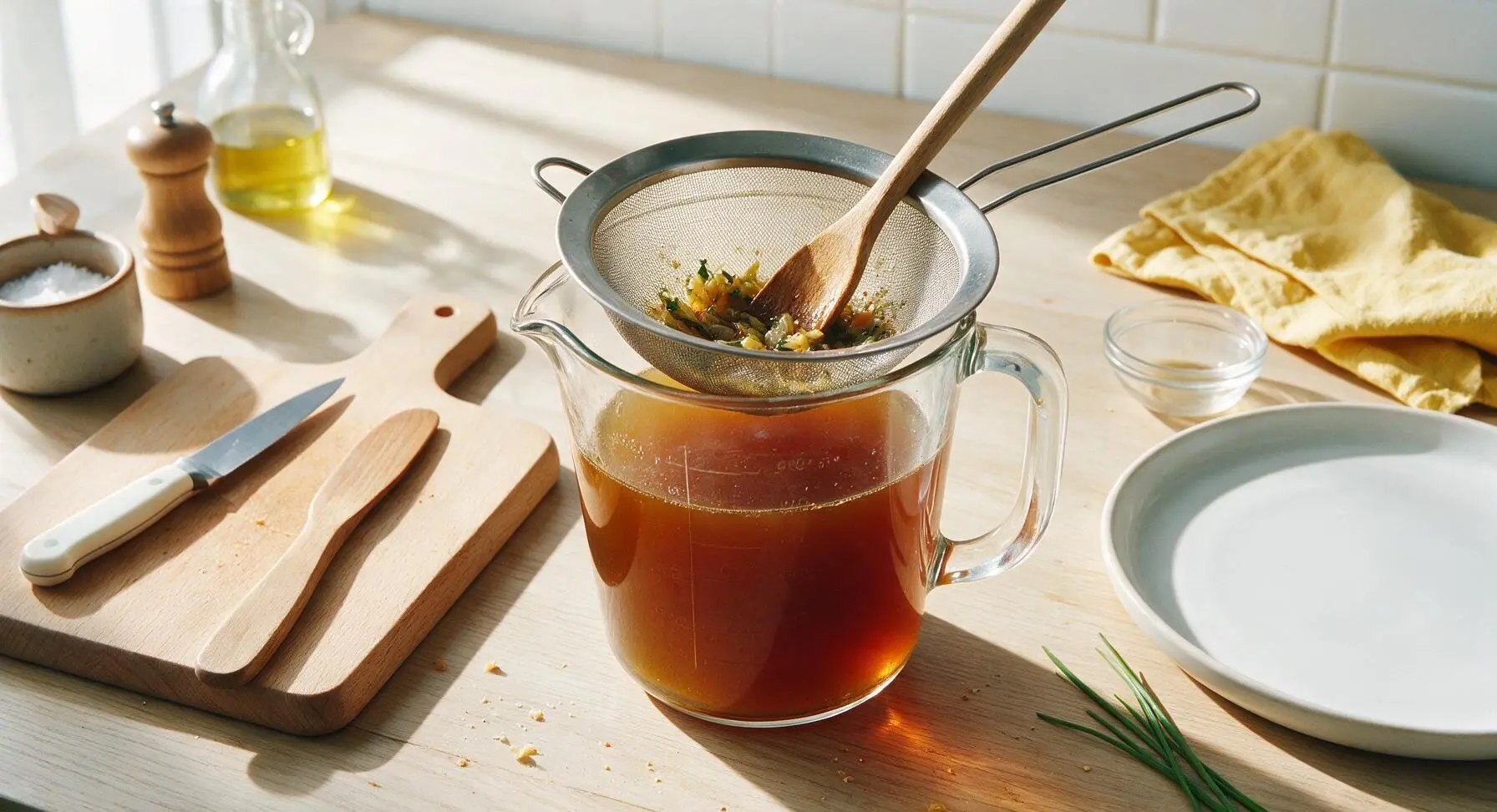
Set the fine-mesh stainless steel sieve across the top of the glass measuring cup. Carefully pour the hot jus through the sieve, pressing gently on the trapped vegetable and herb solids with the back of the wooden spoon to extract every bit of flavorful liquid. Discard the spent, flavorless solids left in the sieve.
Step 6
step6:Strain Out Solids
Step 6
step6:Strain Out Solids
7

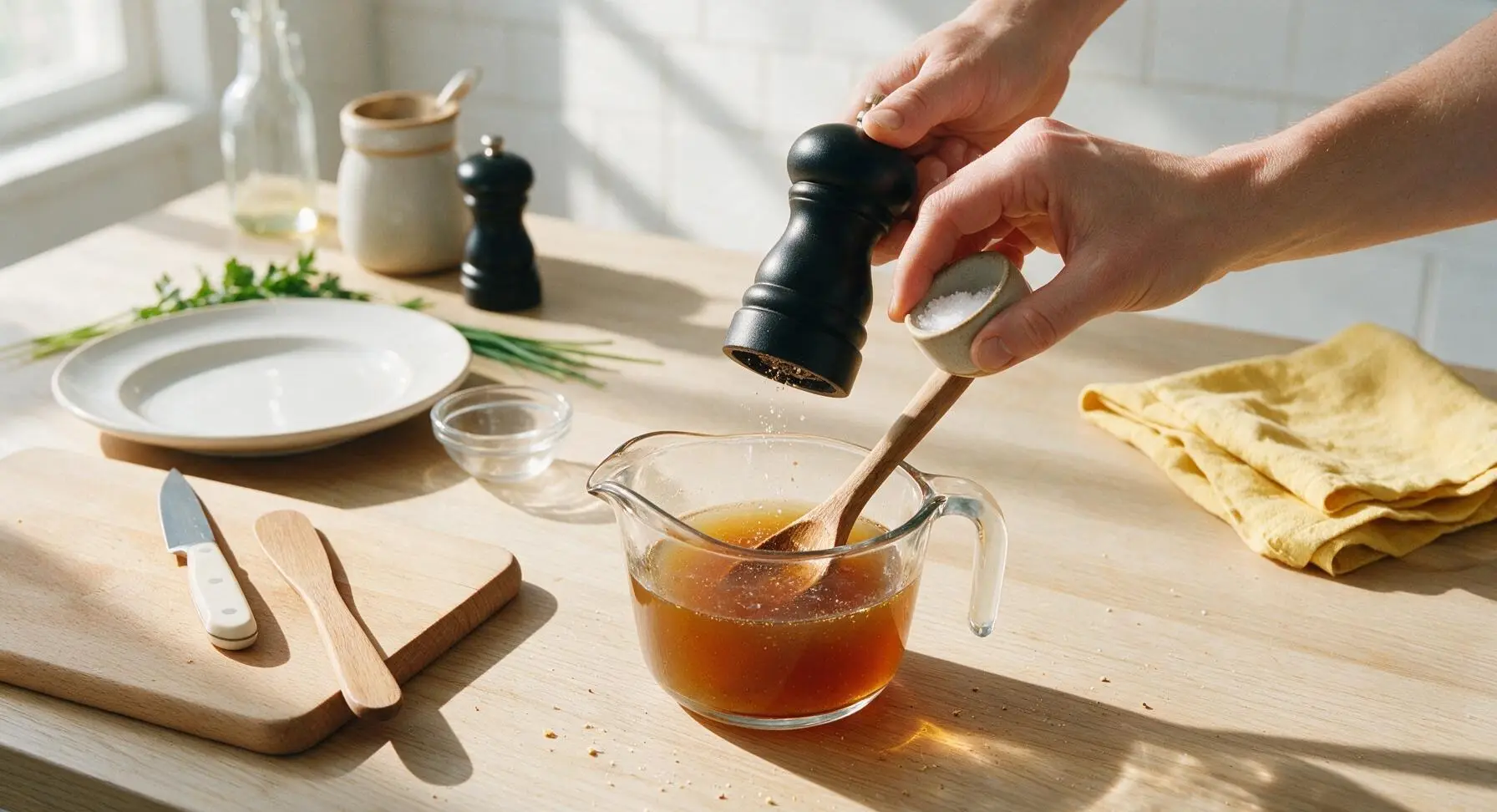
Season to Perfection

Taste the warm strained jus, then stir in 1/4 teaspoon kosher salt (adjusting up or down to match the saltiness of your broth and drippings) and a single light crack of fresh black pepper from the pepper mill. The finished jus should taste deeply beefy, with a faint background note of herbs and wine, bright and savory without being overly salty.
Step 7
step7:Season to Perfection

Tips

1.Skip thickeners like flour or cornstarch for authentic au jus: true au jus is a light, clear meat juice, not a thick gravy. Thickeners will mask the clean, deep roasted beef flavor and make it too heavy for dipping or drizzling over roast beef.
2.Scrape every bit of fond (the dark brown caramelized bits stuck to the pan bottom) when deglazing: these concentrated roasted bits from beef and vegetables hold most of the rich, complex flavor that sets homemade au jus apart from plain diluted beef broth.
3.Keep the cooking temperature at a gentle simmer, never a rolling boil: violent boiling will emulsify excess fat into the jus, making it cloudy, greasy, and murky instead of bright, clear, and clean-tasting.

✨ You May Also Like

Side Dishes
🍜 India

Velvety, aromatic all-purpose curry sauce perfect for tossing with roasted veggies, grilled protein, or rice for fast, cozy, flavorful meals.

⏱️ 25 minuteSide Dishes ★ 4.8
Side Dishes
🍜 Spain

Tender, starchy boiled yuca tossed in bright, garlicky citrus mojo sauce—an iconic, zesty side that pairs beautifully with roasted pork, grilled meats, and rice and beans.

⏱️ 40 minuteSide Dishes ★ 5
Side Dishes
🍜 United States

Tender, paper-thin potato flatbread, a beloved Norwegian-American Minnesota Christmas staple, griddled until softly spotted and served warm with butter.

⏱️ 1 hour 30Side Dishes ★ 4.6
Side Dishes
🍜 United States

Rich, deeply savory cured salt pork, a long-lasting kitchen staple perfect for frying crispy as a side or adding umami to stews, beans, and chowders.

⏱️ 7 days (2Side Dishes ★ 4.9
Side Dishes
🍜 United States

Crispy, tangy classic Southern fried green tomatoes with a crunchy cornmeal crust, served hot for a nostalgic, comforting summery bite.

⏱️ 25 minuteSide Dishes ★ 4.9
Side Dishes
🍜 United States

Moist, golden-crusted savory muffins with sweet corn, zesty jalapeño, and melted cheddar, perfect for pairing with smoky summer grilled fare.

⏱️ 30 minuteSide Dishes ★ 4.9

au jus sauce:Frequently Asked Questions

1.How is classic au jus different from regular beef gravy? ▾
Great question! Unlike thick, roux-thickened beef gravy, au jus is a light, unthickened, deeply savory pan sauce. It gets its concentrated flavor from reserved beef pan drippings and slow-simmered aromatics, with a thin, sippable consistency made for drizzling over roast beef or dipping, rather than heavily coating food.
2.Do I have to use beef pan drippings to make au jus, or can I make it without? ▾
Drippings give au jus that signature roasted, meaty depth you can’t get from broth alone, but if you don’t have them, swap in 2 tablespoons of browned beef tallow or unsalted butter plus a teaspoon of tomato paste cooked until deep amber to mimic that rich roasted flavor before adding broth and aromatics.
3.Why do you recommend low-sodium beef broth instead of regular? ▾
Pan drippings from roasted beef are naturally salty, especially if you seasoned your roast heavily before cooking. Using low-sodium broth lets you control the final salt level, so you don’t end up with an overly salty au jus that overpowers prime rib, roast beef, or French dip sandwiches instead of complementing them.
4.How finely do I need to dice the onion, carrot, and celery for this recipe? ▾
You’ll want to dice that classic mirepoix mix to a small ¼-inch dice, no larger. Smaller dice means more surface area exposed as the au jus simmers, so veggies release their sweet, aromatic flavor faster, and you won’t end up with large, tough chunks if you choose not to fully strain the finished sauce.
5.How much excess fat should I skim off the reserved pan drippings? ▾
Aim to skim off all but about 1 tablespoon of the solid, rendered beef fat from your drippings. That small amount of fat carries huge, rich beefy flavor and helps soften your diced aromatics as you sauté them, but leaving too much will make your final au jus greasy and heavy instead of light and balanced.
6.Do I have to strain the au jus after it finishes simmering? ▾
Straining is totally a matter of preference! For a perfectly smooth, restaurant-style au jus, pour the finished sauce through a fine-mesh sieve to press out and discard all the cooked veggie solids. If you prefer a heartier, more rustic texture, you can leave the soft, tender diced veggies in for extra body and flavor.
7.How long should I simmer the au jus to get the best, most balanced flavor? ▾
Simmer your au jus over low heat for 20 to 25 minutes after adding the broth. That’s enough time for the mirepoix to fully infuse the liquid with sweet, earthy depth, and for drippings flavors to meld evenly with the broth—no hours-long simmer needed, which will over-concentrate salt.
8.Can I make this au jus ahead of time for a dinner party or holiday meal? ▾
Absolutely! Make the au jus up to 3 days ahead of your event, let it cool completely, and store it in a sealed airtight container in the fridge. When you’re ready to serve, gently reheat it over low stovetop heat, give it a quick stir, and taste to adjust salt or pepper if needed.
9.Can I freeze leftover au jus for later use? ▾
You sure can! Let the finished au jus cool fully, then pour it into freezer-safe containers or ice cube trays for easy portioning, and freeze for up to 3 months. Thaw it in the fridge overnight, then reheat gently on the stovetop—since it’s unthickened, it will taste just as fresh as the day you made it.
10.My au jus turned out way too salty—how can I fix it without starting over? ▾
If your au jus is over-salted, don’t panic! Stir in an extra ½ cup of unsalted beef broth or water, then simmer for 5 minutes to meld flavors. If it’s still too salty, toss in a peeled, quartered raw potato and simmer 10 more minutes to absorb excess salt, then remove the potato before serving.
11.My au jus tastes really bland and flat—what went wrong? ▾
Bland au jus usually means you either skipped sautéing the mirepoix first, didn’t scrape up all the browned fond bits from the bottom of your roasting pan, or didn’t let it simmer long enough for flavors to meld. Next time, cook veggies until golden, deglaze fully, and taste to adjust seasoning at the end.
12.Can I add red wine to this classic au jus recipe for extra depth? ▾
Absolutely! For an extra layer of deep, fruity complexity, add ¼ cup of dry red wine (like Cabernet Sauvignon or Pinot Noir) right after you sauté your mirepoix, and let it reduce by half before adding your beef broth. Skip sweet, fruity wines that will throw off the sauce’s savory balance.
13.Why is my au jus greasy even after I skimmed the pan drippings? ▾
Greasy au jus usually happens when you leave too much rendered fat in the drippings, or simmer the sauce at a rolling boil instead of a low gentle simmer, which emulsifies fat into the liquid instead of letting it rise. Fix it by letting the sauce sit 5 minutes, then skimming any fat that pools on top.
14.What dishes pair best with this classic homemade au jus? ▾
This light, savory au jus is made for serving alongside slow-roasted prime rib, thin-sliced roast beef, and crispy French dip sandwiches, of course! It also works beautifully as a light dipping sauce for crispy roast potatoes, Yorkshire pudding, or even leftover meatloaf when you want a boost of rich beef flavor.
15.What if I don’t have all three mirepoix veggies (onion, carrot, celery) on hand? ▾
No stress! The mirepoix adds subtle aromatic depth, but it’s not non-negotiable. If you’re missing one, swap in an extra ½ cup of the veggies you do have, or add a pinch of dried thyme, a smashed garlic clove, and a few whole black peppercorns to add warm, savory depth without a grocery run.
16.Should I thicken my au jus with cornstarch or flour to make it heartier? ▾
Classic au jus is intentionally unthickened, so adding cornstarch or flour will turn it into gravy, not traditional au jus. If you prefer a slightly heartier consistency without losing that light, clean flavor, simmer it 5 to 10 minutes longer to reduce and concentrate it naturally instead of adding a thickener.
17.Do I need to add lots of extra herbs or seasonings to make this au jus taste good? ▾
You don’t need a long list of extra seasonings for great au jus! Start with a pinch of freshly ground black pepper and a tiny sprig of fresh thyme if you have it, but hold off on extra salt until the very end of simmering. Remember, pan drippings already carry lots of roasted, seasoned flavor, so always taste first before adding more.

Comments (8)

2 days ago

OMG this au jus is a total game changer! I made it for our weekly prime rib Sunday dinner last night and my entire family went crazy for it. It was so easy to throw together while the roast rested, no weird fancy ingredients needed. Even my super picky 7 year old was dipping every bite of his sandwich in it. 10/10 will be making this every single time we do roast beef from now on!

yesterday

Wait did you use the drippings from your prime rib like the recipe says? I’m making prime rib for my birthday dinner next week and wanna make sure I don’t mess this up!

yesterday

So glad your family loved it, Mia! And great question Stan — yes, using the pan drippings from your roast gives that deep, rich flavor, but if you end up with very little drippings you can always add a little extra beef broth to make up the volume no problem!

3 days ago

SO good. I used this for my French dip sandwiches for our guys’ night watch party and everyone was asking for the recipe. Took literally 20 minutes exactly like the recipe says, zero stress. I did add a tiny extra pinch of garlic powder because I’m a garlic fiend and it was perfect.

2 days ago

Love that extra garlic tweak, Jake! So happy it was a hit at your watch party — that’s exactly the kind of easy, crowd-pleasing recipe we love to share.

1 week ago

Great recipe! I made a big batch of this on Sunday to use for roast beef wraps and quick French dip lunches all week. It stores really well in a mason jar in the fridge for up to 5 days, just give it a good shake before reheating. Way better than the canned au jus I used to buy, no weird additives at all.

5 days ago

Brought this to our neighborhood block party last weekend to go with the slow cooked roast beef sliders I made, and people were literally pouring this into little cups to sip on its own it was that good! Super easy to make even when you’re juggling 3 other potluck dishes, will absolutely be making this again.

3 days ago

Wait how did you keep it warm at the potluck? I’m making this for our church potluck next month and don’t want it to get all gelatinous before serving!

2 days ago

Great question Bob! If you keep it in a small slow cooker on the warm setting it’ll stay perfectly smooth and liquid the whole time. If it does thicken up a little when cool, a quick 30 second zap in the microwave or stir over low heat brings it right back!

30 minutes ago

First time ever making au jus and I was so nervous I’d mess it up, but this was so straightforward! I made it to go with the cheap deli roast beef I picked up for French dips in my dorm and it made the whole meal taste like it came from a fancy restaurant. No fancy culinary degree required lol

5 minutes ago

Wait did you just use beef broth since you didn’t have roast drippings? I don’t have a way to cook a whole roast in my dorm so I’m curious if it still works!

yesterday

This came together so fast on a weeknight! I had leftover tri tip from the night before, threw this together while the toasted hoagie rolls were in the oven, and dinner was on the table in 20 minutes flat. My husband said it’s better than the au jus at our favorite steakhouse. High praise!

2 hours ago

Perfect for anyone doing low carb! No weird thickeners or added sugars, just pure savory beefy flavor. I used low sodium beef broth so I could control the salt level and it turned out amazing. Had it over sliced roast beef and roasted veggies for dinner last night, didn’t even miss the carbs.

30 minutes ago

Great call using low-sodium broth to adjust the salt to your taste, Larry! So glad this fits perfectly into your low-carb meal routine.

5 minutes ago

Help! I tried making this last night and it came out way too greasy? Did I do something wrong? It tasted good but there was a thick layer of oil on top that I couldn’t get rid of. I used the drippings from my pot roast like the recipe said.

just now

Oh I had that happen the first time too! Just let it sit for a minute after you take it off the heat, then skim the top layer of fat off with a spoon before you serve it. Game changer, no more grease!

just now

Sorry to hear it was too greasy for you Zoe! Hank’s tip is perfect — pan drippings have a lot of rendered fat, so a quick skim of that top fatty layer before serving will give you that smooth, rich (not greasy) au jus you’re looking for. You can also use a fat separator if you have one to make it even easier!