1.Do I need to soak my dried great northern beans before making this soup?
▾
Soaking is totally optional, but it cuts simmer time by 30 to 40 minutes and helps reduce the gassy compounds some people experience with dried beans. An overnight cold soak works best, but if you’re short on time, use the quick soak method: boil beans for 1 minute, cover, let rest 1 hour, then drain before adding to the pot.
2.Can I use a different type of white bean if I don’t have great northern beans?
▾
Absolutely, this is a flexible, no-waste Appalachian staple! Navy beans, cannellini beans, or even dried baby lima beans work beautifully as swaps. Just note that cannellini are slightly larger and creamier, navy beans smaller and firmer, so adjust your final simmer time by 10 to 15 minutes as needed to get perfectly tender beans.
3.What if I don’t have a leftover smoked ham bone with residual meat attached?
▾
You can pick up one or two smoked ham hocks from most grocery store meat counters as a perfect, flavor-packed swap. If you only have boneless smoked ham, add 1.5 to 2 cups of cubed smoked ham plus 1 teaspoon of smoked paprika to mimic that deep, slow-simmered bone-in savor that makes this soup iconic.
4.How long do I need to simmer the ham bone to get the best possible flavor?
▾
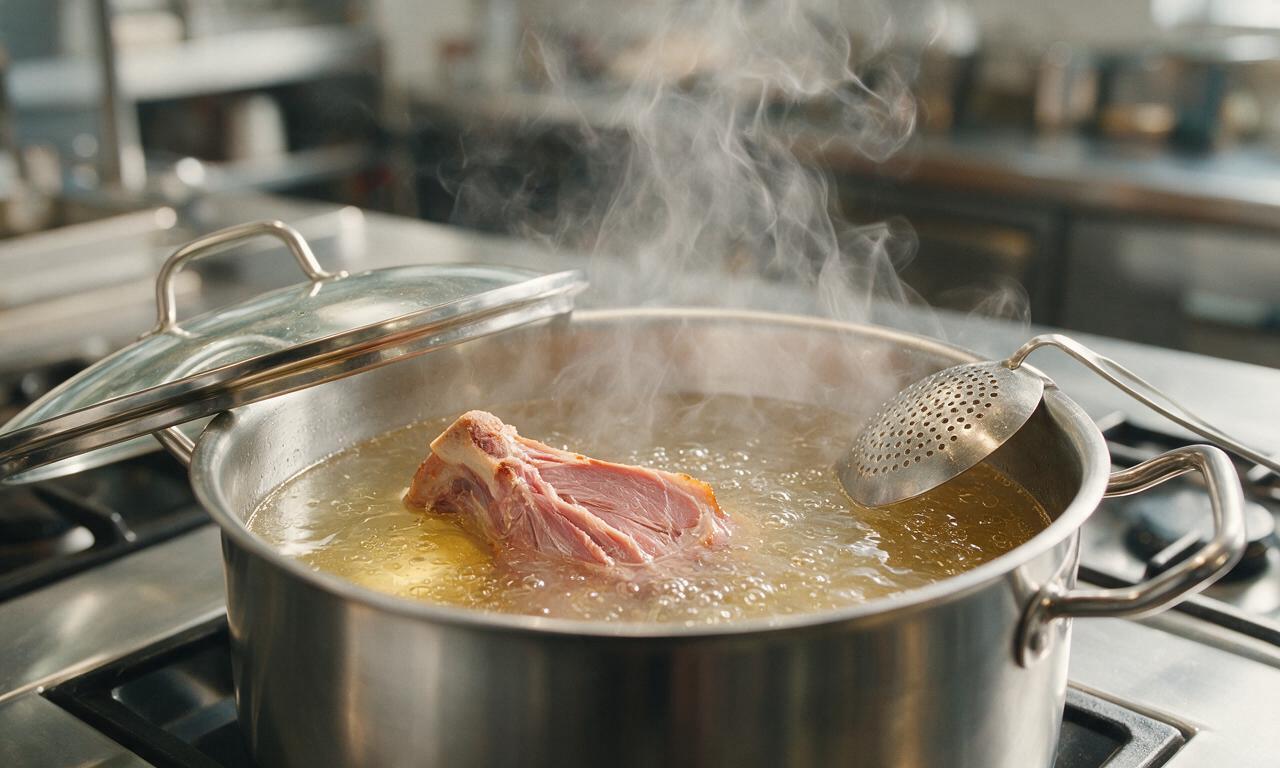
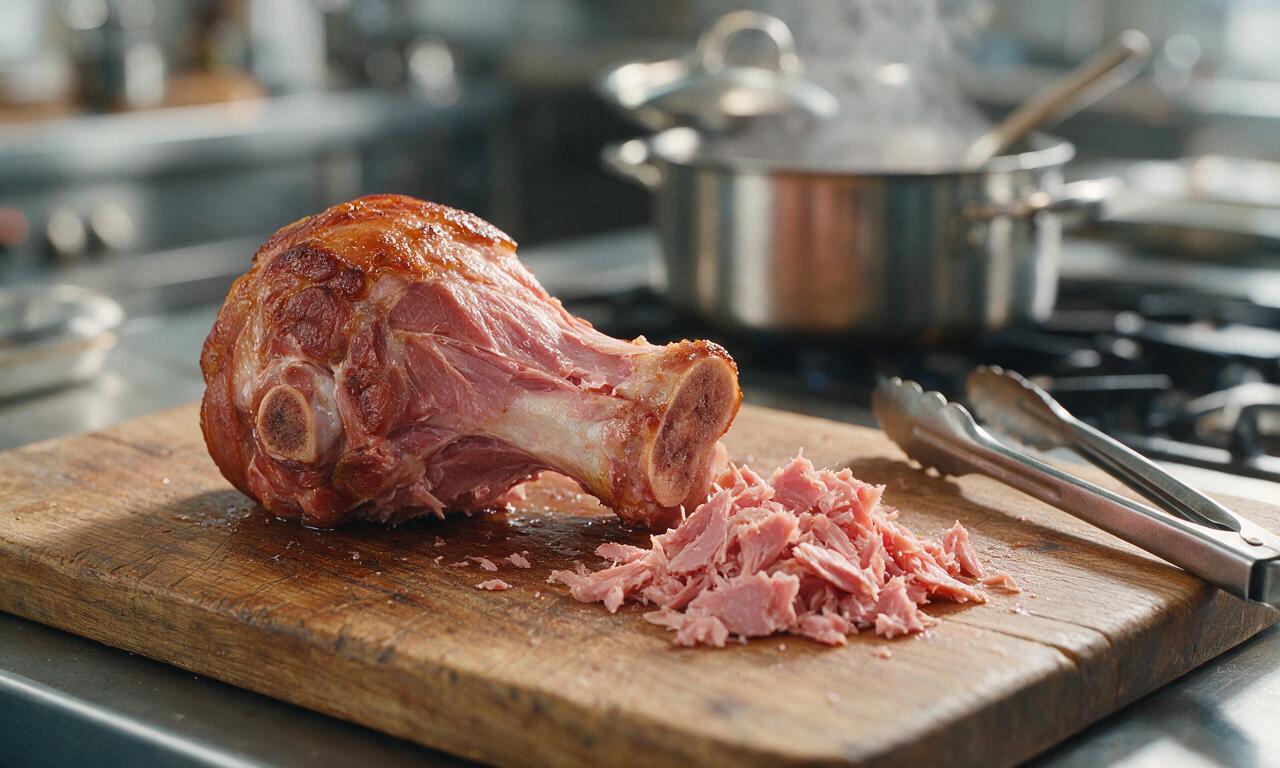
Plan to simmer the ham bone in your soup base for 1.5 to 2.5 hours on low, gentle heat. Don’t let it hit a rolling boil—steady, low simmer pulls smoky, savory collagen and residual meat flavor from the bone without making broth cloudy. Pull the bone out once done to pick off all tender attached meat.
5.Can I make this soup in a slow cooker instead of on the stovetop?
▾
Absolutely, and it’s a great low-effort, set-it-and-forget-it method! Toss all your ingredients (hold off on adding extra salt until the end) into a 6-quart slow cooker, cover, and cook on LOW for 7 to 8 hours, or HIGH for 3.5 to 4 hours. Pull the ham bone out, shred the attached meat, stir it back in, and adjust seasonings before serving.
6.Why are my beans staying tough even after simmering for a long time?
▾
This almost always happens for one of two common reasons: your dried beans are over a year old and too dried out to fully tenderize, even with long cooking, or you added salt, acidic ingredients like tomatoes, or vinegar too early, which toughens bean skins. Hold these add-ins until beans are fully fork-tender for the best texture.
7.What other traditional Appalachian add-ins can I toss in for extra heartiness?
▾
Many mountain family recipes add diced russet potatoes, cubed turnips, or a handful of chopped kale or collard greens in the last 30 minutes of cooking for extra substance. Some old-school versions also toss in dried corn or diced hominy to stretch the soup further, fitting its budget-friendly, no-waste Appalachian roots.
8.How do I keep the soup from being too salty when using a smoked ham bone?
▾
Smoked ham bones can vary wildly in salt content, so hold off on adding any extra salt or bouillon until the very end of cooking, after you’ve shredded the ham meat back into the pot. If it’s still too salty, toss in a peeled, quartered russet potato and simmer 15 minutes to absorb excess salt before removing the potato.
9.Can I freeze leftover ham bone soup for later?
▾
Absolutely, this soup freezes beautifully for up to 3 months in airtight, freezer-safe containers. Let it cool completely in the fridge first before portioning, and leave 1 inch of headspace in each container to allow for expansion as it freezes. Thaw overnight in the fridge, and reheat gently on the stovetop until heated through.
10.Do I need to skim all the fat off the top of the soup?
▾
That’s totally a matter of personal preference! A thin layer of rendered ham fat adds rich, smoky depth that many traditional Appalachian cooks leave in for flavor. If you prefer a lighter broth, let the soup chill in the fridge for 4 to 6 hours—fat will solidify on top, making it easy to skim off with a spoon before reheating.
11.What’s the best way to serve this soup for a traditional shared family meal?
▾
Stick to the classic pairings most Appalachian families serve alongside it: thick slices of crusty sourdough or cast-iron skillet cornbread, a small dish of tangy chow-chow or pickled okra on the side, and a bottle of hot sauce for folks who want a little kick. Serve it family-style for easy seconds.
12.Can I make this soup with a pre-cooked spiral ham bone left over from a holiday meal?
▾
That’s actually the most common way many families make this soup! Holiday spiral ham bones have tons of residual sweet-smoky meat attached that makes the soup extra flavorful. Just trim off any thick, sugary glaze bits from the outside of the bone first to keep the soup’s savor balanced instead of overly sweet.
13.Why do some versions of this soup include tomatoes while others don’t?
▾
Traditional high-elevation Appalachian ham bone soup is usually tomato-free, focused on clear, smoky ham and bean flavor, because tomatoes were harder to grow and store in colder mountain communities historically. Families in lower, warmer holler areas where tomatoes thrived often added diced tomatoes, so that variation is totally authentic.
14.How long will leftover soup stay fresh in the refrigerator?
▾
Stored in a sealed, airtight container, leftover soup will stay fresh in the fridge for 4 to 5 days. The flavor actually gets better the second and third day, as the beans and vegetables absorb more of the smoky ham broth as it rests. Reheat portions on the stovetop or in the microwave, stirring halfway through, until piping hot.
15.My soup is too thin—how do I thicken it to that classic hearty consistency?
▾
You don’t need fancy thickeners like flour or cornstarch! Just scoop out 1 cup of the cooked beans and vegetables, mash them smooth with a fork or blend them quickly with an immersion blender, then stir the mashed mixture back into the soup. Let it simmer 5 more minutes, and it will thicken up perfectly without muting smoky flavor.
16.Is it safe to leave the ham bone in the soup while it stores in the fridge?
▾
It’s totally safe for the first 24 hours, but I recommend pulling the bone out, picking off all the remaining tender meat, and discarding the bone before longer storage. Leaving the bone in for multiple days can give the broth a slightly bitter, off-flavor as excess marrow leaches out, plus it takes up valuable fridge space.
17.Can I adapt this soup for vegetarian or vegan family members who don’t eat pork?
▾
You can absolutely adapt it for vegetarian or vegan diners without losing that cozy, hearty vibe. Swap the ham bone for 2 teaspoons of smoked paprika, 1 tablespoon of tamari for deep umami, and a parmesan rind (or nutritional yeast for vegan servings) while simmering to replicate that slow-cooked, savory depth.
18.What cut of ham bone gives the most authentic, traditional Appalachian flavor?
▾
Look for a bone from a dry-cured, hickory-smoked country ham if you can find it—this is the cut Appalachian families have used for generations, with a deeper, saltier, more intense smoke flavor than wet-cured grocery store hams. If you can’t track one down, a regular smoked grocery store ham bone will still make a delicious, cozy pot.

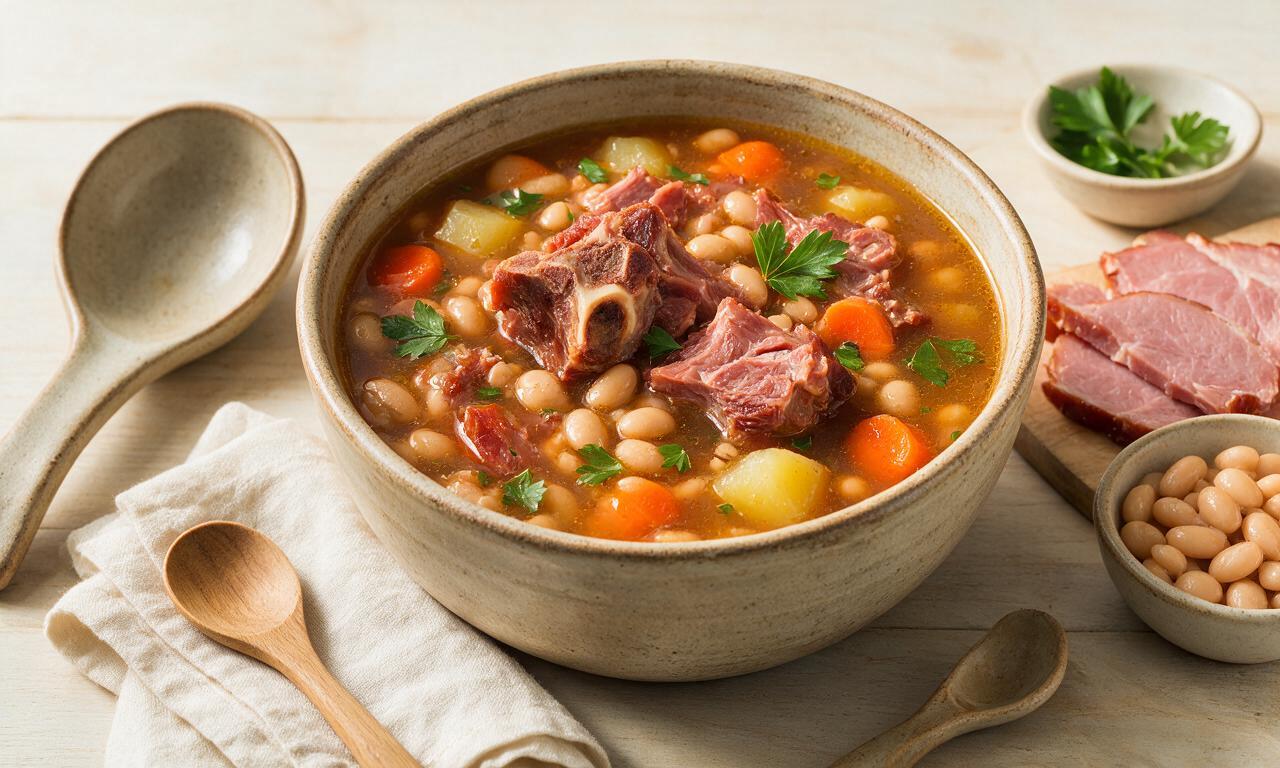
OMG this soup tastes exactly like what my grandma used to make when we’d visit her cabin in West Virginia every fall! I was so worried I’d never get that rich, smoky ham flavor right after she passed, but this recipe is spot on. My kids devoured two bowls each last night for family dinner, even my picky 7 year old who turns his nose up at most soups. SO good, I’m already making a second batch this weekend to freeze for meal prep.
Brought this to our church potluck last Sunday and it was the first empty crockpot on the table! Everyone was hounding me for the recipe, I must have passed out the link to at least 12 people. The cook time is so low effort even for how complex and deep the flavor tastes—total game changer for busy weeknights when I need something that feeds a crowd.
Super easy to throw together on a Sunday afternoon, I portioned it out into 6 containers for work lunches this week and it reheats like a dream. I used a leftover ham bone from our Easter dinner (yes I froze it, no shame) and it gave the broth the most perfect smoky depth. 10/10, will be making this every time we have a ham from now on.
Wait, I’m a total beginner cook and I was intimidated to make soup from scratch, but this was so straightforward! The only thing I messed up was adding too much salt at first because my ham bone was extra salty, but a little extra water and a splash of apple cider fixed it right up. My roommate said it’s better than the soup at our favorite little diner downtown.
Grew up eating this in the Appalachian hills of eastern Kentucky, and I’ve tried so many copycat recipes over the years that never get it right. This one? It’s got that perfect slow-simmered savoriness, no weird extra spices or fancy add-ins that don’t belong. I added a handful of chopped kale from my garden like my mom used to, and it was perfect for the cold rainy weather we’ve been having.
Made this last night when it was 20 degrees outside and snowing, and it warmed me right down to my toes. I added a can of white cannellini beans and some diced russet potatoes to make it a little heartier, and it was so filling I didn’t even need a side with it. 10/10, will be in my regular soup rotation all winter long.
Wait I burned the onions a little bit when I was sautéing them at the start, will that ruin the whole soup? I’m making this for my girlfriend’s family dinner tomorrow and I’m panicking a little because she said this is her dad’s favorite kind of soup.