
Barleywine Burnt Ends
intro
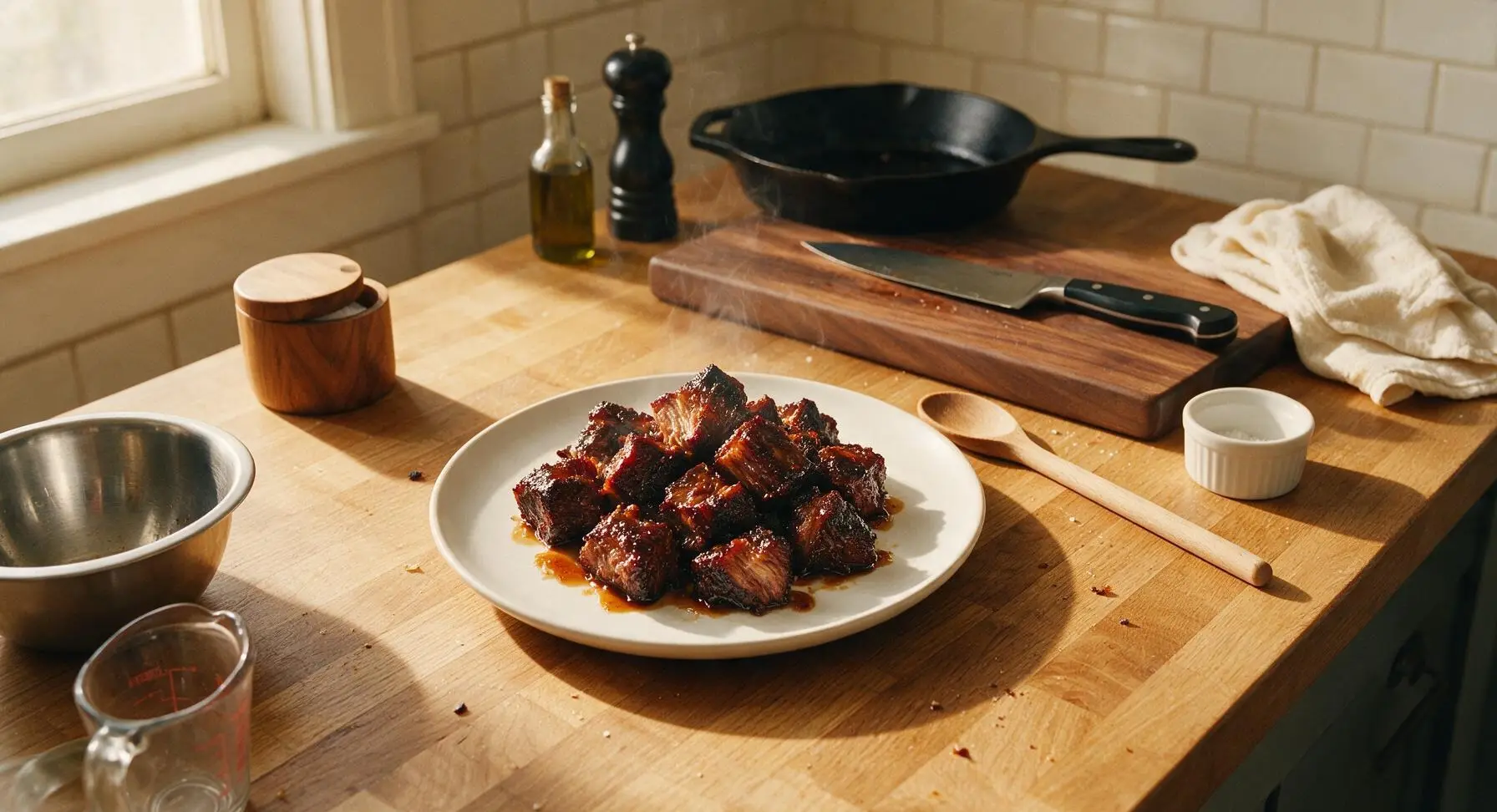
Sticky, caramelized brisket point chunks braised in malty barleywine glaze, with crisp smoky bark and melt-in-your-mouth tender centers—classic Kansas City BBQ elevated with craft beer depth.
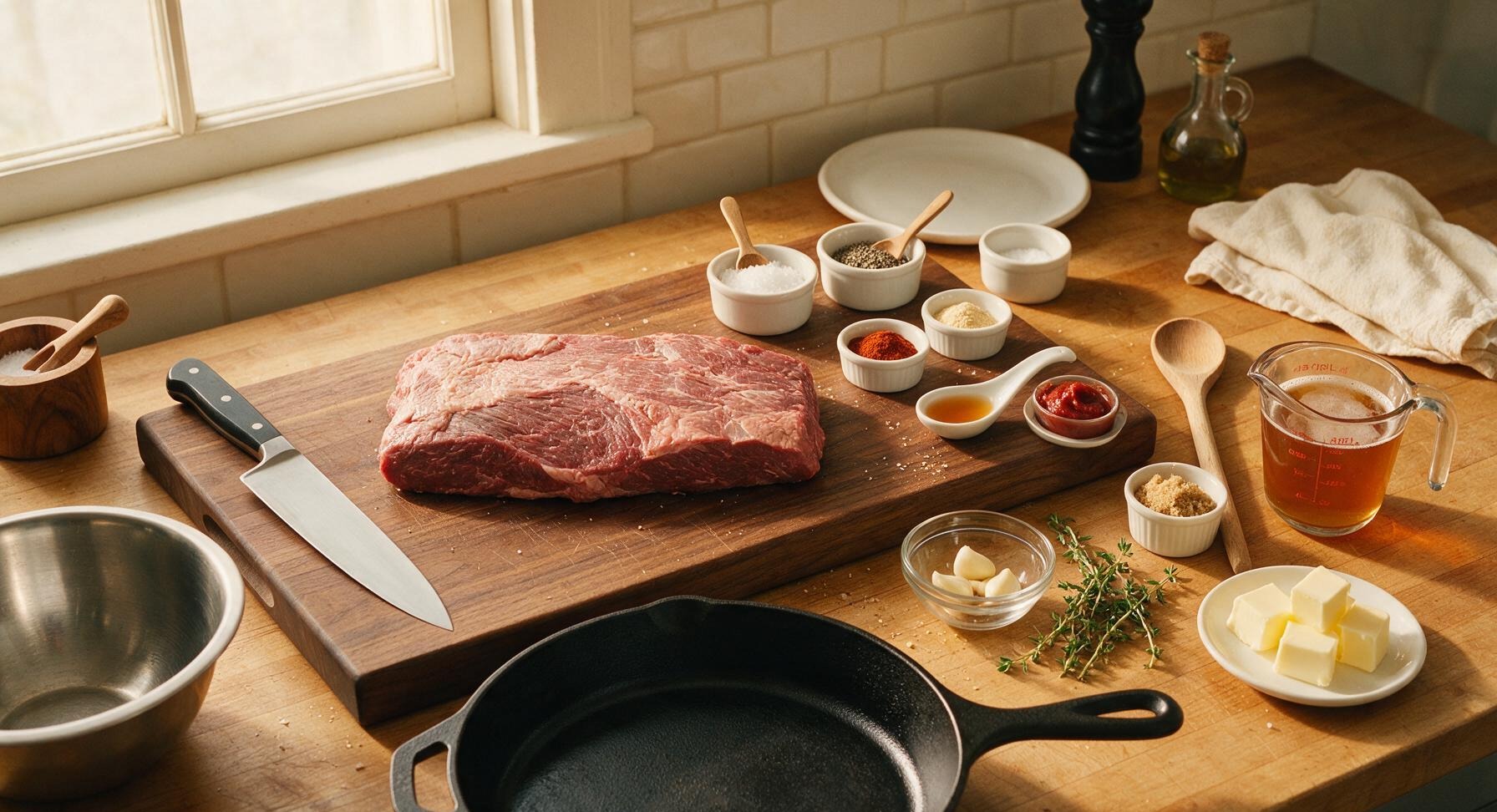
Ingredients
Steps
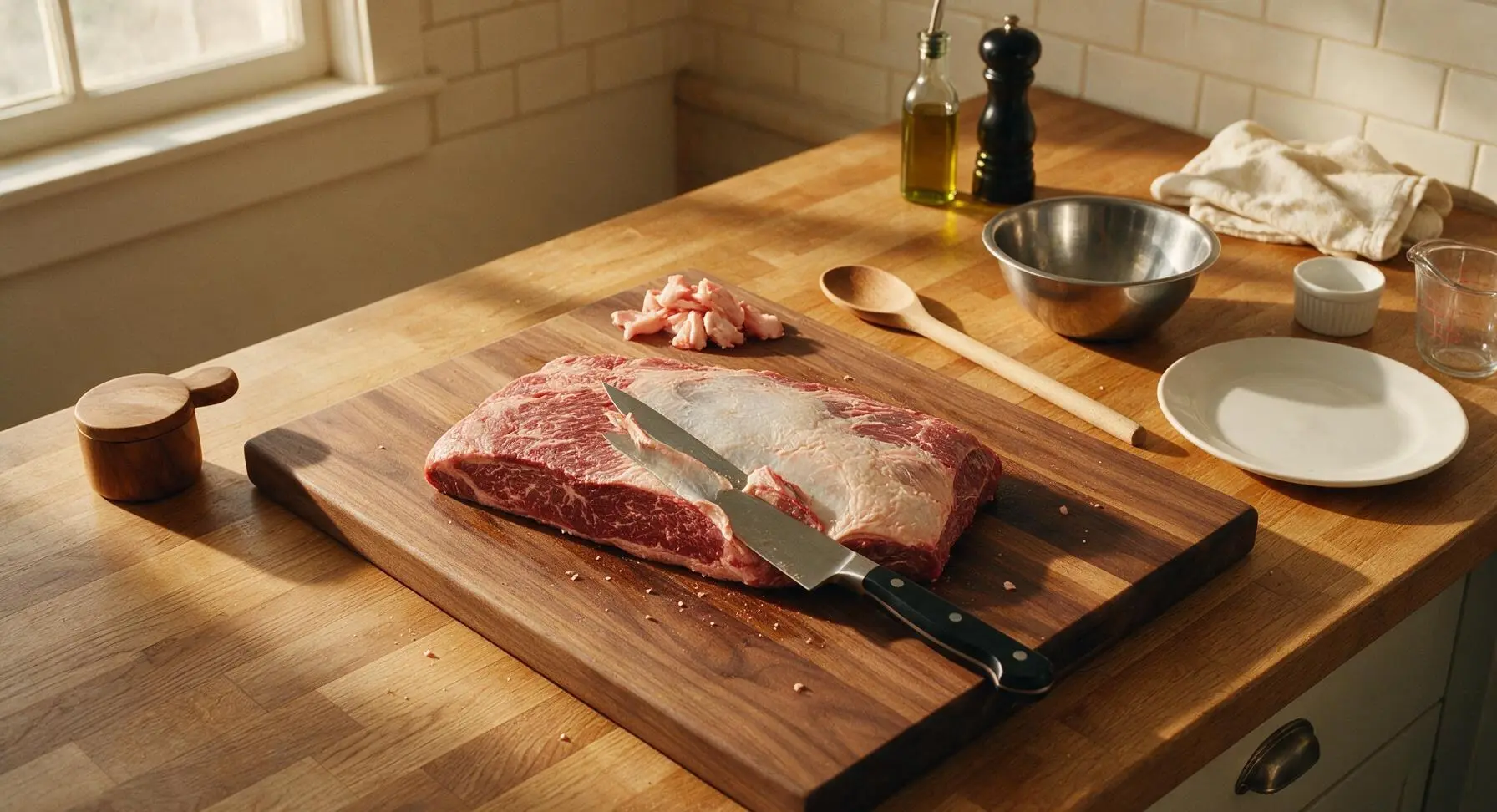
Trim Brisket Point
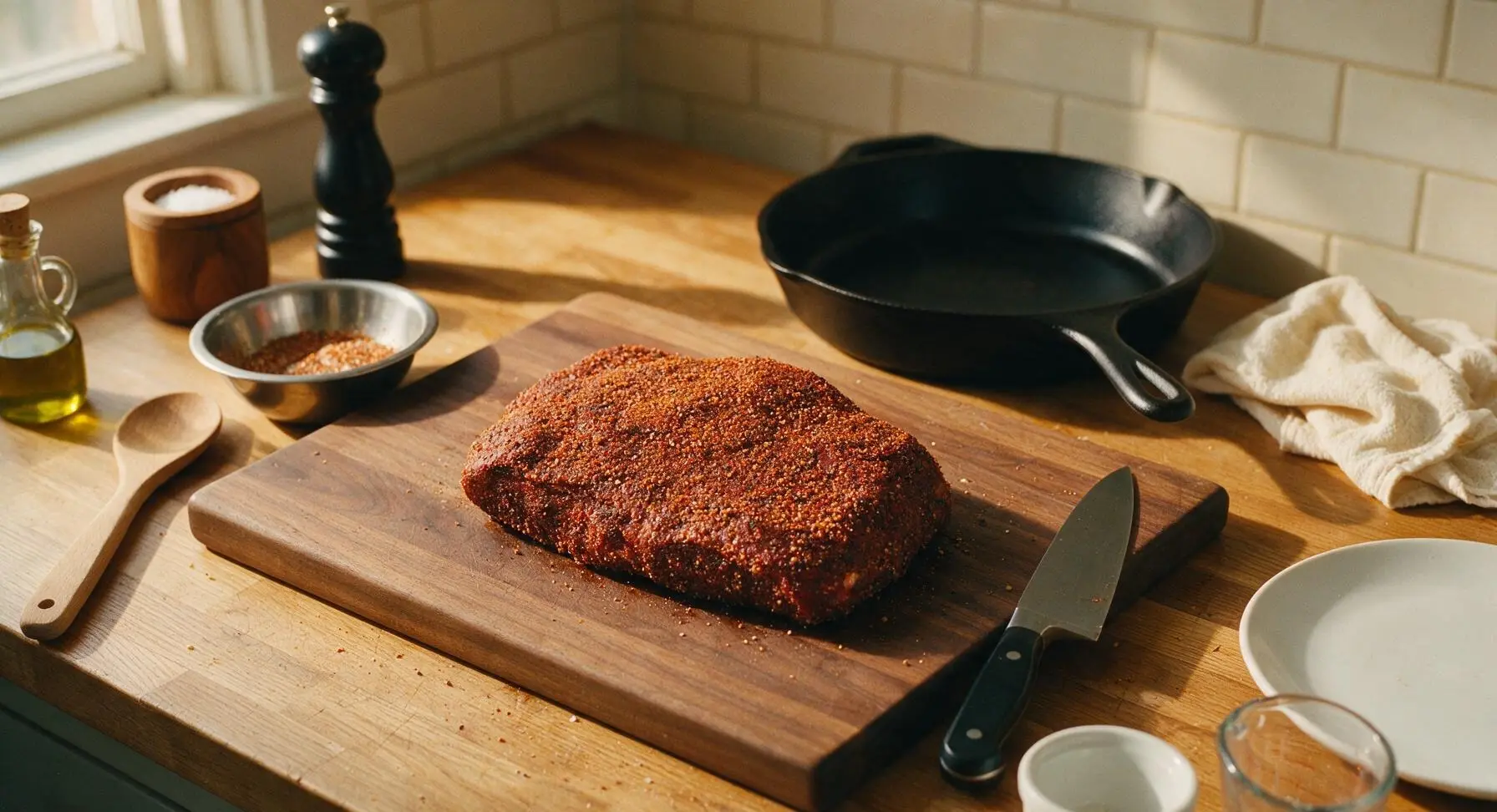
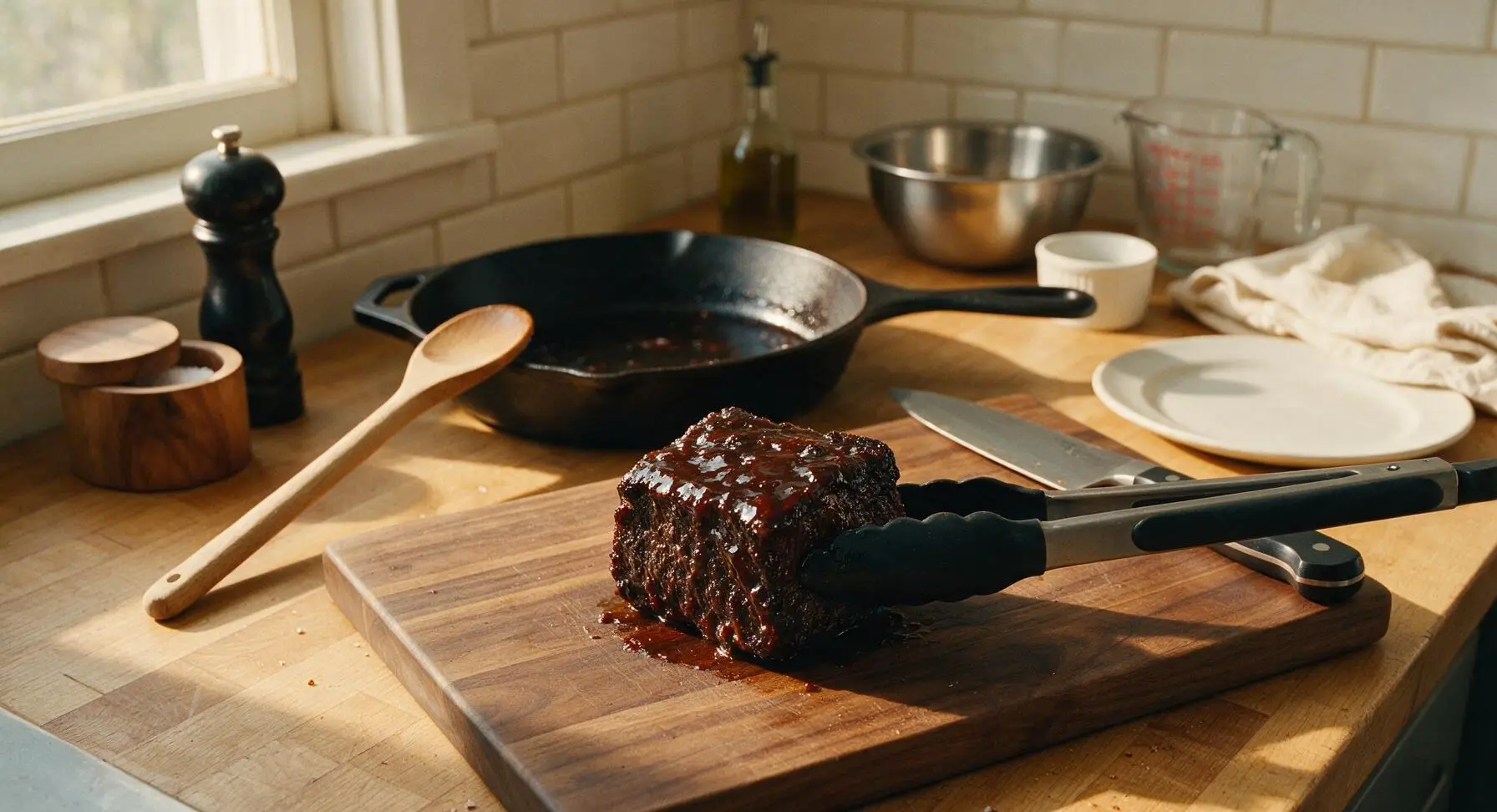
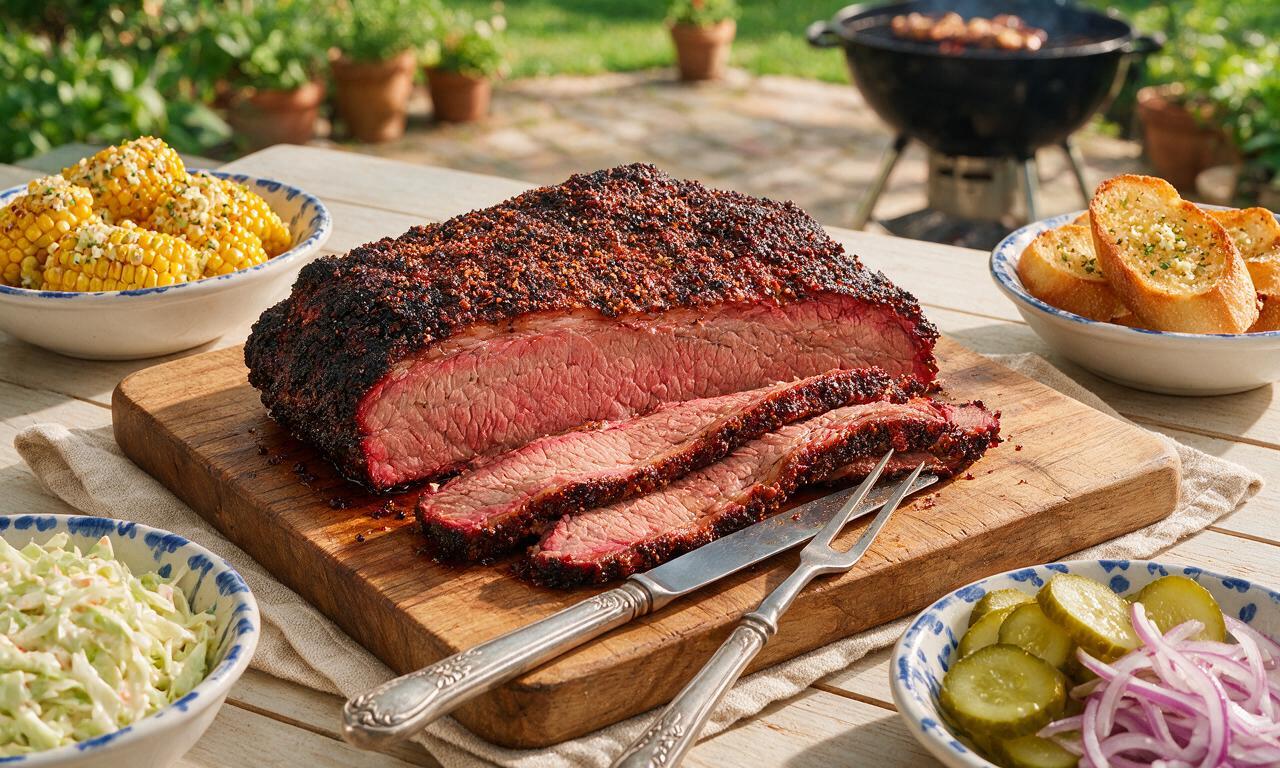
Place the 1.8kg beef brisket point on the large walnut cutting board. Use the 8-inch chef knife to trim excess hard fat and silver skin from all surfaces, leaving a uniform 1/4-inch thick fat cap on one side. Pat the entire surface completely dry with a corner of the cream linen towel, which will help the dry rub adhere and form a crisp, set bark during smoking. Discard any loose fat flaps that would burn during long cooking.
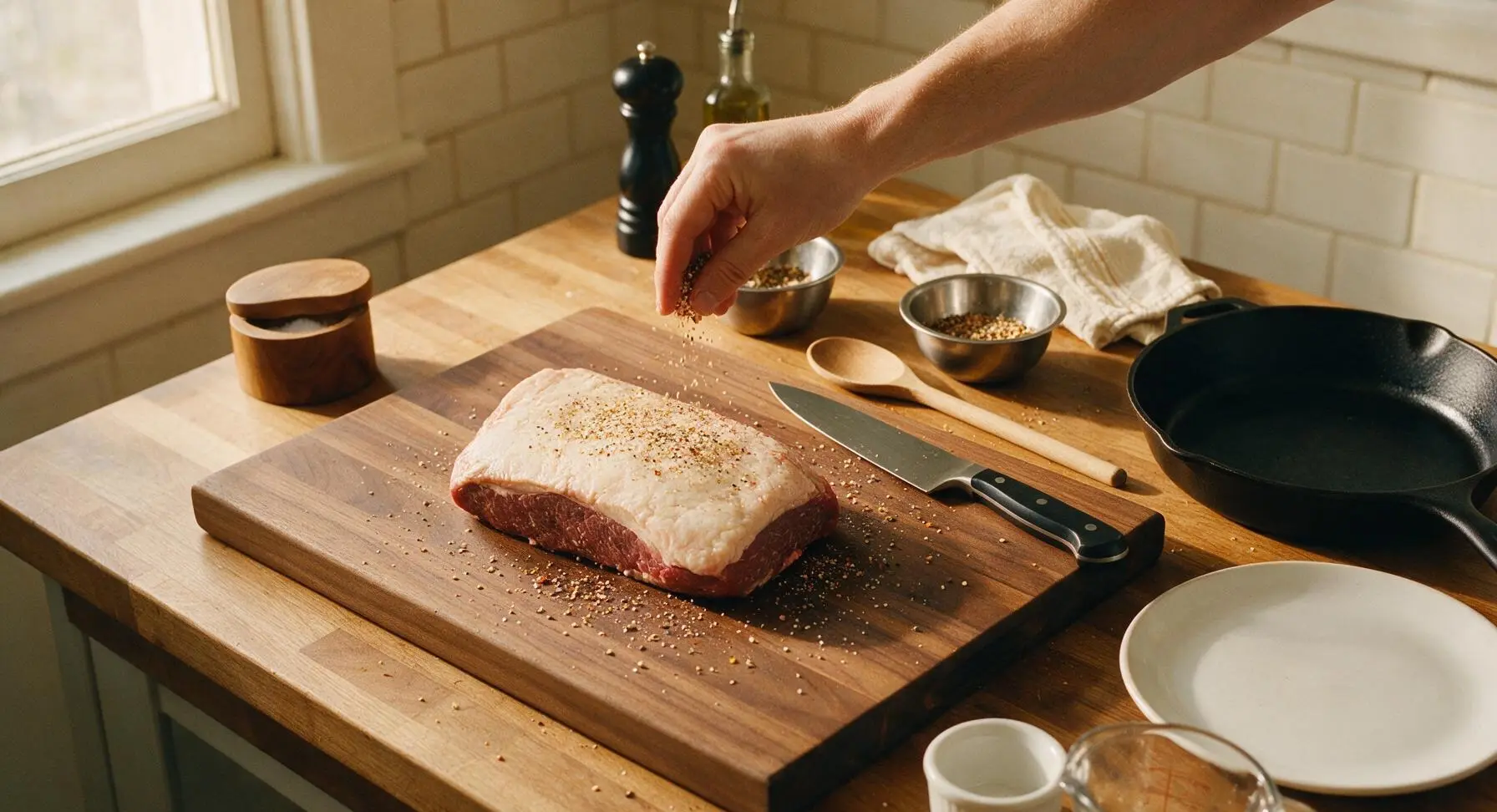
Apply Dry Rub
In the small stainless steel mixing bowl, combine 2 tbsp coarse kosher salt, 2 tbsp cracked black pepper, 1 tbsp smoked paprika, and 1 tbsp garlic powder, stirring until fully blended. Generously coat every surface of the trimmed brisket point with the rub, pressing firmly to help spices adhere to the meat. Do not brush off excess rub; it will form the signature smoky bark during cooking. Let the rubbed meat rest at room temperature for 20 minutes while you preheat your smoker to 250°F (120°C).
Smoke to Temp
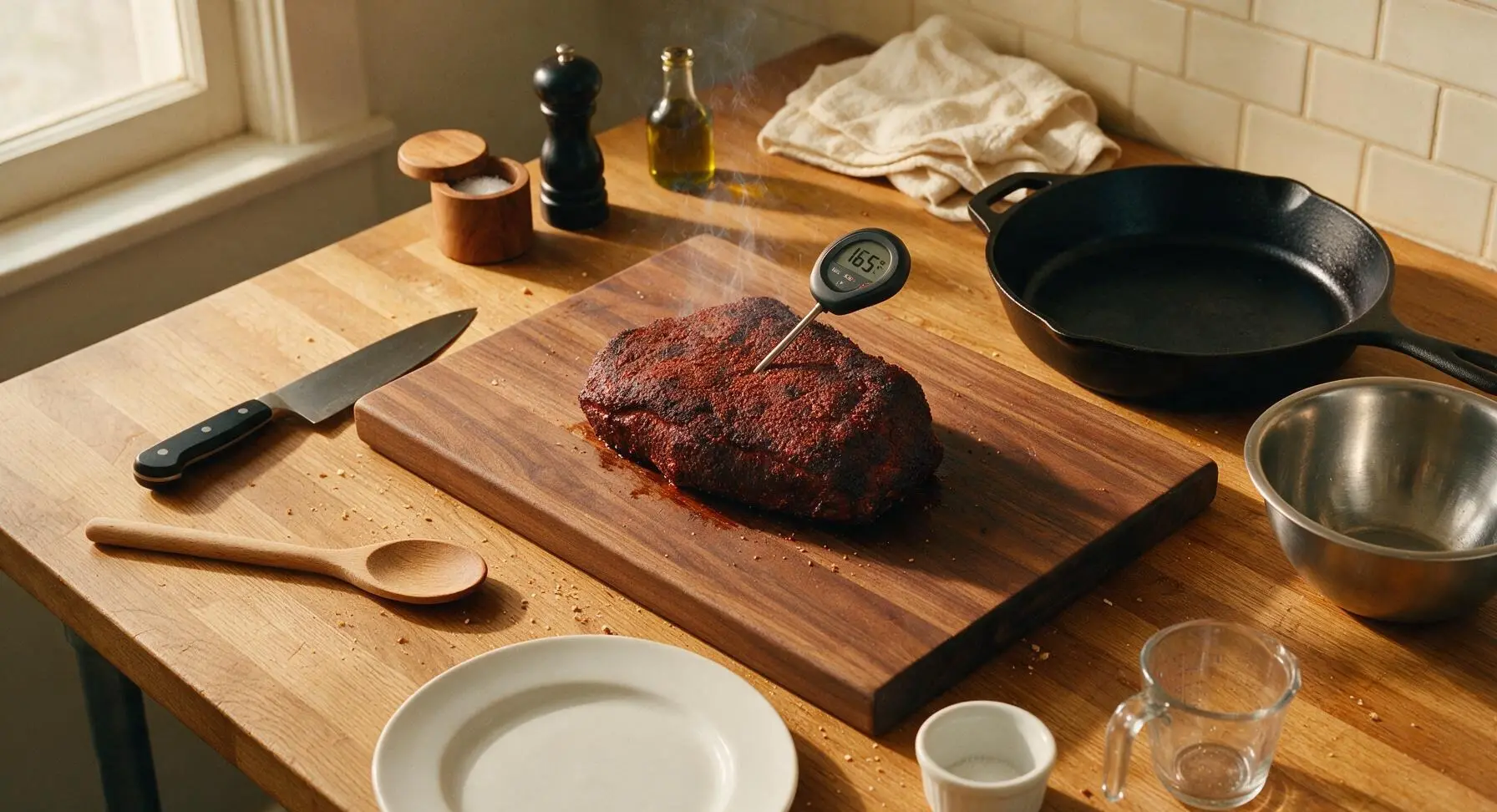
Place the rubbed brisket point directly on the preheated smoker grates, fat side up. Smoke at a steady 250°F (120°C) using hickory or oak wood for mild, smoky flavor, until the internal temperature reaches 165°F (74°C) when measured with the digital instant-read thermometer, approximately 3.5 to 4 hours. The exterior will form a dark, matte, rust-colored bark at this stage, and the meat will feel firm to the touch.
Make Barleywine Glaze
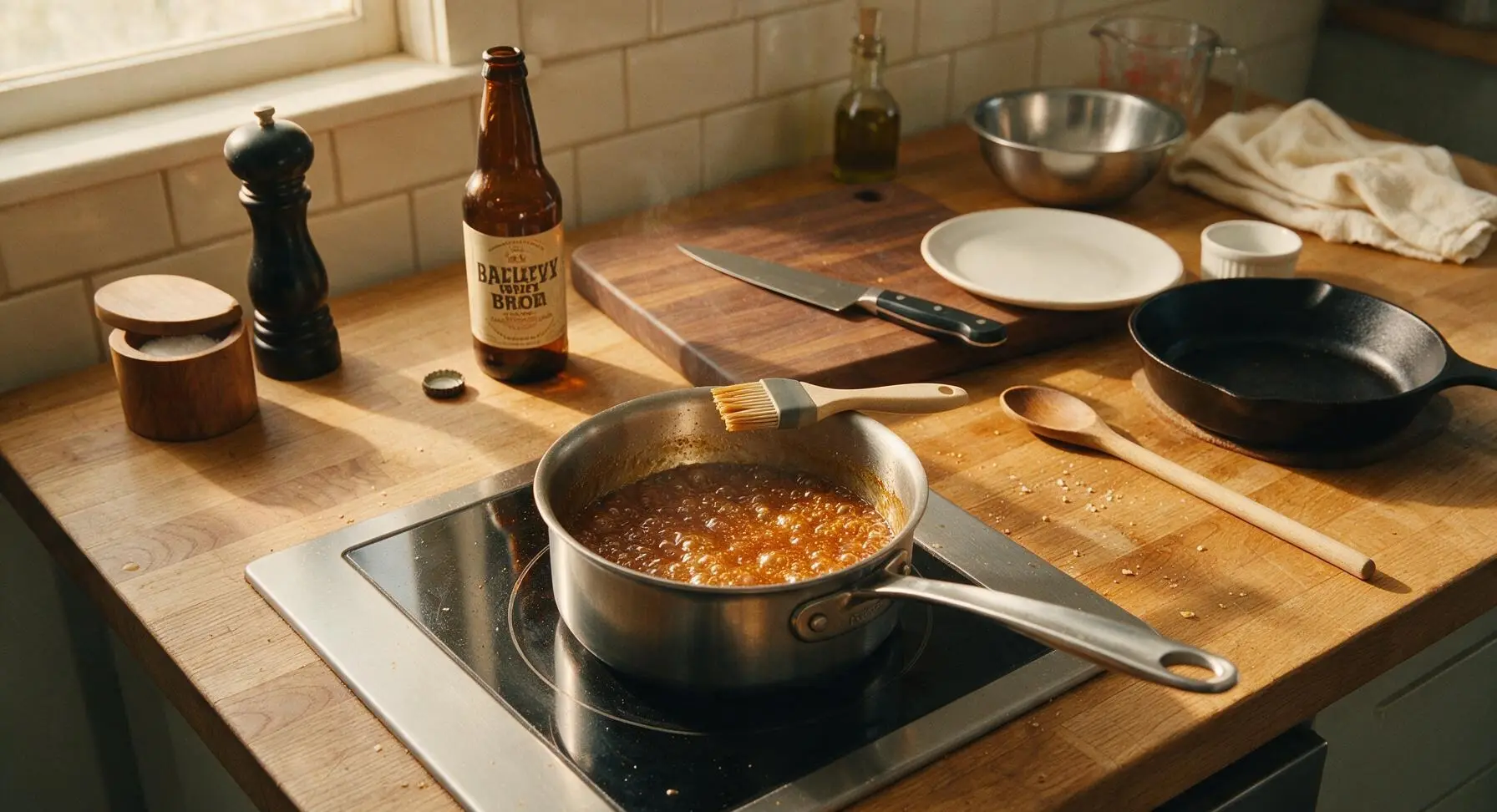
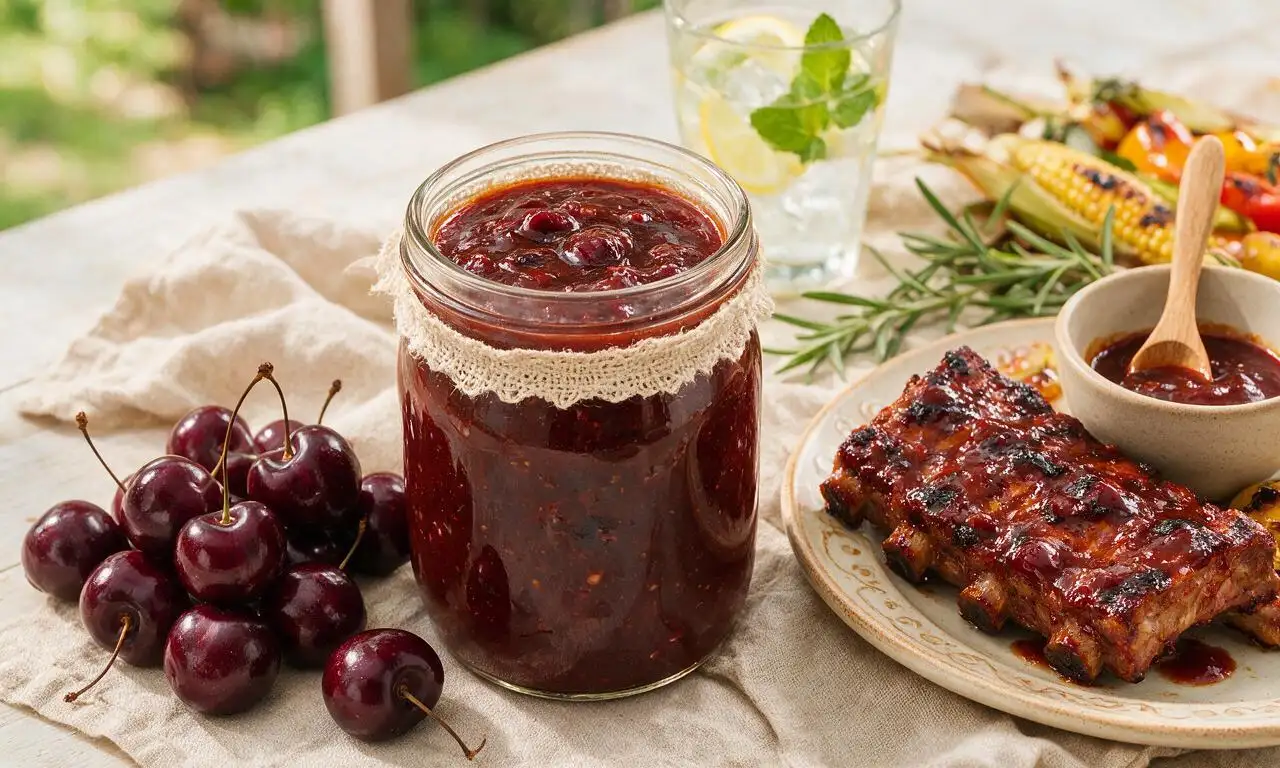
While the brisket smokes, place the 1-quart stainless steel saucepan over medium heat. Add 2 tbsp tomato paste and 3 minced garlic cloves, sautéing for 1 minute until fragrant. Pour in 350ml barleywine ale, 1/3 cup packed brown sugar, 1 tbsp apple cider vinegar, and 2 sprigs of fresh thyme. Bring to a gentle simmer, then reduce heat to low and cook for 15 minutes until the glaze is thick enough to coat the back of a spoon, reduced by roughly half. Remove from heat and discard the used thyme sprigs.
Cube Smoked Brisket
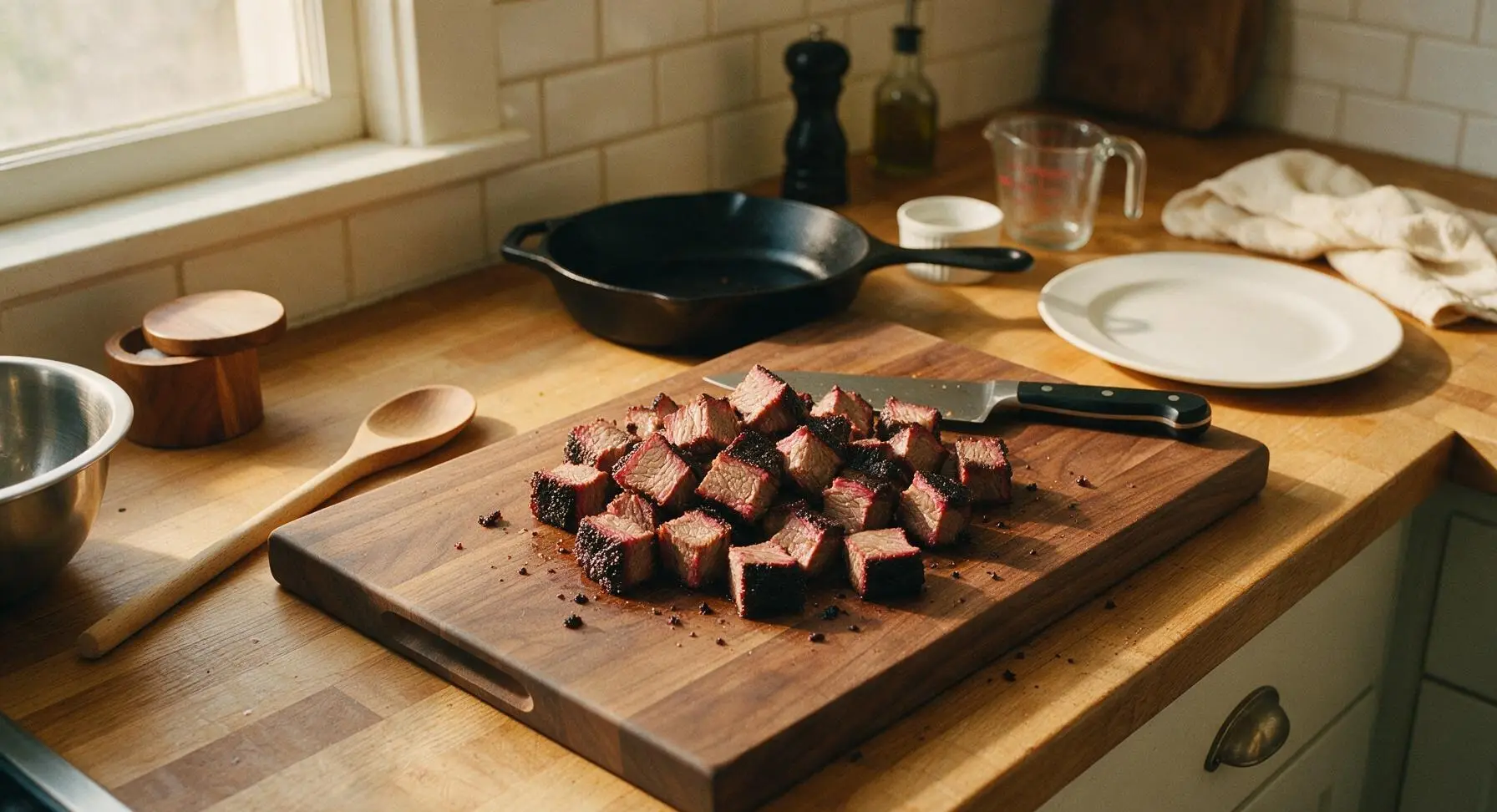
Once the smoked brisket reaches 165°F (74°C), transfer it back to the walnut cutting board. Use the 8-inch chef knife to cut the entire point into uniform 1.5-inch (4cm) cubes. The cubes will have a dark bark exterior and a thin, pink smoke ring just under the surface, with juicy, well-marbled interior meat. Do not trim off any remaining soft fat; it will render during the final braise and add depth of flavor.
Toss in Glaze and Butter
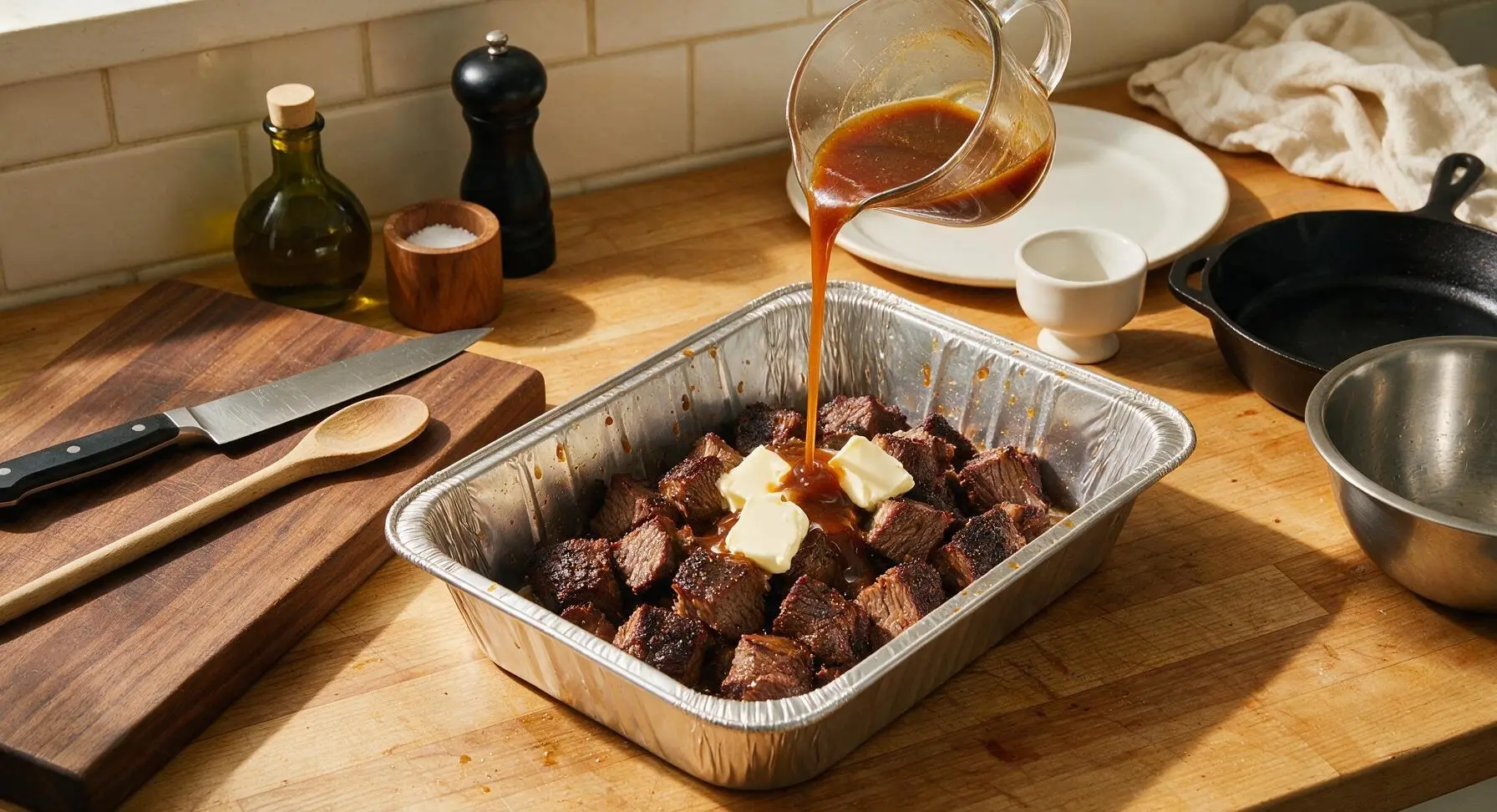
Transfer the cubed brisket to the 9x13 inch aluminum foil pan. Pour 2/3 of the prepared barleywine glaze over the cubes, add 4 tbsp of cut unsalted butter pats scattered across the top, and use the black silicone BBQ tongs to toss until every cube is evenly coated in glaze. Reserve the remaining 1/3 of glaze for basting during the final cook and serving.
Braise Burnt Ends
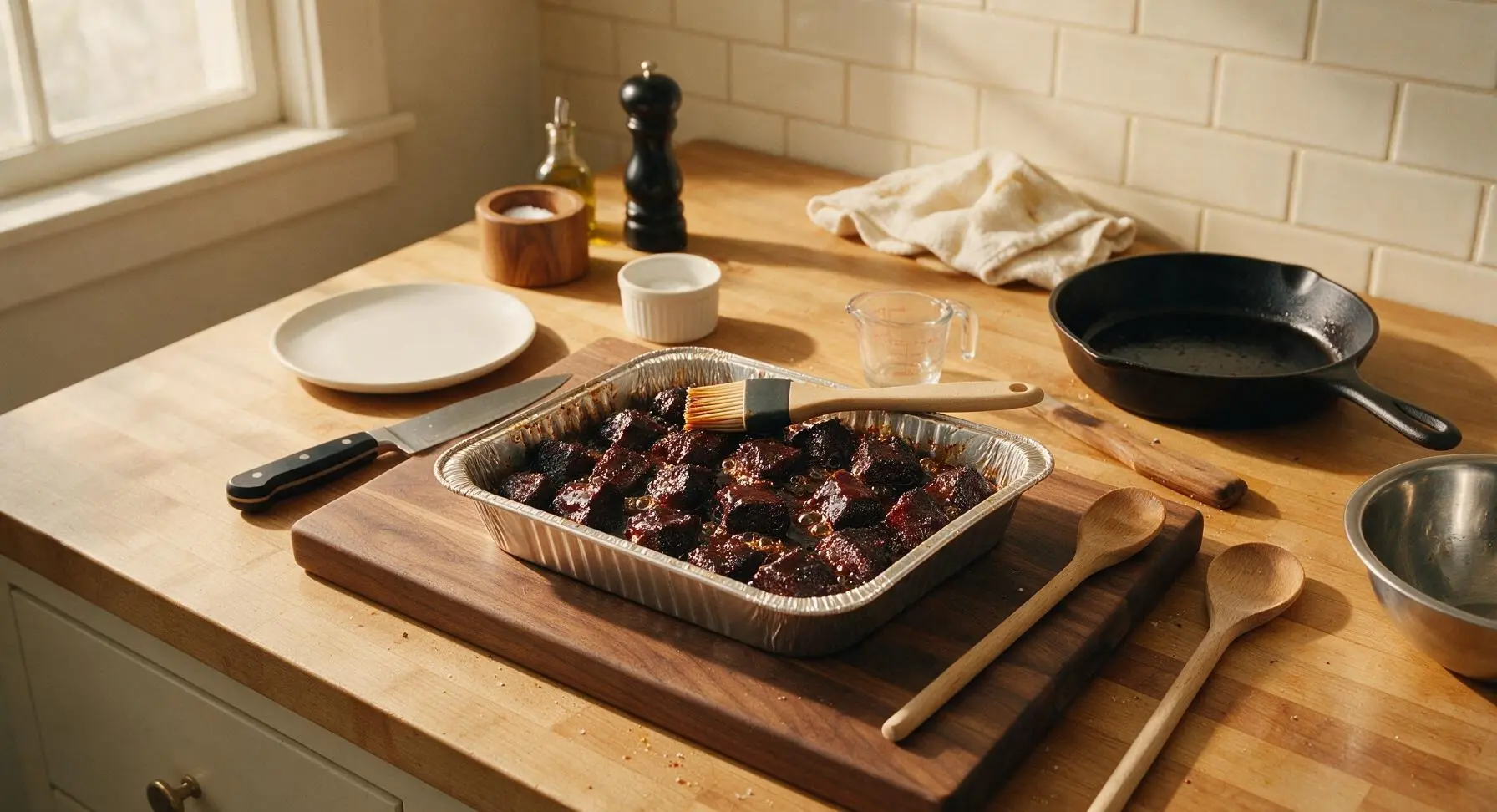
Cover the foil pan tightly with heavy-duty aluminum foil, crimping the edges to create an airtight seal. Return the pan to the smoker (still held at 250°F / 120°C) and cook for 1 hour. Remove the foil cover, baste the cubes with the reserved barleywine glaze using the silicone basting brush, then continue to cook uncovered for an additional 30 minutes, until the glaze is sticky and caramelized, and the internal temperature of the cubes reaches 205°F (96°C). The cubes will feel soft and jiggly when prodded with tongs at this stage.
Rest and Serve
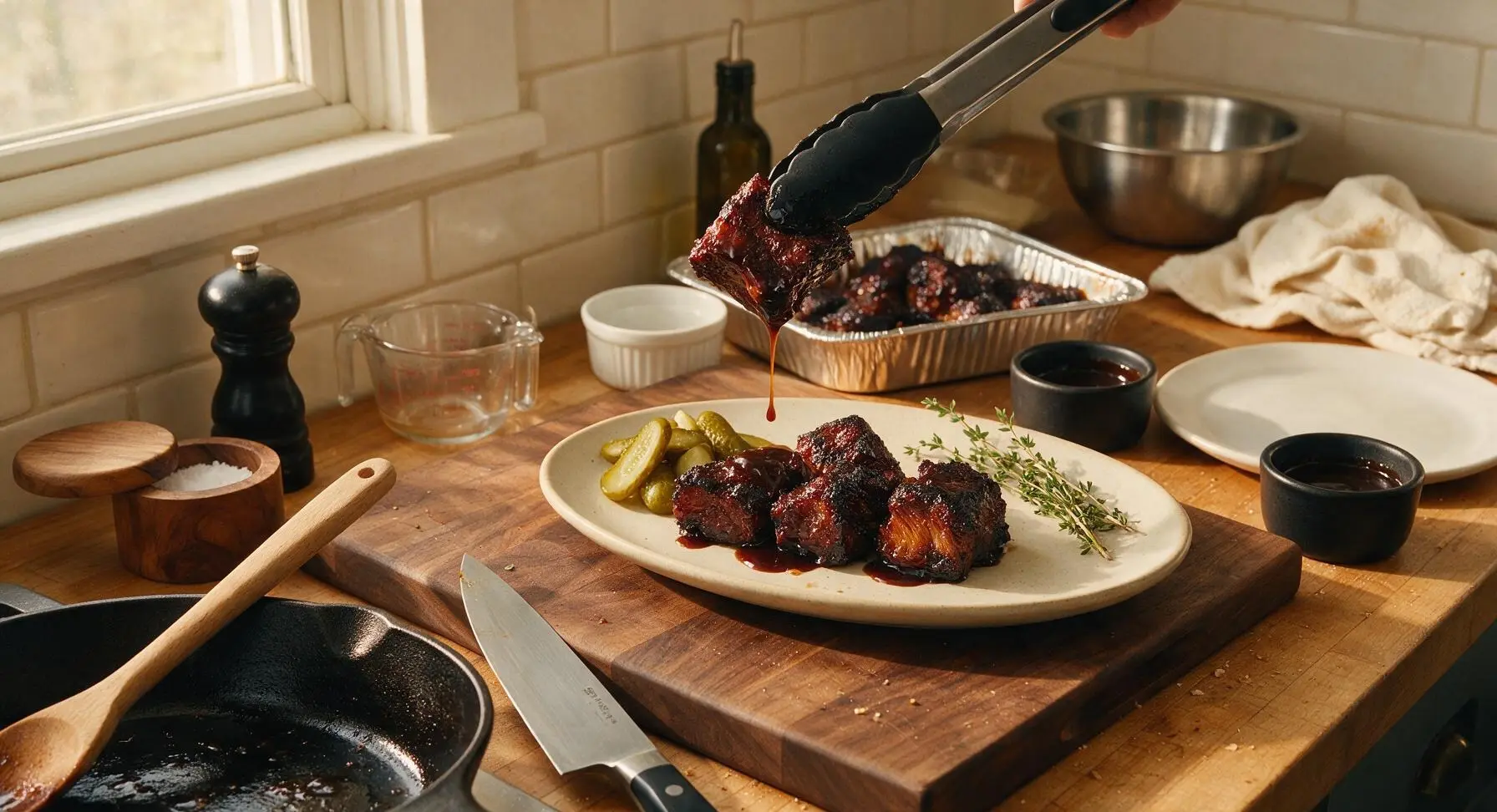
Remove the pan from the smoker and let the burnt ends rest for 10 minutes to allow juices to redistribute. Transfer the sticky burnt ends to the matte off-white ceramic oval serving platter, drizzling any remaining pan glaze over the top. Garnish with fresh thyme leaves, and serve alongside dill pickles and extra glaze in the matte black ramekins.
Tips
2.Rely on temperature and texture over fixed cook time: burnt ends are perfectly tender when they reach 205°F (96°C) and jiggle slightly when prodded with tongs. Stopping early will leave chewy, unrendered connective tissue, while overcooking will turn the cubes dry and crumbly.
3.Choose a malt-forward barleywine (low IBU, under 40) for the glaze: heavily hopped, bitter barleywines will concentrate into an unpleasant, harsh flavor when reduced, while caramel and toffee-noted barleywines add rich, malty sweetness that pairs perfectly with smoky beef.
OMG these barleywine burnt ends were the absolute star of our neighborhood potluck last weekend! I was a little intimidated by the 5.5 hour cook time since I’m usually a quick-smoke kind of guy, but that barleywine glaze hits different — sweet, malty, just the right kick of bitterness to cut through the fatty brisket point. My kids even fought over the last couple pieces, which never happens with my usual BBQ spreads. Total game changer, will be making these for every summer get together from now on!
Made these for Sunday family dinner and they were SO good, though I will say I messed up the first glaze batch because I let the barleywine reduce too fast and it got super sticky, almost burnt (oops!). I cut the reduction heat way down on the second try and it turned out perfect. I portioned out leftovers for my husband’s work lunches all week and he said his coworkers were hovering by his desk asking what smelled amazing. Only knock is I wish the recipe had a note about what temperature to keep the smoker at during the final wrap stage — I had to guess a little!
Just pulled these off the smoker an hour ago and wow, these are way better than the standard burnt ends I usually make for camping trip meal prep. The barleywine adds such a rich, toasty note that pairs so well with the hickory smoke I used. I did a half batch with non-alcoholic barley malt syrup for my cousin who doesn’t drink, and that version was almost as tasty as the original. Already sent the recipe to three of my homebrewing buddies who are always looking for new ways to cook with their homebrew.