1.What’s the best cut of beef to use for this stew, and can I substitute a leaner cut?
▾
Beef chuck is ideal here because its generous marbling breaks down during slow simmering to create tender, flavorful bites that don’t dry out. Skip extra-lean cuts like top sirloin or eye of round—they’ll turn tough and stringy over long cook times, even when cut small. If you must substitute, use bone-in short rib for similarly rich, tender results.
2.Do I need to sear the beef before adding it to the stew?
▾
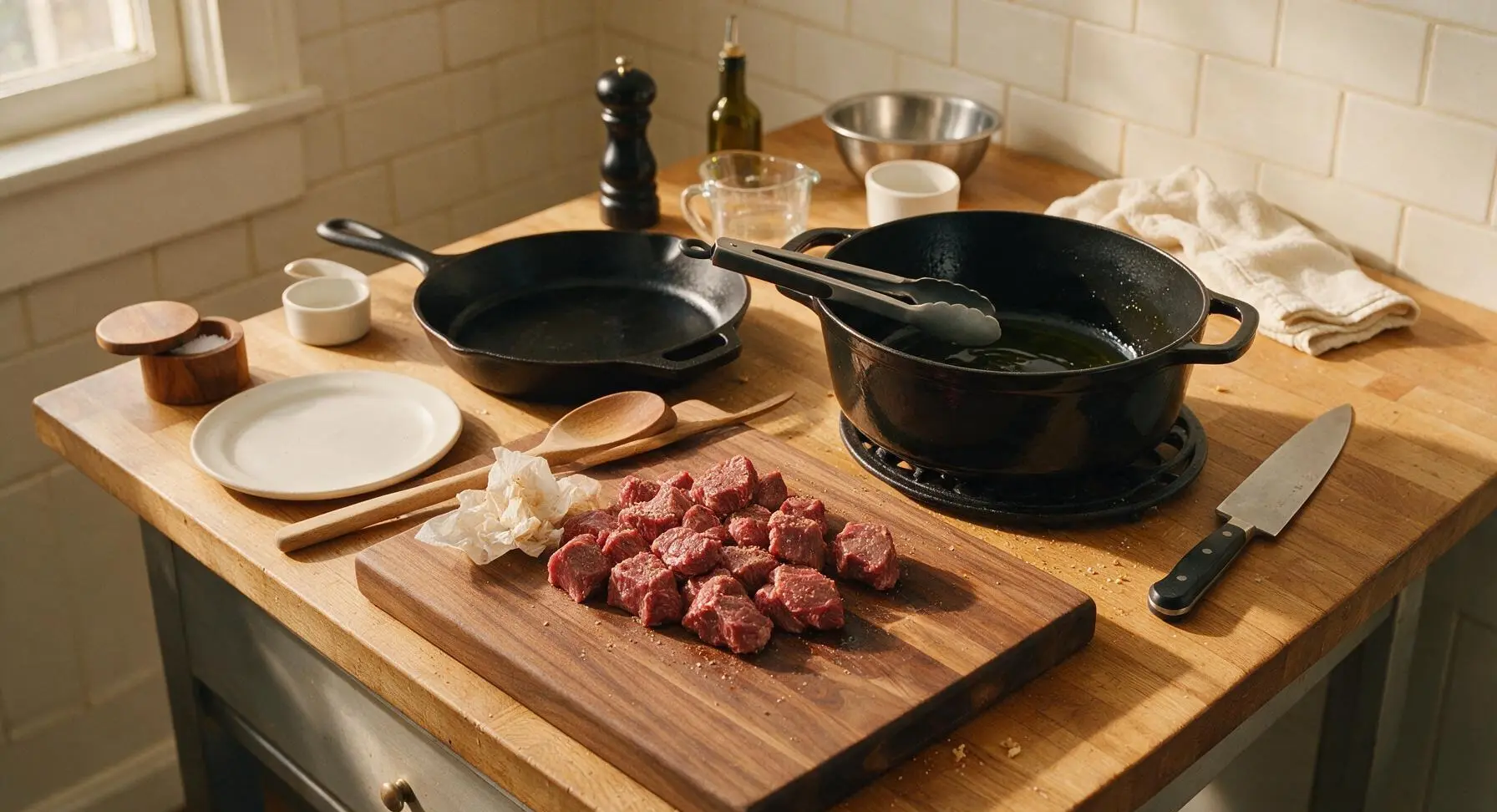
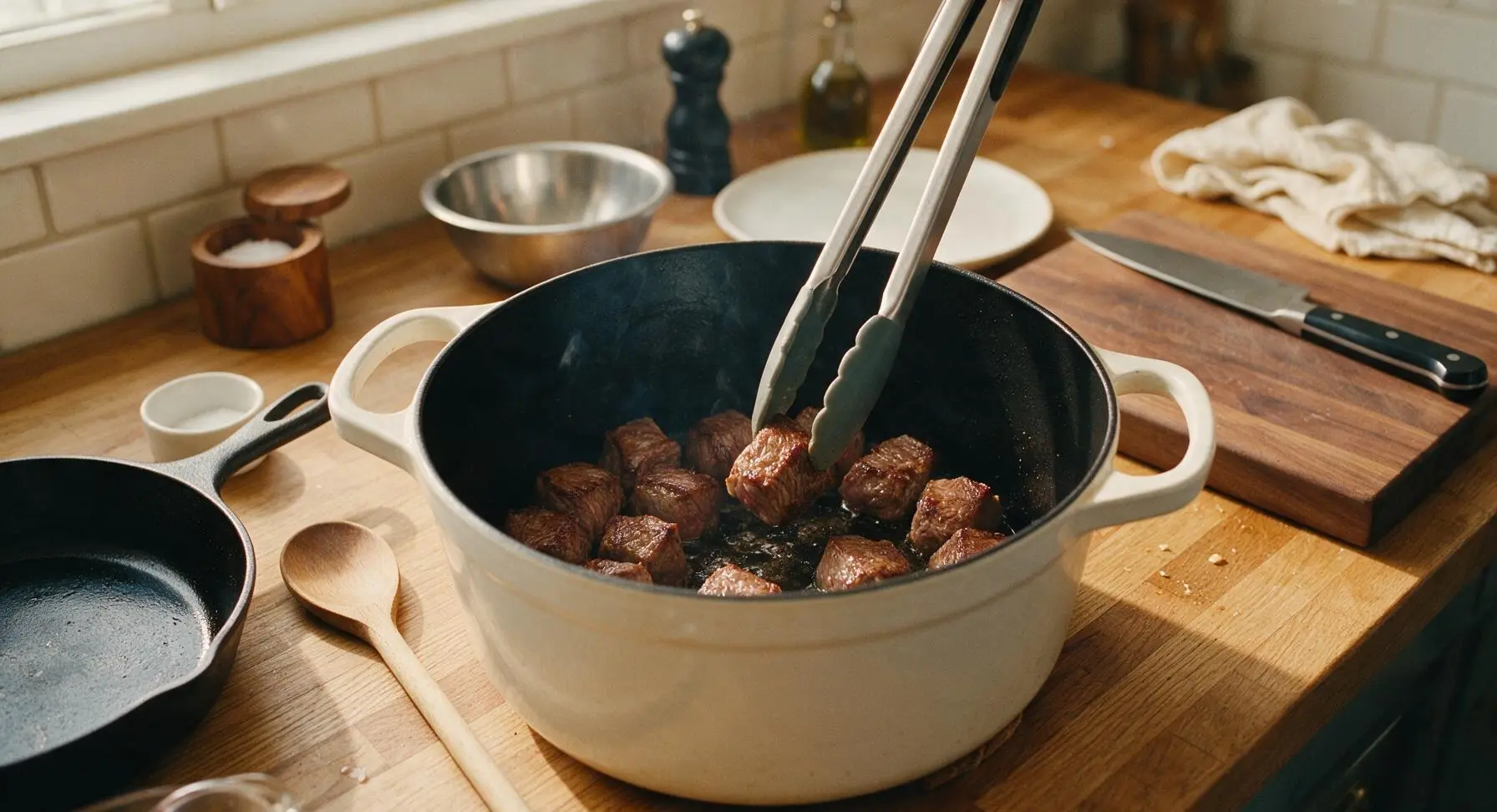
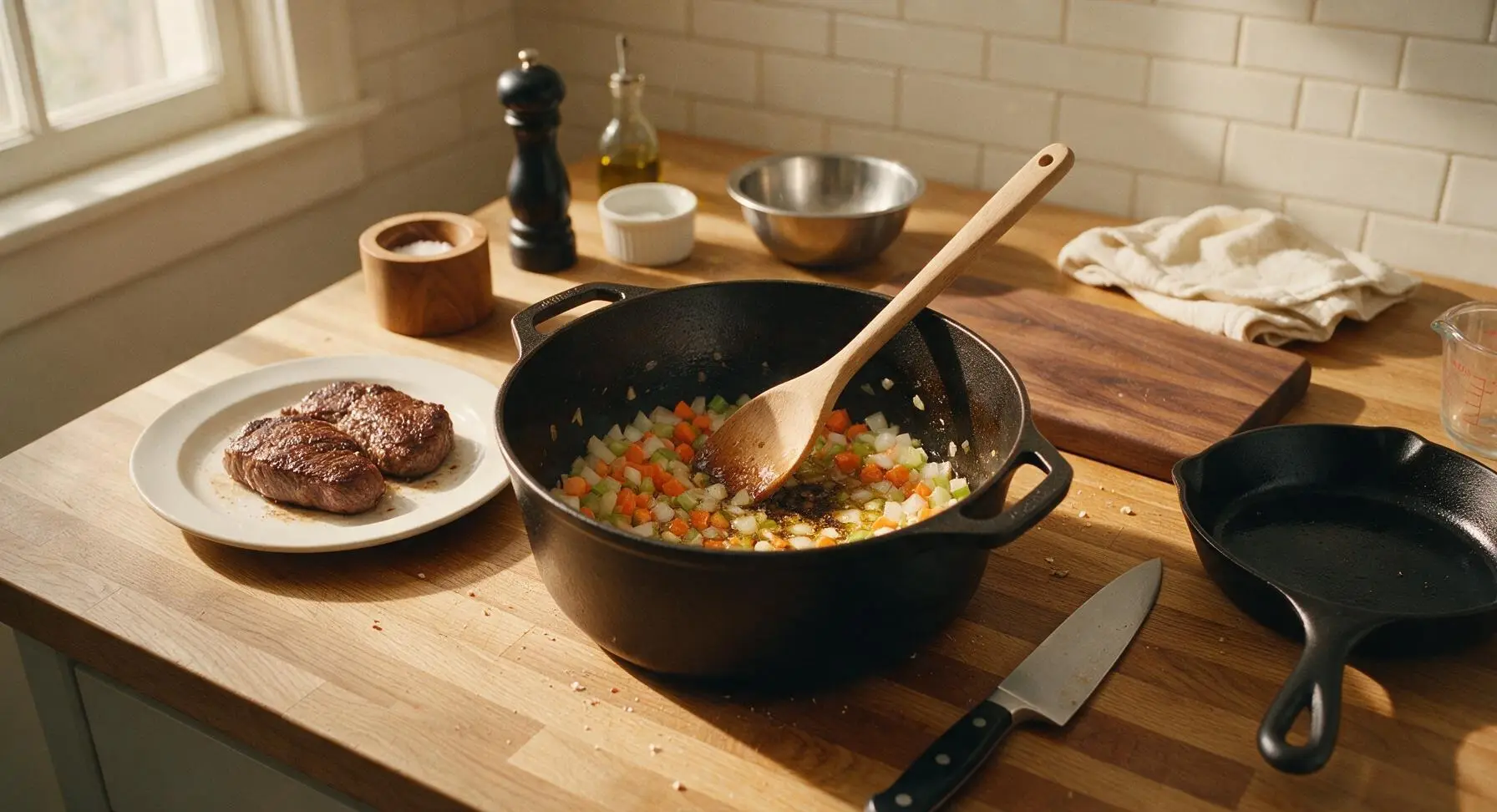
Absolutely—searing the 1-inch beef cubes over medium-high heat until deep golden brown on all sides builds a deep, savory flavor base you can’t get from raw simmered beef. Don’t crowd the pan when searing; work in batches if needed so beef browns instead of steaming, and scrape up all browned pan bits to add to the broth for extra depth.
3.What’s the difference between pearl barley and other barley types, and can I use quick-cooking barley?
▾
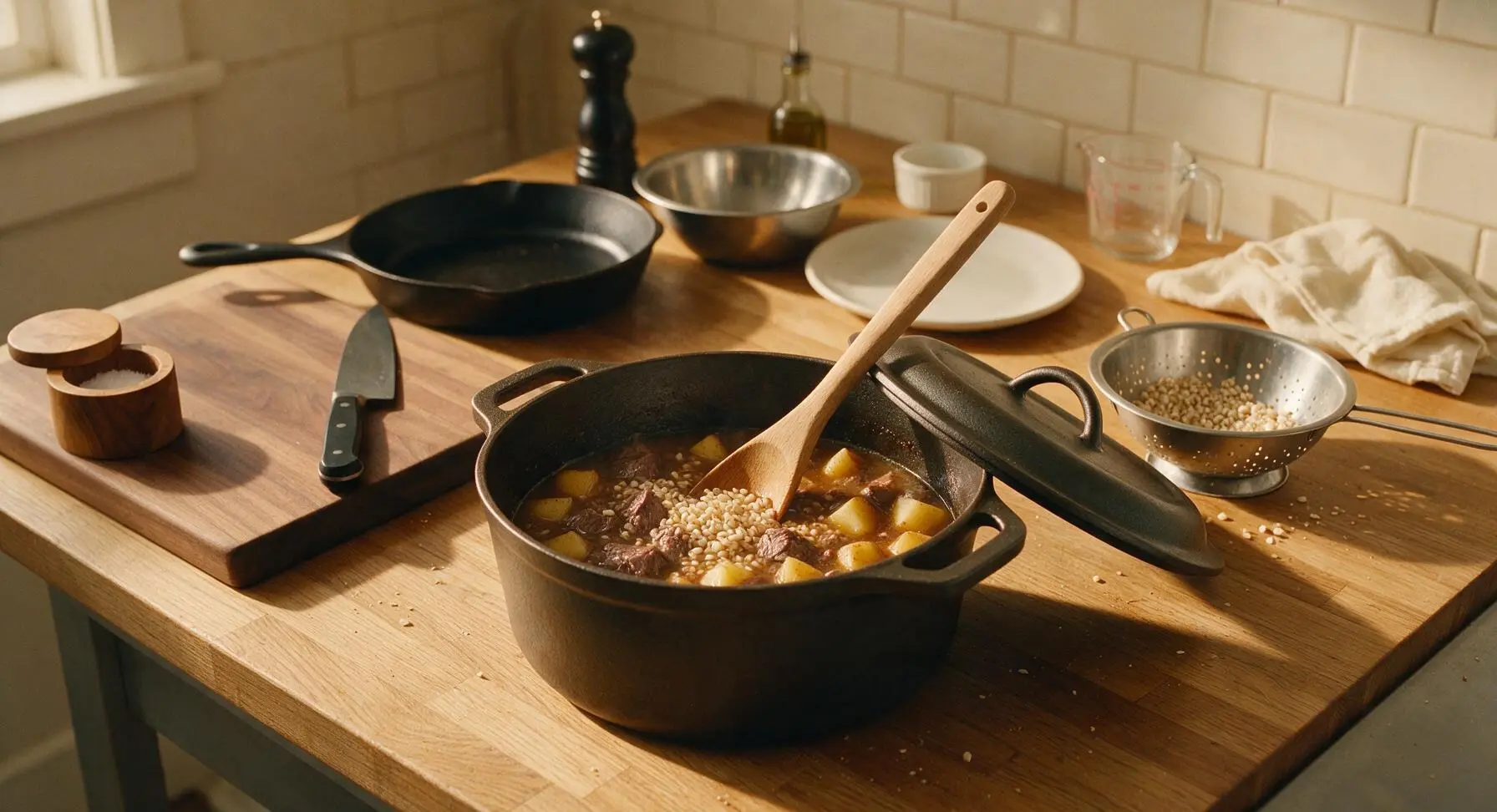
Pearl barley is polished to remove its tough outer hull, so it cooks to a perfect chewy, tender texture in about 45 minutes of simmering, ideal for stew. Quick-cooking barley is pre-steamed to cut cook time in half, but it turns soft and mushy fast—add it during the last 20 minutes of cook time if you use it to avoid a gluey texture.
4.Why does the recipe call for low-sodium beef broth instead of regular?
▾
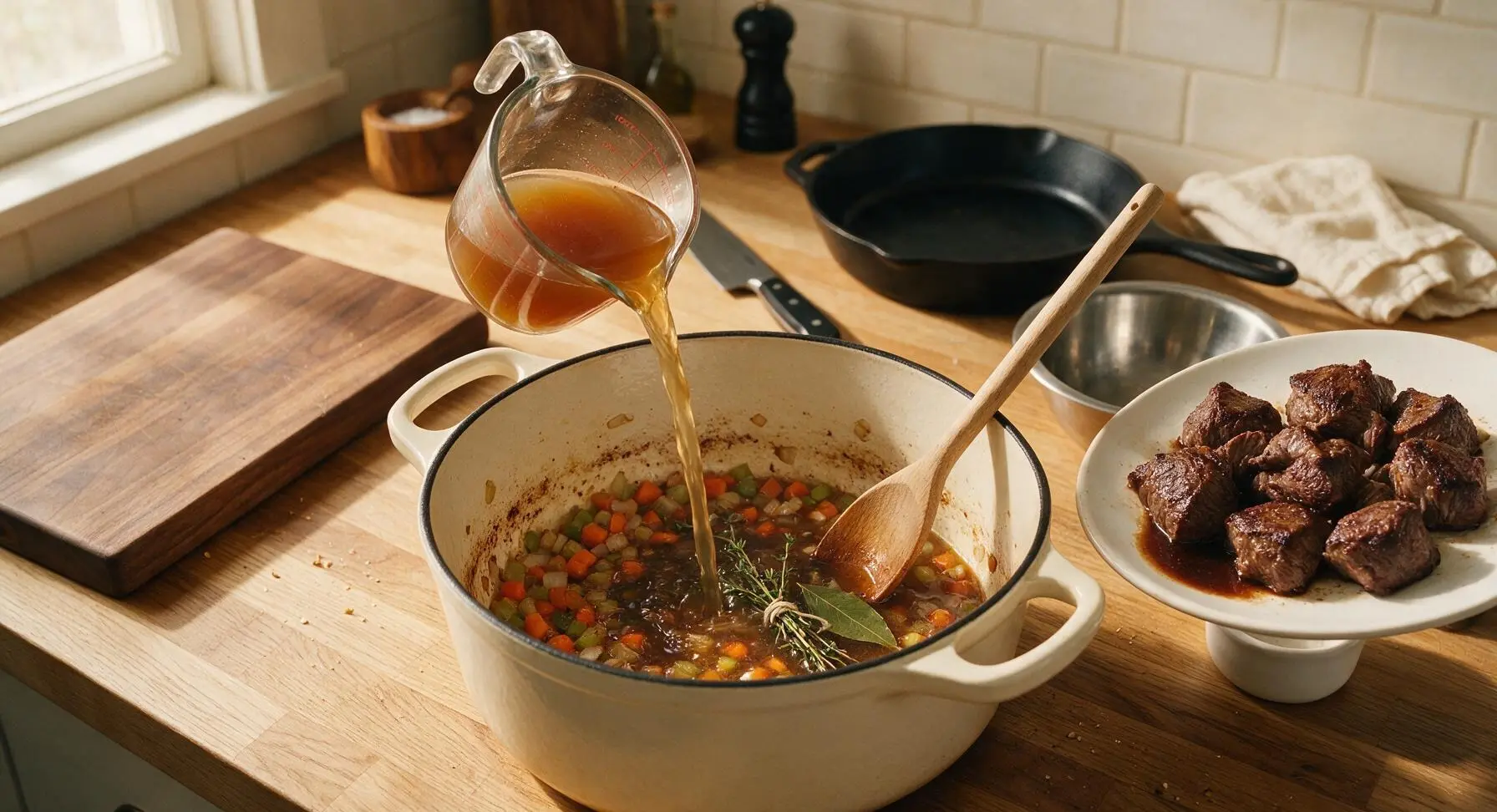
Low-sodium beef broth gives you full control over the final salt level of your stew. Regular broth, plus salt released from seared beef and slowly cooked vegetables, can easily lead to an overly salty final dish once flavors concentrate during long simmering. You can always add extra salt to taste at the end, but you can’t fix an over-salted stew easily.
5.How small should I cut my vegetables so they cook evenly with the barley and beef?
▾
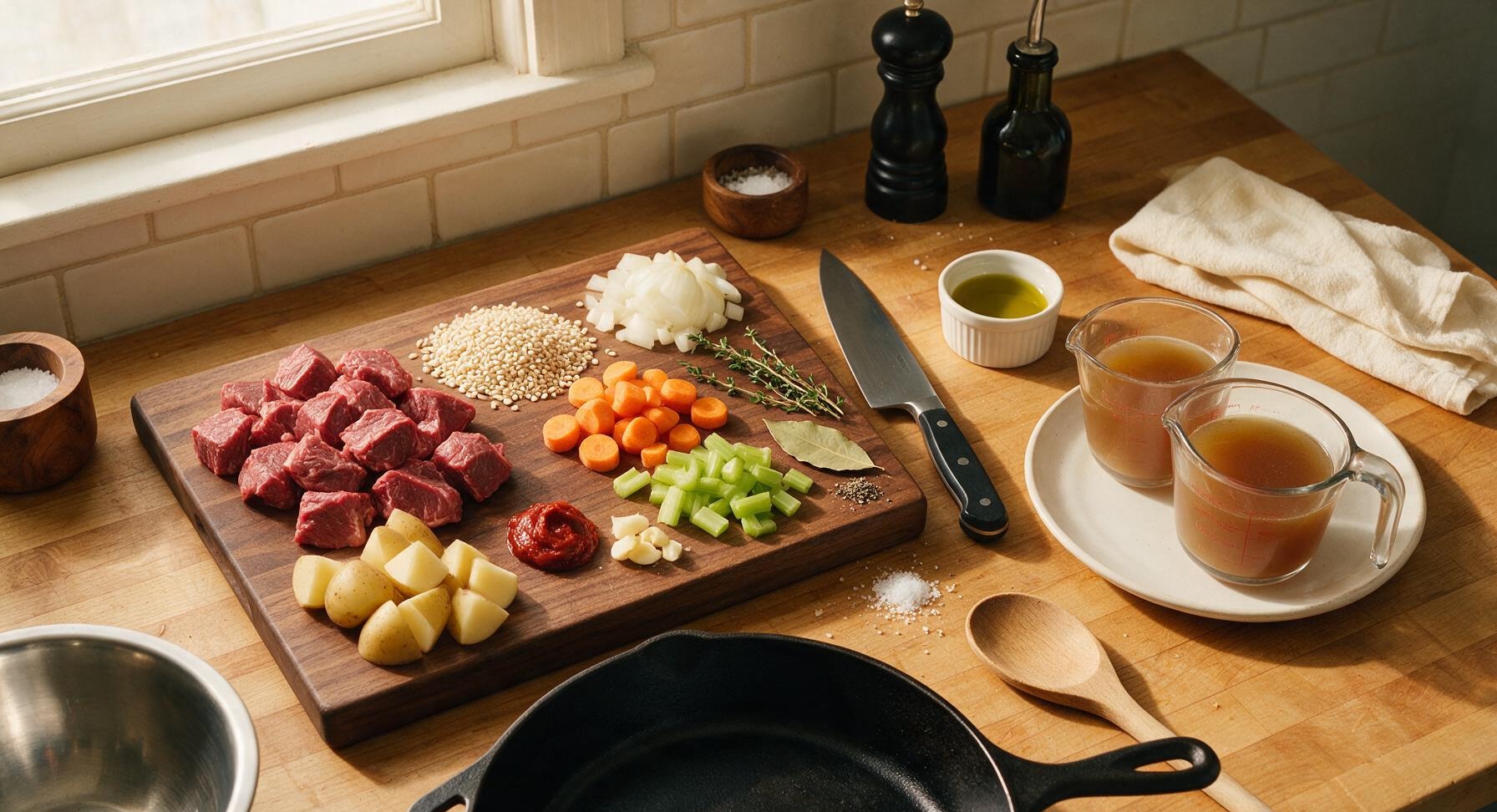
Stick to the recipe guidelines: dice yellow onion into ¼-inch pieces so it softens and melts into the broth, and cut carrots into uniform ½-inch rounds so they get tender without turning mushy. Cutting all veggies to a consistent size means no undercooked crunchy bites or overcooked, disintegrating pieces by the time beef and barley are done.
6.Can I make this stew in a slow cooker instead of on the stovetop or in a Dutch oven?
▾
Absolutely! Sear your beef and sauté your onions first for the best flavor, then add all ingredients except barley to the slow cooker. Cook on low for 6 to 7 hours, then add rinsed pearl barley and cook for 45 more minutes on high, until barley is chewy and tender and beef pulls apart easily. It’s a great hands-off weeknight option.
7.Why do I need to rinse pearl barley before adding it to the stew?
▾
Rinsing pearl barley under cool running water removes excess starchy dust left from processing and packaging, which would otherwise make your stew broth cloudy and overly thick, almost gluey. Give it a quick swish in a fine mesh sieve until the water runs clear, then drain well before adding it—this takes 30 seconds and makes a huge texture difference.
8.My stew came out too thin—how do I thicken it without making it gummy?
▾
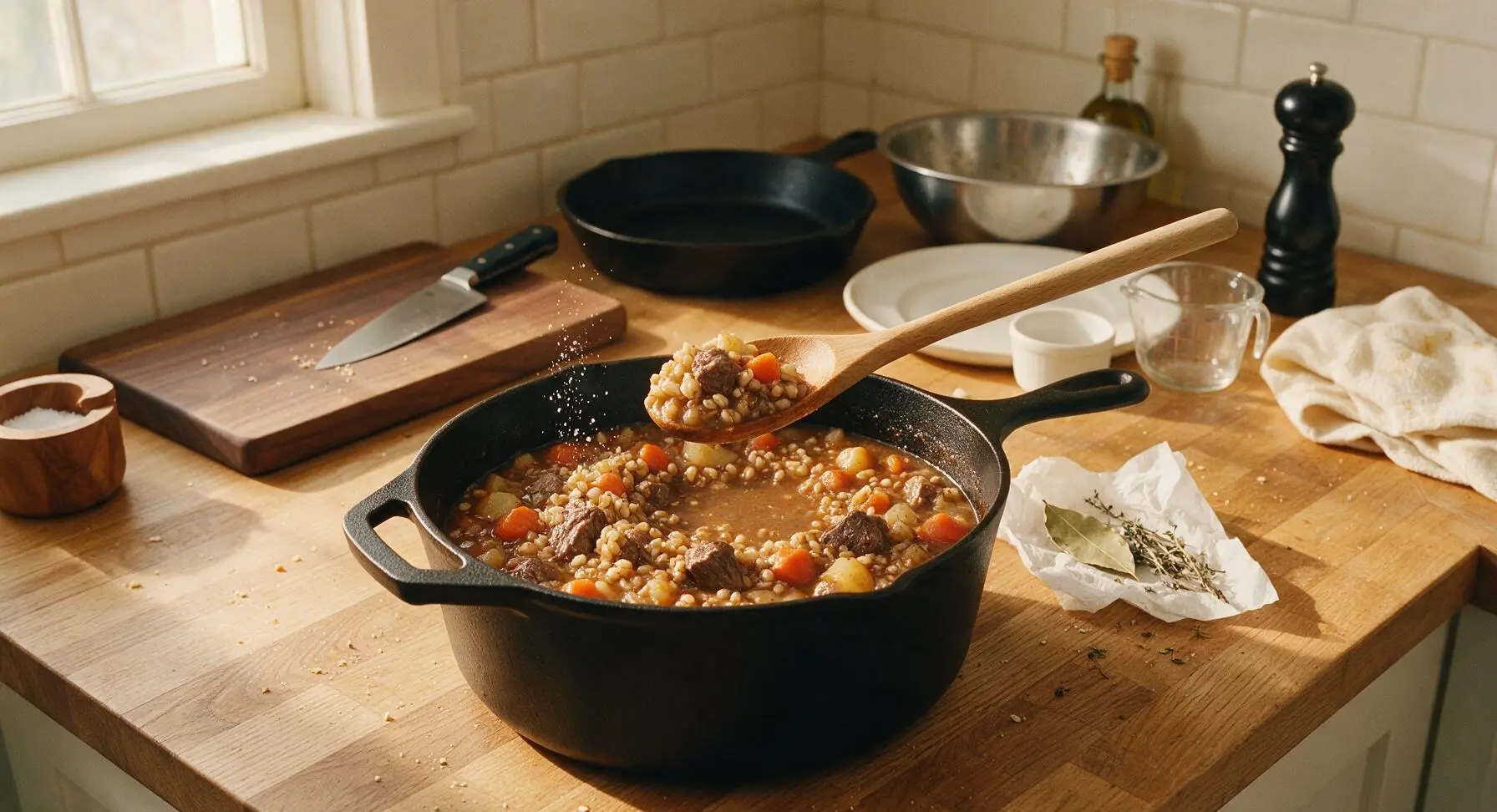
If your stew is too thin after the barley finishes cooking, you have two easy fixes: first, simmer it uncovered for 10 to 15 minutes to let excess liquid evaporate and concentrate flavors. For a faster fix, mix 1 tablespoon of cornstarch with 2 tablespoons of cold water to make a slurry, stir it in, and cook 5 minutes until it reaches your preferred thickness.
9.Can I add extra vegetables to this stew, or will that throw off the cook time?
▾
You can absolutely add extra veggies, just adjust add-in times to match their cook speed. Hearty additions like diced celery, parsnips, or turnips can go in with the carrots, while more delicate veggies like frozen peas, corn, or chopped kale should be stirred in during the last 10 minutes of cooking so they don’t turn mushy or lose their bright color.
10.How long does this stew keep in the fridge, and does it freeze well?
▾
This stew keeps beautifully in an airtight container in the fridge for 4 to 5 days, and the flavors actually deepen and get better after a day or two of resting. It freezes well for up to 3 months—just let it thaw completely in the fridge overnight, then reheat gently on the stovetop over low heat, adding a splash of broth if it’s gotten too thick.
11.Why is my beef tough even after simmering for an hour?
▾
Tough beef almost always comes from one of two issues: either you used too lean a cut that lacks enough marbling to stay tender, or you cooked the stew at too high a rolling boil instead of a gentle, low simmer. A hard boil makes beef seize up and get stringy—keep heat low enough that just a few small bubbles break the surface, and give chuck 1.5 total hours to break down.
12.Do I need to peel my carrots for this stew?
▾
That’s totally up to personal preference! If your carrots are young, fresh, and well-scrubbed to remove any dirt or rough outer skin, you can leave the peels on for extra fiber and a subtle earthy flavor. For thicker, older carrots with tough, bitter peels, it’s worth taking 2 minutes to peel them so you don’t end up with chewy, unpleasant bits in your finished stew.
13.Can I adapt this recipe to make a vegetarian version?
▾
You can easily adapt this for a vegetarian meal by swapping the beef chuck for 1-inch cubes of portobello mushroom or extra-firm pressed tofu, and using low-sodium vegetable broth instead of beef broth. Keep all the other ingredients and cook times the same, and you’ll get a rich, hearty, umami-packed stew that works just as well for cold-weather dinners.
14.My barley is still crunchy after the recommended cook time—what went wrong?
▾
Crunchy undercooked barley usually happens if your stew was simmering at too low a temperature, if you didn’t use enough liquid, or if your barley is older and has dried out in storage. Make sure your stew stays at a steady gentle simmer, add an extra ½ cup of broth if the liquid level is low, and give it 10 to 15 more minutes until it’s chewy but not hard in the center.
15.Should I cover the pot while the stew simmers?
▾
Keep the pot partially covered while your stew simmers—this traps enough heat to maintain a steady low temperature, but lets a small amount of steam escape so the liquid doesn’t boil over and the broth can reduce slightly to concentrate flavor. If you notice the stew getting too thick too fast, move the lid to cover more of the pot, or add a small splash of extra broth.
16.What kind of seasonings work best with this stew without overpowering the beef and barley?
▾
Stick to simple, warm seasonings that complement the deep savory base: a couple of bay leaves, a teaspoon of dried thyme, a few cracks of black pepper, and a small spoonful of tomato paste stirred in with the seared beef add tons of depth without overwhelming core flavors. Wait to add salt until the very end, after tasting, to avoid over-seasoning.
17.Can I use hulled barley instead of pearl barley for extra whole-grain nutrition?
▾
Hulled barley is a nutrient-dense whole-grain option that retains more fiber and nutrients than pearl barley, but it has a much tougher outer layer that takes nearly twice as long to cook. If you use it, either pre-soak it for 4 hours before adding to the stew, or add it an extra 40 minutes into the initial cook time so it gets tender before your beef and vegetables are done.
18.What are the best toppings or sides to serve with this stew?
▾
This cozy stew pairs perfectly with simple, bright toppings that cut through its rich, savory flavor: a sprinkle of fresh chopped parsley, a dollop of sour cream, a pinch of flaky sea salt, or a tiny splash of red wine vinegar all work beautifully. Serve it with a slice of crusty sourdough bread for dipping, and you’ve got a perfect cold-weather comfort meal.

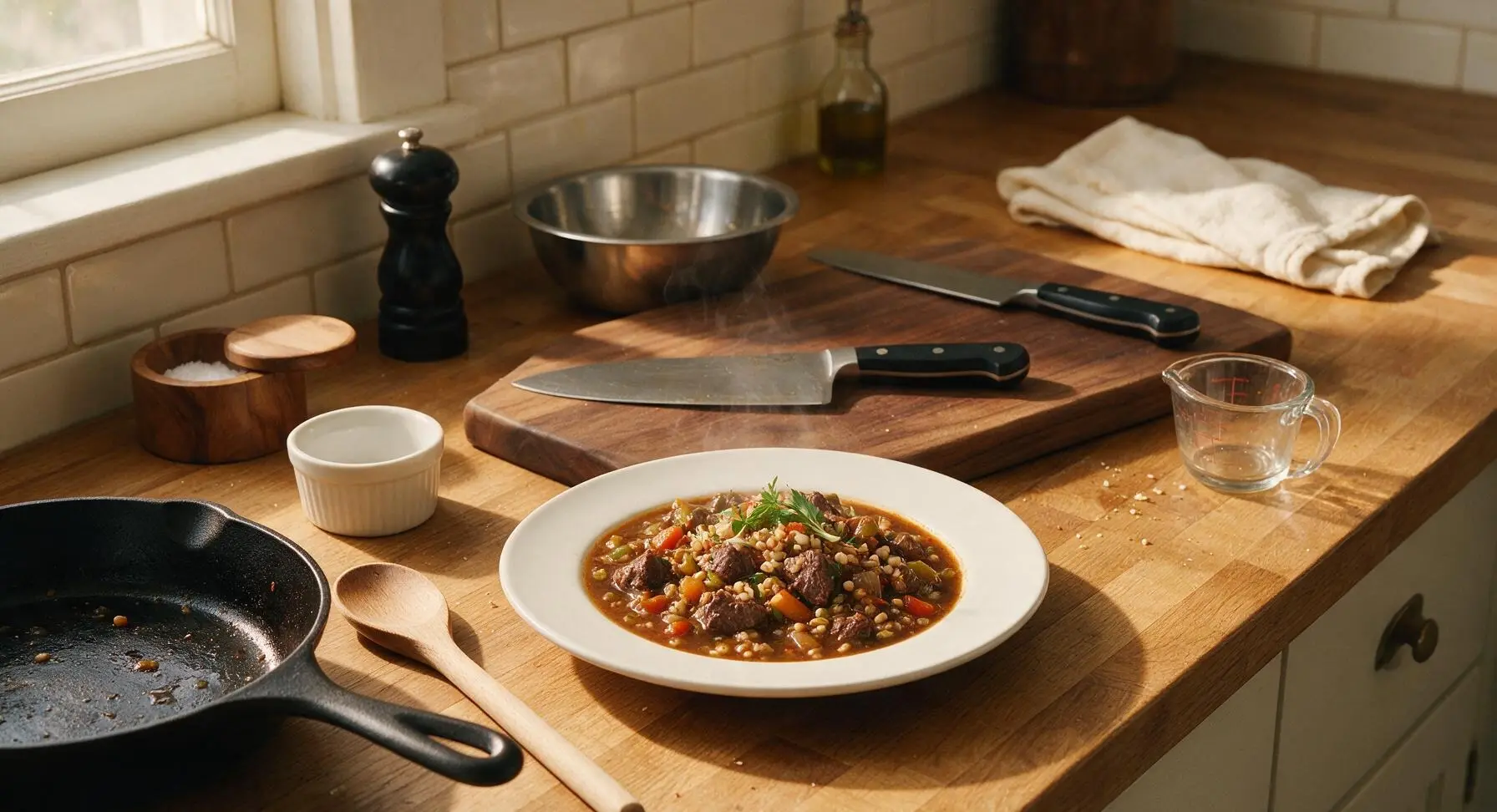
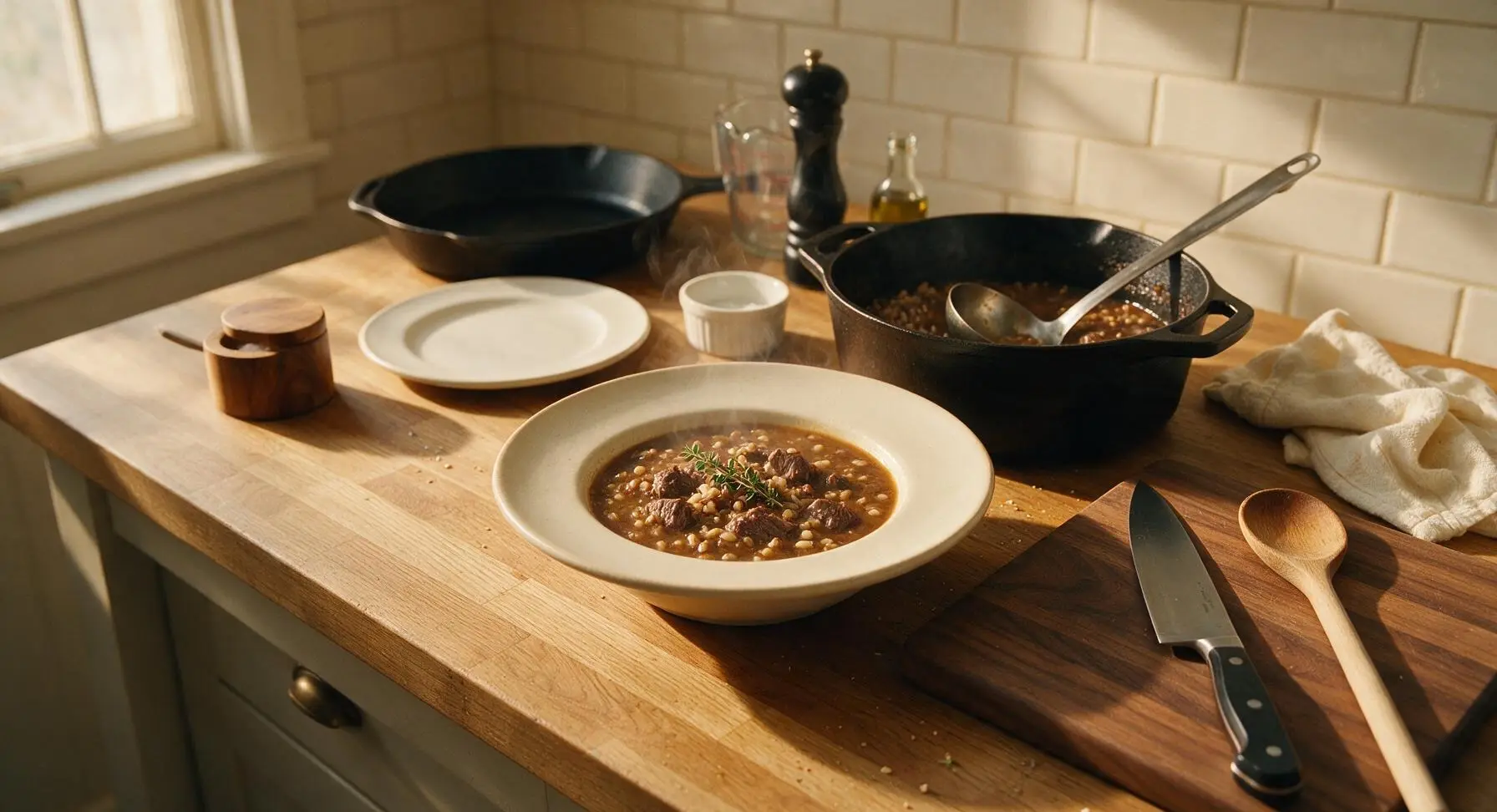

OMG this beef and barley stew is a total game changer! Made it for Sunday family dinner last night and even my super picky 7 year old asked for seconds. The beef got so tender after the full cook time, and the barley had that perfect chewy texture I love. Threw in a handful of extra mushrooms because we’re obsessed, and it turned out chef’s kiss. SO good, already added it to my weekly meal prep rotation! Wait, quick question—has anyone tried freezing this for later? I want to make a double batch next weekend for our upcoming potluck.
Made this after a long cold hike last weekend, and it hit so hard. Cook time was a little longer than I expected on a weeknight, so I pre-seared the beef the night before to cut down on active time, which worked perfectly. My only note is that I wish I’d added more salt and a pinch of thyme at the end, it was a little bland for my taste at first. Will definitely make again once the weather cools off more.
Brought this to my neighborhood block party potluck last week and people were asking me for the recipe before I even set the pot down! Used chuck roast like the recipe said, and let it simmer low the whole 1 hour 45 minutes so the meat just fell apart. I didn’t have regular pot barley so I used pearl barley I had stashed in the pantry, and no one could tell the difference. 10/10, will be making this all fall and winter long.
Tried this for a cozy weeknight meal (okay, not *that* quick with the 1 hour 45 minute cook time, but worth every minute) and my kids loved it. I was worried the barley would be weird for them since they usually only turn up for pasta and rice, but they ate every last bite. Only mishap was I used too much broth at the start so it was more soup than stew, but I just let it simmer uncovered for 10 extra minutes and it thickened right up. Would recommend to anyone looking for a filling, no-fuss cold weather meal.