
Beef Sinigang
intro
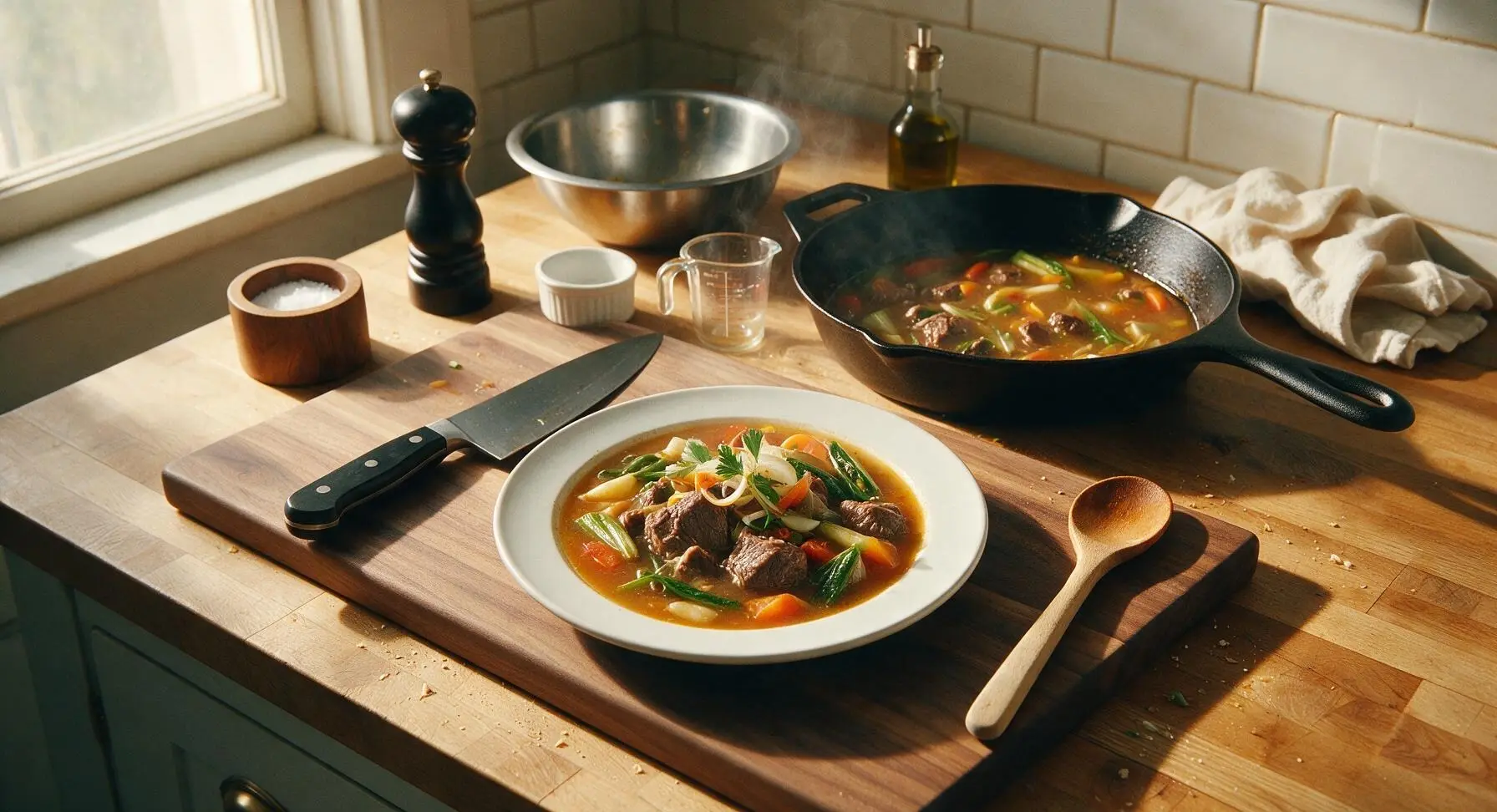
Bright, tart, and deeply savory Filipino sour beef stew brimming with tender meat and fresh vegetables, a cozy, nostalgic comfort food perfect for gathering around the table.
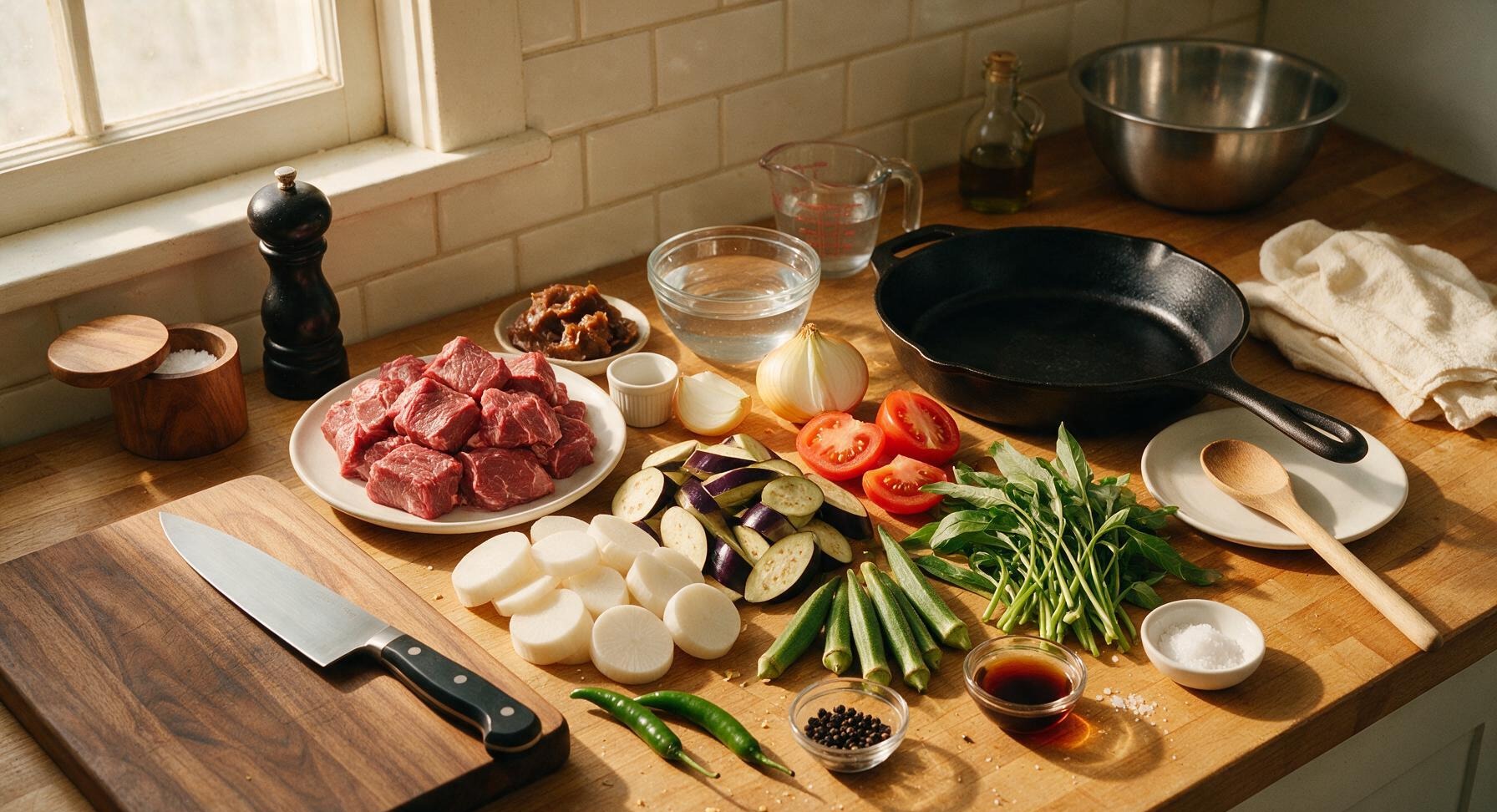
Ingredients
Steps
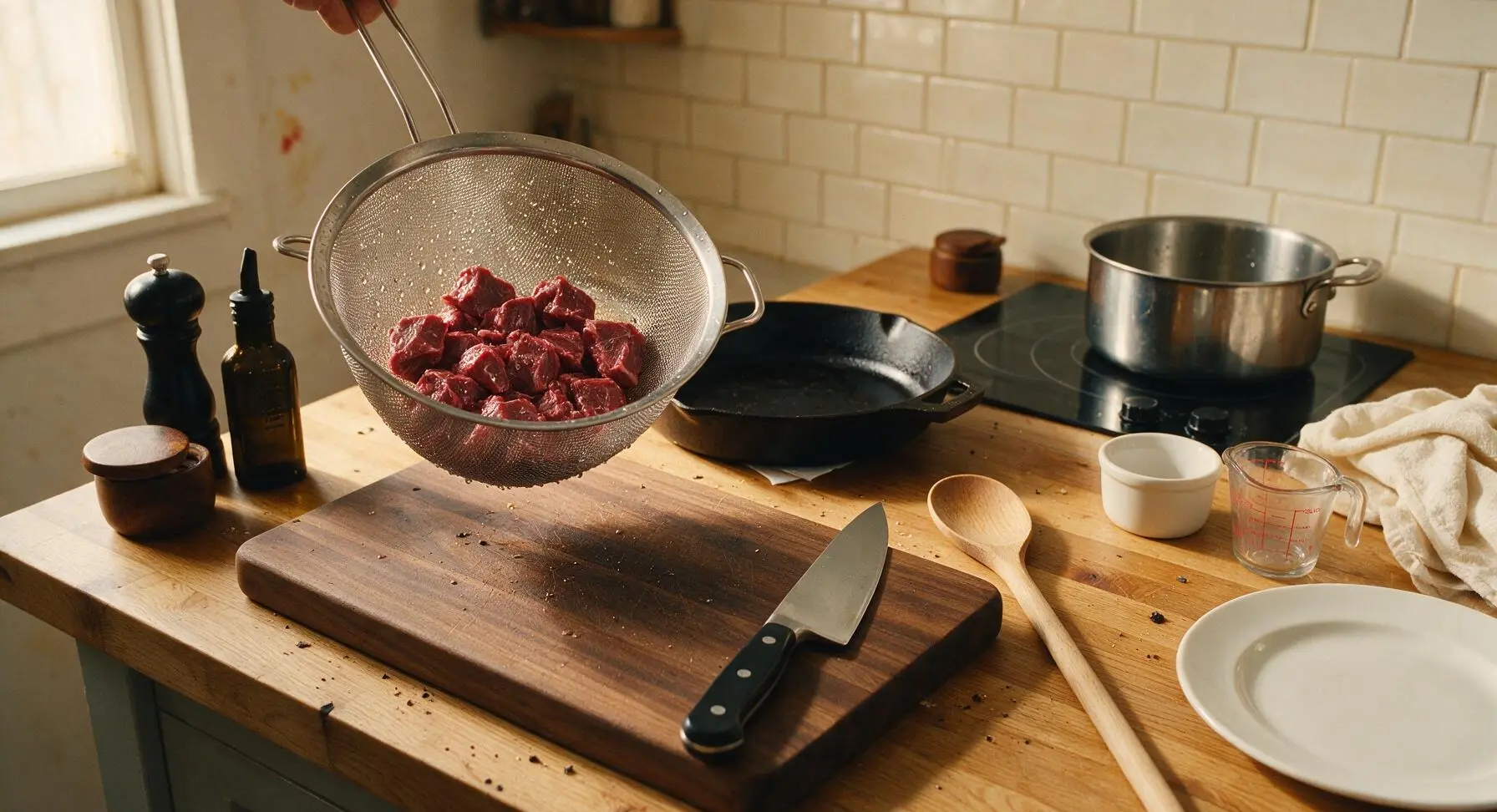
Rinse and prep beef
Place cubed beef chuck in the fine-mesh stainless steel strainer, rinse under cold running water for 1 minute to wash away residual blood and tiny bone fragments. Shake off excess water, then transfer beef to a clean spot on the acacia cutting board, patting lightly with the edge of the linen towel to remove surface moisture, which prevents excessive foaming during the initial boil.
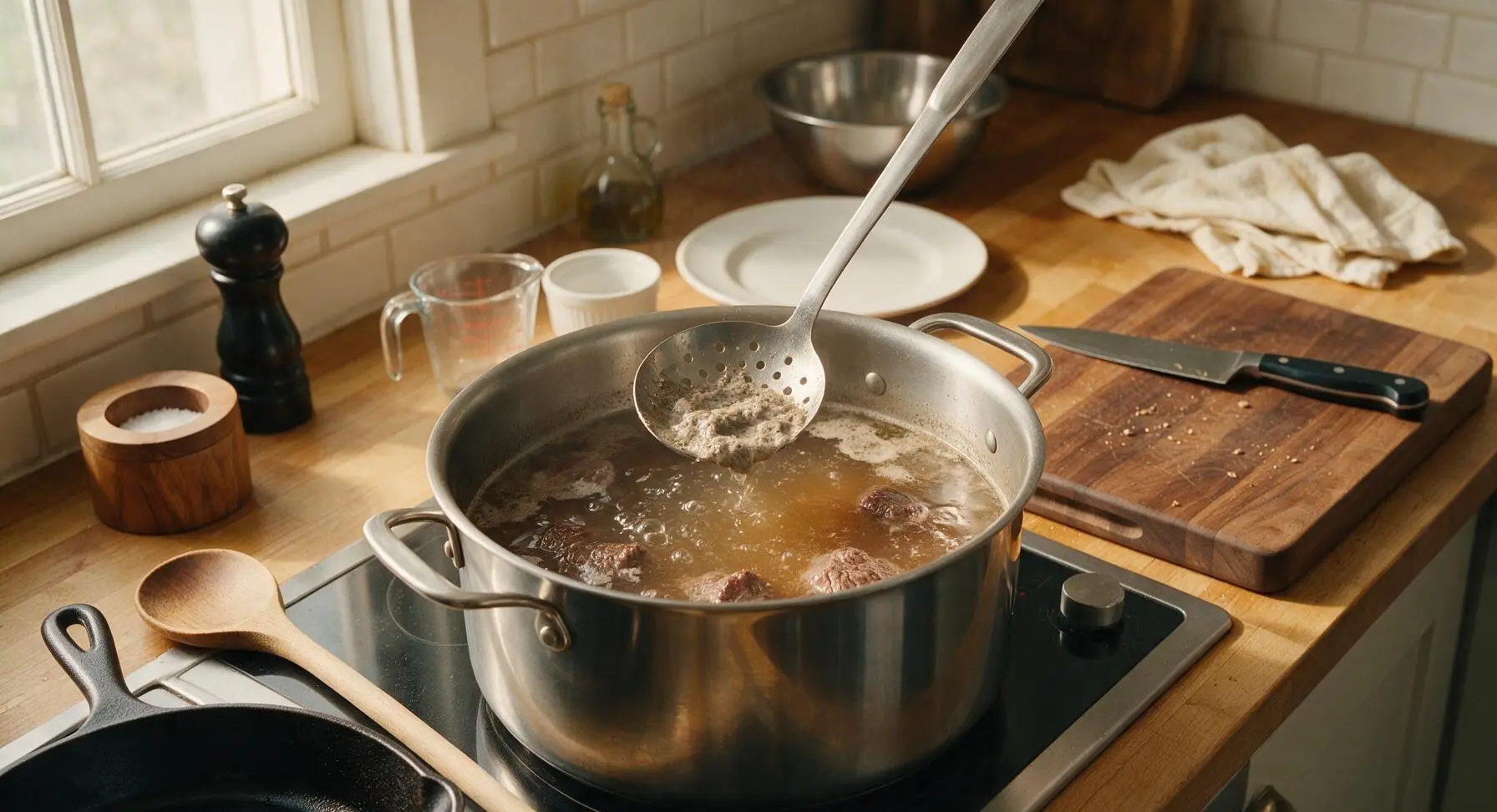
Simmer beef stock base
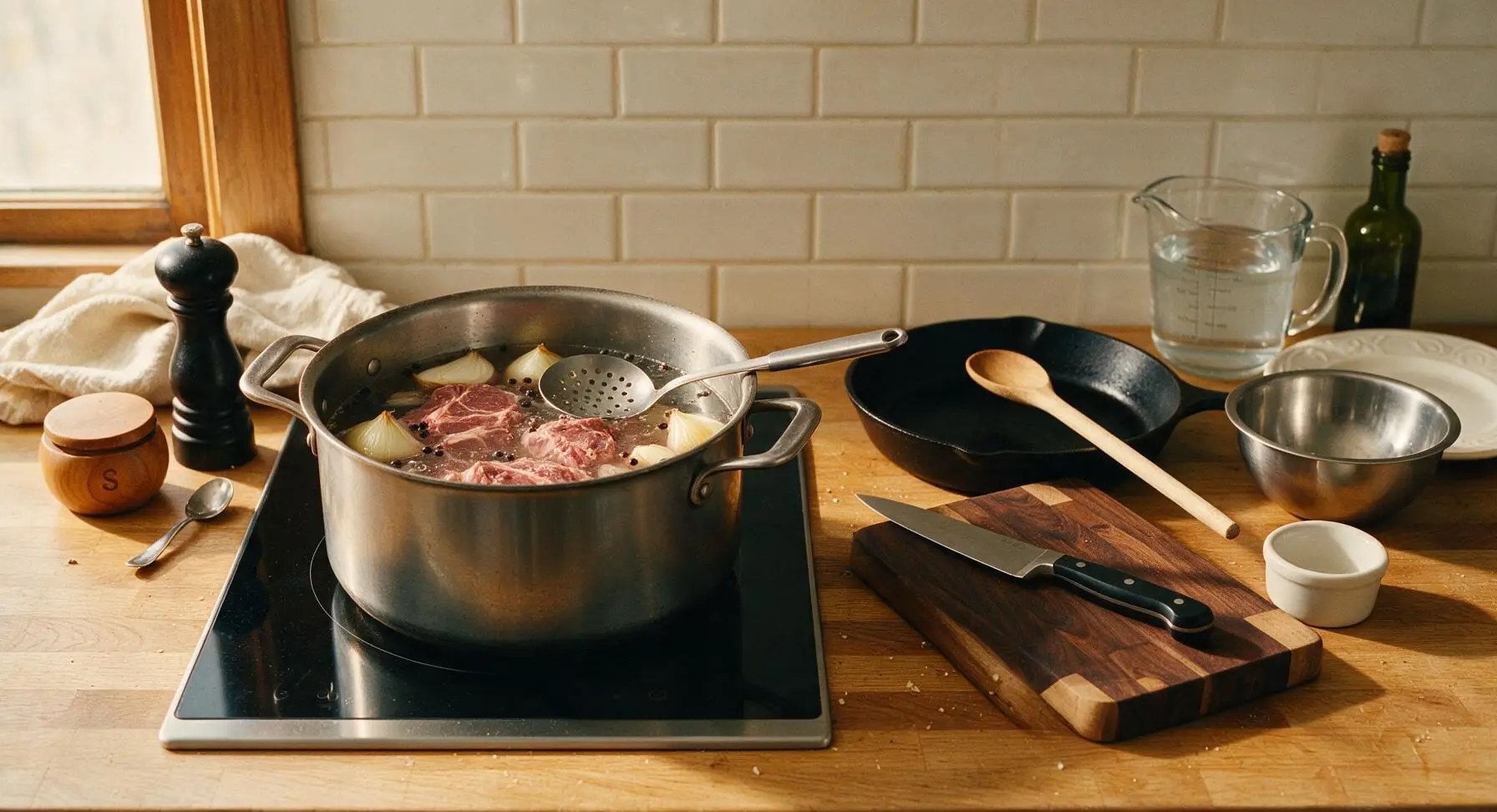
Transfer the rinsed, dried beef to the 6L stainless steel stock pot, pour in 8 cups of cold water measured in the glass measuring cup, then add quartered yellow onion, whole black peppercorns, and 1 tablespoon of fish sauce. Place the pot on the induction cooktop over medium-high heat, bringing to a rolling boil over approximately 10 minutes. Once boiling, reduce heat to medium-low to maintain a gentle, steady simmer (small bubbles breaking the surface every 2-3 seconds). Use the slotted ladle to skim any foamy gray scum that rises to the surface every 5 minutes for the first 20 minutes of simmering. Partially cover the pot (leave a 1-inch gap for steam to escape) and simmer for 1 hour total, until beef is nearly fork-tender when pierced with a knife tip.
Make tamarind extract
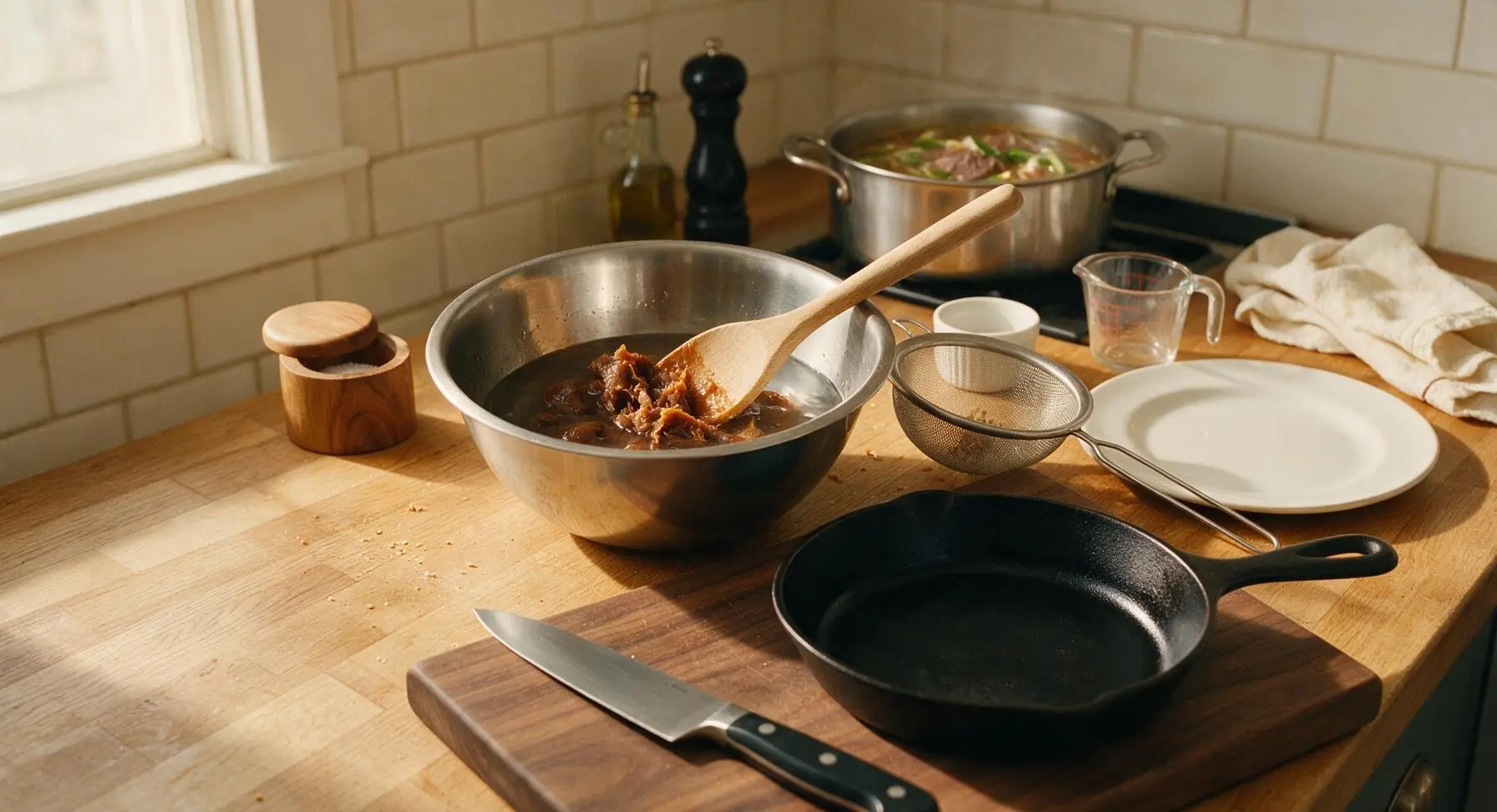
While the beef simmers, place unseeded tamarind pulp in one of the small stainless steel prep bowls, pour ½ cup of hot (not boiling, approx 80C/175F) water over the pulp, and let soak for 10 minutes to soften. Use the back of the wooden stirring spoon to mash the softened pulp thoroughly, releasing the tart, brown juice. Set the fine-mesh strainer over a second clean prep bowl, pour the mashed tamarind and liquid through the strainer, pressing firmly with the spoon to extract all smooth juice; discard the fibrous seeds and pulp solids left in the strainer.
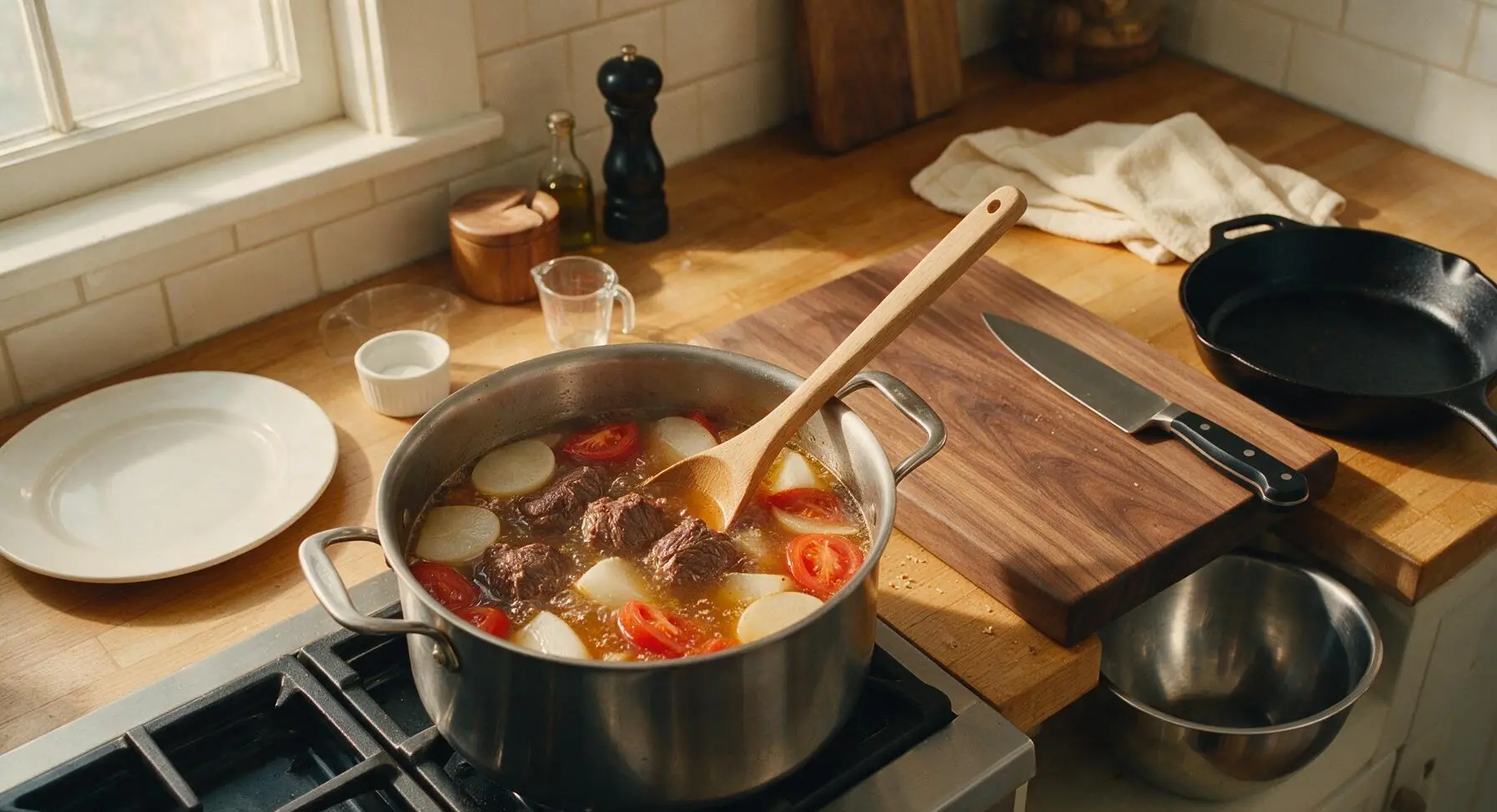
Add firm vegetables
After the beef has simmered for 1 hour and is nearly fork-tender, add the sliced daikon radish and quartered roma tomatoes to the pot. Stir gently with the wooden spoon to submerge the vegetables in the broth, return to a gentle simmer, and cook for 8 minutes, until daikon is slightly translucent at the edges but still firm enough to hold its shape when lifted with the ladle.
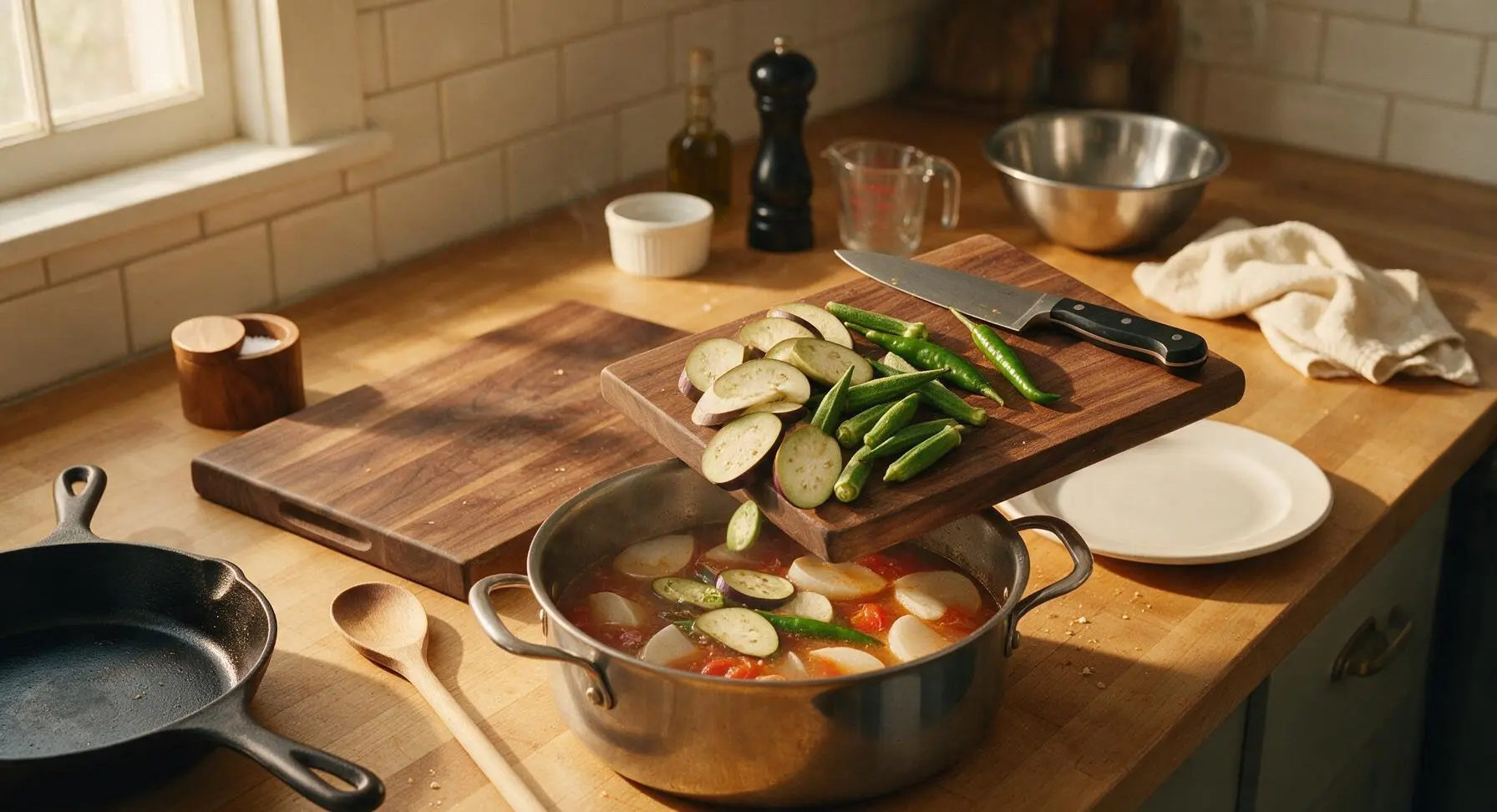
Add tender vegetables
Add the bias-sliced eggplant, trimmed okra, and whole long green chilies to the pot, stirring gently to distribute evenly. Simmer for an additional 5 minutes, until eggplant is just tender when pierced with the tip of the chef knife, but not soft enough to collapse or turn mushy.
Season with tamarind
Pour the strained smooth tamarind extract into the simmering pot, stirring to combine. Add the remaining 2 tablespoons of fish sauce and 1 teaspoon of rock salt, stirring well. Taste the broth with a clean spoon, adjusting with extra fish sauce or a pinch of salt as needed: the flavor should be brightly tart, savory, and lightly salty, with no single flavor overpowering the others. Simmer for 2 minutes to let the flavors meld fully.

Add water spinach
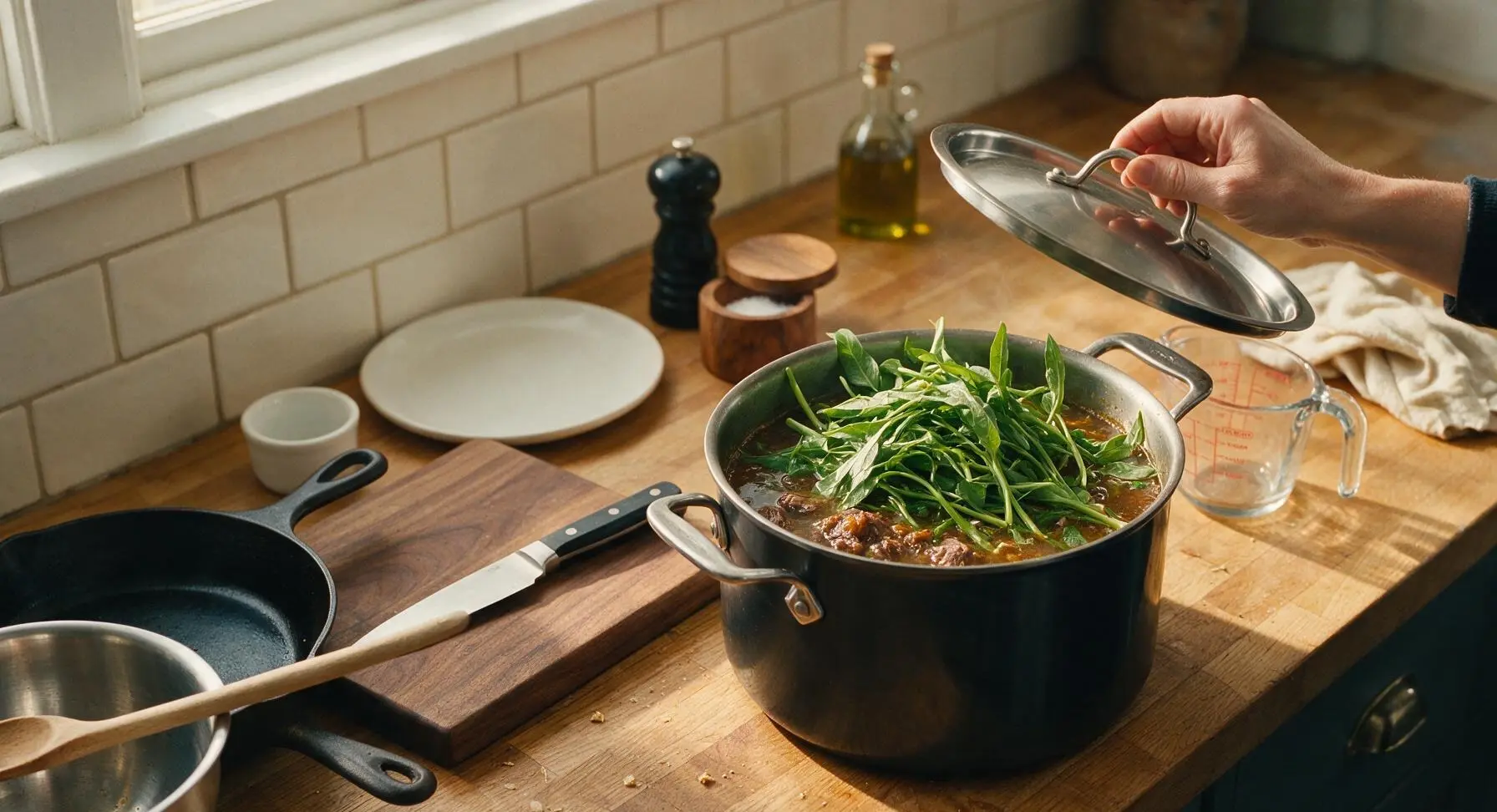
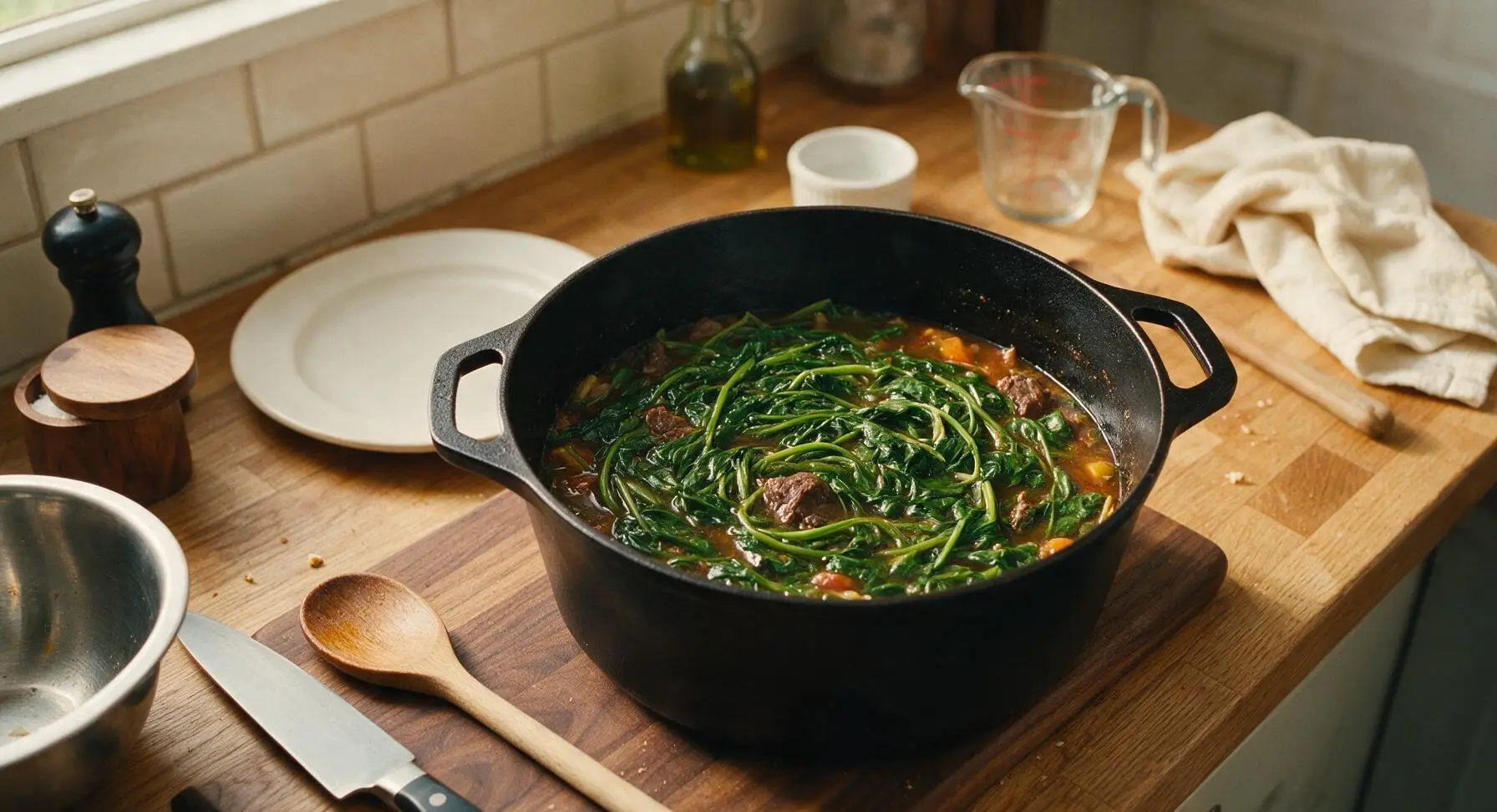
Turn off the induction cooktop heat. Add the trimmed water spinach to the top of the pot, pressing the leaves and tender stems down into the hot broth with the wooden spoon. Place the stainless steel lid securely on the pot, and let rest for 3 minutes, allowing residual heat to wilt the spinach perfectly without turning it slimy or dull olive green.
Ladle and serve
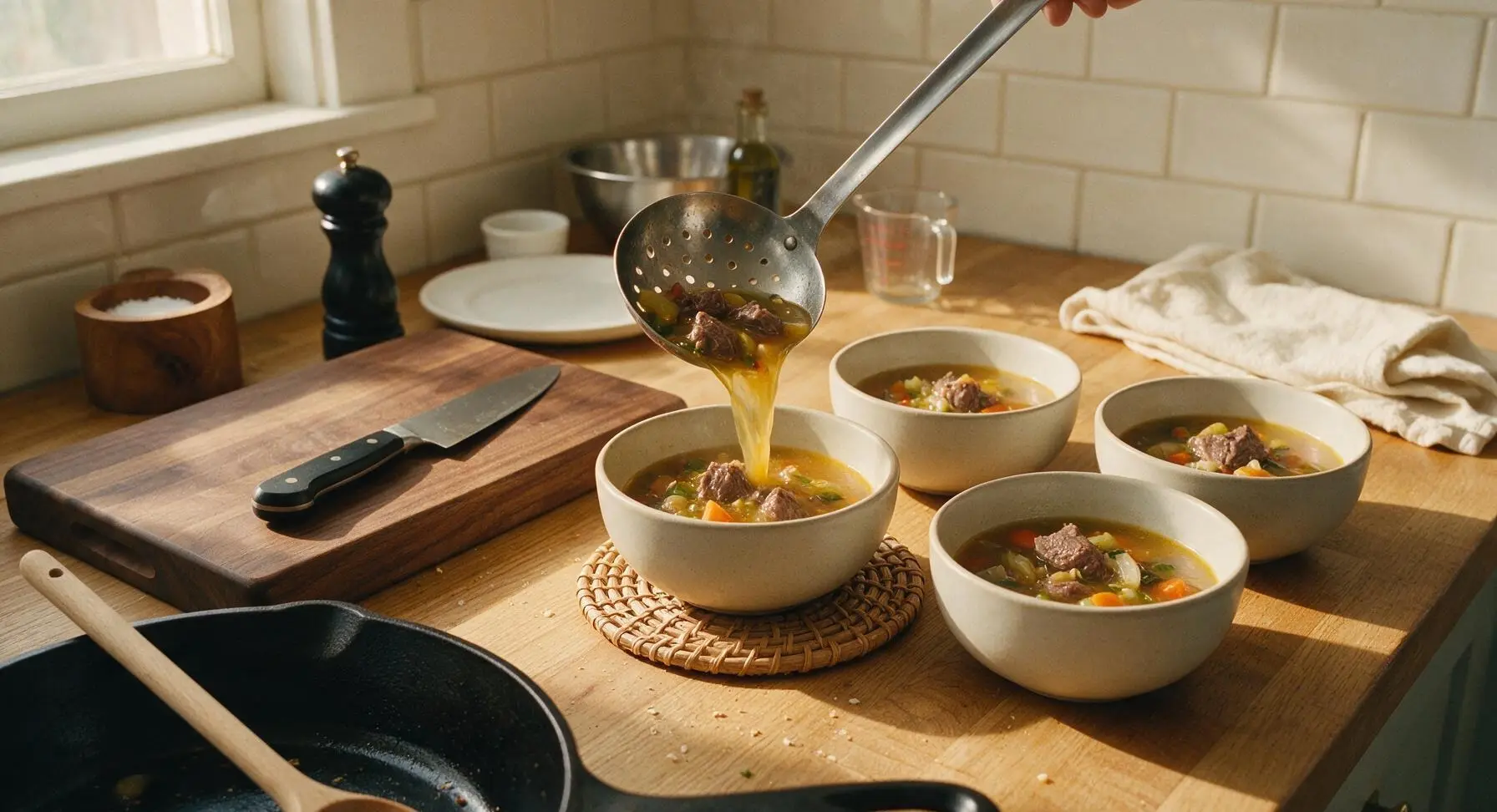
Remove the pot lid, use the slotted ladle to portion equal amounts of beef, vegetables, and broth into the matte off-white ceramic soup bowls set on the counter. Serve immediately while hot, with a small side saucer of fish sauce and a fresh calamansi wedge for dipping beef and vegetables, if desired.
Tips
2.Add vegetables in order of firmness: dense root vegetables first, then softer fruiting vegetables, and delicate leafy greens completely off-heat to prevent overcooking, keeping each vegetable’s bright color and distinct texture instead of turning everything uniformly mushy.
3.Adjust sourness to taste: tamarind pulp can vary widely in tartness depending on ripeness and variety, so add the strained extract gradually, tasting after each addition, to hit your preferred balance of sour, salty, and savory rather than relying strictly on the measured amount.





OMG this sinigang is SO good!!! I grew up eating my lola’s version but never got her exact recipe before she passed, so I was nervous to try making it on my own. The tamarind sour level is perfectly balanced, not too sharp, and the beef got so fall-apart tender after the full simmer time. My husband and two kids devoured two bowls each at dinner last night, even my picky 7 year old asked for seconds! Total game changer for our weekly family dinner rotation.
Really solid recipe! I upped the beef to 2 pounds since I was meal prepping for the week, and added a handful of extra daikon because it’s my favorite part of sinigang. Only reason I’m not giving 5 stars is the cook time said 1hr45 but my beef was still a little tough at that point, I had to let it go another 25 minutes. Flavor was spot on though, even my teen who swears he hates “sour food” ate a whole serving.
Made this for my Filipino boyfriend’s birthday dinner and he said it tasted exactly like his mom’s cooking!!! I was so stressed I’d mess it up since I’d never cooked any Filipino food before, but the steps were super straightforward even for a medium-difficulty recipe. I used fresh tamarind pods instead of the packet mix like the recipe suggested and wow, that depth of flavor is unreal. We had leftovers for 3 days and it somehow tasted even better the second day. 10/10 will make again!
I made a test batch last night and it was incredible, can’t wait to serve it for our family potluck next weekend! Quick question for future makes though — can I use pork instead of beef for this? My local grocery store was out of the beef chuck the recipe calls for but I have a big pack of pork shoulder in the freezer I need to use up. Also, do you have to add the fish sauce? I have a soy allergy so I’m trying to figure out a good swap for next time!