
Beef Tongue Burnt Ends
intro
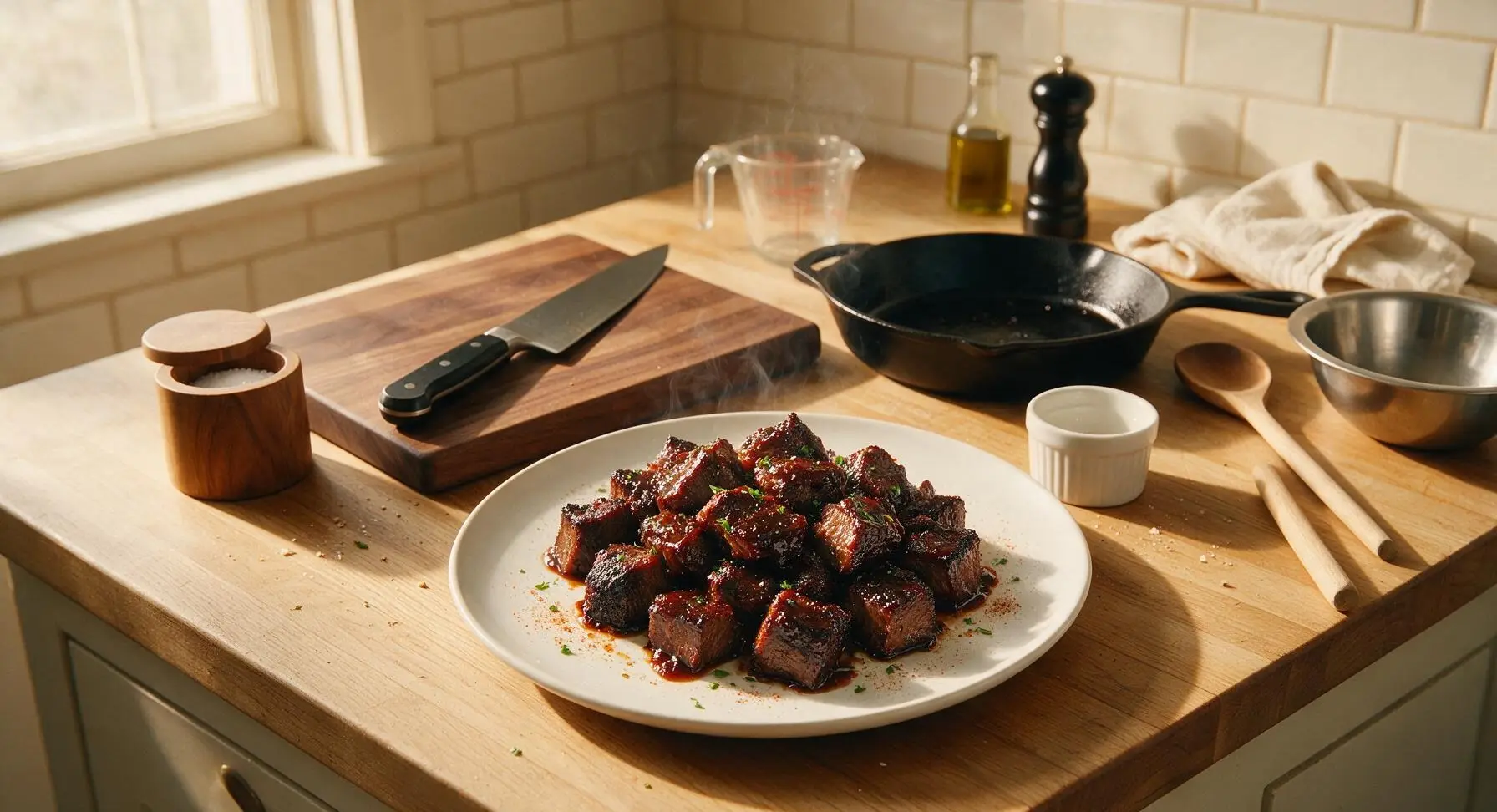
Smoky, melt-in-your-mouth beef tongue burnt ends coated in sticky, caramelized BBQ glaze—a rich, indulgent twist on the classic Kansas City BBQ favorite.
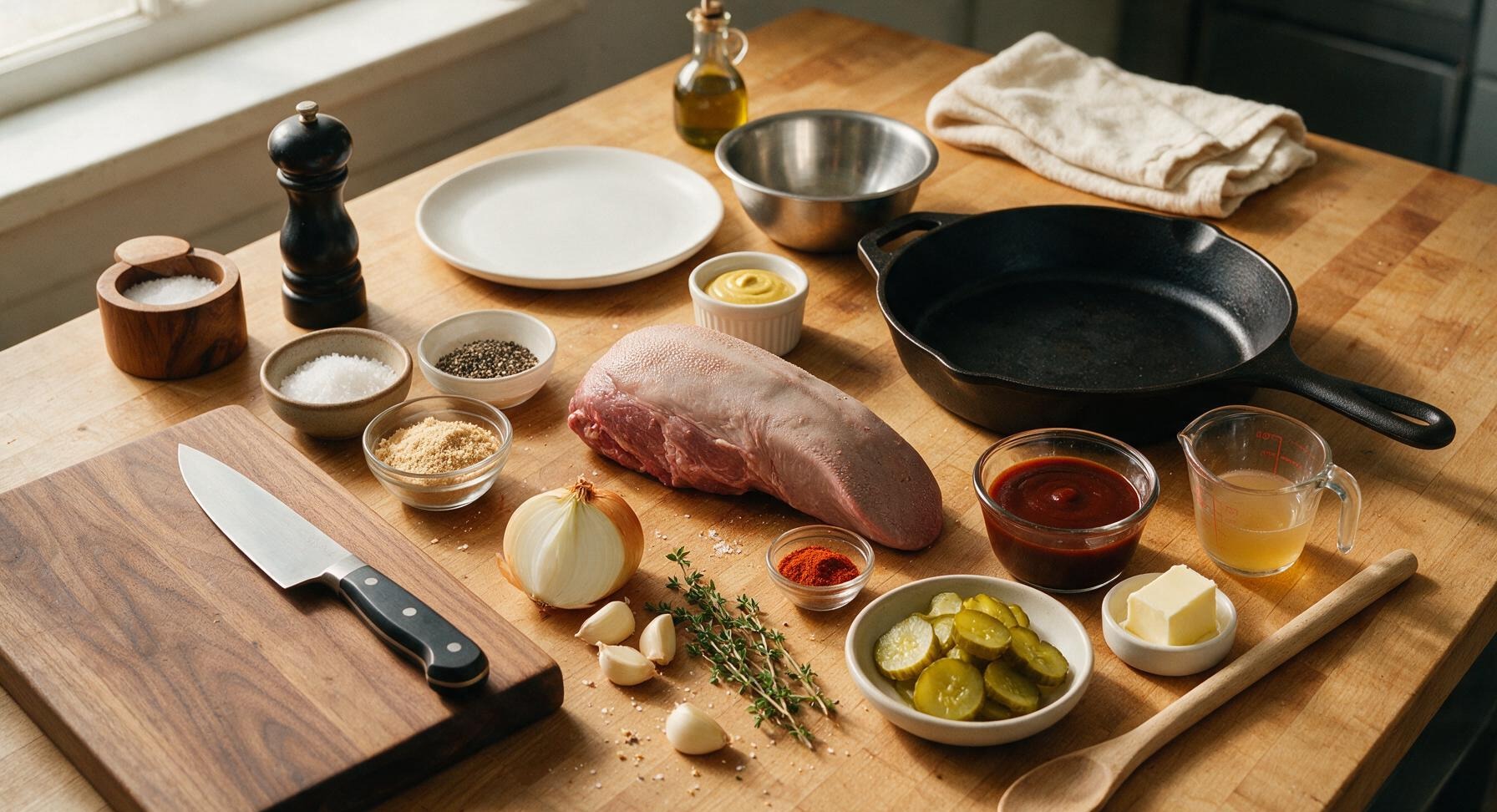
Ingredients
Steps
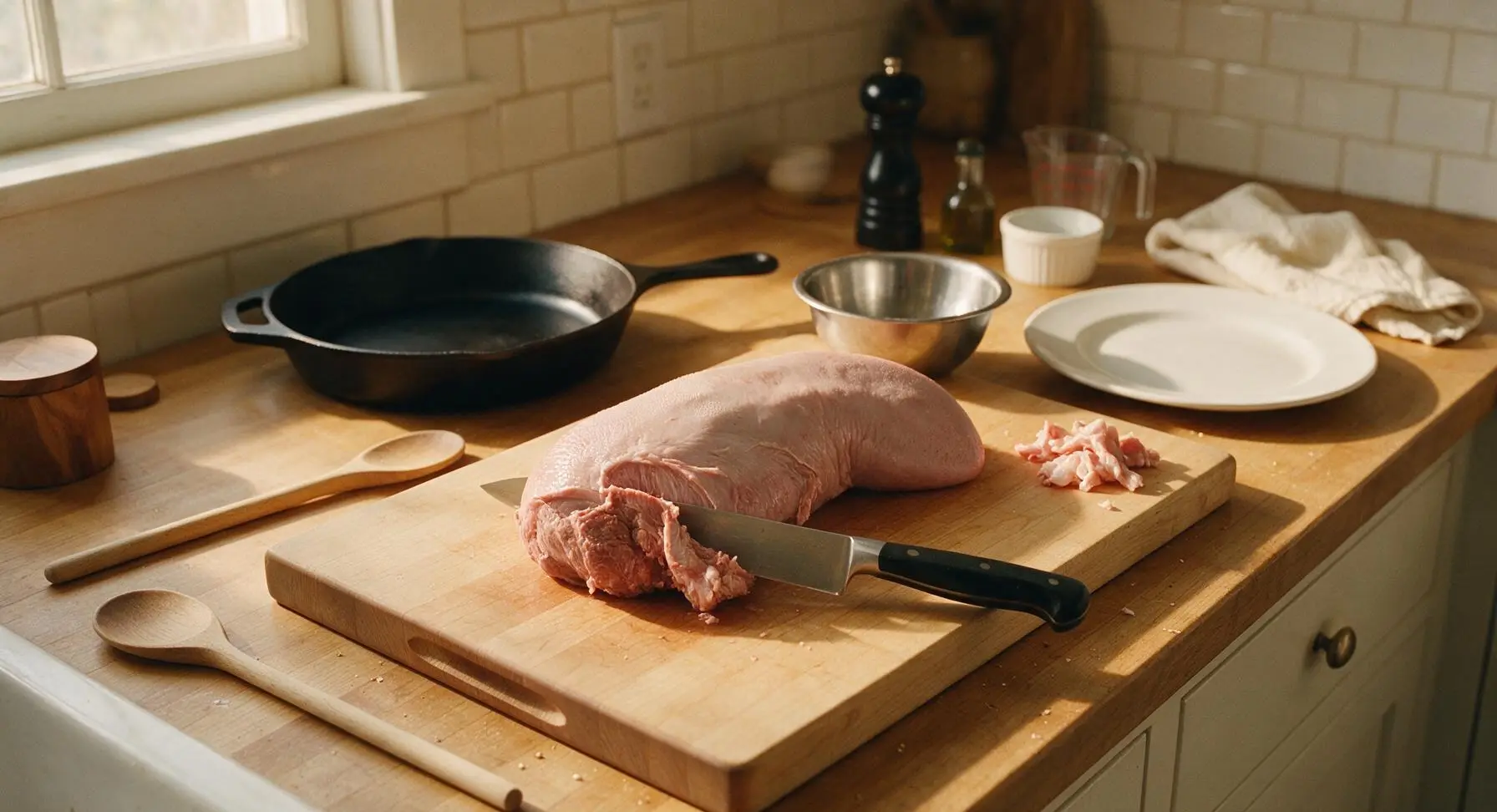
Trim the Beef Tongue
Rinse the whole raw beef tongue under cold water and pat dry with the linen towel. Place it on the large maple cutting board. Use the 8-inch chef knife to trim away any excess loose connective tissue, excess fat, and the rough, hardened base of the tongue where it was separated from the head. Leave the thin outer skin intact at this stage—it will peel away easily after cooking. The trimmed tongue should have a smooth, even surface with no ragged loose bits.
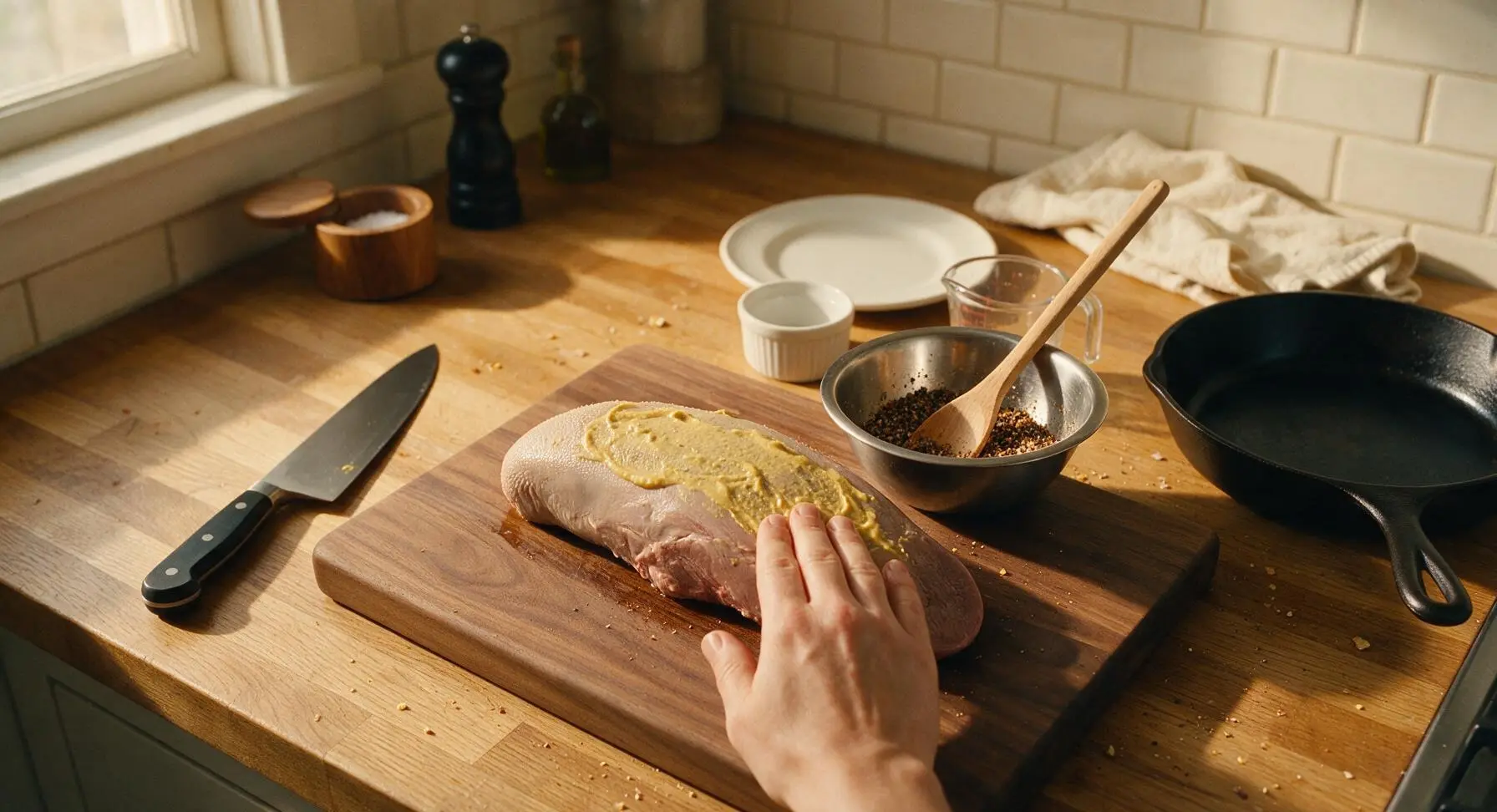
Coat with Spice Rub
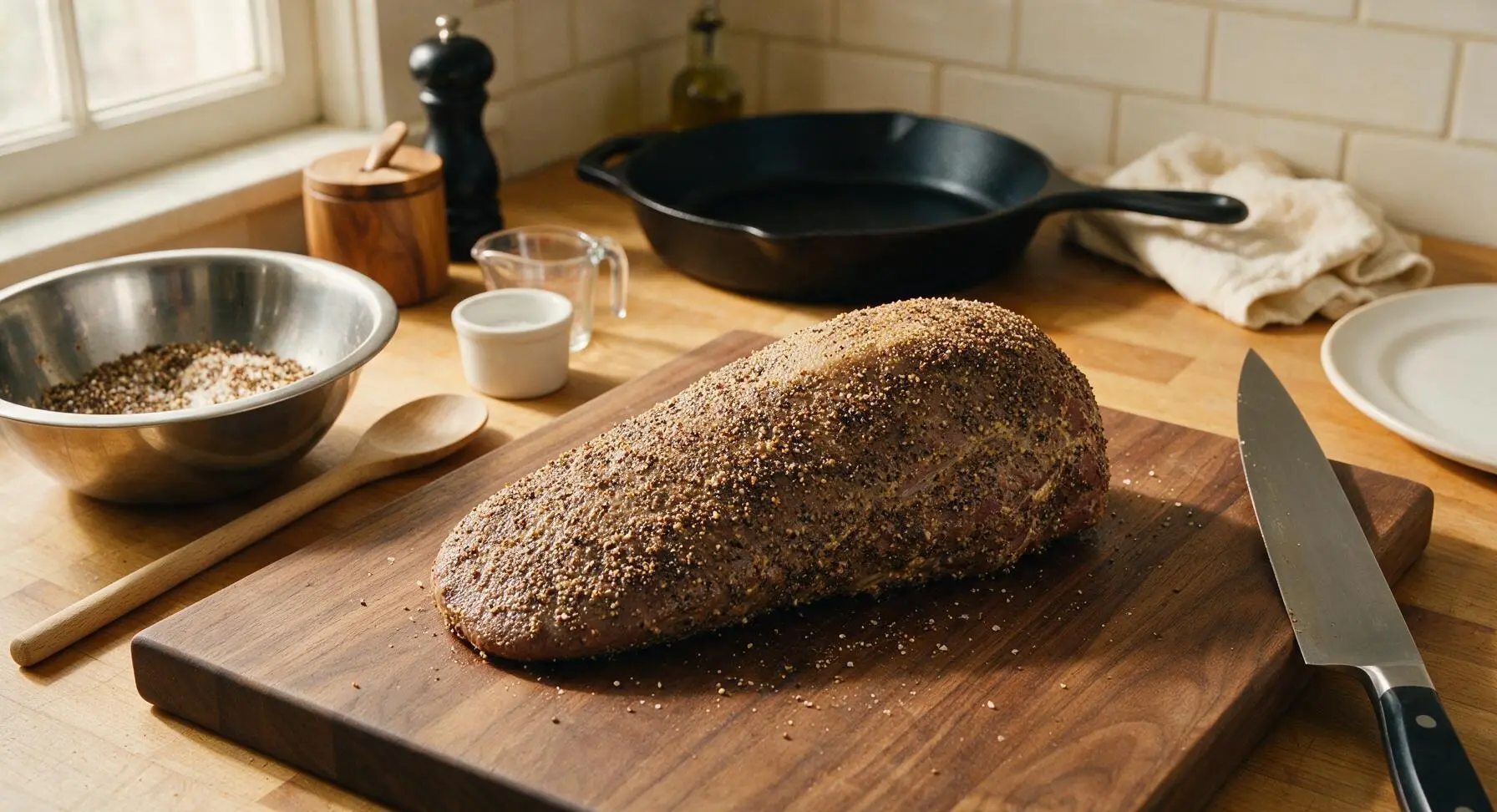
In the small stainless steel mixing bowl, combine 3 tbsp kosher salt, 2 tbsp coarse black pepper, 1 tbsp garlic powder, 1 tsp smoked paprika, and 1 tbsp light brown sugar, stirring to mix evenly. Use clean hands to spread 2 tbsp yellow mustard in a thin, even layer over the entire surface of the trimmed tongue—this binder helps the rub stick and forms a crisp, flavorful bark. Sprinkle the spice rub generously over every side of the tongue, pressing lightly to adhere, so no patches of bare meat or mustard are visible.
Smoke the Seasoned Tongue
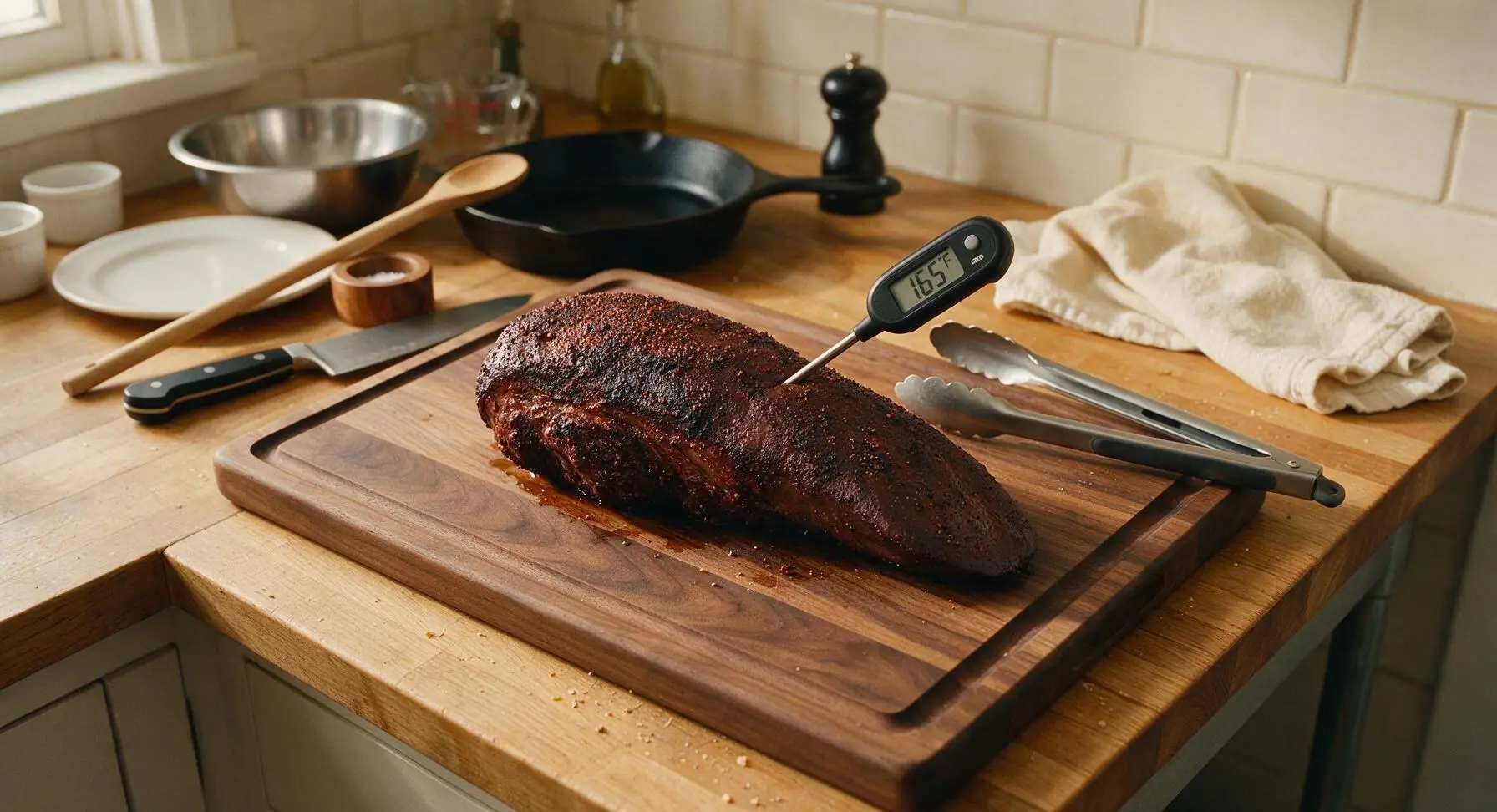
Preheat your smoker to 225°F (107°C), loaded with hickory or oak wood chunks for a balanced, medium smoky flavor. Use the stainless steel tongs to place the fully seasoned tongue directly on the middle smoker grate, fat-side up. Scatter the quartered yellow onion, crushed garlic cloves, and fresh thyme sprigs on the grate next to the tongue to infuse smoky aroma into the meat. Smoke for 4 hours, until the exterior forms a firm, dark reddish-brown bark and the internal temperature hits 165°F (74°C) when measured with the digital instant-read thermometer.
Wrap to Tenderize
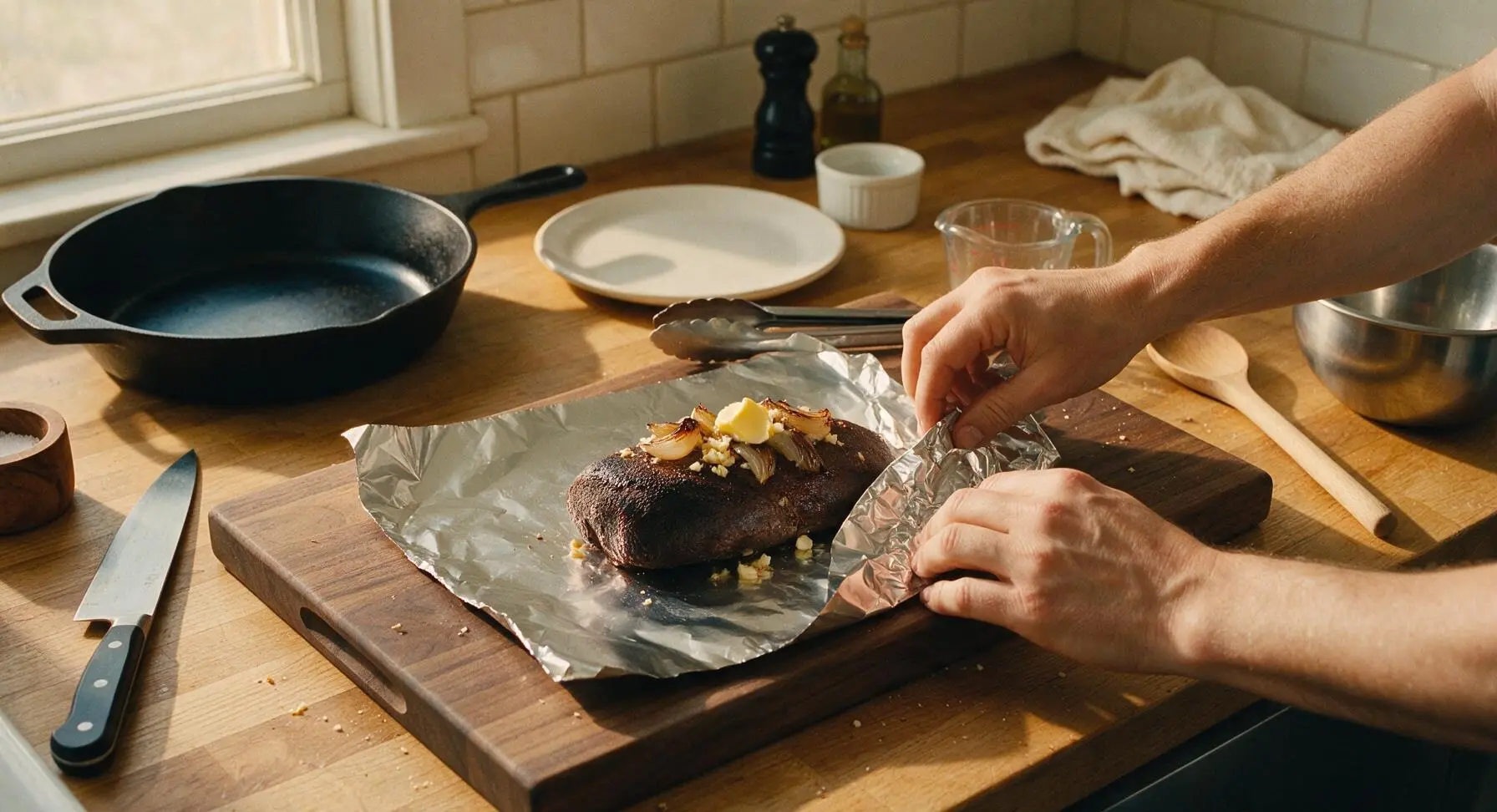
Tear a 90cm (3-foot) sheet of heavy-duty aluminum foil and spread it flat on the cutting board. Transfer the smoked tongue to the center of the foil, top with the smoked onion, garlic, thyme, and 2 tbsp unsalted butter. Fold the foil tightly around the tongue, crimping all edges to create a fully sealed packet so no steam can escape. Return the foil packet to the smoker, and cook for an additional 1 to 1.5 hours, until the internal temperature reaches 205°F (96°C) and the thermometer probe slides into the meat with zero resistance, like sticking a knife into soft room-temperature butter.
Peel and Cube Meat
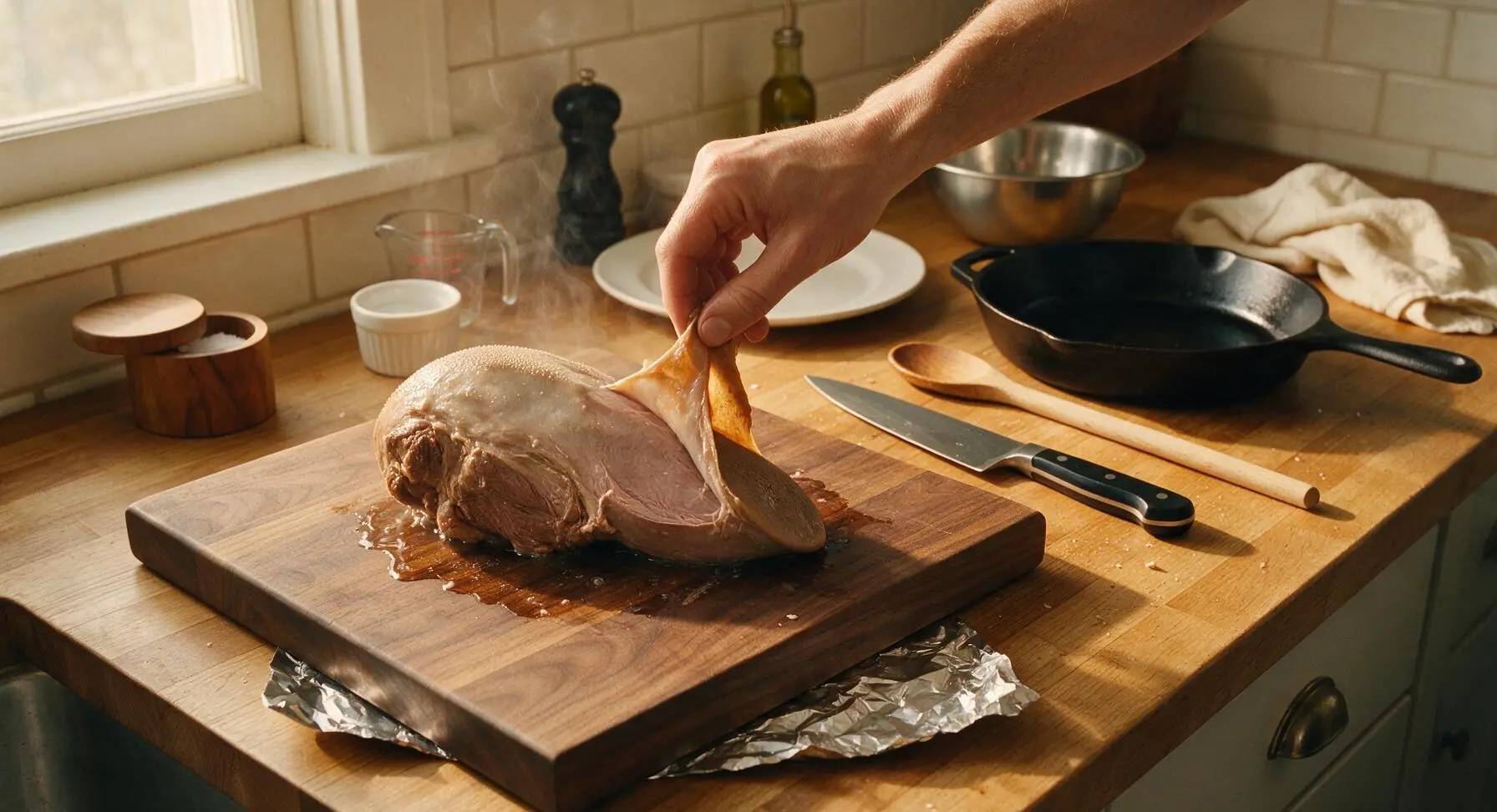
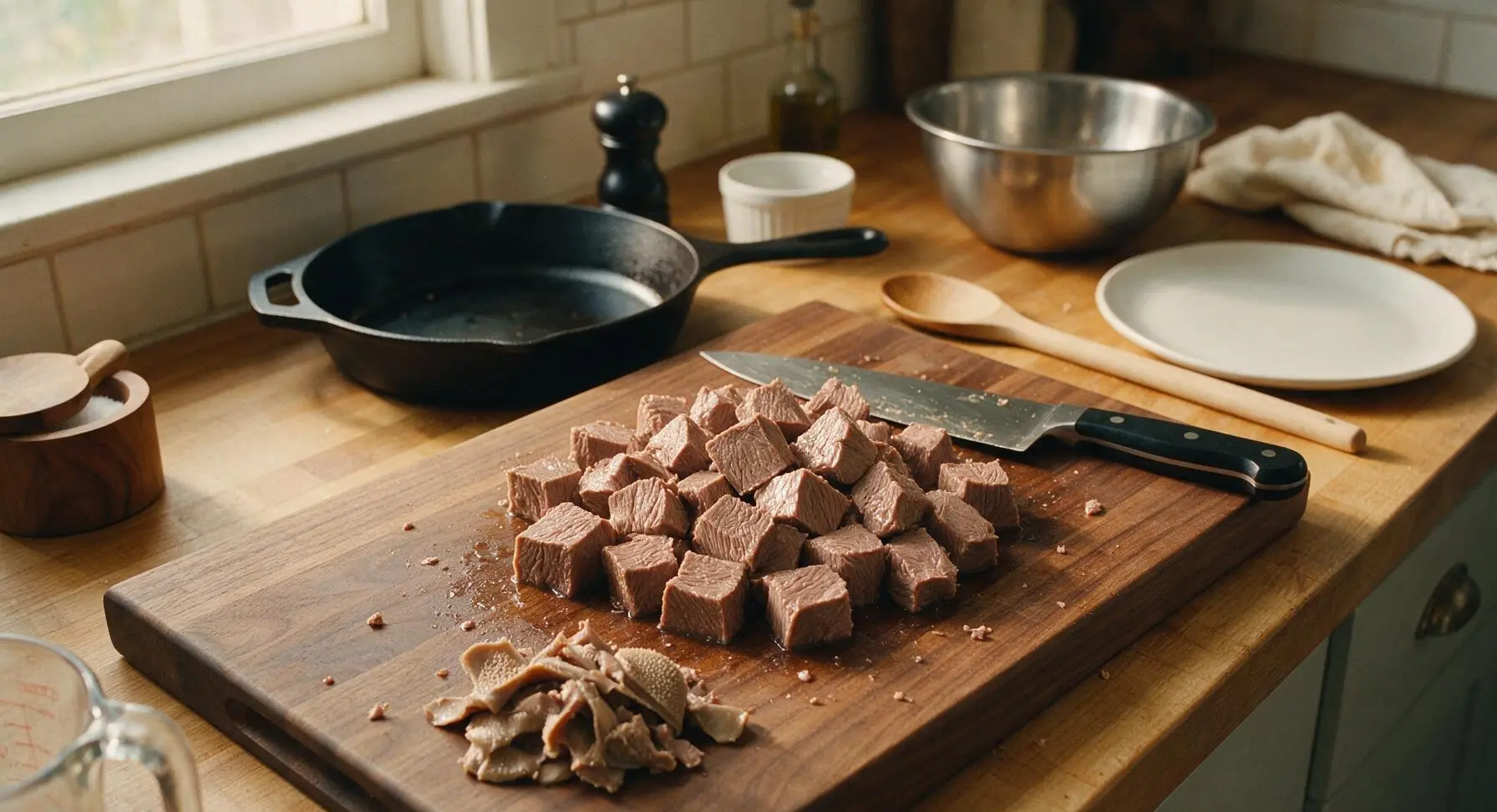
Use the tongs to carefully remove the hot foil packet from the smoker and transfer it back to the cutting board. Let it rest, fully sealed, for 20 minutes to allow juices to redistribute through the meat. Carefully peel open the foil (keep your face back to avoid burns from escaping hot steam), then use your fingers and the tip of the chef knife to peel away the thin, rough outer skin from the tongue—it will slide off easily when fully tender. Discard the skin, spent onion, garlic, and thyme. Cut the peeled, tender tongue meat into uniform 2.5cm (1-inch) cubes for burnt ends.
Glaze and Roast Cubes
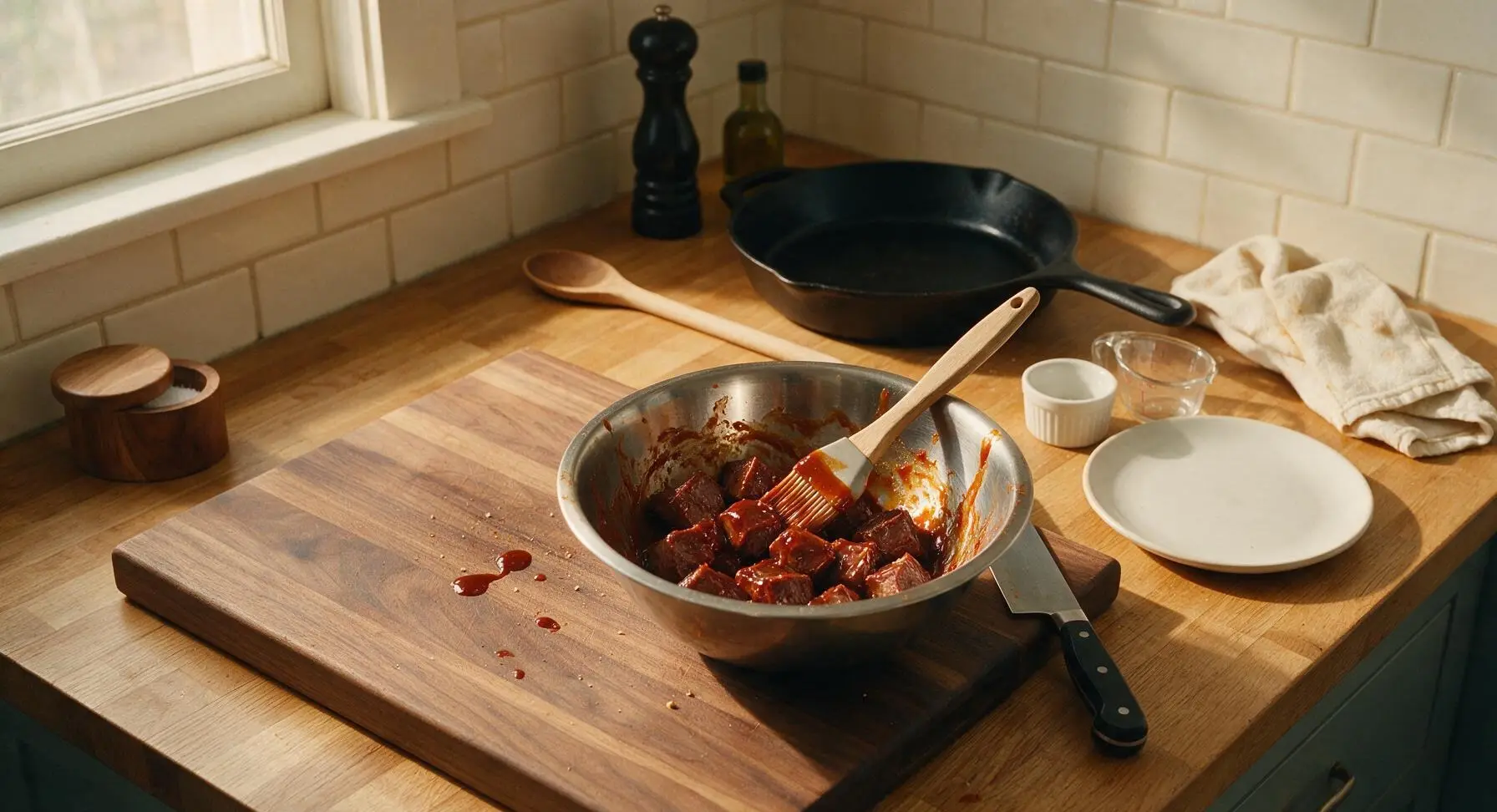
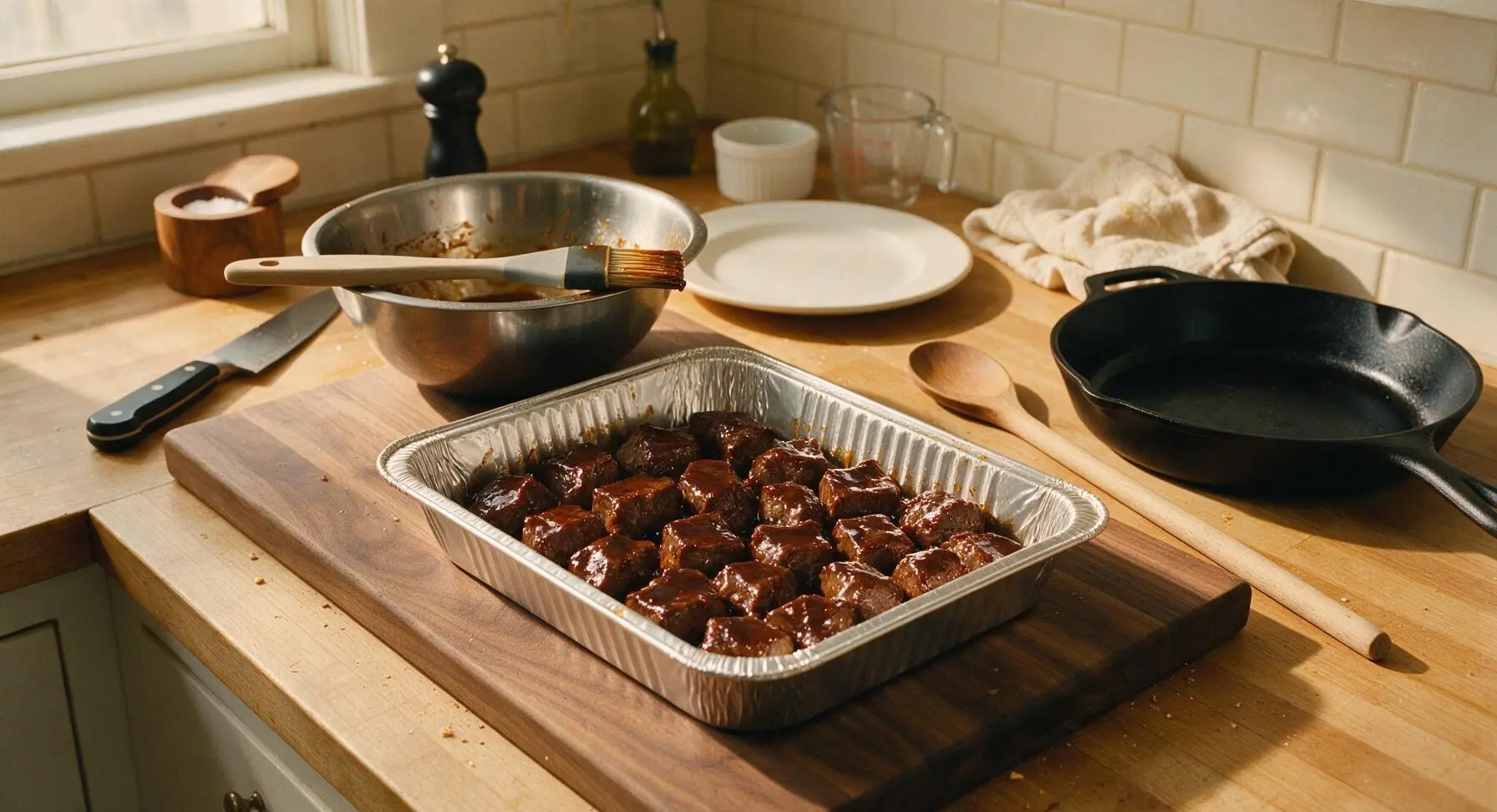
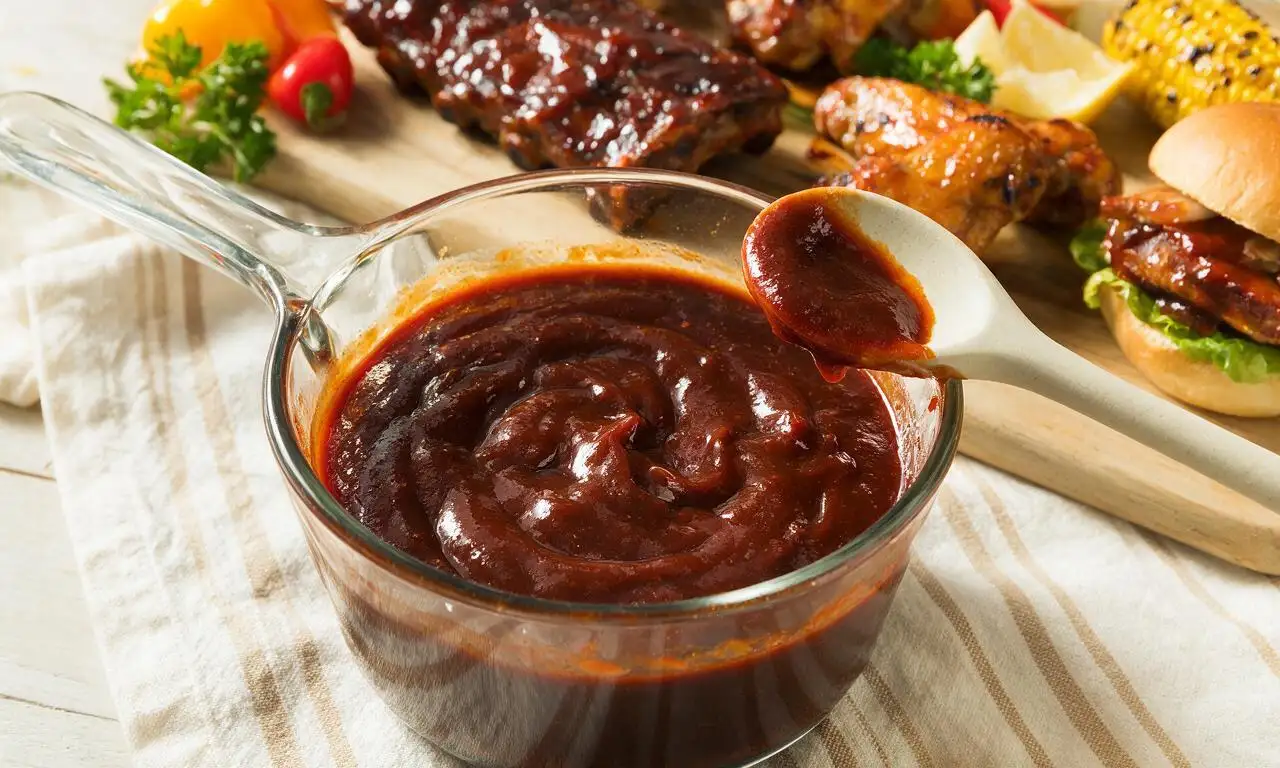
In the medium stainless steel mixing bowl, whisk together 1 cup Kansas City-style BBQ sauce, 2 tbsp apple cider vinegar, and the remaining 1 tbsp light brown sugar until completely smooth. Add the cubed tongue to the bowl, and use the silicone basting brush to toss and coat every cube fully in glaze. Transfer the sauced cubes to the disposable aluminum foil pan, spreading them in a single, even layer. Return the pan to the smoker (adjust temperature to 250°F / 120°C) and cook for 45 minutes, stirring the cubes every 15 minutes with the tongs, until the glaze is sticky, caramelized, and slightly crispy on the edges of the cubes.
Rest and Plate
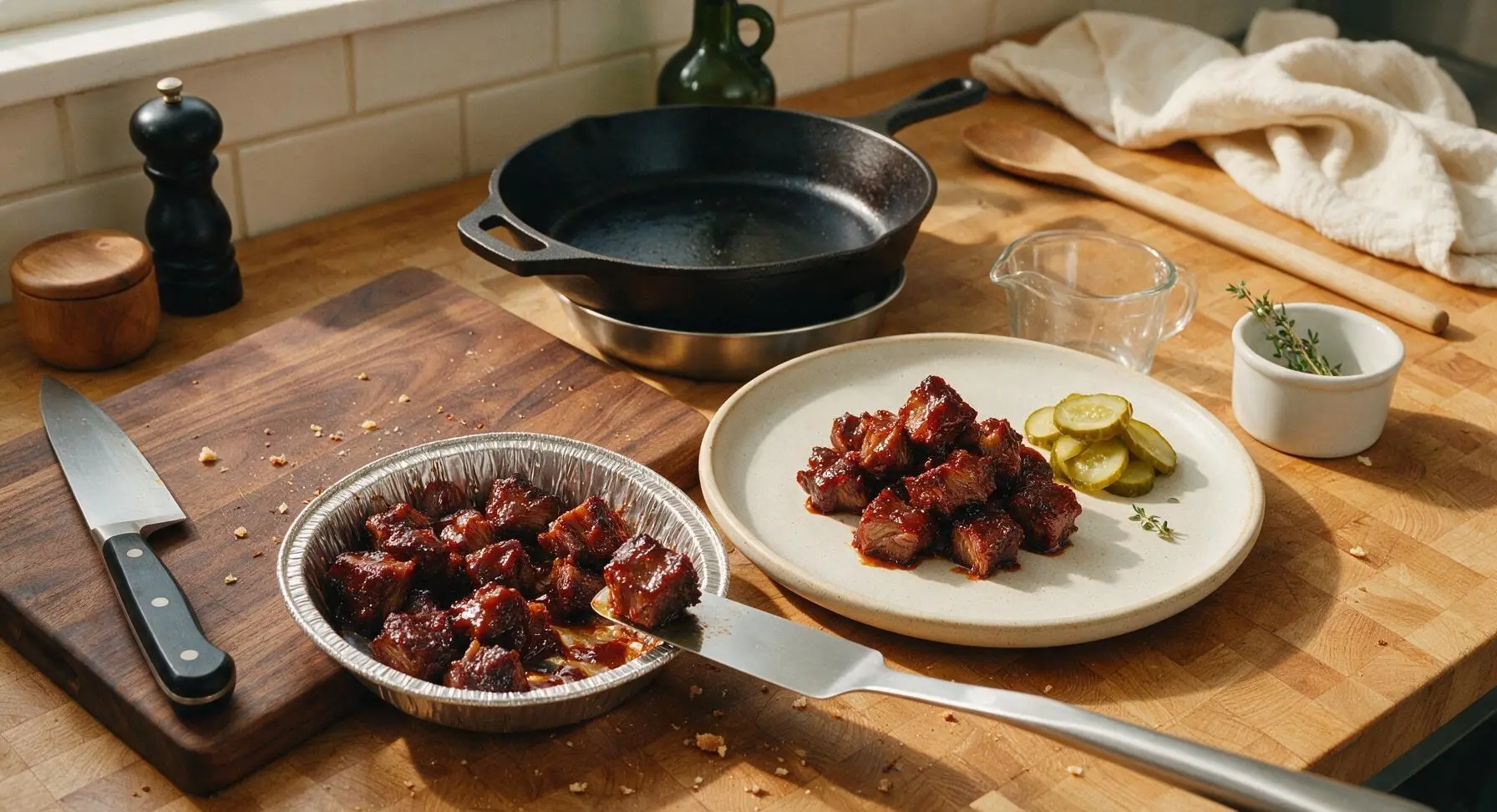
Use the tongs to remove the foil pan of finished burnt ends from the smoker, and let them rest for 5 minutes to allow the glaze to set and cling to the meat. Use the offset metal spatula to transfer the sticky burnt ends to the center of the matte off-white ceramic dinner plate, piling them loosely. Tuck a small pile of dill pickle slices to one side, garnish with a small sprig of fresh thyme, and serve immediately.
Tips
2.Keep smoker temperature steady between 225–250°F for the entire cook: fluctuating high heat will cause the outer bark to turn leathery and the sugary BBQ glaze to burn bitter, rather than developing the signature sticky, caramelized burnt end crust.
3.Let the sauced burnt ends rest for 5 minutes after coming off the smoker: this short rest allows the glaze to thicken and cling tightly to each cube, instead of running off into a puddle on the plate when served.
OMG y’all, these beef tongue burnt ends were the absolute star of our neighborhood potluck last weekend! I was a little nervous working with tongue for the first time since I’ve only ever made brisket burnt ends, but the 6-hour cook time was totally worth every minute. Everyone was begging for the recipe, even my picky 14-year-old who turns his nose up at anything ‘weird’ went back for thirds. Total game changer for my summer cookout rotation!
Made these for my weekly meal prep last week and wow, SO good! I was worried 6 hours was too long to fit into my schedule, so I did the initial smoke on Sunday morning then tossed them in the sauce to finish while I prepped my side dishes for the week. They reheated perfectly all week for work lunches, even my coworker who swears she hates all offal stole a bite and asked where I ordered them from. Only small tweak I made: I added a little extra honey to the BBQ sauce for my sweet tooth and it slapped.
Took a swing at these for family dinner last night and honestly? I was super skeptical because I thought beef tongue would be too gamey for my crew, but these tasted just like extra rich, melt-in-your-mouth brisket burnt ends. My kids loved it, they kept calling it ‘BBQ candy’ and asked if we could have it again next weekend. Will absolutely be making this for my dad’s birthday cookout next month, he’s a total BBQ snob and he’s going to lose his mind over these.