
Belgian Dark Strong Ale
intro
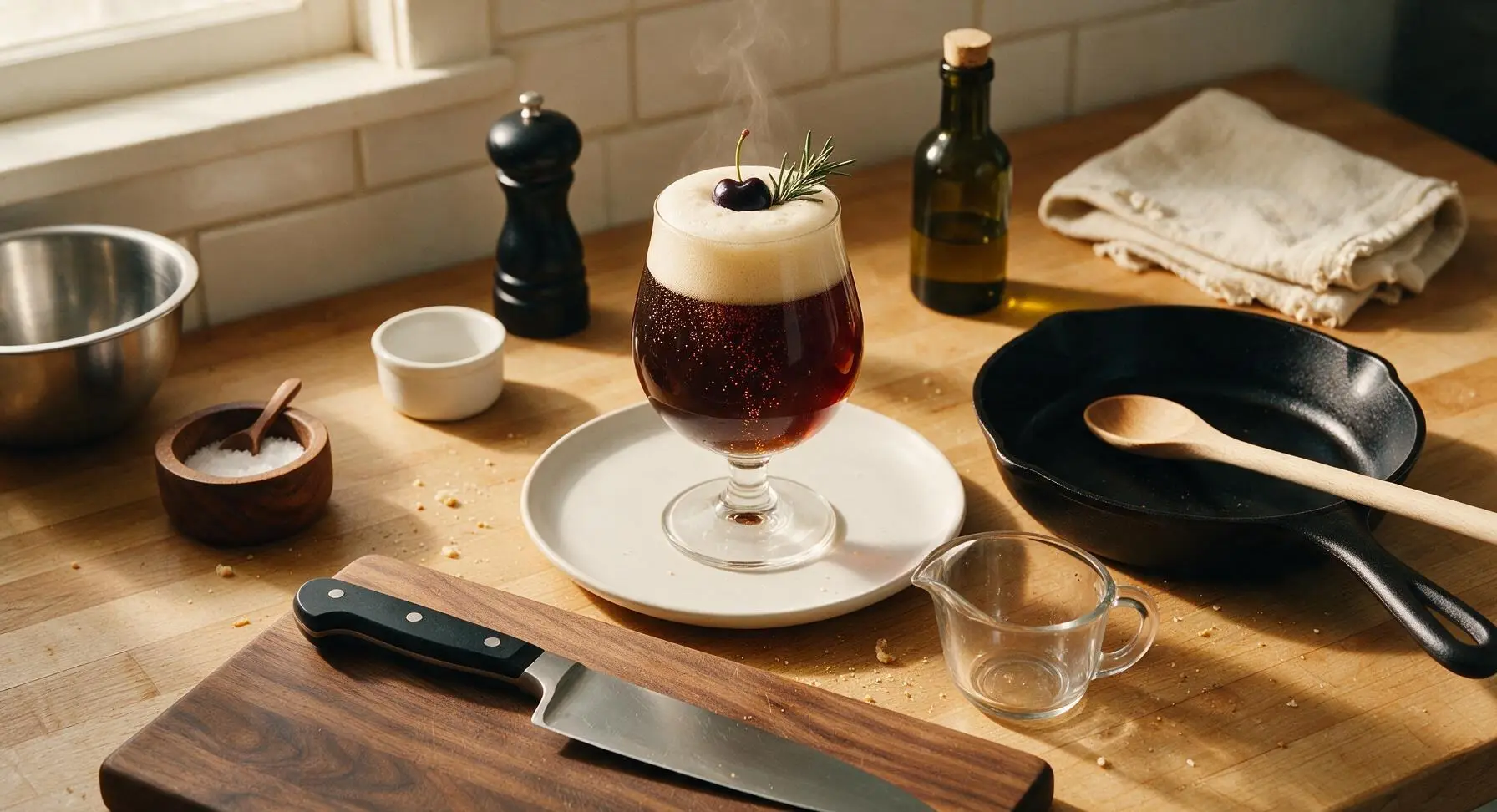
Rich, malty, and deeply fruity with notes of dark stone fruit, caramel, and subtle spice, this high-gravity ale is smooth, warming, and perfect for cold winter holiday sipping.
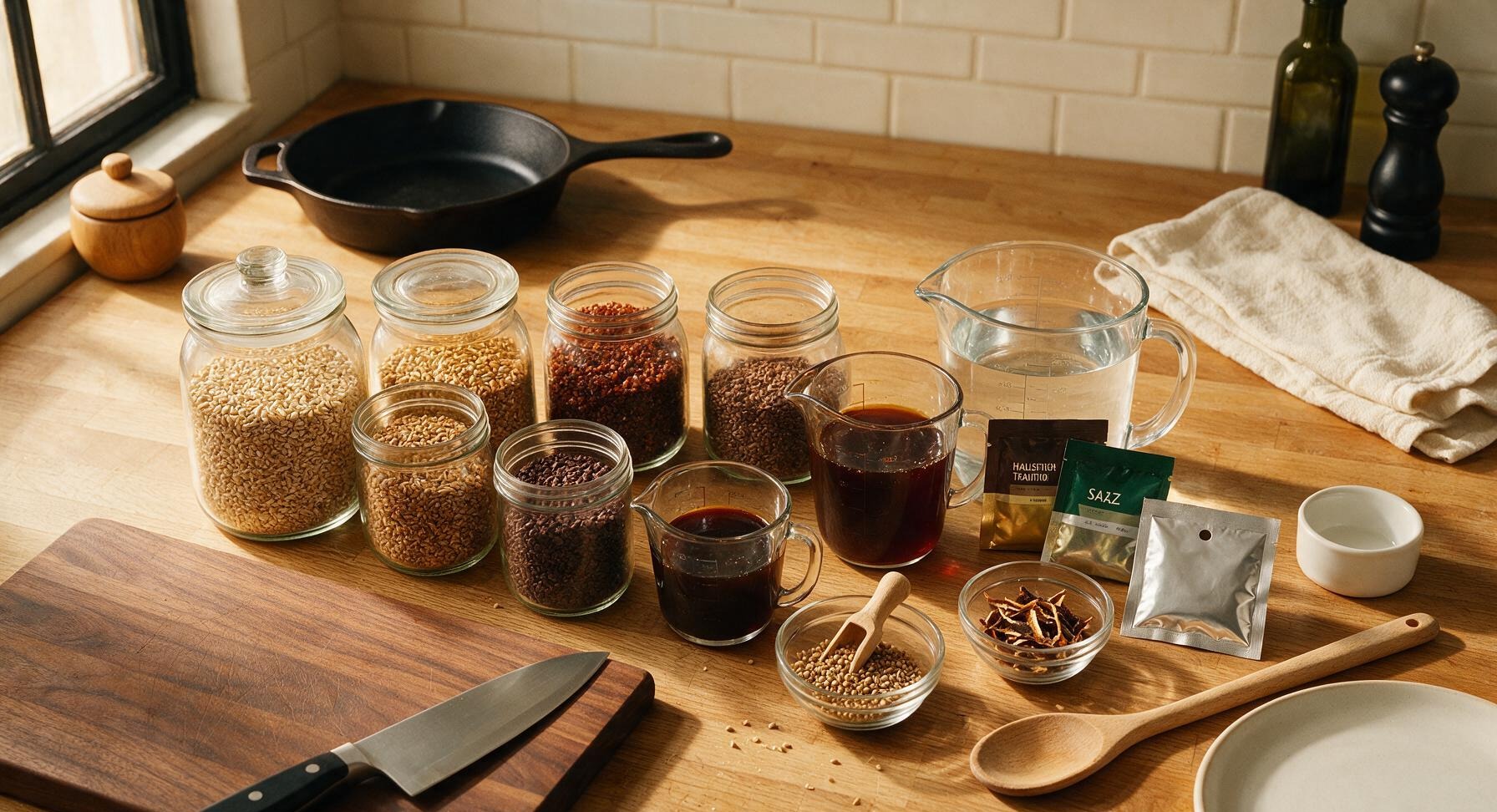
Ingredients
Steps
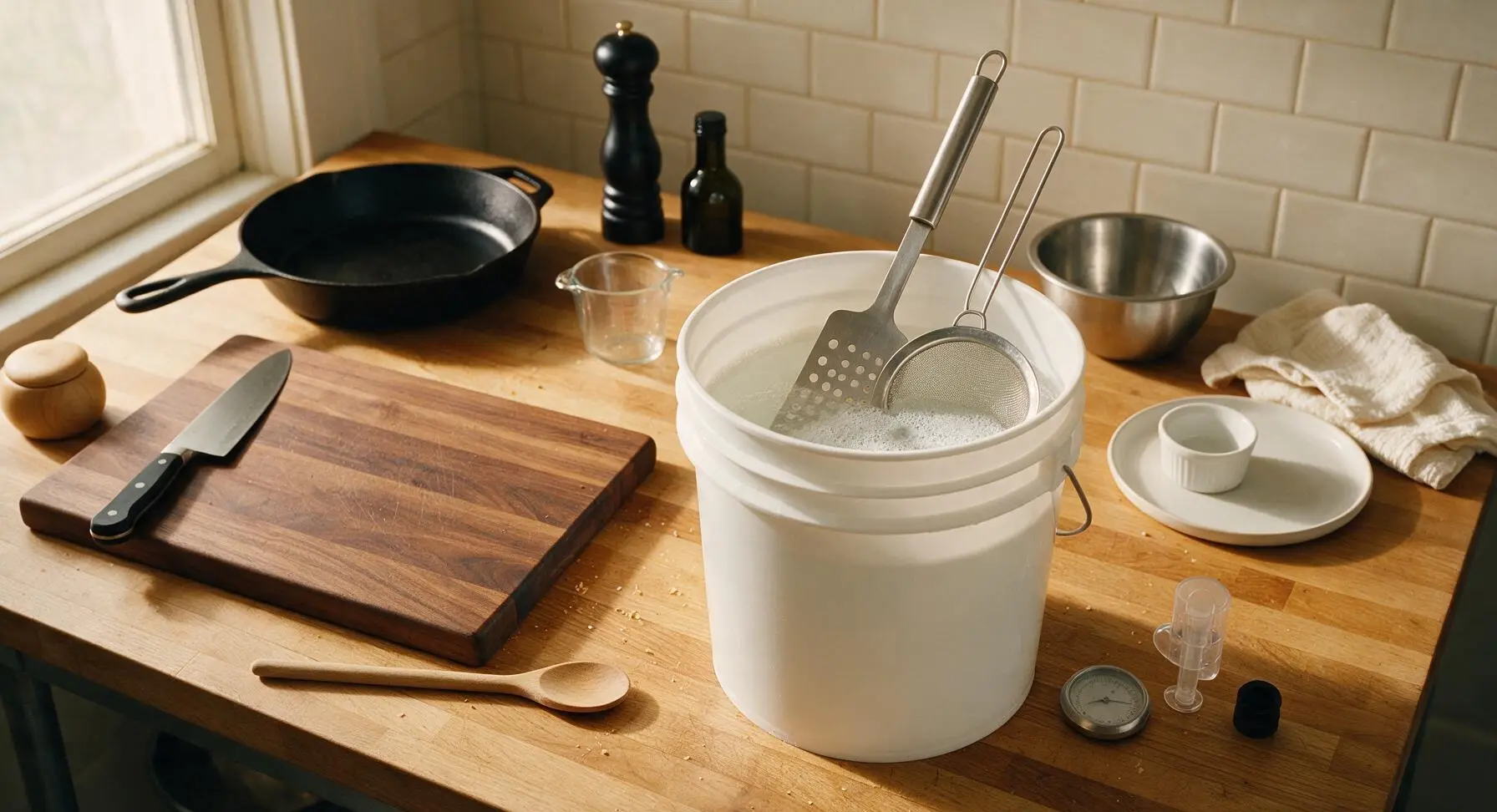
Sanitize Brewing Equipment
Fill the 5-gallon white HDPE bucket with 4L of cool filtered water and 1 capful of food-grade no-rinse sanitizer. Submerge all tools that will contact cooled wort (strainer, mash paddle, thermometer, carboy stopper, airlock) for 2 full minutes, then set on a clean section of counter to air dry. A slight foam on the water surface indicates the sanitizer is properly mixed; no rinsing is required, as residual sanitizer is flavorless and harmless to yeast.
Heat Mash Water
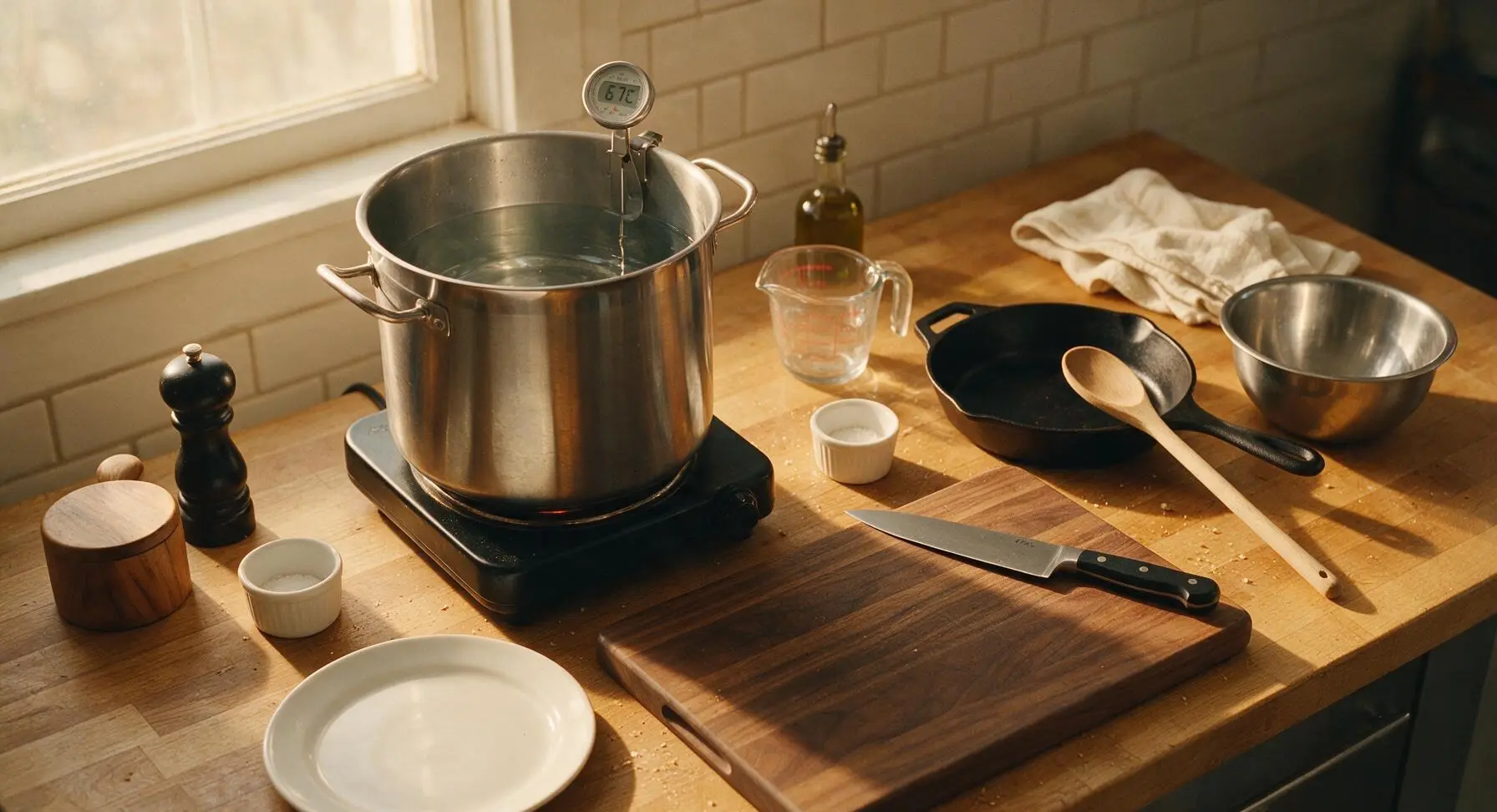
Pour 15L of filtered water into the 8-gallon stainless steel brew pot set on the matte black electric burner. Clip the glass brewing thermometer to the pot rim, then turn the burner to medium heat to warm the water to exactly 67C (153F). Adjust the burner dial to hold this temperature steady; the water will be hot to the touch but not at a rolling boil.
Mash the Grain Bill
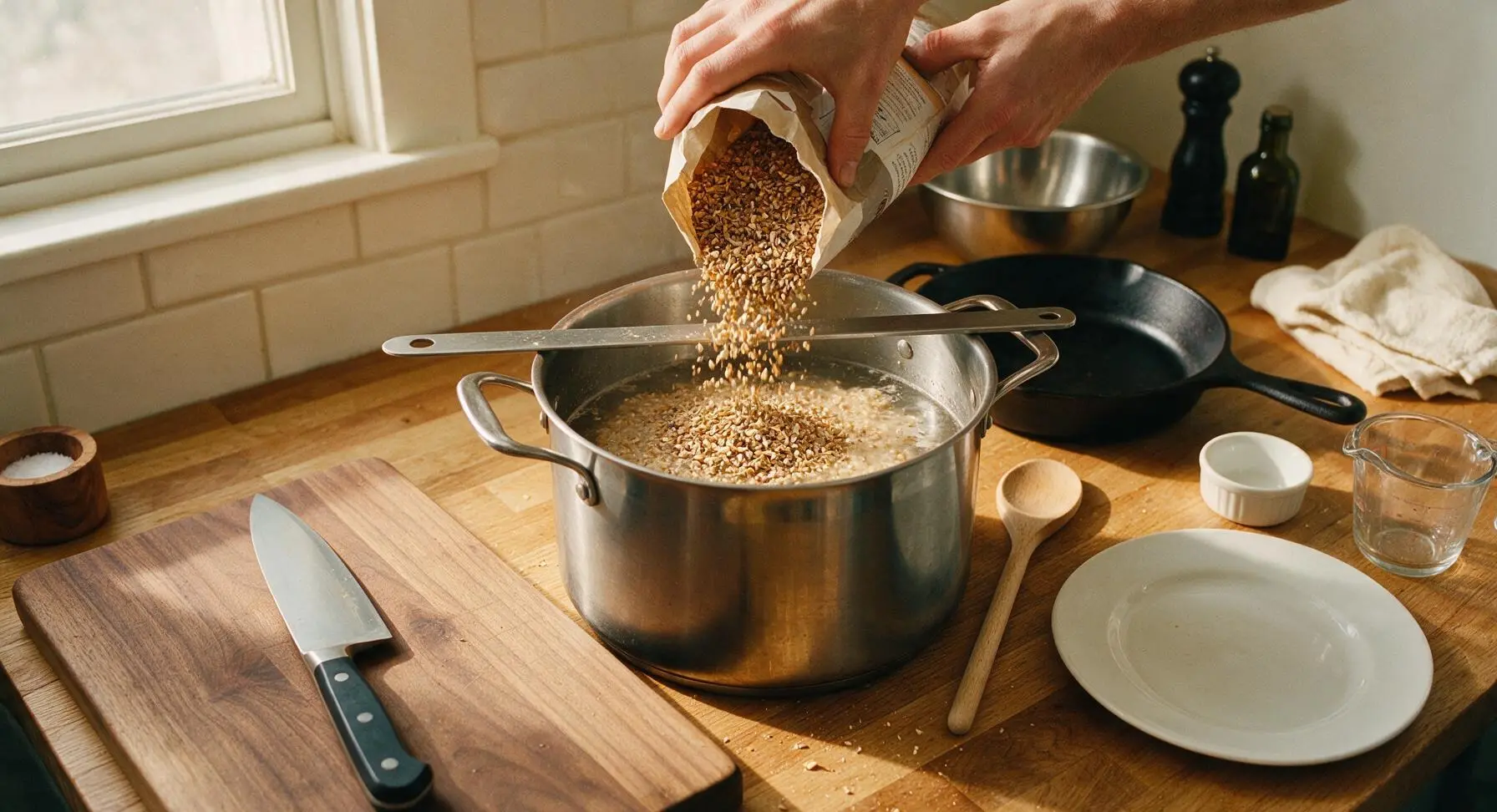
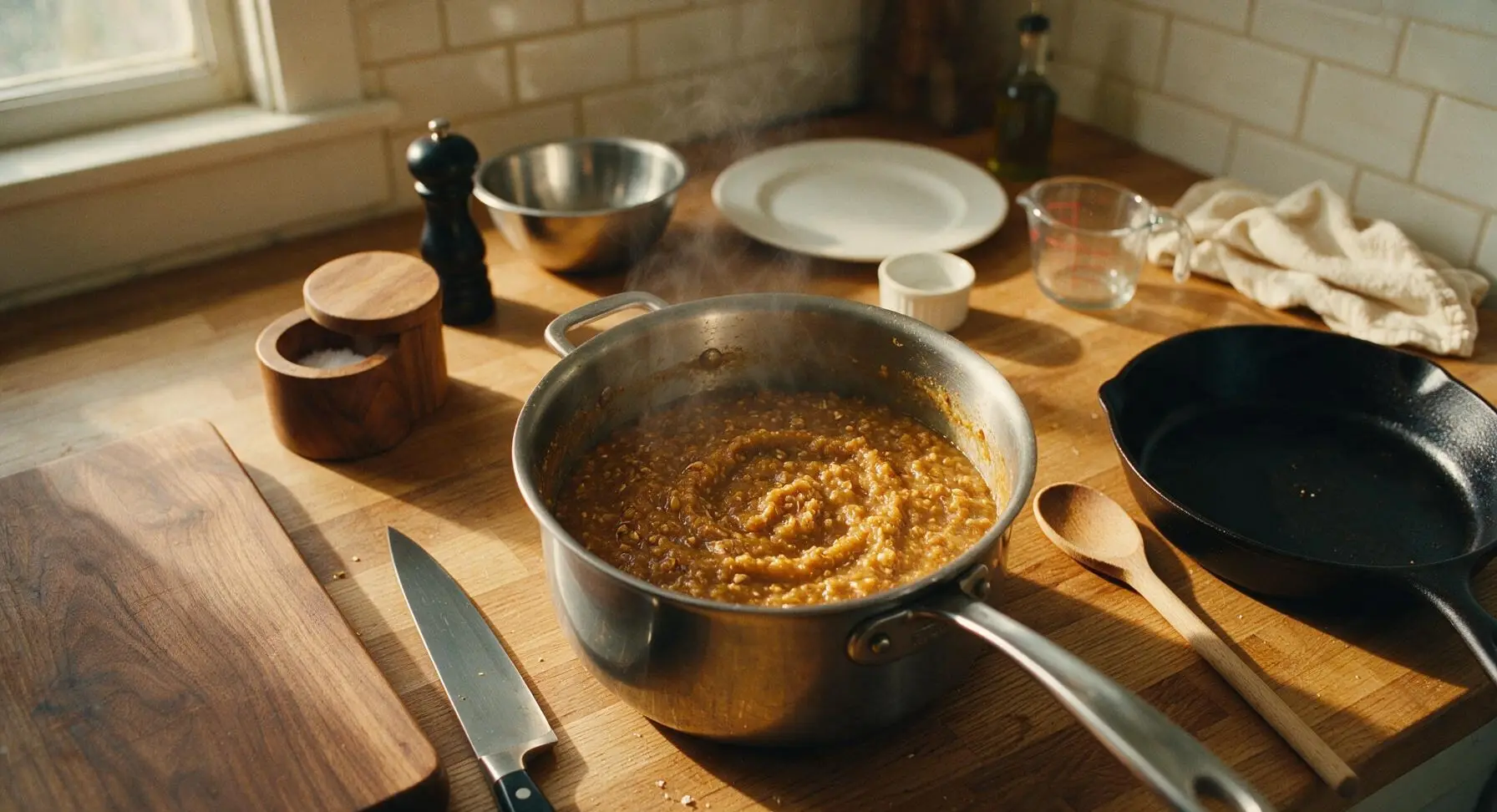
Slowly stir all crushed malts (Pilsner, Munich, Special B, chocolate, aromatic) into the heated water using the stainless steel mash paddle, mixing thoroughly to break up any dry clumps of grain. The mixture will form a thick, porridge-like mash. Cover the pot with the lid and hold the temperature steady at 66-68C (151-154F) for 60 minutes. The mash will smell sweet, bready, and slightly toasty as it rests; conversion is complete when a drop of mash liquid on a white surface turns light amber, not dark purple, when tested with iodine.
Strain Sweet Wort
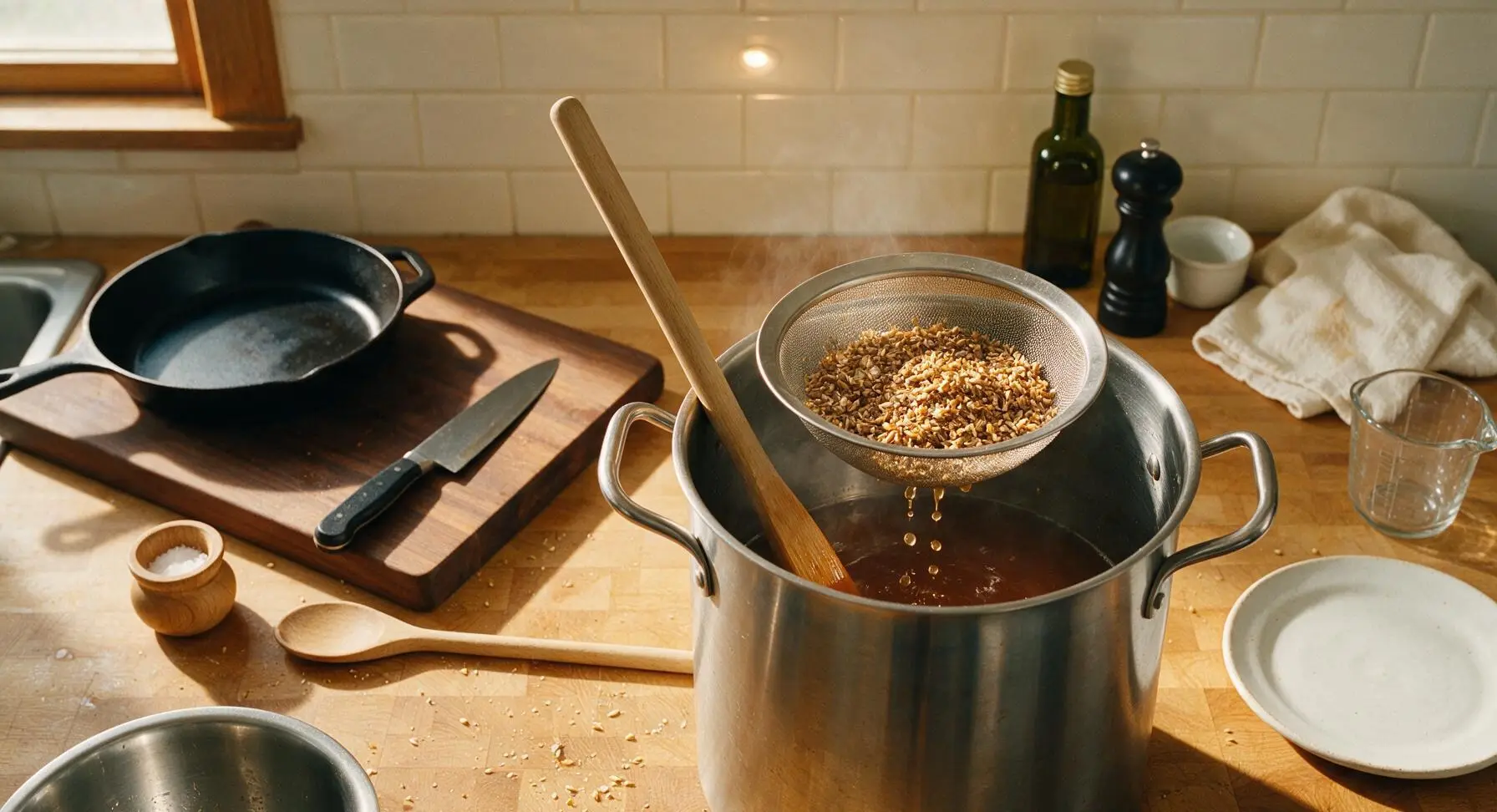
Set the fine-mesh stainless steel strainer over the top of the brew pot, then slowly pour the mashed grain and liquid through the strainer to separate the sweet, sugar-rich liquid (wort) from the spent grain husks. Slowly pour 8L of 77C (170F) filtered water over the spent grains in the strainer to rinse remaining sugars from the husks (sparging). Collect all drained wort back in the brew pot; you will have roughly 22L of clear, deep amber wort at the end of this step.
Boil and Add Ingredients
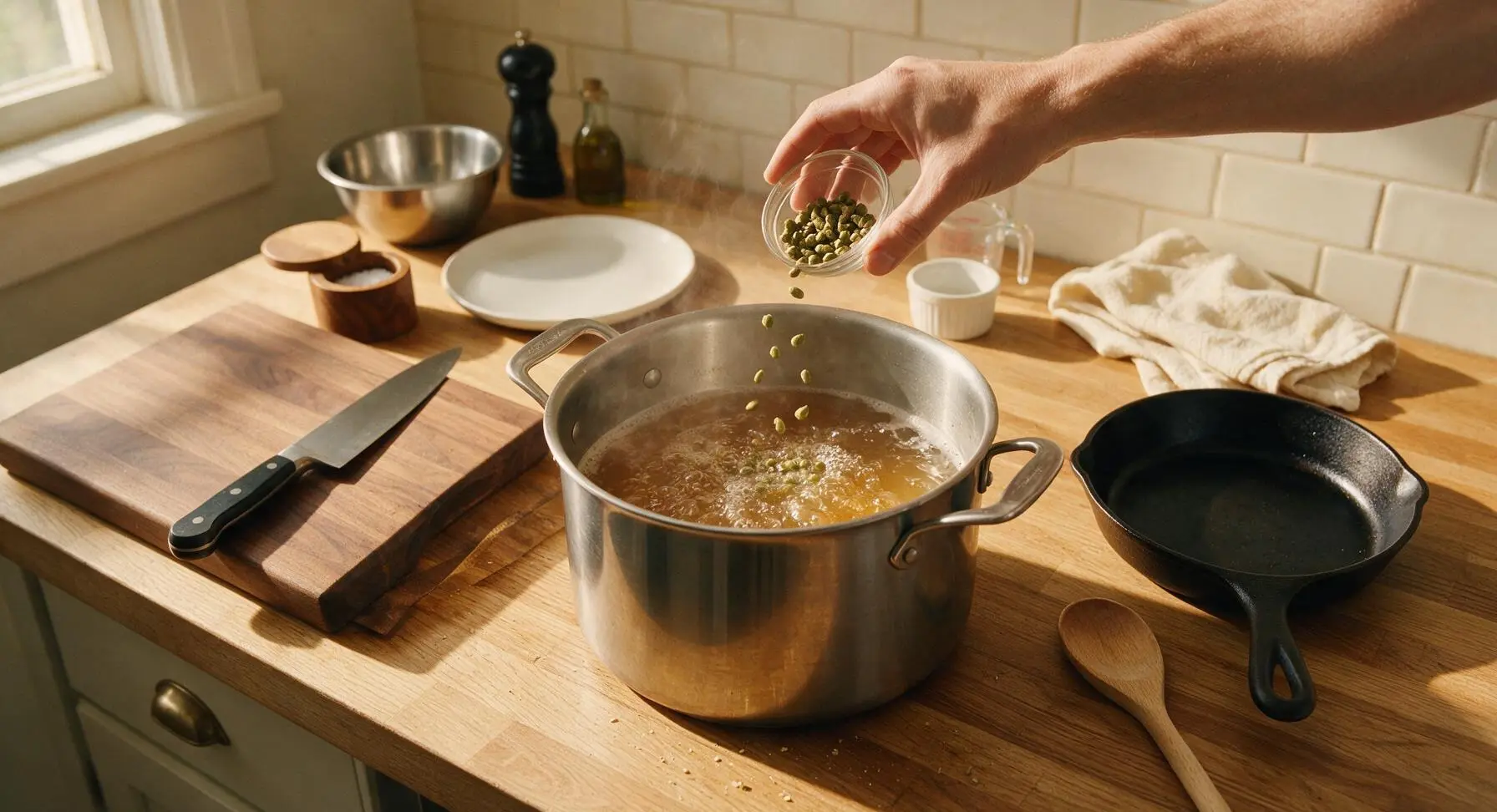
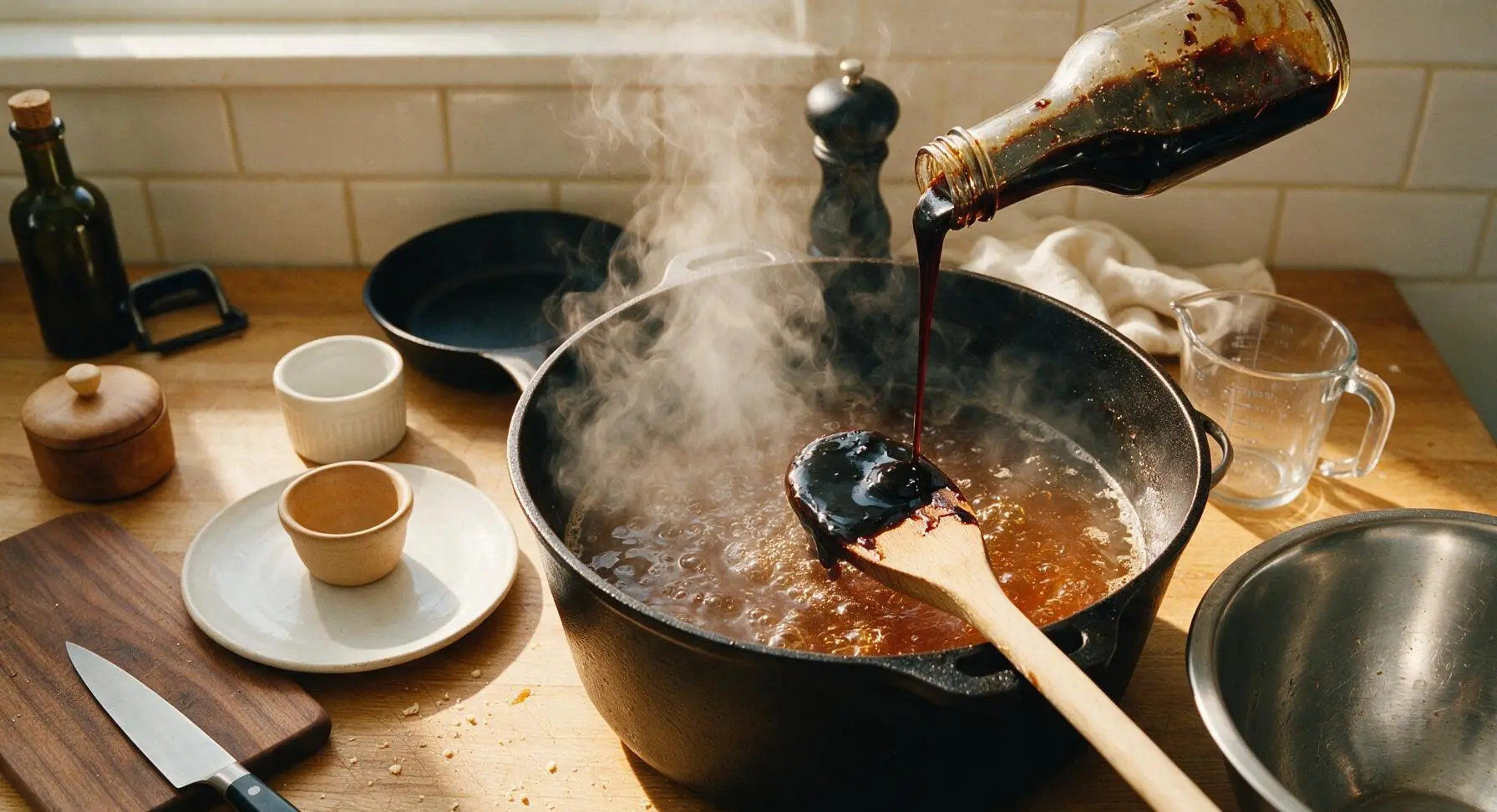
Turn the burner to high to bring the collected wort to a gentle, steady rolling boil, adjusting heat as needed to prevent messy boilovers. Once a steady boil is reached, start a 60-minute timer: add the 28g of Hallertau Tradition hops immediately. With 15 minutes remaining in the boil, stir in the dark Belgian candi syrup, 14g of Saaz hops, crushed coriander, and dried bitter orange peel. Maintain the boil for the full 60 minutes; the wort will darken to a deep mahogany color and develop a rich, malty, slightly spicy aroma.
Cool and Pitch Yeast
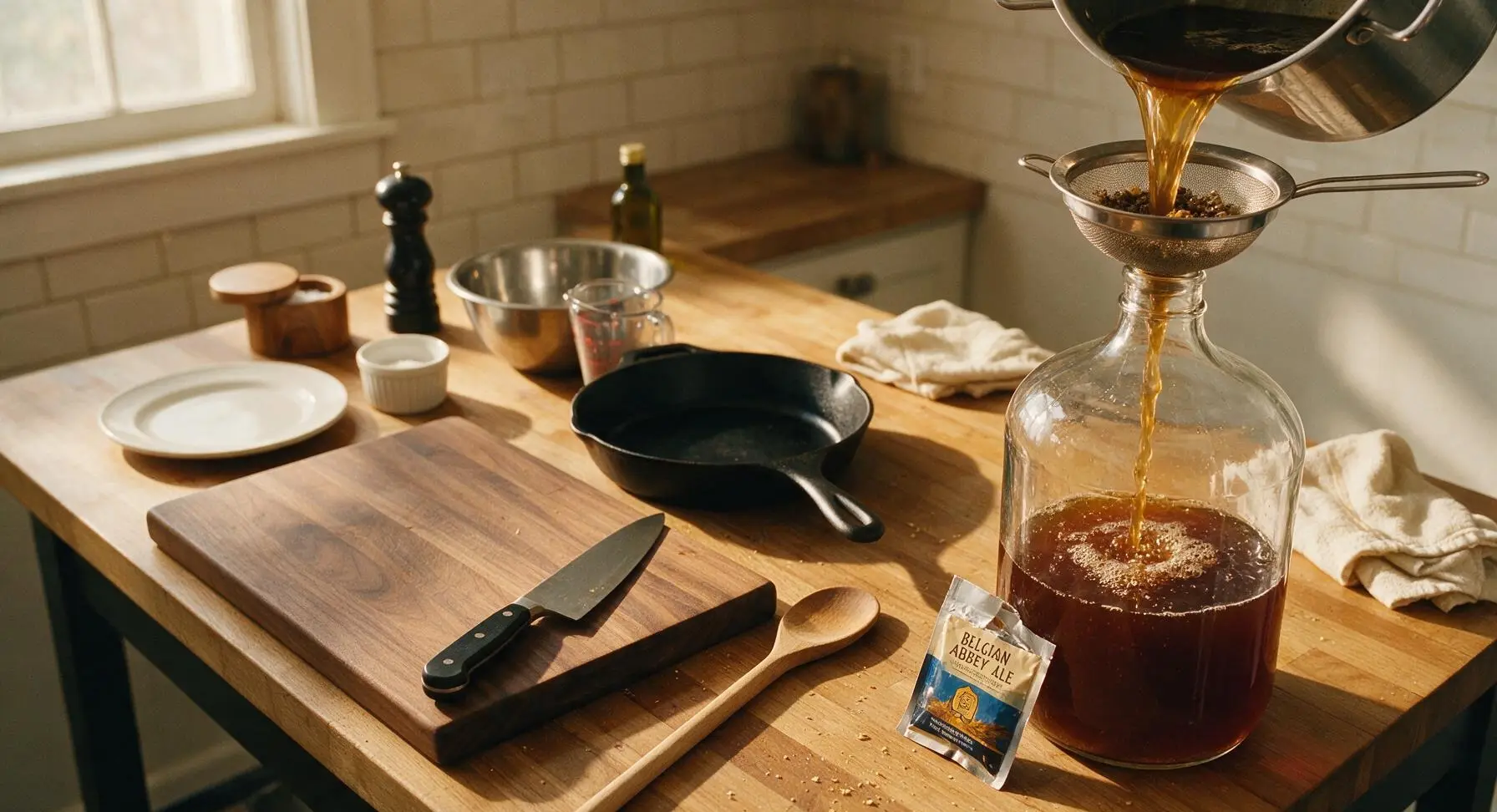
When the 60-minute boil is complete, turn off the burner and cool the wort as quickly as possible to 20C (68F) using an ice bath or immersion wort chiller. Once cooled, pour the wort through the sanitized strainer into the sanitized 6.5-gallon glass carboy, leaving thick, trub sediment behind in the pot. Sprinkle the full packet of Belgian Abbey Ale yeast over the surface of the cooled wort, then seal the carboy with the drilled rubber stopper and airlock filled halfway with sanitizer.
Ferment to Completion
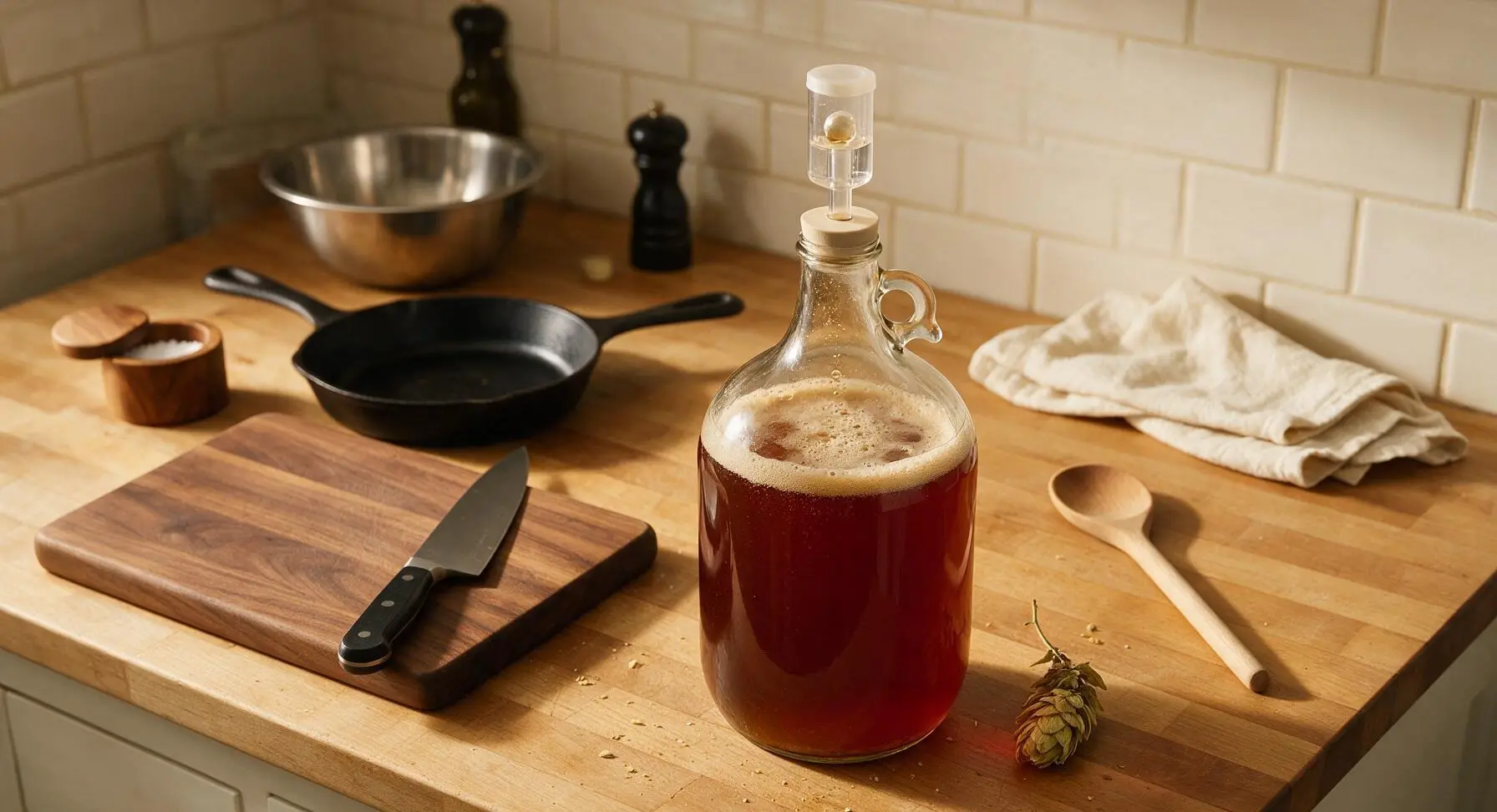
Keep the sealed carboy in a dark, temperature-stable space held at 20-22C (68-72F) for 2 weeks of primary fermentation. Visible fermentation will start within 24-48 hours: bubbles will rise through the wort, and the airlock will bubble steadily as CO2 escapes. When bubbling stops completely and the beer clears to a bright mahogany (final gravity 1.010-1.014), bottle the beer with 120g of corn priming sugar for carbonation, then condition bottles for an additional 4 weeks at room temperature.
Pour and Enjoy
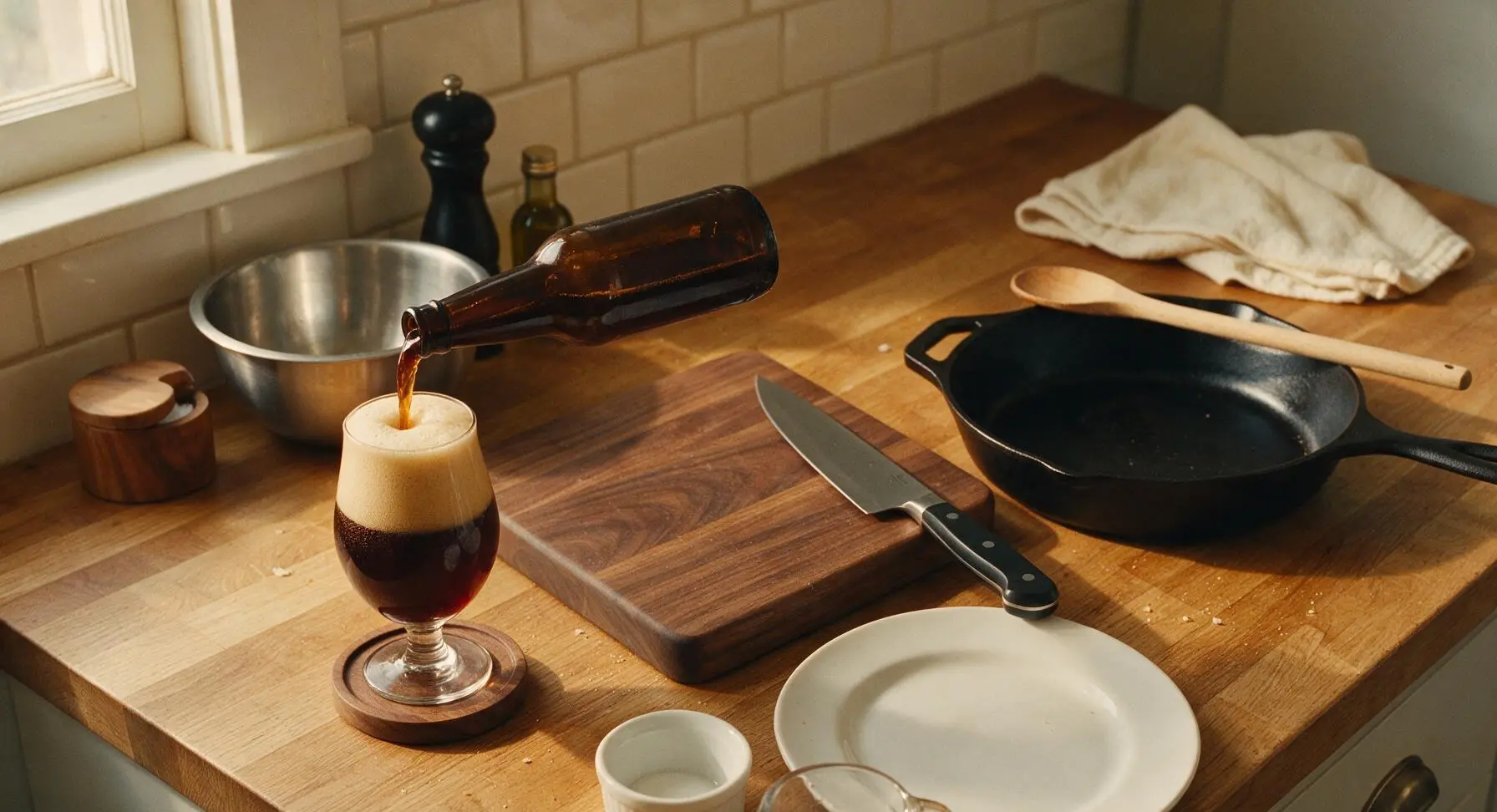
Chill conditioned bottles to 10-12C (50-54F) — avoid serving ice cold, as this mutes the complex malt and yeast fruit flavors. Tilt the tulip beer glass at 45 degrees, pour steadily to build a 2-finger thick tan head, then straighten the glass as you finish the pour. Serve immediately to enjoy notes of raisin, ripe plum, caramel, subtle orange-coriander spice, and soft pear ester from the Belgian yeast.
Tips
2.Hold fermentation temperature steady between 20-22C (68-72F): temperatures above 24C (75F) cause Belgian yeast to produce harsh, solvent-like fusel alcohols instead of the soft plum and pear fruit esters that define the style.
3.Wait the full 4 weeks of bottle conditioning before drinking: young beer tastes sharp, yeasty, and under-carbonated, and the slow conditioning process smooths alcohol heat and blends malt, hop, and spice flavors into a balanced final product.






OMG, this Belgian Dark Strong came out absolute fire on my first brew day following the recipe! I brought a growler to our neighborhood potluck last weekend and people were begging for the recipe. The dark fruit notes are perfect, not too boozy-tasting even at 9% ABV. Total game changer for my homebrew lineup. Cook/brew time was spot on 2 hours 45 mins too, didn’t drag on like some all-grain recipes I’ve tried.
As someone who’s messed up three Belgian dark strong attempts before, this recipe finally got it right! SO good, I shared a few bottles with my dad for his birthday and he said it’s better than the commercial stuff he imports from Belgium. Only heads up: this is definitely hard difficulty, don’t go into it if you’re still figuring out your mash temp control.
Tried this last brew day, turned out pretty solid! I added a tiny extra dash of dark candi syrup to bump up the raisin notes, paired it with some smoked gouda and charcuterie for our family game night and everyone raved. I always brew a big batch on Sundays as part of my weekly meal and entertainment prep so I have something good to offer friends who stop by during the week, and this is going into regular rotation. Will make again for sure.
Y’all, I cannot overhype how good this is. Brewed it two months ago, cracked the first bottle last night at our backyard cookout and it was insane – notes of plum, dark chocolate, a little clove kick, exactly what I want in a dark strong. My wife who normally hates dark beer drank half my glass! Only note is that the 2hr45min cook time doesn’t account for cooling time, so block a little extra time on your brew day.
Okay, I was intimidated by the hard difficulty rating but I went for it anyway, and wow! Bottled a batch last month, brought a few to my book club potluck and the ladies were obsessed. I was worried it would be too bitter for people who don’t drink a lot of craft beer, but the caramel and dried fruit notes make it super approachable. My kids loved how the whole house smelled like raisin bread when I was boiling the wort, kept hovering around the kitchen asking if I was baking cookies!
Game changer for real. I’ve been chasing that classic Chimay Blue profile for years and this recipe nails it way closer than any other homebrew recipe I’ve tested. The yeast strain recommendation is spot on, don’t skimp on getting the right Belgian Abbey yeast, that’s where all those awesome spicy, fruity notes come from. Don’t let the hard difficulty scare you off, just follow the steps closely and you’ll be golden.
Decent recipe, but I had a little trouble with mash efficiency on my first go-round, ended up with a lower ABV than the recipe states. Flavor was still really good though, just a little thinner than I expected. I’ll adjust my grain crush next time and try again, I think that was my mistake not the recipe’s.
First time ever doing an all-grain brew, picked this because my roommate loves Belgian dark strongs and I wanted to surprise him for his graduation party. Full transparency: I messed up the first step of the mash and almost dumped the whole batch, but I course-corrected and it still turned out SO good! Everyone at the party was asking where I bought it, couldn’t believe I made it at home. 10/10 will make again once I get a little more practice under my belt.
Brewed this for our annual fall camping trip, and it was the perfect post-hike sipper. Sat around the campfire passing bottles around, everyone agreed it was the best beer I’ve ever made. The dark candi sugar adds that perfect little molasses note that hits so good when it’s crisp out. Total crowd pleaser.
I made this last month and let me tell you, it’s dangerous how drinkable it is for how high ABV it is! I had two glasses with our family Sunday dinner last night and definitely felt it, no harsh alcohol burn at all, just smooth, rich, fruity goodness. My sister took a bottle home and texted me three days later asking for the recipe so she can make it for her holiday party.
Been brewing for 20+ years, tried probably a dozen different Belgian Dark Strong recipes over the decades. This one is top tier, no notes. Balanced perfectly, doesn’t go overboard on the candi sugar, the spice additions are subtle enough that they don’t overpower the malt and yeast character. Will be my go-to from now on.
Brought a case of this to my office holiday potluck last week and it was the hit of the party, even beat out the famous spiked eggnog everyone goes crazy for. I added a tiny bit of fresh orange zest to the last 10 minutes of the boil like a friend suggested, and it added the nicest bright little note to cut through the rich malt. 10/10, will be making this every holiday season from now on.
I was worried this would be too time consuming for a weekend brew day, but the 2 hour 45 minute boil/mash timeline was totally manageable, even with stopping to let my dog in and out a dozen times. Turned out rich, complex, way better than the $15/bottle imported stuff I usually splurge on. My partner said it’s the best homebrew I’ve ever made, high praise!
Tried this recipe with the mix of pale and dark malts as written, got a beautiful deep garnet color when I held it up to the light, exactly what I want in a Belgian dark strong. The head retention is perfect, lingers all the way to the bottom of the glass. Only thing I’ll change next time is add a touch more coriander, just because I love that little spicy kick, but the base recipe is flawless.