Belgian Saison

title 1
Belgian Saison
⏱️ cook time 1 hour 45 minutes
🍽️ servings 48
⚡ Difficulty medium

intro

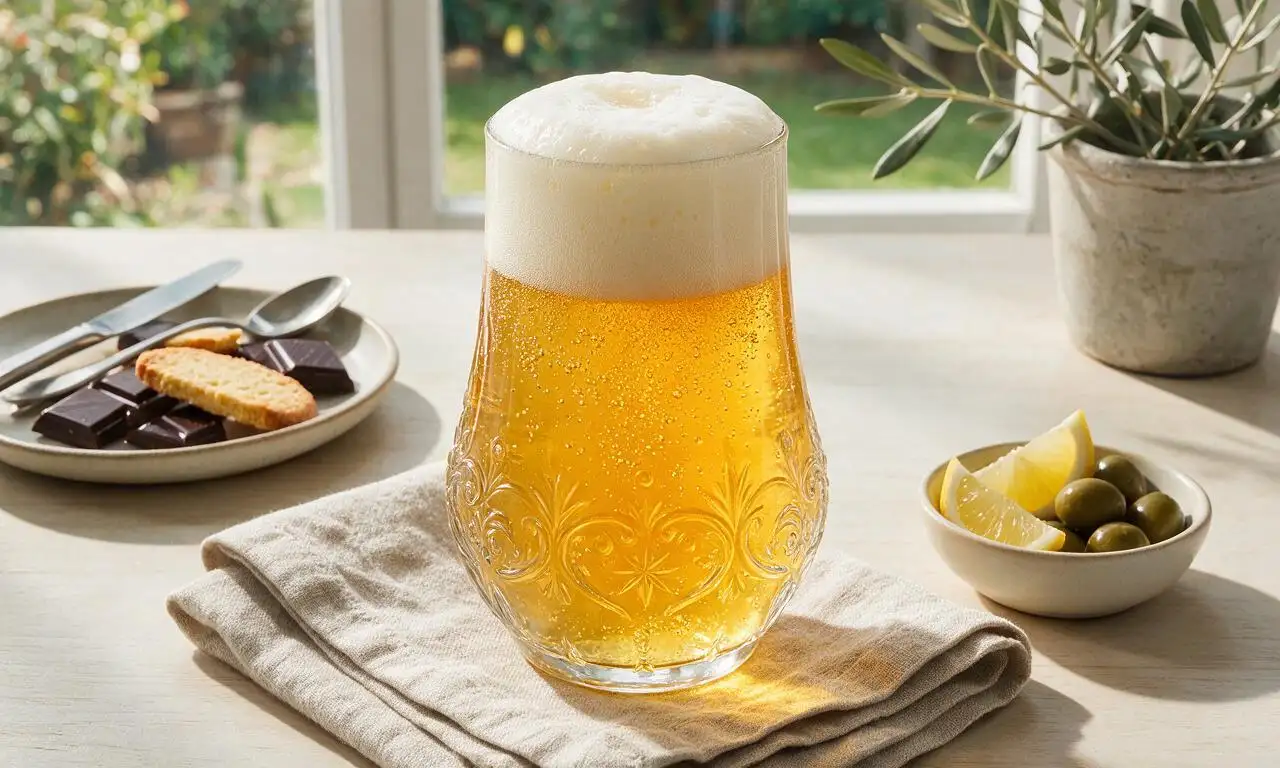
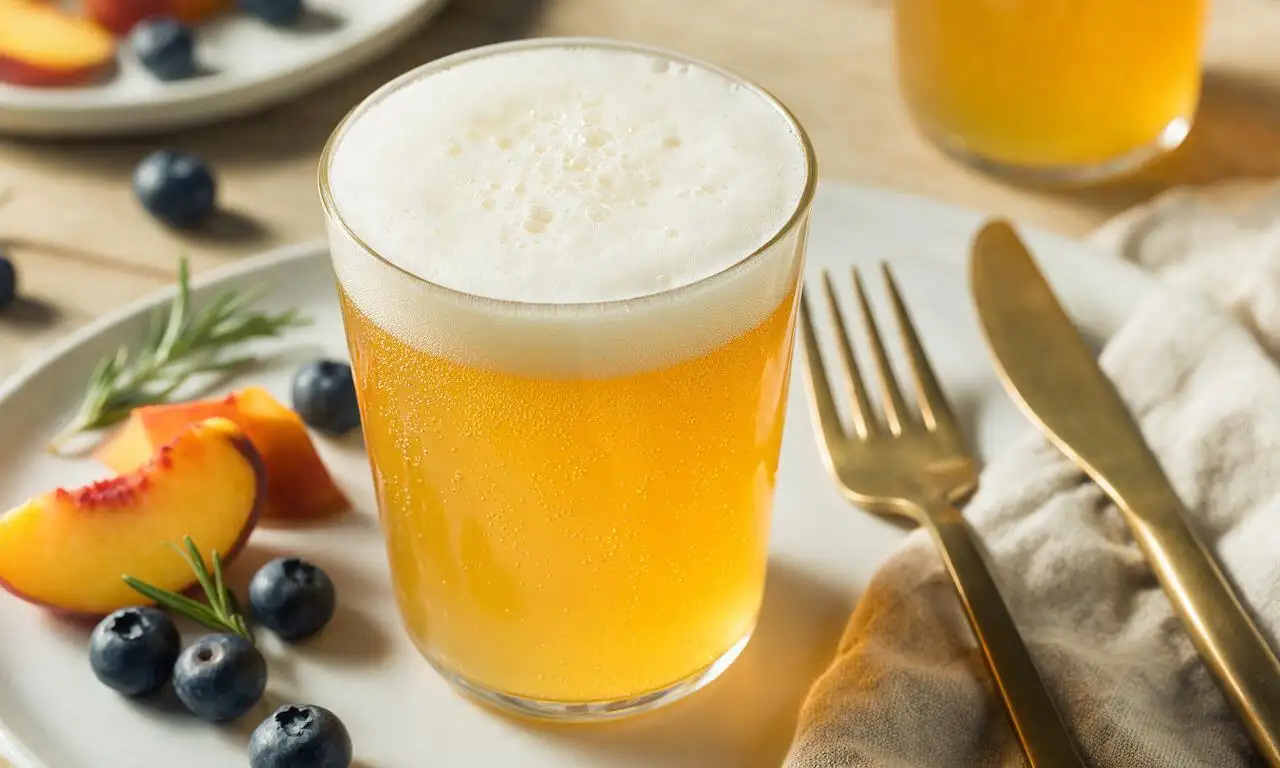
Crisp, effervescent, and peppery with bright citrus and earthy yeast notes, this classic dry farmhouse ale is a refreshing, food-friendly sip perfect for warm weather gatherings.

Ingredients
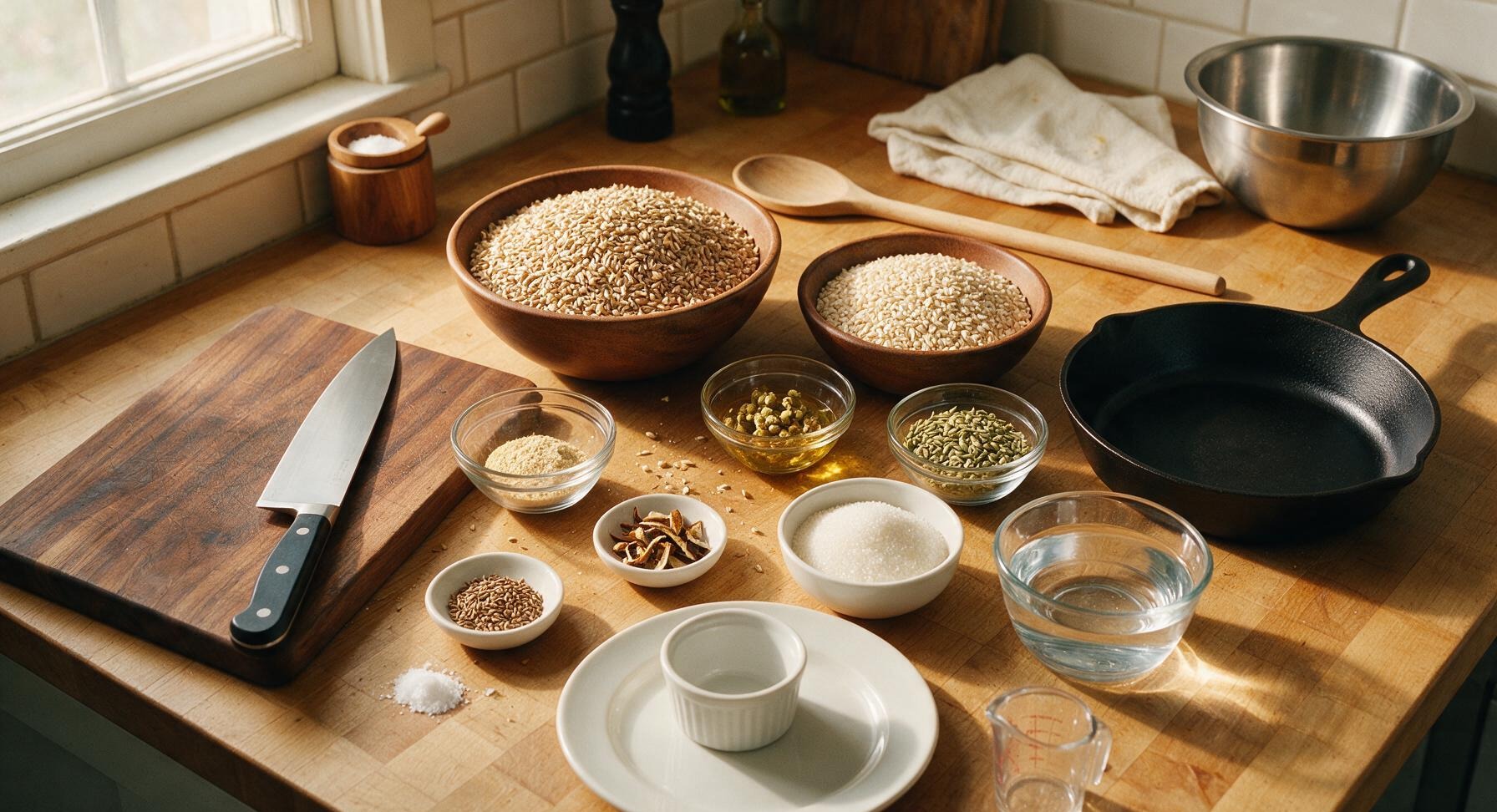
Belgian 2-row Pilsner malt (crushed) 8 lbs (3.6kg)
Soft white wheat malt (crushed) 2 lbs (900g)
Filtered cold water 6 gallons (22.7L)
Belgian Saison yeast (Wyeast 3724 or equivalent) 1 packet (11g)
Styrian Goldings hops (5% alpha acid) 0.5 oz (14g)
Saaz hops (3.5% alpha acid) 1 oz (28g)
Crushed coriander seed 1 tbsp (6g)
Dried bitter orange peel 1 tbsp (5g)
Brewing gypsum 1 tsp (4g)
Corn sugar (priming sugar) 3/4 cup (150g)

Steps

1

Sanitize Brewing Equipment

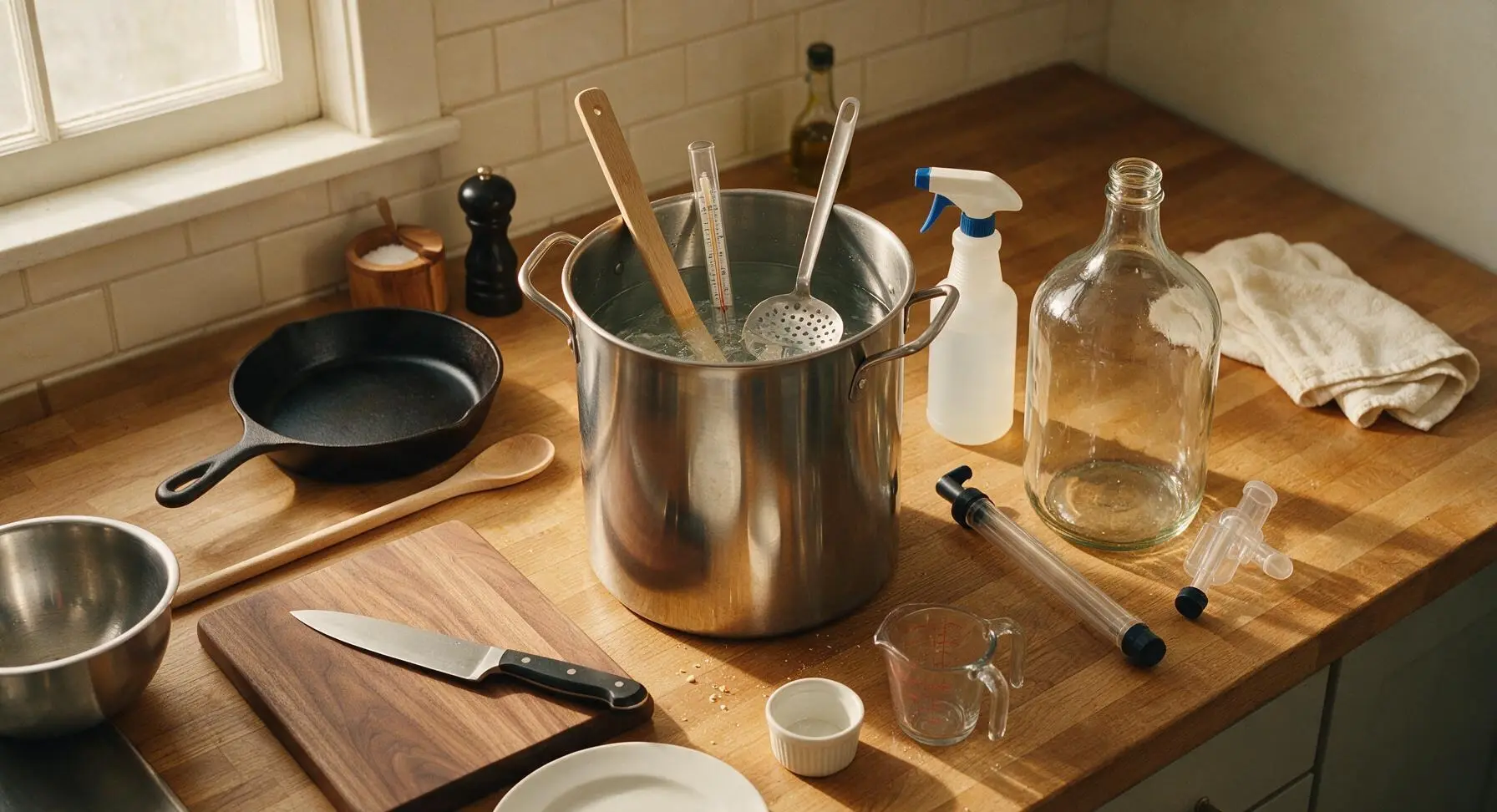
First, mix 1 tablespoon of no-rinse brewing sanitizer with 1 gallon of cool water in the 5-gallon stainless steel brew kettle. Submerge the mash paddle, thermometer, skimmer, auto-siphon, and airlock in the solution for 2 minutes, then spray all contact surfaces of the glass carboy, bottles, and crown capper with the sanitizer spray bottle. Allow all tools to air dry completely on the clean counter—do not wipe tools, as lint can contaminate the final beer. Proper sanitation eliminates unwanted bacteria that can cause sour off-flavors.
Step 1
step1:Sanitize Brewing Equipment
2

Mash the Grain Bill

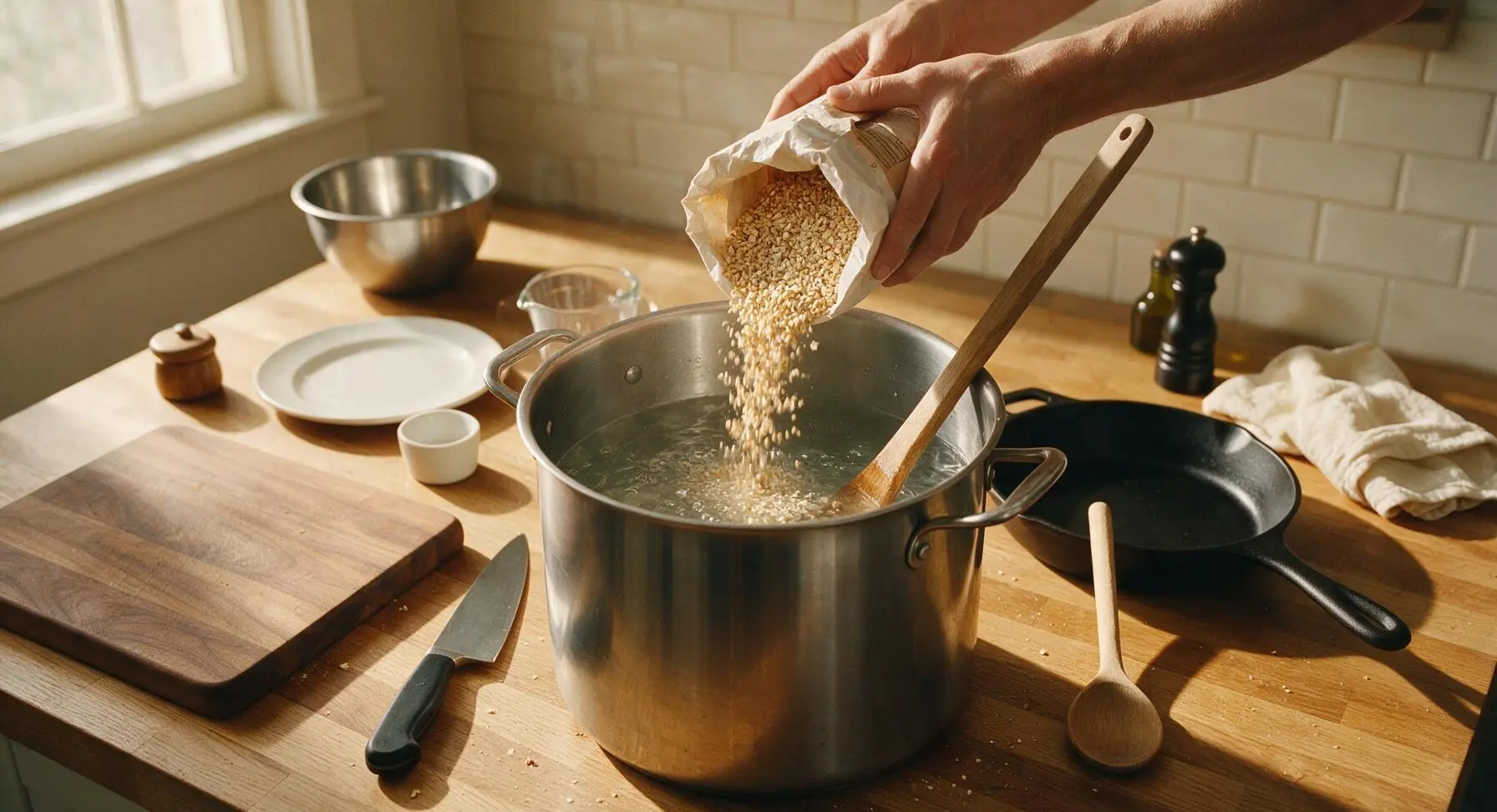
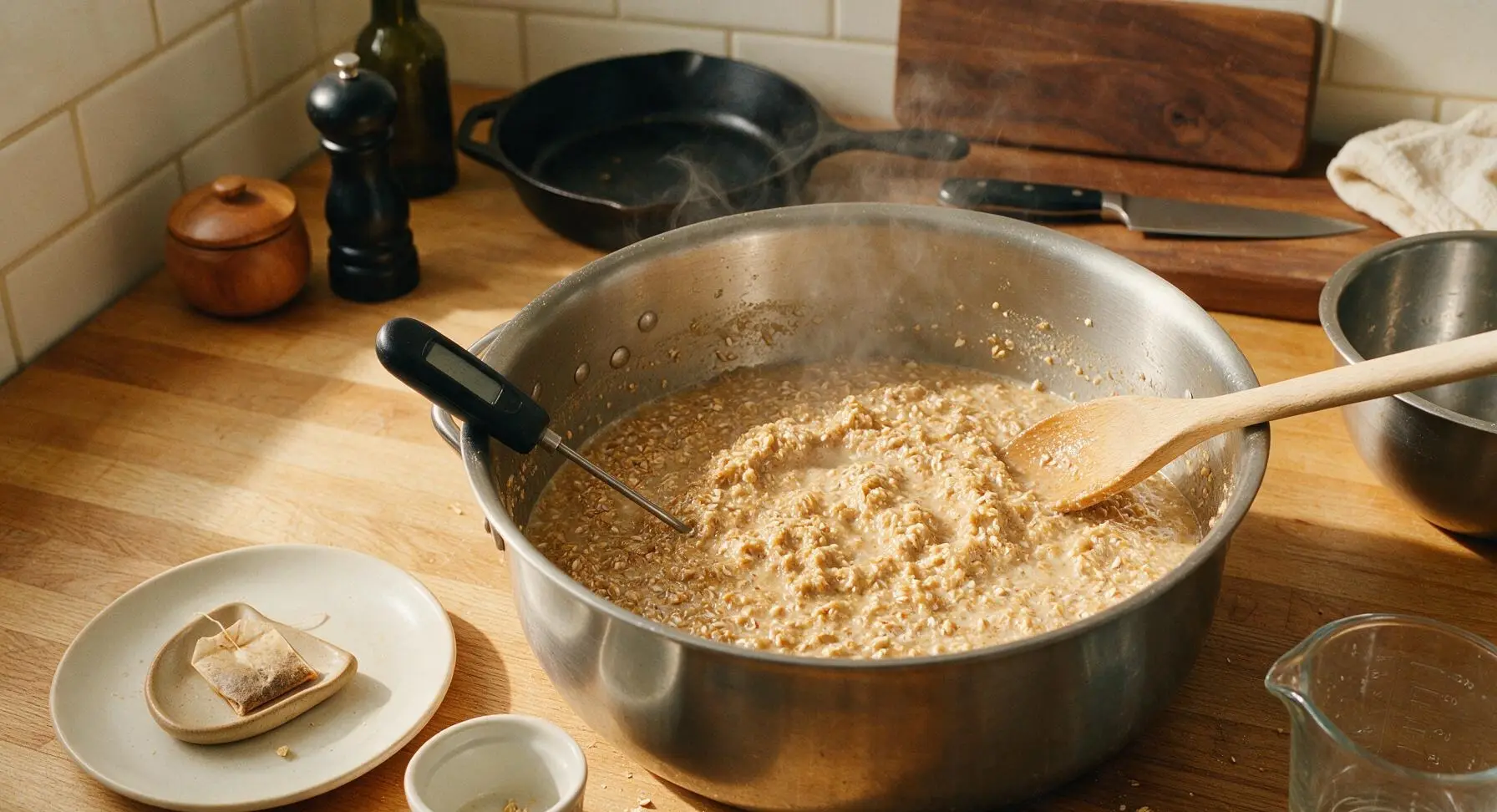
Heat 3 gallons of filtered water in the brew kettle to 150°F (65°C), then slowly stir in the crushed Pilsner malt and white wheat malt using the mash paddle, stirring continuously to break up any dry clumps of grain. Hold the mash temperature steady at 148°F (64°C) for 60 minutes, covering the kettle with a lid and checking temperature every 15 minutes with the instant-read thermometer. The finished mash will have a thick, porridge-like consistency and a sweet, bready aroma.
Step 2
step2:Mash the Grain Bill
Step 2
step2:Mash the Grain Bill
3

Sparge to Collect Wort

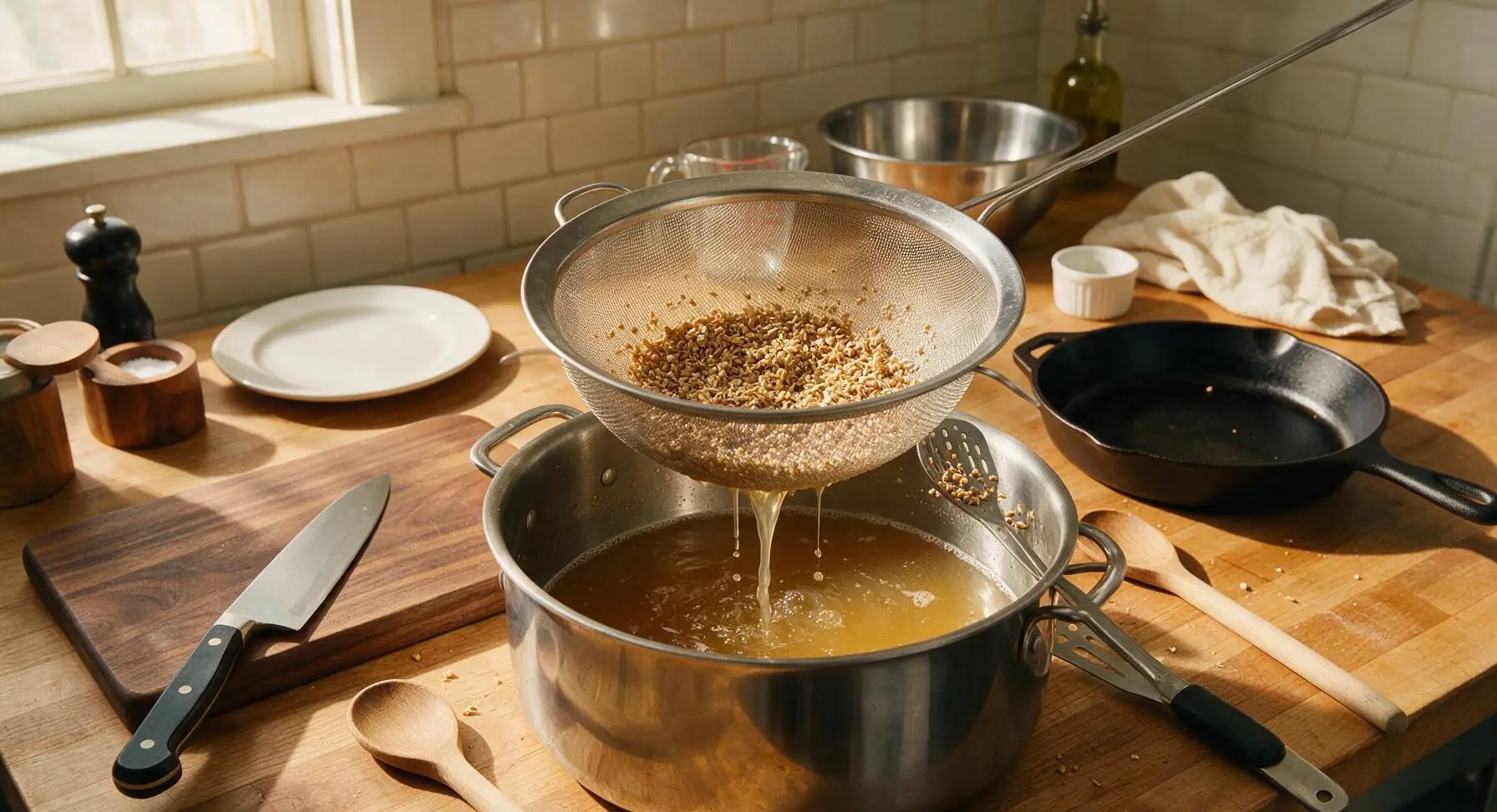
After the 60-minute mash rest, place the fine mesh strainer over the brew kettle, then slowly pour 2 gallons of 170°F (77°C) filtered water over the grain bed to rinse residual sugars from the grains. Allow all sweet, pale golden liquid (called wort) to drain through the strainer into the kettle, discarding the spent, light brown grains. You should collect approximately 5 gallons of clear, pale gold wort in the kettle after sparging.
Step 3
step3:Sparge to Collect Wort
4

Boil and Add Hops

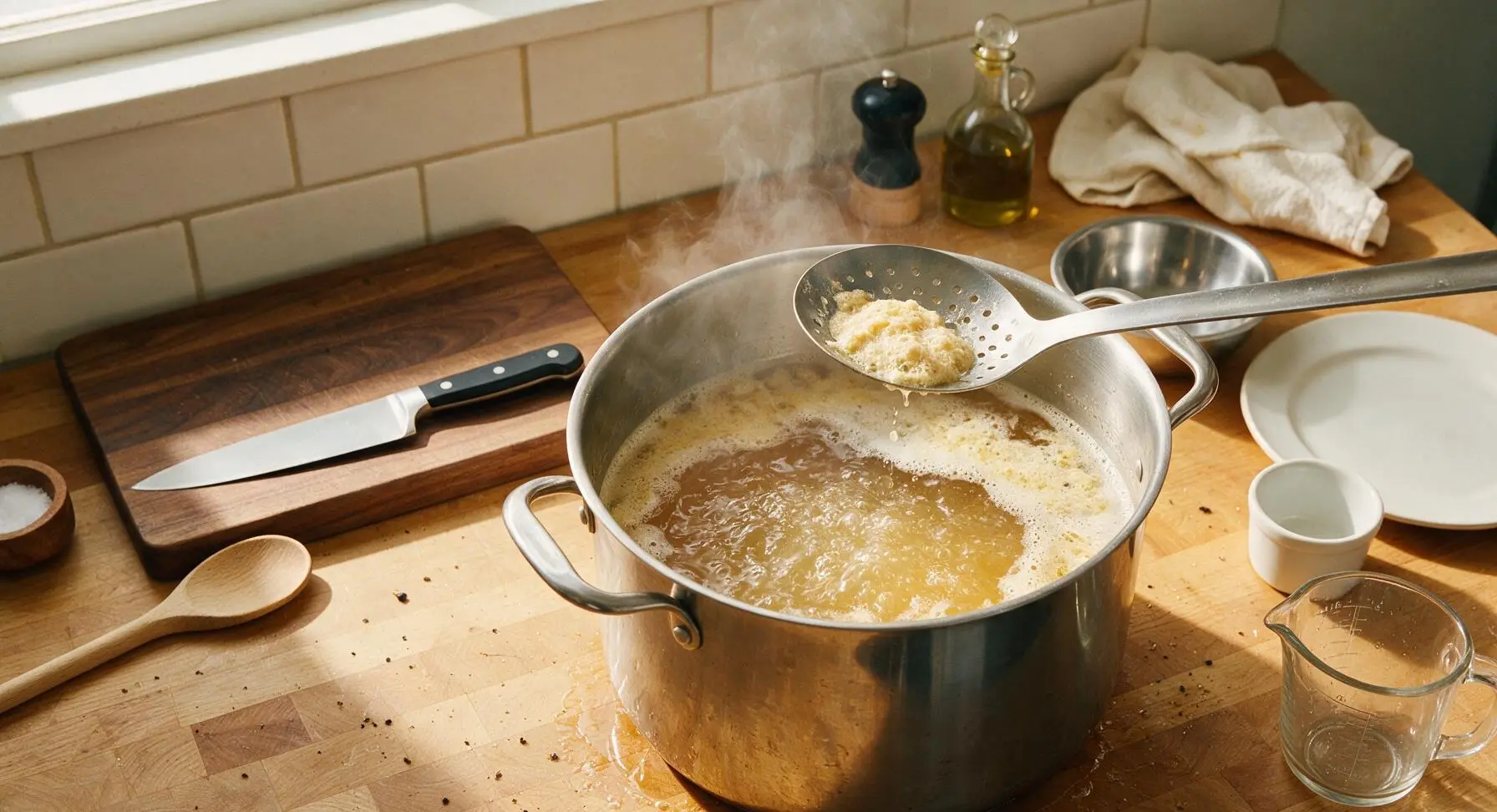
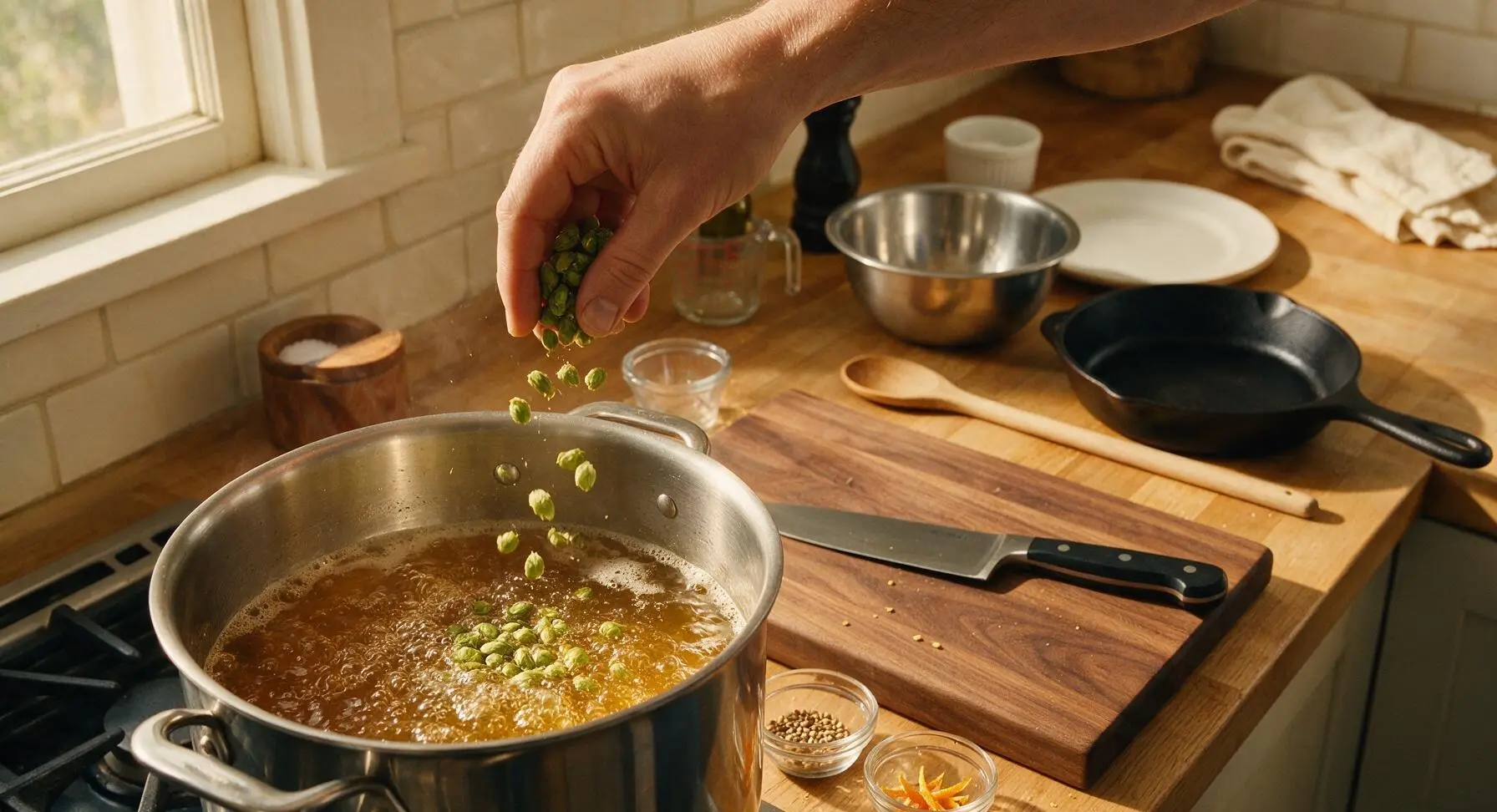
Bring the collected wort in the brew kettle to a gentle rolling boil (212°F / 100°C at sea level) over high heat, maintaining the boil for 60 minutes total. At the start of the boil, add the 0.5 oz Styrian Goldings hops. With 15 minutes remaining in the boil, add the crushed coriander seed and dried bitter orange peel. With 5 minutes remaining in the boil, add the 1 oz Saaz hops. Use the slotted skimmer to remove pale, foamy hot break protein that rises to the surface during the first 10 minutes of boiling.
Step 4
step4:Boil and Add Hops
Step 4
step4:Boil and Add Hops
5

Cool Wort to Pitch Temp

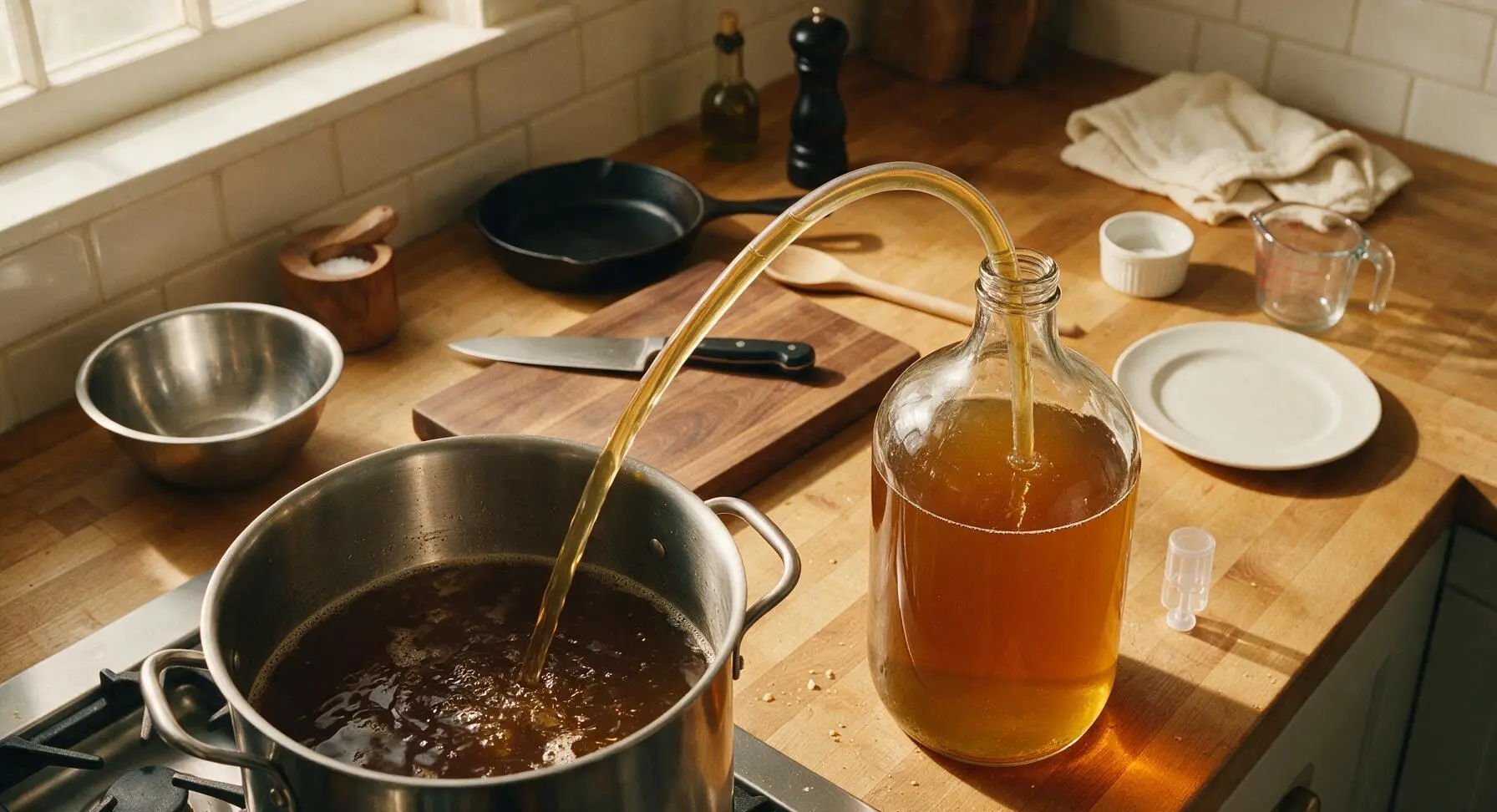
After the 60-minute boil, turn off the heat and cool the wort as rapidly as possible to 70°F (21°C) using an ice bath or immersion wort chiller, approximately 20 minutes. Keep the kettle lid closed as much as possible during cooling to prevent airborne contamination. Once cooled, use the auto-siphon to transfer the clear wort into the sanitized glass carboy, leaving the thick, trub sediment layer at the bottom of the kettle undisturbed.
Step 5
step5:Cool Wort to Pitch Temp
6

Pitch Saison Yeast

Sprinkle the entire packet of Belgian Saison yeast evenly over the surface of the cooled wort in the carboy. Seal the carboy opening with the sanitized rubber stopper, insert the 3-piece airlock filled halfway with sanitizer solution, and give the carboy a gentle 10-second swirl to distribute yeast throughout the wort. Do not shake vigorously, as this introduces excess oxygen that can cause stale, papery off-flavors.
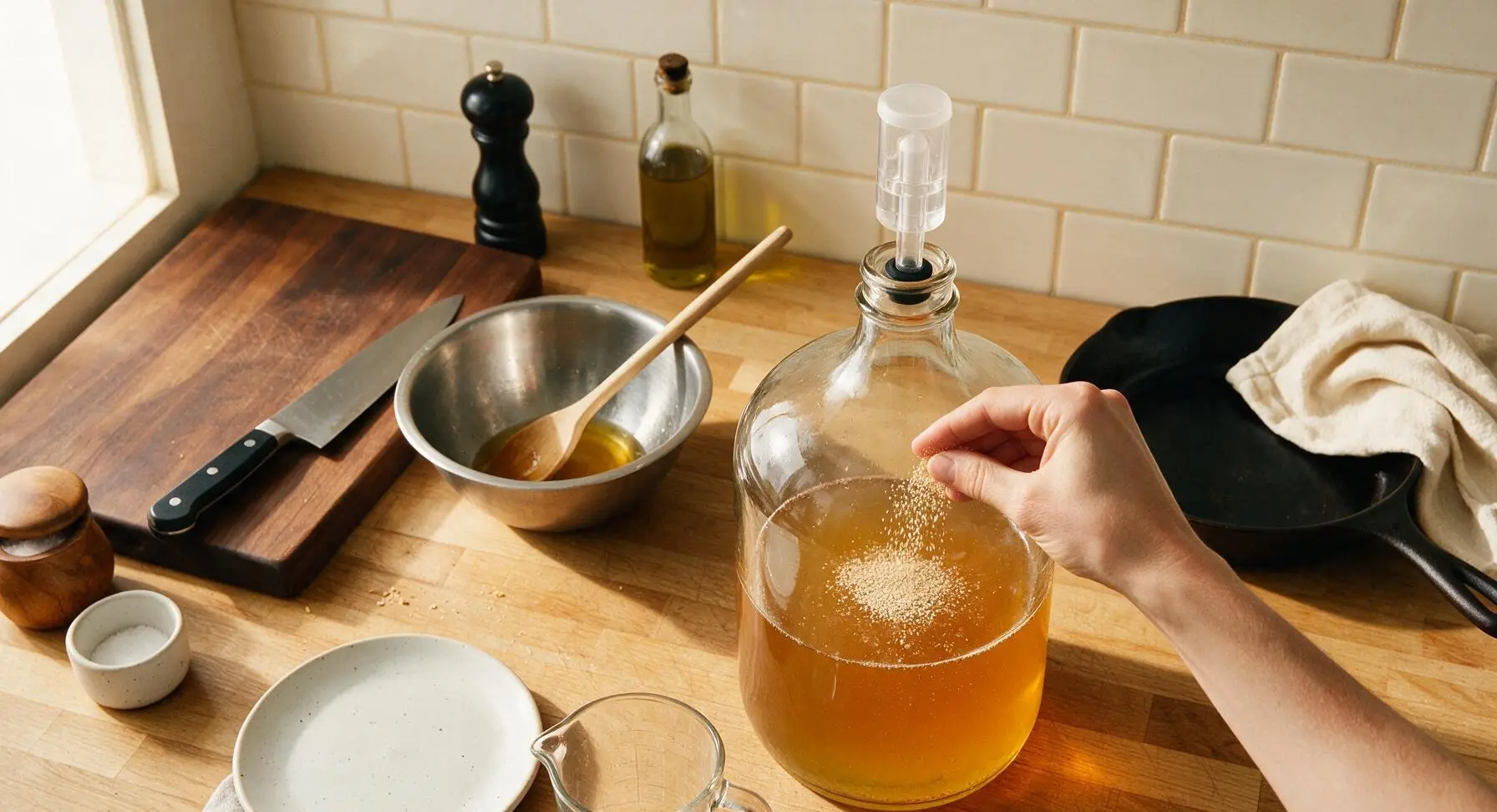
Step 6
step6:Pitch Saison Yeast
7

Ferment at Stable Temp

Store the sealed carboy in a dark, temperature-stable area held between 70–78°F (21–25°C) for 2 weeks. Steady bubbles will rise through the airlock within 24–48 hours, signaling active fermentation. When no bubbles appear in the airlock for 3 consecutive days, fermentation is complete; the beer will be slightly hazy, pale amber, with a bright peppery, citrusy aroma.
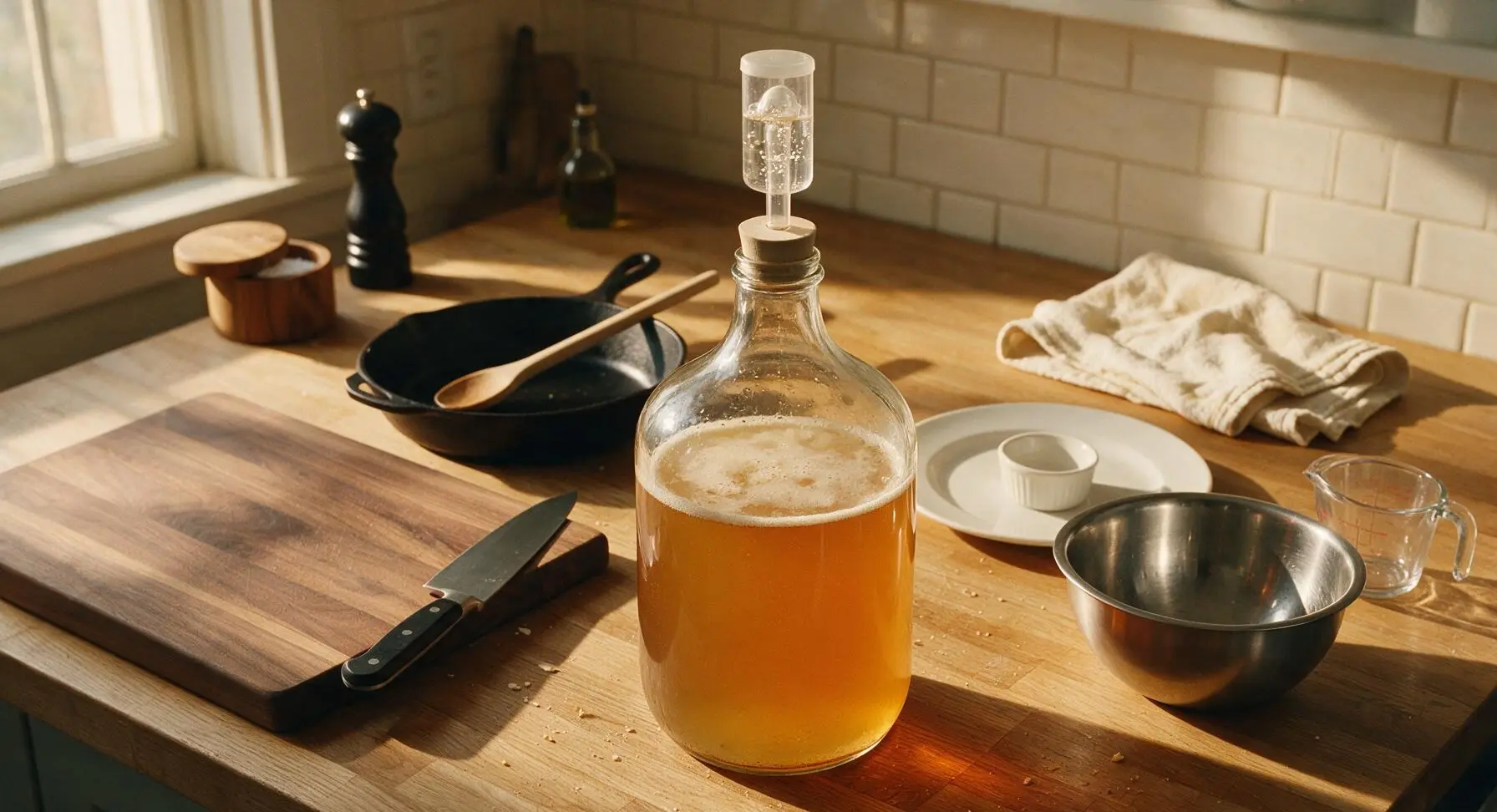
Step 7
step7:Ferment at Stable Temp
8

Bottle and Carbonate

Once fermentation is complete, gently stir 3/4 cup of corn sugar into the sanitized brew kettle, then use the sanitized auto-siphon to transfer the finished beer back into the kettle, mixing gently to evenly distribute the sugar. Fill sanitized 12oz glass bottles from the kettle, then seal each bottle with a sanitized silver crown cap using the hand-held crown capper. Store bottles at room temperature for 1 week to build natural carbonation, then chill for 24 hours before serving.
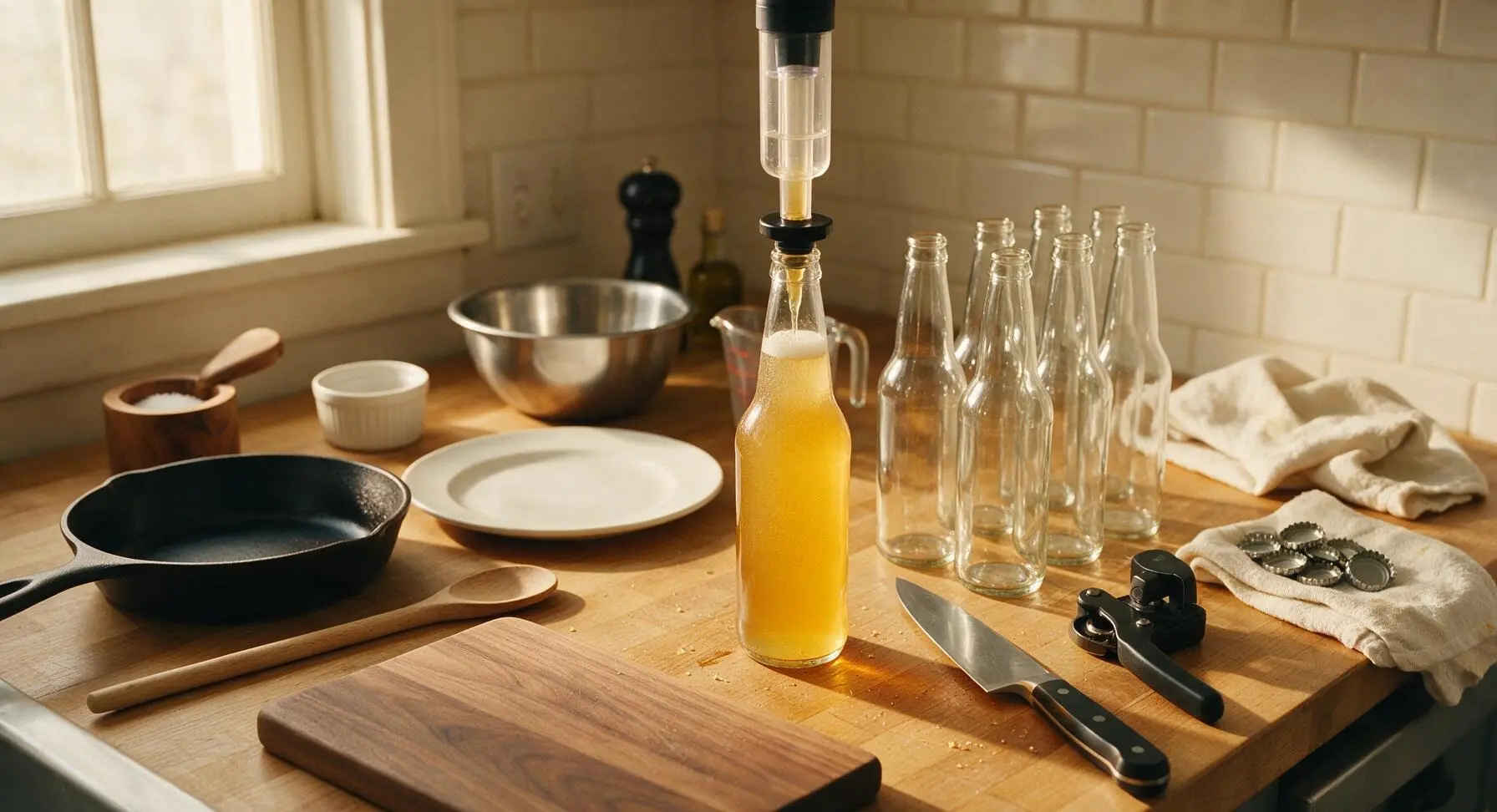
Step 8
step8:Bottle and Carbonate

Tips

1.Do not rush wort cooling: rapidly bringing wort from boiling to 70°F within 30 minutes prevents formation of dimethyl sulfide (DMS), a compound that creates unpleasant canned-corn off-flavors, and reduces the window for unwanted bacteria to grow before yeast is added.
2.Keep fermentation temperatures consistent: Saison yeast produces its signature black pepper, orange peel, and tropical fruit notes when held between 70–78°F; temperatures below 65°F will cause the yeast to go dormant, leaving the beer overly sweet and under-attenuated.
3.Go light on spices: the coriander and bitter orange peel should add subtle background complexity, not dominate the flavor. Adding more than 1 tablespoon of each will make your saison taste like spiced holiday punch instead of a crisp, dry farmhouse ale.

✨ You May Also Like

Drinks & Beverages
🍜 Mexico

A bright, balanced tequila-based cocktail with zesty fresh lime, smooth orange liqueur, and a signature salt rim, perfect for warm summer sipping.

⏱️ 5 minutesDrinks & Beverages ★ 4.9
Drinks & Beverages
🍜 United States

Thick, creamy, nostalgic classic vanilla milkshake with a rich, smooth texture, topped with whipped cream and a cherry for cool, sweet refreshment.

⏱️ 5 minutesDrinks & Beverages ★ 4.7
Drinks & Beverages
🍜 United States

A bright, golden strong ale with fruity banana-clove notes, subtle hop spice, and soft carbonation, brewed in classic Trappist Tripel tradition.

⏱️ 2 hours aDrinks & Beverages ★ 4.5
Drinks & Beverages
🍜 United States

A frothy, nostalgic American soda fountain treat pairing bubbly cold root beer with creamy vanilla ice cream, perfect for cooling down at warm weather gatherings.

⏱️ 20 minuteDrinks & Beverages ★ 4.8
Drinks & Beverages
🍜 United States

Tart, funky, effervescent American Wild Ale is a complex fruity craft beer brewed with wild yeast, delivering bright, zesty notes perfect for warm-weather sipping.

⏱️ 2 hours aDrinks & Beverages ★ 4.4
Drinks & Beverages
🍜 United States

Bright, bubbly copycat of the iconic American caramel cola, balanced with citrus and warm spice, perfect for sipping ice-cold on hot days.

⏱️ 15 minuteDrinks & Beverages ★ 4.8

Belgian Saison:Frequently Asked Questions

1.Can I use a different yeast strain if I can’t find Wyeast 3724 Belgian Saison yeast? ▾
Wyeast 3724 is ideal for that classic peppery, dry, slightly earthy saison profile, but you can swap in White Labs WLP565 Belgian Saison I or dry Lallemand Belle Saison as a 1:1 replacement. Skip standard bread yeast or generic ale yeast, as those won’t produce the bright, spicy, citrus-kissed notes this style is famous for.
2.Why does the recipe specify filtered cold water instead of regular tap water? ▾
Most unfiltered tap water has chlorine or chloramine additives that react with yeast and hops to create harsh, medicinal off-flavors that ruin saison’s bright, crisp profile. Filtered cold water has a neutral, consistent mineral balance that lets the soft wheat, mild hops, and spicy yeast notes shine without distracting aftertastes.
3.How long does this saison need to ferment before it’s ready to drink? ▾
Plan for a 2-week primary fermentation at 70–75°F—this warm range lets the saison yeast develop its signature peppery kick—followed by 1 week of cold conditioning at 40°F to crisp it up and settle sediment. It’s drinkable after 3 weeks, but it gets smoother with 1–2 extra weeks of bottle conditioning.
4.Can I adjust the Styrian Goldings hop amount if I don’t like very bitter beer? ▾
Absolutely! The base Styrian Goldings measurement is calibrated for a mild 25–30 IBUs that balances wheat sweetness without overpowering yeast character. You can cut the hop amount by 25% for a softer, more malt-forward sip, but avoid adding more than 50% extra, as that will mask the classic earthy, peppery saison notes.
5.What purpose does the soft white wheat malt serve in the recipe? ▾
Crushed soft white wheat malt adds the signature hazy golden hue, smooth, slightly creamy mouthfeel, and subtle bready sweetness that balances the dry, peppery yeast finish. Without it, the beer will taste thinner, sharper, and look overly clear, missing that classic rustic farmhouse ale texture and visual appeal.
6.What serving temperature brings out the best flavor in this homemade saison? ▾
Serve it chilled to 45–50°F, not ice cold. Frigid, ice-cold temperatures mute the bright citrus, black pepper, and subtle earthy yeast notes that make this style special. At that slightly cool temp, you’ll pick up every effervescent layer, and it will pair beautifully with grilled chicken, salads, or soft goat cheese.
7.I’m new to homebrewing—do I need fancy equipment to make this recipe? ▾
You don’t need professional gear at all! All you need is a 5-gallon food-grade fermentation bucket with an airlock, a siphon for racking, no-rinse brewer’s sanitizer, and sealable bottles for carbonation. As long as you sanitize every surface that touches the beer, you’ll get a great batch even as a first-time brewer.

Comments (8)

2 days ago

OMG this was SO good! I made this for our Sunday family dinner last night and even my super picky 7 year old asked for seconds. The herby, slightly peppery broth is insane – I sopped up every last drop with crusty sourdough. Already added this to our regular meal prep rotation for the fall!

5 days ago

Super solid recipe! Brought this to our neighborhood potluck last weekend and everyone was asking for the recipe. Only knock is I wish there was a note about how salty the broth gets if you use regular store-bought stock instead of low-sodium – I had to add an extra splash of water and a pinch of sugar to balance it out. Still a total crowd pleaser though!

3 days ago

Great callout, Dave! I just updated the recipe notes to flag the low-sodium stock recommendation to help other folks avoid that over-salted issue. So glad it was a hit at your potluck even with the little hiccup!

1 week ago

Game changer! I’ve tried a couple other Belgian saison recipes before and this one nails that classic, cozy farmhouse flavor without being overly complicated. I swapped the parsnips for carrots since my grocery store was out, and it still turned out chef’s kiss. What do you think about adding a splash of Belgian ale to the broth next time for extra depth?

5 days ago

I did exactly that last batch! Added about 1/4 cup of a local saison ale when I deglazed the pan and it added the best subtle fruity, earthy note – 10/10 recommend, just don’t add too much or it overpowers the herbs.

3 days ago

Love both of these tweaks! The parsnip for carrot swap is super accessible for folks who can’t find parsnips, and the splash of saison ale is such a fun, authentic touch to amp up that classic flavor. So glad you loved the recipe!

30 minutes ago

Wait this is way easier than I thought it would be for a medium difficulty recipe! I’m still pretty new to cooking savory stuff from scratch and I only messed up one step (forgot to brown the pork first oops) and it still turned out amazing. My roommates devoured half the pot before I even got a second serving lmao. Will definitely make again once our grocery budget resets next week.

2 weeks ago

Made this for my annual fall harvest party and it was an absolute home run. The depth of flavor from the thyme, bay leaf, and mustard is unreal – I had guests going back for thirds even though we had 6 other dishes on the table. Game changer for cool weather entertaining, no notes.

1 week ago

This makes me so happy to hear, Tony! This recipe is actually based on my great-aunt’s go-to harvest season dish she’d make for farm crews back in Wallonia, so it means a lot that it worked so well for your fall party. Nothing beats cozy, shareable food when the weather cools down!

3 days ago

Really tasty recipe! It holds up super well in the fridge for meal prep, which is a huge win for my busy work week. My only question is – has anyone tried freezing portions of this? I want to make a double batch next time to stash for busy nights but I’m worried the potatoes will get mushy when thawed.

2 days ago

I froze half my batch last month! I left the potatoes just slightly undercooked when I made the initial batch, and they held up perfectly when I thawed and reheated on the stove. No mush at all, just as good as fresh!

yesterday

Jen’s tip is spot on! If you plan to freeze this, undercooking the root veggies by 2-3 minutes prevents that mushy texture post-thaw. I’ve kept frozen portions for up to 3 months and they reheat beautifully, so a double batch is a great call!

yesterday

As someone who’s gluten free, I was so happy this recipe didn’t need any weird swaps to work for my diet! I served it over mashed cauliflower instead of with crusty bread and it was chef’s kiss. My husband (who is a total meat and potatoes guy and hates “diet food”) went back for two servings, so that’s the real win.

2 hours ago

So glad this worked for your dietary needs, Gabi! The mashed cauliflower swap sounds delicious – I’ll have to try that next time I make it for my gluten-free sister. It’s always the best compliment when the self-proclaimed “diet food hater” goes back for seconds!

2 hours ago

This recipe is really good, but I had a little trouble with the cook time on the pork – my 1.5lb pork shoulder cubed up took almost 40 minutes longer to get fork tender than the recipe said, even on the same stovetop heat. Flavor was 10/10, just wish I’d budgeted extra time so we didn’t eat dinner so late!

30 minutes ago

Pro tip for next time: if you bring your pork up to room temp for 30 minutes before searing and braising, it’ll cook way more evenly and cut down that extra tenderizing time! I learned that the hard way after dozens of tough, slow-cooking pork roasts lmao.

5 minutes ago

That’s such a great tip, thank you for sharing! Cook times can definitely vary a bit depending on stove heat and the exact cut of pork, so I just added a note to the recipe recommending folks budget a little extra time if their pork is straight from the fridge, and test for doneness with a fork instead of relying strictly on the timer. So glad the flavor still landed for you even with the timing mishap!