
best fish sauce
intro
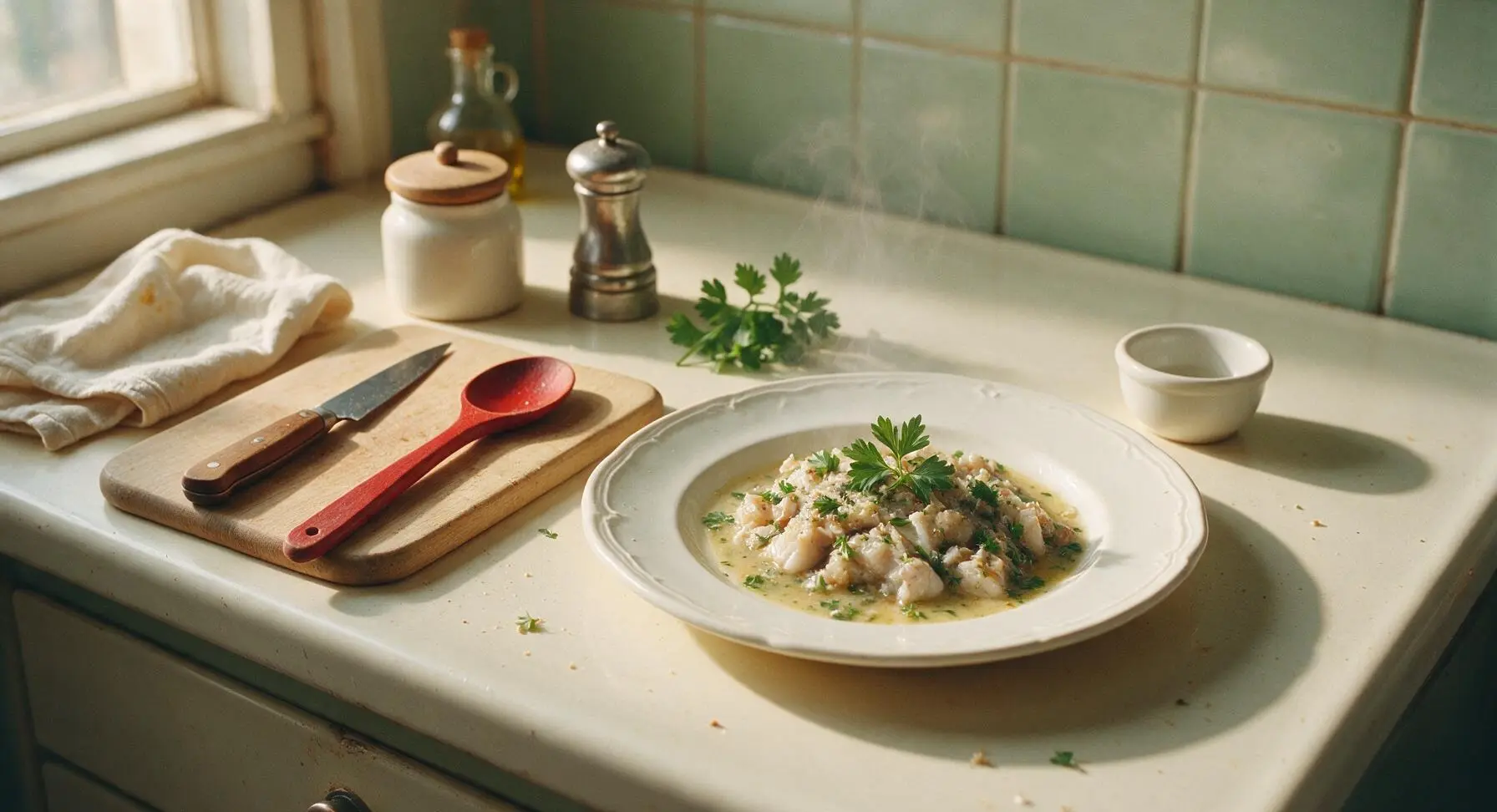
Deeply umami, briny, balanced first-press artisanal fish sauce: the irreplaceable Southeast Asian pantry staple for marinades, dressings, dips, and stir-fries.
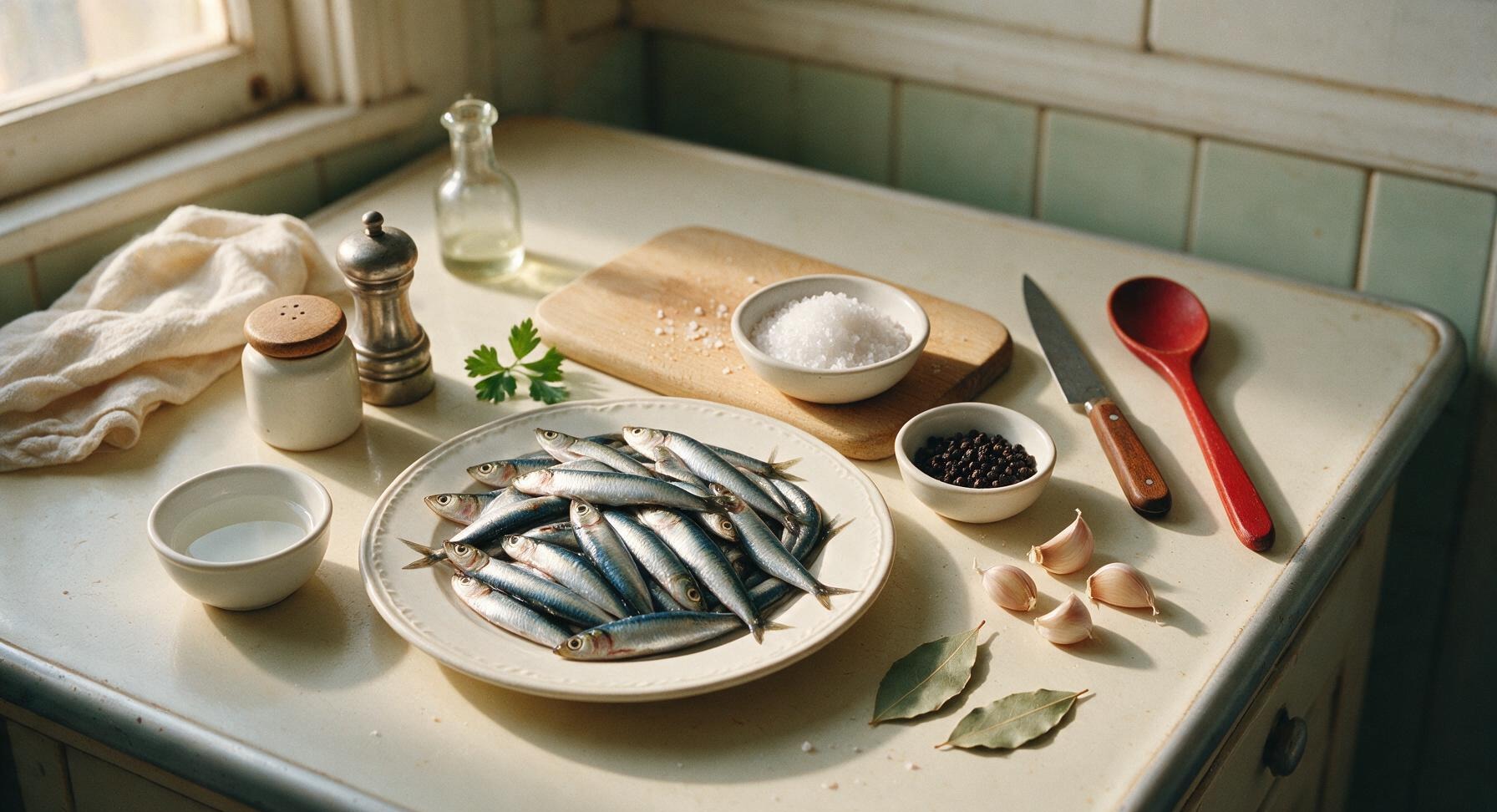
Ingredients
Steps
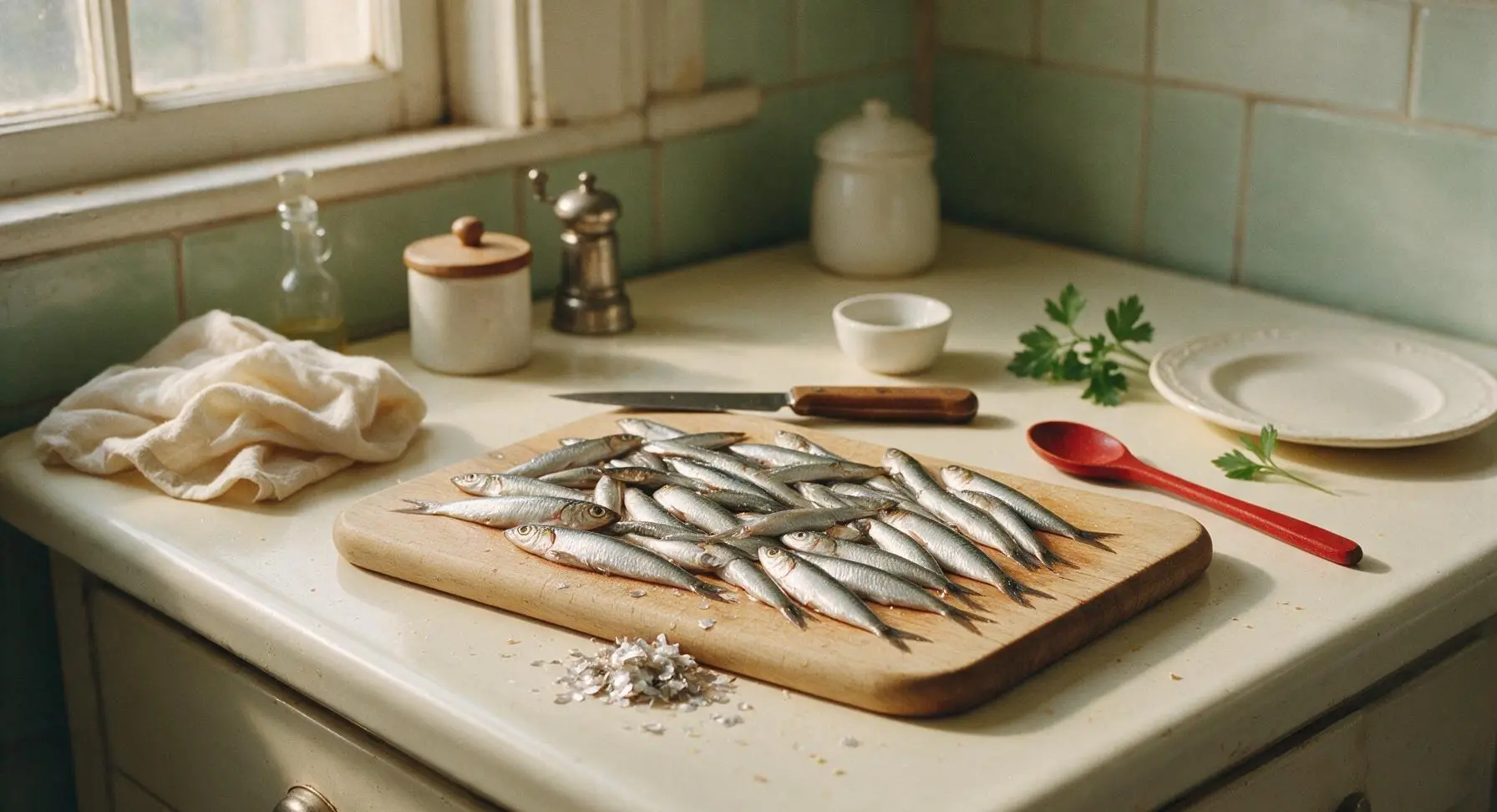
Rinse and Dry Anchovies
Place 1kg fresh whole ungutted anchovies in a colander, rinse briefly under cold running water to remove loose scales and surface debris. Pat completely dry with the cotton kitchen towel—any residual tap water will introduce unwanted bacteria that can spoil the ferment. Discard any anchovies that feel mushy or have a sharp sour off-odor; high-quality fresh anchovies smell clean and briny, like cold ocean air.
Layer Fish and Salt
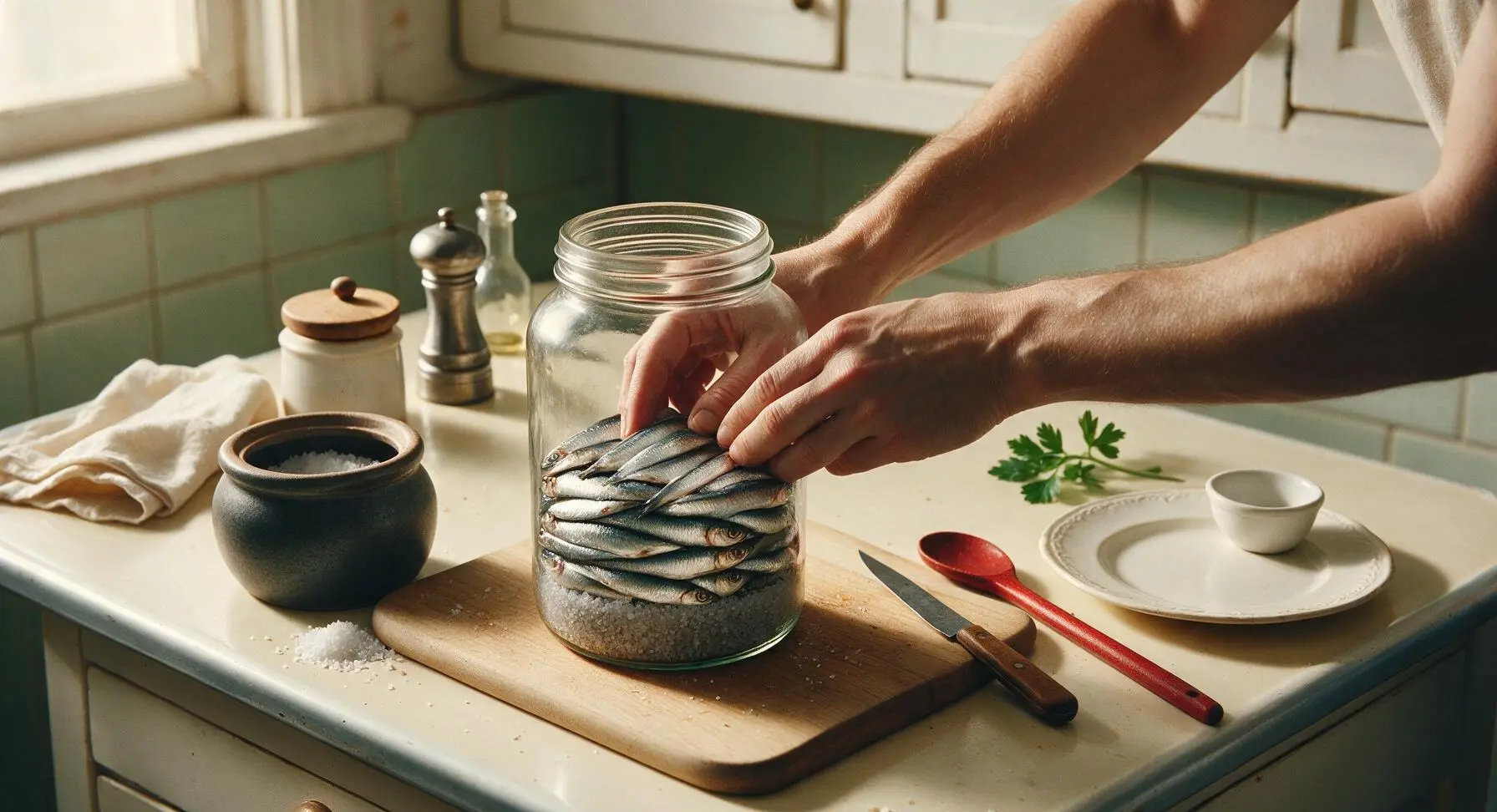
Sprinkle a 1cm thick layer of coarse unrefined sea salt across the completely dry bottom of the 1L glass fermentation jar. Add a single tight layer of anchovies, packing them to eliminate air gaps, then cover with a thin even layer of salt. Repeat alternating layers of fish and salt until all anchovies are used, tucking whole black peppercorns, dried bay leaves, and lightly crushed garlic cloves between layers for subtle aromatic depth. Finish with a final 2cm thick salt cap covering all exposed fish.
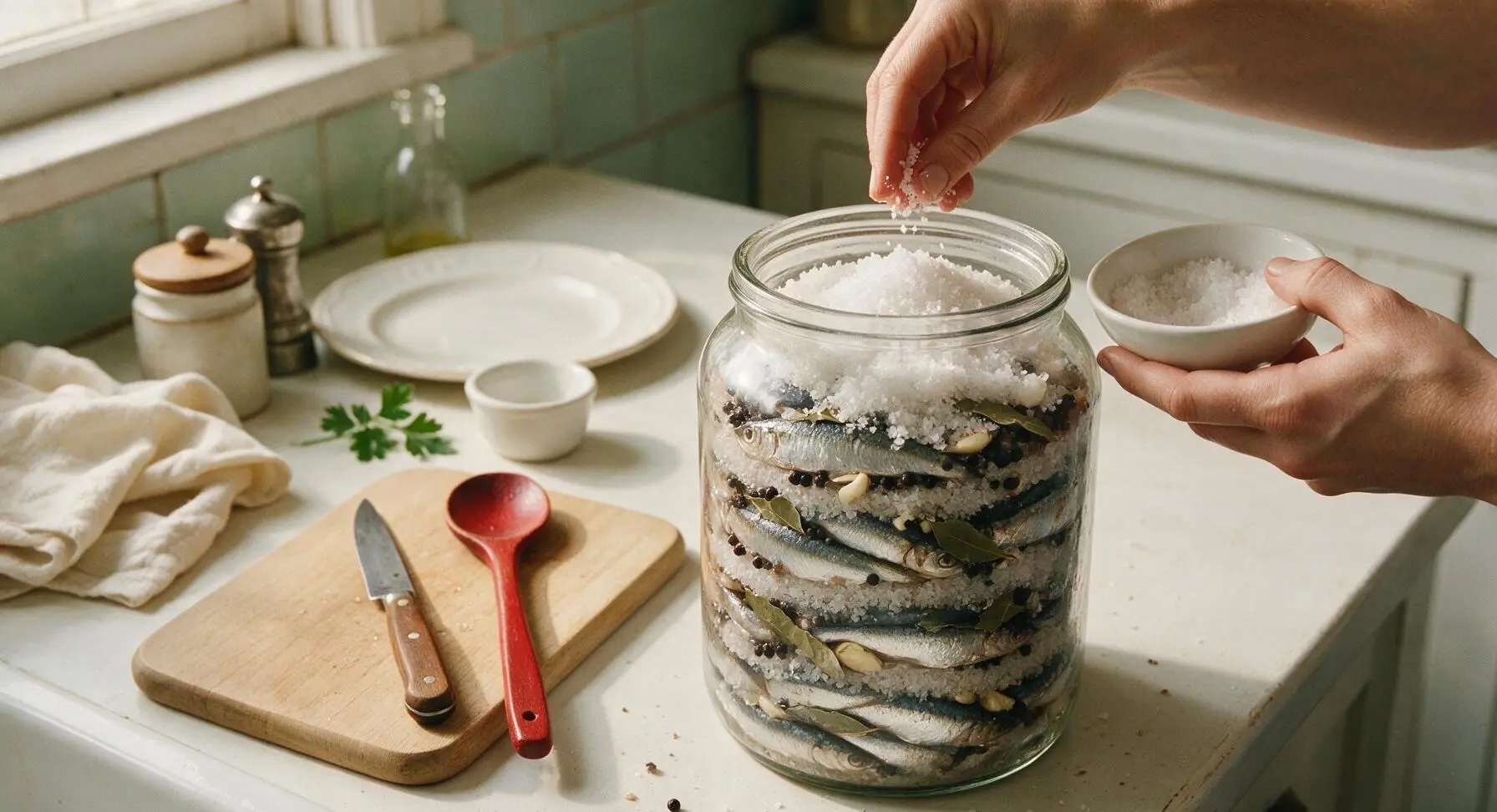
Seal Jar Airtight
Press the top salt layer down firmly with the back of the slotted stainless steel spoon to compact layers and release trapped air pockets. Wipe any salt or fish residue from the jar rim with a clean corner of the cotton towel, then press the glass lid firmly into place, securing the rubber seal to create a fully airtight environment. Do not add water at this stage: natural brine will leach out of the fish as salt draws out moisture over the first week of fermentation.
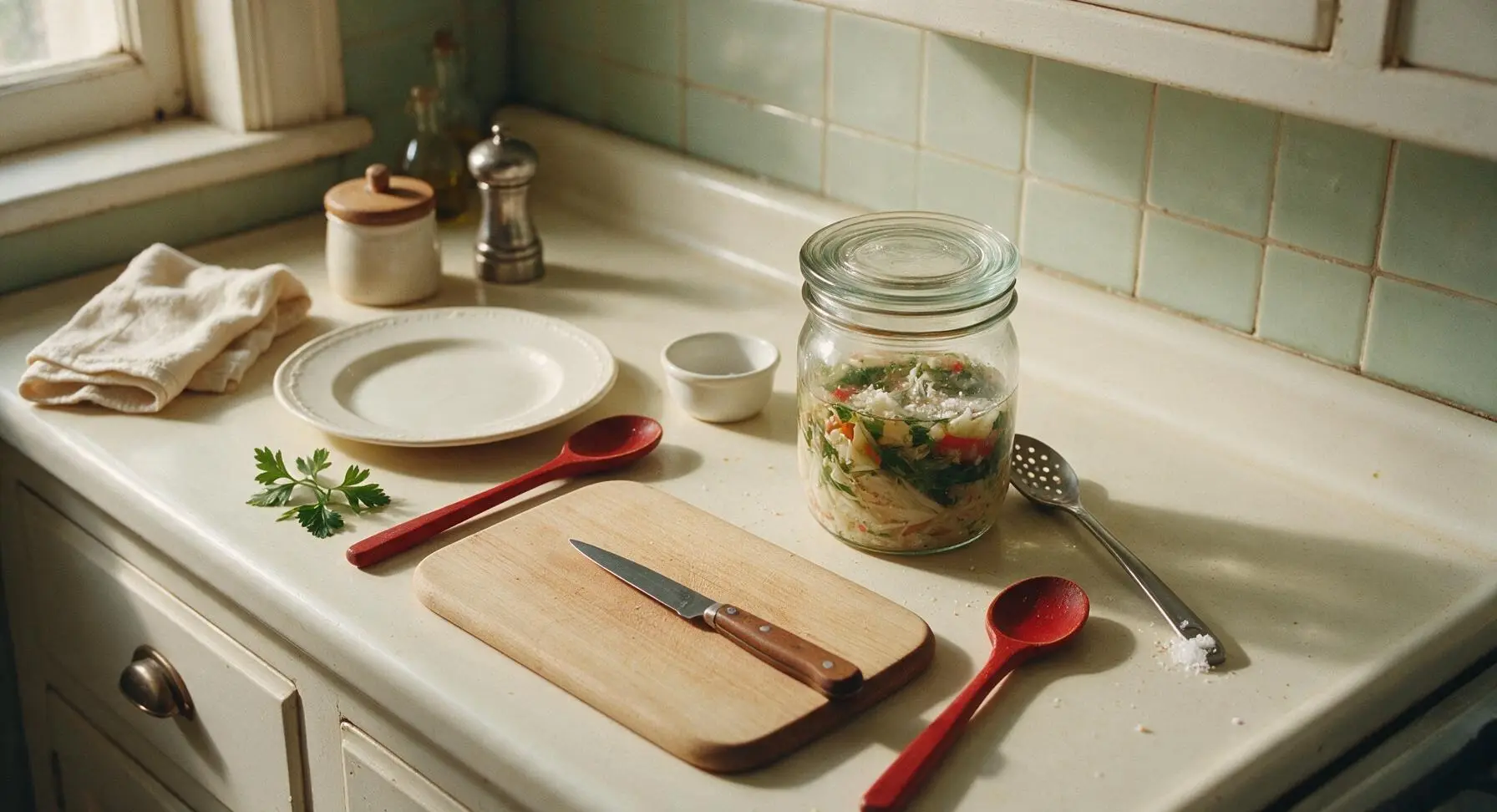
Start Initial Ferment
Leave the sealed jar in a consistently warm (20-24C / 68-75F, ideal summer indoor temperature), dark spot away from direct sunlight, undisturbed for 6 months. Check the jar after 7 days: dark amber brine should have risen to cover all fish and salt. If any fish is exposed above the brine, press it back under with a clean, sanitized spoon to prevent mold growth.
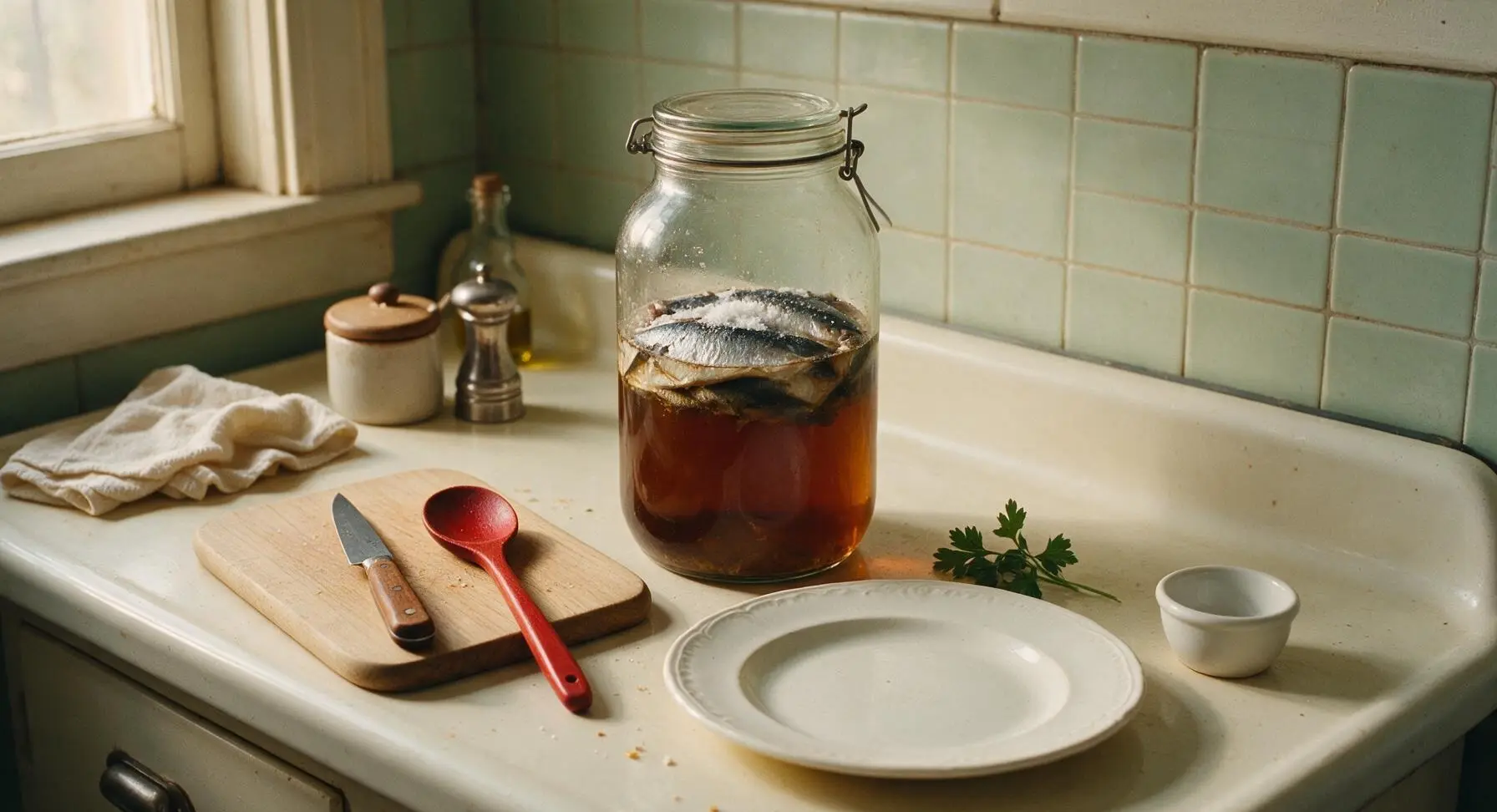
Strain Out Fish Solids
After 6 months of undisturbed fermentation, set the fine-mesh stainless steel sieve over the clear glass measuring cup, lining the sieve with a double layer of unbleached cheesecloth. Carefully pour the entire contents of the jar into the lined sieve, letting the dark amber liquid drain through completely by gravity for 2 hours. Do not press or squeeze the fish solids, as this will force bitter, cloudy particles into the finished sauce.
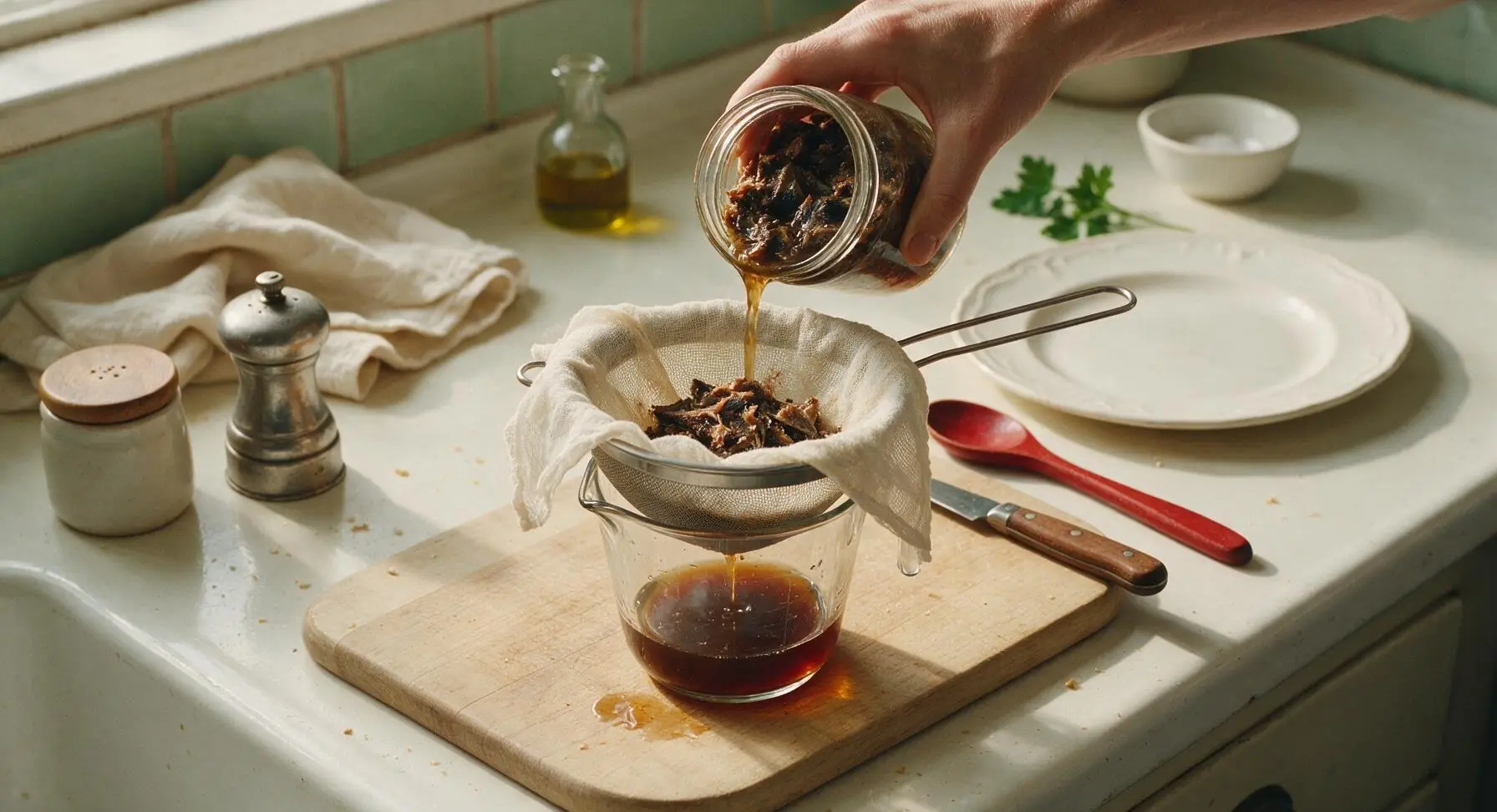
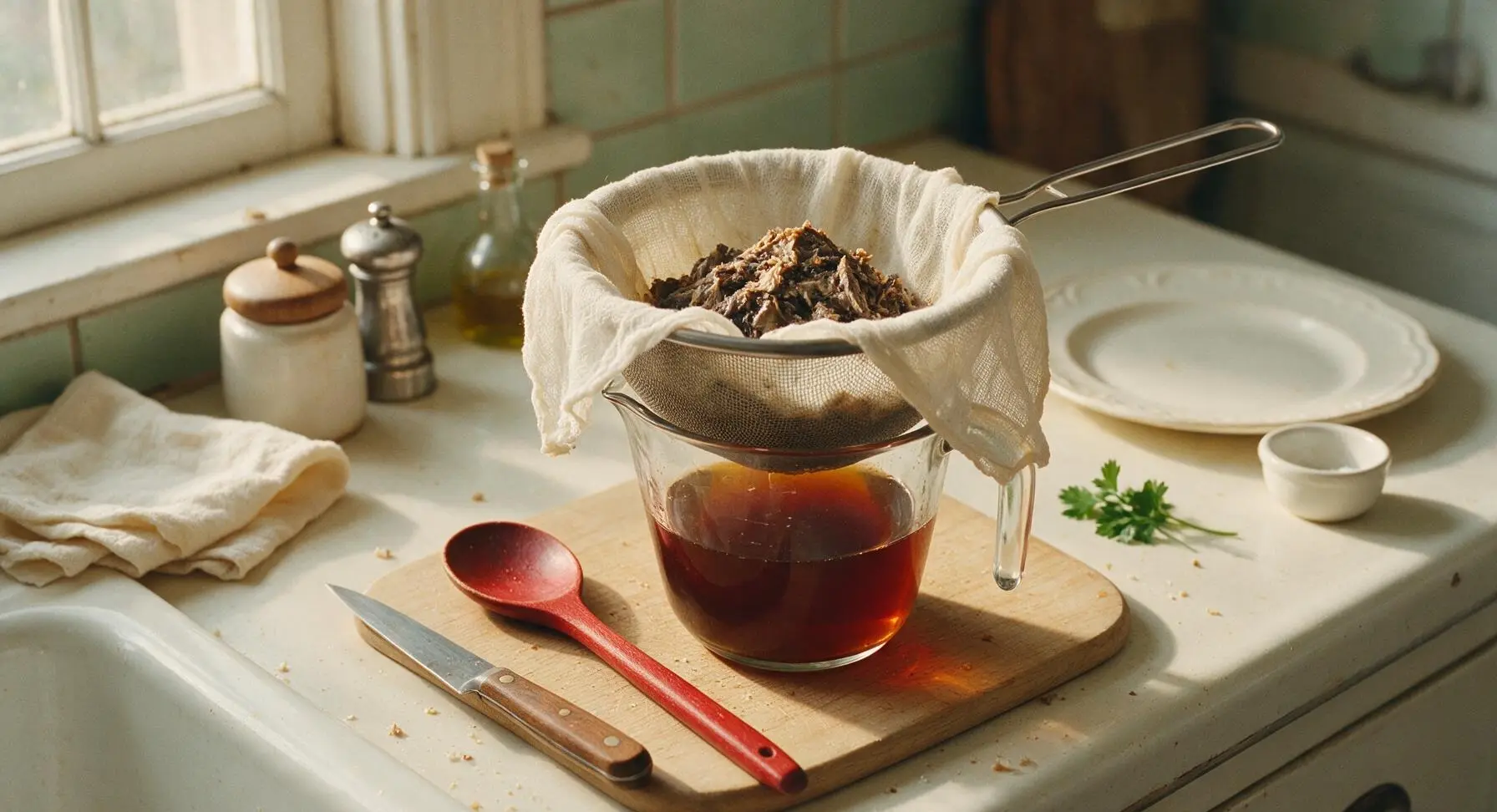
Age Strained Sauce
Wash and sanitize the fermentation jar thoroughly, then pour the strained amber liquid back into the dry jar. Seal tightly again with the rubber-sealed lid, and return the jar to its dark, warm spot for a final 6 months of aging. During this time, the sharp, harsh saltiness will mellow into rounded, nutty umami, and fine sediment will settle to the jar bottom, leaving perfectly clear sauce above.
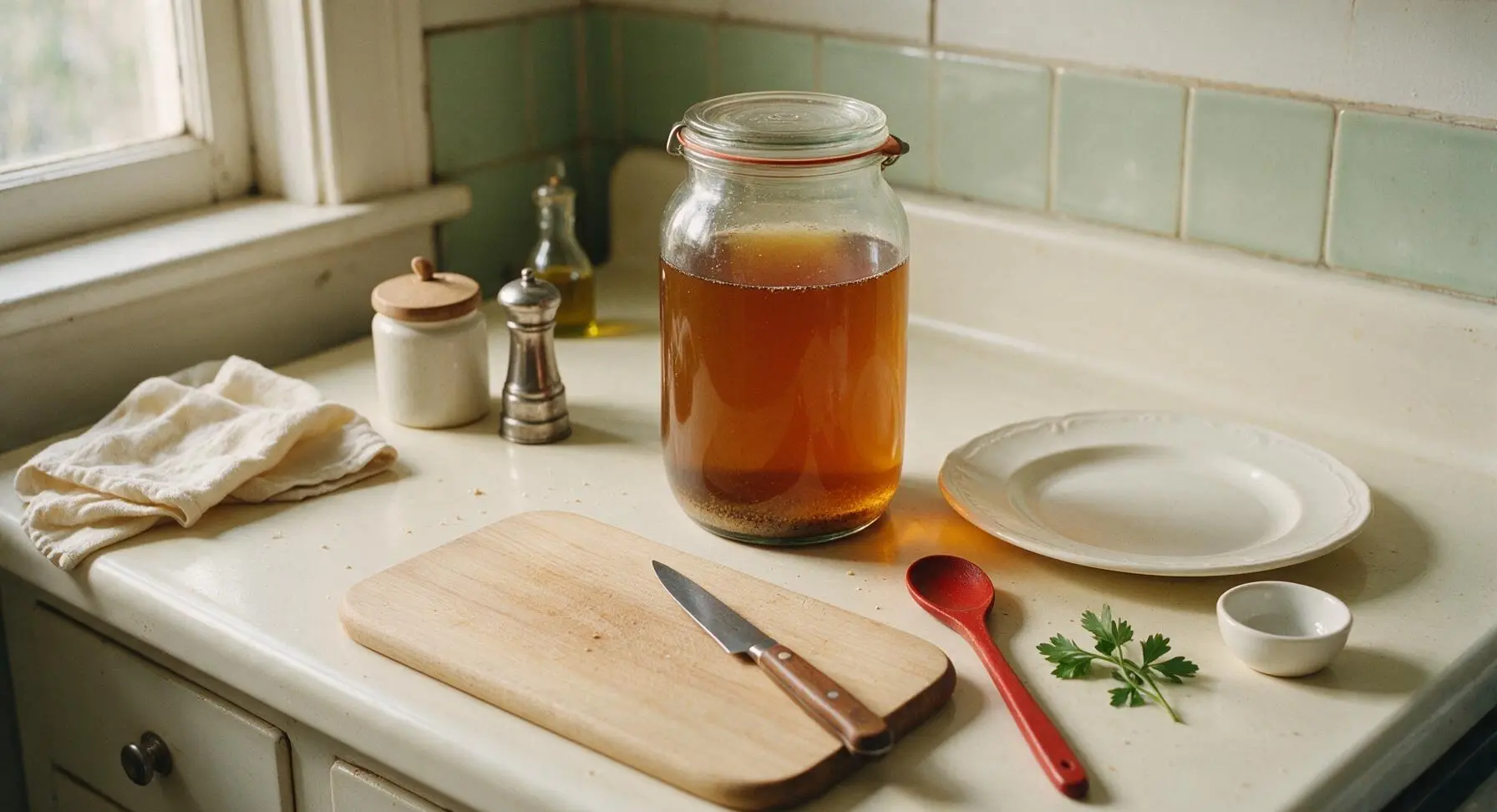
Decant Finished Sauce
After the final 6 months of aging, carefully pour the clear, deep caramel-brown fish sauce off the top, leaving the thin layer of dark sediment at the jar bottom completely undisturbed. Funnel the sauce into clean, sterilized amber glass storage bottles, sealing tightly. Stored in a cool dark cabinet, the finished sauce will keep for up to 3 years without refrigeration.
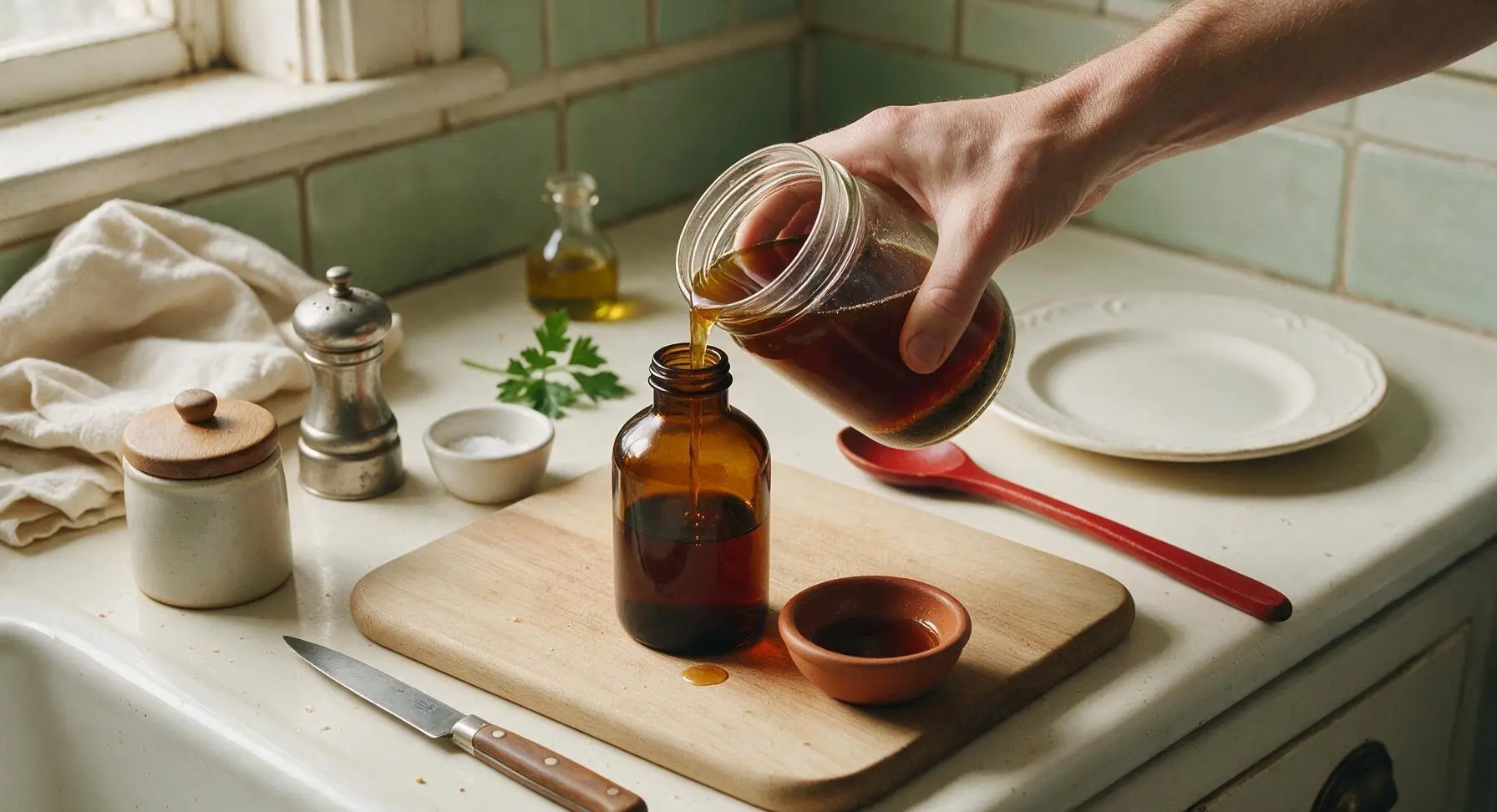
Taste for Quality
Pour a 1 teaspoon sample of the finished sauce into the terracotta tasting bowl. High-quality first-press fish sauce should taste deeply umami, pleasantly briny (not sharply salty), with a subtle caramel-like nuttiness and no bitter, sour, or rotten off-notes. It is now ready to use in stir-fries, marinades, salad dressings, and dipping sauces.
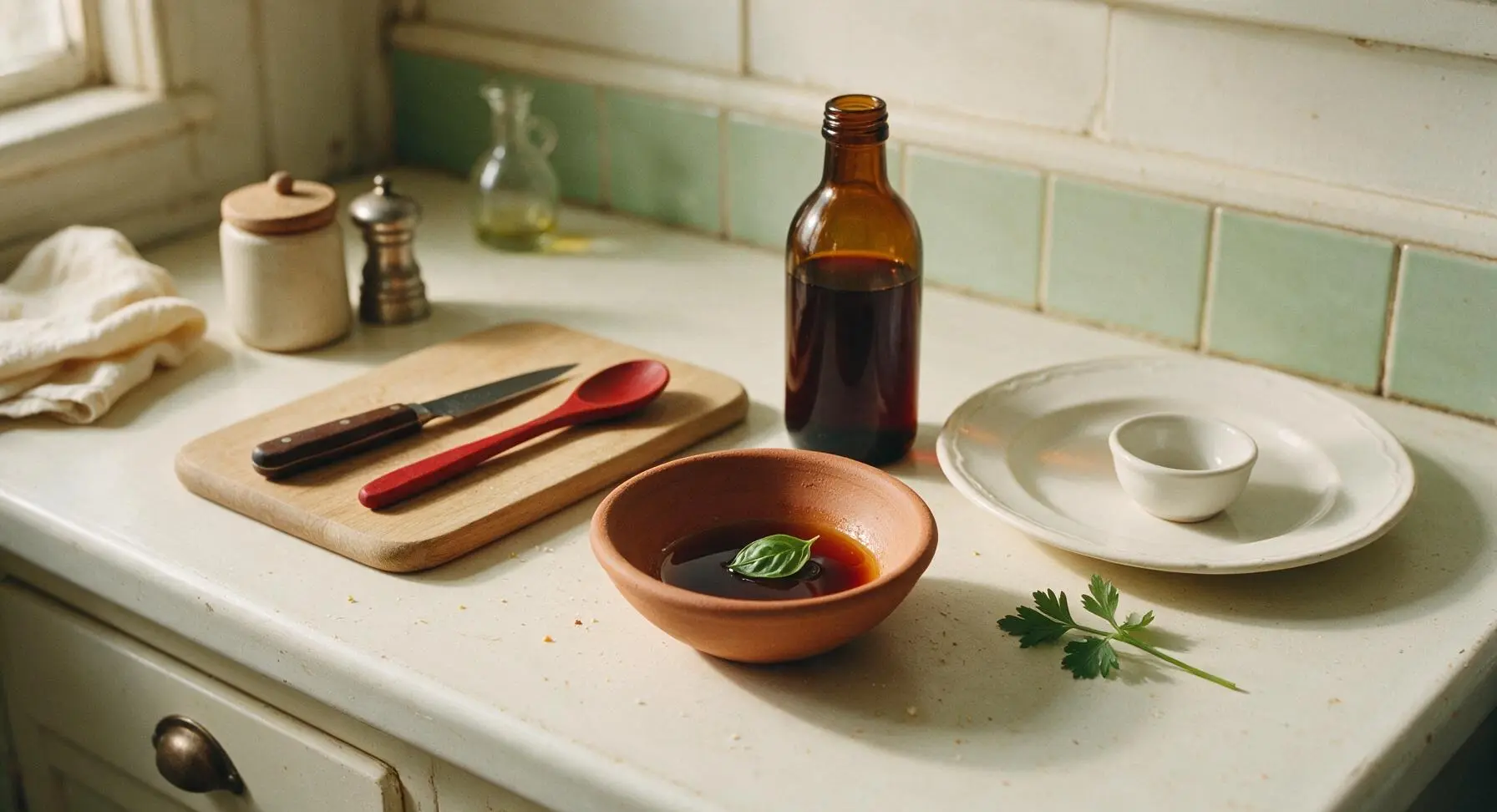
Tips
2.A thin, flat layer of white kahm yeast on the brine surface during fermentation is harmless: simply skim it off with a clean, sanitized spoon. Only discard the batch if you see fuzzy black, green, or bright pink mold, which signals dangerous unwanted bacterial growth.
3.For the clearest, highest-grade first-press sauce, never squeeze or press the fish solids when straining: pressing forces fine protein particles and bitter compounds into the liquid, resulting in a cloudy, off-tasting sauce. Let gravity drain the liquid slowly for the smoothest, most balanced flavor.
OMG I started a batch of this exactly 12 months ago after seeing an early test version of this recipe, and I cracked it open last weekend for our family pho night and it is a GAME CHANGER. Way smoother, less briny than the store-bought stuff I’ve used for years, my kids kept asking why the nuoc cham tasted so much better than usual. Already prepping a second batch to make sure I never run out! Only note is I had to move my crock to a cooler part of the basement mid-summer because it got a little too warm by the water heater, no issues after that.
Got a batch going, about 6 months in now—smelled a little aggressively funky when I peeked at it last week, but from what I remember that’s par for the course with fermented fish, right? Planning to save the first press for my Thai-style grilled chicken wings I bring to our neighborhood fall potluck. Fingers crossed it hits as hard as everyone in the comments says it does.
SO good, I cannot believe how much depth this has compared to the generic grocery store fish sauce I used to buy for my weekly meal prep. I’ve been drizzling a little into stir fries, salad dressings, even my homemade Caesar for that secret umami kick and people keep asking what my secret ingredient is. Worth every second of the 12 month wait, no question.
Wait, real talk—has anyone actually waited the full 12 months for this? I’ve seen other homemade fish sauce recipes that only take 3-4 months, and I’m so impatient lol. I’m low-key scared I’m gonna forget I have a giant glass jar of anchovies and salt camped out in my pantry for a whole year.
My grandma used to make fish sauce just like this when I was little, and I’ve been chasing that flavor for literal decades after she passed. I started a batch last year right when this recipe first went up, and when I pressed it last week I cried a little—it tastes exactly like hers. Served it with fresh spring rolls at our family dinner on Sunday and even my picky teen said it was perfect. Thank you so much for sharing this, it means more than I can say.
Quick question before I dive in headfirst—do I really need a dedicated ceramic crock for this? I’ve got a couple big glass mason jars lying around, but I don’t wanna run out and buy random special equipment if I don’t have to. The medium difficulty rating feels totally doable, but I don’t wanna botch a whole year-long project ‘cause I used the wrong container!