
Braided Easter Bread
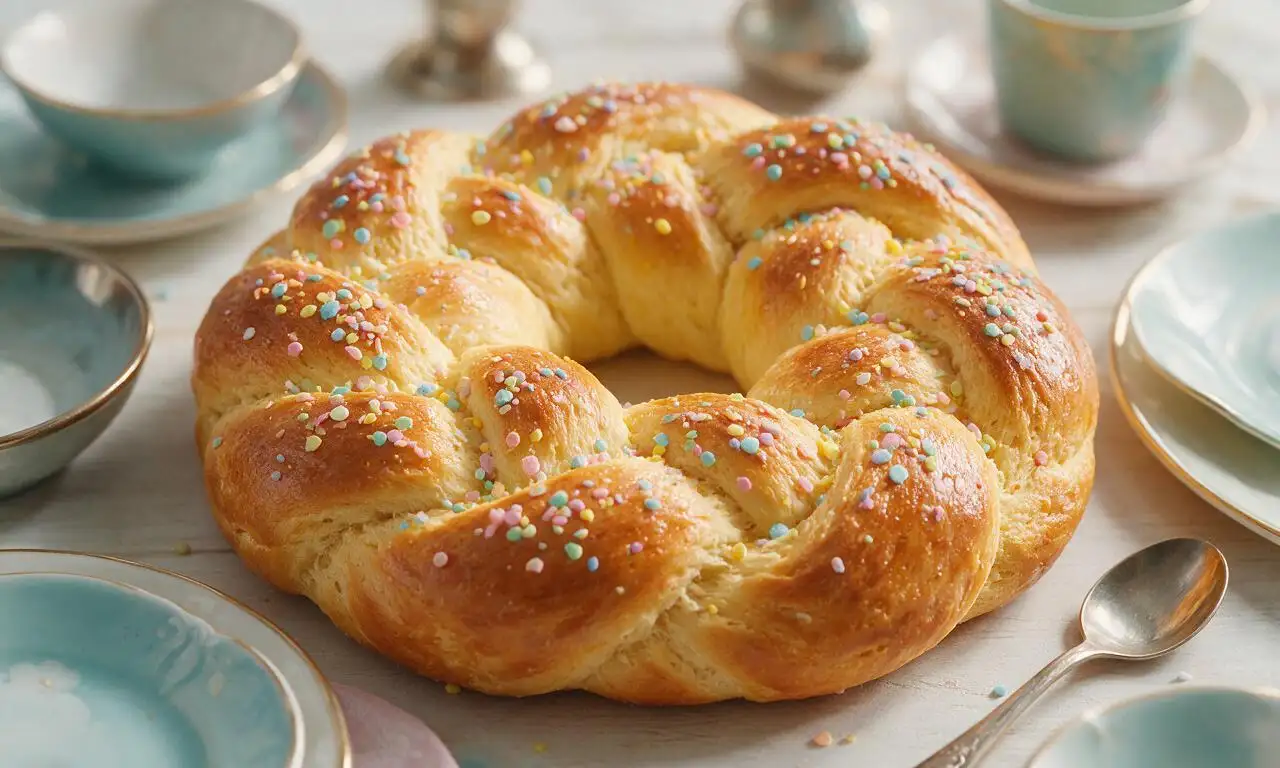
intro
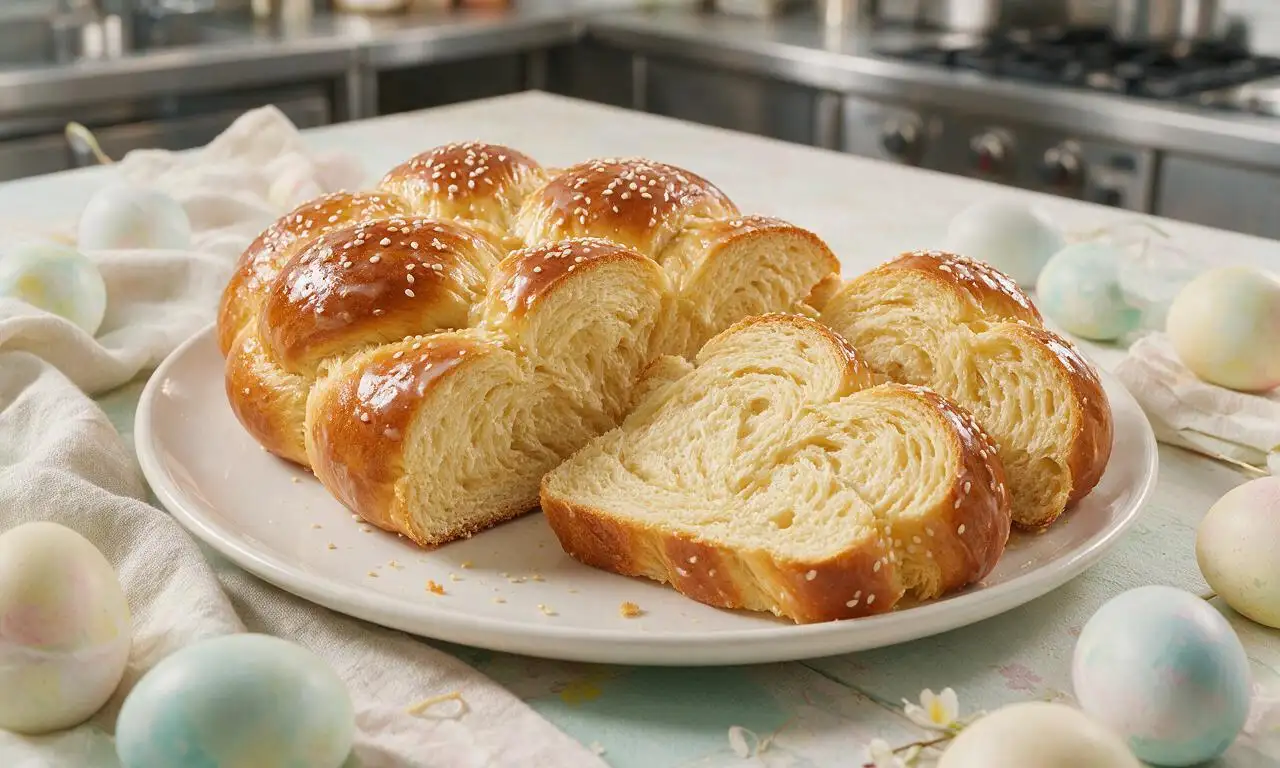
Soft, lightly sweet golden braided bread scented with citrus zest, topped with pastel sprinkles, and a beloved centerpiece for spring Easter celebrations and brunch spreads.
Ingredients
Steps
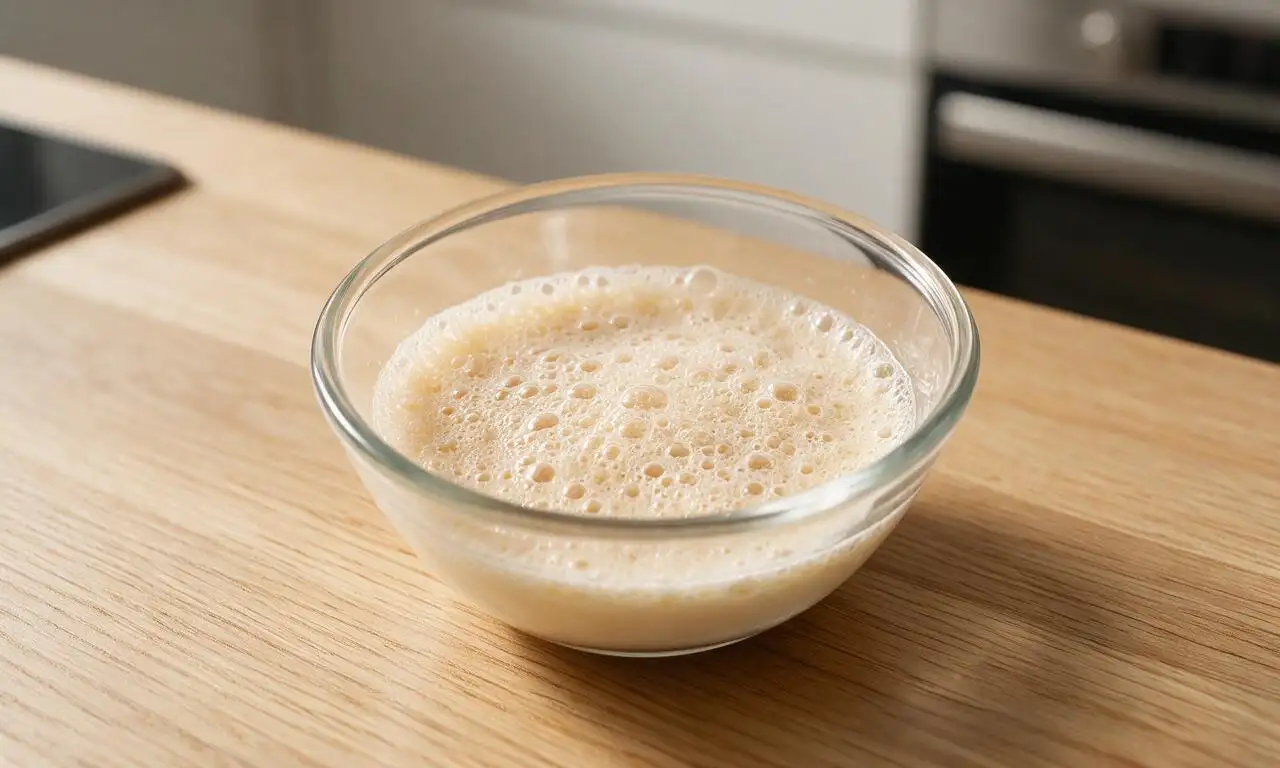
Activate the yeast
In a small bowl, combine warmed 180ml whole milk (heated to exactly 43°C/110°F, no hotter to avoid killing yeast), 1 teaspoon of the measured granulated sugar, and the full 7g packet of active dry yeast. Stir gently once to combine, then let rest for 5-7 minutes in a warm, draft-free spot until the mixture forms a foamy, bubbly layer on top and smells distinctly yeasty. If no foam forms after 7 minutes, your yeast is inactive and must be replaced for the bread to rise properly.
Mix and knead dough
In the bowl of a stand mixer fitted with a dough hook, combine the foamy yeast mixture, remaining granulated sugar, 2 room-temperature large eggs, melted cooled butter, lemon zest, orange zest, vanilla extract, and fine sea salt. Gradually add the 500 grams of spooned-and-leveled all-purpose flour 1 cup at a time, mixing on low speed (speed 2 on most standard stand mixers) for 8 minutes until a smooth, elastic dough forms that pulls cleanly away from the bowl sides and does not stick excessively to a lightly floured finger when prodded. If mixing by hand, turn the shaggy dough onto a lightly floured surface and knead for 12-14 minutes until the same smooth, elastic texture is achieved.

First dough rise
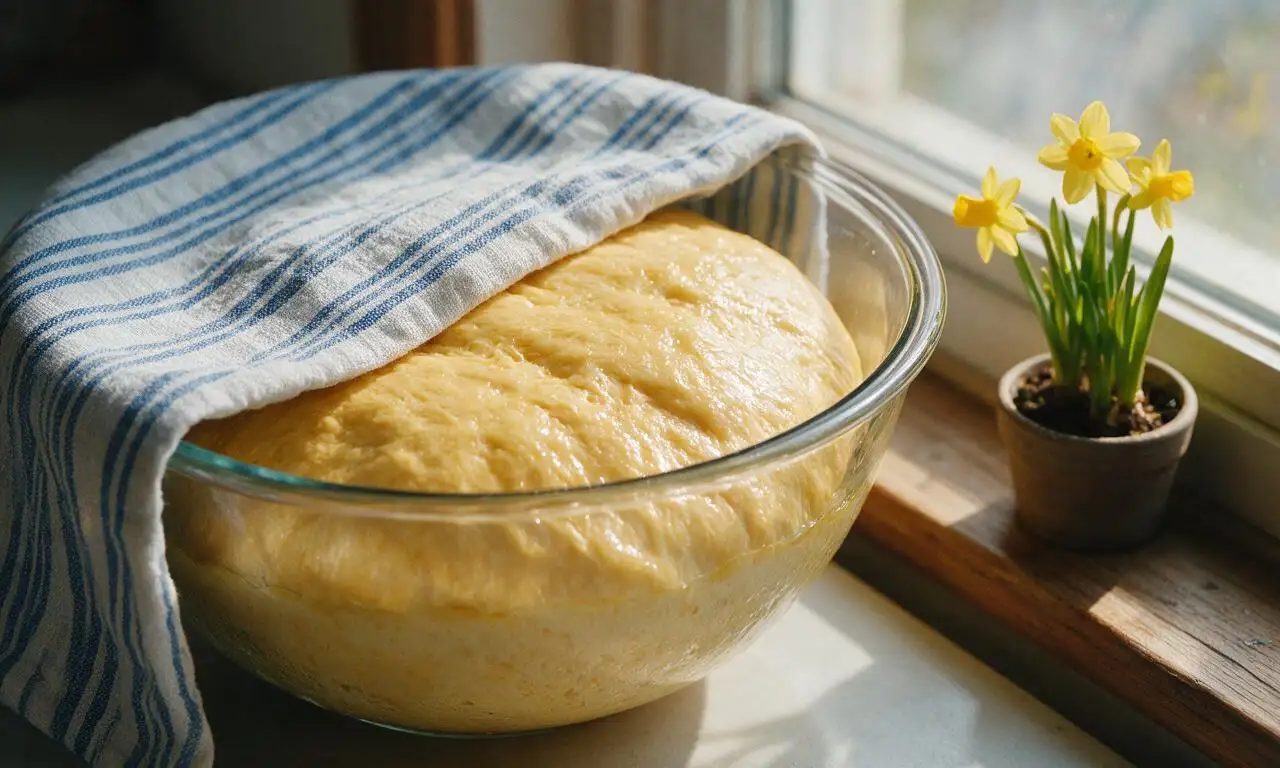
Form the kneaded dough into a tight, smooth ball, place it in a large lightly greased glass bowl, and turn once to coat the entire dough surface in neutral oil. Cover the bowl tightly with a clean damp linen kitchen towel or plastic wrap, and set it in a warm, draft-free spot (maintained at 24-27°C/75-80°F) for 1 to 1.5 hours, until the dough has fully doubled in size and leaves a 1-inch deep indentation that does not spring back when you press a floured finger into its center.
Braid the dough
Once the dough has doubled, punch it down firmly in the center to release all trapped carbon dioxide, then turn it out onto a lightly floured work surface. Divide the dough evenly into 3 equal portions (each approximately 310 grams), and roll each portion into a 45cm (18-inch) long, even rope with slightly tapered ends. Pinch the top ends of the three ropes firmly together to seal, then braid the strands tightly by crossing the outer strands over the center strand alternately, tucking both pinched ends under the loaf once you reach the bottom to form a neat, uniform braid.

Second dough rise
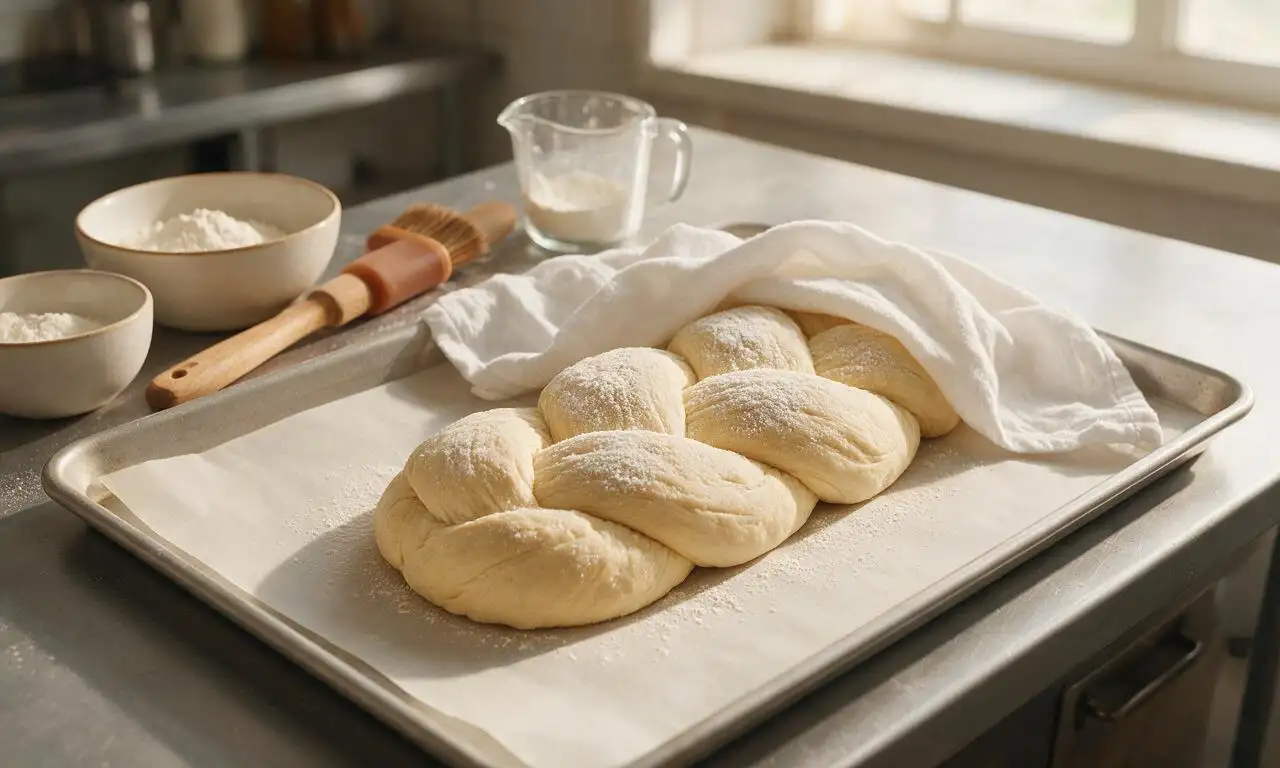
Carefully lift the braided loaf and transfer it to a parchment paper-lined baking sheet, leaving 5cm (2 inches) of empty space around all sides to allow for expansion. Cover the loaf loosely with the same damp linen towel, and let it rise in the same warm, draft-free spot for 30-40 minutes, until the braid is visibly puffy and springs back slowly (leaving a small indent) when gently poked with a floured finger.
Bake the bread
While the loaf finishes its second rise, preheat your oven to 180°C/350°F with an oven rack positioned in the center. Whisk the remaining 1 large egg with 1 tablespoon of whole milk to make a smooth, thin egg wash, then brush the entire exposed surface of the risen braid gently with the wash, taking care not to press hard enough to deflate the dough. Sprinkle the top evenly with 2 tablespoons of pastel decorative sprinkles. Bake for 30-35 minutes, until the loaf is deep golden brown all over and the internal temperature at the thickest part reaches 90°C/195°F when measured with an instant-read thermometer. If the top browns too quickly after 20 minutes of baking, tent the loaf loosely with a sheet of aluminum foil to prevent burning.

Cool and serve
Once fully baked, use the parchment paper to lift the loaf immediately from the baking sheet and transfer it to a wire cooling rack. Let the bread cool completely for at least 45 minutes before slicing to allow the soft crumb to set fully. Serve sliced at room temperature with salted butter, fruit jam, or alongside cured cheeses and meats as part of an Easter brunch spread.
Tips
2.Weigh dough portions when dividing for braiding: equal 310g ropes create a uniform braid that rises and bakes evenly without lopsided sections.
3.Resist slicing the bread while warm: cutting hot bread compresses the soft, fluffy crumb and creates a gummy texture, rather than the light, airy crumb this bread is known for.




OMG this braided Easter bread was the star of our family Easter brunch yesterday! I added a little extra lemon zest to the glaze and my kids devoured half the loaf before we even sat down for ham. It’s so soft and fluffy, way better than the store-bought version my mom used to bring every year. My only note is that the rising time took a little longer than the recipe said because my kitchen was pretty cold, but totally worth the wait! 10/10 will make again next year.
Okay, full transparency: I’ve never successfully made any kind of yeast bread before, so I was nervous about the medium difficulty rating. The braiding part was way easier than the tutorial made it look, I promise! My loaf came out a little lopsided but it tasted incredible. Brought it to my office potluck today and three people asked for the recipe. Win in my book!
Game changer! I’ve been using my grandma’s old Easter bread recipe for 20 years and decided to give this one a test run before our church potluck this weekend. The texture is so much lighter than my usual recipe, and the hint of vanilla in the dough is chef’s kiss. I’m going to add colored sprinkles on top for the kids at church, I know they’ll go crazy for it. SO good.
Tried this for our weekly family dinner and wow, total hit! Wait, quick question for anyone who’s made this: can I prep the dough the night before and let it rise in the fridge, then braid and bake it in the morning? We have early church on Easter and I don’t want to wake up at 5am to let the dough rise lol.
This bread is so good, I’ve made it twice for my family already! Quick question: has anyone tried making this with vegan butter and plant-based milk? My daughter is vegan and I want to make a loaf she can eat at our Easter gathering, but I don’t want to mess up the texture if the swaps don’t work.
I’ve made this braided bread three times already this Lent! It’s become my go-to to bring to neighbor drop-offs and my book club meetings. I love that it looks super fancy when it’s braided, but it’s not overly complicated once you get the hang of the three-strand twist. My grandkids keep asking when I’m going to make another one, so I guess I’ll be baking two loaves for Easter dinner this year!