
brandy
intro
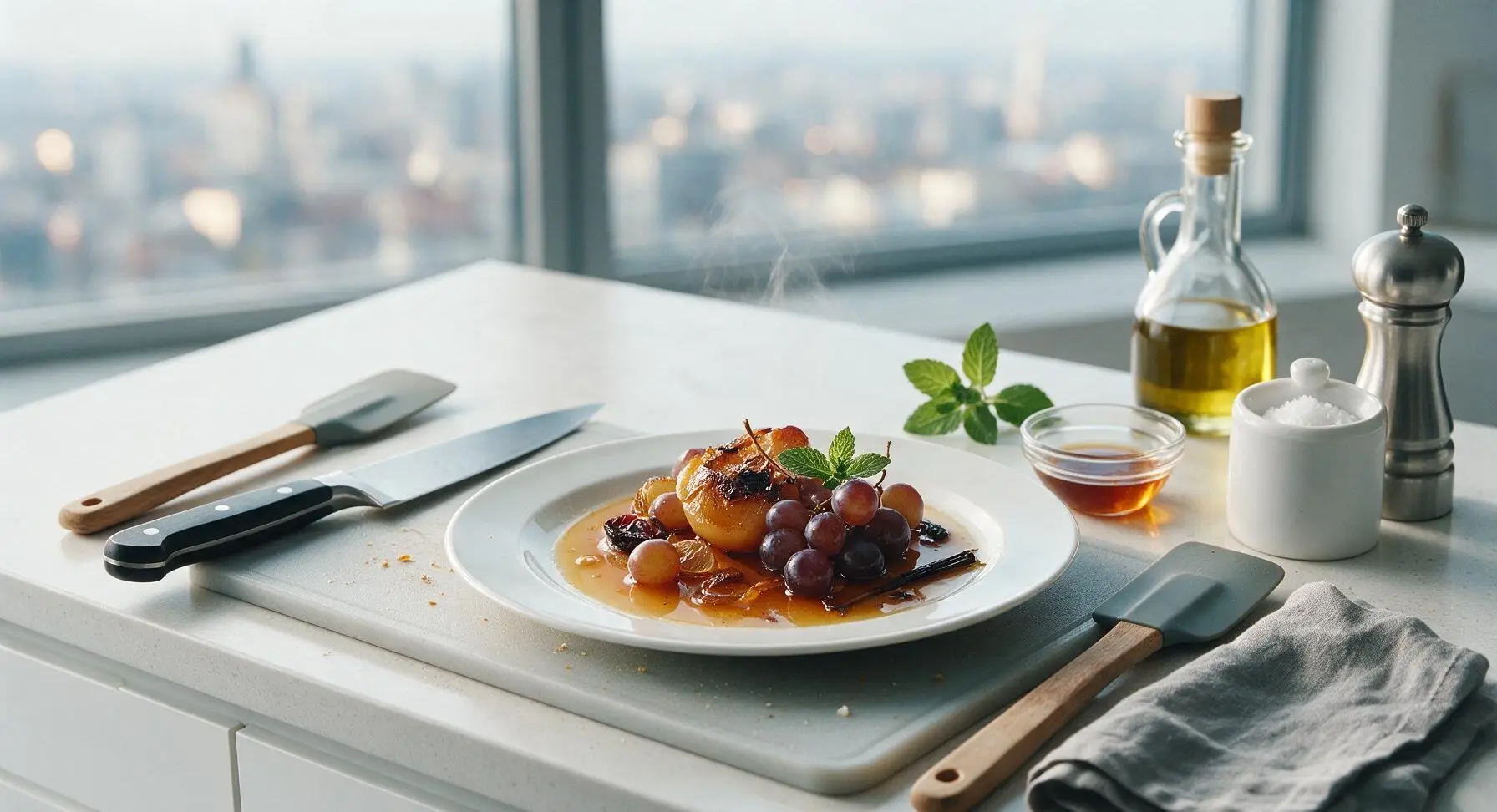
Smooth, amber homemade grape brandy with warm notes of dried fruit, vanilla, and oak, perfect for slow sipping or cold-weather celebratory toasts.
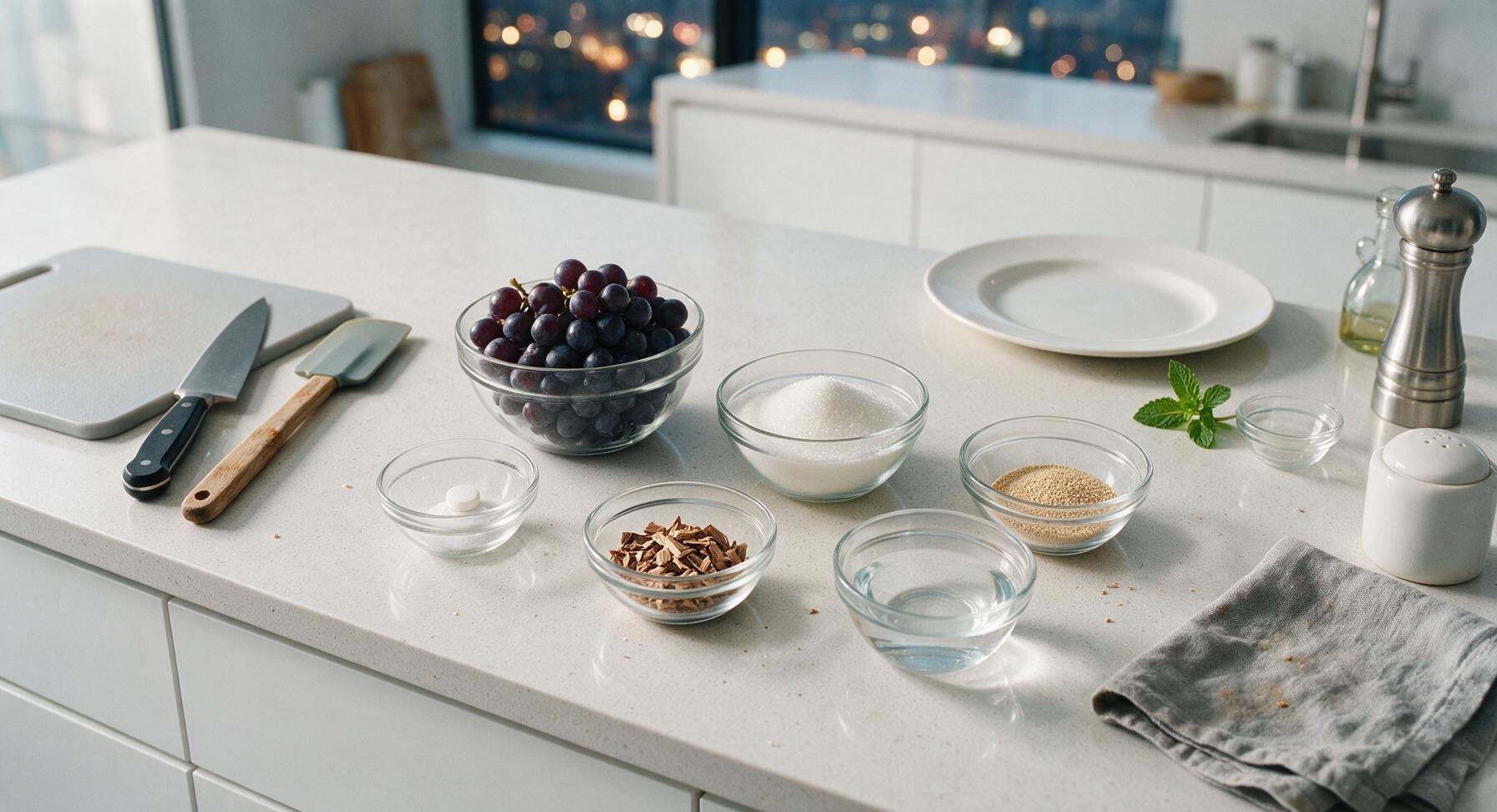
Ingredients
Steps
Crush Cleaned Grapes
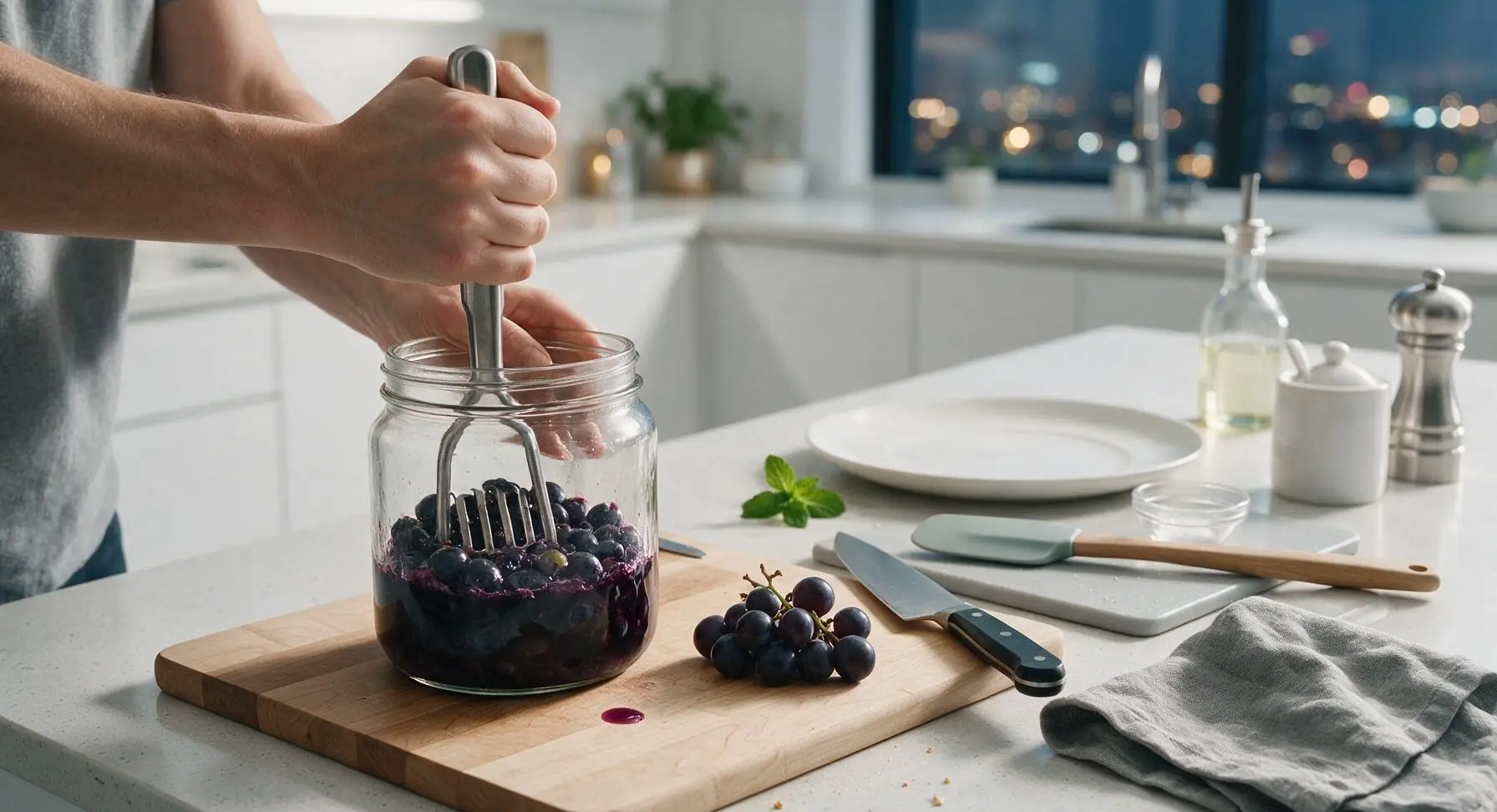
Wash the 4lbs of Concord grapes under cool running water, discarding any moldy, bruised, or underripe fruit and pulling all fruit from stems. Place cleaned grapes into the 2-gallon glass fermentation jar set on the maple cutting board, then use the stainless steel masher to fully crush all grapes, breaking skins and releasing juice until no whole grapes remain. Crush 1 campden tablet, stir it into the crushed grape must, cover the jar loosely with a clean cloth, and let rest for 24 hours at a stable 65-70°F (18-21°C) to kill wild bacteria and native yeast.
Add Sugar and Yeast
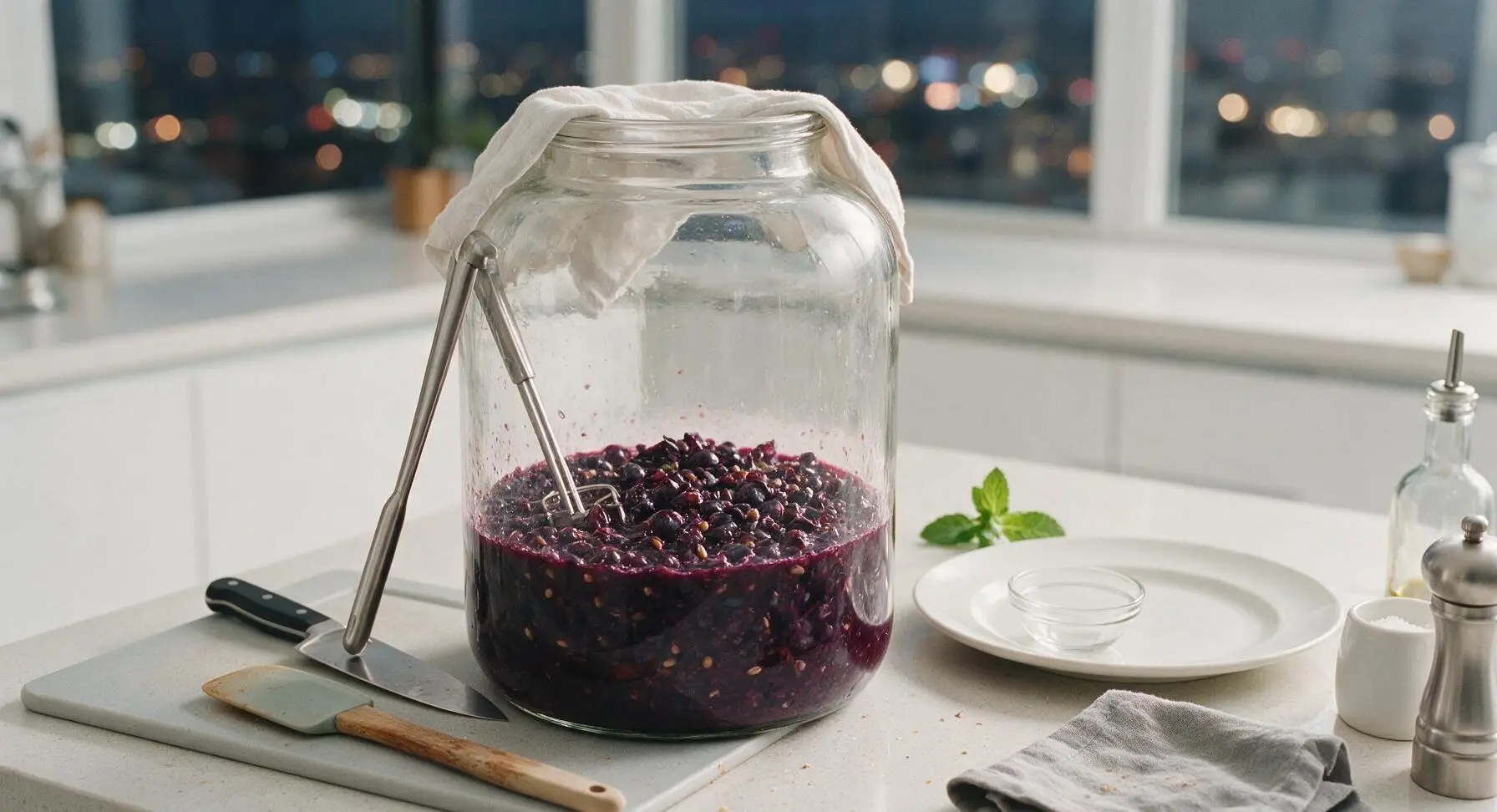
After the 24-hour rest period, stir the full 1 cup of granulated sugar into the grape must with the masher until all sugar granules are fully dissolved, with no grit visible at the bottom of the jar. Sprinkle the champagne yeast evenly across the surface of the must, and let it sit undisturbed for 10 minutes to rehydrate, then stir gently to incorporate the yeast. Top the jar with filtered water to leave exactly 2 inches of headspace below the rim, then seal the jar with the airlock lid, filling the airlock chamber halfway with filtered water to create an air seal.
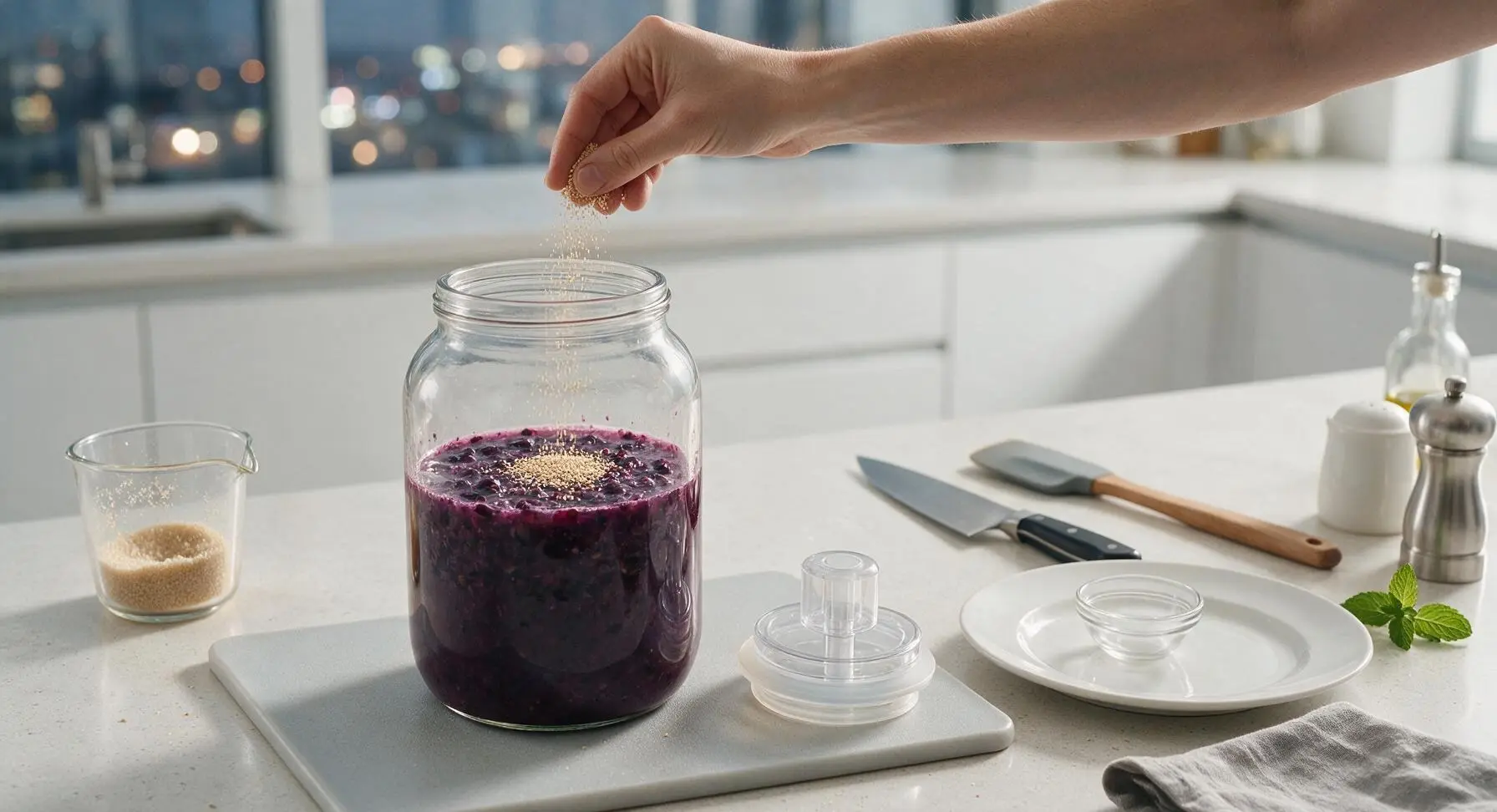
Ferment for Two Weeks
Leave the sealed fermentation jar on the counter (or move to a dark, temperature-stable spot at 65-70°F / 18-21°C) to ferment for 14 full days. Check the airlock daily for the first 7 days: consistent small bubbles rising through the airlock confirm active fermentation. Fermentation is fully complete when bubbling stops entirely, the liquid tastes dry (no residual sweetness), and a thick layer of pale purple lees (sediment) has settled firmly at the bottom of the jar.
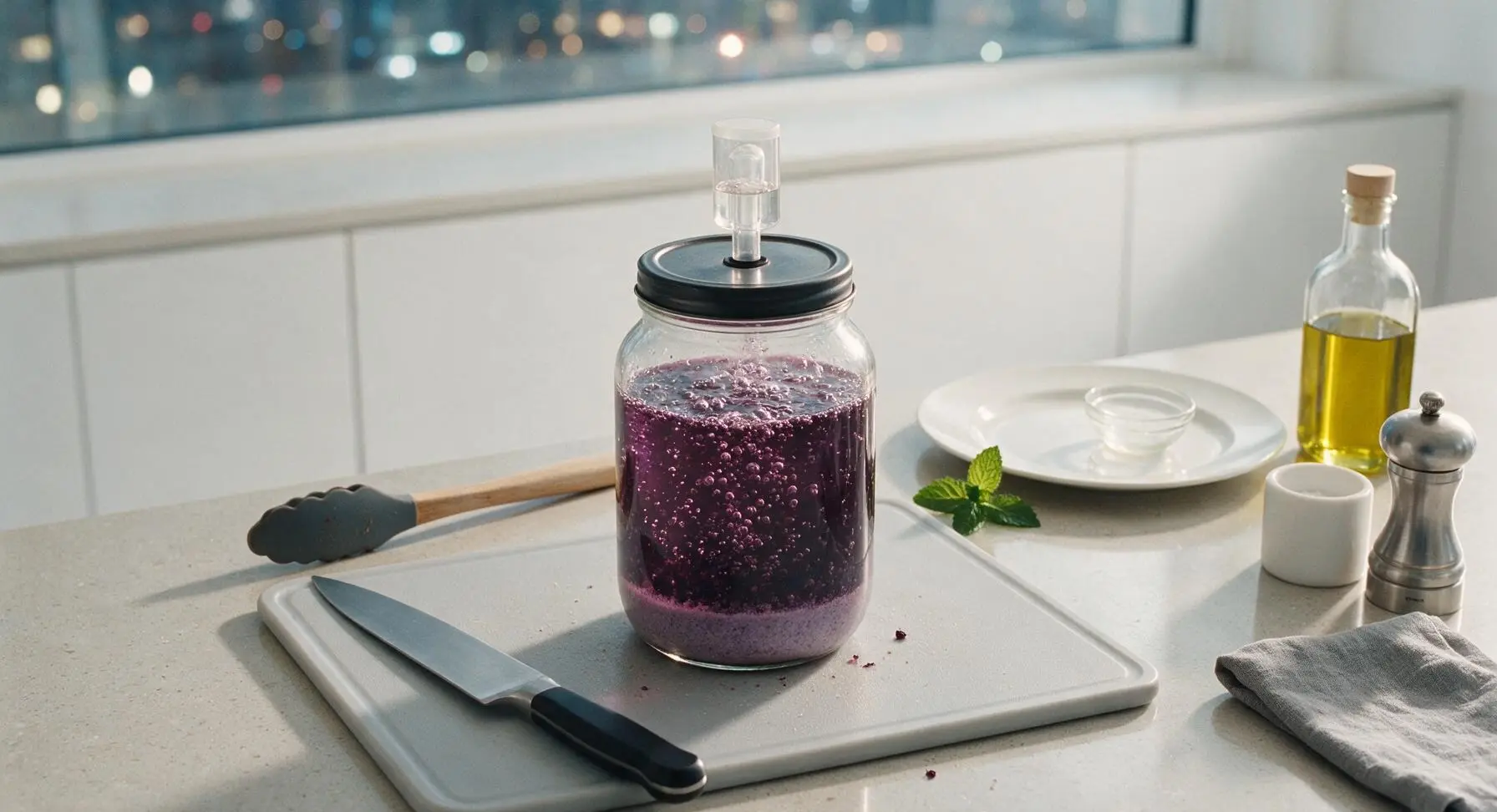
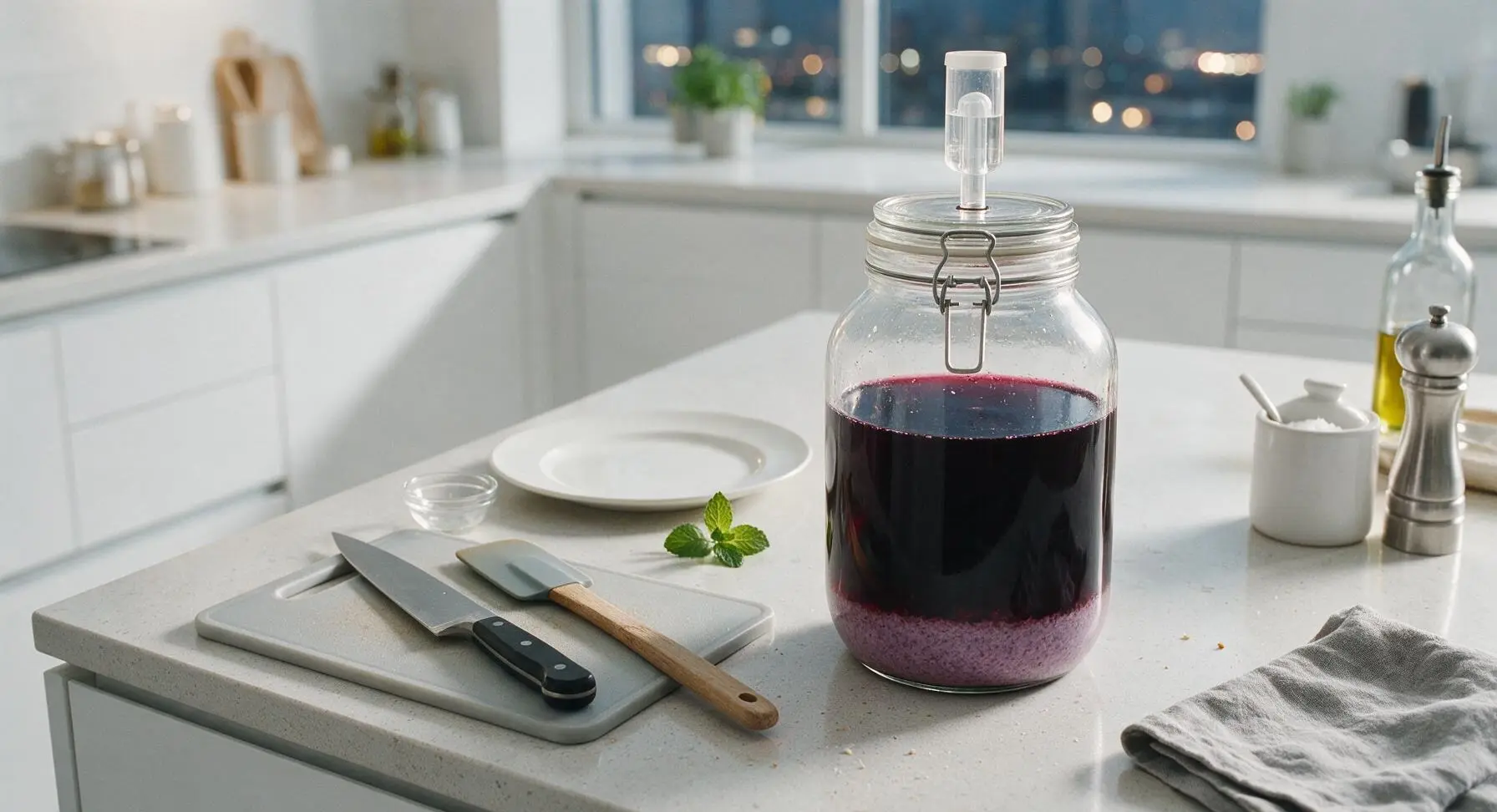
Strain Fermented Wine
Line a fine-mesh sieve with 2 layers of the unbleached cheesecloth, set the sieve over the opening of the copper pot still (now placed in the center of the counter, per logical tool use). Slowly pour the fully fermented wine through the cheesecloth, straining out all grape skins, seeds, and settled lees. Squeeze the cheesecloth gently to extract all clear wine from the solids, then discard the collected pulp and sediment. Take care not to pour any thick sediment into the still, as it will burn and ruin the brandy flavor during distillation.
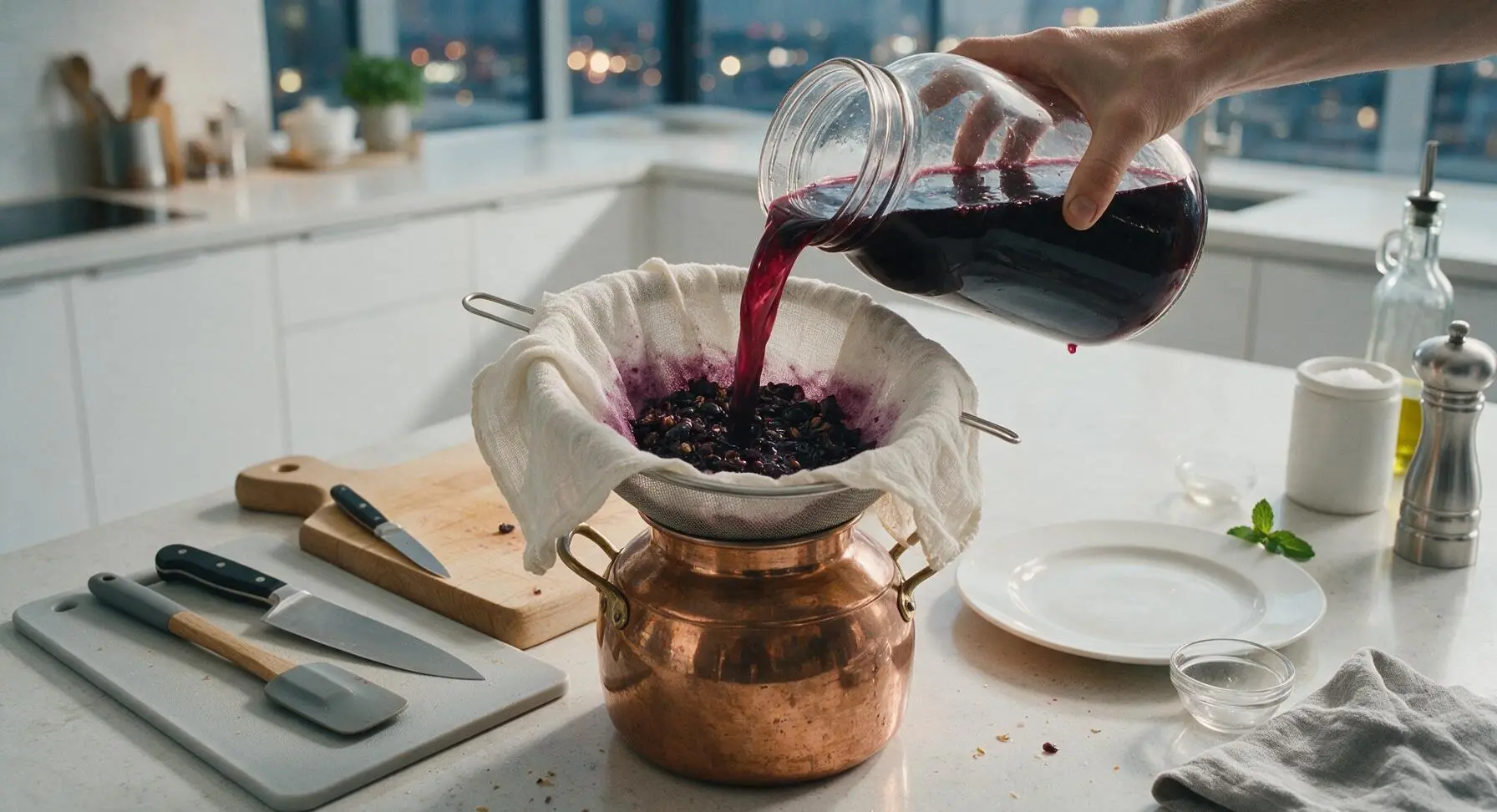
Distill Low and Slow
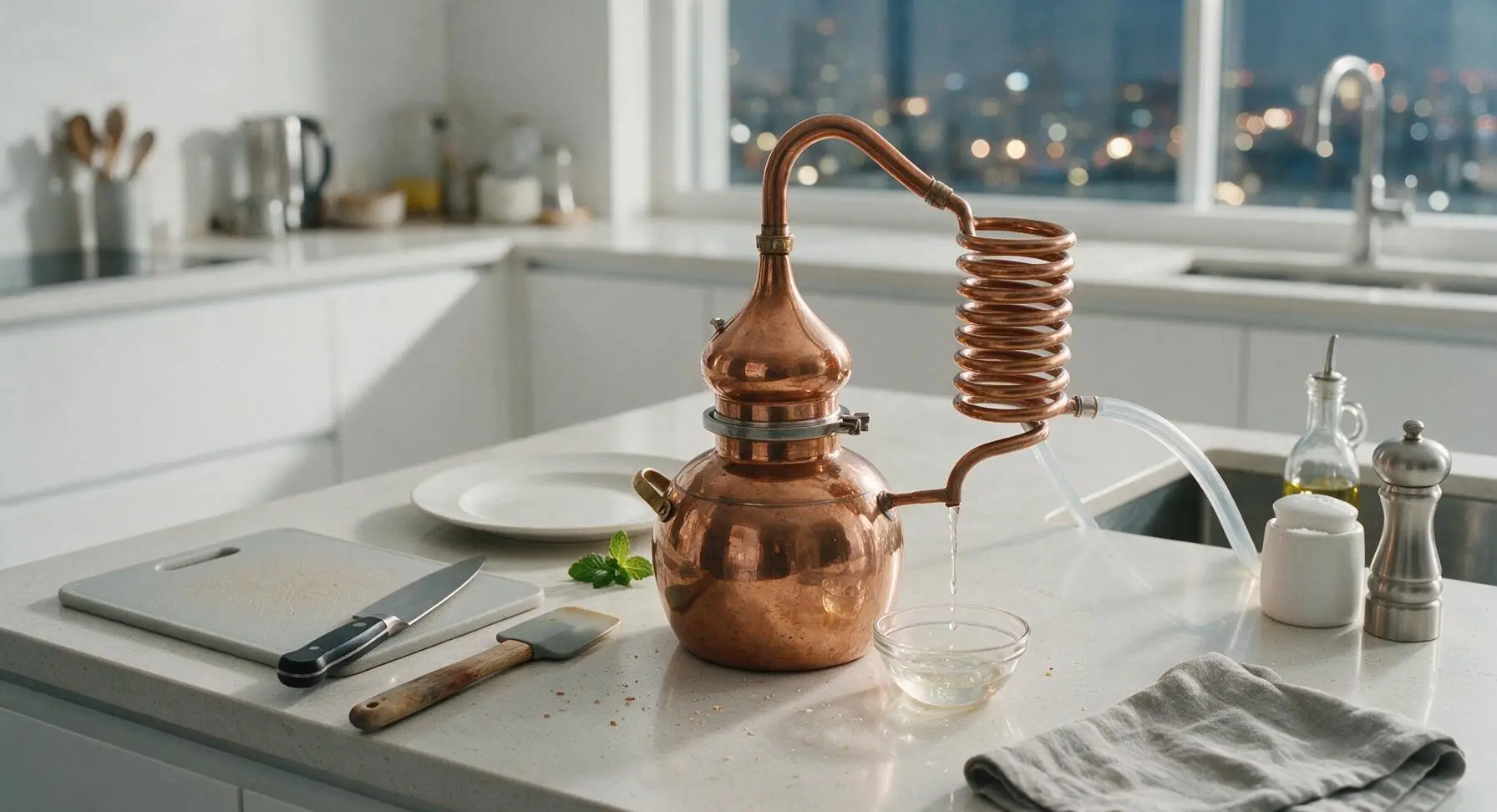
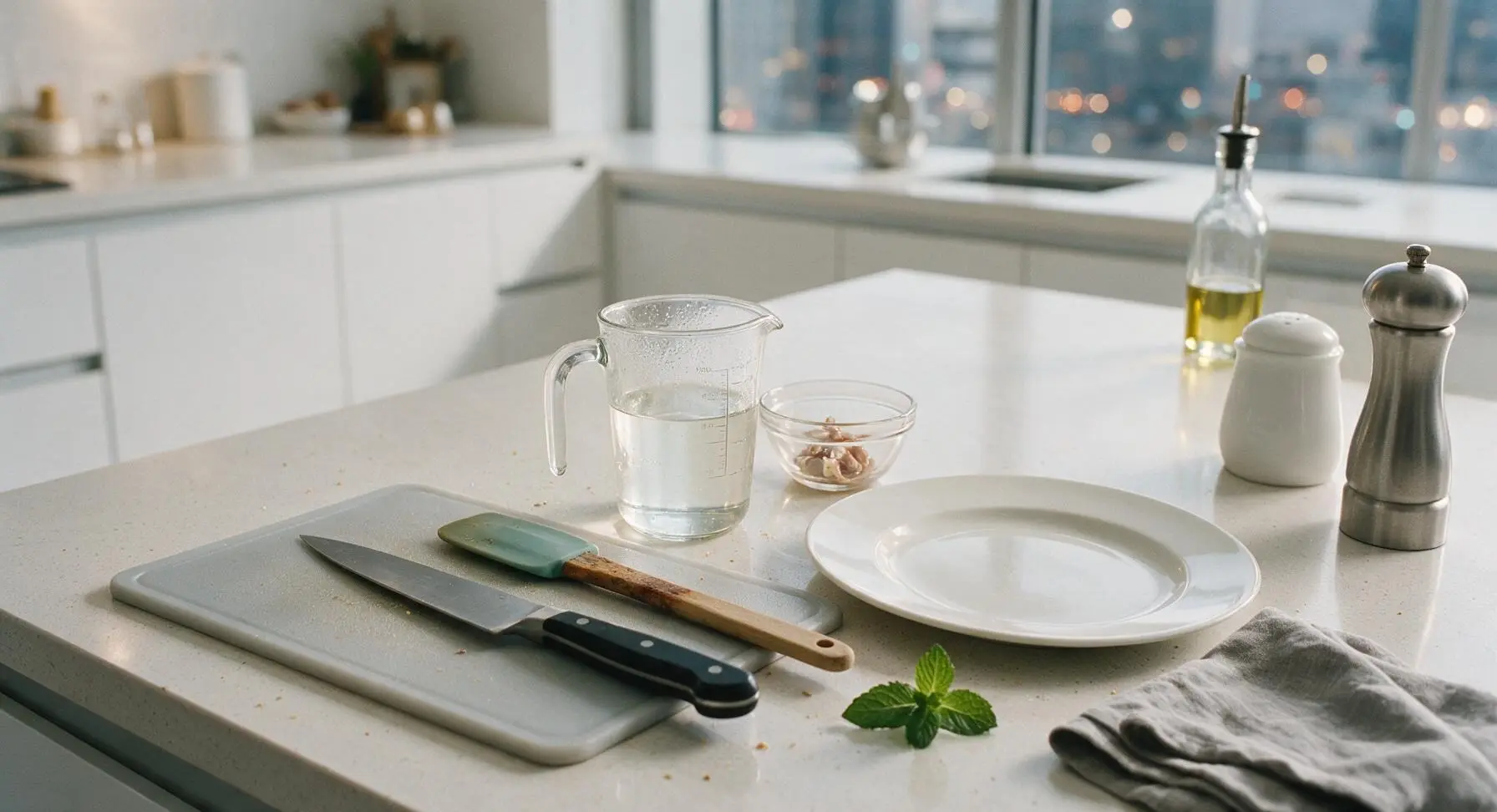
Seal the copper pot still lid tightly, attach the coiled copper condenser, and run cool, slow-flowing water through the condenser to cool the vapor. Heat the still gradually to hold a steady temperature of 173°F (78°C, the boiling point of ethanol). Collect the first 30ml (1oz) of distillate that drips out in a separate small bowl, and discard it entirely — this 'heads' fraction contains toxic methanol and harsh acetone, and is unsafe to drink. Continue collecting the smooth, fruity 'heart' cut of distillate in the glass measuring cup until the still temperature rises above 190°F (88°C), at which point the distillate will smell harsh and oily; stop collecting at this point, and discard the remaining 'tails' fraction. The full distillation process takes approximately 4 hours; do not rush by increasing the heat, as this creates harsh flavor.
Age with Oak Chips
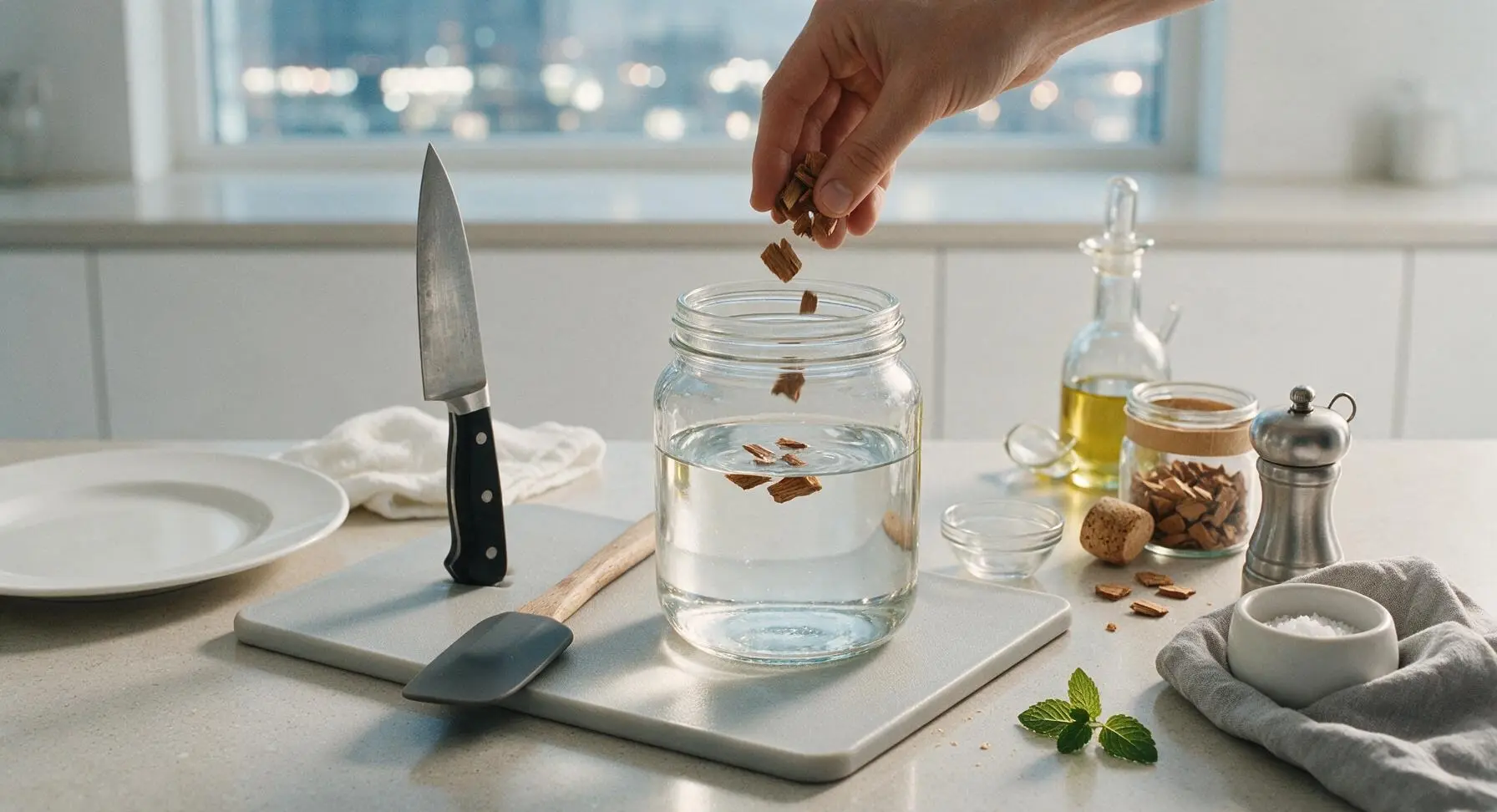
Pour the collected clear brandy heart into a clean, sealed glass jar, add the 1/4 cup of toasted French oak chips, and seal the jar tightly. Store the jar in a cool, dark place for a minimum of 3 months, tasting a small sample every 2 weeks to track flavor development. Aging is complete when the brandy turns a rich, warm amber color, and develops smooth notes of vanilla, dried fruit, and warm oak with no harsh alcohol bite. Strain out all oak chips once the desired flavor is reached.
Pour and Serve
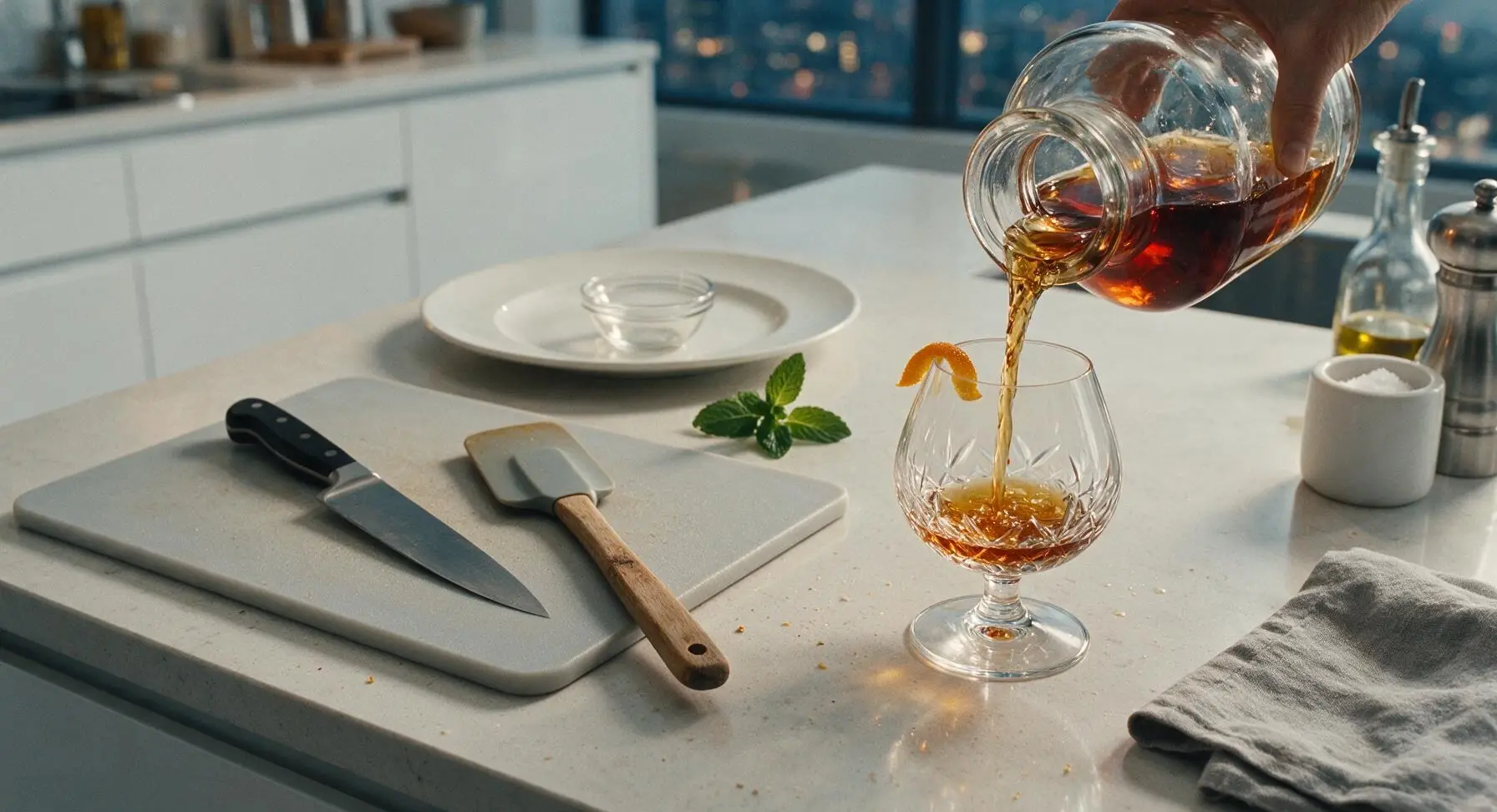
After aging is complete, strain the brandy one final time through a fresh layer of cheesecloth to remove any fine oak sediment. Pour 2oz servings into the crystal snifters, and serve at room temperature (60-65°F / 15-18°C) to best highlight the spirit’s complex flavors, garnished with a thin curl of orange peel if desired. Store leftover brandy in a tightly sealed glass bottle away from direct sunlight for up to 5 years.
Tips
2.Keep distillation heat low and steady: boiling the wine too hard will push harsh, bitter fusel alcohols from the 'tails' fraction into your final brandy, resulting in a rough, unpleasant taste that cannot be fixed even with long aging. Slow distillation produces the smoothest final spirit.
3.For deeper, more complex oak flavor, toast your oak chips for 10 minutes in a 350°F (175°C) oven before adding them to the raw brandy: light toasting amplifies vanilla and caramel notes, closely mimicking the flavor profile of brandy aged in expensive charred oak barrels at a fraction of the cost.






OMG y’all, I whipped this up last fall when our backyard Concord grape vines were absolutely overproducing, and I just cracked my first bottle open last week after a full 100 days of oak aging and it is SO good. Smoother than the fancy store-bought brandy I splurged on for my husband’s 40th birthday last year! I brought a small flask to our friend group’s fall bonfire and everyone was hounding me for the recipe. Even my teen boys snuck a tiny sip (don’t tell) and said it tasted like fancy grape candy, haha. Yes, the wait feels forever, but it is 100% worth every minute of prep and patience. Game changer for homemade gifts this holiday season, too!
Okay, I’m super intimidated by the fermentation step here— I’ve never made anything alcoholic at home before, only jams and baked goods! Is there a common mistake first-timers make that I should watch out for? I already bought all the grapes and a small oak barrel, so I’m committed, just nervous I’ll mess up the 2 week ferment!
Made this for our annual Texas New Year’s Eve BBQ and it was a massive hit. I let it age 4 months instead of 3, added a tiny bit of cinnamon stick during the last week of aging, and it paired perfectly with smoked brisket and pecan pie. Will absolutely be making a double batch next grape season. Only knock is it’s so smooth you have to remind your guests it’s 80 proof, oops!
Wait, has anyone tried making this in a tiny NYC apartment? I don’t have a ton of cool, dark storage space — my only closet is right next to the heater which stays around 75 degrees in the winter. Will that mess up the fermentation? I’m dying to make this but don’t want to waste 10 pounds of grapes!
Just bottled my second batch of this! Used wild grapes I foraged near my house outside Denver instead of store-bought Concord, and aged it for 6 months because I forgot about it in my garage, lmao. It tastes exactly like the brandy my grandpa used to make when I was a kid. Total nostalgia bomb. SO good, thanks for the easy to follow steps even for a hard recipe!
My partner and I started this on our 2 year anniversary, and we’re planning to crack it open on our 3 year! We wrote little notes on the bottle and everything. Quick question though — do I need to rack it (siphon off the sediment) more than once during fermentation? The recipe says once on day 7, but I’m seeing little floaty bits still.
Brought my first finished batch to our family Thanksgiving potluck in Atlanta last month and my uncle (who swears he only drinks top-shelf liquor) asked for three refills. Didn’t tell him it was homemade until he asked where to buy it, lmao. My cousins even snuck a couple extra nips to take home for their friends. 10/10, will be making this every single grape season from now on. The oak aging makes it taste so fancy no one believes it came from my kitchen.
Ugh, I think I messed up my first batch! I was overeager and skipped the full 90 day oak aging, tried it at 4 weeks and it tastes like really strong grape juice with a weird harsh aftertaste. Is there any way to save this, or do I have to dump it and start over? I’m so bummed, I spent forever picking grapes at the u-pick farm!