
brown sauce
intro
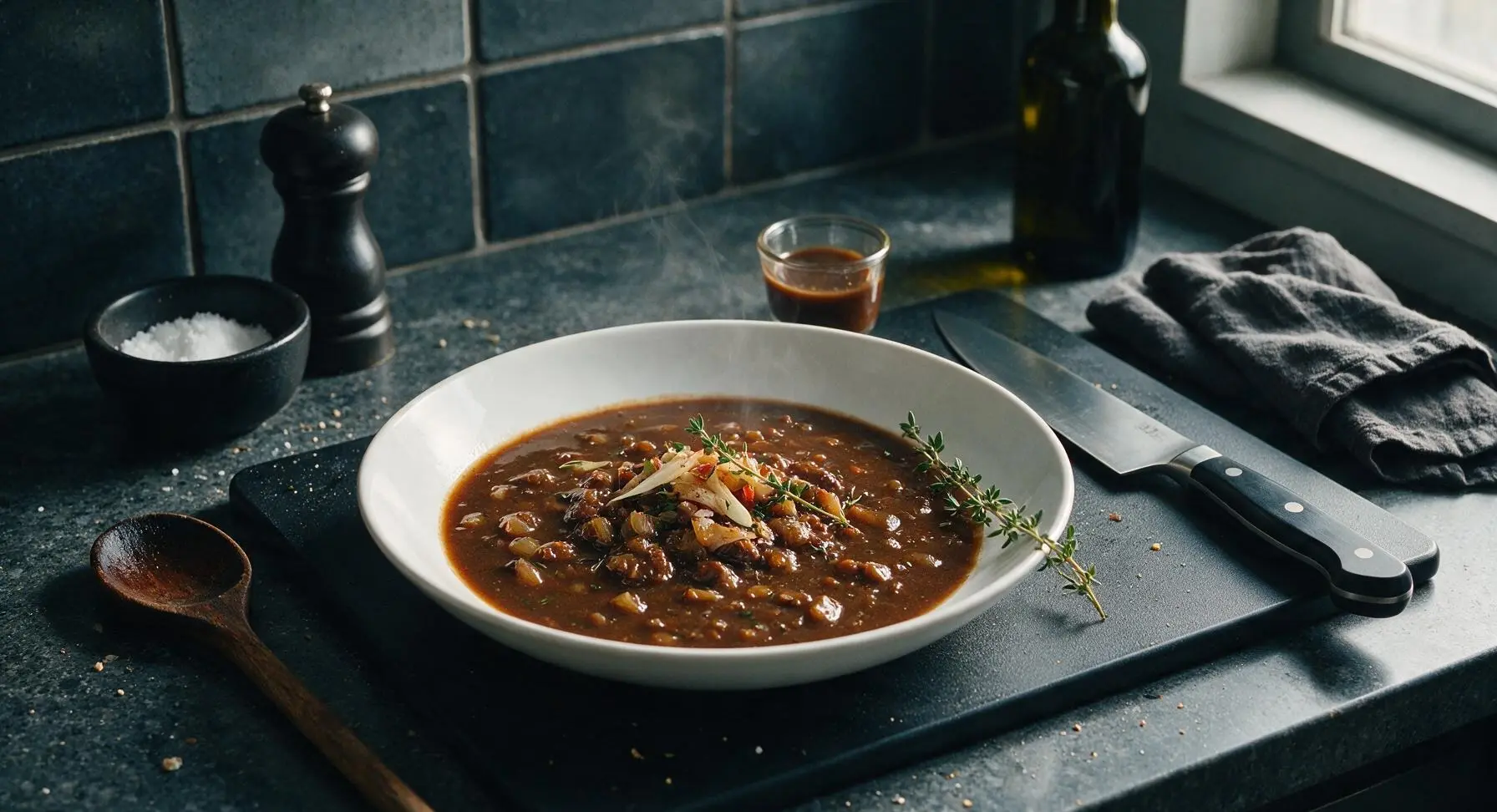
Rich, deeply umami homemade brown sauce, slow-simmered with aromatic mirepoix and beef stock, with a subtle tang, perfect for drizzling over roasts, steaks, and mashed potatoes.
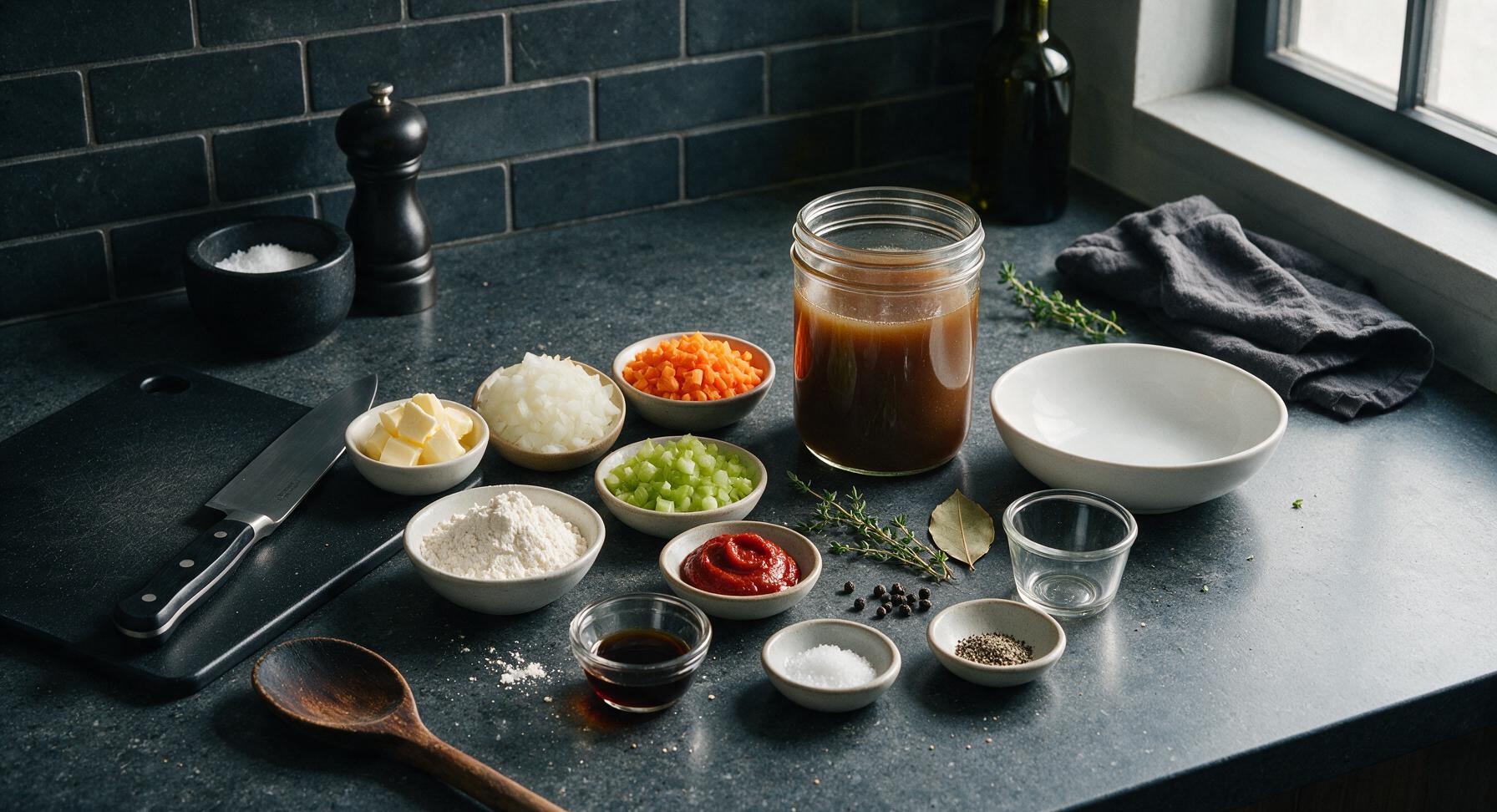
Ingredients
Steps
Chop Aromatic Mirepoix
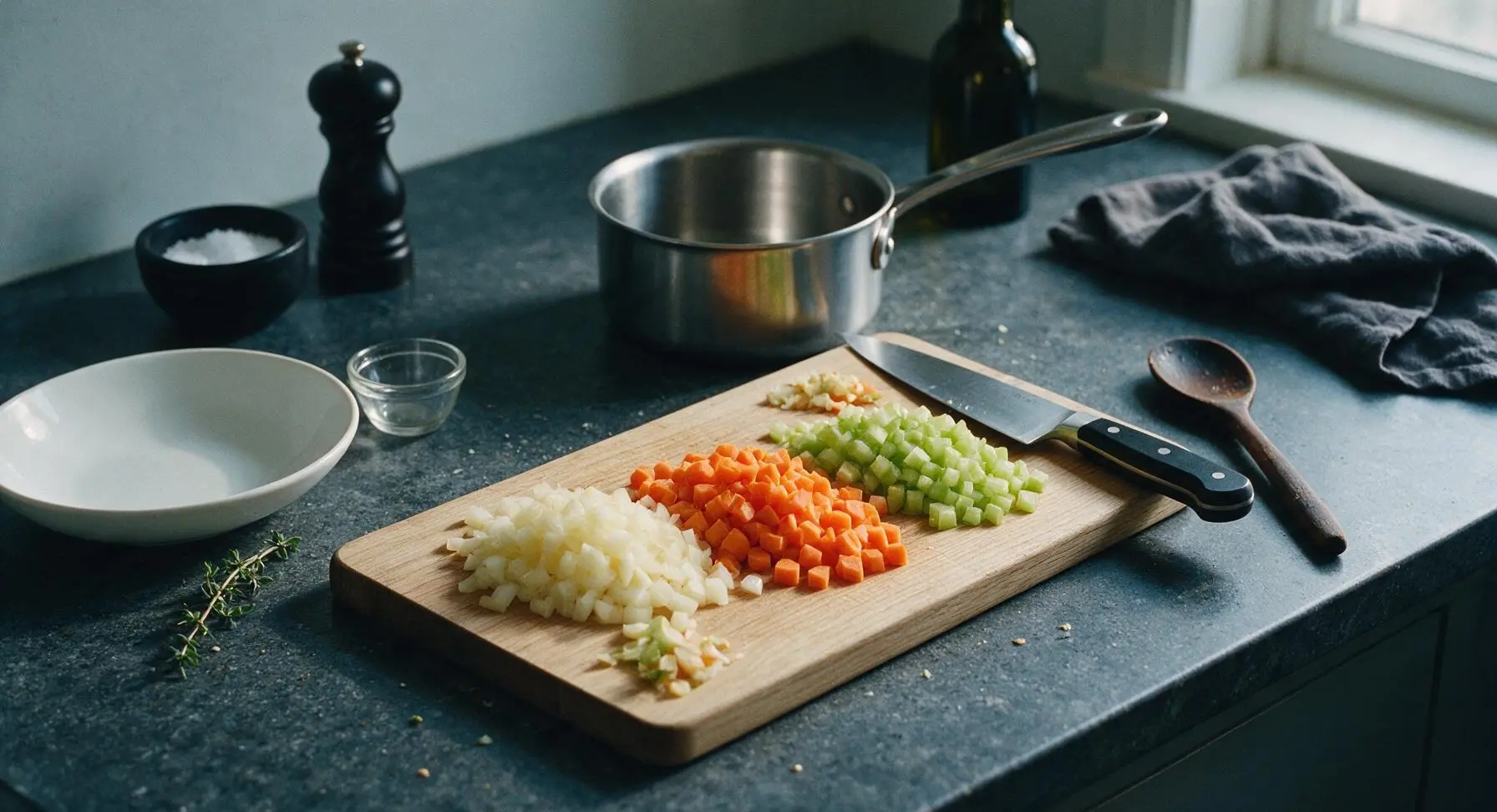
Place the light oak cutting board centrally on the counter. Using the 6-inch walnut-handle carbon steel chef knife, dice the yellow onion, carrot, and celery into uniform 1/4-inch pieces. Keep the diced vegetables in separate small piles on the board; discard tough celery strings and woody carrot ends into a small scrap pile at the board’s far corner. Uniform dice ensures the vegetables cook evenly and release maximum flavor during simmering.
Cook Brown Roux
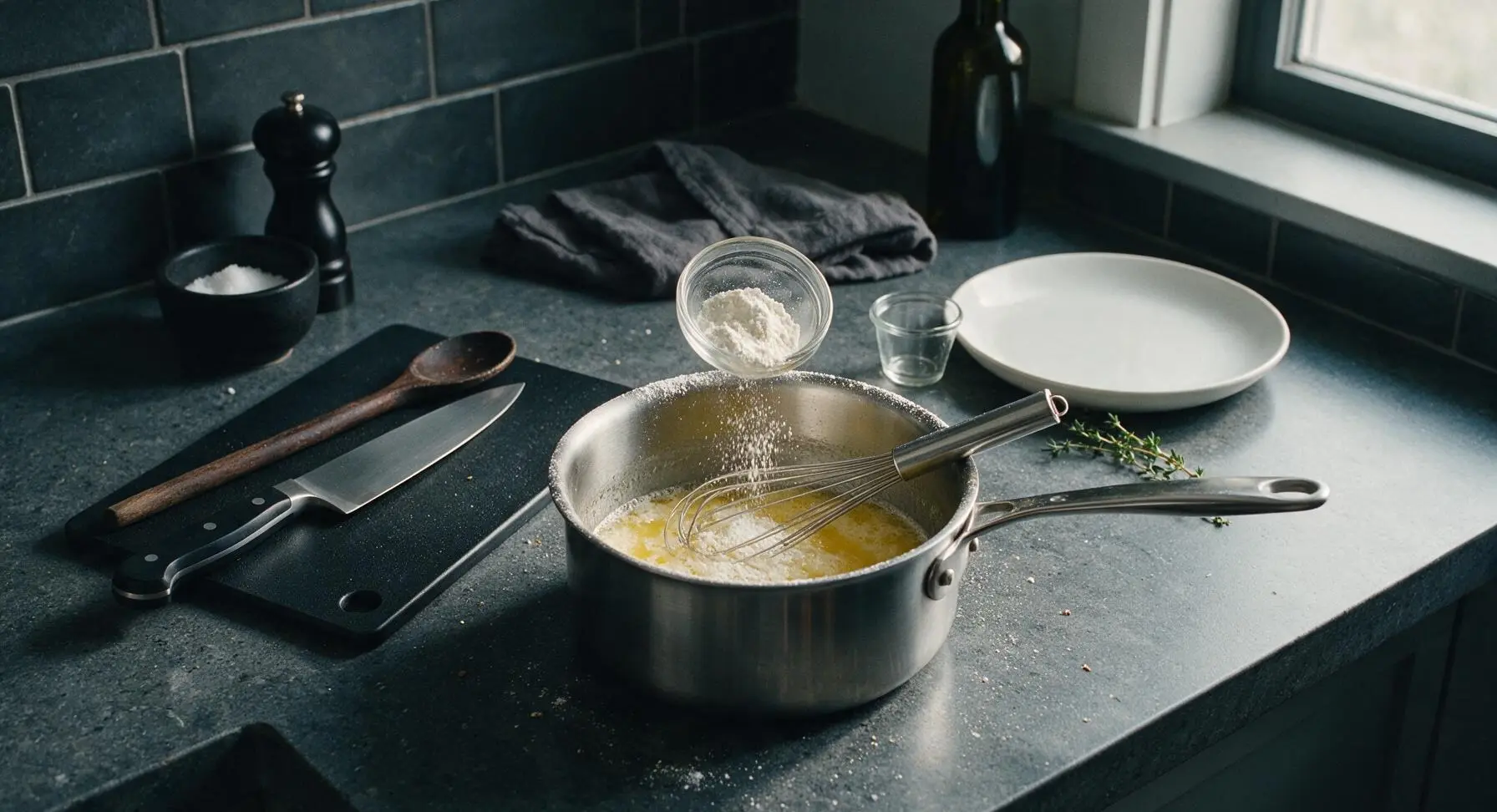
Move the stainless steel saucepan to the central heat zone over medium-low heat. Add the 3 tablespoons of unsalted butter, and allow it to melt completely until foaming subsides, about 1 minute. Add the 3 tablespoons of all-purpose flour, whisking constantly with the wooden-handle stainless steel whisk to form a smooth, lump-free paste. Continue cooking, whisking nonstop, for 6-7 minutes, until the roux turns a deep peanut-butter brown and releases a rich, nutty aroma. Watch closely during the final minute, as roux can burn quickly and turn bitter.
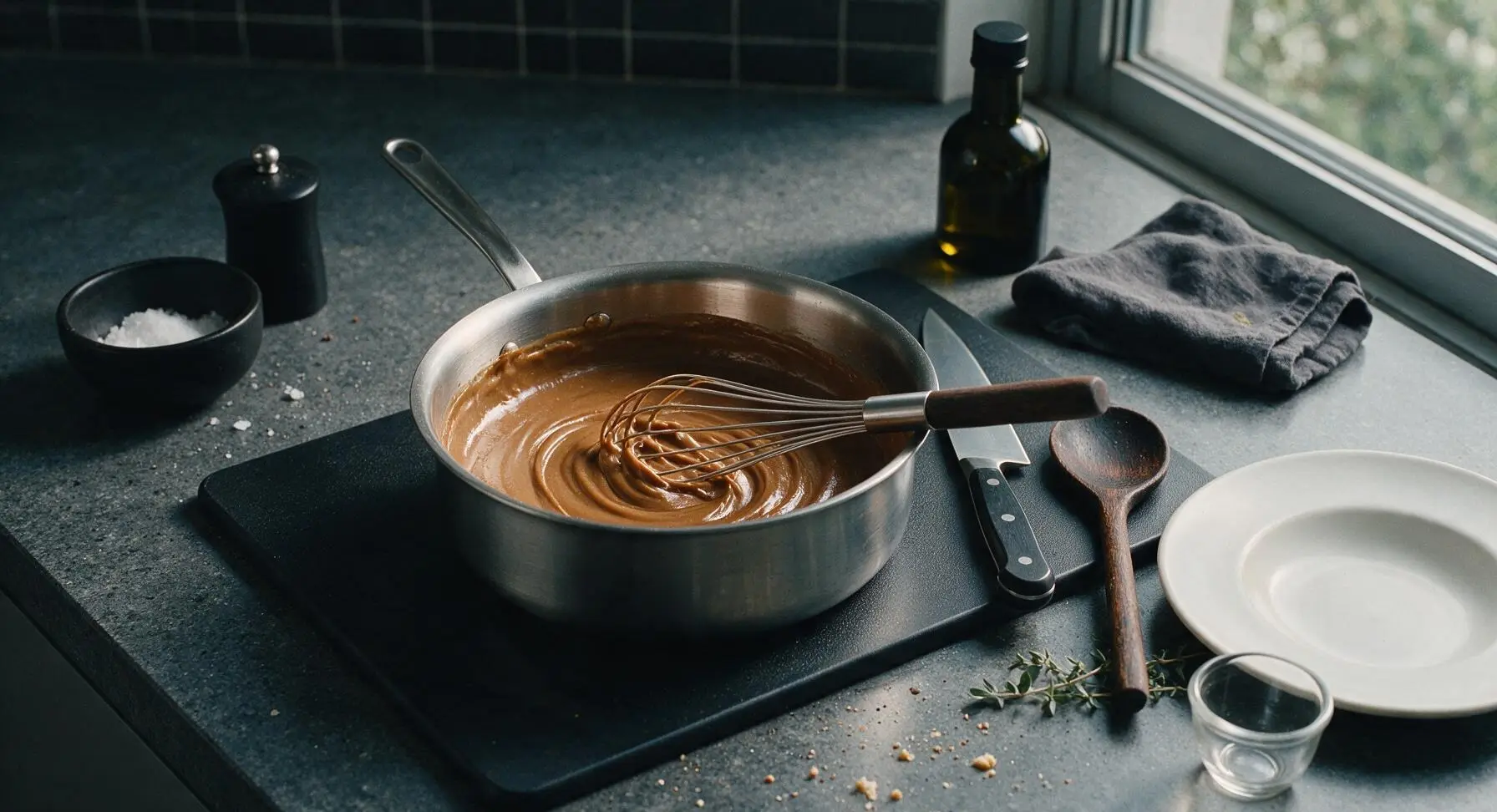
Sauté Diced Vegetables
Add the diced onion, carrot, and celery to the brown roux in the saucepan, stirring with the solid beechwood spoon to coat every piece of vegetable fully in the roux. Cook over medium heat for 8 minutes, stirring occasionally, until the vegetables soften and the onion turns translucent with faint golden edges. The roux will cling tightly to the vegetables as they release their natural moisture.
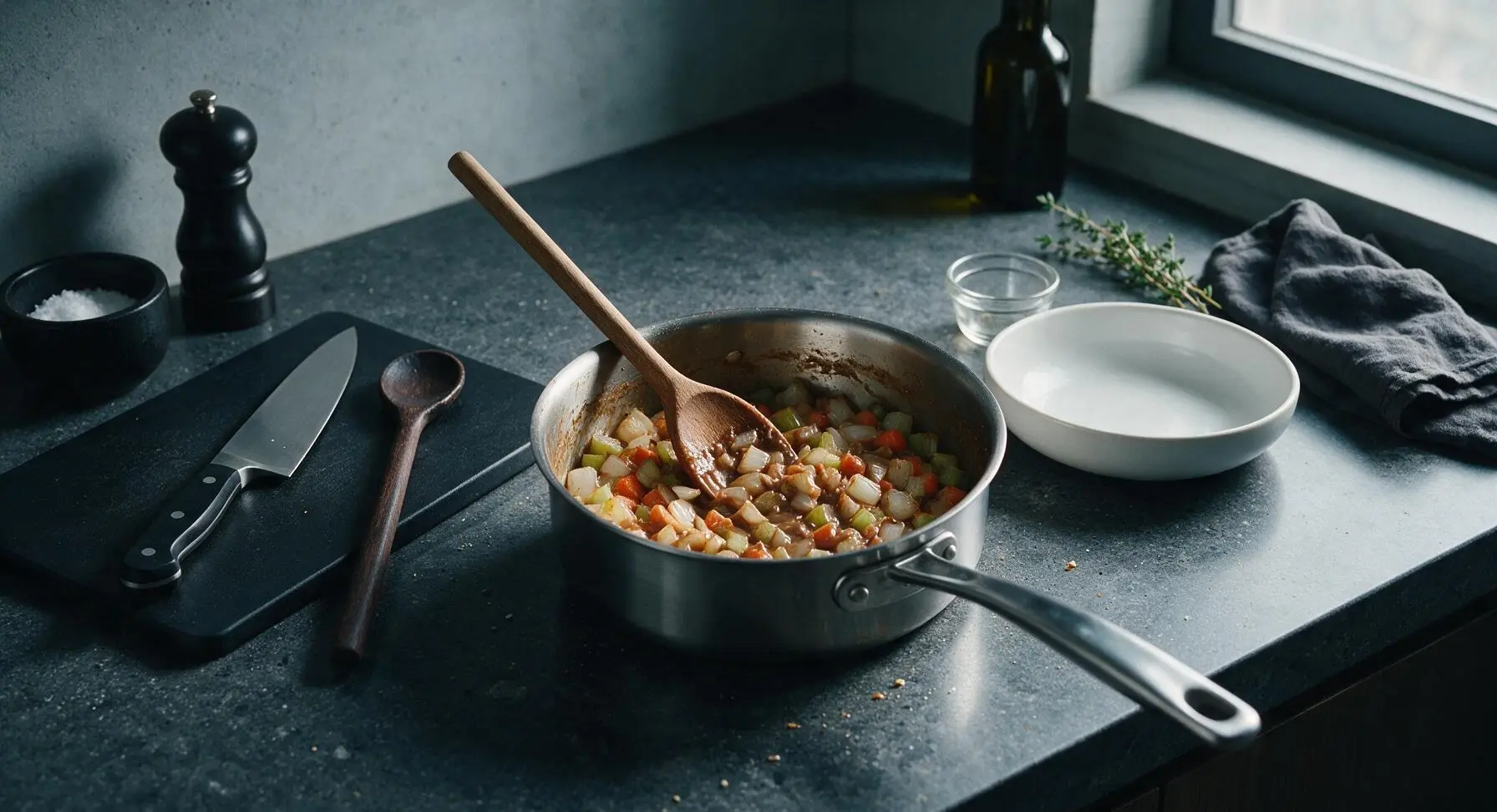
Toast Tomato Paste
Push the sautéed mirepoix to the outer edges of the saucepan to create a small empty well in the pan center. Add the 2 tablespoons of tomato paste to the well, and cook it for 1 minute, stirring constantly with the navy silicone spatula, until the paste darkens to a deep rust red and smells sweet and fragrant. This toasting step eliminates the raw, metallic taste of canned tomato paste and amplifies the sauce’s rich umami depth.
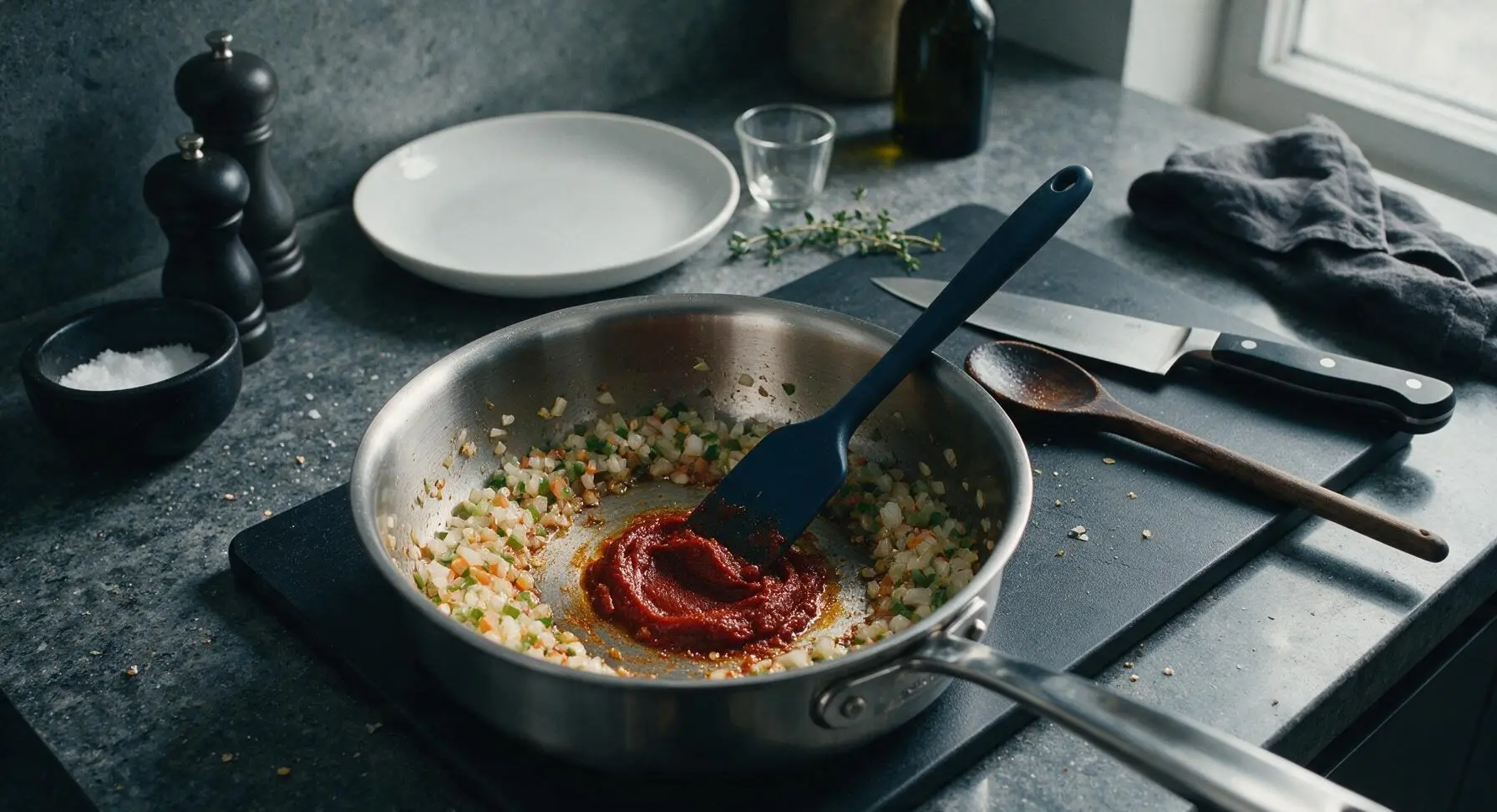
Whisk in Beef Stock
Slowly pour 1/2 cup of cold beef stock into the saucepan, whisking constantly with the wire whisk to fully incorporate the stock with the roux and vegetable mixture, working out any small lumps as you go. Once the base is completely smooth, gradually pour in the remaining 2.5 cups of stock, whisking continuously as you pour to prevent lumps. Add the whole bay leaf, fresh thyme sprigs, and whole black peppercorns to the pan.
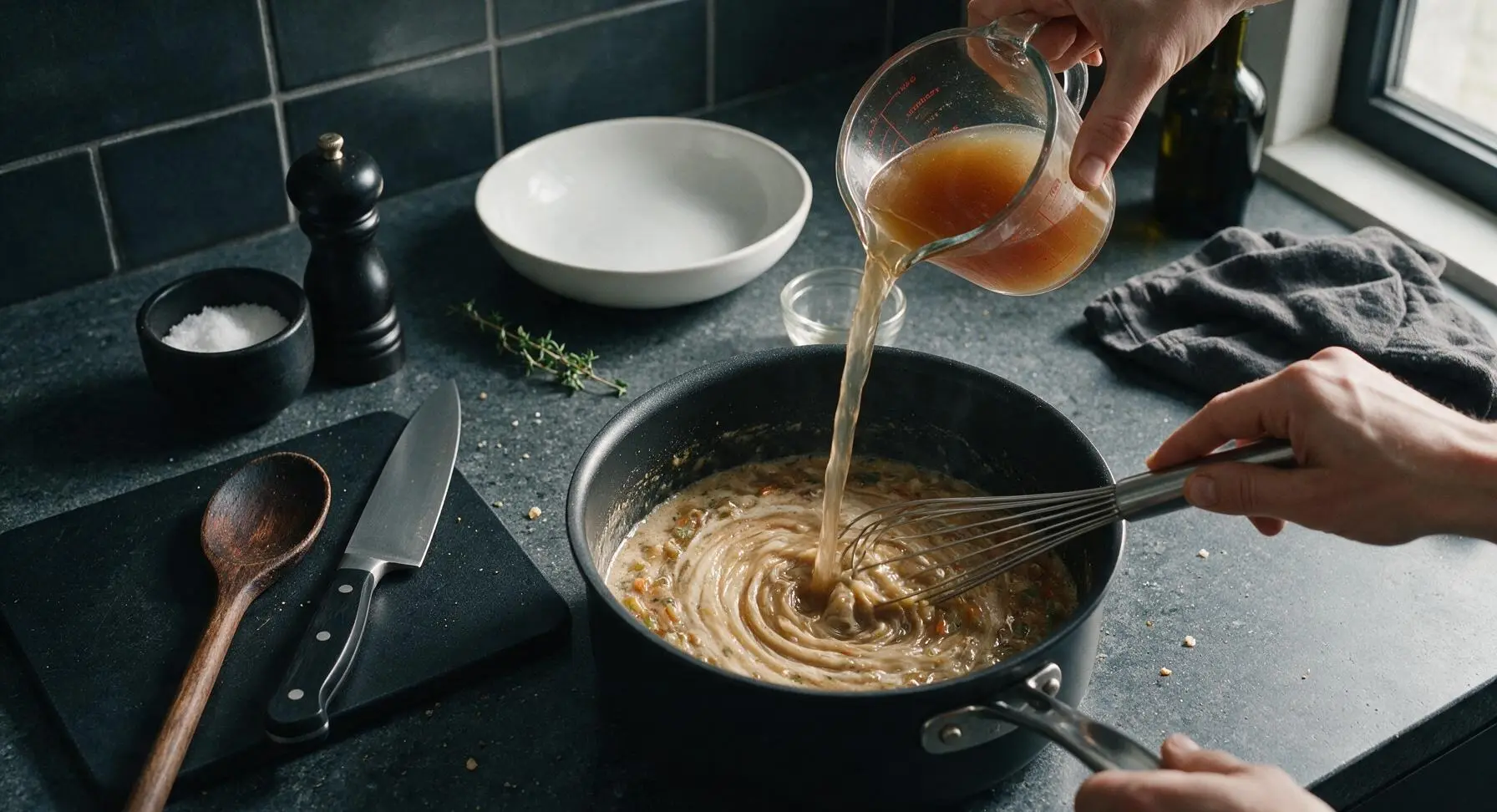
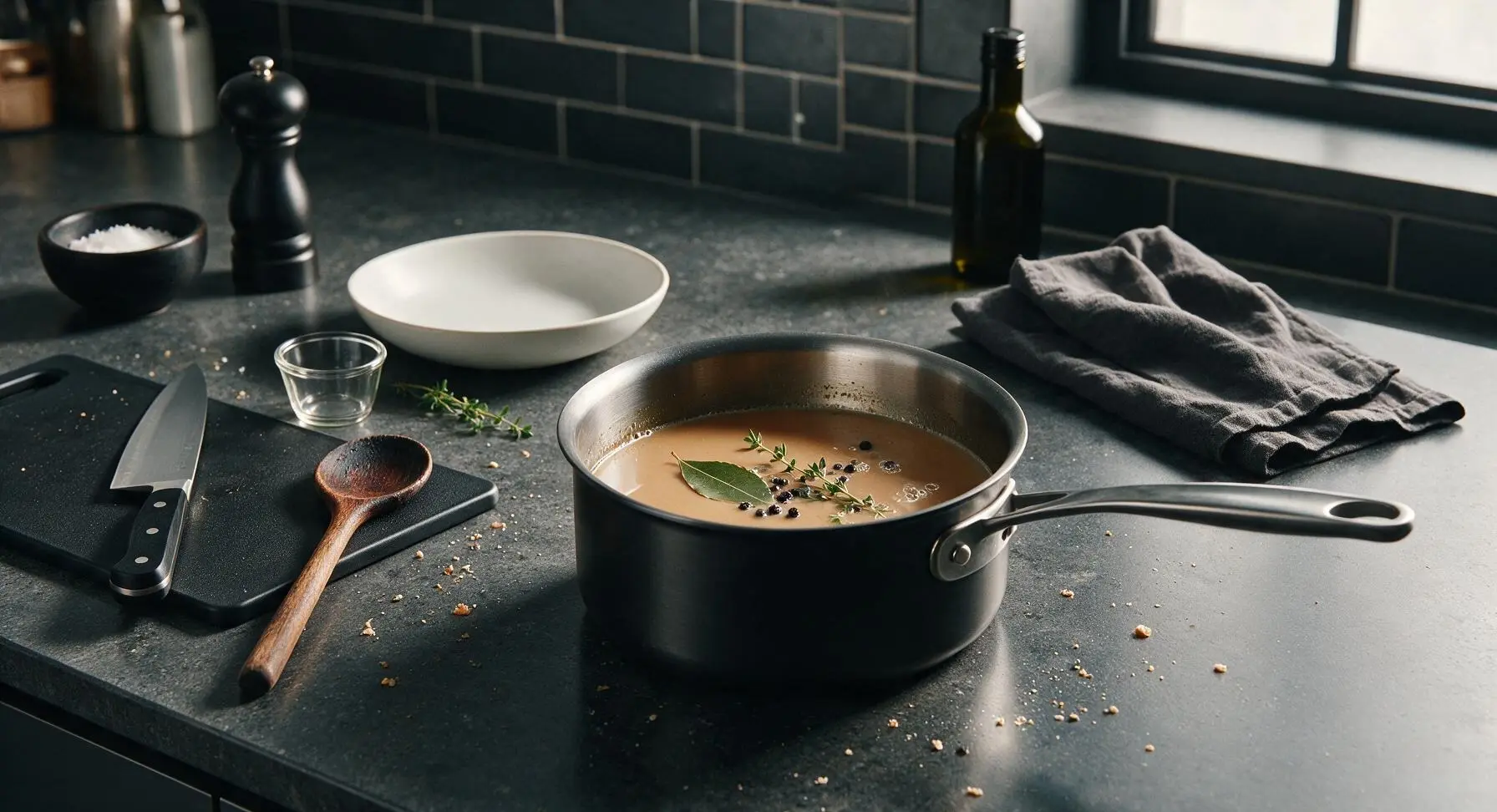
Slow Simmer Sauce
Adjust heat to low to maintain a gentle, low simmer—do not let the sauce boil rapidly, as vigorous boiling will make the final sauce cloudy and can cause the roux to break. Let the sauce simmer uncovered for 25 minutes, stirring occasionally with the beechwood spoon to prevent sticking on the pan bottom. The sauce will reduce by roughly one-third, reaching a nappe consistency that coats the back of a spoon, leaving a clear line when you run your finger through it.
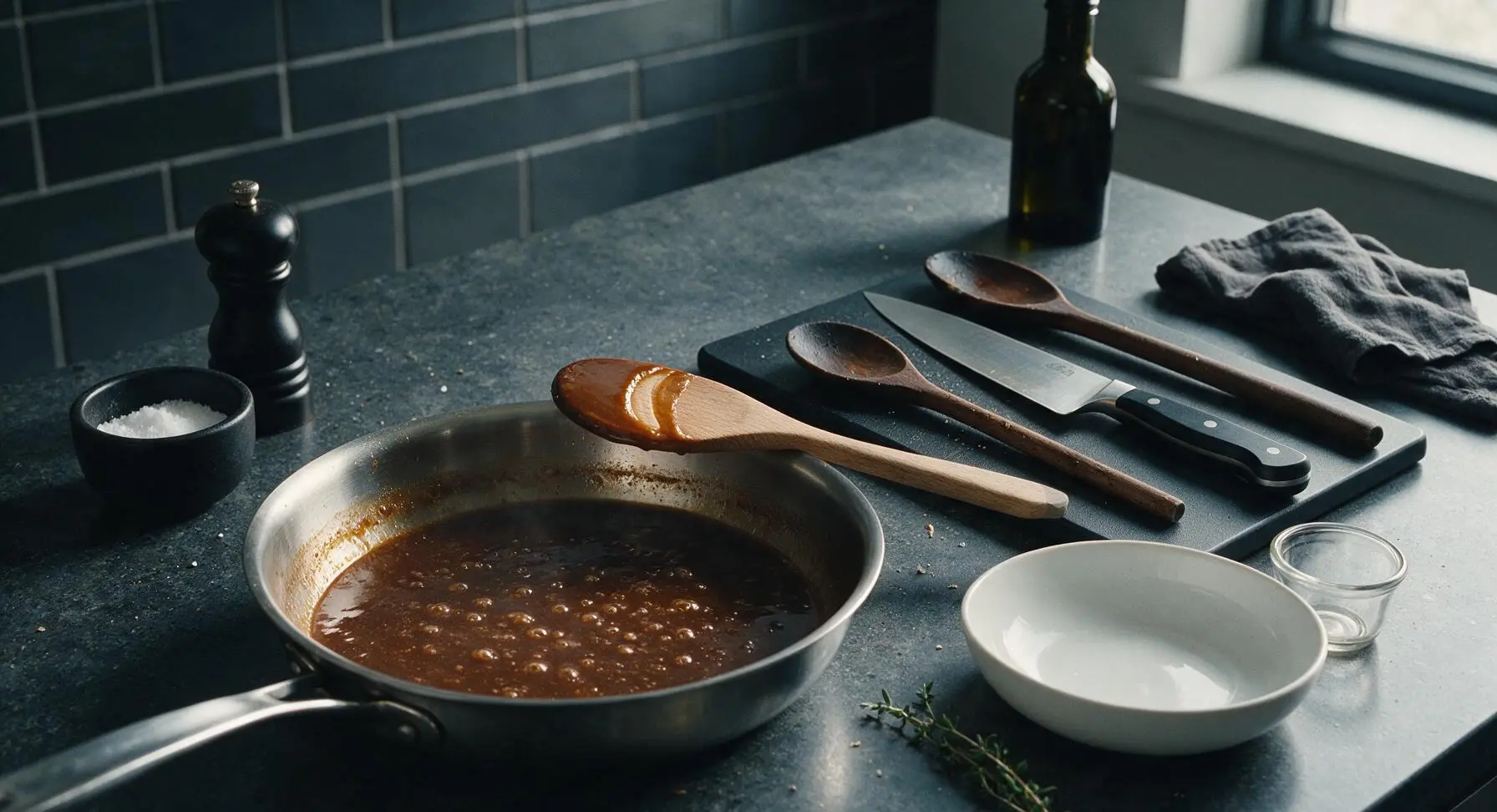
Strain for Smoothness
Remove the saucepan from heat. Position the fine-mesh stainless steel conical strainer directly over the cream white stoneware sauce boat. Slowly pour the hot sauce through the strainer, using the silicone spatula to press gently on the vegetable and herb solids to extract all flavorful liquid, then discard the spent solids. Avoid pressing too hard on the solids, as this will push fine pulp through the strainer and make the sauce cloudy.
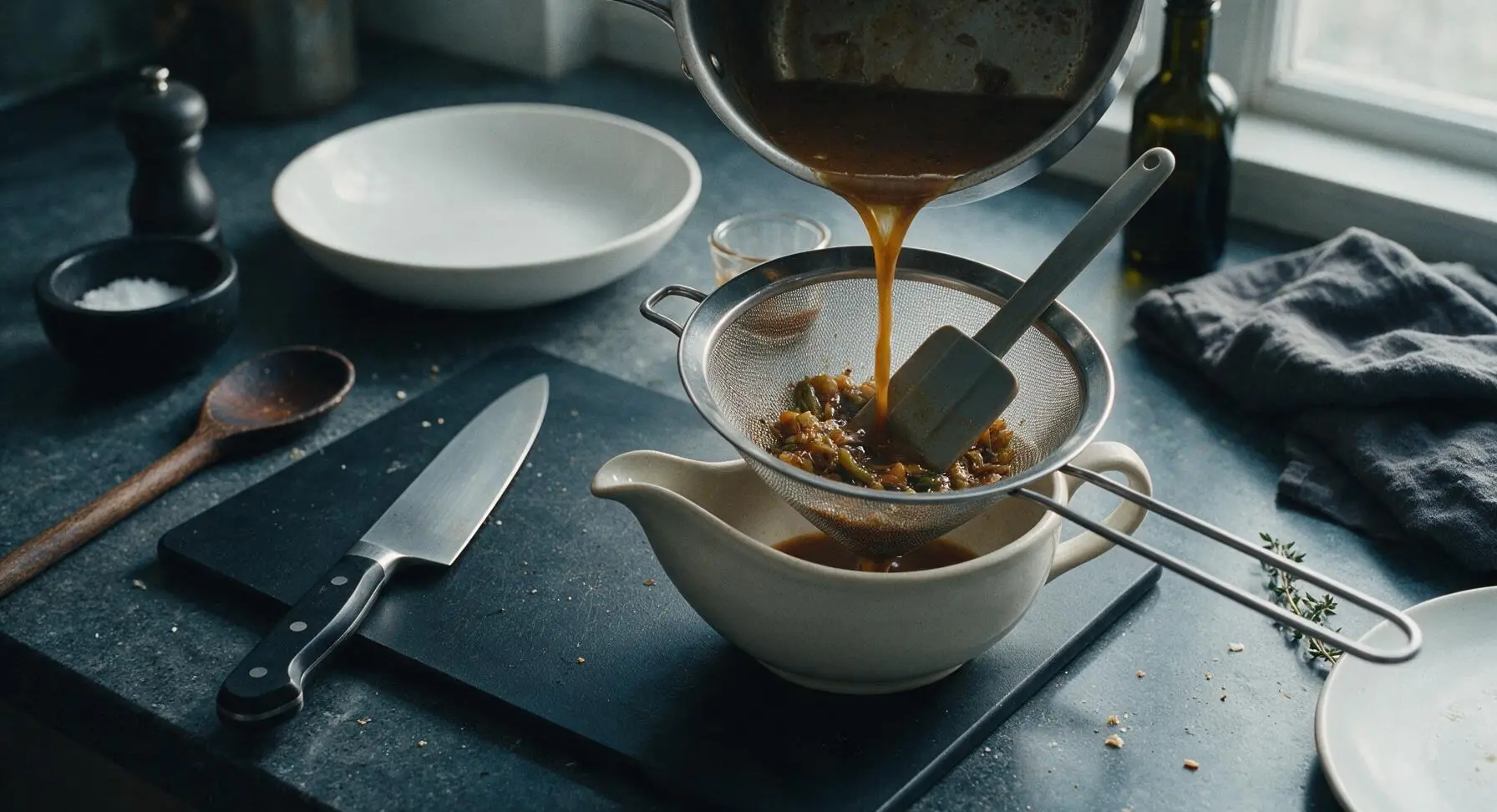
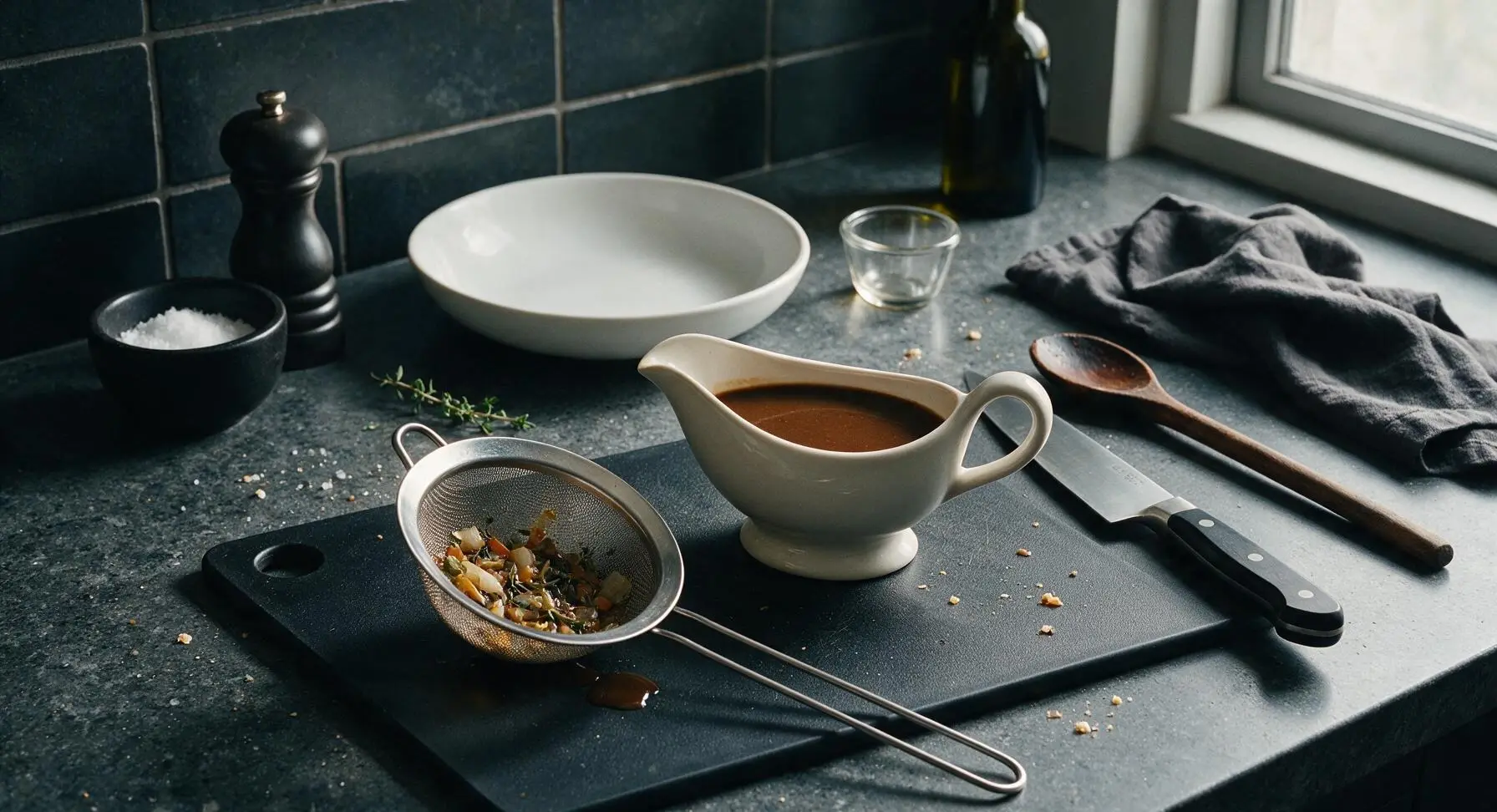
Finish and Season
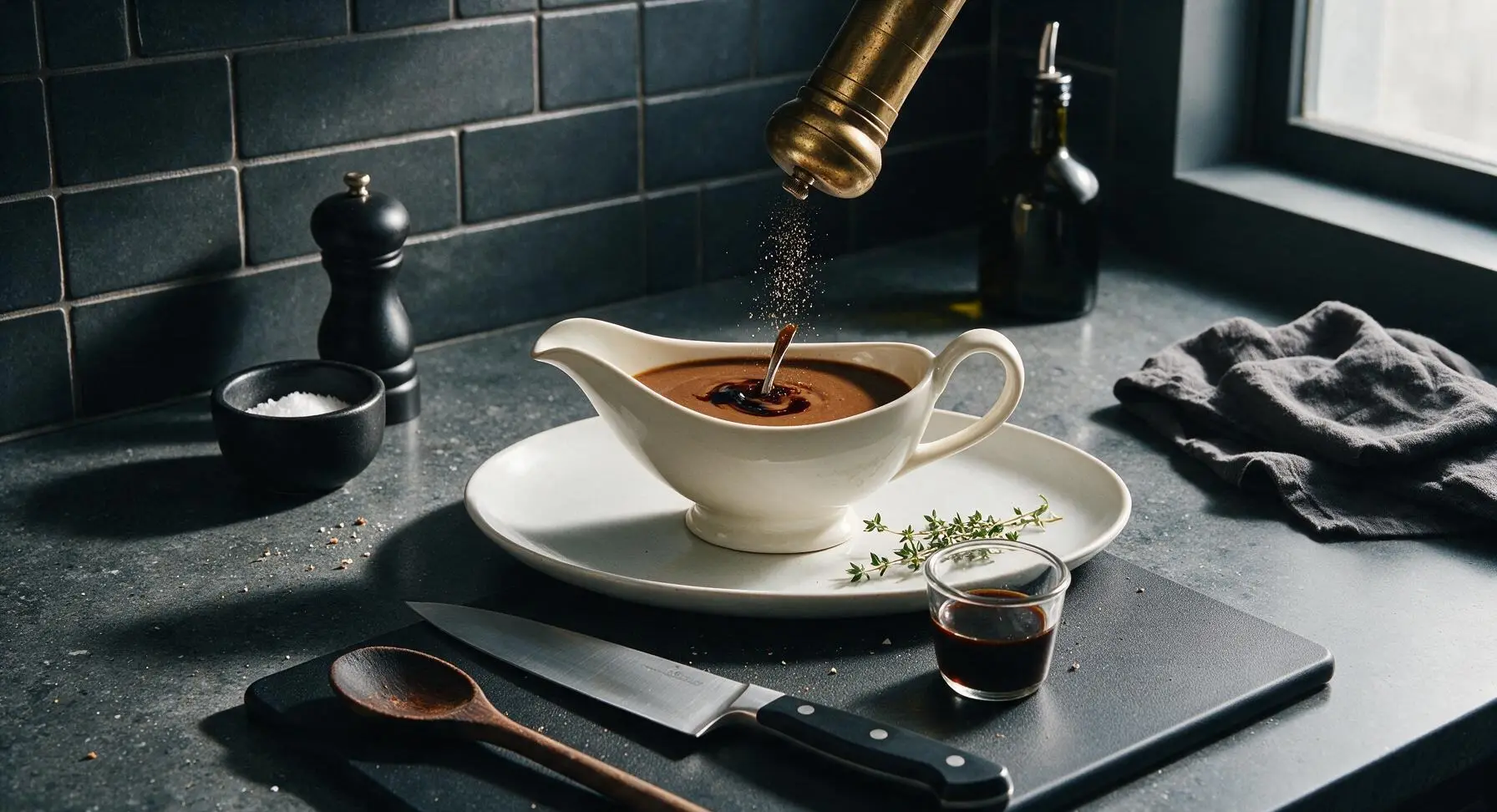
Stir the 1 teaspoon of Worcestershire sauce into the strained brown sauce, then season incrementally with kosher salt and freshly ground black pepper, tasting as you go to avoid over-salting. The finished sauce should be deeply savory, with a subtle tang from the Worcestershire, balanced salt, and no bitter aftertaste. Let the sauce rest for 2 minutes before serving to allow flavors to fully meld.
Tips
2.Do not rush the roux cooking step: a pale blond roux will produce a pale, thin sauce lacking the deep, nutty caramelized flavor that defines classic brown sauce, but watch closely after 6 minutes—roux can burn in as little as 30 seconds once it reaches the ideal peanut-butter shade.
3.This sauce freezes exceptionally well for up to 3 months: pour cooled sauce into ice cube trays, freeze until solid, then transfer to a sealed freezer bag to use in small portions for quick weeknight pan sauces, gravies, or stew bases.





OMG this homemade brown sauce is a total game changer! I slathered it on meatloaf for our neighborhood potluck last weekend and literally everyone asked for the recipe. Way better than the store-bought stuff that’s loaded with weird preservatives. Cook time was totally manageable even with my toddler hanging off my leg the whole time, 10/10 will make again!
Solid recipe, but I messed up the roux on my first try and it got lumpy. Ended up straining it and it still turned out SO good, I’ve been using it all week on roasted veggies, grilled chicken, even breakfast hash for my meal prep. 4 stars only because I wish there was a note about not rushing the roux step for new cooks!
Tried this for my first ever fancy dinner for my girlfriend, almost panicked when I saw the 45 minute cook time since I’m used to 10 minute microwave meals, but it was so worth it. She thought I bought it from a fancy steakhouse lmao. Didn’t change a single thing, followed the directions exactly and it came out perfect. Will be making this for every special dinner from now on!
I’ve been trying to replicate my grandma’s classic brown sauce for years and this is the closest I’ve ever gotten! The balance of savory and just a tiny hint of sweetness is exactly how I remember it. My kids loved it over Salisbury steak for our weekly family dinner, even my super picky 7 year old cleaned his plate.
This is a really solid base but I felt like it needed a little kick, so I added a teaspoon of smoked paprika and a dash of hot sauce at the end. Total game changer for pulled pork sandwiches! Curious if anyone else has tried fun mix-ins with this recipe?
I run a little diner in rural Illinois and I tested this recipe last week for our daily special steak plate. Regulars kept coming up to the counter asking what we did different with the sauce, it was such a hit. I scaled it up for 20 servings and it held up perfectly, no texture issues at all even when held in the warmer for a couple hours. Absolute keeper for the menu rotation.
I’m a total beginner and the medium difficulty label scared me off at first, but the steps were actually really easy to follow! I only burned the onions a tiny bit (oops) but you couldn’t even taste it once all the other ingredients mixed in. Served it over mashed potatoes and pork chops last night, my roommate went back for thirds. SO glad I gave this a shot!