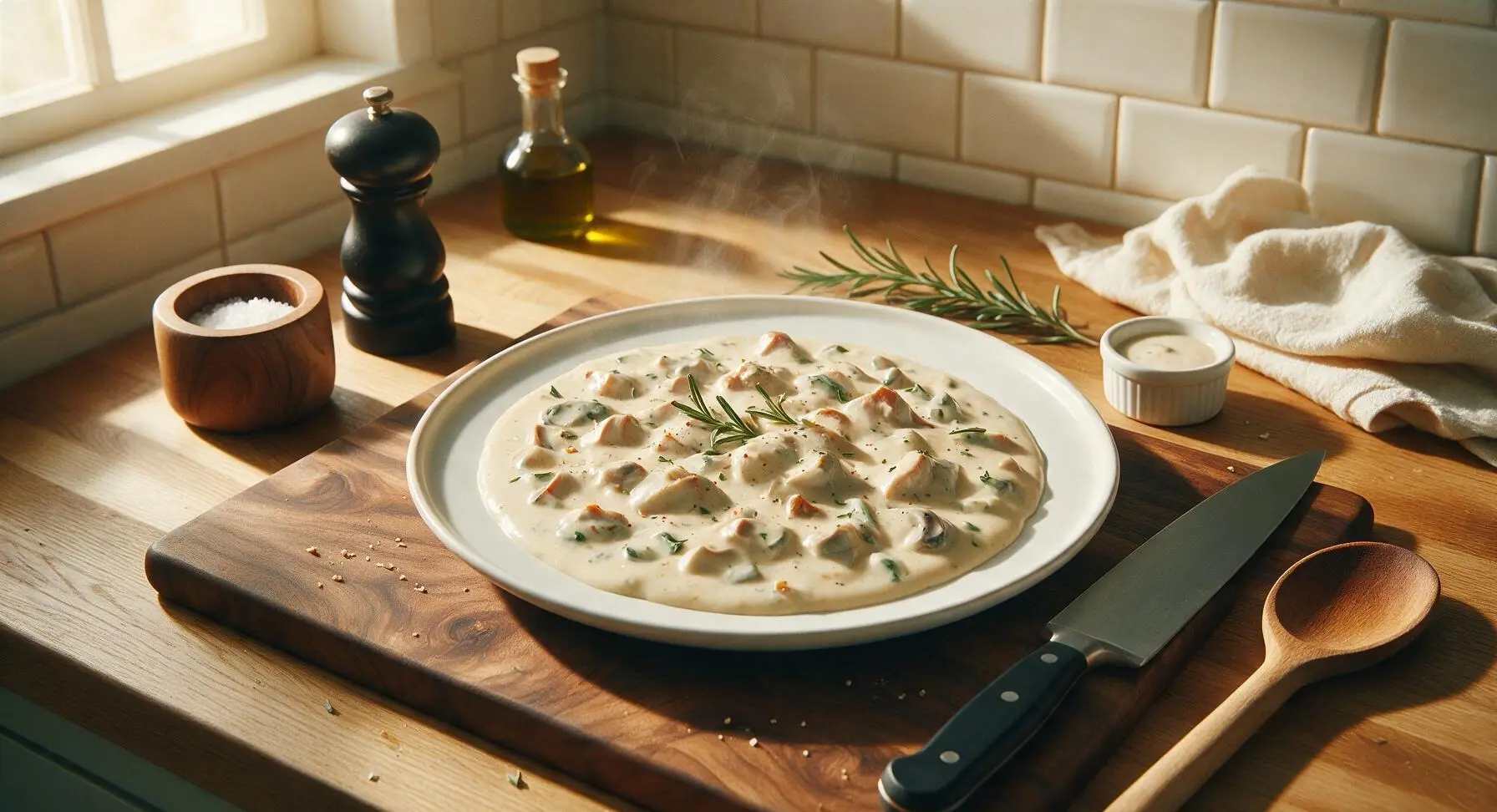
casserole sauce

title 1
casserole sauce
⏱️ cook time 15 minutes
🍽️ servings 6
⚡ Difficulty easy

intro

This velvety, lump-free all-purpose casserole sauce forms the rich, creamy base for all your favorite baked dishes, with a subtle savoriness that never turns grainy or separates while baking.

Ingredients
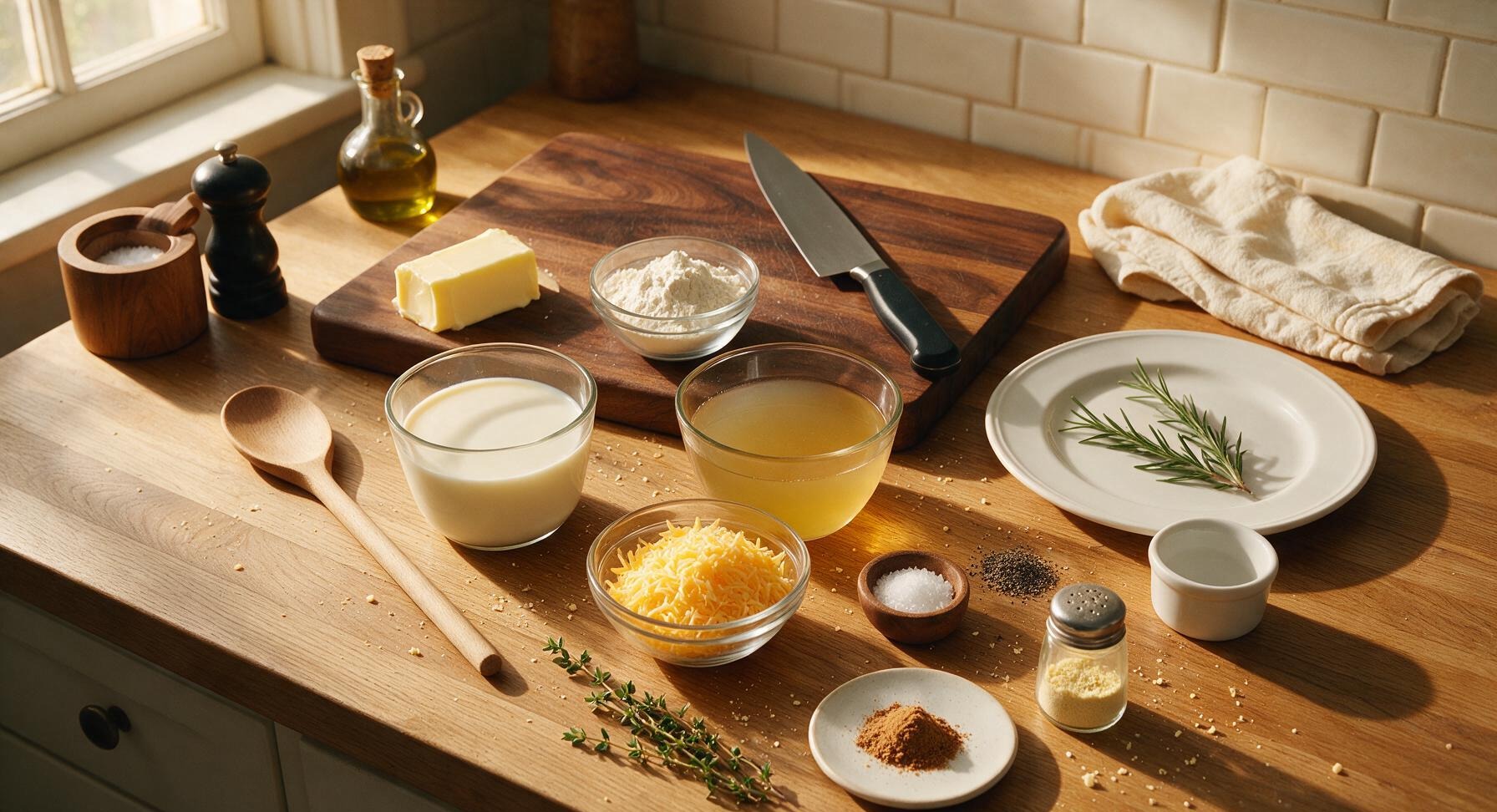
Unsalted butter 4 tbsp (55g)
All-purpose flour 1/4 cup (30g)
Whole milk 2 cups (480ml)
Low-sodium vegetable stock 1 cup (240ml)
Sharp cheddar cheese, finely grated 1/2 cup (55g)
Kosher salt 1 tsp
Freshly ground black pepper 1/2 tsp
Garlic powder 1/4 tsp
Ground nutmeg 1 pinch
Fresh thyme sprigs 2 sprigs

Steps

1

Prep measured ingredients

Before turning on any heat, portion all ingredients to avoid rushing the roux (the most common cause of lumpy sauce): cut the unsalted butter into 4 equal 1-tbsp pats, measure all-purpose flour, warm whole milk and vegetable stock in the microwave for 45 seconds (to ~100°F, just above room temperature), finely grate cheddar if using, and combine kosher salt, black pepper, garlic powder, and ground nutmeg in the small grey ramekin. Pick fresh thyme leaves from their woody stems and set aside on the cutting board.

Step 1
step1:Prep measured ingredients
2

Melt butter over low heat

Place the 3-quart stainless steel saucepan in its fixed center counter position, set stovetop burner to low heat, and add the butter pats to the pan. Melt slowly for 2-3 minutes, swirling the pan occasionally, until butter is fully liquid, foaming softly, and smells rich and nutty. Do not let the butter turn deep golden or brown, as this will darken the finished sauce.

Step 2
step2:Melt butter over low heat
3

Cook blonde roux base

Add the measured all-purpose flour to the melted butter, stirring constantly with the silicone spatula to form a smooth, thick paste. Cook this roux over low heat for exactly 3 minutes, stirring nonstop, until it gives off a mild toasty grain aroma and turns a pale creamy blonde color. The finished roux should have the consistency of damp sand, with no dry flour clumps or crumbly patches.


Step 3
step3:Cook blonde roux base
Step 3
step3:Cook blonde roux base
4

Whisk in warm liquids

Swap the silicone spatula for the stainless steel wire whisk. Add just 1/4 cup of the warmed milk and stock mixture to the roux, whisking vigorously in tight small circles until the mixture thickens into a completely smooth, thick paste with no lumps. Continue adding the remaining warm liquid 1/4 cup at a time, whisking constantly, for 5-6 minutes, until all liquid is incorporated. Pouring liquid too quickly or using cold liquid will cause lumps that cannot be whisked out.


Step 4
step4:Whisk in warm liquids
Step 4
step4:Whisk in warm liquids
5

Simmer to thicken sauce

Adjust heat to maintain a gentle low simmer (small, slow bubbles breaking at the pan edges, no violent rolling boil) and cook for 4-5 minutes, whisking occasionally, until the sauce thickens enough to evenly coat the back of a metal spoon. Test for doneness by running your finger across the sauce-coated spoon: a clear, sharp line should remain without sauce running to fill the gap.

Step 5
step5:Simmer to thicken sauce
6

Season and add cheese

Reduce heat to the lowest setting. Stir in the mixed spices and fresh thyme leaves with the silicone spatula. If using cheddar, add the grated cheese a small handful at a time, stirring gently until fully melted and smooth, about 1 minute. Do not boil the sauce after adding cheese, as high heat will cause the dairy to separate and create a grainy texture.

Step 6
step6:Season and add cheese
7

Strain for silky texture

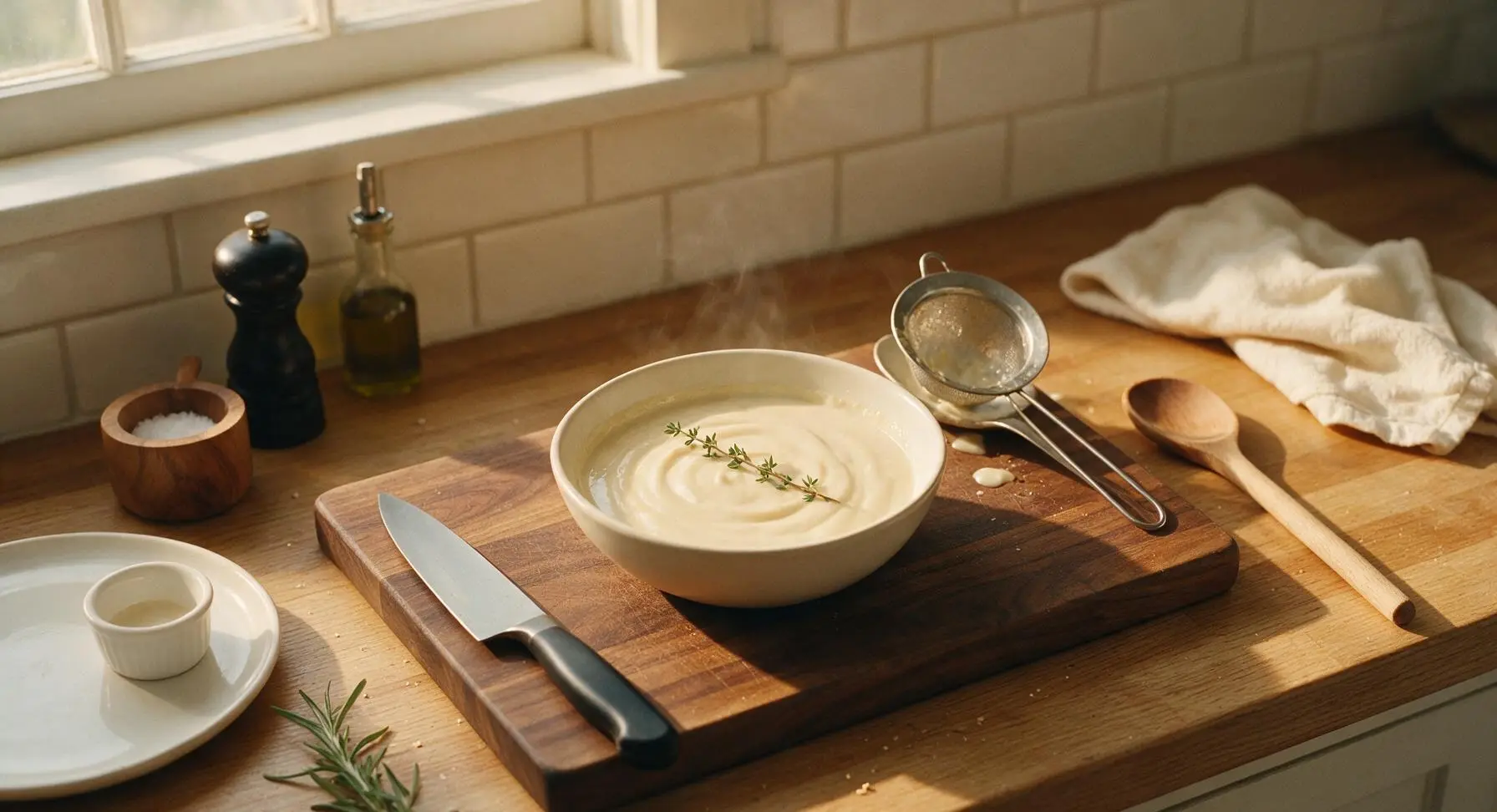
For a perfectly smooth, restaurant-quality sauce, place the fine-mesh stainless steel sieve over the off-white serving bowl, then pour the hot sauce through the sieve, pressing gently with the spatula to push all smooth sauce through into the bowl. Discard any tiny lumps, thyme stems, or undissolved cheese bits caught in the sieve. This step is optional but guarantees a flawless texture.

Step 7
step7:Strain for silky texture
8

Rest and adjust consistency

Let the sauce rest for 2 minutes at room temperature before using in casseroles. If the sauce is too thick, stir in extra warm milk 1 tbsp at a time until it reaches a pourable, coating consistency; if too thin, simmer for 1-2 additional minutes. Taste and adjust salt or pepper as needed before mixing with pasta, vegetables, or protein for baking.
Step 8
step8:Rest and adjust consistency

Tips

1.Always warm milk and stock before adding to the roux: cold liquid shocks the cooked starch granules in the flour, causing them to clump into hard lumps that cannot be whisked smooth, even with extended cooking. Warming the liquid to just above room temperature lets the starch combine evenly for a silky sauce.
2.Keep heat on low throughout the roux and sauce cooking process: high heat will burn the flour, giving the sauce a bitter, acrid taste, and can cause dairy to curdle or separate once cheese or milk is added. Low, slow cooking creates a stable, smooth sauce that won’t break while baking in a casserole.
3.This sauce stores beautifully: make it up to 3 days ahead and keep it in an airtight container in the fridge, or freeze for up to 3 months. When reheating, warm gently over low heat, whisking constantly, and add a splash of extra milk to thin it back to the perfect consistency, as it will thicken as it chills.


✨ You May Also Like

Side Dishes
🍜 India

Velvety, aromatic all-purpose curry sauce perfect for tossing with roasted veggies, grilled protein, or rice for fast, cozy, flavorful meals.

⏱️ 25 minuteSide Dishes ★ 4.8
Side Dishes
🍜 Spain

Tender, starchy boiled yuca tossed in bright, garlicky citrus mojo sauce—an iconic, zesty side that pairs beautifully with roasted pork, grilled meats, and rice and beans.

⏱️ 40 minuteSide Dishes ★ 5
Side Dishes
🍜 United States

Tender, paper-thin potato flatbread, a beloved Norwegian-American Minnesota Christmas staple, griddled until softly spotted and served warm with butter.

⏱️ 1 hour 30Side Dishes ★ 4.6
Side Dishes
🍜 United States

Rich, deeply savory cured salt pork, a long-lasting kitchen staple perfect for frying crispy as a side or adding umami to stews, beans, and chowders.

⏱️ 7 days (2Side Dishes ★ 4.9
Side Dishes
🍜 United States

Crispy, tangy classic Southern fried green tomatoes with a crunchy cornmeal crust, served hot for a nostalgic, comforting summery bite.

⏱️ 25 minuteSide Dishes ★ 4.9
Side Dishes
🍜 United States

Moist, golden-crusted savory muffins with sweet corn, zesty jalapeño, and melted cheddar, perfect for pairing with smoky summer grilled fare.

⏱️ 30 minuteSide Dishes ★ 4.9

casserole sauce:Frequently Asked Questions

1.Why doesn’t this sauce turn lumpy like other homemade creamy casserole sauces I’ve made? ▾
This recipe avoids lumps by starting with a properly cooked, equal-part butter and flour roux cooked 2 full minutes over medium-low to remove raw flour taste, then whisking in cold milk and stock in small, gradual splashes at first, rather than dumping hot liquid in all at once, so clumps never get a chance to form.
2.Can I use pre-shredded cheddar instead of finely grating my own for this sauce? ▾
I don’t recommend it! Pre-shredded cheddar is coated in potato starch and anti-caking agents to keep shreds separate in the bag, but those additives make your sauce grainy, prevent smooth melting, and dull the bright sharp cheddar flavor. Freshly finely grated cheese melts silkily for that perfect velvety, consistent texture.
3.Will this sauce separate or turn grainy when I bake it in a casserole, like other cheese sauces do? ▾
It won’t! The balanced roux base acts as a stabilizer to keep milk, stock, and cheese fully emulsified even at standard 350–400°F casserole baking temperatures, as long as you don’t boil the sauce once you add cheese. It stays smooth, rich, and creamy from prep through the final baked bite, with zero curdling or grainy separation.
4.Can I make this sauce ahead of time and store it before using it in a casserole? ▾
Absolutely! Let the sauce cool completely to room temperature, then transfer it to an airtight container and refrigerate for up to 3 days. When you’re ready to use it, reheat gently over low heat on the stovetop, whisking constantly, and thin with a splash of extra milk or stock if it thickens too much in the fridge.
5.What if I don’t have low-sodium vegetable stock on hand? Can I substitute something else? ▾
You can easily swap in regular vegetable stock, just hold off on adding any extra salt to the sauce until you’ve tasted it at the end to avoid over-seasoning. Chicken stock, turkey stock, or even plain water with a pinch of extra garlic powder and onion powder works as a 1:1 replacement in a pinch, too.
6.Can I use a different type of milk instead of whole milk for this recipe? ▾
Whole milk gives the richest, creamiest base without being too heavy, but you can swap in 2% milk if that’s what you have on hand. Skip skim milk, though—it has too little fat to create a smooth, stable sauce, and will result in a watery, thin texture that doesn’t coat casserole ingredients evenly.
7.How do I adjust the thickness of this sauce for different types of casseroles? ▾
For denser casseroles like lasagna or baked mac and cheese, keep the sauce as written for a thick, coating consistency. For looser bakes like vegetable gratins or tuna casserole, stir in an extra ¼ to ½ cup of milk or stock after adding the cheese to thin it slightly, so it spreads easily through all the casserole layers.
8.Can I make this sauce dairy-free for vegan or lactose-intolerant eaters? ▾
You can! Swap the butter for vegan stick butter, use unsweetened plain oat milk in place of whole milk, and pick a well-melting vegan sharp cheddar that shreds cleanly. Cook the roux exactly as directed, and you’ll get a nearly identical smooth, creamy sauce that works perfectly for vegan or lactose-free bakes.
9.What seasonings work well to customize this base sauce for different casseroles? ▾
This neutral, savory base is made to customize! Stir in a pinch of garlic powder, onion powder, smoked paprika, dry mustard, fresh nutmeg, black pepper, or a dash of hot sauce depending on your dish. Add dried thyme or oregano for Italian bakes, or taco seasoning for Mexican-inspired casseroles.
10.Why do I need to cook the butter and flour roux before adding liquid? ▾
Cooking the roux for 2 full minutes over medium-low heat toasts the flour to remove that raw, pasty flour taste that can ruin creamy sauces, and it cooks starch granules so they properly thicken liquid without leaving a chalky aftertaste. You don’t need to brown it—just cook until it smells faintly nutty and pale golden.
11.Can I freeze this sauce for later use to cut down on meal prep time? ▾
I don’t recommend freezing this sauce, unfortunately. Dairy-based cheese sauces with a roux base tend to break and separate when thawed, leaving a grainy, watery texture even if you whisk vigorously while reheating. It keeps perfectly in the fridge for 3 days, so refrigerated prep is a far more reliable option.
12.What if my sauce ends up too thick once it’s finished cooking? How do I fix that? ▾
It’s super easy to fix an overly thick sauce! Just whisk in small splashes of extra warm milk or vegetable stock, 1 tablespoon at a time, until you reach your desired coating consistency. Always add liquid gradually so you don’t accidentally thin it too much—you can always add more, but you can’t take it out once mixed in.
13.Can I use a different cheese instead of sharp cheddar in this base sauce? ▾
Absolutely! Sharp cheddar adds a nice tangy, savory kick that works for most casseroles, but you can swap in equal amounts of Gruyère, Monterey Jack, mozzarella, fontina, or even pepper Jack for a spicy twist. Just make sure to grate it finely so it melts smoothly without clumping in the warm sauce.
14.Why use a mix of whole milk and vegetable stock instead of all milk? ▾
Using 100% whole milk makes the sauce overly rich and heavy, and can mute the flavor of other ingredients in your casserole. The low-sodium vegetable stock lightens the texture just enough, adds subtle savoriness, and keeps the sauce creamy without tasting cloying, so it works for every type of baked dish.
15.How do I keep the cheese from clumping or turning stringy when I add it to the sauce? ▾
First, take the sauce off the heat right before you add the finely grated cheese—boiling heat makes cheese curdle and turn stringy. Add the cheese a small handful at a time, whisking constantly in one direction until each batch is fully melted and smooth before adding the next, for a perfectly silky final texture.
16.Is this sauce gluten-free? If not, how do I adapt it for gluten-free diets? ▾
The base recipe uses all-purpose wheat flour, so it’s not gluten-free as written, but it’s incredibly easy to adapt. Swap the all-purpose flour for a 1:1 measure of a high-quality all-purpose gluten-free flour blend (one with xanthan gum works best) to make the roux, and keep all other ingredients the same for an identical smooth, stable sauce.
17.What kinds of casseroles and baked dishes work best with this all-purpose sauce? ▾
This versatile sauce works for nearly every baked savory dish! Use it for classic baked mac and cheese, tuna noodle casserole, chicken and rice bakes, vegetable gratins, lasagna, scalloped potatoes, broccoli cheddar bakes, and even leftover turkey or ham casseroles after holiday meals. It coats every ingredient evenly without overpowering other flavors.

Comments (14)

2 days ago

OMG this sauce is a total game changer! I threw it together last night for a broccoli chicken casserole for my family dinner and even my super picky 7 year old asked for seconds. It came together in literally 15 minutes just like the recipe says, no fancy ingredients needed. 10/10 will be making this weekly for meal prep!

yesterday

Wait did you use it straight on raw chicken or cook the chicken first? I’m making this for a potluck this weekend and don’t want to mess it up!

yesterday

So glad your family loved it, Sarah! For chicken casserole, we recommend cooking your chicken first before tossing with the sauce and baking — it’ll turn out perfect for your potluck!

1 week ago

Okay color me impressed. I’ve been buying the canned cream of mushroom soup for casseroles my whole life and this homemade version is SO much better. No weird preservatives, super creamy, works for literally everything. I used it for a tuna noodle casserole last night and my roommate ate half the pan.

5 days ago

Right?! I dumped the canned stuff forever once I tried this. I add a little extra garlic powder when I make it for tuna noodle, chef’s kiss.

3 days ago

Love that swap for canned soup, Jake! A little extra garlic powder is such a great add, thanks for sharing that tip CasseroleQueen92!

3 days ago

Wait can I make this dairy free? I have a lactose intolerant kiddo and I’m always hunting for creamy sauces that don’t upset her stomach but that the rest of the family will eat too. The recipe looks so easy I’m dying to try it!

2 days ago

I made it last week with oat milk and dairy free butter and it worked perfectly! No weird aftertaste at all, my meat and potatoes husband didn’t even notice.

2 days ago

Great question, Beth! Pat’s tip is spot on — unsweetened oat milk or unsweetened almond milk work great for a dairy free swap, just make sure to use a dairy free butter too and it’ll turn out wonderful.

5 days ago

Brought a green bean casserole with this sauce to my office potluck yesterday and people were literally asking me for the recipe before I even left. It’s so rich and creamy, way better than the usual holiday version I make. Who knew a 15 minute sauce could steal the whole show?

3 days ago

Wait do you think this would work for a loaded potato casserole for Thanksgiving? I’m in charge of sides this year and need all the wins I can get.

2 days ago

That makes us so happy to hear, Pete! This sauce works perfectly for loaded potato casserole — just toss it with parboiled potatoes, cheese, and bacon bits before baking and you’ll have the most popular side at Thanksgiving!

2 hours ago

This is perfect for weeknights! I work 10 hour shifts and don’t have time to mess around with complicated roux recipes that take forever. This was easy enough to throw together while my pasta boiled, zero stress. My kids loved it on mac and cheese last night.

30 minutes ago

So happy this fits into your busy weeknight routine, Mike! It’s such a versatile base for mac and cheese too, you can’t go wrong.

30 minutes ago

Wait, I’ve never made a creamy sauce before and I was so nervous I’d mess it up and get lumps, but this came out perfectly smooth on the first try! The instructions are so clear even a total beginner like me can pull it off. I used it on a chicken and rice casserole for my boyfriend and he said it was restaurant quality.

5 minutes ago

That’s amazing to hear, Nora! No lumps is the biggest win for a first creamy sauce — so proud of you for pulling it off!

yesterday

How long does this keep in the fridge? I want to make a big batch on Sunday to use throughout the week for quick dinners, instead of making a new sauce every night. Seems like it would be perfect for that!

2 hours ago

Great question, Mia! This sauce will stay good in an airtight container in the fridge for up to 5 days, so it’s perfect for Sunday meal prep. Just give it a quick stir before using!

2 weeks ago

I added a half cup of shredded sharp cheddar to this when I made it for a cheeseburger casserole last weekend and holy cow it was SO good. All my friends at the watch party were raving, I felt like a professional chef.

1 week ago

Oh that cheddar add is genius! I’m making this for our Sunday football watch party this weekend and I’m definitely stealing that idea.

1 week ago

I swapped the regular all purpose flour for a 1:1 gluten free flour blend and this sauce worked perfectly! No gritty texture, no weird taste, finally a creamy casserole sauce I can eat without my stomach hurting later. 10/10.

5 days ago

Thanks so much for sharing that gluten free swap, Gina! That’s going to help so many other folks with gluten sensitivities enjoy this sauce too — we appreciate it!

5 minutes ago

Wait I know this says casserole sauce but I accidentally used it as a sauce for my homemade chicken alfredo pasta last night because I was out of heavy cream? And it slapped? Way lighter than regular alfredo but still so creamy, I’m not even mad about the mistake.

just now

That’s the best kind of kitchen mistake, Ryan! We love hearing all the creative ways people use this sauce — alfredo swap is such a good call.

1 week ago

Made this for my ham and potato casserole after church last Sunday and my whole family went back for thirds. So rich and velvety, doesn’t taste like that canned junk at all. I’ll never go back!

just now

Super easy to make in my dorm room with just a little hot plate! I didn’t have any fancy ingredients, just butter, flour, milk, salt, pepper, a little garlic powder, and it tasted incredible. Way cheaper than buying pre-made sauce too.

2 days ago

I added a pinch of cayenne and a dash of hot sauce to this when I made it for a Mexican inspired chicken casserole and it was chef’s kiss. The creamy base takes add-ins so well, you can customize it to literally any flavor profile you want.

2 weeks ago

I’ve been making my own casserole sauce for 40 years and I have to say, this recipe is better than my old go-to. It’s the perfect consistency every single time, no thinning or thickening needed. Wish I’d found this years ago!