
Chamomile Rye Barrel Aged IPL

title 1
Chamomile Rye Barrel Aged IPL
⏱️ cook time 1 hour 30 minutes
🍽️ servings 12
⚡ Difficulty hard

intro

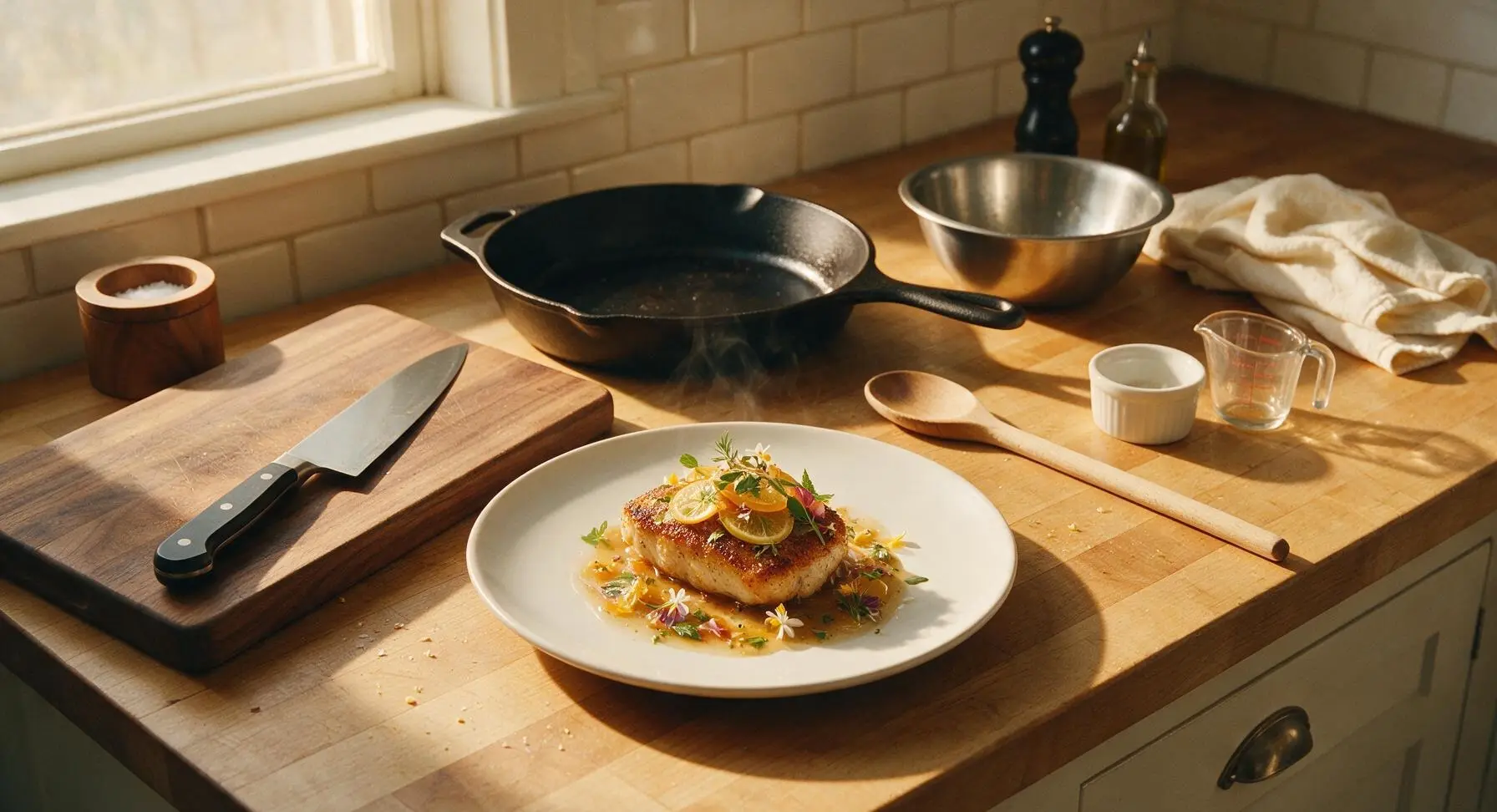
A crisp, balanced India Pale Lager with spicy rye backbone, soft floral chamomile notes, smooth vanilla oak from rye barrel aging, and bright citrus hop bite.

Ingredients
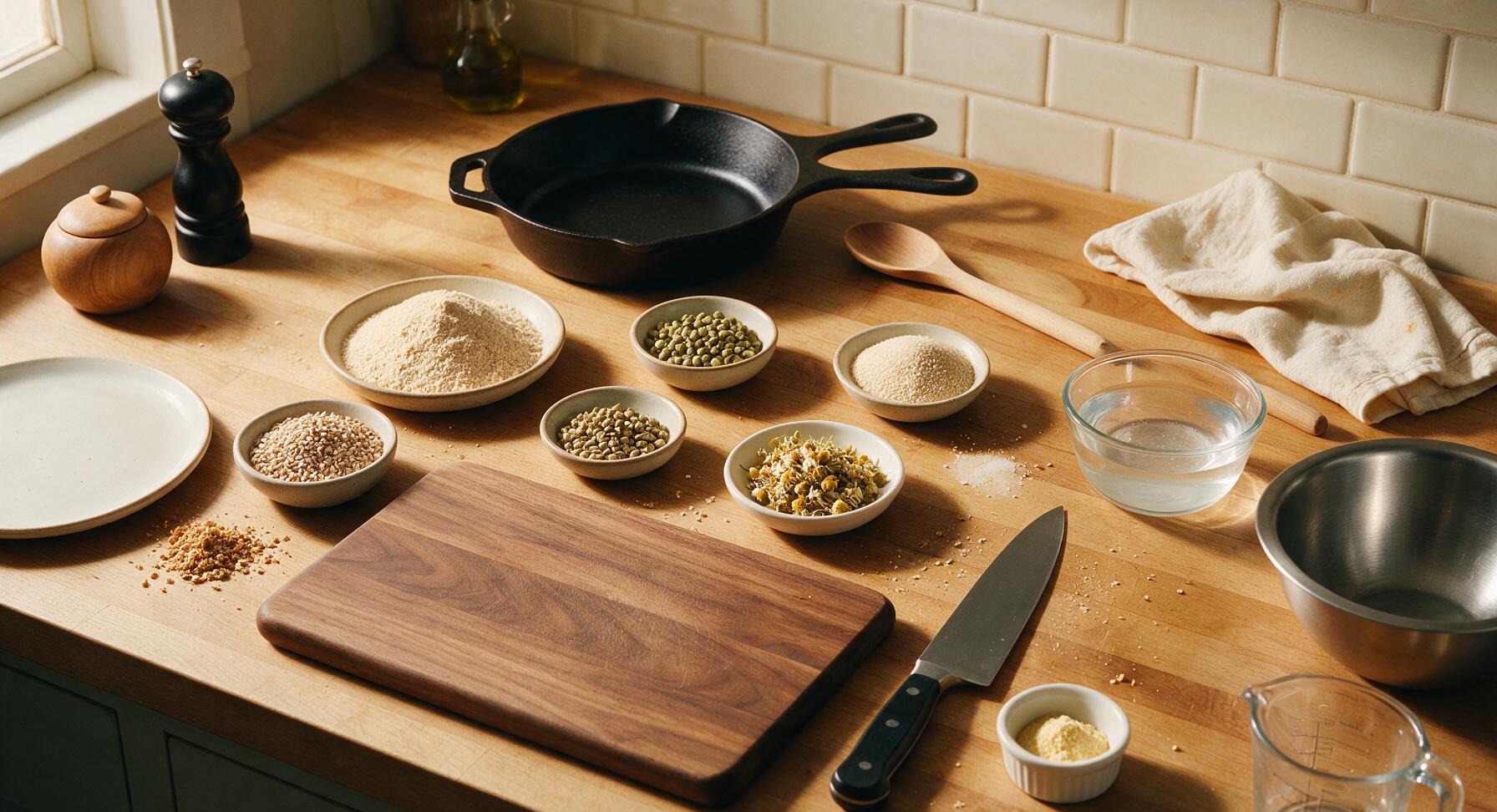
Crushed rye malt 8 oz (227g)
Light pilsner dry malt extract 1 lb (454g)
Cascade hop pellets 1 oz (28g)
Saaz hop pellets 0.5 oz (14g)
Dried organic chamomile flowers 0.5 oz (14g)
Lager yeast (W-34/70 strain) 1 packet (5g)
Corn sugar (for priming) 2 tbsp (25g)
No-rinse brewing sanitizer 1 tbsp (mixed with 32oz water)

Steps

1

Sanitize Brewing Equipment

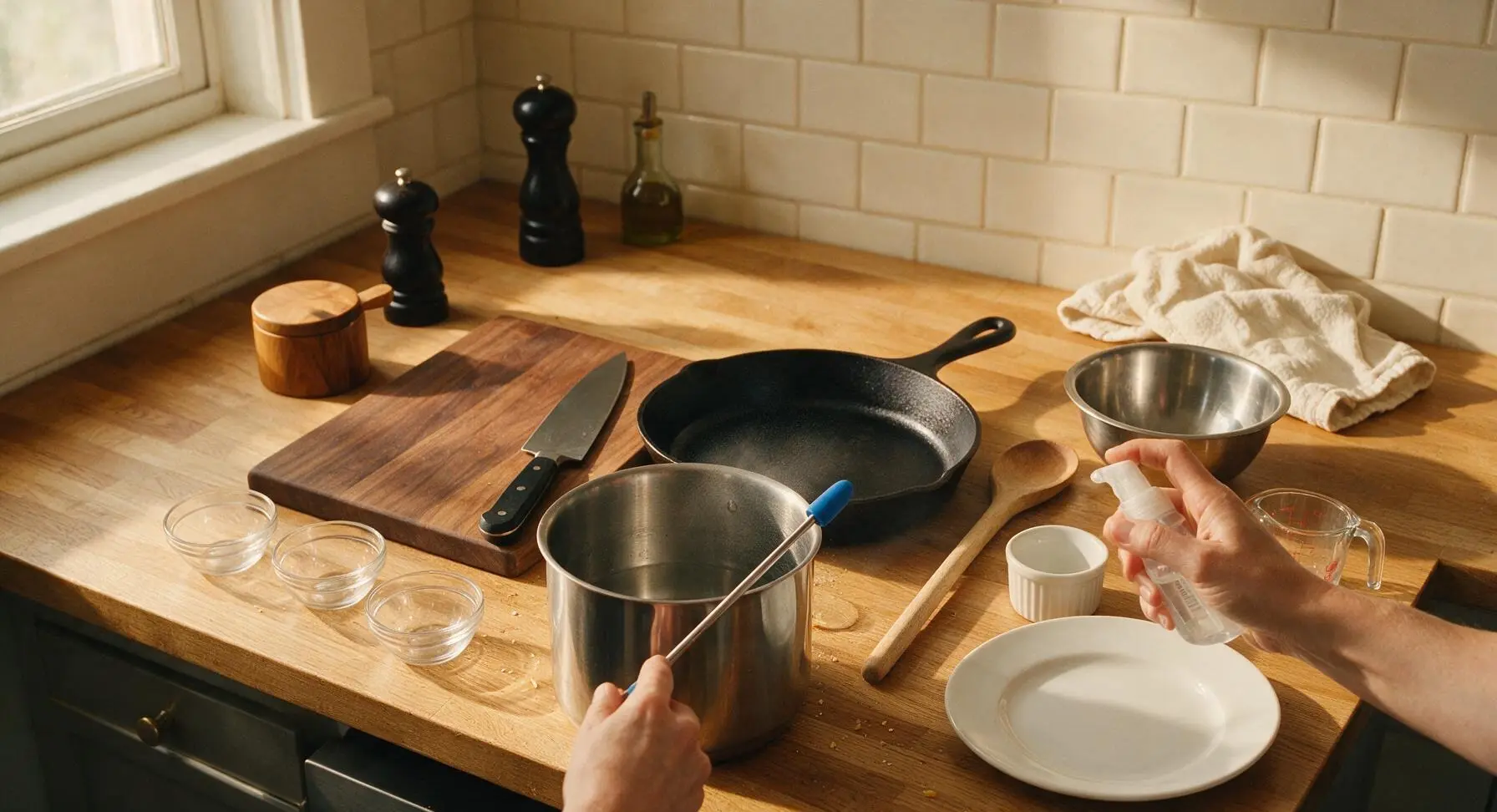
First, mix 1 tablespoon no-rinse brewing sanitizer with 32oz cool filtered water in the clear plastic spray bottle. Spray all surfaces of the brew pot, stirring spoon, thermometer, strainer, fermentation jug, airlock, auto-siphon, rye barrel, bottle capper, and beer bottles until fully coated. Let surfaces sit for 60 seconds, then air dry on the clean counter. Proper sanitization eliminates wild yeast and bacteria that would cause off-flavors or spoiled beer; do not wipe surfaces dry after sanitizing.
Step 1
step1:Sanitize Brewing Equipment
2

Steep Crushed Rye Malt

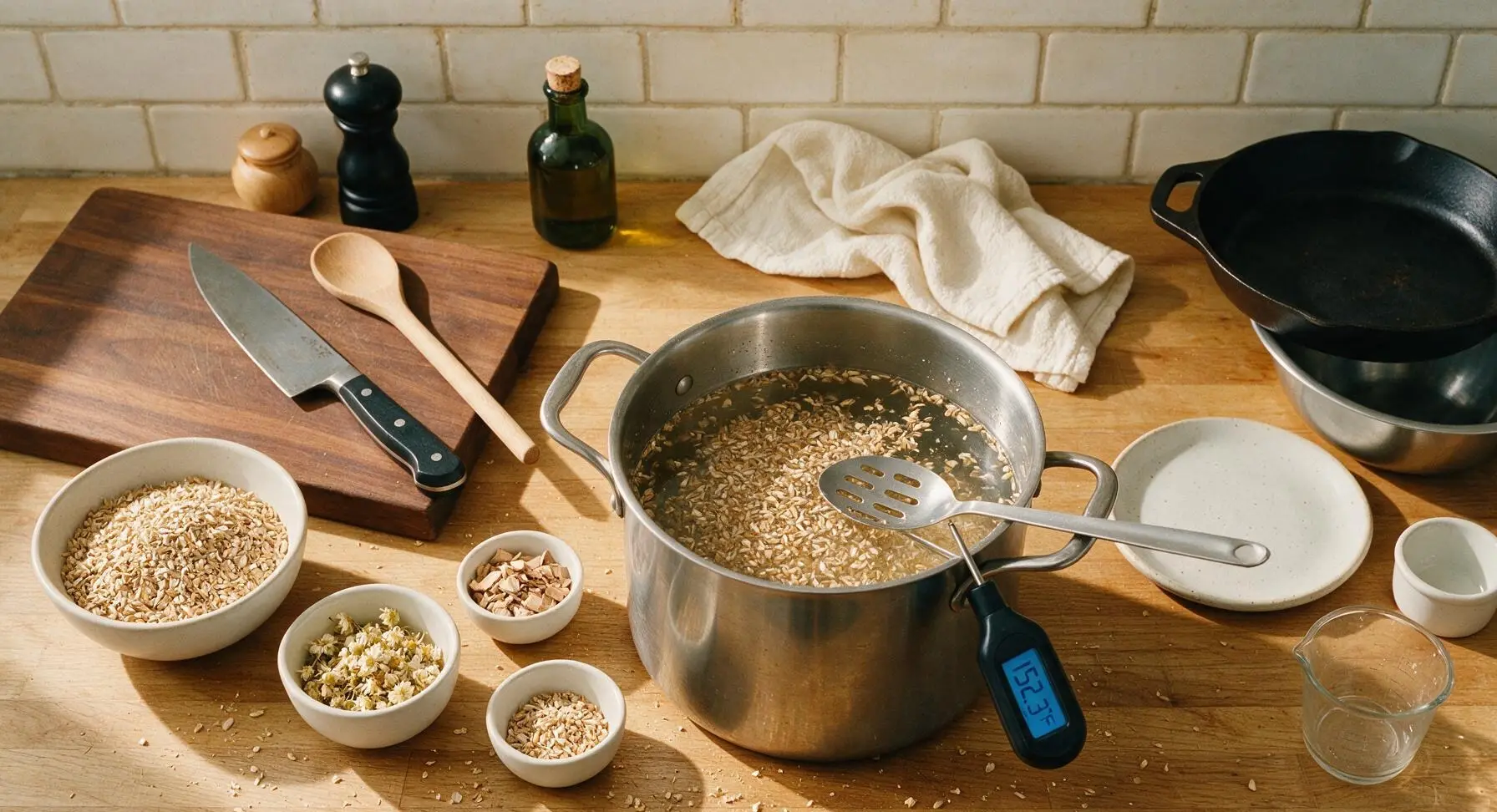
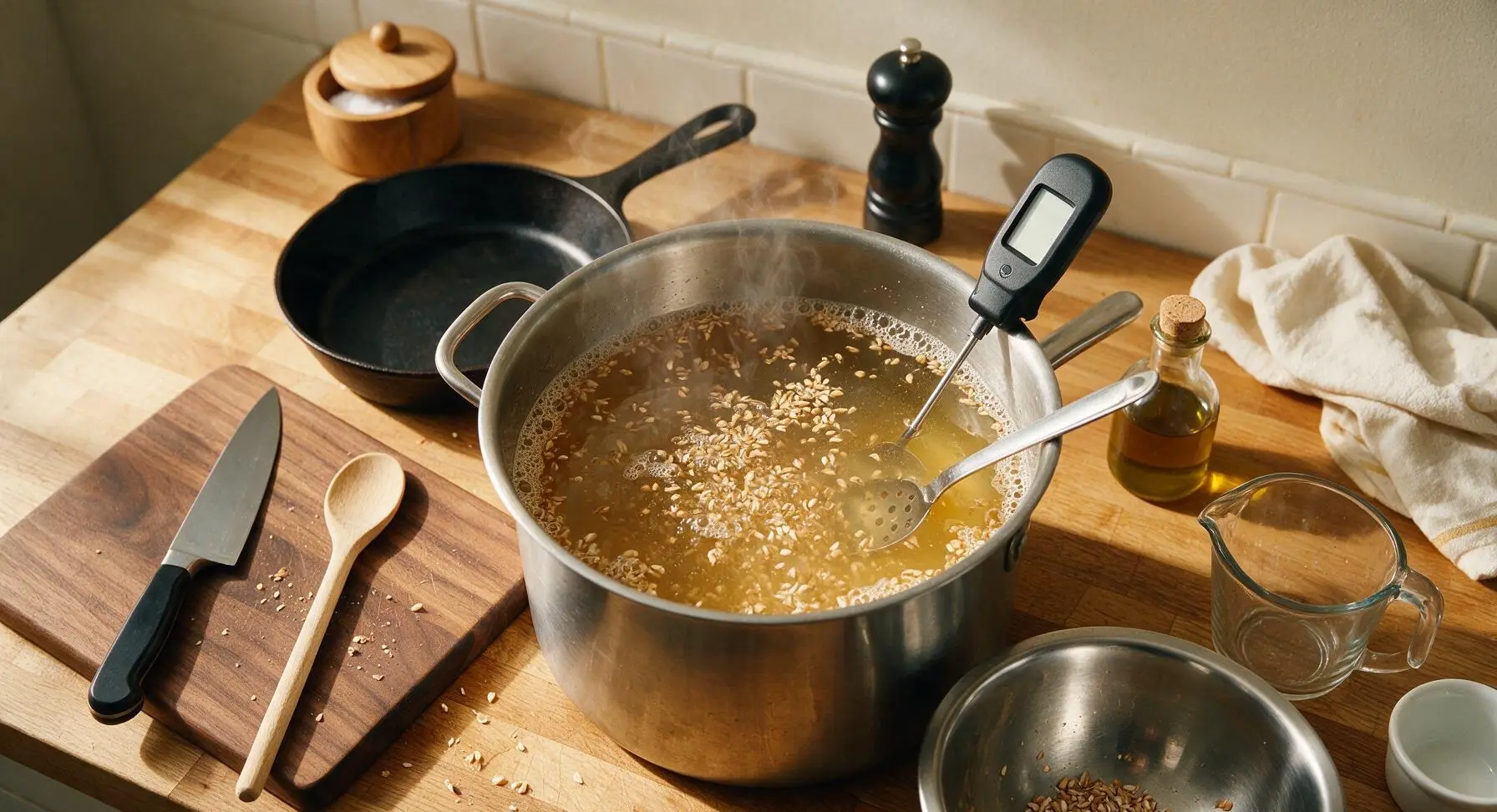
Fill the 2-gallon stainless steel brew pot with 1 gallon of cool filtered water, set over medium heat. Add the 8oz crushed rye malt to the water, stir once with the slotted stainless steel spoon. Heat the mixture to exactly 155°F, holding that steady temperature for 30 minutes, checking regularly with the digital instant-read thermometer clipped to the pot edge. Do not allow the temperature to rise above 160°F, as this will extract harsh, astringent tannins from the rye grain husks. The liquid will turn a pale, hazy golden color as the grain steeps.
Step 2
step2:Steep Crushed Rye Malt
Step 2
step2:Steep Crushed Rye Malt
3

Boil Wort and Add Hops

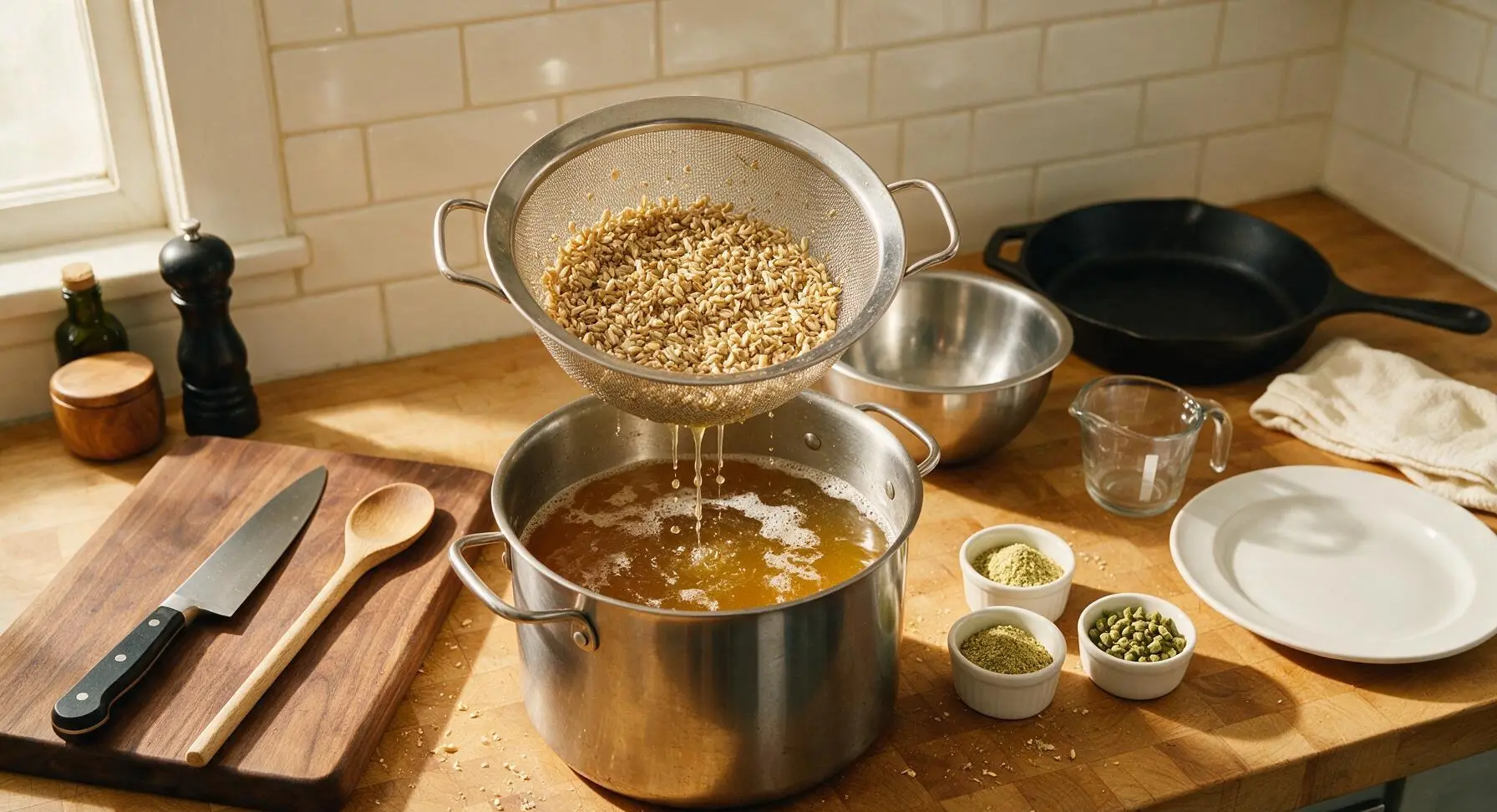
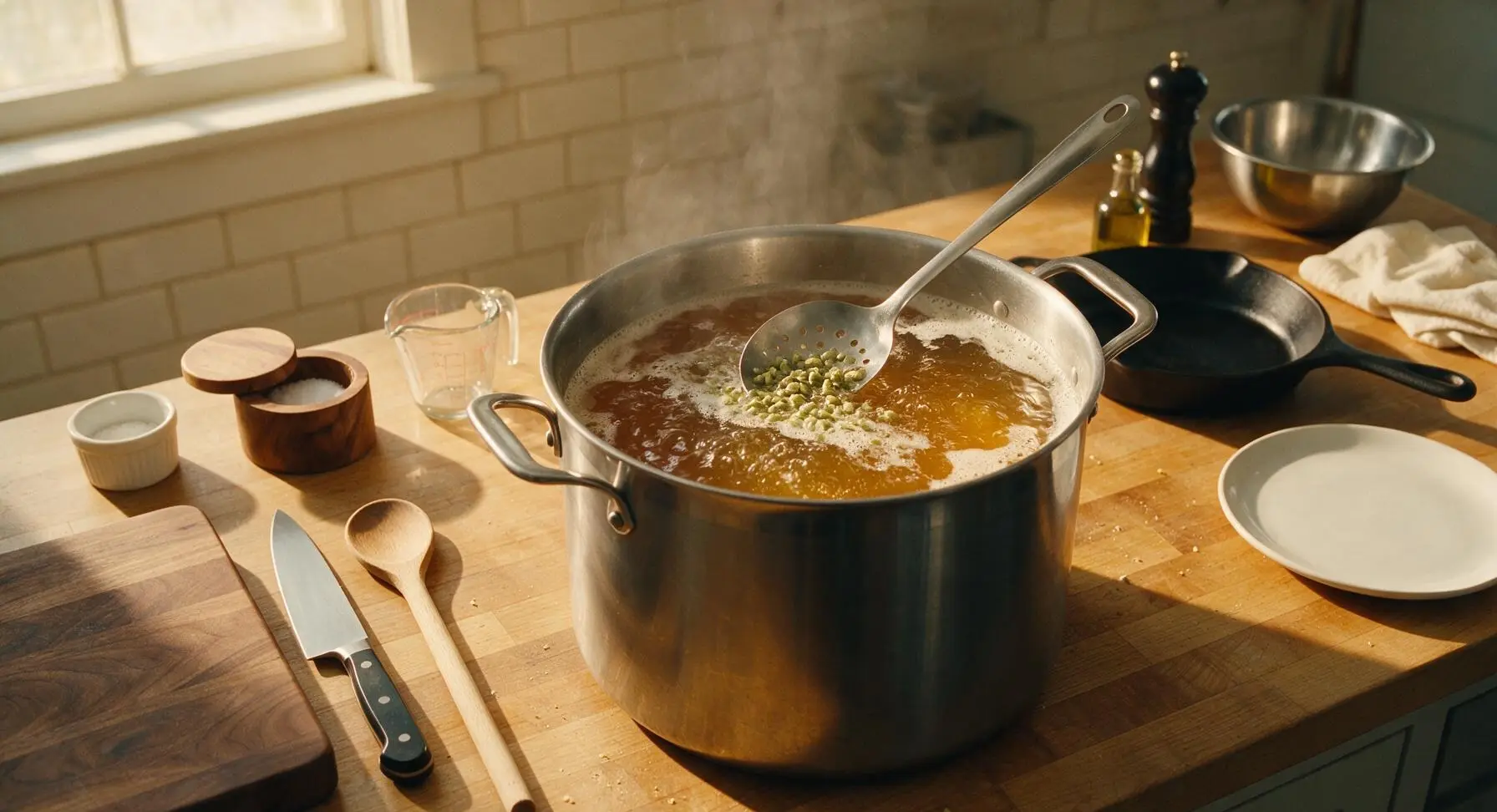
Lift the crushed rye malt from the pot using the fine mesh stainless steel strainer, letting all sweet liquid drain back into the pot before discarding spent grains. Bring the remaining sweet liquid (called wort) to a gentle rolling boil (212°F at sea level). Once boiling, stir in the full 1lb of light pilsner dry malt extract until completely dissolved. Add 0.75oz of Cascade hops immediately, then set a timer for 45 minutes of total boil time. With 5 minutes remaining on the timer, add the remaining 0.25oz Cascade hops and all 0.5oz Saaz hops. The wort will darken slightly to a clear deep gold, with a soft layer of white hot break foam forming on the boil surface.
Step 3
step3:Boil Wort and Add Hops
Step 3
step3:Boil Wort and Add Hops
4

Chill Wort and Pitch Yeast

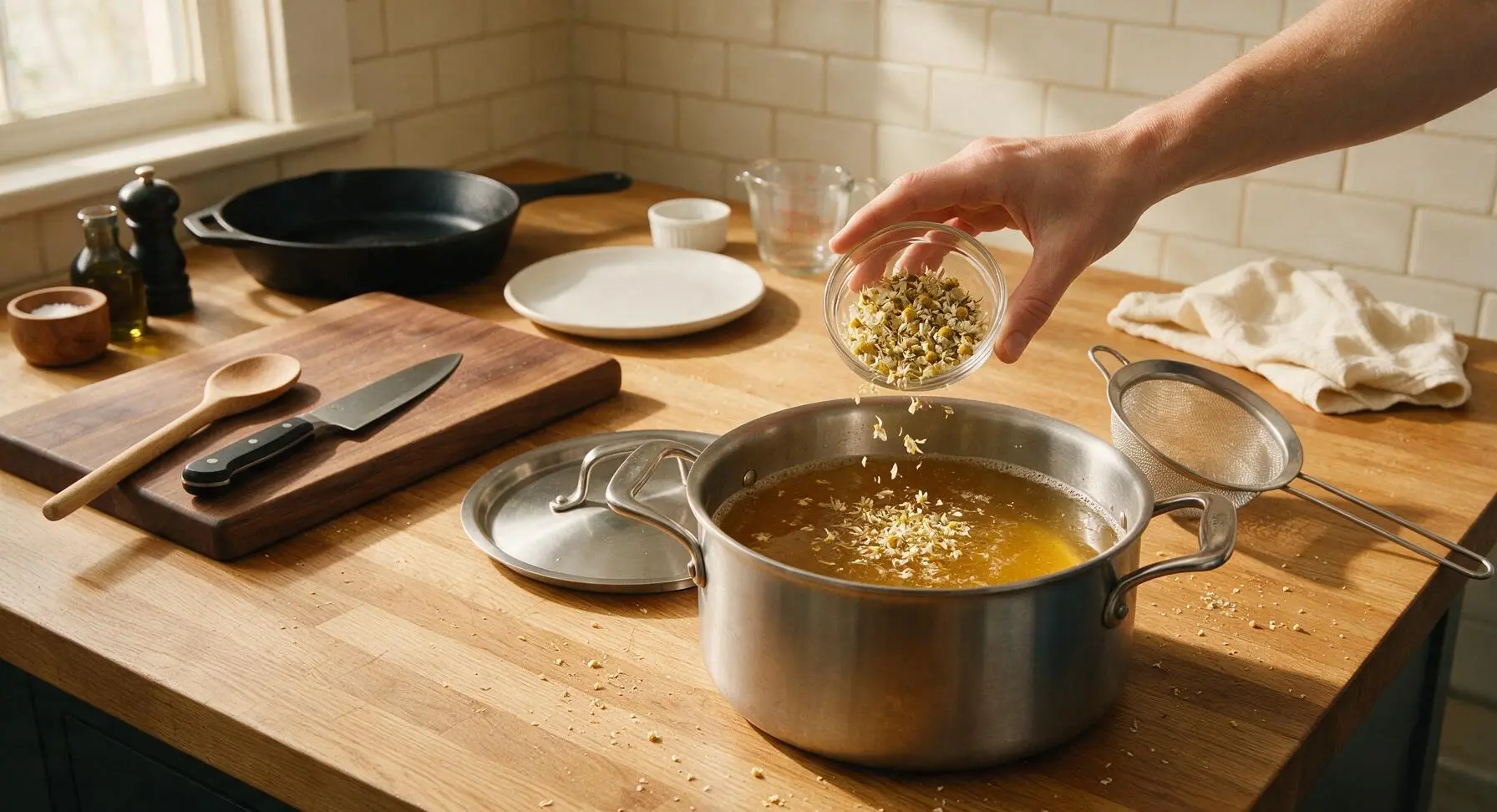
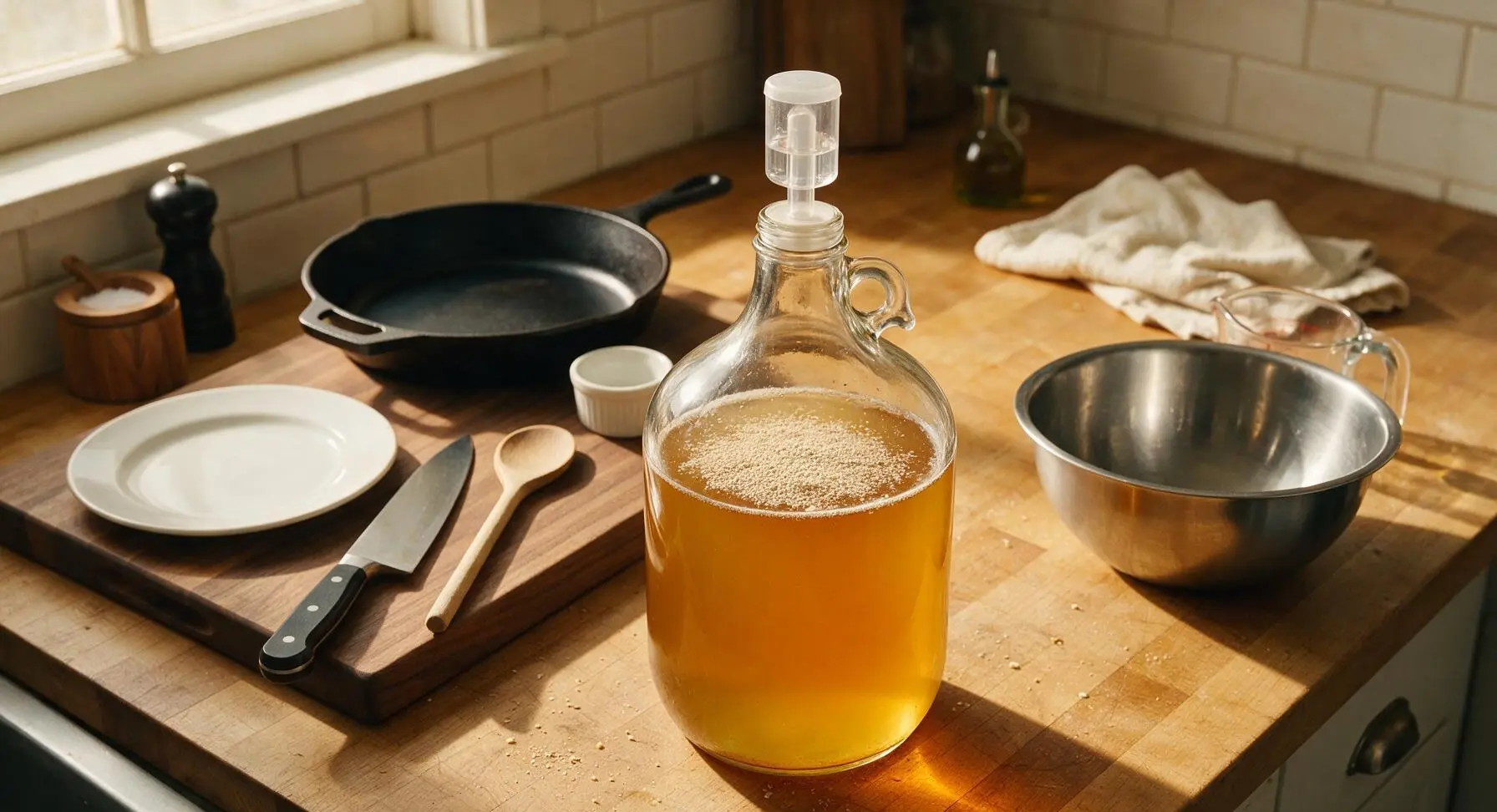
When the 45 minute boil is complete, remove the pot from heat. Add all 0.5oz dried chamomile flowers to the hot wort, cover with the stainless lid, and let steep for 10 minutes to extract soft floral notes without bitter compounds. Set the pot in an ice bath to chill the wort rapidly to 65°F, checking temperature with the digital thermometer. Once chilled, pour the wort through the fine mesh strainer into the sanitized 1-gallon glass fermentation jug to filter out hop and chamomile solids. Sprinkle the full packet of lager yeast across the wort surface, then seal the jug with the rubber stopper and airlock filled halfway with sanitizer. Store the jug in a cool, dark 55°F space for 2 weeks, until fermentation completes (no bubbles pass through the airlock for 3 consecutive days).
Step 4
step4:Chill Wort and Pitch Yeast
Step 4
step4:Chill Wort and Pitch Yeast
5

Age in Rye Barrel

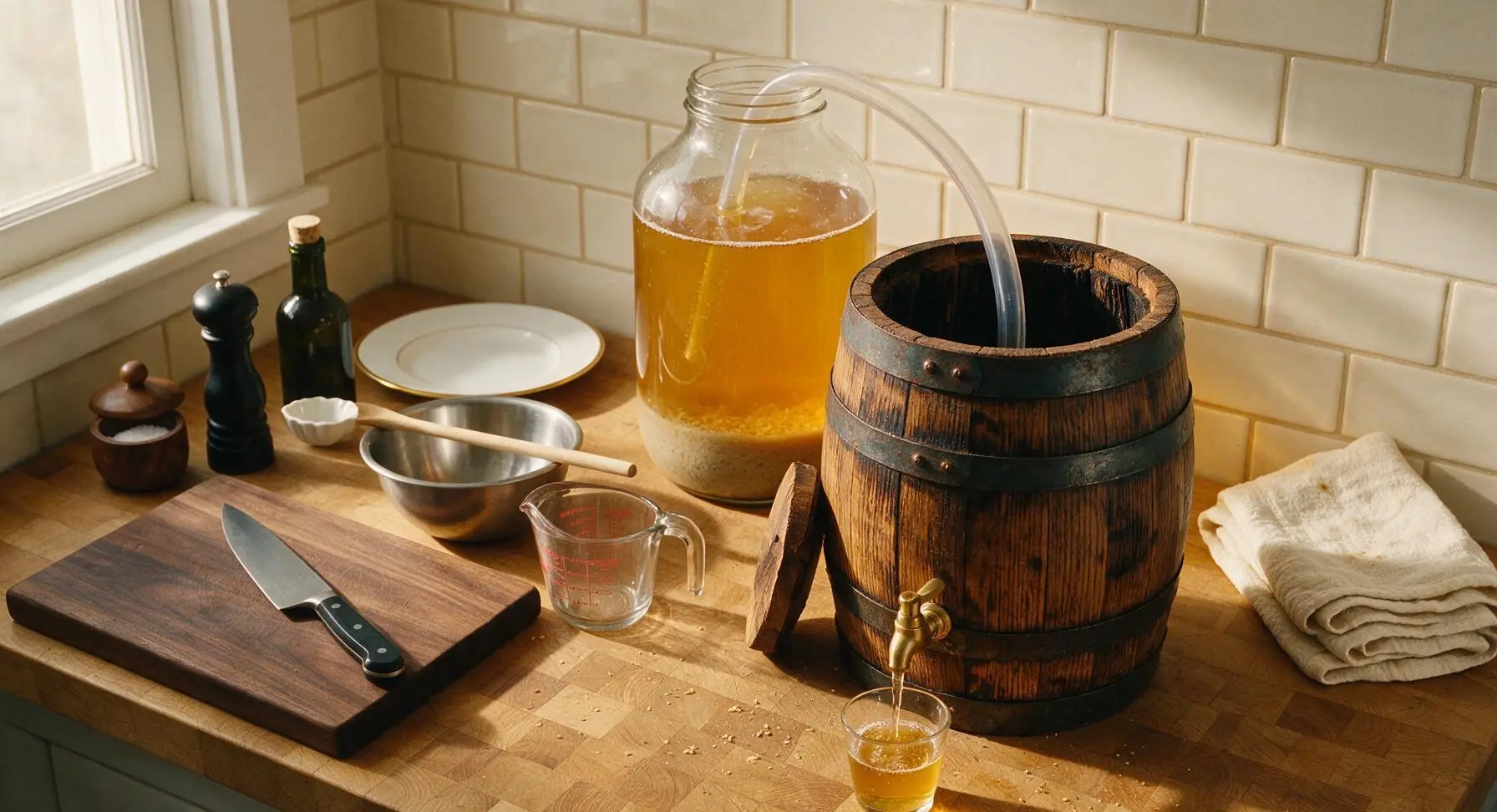
Once primary fermentation finishes, use the auto-siphon and clear vinyl tubing to transfer the clear, settled beer from the glass fermentation jug into the pre-rinsed, sanitized 1-gallon charred rye whiskey barrel, leaving yeast sediment behind in the jug. Seal the barrel tightly with the wooden bung, then store in a cool, dark 60°F space for 4 weeks. Every 3 days, draw a 1oz sample from the barrel's brass spigot into the small glass tasting cup to monitor flavor: the beer will slowly develop notes of toasted oak, vanilla, and subtle rye whiskey as it ages. Stop aging once the oak character is balanced, not overpowering the bright hop and soft chamomile flavors.
Step 5
step5:Age in Rye Barrel
6

Bottle and Carbonate

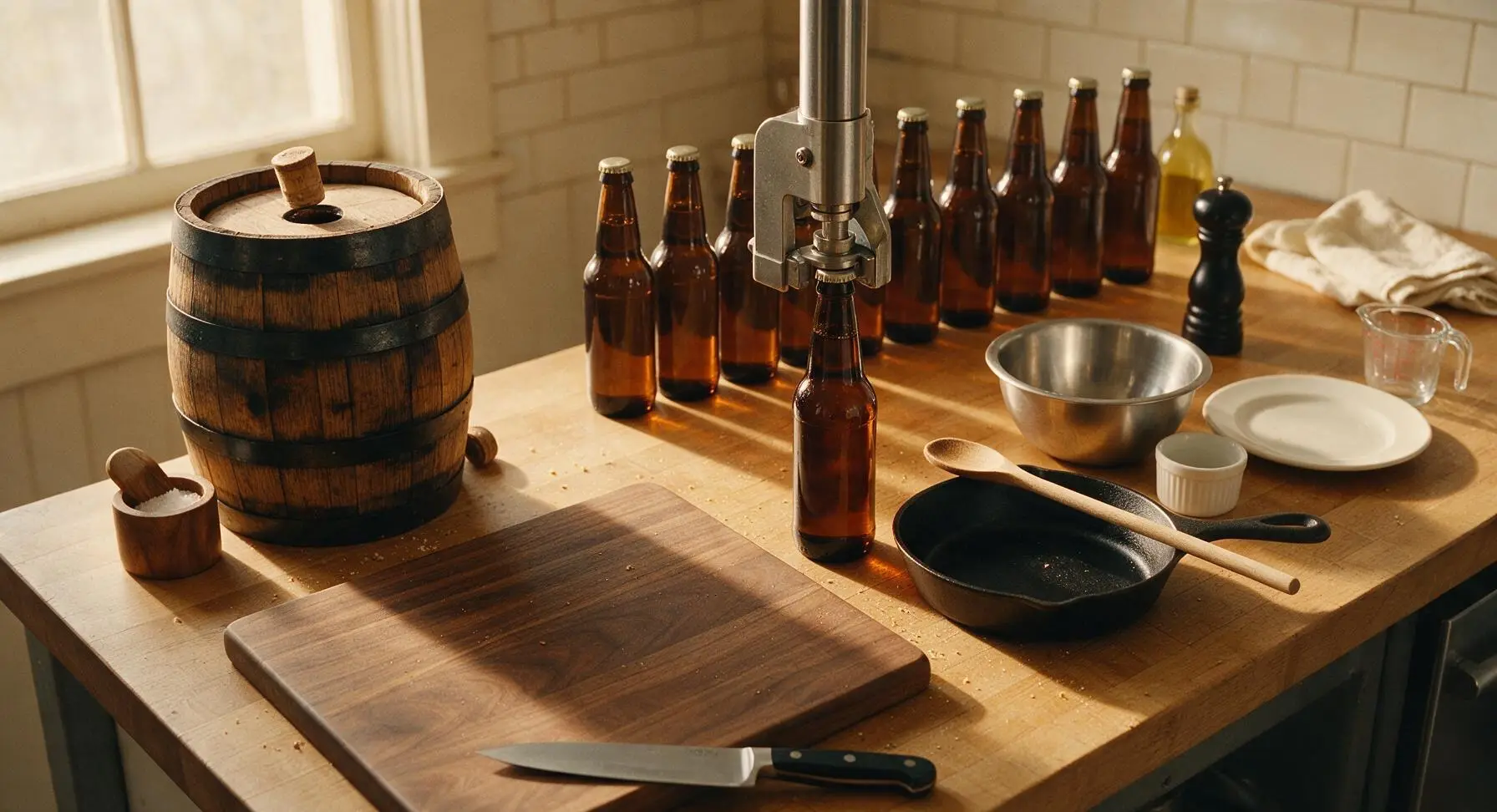
After 4 weeks of barrel aging, dissolve 2 tablespoons of corn sugar in 1/4 cup boiling water, cool to room temperature, and add to the bottom of the sanitized 2-gallon stainless steel brew pot (repurposed as a bottling vessel). Siphon the aged beer from the barrel into the pot, stirring gently with the sanitized slotted spoon to evenly distribute the priming sugar. Use the auto-siphon to fill each sanitized amber 12oz beer bottle to 1 inch below the rim, then crimp sanitized bottle caps onto each bottle using the stainless steel bench capper. Store sealed bottles in a cool, dark 65°F space for 2 weeks to allow natural carbonation to develop before chilling to 40°F for serving.
Step 6
step6:Bottle and Carbonate

Tips

1.Never steep rye malt at temperatures above 160°F: higher temperatures break down grain husks to release harsh, astringent tannins that will make the finished beer taste dry and puckery, masking the delicate chamomile and smooth oak notes.
2.Pre-rinse your miniature rye barrel with cool filtered water for 10 minutes before filling it with beer: this flushes away loose char particles and excess surface wood compounds that would otherwise create an overpowering, ashy, burnt flavor in the finished beer.
3.Stick strictly to the 2 tablespoon measurement of corn priming sugar for a 1-gallon batch: excess sugar creates over-pressurization during carbonation, which can cause bottles to gush wildly when opened or even shatter during conditioning.


✨ You May Also Like

Drinks & Beverages
🍜 Mexico

A bright, balanced tequila-based cocktail with zesty fresh lime, smooth orange liqueur, and a signature salt rim, perfect for warm summer sipping.

⏱️ 5 minutesDrinks & Beverages ★ 4.9
Drinks & Beverages
🍜 United States

Thick, creamy, nostalgic classic vanilla milkshake with a rich, smooth texture, topped with whipped cream and a cherry for cool, sweet refreshment.

⏱️ 5 minutesDrinks & Beverages ★ 4.7
Drinks & Beverages
🍜 United States

A bright, golden strong ale with fruity banana-clove notes, subtle hop spice, and soft carbonation, brewed in classic Trappist Tripel tradition.

⏱️ 2 hours aDrinks & Beverages ★ 4.5
Drinks & Beverages
🍜 United States

A frothy, nostalgic American soda fountain treat pairing bubbly cold root beer with creamy vanilla ice cream, perfect for cooling down at warm weather gatherings.

⏱️ 20 minuteDrinks & Beverages ★ 4.8
Drinks & Beverages
🍜 United States

Tart, funky, effervescent American Wild Ale is a complex fruity craft beer brewed with wild yeast, delivering bright, zesty notes perfect for warm-weather sipping.

⏱️ 2 hours aDrinks & Beverages ★ 4.4
Drinks & Beverages
🍜 United States

Bright, bubbly copycat of the iconic American caramel cola, balanced with citrus and warm spice, perfect for sipping ice-cold on hot days.

⏱️ 15 minuteDrinks & Beverages ★ 4.8

Chamomile Rye Barrel Aged IPL:Frequently Asked Questions

1.What makes this an IPL instead of a standard IPA? ▾
This beer is fermented cold with clean lager yeast instead of warm-fermented ale yeast, giving it a signature crisp, smooth finish instead of the fruity ester notes common in IPAs. The rye backbone, chamomile, and barrel oak complement that bright lager base perfectly, balancing hop bite without weighing down the clean, drinkable profile the style is known for.
2.Can I skip rye barrel aging if I don’t have access to a full rye barrel? ▾
Absolutely—full barrels are overkill for most homebrewers anyway. Swap the barrel for 1–2 ounces of medium-toast rye whiskey oak cubes (soaked in 2 ounces of rye whiskey for 48 hours for extra spirit depth) added to secondary fermentation for 1–2 weeks, tasting regularly until you hit that smooth vanilla rye oak note you want.
3.When should I add dried chamomile to get soft floral flavor without soapy off-notes? ▾
Add dried chamomile during the last 5 minutes of the boil, or directly to the secondary fermenter for 3–4 days right before cold crashing. Boiling chamomile longer than 10 minutes pulls out bitter, grassy, soapy compounds that ruin its delicate floral character, so stick to short contact times and taste test after 2 days in secondary to avoid overdoing it.
4.What ratio of crushed rye malt gives that spicy backbone without harsh astringency? ▾
Aim for 10–15% of your total grain bill (or equivalent steeped rye for extract batches) to get that signature peppery rye bite. Any more than 20% rye will lead to harsh, grainy astringency and a too-thin mouthfeel, since rye lacks the husk structure that adds body and can leach bitter tannins if overused or over-steeped.
5.Why use both Cascade and Saaz hops instead of a single bold hop variety? ▾
The two hops work in tandem for balanced, layered flavor: Cascade brings the classic bright, grapefruit-citrus punch expected from an American hoppy beer, while Saaz adds soft, earthy spice that complements rye and chamomile instead of overpowering those delicate floral and oak notes. This avoids the one-note harshness of overloading on bold, high-alpha hops.
6.How long should I age this beer after fermentation for the best flavor? ▾
Give it a minimum of 4 weeks of cold lagering at 38–42°F after secondary fermentation and oak contact to let all flavors meld. For peak balance, age 6–8 weeks total; any longer than 3 months, and the bright hop and chamomile notes will fade, leaving only oak and rye that misses the crisp IPL character.
7.Can I use fresh homegrown chamomile instead of the dried organic flowers called for? ▾
You can, but adjust the quantity first: use 3 times the weight of fresh chamomile as you would dried, since dried flowers are far more concentrated. Rinse fresh chamomile thoroughly to remove dirt, bugs, or garden chemicals, and skip any browned, wilted flowers, which add moldy, stale off-notes that ruin the final beer.
8.What fermentation temperature prevents off-flavors and keeps this IPL crisp? ▾
Use a clean lager yeast strain, hold primary fermentation steady at 50–55°F for 7–10 days, then let the temperature rise gradually to 60°F for a 3-day diacetyl rest to eliminate buttery off-notes. Avoid fermenting warmer than 62°F, as that produces fruity, ale-like esters that clash with rye spice, chamomile, and smooth oak.
9.How do I prevent harsh, grainy astringency from the crushed rye malt? ▾
When steeping crushed rye for extract batches, hold your steep water at 150–155°F, never let it climb above 170°F, and don’t squeeze the grain bag when removing it after steeping. High temperatures and squeezing pull harsh tannins from the grain that create a dry, puckering mouthfeel that covers up soft chamomile and smooth oak notes.
10.What carbonation level best shows off all this beer’s layered flavors? ▾
Aim for 2.4–2.6 volumes of CO2, slightly higher than a standard lager but lower than a hazy IPA. That carbonation level lifts bright citrus hop and soft chamomile notes to the front, carries peppery rye spice, and keeps the smooth vanilla oak from feeling heavy or cloying, matching the crisp, dry finish this style needs.
11.Can I brew this as an all-grain batch instead of using light pilsner dry malt extract? ▾
Definitely! The light pilsner dry malt extract is just a convenient shortcut for extract brewers. For all-grain batches, swap the DME for 8 lbs of 2-row pilsner malt, mashed at 152°F for 60 minutes, to get that same light, clean, bready malt base that lets rye, hops, chamomile, and oak take center stage without cloying sweetness.
12.What foods pair best with this finished Chamomile Rye Barrel Aged IPL? ▾
Its bright, balanced profile pairs beautifully with spicy grilled shrimp, smoked chicken sausage, sharp aged cheddar, or lemon-herb roasted chicken. The peppery rye cuts through rich, fatty foods, citrus hops and chamomile complement bright herby flavors, and soft vanilla oak adds enough depth to stand up to lightly smoked or charred dishes.

Comments (5)

3 days ago

OMG this recipe is an absolute game changer! I was nervous to tackle a barrel aged brew since I’ve only done basic IPAs before, but the steps were way easier to follow than I expected for a hard difficulty recipe. Brought my first batch to our neighborhood potluck last weekend and every single craft beer fan there was hounding me for the link. The chamomile adds such a soft, floral note that cuts through the rye spice perfectly, not overpowering at all. SO good, already prepping my second batch!

2 days ago

Wait, how long did you end up conditioning it for? I’m debating if 2 weeks in the barrel is enough or if I should hold off longer for that smoother finish

2 days ago

Great question! For this recipe, we recommend a minimum of 2 weeks barrel conditioning, but 3-4 weeks will really let the rye and chamomile notes meld with the oak character if you have the patience. Just make sure to sample a small amount every few days once you hit the 2 week mark so you don’t over-oak it!

1 week ago

Tried this for my annual fall cookout and it was a total hit! I was worried the chamomile would make it taste like fancy tea, but it balances the hoppy bite so nicely. My brother who only drinks cheap light lager even went back for two refills. Only note is I wish the recipe called out how much ice to use for the wort chill step, I had to guess a little and almost messed up the temp.

5 days ago

So glad it was a hit at your cookout! Great note about the wort chill step—we typically recommend using 8-10 lbs of ice to bring the wort down to lager pitching temp quickly, we’ll add that note to the recipe card to make it clearer for future brewers. Cheers!

2 weeks ago

I don’t homebrew often but I pulled this recipe out for my partner’s birthday dinner party and wow. The subtle floral notes paired so well with the smoked rye bread and charcuterie board I put out. 10/10, will be making this again for our holiday dinner next month.

5 days ago

Okay, full transparency I messed up the first batch because I forgot to sanitize my airlock (rookie move, I know) but the second attempt? *Chef’s kiss.* I was skeptical about chamomile in a lager but it’s such a nice, cozy twist, perfect for sipping on cool evenings out on the porch. My roommate said it’s better than the $18 craft 4-packs we grab at the liquor store, which is the highest compliment possible.

3 days ago

Oh I feel you on the airlock sanitizing fail! I did the exact same thing on my first sour batch, total heartbreak. So glad your second turn worked out, this recipe is so worth the extra effort

2 hours ago

Has anyone tried adding a little extra chamomile? I love super floral brews and was thinking of upping the amount by half an ounce, but I don’t want it to taste like I’m drinking a cup of sleepy time tea instead of a beer. My kids loved helping me measure out the grains for the first test run, so we’re all pretty invested in this batch turning out perfect. Also, for anyone who’s done the barrel aging on this—did you use a new charred oak barrel or a repurposed one? I’ve got an old bourbon barrel I’ve been meaning to use and wondering if that would clash.

30 minutes ago

I added an extra 1/4 oz of chamomile on my last batch and it was perfect! No soapy/tea taste at all, just a little brighter floral note. I used a repurposed bourbon barrel too, it adds a tiny hint of vanilla that goes so well with the rye, I’d absolutely go for it

5 minutes ago

Great tips from MidwestHops! We’ve tested this with extra chamomile up to 1/2 oz additional, and it works beautifully as long as you add it during the last 5 minutes of the boil to avoid extracting bitter, grassy notes. A repurposed bourbon barrel is a fantastic call, just make sure to flush it well with a no-rinse sanitizer before filling to avoid any off flavors from leftover residue



