Clam Chowder

title 1
Clam Chowder
⏱️ cook time 45 minutes
🍽️ servings 4
⚡ Difficulty medium

intro

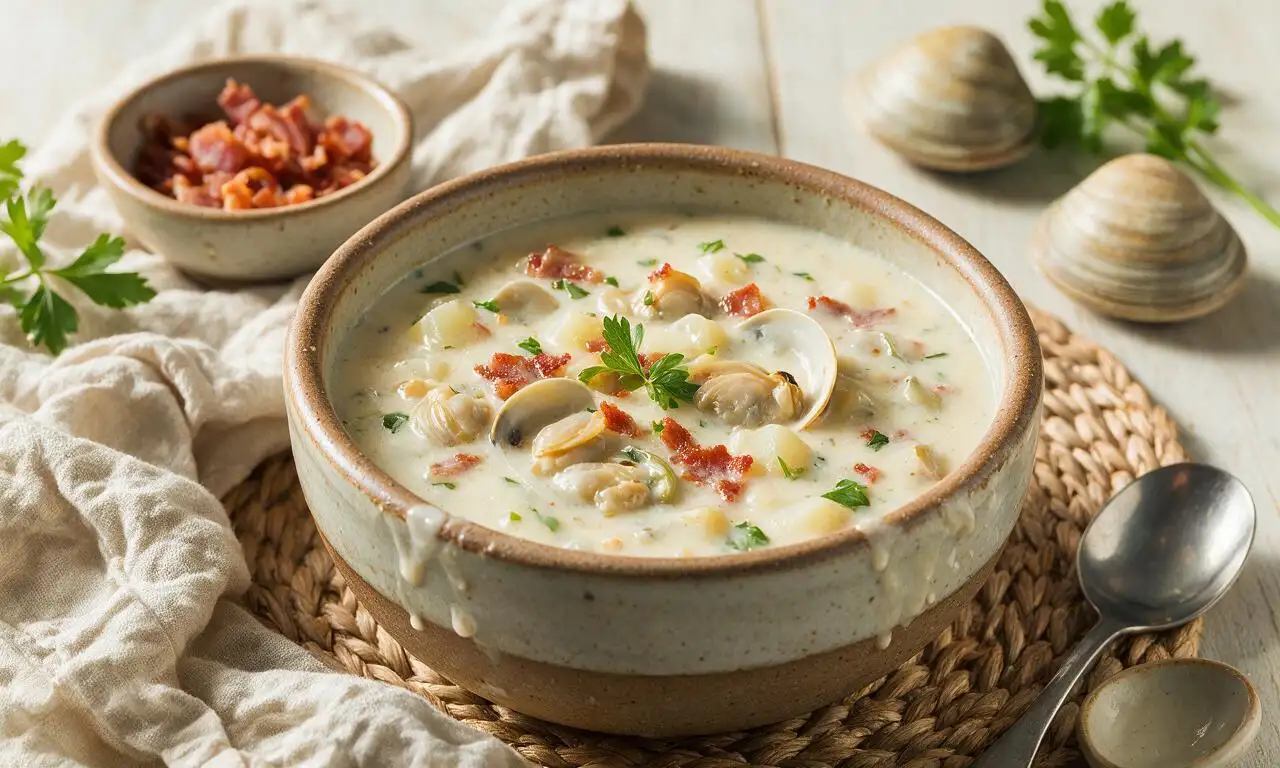
Rich, creamy, briny clam chowder loaded with tender clams, soft potatoes, and smoky bacon, a cozy cold-weather staple.

Ingredients

Littleneck clams (scrubbed, debearded) 680 grams
Thick-cut bacon (chopped) 113 grams (4 slices)
Russet potatoes (peeled, cut into 1cm dice) 340 grams
Yellow onion (finely diced) 150 grams (1 medium)
Celery (finely diced) 100 grams (2 stalks)
Garlic (minced) 10 grams (3 cloves)
Unsalted butter 28 grams (2 tablespoons)
All-purpose flour 24 grams (3 tablespoons)
Heavy cream 240 ml (1 cup)
Water (for steaming clams) 120 ml (1/2 cup)
Dried thyme 1 gram (1 teaspoon)
Bay leaf 1 whole
Kosher salt 5 grams (1 teaspoon)
Ground black pepper 1 gram (1/2 teaspoon)
Fresh flat-leaf parsley (chopped, for garnish) 8 grams (2 tablespoons)
Oyster crackers (for serving) 60 grams (1 cup)

Steps

1

Steam the fresh clams

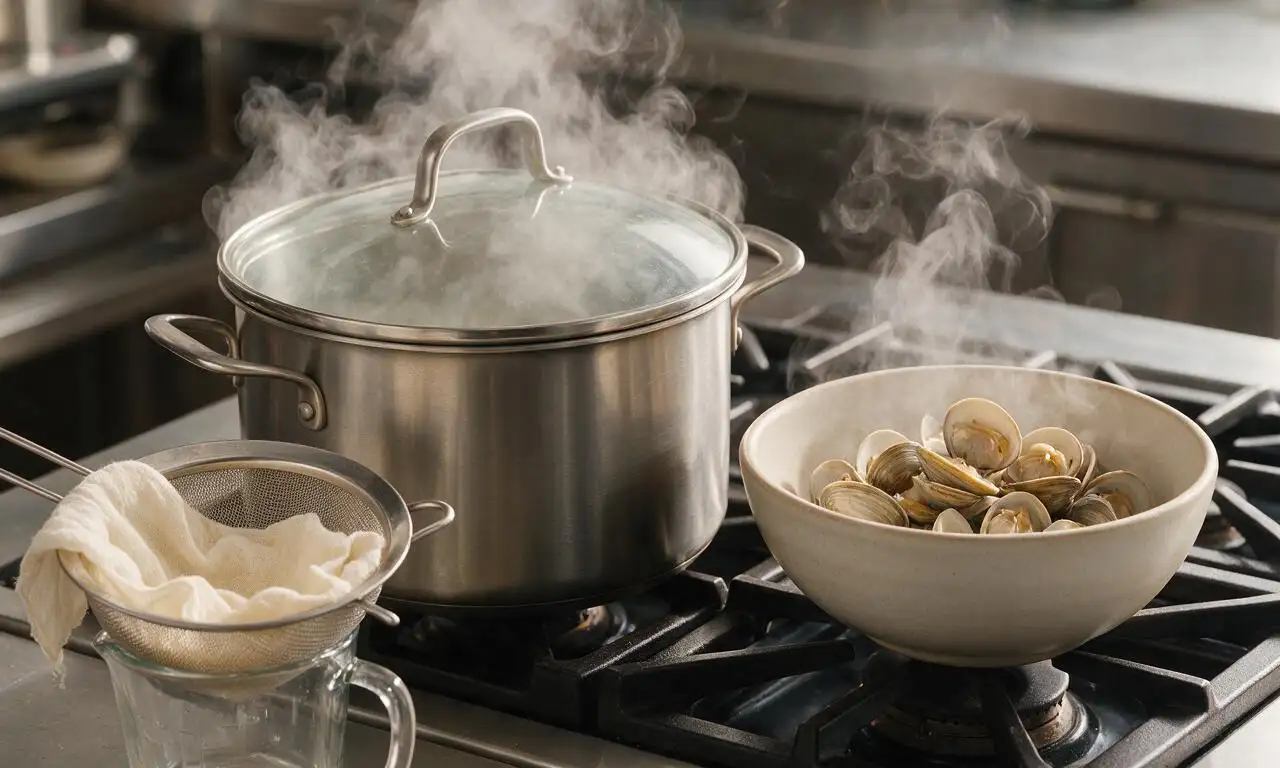
Place scrubbed, debearded 680g littleneck clams and 120ml water in a large heavy-bottomed pot over medium-high heat. Cover tightly, bring to a boil, and cook for 5-7 minutes, shaking the pot once halfway through cooking, until all clams have fully opened. Use a slotted spoon to transfer clams to a medium bowl, leaving the clam cooking liquid in the pot; discard any clams that remain closed after cooking. Let clams cool for 5 minutes, then remove meat from shells, chop into bite-sized pieces, and set aside. Strain the reserved clam liquid through a fine-mesh sieve lined with cheesecloth to remove grit, and set aside.
Step 1
step1:Steam the fresh clams
2

Cook the bacon bits

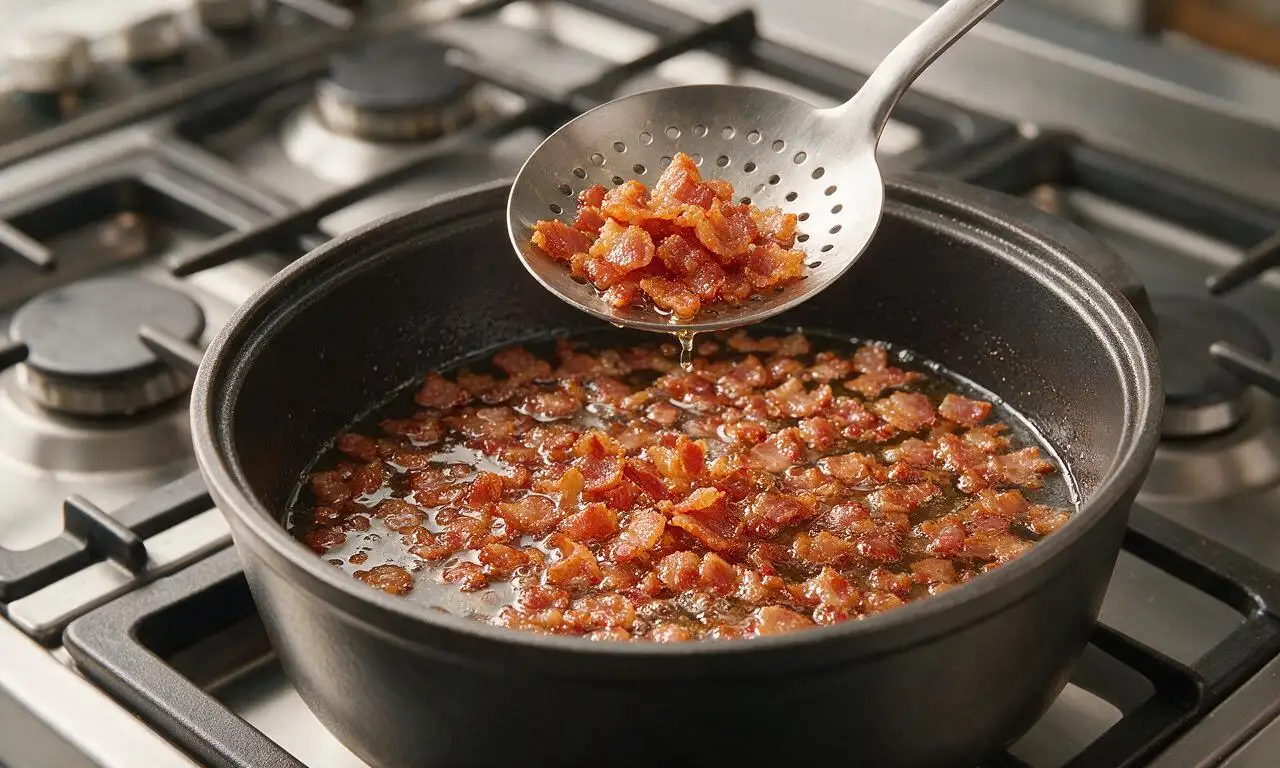
Reduce heat under the same pot to medium, add the chopped 113g thick-cut bacon. Cook for 6-8 minutes, stirring occasionally with a wooden spoon, until bacon is crisp and has rendered all its fat. Use a slotted spoon to transfer cooked bacon to a paper-towel-lined plate, leaving 2 tablespoons of bacon fat in the pot; pour off and discard any excess fat.
Step 2
step2:Cook the bacon bits
3

Sauté aromatic vegetables

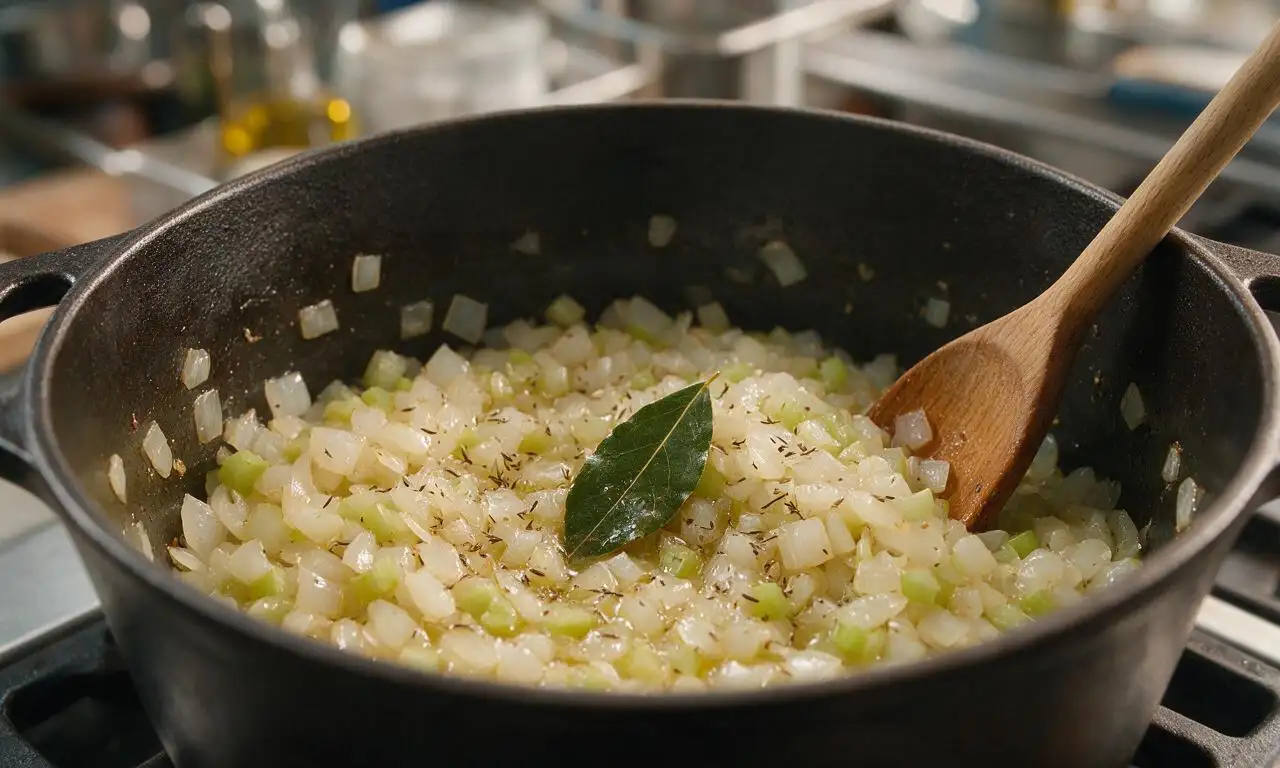
Add 28g unsalted butter to the pot with the reserved bacon fat, and melt over medium heat. Add 150g diced yellow onion and 100g diced celery, and cook for 4 minutes, stirring often, until vegetables are soft and translucent. Add 10g minced garlic, 1g dried thyme, and 1 whole bay leaf, and cook for 30 seconds until fragrant, taking care not to burn the garlic.
Step 3
step3:Sauté aromatic vegetables
4

Make the roux base

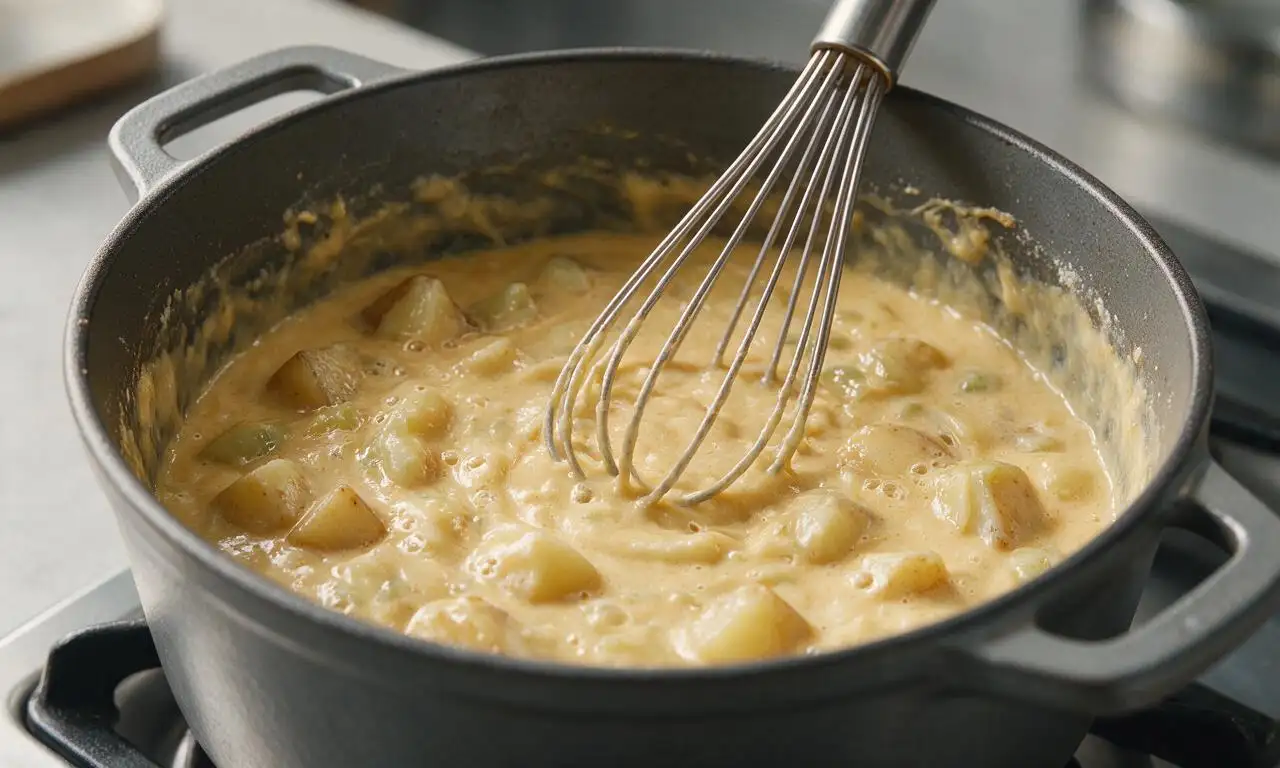
Sprinkle 24g all-purpose flour over the cooked vegetables, stir constantly to coat all vegetables evenly, and cook for 2 minutes over medium-low heat to remove the raw flour taste. Slowly pour in the reserved strained clam liquid while whisking constantly to prevent lumps from forming, then add 340g diced russet potatoes. Bring the mixture to a gentle simmer, reduce heat to low, cover, and cook for 10 minutes until potatoes are just fork-tender.
Step 4
step4:Make the roux base
5

Add cream and clams

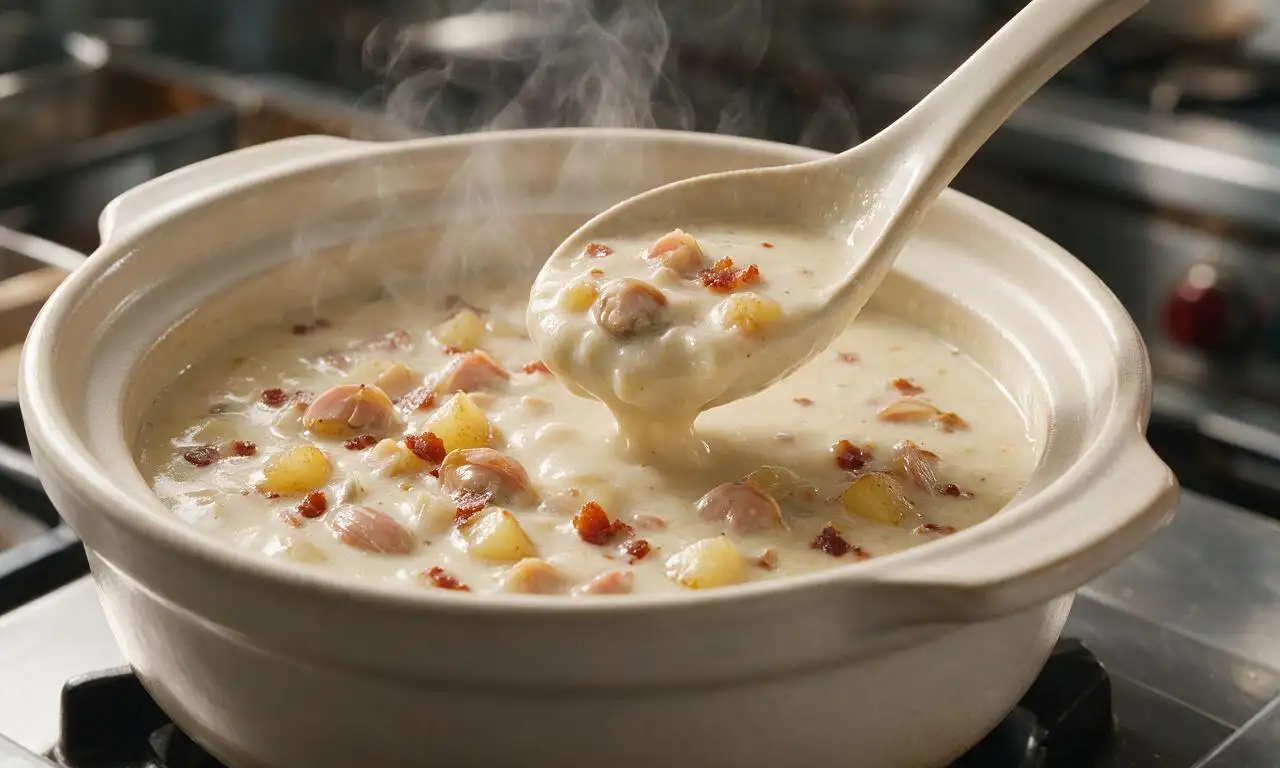
Stir in 240ml heavy cream, the reserved chopped clam meat, and half of the cooked crispy bacon. Keep the soup over low heat, and simmer for 3-4 minutes until fully heated through; do not bring to a rolling boil to prevent the cream from curdling. Season with 5g kosher salt and 1g ground black pepper, taste and adjust seasoning if needed, then remove and discard the bay leaf.
Step 5
step5:Add cream and clams
6

Garnish and serve

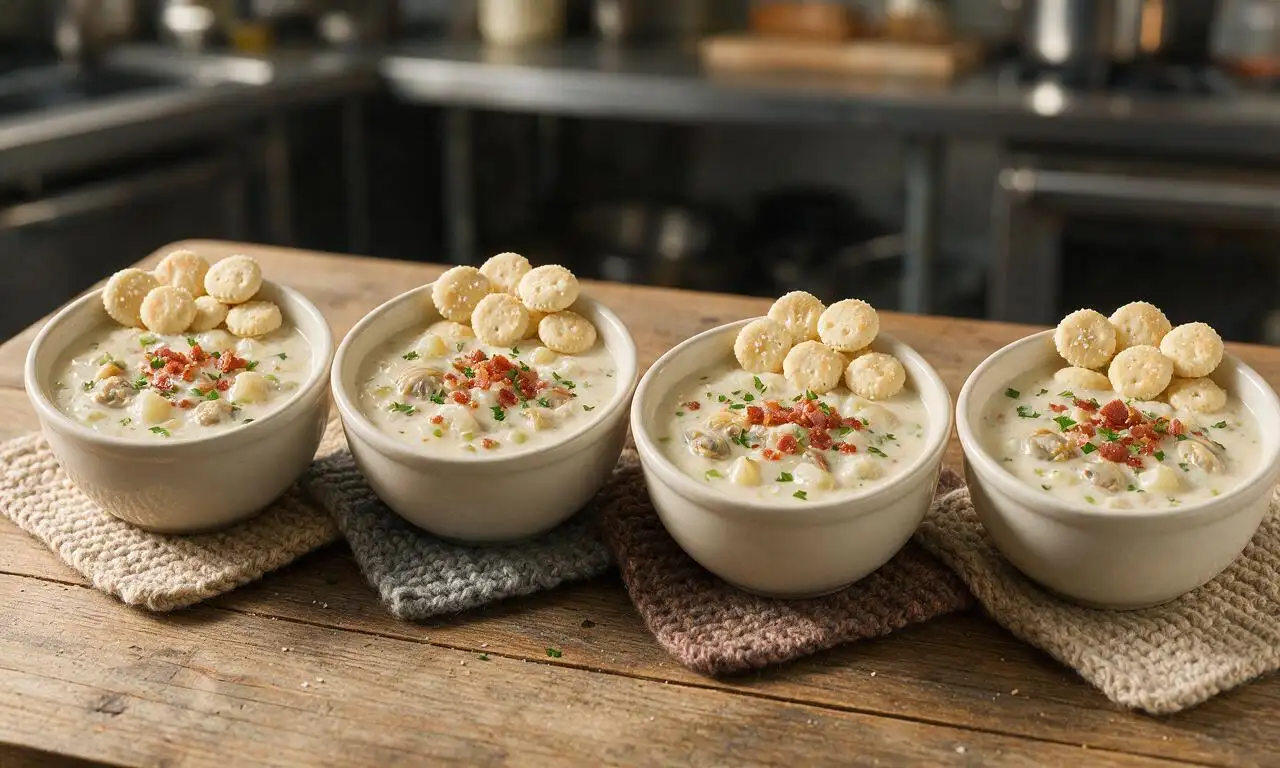
Ladle the hot chowder evenly into 4 warm soup bowls. Top each bowl with an equal portion of the remaining crispy bacon, a sprinkle of the 8g chopped fresh parsley, and serve alongside 15g (about 1/4 cup) oyster crackers per person.
Step 6
step6:Garnish and serve

Tips

1.Always discard any clams that do not open fully after steaming, as these were dead prior to cooking and are unsafe to eat.
2.Strain the reserved clam cooking liquid through cheesecloth to remove all fine sand and grit; even a small amount of grit will give your chowder an unpleasant, sandy texture.
3.Never bring the chowder to a rolling boil after adding heavy cream, as high heat will cause the dairy to curdle and create a grainy, separated texture.

✨ You May Also Like

Soups & Stews
🍜 Japan

Rich, umami-dense Hokkaido-style miso ramen with chewy noodles, savory fermented broth, and classic toppings, a cozy, deeply satisfying warm meal.

⏱️ 45 minuteSoups & Stews ★ 4.5
Soups & Stews
🍜 United States

A hearty, peppery tripe and root vegetable stew with colonial Philadelphia roots, thick, warming, and packed with bold savory flavor for cold winter days.

⏱️ 2 hours 3Soups & Stews ★ 4.6
Soups & Stews
🍜 Mexico

Hearty, warming red pork posole loaded with tender hominy, slow-simmered in a rich smoky chile broth, served with zesty fresh garnishes for a deeply comforting, satisfying meal.

⏱️ 2 hours 3Soups & Stews ★ 4.7
Soups & Stews
🍜 United States

Warm, soothing classic chicken noodle soup loaded with tender chicken, soft egg noodles, and savory veggies, perfect for chasing chills and feeding the whole family.

⏱️ 40 minuteSoups & Stews ★ 4.9
Soups & Stews
🍜 France

Deeply savory caramelized onion broth topped with crusty bread and bubbly melted Gruyère, a timeless French bistro comfort food ideal for cold days.

⏱️ 1 hour 25Soups & Stews ★ 4.8
Soups & Stews
🍜 United States

Hearty, briny Maryland crab soup loaded with sweet blue crab, tender summer vegetables, and zesty Old Bay, a beloved Chesapeake Bay coastal comfort staple.

⏱️ 55 minuteSoups & Stews ★ 4.9

Clam Chowder:Frequently Asked Questions

1.Can I use canned clams instead of fresh littleneck clams if I can’t find fresh ones? ▾
Absolutely, if fresh littlenecks aren’t available. Use three 6.5-oz cans of chopped clams, drained, and reserve all the bottled clam juice to replace the fresh clam steaming liquid. Skip the initial clam steaming step, and add the canned clams during the last 5 minutes of cooking to keep them tender, not rubbery.
2.Why does this recipe call for thick-cut bacon instead of thin-cut? ▾
Thick-cut bacon renders slow-cooked, smoky fat that builds the rich flavor base for your sautéed aromatics, and its chewy, substantial bits hold up far better in creamy soup than thin, crispy bacon crumbles that turn soggy quickly. Chop it into uniform ½cm pieces for even rendering.
3.Why use russet potatoes cut into a 1cm dice specifically? ▾
Russet potatoes have the perfect starchy, fluffy texture that breaks down slightly as it simmers, helping naturally thicken the chowder without extra roux. A 1cm dice cooks in 10–12 minutes, stays tender but not mushy, and is the ideal bite size to pair with clams and bacon.
4.My littleneck clams are sandy even after scrubbing—how do I get all the grit out? ▾
Soak scrubbed, debearded littlenecks in a bowl of cold salted water (1/3 cup kosher salt per gallon of water) for 20–30 minutes before cooking. The clams will spit out trapped sand as they filter the water. Skip adding cornmeal—it leaves a starchy residue with no real grit-removing benefit.
5.How do I keep the chowder from curdling once I add the cream? ▾
Curdling happens when dairy is exposed to high, direct heat. After simmering your potato, aromatic, and clam base, turn the heat to low before stirring in cream, and never let the chowder come to a rolling boil once dairy is added. Occasional gentle stirring will keep the texture smooth and silky.
6.Can I make this chowder ahead of time for a dinner party? ▾
Yes, it actually tastes better the next day! Cook the chowder base fully without adding cream, let it cool completely, then refrigerate for up to 3 days. When ready to serve, reheat the base gently over low heat, stir in cream and clams, and warm through just until hot to avoid curdling or rubbery shellfish.
7.What should I do with clams that don’t open after steaming? ▾
Discard any clams that stay fully closed after 8–10 minutes of covered steaming, no exceptions. These clams were dead before cooking, and can harbor harmful bacteria that won’t be killed by simmering. Don’t pry them open to eat the meat inside—it’s not worth the foodborne illness risk.
8.I don’t eat pork—what’s a good substitute for the thick-cut bacon? ▾
Swap the bacon for 4 tablespoons of unsalted butter plus ½ teaspoon of smoked paprika to replicate that rich, smoky base note. For a similar chewy, savory bite, add ½ cup of diced smoked shiitake mushrooms when you sauté the onion and celery for extra textural contrast.
9.My chowder turned out too thin—how can I thicken it without making it gluey? ▾
First, let it simmer uncovered for 5–7 minutes to let liquid evaporate and let starchy russet potatoes release more of their natural thickening starch. If it’s still too thin, stir in a slurry of 1 tablespoon cornstarch mixed with 2 tablespoons cold clam juice, then simmer 2 minutes.
10.Why do you recommend finely diced yellow onion and celery instead of larger chunks? ▾
Finely diced (roughly 5mm) onion and celery melt into the chowder base as they sauté and simmer, building deep, aromatic flavor without big, crunchy vegetable chunks that distract from the tender clams, soft potato, and smoky bacon. It creates a more balanced, cohesive bite.
11.What are the best classic toppings to serve with this chowder? ▾
Stick to traditional New England pairings: oyster crackers for a salty, crunchy contrast, a light sprinkle of fresh chopped thyme or flat-leaf parsley, a pinch of freshly cracked black pepper, and an optional tiny pat of butter to melt on top. Skip heavy toppings like cheese that overpower briny clam flavor.
12.How long will leftover chowder stay fresh, and can I freeze it? ▾
Stored in an airtight container, fully assembled chowder will stay fresh in the fridge for 3–4 days. I don’t recommend freezing it, though—the cream will separate and turn grainy when thawed, and potatoes and clams will turn mushy and rubbery respectively. It’s best kept refrigerated, not frozen.
13.Should I use light cream, half-and-half, or heavy cream for the best texture? ▾
Reach for heavy cream (36% milkfat) for that signature luxuriously thick, velvety New England chowder texture. Half-and-half works for a lighter version, but it’s more prone to curdling if overheated. Skip light cream entirely—it’s too watery to stand up to briny clam and smoky bacon flavors.
14.Why did my clams turn tough and rubbery the last time I made chowder? ▾
Clams get rubbery almost exclusively from overcooking, when left to simmer too long in hot soup. Steam fresh clams just until their shells pop open, remove them from heat right away, chop the meat, and stir it back into the chowder during the last 2–3 minutes of cooking only to warm through, not boil.

Comments (7)

3 days ago

OMG this chowder is SO good! I made it for our Sunday family dinner last night and even my super picky 8 year old asked for seconds. I used fresh little neck clams from the fish market down the road instead of canned and it was chef’s kiss. Only thing I adjusted was adding a tiny extra pinch of Old Bay, total game changer. Will absolutely be making this for our next neighborhood potluck!

2 days ago

Wait how many clams did you use for fresh? I only ever use canned and I’m nervous to switch!

yesterday

Such a great call adding extra Old Bay, that’s one of my favorite little swaps too! If using fresh little necks, aim for about 2 pounds scrubbed clean — steam them first in a little white wine and garlic, then chop the meat and save the broth to add to the chowder for extra depth. So glad your kiddo loved it!

5 days ago

Tried this for meal prep this week and it held up so much better than I thought creamy soups usually do! Cook time was right on 45 minutes for me, even with chopping all the potatoes and celery. Medium difficulty feels accurate too — I’m a pretty casual home cook and I didn’t mess anything up, ha. Only note is I’d go easy on the salt if you’re using canned clams, the brine adds a lot!

3 days ago

Great tip about the salt, Lizzy! Canned clam brine varies a lot by brand, so it’s always smart to taste and adjust at the end instead of salting early. Thrilled the chowder worked for your meal prep — it’s one of my go-tos for busy work weeks too!

yesterday

Made this for my buddies during our football watch party yesterday and every last drop was gone. Super hearty, not thin and watery like a lot of clam chowder recipes I’ve tried before. My wife said it tastes just like the stuff we got on our trip to Cape Cod last summer. 10/10 will make again.

1 week ago

This recipe looks so delicious, I can already tell it’s going to be a new favorite! Quick question though: has anyone tried making this dairy free? I’m lactose intolerant but New England clam chowder is my absolute favorite comfort food and I’ve been searching for a good base recipe to tweak. I’m thinking oat milk and a little cashew cream to keep it thick?

5 days ago

I made it with full fat oat milk last week and it was great! I added a tiny bit of cornstarch slurry to thicken it up so it didn’t get thin, didn’t miss the heavy cream at all!

3 days ago

Love this swap! For a dairy free version, I recommend using canned full fat coconut milk (the thick kind from the top of the can, shaken well) or the cashew cream you mentioned for the richest texture — just skip adding extra salt until you taste it, since some plant milks have added salt. Hope you love it!

2 weeks ago

My kids loved it! I was worried the clam flavor would be too strong for them but the creamy potato and bacon base mellowed it out perfectly. I served it in sourdough bread bowls like we get at the restaurant downtown and they thought I was a total rockstar at dinner time. So worth the 45 minutes of cook time, way better than the canned soup I usually rely on on busy weeknights.

1 week ago

Oh the sourdough bowl idea is genius! I’ve been making my own sourdough loaves lately and I’m totally stealing this for our next soup night. Thanks for the inspo!

1 week ago

Solid recipe, but I had a little trouble getting the roux right the first time — it got a little lumpy when I added the milk, probably because I had the heat too high. Ended up using my immersion blender for 2 seconds to smooth it out and it turned out great anyway, no one noticed a thing. Don’t let a lumpy roux scare you off, this recipe is forgiving!

5 days ago

Great troubleshooting tip, Rob! The roux can get lumpy if the milk is added too fast or the heat is too high — I recommend warming the milk slightly before adding it to the roux, and whisking constantly as you pour, to avoid lumps. So glad you were able to save it with the immersion blender, that’s such a handy trick!

30 minutes ago

Brought this to my office potluck last week and people were coming up to me for the recipe for days! I added a little extra crispy bacon on top as a garnish and it was the perfect salty, crunchy touch. Will absolutely be adding this to my regular rotation of cold weather soups. SO good, even better the second day after the flavors meld in the fridge.