Classic American Beef Stew

Classic American Beef Stew
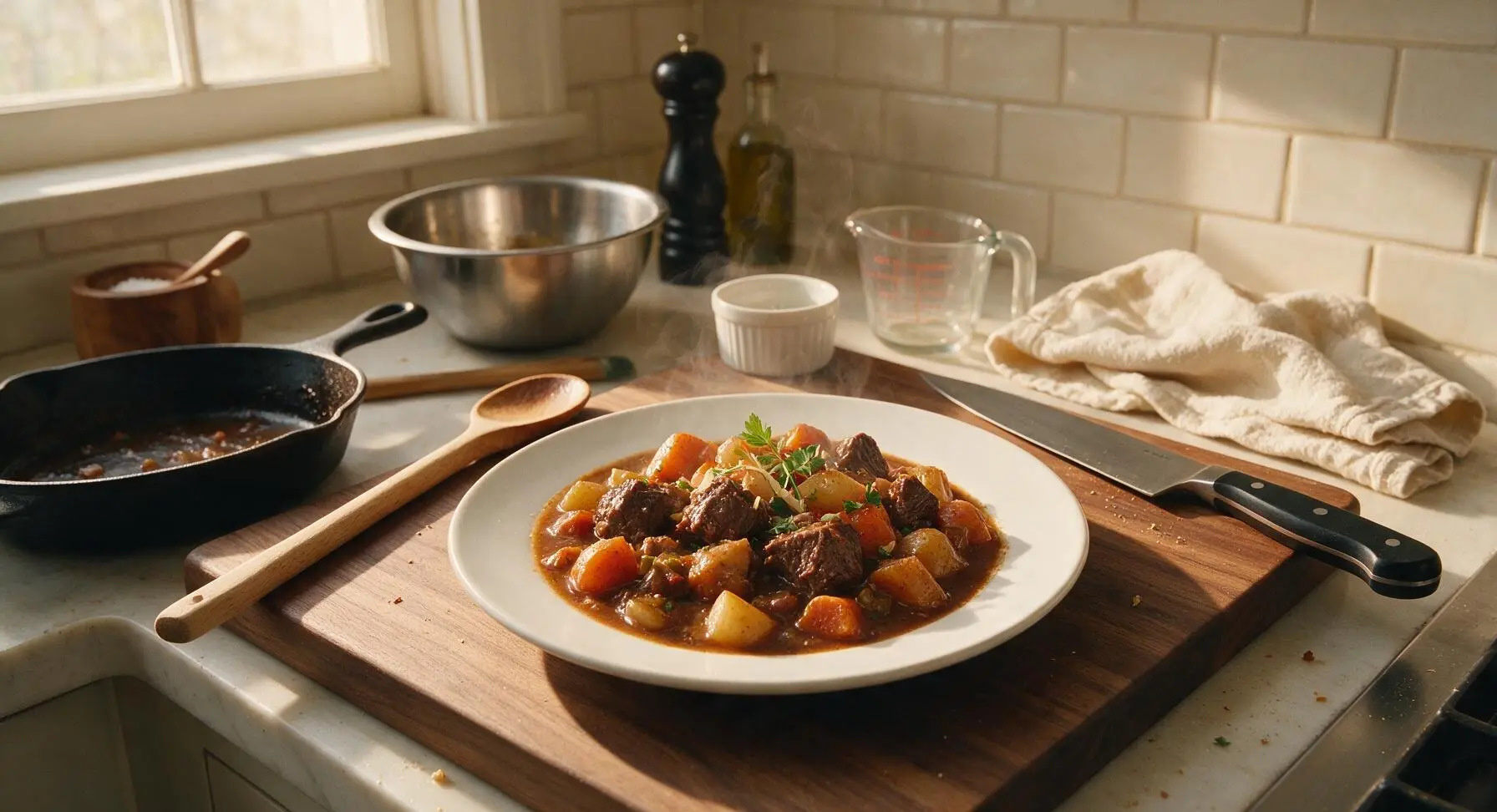
⏱️ cook time 2 hours 10 minutes
🍽️ servings 6
⚡ Difficulty medium

intro

Tender slow-simmered beef, hearty root vegetables, and rich savory gravy come together in this iconic cold-weather comfort food, made for gathering with family around the dinner table.

Ingredients
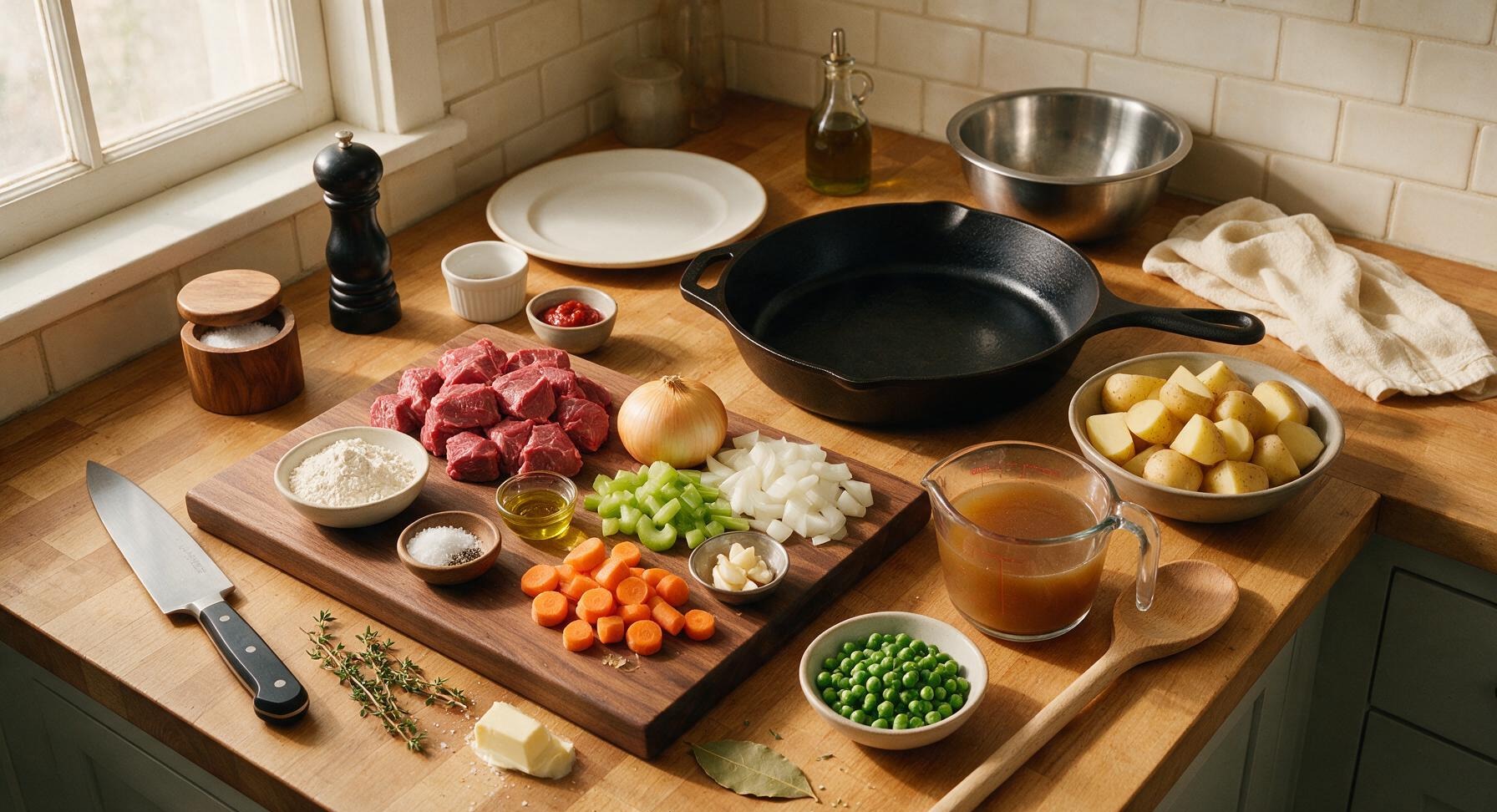
Beef chuck roast (trimmed, cut into 3cm cubes) 900g (2 lbs)
All-purpose flour 3 tablespoons
Kosher salt 1.5 teaspoons
Freshly ground black pepper 1 teaspoon
Extra-virgin olive oil 2 tablespoons
Unsalted butter 1 tablespoon
Yellow onion (diced 2cm) 1 large (200g)
Celery stalks (sliced 1.5cm) 2 stalks (120g)
Carrots (peeled, cut into 2cm rounds) 3 medium (180g)
Garlic cloves (minced) 3 cloves (15g)
Tomato paste 2 tablespoons
Low-sodium beef broth 4 cups (960ml)
Yukon gold potatoes (peeled, cut into 4cm cubes) 3 medium (450g)
Fresh thyme sprigs 4 sprigs
Bay leaf 1 whole
Frozen green peas 1/2 cup (75g)

Steps

1

Prep Beef and Veggies

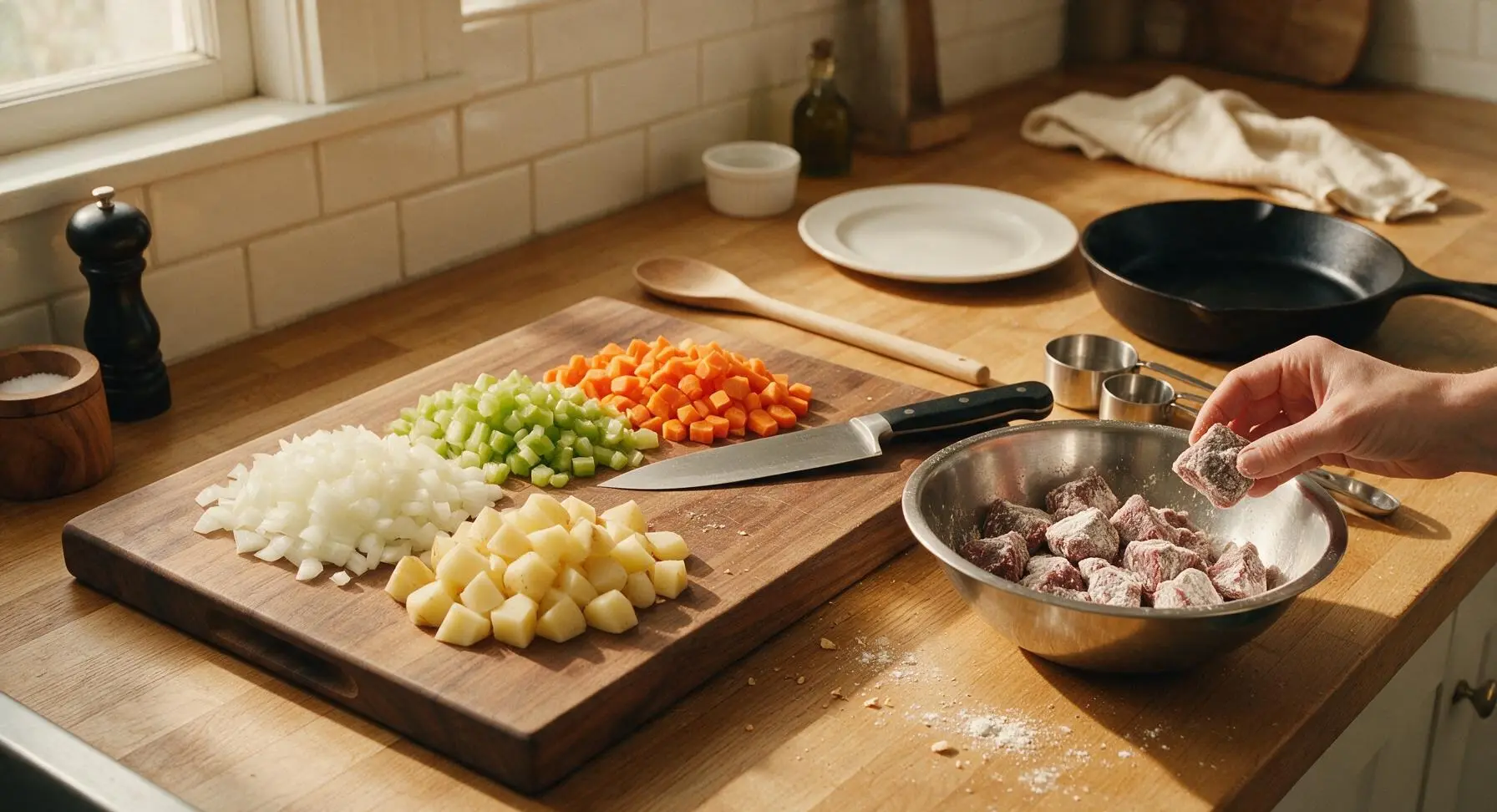
Pat the 900g (2lb) cubed beef chuck completely dry with paper towels, then add to the medium stainless steel mixing bowl with 3 tablespoons all-purpose flour, 1 teaspoon kosher salt, and 1/2 teaspoon freshly ground black pepper. Toss until every beef cube is coated in a thin, even layer of flour. While the beef rests, peel and chop the onion, carrots, celery, and potatoes to the measured sizes, mince the garlic, and portion each prepped vegetable into separate small ramekins for easy access during cooking.
Step 1
step1:Prep Beef and Veggies
2

Sear Beef Until Browned

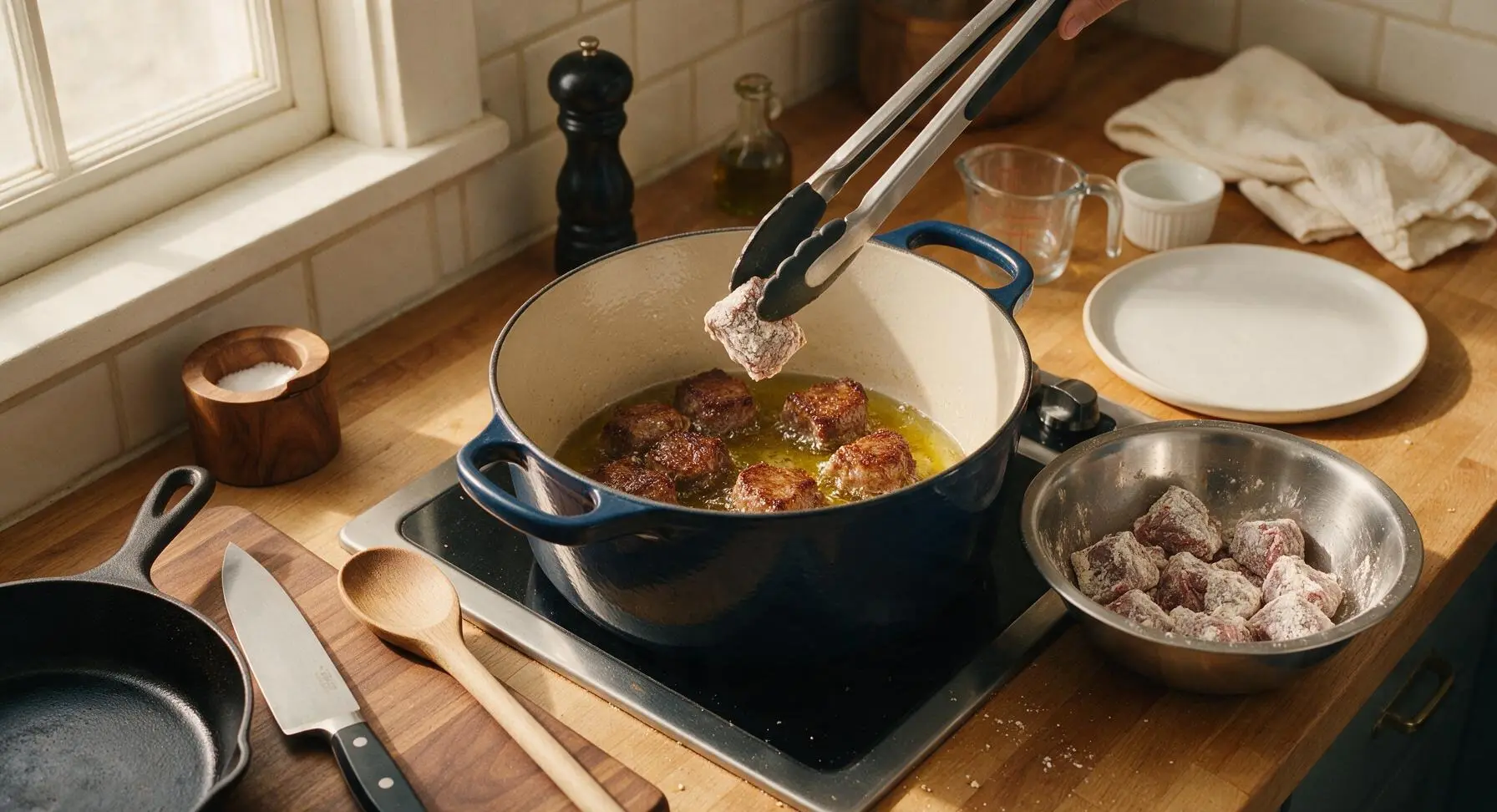
Place the 6-quart navy enameled cast iron Dutch oven on the center of the counter stovetop area, heat 2 tablespoons olive oil over medium-high heat until the oil shimmers (approximately 175C/350F). Working in 2 separate batches to avoid crowding the pan (which causes steaming instead of browning), use the silicone-tipped stainless steel tongs to arrange floured beef cubes in a single layer in the hot oil. Sear for 3-4 minutes per side until the cubes develop a deep golden-brown crust on all surfaces. Transfer seared beef to a clean plate and set aside, repeating with the second batch.
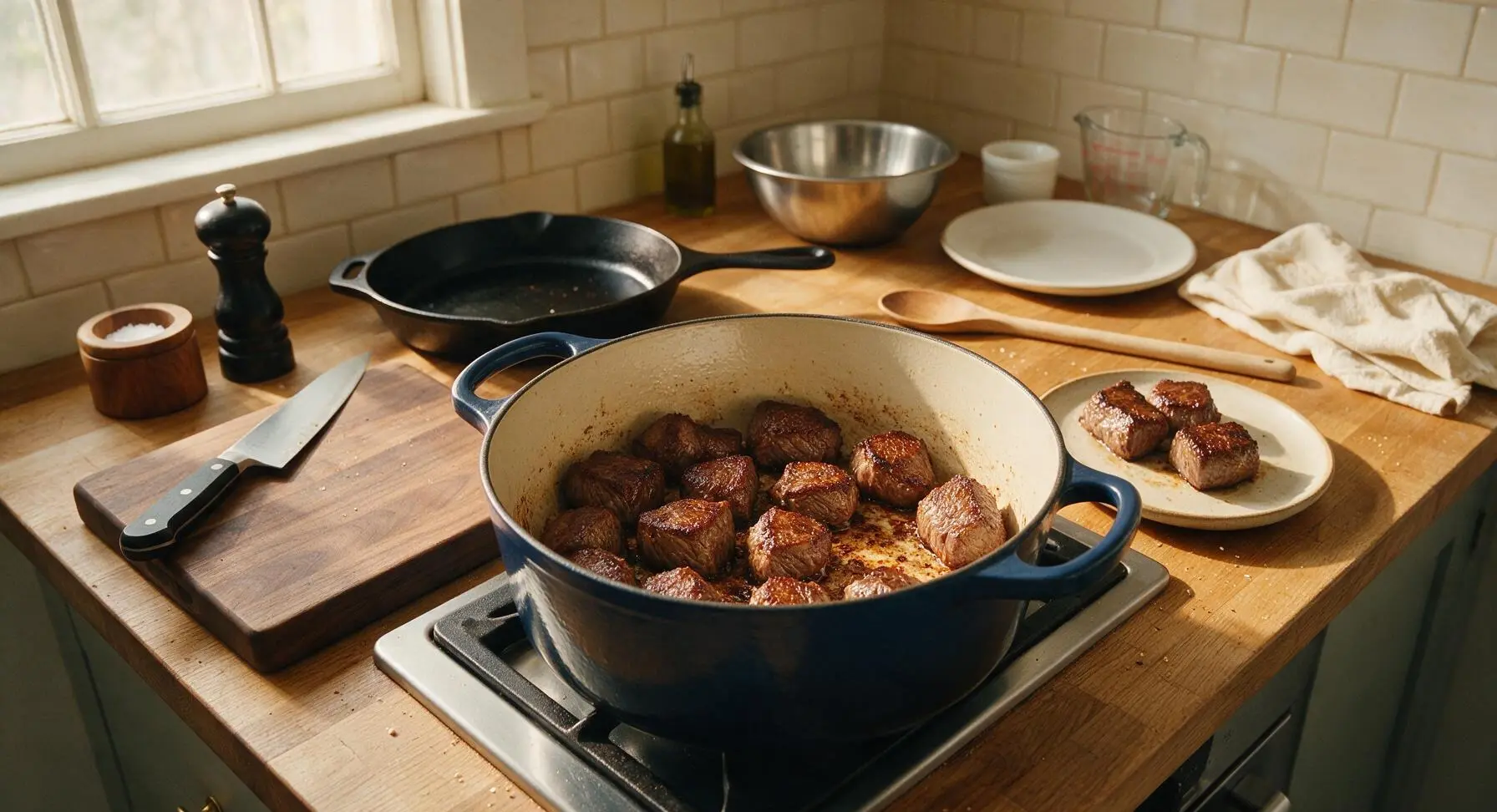
Step 2
step2:Sear Beef Until Browned
Step 2
step2:Sear Beef Until Browned
3

Sauté Aromatic Vegetables

Reduce stovetop heat to medium, add 1 tablespoon unsalted butter to the Dutch oven with the remaining beef drippings and fond. Add diced onion, celery, and carrot to the pot, sautéing for 5 minutes while stirring occasionally with the slotted beech wood spoon, until the onion turns translucent and vegetable edges begin to soften. Add minced garlic and 2 tablespoons tomato paste, cooking for 1 additional minute, stirring constantly, until the tomato paste darkens to a deep rust red and releases a rich, sweet aroma.
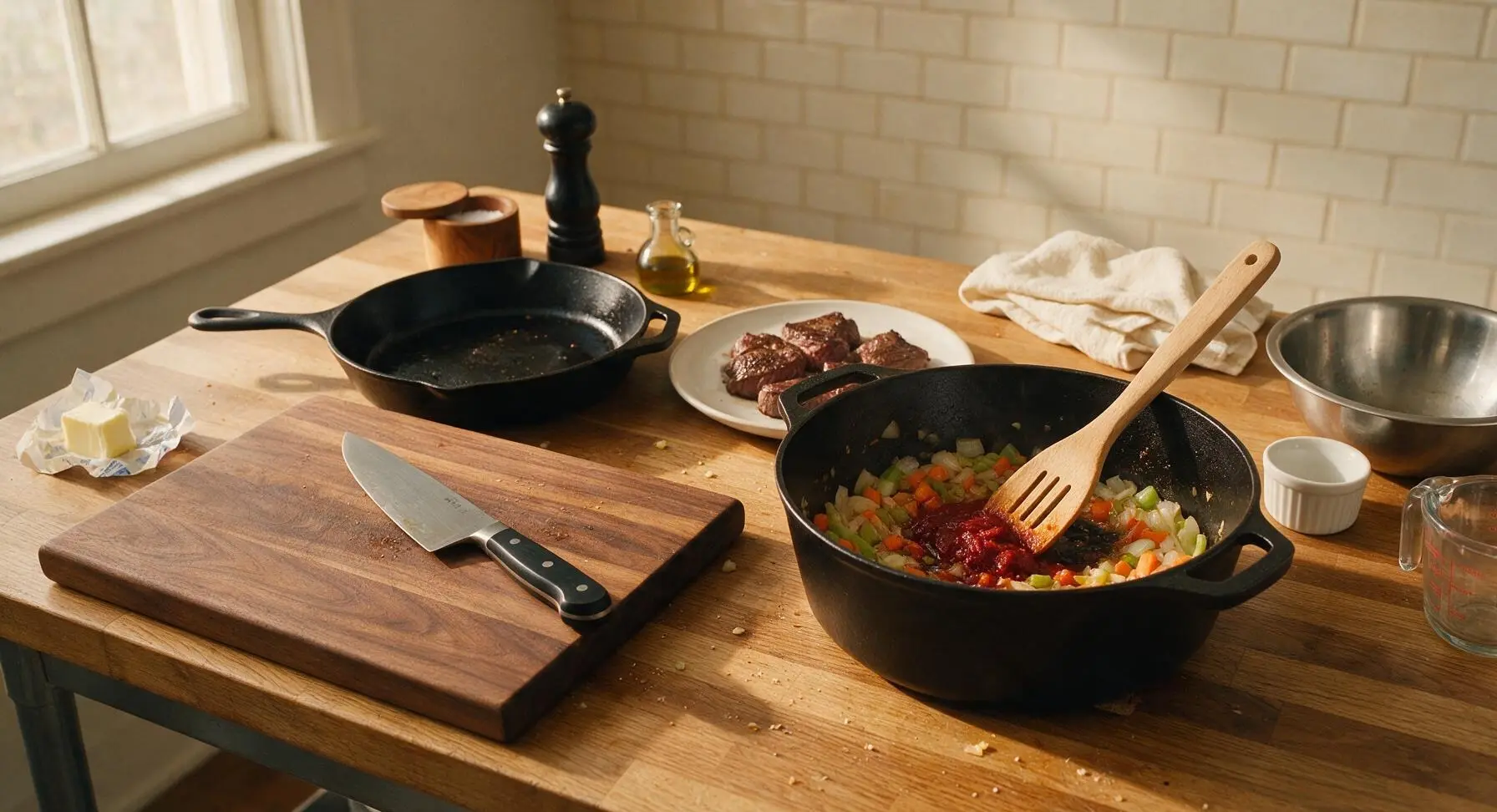
Step 3
step3:Sauté Aromatic Vegetables
4

Deglaze and Build Broth

Pour 1 cup of beef broth into the Dutch oven, using the wooden spoon to firmly scrape all browned fond bits from the pan bottom (these bits carry immense depth of flavor). Add the remaining 3 cups of beef broth, the reserved seared beef cubes (and any collected juices from the plate), 4 sprigs of fresh thyme, and 1 whole bay leaf. Stir gently to combine, then bring the liquid to a gentle simmer, where small bubbles break slowly at the surface (approximately 93C/200F); avoid a rolling boil.
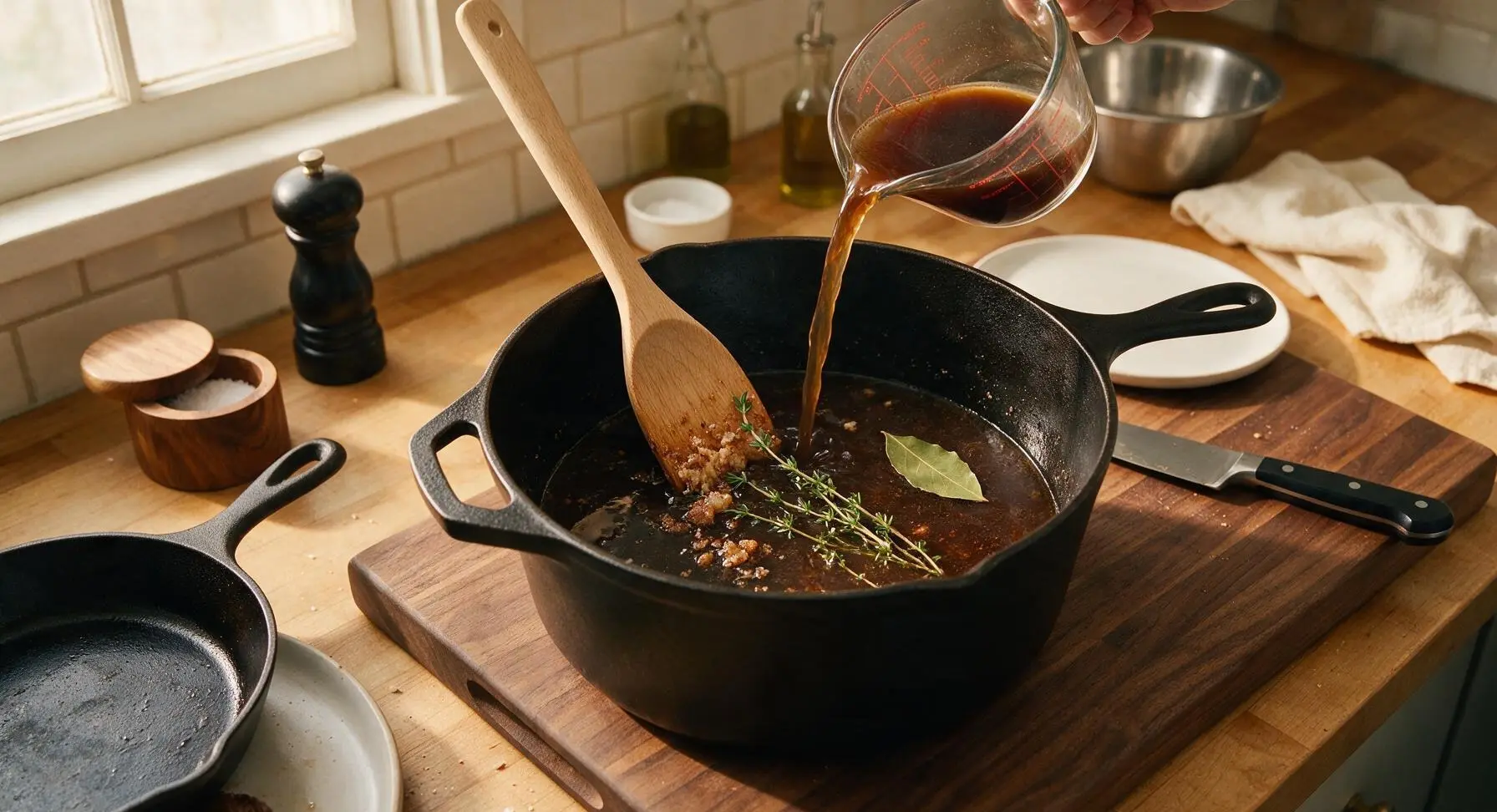
Step 4
step4:Deglaze and Build Broth
5

Slow Simmer Beef

Reduce heat to low, cover the Dutch oven with its tight-fitting lid, and let the beef simmer gently for 1 hour 15 minutes, stirring once every 20 minutes to prevent sticking. At the end of this time, the beef should be nearly fork-tender, offering slight resistance when pierced but no longer tough. Adjust heat as needed to maintain the gentle simmer, as a hard boil will make the beef stringy and tough.
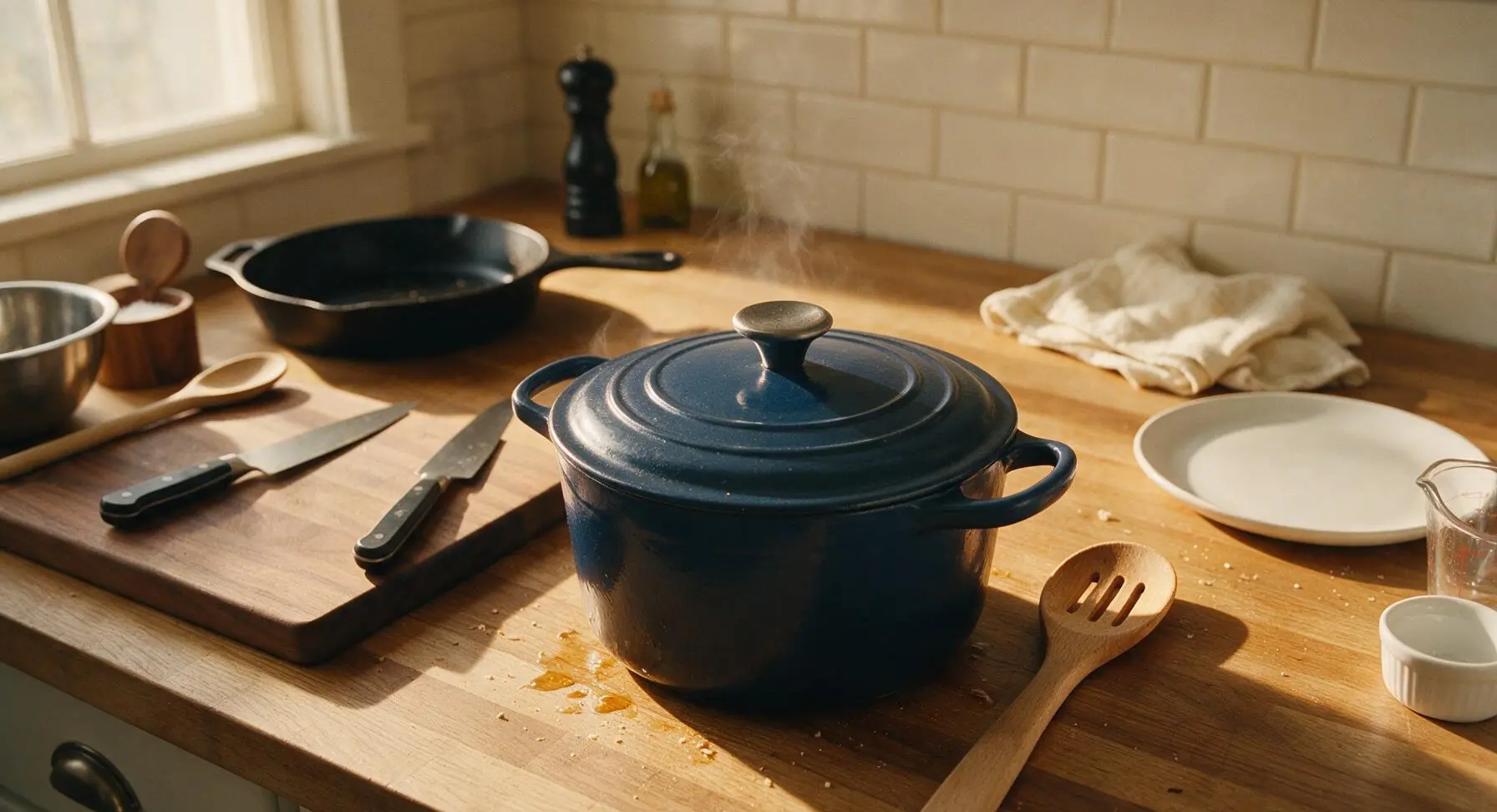
Step 5
step5:Slow Simmer Beef
6

Add Potatoes and Simmer

Remove the Dutch oven lid, add the cubed Yukon gold potatoes to the stew, stirring gently with the wooden spoon to fully submerge the potato cubes in the simmering liquid. Replace the lid and continue simmering for an additional 25 minutes, until the potatoes are tender when pierced with a fork, and the beef is fully fork-tender, shredding slightly when pressed.
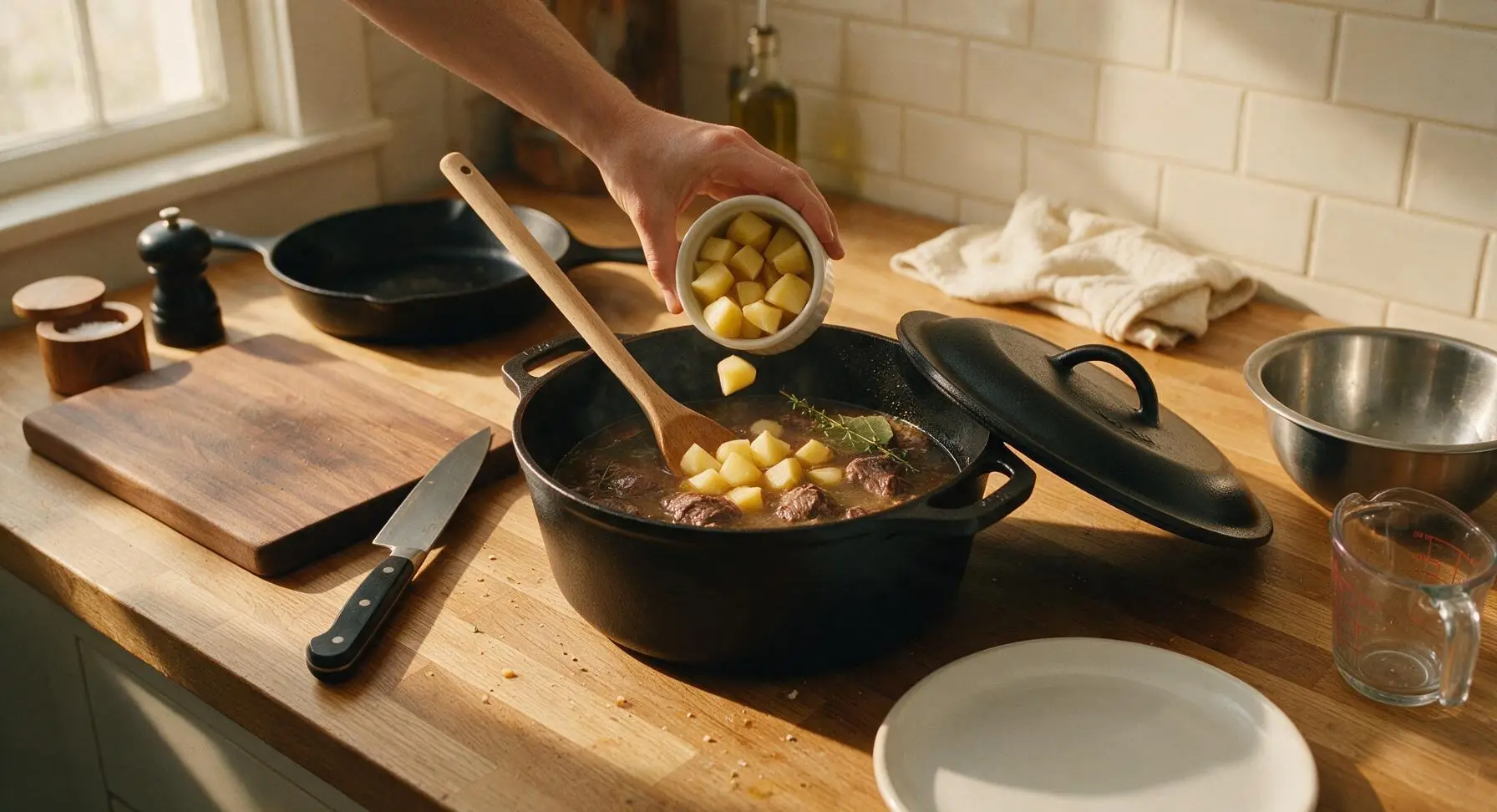
Step 6
step6:Add Potatoes and Simmer
7

Finish Stew and Season

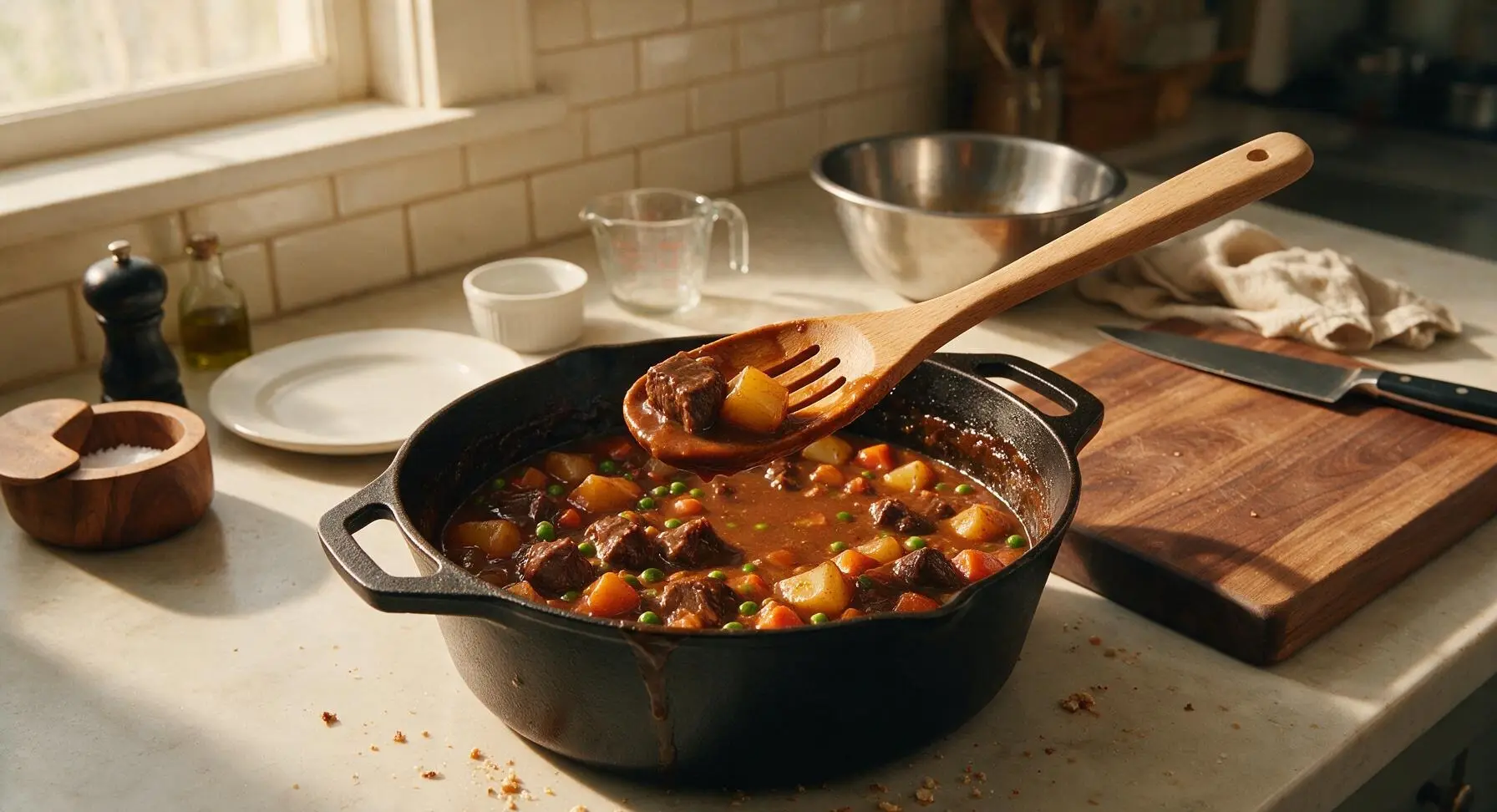
Remove the lid, stir in the 1/2 cup frozen green peas, and let the stew simmer uncovered for 5 minutes, allowing the gravy to thicken slightly. Fish out the woody thyme stems and the bay leaf with the tongs, then taste and season with the remaining 1/2 teaspoon kosher salt and 1/2 teaspoon black pepper as needed. The finished gravy will be thick enough to coat the back of the wooden spoon without running off quickly.
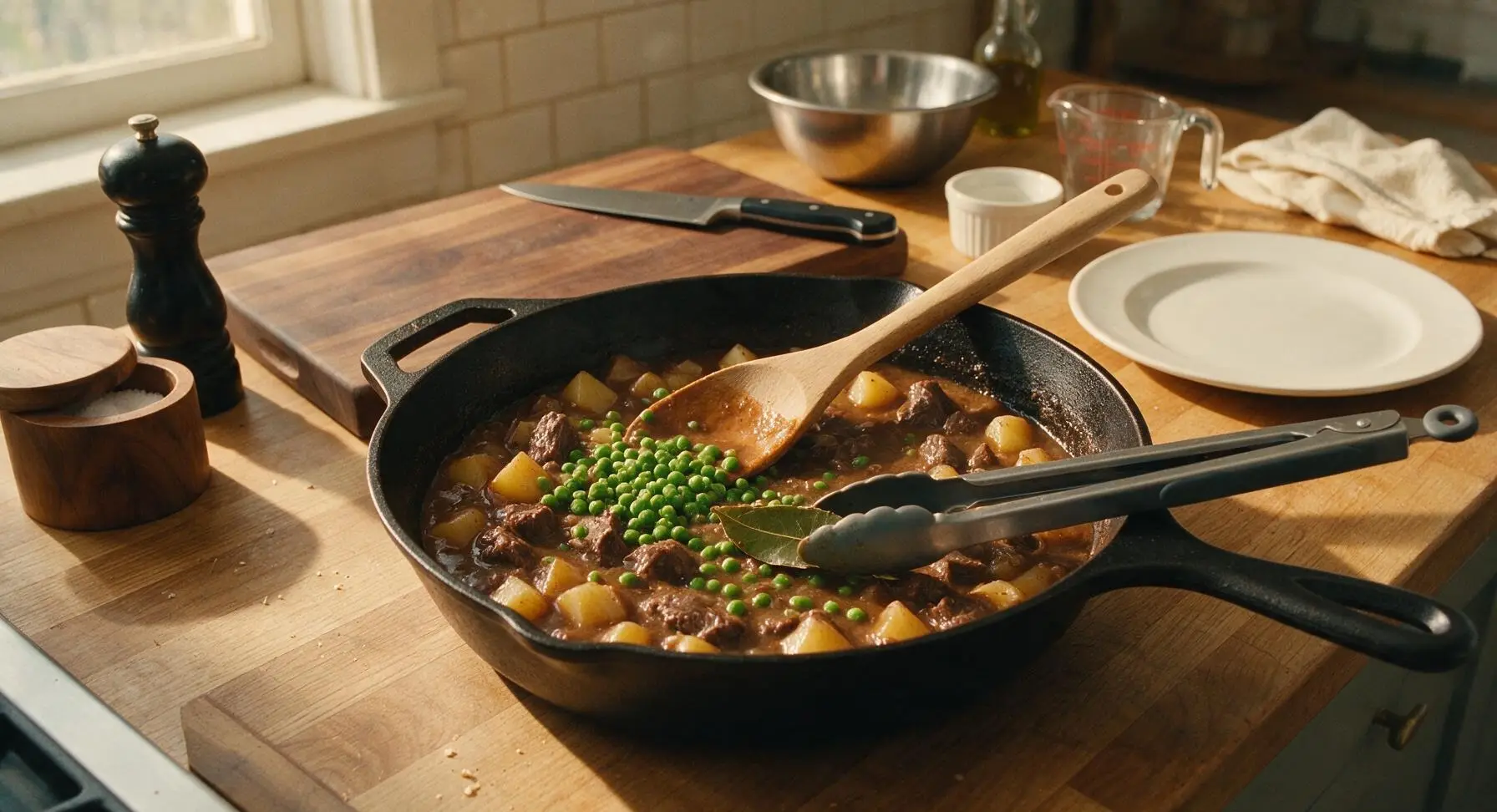
Step 7
step7:Finish Stew and Season
Step 7
step7:Finish Stew and Season

Tips

1.Always pat beef dry and sear in batches: Wet beef or an overcrowded pan will cause steaming instead of browning, and that deep, caramelized sear is the foundation of rich, complex stew flavor, rather than a flat, watery broth.
2.Choose Yukon Gold potatoes over starchy russets: Yukon Golds hold their shape perfectly through long simmering without turning mushy, and their creamy texture creates a smooth, velvety gravy without making the broth cloudy.
3.Skip the extra thickener: The thin flour coating on the seared beef slowly releases into the broth as it simmers, creating a perfectly thick, silky gravy without the need for a last-minute cornstarch slurry or separate roux.

✨ You May Also Like

Soups & Stews
🍜 Japan

Rich, umami-dense Hokkaido-style miso ramen with chewy noodles, savory fermented broth, and classic toppings, a cozy, deeply satisfying warm meal.

⏱️ 45 minuteSoups & Stews ★ 4.5
Soups & Stews
🍜 United States

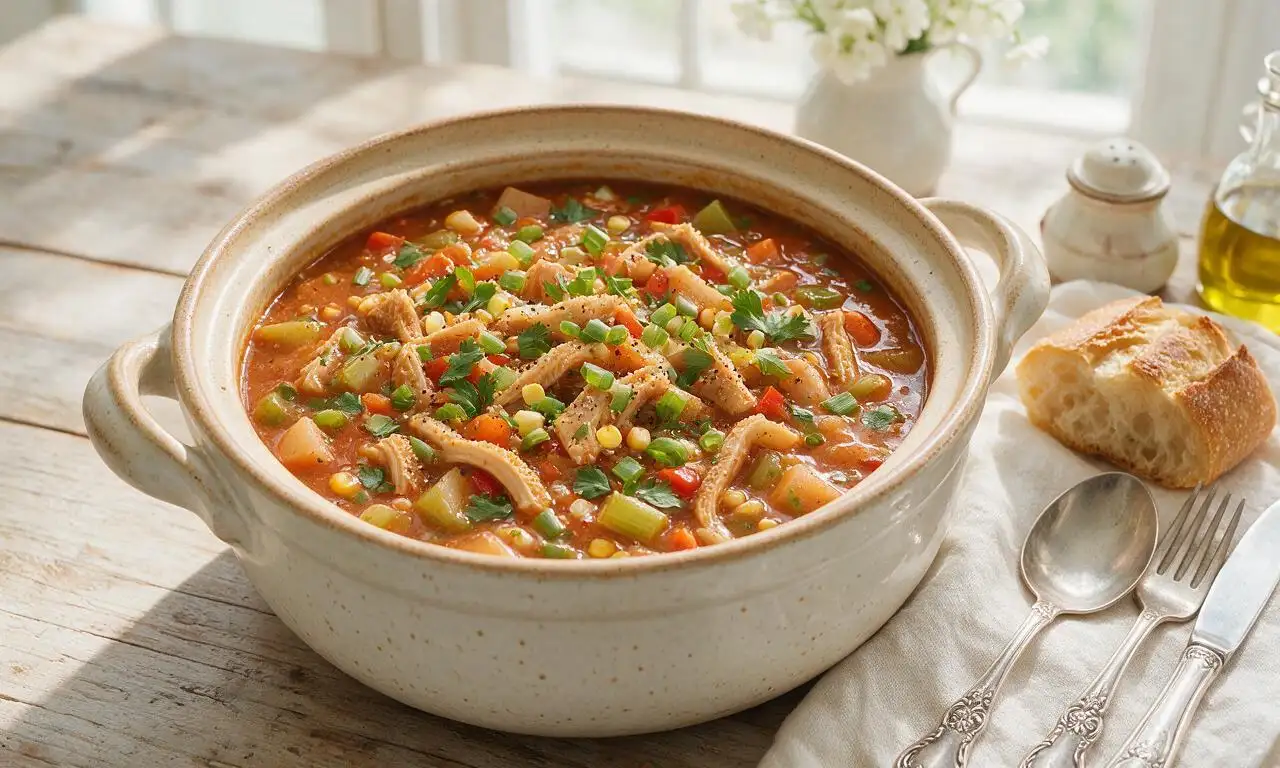
A hearty, peppery tripe and root vegetable stew with colonial Philadelphia roots, thick, warming, and packed with bold savory flavor for cold winter days.

⏱️ 2 hours 3Soups & Stews ★ 4.6
Soups & Stews
🍜 Mexico

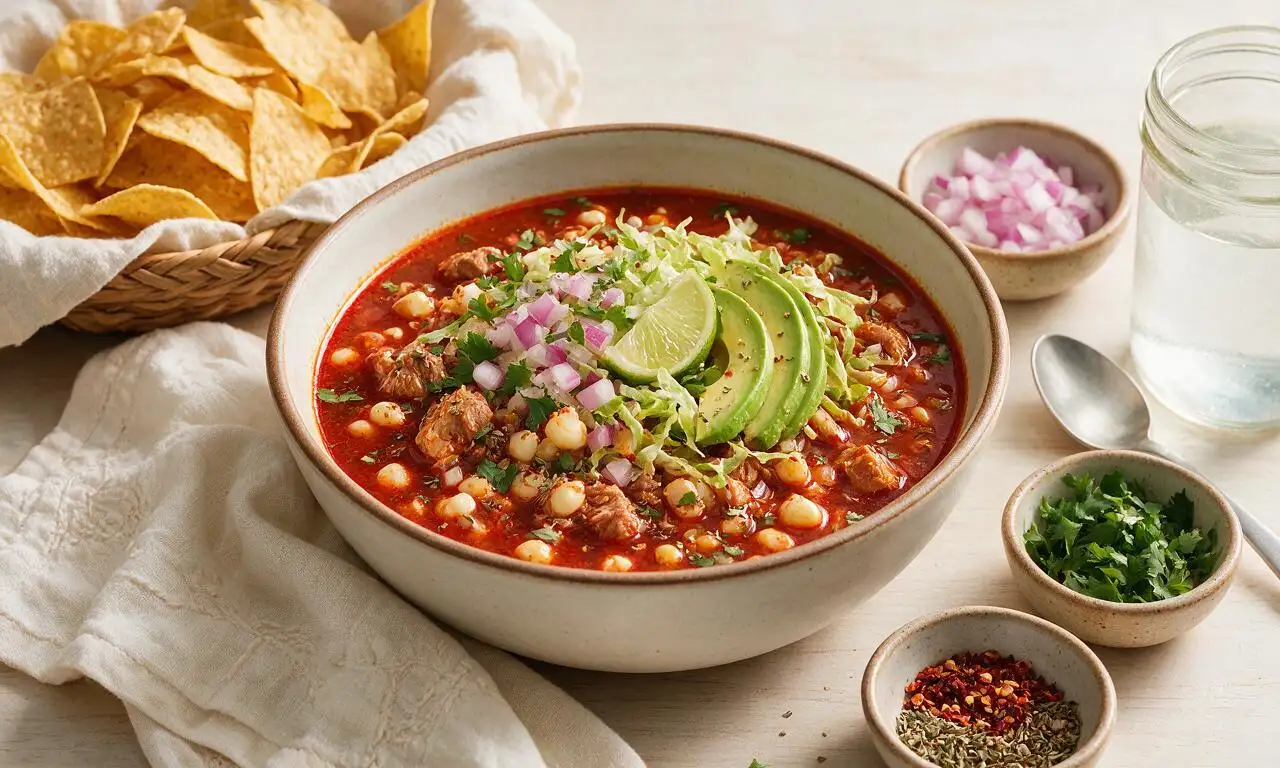
Hearty, warming red pork posole loaded with tender hominy, slow-simmered in a rich smoky chile broth, served with zesty fresh garnishes for a deeply comforting, satisfying meal.

⏱️ 2 hours 3Soups & Stews ★ 4.7
Soups & Stews
🍜 United States

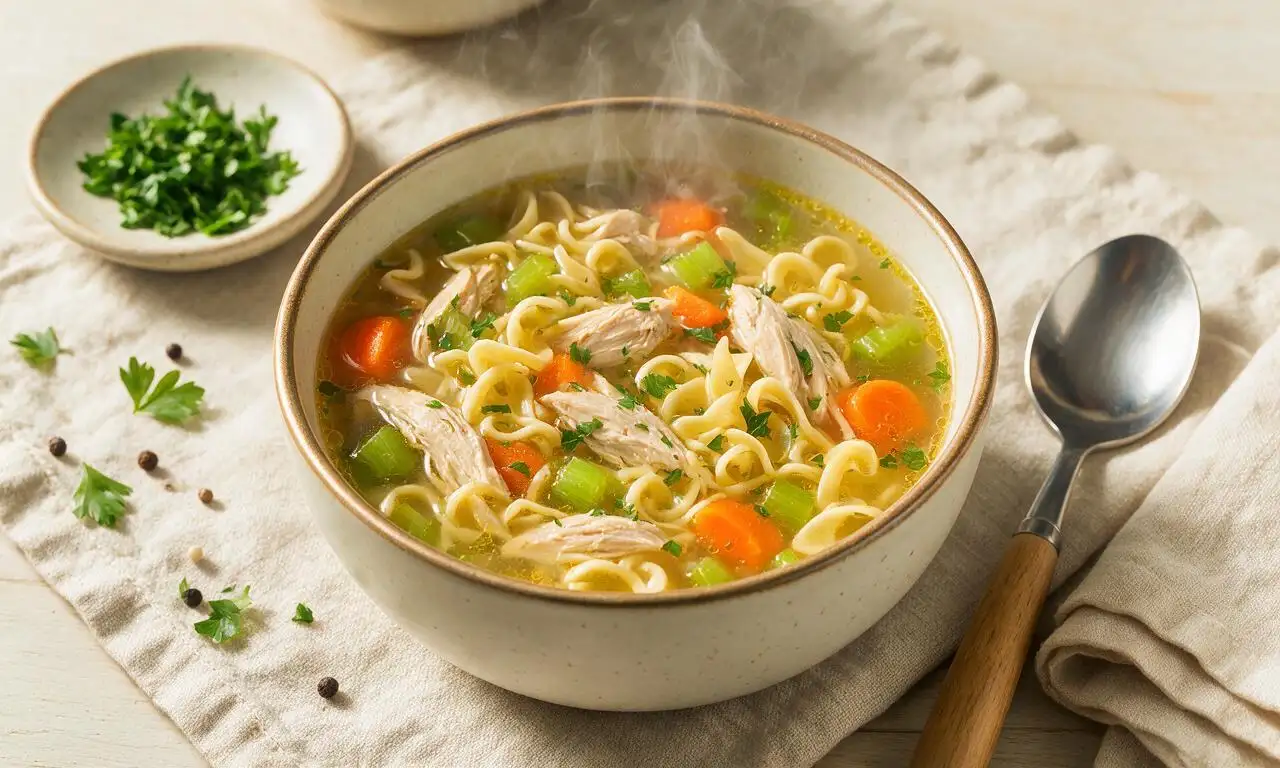
Warm, soothing classic chicken noodle soup loaded with tender chicken, soft egg noodles, and savory veggies, perfect for chasing chills and feeding the whole family.

⏱️ 40 minuteSoups & Stews ★ 4.9
Soups & Stews
🍜 France

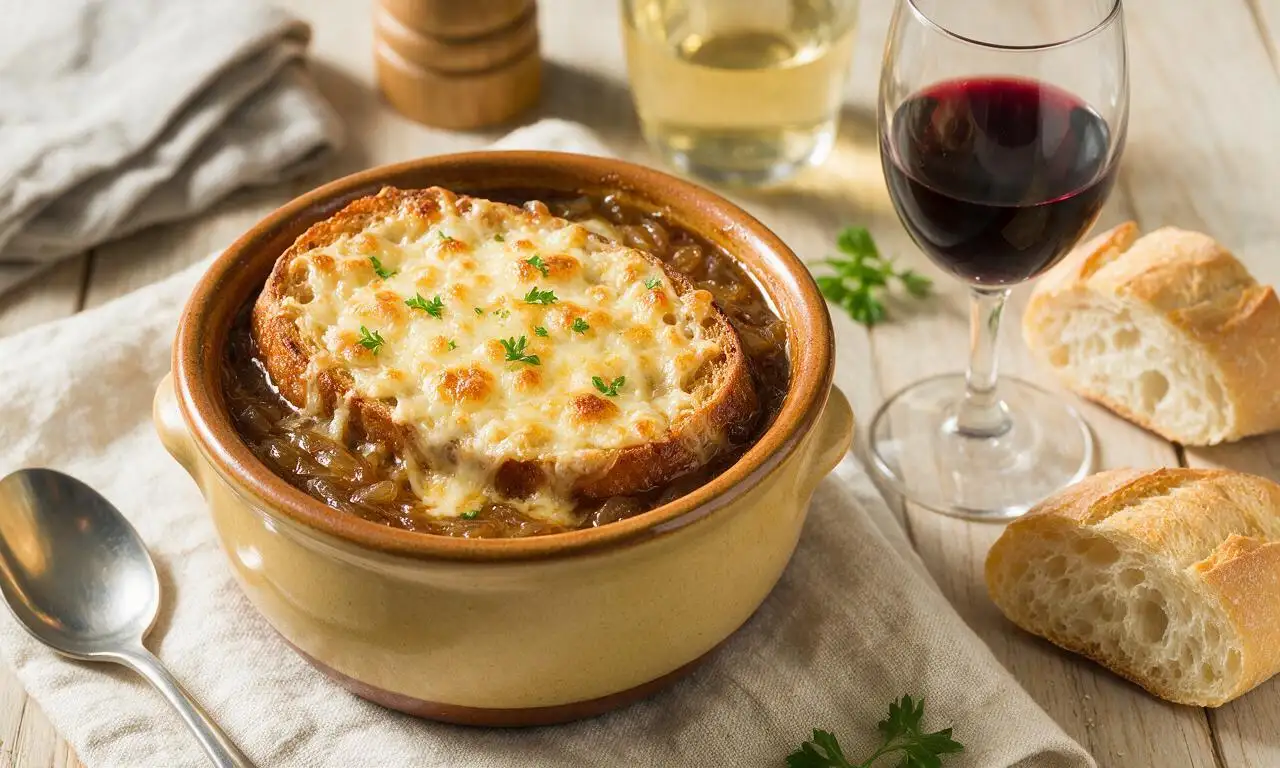
Deeply savory caramelized onion broth topped with crusty bread and bubbly melted Gruyère, a timeless French bistro comfort food ideal for cold days.

⏱️ 1 hour 25Soups & Stews ★ 4.8
Soups & Stews
🍜 United States

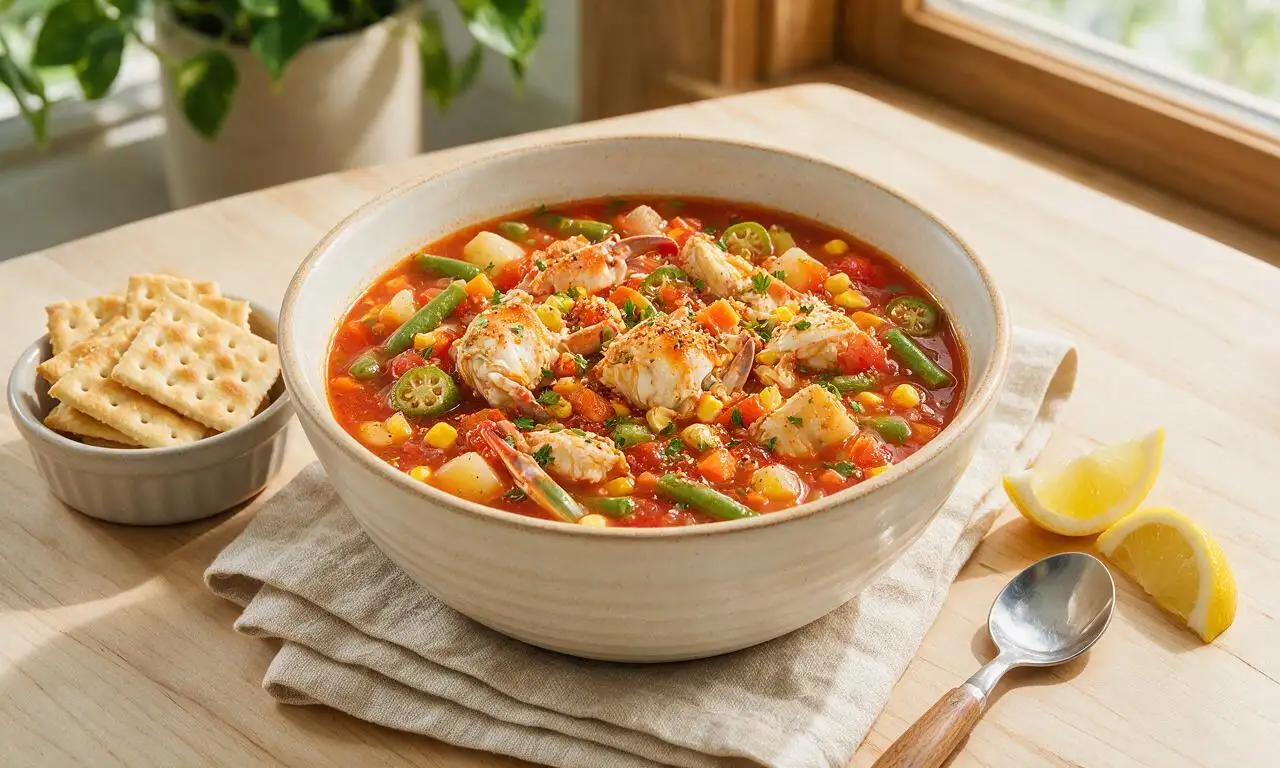
Hearty, briny Maryland crab soup loaded with sweet blue crab, tender summer vegetables, and zesty Old Bay, a beloved Chesapeake Bay coastal comfort staple.

⏱️ 55 minuteSoups & Stews ★ 4.9

Classic American Beef Stew:Frequently Asked Questions

1.Why is beef chuck roast the recommended cut for this stew instead of leaner options like sirloin? ▾
Beef chuck has perfect amounts of marbled fat and tough connective tissue that break down slowly during simmering, leaving you with melt-in-your-mouth tender beef and a silky, rich gravy. Lean cuts like sirloin will seize up and turn dry, chewy, and flavorless no matter how long you simmer them, so save your money for well-marbled chuck.
2.Can I skip searing the beef cubes before simmering to save time? ▾
I don’t recommend skipping this step! Heat your extra-virgin olive oil over medium-high heat to sear the beef, creating a deep, nutty Maillard reaction crust that adds irreplaceable savory depth to the whole stew. Pat beef dry first, don’t crowd the pan, and work in batches to brown rather than steam the meat—10 minutes of prep makes a huge flavor difference.
3.My beef stew gravy always turns out too thin—how do I fix that? ▾
The all-purpose flour coating on your seared beef is the base for thick gravy, but if it’s still runny at the end of cook time, make a quick slurry of 1 tablespoon cornstarch mixed with 2 tablespoons cold water. Stir it into the simmering stew, let it bubble for 2 to 3 minutes while stirring, until the gravy coats the back of a spoon perfectly.
4.What root vegetable swaps work if I don’t have classic carrots and potatoes on hand? ▾
Parsnips make a great sweet, earthy swap for carrots, while rutabaga, turnips, or even diced sweet potato work well in place of regular potatoes. Cut all veggies to uniform 3cm pieces so they cook evenly, and hold off on adding tender veggies like peas until the last 10 minutes to avoid mushy, overcooked bites.
5.How long do I need to simmer the stew to get tender, not tough, beef? ▾
Aim for a low, steady simmer (not a rolling boil) for 1.5 to 2 hours on the stovetop, or 3 to 4 hours on your slow cooker’s low setting. A hard boil will make beef fibers seize up and turn chewy, so keep heat low enough that only a few small bubbles break the surface, and test tenderness with a fork after 90 minutes.
6.Does this beef stew taste good made ahead of time, and how well does it reheat? ▾
It actually tastes better the day after you make it! The flavors meld and deepen as it chills in the fridge, where it will keep for up to 3 days in an airtight container. Reheat gently over low stovetop heat, stirring occasionally, and add a tiny splash of beef broth if the gravy thickens too much as it sits.
7.Why do my stew vegetables always turn out mushy and overcooked? ▾
You’re almost certainly adding them too early in the cook time! Let your seared beef simmer for a full hour first, then add your firm root veggies—they only need 45 to 60 minutes to get tender without falling apart. This timeline ensures your beef is perfectly tender and your veggies hold their shape, no mushy bites.
8.Do I need to trim every bit of fat off the beef chuck before cubing it? ▾
You don’t need to remove every trace of fat, but do trim off any thick, hard fat caps that won’t render down during cooking. Leave small streaks of marbled fat intact—these melt as the stew simmers to keep beef moist and add rich flavor, while large untrimmed fat chunks will leave your gravy greasy and overly heavy.
9.Can I freeze leftover Classic American Beef Stew for quick future meals? ▾
Absolutely! Let the stew cool completely first, then portion it into freezer-safe airtight bags or containers, leaving a half-inch of headspace to account for expansion as it freezes. It will keep for up to 3 months; thaw overnight in the fridge, then reheat slowly on the stovetop, and adjust salt and pepper to taste after reheating.
10.How do I keep my beef stew from tasting bland and one-note? ▾
Season in layers instead of adding all your kosher salt and freshly ground black pepper at the end! Season the beef before coating it in flour, add a pinch of salt when you add veggies, and taste to adjust right before serving. A spoonful of tomato paste or small splash of Worcestershire adds extra umami depth without overpowering the classic flavor.
11.What can I use instead of all-purpose flour to coat the beef if I’m gluten-free? ▾
Swap the all-purpose flour for an equal amount of cornstarch, or a measure-for-measure gluten-free all-purpose baking blend. Cornstarch creates an extra-crisp sear on the beef and a glossy, smooth gravy, so it works beautifully. Avoid heavy bread flour or delicate cake flour, as those will create gummy or thin, unsubstantial gravy.
12.Should I simmer the stew with the pot fully covered, fully uncovered, or something in between? ▾
Keep the pot partially covered, tilted to leave a 1-inch gap for steam to escape, for the best results. A fully covered pot traps too much heat, leading to a rolling boil that makes beef tough, while cooking fully uncovered lets too much liquid evaporate too quickly, leaving you with too little gravy before the beef is tender.
13.How much liquid should I add so the stew is rich and thick, not thin and soupy? ▾
Add just enough low-sodium beef broth to cover the seared beef by about half an inch, no more. As the stew simmers, your vegetables will release their own natural juices, and the flour coating on the beef will thicken the liquid. Adding too much broth upfront will leave you with a thin, soup-like consistency instead of classic clingy, rich gravy.
14.What are the best sides to serve with Classic American Beef Stew for a full family meal? ▾
The most iconic pairing is crusty sourdough bread or flaky buttermilk biscuits to sop up extra gravy. You can also serve it over fluffy mashed potatoes or buttered egg noodles, with a simple side of tossed green salad in a bright vinaigrette to cut through the stew’s richness. Skip extra heavy starches if you already have potatoes in the stew to keep the meal balanced.

Comments (7)

2 days ago

OMG this stew was a total game changer for our Sunday family dinner! I followed the recipe exactly except I tossed in a handful of frozen peas at the end, and my picky 7 year old went back for THIRDS. The meat came out so tender it practically melted, no chewy chunks at all. 10/10 will be making this for our next neighborhood potluck too!

yesterday

Wait adding frozen peas at the end is such a smart call! I always add mine too early and they turn mushy, definitely stealing that trick next time I make this.

yesterday

So glad your family loved it! The frozen pea trick is chef’s kiss—we actually sometimes add a splash of red wine vinegar right at the end too for a little brightness, you should try it next time!

3 days ago

Took me a little longer than the listed cook time because my stove runs hot, but man was this worth it. The flavor depth is insane, way better than the sad canned stew I grew up eating. Only note: make sure you actually brown the beef properly like the recipe says, don’t rush that step! I almost skipped it and I’m so glad I didn’t.

2 days ago

Great call not skipping the maillard reaction from browning the beef—that’s where so much of that rich, deep flavor comes from! If your stove runs hot, just turn the burner down a touch when simmering so the stew doesn’t boil too hard and make the meat tough.

1 week ago

Made a big batch of this on Sunday for my weekly meal prep and it held up perfectly all week in the fridge! The flavors actually got better each day, which is my favorite thing about stews. Super filling, not too heavy, and it was so easy to portion out for work lunches. SO good.

5 days ago

First time ever making beef stew and it turned out pretty good! I messed up and cut the potatoes too small so they got a little mushy, but the gravy part was so tasty. I wish I’d read the note about not lifting the lid too much while it simmers, I definitely peeked like 10 times oops. Will do better next time!

3 days ago

Oh honey, we all peek when making stew! Next time toss the potato chunks in about 45 minutes before it’s done instead of the start and they’ll hold their shape perfectly, I’ve been making this recipe for 30 years that way.

2 days ago

Thanks for giving the recipe a shot even as a first-time cook! That potato tip from GrandmaPat is spot on—we actually mention that timing note in the recipe card tips section if you want to reference it next time you make it, it makes a huge difference.

2 weeks ago

Made this before our weekend camping trip and kept it warm in the dutch oven over the campfire coals. Absolute hit with the whole crew after a long cold hike! The only swap I made was using baby red potatoes instead of russets because that’s what I had in the pantry.

1 week ago

Campfire stew is the best! I’ve done this same recipe over a campfire too, just make sure you rotate the dutch oven every so often so the bottom doesn’t burn. So good after being out in the cold all day!

yesterday

This was a solid base recipe but I felt like it needed a little more oomph for my taste. I added a pinch of cayenne and a tablespoon of smoked paprika to kick it up, which made it perfect for me. I get it’s classic so it’s not super seasoned, but just a heads up for people who like bolder flavors.

2 hours ago

I brought this to my office potluck yesterday and people were literally scraping the crockpot clean! I made it in the slow cooker instead of on the stovetop because I was working all day, seared the beef first then threw everything in on low for 8 hours, came home to the whole house smelling amazing.

30 minutes ago

Love the slow cooker hack! So many people don’t realize you can adapt this recipe for a slow cooker as long as you sear the beef first—your office potluck crew is lucky to have you! So glad it was a hit.