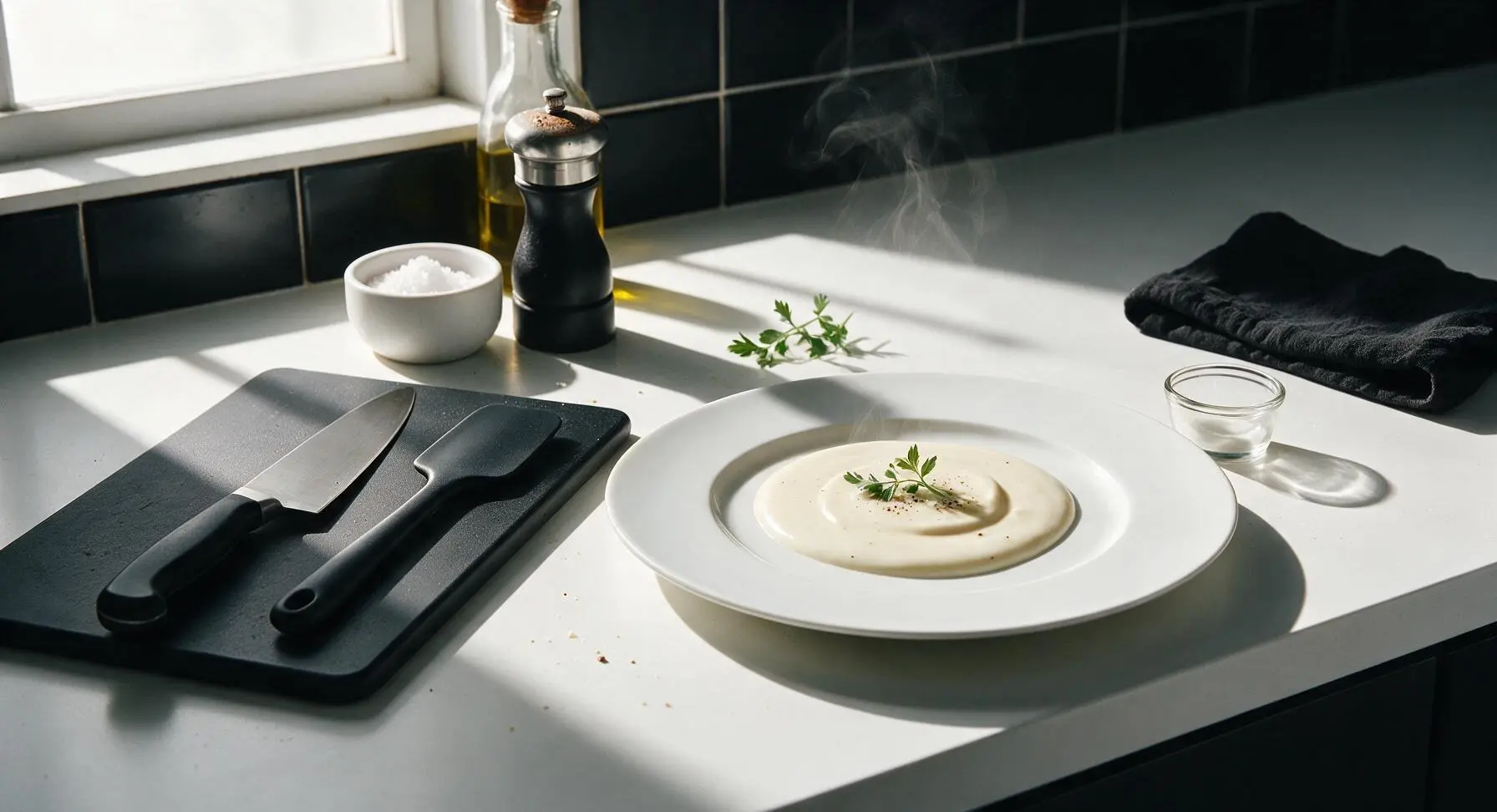
cream sauce

title 1
cream sauce
⏱️ cook time 10 minutes
🍽️ servings 4
⚡ Difficulty easy

intro

Silky, rich, versatile classic cream sauce, perfect for tossing with pasta, coating roasted autumn vegetables, or drizzling over seared chicken and fish.

Ingredients
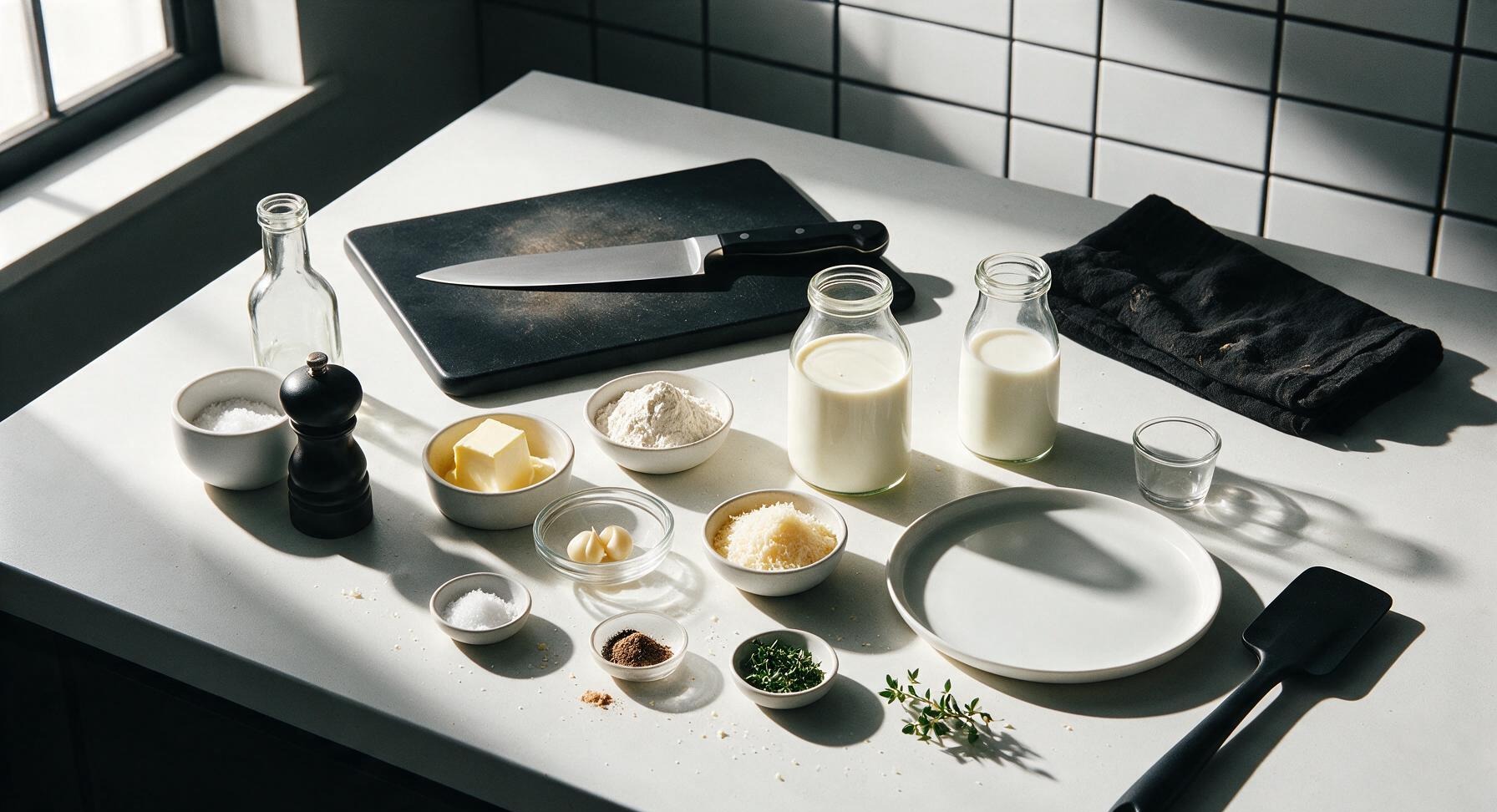
Unsalted butter 2 tablespoons (28g)
All-purpose flour 1 tablespoon (8g)
Garlic cloves 2 medium, finely minced
Heavy whipping cream 1 cup (240ml)
Whole milk 1/4 cup (60ml)
Freshly grated parmesan cheese 1/4 cup (25g)
Kosher salt 1/2 teaspoon
Freshly ground black pepper 1/4 teaspoon
Freshly grated nutmeg 1/8 teaspoon
Fresh thyme leaves 1 teaspoon, chopped

Steps

1

Prep Measured Ingredients

Gather all ingredients on the counter. Use the paring knife on the birch cutting board to mince the 2 garlic cloves finely, and grate fresh parmesan if not pre-grated. Portion salt, pepper, nutmeg, and thyme into the four clear glass pinch bowls along the back of the work zone. Pre-measure butter, flour, cream, and milk into separate small containers to avoid lumpy sauce from rushed additions.

Step 1
step1:Prep Measured Ingredients
2

Melt Butter in Saucepan

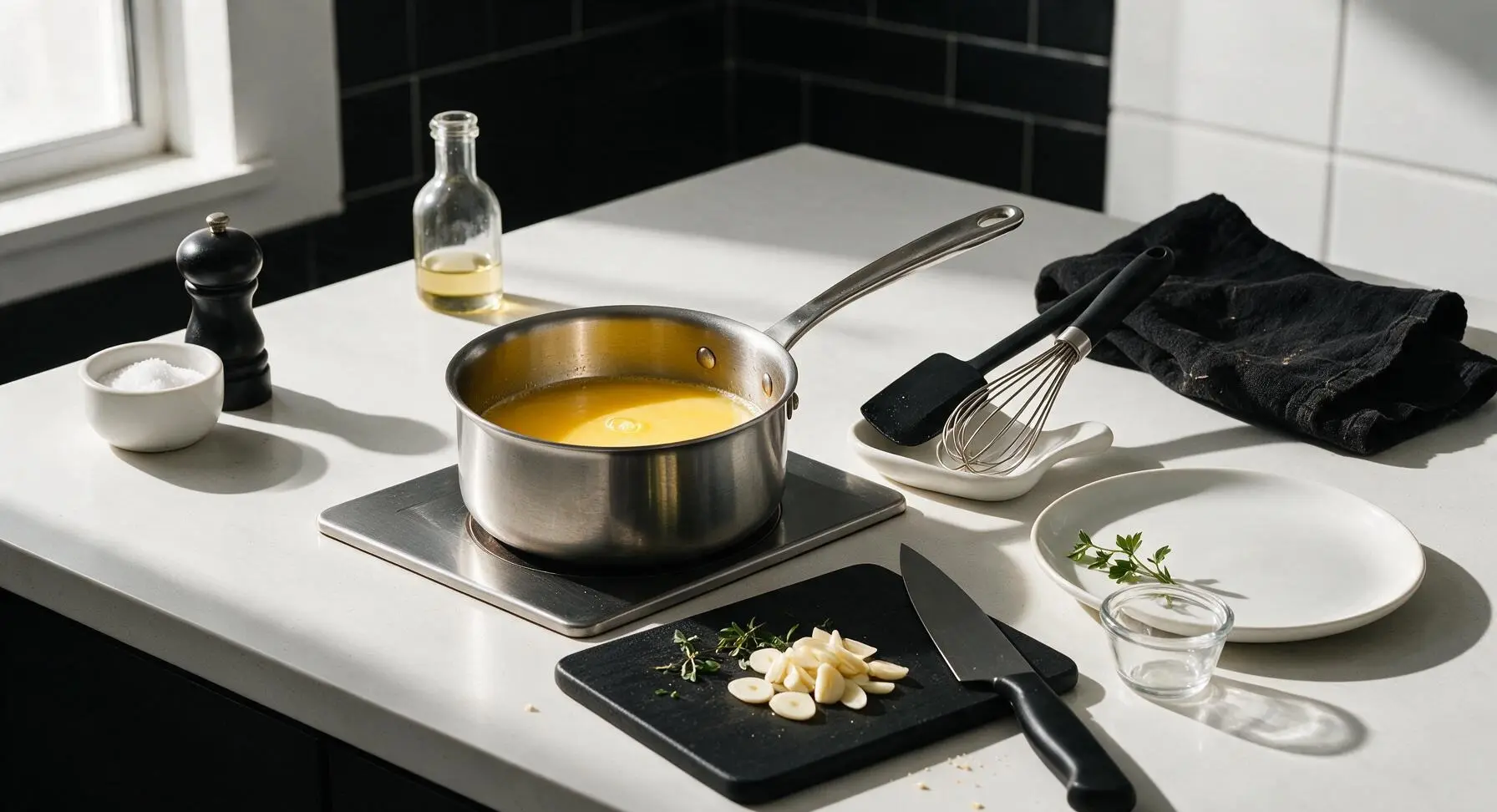
Place the 1.5 quart stainless steel saucepan on the center induction burner over medium-low heat (325°F / 160°C). Add the 2 tablespoons of unsalted butter to the pan, swirling occasionally as it melts completely over 1-2 minutes. Do not let the butter brown or foam excessively; it should be fully liquid and pale golden with no browned specks.
Step 2
step2:Melt Butter in Saucepan
3

Cook the Flour Roux

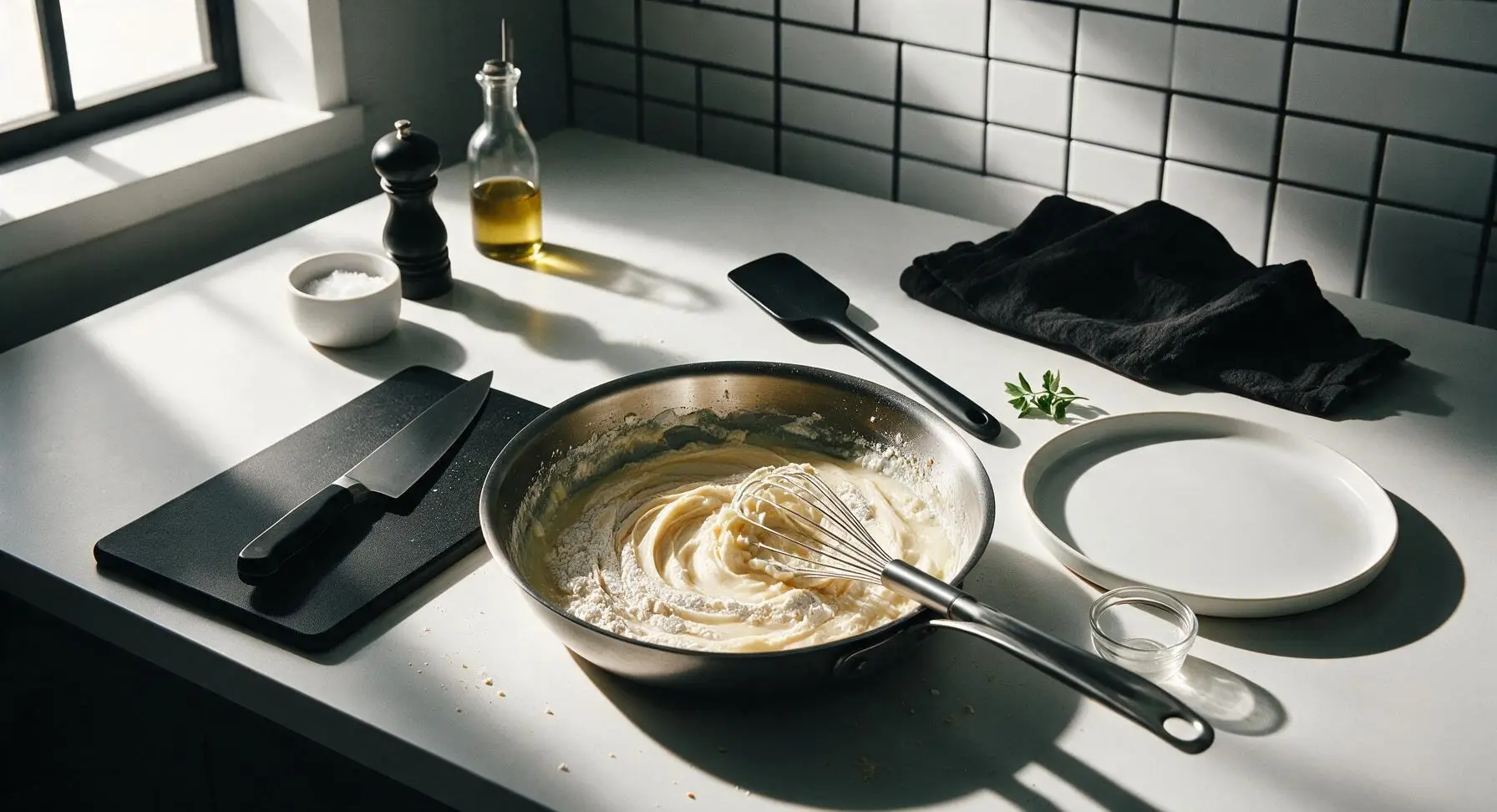
Add the 1 tablespoon of all-purpose flour to the melted butter, whisking constantly with the stainless steel whisk for 2 full minutes. The roux will be smooth, pale golden, and have a faint nutty, toasted aroma, with no raw flour taste remaining. Keep heat at medium-low to avoid burning the roux, which will cause dark specks and a bitter flavor.
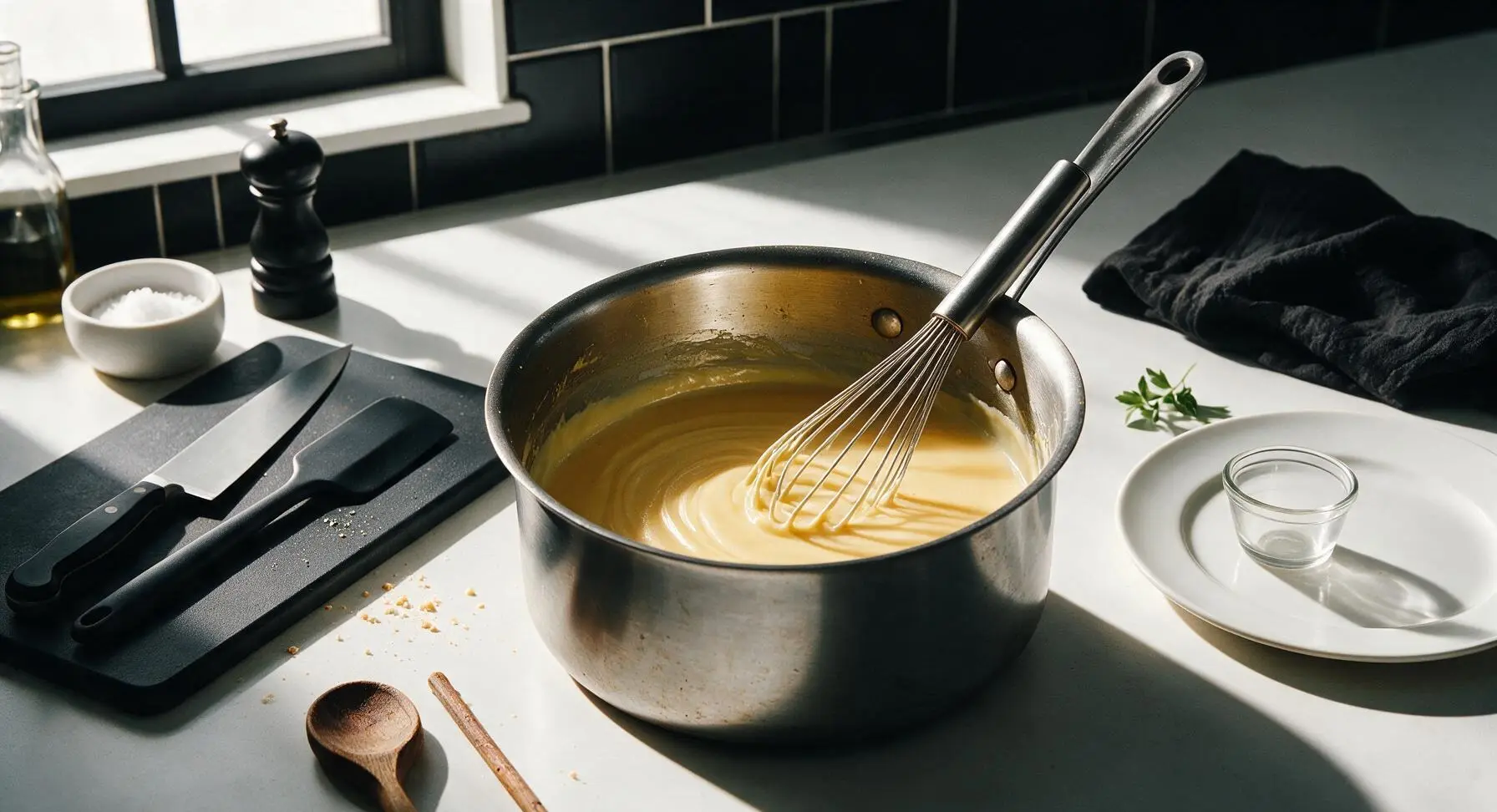
Step 3
step3:Cook the Flour Roux
Step 3
step3:Cook the Flour Roux
4

Sauté Minced Garlic

Add the finely minced garlic to the finished roux, stirring continuously with the whisk for 30 seconds. The garlic will become fragrant and slightly softened, but do not let it turn brown or crispy, as burnt garlic will give the sauce a harsh, bitter taste.
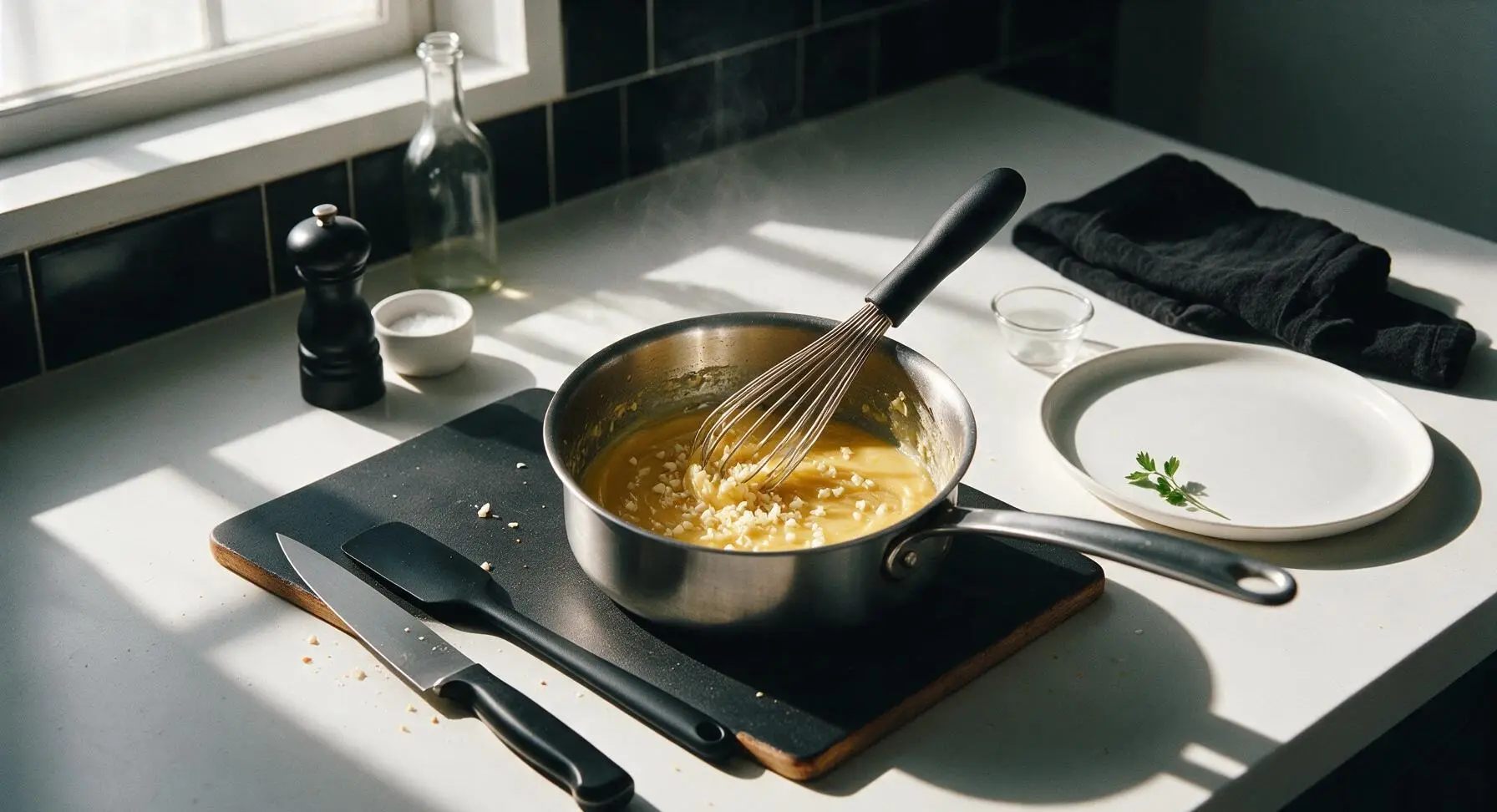
Step 4
step4:Sauté Minced Garlic
5

Whisk in Cream and Milk

Slowly pour in 1/4 cup of whole milk first, whisking constantly in a figure-8 pattern until fully incorporated into the roux with no lumps. Gradually stream in the 1 cup of heavy whipping cream, continuing to whisk nonstop to prevent lumps from forming. Once all dairy is added, the mixture will be thin and pale ivory.
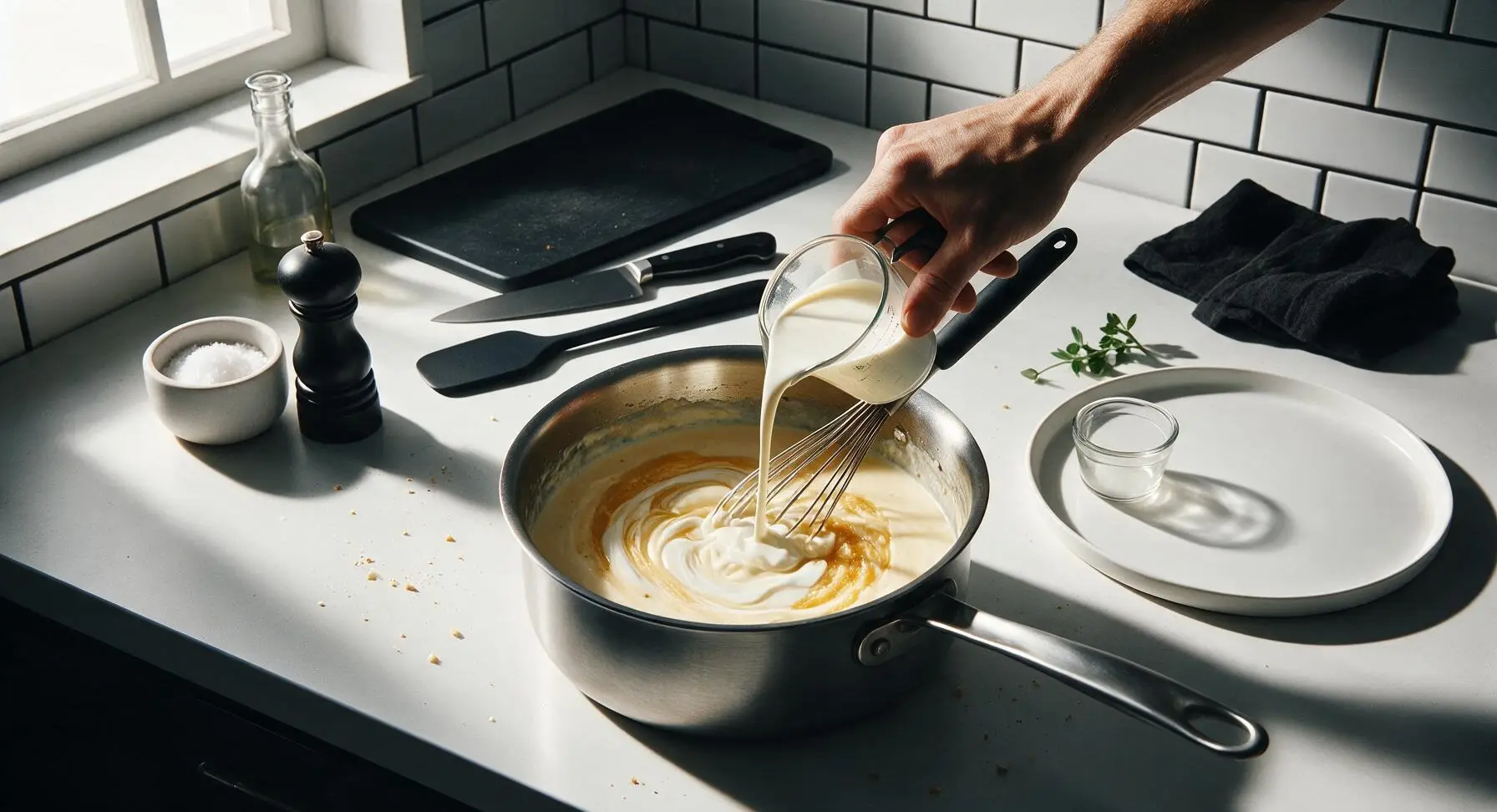
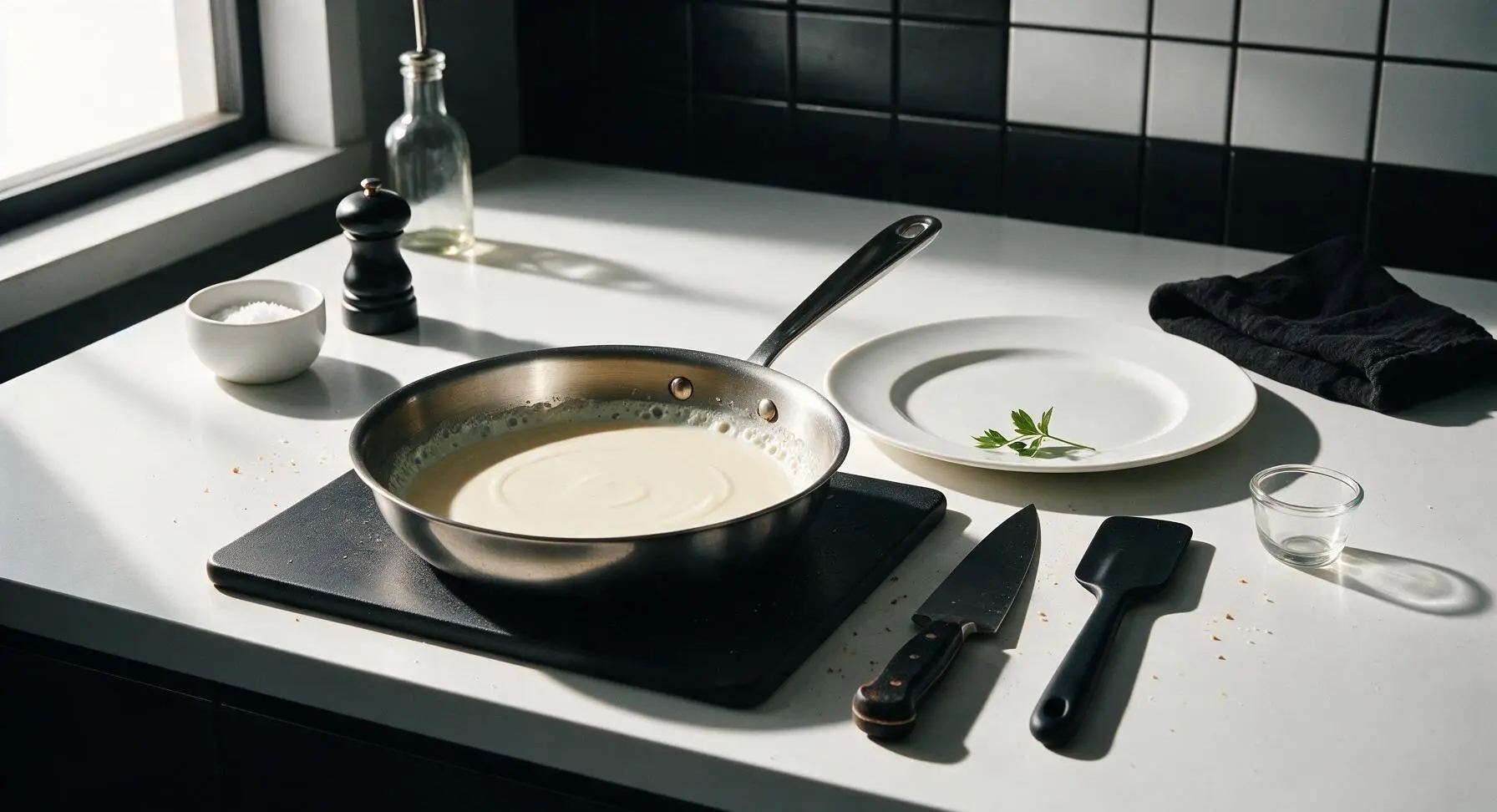
Step 5
step5:Whisk in Cream and Milk
Step 5
step5:Whisk in Cream and Milk
6

Simmer Until Thickened

Reduce heat to low (275°F / 135°C) and let the sauce simmer gently for 3-4 minutes, stirring occasionally with the silicone spatula to scrape the bottom of the pan and prevent sticking. The sauce is ready when it coats the back of the spatula thickly enough that a line drawn through the coating with your finger leaves a clear path that does not run.
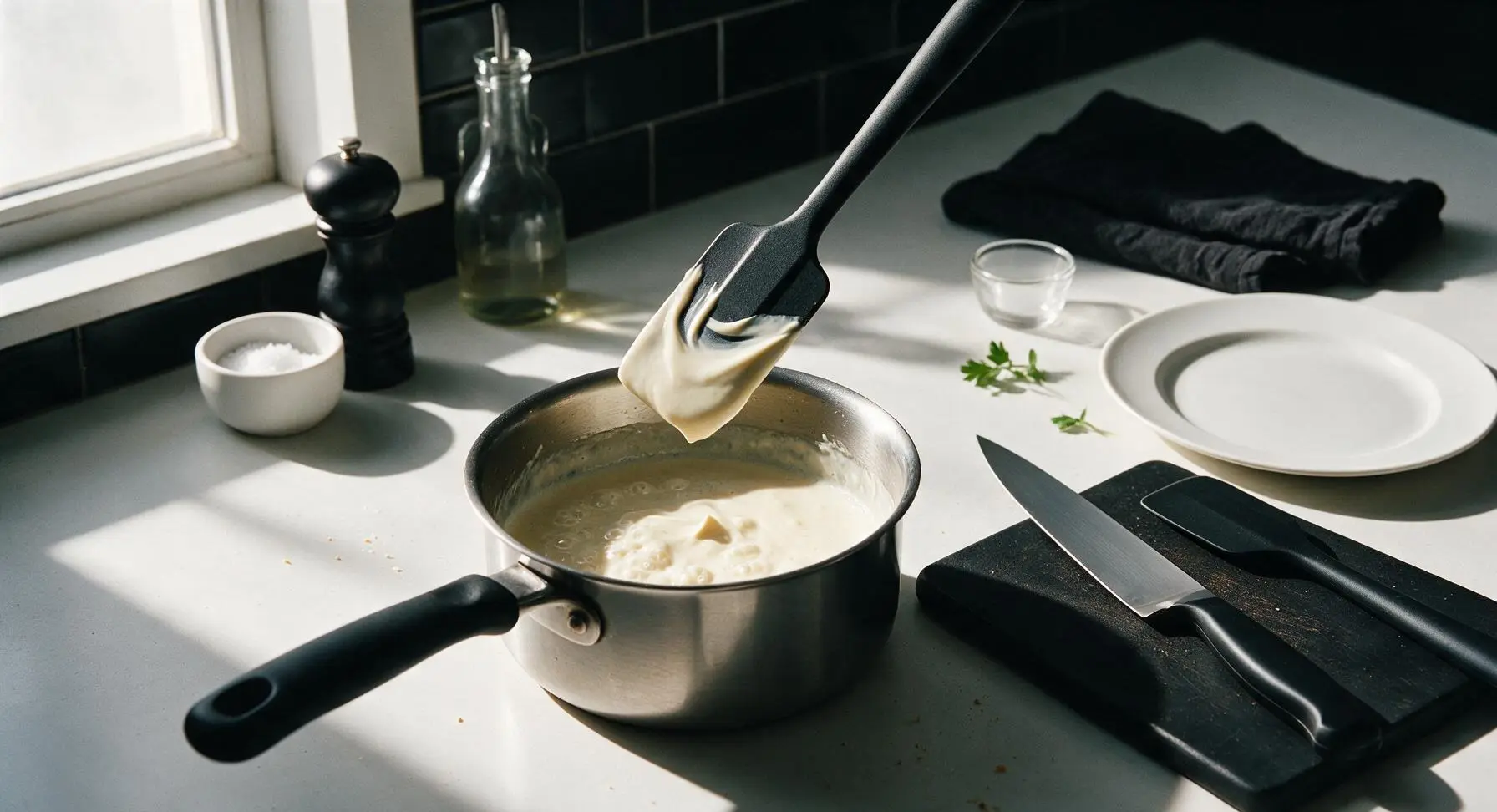
Step 6
step6:Simmer Until Thickened
7

Stir in Cheese and Seasonings

Remove the saucepan from the heat. Add the 1/4 cup freshly grated parmesan cheese, stirring with the spatula until fully melted and smooth. Stir in 1/2 tsp kosher salt, 1/4 tsp freshly ground black pepper, 1/8 tsp freshly grated nutmeg, and 1 tsp fresh thyme leaves. Taste and adjust salt if needed.
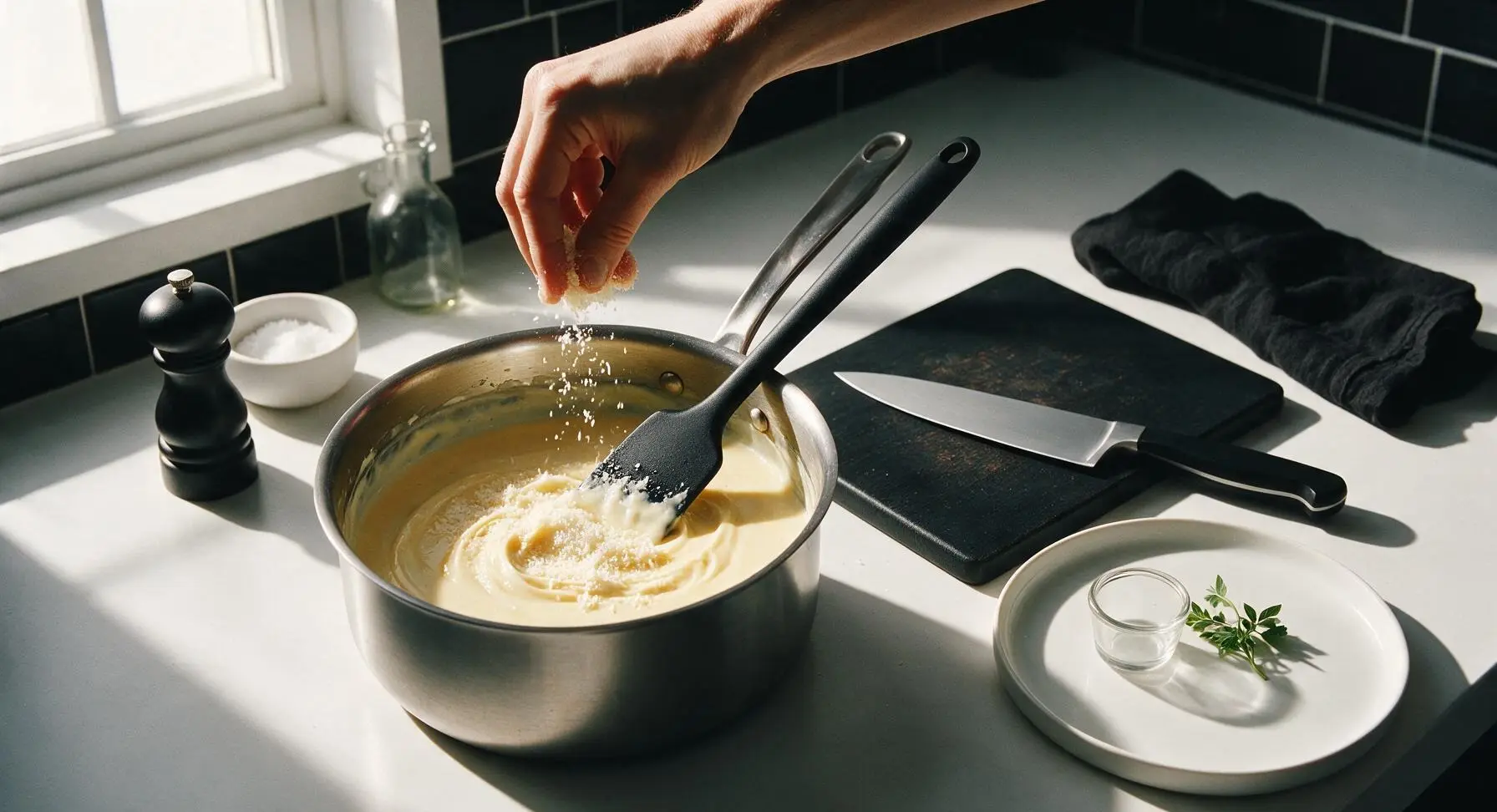
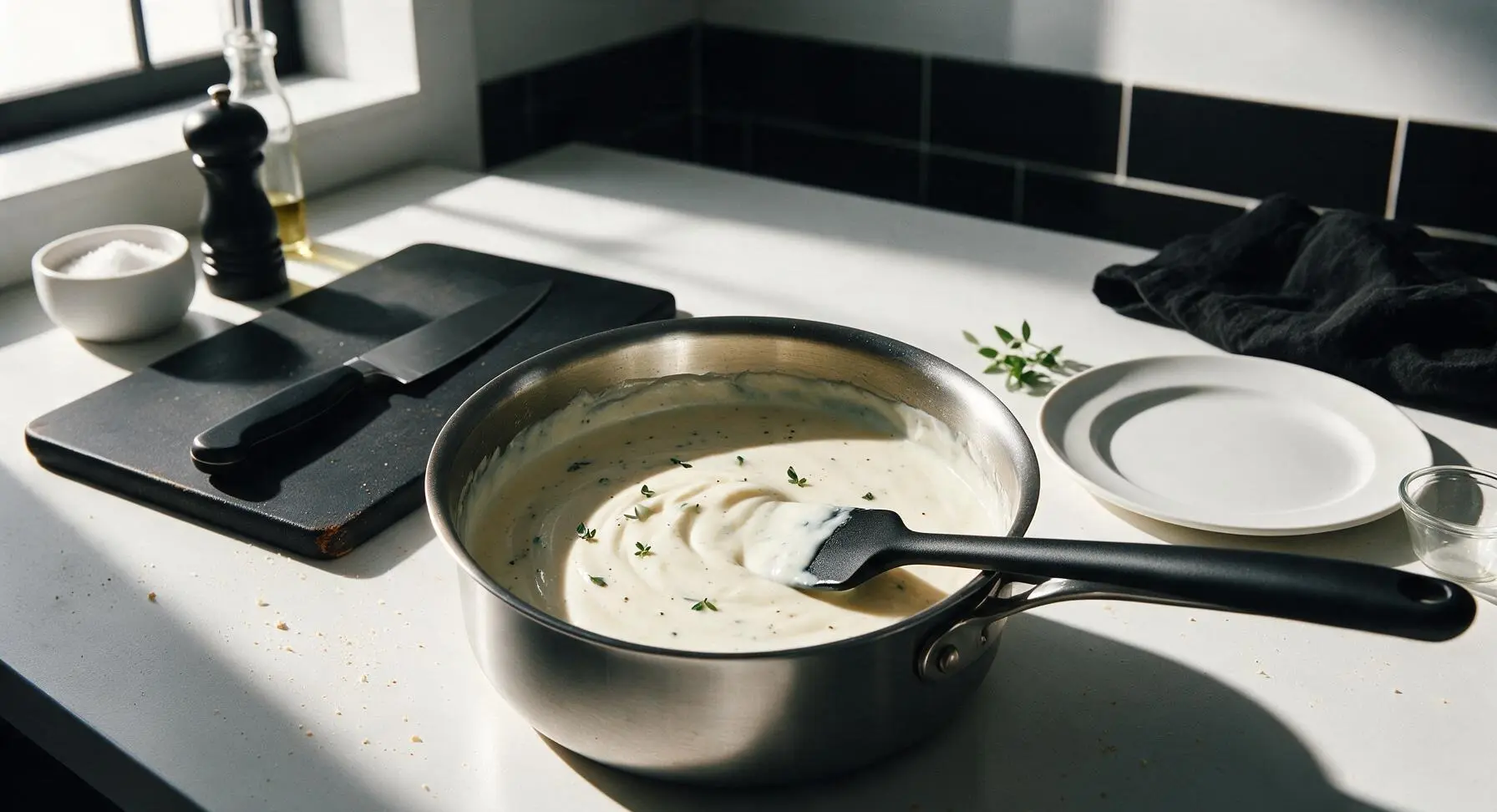
Step 7
step7:Stir in Cheese and Seasonings
Step 7
step7:Stir in Cheese and Seasonings
8

Rest and Plate Sauce

Let the sauce rest for 1 minute off heat to thicken slightly to a perfect velvety pouring consistency. Pour the finished sauce into the matte cream white ceramic serving bowl, garnish with a small sprig of fresh thyme and a light crack of black pepper. Serve immediately over pasta, roasted vegetables, seared chicken, or fish.
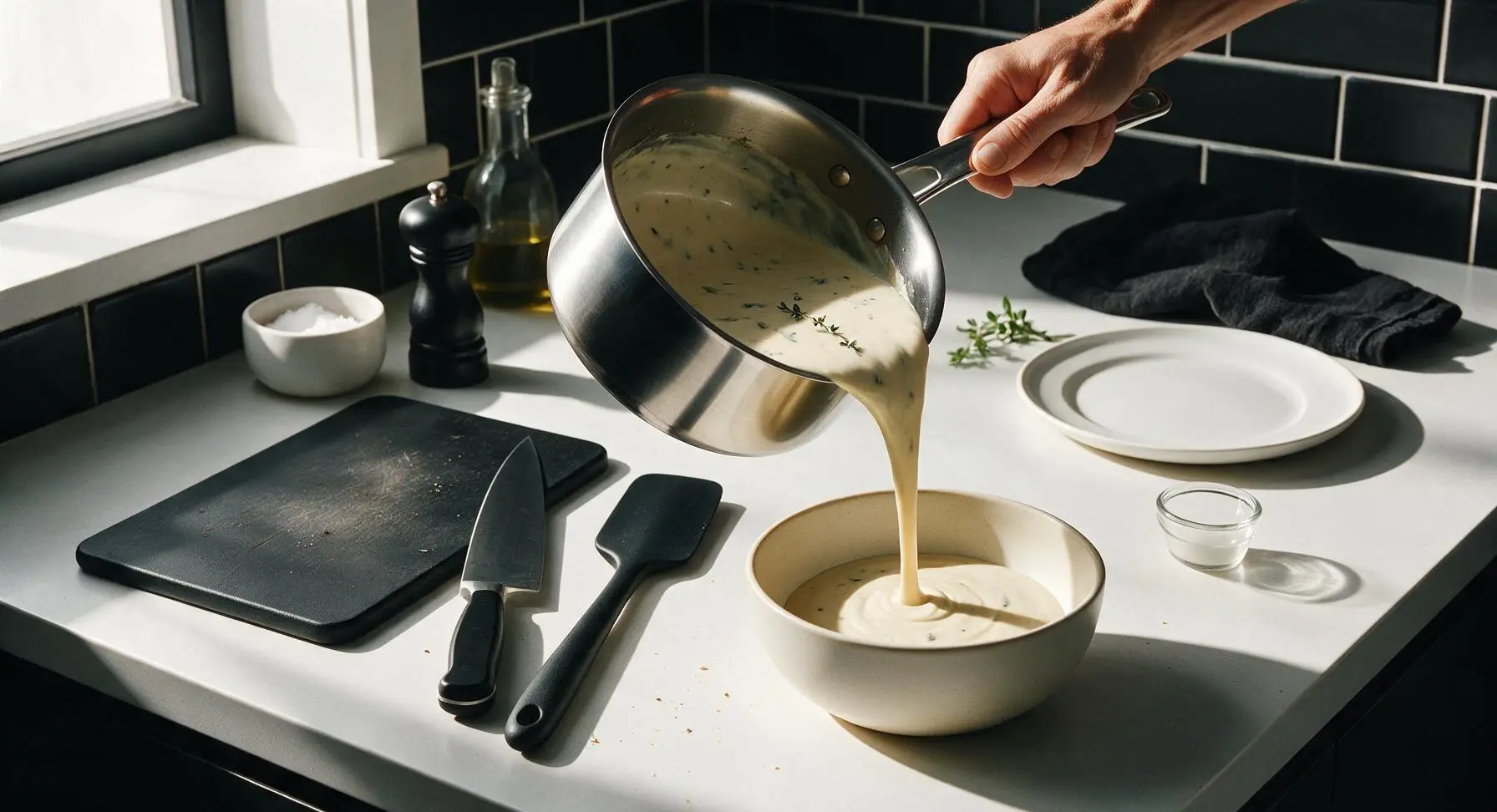
Step 8
step8:Rest and Plate Sauce

Tips

1.Add dairy slowly while whisking constantly: pouring cold cream too quickly onto hot roux causes temperature shock that creates lumps impossible to fully strain out. Starting with the smaller portion of milk first loosens the roux for a smoother final texture.
2.Never let the sauce come to a rolling boil after adding dairy: high heat breaks down milk proteins, causing curdling and separation that leaves a grainy, oily texture instead of the desired silky finish. Keep heat low enough for only tiny, gentle bubbles.
3.Grate parmesan fresh at home instead of using pre-shredded store-bought cheese: pre-shredded cheese is coated in potato starch or natamycin to prevent clumping, which stops it from melting smoothly and leaves a gritty, uneven sauce texture.


✨ You May Also Like

Side Dishes
🍜 India

Velvety, aromatic all-purpose curry sauce perfect for tossing with roasted veggies, grilled protein, or rice for fast, cozy, flavorful meals.

⏱️ 25 minuteSide Dishes ★ 4.8
Side Dishes
🍜 Spain

Tender, starchy boiled yuca tossed in bright, garlicky citrus mojo sauce—an iconic, zesty side that pairs beautifully with roasted pork, grilled meats, and rice and beans.

⏱️ 40 minuteSide Dishes ★ 5
Side Dishes
🍜 United States

Tender, paper-thin potato flatbread, a beloved Norwegian-American Minnesota Christmas staple, griddled until softly spotted and served warm with butter.

⏱️ 1 hour 30Side Dishes ★ 4.6
Side Dishes
🍜 United States

Rich, deeply savory cured salt pork, a long-lasting kitchen staple perfect for frying crispy as a side or adding umami to stews, beans, and chowders.

⏱️ 7 days (2Side Dishes ★ 4.9
Side Dishes
🍜 United States

Crispy, tangy classic Southern fried green tomatoes with a crunchy cornmeal crust, served hot for a nostalgic, comforting summery bite.

⏱️ 25 minuteSide Dishes ★ 4.9
Side Dishes
🍜 United States

Moist, golden-crusted savory muffins with sweet corn, zesty jalapeño, and melted cheddar, perfect for pairing with smoky summer grilled fare.

⏱️ 30 minuteSide Dishes ★ 4.9

cream sauce:Frequently Asked Questions

1.Why is my cream sauce coming out lumpy instead of silky smooth? ▾
Lumps almost always come from adding cold dairy too quickly to a hot roux, or skipping consistent whisking as you add liquid. Take your roux off the heat for 30 seconds before streaming in room-temperature milk and cream a little at a time, whisking nonstop. If lumps still form, pour the sauce through a fine-mesh sieve before serving for perfect texture.
2.Can I make this sauce ahead of time and reheat it later? ▾
Absolutely, though cream sauces can thicken and separate if reheated too quickly. Store fully cooled sauce in an airtight container in the fridge for up to 3 days. When reheating, use low stovetop heat, stirring constantly, and add a splash of extra milk or cream to thin it back to your desired consistency if it gets too thick.
3.What’s the correct ratio of butter to flour for the roux in this recipe? ▾
For this classic velvety sauce, use an equal 1:1 ratio of unsalted butter to all-purpose flour by weight, which works out to 2 tablespoons of each for a standard 2-cup batch. Cook the roux for 2 to 3 minutes over medium-low heat just until it smells nutty, so you don’t end up with raw flour taste in the finished sauce.
4.Can I use half-and-half instead of heavy cream and whole milk to cut calories? ▾
You can, but know the texture will be slightly thinner and less rich than the classic version. If you go that route, cook the roux a minute longer, and add a tiny pinch of cornstarch slurry (1 teaspoon cornstarch mixed with 1 teaspoon cold water) to help the sauce hold its silky, coating consistency without separating as it simmers.
5.How do I keep the sauce from forming a thick skin on top as it cools? ▾
That tight skin forms when the top layer is exposed to air and loses moisture to evaporation. If you’re not serving the sauce right away, press a piece of plastic wrap directly onto the surface of the sauce (not just over the bowl rim) so no air can touch it. You can also dot the top with a tiny bit of butter for a protective melted barrier.
6.How long should I cook the sauce after adding the cream and milk? ▾
Once all the dairy is fully whisked into the roux, bring the sauce to a gentle simmer (not a rolling boil, which can cause curdling) over medium-low heat, and cook for 3 to 5 minutes, stirring often. It’s done when it coats the back of a spoon evenly, and you can run a finger through the coating without the sauce running back into the gap.
7.My sauce curdled and looks grainy—can I fix it, or do I have to start over? ▾
You can usually rescue a slightly curdled sauce quickly. First, take it off the heat immediately and plunge the pan bottom into an ice bath to stop the cooking. Add a couple of ice cubes and a splash of cold cream, then whisk vigorously for 30 to 60 seconds. For stubborn curdles, blend for 10 seconds with an immersion blender to smooth it out.
8.What seasonings work best with this neutral cream sauce base? ▾
This velvety, mild base is extremely versatile, so start with ½ teaspoon of kosher salt, a pinch of freshly ground black pepper, and a tiny pinch of freshly grated nutmeg to amp up dairy flavor without overpowering it. From there, add parmesan, fresh herbs, lemon zest, Dijon, or a splash of white wine to match your serving dish.
9.Do I have to add garlic, or can I leave it out for a plain cream sauce? ▾
You can absolutely leave the garlic out if you want a totally neutral cream base for delicate fish, baked pastas, or even sweet applications. If you do use it, mince it very fine and cook it in melted butter for just 30 seconds before adding flour—don’t let it brown, as burnt garlic gives the whole sauce a bitter, unfixable off flavor.
10.Can I freeze this cream sauce to use for quick weeknight meals? ▾
I don’t recommend freezing this classic cream sauce, as the high dairy fat content will separate and turn grainy when it thaws, even if you reheat it very slowly. It only takes 10 minutes to make from scratch, so it’s far better to whip up a fresh batch when you need it, or store fridge leftovers for up to 3 days.
11.How do I fix the sauce if it ends up too runny after cooking? ▾
If your sauce is too thin after simmering, let it cook for 2 to 3 more minutes over low heat to evaporate extra water, stirring often to prevent scorching on the pan bottom. If it’s still too runny, make a tiny slurry of 1 teaspoon all-purpose flour mixed with 2 teaspoons cold milk, whisk it in, and simmer 1 more minute to cook out raw flour taste.
12.What should I do if my finished sauce is too thick? ▾
It’s totally normal for the sauce to thicken as it sits off the heat, so thin it out gradually for the perfect consistency. Stir in 1 tablespoon of warm whole milk, cream, or even reserved starchy pasta water (if you’re tossing it with pasta) at a time, until it coats food evenly without clumping. Don’t add big splashes all at once, or you’ll over-thin it.
13.Can I use salted butter instead of unsalted butter for the roux? ▾
You can, but you’ll have far less control over the final salt level of the sauce. Salted butter has varying amounts of added salt depending on the brand, so if you use it, hold off on adding any extra salt until the very end, when you can taste the sauce and adjust seasoning slowly to avoid making it too salty to serve.
14.What’s the difference between this cream sauce and classic Alfredo sauce? ▾
This classic velvety cream sauce uses a butter and flour roux as a thickener, which makes it extra stable, silky, and less likely to separate than traditional Alfredo. Alfredo relies purely on reduced heavy cream and melted parmesan for thickness, so it’s richer and cheesier, while this sauce is a versatile, all-purpose base for more than just pasta.
15.How do I keep the sauce from scorching on the bottom of the pan? ▾
Scorching happens when heat is too high and you don’t stir frequently enough. Use a heavy-bottomed saucepan to distribute heat evenly, keep your burner on medium-low once you add dairy, and stir every 15 to 20 seconds with a silicone spatula, making sure to scrape the entire pan bottom as you go to catch thickened sauce that might stick.
16.Can I adapt this sauce to be dairy-free for guests with dietary restrictions? ▾
You can swap in good quality plant-based unsalted butter, all-purpose gluten-free flour if needed, and unsweetened oat cream and oat milk for the closest texture to the classic version. Avoid thin nut milks like almond, as they separate easily and add a distinct nutty flavor, and add a pinch of nutritional yeast to mimic dairy’s subtle savory depth.

Comments (3)

2 days ago

OMG this cream sauce is a total game changer!!! I threw it together last night for our weekly family pasta night and even my super picky 7 year old asked for seconds. It came out perfectly velvety with zero lumps, and I couldn’t believe it only took 10 minutes start to finish? I tossed the leftover sauce with roasted chicken and veggies for my meal prep this week and it held up great in the fridge, no weird separation at all. 10/10 will be making this on repeat!

yesterday

Wait quick question — did you use heavy cream or half and half? I tried making a similar cream sauce last month and it came out super runny and watery, wanna make sure I nail this for my neighborhood potluck this weekend!

2 hours ago

So glad your whole family loved the sauce, Molly! Quick tip for you too Jake – we recommend full-fat heavy cream for that luxe, thick velvety texture, just be sure not to crank the heat too high once you add it to avoid curdling. It’s such a hit at potlucks, I bet your neighbors will be begging for the recipe!

yesterday

SO good! I was so nervous making cream sauce from scratch because I always somehow mess up the roux and end up with lumpy gravy-textured goop, but this was so easy even I couldn’t screw it up. I stirred in a little extra parmesan and a tiny pinch of nutmeg like my grandma used to make and it tasted exactly like the alfredo from our favorite local Italian spot. Only bummer is I wish I made a double batch — it was gone in 10 minutes flat when we sat down for dinner!

30 minutes ago

Love that you added nutmeg and extra parmesan, Lindsey – that’s such a cozy, delicious twist! So happy this simple method worked for you even if roux usually trips you up, that’s exactly why we kept this recipe so straightforward. Next time definitely go for that double batch, I’ve learned the hard way too that a single batch never lasts long!

1 week ago

Total home run of a recipe. I whipped this up to go with pan-seared salmon and roasted asparagus for my date night in last weekend, and my date was fully convinced I’d ordered takeout from that fancy steakhouse downtown. It’s genuinely so easy, no weird fancy ingredients required, and it didn’t break or get grainy even when I let it sit for a few minutes while I finished crisping up some potatoes. I’ve already made it again for a quick weeknight dinner tossed with broccoli and chicken, so this is definitely getting a permanent spot in my recipe rotation.