cuts of meat on a cow

title 1
cuts of meat on a cow
⏱️ cook time 30 minutes
🍽️ servings 6
⚡ Difficulty medium

intro

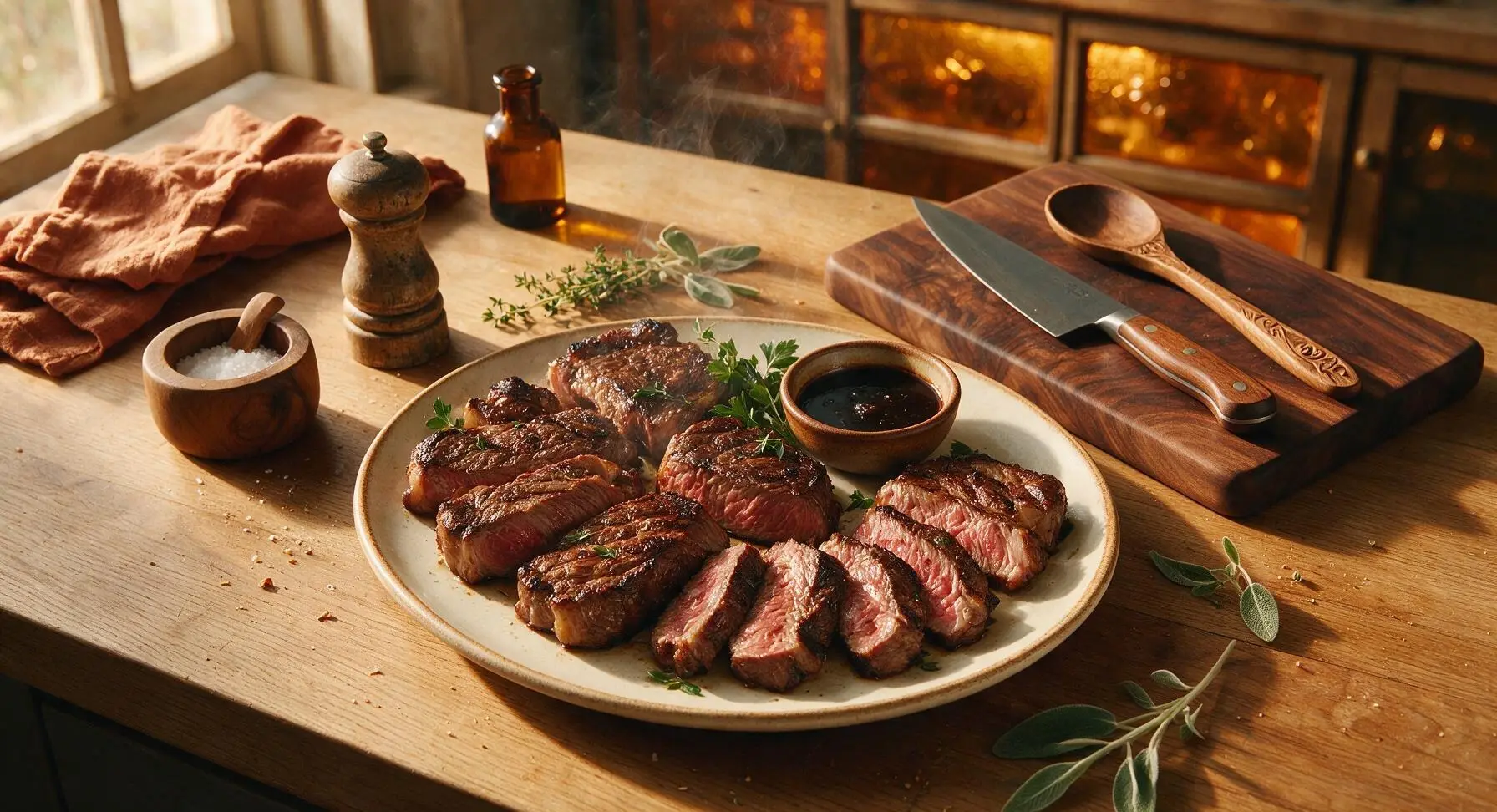
A grilled mixed platter of classic American beef cuts, cooked to ideal doneness to highlight each primal cow section’s unique texture, marbling, and rich, beefy flavor.

Ingredients
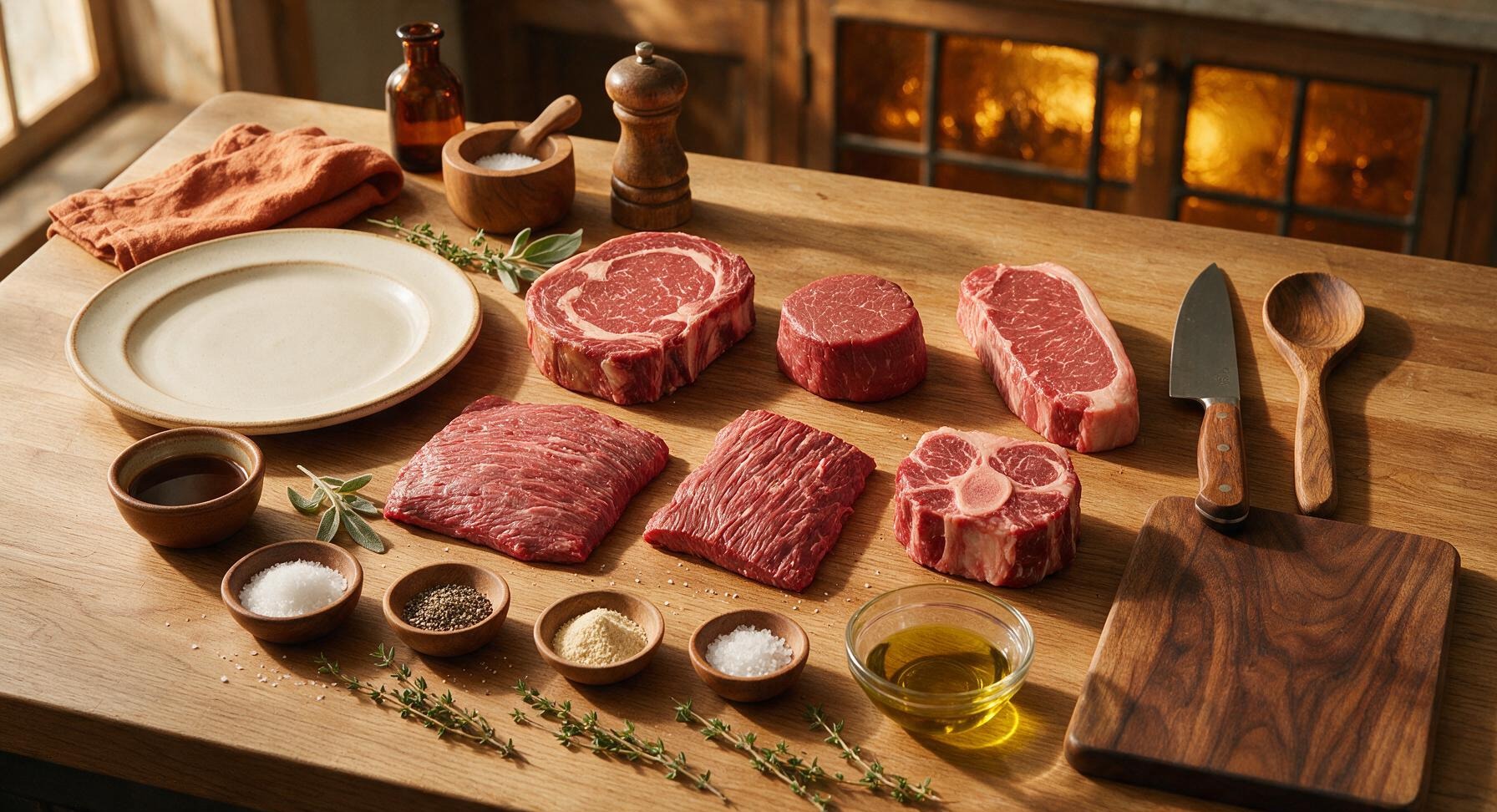
Bone-in ribeye steak 225g (8oz)
Filet mignon (tenderloin) medallion 170g (6oz)
New York strip steak 225g (8oz)
Beef brisket flat slice 280g (10oz)
Outside skirt steak 170g (6oz)
Cross-cut beef short rib 150g (5oz, 1 piece)
Kosher salt 1 tbsp
Coarse ground black pepper 1.5 tsp
Garlic powder 1 tsp
Extra-virgin olive oil 2 tbsp
Flaky sea salt 1 tsp
Fresh thyme sprigs 4 sprigs

Steps

1

Identify and Trim Cuts

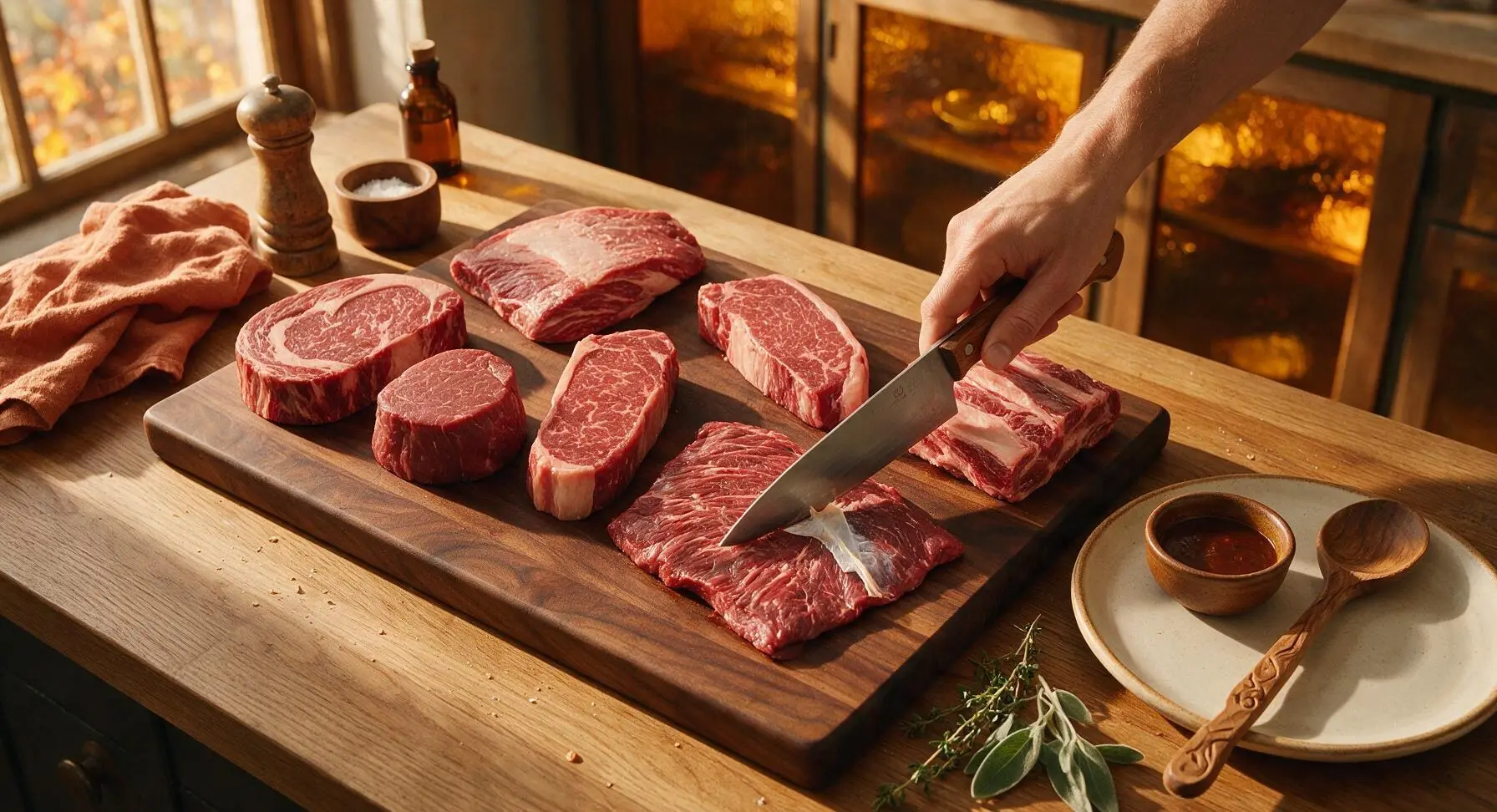
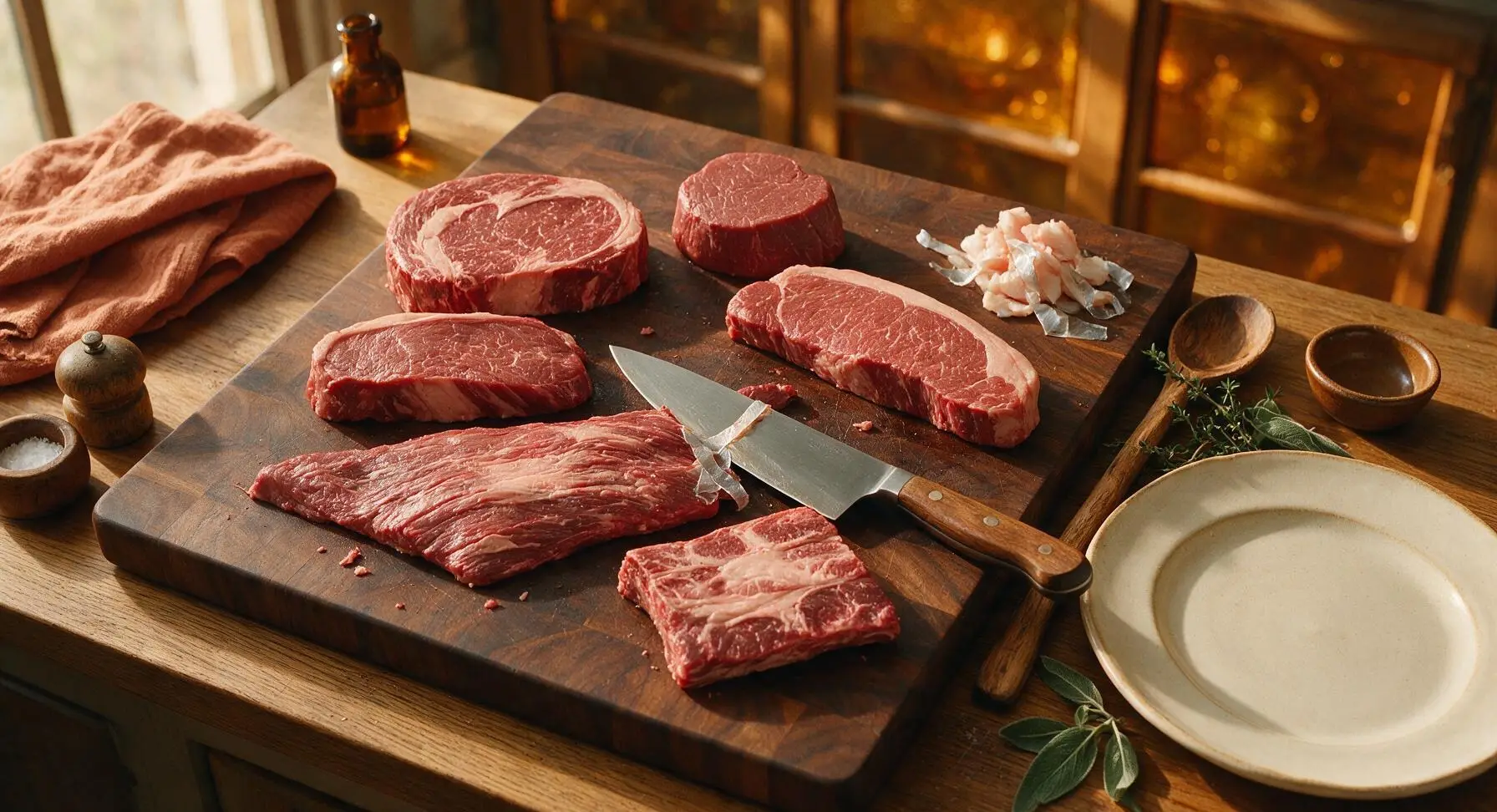
Lay all raw beef cuts on the maple cutting board, identifying each primal origin: ribeye from the rib section, filet mignon from the tenderloin, New York strip from the short loin, brisket from the breast, skirt steak from the plate, short rib from the chuck/rib primal. Use the chef knife to trim any excess loose silver skin or hard fat chunks from each cut, leaving 1/4 inch of fat cap on steaks for flavor. Pat all cuts completely dry with the edge of the gingham towel.
Step 1
step1:Identify and Trim Cuts
Step 1
step1:Identify and Trim Cuts
2

Season Beef Evenly

Drizzle 2 tablespoons of extra-virgin olive oil over all cuts, rubbing lightly to coat every surface. Mix 1 tablespoon kosher salt, 1.5 teaspoons coarse black pepper, and 1 teaspoon garlic powder in one black ramekin, then sprinkle the mixture evenly over all sides of each cut, pressing gently so the seasoning adheres. Let cuts rest at room temperature for 15 minutes to take the chill off before grilling, which ensures even cooking.
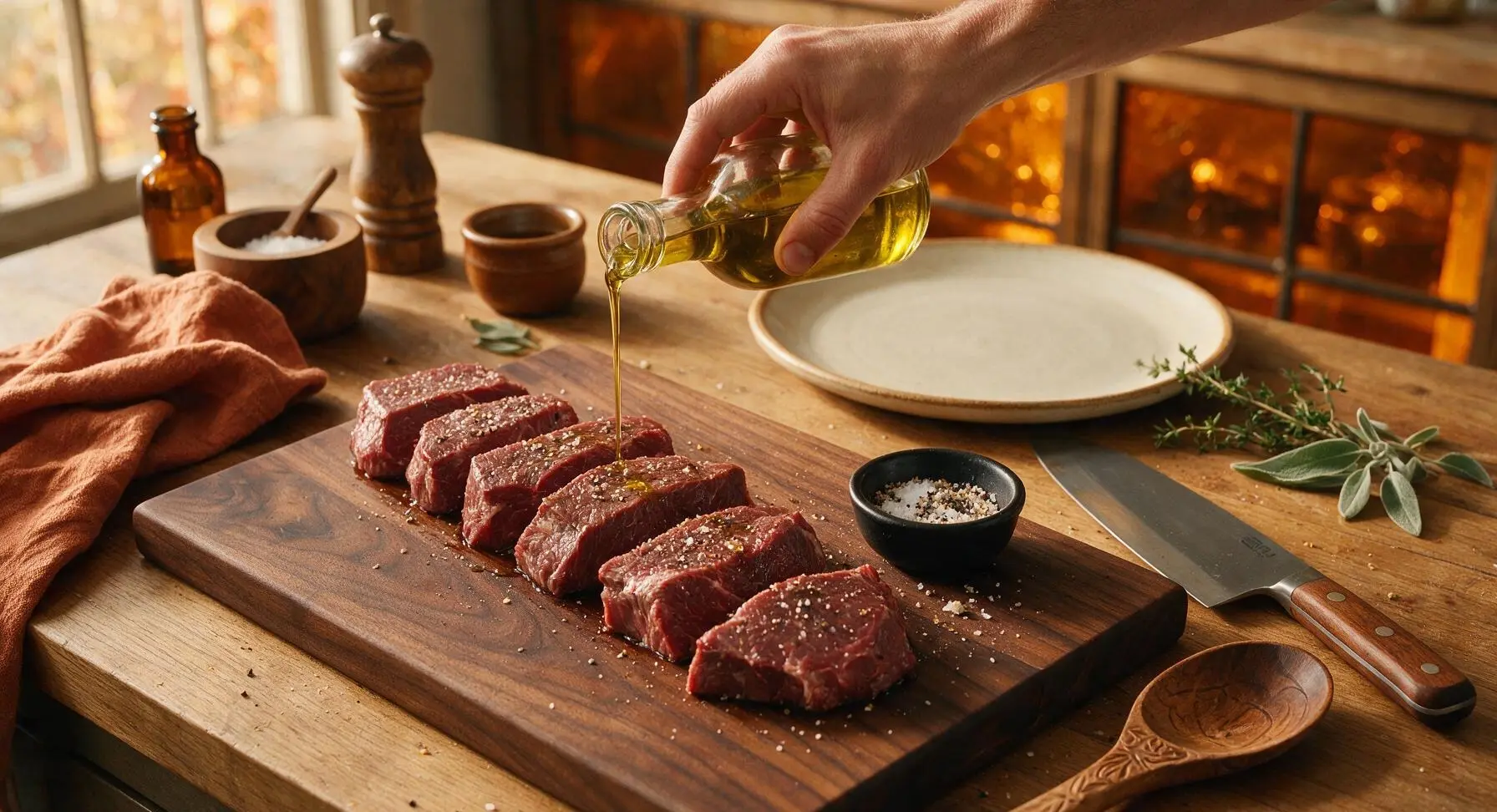
Step 2
step2:Season Beef Evenly
3

Preheat Grill Zones

Preheat your outdoor grill to create two distinct heat zones: a high-heat searing zone (260C/500F) for thin, tender cuts, and a medium-low zone (175C/350F) for denser, thicker cuts. Clean grill grates thoroughly with a wire brush and wipe lightly with oil to prevent sticking.
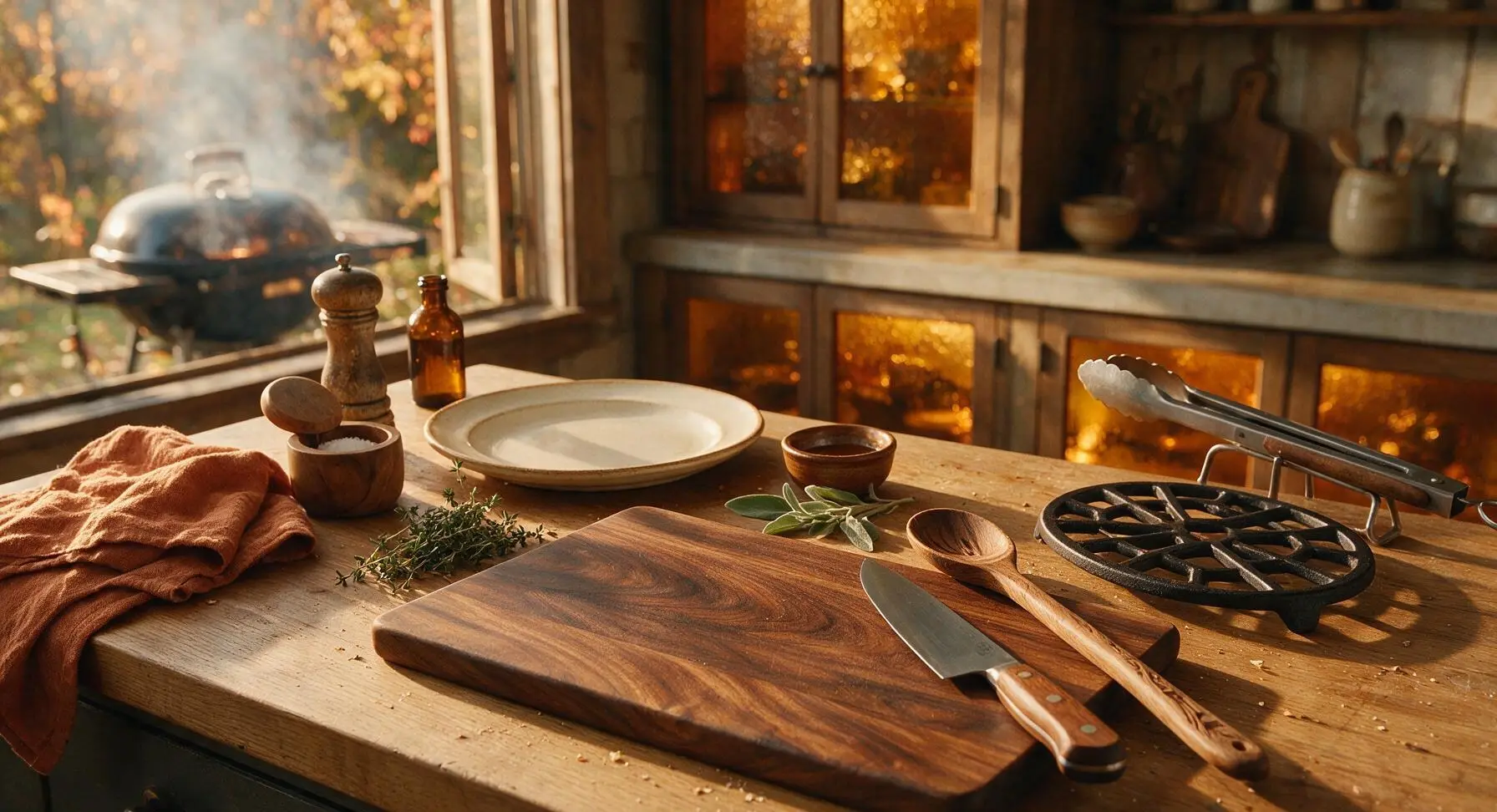
Step 3
step3:Preheat Grill Zones
4

Sear Dense Cuts First

Use the BBQ tongs to place the denser, thicker cuts first: brisket slice and cross-cut short rib on the medium-low grill zone. Cook for 8 minutes per side, closing the grill lid between flips, until the exterior develops a dark, crisp crust and internal temperature reaches 63C/145F for medium doneness. Transfer cooked cuts to the cast iron trivet to rest.
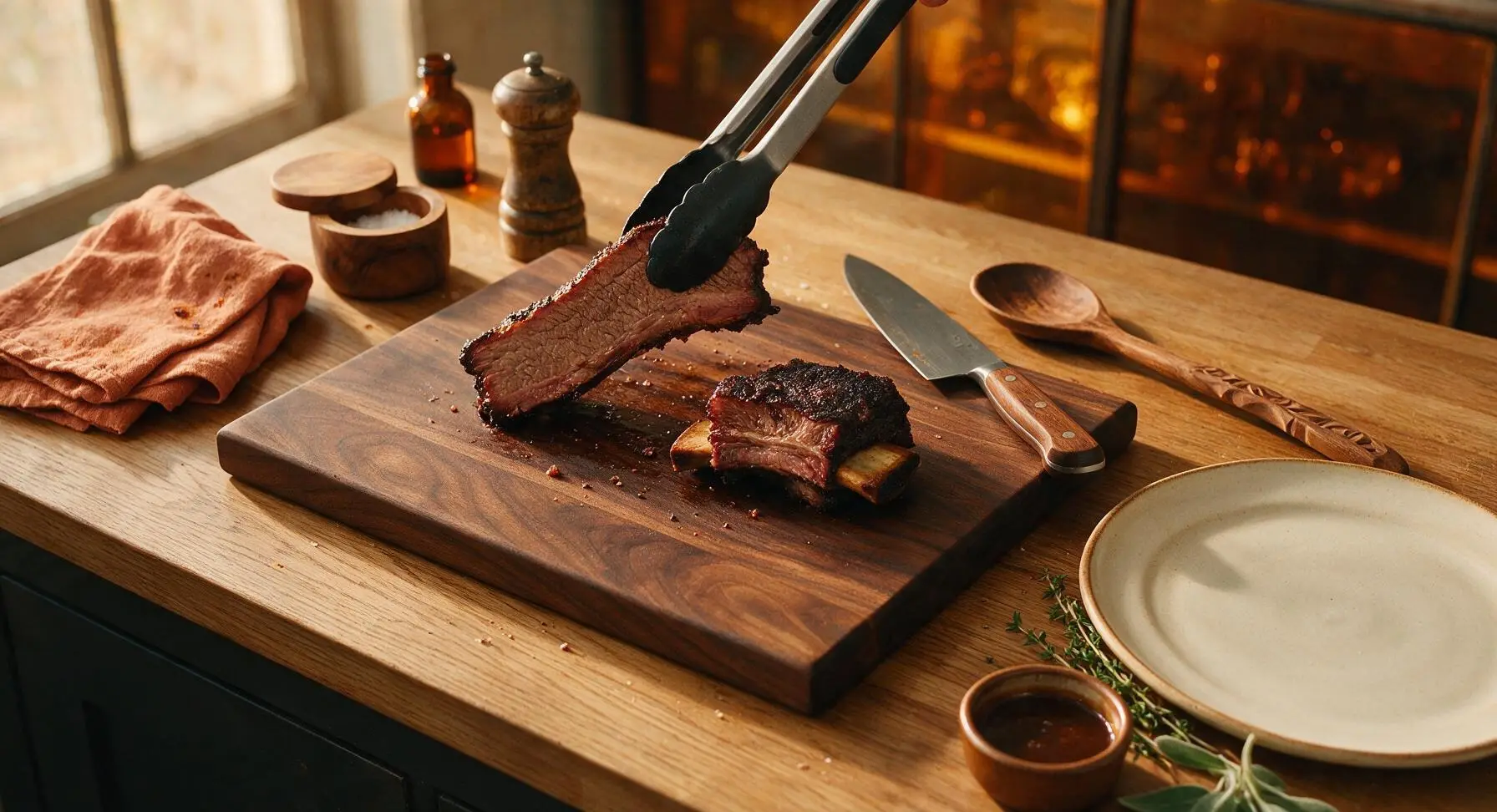
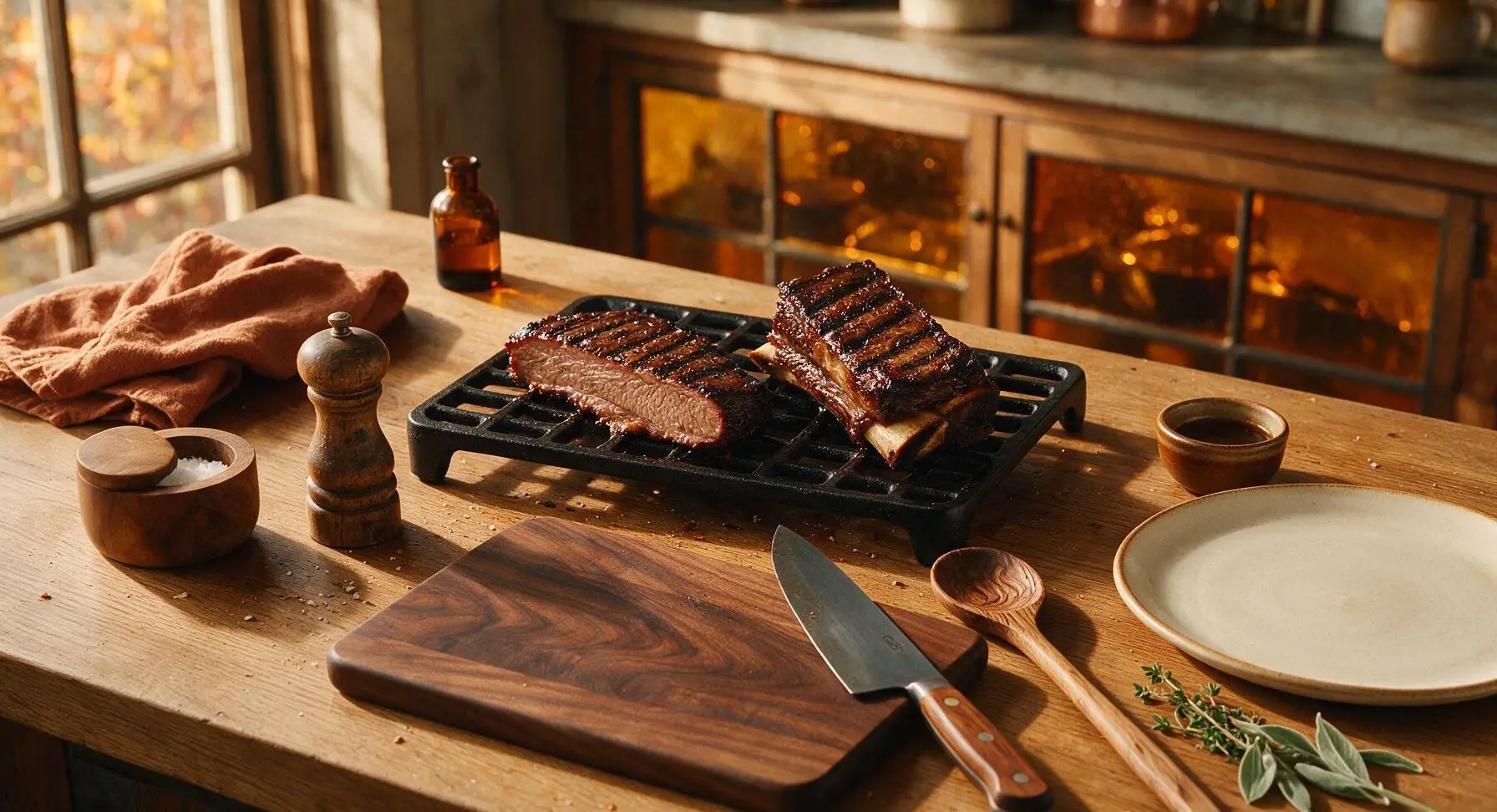
Step 4
step4:Sear Dense Cuts First
Step 4
step4:Sear Dense Cuts First
5

Grill Tender Loin Steaks

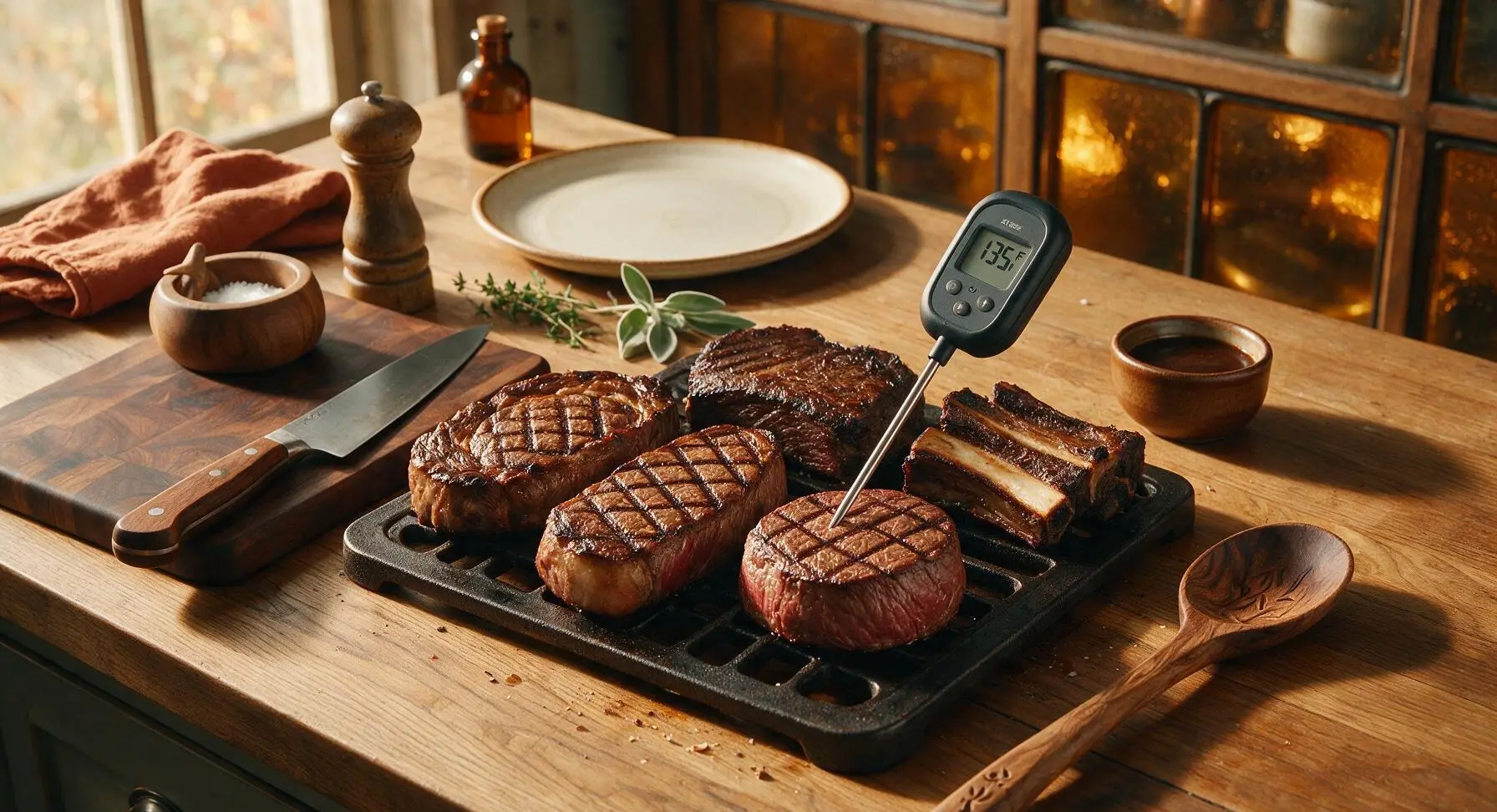
Move to the high-heat searing zone, placing ribeye, New York strip, and filet mignon on the grates. Sear for 4 minutes per side, without moving, to develop deep crosshatch grill marks. Cook until the digital instant-read thermometer registers 57C/135F for medium-rare, then transfer cuts to the trivet to rest alongside the denser cuts.
Step 5
step5:Grill Tender Loin Steaks
6

Cook Skirt Steak Fast

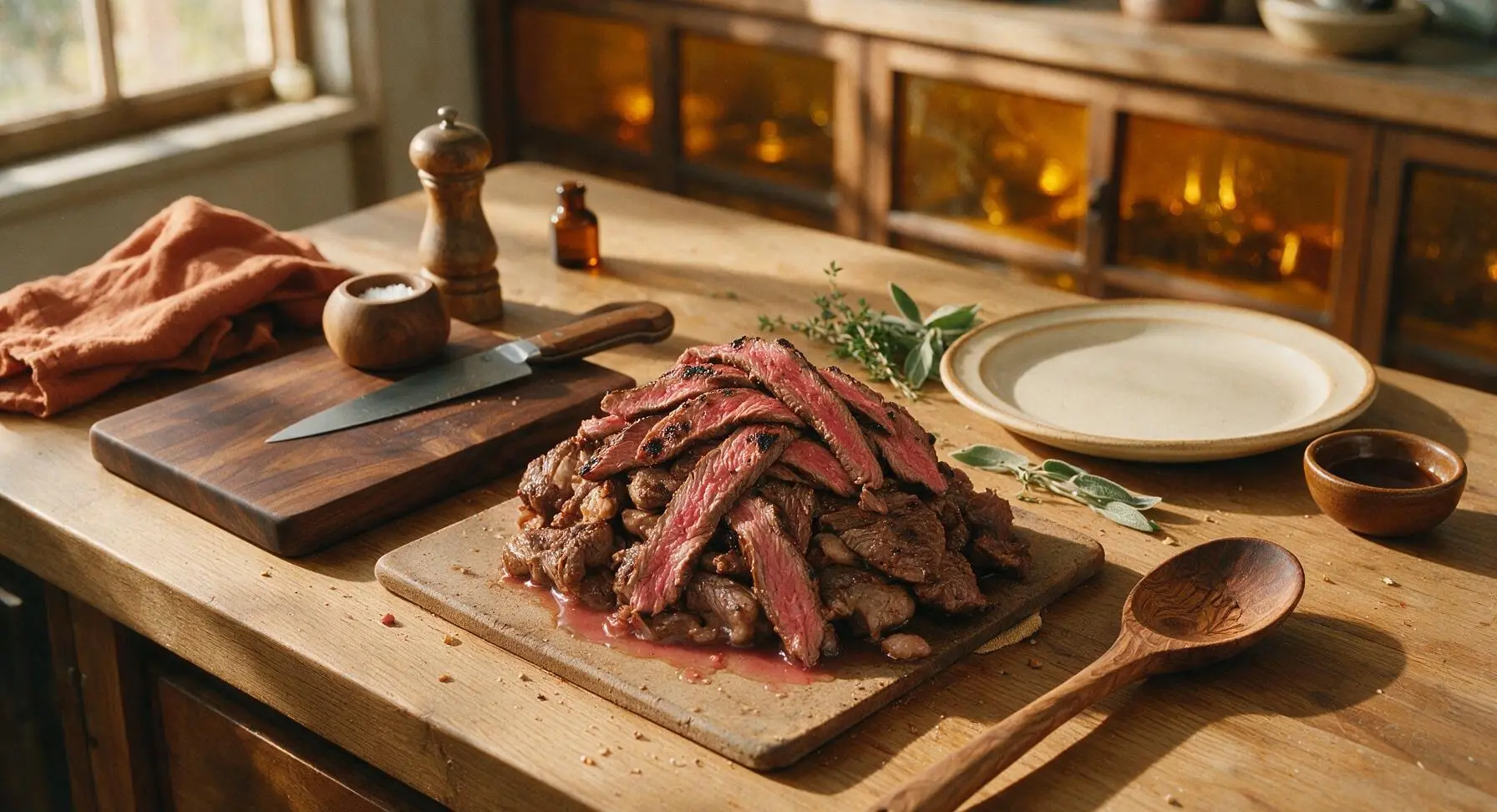
Place the thin skirt steak on the hottest part of the grill, cooking for only 2 minutes per side, until lightly charred on the outside and still bright pink in the center (internal temp 54C/130F). Skirt steak toughens quickly if overcooked, so pull it immediately once it hits temperature, then transfer to the trivet to rest for a total of 10 minutes with all other cuts.
Step 6
step6:Cook Skirt Steak Fast
7

Slice Against the Grain

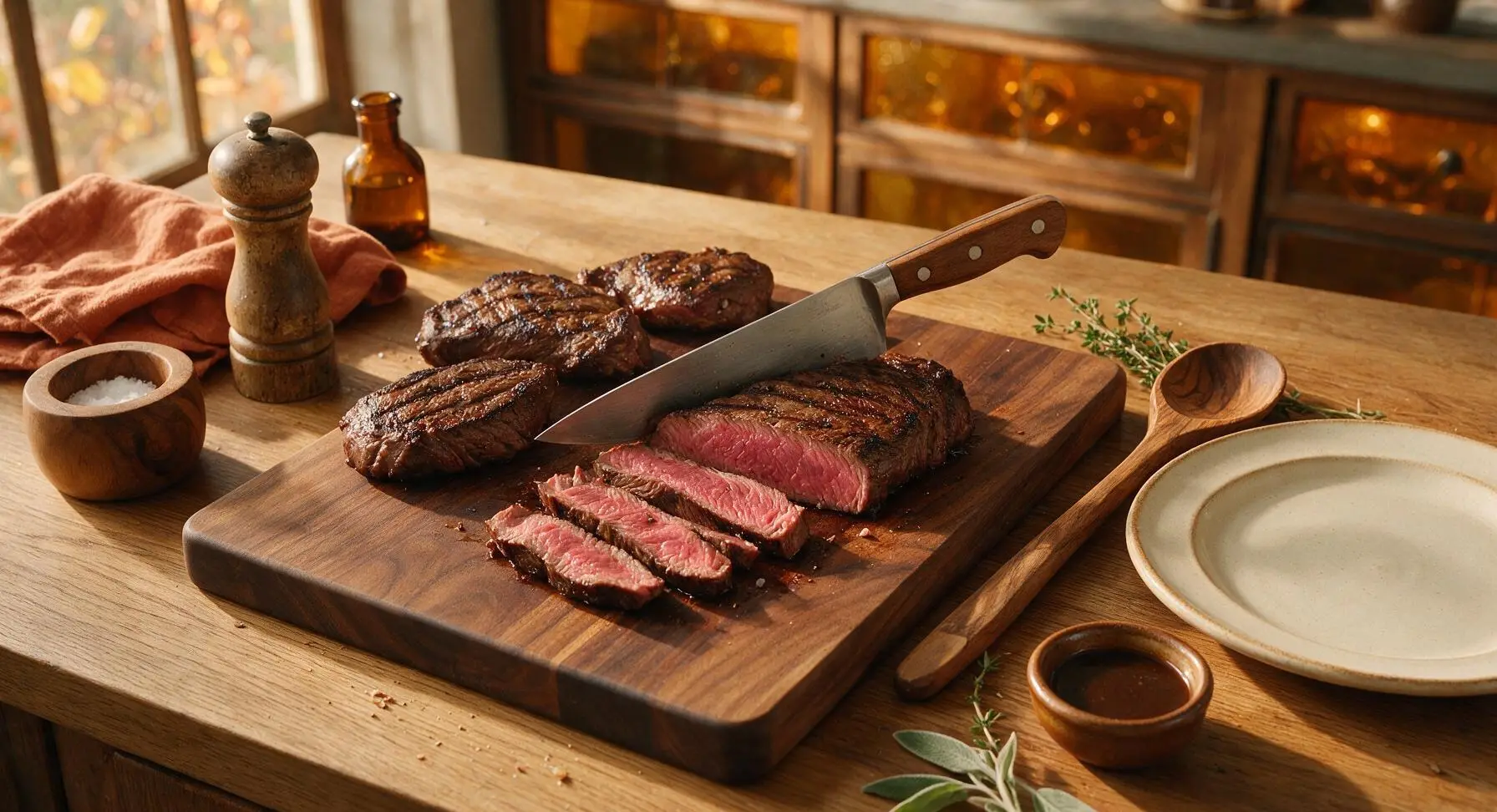
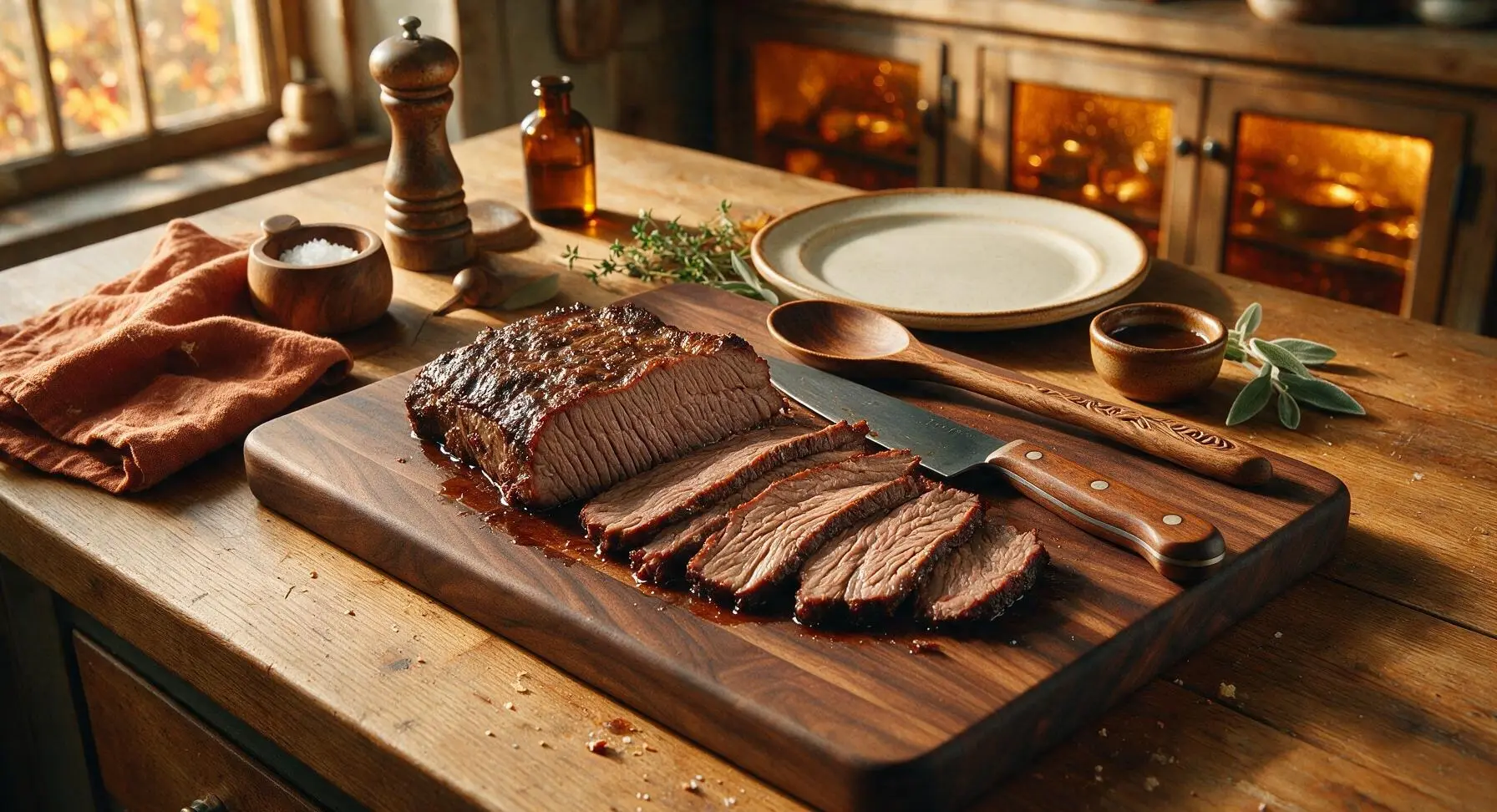
After the 10-minute rest, transfer all cuts back to the maple cutting board. Use the chef knife to slice each cut perpendicular to its muscle grain: cut brisket and skirt steak into thin 1cm slices, leave ribeye, New York strip, and filet as whole portions, cut the short rib into two bite-sized pieces. Note the distinct grain direction of each cut to ensure maximum tenderness when eaten.
Step 7
step7:Slice Against the Grain
Step 7
step7:Slice Against the Grain
8

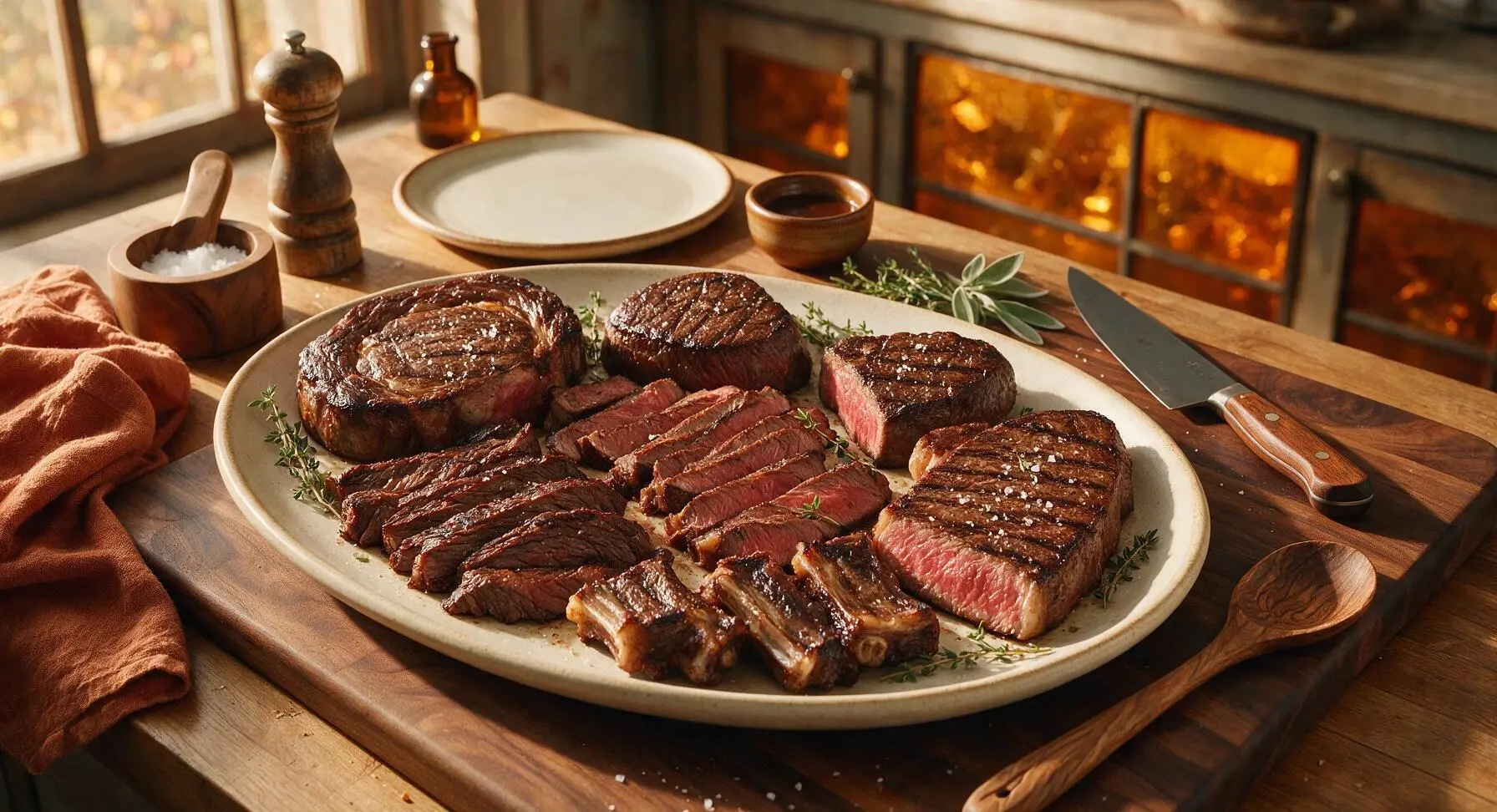
Arrange Tasting Platter

Transfer all sliced and whole cuts to the large oval matte white ceramic serving platter, arranging each cut in a separate section to highlight their unique appearance: whole ribeye, filet, and New York strip spaced around the platter edge, sliced brisket and skirt steak fanned in the center, short rib pieces at the platter bottom. Tuck fresh thyme sprigs between cuts, sprinkle lightly with 1 teaspoon flaky sea salt from the glass ramekin, and serve immediately.
Step 8
step8:Arrange Tasting Platter

Tips

1.Always identify muscle grain direction before slicing: hard-working cuts from the cow’s belly and front (skirt steak, brisket, short rib) have long, tough muscle fibers and must be sliced thinly against the grain to avoid chewy bites, while low-use loin cuts (filet, NY strip, ribeye) are tender enough to serve whole or thick-sliced.
2.Use dual grill heat zones because cuts from different parts of the cow have vastly different density and fat content: dense, well-exercised cuts need slower, lower heat to break down connective tissue, while tender, little-used loin cuts need fast, high heat to develop a crust without overcooking the interior.
3.Never skip the 10-minute post-cook rest: as meat cooks, muscle fibers contract and push moisture toward the surface; resting allows fibers to relax and reabsorb juice, so every cut will be juicy instead of leaking all its moisture onto the cutting board when sliced. Lean cuts like filet mignon benefit most from this rest.
✨ You May Also Like

BBQ & Grilling
🍜 United States

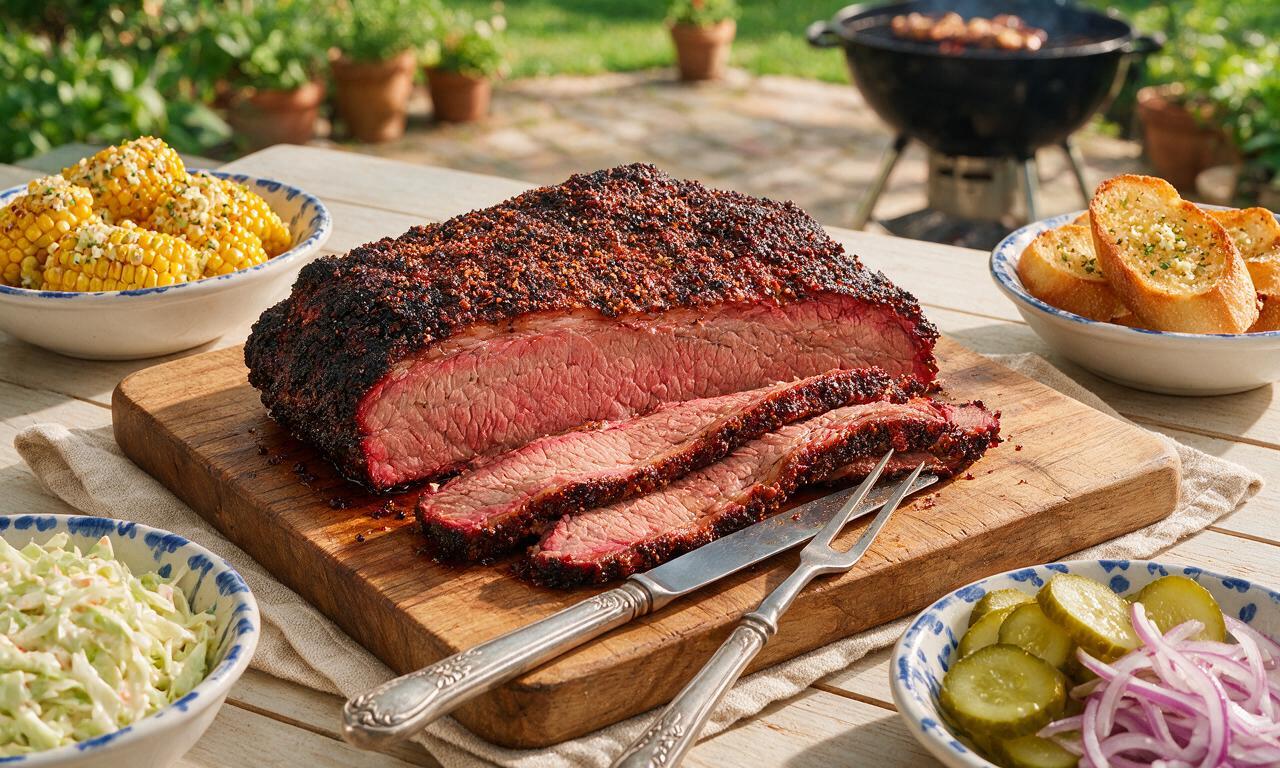
Tender, melt-in-your-mouth beef brisket with a crisp, spiced bark, slow-smoked to deep smoky perfection, the iconic centerpiece of Texas backyard barbecue.

⏱️ 12 hours BBQ & Grilling ★ 4.4
BBQ & Grilling
🍜 Korea

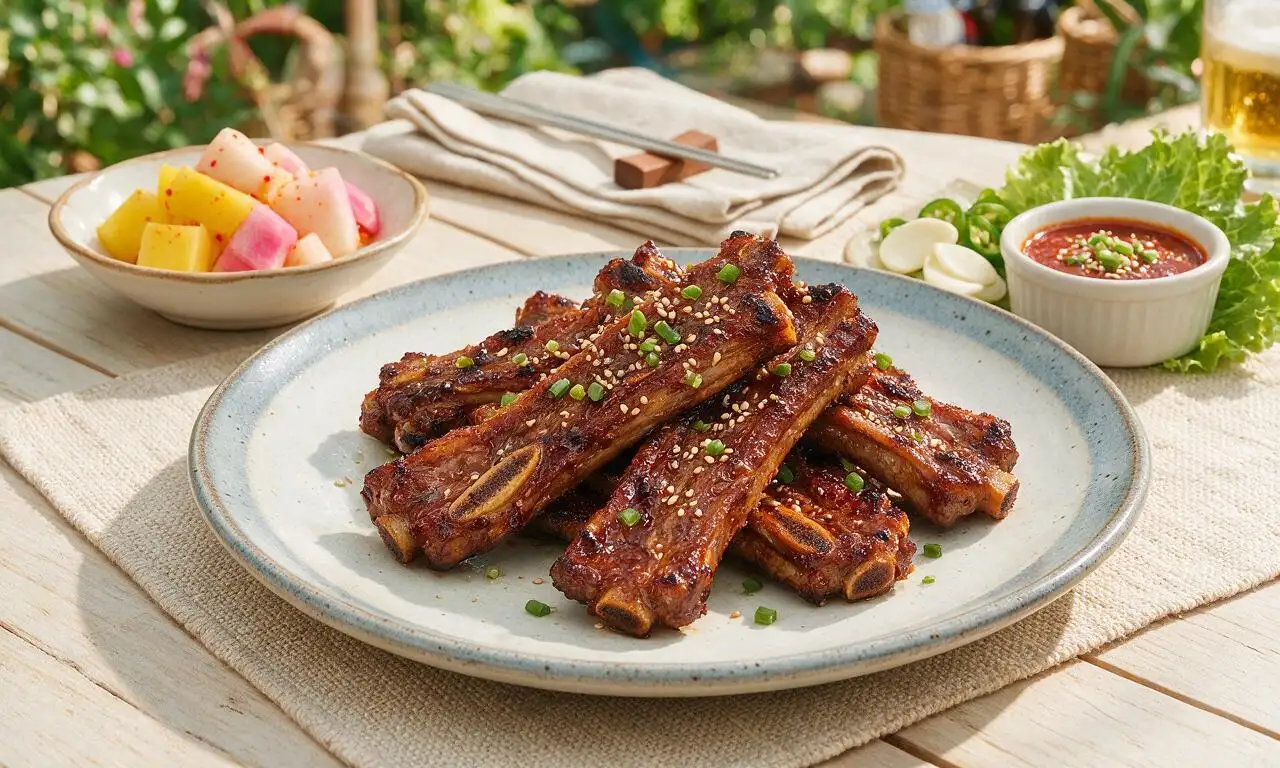
Tender, sweet-savory marinated beef short ribs, a beloved Korean BBQ staple with caramelized, slightly charred edges and deep umami flavor, perfect for outdoor summer gatherings.

⏱️ 4 hours 2BBQ & Grilling ★ 4.8
BBQ & Grilling
🍜 United States

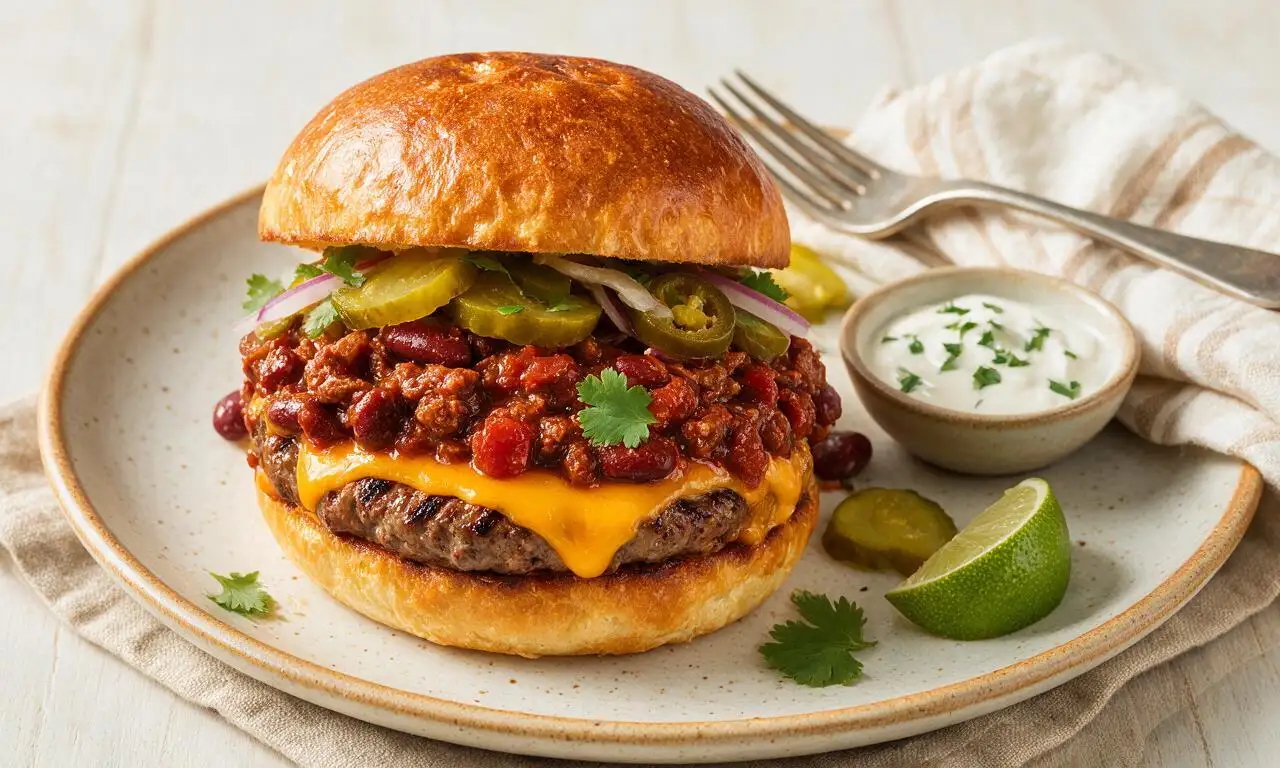
Juicy grilled beef patties topped with smoky homemade chili, melted cheddar, and tangy pickles on toasted brioche buns for a hearty, flavor-packed handheld meal.

⏱️ 40 minuteBBQ & Grilling ★ 4.7
BBQ & Grilling
🍜 United States

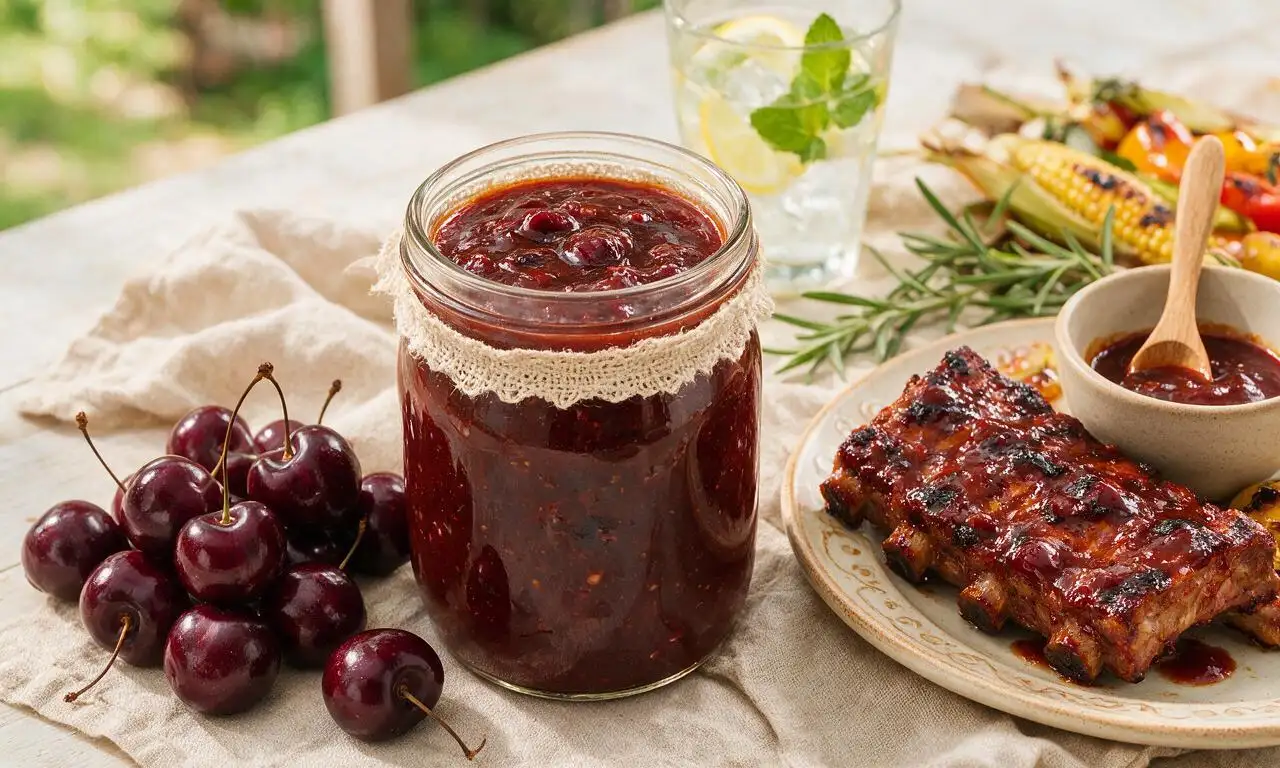
A sweet, smoky, tangy BBQ sauce brightened with peak-season dark cherries, ideal for glazing grilled ribs, chicken, pork, or summer roasted veggies.

⏱️ 35 minuteBBQ & Grilling ★ 4.7
BBQ & Grilling
🍜 United States

Rich, smoky, slightly sweet homemade bourbon BBQ sauce with deep caramel notes, ideal for glazing grilled ribs, chicken, and burgers at cookouts.

⏱️ 25 minuteBBQ & Grilling ★ 4.7
BBQ & Grilling
🍜 United States

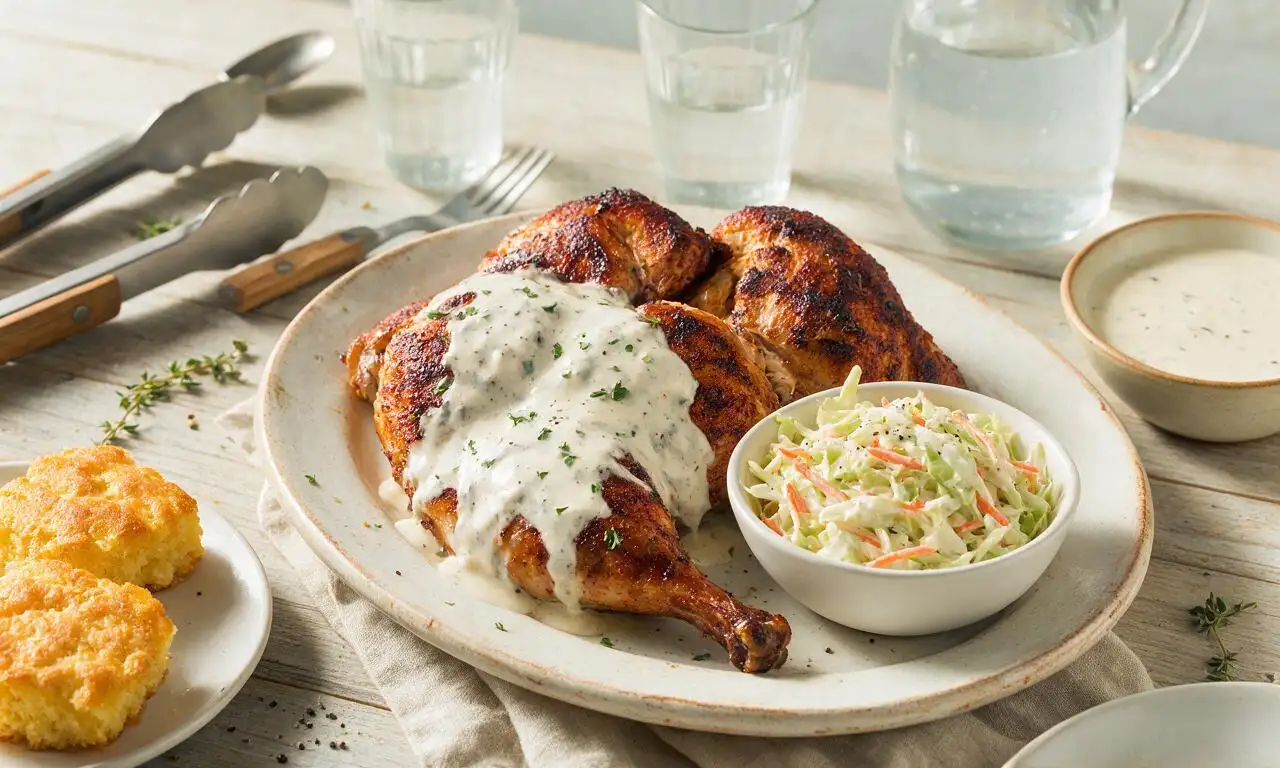
Iconic Alabama-style BBQ featuring tender hickory-smoked chicken slathered in tangy creamy white sauce, a beloved regional Southern cookout staple.

⏱️ 3 hoursBBQ & Grilling ★ 5

cuts of meat on a cow:Frequently Asked Questions

1.What grill setup works best for cooking all these different beef cuts at the same time? ▾
Use a two-zone charcoal or gas grill setup, with one high-heat zone (450–550°F) for searing and a medium-low indirect zone (325–375°F) for slower cooking. This lets you move cuts between zones as needed so thinner, tender cuts don’t burn while thicker, denser cuts cook through evenly.
2.What’s the ideal doneness for each cut on the platter to highlight its best qualities? ▾
For maximum flavor and texture, cook filet mignon and ribeye to medium-rare (130–135°F final temp after resting), New York strip to medium-rare to medium (135–140°F), skirt steak to medium-rare (130°F, sliced thin), and brisket flat to 195–205°F for that tender, pull-apart bite.
3.Do I need to season each cut differently, or can I use the same seasoning across the board? ▾
You can use a simple base of kosher salt and freshly cracked black pepper for all cuts to let natural beef flavor shine, but feel free to add a light smoky paprika rub to brisket, and a pinch of garlic powder to skirt steak. Avoid heavy, sugary rubs on tender cuts that will burn over high searing heat.
4.How far in advance should I salt the beef cuts before grilling? ▾
For the juiciest, most evenly seasoned results, salt all cuts 45 minutes to 24 hours before grilling, resting them uncovered on a wire rack in the fridge. This gives salt time to draw out surface moisture that dissolves the salt, then reabsorbs deep into the muscle for better flavor and tenderness.
5.Why does the brisket need a different cook time than the steaks on the platter? ▾
Brisket comes from the hard-working chest section of the cow, so it’s packed with tough connective tissue that needs low, slow heat to break down into silky, rich gelatin. The other cuts come from less worked muscle groups, so they cook hot and fast in minutes instead of the 1–2 hours brisket needs.
6.How long should I let each cut rest after grilling before slicing and serving? ▾
Rest thinner cuts like skirt steak and filet medallions for 5–7 minutes, thicker cuts like ribeye and New York strip for 10 minutes, and brisket flat for 20–30 minutes tented loosely in foil. Resting lets redistributed juices stay in the meat instead of running all over your platter when you slice.
7.Can I make this platter on a gas grill if I don’t have a charcoal grill? ▾
Absolutely! Just set one side of your gas grill to high and the other to medium-low to replicate the two-zone setup. For a subtle smoky flavor that matches charcoal, add a small foil pouch of soaked hickory or oak wood chips placed directly on the burner grate under the cooking grates when you preheat.
8.What’s the right way to slice each cut to avoid tough, chewy bites? ▾
Always slice against the grain for every cut, but adjust thickness to match texture: cut brisket and skirt steak into ¼-inch thin slices, ribeye and New York strip into ½-inch thick slices, and serve filet mignon medallions whole or halved for clean, tender bites that don’t require excessive chewing.
9.Is it okay to cook all the cuts straight from the fridge, or should I bring them to room temp first? ▾
Let all cuts sit out at room temperature for 30–45 minutes before grilling, except the brisket which can go on indirect heat straight from the fridge if needed. Room temperature meat cooks more evenly, so you won’t end up with a charred outside and raw, cold center on thicker steaks.
10.What sides pair best with this primal beef tasting platter? ▾
Stick to simple, bright sides that cut through rich beef: grilled corn with lime butter, creamy coleslaw, roasted garlic potatoes, charred scallions, and a simple arugula salad with lemon vinaigrette. Offer optional sauces like horseradish cream, chimichurri, and steak sauce for guests to customize bites.
11.How do I keep earlier-cooked cuts warm while I finish grilling the rest of the platter? ▾
Hold finished, rested cuts on a wire rack set over a baking sheet in a 200°F oven, tented very loosely with foil. Don’t wrap them tightly or stack them, as trapped steam will make crispy seared exteriors turn soggy, and can overcook delicate, tender cuts like filet mignon.
12.My outside skirt steak always turns out chewy—what am I doing wrong? ▾
Most chewy skirt steak comes from three common mistakes: cooking it past medium-rare, slicing it with the grain instead of against it, or cutting slices too thick. Skirt has very long, loose muscle fibers, so fast high-heat cooking, proper slicing, and ¼-inch thick cuts will give you tender, flavorful bites every time.
13.Can I substitute any of the cuts if I can’t find them at my local butcher? ▾
Absolutely! If you can’t find outside skirt, swap for hanger steak or flap meat; if filet mignon is out of budget, swap for top sirloin medallions; if brisket flat is hard to source, use a 1-inch thick chuck short rib slice cooked low and slow to match that deep, beefy profile.
14.Should I use wood smoke when grilling this platter, and if so, what wood works best? ▾
A light amount of oak or hickory smoke complements all these cuts beautifully without overpowering their natural flavor. Add just 4–5 wood chunks to charcoal, or a small foil pouch of chips for gas grills—heavy mesquite smoke will make delicate cuts like filet taste bitter, so skip it for this spread.
15.What internal temperature should I target to avoid overcooking each cut? ▾
Use an instant-read thermometer for accuracy: pull filet, ribeye, and skirt at 125°F for medium-rare (they’ll rise 5°F while resting), New York strip at 130°F for medium-rare to medium, and brisket when it probes tender like butter at 195–205°F. Never rely on cut color alone to judge doneness.
16.Do I need to marinate any of the cuts before grilling? ▾
The only cut that benefits from a short marinade is skirt steak—marinate it for 1–2 hours max in a mix of olive oil, garlic, lime juice, and soy sauce to tenderize its loose fibers. The other cuts are naturally tender or (for brisket) get tender from slow cooking, so heavy marinades will mask their natural beefy flavor.
17.How much total beef per person should I plan for when serving this platter? ▾
Plan for 8–10 ounces of total cooked beef per guest, since there will be a mix of rich, marbled cuts and leaner, denser cuts. That works out to roughly 12–14 ounces of raw beef per person, accounting for moisture loss during cooking and any small bits of trim you remove before serving.
18.Why is bone-in ribeye recommended instead of boneless for this platter? ▾
The bone in ribeye insulates the meat right next to it as it cooks, leading to more evenly cooked, juicier bites, plus the bone and attached fat add extra deep, beefy flavor as it renders over the grill. If you only have boneless ribeye on hand, it works perfectly fine—you just miss that subtle bone-in depth.
19.What’s the biggest mistake people make when putting together a mixed beef cut platter like this? ▾
The most common mistake is cooking every cut the exact same way over the same heat for the same amount of time. Each primal cut has a totally different muscle and fat structure, so matching cook method and temperature to each cut, rather than treating all beef the same, is what makes the platter taste intentional and delicious.
20.Can I prep any parts of this platter ahead of time to make hosting easier? ▾
You can cook the brisket a full day ahead, let it cool, wrap it tightly, and store it in the fridge, then reheat it gently in a 250°F oven for 30 minutes before serving. You can also pre-season all the steaks 24 hours ahead and hold them on wire racks in the fridge, so all you have to do on cook day is grill the fast-cooking steaks.

Comments (9)

2 days ago

OMG this platter was the star of our Memorial Day cookout! I grabbed brisket, ribeye, and sirloin cuts like the recipe suggested, seasoned simply, and everyone went back for seconds. Even my picky teen who only eats chicken raved about how juicy the ribeye was. 10/10 will make again for our next potluck!

yesterday

Wait did you use the recommended wood chips for grilling? I’m making this for my dad’s birthday this weekend and don’t want to mess it up!

2 hours ago

So glad this was a hit at your cookout! For anyone wondering, mesquite or hickory wood chips work perfectly for that deep, smoky flavor that pairs so well with all the different cuts—just don’t oversmoke the thinner cuts like skirt steak!

3 days ago

30 minute cook time? I was skeptical at first, but this came together so fast for our Sunday family dinner! I picked up pre-cut primal samples from my local butcher, followed the timing guide for each cut, and every single piece was perfectly medium-rare. Total game changer for when we want a fancy-feeling meal without all the fuss.

2 days ago

Love that! The key is having all your cuts prepped and at room temp before you fire up the grill so you don’t waste time waiting between batches—so glad it worked for your family dinner!

1 week ago

Made this last night for date night, and my partner thought I ordered from a high end steakhouse! The tip about salting the cuts 40 minutes ahead of time? CHEF’S KISS. No tough bits, every cut had that perfect crust. Will absolutely be adding this to our regular rotation.

5 days ago

That pre-salting trick makes such a huge difference, right? It helps the beef retain moisture and build that perfect crispy crust you mentioned—so glad your date night dinner was a hit!

5 days ago

I made a small test batch of this last night and it was so tasty! Has anyone tried making a bigger batch for meal prep? I’m wondering if the leftover beef holds up well for salads and wraps throughout the week? I’d love to add this to my weekly prep but don’t want to waste good steak if it gets tough in the fridge.

3 days ago

I did this last week! I stored the slices in an airtight container with a little bit of au jus and they stayed super tender. Perfect for steak salads for lunch all week, didn’t get dry at all!

2 days ago

Great question! As Liz mentioned, storing sliced leftover beef with a splash of beef broth or reserved drippings in an airtight container keeps it perfectly tender for 3-4 days in the fridge—great for quick meals!

yesterday

Tried this last night and messed up the timing on the filet, oops. Ended up a little more well done than I like but the flavor was still incredible! My kids loved it, they had a blast trying different cuts instead of just our usual hamburgers on grill night.

2 hours ago

I had the same issue my first time! I started setting a separate timer for each cut based on thickness instead of relying on total time and it worked perfectly the second go-round. The thicker cuts go on first, right?

30 minutes ago

Such a good tip about the separate timers for each thickness! And you’re exactly right—toss the thickest cuts on the grill first, then add thinner ones like skirt steak a few minutes later so everything finishes cooking at the same time. No more overdone thin cuts or underdone thick ones!

2 weeks ago

SO good! I threw on some bell peppers and onions on the side of the grill to serve with the platter, plus a little horseradish cream for dipping, and it was *chef’s kiss*. Perfect for a casual get together with friends, everyone got to pick their favorite cut without anyone complaining.

30 minutes ago

Medium difficulty is spot on for this one—you do have to pay attention to each cut’s cook time, but it’s totally doable even if you’re not a professional grill person. I was worried I’d overcook the skirt steak but the timing guide in the recipe was so accurate. Best grilled beef I’ve made all summer!

5 minutes ago

So happy to hear the timing guide worked for you! That’s the trickiest part of a mixed cut platter since each primal has a different ideal cook time, so I’m glad it came out perfectly for you.

2 hours ago

I made this for my husband’s birthday dinner and he said it was better than the steakhouse we went to for our anniversary! Only thing is I wish I’d bought more—we had 4 people and every last bite was gone in 10 minutes flat. Next time I’m doubling the recipe for sure!

30 minutes ago

Doubling is always a good call with this platter! I’ve had people tell me even 1.5x the recipe gets wiped out fast at gatherings—nothing beats a spread of perfectly grilled different beef cuts, right?

5 minutes ago

Solid recipe! I swapped one of the cuts for some hanger steak since that’s what my butcher had in stock, and it worked perfectly on the platter. The dry rub ratio is perfect, not too salty so you can really taste the difference between each primal cut. My only note is to make sure your grill grates are super clean so you get those nice sear marks without sticking!