
Doenjang Jjigae
intro
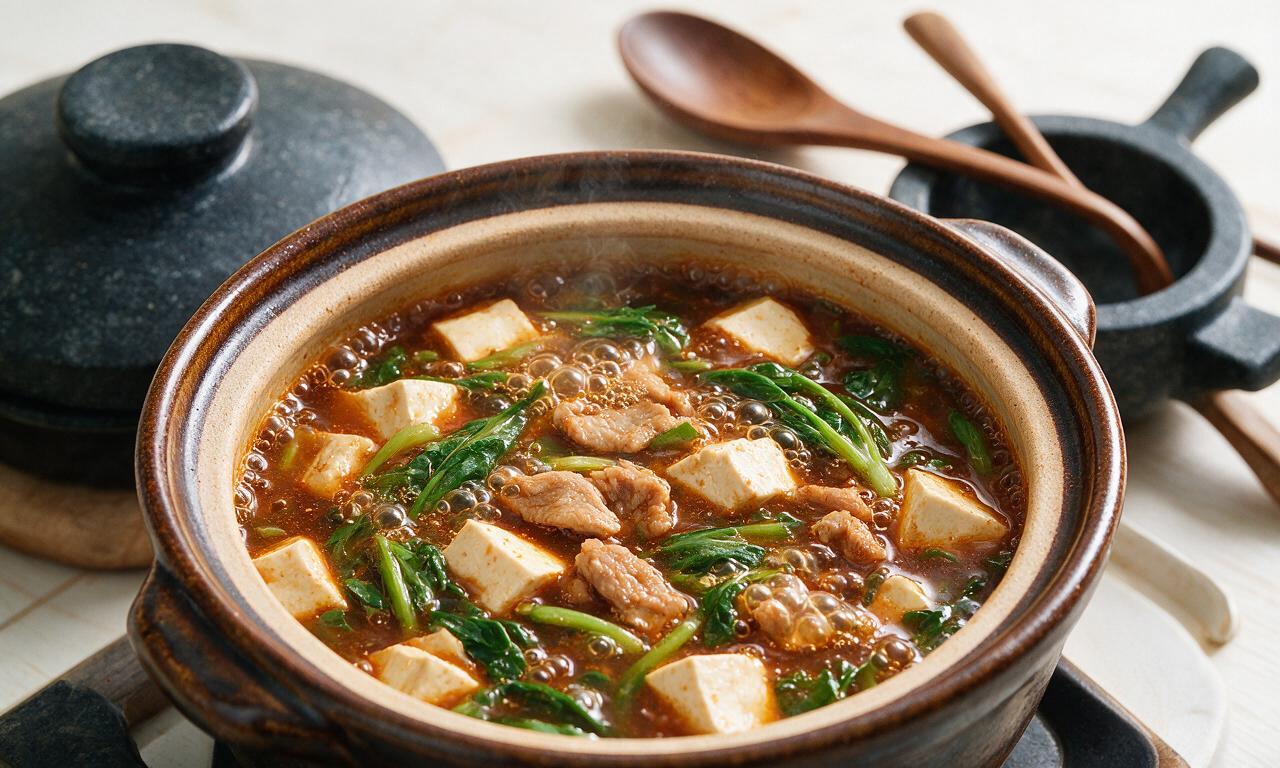
Warm, umami-rich Korean soybean paste stew loaded with tender vegetables, soft tofu, and savory pork, served bubbling hot for cozy, quick weeknight comfort.
Ingredients
Steps
Prep all ingredients
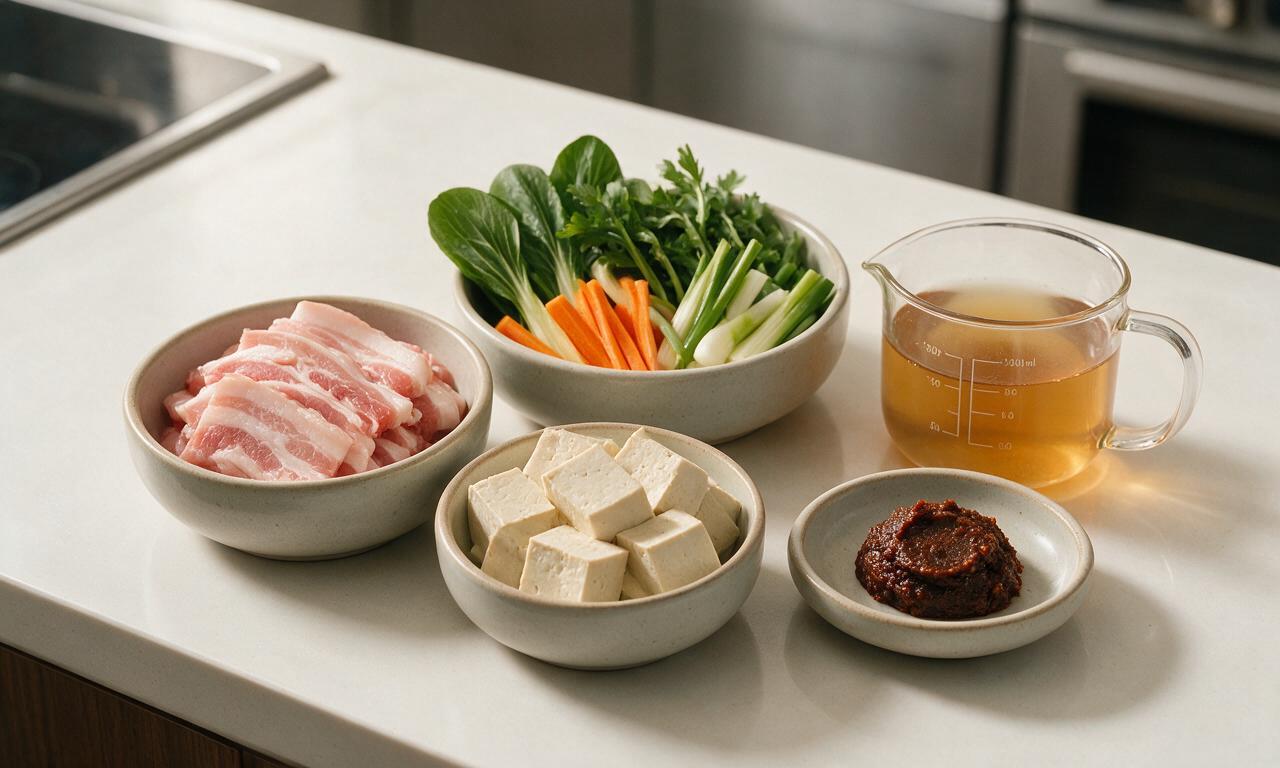
First, prep all measured ingredients to their specified cuts: slice pork belly into 1cm-wide strips, cut tofu into 2.5cm cubes, peel and cube potato into 2cm pieces, slice zucchini into 1cm half-moons, thinly slice yellow onion, mince garlic, and cut green onion into 2.5cm segments. Set all prepped items within easy reach to streamline cooking; this prep takes approximately 10 minutes.
Sear the pork belly
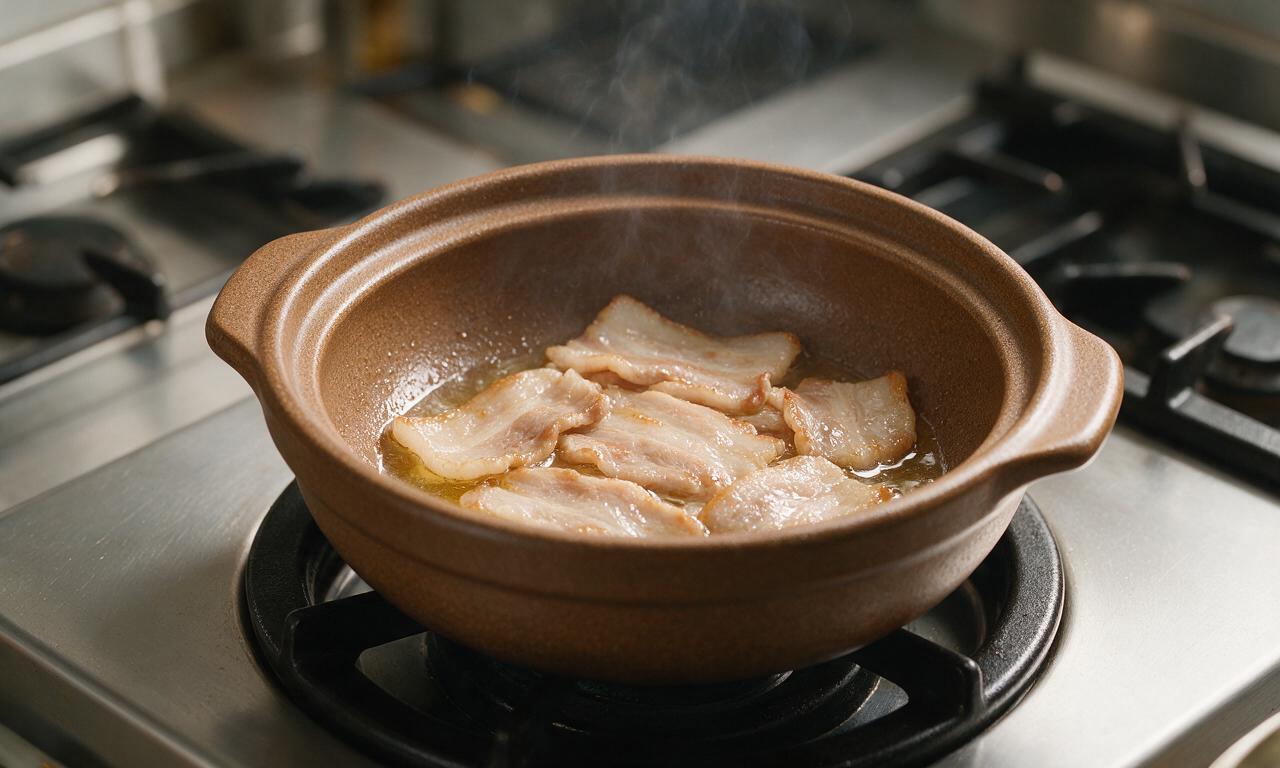
Place a 3L (3 quart) Korean earthenware ttukbaegi or heavy-bottomed soup pot over medium heat (stove setting 5 out of 10). Once the pot is hot after 2 minutes, add the sliced pork belly in a single layer. Sear for 3 minutes, flipping once halfway through, until the edges turn light golden and the pork renders 1-2 tablespoons of clear fat. Do not fully crisp the pork, as it will continue to cook in the stew.
Sauté aromatic vegetables
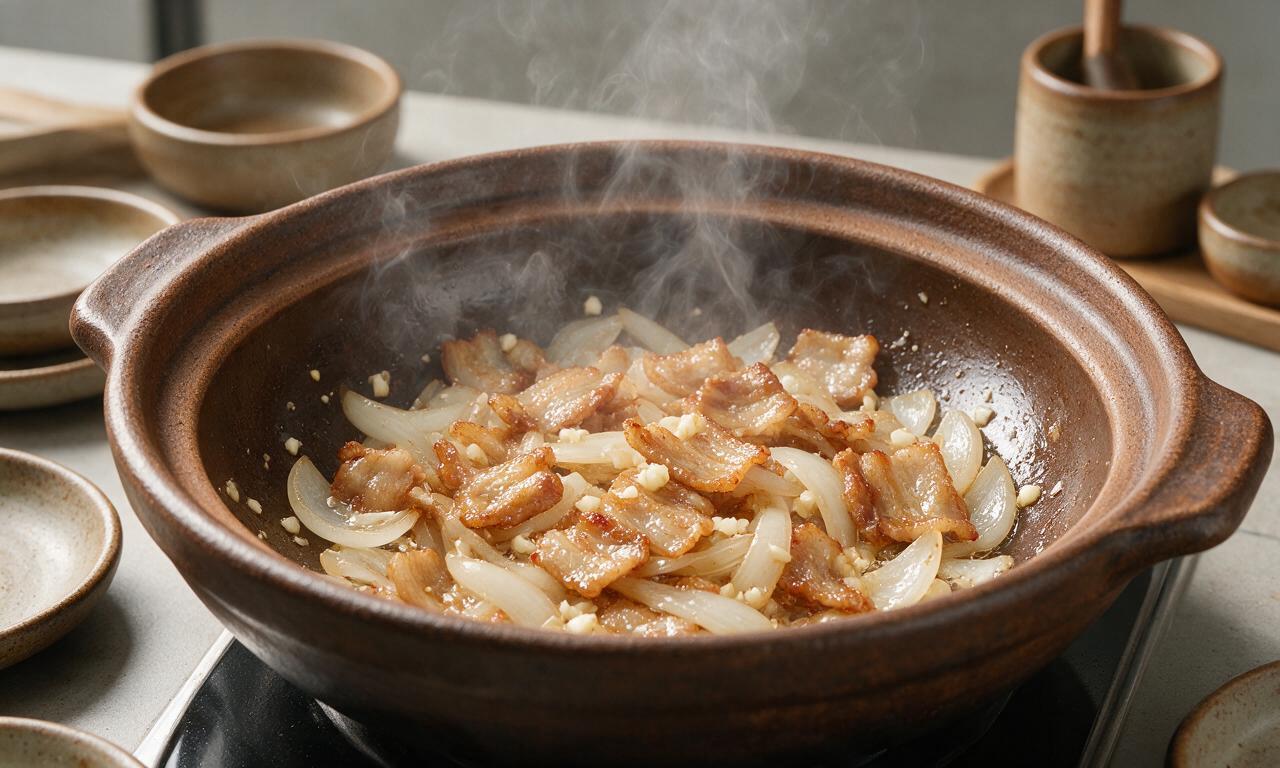
Add the sliced yellow onion and minced garlic to the pot with the seared pork, stirring to coat the vegetables in the rendered pork fat. Sauté over medium heat for 2 minutes, stirring occasionally, until the onion turns soft and translucent and the garlic releases a fragrant, nutty aroma. Take care not to burn the garlic, as it will turn bitter and ruin the stew’s balanced flavor.
Build the stew base
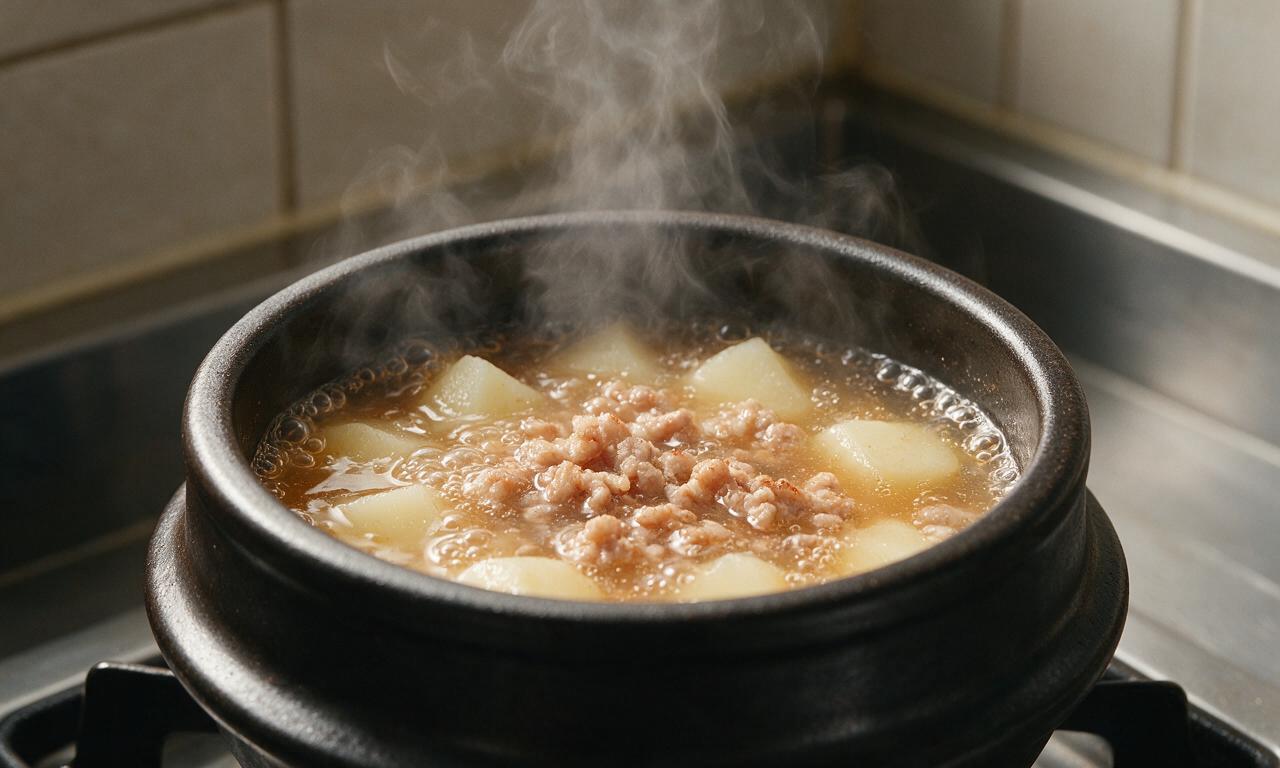
Pour the full 4 cups (960ml) of unsalted anchovy stock into the pot, then turn the heat up to medium-high (stove setting 7 out of 10) to bring the liquid to a rolling boil, which takes about 4 minutes. Once boiling, add the cubed potato, stir once, then reduce heat to medium-low (stove setting 4 out of 10) to maintain a gentle, steady simmer. Cook the potato for 7 minutes, until it is just tender when pierced with the tip of a fork.
Add doenjang and core ingredients
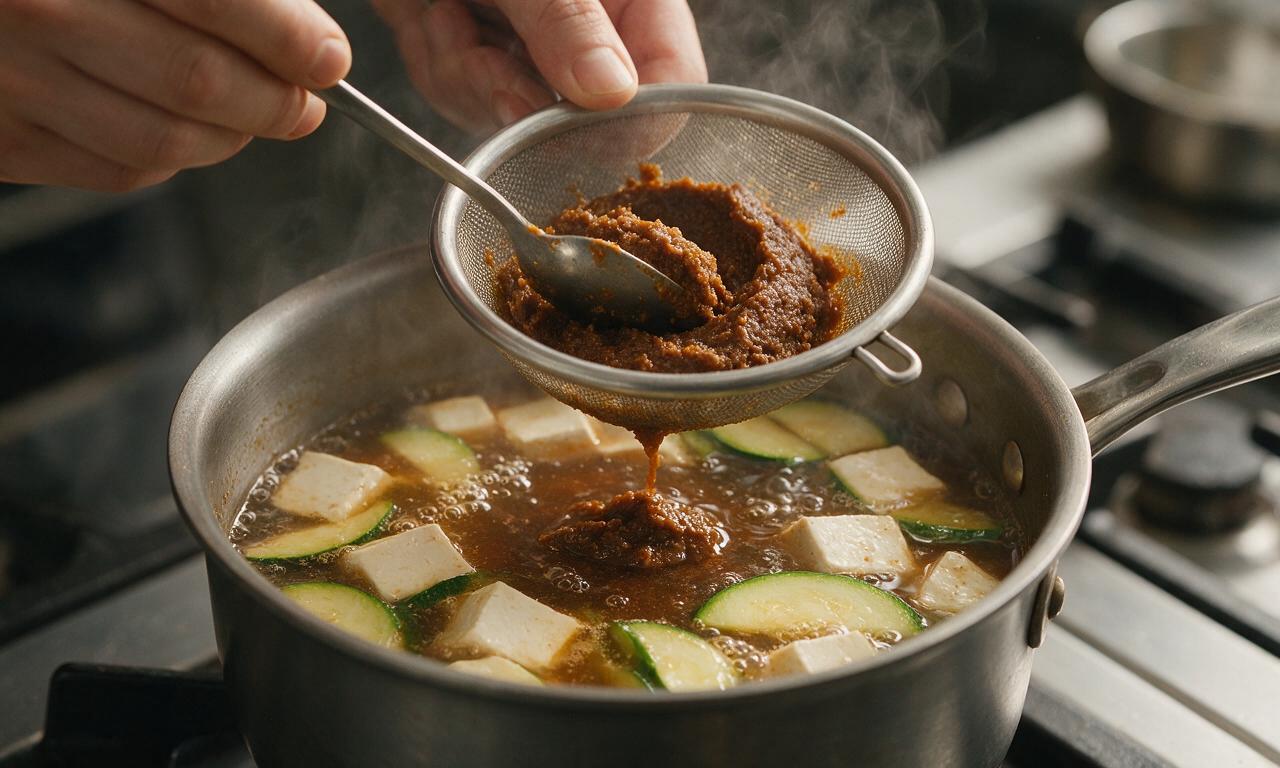
Scoop the 3 tablespoons (45g) of doenjang into a small fine-mesh sieve held over the simmering stew, and press the paste through the sieve with the back of a spoon to fully dissolve it into the broth, leaving any tough, gritty soybean particles behind in the sieve. Add the sliced zucchini and cubed tofu to the pot, stirring very gently to avoid breaking the soft tofu. Keep the stew at a gentle medium-low simmer for 5 more minutes, so the flavors meld together and the zucchini turns tender-crisp.
Finish and serve hot
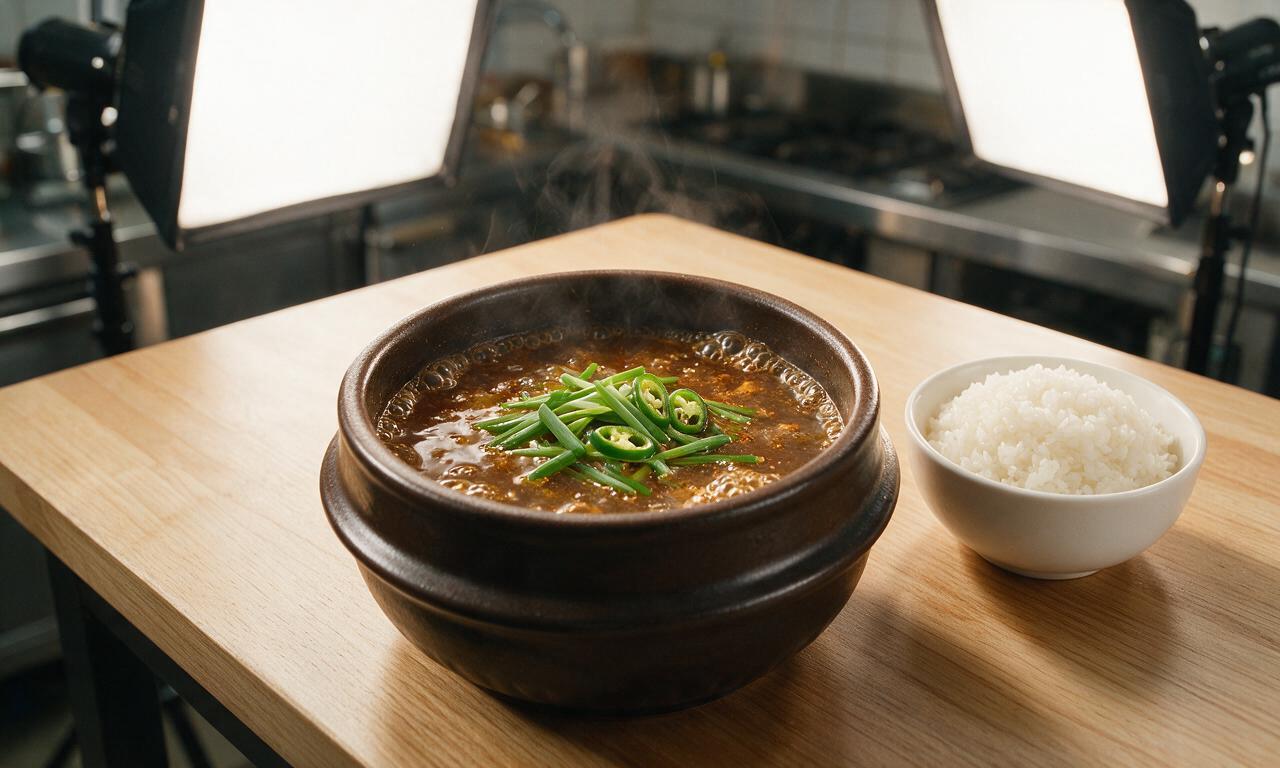
Add the cut green onion segments and optional sliced serrano chili to the pot, stir once very gently, and let the stew simmer for 1 final minute over low heat (stove setting 2 out of 10). Turn off the heat, and serve the stew immediately while it is still bubbling, paired with fluffy steamed white rice and small Korean side dishes (banchan) for a full meal. Do not overcook the green onion, as it will lose its bright, fresh flavor and turn mushy.
Tips
2.If you do not own a Korean ttukbaegi (earthenware pot), use a heavy-bottomed stainless steel or enamel Dutch oven; thin aluminum pots distribute heat poorly and will easily scorch the stew at the base.
3.Taste the stew before serving: doenjang varies widely in saltiness and fermentation depth between brands, so add ¼ cup extra stock if it tastes too salty, or stir in an extra ½ tablespoon of paste if the flavor is too mild.
OMG this was SO good!!! I’ve been intimidated to make doenjang jjigae at home forever because I thought it’d be super complicated, but 30 minutes total? Are you kidding? Threw in some extra zucchini from my garden and served it with rice for my family dinner last night, my kids asked for seconds before they even finished their first bowl. Total game changer for weeknight meals!
Made a big batch of this for my weekly meal prep on Sunday, and it held up amazing all week in the fridge! I added some extra tofu and cubed potatoes to make it heartier, and it was so satisfying coming home from the gym to a warm bowl every night. Way cheaper than getting takeout jjigae from the local Korean spot too, 10/10.
Brought this to my office potluck last week and everyone was hounding me for the recipe! I left out the anchovy stock to make it vegetarian (used veggie broth instead) and it still had that deep, umami punch I was craving. Even my coworker who swears he “hates Asian food” went back for two helpings.
Wait, quick question before I make this tonight—do I have to use the coarse gochugaru? I only have the fine stuff in my pantry from making tteokbokki last month. Also, can I throw in some kimchi that’s about to go bad in my fridge? I hate wasting food! This looks so easy, I can’t wait to try it!
Made this for my boyfriend last night for our at-home date night (we’ve been binging K-dramas lately so I wanted to make something on theme) and he was convinced I ordered it from our favorite Korean restaurant downtown! He kept asking how I made it taste so authentic, little does he know how easy the recipe was. Will definitely be making this again soon.
I’ve been making doenjang jjigae for 40 years since I was stationed in Seoul in the Army, and this recipe is spot on for the classic, no-fuss version I remember eating at little neighborhood spots. Don’t overcomplicate it, folks—this is exactly how it’s supposed to taste. I add a little dash of sesame oil at the end just like my old neighbor taught me, highly recommend.
So happy I found this recipe! I have celiac so I was worried about finding a gluten-free doenjang (so many store brands have wheat in them!) but I tracked down a GF tub at my local Asian market and this came out perfect. Cozy, savory, perfect for the random cold snap we had here this week.
Made this in my dorm room with my little electric hot pot and it turned out insane!!! I didn’t have all the veggies so I just used frozen mixed veggies and pre-cubed tofu from the dining hall, and it still slapped. Spent like $5 total on ingredients vs $18 for a bowl at the place near campus.
I was worried the soybean paste flavor would be too strong for my picky 7 year old, but I let her help me stir the pot and add the tofu, and she ate a whole bowl! She even said it tastes like “Korean soup that hugs you” lmao. Served with a side of white rice and some roasted seaweed, and it was the fastest weeknight dinner I’ve made all month.
Took me a minute to find doenjang at my regular grocery store, but once I tracked it down this came together so fast. I added some clams like I get at my local K-BBQ spot and it took the flavor over the top. Perfect comfort food for a lazy Sunday, will be in my regular rotation from now on.
Okay full transparency, I burned the garlic a little bit when I was sautéing the veggies, but this stew still turned out SO good. The doenjang flavor is so rich and savory it covered up my mistake entirely! Next time I’ll keep the heat a little lower, but even with my mess up this was way better than I expected for my first time making Korean food at home.
Made this over a camp stove last weekend on our fall camping trip and it was the perfect cozy meal after a long day of hiking! Pre-chopped all the veggies at home and packed the doenjang in a little travel container, so all I had to do was throw everything in the pot over the fire. Everyone in our camping group was jealous of our warm, hearty stew while they were eating cold granola bars lmao.