
Easter Bread
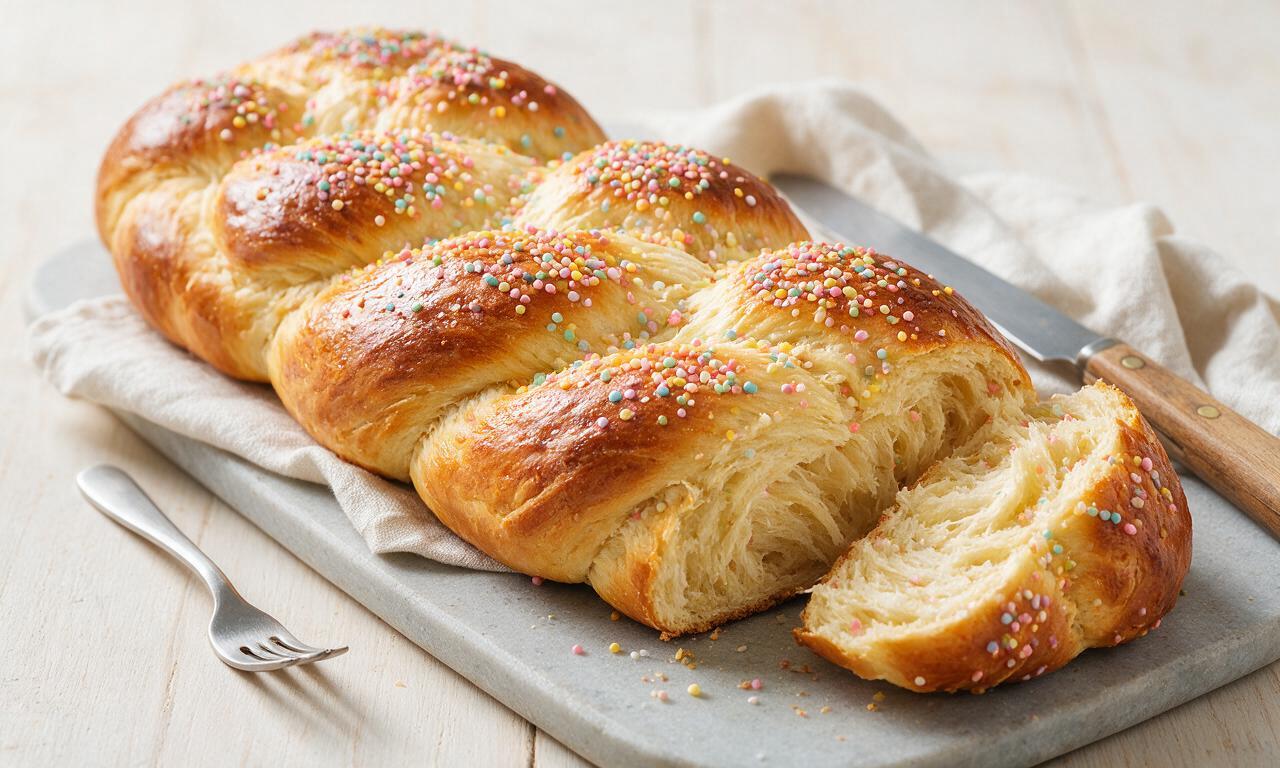
intro
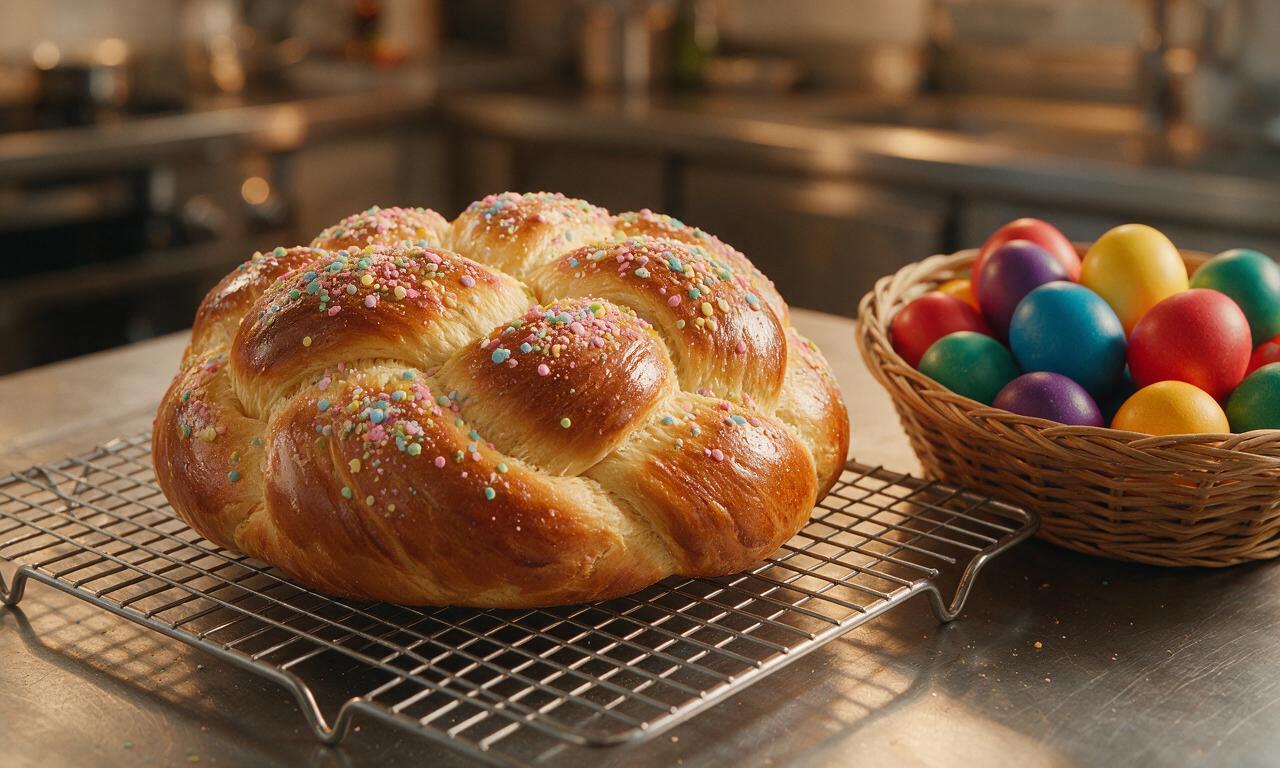
Soft, citrus-kissed braided sweet bread with a golden crust and pastel sprinkles, made to share with family during spring Easter celebrations.
Ingredients
Steps
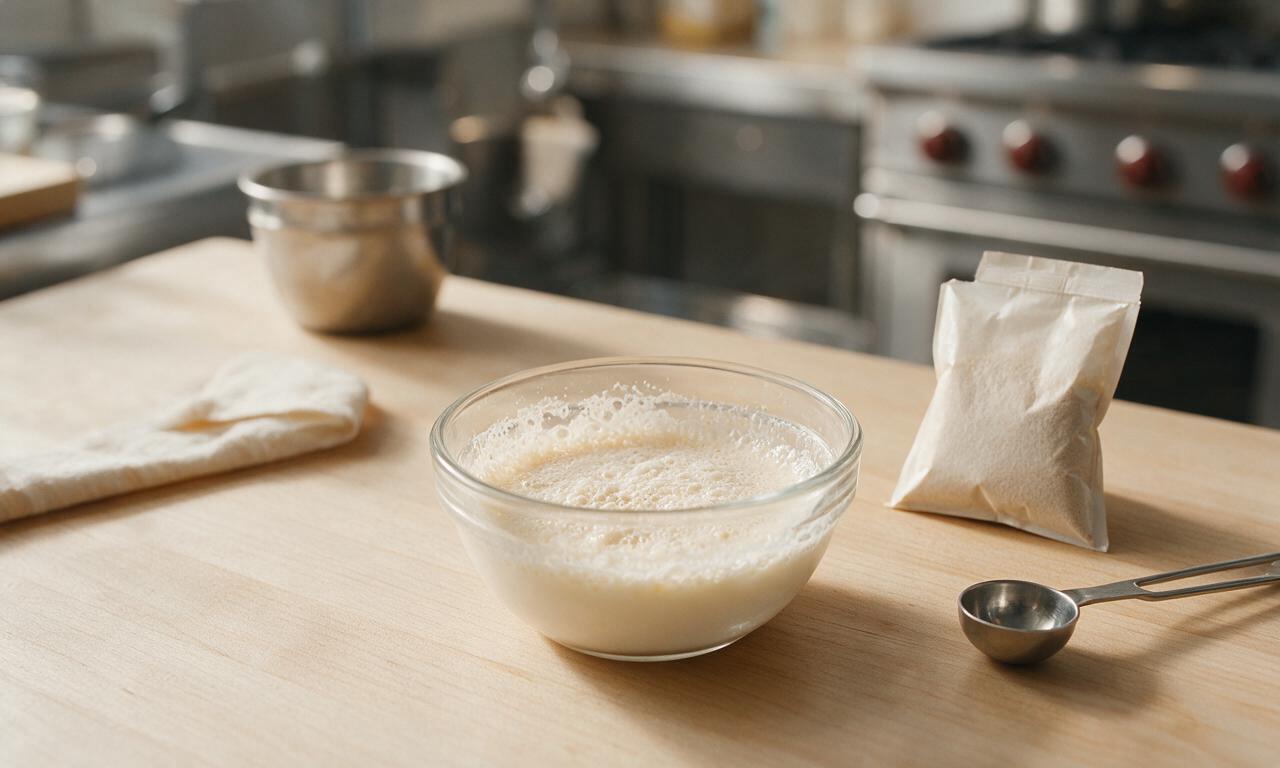
Activate the yeast
In a small bowl, combine warmed 180ml (3/4 cup) whole milk (heated to exactly 38°C/100°F, do not exceed 40°C/105°F), 1 tablespoon of the measured granulated sugar, and 7g (2 1/4 tsp) active dry yeast. Stir once gently to combine, then let rest for 5-7 minutes at room temperature until the surface is foamy and frothy, confirming the yeast is active.
Mix the dough base
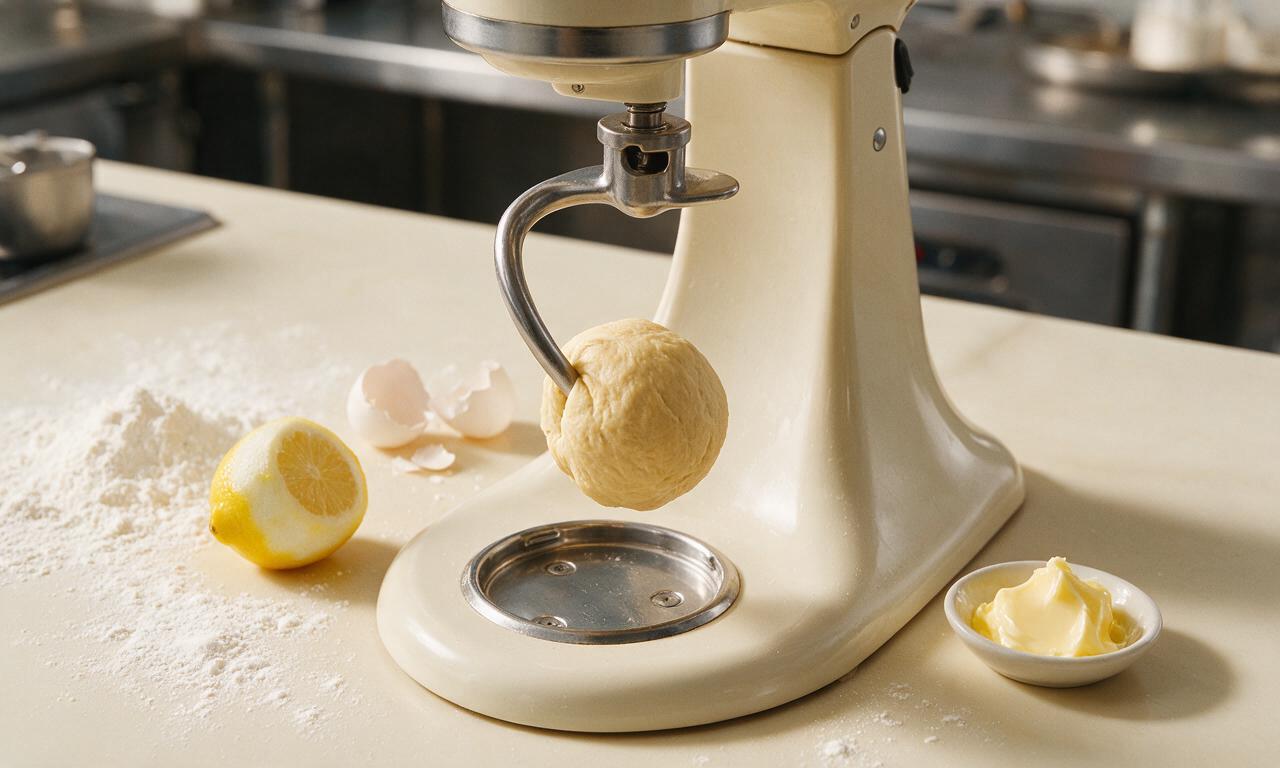
In the bowl of a stand mixer fitted with a dough hook, add 500g (4 cups, spooned and leveled) all-purpose flour, the remaining granulated sugar, 1 tsp fine table salt, 1 tbsp fresh lemon zest, and 1 tsp pure vanilla extract. Pour in the activated yeast mixture, 3 room-temperature large eggs, and 85g (6 tbsp) cooled melted butter. Mix on low speed (speed 2 on most household stand mixers) for 8 full minutes, until a smooth, soft, slightly tacky dough forms that pulls cleanly away from the bowl sides.
First dough rise
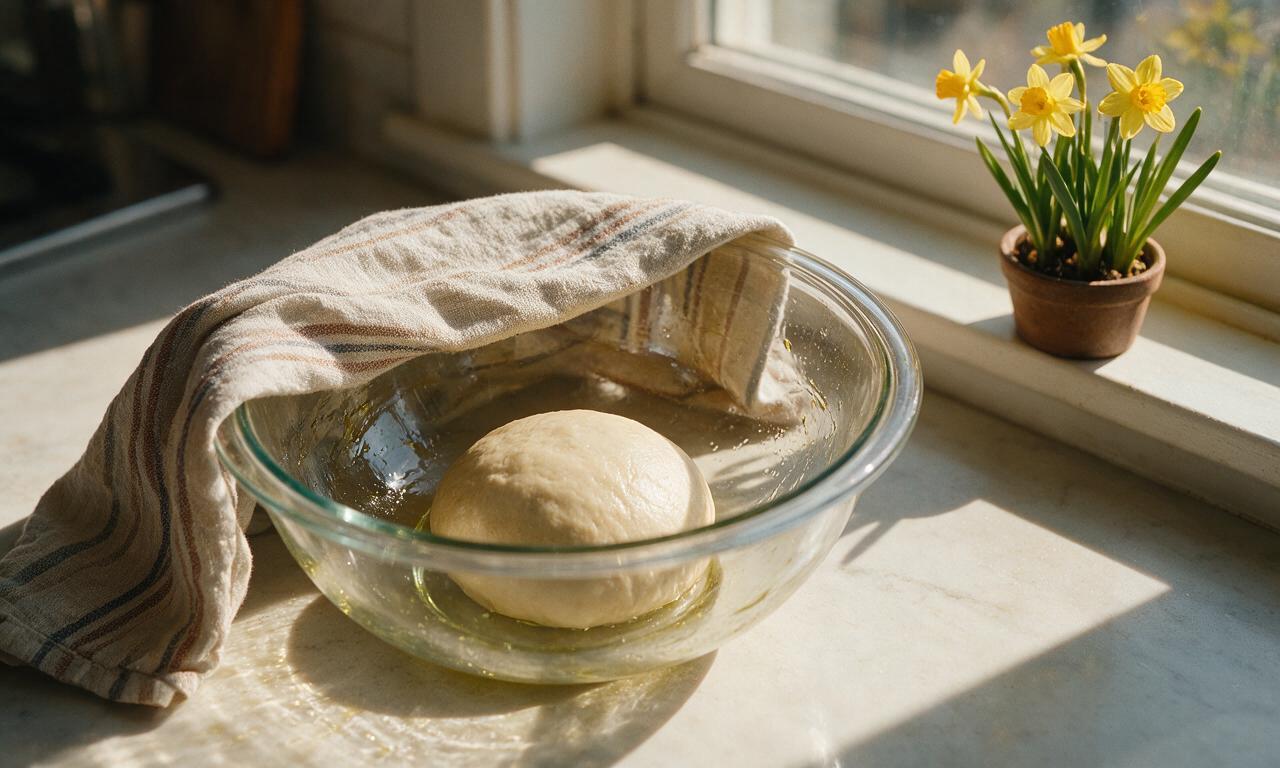
Grease a large 3L (3 quart) glass bowl with 1 tsp unsalted butter, form the mixed dough into a tight smooth ball, and place it in the bowl, turning once to coat the dough surface lightly in butter. Cover the bowl tightly with plastic wrap and a clean cotton kitchen towel, then set it in a warm, draft-free spot (24-27°C/75-80°F) for 60 minutes, or until the dough has doubled in volume.
Braid the dough loaf
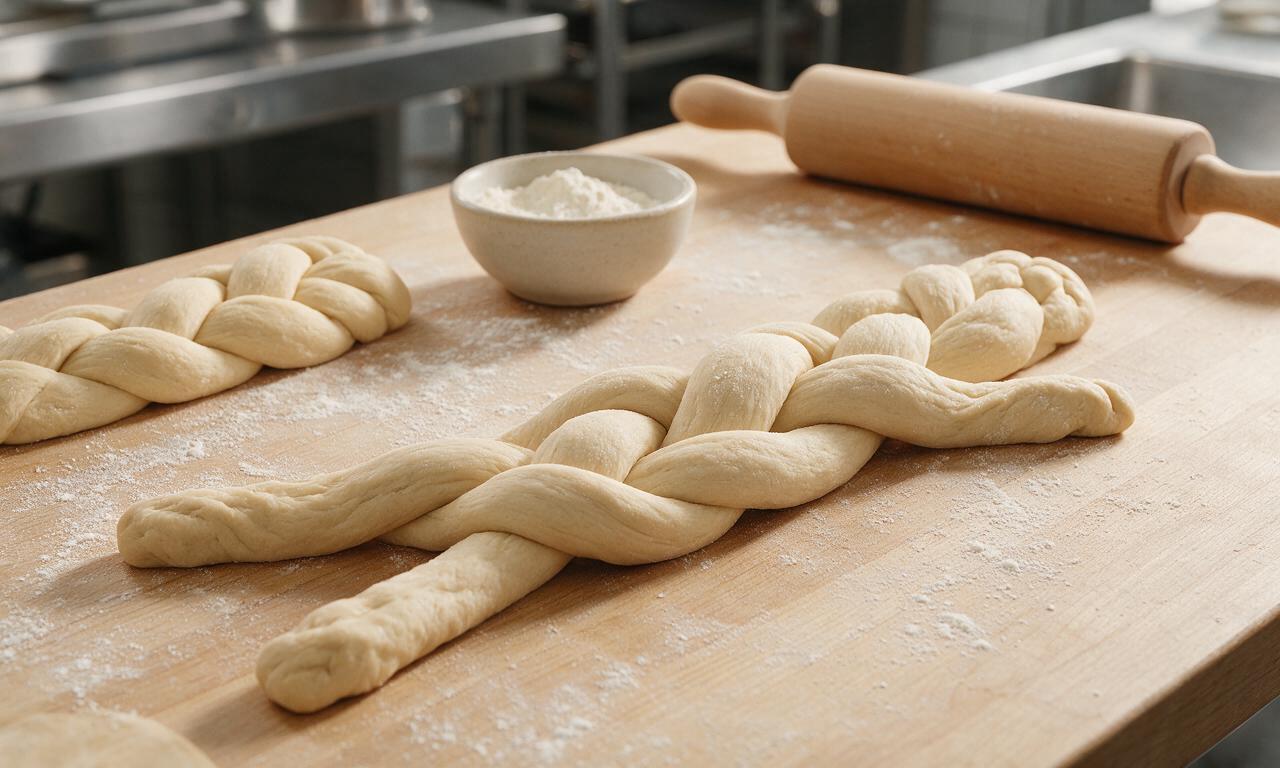
Once doubled, punch the dough firmly in the center to release all trapped air, then turn it out onto a lightly floured work surface. Divide the dough into 3 equal portions (approximately 290g each), roll each portion into a uniform 40cm (16-inch) long rope, and pinch the three top ends together tightly. Braid the three ropes loosely (do not pull tight, to allow room for rising), then pinch the bottom ends together and tuck both pinched ends under the loaf to seal. Transfer the braided loaf to a baking sheet lined with parchment paper.
Second loaf rise
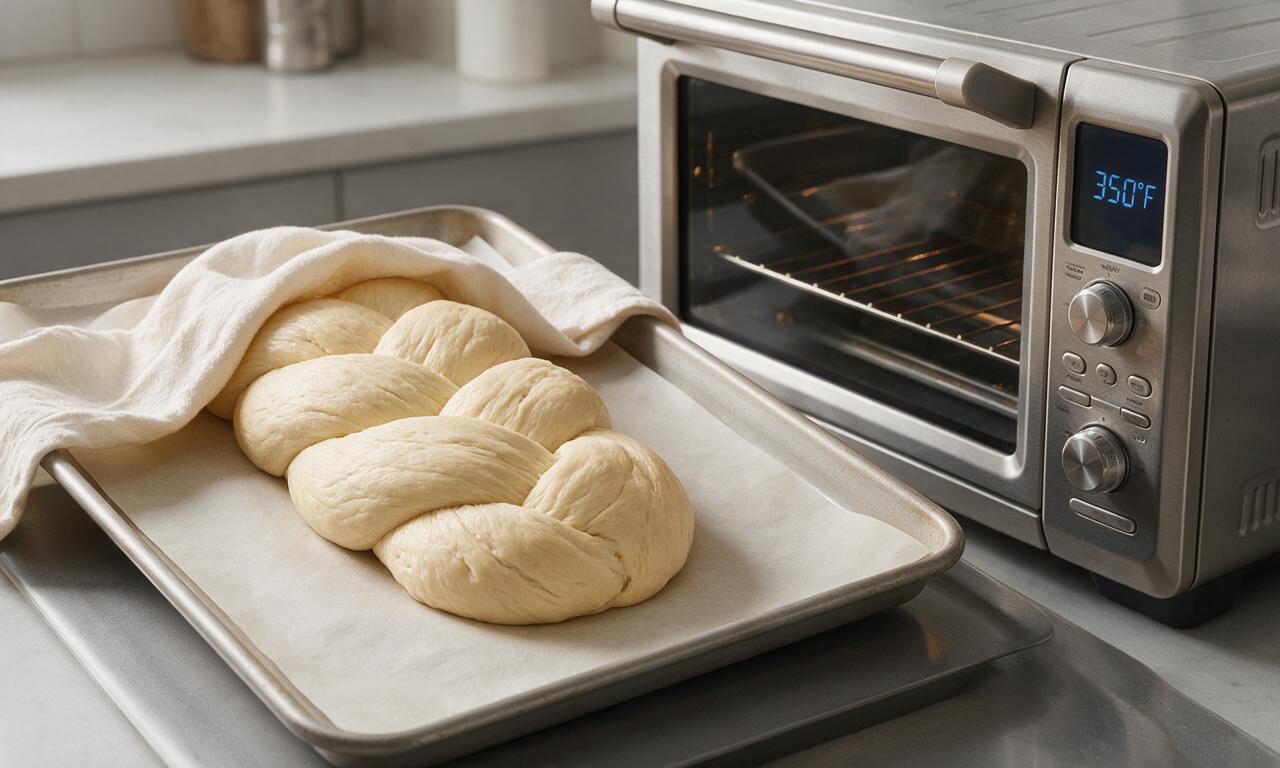
Cover the braided loaf loosely with a clean kitchen towel, and let it rise again in the same warm, draft-free spot for 30-40 minutes, until it puffs noticeably and springs back slowly when poked gently with a floured finger. While the loaf proofs, preheat your oven to 180°C/350°F (160°C/320°F for convection ovens) with the oven rack positioned in the middle position.
Bake and cool bread
Once proofed, gently brush the entire exposed surface of the loaf with egg wash (1 large egg beaten with 1 tsp cold water), taking care not to press hard and deflate the dough. Sprinkle 3 tbsp pastel nonpareil sprinkles evenly over the top. Bake for 30-35 minutes until the crust is deep golden brown, and the internal temperature of the bread reaches 90°C/195°F when measured with an instant-read food thermometer. If the top browns too quickly after 20 minutes of baking, tent it loosely with a sheet of aluminum foil. Transfer the baked loaf to a wire rack to cool completely for 45 minutes before slicing.
Tips
2.Avoid braiding the dough ropes too tightly; the dough expands significantly during the second rise and bake, and tight braids will cause the loaf to crack, split, or lose its neat shape.
3.For a classic Italian Easter bread variation, tuck 4 raw, dyed pastel Easter eggs into the gaps of the braid before the second rise; the eggs will cook fully as the bread bakes for a traditional decorative touch.





OMG this bread came out SO good! I was nervous about the braiding part since I’ve only ever done regular sandwich loaves before, but the step-by-step instructions made it totally doable. My kids devoured half the loaf warm out of the oven with butter, and my mother-in-law asked for the recipe before we even finished Easter dinner. Total game changer for our holiday spread from now on!
I’ve been making my family’s Easter bread for 40+ years and decided to give this recipe a shot this year to switch things up. The texture is perfectly soft and slightly sweet, just like my grandma used to make! I added a little extra lemon zest like I always do, and it paired beautifully. Will absolutely be keeping this in the rotation for church potlucks too.
Wait, quick question before I make this for our neighborhood Easter egg hunt this weekend! Can I prep the dough the night before and let it do the first rise in the fridge, or will that mess up the texture? I’m short on time Saturday morning and don’t want to mess this up, it looks so good!
Tried this for the first time yesterday and wow, did I underestimate how long the rising takes! I thought the 2.5 hour total time was fake news at first, but it was spot on — I just cut my prep time too close before my family showed up, oops. The bread was a hit even though it was still a little warm when I pulled it out mid-cocktail hour. 10/10, just don’t be a dummy like me and plan ahead lmao
This is such a fun recipe to make with kids! My 7 year old helped me braid the dough (it was lumpy and very uneven, no surprises there) and she was so proud to show it off to my husband when he got home from work. We added pastel sprinkles on top instead of pearl sugar to make it extra festive for Easter, and it was such a hit. Already have the ingredients on the list to make another loaf next week for my son’s class party!
Medium difficulty is no joke! I’m a pretty confident bread baker and I still had to rewatch the braiding tutorial twice before I got the three-strand braid right without tearing the dough. That said, the end result was totally worth the effort — soft, pillowy, just the right amount of sweetness, perfect with a little honey butter for Easter breakfast. Don’t skip the orange zest in the dough, it makes the whole kitchen smell incredible while it bakes!