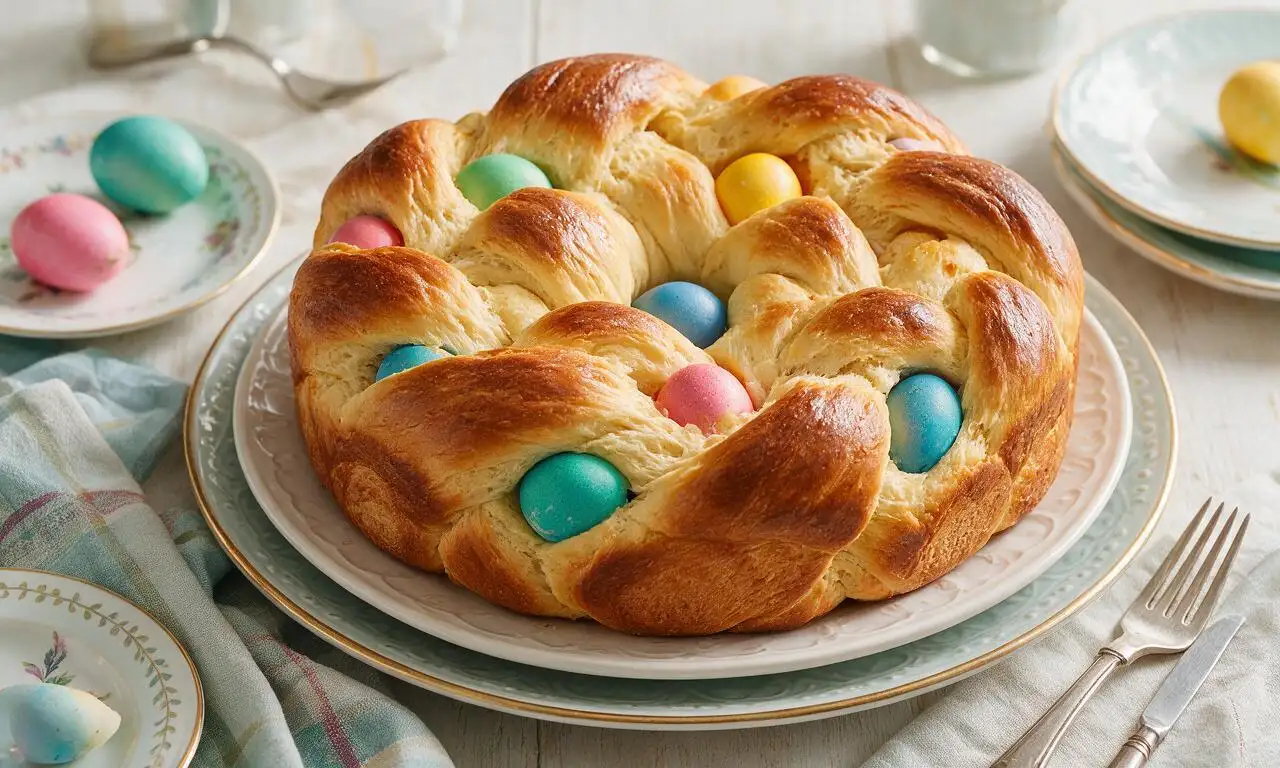
Easter Egg Bread

title 1
Easter Egg Bread
⏱️ cook time 2 hours 30 minutes
🍽️ servings 8
⚡ Difficulty medium

intro

Soft, slightly sweet braided yeast bread studded with colorful dyed eggs, a festive symbolic centerpiece perfect for Easter spring brunches and family holiday gatherings.

Ingredients

All-purpose flour 500 grams (4 cups, spooned and leveled)
Active dry yeast 7 grams (2 1/4 teaspoons, 1 standard packet)
Whole milk 195 ml (3/4 cup + 1 tablespoon), warmed to 43°C / 110°F, divided
Granulated sugar 65 grams (1/3 cup)
Unsalted butter 57 grams (4 tablespoons / 1/4 cup), melted and cooled slightly
Fine sea salt 1 teaspoon
Large room-temperature eggs (for dough and egg wash) 3 total, 2 for dough, 1 for egg wash
Dyed hard-boiled Easter eggs 5 medium, fully cooled, pastel colored
Pastel nonpareil sprinkles (optional) 2 tablespoons
Neutral cooking oil (for greasing bowl) 1 teaspoon

Steps

1

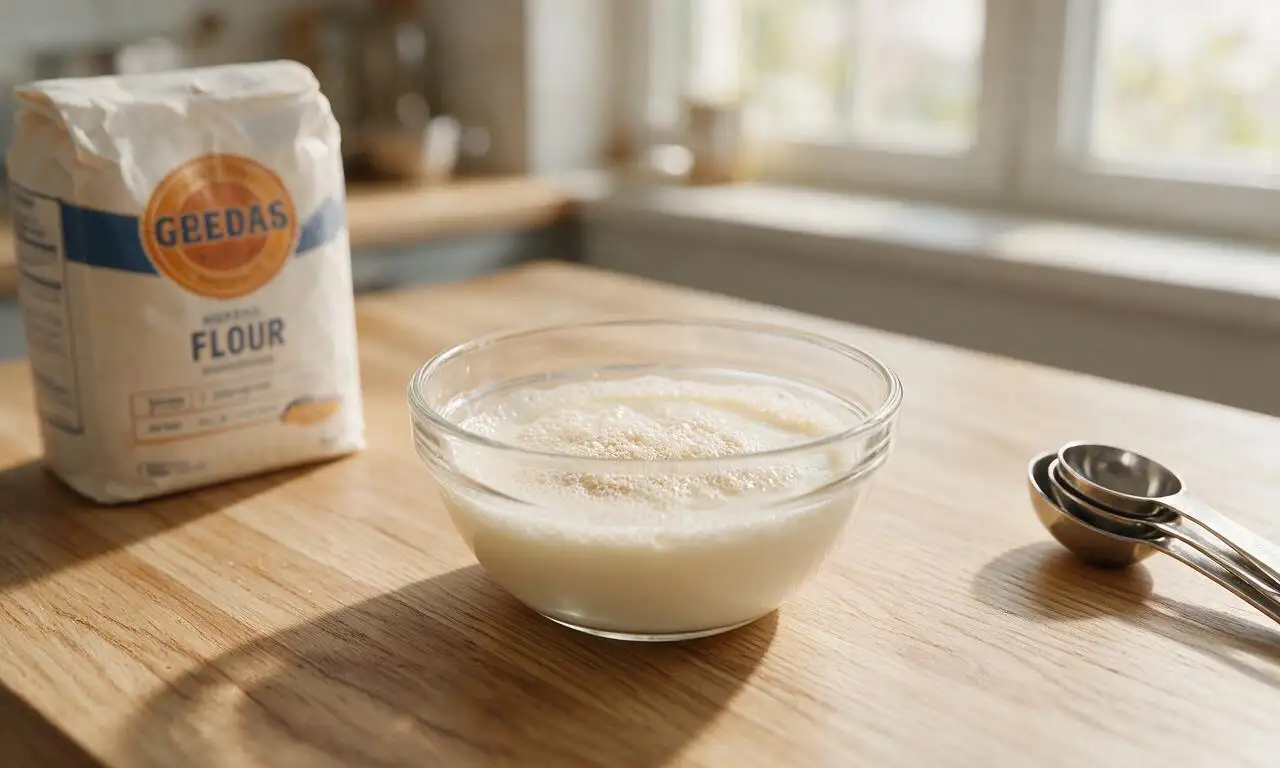
Activate the yeast

In a small bowl, combine 180ml (3/4 cup) of the warmed whole milk, 1 tablespoon of the measured granulated sugar, and the full packet of active dry yeast. Stir gently once to combine, then let rest for 5-7 minutes at room temperature until the mixture is foamy and frothy on top, confirming the yeast is active. If no foam forms, discard the mixture and use fresh yeast to avoid a dense, unrisen loaf.
Step 1
step1:Activate the yeast
2

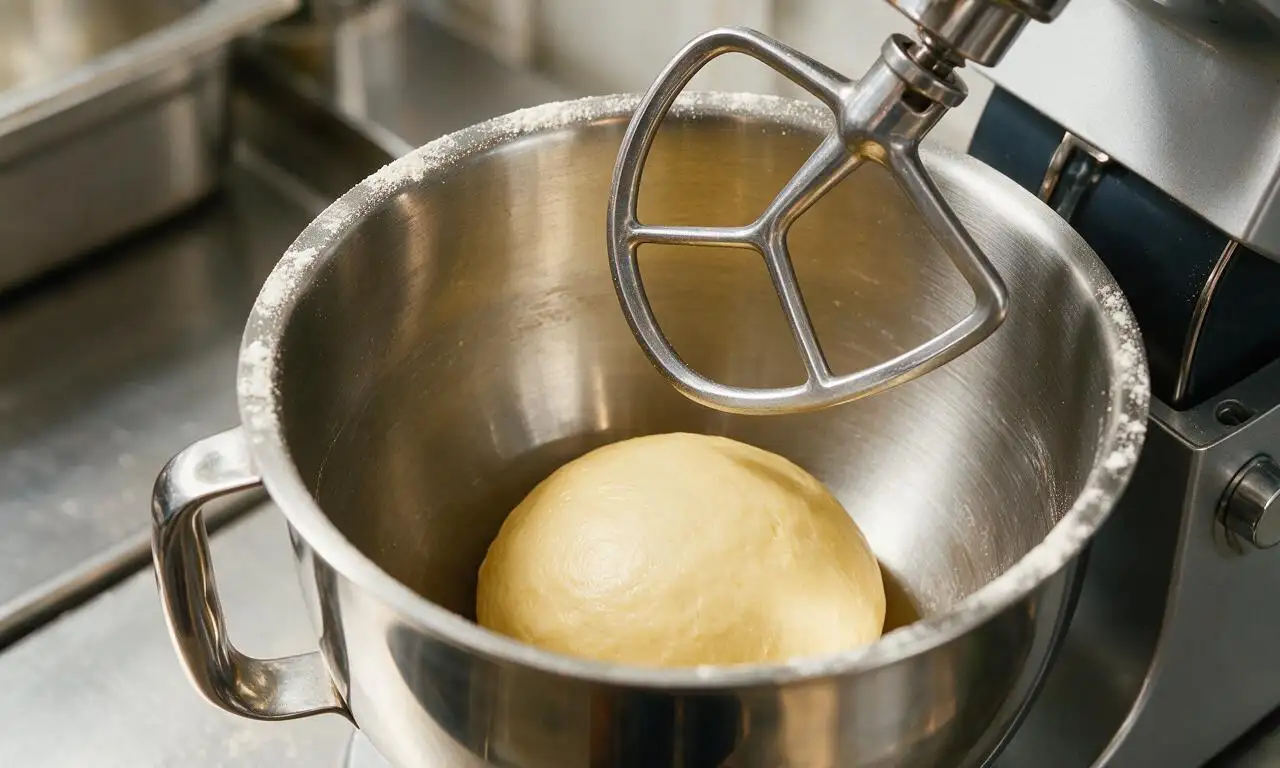
Knead the bread dough

In the bowl of a stand mixer fitted with a dough hook, combine the foamy yeast mixture, remaining granulated sugar, 2 room-temperature eggs, melted cooled butter, fine sea salt, and all 500 grams of all-purpose flour. Mix on low speed for 2 minutes until a shaggy, lumpy dough forms, then increase speed to medium-low and knead for 8 minutes until the dough is smooth, elastic, and pulls away cleanly from the bowl sides. If mixing by hand, turn the shaggy dough onto a lightly floured surface and knead for 12 minutes until the same smooth, elastic texture is achieved.
Step 2
step2:Knead the bread dough
3

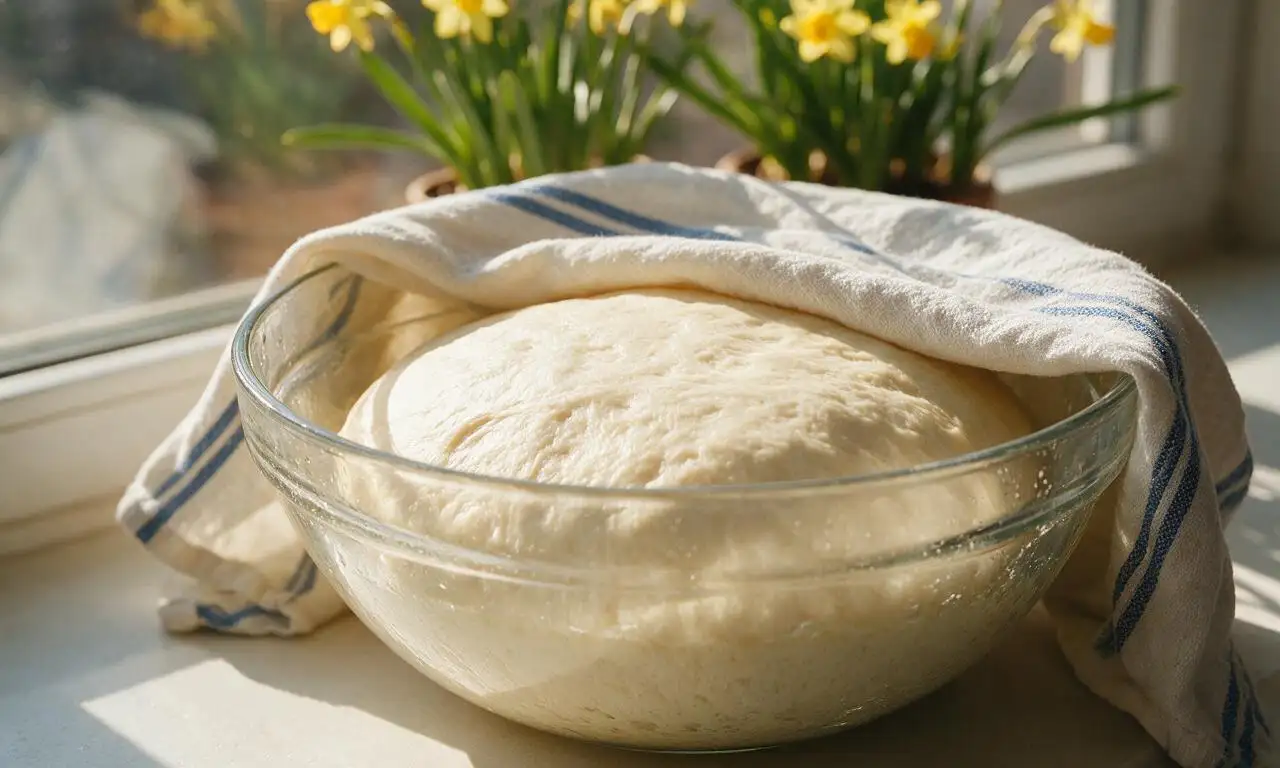
Let dough double in size

Coat the inside of a large clean bowl with the 1 teaspoon of neutral cooking oil, form the kneaded dough into a tight ball, and place it seam-side down in the oiled bowl. Cover the bowl tightly with plastic wrap or a damp clean kitchen towel, and set it in a warm, draft-free spot (24-27°C / 75-80°F) for 60 minutes, until the dough has doubled in volume and leaves a slow-receding indentation when poked gently with a floured finger.
Step 3
step3:Let dough double in size
4

Braid and add eggs

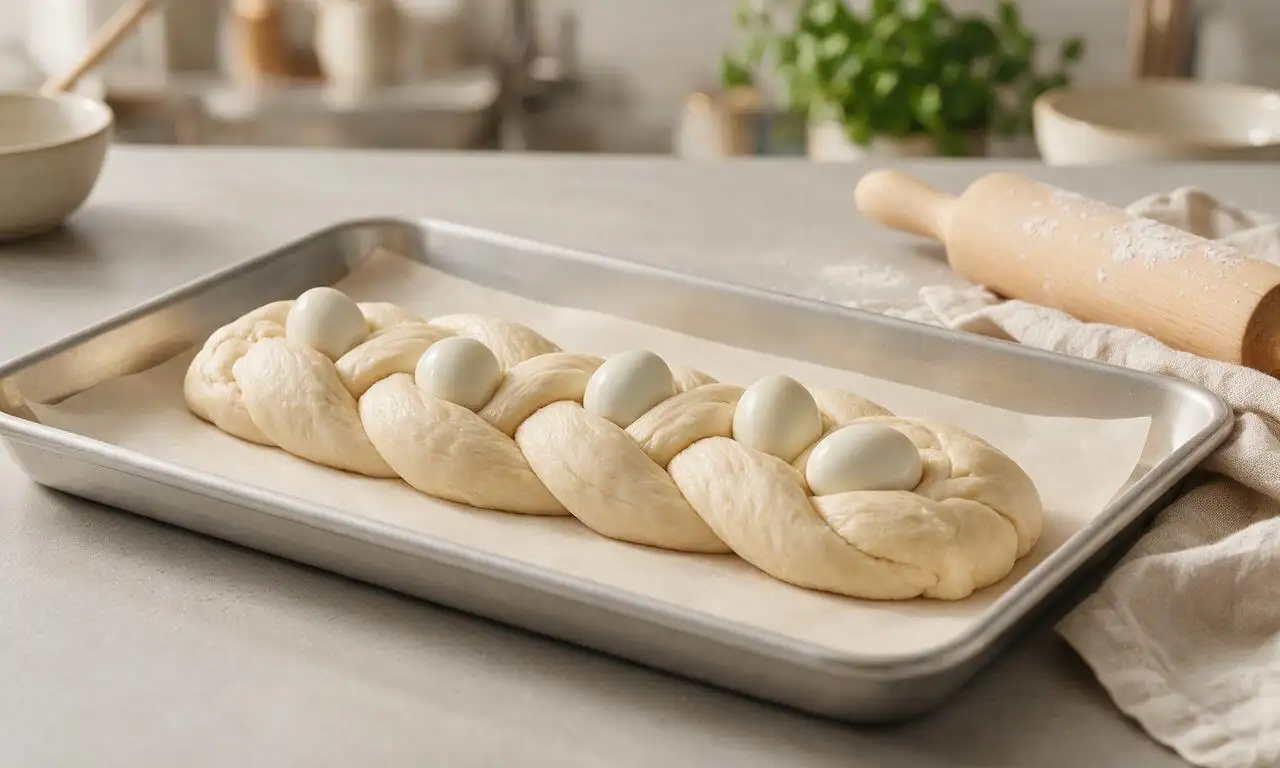
Punch the risen dough firmly in the center to release all trapped air, then turn it out onto a lightly floured work surface. Divide the dough evenly into 3 equal long ropes, each about 50cm / 20 inches long. Braid the 3 ropes tightly together just as you would braid hair, pinching the top and bottom ends firmly to seal and tucking them under the loaf for a neat finish. Tuck the 5 cooled dyed hard-boiled eggs evenly into the crevices of the braid, gently pressing them halfway into the dough so they stay secured during baking.
Step 4
step4:Braid and add eggs
5

Let shaped loaf rise

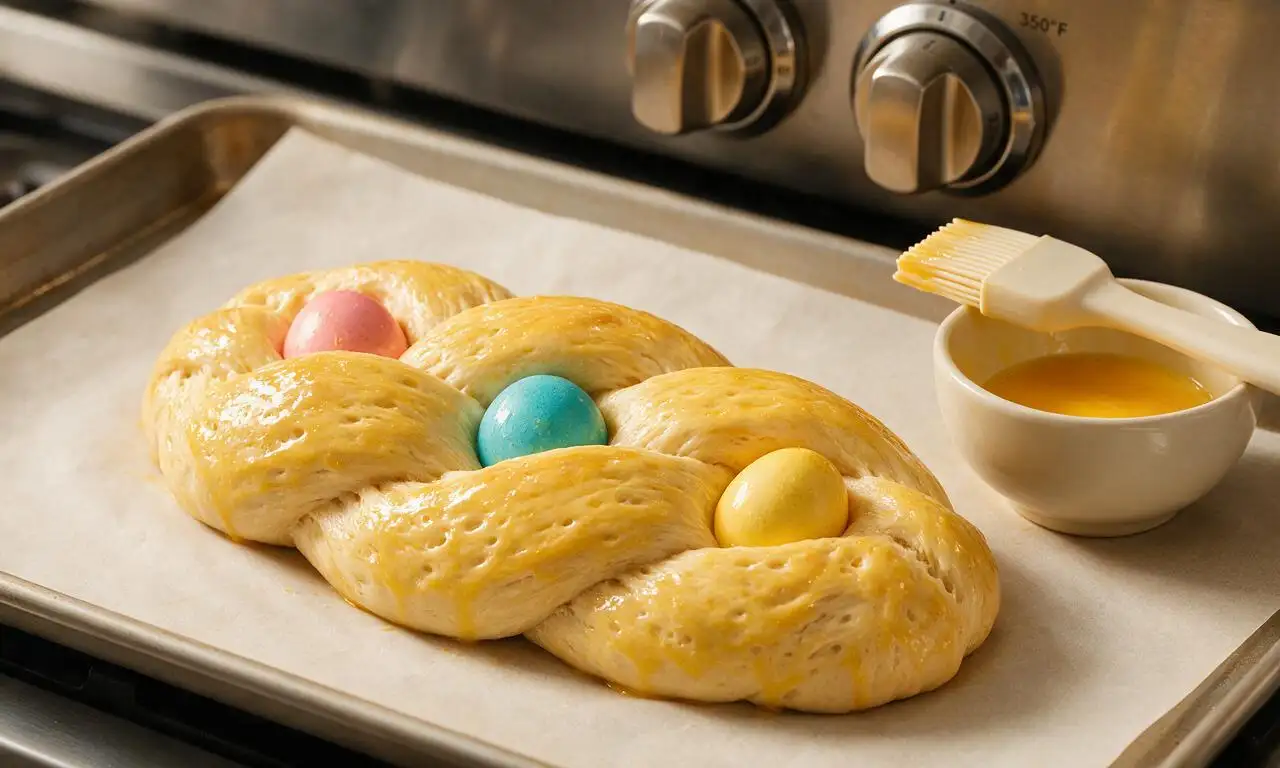
Loosely cover the braided, egg-studded loaf with a damp kitchen towel, and return it to the warm draft-free spot for 30 minutes, until the dough puffs up noticeably and springs back slowly when poked gently with a floured finger. While the loaf proofs, preheat your oven to 180°C / 350°F, adjusting the oven rack to the middle position. Make the egg wash by beating the remaining 1 large egg with the reserved 1 tablespoon of whole milk until completely smooth.
Step 5
step5:Let shaped loaf rise
6

Bake to golden brown

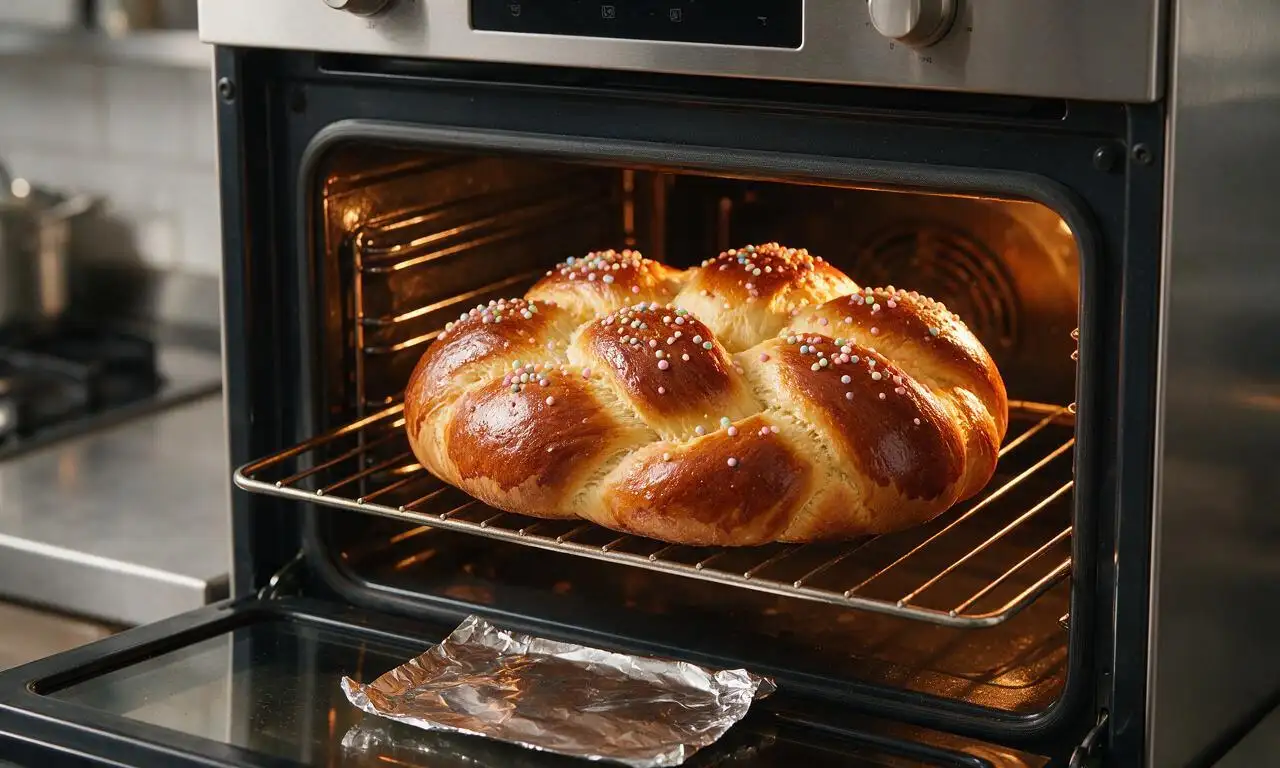
Gently brush the entire exposed surface of the proofed loaf (avoiding brushing the dyed eggs directly) with the prepared egg wash, then sprinkle with pastel nonpareil sprinkles if using. Bake on the middle oven rack for 25-28 minutes, until the bread is a deep, even golden brown all over, and the internal temperature of the dough (not touching an egg) reads 90°C / 195°F on an instant-read thermometer. If the top browns too quickly, tent the loaf loosely with aluminum foil after 15 minutes of baking to prevent burning.
Step 6
step6:Bake to golden brown
7

Cool and serve

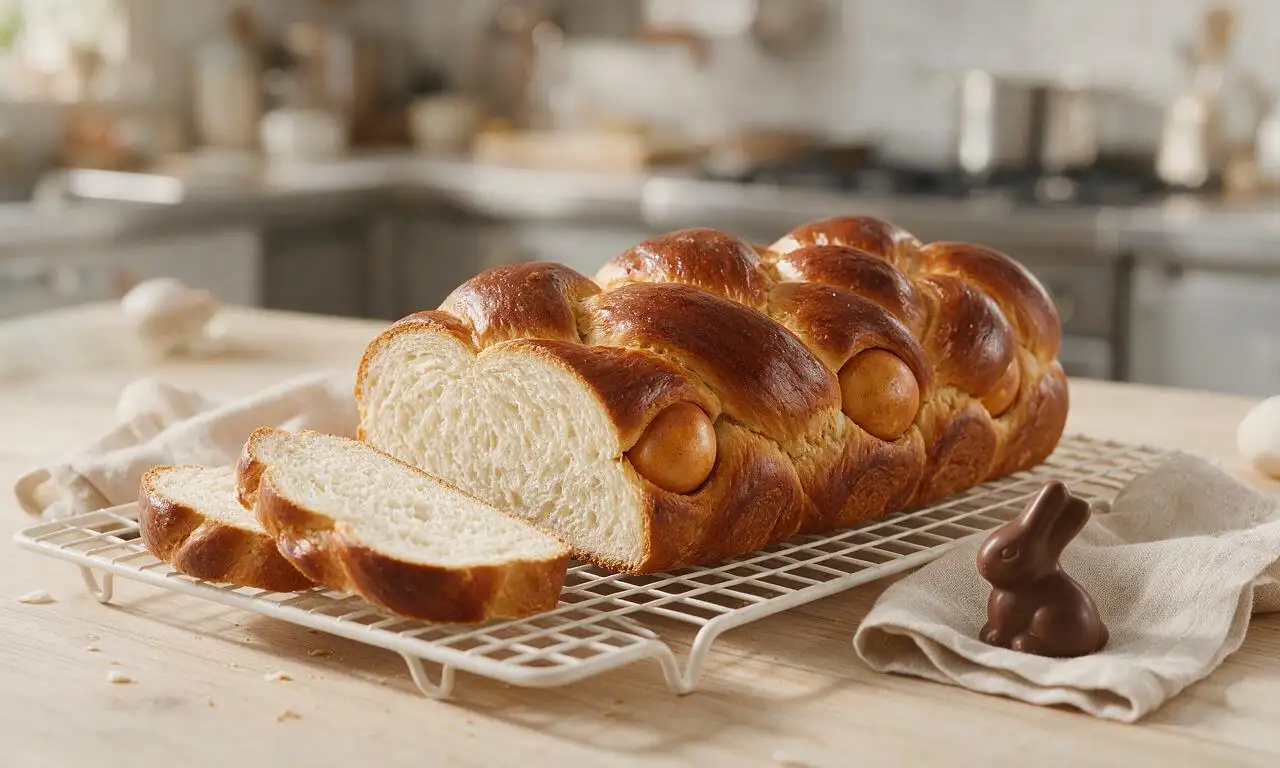
Once fully baked, carefully transfer the loaf from the baking sheet to a wire cooling rack, and let it cool for at least 20 minutes before slicing. Serve slightly warm or at room temperature as a festive Easter table centerpiece, or slice and serve with softened salted butter or fruit jam.
Step 7
step7:Cool and serve

Tips

1.Do not use milk warmer than 43°C / 110°F to activate yeast, as high heat will kill live yeast and result in a dense, non-fluffy loaf.
2.If you prefer the traditional Italian preparation, tuck uncooked room-temperature dyed eggs into the braid instead of pre-hard-boiled ones; they will fully cook through during the 25-28 minute bake time.
3.Let the baked bread cool for at least 20 minutes before slicing to prevent the soft interior from becoming gummy or squished when cut.

✨ You May Also Like

Desserts & Baking
🍜 Italy

Creamy, coffee-kissed classic Northern Italian no-bake dessert, with layers of rum-spiked mascarpone cream, soft ladyfingers, and a rich cocoa dusting.

⏱️ 4 hours 3Desserts & Baking ★ 4.7
Desserts & Baking
🍜 France

Flaky, shatteringly crisp, buttery French croissants with golden exteriors and soft, airy layered interiors, perfect for pairing with coffee for a special morning treat.

⏱️ 12 hours Desserts & Baking ★ 4.5
Desserts & Baking
🍜 United States

Warm, spiced baked apples topped with a fluffy golden biscuit crust, this cozy dessert pairs perfectly with vanilla ice cream for cool-weather comfort.

⏱️ 55 minuteDesserts & Baking ★ 4.6
Desserts & Baking
🍜 United States

A star-spangled classic American blueberry pie with buttery flaky crust and bright sweet-tart filling, perfect for summer patriotic gatherings.

⏱️ 1 hour 25Desserts & Baking ★ 4.7
Desserts & Baking
🍜 United States

A beloved no-bake regional Maine candy with a chewy coconut-potato center coated in rich dark chocolate, a New England holiday staple since the 1870s.

⏱️ 2 hours 3Desserts & Baking ★ 4.8
Desserts & Baking
🍜 France

Luxuriously creamy, floral frozen custard made with aromatic Tahitian vanilla beans, boasting a smooth, rich texture that melts slowly on the tongue.

⏱️ 3 hours 3Desserts & Baking ★ 4.5

Easter Egg Bread:Frequently Asked Questions

1.Do the dyed Easter eggs get baked into the bread, or added after baking? ▾
You nestle fully dyed, completely dry raw eggs right into the gaps of the shaped braid before the final proof and bake. The eggs cook fully through during the bread’s baking time, no pre-boiling needed. Just pat dyed eggs dry first to avoid streaks of food coloring bleeding onto the pale, soft dough.
2.Can I make this Easter egg bread ahead of time for my holiday brunch? ▾
Absolutely! Fully cooled baked bread stays fresh wrapped tightly in plastic wrap at room temperature for up to 2 days. You can also freeze the unglazed, fully cooled loaf for up to 1 month: thaw it overnight in the fridge, then warm gently in a 300°F oven for 5 minutes before serving to restore its soft, fresh texture.
3.My active dry yeast didn’t foam when I proofed it—what went wrong? ▾
If your active dry yeast doesn’t get foamy after 5-10 minutes in warm (105–110°F) milk with a pinch of sugar, it’s dead and won’t make your bread rise. This usually happens if the milk was too hot (over 115°F kills yeast), too cold, or your yeast is expired. Toss that batch and start with fresh yeast for the softest, fluffiest loaf.
4.Do I have to braid the bread, or can I use a simpler shape? ▾
The 3 or 4-strand braid is traditional for this festive loaf, but you don’t have to stick to that shape if braiding feels intimidating. You can form the dough into a simple round wreath, a single twisted loaf, or small individual rolls each with a tiny dyed egg tucked in, as long as you leave space for the final rise.
5.Why does my finished bread turn out dense instead of soft and fluffy? ▾
Dense, heavy loaves almost always trace back to under-kneading, insufficient rise time, or using too much extra flour when working the dough. Knead until the dough passes the windowpane test, let it rise in a warm, draft-free spot until fully doubled both times, and only add enough extra flour to prevent sticking, no more.
6.Are the real dyed eggs baked into the bread safe to eat? ▾
As long as the bread reaches an internal temperature of 190–200°F when fully baked, the nested eggs will hit a safe 160°F internal temperature too, so they’re perfectly fine to eat right after baking. If you plan to display the loaf as a centerpiece for over 2 hours, use plastic decorative eggs instead for food safety.
7.Can I use instant yeast instead of active dry yeast for this recipe? ▾
You absolutely can swap in instant yeast with no extra fussy steps! Use 25% less instant yeast than the active dry amount called for (¾ teaspoon instant for every 1 teaspoon active dry), and skip the initial proofing step—just mix it straight in with dry ingredients for the same pillowy soft result.
8.What’s the best way to get that shiny, golden top on the finished loaf? ▾
Right before putting the proofed braid in the oven, gently brush all exposed dough with an egg wash made from 1 whole egg beaten with 1 tablespoon of whole milk or heavy cream. This creates that glossy, deep golden crust as it bakes; you can also sprinkle coarse sparkling sugar on top for extra festive crunch.
9.My braid came loose and spread out while baking—how do I prevent that? ▾
Loose, spreading braids happen when you braid the dough too loosely, or skip pinching the ends and tucking them under the loaf to seal before the final rise. Keep braid strands snug (but not tight enough to tear dough) when shaping, seal all seams well, and don’t over-proof the loaf to hold its neat shape.
10.Can I add mix-ins like raisins or citrus zest to the base dough? ▾
Definitely! This slightly sweet base dough is very customizable. Stir in ½ cup of golden raisins, dried cranberries, or chopped candied citrus peel during the last 2 minutes of kneading, or add 1 teaspoon of lemon or orange zest to the sugar for a bright, springy flavor that pairs perfectly with the rich crumb.
11.Can I make this recipe dairy-free or vegan for guests with dietary restrictions? ▾
You absolutely can with a few simple swaps. Swap whole milk for unsweetened oat or soy milk (these work best for soft yeast bread texture) and unsalted butter for an equal amount of vegan baking butter. Use a plant-based wash of oat milk mixed with a pinch of maple syrup to get that same golden, shiny crust.

Comments (6)

3 days ago

OMG I made this for our family Easter potluck last weekend and it was the FIRST thing gone! My kids loved it — they went crazy for the braided design and the colored eggs baked right in, total showstopper. I was nervous about the braiding part since I’m not great with fancy bread shapes, but the instructions were super clear. Only note: I added a tiny bit of extra lemon zest to the dough and it was *chef’s kiss*. 10/10 will make every year from now on!

2 days ago

So happy to hear this was a hit at your potluck! The lemon zest addition sounds absolutely delicious — citrus cuts through the rich sweet dough so perfectly. Great call sticking with the braid even if you were nervous, practice makes perfect! Can’t wait to see how you tweak it next year.

yesterday

Wait how much lemon zest did you add? I’m making this for my grandma’s Easter dinner this Sunday and want to try that hack!

5 minutes ago

Tried this recipe yesterday and man, it was way easier than I thought it’d be for a medium difficulty bake. I used dyed eggs that my 7 year old decorated the night before, and she was so proud to see them baked into the bread she told every single person at our church brunch about it. The bread itself is soft, slightly sweet, perfect with a little butter slathered on top. SO good.

5 days ago

Really tasty bread overall! The braid came out beautiful and it was a huge hit at our family dinner. I knocked a star off because my first rise took almost 20 minutes longer than the recipe said, probably because my kitchen is pretty cold this time of year. Also, make sure you don’t press the eggs too hard into the dough or they’ll sink a little while baking — learned that the hard way! Otherwise, solid recipe, will make again.

3 days ago

Thanks so much for the honest feedback! Rise times can definitely vary based on kitchen temperature — a good trick is to set your dough near a warm oven or in a turned-off microwave with a mug of hot water to speed things up if your space is chilly. And great note about the eggs, gentle pressing is key! So glad you still enjoyed the final result.

2 hours ago

Help! I’m halfway through making this and my dough is super sticky, like impossible to braid without it sticking to my hands and the counter. Did I do something wrong? I measured everything exactly like the recipe said, I’m so frustrated I was gonna bring this to my friend’s Easter gathering tomorrow.

30 minutes ago

Don’t panic! Sticky dough is super common with this enriched bread, especially if your kitchen is warm. Try sprinkling a tiny bit of extra flour (1 tbsp at a time, don’t overdo it!) on your counter and hands, and let the dough rest for 5 minutes before you try braiding again — it’ll firm up as it rests, I promise. You’ve got this!

just now

I had the exact same issue when I made this last week! The rest trick works, I also lightly oiled my hands instead of adding too much flour and it braided like a dream. Your bread is gonna turn out awesome, don’t stress!

1 week ago

Game changer! I’ve made a different Easter bread recipe for years and it always turns out dry, but this one stayed soft for three whole days after baking. I added a simple vanilla glaze on top with pastel sprinkles for extra festivity, and my neighbor asked for the recipe before she even finished her first slice. Will be my go-to from now on!

5 days ago

Wait the vanilla glaze sounds amazing! What ratio of powdered sugar to milk did you use? I wanna copy that when I make this next weekend!

2 weeks ago

Made this ahead for our Easter meal prep and it froze surprisingly well! I wrapped it tightly in plastic wrap and foil after it cooled completely, pulled it out the night before Easter to thaw, and it tasted just as fresh as the day I baked it. The braid held up perfectly, no sogginess at all. Total win for anyone who hates last minute cooking before holidays.