
Fasnacht (Pennsylvania Dutch, Fat Tuesday)
intro
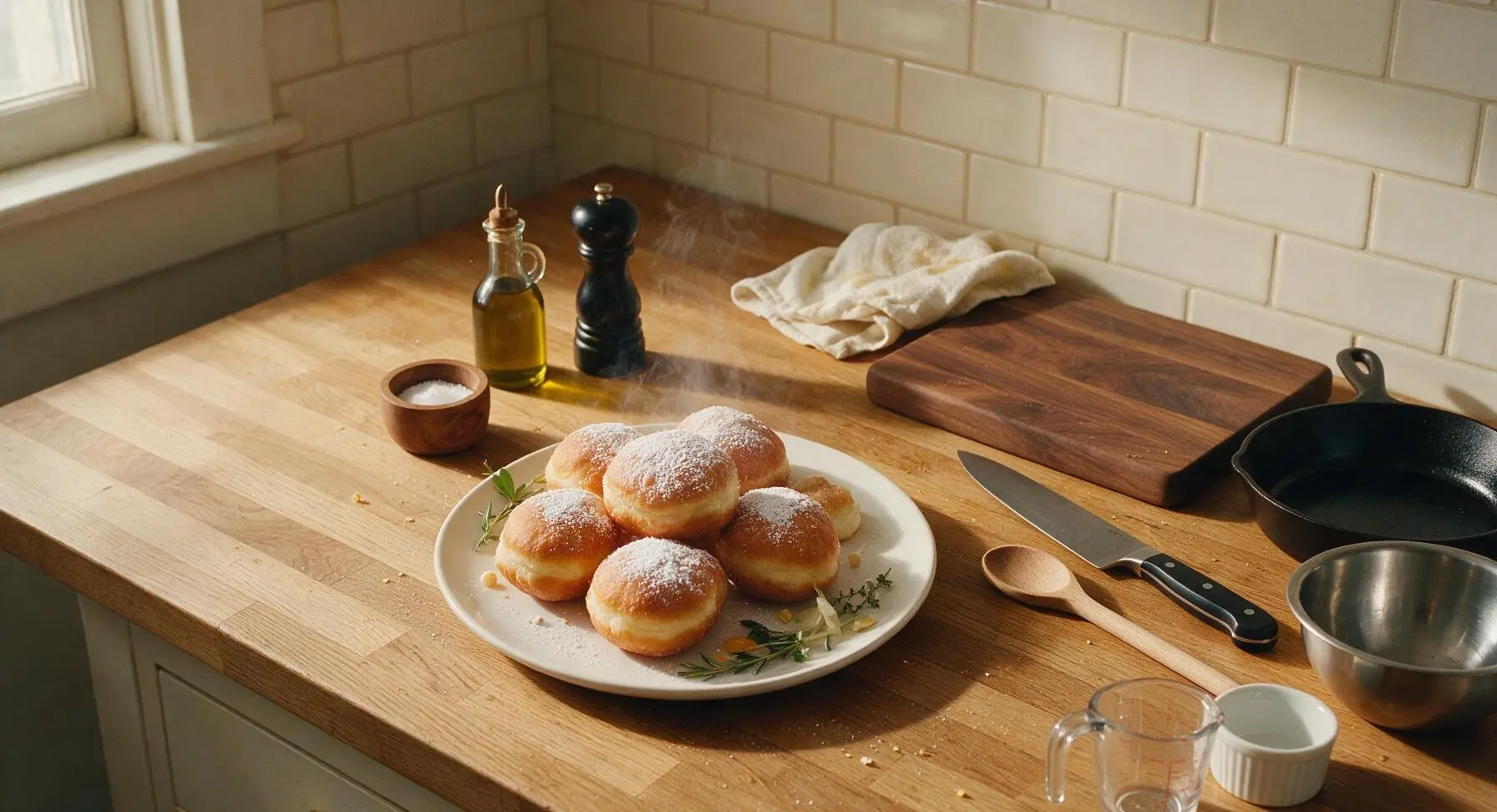
Pillowy, golden potato doughnuts, a beloved Pennsylvania Dutch Fat Tuesday tradition, made to use up rich pantry staples before Lent, dusted with sweet powdered sugar.
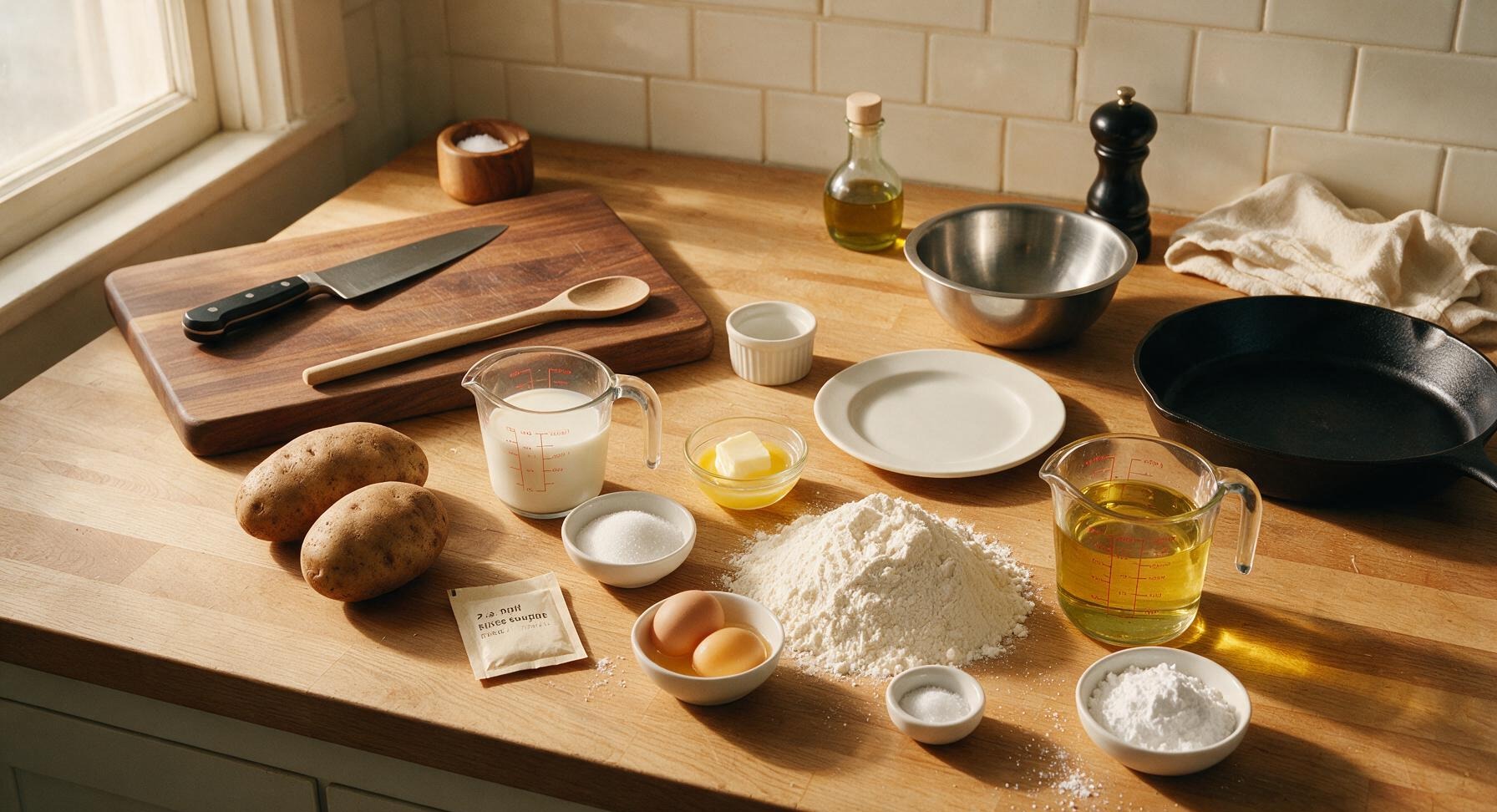
Ingredients
Steps
Boil and Mash Potatoes
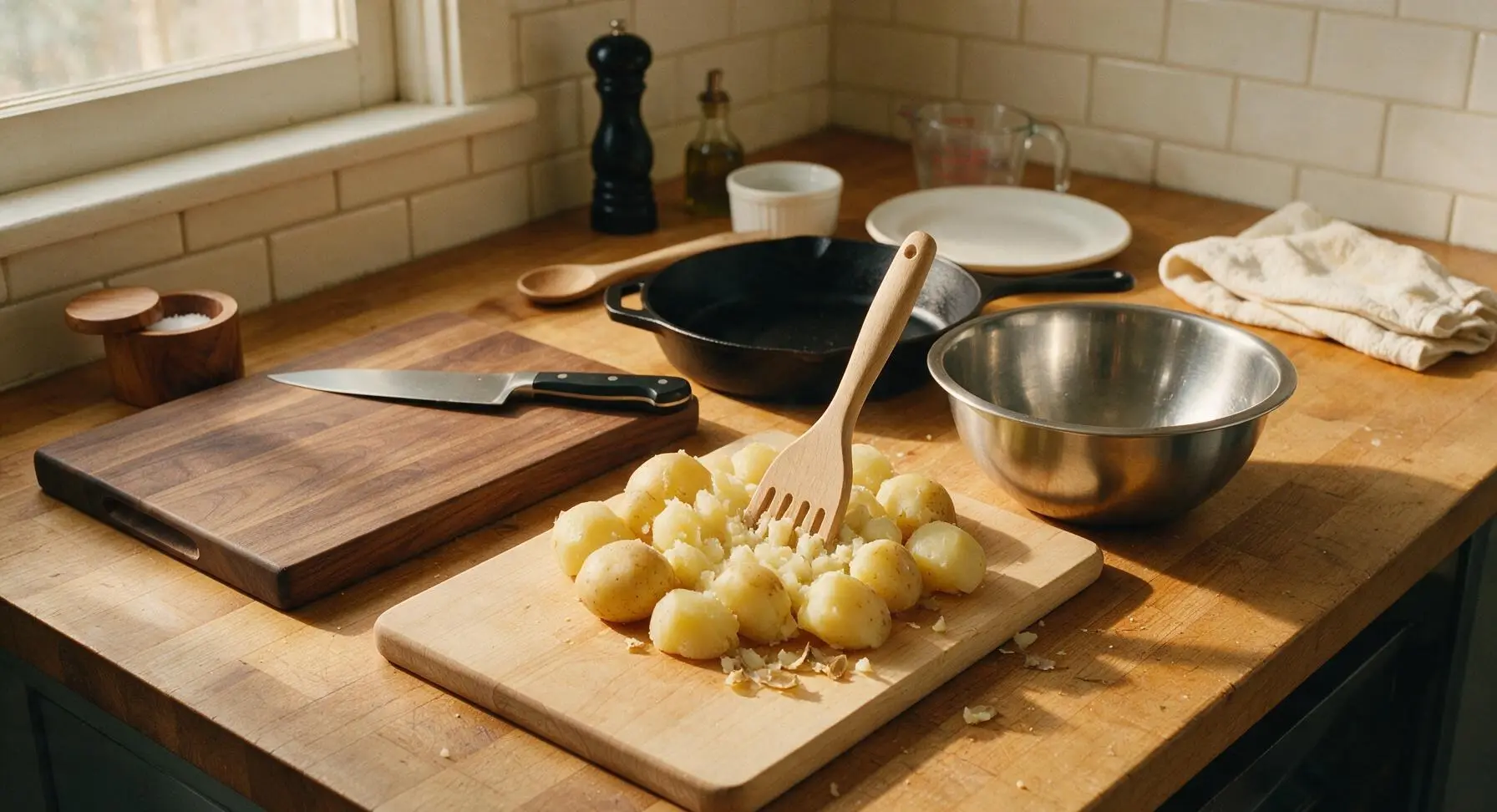
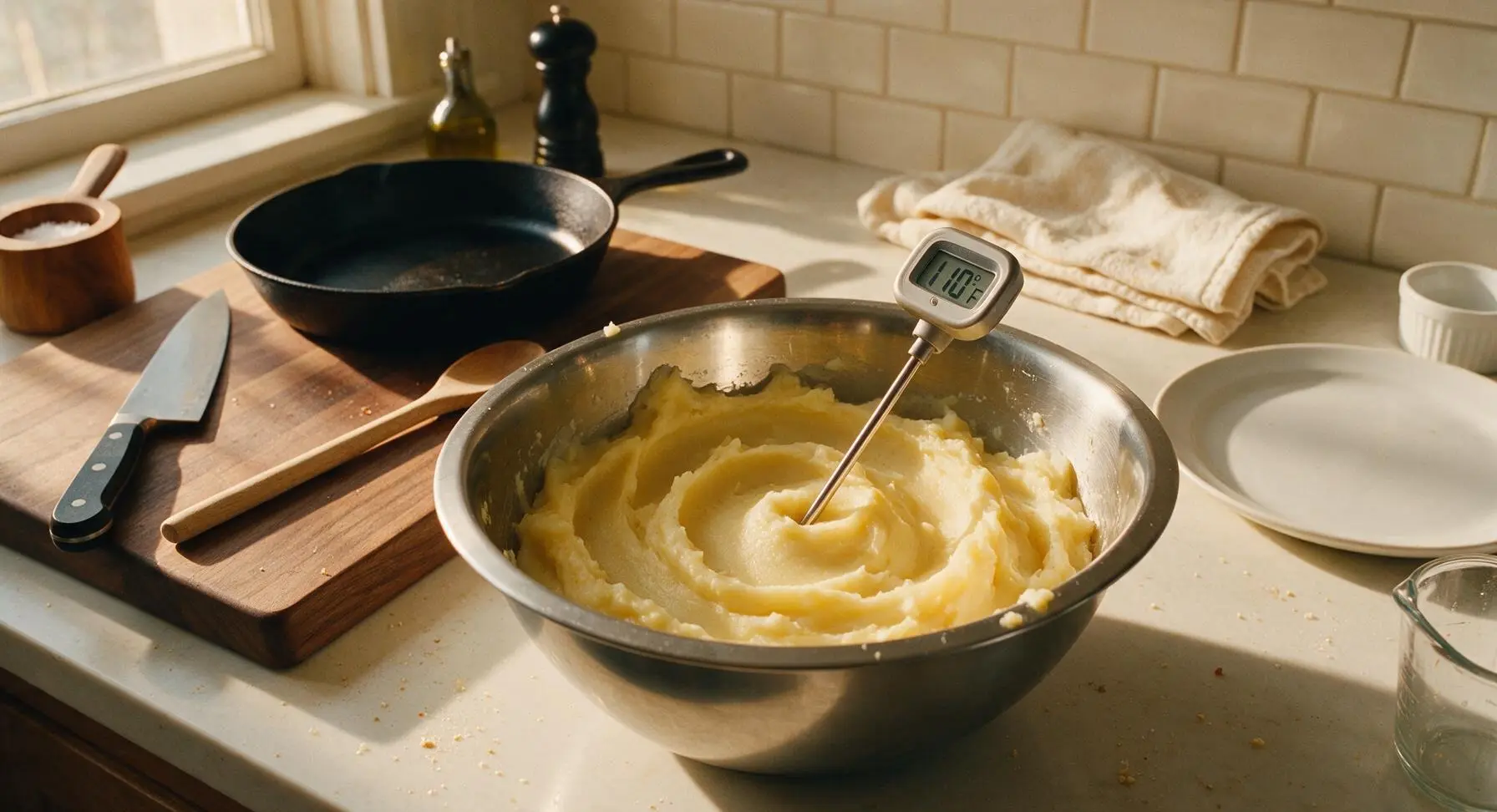
Place scrubbed russet potatoes in a small stockpot, cover with cold salted water, and bring to a rolling boil over medium heat. Cook 15-20 minutes until a fork slides easily through the center with no resistance. Drain, peel off skins while still warm, then transfer to the large beech wood cutting board. Use the light maple potato masher to mash until completely smooth, with no lumps remaining. Measure 1 cup (220g) of smooth mashed potato into the large stainless steel mixing bowl, and set aside to cool to 110°F, checked with the digital thermometer.
Activate the Yeast
Pour 1 cup whole milk warmed to 110°F into the clear glass measuring cup. Stir in 1 teaspoon of the measured granulated sugar and the full 7g packet of active dry yeast. Let rest 5-7 minutes in a draft-free spot until a 1/4-inch thick frothy, bubbly layer forms on top, confirming the yeast is active. If no foam appears after 10 minutes, discard the mixture and start with fresh yeast to avoid dense, heavy fasnachts.
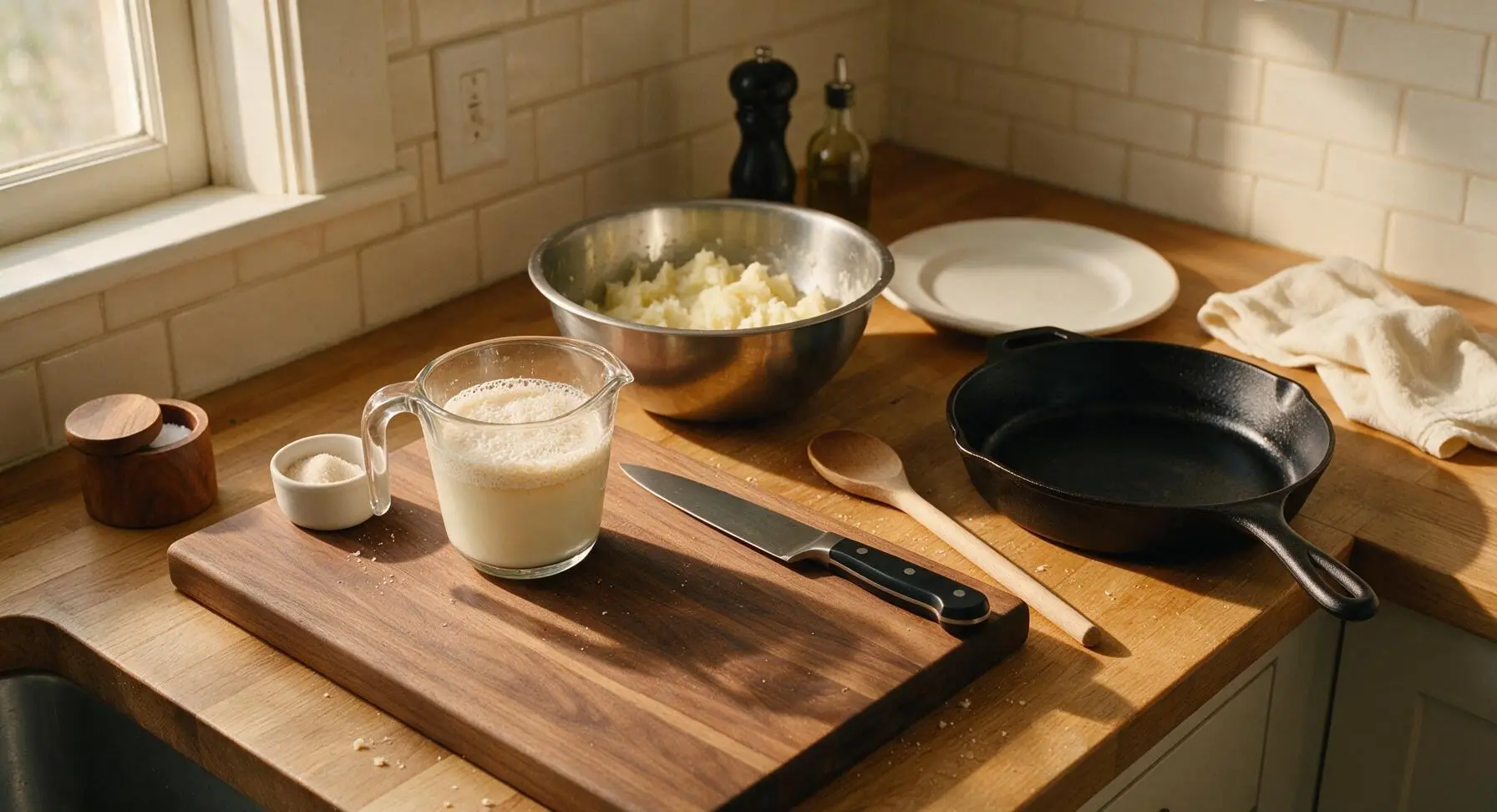
Mix the Soft Dough
Add the remaining granulated sugar, cooled melted unsalted butter, beaten large eggs, 1 tsp kosher salt, and foamy yeast mixture to the large mixing bowl with the cooled mashed potato. Use the stainless steel dough whisk to stir until fully combined into a smooth wet base. Gradually add the all-purpose flour, 1 cup at a time, stirring after each addition, until a shaggy, soft, slightly sticky dough forms that pulls away cleanly from the sides of the bowl.
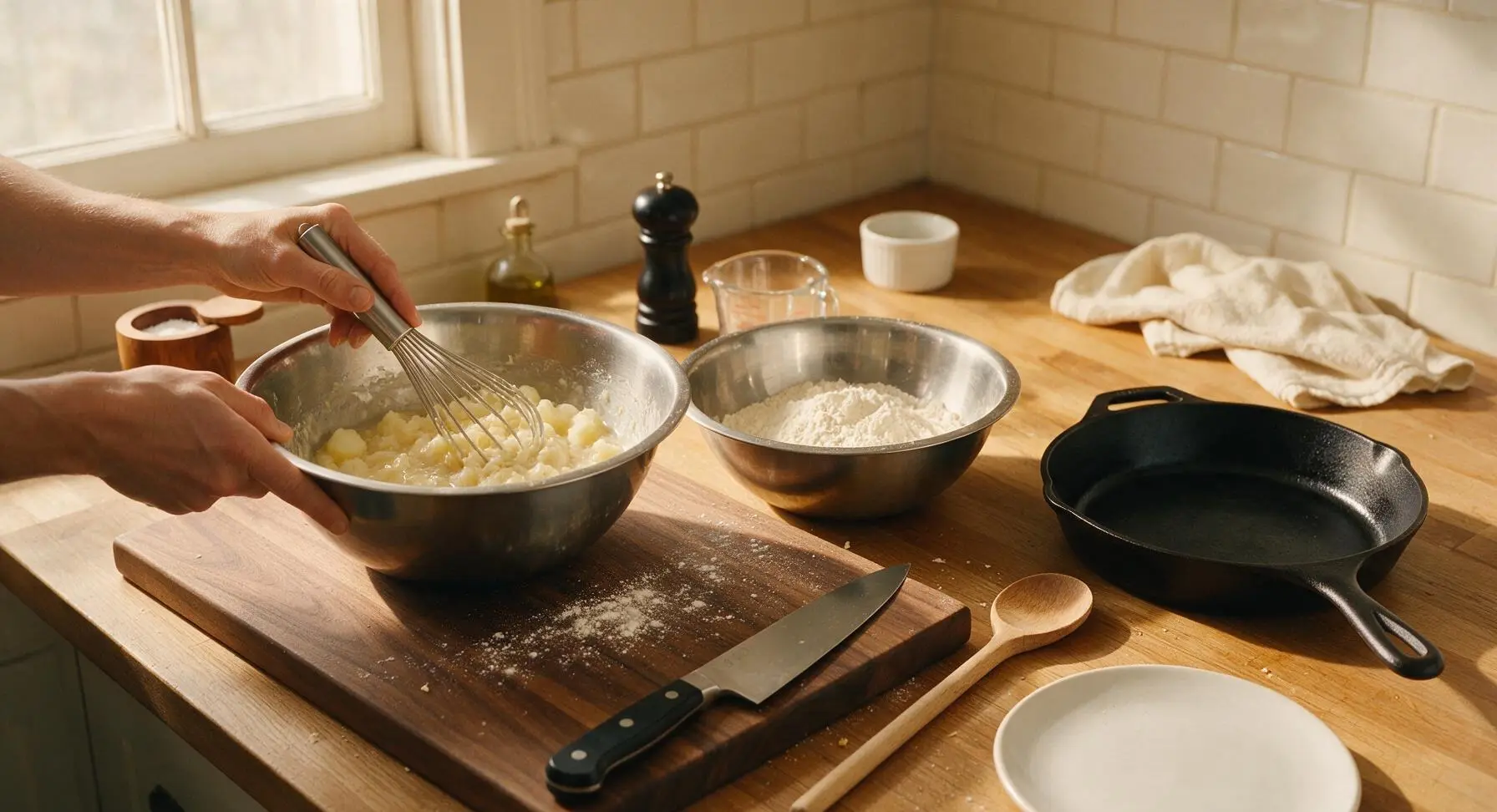
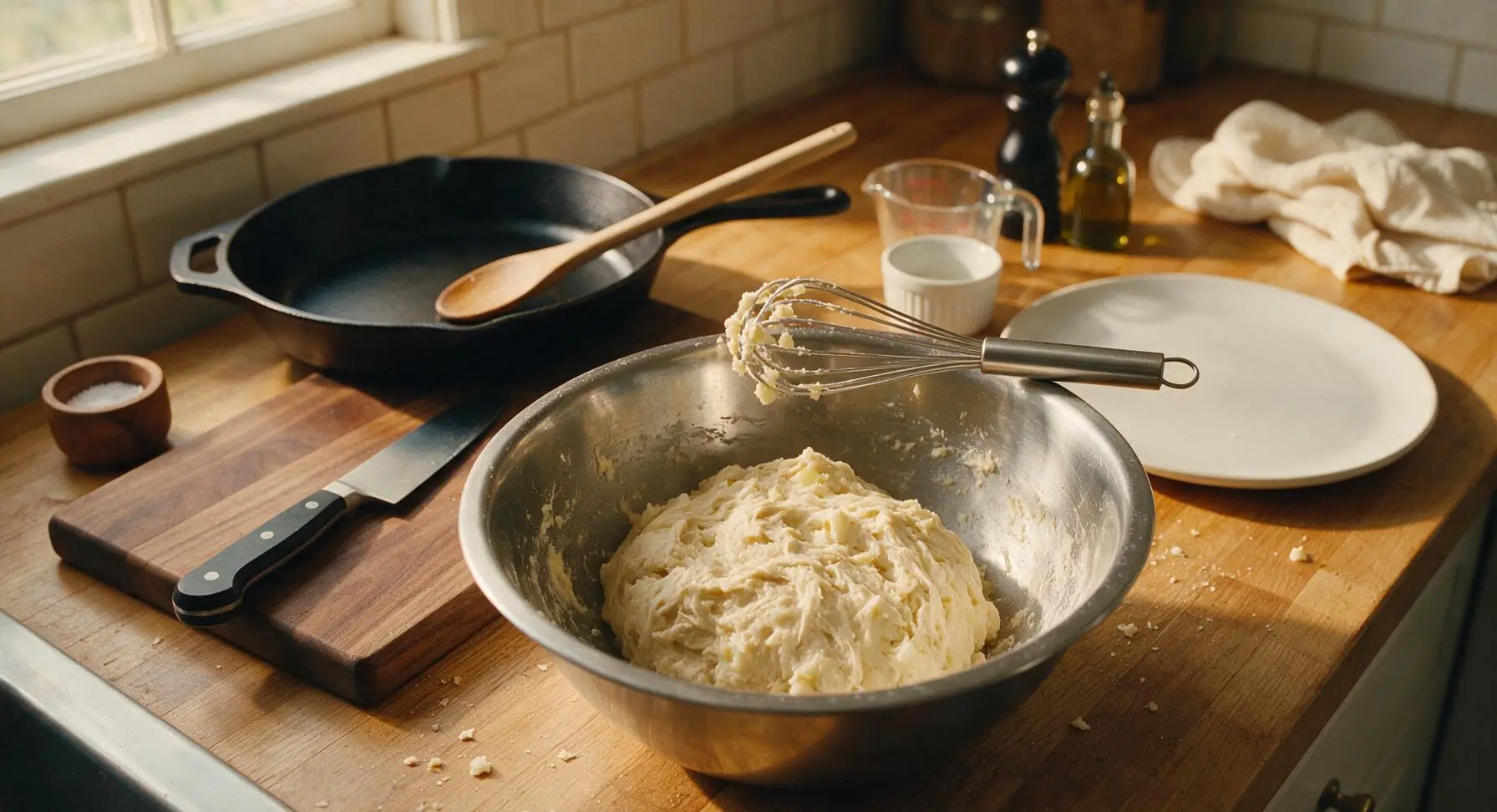
Complete First Rise
Use the matte sky blue silicone dough scraper to scrape down the sides of the bowl, gathering the dough into a loose, smooth ball. Cover the bowl tightly with clear plastic wrap, and set in a warm (75°F) draft-free spot for 1 hour 30 minutes, until the dough doubles in size and leaves a slow-rebounding indent when pressed with a floured finger.
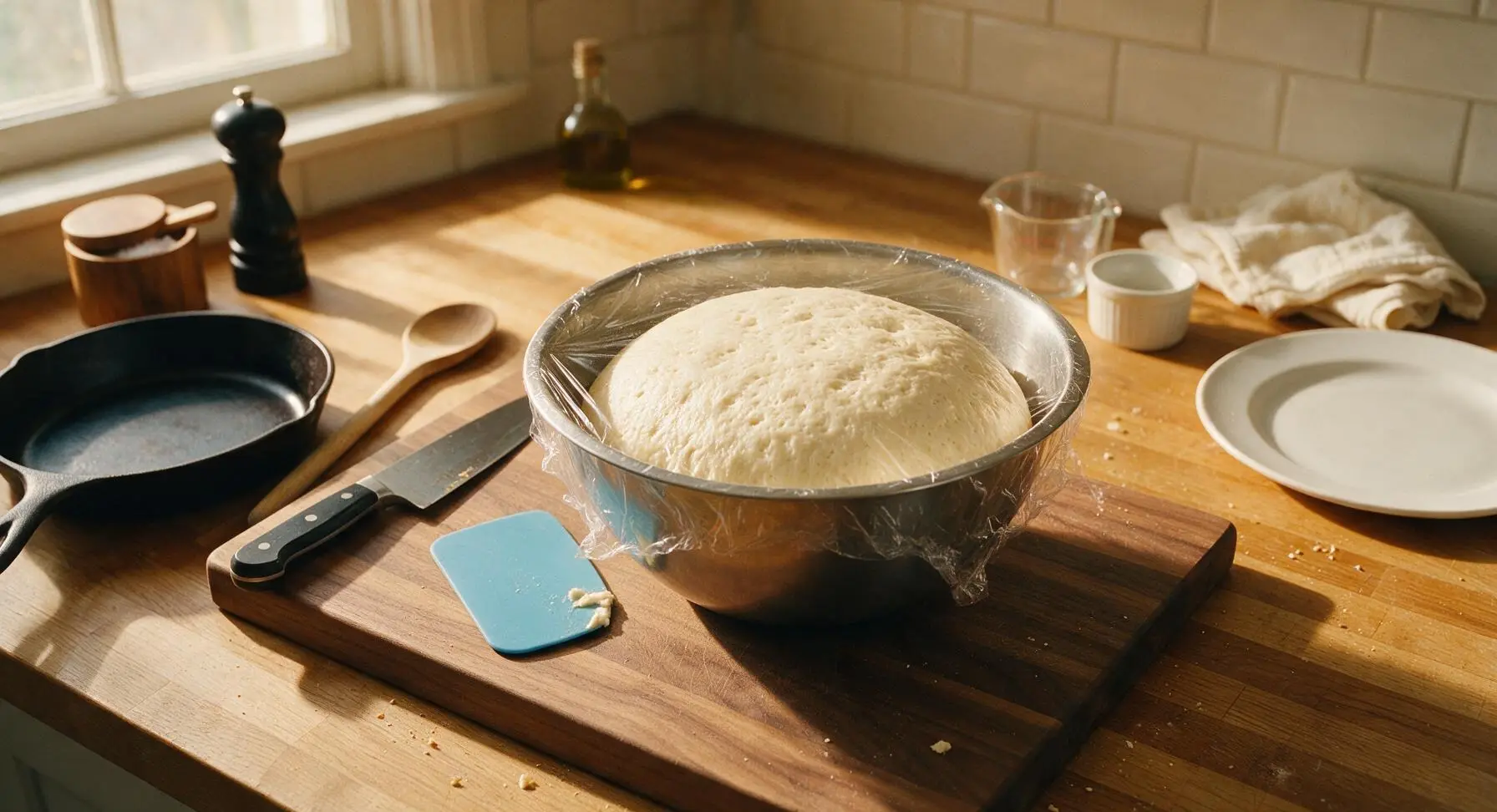
Roll and Cut Dough
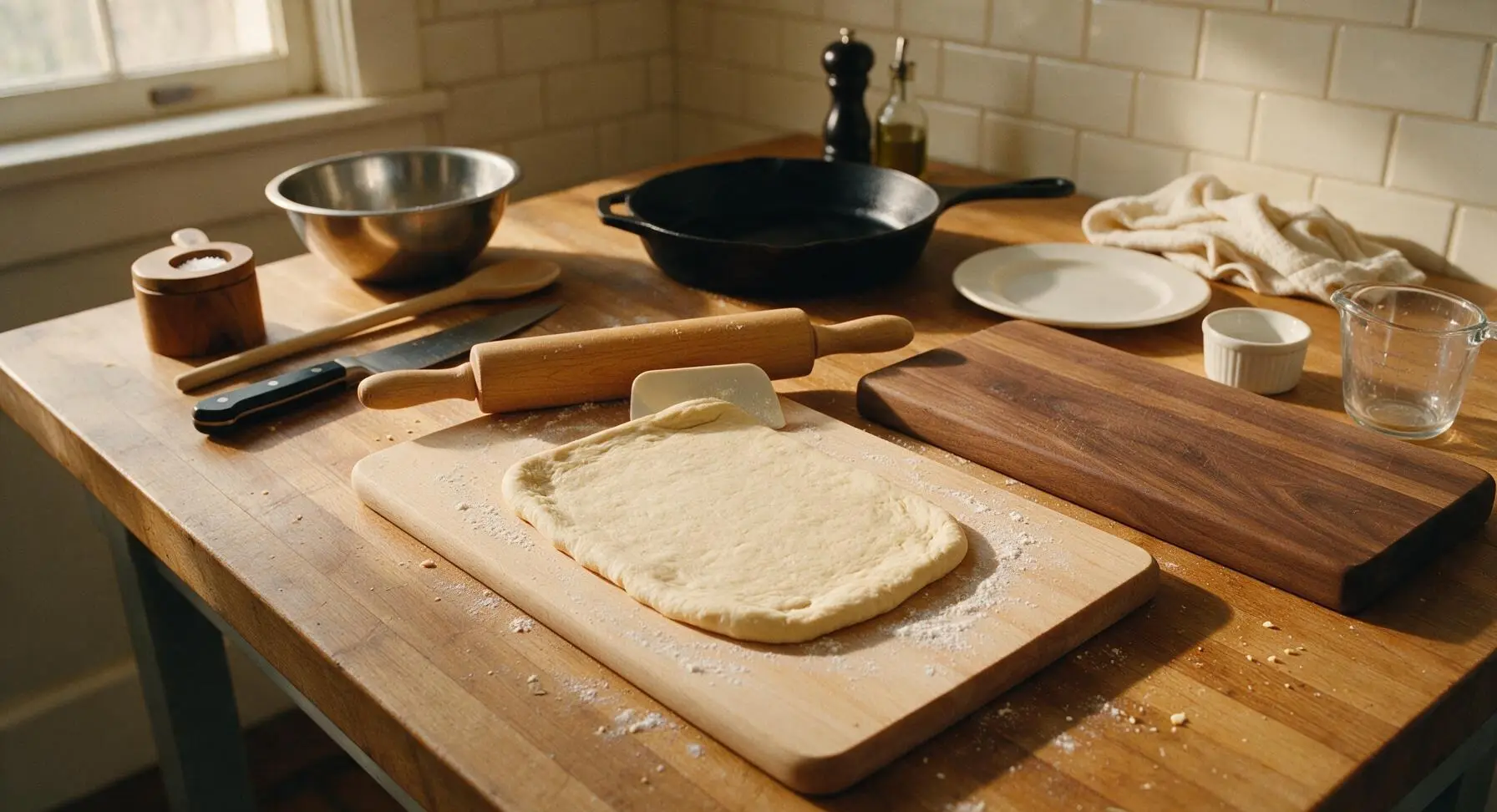
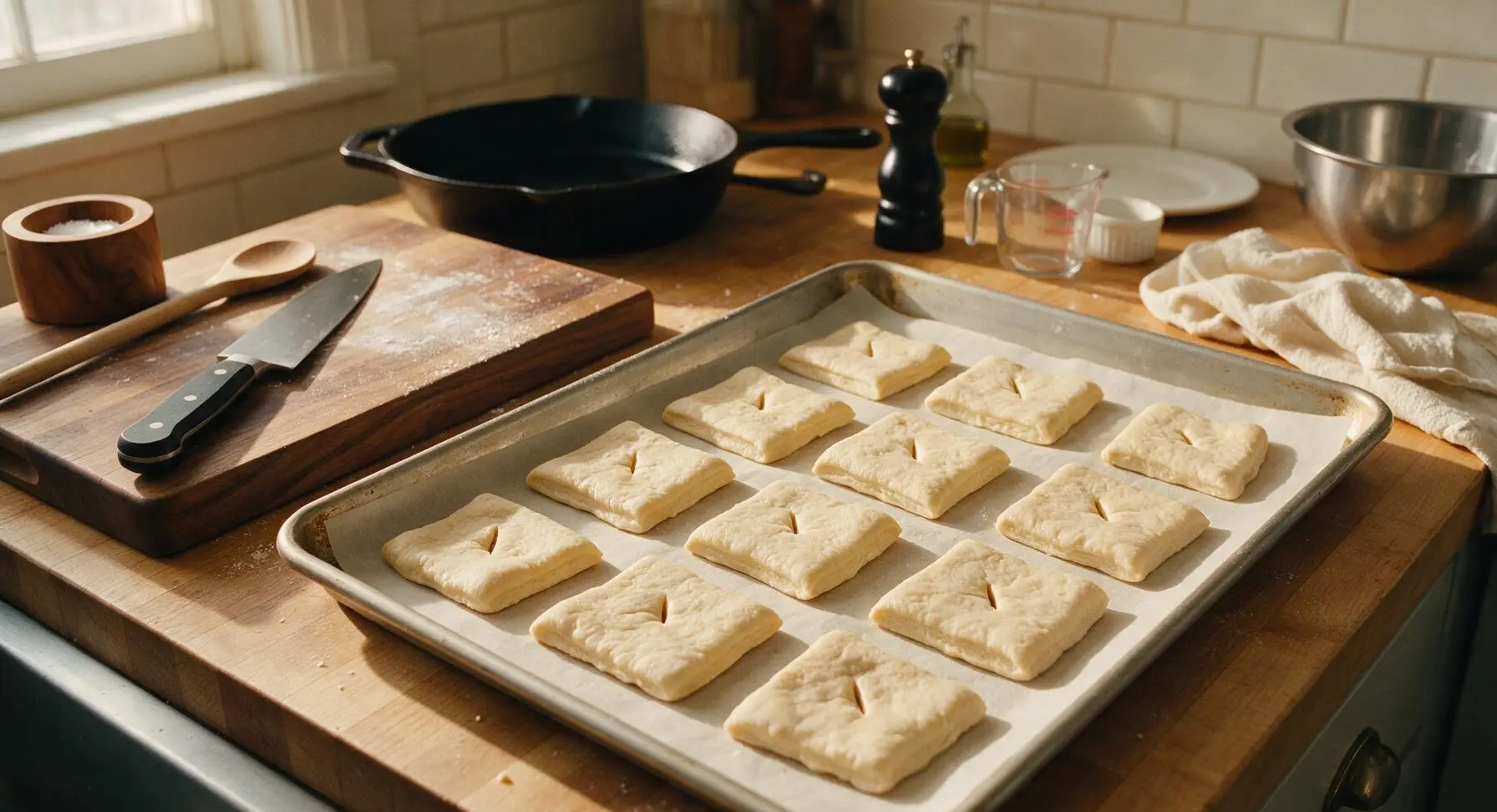
Lightly flour the surface of the beech wood cutting board. Turn the risen dough out onto the board, and gently press to deflate all large air bubbles. Use the solid maple rolling pin to roll the dough to an even 1/2-inch thickness across the board. Use the silicone dough scraper to cut the dough into rustic 3-inch square pieces; traditional fasnachts do not require perfectly straight edges. Cut a small 1/2-inch slit in the center of each square to promote even frying.
Complete Second Rise
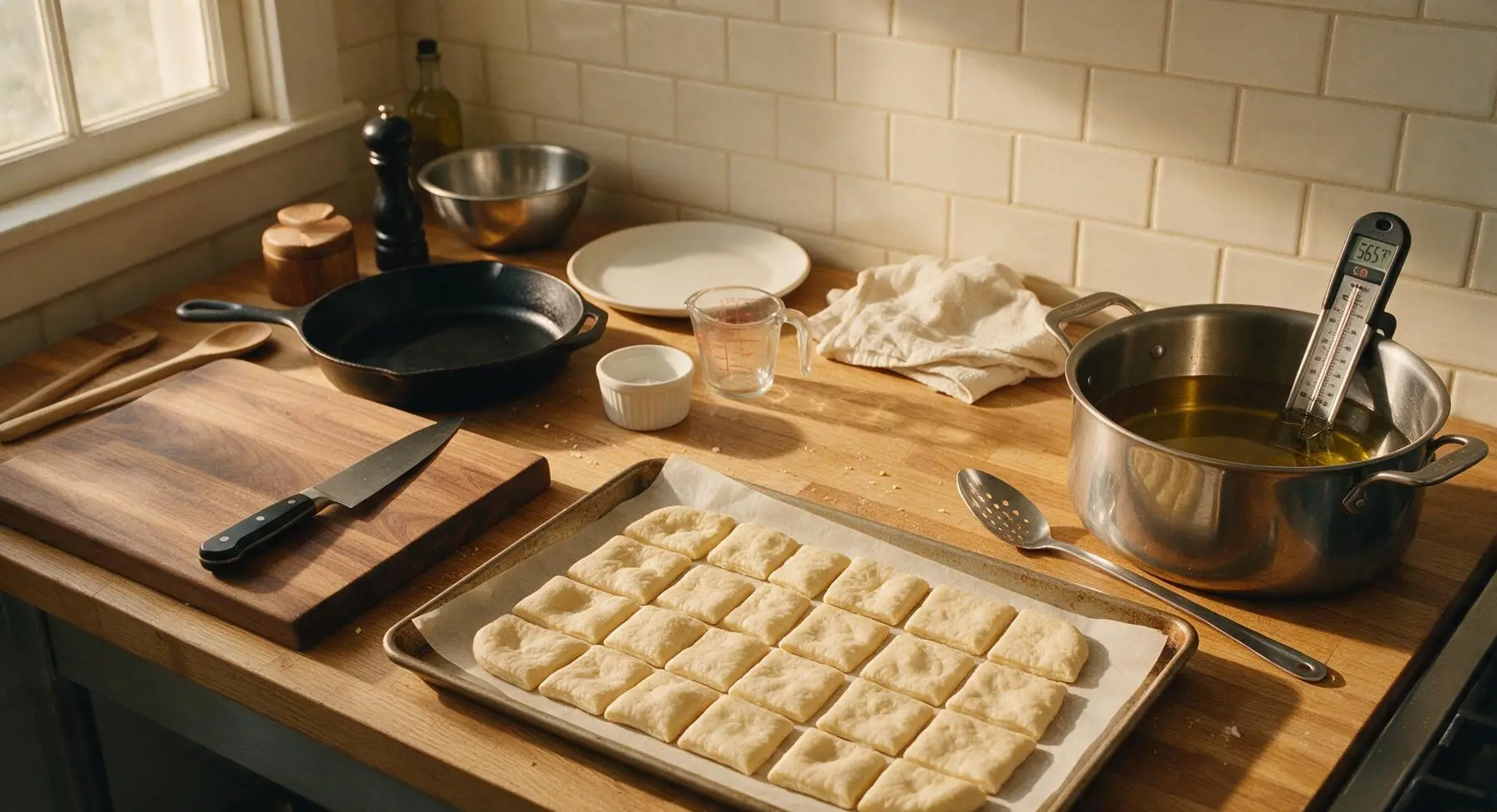
Loosely cover the baking sheet of cut dough squares with plastic wrap, and let rest in a warm spot for 45 minutes, until the squares are puffy and increased in size by 50%, holding a soft indent when gently poked. While the dough rises, pour canola oil into the 6-quart stainless steel Dutch oven to a depth of 3 inches, and heat over medium heat to a steady 365°F, monitored with the digital instant-read thermometer.
Fry Until Golden Brown
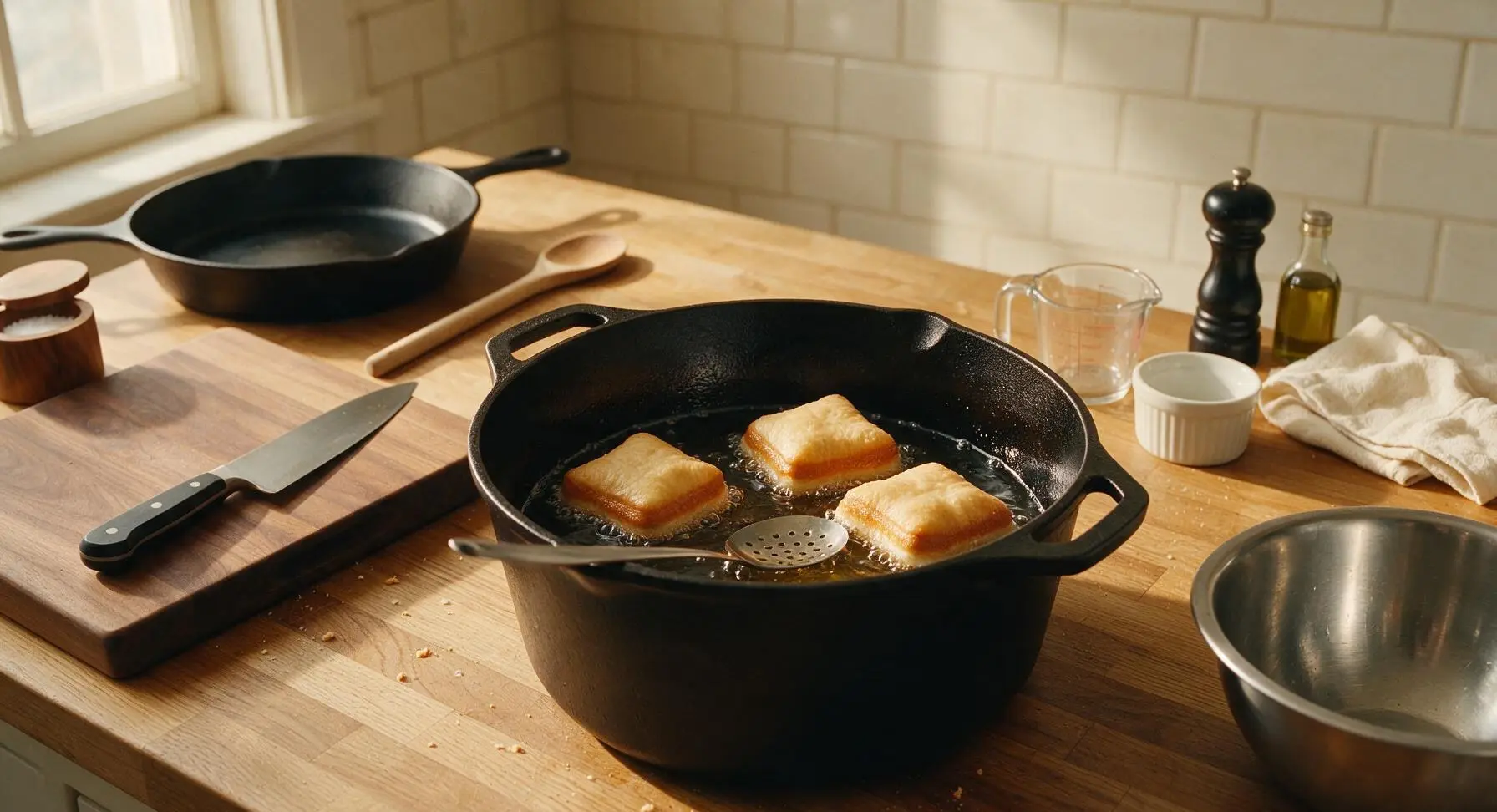
Carefully lower 3-4 dough squares at a time into the hot oil, taking care not to overcrowd the pot (overcrowding drops oil temperature and leads to greasy fasnachts). Fry 1.5 minutes on the first side until deep golden brown, then use the slotted metal spoon to flip each piece, and fry 1-1.5 minutes on the second side. Confirm doneness by checking that the internal temperature reaches 190°F, with no raw dough visible in the center slit.
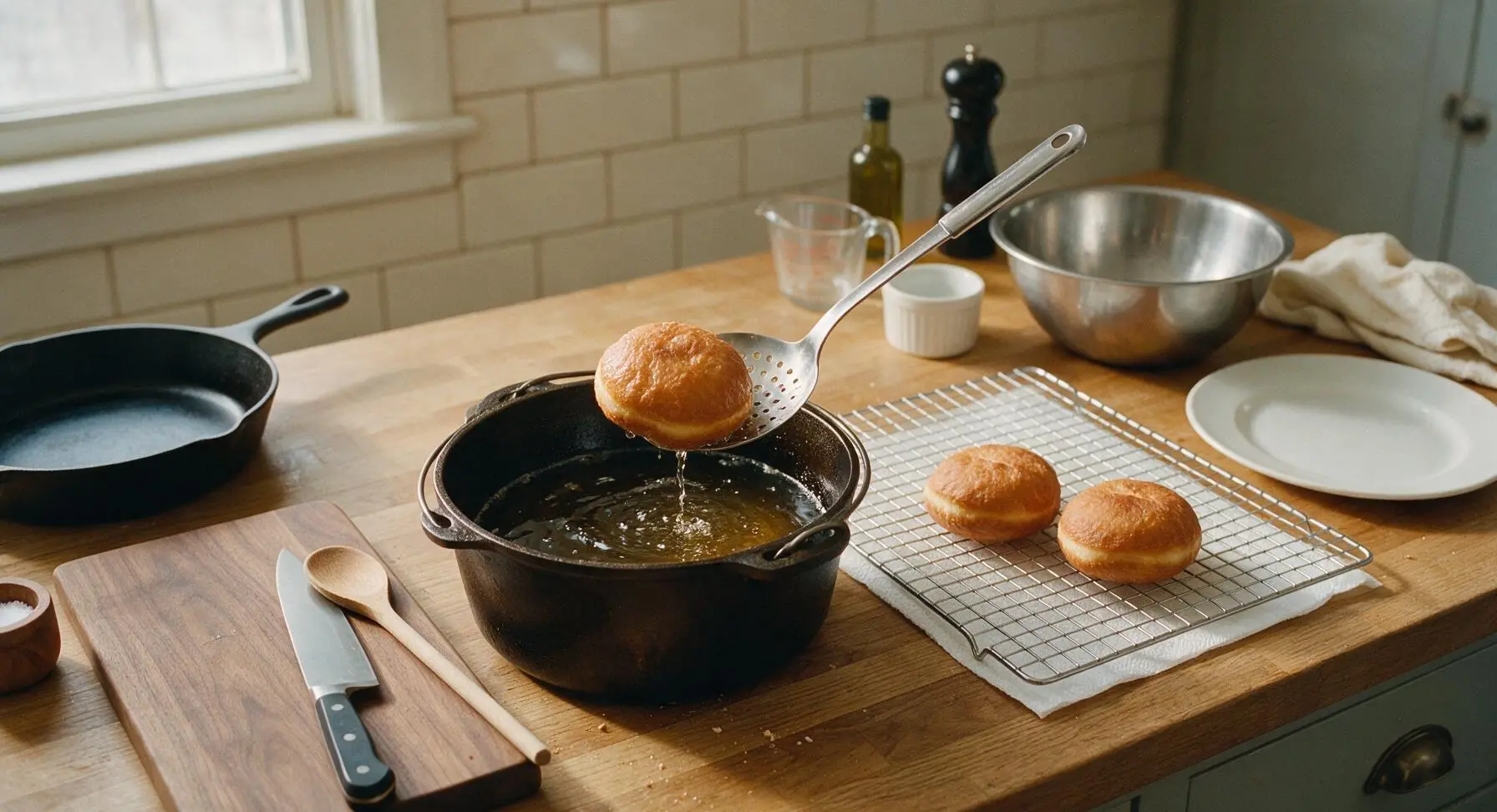
Dust and Serve
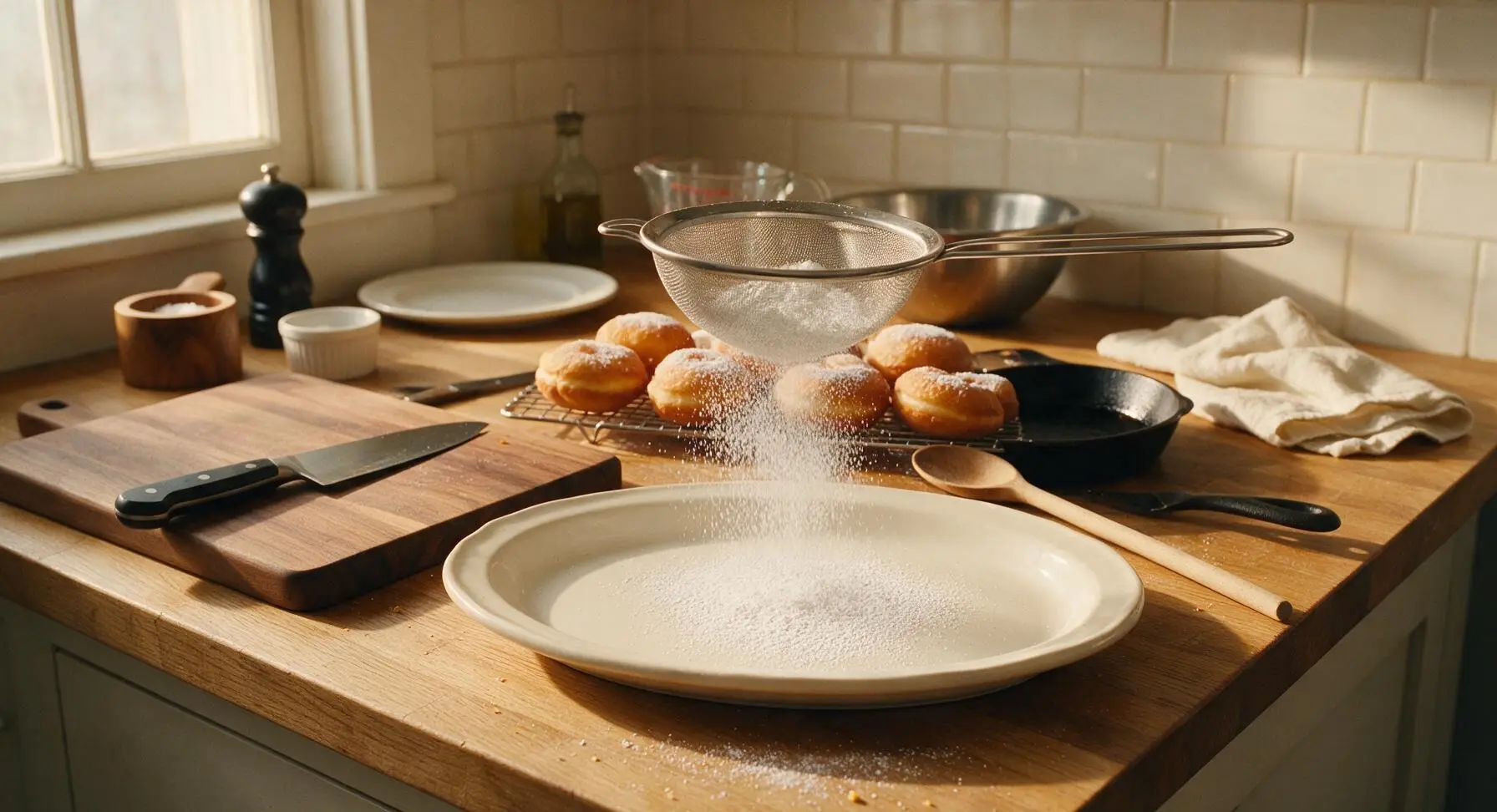
Let fried fasnachts cool on the wire rack for 5 minutes, until just warm to the touch (not piping hot, to prevent sugar from melting). Place powdered sugar in the fine-mesh stainless steel sieve, and tap gently to dust a light, even snowy coating over all sides of the warm fasnachts. Transfer dusted fasnachts to the cream white ceramic serving platter to serve warm.
Tips
2.Use freshly mashed russet potatoes, not instant flakes: The cooked potato creates a uniquely soft, moist crumb that stays tender for days, which is the signature texture of authentic Pennsylvania Dutch fasnachts.
3.Wait 5 minutes after frying before dusting with sugar: Piping hot dough will melt powdered sugar into a gummy, sticky coating instead of the light, snowy dusting that is traditional.



OMG these fasnachts taste exactly like the ones my grandma used to make every Fat Tuesday when I was growing up! I was worried they’d be too much work, but the 2.5 hour total time was totally worth it. My kids devoured half the batch before they even cooled down, I had to hide the rest for my husband’s work potluck tomorrow. SO good, perfectly fluffy with that little hint of nutmeg I remember.
Tried these for our Mardi Gras get-together over the weekend and they were a total hit! I did mess up the first rise because my kitchen was freezing, so I had to let it go an extra 45 minutes, but once they fried up? Absolute game changer. I rolled half in cinnamon sugar and half in powdered sugar, the cinnamon sugar ones went first.
I was able to swap the dairy for oat milk and vegan butter, and use a flax egg, and these still came out amazing! The texture was so light, not greasy at all even after frying. I’ve been missing good fasnachts since going vegan 3 years ago, this recipe is going to be a Fat Tuesday staple for me from now on.
Wait hold on, I thought fasnachts were supposed to be square and have no hole? This recipe says to cut them into rounds? Am I misremembering? I don’t want to show up to our church potluck with inauthentic doughnuts lmao.
Medium difficulty is no joke y’all — I’m a pretty confident home cook and I was nervous about frying these for the first time, but the step-by-step instructions made it so much less scary. Pro tip: keep your oil at a steady 365 degrees, don’t let it spike or they’ll burn on the outside before cooking through. I made these for my roommate’s Fat Tuesday birthday and he said they were better than the ones he gets at the bakery back home in Allentown.
I made a double batch on Sunday to have for breakfast all week and they held up way better than I thought they would! I stored them in an airtight container on the counter and popped them in the microwave for 10 seconds before eating, tasted just as fresh as the day I fried them. 10/10, will be making these year round not just for Fat Tuesday tbh.
Help! I followed the recipe exactly but my dough came out super sticky and impossible to roll out, did I do something wrong? I really want these to turn out for my family’s dinner tomorrow.
I grew up eating fasnachts every year at the church fasnacht sale in eastern Ohio, and I swear this recipe is spot on. I love that it doesn’t use too much sugar, so the sweet coating on the outside is the perfect balance. My grandkids thought they were “fancy gourmet doughnuts” and asked if we can make them every Sunday now, ha!
Wait a second, can I bake these instead of frying them? I know that’s sacrilege for a doughnut recipe but I really hate dealing with hot oil and the smell of fried food lingering in my apartment for days.
I added a teaspoon of cinnamon to the dough instead of just nutmeg and it was chef’s kiss. These are way less sweet than regular glazed doughnuts, which is my favorite part — you can actually taste the dough instead of just a ton of sugar. I brought a dozen to my office and they were gone in 10 minutes, people were asking for the recipe before I even made it back to my desk.
I’ve tried three different fasnacht recipes over the years and this one is easily the best. The rise times were perfect, the dough was easy to work with once I got the hang of it, and the flavor was exactly what I was looking for. I will say, make sure you don’t roll the dough too thin — I did that with my first batch and they puffed up way too much when frying, ended up a little doughy in the middle.