Five Cheese Scrambled Eggs

title 1
Five Cheese Scrambled Eggs
⏱️ cook time 7 minutes
🍽️ servings 4
⚡ Difficulty easy

intro

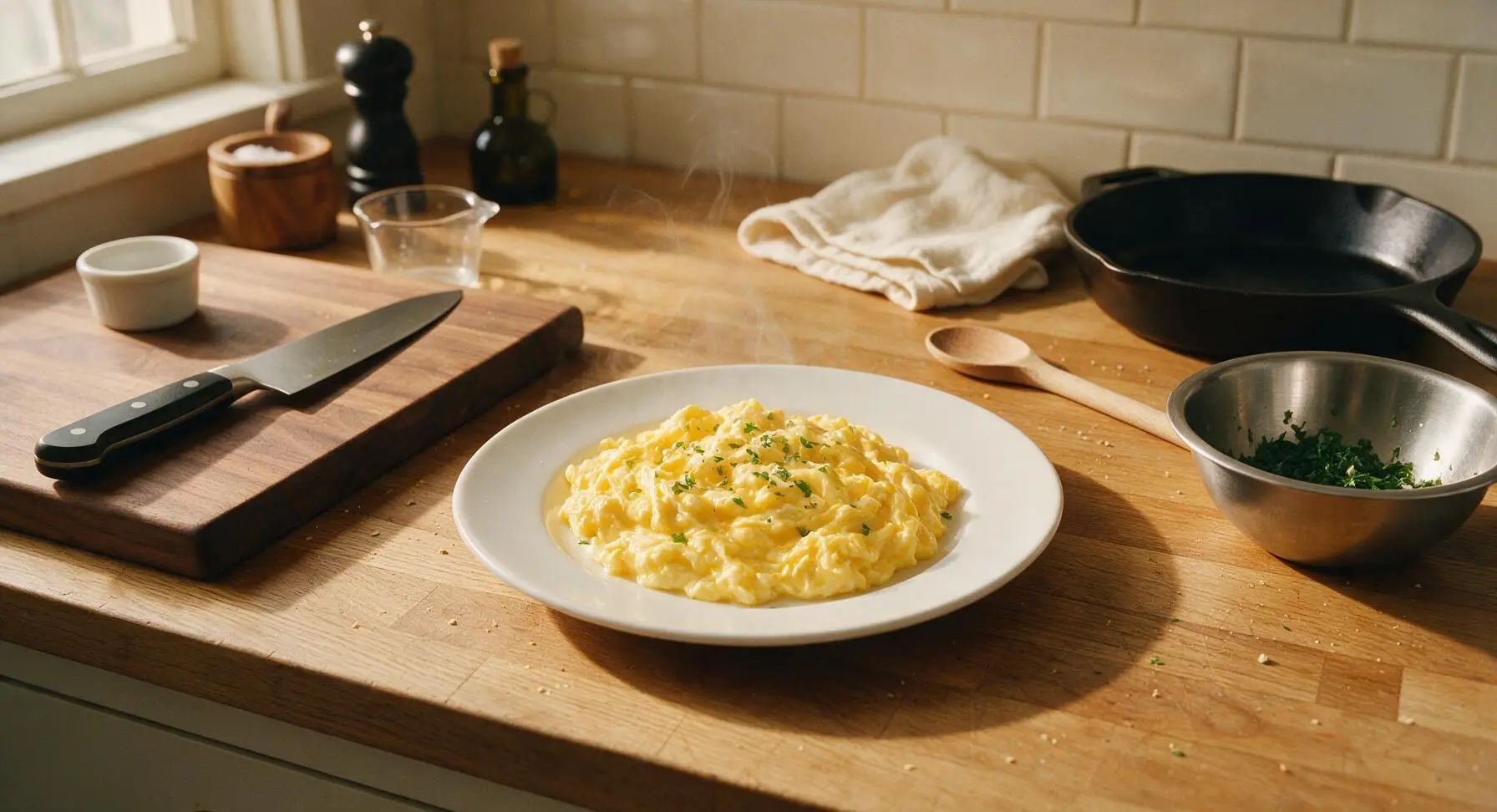
Silky, cloud-like soft scrambled eggs folded with five melty cheeses, rich and creamy without heaviness, ready in 12 minutes for a fast, indulgent meal.

Ingredients
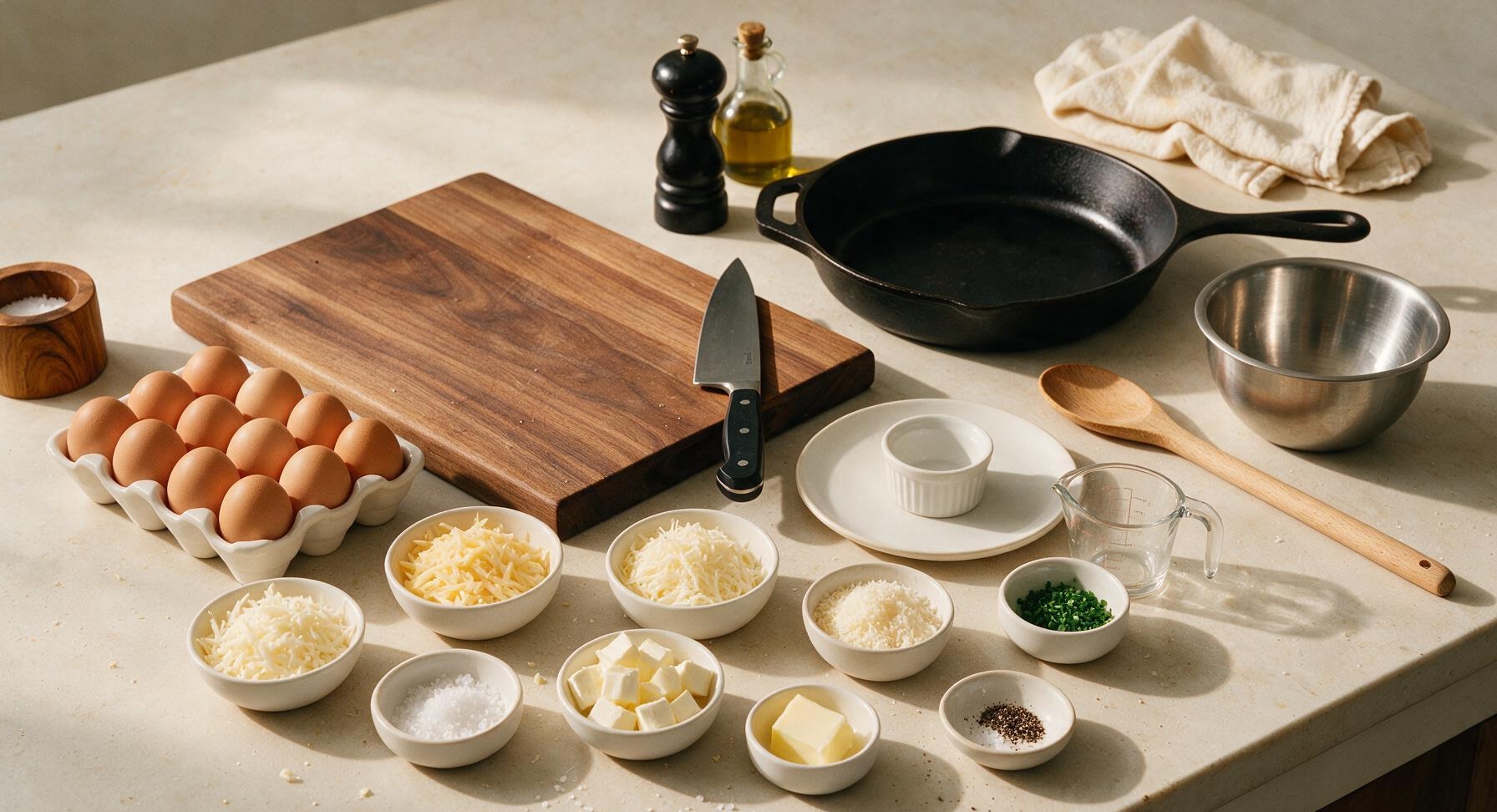
Large eggs 8 each
Sharp white cheddar cheese 50g (1/2 cup grated)
Gruyere cheese 30g (1/3 cup grated)
Low-moisture mozzarella cheese 30g (1/3 cup grated)
Parmesan cheese 20g (1/4 cup finely grated)
Full-fat cream cheese 30g (2 tbsp, cut into 1cm cubes)
Unsalted butter 15g (1 tbsp)
Flaky sea salt 1 tsp, divided
Freshly ground black pepper 1/2 tsp
Fresh chives 1 tbsp, finely chopped

Steps

1

Grate Firm Cheeses

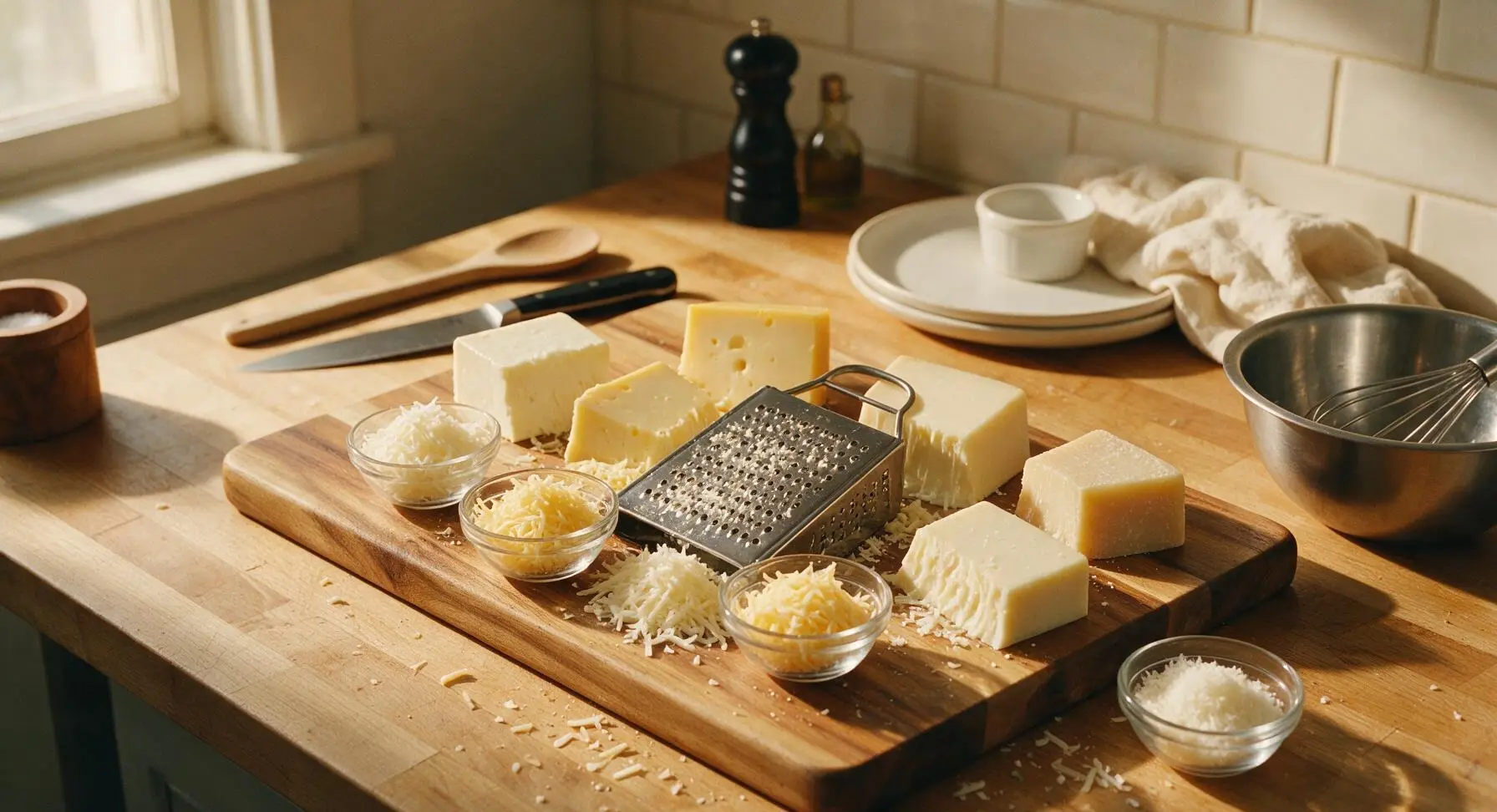
Set the acacia wood cutting board on the central work surface. Use the box grater’s medium holes to grate the sharp white cheddar, gruyere, and low-moisture mozzarella into separate small clear glass pinch bowls. Use the grater’s fine holes to grate the parmesan into a fifth pinch bowl. Keep the cream cheese cut into 1cm cubes and cold in its pinch bowl until ready to use. Avoid pre-shredded packaged cheese, as added anti-caking starches prevent smooth, even melting.
Step 1
step1:Grate Firm Cheeses
2

Whisk Eggs Lightly

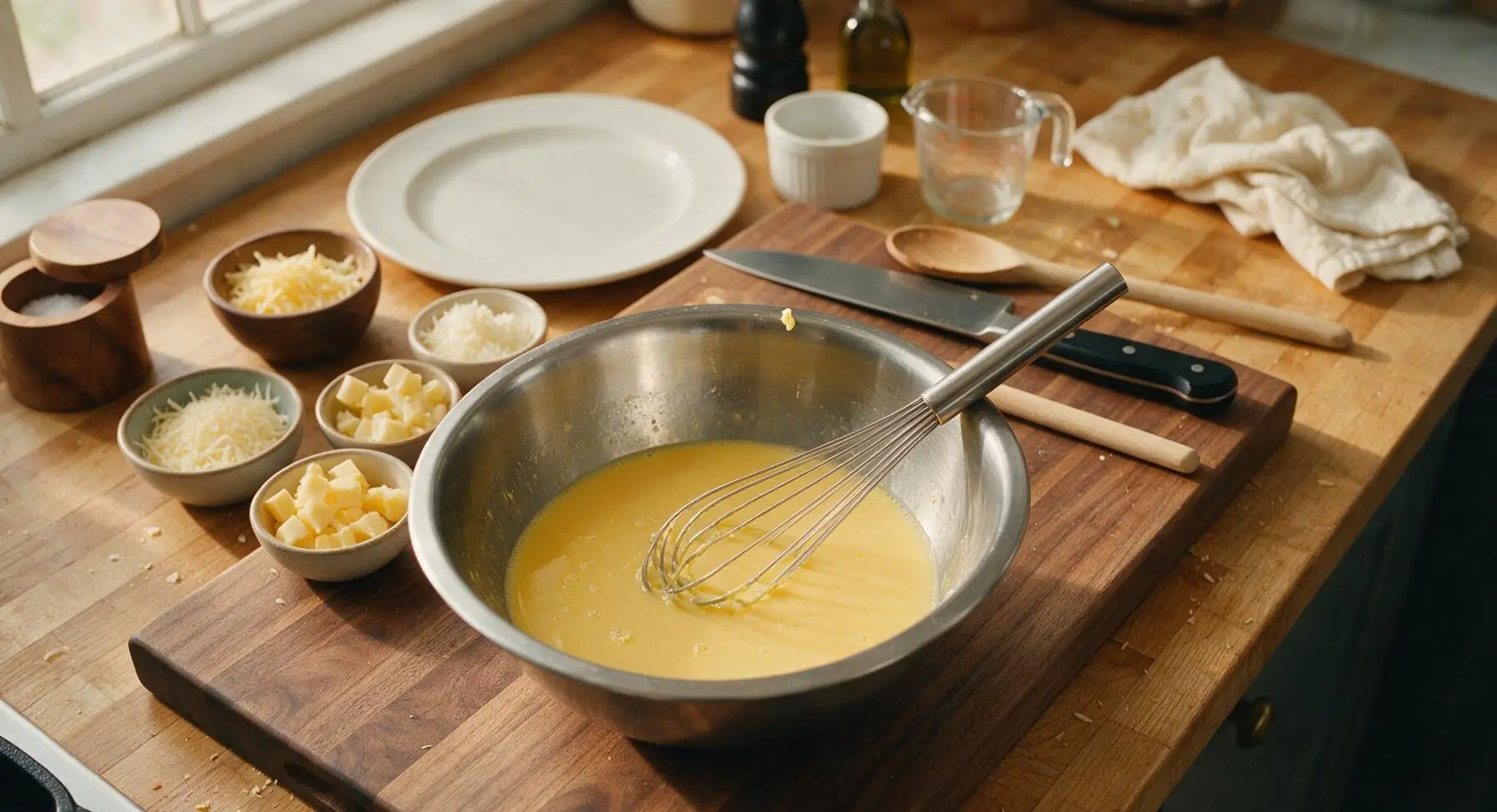
Crack all 8 large eggs into the medium stainless steel mixing bowl. Add 1/2 teaspoon of flaky sea salt. Use the wire whisk to gently combine yolks and whites just until no streaks of clear egg white remain — do not over-whisk, as excess air creates tough, watery curds. The finished egg mixture should be a uniform pale yellow with only a few small bubbles on the surface, not frothy.
Step 2
step2:Whisk Eggs Lightly
3

Preheat Skillet Gently

Retrieve the 8-inch nonstick skillet and place it on the stovetop burner zone set to the lowest heat setting. Add 1 tablespoon of unsalted butter to the pan, letting it melt slowly until it foams lightly but does not turn golden brown (pan surface temperature should reach 250°F / 120°C, measured with the instant-read thermometer). Swirl the pan to coat the entire bottom evenly with melted butter.
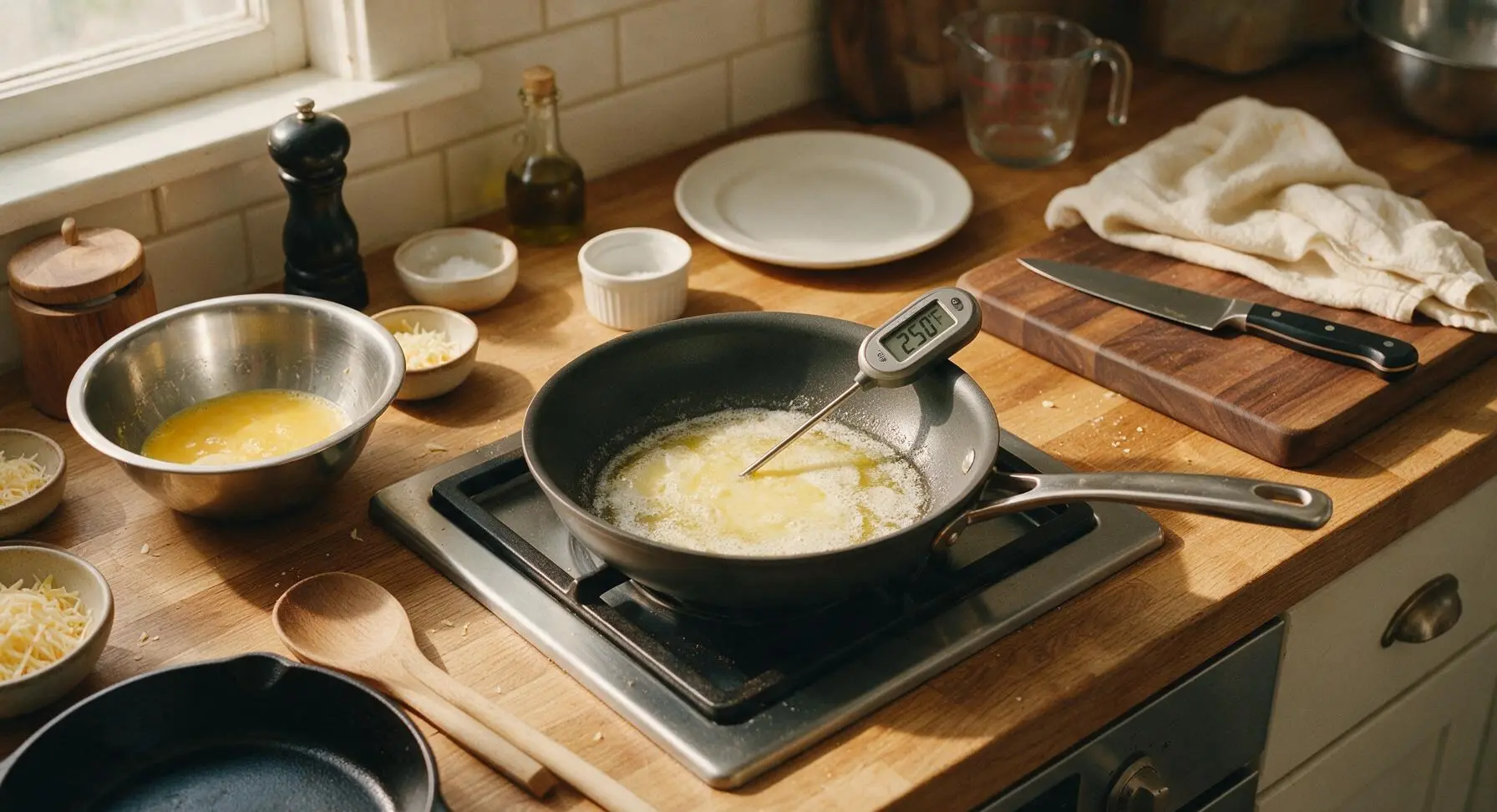
Step 3
step3:Preheat Skillet Gently
4

Pour Eggs Into Pan

Pour the gently whisked egg mixture into the preheated buttered skillet in one slow, steady pour. Let the eggs sit undisturbed for 15 seconds to allow the edges closest to the pan to form soft, tender initial curds. Do not stir immediately, as this breaks curds into tiny pieces and causes uneven cooking.
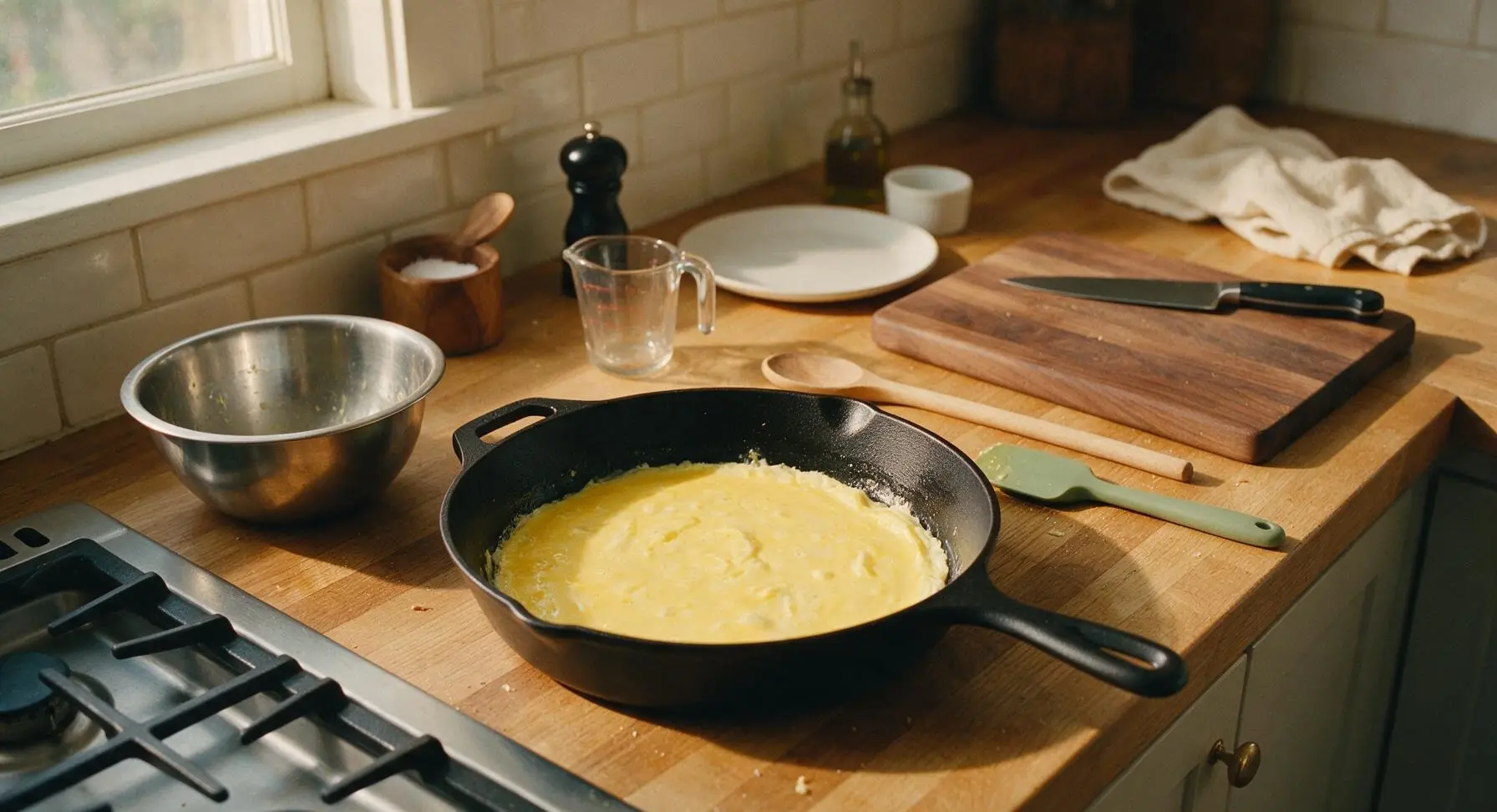
Step 4
step4:Pour Eggs Into Pan
5

Fold Cheeses Slowly

Use the sage green silicone spatula to push set egg curds gently from the pan edge to the center, tilting the pan to let runny uncooked egg flow into the empty pan spaces. After 2 minutes of slow, gentle folding, when eggs are 70% set (soft, slightly jiggly curds, no large pools of liquid egg), scatter all five cheeses evenly across the egg surface. Continue folding very gently for 1 more minute, until cheeses start to melt and eggs reach 90% set; remember eggs will continue to cook from residual pan heat after removal from the burner.
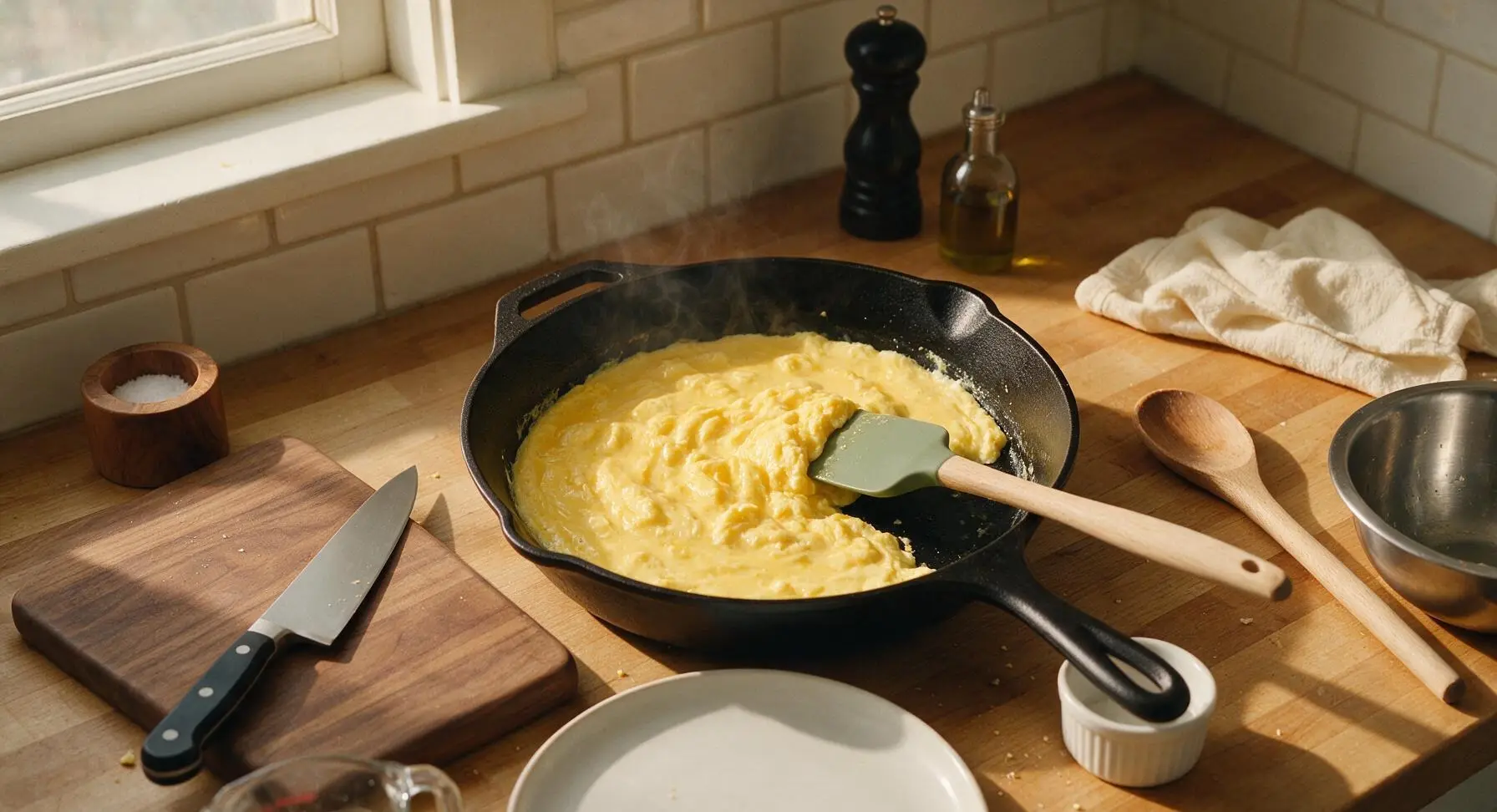
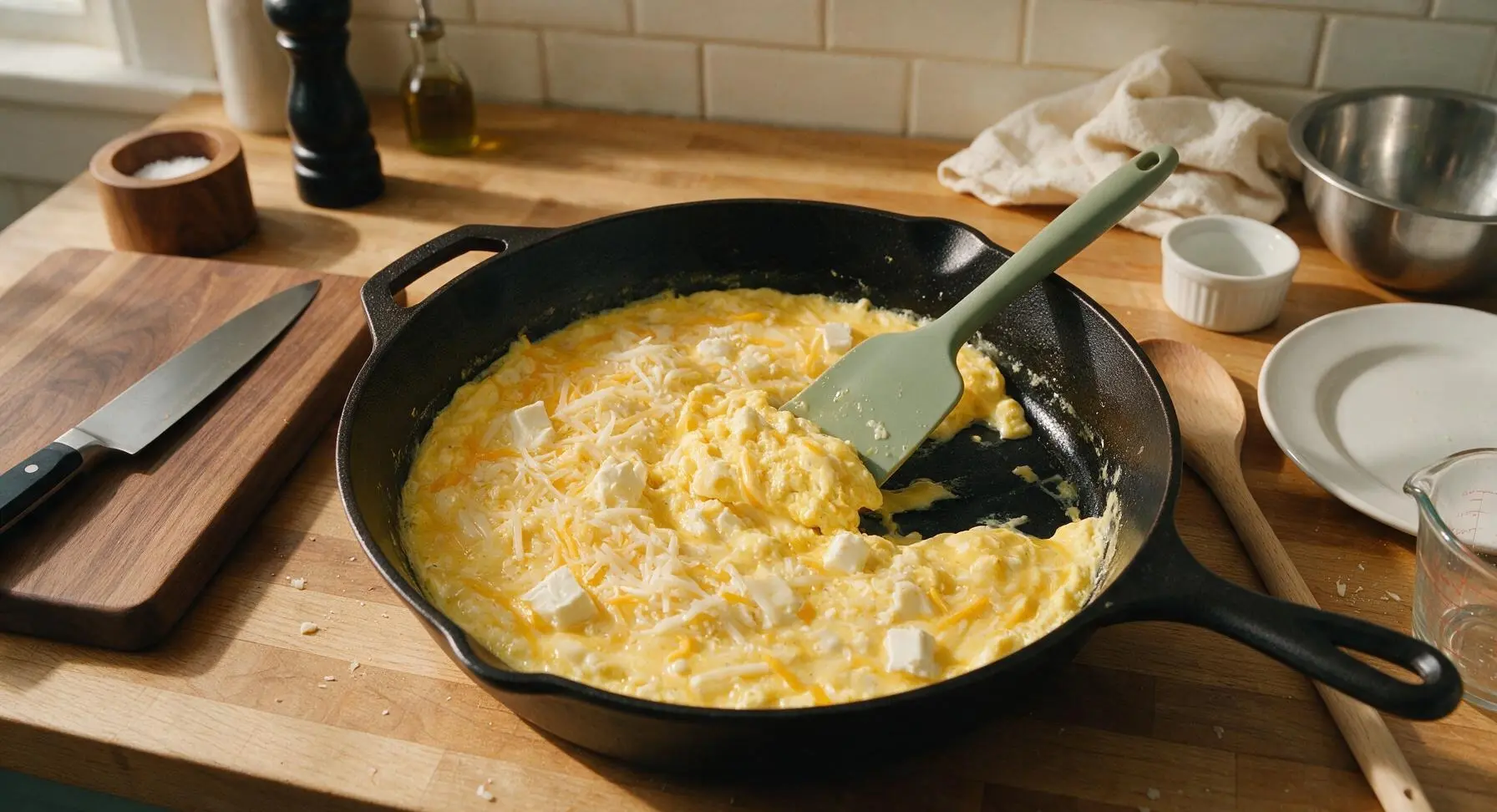
Step 5
step5:Fold Cheeses Slowly
Step 5
step5:Fold Cheeses Slowly
6

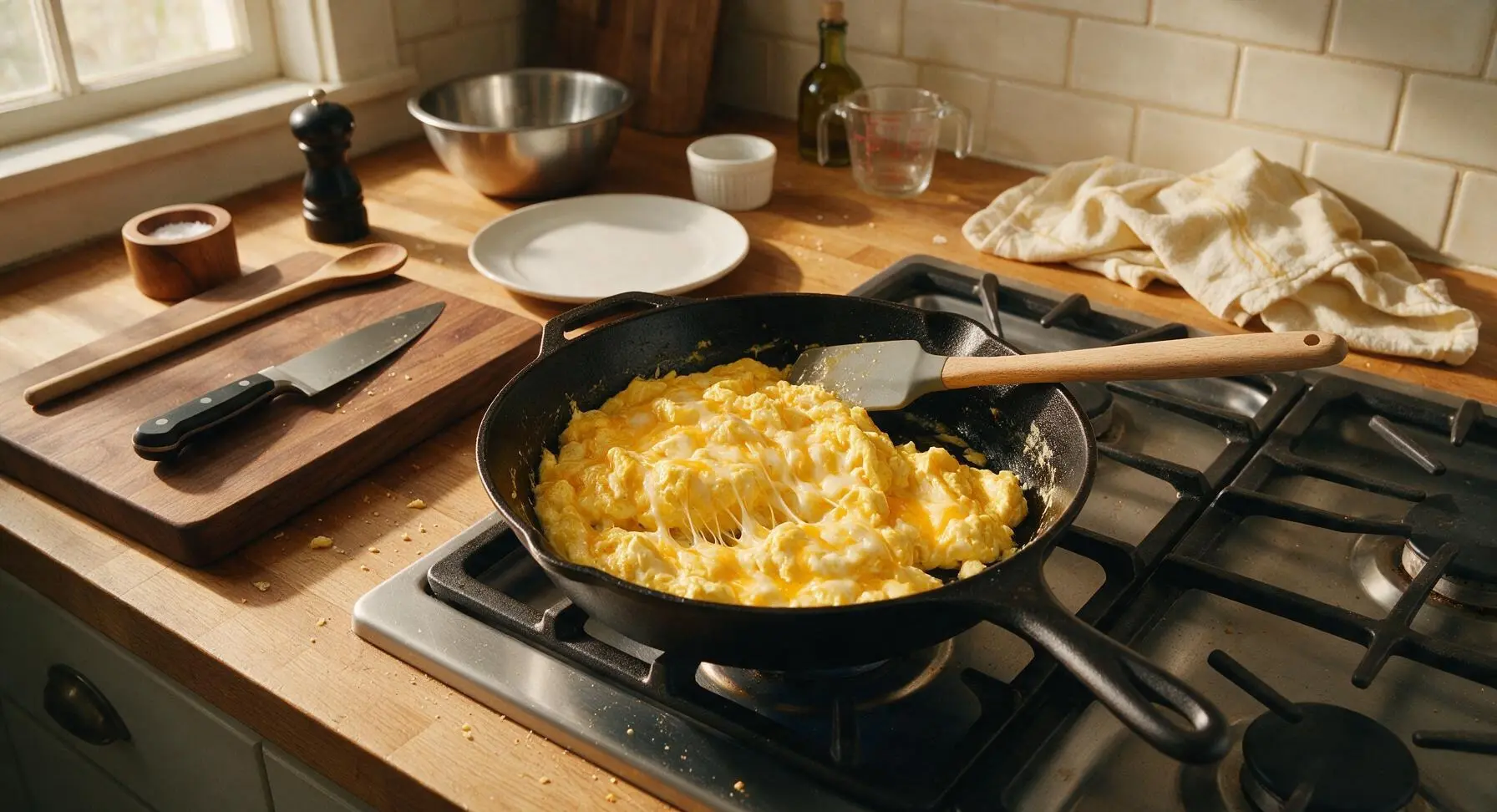
Let Eggs Rest

Turn off the stovetop heat, slide the pan 6 inches off the hot burner, and let the eggs rest in the warm pan for 60 seconds. Residual heat will finish cooking the eggs to perfect soft, creamy curds and melt cheeses fully without overcooking. Do not cover the pan, as trapped steam will condense and make eggs watery.
Step 6
step6:Let Eggs Rest
7

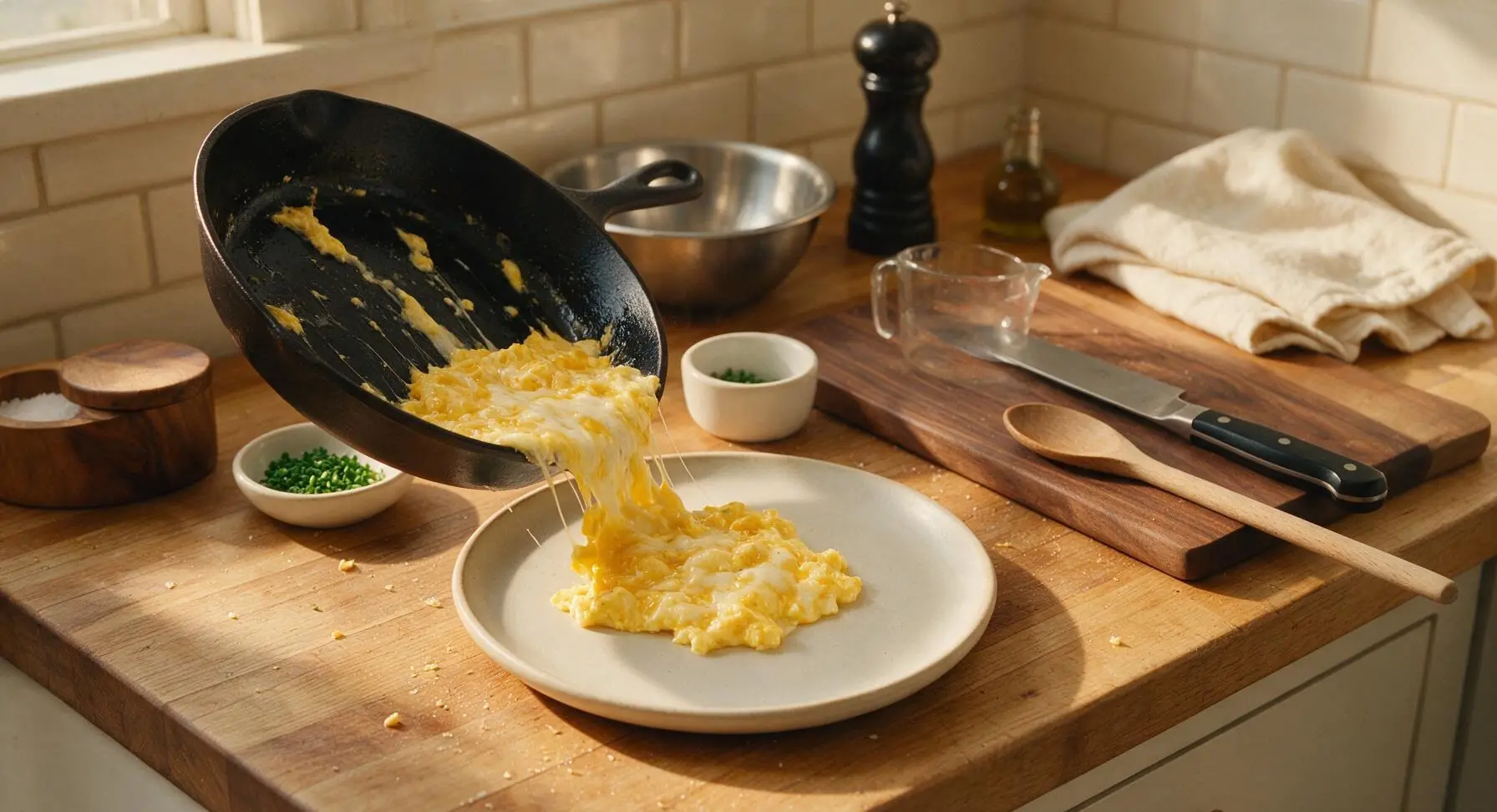
Plate and Garnish

Slide the warm cheesy scrambled eggs gently onto the center of the off-white matte stoneware dinner plate. Sprinkle the top with the remaining 1/2 teaspoon flaky sea salt, 1/2 teaspoon freshly ground black pepper, and finely chopped fresh chives. Serve immediately, while eggs are soft and cheese is stretchy.
Step 7
step7:Plate and Garnish

Tips

1.Cook on the lowest possible heat: High heat causes egg proteins to seize up into rubbery curds and makes cheese separate into greasy pools, while low heat builds tender, melt-in-your-mouth curds that hold cheese evenly for a creamy texture.
2.Keep cream cheese cold until adding to eggs: Cold cream cheese melts into small, rich, tangy pockets instead of dissolving completely into the egg mixture, creating surprise bursts of creamy cheese flavor in every bite.
3.Pull eggs before they look fully done: Eggs continue to cook for 1-2 minutes from residual heat after leaving the pan; waiting for eggs to look completely set in the skillet will result in dry, overcooked eggs by the time they are served.
✨ You May Also Like

Breakfast
🍜 United States

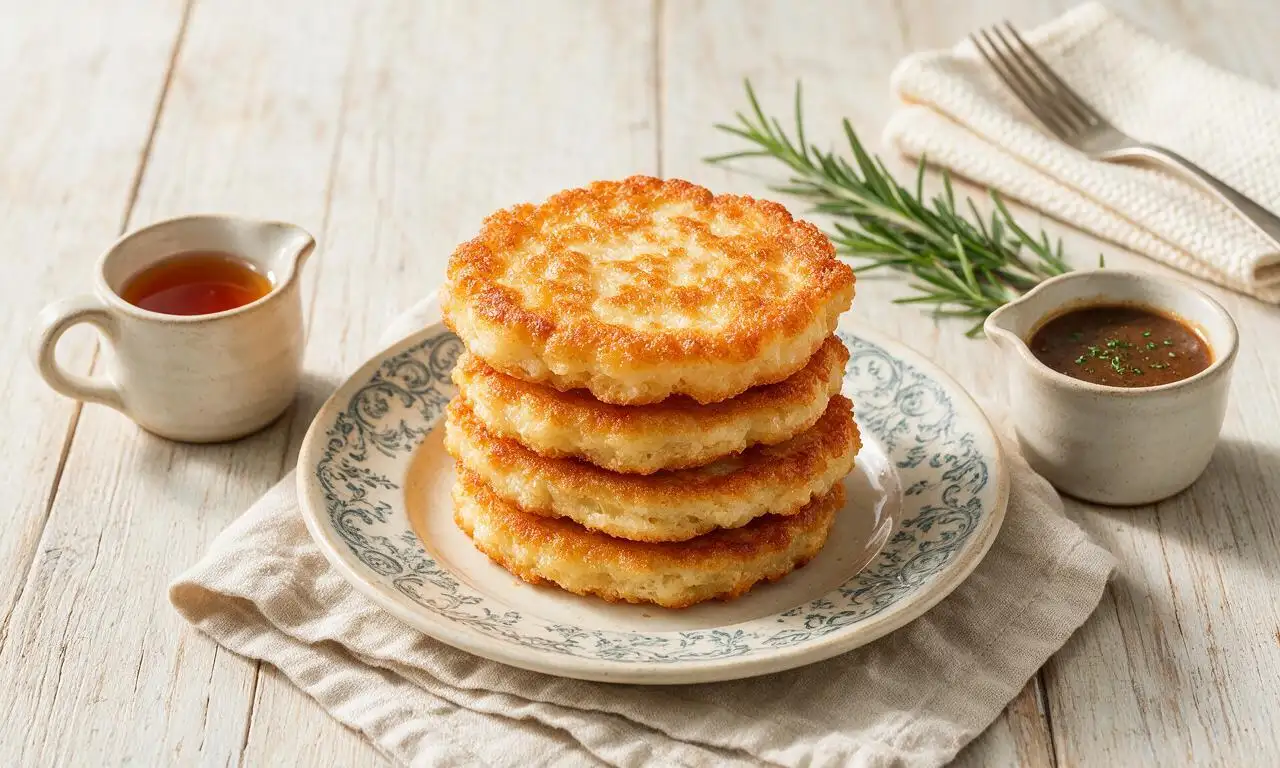
Crisp-edged, fluffy lard griddle cakes are a nostalgic homestyle staple, with rich savoriness from rendered lard, perfect topped with maple syrup or savory gravy.

⏱️ 25 minuteBreakfast ★ 4.8
Breakfast
🍜 United States

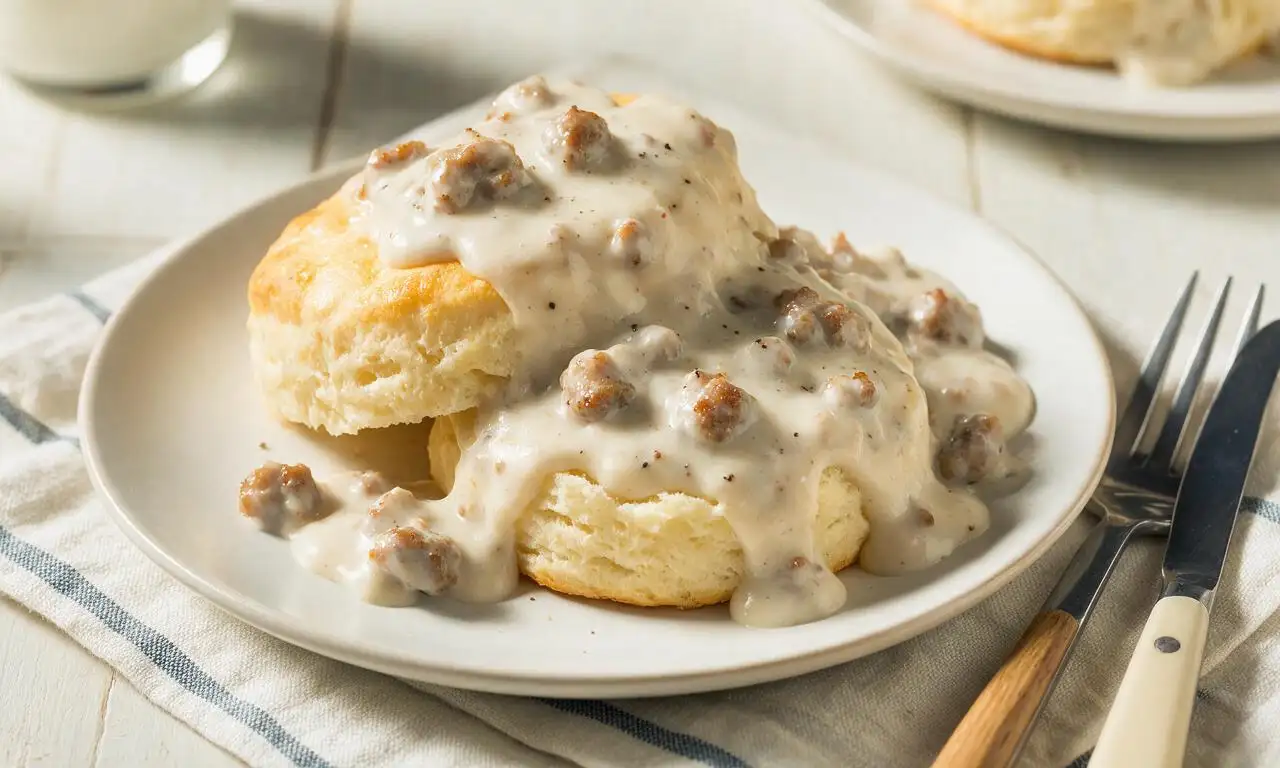
Flaky, buttery homemade buttermilk biscuits smothered in creamy, peppery pork sausage gravy: a beloved, hearty Southern American comfort food classic.

⏱️ 35 minuteBreakfast ★ 4.8
Breakfast
🍜 United States

Golden, custardy brioche stuffed with sweet cream cheese and fresh berries, pan-fried to crisp perfection. An indulgent, cozy breakfast perfect for slow weekend mornings.

⏱️ 30 minuteBreakfast ★ 4.7
Breakfast
🍜 United States

Flaky, buttery Southern-style biscuits stuffed with savory salty country ham, a portable, satisfying classic perfect for casual on-the-go meals.

⏱️ 25 minuteBreakfast ★ 4.8
Breakfast
🍜 United States

Iconic puffy baked pancake popularized in Seattle, with crisp golden edges and soft custardy center, served warm with classic sweet toppings.

⏱️ 35 minuteBreakfast ★ 4.6
Breakfast
🍜 United States

Fluffy, golden pancakes studded with juicy peak-summer mixed berries, drizzled with maple syrup for a bright, comforting, crowd-pleasing family breakfast.

⏱️ 25 minuteBreakfast ★ 4.7

Five Cheese Scrambled Eggs:Frequently Asked Questions

1.Wait, the listed key ingredients only name four cheeses—what’s the fifth cheese in this five-cheese scramble? ▾
Great catch! The fifth is a small amount of full-fat cream cheese, cut into tiny cubes. It melts seamlessly into the eggs to build that luxe, silky base without weighing the other cheeses down, and it binds the sharper, nuttier cheese flavors together so no single note overpowers the rest of the dish.
2.Why do you specify low-moisture mozzarella instead of fresh mozz for this recipe? ▾
Fresh mozz has a very high water content that leaches out as it melts, turning perfectly soft scrambled eggs watery and soggy. Low-moisture mozz melts into that ideal stretchy, stringy cheese pull without releasing excess liquid, so your eggs stay rich and creamy instead of watery and loose.
3.How do I get that cloud-like, soft scramble texture instead of tough, rubbery eggs? ▾
The trick is low, slow heat and constant gentle stirring! Cook eggs over medium-low heat, using a silicone spatula to push soft curds from the pan’s edge to the center as they form. Pull the pan off heat right when curds are just set, since residual heat will finish cooking them in 30 seconds.
4.Can I use pre-shredded cheese for this recipe to save time? ▾
I don’t recommend it! Pre-shredded cheese is coated in potato starch or anti-caking agents to prevent clumping in the bag, which keeps it from melting smoothly into eggs. You’ll end up with grainy, unevenly melted cheese instead of that cohesive, creamy texture—grate your own fresh, it only takes 2 extra minutes.
5.How long does this recipe actually take to make from start to finish? ▾
It clocks in right at 12 minutes total, just as the intro notes! Prep work—grating cheese, cracking and whisking eggs—takes 5 minutes, and the actual cooking process only takes 6 to 7 minutes over low heat. It’s fast enough for busy weekday breakfasts but indulgent enough for slow weekend brunch.
6.What’s the best ratio of eggs to cheese so the dish doesn’t feel too heavy? ▾
For 6 large eggs, use about ¼ cup total of mixed grated hard cheese plus 1 ounce of cream cheese. That works out to roughly 1 tablespoon of each of the four hard cheeses—enough for deep, layered cheese flavor in every bite, but not so much that eggs get greasy or feel overly heavy.
7.Do I add the cheese all at once while the eggs are cooking? ▾
No! Add the tiny cream cheese cubes when you first pour whisked eggs into the pan, so it melts into the base as curds form. Wait to add the grated cheddar, Gruyere, mozzarella, and Parm until eggs are 90% set, right after pulling the pan off heat, then fold gently to melt via residual heat.
8.Can I make this recipe dairy-free for a friend with a milk allergy? ▾
You can swap in dairy-free alternatives, but stick to block-style dairy-free cheeses you grate yourself for the best melt. Use a dairy-free cream cheese base, plus dairy-free sharp cheddar, Swiss-style cheese, mozzarella-style shreds, and a sprinkle of nutritional yeast to mimic Parm’s nutty, salty bite. Note the texture will be slightly less creamy.
9.Why use sharp white cheddar instead of mild yellow cheddar? ▾
Sharp white cheddar has a more concentrated, tangy, aged flavor that stands up to the other rich cheeses without the artificial yellow dye common in mild yellow cheddars. Its firmer, crumbly texture also melts more evenly than softer mild cheddar, so it blends smoothly into egg curds instead of clumping.
10.What kind of pan works best for making these scrambled eggs? ▾
A heavy-bottomed nonstick skillet is your best bet here! The heavy base distributes heat evenly so you don’t get hot spots that burn sections of egg, and the nonstick surface lets you gently stir and fold curds without them sticking or tearing, which is key for that soft, fluffy texture.
11.Should I add milk or cream to the eggs before scrambling them? ▾
Skip the extra milk or cream! The five cheeses already add more than enough rich, creamy texture, and adding extra dairy can actually thin out eggs, making them watery or rubbery if you overcook them even slightly. Just whisk eggs with a tiny pinch of salt before pouring into the pan, and let the cheese do the work.
12.How do I keep the Parmesan from getting gritty in the eggs? ▾
Grate your Parmesan on the smallest holes of a box grater (or use a microplane) so it’s super fine, and add it last when you fold in the other grated cheeses off heat. Don’t cook Parm directly over high heat, since its high protein content can seize up and turn grainy if it gets too hot too fast.
13.What are good serving pairings for these cheesy eggs? ▾
They pair beautifully with crispy sourdough toast, roasted cherry tomatoes, a sprinkle of fresh chives, or a side of crispy bacon or breakfast sausage. For a lighter brunch, serve them over peppery arugula tossed with a squeeze of lemon, which cuts through the rich cheese flavor perfectly.
14.Can I meal prep these scrambled eggs to eat during the week? ▾
These eggs are best eaten fresh right after cooking, since reheating can make cheese turn greasy and eggs get rubbery. If you do need to prep ahead, undercook eggs by about a minute, store in an airtight fridge container for up to 2 days, and reheat gently in 15-second microwave bursts, stirring between each.
15.What does Gruyere add to the scramble that other cheeses don’t? ▾
Gruyere is a nutty, slightly sweet Alpine cheese that melts incredibly smoothly without getting stringy or greasy. It adds a deep, savory, umami backbone that bridges the bright tang of white cheddar, the stretch of mozzarella, the saltiness of Parm, and the creaminess of cream cheese for perfectly balanced flavor.
16.Why do my eggs turn watery every time I add cheese to scrambled eggs? ▾
That usually happens for one of three reasons: you used high-moisture cheese like fresh mozz, you added cheese too early while eggs cooked over high heat (which makes cheese separate and release liquid), or you overcooked the eggs, which squeezes out moisture as their proteins tighten up.
17.Can I add mix-ins like veggies or bacon to this scramble? ▾
Absolutely! Just cook any mix-ins (like diced bell pepper, caramelized onions, cooked bacon, or sautéed spinach) first, set them aside, and fold them into the eggs right when you add the grated cheeses off heat. Don’t cook mix-ins directly with raw eggs, since they can release excess moisture and ruin the soft texture.
18.How much salt should I add to these eggs, since the cheeses are already salty? ▾
Go light on added salt! Start with just ⅛ teaspoon of fine sea salt per 6 eggs when you whisk them, then taste right at the end after folding in all the cheese. Parmesan and sharp cheddar both have good salt content, so you may not need extra—you can always add a pinch more, but you can’t take it out.

Comments (7)

2 days ago

OMG these five cheese scrambled eggs are a total game changer for our weekday mornings! I was so tired of making plain eggs that my kids would pick at, but they devoured every single bite this morning. Cook time was actually only 7 minutes like the recipe said, no fancy steps needed. I used a little extra parmesan because that’s what we had in the fridge and it was *chef’s kiss*.

yesterday

Wait did you use pre-shredded cheese or shred your own? I tried pre-shredded last time I made cheesy eggs and they got a weird rubbery texture!

yesterday

Great question! Freshly shredded cheese melts much smoother for these eggs, but if you only have pre-shredded on hand, toss it with a tiny pinch of cornstarch before adding to help it melt evenly without clumping!

3 days ago

SO good. I made these for my buddy’s potluck brunch last weekend and people were begging me for the recipe. The mix of cheeses is perfect, not too heavy so you don’t feel sluggish after eating. Only note: make sure your pan is on low heat! I cranked mine a little too high at first and almost burned the first batch.

2 days ago

So glad these were a hit at your potluck! Great tip about low heat — slow, gentle cooking is the secret to fluffy, creamy scrambled eggs every time 😊

1 week ago

Added this to my weekly meal prep rotation! I make a big batch on Sunday and portion them out for quick breakfasts all week. They reheat way better than I thought cheesy eggs would, just 30 seconds in the microwave and they’re still creamy. 10/10 for ease and flavor!

5 days ago

Wait, has anyone tried making these with lactose-free cheese? I’m obsessed with cheesy eggs but regular cheese does a number on my stomach, and I don’t want to waste ingredients testing if it’ll work with the dairy free alternatives.

3 days ago

I made them with lactose-free cheddar, mozzarella, and a little lactose-free cream cheese last week! It worked perfectly, you couldn’t even tell the difference. Just skip the harder aged cheeses if those trigger you, the blend is flexible!

2 days ago

Thanks for sharing your swap, Gigi! This recipe is super customizable, so you can absolutely swap in your favorite lactose-free cheese blends without losing that creamy, cheesy flavor.

2 hours ago

First egg recipe I’ve ever made that didn’t turn into a rubbery mess! Super easy, only took me 7 minutes even with my terrible dorm kitchen setup. I used the random cheese slices I had left from my sandwich packs and it still slapped.

30 minutes ago

Omg I’m gonna try this in my dorm this weekend! We only have a tiny hot plate so the short cook time is perfect, thanks for the inspo!

yesterday

Made these for Father’s Day breakfast with my kids and they were a home run. We added a little crumbled bacon on top for extra savoriness, and the five cheese blend made it feel fancy even though it was so quick to throw together. Will definitely be making these every weekend from now on.

5 minutes ago

These are great! I added a pinch of red pepper flakes and a dash of hot sauce on top to give it a little kick, and it paired so well with the rich cheese flavor. Only thing is I wish the recipe listed exactly which five cheeses it uses? I guessed based on what I had: cheddar, mozzarella, parmesan, Monterey jack, and cream cheese, but I’m curious what the official blend is.

just now

Love the hot sauce addition! The official five cheese blend in this recipe is sharp cheddar, mozzarella, parmesan, Monterey Jack, and a tiny bit of brie for extra creaminess — your guess was almost spot on! Feel free to swap in your favorites though, it’s hard to go wrong with cheesy eggs.