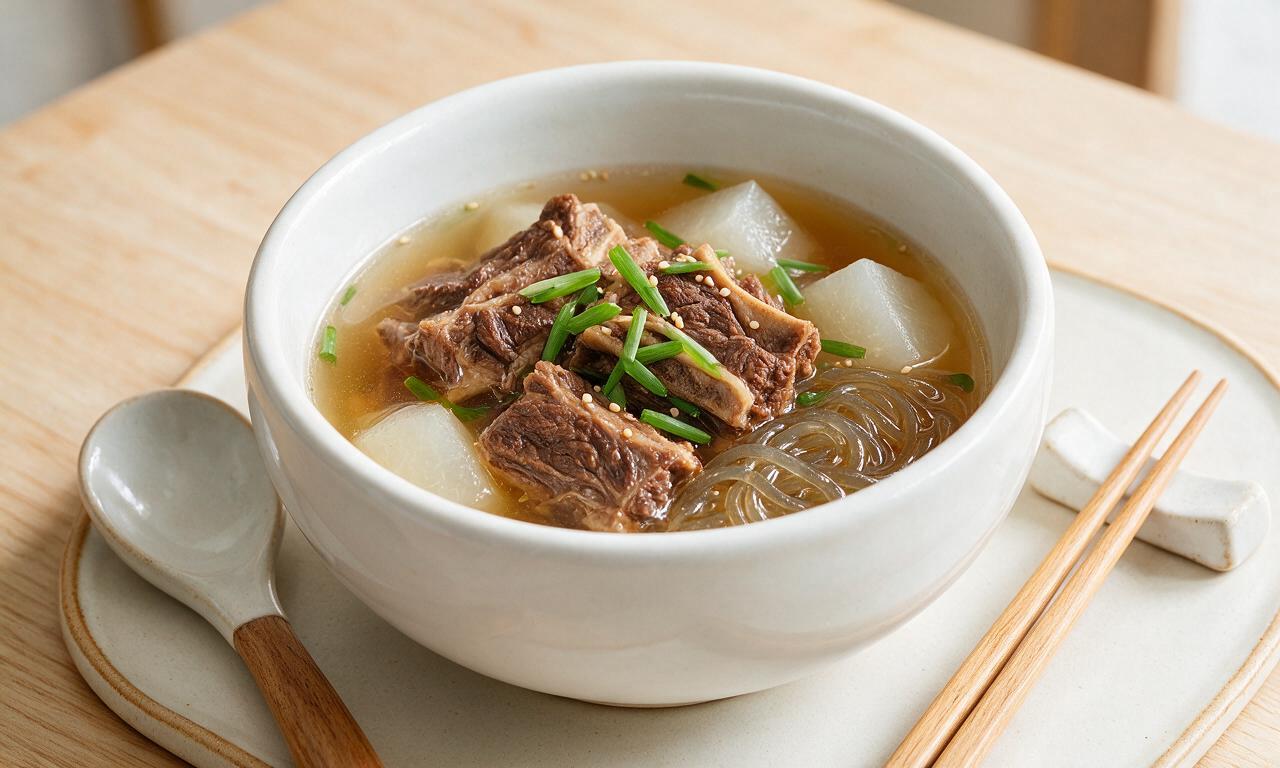
Galbi Tang

Galbi Tang
⏱️ cook time 2 hours 45 minutes
🍽️ servings 4
⚡ Difficulty medium

intro

Rich, clear, deeply savory Korean beef short rib soup slow-simmered with radish and aromatics, served with chewy glass noodles and fresh scallion garnish.

Ingredients

Bone-in beef short ribs (galbi, cut into 5cm pieces) 1.2 kg
Korean radish (mu, peeled, cut into 3cm chunks) 450 g
Dried Korean sweet potato glass noodles (dangmyeon) 100 g
Sweet yellow onion, quartered 200 g (1 large)
Garlic cloves, peeled 60 g (12 cloves)
Fresh ginger, sliced into 5mm coins 20 g (1 5cm piece)
Whole black peppercorns 1 tbsp (6 g)
Low-sodium soy sauce 3 tbsp (45 ml)
Toasted sesame oil 1 tsp (5 ml)
Scallions, trimmed 60 g (4 stalks)
Fine sea salt 2 tsp (10 g), divided
Cold filtered water 6 L, divided

Steps

1

Soak beef short ribs

Place 1.2kg bone-in beef short ribs (cut into 5cm pieces) in a large mixing bowl, cover completely with 2L cold water mixed with 1 tsp fine sea salt. Let soak for 1 hour at room temperature, changing the water once after 30 minutes, to draw out residual blood for a clear, clean-tasting broth. Drain ribs fully, then rinse thoroughly under cold running water to scrub away any loose bone fragments.
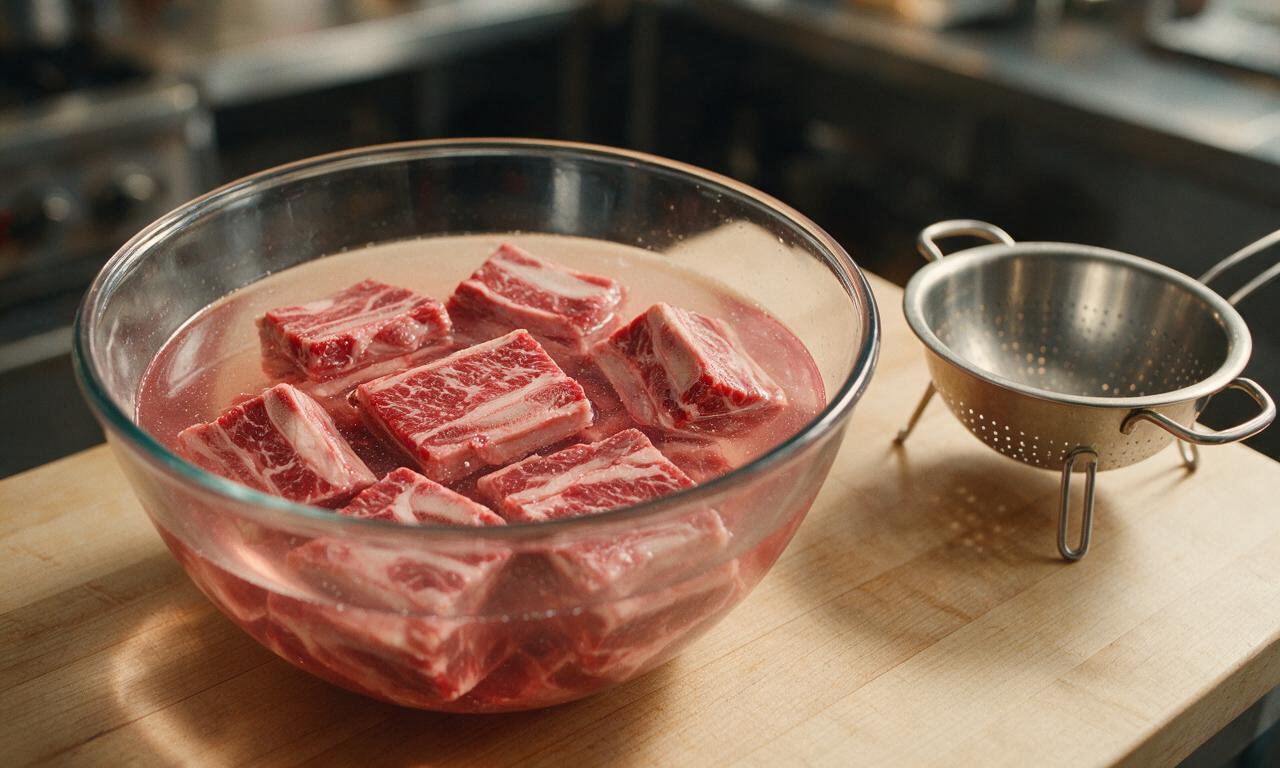
Step 1
step1:Soak beef short ribs
2

Blanch the short ribs

Transfer drained, rinsed ribs to a 6L stock pot, cover with 1L cold water, and bring to a rolling boil over medium-high heat. Boil uncovered for 10 minutes, until thick gray foam rises to the surface. Discard all blanching water, scrub the pot clean of stuck-on scum, and rinse each rib under warm water to remove any remaining foam residue.
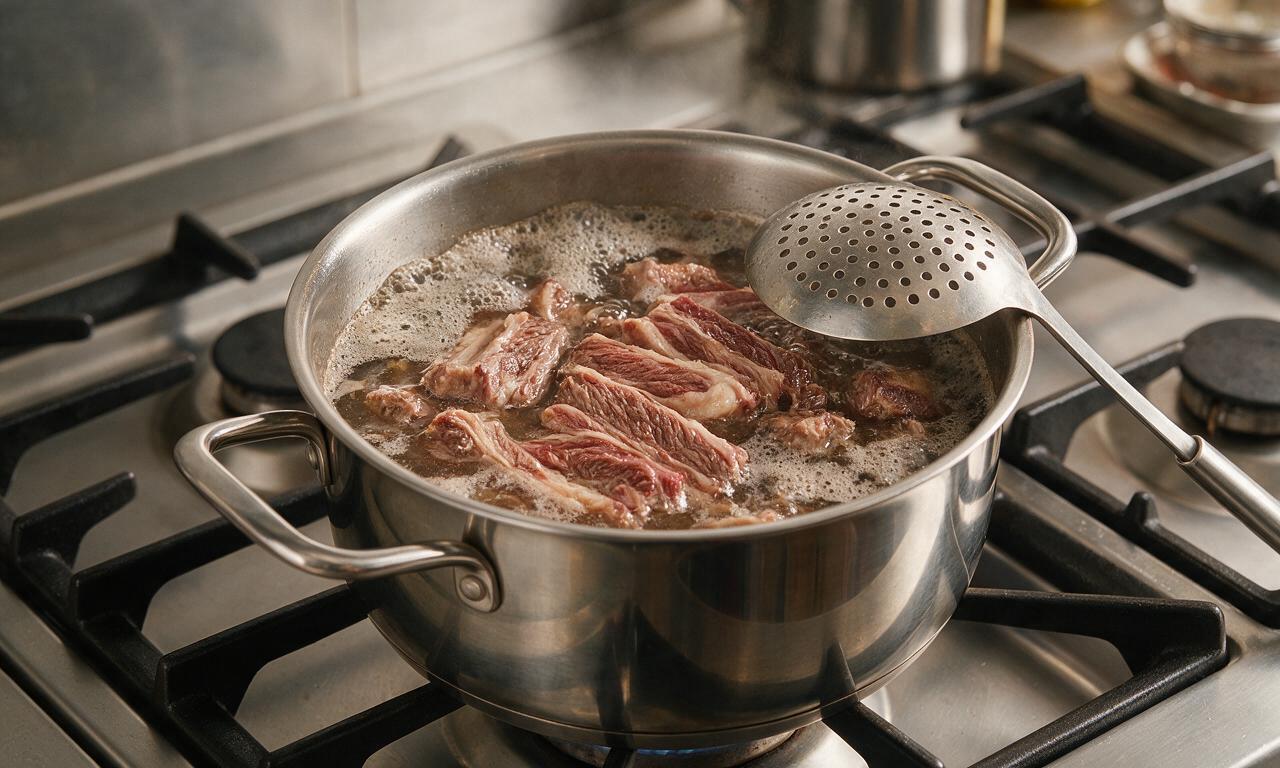
Step 2
step2:Blanch the short ribs
3

Simmer the base broth

Return cleaned ribs to the scrubbed pot, add 3L cold filtered water, 200g quartered sweet onion, 60g peeled whole garlic cloves, 20g sliced ginger, 1 tbsp whole black peppercorns, and 2 scallions cut into 5cm lengths. Bring to a boil over medium-high heat, then immediately reduce heat to low to maintain a gentle, steady simmer (small bubbles only, no rolling boil). Partially cover the pot, and simmer for 1 hour 30 minutes, skimming any floating fat or fine foam from the surface every 30 minutes.
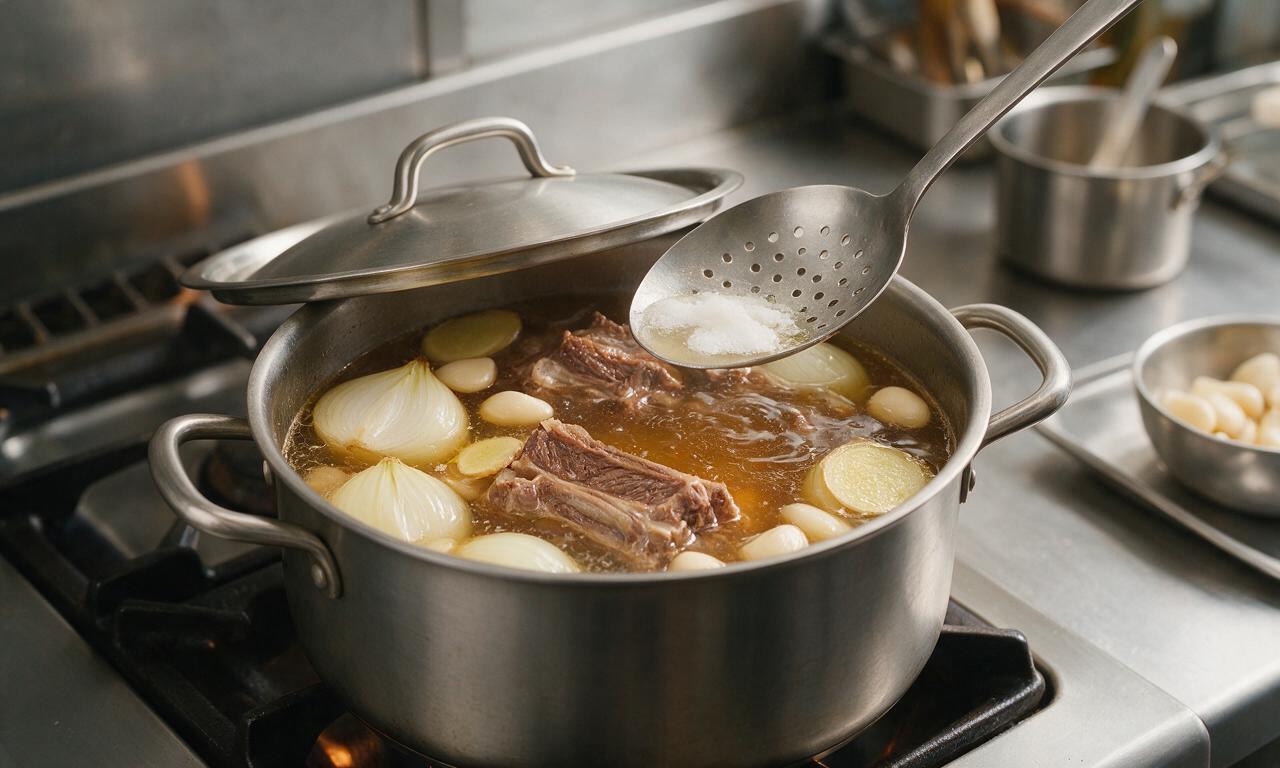
Step 3
step3:Simmer the base broth
4

Add radish and season

After 1.5 hours of simmering, use tongs to fish out and discard the softened onion, scallion lengths, ginger slices, and any loose peppercorns. Add 450g peeled, 3cm-cut Korean radish chunks and 3 tbsp (45ml) low-sodium soy sauce to the pot, stir gently, and continue simmering partially covered over low heat for 30 more minutes, until radish is fork-tender and translucent at the edges, and rib meat pulls easily from the bone.
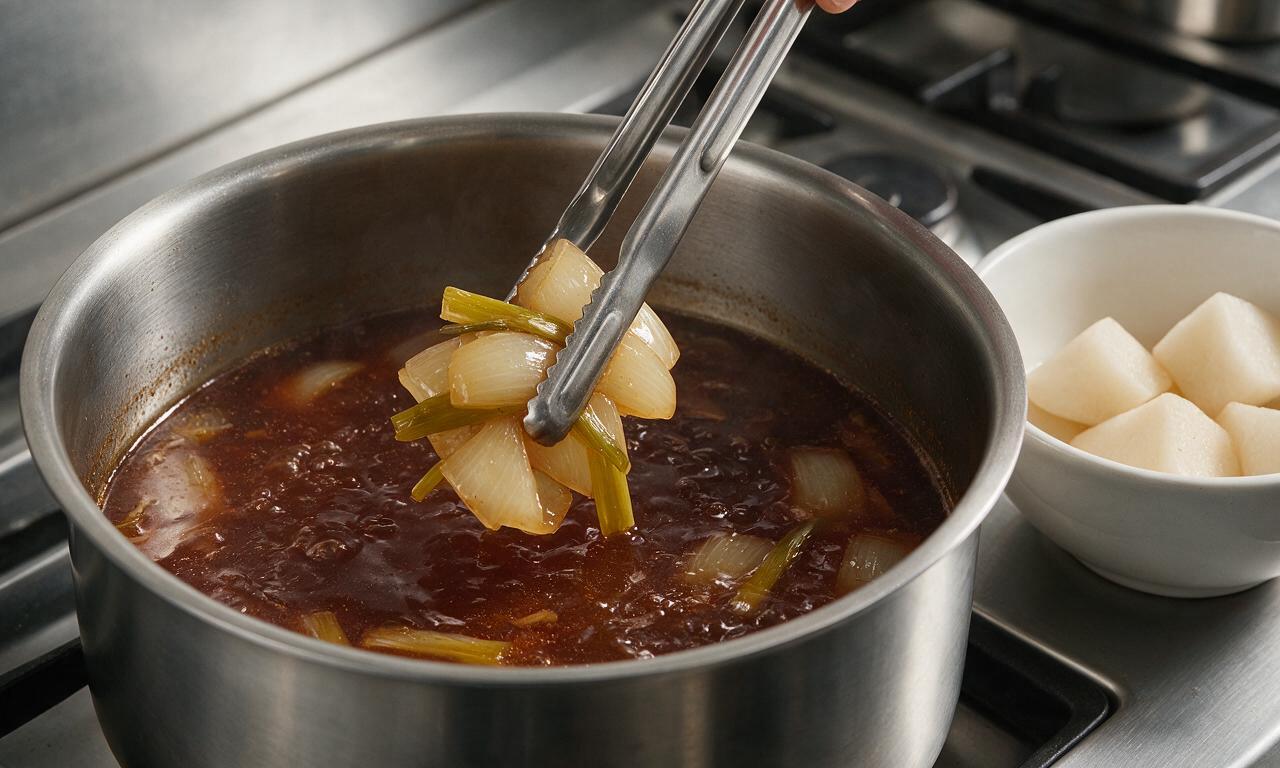
Step 4
step4:Add radish and season
5

Cook glass noodles

While the radish simmers, place 100g dried sweet potato glass noodles in a medium bowl, cover with hot tap water, and soak for 20 minutes until pliable. Drain the soaked noodles, then add them to the simmering soup for the final 5 minutes of cooking, until noodles are fully translucent and chewy. Taste the broth, and adjust seasoning with the remaining 1 tsp fine sea salt if needed.
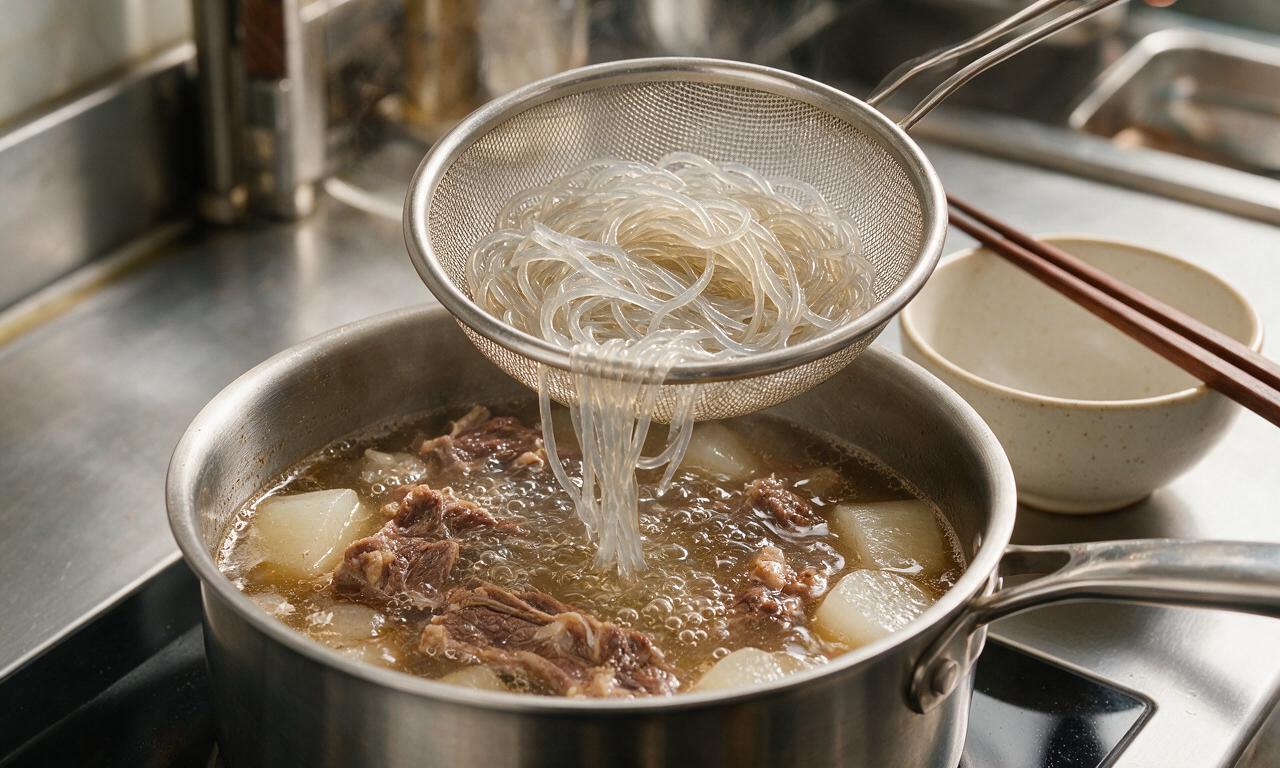
Step 5
step5:Cook glass noodles
6

Finish and serve

Turn off the stovetop heat, stir 1 tsp (5ml) toasted sesame oil into the soup. Ladle into 4 warm serving bowls, ensuring each portion has 2-3 rib pieces, several radish chunks, a serving of noodles, and ample broth. Top each bowl with thinly sliced remaining scallions, and serve hot with steamed white rice and kimchi on the side if desired.
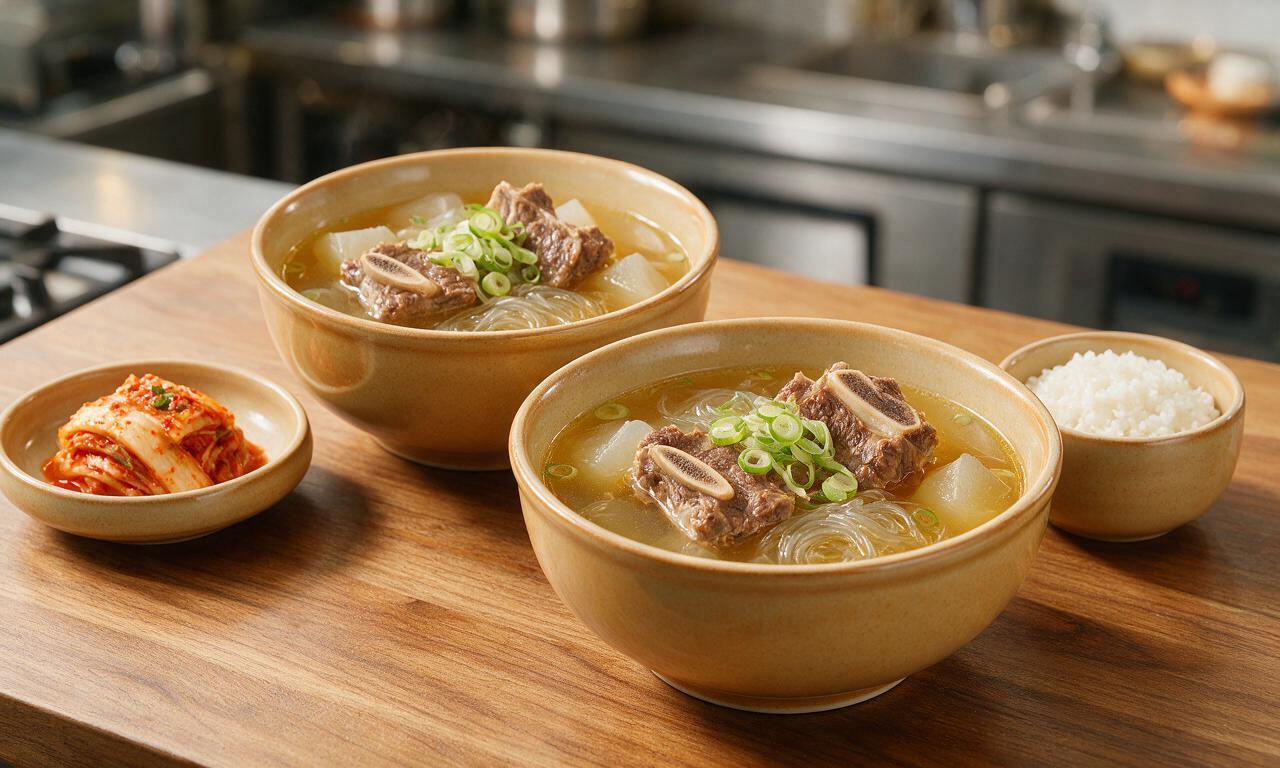
Step 6
step6:Finish and serve

Tips

1.Never let the broth boil rapidly after the initial blanching step: hard boiling will make the soup cloudy and make the rib meat tough, rather than yielding soft, pull-apart tender results. Keep the heat low enough to only produce small, gentle bubbles.
2.If Korean radish (mu) is unavailable, you can substitute with equal amounts of daikon radish. Do not use small red salad radishes, as they are too peppery and will turn mushy during long simmering.
3.For an even cleaner, less fatty broth, you can chill the fully simmered rib broth (before adding radish and noodles) in the fridge overnight; the solidified fat will lift easily off the surface, leaving a perfectly clear, light soup.
✨ You May Also Like

Soups & Stews
🍜 Japan

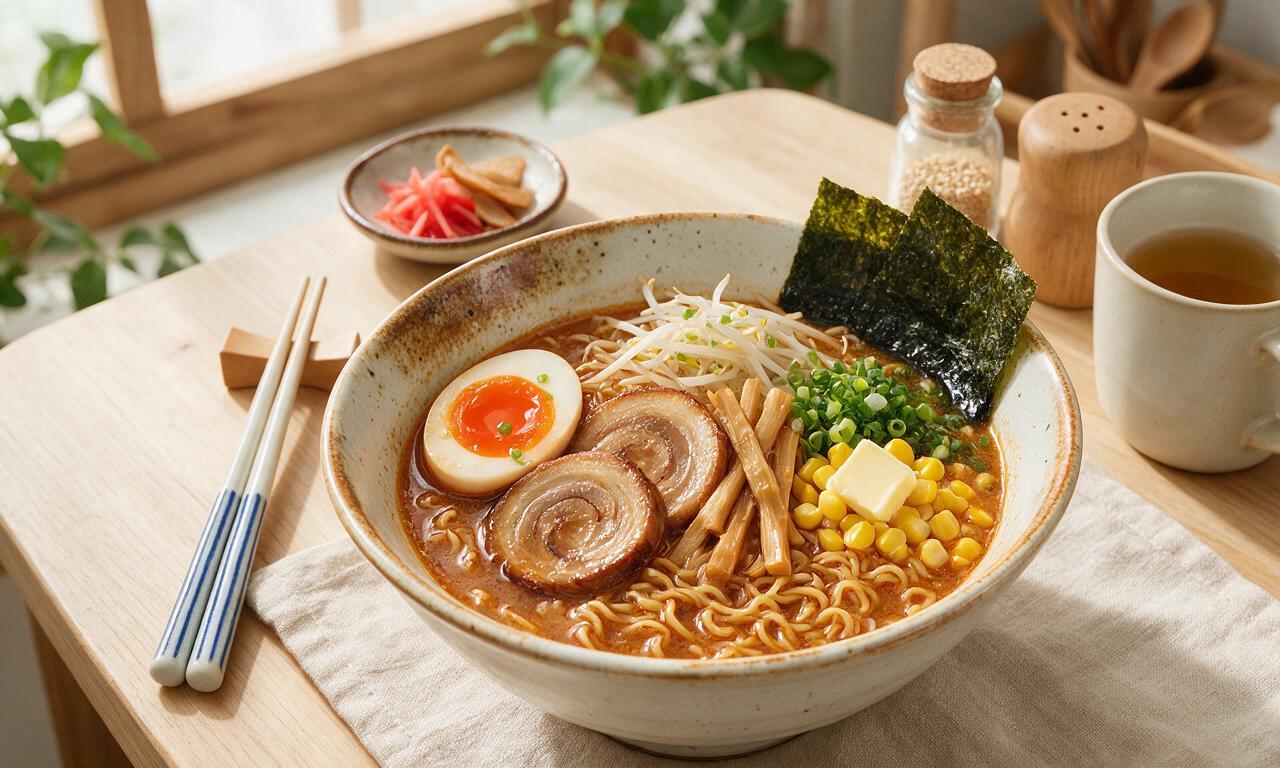
Rich, umami-dense Hokkaido-style miso ramen with chewy noodles, savory fermented broth, and classic toppings, a cozy, deeply satisfying warm meal.

⏱️ 45 minuteSoups & Stews ★ 4.8
Soups & Stews
🍜 United States

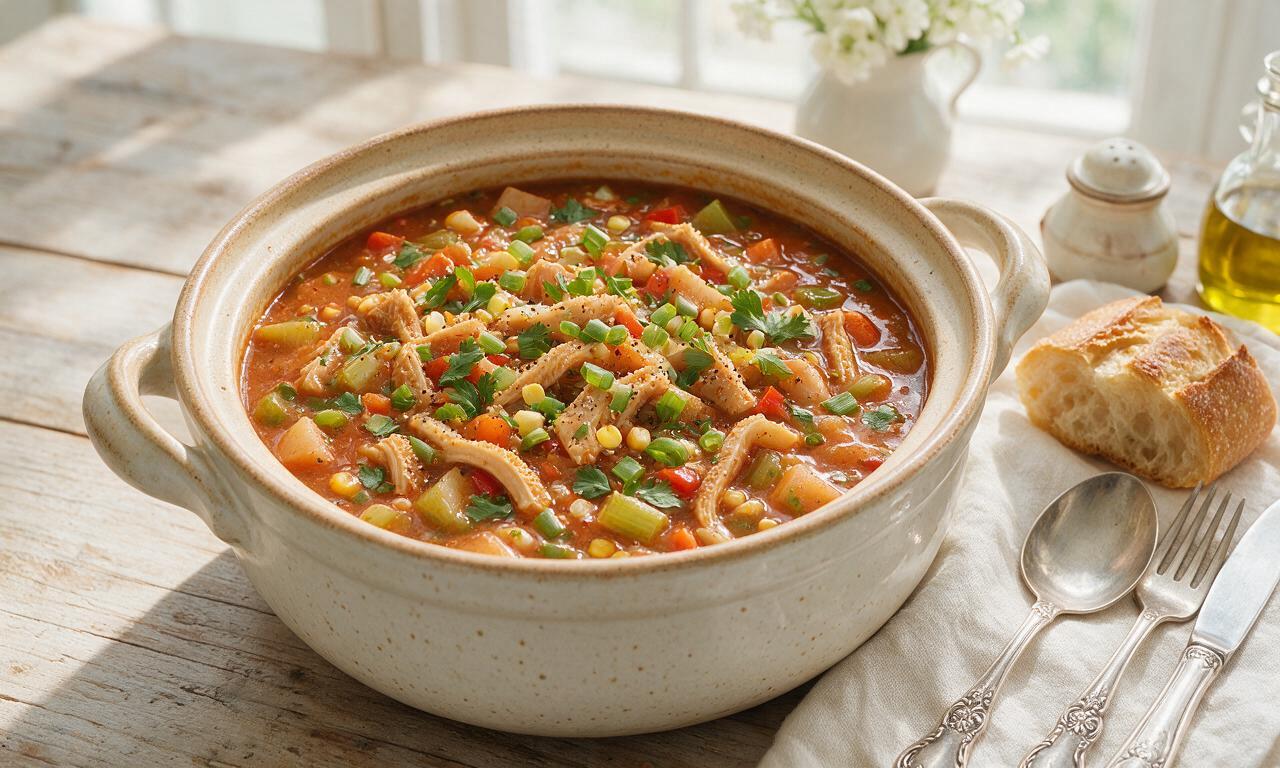
A hearty, peppery tripe and root vegetable stew with colonial Philadelphia roots, thick, warming, and packed with bold savory flavor for cold winter days.

⏱️ 2 hours 3Soups & Stews ★ 4.6
Soups & Stews
🍜 Mexico

Hearty, warming red pork posole loaded with tender hominy, slow-simmered in a rich smoky chile broth, served with zesty fresh garnishes for a deeply comforting, satisfying meal.

⏱️ 2 hours 3Soups & Stews ★ 4.8
Soups & Stews
🍜 United States

Warm, soothing classic chicken noodle soup loaded with tender chicken, soft egg noodles, and savory veggies, perfect for chasing chills and feeding the whole family.

⏱️ 40 minuteSoups & Stews ★ 4.7
Soups & Stews
🍜 France

Deeply savory caramelized onion broth topped with crusty bread and bubbly melted Gruyère, a timeless French bistro comfort food ideal for cold days.

⏱️ 1 hour 25Soups & Stews ★ 4.6
Soups & Stews
🍜 United States

Hearty, briny Maryland crab soup loaded with sweet blue crab, tender summer vegetables, and zesty Old Bay, a beloved Chesapeake Bay coastal comfort staple.

⏱️ 55 minuteSoups & Stews ★ 4.8

Galbi Tang:Frequently Asked Questions

1.Why does my galbi tang come out with cloudy broth instead of the signature clear, clean look?
Start by blanching the cut ribs in rapidly boiling water for 5–7 minutes, then scrub off all foamy residue from the bones and pot, rinse the ribs thoroughly before returning them to the pot to simmer. Keep the soup at a gentle, low simmer (no rolling boils) and skim surface scum every 20 minutes, avoiding aggressive stirring, for crystal-clear broth.
2.What can I use if I can’t find Korean radish (mu) for this recipe?
Your closest, most reliable substitute is firm, unblemished daikon radish—skip small red radishes, as they’re too sharp and peppery to match mu’s mild, sweet flavor. Cut daikon into the same 3cm chunks called for in the recipe, and add it at the exact same point in the simmer for tender, mellow bites that match the traditional version.
3.How do I make sure the short ribs turn tender instead of tough and chewy?
Resist the urge to crank the heat to speed up cooking! A hard rolling boil tightens meat fibers, leading to tough, stringy ribs even with long cook times. Keep the soup at a gentle low simmer for 1.5–2 hours, until the meat pulls easily from the bone but doesn’t slide off completely, for perfectly tender ribs.
4.Do I need to pre-soak the sweet potato glass noodles (dangmyeon) before adding them to the soup?
A 20-minute cold water soak before cooking isn’t strictly required if you’re short on time, but it helps the noodles cook evenly and stay chewy instead of turning mushy. Add them during the last 8–10 minutes of simmering; they’re done when fully translucent and springy to the bite, with no hard white core.
5.Can I make galbi tang ahead of time, and what’s the best way to store leftovers?
Galbi tang actually tastes even better a day after cooking, as the flavors meld as it rests. Let it cool completely, then store in an airtight container in the fridge for up to 4 days, or freeze for up to 3 months. Peel off the solidified fat cap from chilled soup before reheating gently on the stovetop for a cleaner, richer broth.
6.My galbi tang tastes flat instead of deeply savory—what am I doing wrong?
First, be sure to soak cut ribs in cold water for 1–2 hours (changing the water once) before blanching, to draw out excess blood that mutes beefy flavor. Don’t skip the onion and whole garlic in the simmer, and season only at the end with light Korean soup soy sauce (guk ganjang) and fine salt to boost savoriness without clouding the broth.

Comments (15)

2 days ago

OMG this galbi tang was the perfect cozy Sunday dinner for my family! My kids went back for SECONDS, even my super picky 7 year old who usually turns up his nose at any soup. The broth is so deep and savory, I loved that the recipe didn’t skip the step of soaking the ribs to get rid of excess blood — total game changer for clear, non-gamey broth. Worth every minute of the cook time, no shortcuts needed!

1 week ago

I’ve been chasing the galbi tang flavor I had at a tiny K-town spot in NYC for years and this recipe NAILS it. I was a little intimidated by the medium difficulty rating but the steps were so clearly laid out, I didn’t mess up once! Only note: I added a handful of extra glass noodles because that’s my favorite part. SO good.

5 days ago

So stoked you loved it! Extra glass noodles is always a great call — I do the same thing when I make this for my noodle-obsessed niece. Great to hear the step-by-step instructions felt approachable too!

3 days ago

Wait, has anyone tried prepping the broth ahead of time for meal prep? I love having hearty soups ready to go for work lunches but I don’t have 2+ hours on a weeknight to make this from scratch. Would the flavors hold up if I froze it in portions?

2 days ago

I did this last month! Froze portions for 2 weeks, thawed in the fridge overnight, and it tasted just as fresh as the day I made it. The radish gets a tiny bit softer but it’s still delicious, no weird texture issues at all.

yesterday

Great question! This soup freezes beautifully for up to 3 months, just hold off on adding the noodles and green onions until you reheat it for the best texture. Perfect for meal prep, I make a big batch once a month too!

5 days ago

I make a ton of smoked short ribs so I figured I’d give this Korean soup a shot, and wow. Used my leftover smoked ribs instead of raw and the broth had this insane deep, smoky savoriness that was next level. Served it with kimchi and rice for our weekly potluck with neighbors and everyone asked for the recipe. 10/10, will make again.

2 weeks ago

First time making any kind of Korean soup and I’m so proud of how this turned out! The only misstep I made was forgetting to skim the foam off the top for the first 20 minutes of boiling so my broth was a little cloudier than the photos, but it still tasted incredible. My roommate said it’s better than the galbi tang we get at our local takeout spot.

1 week ago

I did the exact same thing my first time! The cloudy broth doesn’t affect the flavor at all, I’ve found if I toss in a tiny splash of cold water after skimming it helps the rest of the gunk rise to the top easier for next time.

yesterday

Quick question — is there a gluten free swap for the soy sauce in this? I have celiac so regular soy sauce is a no-go for me, but I’ve been craving galbi tang forever and don’t want to mess up the flavor balance.

2 hours ago

I used tamari instead of regular soy sauce last time I made this and it worked perfectly! No weird aftertaste, the flavor was exactly how I remember it from restaurants. Just make sure you get the low-sodium kind so it doesn’t get too salty.

5 minutes ago

Low-sodium tamari is my go-to gluten free swap for this recipe too! It has the same umami depth as regular soy sauce without the gluten, and it won’t throw off the salt levels if you taste as you go. Coconut aminos works in a pinch too but it’s a little sweeter, so you may want to cut back on the optional honey a touch.

1 week ago

Made this for my husband’s birthday dinner since it’s his favorite Korean dish, and he said it tasted exactly like his grandma used to make! I added extra jujubes and chestnuts like his family does, and the house smelled amazing for hours while it simmered. Only complaint is that we didn’t make enough for leftovers, haha.

5 days ago

Happy birthday to your husband! Adding extra jujubes and chestnuts is such a lovely, traditional touch — I’m so glad this recipe felt close to the family version he grew up with. Next time double the batch, leftovers are chef’s kiss!

3 days ago

Brought this to my office potluck last week and it was the first dish gone! People were literally scraping the pot to get the last of the broth. I was worried the 2 hour 45 minute cook time would be a hassle but most of it is hands-off simmer time, so I was able to fold laundry and catch up on shows while it cooked. Zero stress, huge payoff.

2 hours ago

Flavor was amazing but I found the broth a little too salty for my taste when I followed the recipe exactly. Did I do something wrong? I used regular soy sauce instead of low-sodium, would that be the issue?

30 minutes ago

That’s exactly what happened! I made that mistake my first go-around too. Regular soy sauce has way more sodium than the low-sodium kind the recipe calls for, just add a little extra water or unsalted beef broth to mellow it out next time, it’ll fix it right up.

5 minutes ago

So sorry the salt level was off for you! That’s almost certainly from using regular instead of low-sodium soy sauce — the sodium levels can vary wildly between brands too. If it’s too salty, add a splash more unsalted broth or a small peeled potato to simmer for 10 minutes to absorb excess salt, that works every time.

2 weeks ago

I was skeptical that a soup without a ton of heavy spices would be flavorful enough for my teen boys, but man was I wrong. They ate three bowls each after football practice and asked when I’m making it again. I threw in some extra daikon because we love veggies, and it held up perfectly to the long simmer. Great recipe!

1 week ago

Same here! My teen plays hockey and is always starving after practice, this soup is the perfect post-practice meal because it’s warm, filling, and doesn’t leave him feeling sluggish like fast food does.

2 hours ago

I’ve made this recipe three times in the last month! It’s become my go-to sick day meal, it’s so comforting when I have a cold. The garlic and ginger in the broth make my throat feel so much better, and it’s light enough that I don’t feel gross eating it when my stomach is off. 10/10, no notes.

1 week ago

Made this before a big backpacking trip last weekend and portioned it out into insulated thermoses for me and my hiking partner. It was still hot 6 hours into our hike when we stopped for lunch, and it was the best trail meal I’ve ever had. Way better than the dehydrated backpacking meals I usually buy! The ribs were fall-off-the-bone tender even after being in the thermos for hours.

5 days ago

What a genius idea to take this on a hike! There’s nothing better than a hot, hearty meal when you’re out in the cold and tired from miles of walking. I’m totally stealing this trick for my next camping trip, thanks for the inspo!

yesterday

Okay, I know the cook time is almost 3 hours but can we talk about how worth it it is? I almost bailed and ordered takeout halfway through because I was hungry, but the second I took my first sip of the broth I knew I made the right call. The ribs are so tender they fall right off the bone, no chewy tough bits at all. Game. Changer.

2 hours ago

I felt the exact same way! I was checking the clock every 10 minutes towards the end because the smell was driving me crazy, but that first bite makes all the waiting feel like nothing. I even set a timer next time so I don’t hover over the stove the whole time, haha.

30 minutes ago

The smell while this simmers is honestly half the experience! I always warn people not to taste test too early because it’ll make the wait even harder. So glad you stuck it out — that fall-off-the-bone rib texture is the best reward for the long simmer!

2 weeks ago

I grew up eating galbi tang with my Korean grandma and was nervous no online recipe would live up to hers, but this is so close I almost cried when I tasted it. The trick of adding a small piece of Korean radish to the broth while it simmers is exactly what she did, I can’t believe that tip was included! So happy I found this recipe.

1 week ago

That makes me so excited to make this again! I’m half Korean and grew up eating my halmoni’s galbi tang too, I’ve been scared to try making it myself because I thought it would never measure up. Your comment just gave me the push I need to make it this weekend!

3 days ago

Solid recipe, but I found the broth a little too rich for my taste the first time I made it. Next time I’m going to trim a little more of the excess fat off the ribs before simmering to see if that lightens it up a bit. Otherwise, flavor is spot on, the ribs were perfectly tender.

2 days ago

Trimming the fat more helps a ton! I also chill the broth in the fridge for a few hours after simmering so I can scrape the solid fat layer off the top before reheating, it makes the broth so much cleaner and lighter without losing any flavor.

yesterday

Great call trimming excess fat and chilling the broth to remove the solid fat layer! That’s actually a trick I use when making this for summer meals when I don’t want something too heavy. It doesn’t take away from the deep savoriness at all, just makes it feel a little lighter. Thanks for sharing that tip!