
Garlic Butter Pan-Seared Ham Steak
intro
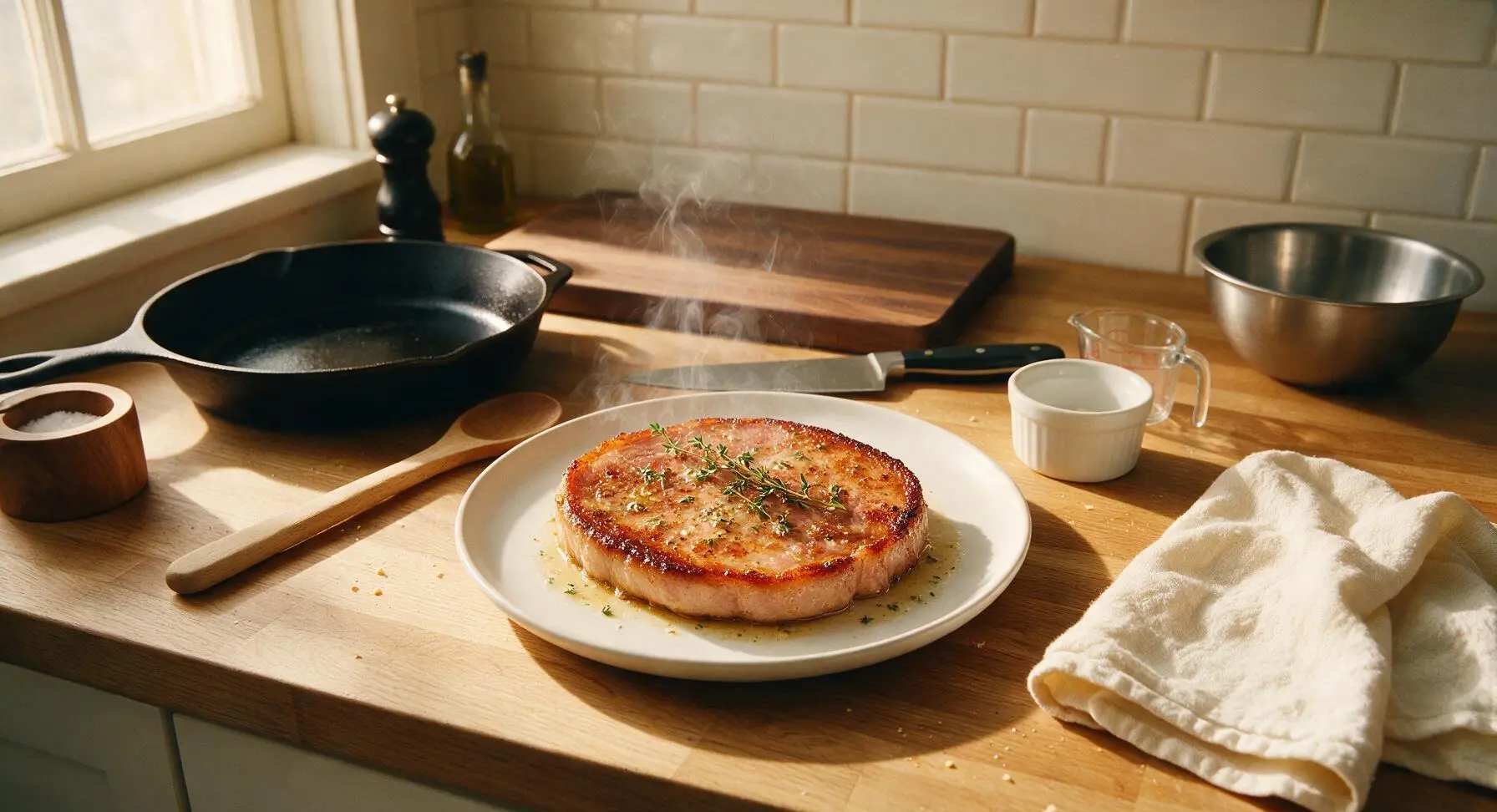
Juicy, crisp-edged ham steak seared to golden perfection, basted in fragrant garlic butter with fresh thyme, ready in 15 minutes for a cozy weeknight meal.
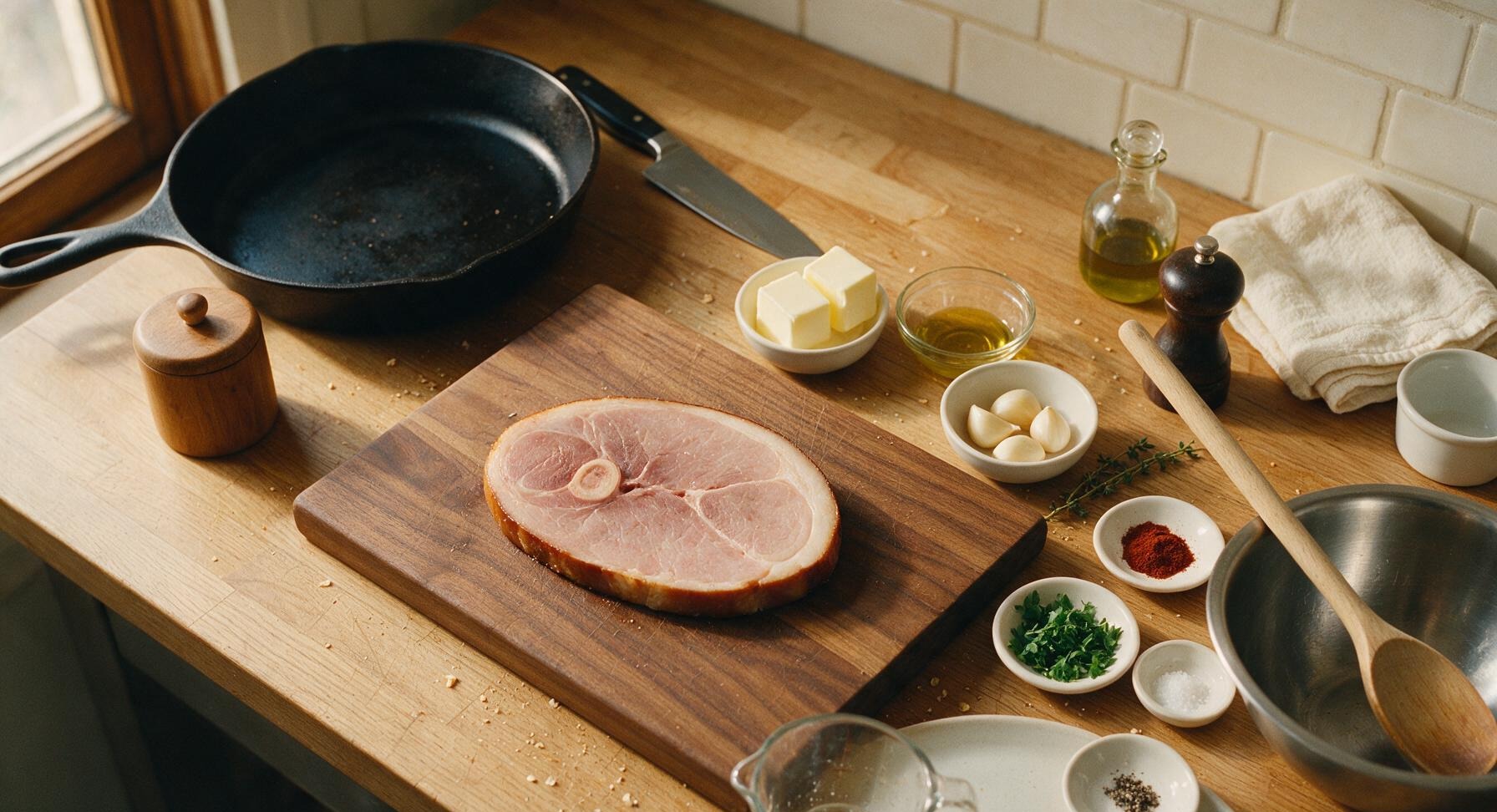
Ingredients
Steps
Prep Aromatics First
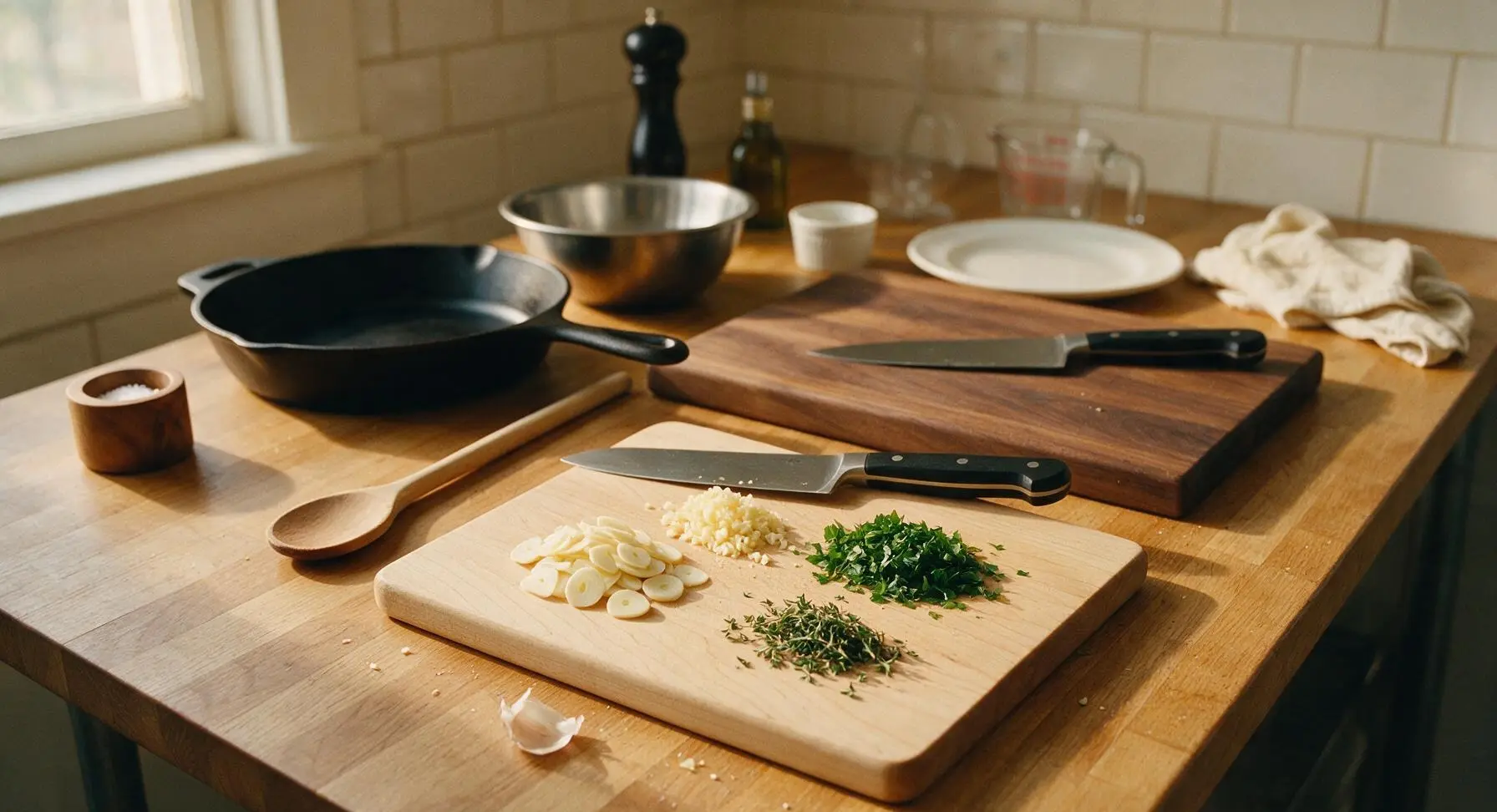
Place the light maple cutting board on the front center of the counter. Peel 4 large garlic cloves, then use the 6-inch santoku knife to slice 3 cloves into uniform 1/8-inch thick slices, and mince the remaining clove finely. Chop 1 tablespoon of fresh flat-leaf parsley, and strip leaves from the 2 fresh thyme sprigs. Arrange prepped garlic, parsley, and thyme in separate small piles on the edge of the cutting board. This prep takes approximately 3 minutes.
Dry Ham Thoroughly
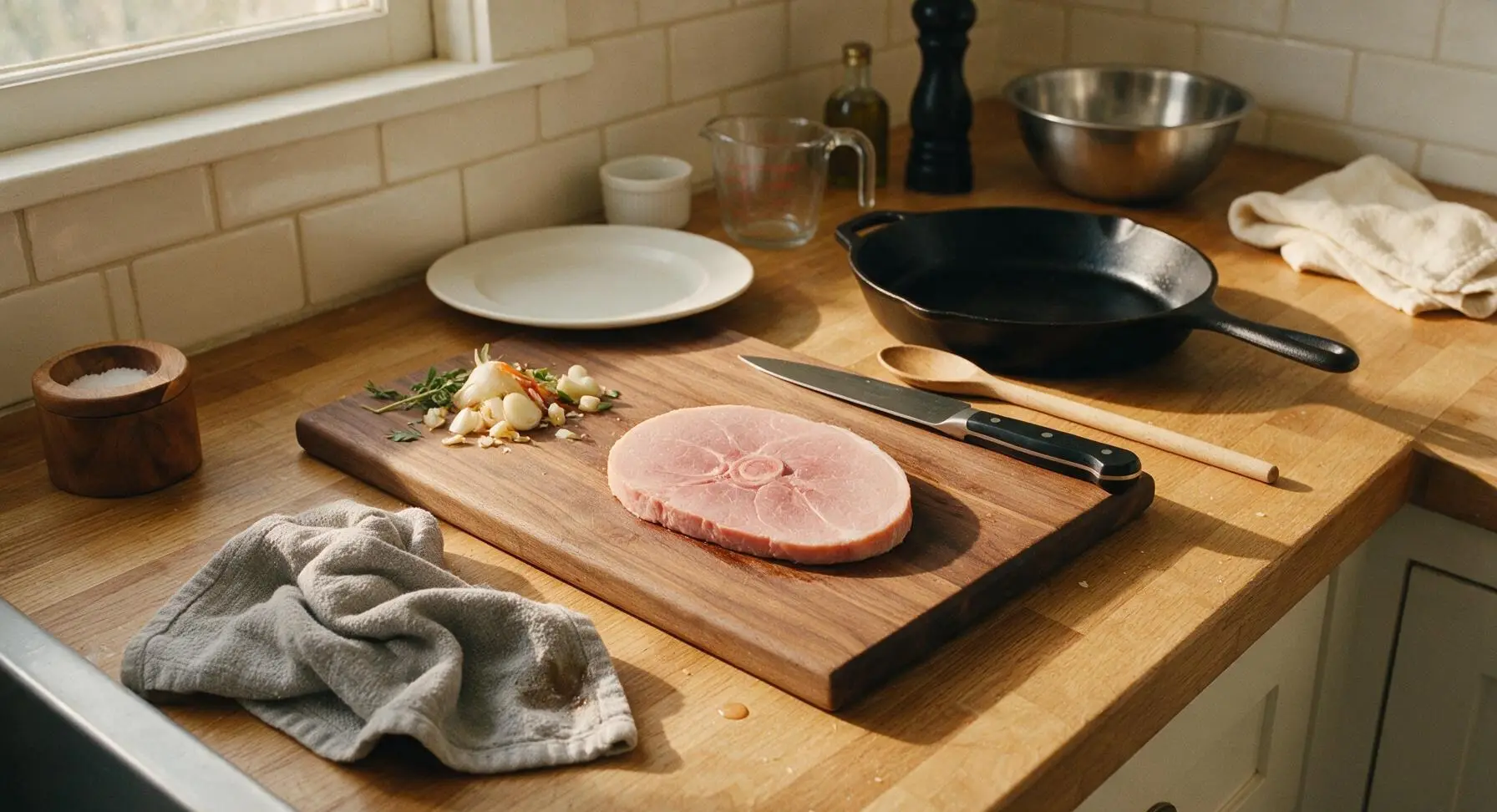
Remove the 1lb bone-in ham steak from its packaging. Use a clean corner of the heather gray cotton kitchen towel to pat every surface of the ham completely dry, paying extra attention to the thin white fat rim along the steak’s edge. Discard packaging, and set the dried ham on the empty edge of the cutting board. Drying the surface is critical to achieve a crisp, golden sear instead of steaming the meat.
Heat Skillet Gradually
Place the 10-inch matte black carbon steel skillet on the inset induction cooktop, set to medium heat (375°F / 190°C). Add 1 teaspoon of extra virgin olive oil, and swirl to coat the pan bottom evenly. Heat for 2 minutes, until the oil shimmers lightly but does not produce smoke. Set the stainless steel tongs on the counter beside the stove, within easy reach.
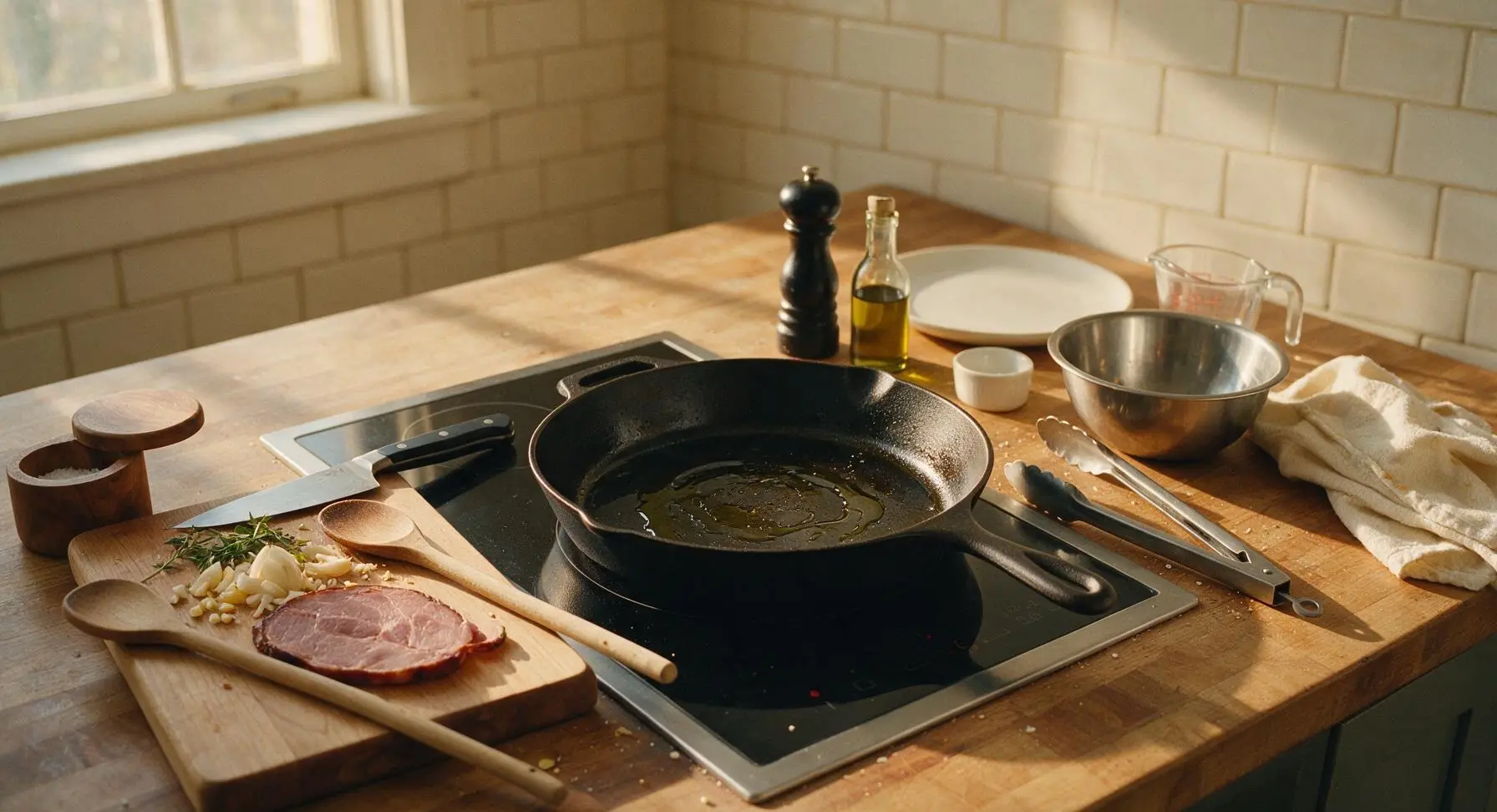
Sear First Ham Side
Use the stainless steel tongs to carefully lay the dried ham steak in the hot skillet. The ham should sizzle loudly and immediately on contact; if no sizzle is heard, wait 30 additional seconds for the pan to heat properly. Let the ham sear undisturbed for 3 full minutes, until the bottom surface develops a deep golden-brown crust and the fat rim begins to render and turn crisp. Do not move or press the ham during this time, as this will prevent proper crust formation.
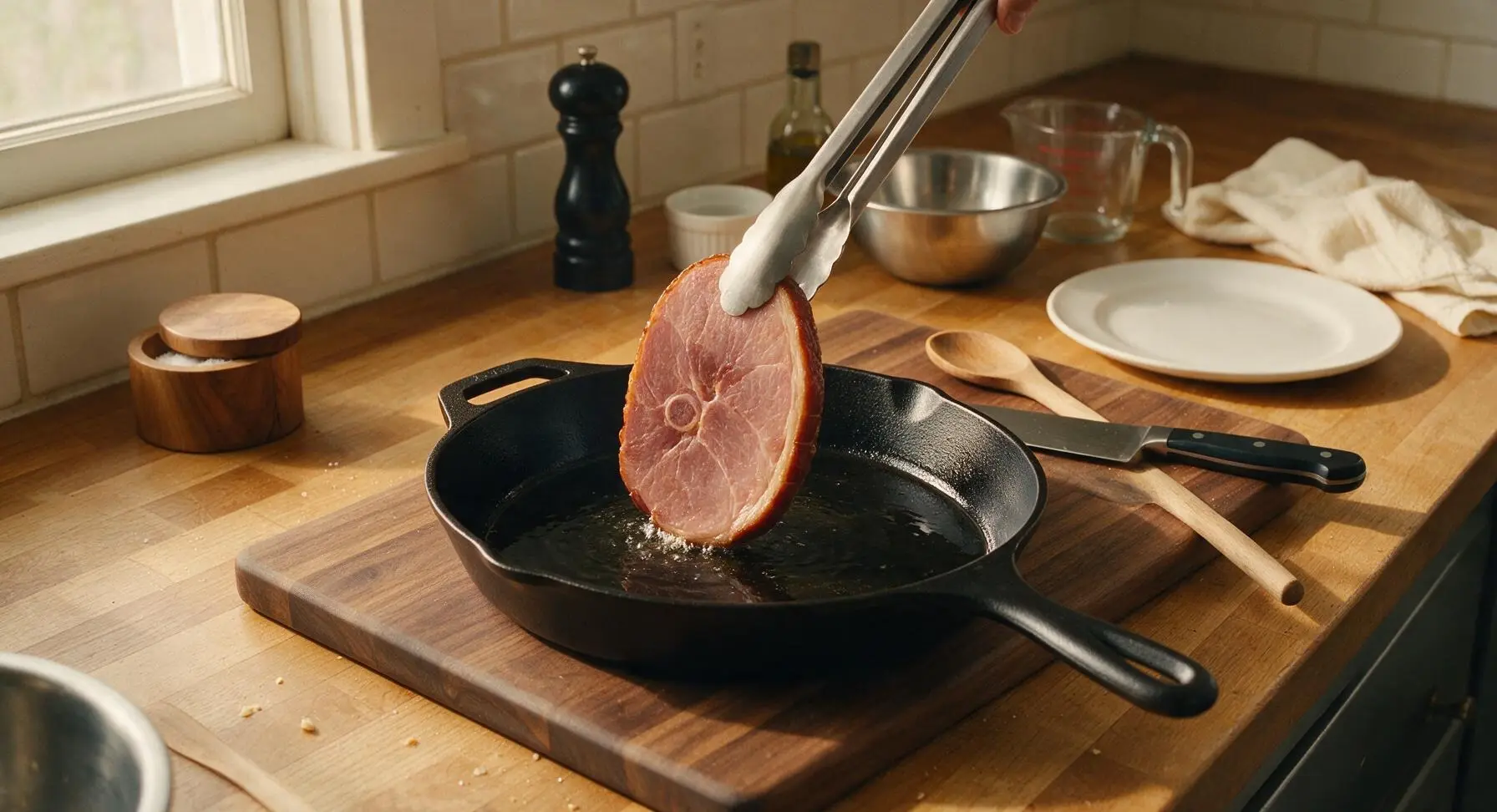
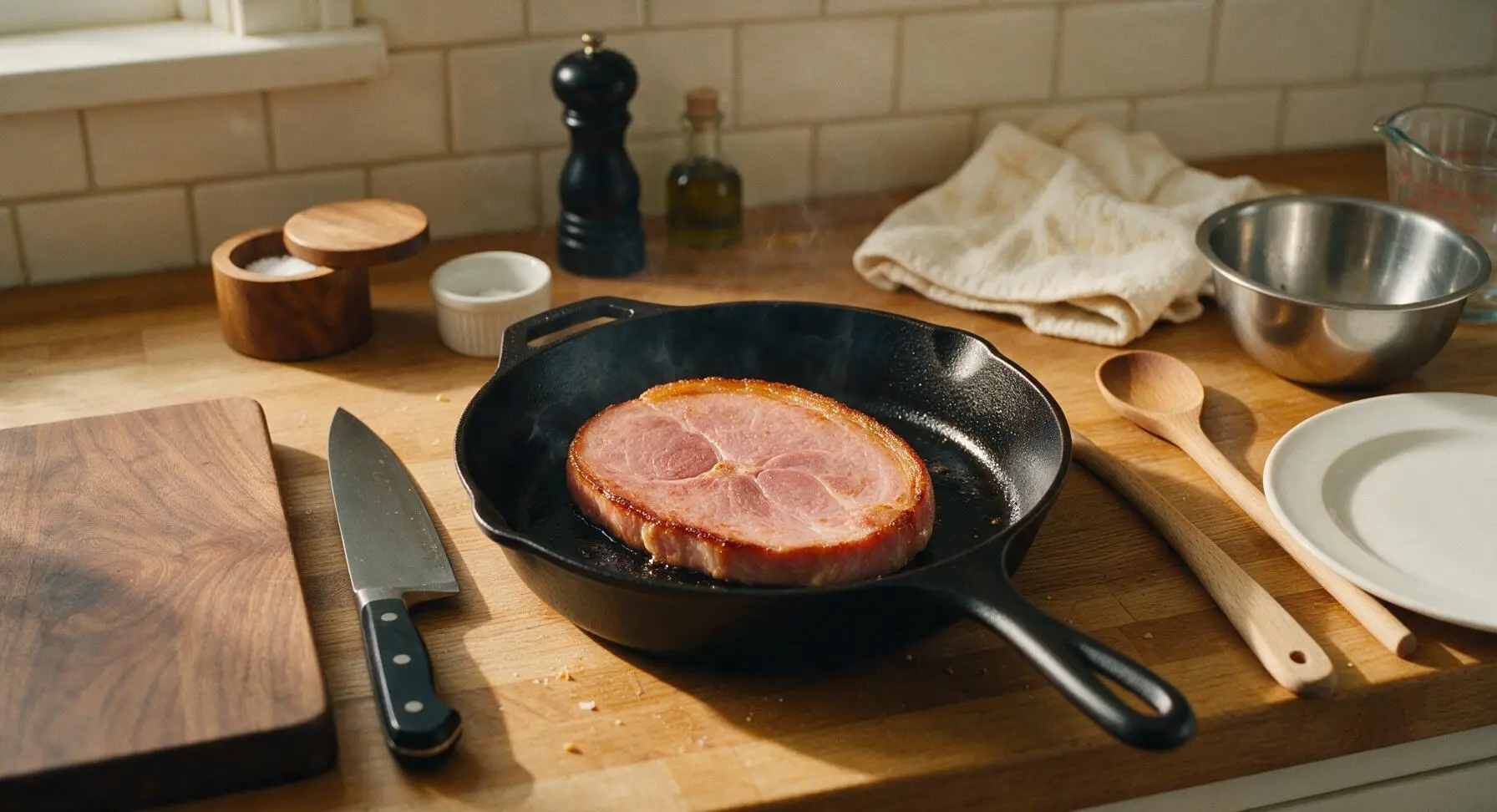
Flip and Sear Reverse
Use the stainless steel tongs to carefully flip the ham steak to its second side. Sear undisturbed for another 2.5 minutes, until the second side develops a matching golden, slightly crisp crust. The ham is ready for basting when its internal temperature reaches 140°F / 60°C; remember, cured ham steak is pre-cooked, so we are only warming it through and building crust, not cooking raw meat.
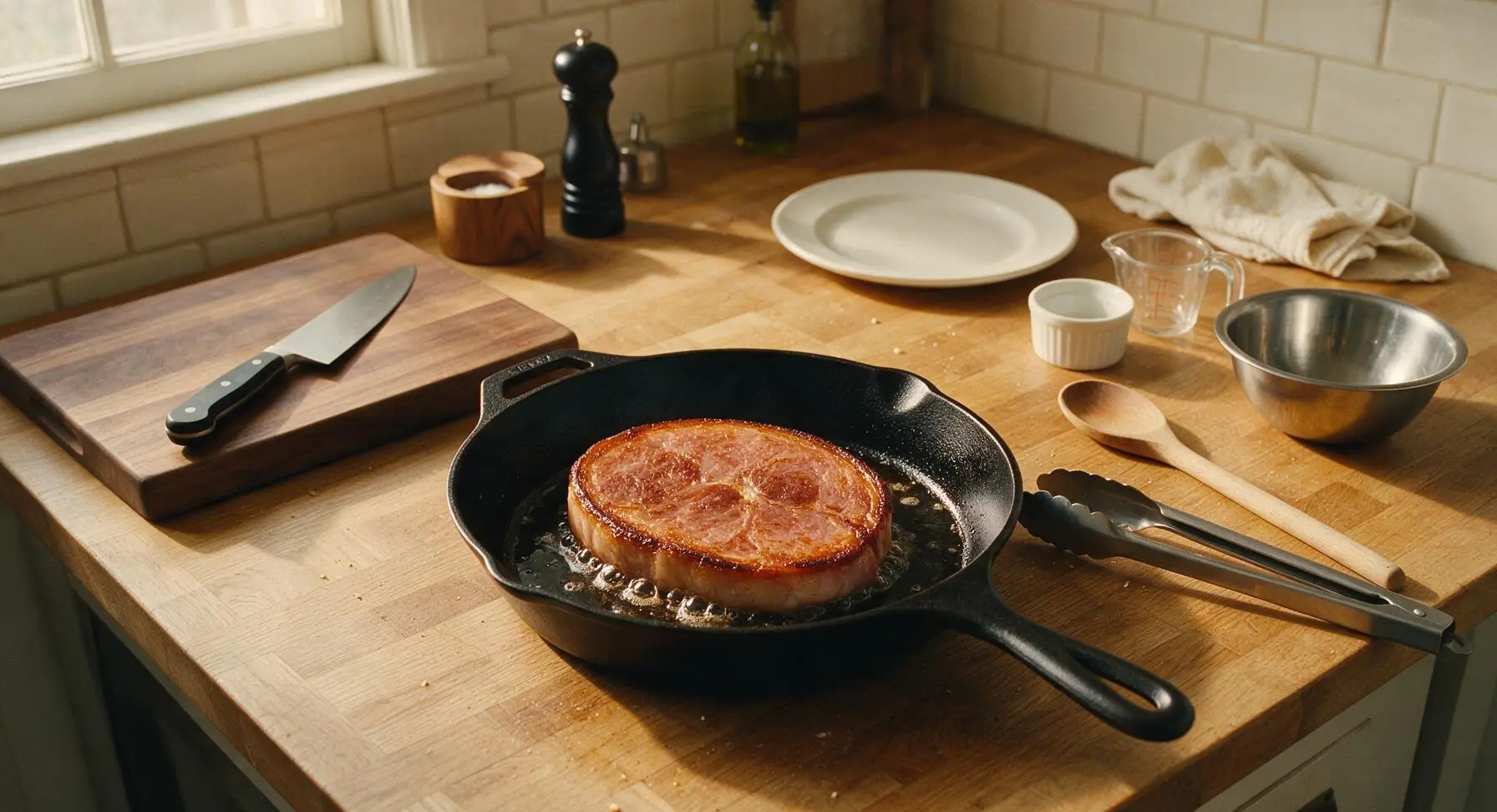
Add Garlic Butter
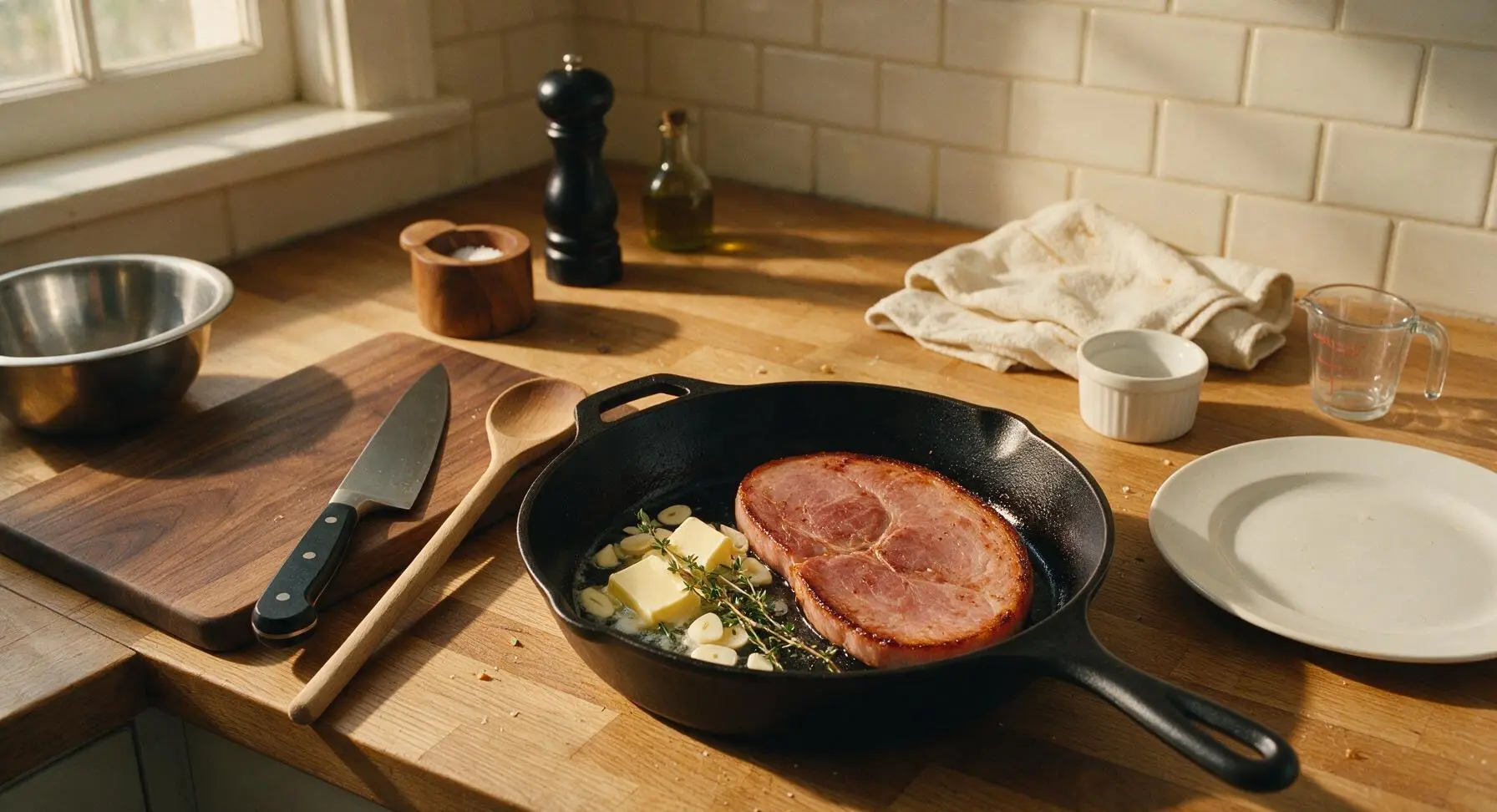
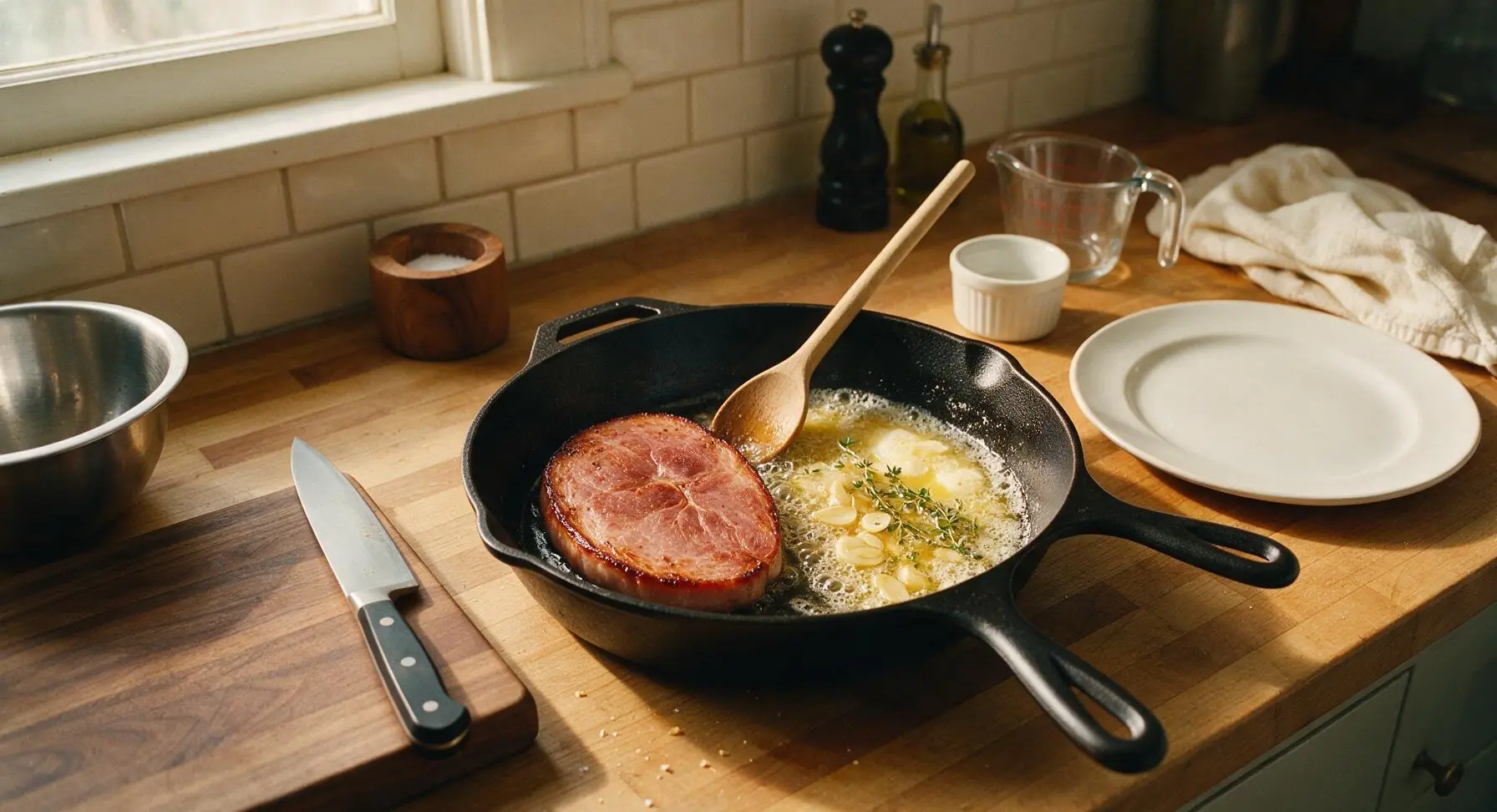
Reduce heat to medium-low (325°F / 160°C) to prevent garlic from burning. Add the 4 tablespoons of unsalted butter, sliced and minced garlic, 2 fresh thyme sprigs, 1/4 teaspoon smoked paprika, and 1/4 teaspoon freshly ground black pepper to the empty side of the skillet, next to the ham. As the butter melts, it will foam and mix with rendered ham fat to create a fragrant, savory sauce.
Baste Ham with Butter
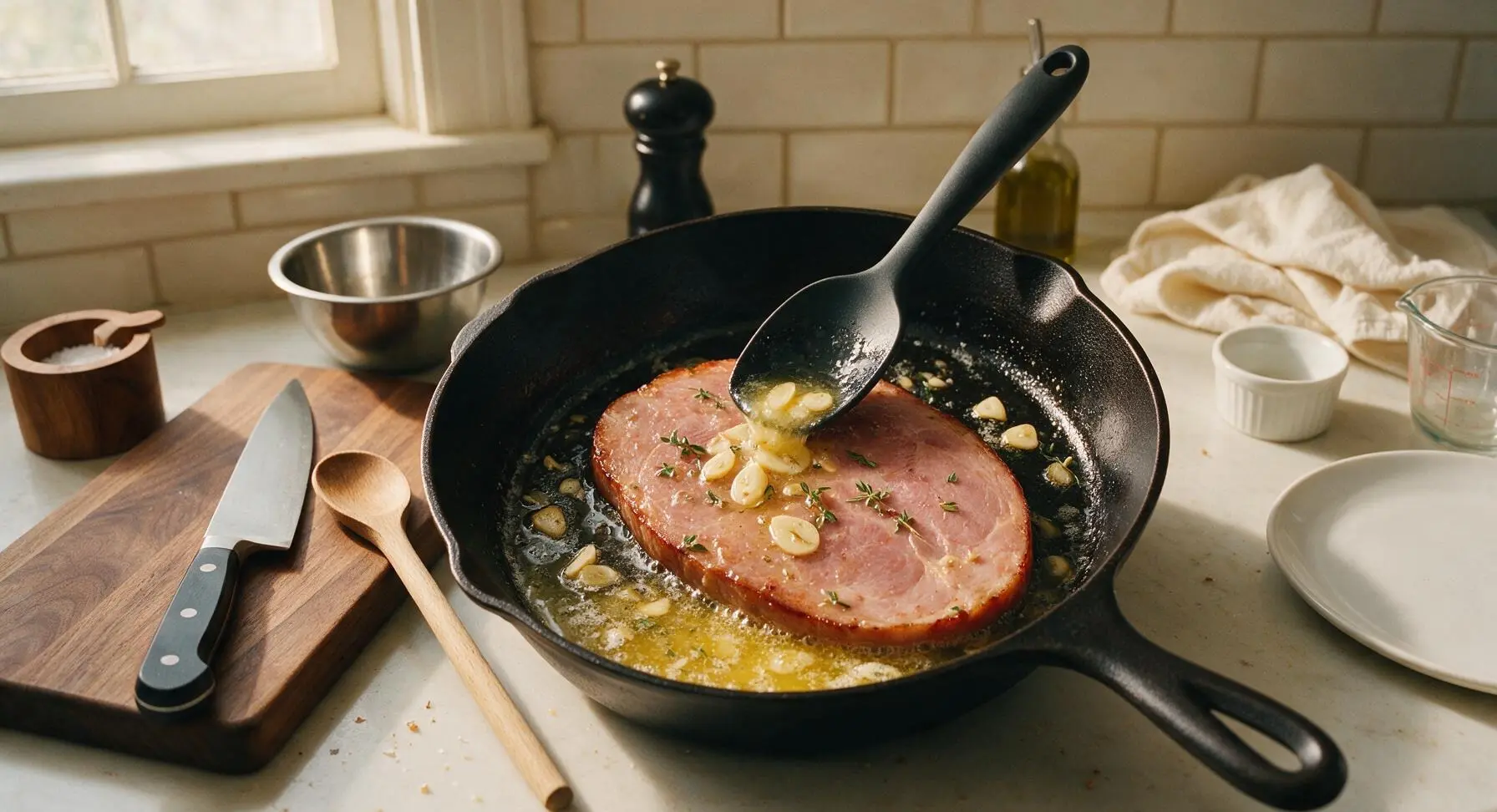
Tilt the skillet slightly so the melted garlic butter pools at the lower edge near the pour spout. Use the silicone spatula to repeatedly spoon the hot, fragrant butter over the top surface of the ham steak for 2 full minutes, until the garlic turns a light golden color. Stop basting immediately if garlic begins to turn dark brown, as this will create a bitter flavor. Taste a small drop of the butter, and add the optional 1/8 teaspoon kosher salt only if needed (cured ham is often already salty enough).
Rest and Plate Dish
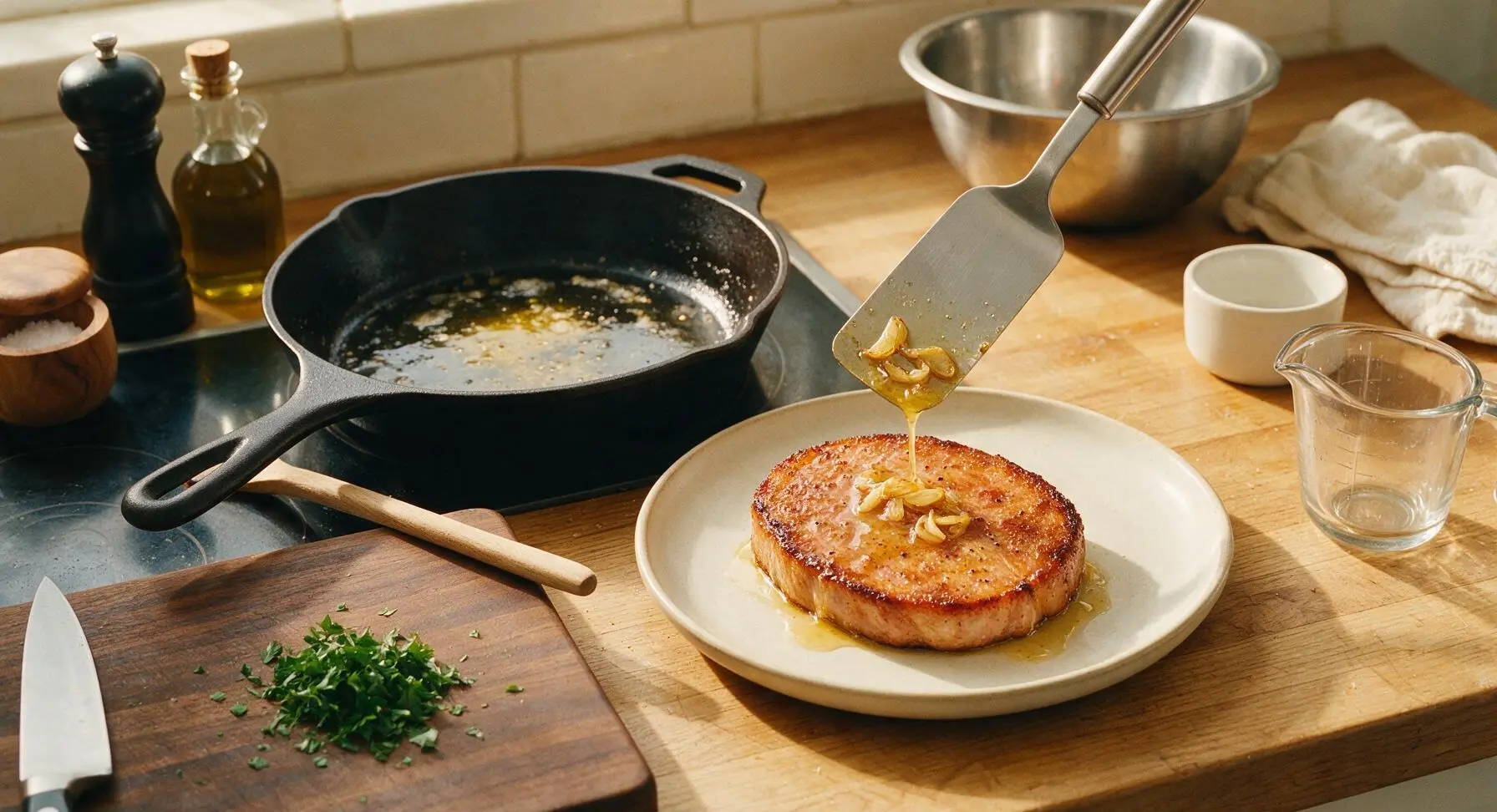
Use the stainless steel tongs to transfer the seared ham steak from the skillet to the off-white stoneware dinner plate. Spoon 2 tablespoons of the garlic butter sauce and soft golden garlic slices over the top of the ham, and discard the woody thyme stems. Let the ham rest for 2 minutes to let juices redistribute, then sprinkle with pre-chopped fresh parsley to garnish.
Tips
2.Watch the garlic closely once it hits the hot butter: thinly sliced garlic can go from perfectly golden and sweet to burnt and bitter in as little as 30 seconds, so reduce heat immediately if you notice dark brown edges forming on the garlic slices.
3.Taste the pan butter before adding any extra salt: most commercially cured ham steaks contain high levels of sodium, so additional salt is often unnecessary and can lead to an overly salty final dish.





This recipe is perfect for weekly meal prep! I made three ham steaks on Sunday, sliced them up, and portioned them with roasted sweet potatoes and green beans for work lunches all week. The garlic butter flavor holds up really well even when reheated in the office microwave, and the ham doesn’t get that weird rubbery texture like some cooked ham does. Total win for busy weeks when I don’t have time to cook every night!
Brought this to my neighborhood block party potluck last weekend after testing it for a quick weeknight dinner, and people were hounding me for the recipe all night! I sliced the seared ham steaks into smaller bite-sized pieces after cooking so people could grab them as an easy appetizer, and they were gone in 10 minutes flat. Absolute crowd pleaser, 10/10 no notes.
SO good, and so easy even I can’t mess it up. Last time I tried making ham steak I overcooked it so bad it was basically a hockey puck, but the tip about basting with the garlic butter over medium heat? It came out perfectly juicy every single bite. I tossed in a tiny pinch of red pepper flakes for a little heat and it slapped, highly recommend that add-in.
OMG this was such a game changer for our weeknight family dinner rotation! I was so sick of the same old boring baked ham slices, and this took literally 10 minutes just like the recipe says. The garlic butter is so flavorful, my two super picky kids gobbled up their whole servings and asked for seconds — even my youngest who swears she ‘hates all ham’ now. We’ll be making this at least twice a month for sure!
Made this for brunch over the weekend and it was chef’s kiss. I had it alongside some cheesy scrambled eggs and sourdough toast, the garlic butter dripped onto the toast and I swear that was the best bite I’ve had all month. Why have I been making plain unseasoned ham this whole time??
Total newbie cook here, so sorry if this is a dumb question — the ham steak I grabbed from the grocery store has that thick fatty rind around the edge. Do I need to trim that off before searing, or leave it on while it cooks?
Quick question — can I use thick-sliced deli ham for this instead of a full ham steak? I have a ton leftover from sandwich meal prep this week and I really don’t want to make a special trip to the grocery store. Would that work, or would it get too crispy and dry out?