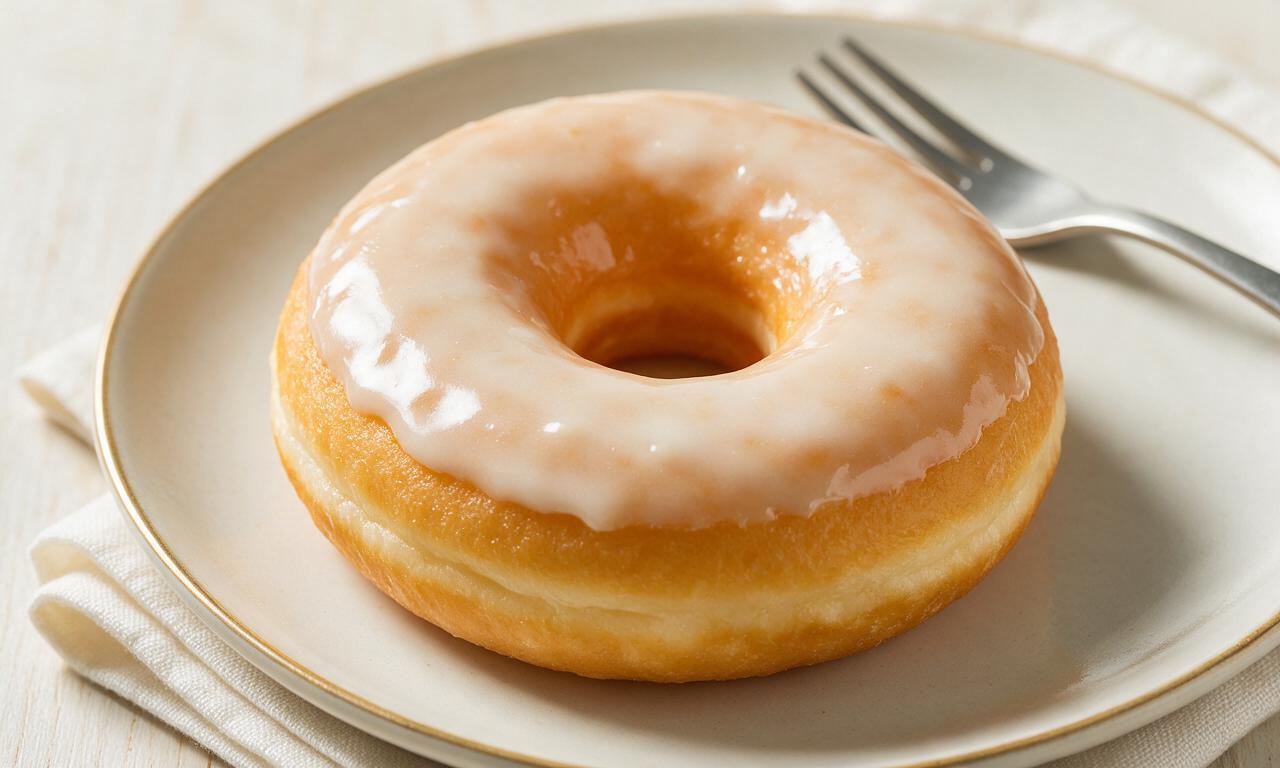
Glazed Donut

Glazed Donut
⏱️ cook time 2 hours 40 minutes
🍽️ servings 6
⚡ Difficulty medium

intro

Soft, pillowy yeast-raised donuts coated in a shiny, crackly vanilla glaze—this nostalgic homemade treat matches your favorite bakery’s signature flavor.

Ingredients

All-purpose flour 500g (4 cups)
Whole milk (for dough, warmed to 38°C/100°F) 240ml (1 cup)
Instant dry yeast 7g (2 1/4 tsp)
Granulated sugar 60g (1/4 cup)
Unsalted butter, melted and cooled 57g (4 tbsp)
Large eggs (room temperature) 2 units
Fine table salt 5g (1 tsp)
Vegetable frying oil (canola or peanut) 1.5L (6 cups)
Powdered (confectioners') sugar 360g (3 cups)
Pure vanilla extract 5ml (1 tsp)
Whole milk (for glaze) 60ml (1/4 cup)

Steps

1

Mix the donut dough

In a large stand mixer fitted with a dough hook, combine warmed 240ml whole milk (38°C/100°F), 7g instant yeast, and 1 tablespoon of the granulated sugar; let rest 5 minutes until foamy. Add remaining granulated sugar, 2 beaten eggs, 57g melted cooled butter, 5g salt, and 500g all-purpose flour. Knead on medium-low speed for 8 minutes until the dough is smooth, soft, and pulls away from the bowl sides (it will be slightly tacky, not sticky).
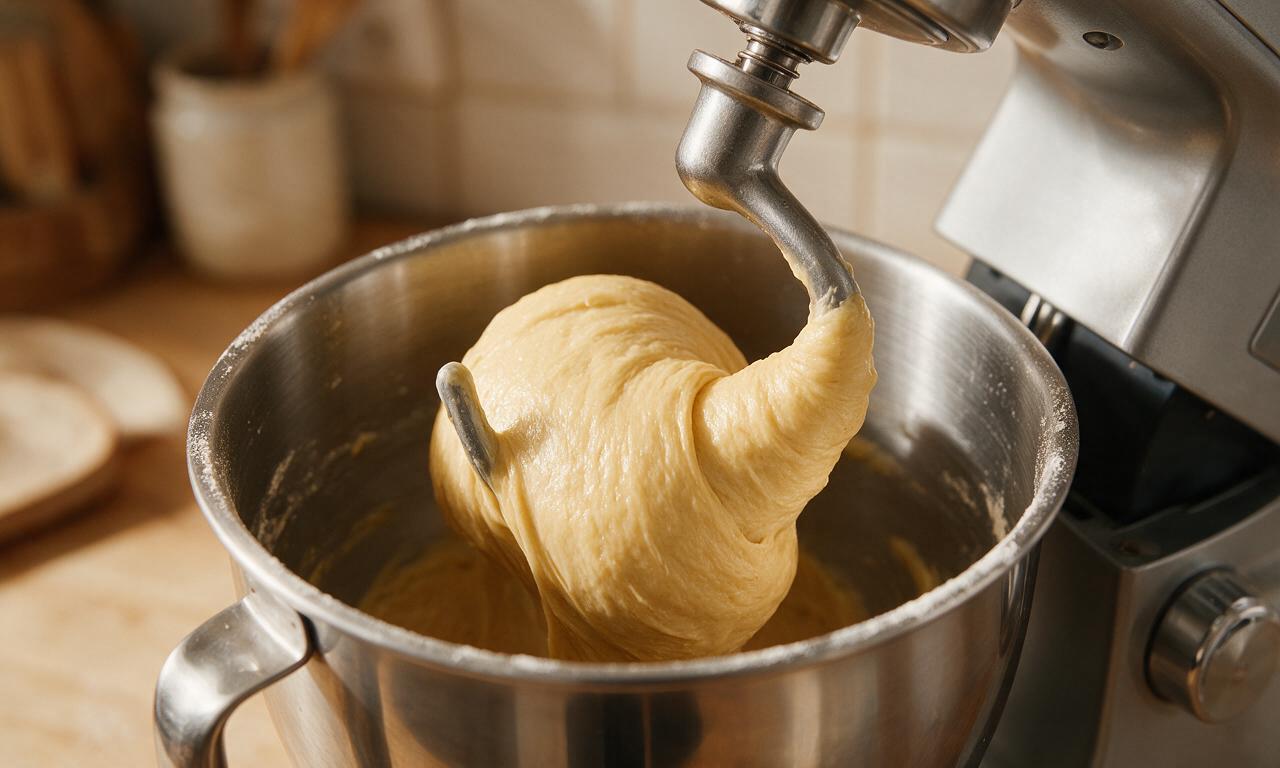
Step 1
step1:Mix the donut dough
2

Let dough rise

Coat the inside of a large clean bowl with 1 teaspoon vegetable oil, form the dough into a tight ball, and place it in the bowl. Cover tightly with plastic wrap or a damp kitchen towel, and let rise in a warm, draft-free spot (24°C/75°F) for 1 to 1.5 hours, until the dough doubles in size and leaves a lasting indent when pressed with a floured finger.
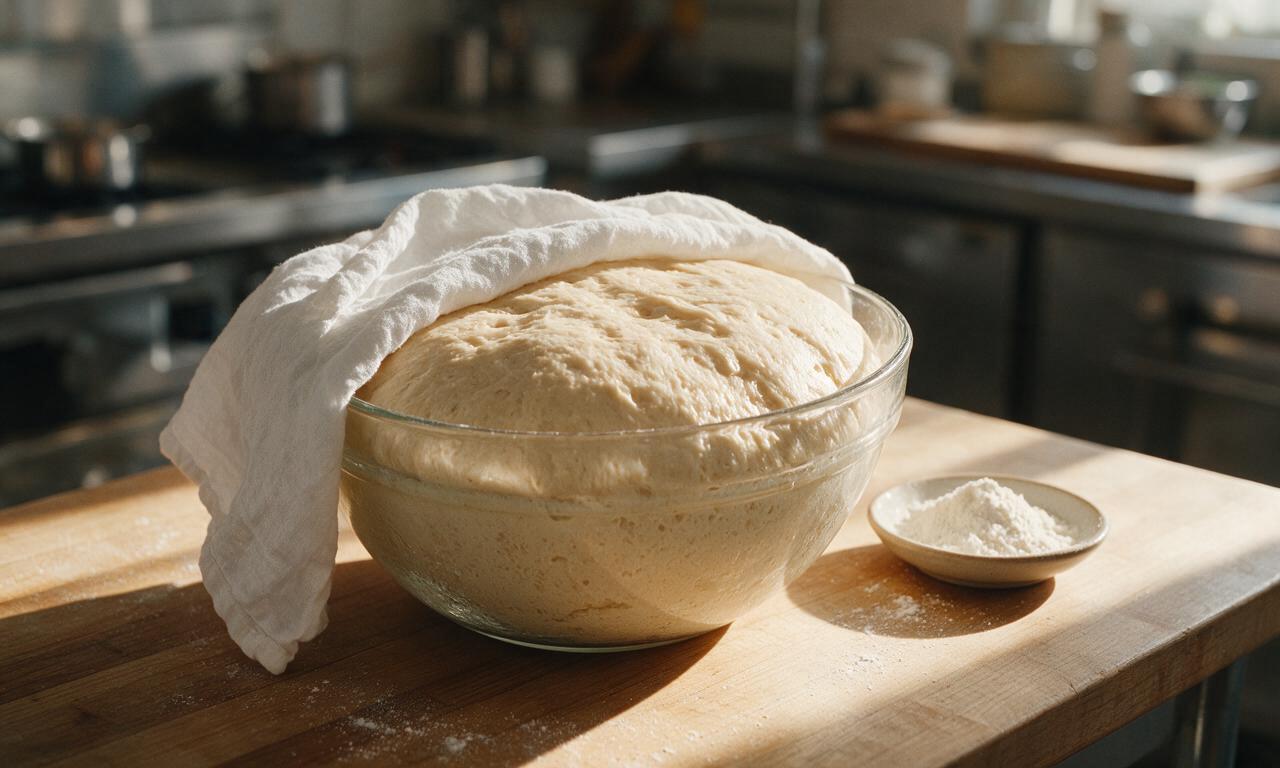
Step 2
step2:Let dough rise
3

Cut donut shapes

Punch the risen dough down to release trapped air, then roll it out on a lightly floured surface to an even 1.25cm (1/2 inch) thickness. Use a 9cm (3.5 inch) round donut cutter to cut circles, and a 2.5cm (1 inch) cutter to punch out the center holes. Gather dough scraps, re-roll once, and cut remaining donuts for a total of 12 donuts and holes. Place cut donuts on parchment-lined baking sheets, spaced 5cm (2 inches) apart.
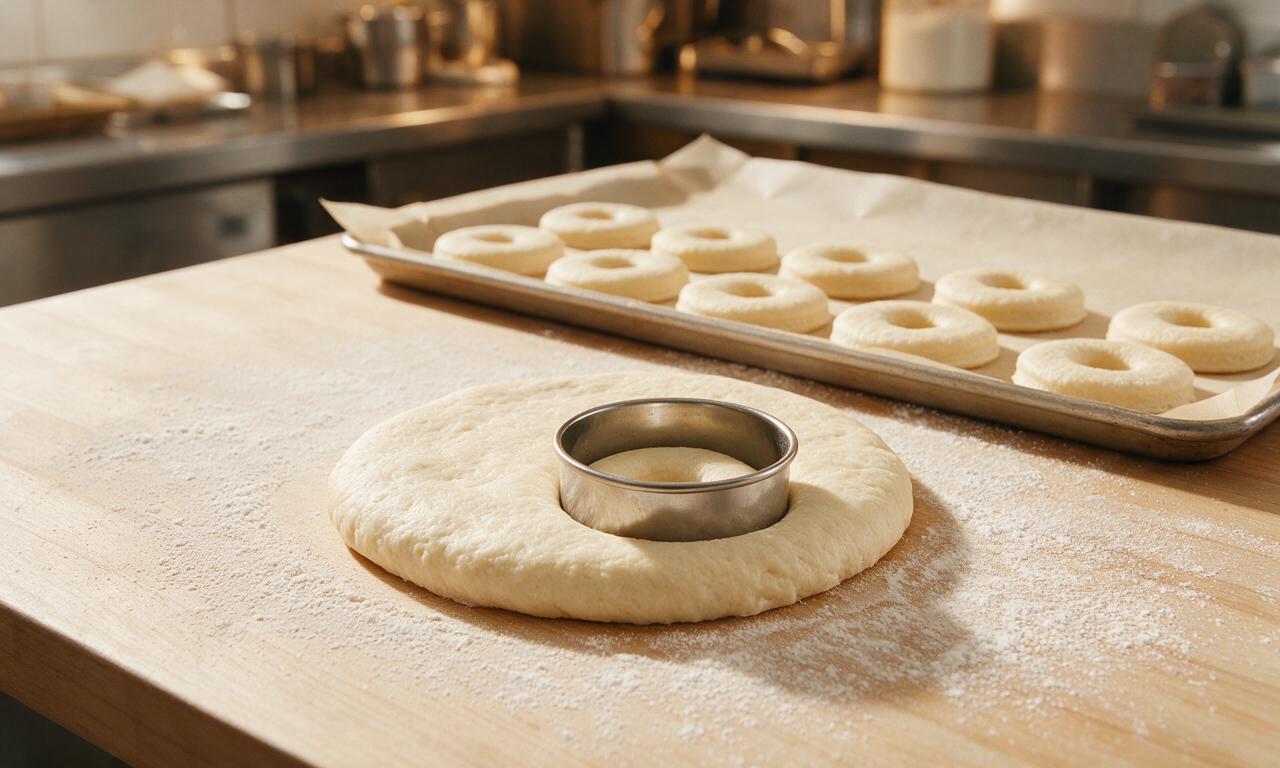
Step 3
step3:Cut donut shapes
4

Proof donuts, heat oil

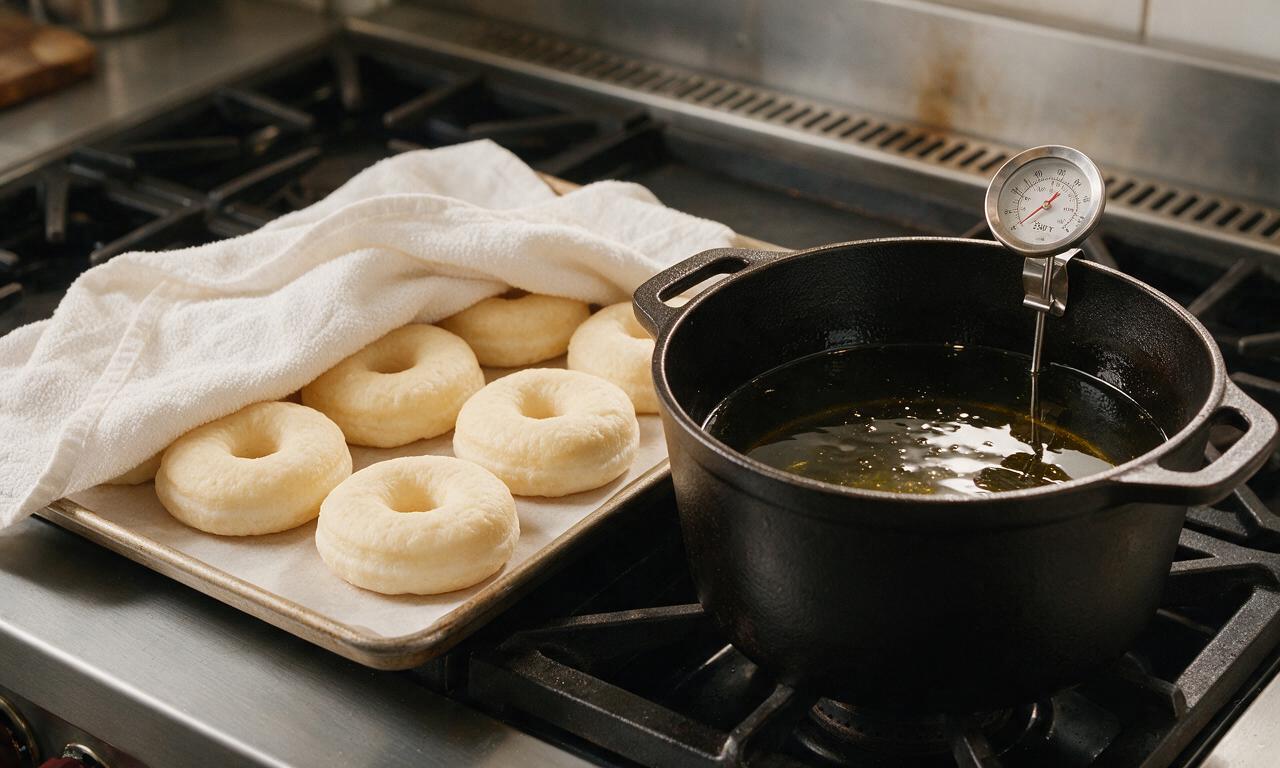
Cover the cut donuts loosely with a damp towel, and let them rise a second time for 30 to 40 minutes in the same warm spot, until they are puffy and jiggle slightly when the tray is tapped. While donuts proof, pour 1.5L vegetable oil into a large heavy-bottomed pot, and heat the oil over medium heat to 175°C/350°F, using a candy thermometer to monitor temperature closely.
Step 4
step4:Proof donuts, heat oil
5

Fry donuts evenly

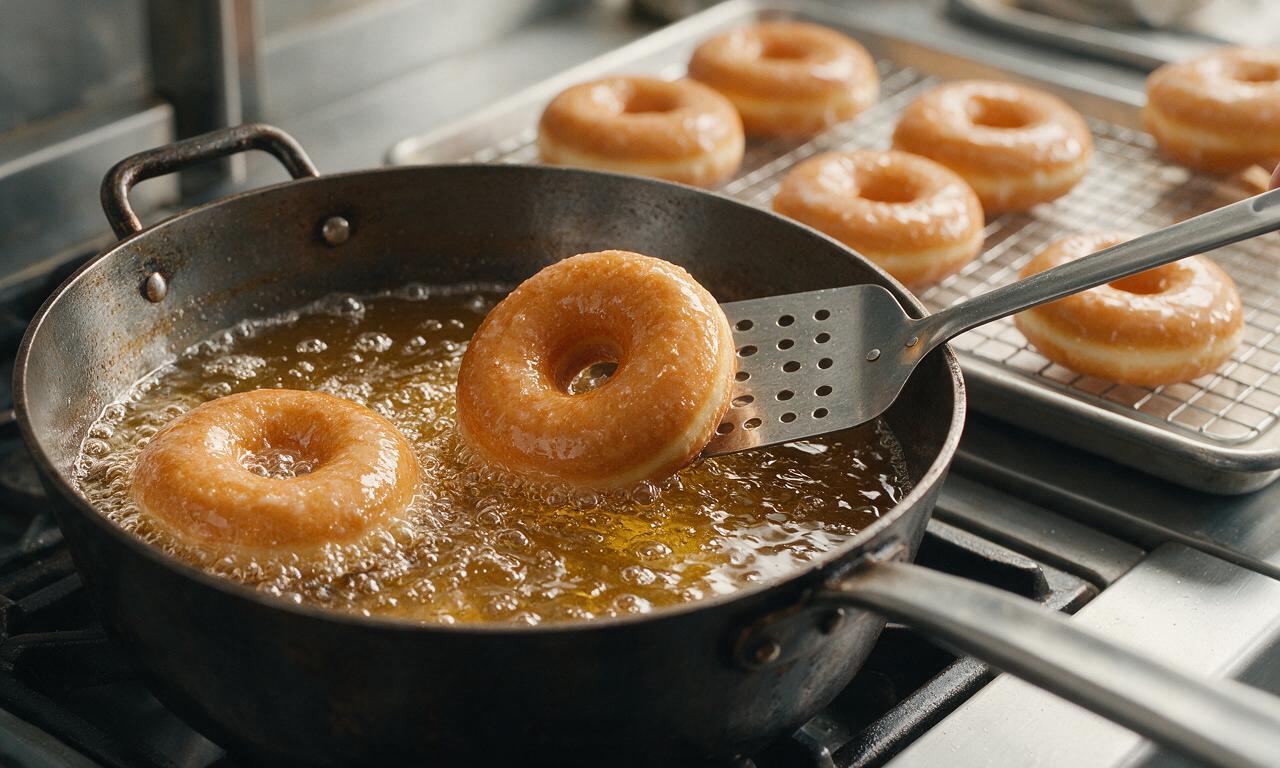
Carefully lower 2 to 3 donuts at a time into the hot oil, taking care not to overcrowd the pot. Fry for 1 minute on the first side until deep golden brown, then flip with a slotted metal spoon and fry 45 seconds to 1 minute on the second side. Transfer fried donuts to a wire rack set over a baking sheet to drain excess oil, and repeat with remaining donuts, letting oil return to 175°C/350°F between batches.
Step 5
step5:Fry donuts evenly
6

Mix vanilla glaze

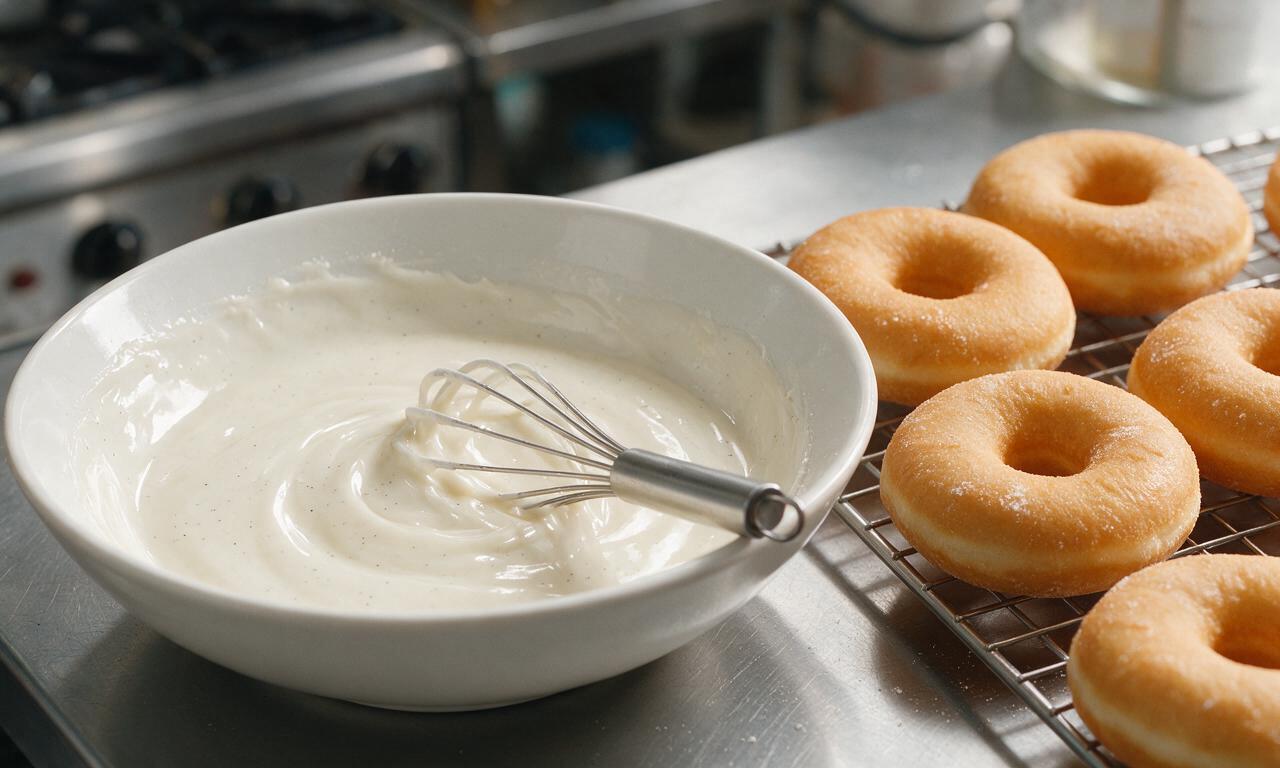
While fried donuts cool for 5 minutes (they should be warm, not piping hot), make the glaze: whisk 360g powdered sugar, 60ml whole milk, and 5ml vanilla extract in a shallow wide bowl until completely smooth, with no lumps. The glaze should be thick but pourable, similar to heavy cream consistency; add 1 teaspoon more milk if too thick, or 2 tablespoons more powdered sugar if too thin.
Step 6
step6:Mix vanilla glaze
7

Coat donuts in glaze

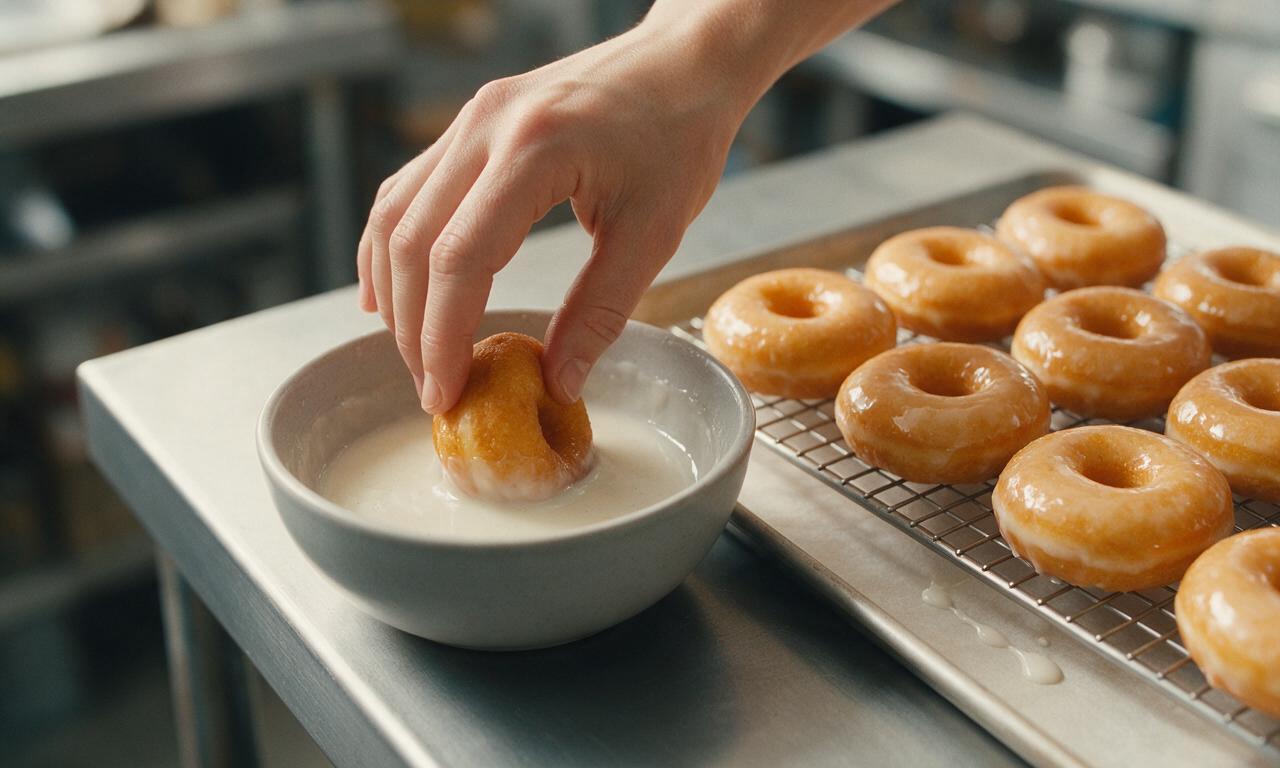
Dip one side of each warm donut fully into the glaze, then flip to coat the other side completely. Lift the donut out, let excess glaze drip back into the bowl for 10 seconds, then place it back on the wire rack, glazed side up. Let the glaze set for 15 to 20 minutes at room temperature, until it forms a thin, slightly crisp, shiny coating, then serve.
Step 7
step7:Coat donuts in glaze

Tips

1.Monitor oil temperature closely with a candy thermometer: oil above 180°C/360°F will burn donut exteriors before the interior cooks, while oil below 165°C/325°F will leave donuts greasy and soggy.
2.Only re-roll dough scraps one time: repeated rolling and handling overworks gluten, resulting in tough, dense donuts instead of light, fluffy ones.
3.Glaze donuts while they are still slightly warm (about 5 minutes after frying): this helps the glaze adhere evenly and form the classic thin, crackly sugary coating instead of sliding off cold donuts.
✨ You May Also Like

Desserts & Baking
🍜 Italy

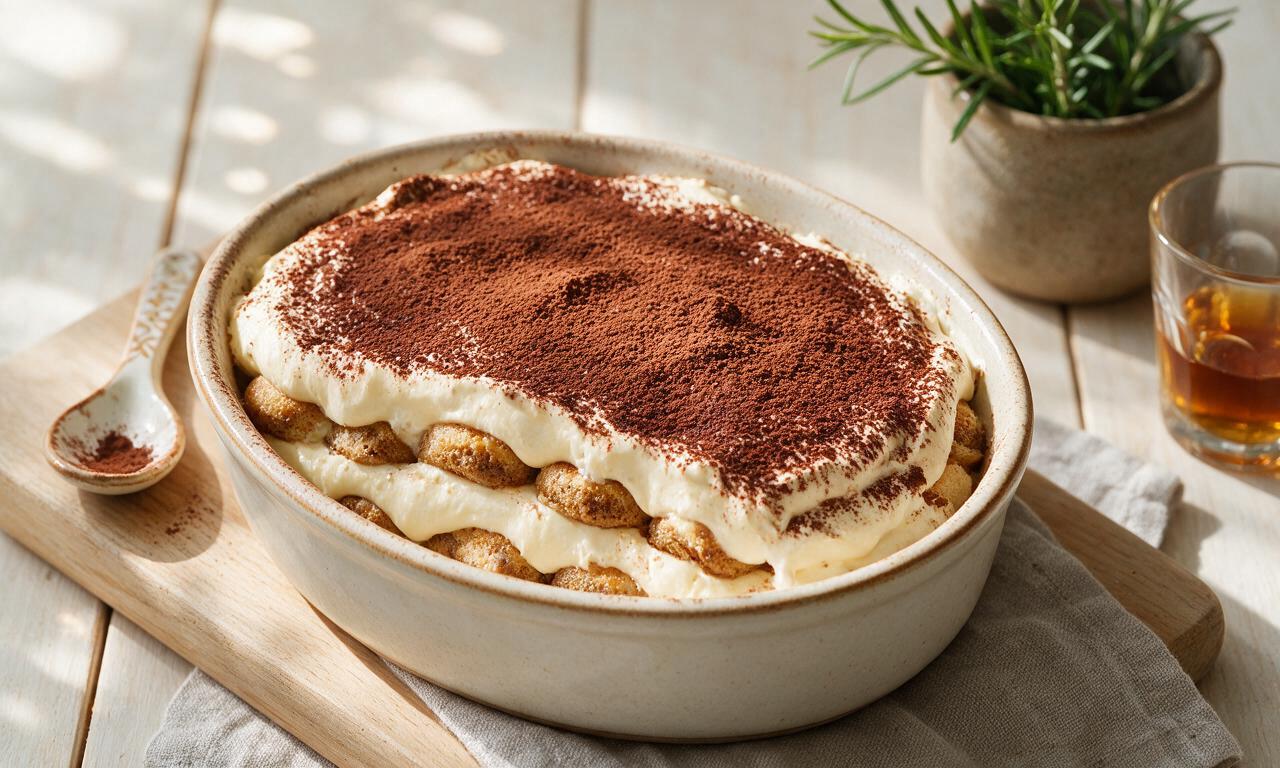
Creamy, coffee-kissed classic Northern Italian no-bake dessert, with layers of rum-spiked mascarpone cream, soft ladyfingers, and a rich cocoa dusting.

⏱️ 4 hours 3Desserts & Baking ★ 4.8
Desserts & Baking
🍜 France

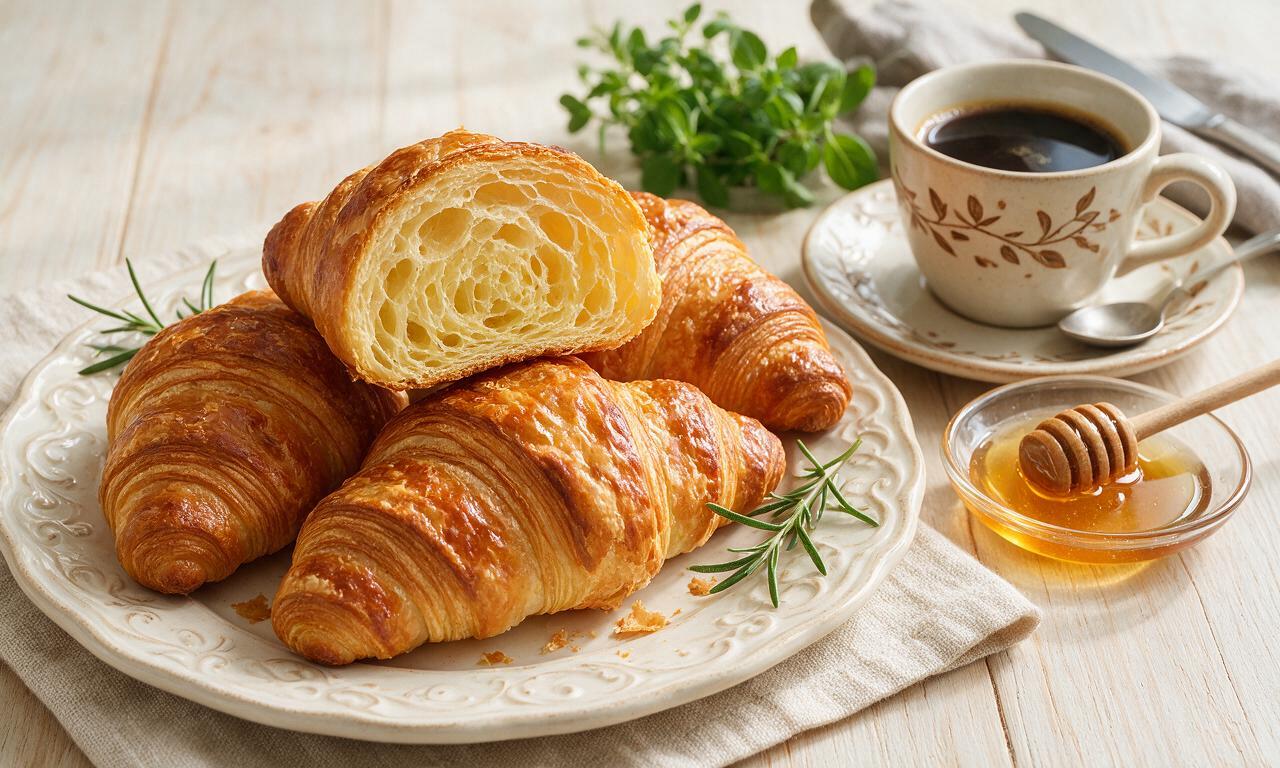
Flaky, shatteringly crisp, buttery French croissants with golden exteriors and soft, airy layered interiors, perfect for pairing with coffee for a special morning treat.

⏱️ 12 hours Desserts & Baking ★ 4.7
Desserts & Baking
🍜 United States

Warm, spiced baked apples topped with a fluffy golden biscuit crust, this cozy dessert pairs perfectly with vanilla ice cream for cool-weather comfort.

⏱️ 55 minuteDesserts & Baking ★ 4.7
Desserts & Baking
🍜 United States

A star-spangled classic American blueberry pie with buttery flaky crust and bright sweet-tart filling, perfect for summer patriotic gatherings.

⏱️ 1 hour 25Desserts & Baking ★ 4.8
Desserts & Baking
🍜 United States

A beloved no-bake regional Maine candy with a chewy coconut-potato center coated in rich dark chocolate, a New England holiday staple since the 1870s.

⏱️ 2 hours 3Desserts & Baking ★ 4.9
Desserts & Baking
🍜 France

Luxuriously creamy, floral frozen custard made with aromatic Tahitian vanilla beans, boasting a smooth, rich texture that melts slowly on the tongue.

⏱️ 3 hours 3Desserts & Baking ★ 4.6

Glazed Donut:Frequently Asked Questions

1.Why does the recipe specify warming whole milk to 100°F for the donut dough?
That temperature is the ideal sweet spot for instant dry yeast to activate reliably. Milk warmer than 110°F will kill yeast, leading to flat, dense donuts, while milk that’s too cold slows rising dramatically. If you don’t have a thermometer, test it on your inner wrist—it should feel like neutral lukewarm bath water, with no sharp, scalding heat.
2.Can I use low-fat or skim milk instead of whole milk for this recipe?
Whole milk’s fat content creates that soft, pillowy, bakery-style crumb we love in classic glazed donuts. Skim or low-fat milk will work in a pinch, but your donuts will be slightly less tender, stale faster, and lack that rich, nostalgic mouthfeel. For closer results, stir 1 tablespoon of melted butter into 1 cup of low-fat milk to bump up the fat.
3.How do I know when the donut dough has finished its first rise?
Properly risen dough will double in size, leave a slow-rebounding indent when you press a floured finger 1 inch into the center, and feel light and airy rather than tight and dense. In a warm, draft-free spot around 75°F, this usually takes 1 to 1.5 hours—don’t rush it, since a slow rise builds that classic, rounded donut flavor.
4.Can I use active dry yeast instead of instant dry yeast for these donuts?
Absolutely, you’ll just need one quick extra step. Use 25% more active dry yeast than the listed instant yeast measurement, and dissolve it in the warmed 100°F milk with a pinch of granulated sugar for 5 to 7 minutes first, until it foams up, before mixing it into the rest of your dough ingredients as directed.
5.What’s the best way to cut donuts so they hold their round shape when frying?
Roll your rested, lightly chilled dough to a uniform ½-inch thickness on a lightly floured all-purpose flour surface, then dip your donut cutter in flour before each press to prevent sticking. Twist the cutter straight down without wiggling it—wiggling seals the dough edges, which keeps donuts from puffing evenly as they fry and creates lopsided, misshapen results.
6.What oil is best for frying glazed donuts to get a neutral, non-greasy flavor?
Reach for neutral, high-smoke-point oils like refined canola, vegetable, or peanut oil. These won’t add off-flavors to your donuts as they hold a steady 350°F frying temperature. Avoid olive oil, butter, or unrefined oils, which burn easily at frying temps and leave a bitter, heavy taste on light, finished donuts.
7.How do I keep my frying oil at the right temperature so donuts don’t get greasy?
Use a clip-on candy thermometer to monitor oil the whole time you fry, adjusting stovetop heat as needed to hold a steady 350°F. If oil is too cool, donuts soak up excess oil and feel heavy; if it’s too hot, the outside burns before the center cooks through. Fry only 2 to 3 donuts at a time to avoid dropping oil temp too fast.
8.When is the right time to dip donuts in the vanilla glaze?
Let freshly fried donuts cool on a wire rack for 2 to 3 minutes first, so they’re warm but not scalding hot. Dipping donuts when they’re too hot makes glaze run right off and soak into the crumb, while waiting until they’re fully cool leaves glaze sitting on the surface instead of forming that signature crackly, slightly melted-in coating.
9.Why does my glaze turn out runny instead of thick enough to coat donuts?
Runny glaze almost always comes from adding too much milk or dipping donuts when they’re too hot. If your glaze is too thin, whisk in extra sifted powdered sugar 1 tablespoon at a time until it coats the back of a spoon thickly, leaving a slow-dripping trail when you lift it. If it’s too thick, add ¼ teaspoon of milk at a time to thin.
10.Can I bake these donuts instead of frying them to cut down on oil?
Baking will give you a tasty treat, but it won’t replicate the exact soft, pillowy texture and faint crisp outer edge of a classic fried glazed donut. If you do bake them, shape the donuts, let them rise until puffy, brush with cooled melted butter, and bake at 375°F for 8 to 10 minutes, then glaze as normal for a lighter, cake-adjacent version.
11.How should I store leftover glazed donuts to keep them soft?
Store completely cooled donuts in an airtight container at room temperature for up to 2 days, layered between sheets of parchment paper to prevent sticking. Don’t refrigerate them—cold temperatures speed up staling and make the crumb tough. For the best texture, zap leftovers for 5 seconds in the microwave before eating to bring back that fresh softness.
12.Why do my donuts turn out dense and heavy instead of light and pillowy?
Dense donuts usually come from one of three common missteps: not letting the dough rise long enough, using yeast that was expired or killed by too-hot milk, or adding too much extra all-purpose flour when rolling out the dough. Measure flour by spooning it into your cup and leveling it off, and always proof yeast first if you’re unsure it’s active.
13.Can I make the donut dough ahead of time to fry fresh in the morning?
Absolutely! After mixing the dough with cooled melted butter, let it do a short 30-minute rise at room temperature, then cover it tightly and refrigerate it for up to 12 hours. The cold slow-rise builds extra depth of flavor, too. When you’re ready to cook, pull the dough out, roll, cut, let cut donuts rise until puffy (about 45 minutes), then fry and glaze as normal.
14.What causes the glaze to have that signature crackly texture instead of staying sticky?
That perfect crackly glaze forms when you dip warm (not piping hot) donuts in a properly thickened vanilla glaze, then set them on a wire rack to let excess glaze drip off and set fully at room temperature for 10 to 15 minutes. Don’t cover donuts right after glazing—trapped moisture will make glaze turn soft and sticky instead of forming that satisfying crisp shell.

Comments (3)

2 days ago

OMG these turned out SO good! I was super nervous about the yeast proofing step since I always manage to kill the yeast in bread recipes, but I followed the directions to a T and they came out pillowy soft, exactly like the glazed donuts from our favorite local donut shop. My kids loved them — they devoured three each before I even finished glazing the last batch! Total game changer for our lazy Saturday morning breakfasts, no more rushing out to the donut store right when they open.

yesterday

Wait did you use the warm oven trick for proofing like the recipe tip suggested? I’m planning to make these for my roommate’s birthday tomorrow and I’m paranoid I’ll mess up the rise!

2 hours ago

So thrilled your family enjoyed the recipe! The warm oven trick is a total lifesaver for consistent proofing — just heat your oven to 200°F for 1 minute, turn it completely off, then set your covered bowl of dough inside. Don’t skip the second 30-minute rise after you cut out the donut shapes either, that’s what gives them that light, airy texture. Hope your roommate loves them!

1 week ago

Really solid donut recipe, though I wish there was a heads up about how long you need to let the glaze set! I grabbed one right after dipping it and half the glaze slid right off onto my work shirt, oops. The flavor was spot on though — not cloyingly sweet, and the donut itself had that perfect chewy, tender crumb I was chasing. I’ll definitely make these again, I’m just gonna give the glaze a solid 10 minutes to set next time before I dig in.

3 days ago

Brought a double batch of these to our neighborhood block party potluck last weekend and they were gone in literally 10 minutes flat! I lost count of how many neighbors came up to ask for the recipe, I told them I found it right here. I did add a tiny pinch of ground cinnamon to the glaze and it gave it such a nice subtle warm kick — no one could put their finger on what made it extra tasty, but everyone was raving. 10/10, will be making these for every get together from now on.

2 days ago

Love that cinnamon glaze tweak! That’s such an easy way to add a little cozy depth without overpowering that classic glazed donut flavor. It makes us so happy to hear these were a hit at your block party — that’s exactly why we love sharing these recipes!