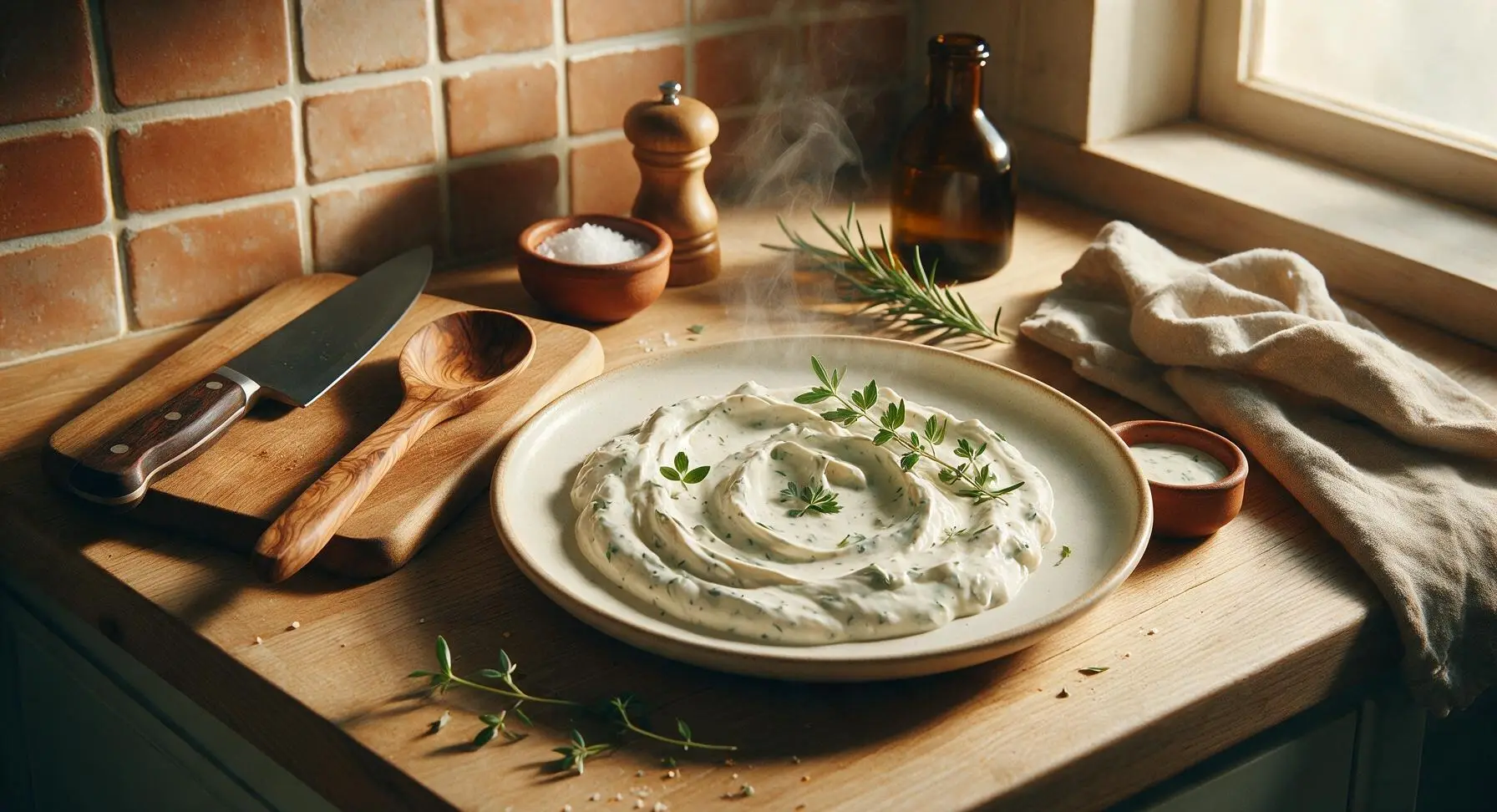
goat cheese sauce

title 1
goat cheese sauce
⏱️ cook time 10 minutes
🍽️ servings 4
⚡ Difficulty easy

intro

Velvety, tangy, luxuriously creamy goat cheese sauce with subtle herb notes, perfect for pasta, roasted veggies, or seared chicken—elegant enough for date night, ready in just 15 minutes.

Ingredients
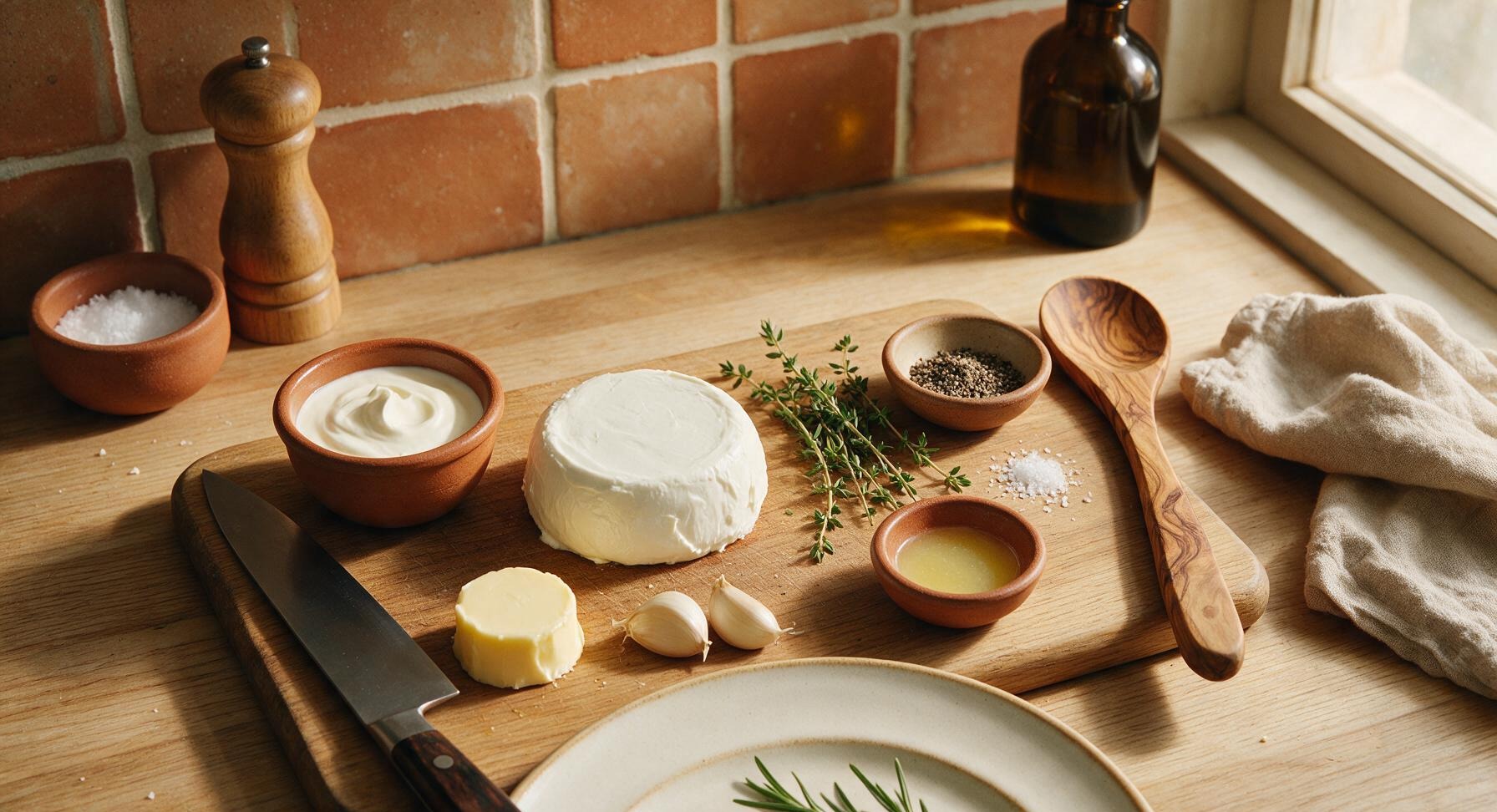
Soft fresh goat cheese (chèvre) 113g (4 oz)
Heavy whipping cream 120ml (1/2 cup)
Unsalted butter 28g (2 tbsp)
Garlic cloves 2 large (10g total)
Fresh thyme sprigs 5 sprigs (1 tsp picked leaves)
Freshly ground black pepper 1/4 tsp
Flaky sea salt 1/8 tsp
Fresh lemon juice 5ml (1 tsp)

Steps

1

Prep and measure ingredients

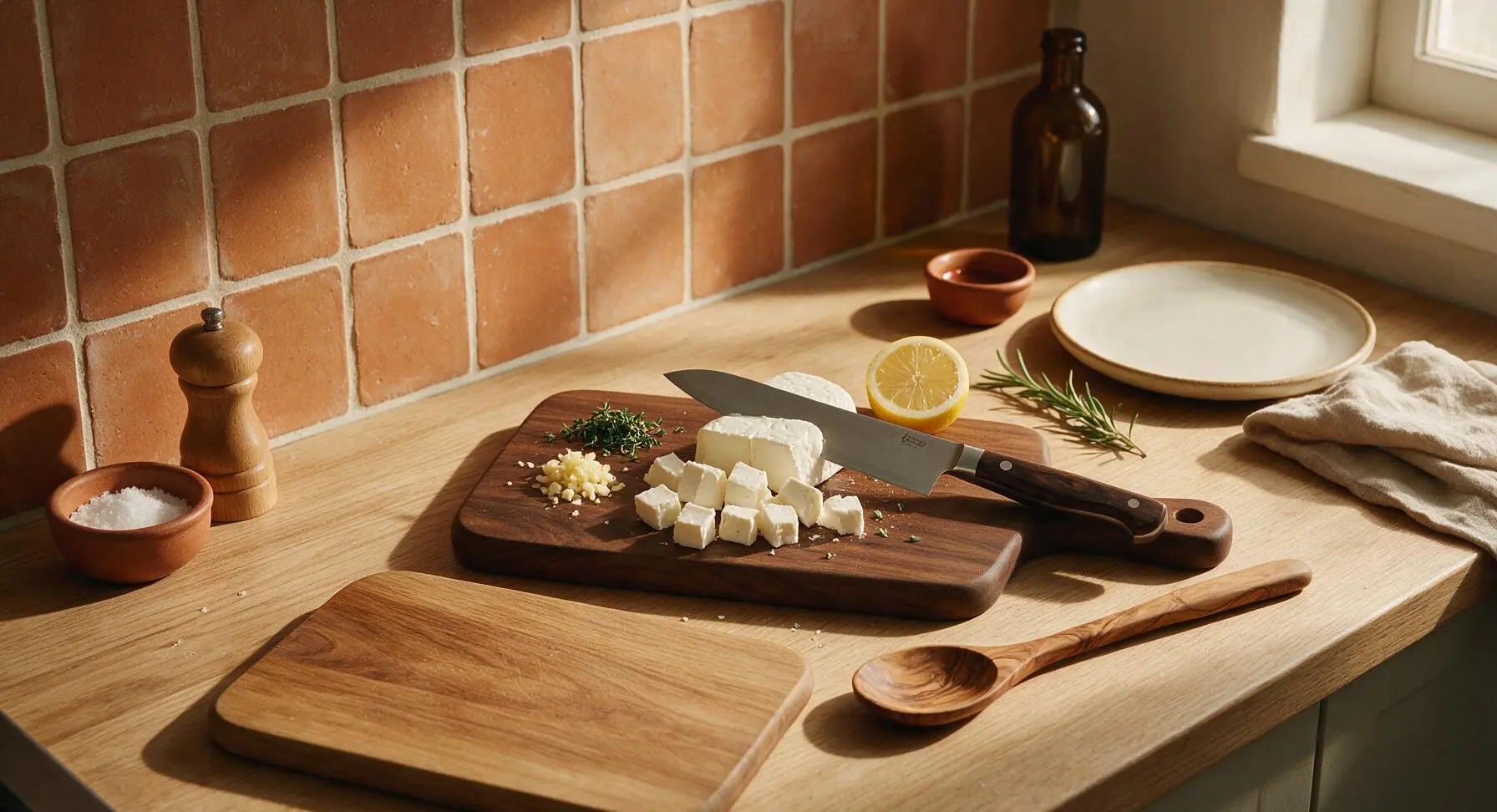
Set the dark maple cutting board in the center of the prep zone. Unwrap the goat cheese and cut it into 2cm (1-inch) rough cubes with the santoku chef knife to encourage fast, even melting. Pick 1 teaspoon of thyme leaves from the sprigs, discarding tough woody stems. Mince the two garlic cloves finely until no large chunks remain. Squeeze 1 teaspoon of fresh lemon juice, removing any seeds. Arrange all measured ingredients within arm’s reach to avoid scrambling to add items once cooking starts, which can lead to lumpy sauce.
Step 1
step1:Prep and measure ingredients
2

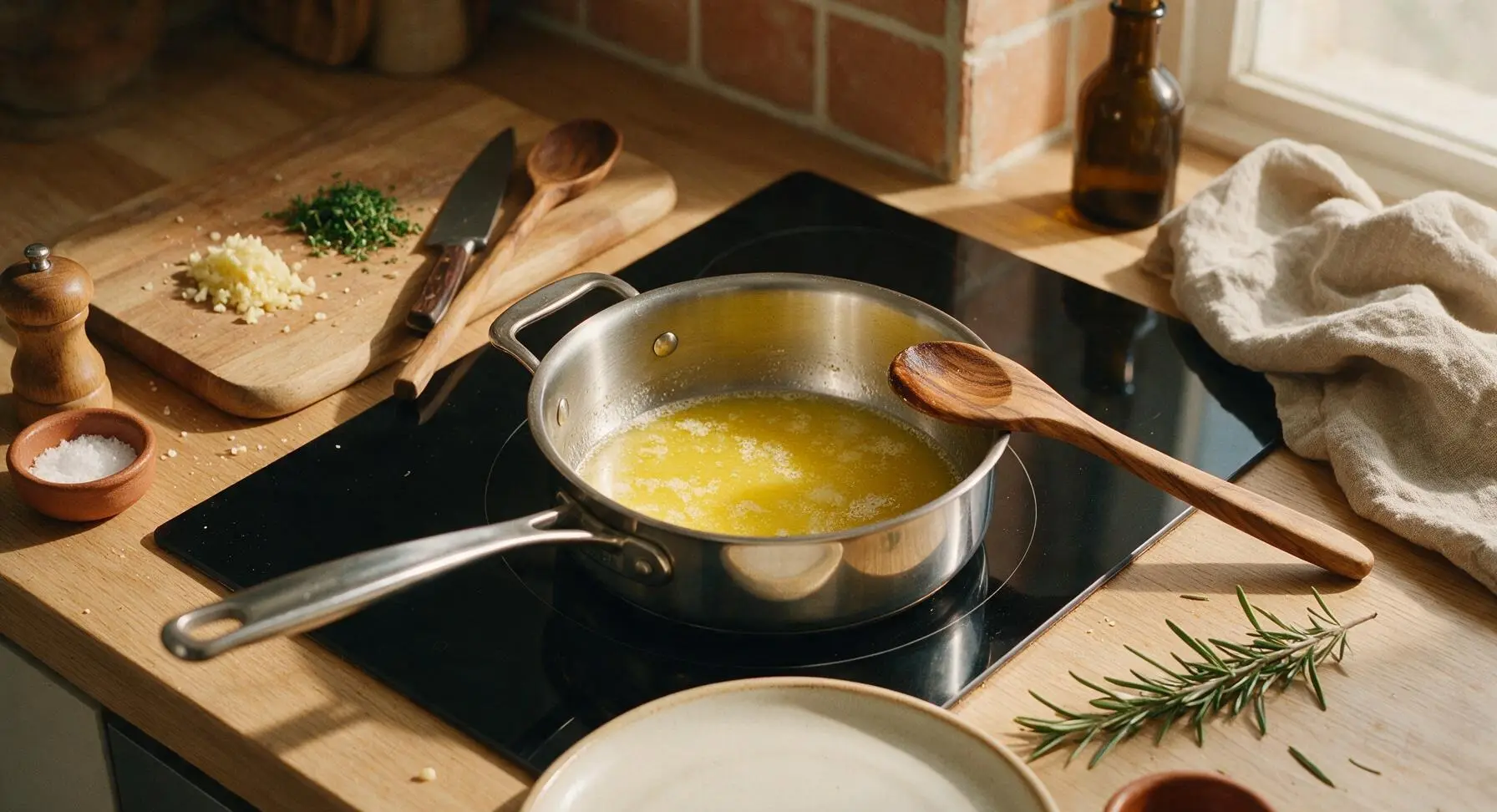
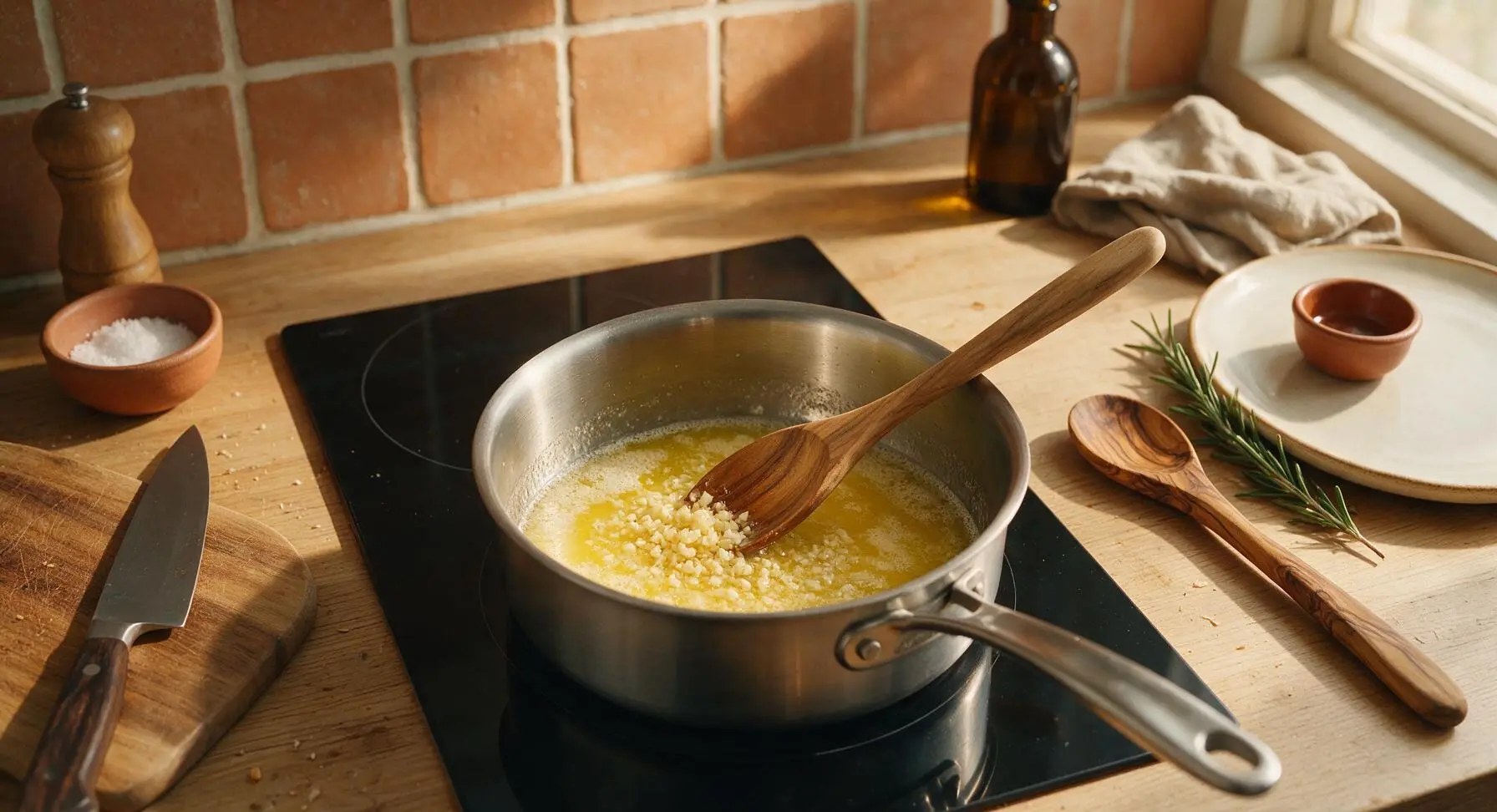
Sauté garlic in butter

Place the 1.5-quart stainless steel saucepan on the centered induction cooktop over medium-low heat (135°C / 275°F). Add the 2 tablespoons of unsalted butter, swirling the pan as it melts fully over 1 minute. Once butter is foaming slightly but not browned, add the finely minced garlic, stirring constantly with the acacia wood spoon for 30-45 seconds until garlic is fragrant and pale golden. Do not let the garlic brown, as burnt garlic adds a bitter, unpleasant flavor to the finished sauce.
Step 2
step2:Sauté garlic in butter
Step 2
step2:Sauté garlic in butter
3

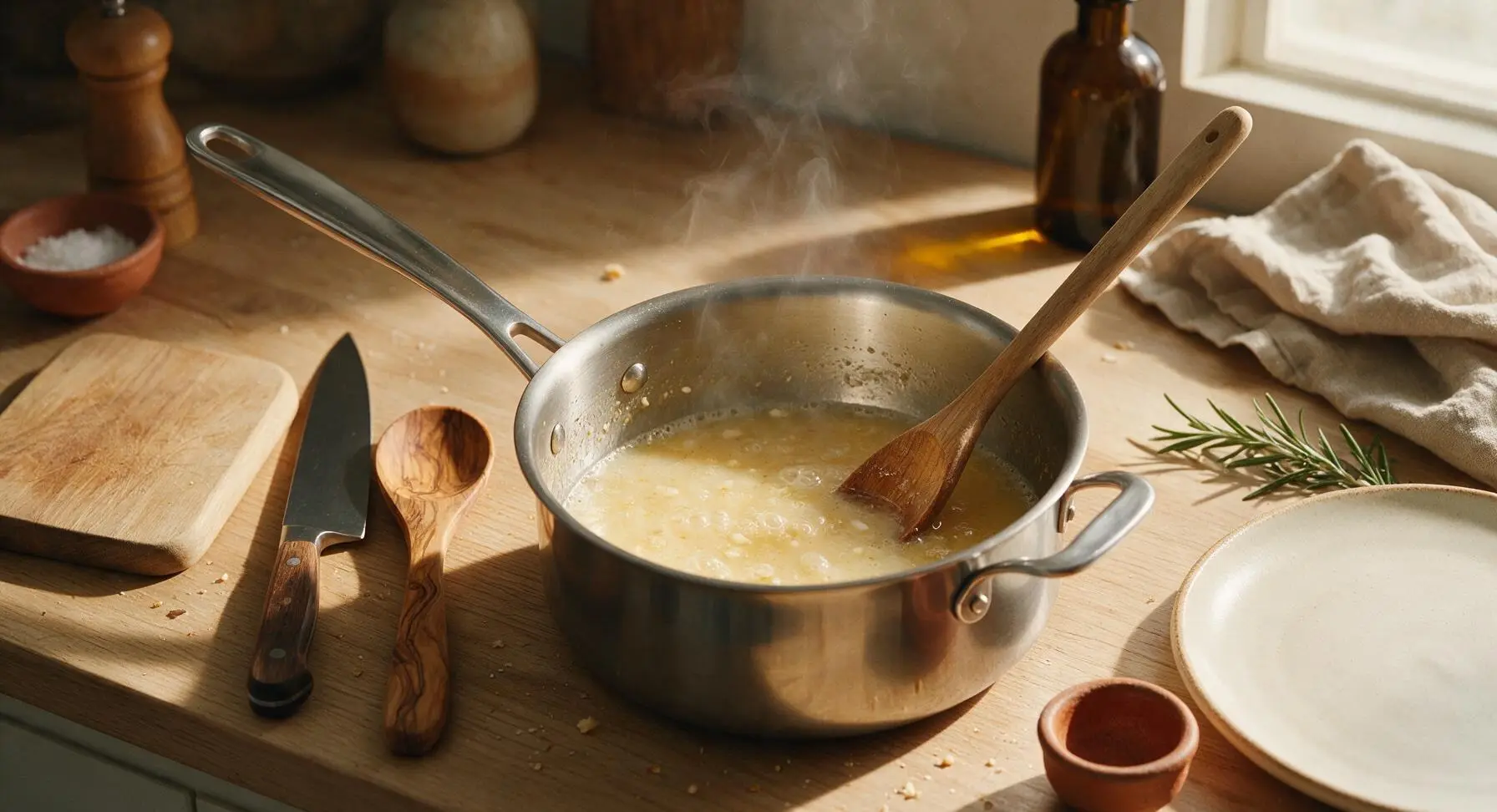
Simmer cream base

Slowly pour the 120ml (1/2 cup) of heavy whipping cream into the saucepan with the garlic butter, stirring gently with the acacia wood spoon to combine. Bring the mixture to a gentle, low simmer (small bubbles breaking only at the pan edges, no rolling boil) over medium-low heat, about 2 minutes. Reduce heat to low if the cream starts to bubble rapidly, as a hard boil can cause the final sauce to separate.
Step 3
step3:Simmer cream base
4

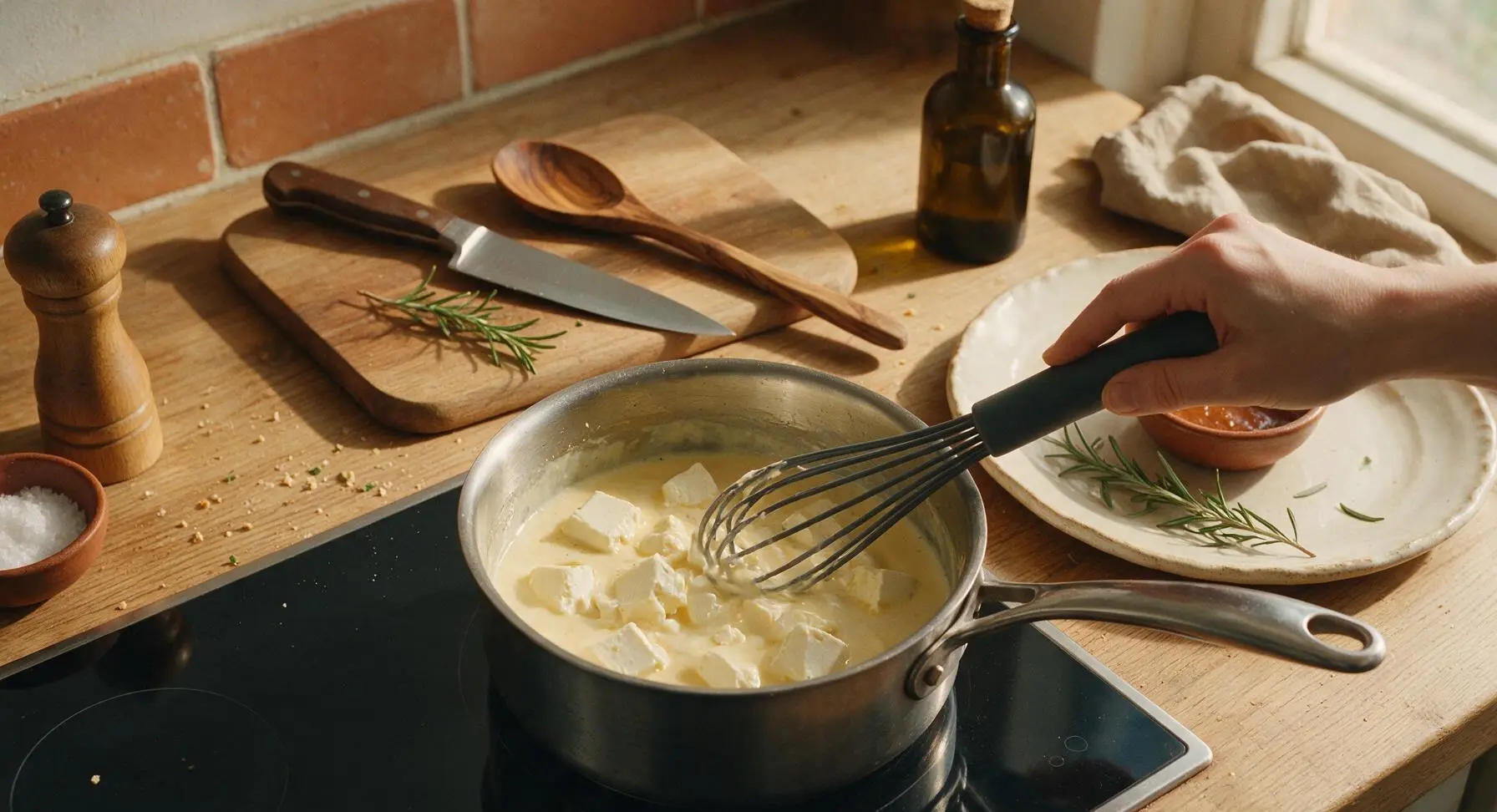
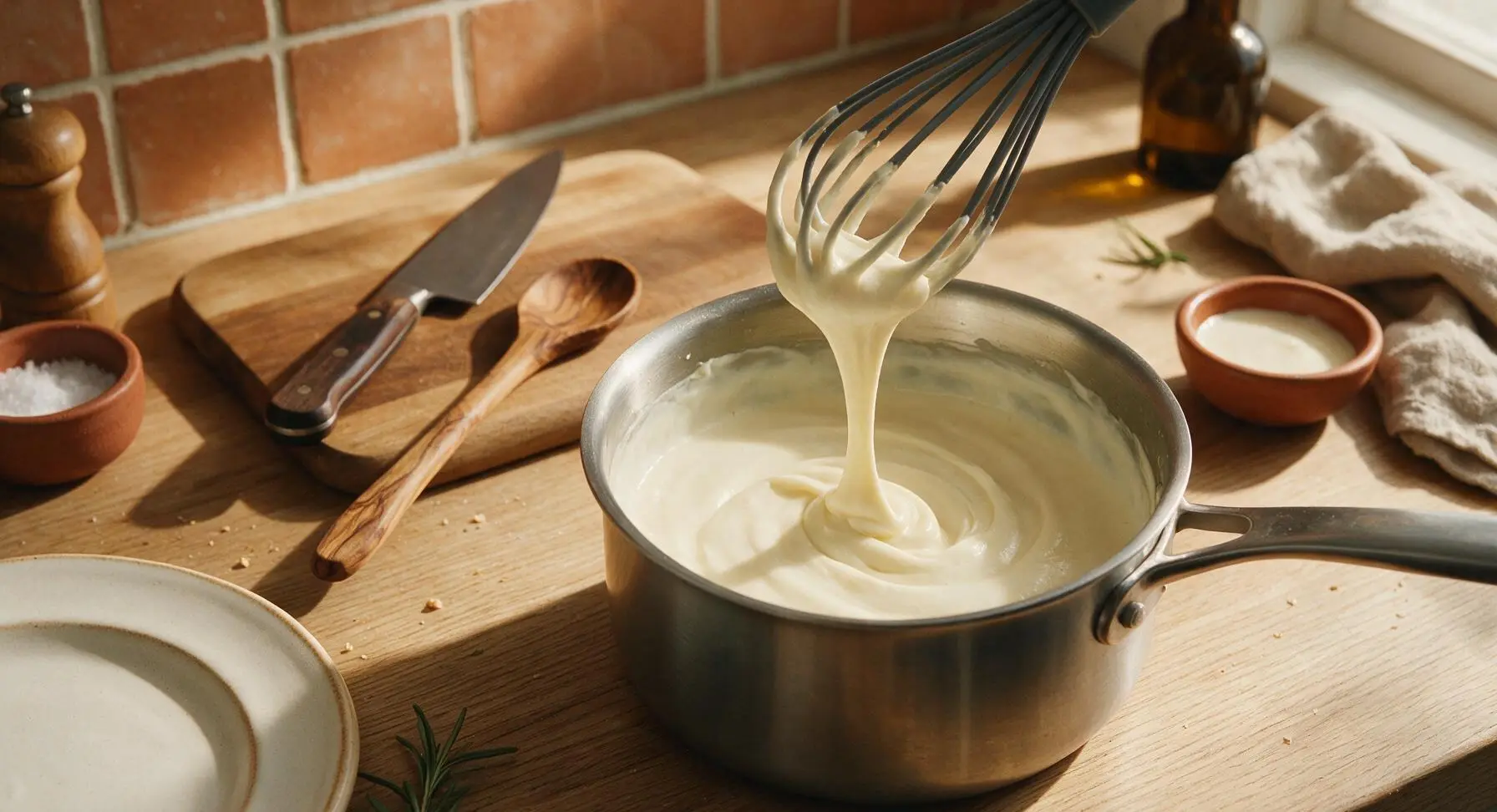
Whisk in goat cheese

Remove the saucepan from direct heat (residual pan heat is enough to melt the cheese, preventing grainy curdling). Add the cubed goat cheese one handful at a time, whisking constantly with the matte charcoal silicone whisk in slow, circular motions until each addition is fully melted and smooth before adding more. This process takes 2-3 minutes total, resulting in a silky, lump-free pale ivory sauce.
Step 4
step4:Whisk in goat cheese
Step 4
step4:Whisk in goat cheese
5

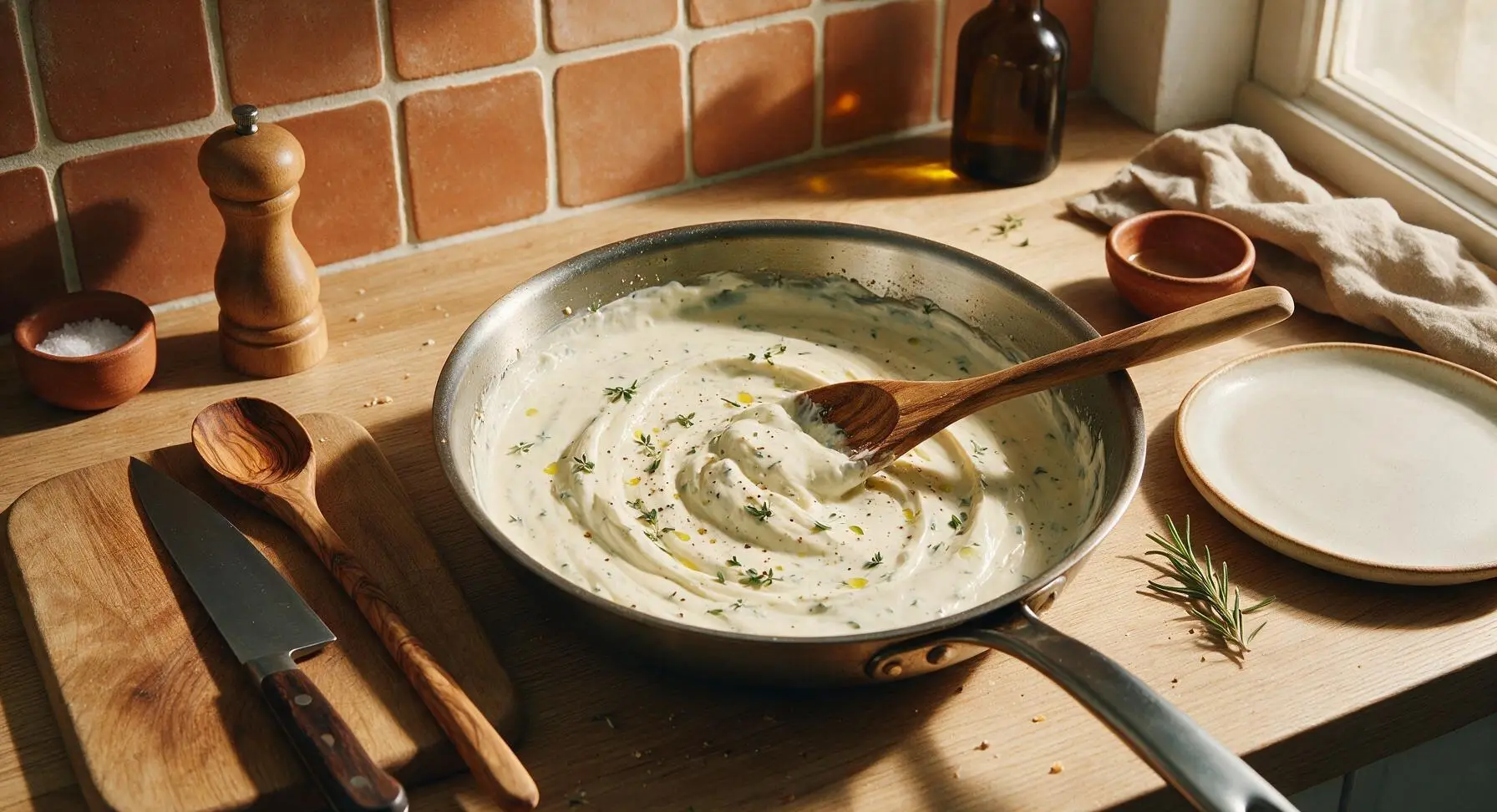
Season to taste

Add the 1 teaspoon of picked fresh thyme leaves, 1/4 teaspoon freshly ground black pepper, 1/8 teaspoon flaky sea salt, and 1 teaspoon fresh lemon juice to the smooth sauce. Stir gently with the acacia wood spoon to incorporate all seasonings evenly. Taste the sauce, and add a tiny pinch more salt if needed; the finished sauce should taste bright, tangy, and creamy, not flat or overly rich.
Step 5
step5:Season to taste
6

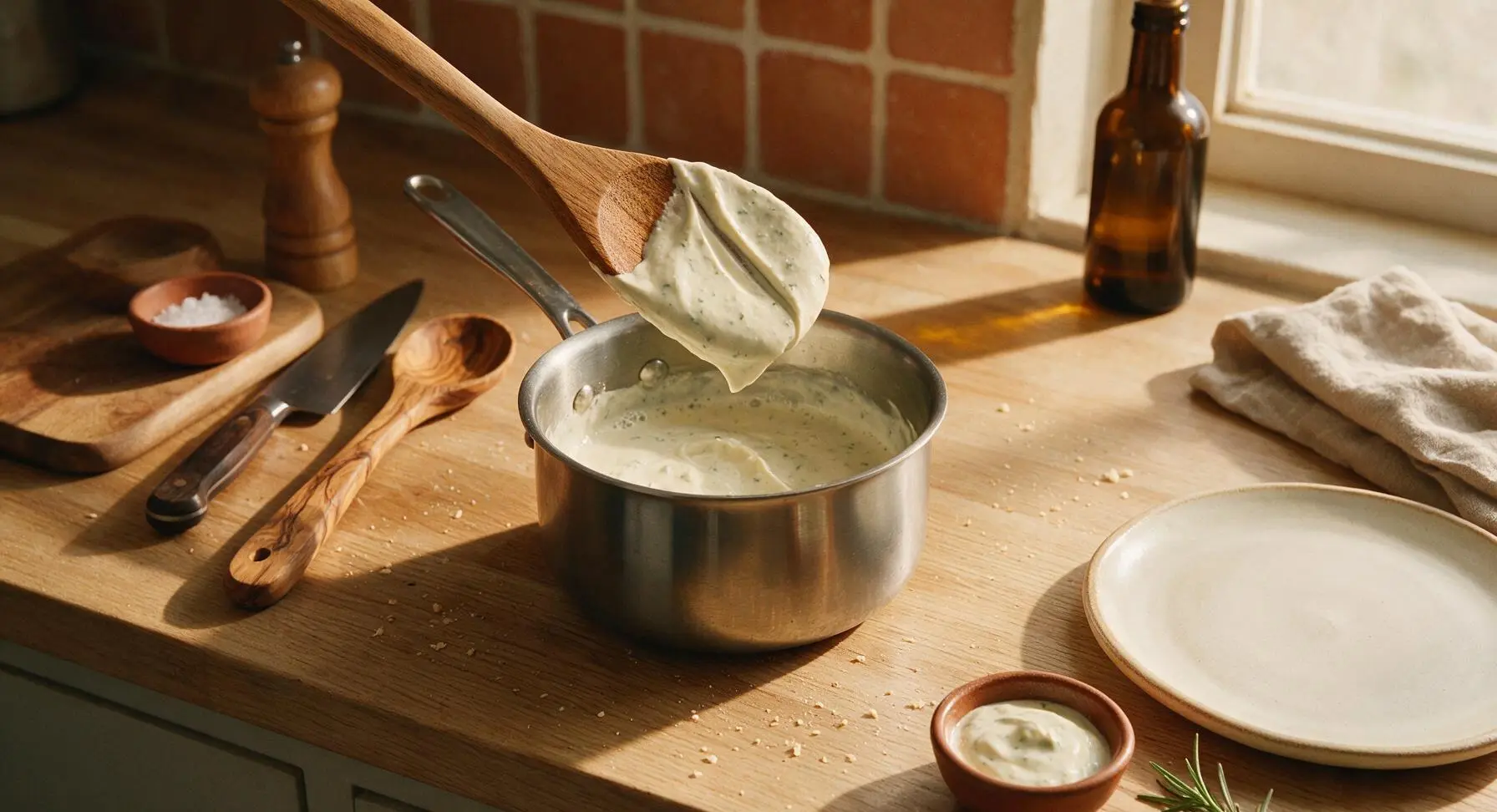
Rest sauce to thicken

Let the sauce rest off the heat for 2 minutes, allowing it to thicken slightly to a nappe consistency: it should coat the back of the acacia wood spoon thickly, with a line drawn through the coating holding its shape without running. If the sauce is too thick, stir in 1 teaspoon of warm water or heavy cream at a time to thin; if too thin, let it rest 1 additional minute.
Step 6
step6:Rest sauce to thicken
7

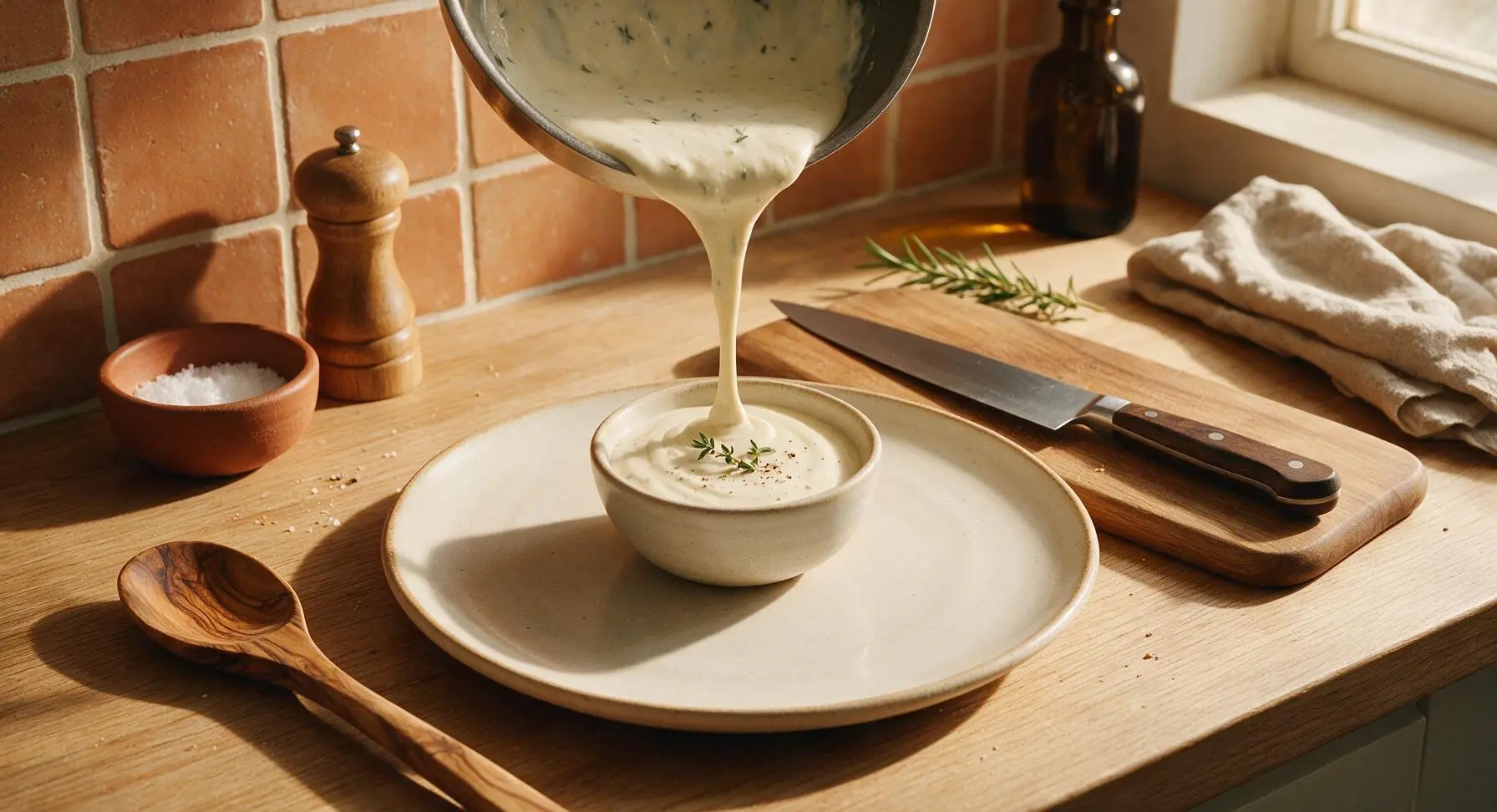
Plate and garnish

Pour the finished warm goat cheese sauce into the hand-thrown matte cream ceramic sauce bowl. Garnish the top with a single small fresh thyme sprig and a light crack of fresh black pepper for visual contrast. Serve immediately while warm, as the sauce will thicken and form a skin as it cools.
Step 7
step7:Plate and garnish

Tips

1.Always remove the pan from direct heat before adding goat cheese: high heat causes goat cheese milk proteins to curdle, leading to a grainy, separated sauce instead of the desired silky texture. Residual pan heat is fully sufficient to melt soft fresh chèvre smoothly.
2.Use only soft, fresh chèvre for this recipe: aged, firm, or crumbly goat cheese has lower moisture content and a sharper, gamey flavor that will not melt smoothly and will overpower the sauce’s delicate, balanced tang.
3.If the sauce thickens too much as it cools before serving, thin it only with warm liquid (warm heavy cream, starchy pasta water, or even warm tap water): cold liquid will shock the warm dairy and cause it to separate, leading to an uneven texture.


✨ You May Also Like

Side Dishes
🍜 India

Velvety, aromatic all-purpose curry sauce perfect for tossing with roasted veggies, grilled protein, or rice for fast, cozy, flavorful meals.

⏱️ 25 minuteSide Dishes ★ 4.8
Side Dishes
🍜 Spain

Tender, starchy boiled yuca tossed in bright, garlicky citrus mojo sauce—an iconic, zesty side that pairs beautifully with roasted pork, grilled meats, and rice and beans.

⏱️ 40 minuteSide Dishes ★ 5
Side Dishes
🍜 United States

Tender, paper-thin potato flatbread, a beloved Norwegian-American Minnesota Christmas staple, griddled until softly spotted and served warm with butter.

⏱️ 1 hour 30Side Dishes ★ 4.6
Side Dishes
🍜 United States

Rich, deeply savory cured salt pork, a long-lasting kitchen staple perfect for frying crispy as a side or adding umami to stews, beans, and chowders.

⏱️ 7 days (2Side Dishes ★ 4.9
Side Dishes
🍜 United States

Crispy, tangy classic Southern fried green tomatoes with a crunchy cornmeal crust, served hot for a nostalgic, comforting summery bite.

⏱️ 25 minuteSide Dishes ★ 4.9
Side Dishes
🍜 United States

Moist, golden-crusted savory muffins with sweet corn, zesty jalapeño, and melted cheddar, perfect for pairing with smoky summer grilled fare.

⏱️ 30 minuteSide Dishes ★ 4.9

goat cheese sauce:Frequently Asked Questions

1.What foods pair best with this creamy herbed goat cheese sauce? ▾
This versatile sauce works beautifully tossed with al dente pasta or pillowy gnocchi, drizzled over roasted broccoli, cauliflower, or root veggies, and spooned over seared chicken, pan-seared salmon, or grilled pork chops. It also makes a quick, elegant dip for crusty artisan bread on date night charcuterie boards.
2.Can I use pre-crumbled goat cheese instead of a soft fresh chèvre log? ▾
Absolutely, as long as it’s plain, unaged soft goat cheese with no added hard coatings or sweet or savory mix-ins. Pre-crumbled goat cheese melts just as well as a fresh log, but skip options dusted with excess potato starch anti-caking agents, as those can make the finished sauce feel slightly grainy.
3.How do I keep the sauce from getting grainy or separating? ▾
The key is to keep your heat low once you add the goat cheese—high heat makes dairy proteins curdle and creates that unwanted grainy texture. Remove the pan from direct heat right before stirring in the cheese, and whisk constantly as it melts. Never bring the finished sauce to a rolling boil to keep it silky smooth.
4.Can I make this sauce ahead of time, and how should I reheat it? ▾
You can make this sauce up to 3 days ahead and store it in a sealed airtight container in the refrigerator. To reheat, warm it gently over low stovetop heat, whisking constantly, and stir in a tiny splash of heavy cream if it thickens too much. Avoid high-heat microwaving, as that causes quick curdling.
5.I don’t have heavy whipping cream—what’s a reliable substitute? ▾
For the closest rich, luxe texture, use half-and-half mixed with 1 tablespoon of melted unsalted butter per ½ cup of half-and-half. Skip low-fat milk and standard non-dairy creamers, as those make a thin sauce prone to curdling. Full-fat canned coconut cream works for a dairy-free swap paired with plant-based goat cheese.
6.Can I use dried thyme instead of fresh thyme sprigs? ▾
Yes, dried thyme works perfectly if you don’t have fresh sprigs on hand. Use 1 teaspoon of dried, ground thyme for every 3 fresh sprigs the recipe calls for, since dried herbs are far more concentrated in flavor. Add dried thyme when you sauté the garlic to let its flavor bloom fully before adding cream and cheese.
7.How long does this sauce take to make from start to finish? ▾
This sauce comes together in 12 to 15 minutes total, which makes it ideal for quick weeknight meals or last-minute date night spreads. Most of that time is spent gently sautéing garlic and steeping thyme in warm cream, with just 1 to 2 minutes of whisking to melt the goat cheese into a velvety consistency.
8.The sauce thickened up too much after cooling—how do I fix that? ▾
It’s totally normal for this sauce to thicken as it cools, since the cheese and cream firm up at cooler temperatures. To thin it, stir in 1 to 2 teaspoons of warm heavy cream, starchy pasta water, or low-sodium chicken or vegetable stock at a time, whisking between additions, until it hits your preferred pourable consistency.
9.Can I add extra flavors to the base sauce to change it up? ▾
Absolutely—this base is incredibly flexible. Try stirring in a pinch of red pepper flakes for gentle heat, a squeeze of fresh lemon juice to brighten the tang, a tablespoon of chopped chives or basil, crispy bacon bits, or even finely chopped oil-packed sun-dried tomatoes for extra savory depth.
10.Can I freeze this sauce for longer-term storage? ▾
I don’t recommend freezing this sauce, unfortunately. The high dairy content from heavy cream and soft goat cheese will separate and develop a grainy, watery texture when it thaws, even with vigorous whisking during reheating. It stays fresh for up to 3 days in the fridge, which is a far better storage option.
11.Do I need to remove the thyme stems after steeping them in the cream? ▾
Yes, fish out the woody thyme stems after letting them steep in warm cream for 3 to 4 minutes. The tiny tender leaves will naturally fall off into the sauce as they steep, giving you that subtle herby flavor without chewy woody bits. Give the stems a quick squeeze over the pan to capture all their flavorful oil before discarding.
12.Can I use aged, firm goat cheese instead of soft fresh chèvre? ▾
Stick to soft, fresh unaged goat cheese for this recipe to get that signature silky texture. Aged, firm goat cheese has lower moisture content and a sharper, more pungent flavor, and it won’t melt smoothly into cream, leaving you with lumpy, overly tangy sauce that lacks that luxe velvety mouthfeel.
13.I’m lactose intolerant—can I adjust this recipe to be lower lactose? ▾
You can absolutely make a lower-lactose version by swapping regular heavy cream for lactose-free heavy cream, and using lactose-free soft fresh goat cheese, which is widely available at most major grocery stores. The small amount of unsalted butter is naturally very low in lactose, so it works for most people with mild lactose sensitivity.
14.Why do you sauté garlic in butter first instead of adding it straight to cream? ▾
Sautéing garlic gently in melted butter over low heat softens its sharp, raw bite and brings out its sweet, nutty, mellow flavor that pairs perfectly with tangy goat cheese. Adding raw garlic straight to cold cream would leave harsh, sharp garlic notes that overpower the delicate herb and cheese flavors instead of complementing them.
15.Can I use salted butter instead of unsalted butter for this recipe? ▾
You can use salted butter if that’s what you have on hand, just hold off on adding any extra salt to the sauce until you’ve given it a full taste at the end. Salted butter has variable salt content across brands, so tasting first lets you avoid over-salting, which would overpower the bright goat cheese and subtle thyme notes.
16.How do I keep from burning the garlic when I sauté it? ▾
Keep your stovetop heat on low when sautéing garlic, and stir it constantly for 30 to 45 seconds until it smells fragrant and turns a pale golden color. Burnt garlic has a bitter, unpleasant flavor that will throw off the whole sauce, so pull the pan off the heat immediately if you notice garlic turning dark brown or smelling acrid.

Comments (0)