
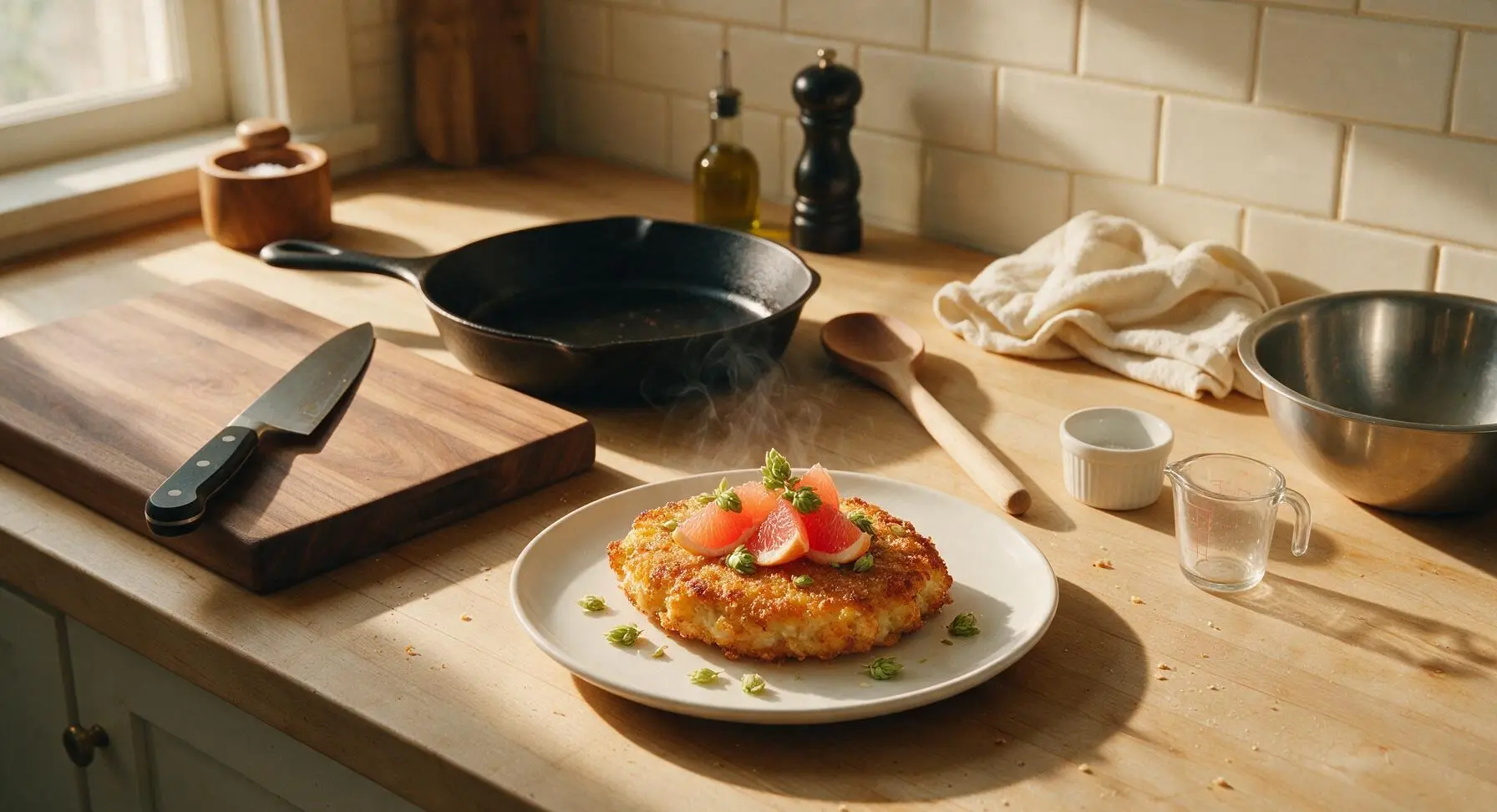
Grapefruit IPA

title 1
Grapefruit IPA
⏱️ cook time 1 hour 20 minutes
🍽️ servings 8
⚡ Difficulty medium

intro

Bright, zesty, and perfectly bitter, this homemade grapefruit IPA balances fresh citrus tang with piney hop aroma for a crisp, refreshing summer sip ideal for outdoor gatherings.

Ingredients
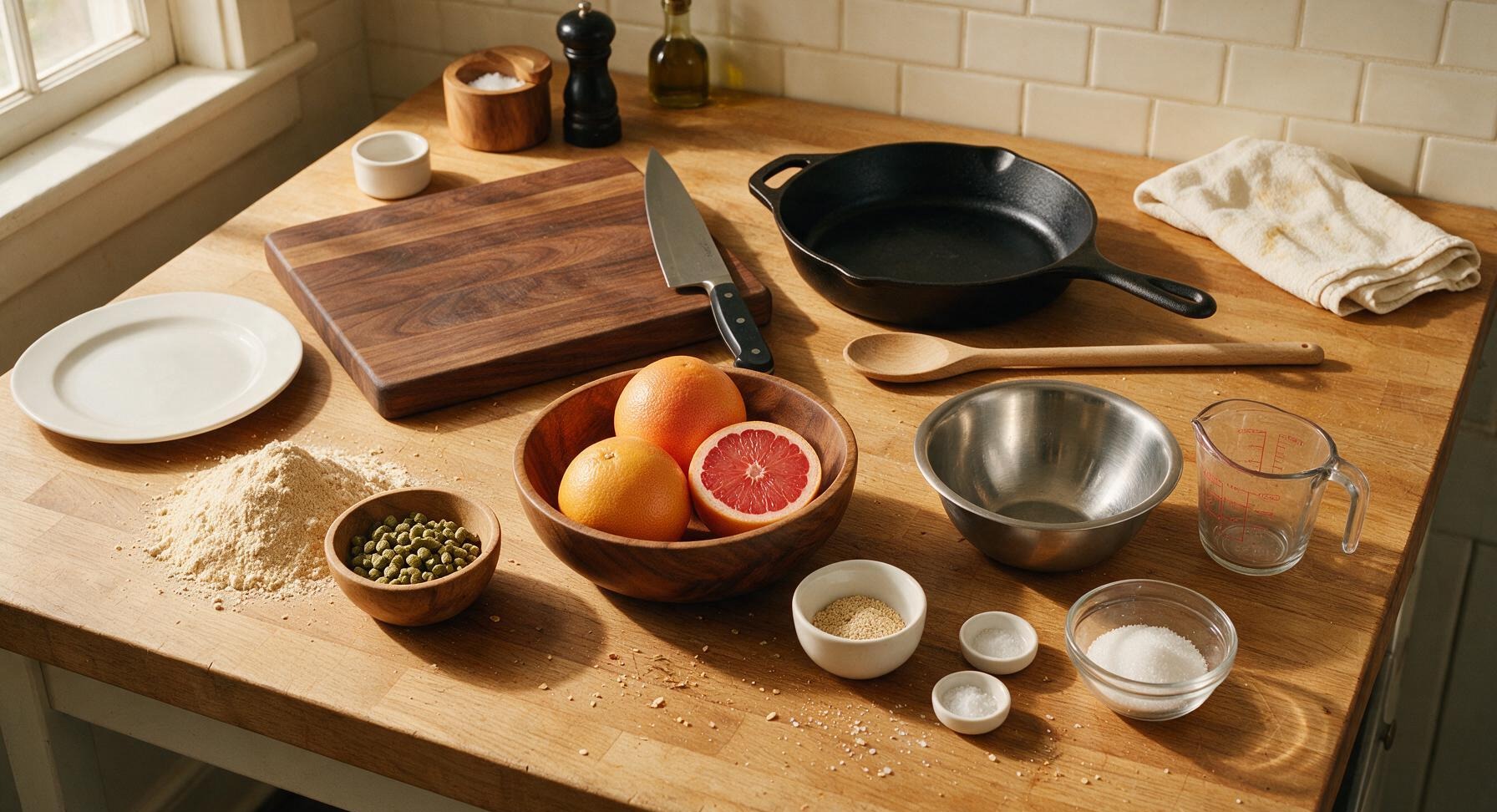
Light dry malt extract 450g (1lb)
Cascade hop pellets 28g (1oz), divided
Ruby red grapefruit 3 medium (1.2kg total)
Champagne brewing yeast 5g (1 packet)
Gypsum brewing salt 1/4 tsp
Corn sugar (for carbonation) 25g (2 tbsp)

Steps

1

Sanitize All Equipment

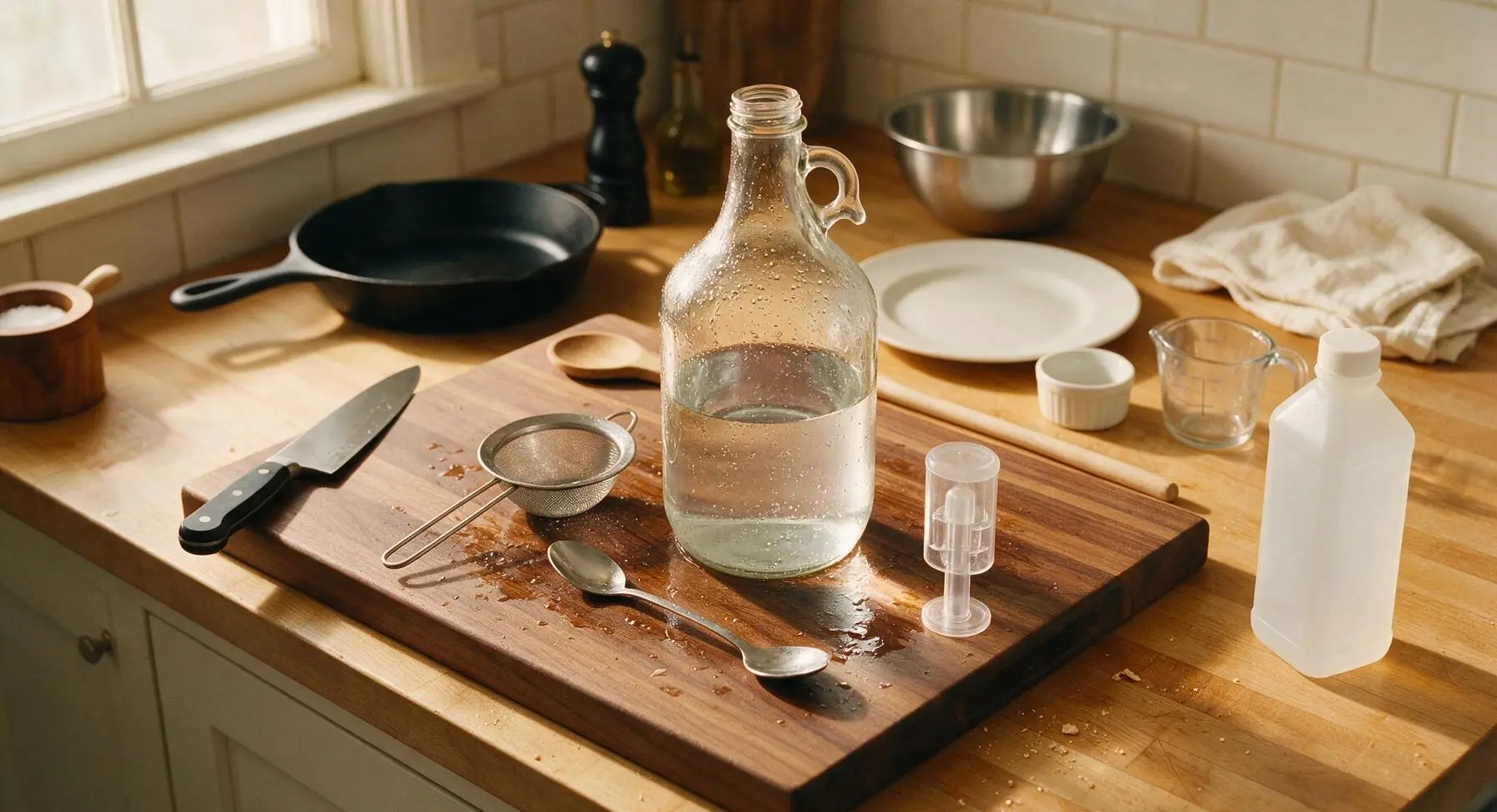
First, mix 1 tablespoon of no-rinse brewer's sanitizer with 1 gallon of cool water in the glass fermentation jug. Swirl the solution to coat all interior surfaces, then pour it through the siphon tube, airlock, strainer, and stirring spoon to fully sanitize every surface that will touch the beer. Let items air dry for 2 minutes on the clean cutting board; do not wipe dry with a towel, as this can introduce bacteria. Visual cue: All surfaces glisten with sanitizer solution, no visible food residue or dust remains.
Step 1
step1:Sanitize All Equipment
2

Prep Fresh Grapefruit

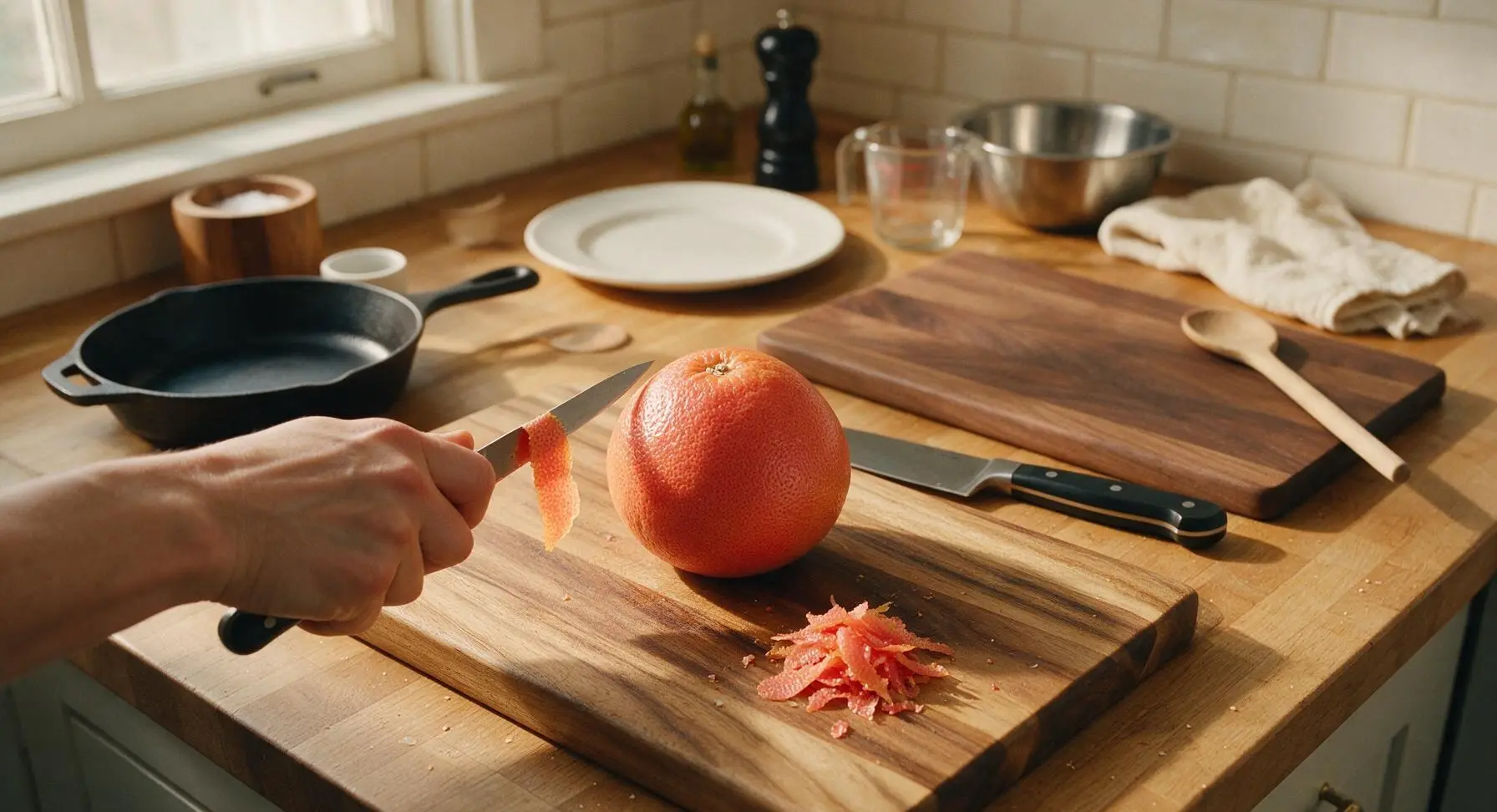
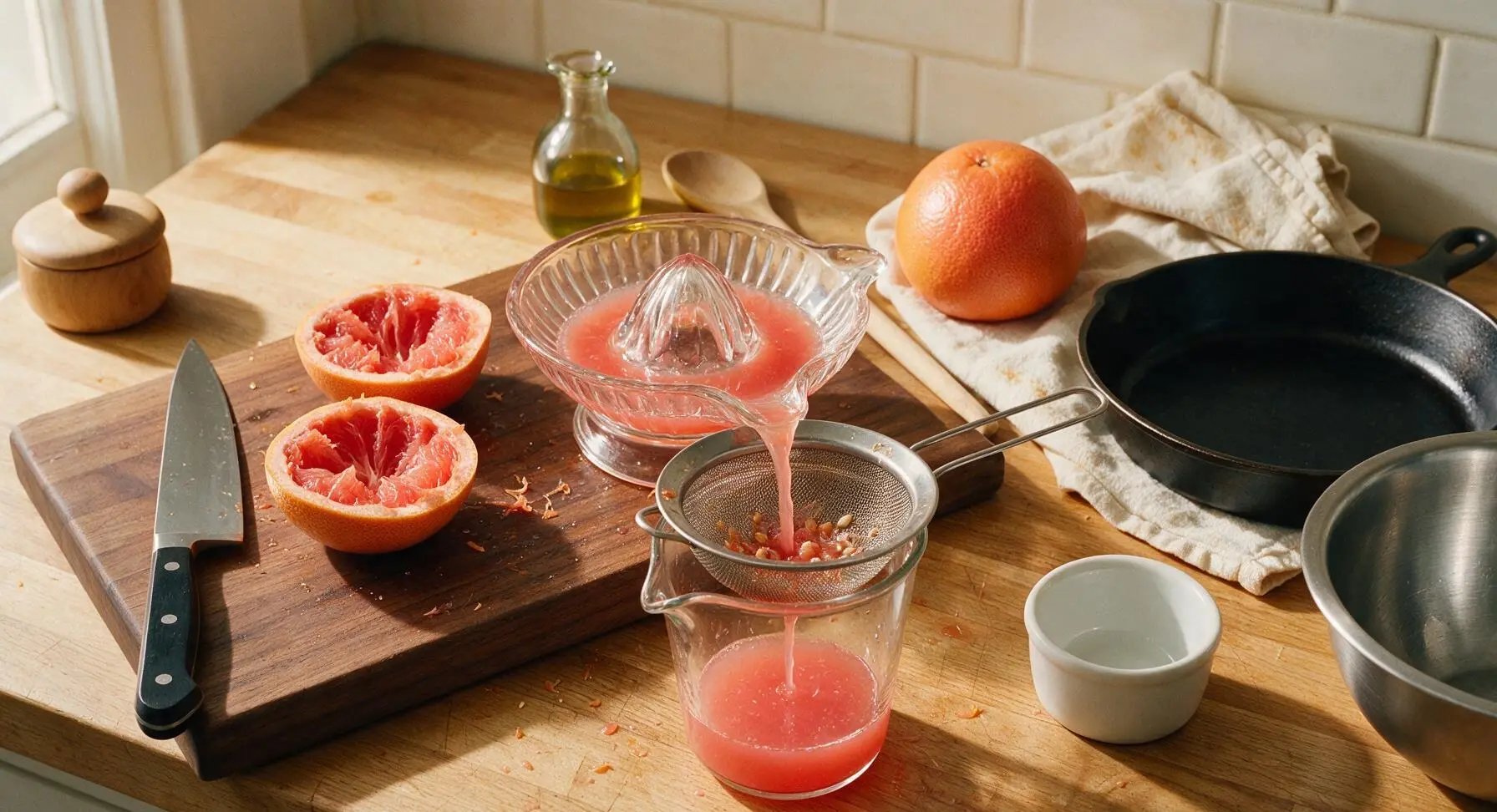
Place 2 of the whole ruby red grapefruits (the ones laid out as ingredients, not the fixed garnish grapefruit) on the cutting board. Use the paring knife to carefully remove thin strips of outer zest, avoiding the bitter white pith underneath — you should have 2 tablespoons of loosely packed zest. Next, cut the zested grapefruits in half and use the citrus juicer to extract 1 cup (240ml) of fresh juice, straining out any seeds or large pulp bits through the fine mesh strainer into the glass measuring cup. Set zest and juice aside; the third whole grapefruit remains in its fixed back-right position for garnish when serving.
Step 2
step2:Prep Fresh Grapefruit
Step 2
step2:Prep Fresh Grapefruit
3

Boil the Malt Base

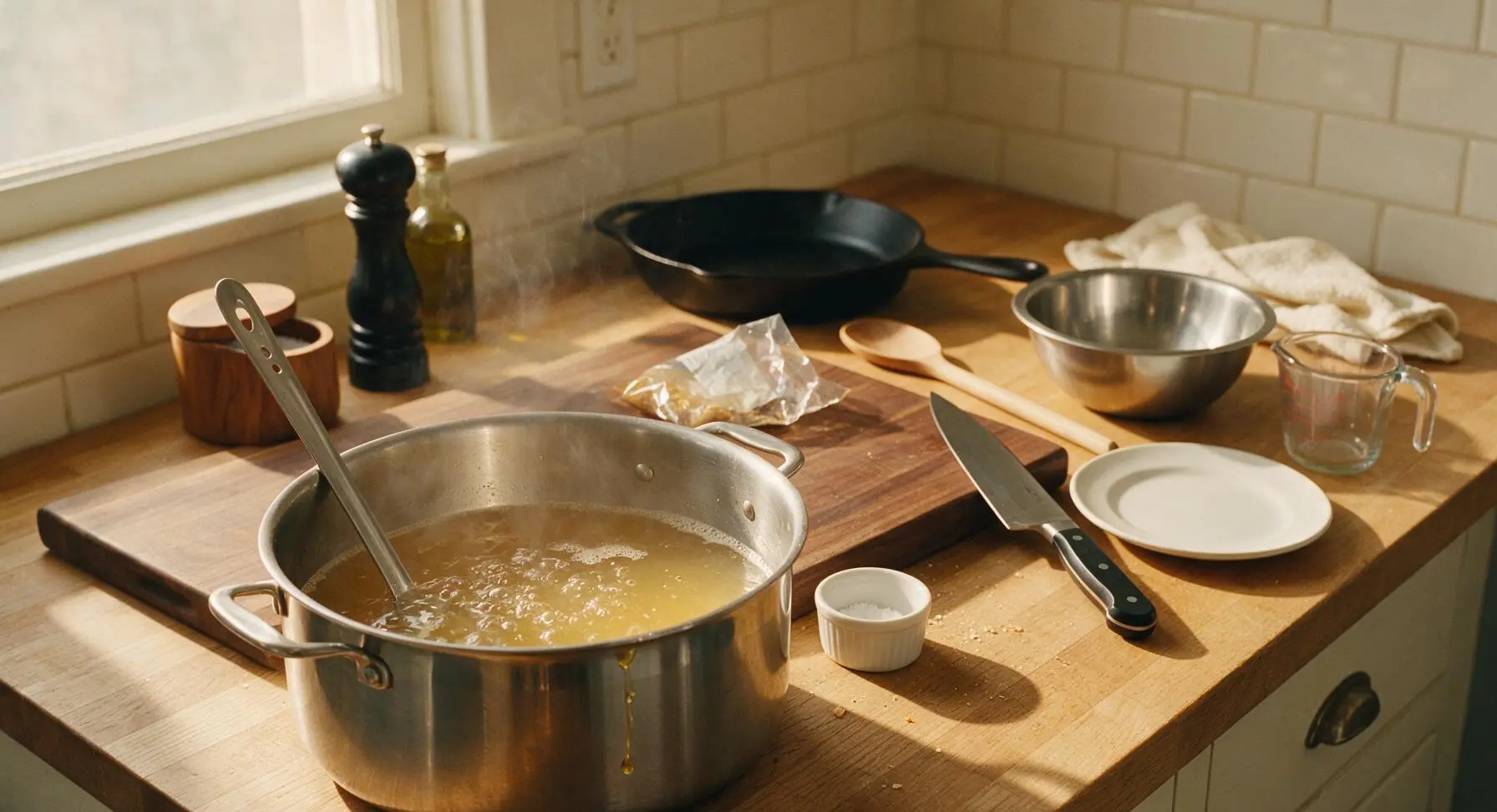
Place the 1-gallon stainless steel brew pot on the stovetop, add 3 quarts (2.8L) of cool filtered water, and bring to a gentle rolling boil (212°F / 100°C). Slowly stir in the full 450g of light dry malt extract and 1/4 tsp gypsum brewing salt with the slotted stainless steel spoon, stirring constantly until the malt is fully dissolved with no clumps remaining. Maintain a gentle, non-boil-over simmer for 30 minutes, adjusting heat as needed to prevent bubbling over. Visual cue: The liquid (called wort) is a pale golden, slightly hazy color, with small steady bubbles breaking across the surface.
Step 3
step3:Boil the Malt Base
4

Add Hops and Citrus

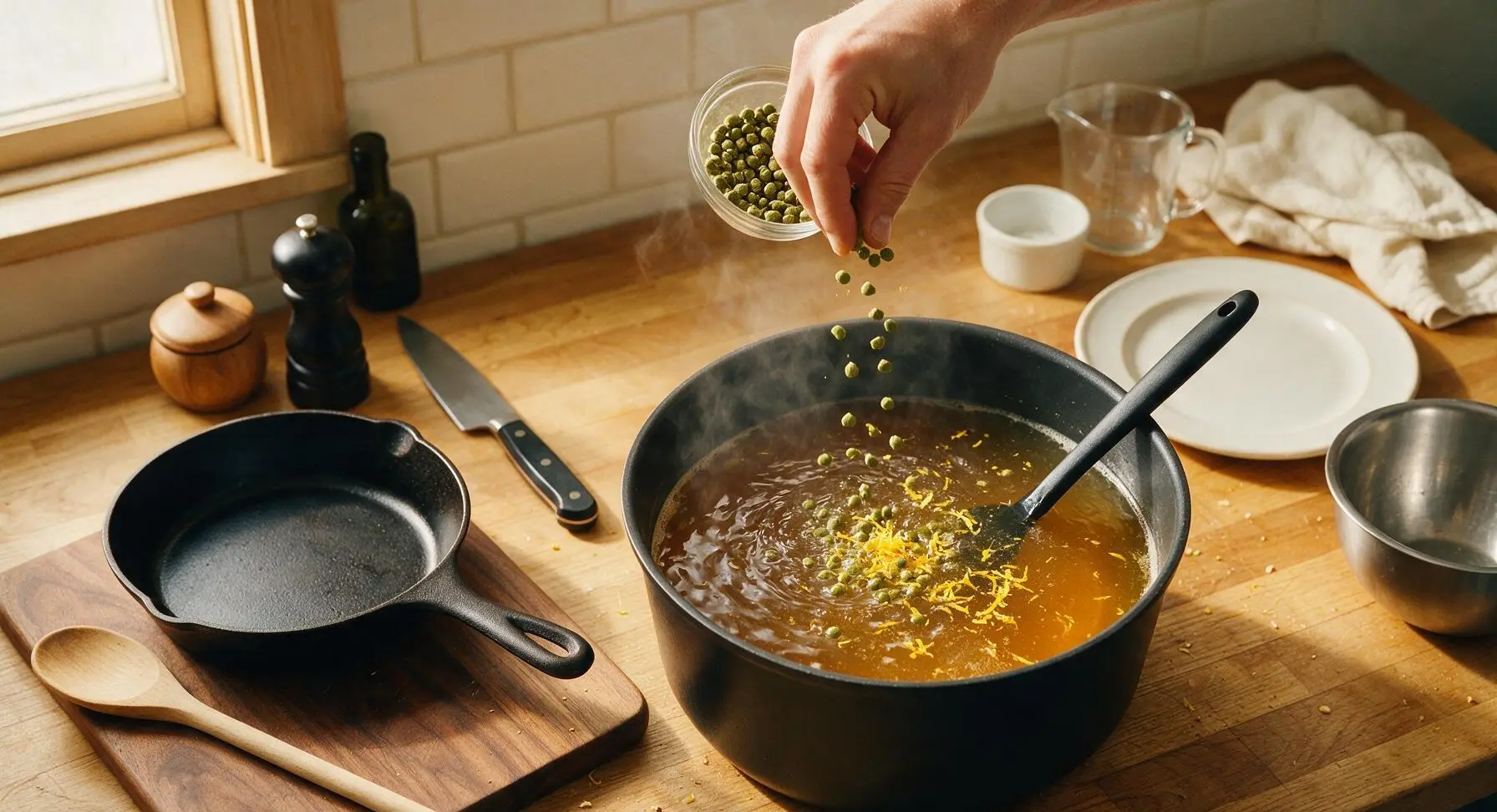
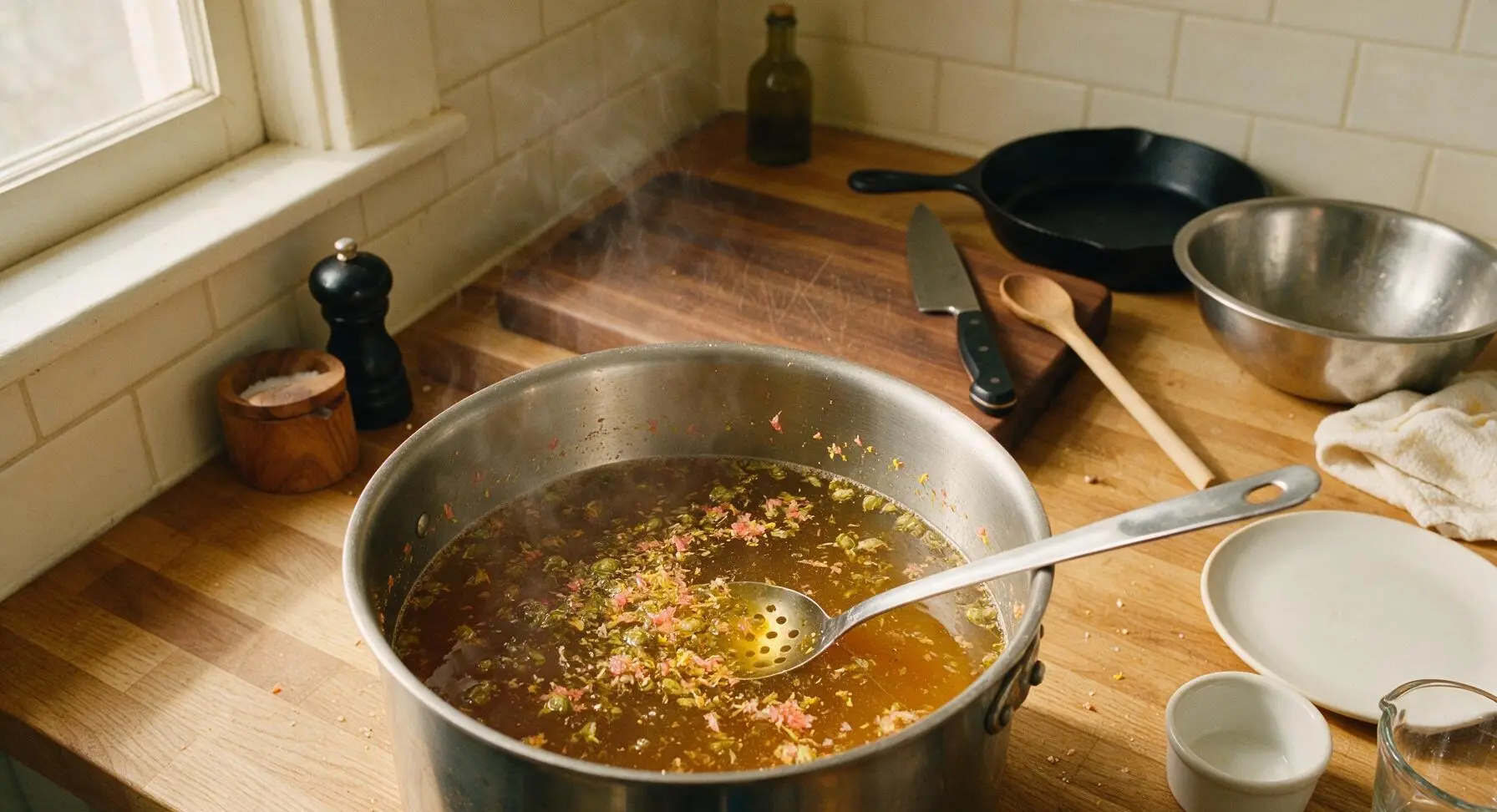
After 30 minutes of boiling, add 21g (0.75oz) of the Cascade hop pellets to the wort, stirring to submerge them. Continue boiling for 10 more minutes, then turn off the heat completely. Immediately stir in the reserved fresh grapefruit zest and 1 cup of strained grapefruit juice, along with the remaining 7g (0.25oz) of Cascade hops. Let the mixture steep for 15 minutes off heat to extract hop aroma and grapefruit flavor without boiling off the delicate citrus oils. Visual cue: The hop pellets break apart in the hot liquid, turning the wort a slightly deeper gold, with bright flecks of grapefruit zest floating on the surface.
Step 4
step4:Add Hops and Citrus
Step 4
step4:Add Hops and Citrus
5

Cool and Pitch Yeast

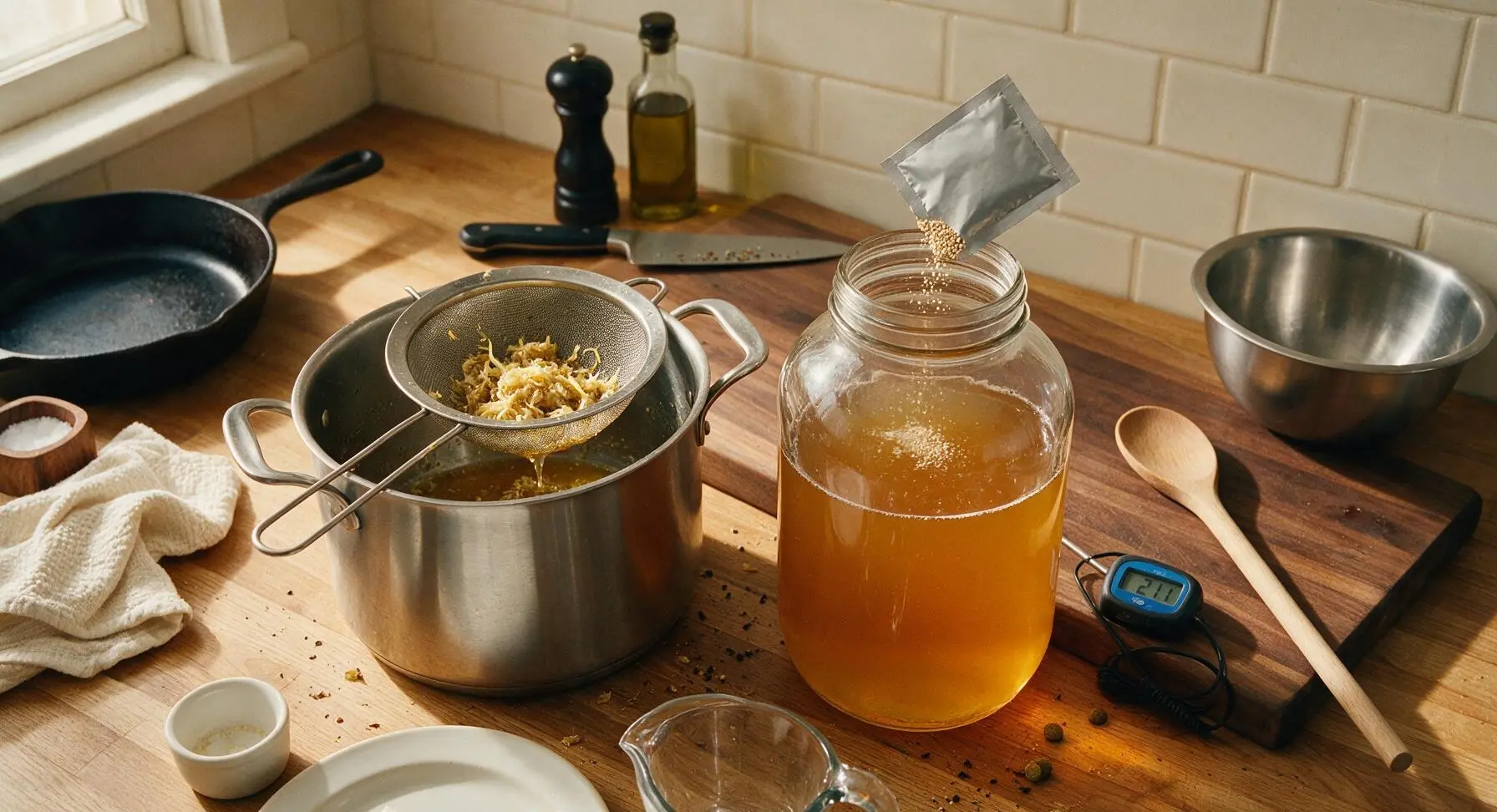
Place the covered brew pot in an ice bath in the sink until the wort cools to 70°F (21°C), measured with the digital thermometer — this takes approximately 20 minutes. Once cooled, pour the wort through the fine mesh strainer into the sanitized 1-gallon glass fermentation jug, leaving any hop sediment and zest bits behind in the strainer. Top the jug off with cool filtered water to bring the total volume to exactly 1 gallon, then sprinkle the full 5g packet of champagne yeast over the surface of the wort. Do not stir.
Step 5
step5:Cool and Pitch Yeast
6

Seal for Fermentation

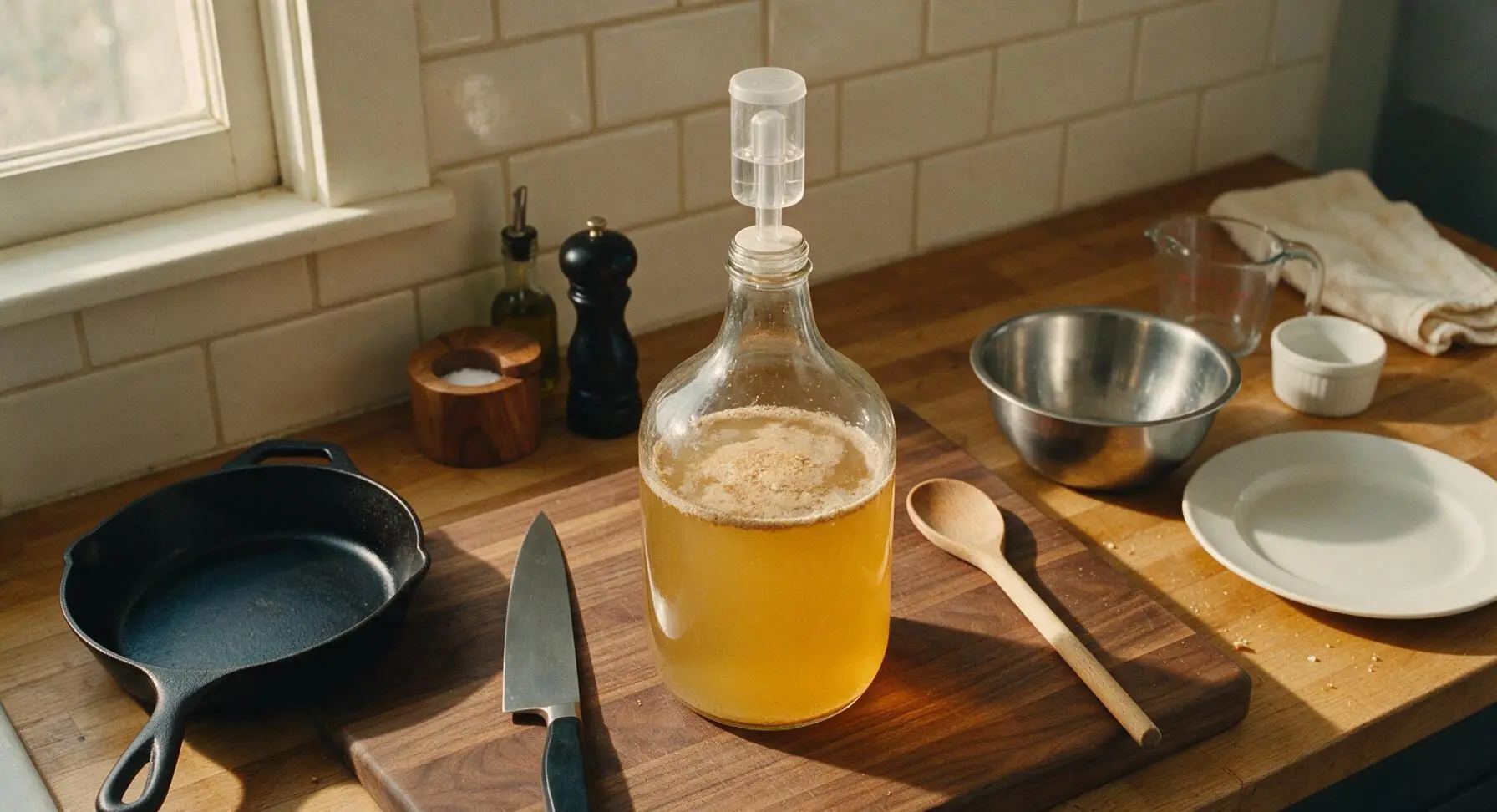
Fit the sanitized 3-piece airlock into the narrow neck of the fermentation jug, filling the airlock halfway with clean sanitizer solution. Move the jug to a cool, dark spot (65-70°F / 18-21°C) away from direct sunlight, and let it ferment for 7 days. Visual cue: After 24-48 hours, small bubbles will rise steadily through the airlock, showing active fermentation; bubbles will slow to one every 30 seconds or less when fermentation is complete.
Step 6
step6:Seal for Fermentation
7

Bottle for Carbonation

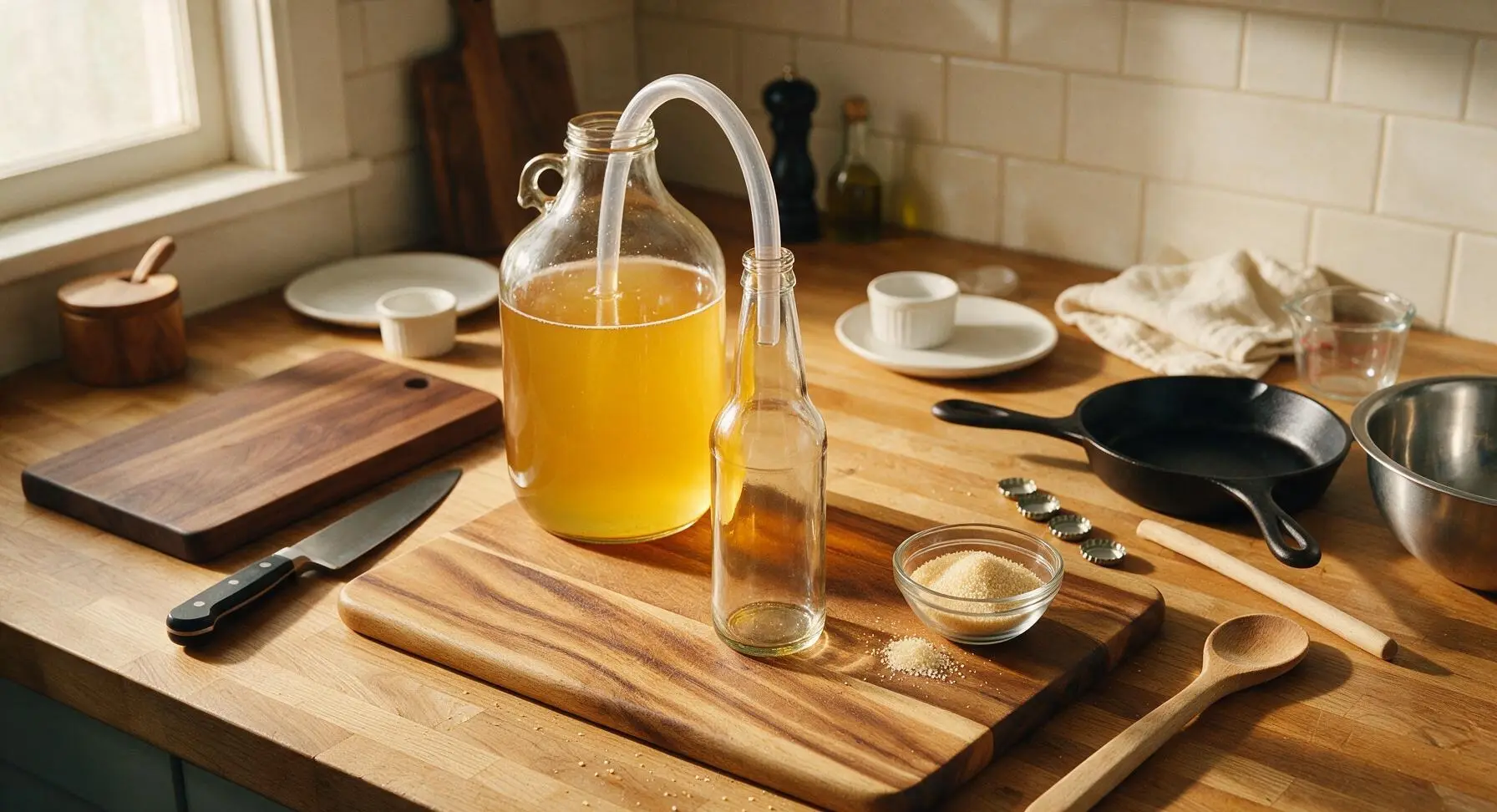
Once fermentation is complete, use the sanitized silicone siphon to transfer the finished beer into sanitized sealable 16oz glass bottles, leaving 1 inch of headspace at the top of each bottle. Add 1/4 tsp of corn sugar to each 16oz bottle to create natural carbonation, then cap bottles tightly. Let bottles condition at room temperature for 10 days to build carbonation, then chill for at least 24 hours before serving. Visual cue: The transferred beer is bright pale gold, with no visible haze or active bubbling when siphoned.
Step 7
step7:Bottle for Carbonation

Tips

1.Avoid scraping the bitter white pith when zesting grapefruit: pith contains harsh, astringent compounds that will make your beer taste unpleasantly sharp and soapy, rather than bright and citrusy. Stop zesting as soon as you see the pale white layer under the colored peel.
2.Add grapefruit juice and zest only after turning off the boil: high, sustained heat destroys delicate citrus essential oils, creating a flat, cooked marmalade flavor instead of the fresh, bright grapefruit zing that defines this style.
3.Never skip sanitizing every surface that touches cooled wort: wild yeast and bacteria from unwashed tools can create sour, moldy, or off-flavors that ruin an entire batch. No-rinse brewer’s sanitizer is inexpensive and requires no extra rinsing, making it ideal for beginners.


✨ You May Also Like

Drinks & Beverages
🍜 Mexico

A bright, balanced tequila-based cocktail with zesty fresh lime, smooth orange liqueur, and a signature salt rim, perfect for warm summer sipping.

⏱️ 5 minutesDrinks & Beverages ★ 4.9
Drinks & Beverages
🍜 United States

Thick, creamy, nostalgic classic vanilla milkshake with a rich, smooth texture, topped with whipped cream and a cherry for cool, sweet refreshment.

⏱️ 5 minutesDrinks & Beverages ★ 4.7
Drinks & Beverages
🍜 United States

A bright, golden strong ale with fruity banana-clove notes, subtle hop spice, and soft carbonation, brewed in classic Trappist Tripel tradition.

⏱️ 2 hours aDrinks & Beverages ★ 4.5
Drinks & Beverages
🍜 United States

A frothy, nostalgic American soda fountain treat pairing bubbly cold root beer with creamy vanilla ice cream, perfect for cooling down at warm weather gatherings.

⏱️ 20 minuteDrinks & Beverages ★ 4.8
Drinks & Beverages
🍜 United States

Tart, funky, effervescent American Wild Ale is a complex fruity craft beer brewed with wild yeast, delivering bright, zesty notes perfect for warm-weather sipping.

⏱️ 2 hours aDrinks & Beverages ★ 4.4
Drinks & Beverages
🍜 United States

Bright, bubbly copycat of the iconic American caramel cola, balanced with citrus and warm spice, perfect for sipping ice-cold on hot days.

⏱️ 15 minuteDrinks & Beverages ★ 4.8

Grapefruit IPA:Frequently Asked Questions

1.Do I need professional-grade brewing equipment to make this homemade grapefruit IPA? ▾
You don’t need fancy commercial gear for this recipe! A standard 5-gallon homebrew starter kit (fermentation bucket, airlock, siphon, food-grade no-rinse sanitizer, bottling wand) works perfectly. The only non-negotiable rule is sanitizing every surface that touches cooled wort or beer to avoid off-flavors or spoiled batches.
2.Why does this recipe call for light dry malt extract instead of liquid malt? ▾
Light dry malt extract is ideal here because it has a long shelf life, consistent sugar content, and produces a crisp, clean pale base that lets Cascade hops and bright grapefruit shine, without the heavy, bready sweetness darker or liquid extracts can add. It’s also easier to measure and store for beginner brewers.
3.Can I use regular grocery store grapefruit instead of Ruby Red for this recipe? ▾
You can technically use other grapefruit varieties, but Ruby Red is strongly recommended for its signature balance of bright, sweet-tart juice and aromatic, less-bitter pith than standard white or pink grapefruit. Other varieties can lean overly sour or have harsh, astringent notes that throw off the beer’s smooth balance.
4.What does gypsum brewing salt do in this grapefruit IPA? ▾
Gypsum (calcium sulfate) serves two key purposes here: first, it adjusts soft water to match the crisp, mineral-forward profile classic West Coast IPAs are known for, and second, it accentuates the bright piney bite of Cascade hops and zing of grapefruit, while cutting dull, cloying sweetness from the malt.
5.Why use Champagne brewing yeast instead of standard ale yeast for this recipe? ▾
Champagne yeast is a fantastic pick here because it ferments clean and dry, with none of the fruity, estery notes many ale yeasts produce that would compete with fresh grapefruit and Cascade hop flavor. It also has high alcohol tolerance, so it won’t stall out before reaching the crisp, light body this summer sipper needs.
6.When is the best time to add grapefruit to the batch to get the best flavor? ▾
Add sanitized fresh grapefruit zest and juice during the last 5 minutes of the boil for bright, integrated citrus, or add it to the secondary fermenter 3-4 days before bottling for brighter, fresher, less cooked-tasting grapefruit notes. Avoid adding it too early in fermentation, as volatile citrus aromas will blow off with released CO2.
7.How do I avoid getting bitter, soapy pith flavor from the grapefruit? ▾
When prepping your grapefruit, only zest the thin, bright outer colored layer of the peel, stopping as soon as you hit the white, spongy pith underneath. That pith is loaded with harsh, astringent tannins that create that unpleasant soapy bitterness, so take your time zesting, and leave all white material out of your brew.
8.Can I substitute Cascade hop pellets with a different hop variety if I can’t find them? ▾
Cascade is perfect here for its classic piney, grapefruit-kissed hop profile, but you can substitute it with Centennial, Citra, or Amarillo pellets in a pinch if needed. Stick to hops with bright citrus and pine notes, and avoid earthy, floral, or spicy hops that will clash with the fresh grapefruit character.
9.How long does this grapefruit IPA need to ferment before it’s ready to drink? ▾
Plan for a total of about 3 weeks from brew day to first sip: primary fermentation with Champagne yeast takes 7-10 days at a steady 65-70°F, then 10-14 days of bottle conditioning at room temperature to build carbonation. You can age it an extra week for smoother, more integrated flavor if you have patience.
10.What ABV should I expect from this homemade grapefruit IPA? ▾
When brewed to the recipe specs with light dry malt extract and Champagne yeast, you’ll land right around 5.5-6% ABV, which is perfectly sessionable for summer gatherings. It’s strong enough to have noticeable hop and malt backbone, but light enough to sip a couple over an afternoon barbecue without feeling heavy.
11.Do I need to pasteurize my grapefruit before adding it to the fermenter? ▾
You don’t need to fully pasteurize it, but you do need to sanitize the whole grapefruit peel thoroughly before zesting or juicing to avoid introducing wild bacteria or mold that can spoil your batch. A quick wipe with no-rinse brewer’s sanitizer, or 30-second dip in boiling water, works perfectly to kill surface contaminants.
12.Why does my first post-fermentation sample taste overly bitter, and will that mellow out? ▾
Harsh, sharp bitterness right after primary fermentation is totally normal! Young IPAs often have raw, unbalanced hop bite that softens dramatically during bottle conditioning as flavors meld. Give it the full 2 weeks of conditioning time at room temp, and that sharp bite will round out into smooth, balanced pine and citrus bitterness.
13.Can I make a non-alcoholic version of this grapefruit IPA? ▾
You absolutely can! Swap the Champagne yeast for a non-alcoholic brewing yeast strain that stops fermenting at <0.5% ABV, cut the light dry malt extract by 70%, and add extra grapefruit zest and Cascade hop steep post-ferment to amp up flavor. You’ll get the same bright, zesty, hoppy profile without the alcohol for sober guests.
14.How much carbonation should this grapefruit IPA have, and how do I hit that level? ▾
Aim for medium-high carbonation, about 2.4-2.6 volumes of CO2, which matches the crisp, bubbly bite of commercial craft IPAs. To hit that, add 4 ounces of corn sugar to your 5-gallon batch right before bottling—this gives residual yeast just enough sugar to create perfect, spritzy carbonation without over-fizzing.
15.How long will bottled homemade grapefruit IPA stay fresh? ▾
When stored in a cool, dark place away from direct sunlight and temperature swings, your bottled IPA will stay fresh and hoppy for about 3-4 months. After that, the bright pine and citrus hop notes will start to fade, and the beer will develop dull, papery off-flavors, so drink it within that window for peak taste.
16.What’s the best serving temperature for this grapefruit IPA? ▾
Serve it chilled to 40-45°F, which is just a touch warmer than standard fridge cold. That temperature is cold enough to feel crisp and refreshing on hot summer days, but warm enough to let the bright Cascade pine aroma and fresh Ruby Red grapefruit notes come through, instead of muting flavor like ice-cold temps do.
17.I only have whole Cascade hops instead of pellets—will that work for this recipe? ▾
Whole Cascade hops work great, you’ll just need to use about 10% more by weight than the recipe calls for pellets, since whole hops are less dense and absorb more wort during the boil. Use a fine mesh hop bag to contain them during the boil to make siphoning easier later, and you’ll get the same great piney, citrusy hop flavor.
18.My airlock stopped bubbling after just 3 days of fermentation—does that mean something went wrong? ▾
That’s totally normal with Champagne yeast! It’s a very fast, aggressive fermenter that often finishes converting sugar to alcohol in 3-5 days, rather than the 7-10 days many ale yeasts take. Wait a full 7 days total before bottling to let sediment settle, and take a hydrometer reading to confirm fermentation is done to avoid bottle bombs.
19.Can I add extra grapefruit for a more intense citrus flavor? ▾
You can add up to 2 extra Ruby Red grapefruits worth of zest and juice in secondary fermentation for bolder citrus, but don’t go overboard. Too much grapefruit can add excess astringent pith flavor, throw off the sugar balance, and make the beer taste like tart grapefruit soda instead of a balanced, hoppy IPA. Taste as you go to adjust.
20.What food pairs best with this homemade grapefruit IPA? ▾
Its bright bitterness and zesty citrus cut through rich, fatty foods perfectly, so it pairs amazingly with grilled burgers, spicy shrimp tacos, smoked chicken, or salty potato chips at summer cookouts. It also works beautifully with sharp cheddar cheese or citrus-glazed grilled salmon to match its bright, fresh flavor profile.

Comments (4)

3 days ago

Tried this recipe last night for my husband’s homebrew club meetup and it was a HIT! The grapefruit flavor is so bright without tasting like fake candy, which is my biggest pet peeve with citrus IPAs. Cook time took me a little over an hour and a half total, mostly because I messed around with zesting a little extra, but that’s on me. Medium difficulty rating is totally fair—you don’t need super fancy equipment to pull this off. SO good, already have a second batch fermenting!

2 days ago

Wait did you use white grapefruit or ruby red? I only have ruby red on hand and don’t wanna make a trip to the store if it works!

yesterday

Hi Carol! Both varieties work great, but ruby red will give you a slightly sweeter, more floral citrus note—perfect if you prefer a less tart finish. Just taste as you add the zest and juice so you don’t overdo it! So glad you loved the batch, Jake!

1 week ago

I was worried this would be too complicated to squeeze into my Sunday meal prep schedule, but 1 hour 20 minutes was totally doable! My younger kids even helped me zest the grapefruits (we made a tiny mess, worth it). We cracked open the first bottle last night with our taco dinner, and my husband said it tastes way better than the fancy IPA we usually buy at the liquor store. My oldest, who’s 22 and a total beer snob, even snuck a sip and asked for a bottle to take back to his apartment! Game changer for weekend treats.

5 days ago

Love that you got the younger kids involved in the prep! Zesting is such a fun, easy task for little helpers (mess and all). That compliment from your 22-year-old beer snob is the highest praise there is! So stoked it paired so well with taco night—grapefruit IPA is our go-to with spicy food too.

yesterday

Pretty solid recipe overall, I docked one star because I wish the instructions had a clearer note about sanitizing all your brewing equipment ahead of time—my first batch almost got contaminated because I skipped a step. Once I fixed that though? The flavor is unreal. That fresh grapefruit punch hits different than store-bought, for sure. Worth the effort even with the medium difficulty.

2 hours ago

Oh thank you for saying that! I’m about to make this this weekend and I totally would’ve half-assed the sanitizing step too, you just saved my batch!

2 weeks ago

Made this for my friend’s summer potluck a couple weeks ago and people were going back for seconds (and thirds, no shame). I added a tiny extra splash of grapefruit juice at the end for more zing, and it was chef’s kiss. Don’t sleep on this recipe if you’re a fan of crisp, not-too-bitter IPAs. It’s become my go-to bring-along for every cookout now.



