1.Why is 80/20 ground beef recommended over leaner blends for these burgers?
▾
That 20% fat ratio is the secret to juicy, deeply flavorful patties that don’t dry out during high-heat searing. Leaner blends like 90/10 produce tough, crumbly, bland burgers because there’s not enough fat to baste the patty as it cooks, robbing you of that iconic rich, beefy bite everyone expects from a classic cookout burger.
2.When should I salt my burger patties to keep them as juicy as possible?
▾
Salt your patties right before you put them on the hot cooking surface, not hours ahead of time. Salting ground beef more than 10–15 minutes before cooking draws out moisture, breaks down meat proteins, and leaves you with a dense, sausage-like texture instead of a tender, juicy patty. Use a generous pinch of kosher salt on each side for even, well-rounded flavor.
3.Why do my homemade burger patties shrink so much when I cook them?
▾
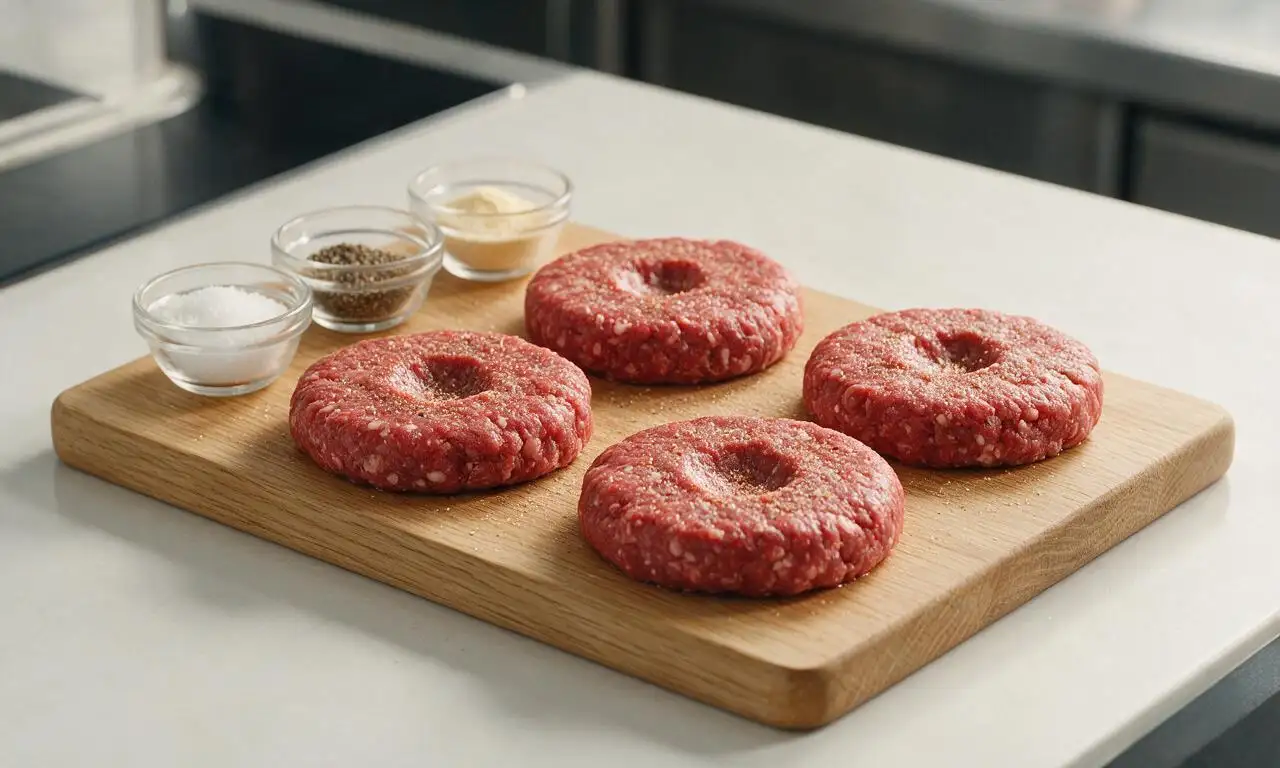
Shrinkage usually stems from two common mistakes: overworking the meat when forming patties, and cooking on too-low heat. Form patties about ½ inch wider than your brioche buns (they’ll shrink as they cook), press a small thumb dimple in the center of each, and cook on high heat to set the exterior fast so patties hold their shape.
4.Should I press down on my burger patties while they’re searing?
▾
Skip the constant spatula press! Pressing down on sizzling patties squeezes out all that delicious, fat-rich juice you worked hard to keep inside, leaving you with a dry, less flavorful burger. The only acceptable light press is right when you set the patty on the heat to ensure full, even contact with the cooking surface for a uniform, crisp sear.
5.What’s the best way to toast brioche hamburger buns for these burgers?
▾
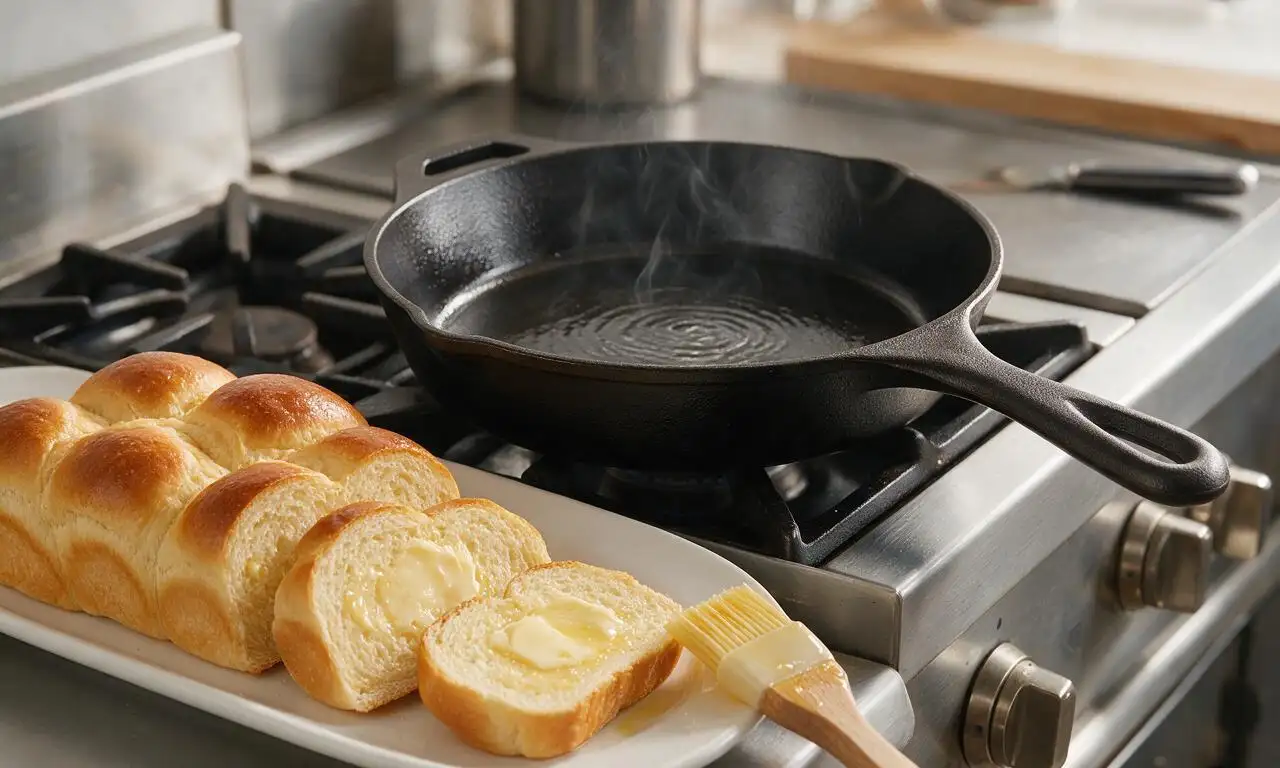
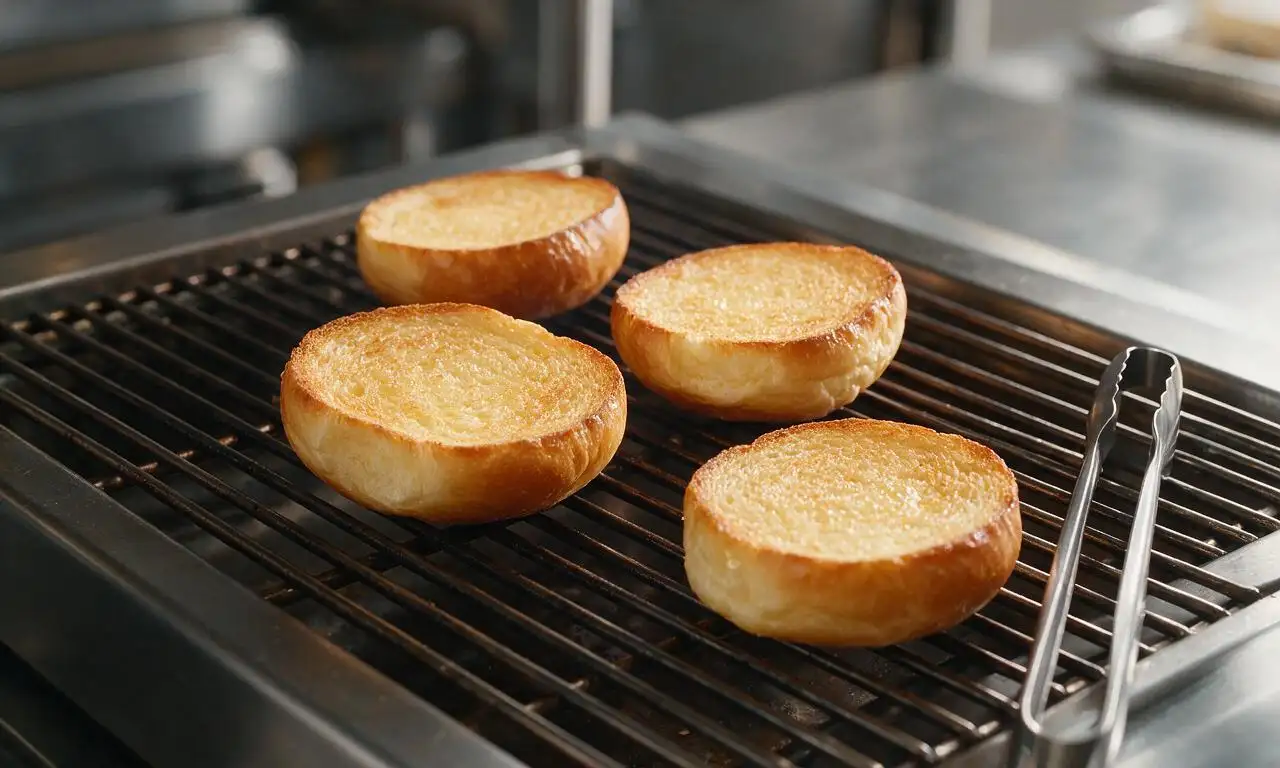
Melt a little unsalted butter in a skillet or on your grill grates over medium heat, then place the cut side of the brioche buns down on the warm surface for 30–45 seconds, until they’re lightly golden and slightly crisp at the edges. Toasted buns hold up to juicy patties and condiments without getting soggy, and the buttery flavor pairs perfectly with beef and cheddar.
6.Why use sharp cheddar instead of mild cheddar or other cheese slices?
▾
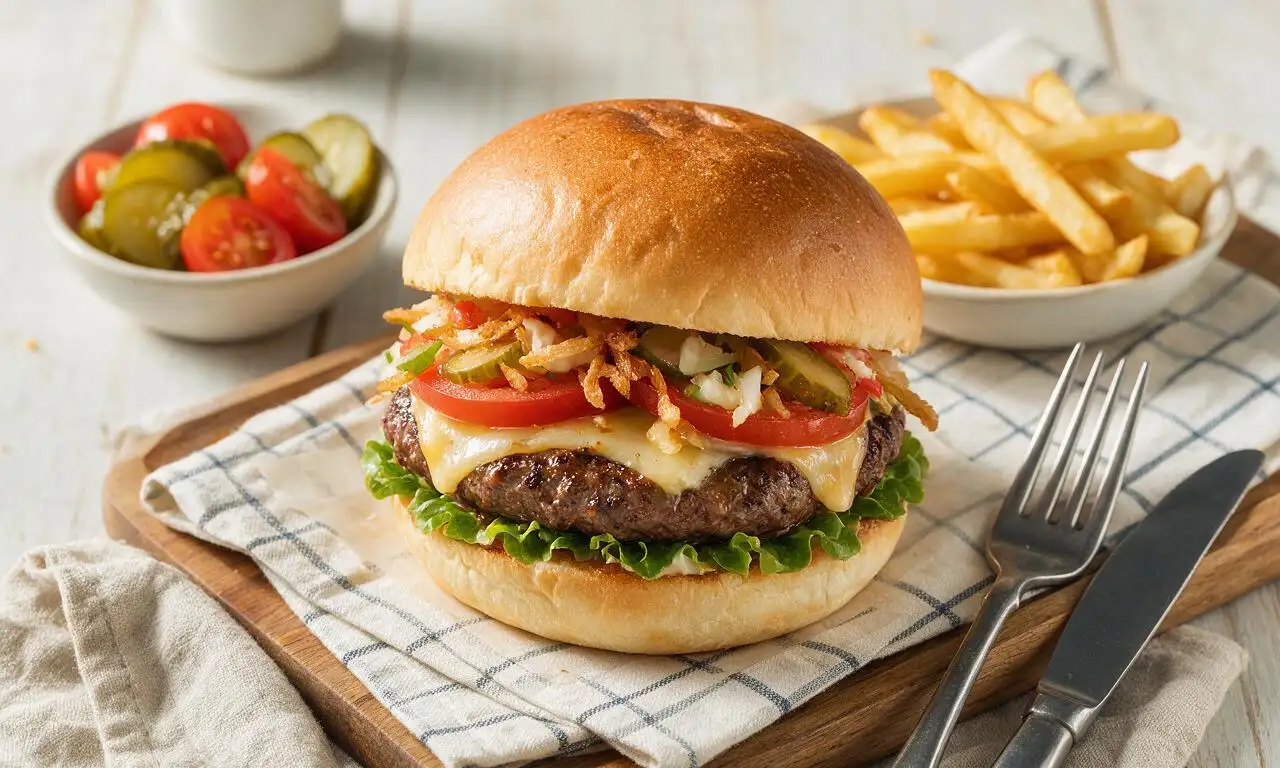
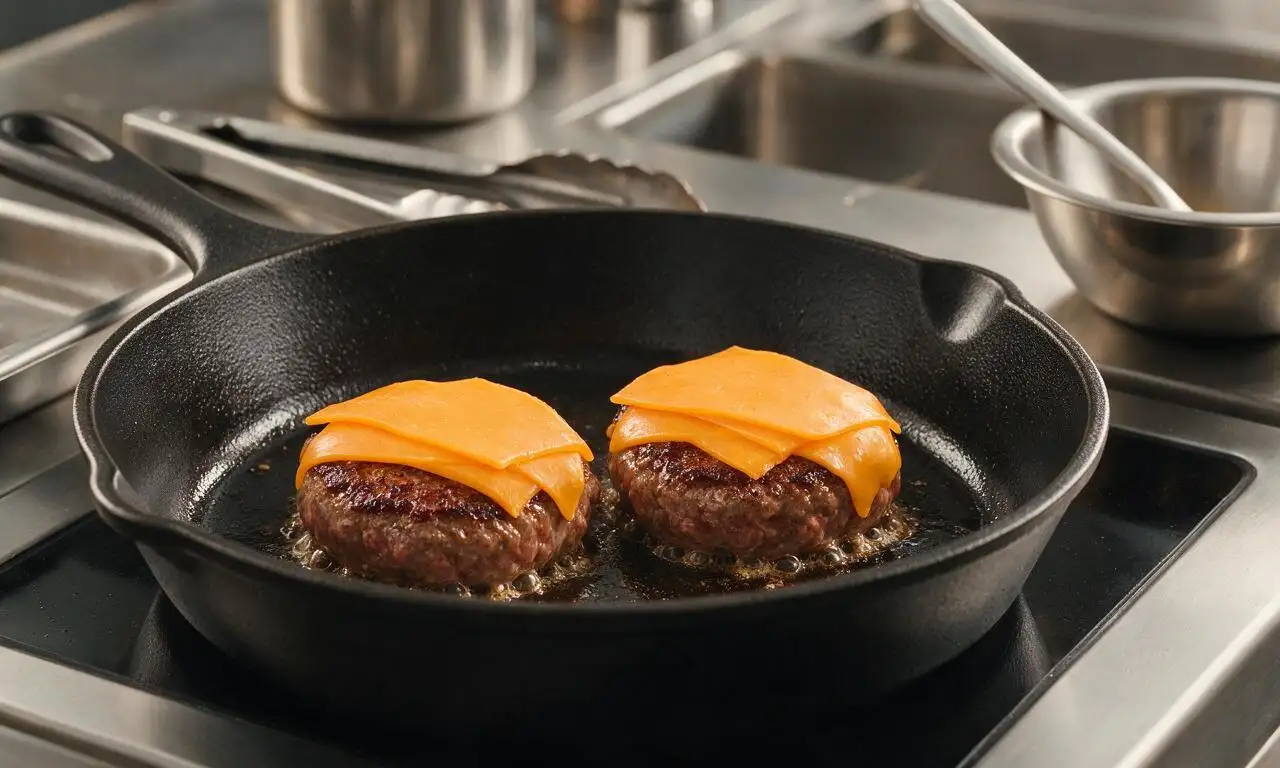
Sharp cheddar has a tangy, bold, nutty flavor that cuts through the rich, fatty beef and buttery brioche bun without getting lost, unlike milder cheeses that taste bland next to a seared patty. It also melts smoothly into that perfect gooey layer over the patty when added in the last minute of cooking, for that classic cheeseburger cheese pull.
7.How do I get the cheese to melt perfectly over my burger patties?
▾
Add a slice of sharp cheddar to each patty during the last 60–90 seconds of cooking, then add a tiny splash of water to the cooking surface next to the patty and cover the pan or grill with a lid. The trapped steam will melt the cheese evenly all the way to the edges, so you get smooth, gooey coverage instead of partially melted, cold cheese.
8.Is it bad to overmix or overwork the ground beef when forming patties?
▾
Absolutely—overworking ground beef by kneading it too much or packing patties super tight creates a dense, tough, almost rubbery texture once cooked. Gently form the beef into loose, ¾-inch thick patties with minimal handling, just enough that the meat holds together, for that tender, satisfying bite that makes a great homemade burger.
9.What internal temperature should I cook my burgers to for safety and ideal juiciness?
▾
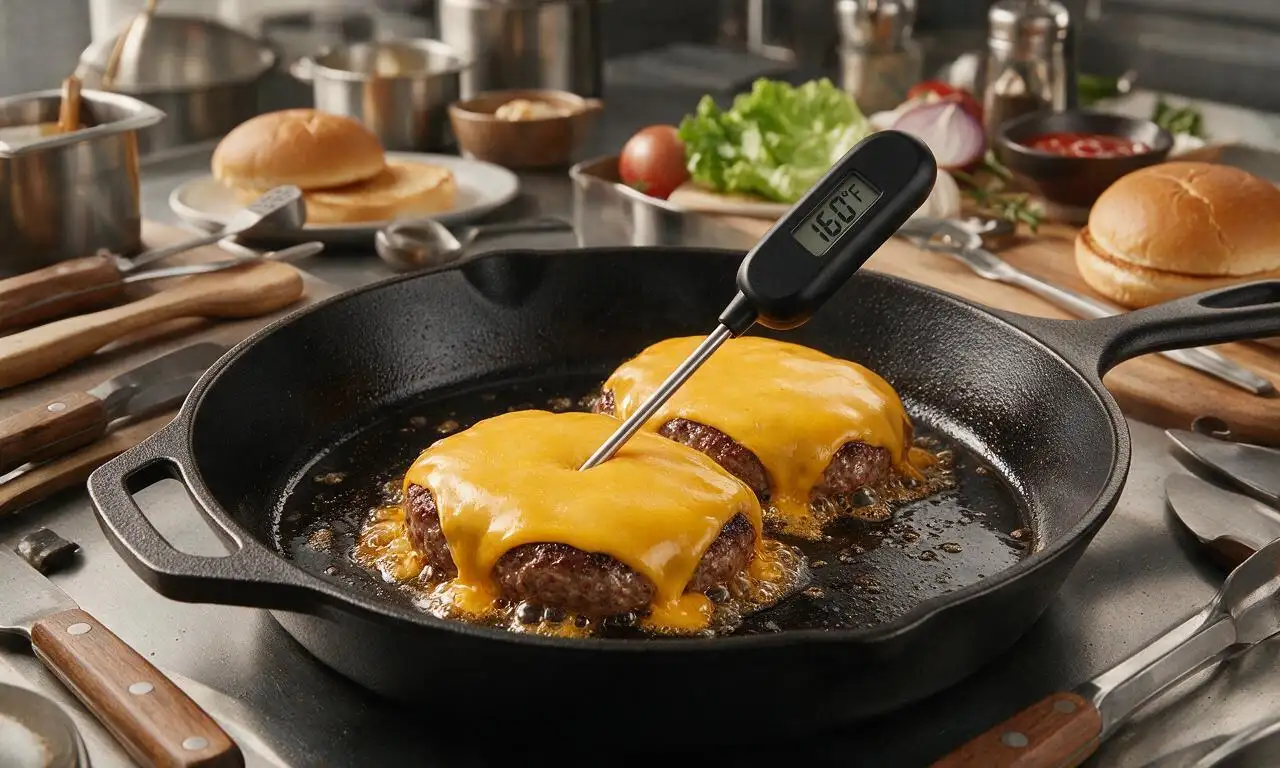
The USDA recommends cooking ground beef to a minimum internal temperature of 160°F, measured at the thickest part of the patty, for full food safety. If you prefer a medium burger with a pink, juicy center (135–140°F), use freshly ground, high-quality 80/20 beef from a trusted source, and let patties rest 3 minutes after cooking.
10.Why do you recommend unsalted butter instead of salted butter for this recipe?
▾
Unsalted butter lets you control exactly how much salt goes into your burger, so you don’t end up with overly salty buns or patties from the added salt in regular salted butter. It also has a fresher, sweeter cream flavor that doesn’t compete with the savoriness of the beef, tangy cheddar, and crisp fresh toppings, so every component tastes balanced.
11.How do I keep my burger buns from getting soggy once I assemble the burger?
▾
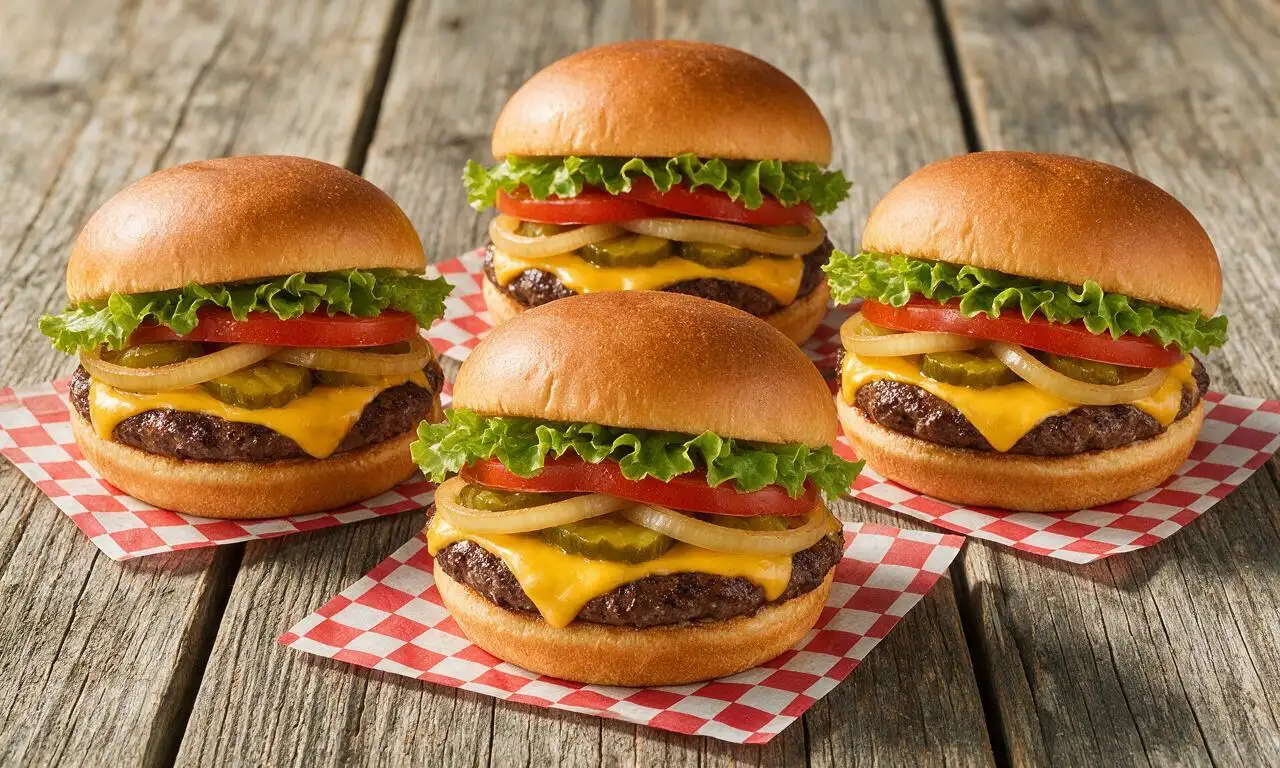
Beyond toasting the cut sides of your brioche buns, build a simple moisture barrier between the juicy patty and soft bun: spread a thin layer of mayo, softened butter, or a slice of cheese on the bottom bun before adding toppings. This water-resistant layer keeps patty juices and condiment moisture from soaking into the bun before your first bite.
12.Can I form the burger patties ahead of time for a summer cookout?
▾
You absolutely can! Form your loose 80/20 beef patties, stack them between squares of parchment paper, and store them in an airtight container in the fridge for up to 24 hours before your cookout. Just hold off on salting them until right before you throw them on the grill, and let them sit at room temp for 15 minutes so they cook evenly.
13.Why is kosher salt better than regular table salt for seasoning these burgers?
▾
Kosher salt has larger, flakier crystals that are easier to pinch and distribute evenly across the surface of your patties, so you get consistent, well-seasoned flavor in every bite instead of random salty spots. Table salt is much denser, so it’s easy to over-salt if you swap it in equal measure, and it can leave a harsh, metallic aftertaste on seared beef.
14.Do I need to add breadcrumbs, eggs, or other binders to my burger patties?
▾
Skip the binders for a classic juicy burger! Those ingredients are for meatloaf, not classic seared burgers—they make patties dense, bready, and take away from that pure beefy flavor. Your 80/20 ground beef will hold together perfectly on its own as long as you don’t overwork it, no eggs or breadcrumbs required.
15.What’s the best way to get that crispy, dark sear on the outside of my patties?
▾
Make sure your cooking surface—whether a cast iron skillet, griddle, or grill grates—is ripping hot before you add the patties, and don’t overcrowd the pan. Cook the patties undisturbed for 3–4 minutes on the first side before flipping, so the surface has time to develop that deep, caramelized, flavorful crust without sticking.
16.Should I let my burger patties rest after cooking, like I do with steak?
▾
Yes! Let your cooked, cheese-topped patties rest for 2–3 minutes on a clean plate after you pull them off the heat. This gives the juices inside the patty time to redistribute, so they don’t all run out onto your plate or bun the second you take a bite, which would leave you with a dry patty and a soggy mess.

OMG these were SO good! I made these for our Sunday family dinner last night and my kids loved it — even my super picky 7 year old asked for seconds! The tip about not overworking the meat is a total game changer, no more tough dry burgers for us. Will 100% be adding this to our regular meal prep rotation.
Super easy recipe that came together in literally no time on a busy weeknight. Cook time was spot on 25 minutes total, which was perfect for me since I only had a half hour between getting home from work and taking my kid to soccer practice. The only tweak I made was adding a little extra garlic powder because we’re garlic obsessed over here.
Brought these to our neighborhood block party potluck last weekend and people were asking me for the recipe all night! I made sliders instead of full size patties and they were gone in 10 minutes flat. No sad, overcooked hockey pucks here — so juicy even without a ton of fancy toppings.
Okay I’m literally the worst at cooking, like I burn toast half the time, and I still managed to make these turn out almost perfect? I was so nervous I’d mess them up for my boyfriend’s birthday cookout but everyone raved about them. The tip to make a little dimple in the middle of the patty so it doesn’t puff up? Total genius. Only thing I wish was included was a tip for when to add the cheese so it melts just right!
Made these after a long day hike last weekend and they hit SO hard. We cooked them on our little camp grill and they were even better than the burger joint we stop at on the way to the trailhead. Skip the fast food, make these at home (or at camp!) you won’t regret it.