
Hefeweizen (American)
intro
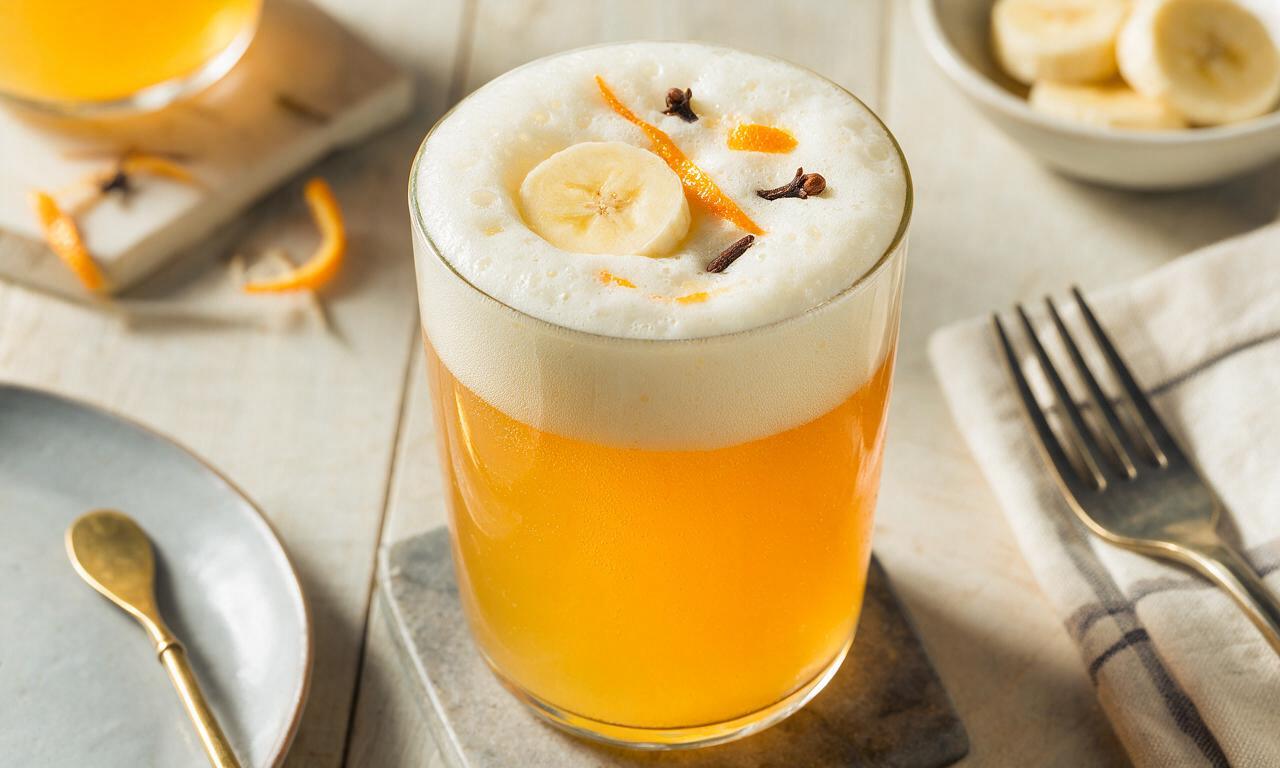
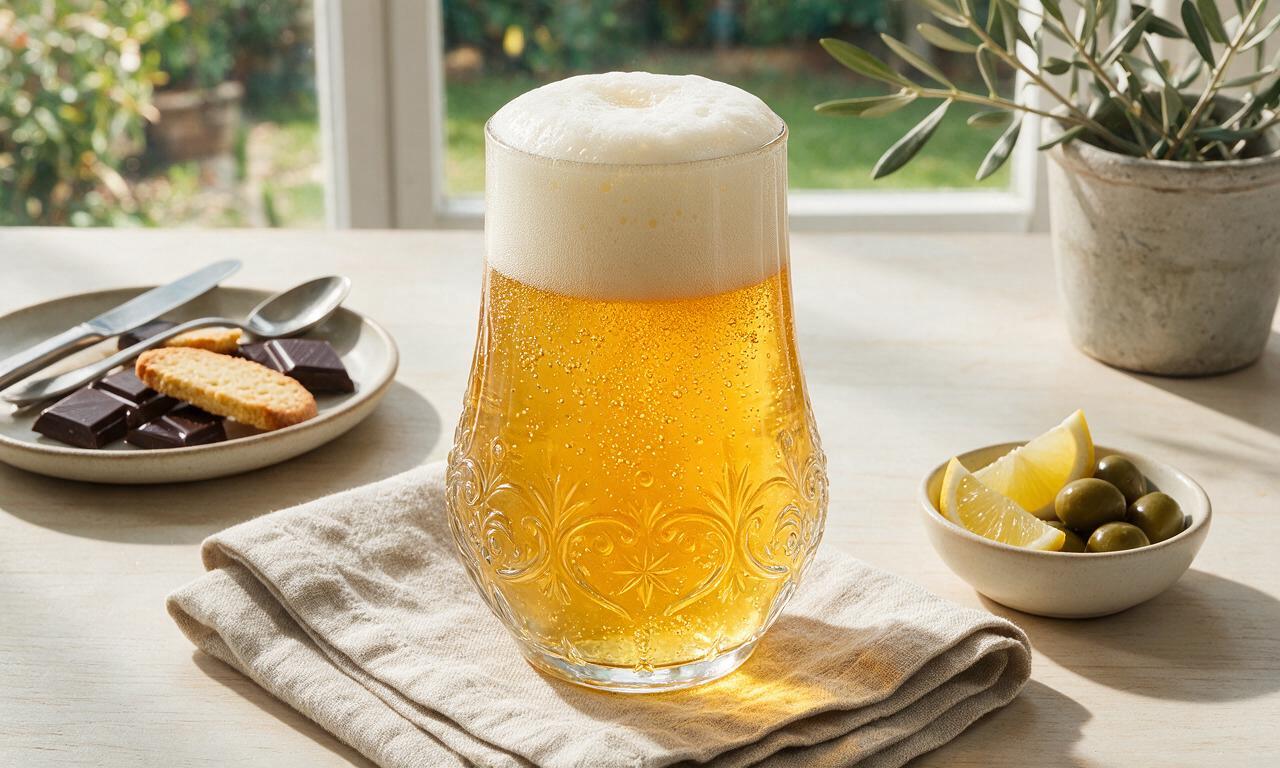
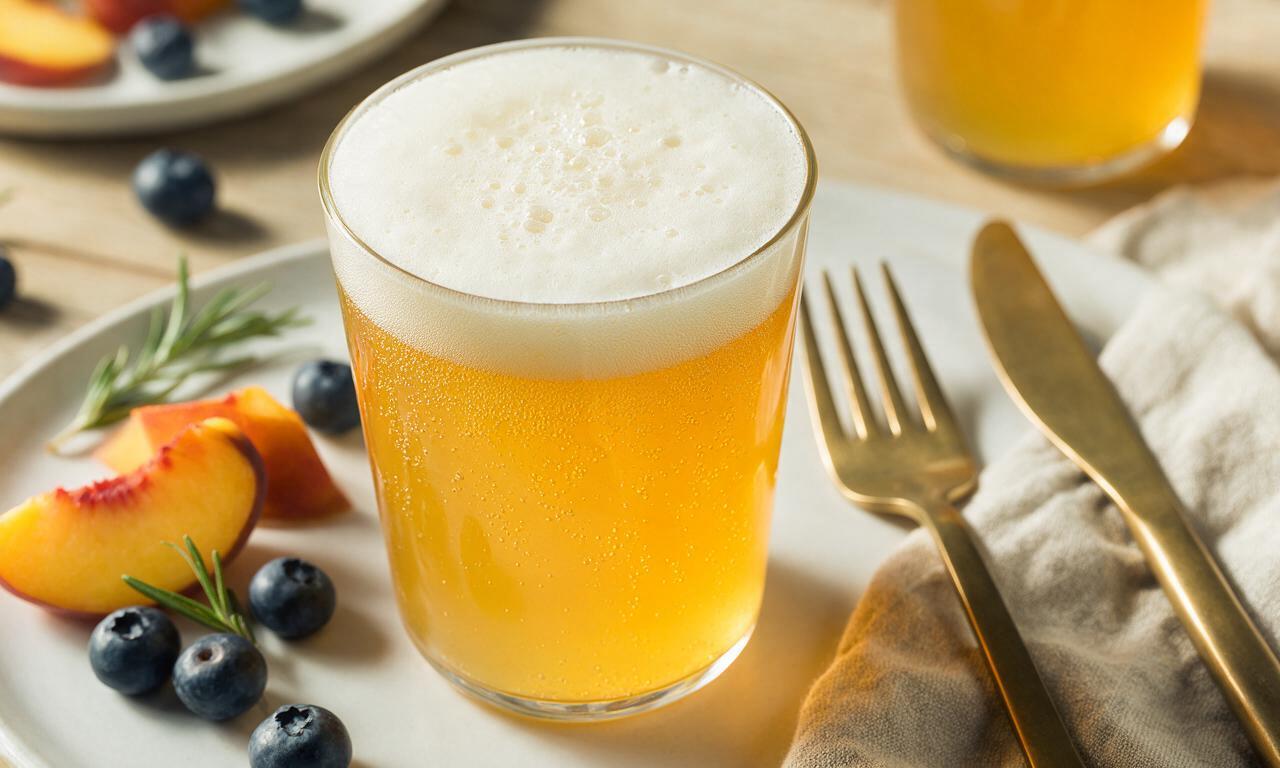
Unfiltered, fruity American hefeweizen, with bright citrus, soft banana, and clove notes, a refreshing summer craft beer adapted from classic German wheat beer styles.
Ingredients
Steps
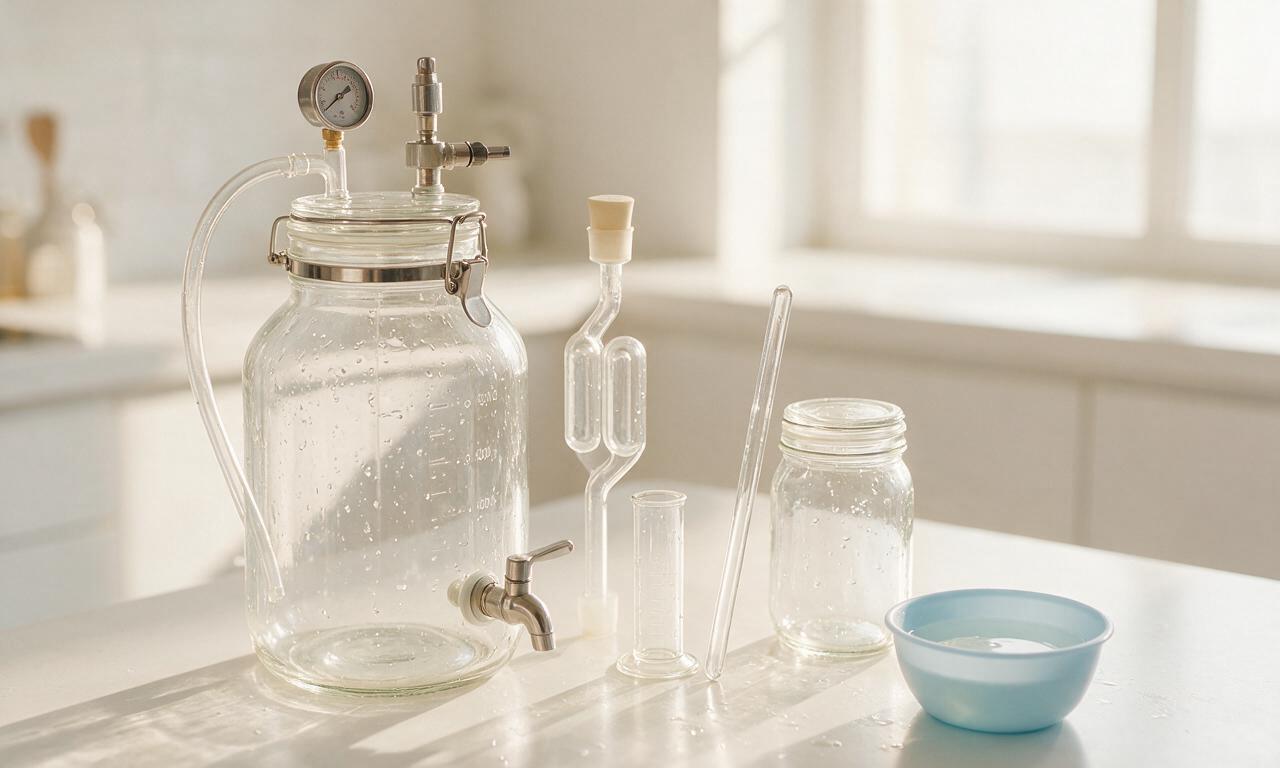
First, fully sanitize all homebrewing equipment (1-gallon glass fermentation jug, rubber stopper, three-piece airlock, long stainless steel stirring spoon, siphon tube, bottling wand, and 8 swing-top 12-oz glass bottles) with no-rinse food-grade brewery sanitizer, ensuring all surfaces remain wet for a full 60 seconds of contact time to prevent bacterial contamination and off-flavors. Drain excess sanitizer before use.
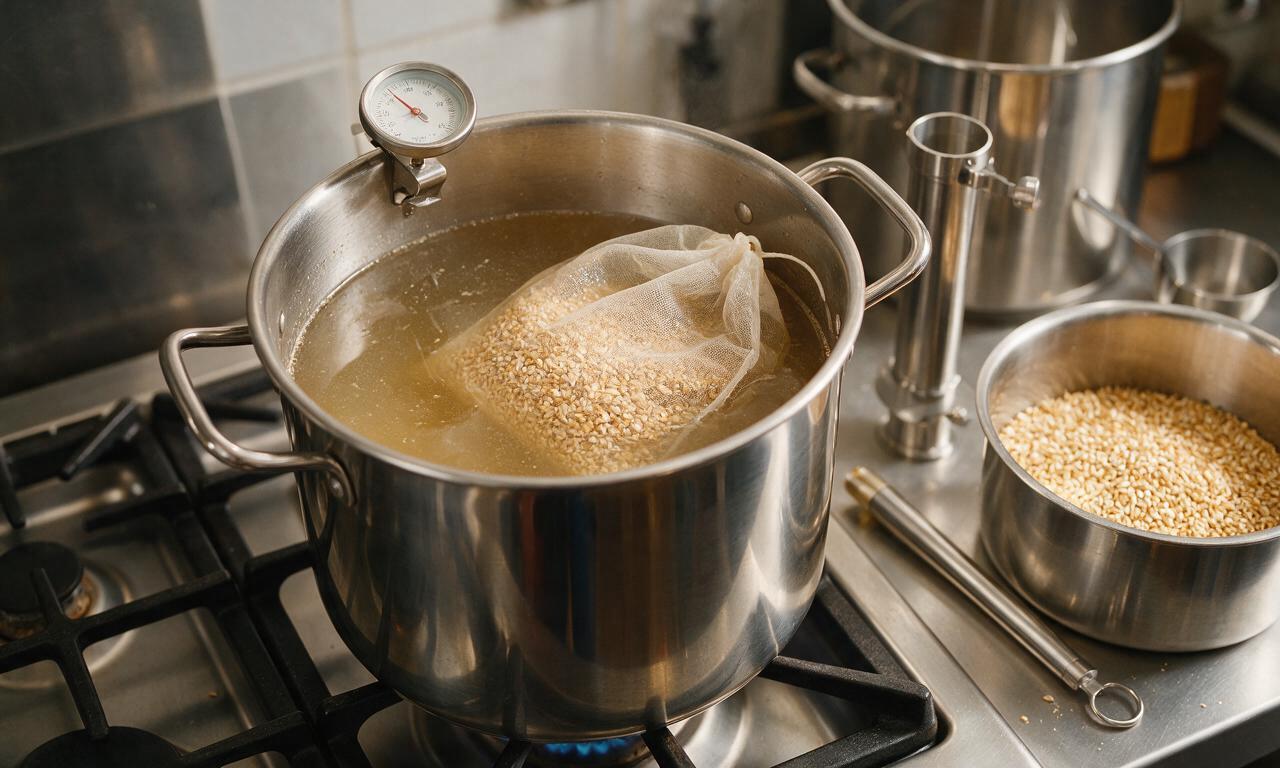
Heat 2 liters (8.5 cups) of filtered water in a 5-liter stainless steel pot over medium-low heat until the water reaches 68°C (155°F), monitored with a clip-on kitchen thermometer. Place the crushed Carapils malt in a fine mesh grain bag, submerge fully in the heated water, cover the pot, and steep for 20 minutes, maintaining a steady temperature between 65-70°C (149-158°F) by adjusting heat as needed. After steeping, lift the grain bag out and let it drain fully into the pot without squeezing the bag.
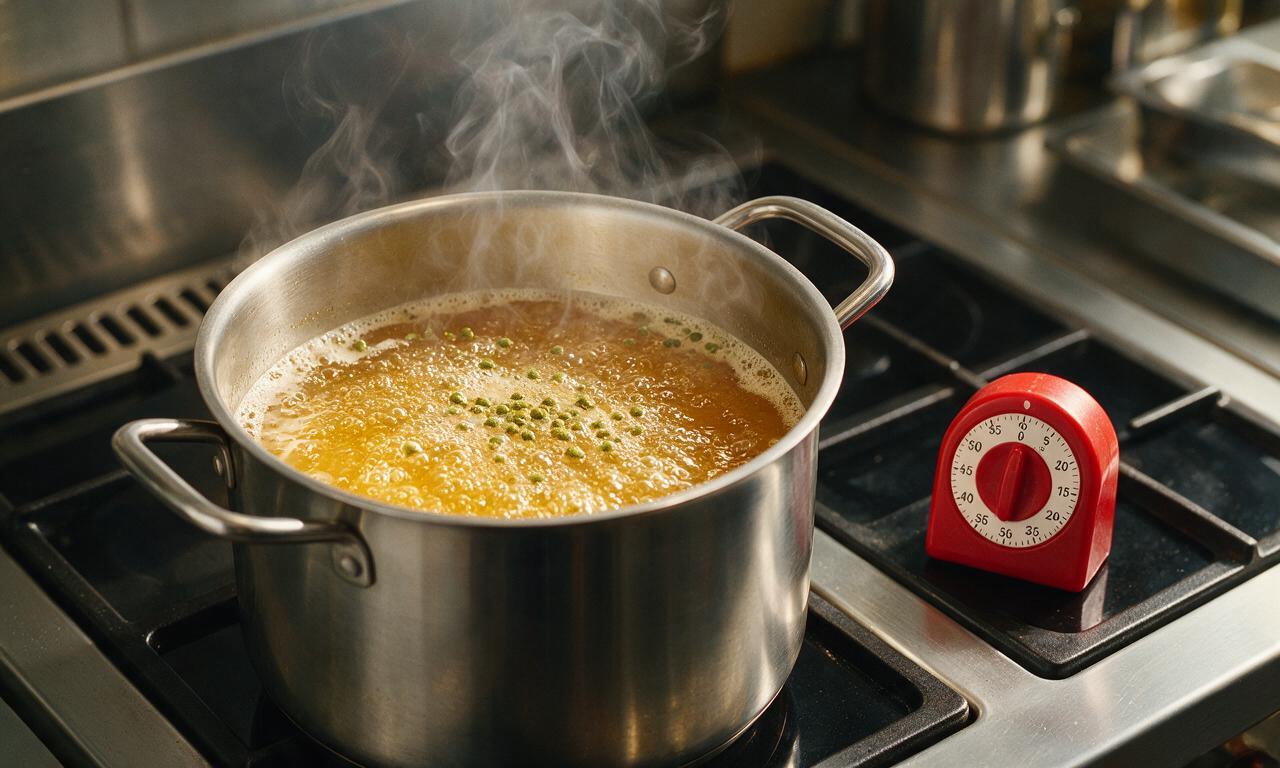
Turn stovetop heat to medium-high to bring the steeped grain water to a gentle rolling boil (100°C/212°F), which takes approximately 8 minutes. Once boiling, stir in the full 454 grams (1 lb) of dry light wheat malt extract until fully dissolved with no clumps, then add 7 grams (0.25 oz) of Cascade hop pellets. Set a kitchen timer for 60 minutes, and maintain a gentle rolling boil by adjusting heat to medium, watching closely to prevent sticky boil-overs. Add the remaining 7 grams (0.25 oz) of Cascade hop pellets during the final 5 minutes of the boil.
When the 60-minute boil finishes, turn off the heat, cover the pot tightly, and set it in a clean kitchen sink filled with ice and cold water to create an ice bath. Cool the wort to 21°C (70°F), which takes roughly 15 minutes, replacing ice as needed to keep the bath cold. Pour the cooled wort into the sanitized 1-gallon fermentation jug, top off with extra filtered water to reach the 3.8 liter (1 gallon) volume mark, seal the jug and shake vigorously for 30 seconds to aerate the wort, then sprinkle the full 11 gram packet of American hefeweizen yeast onto the wort surface. Seal the jug with the sanitized rubber stopper, and fill the airlock halfway with sanitizer solution before inserting it into the stopper.
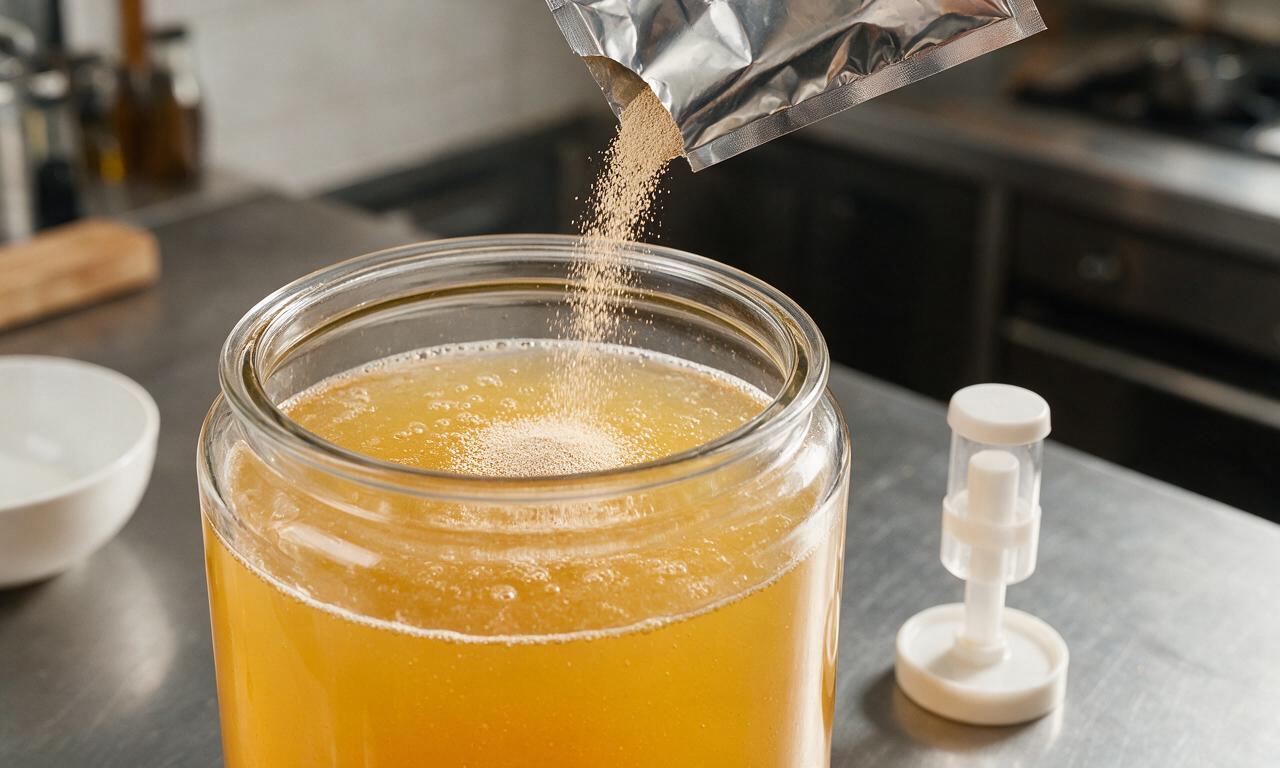
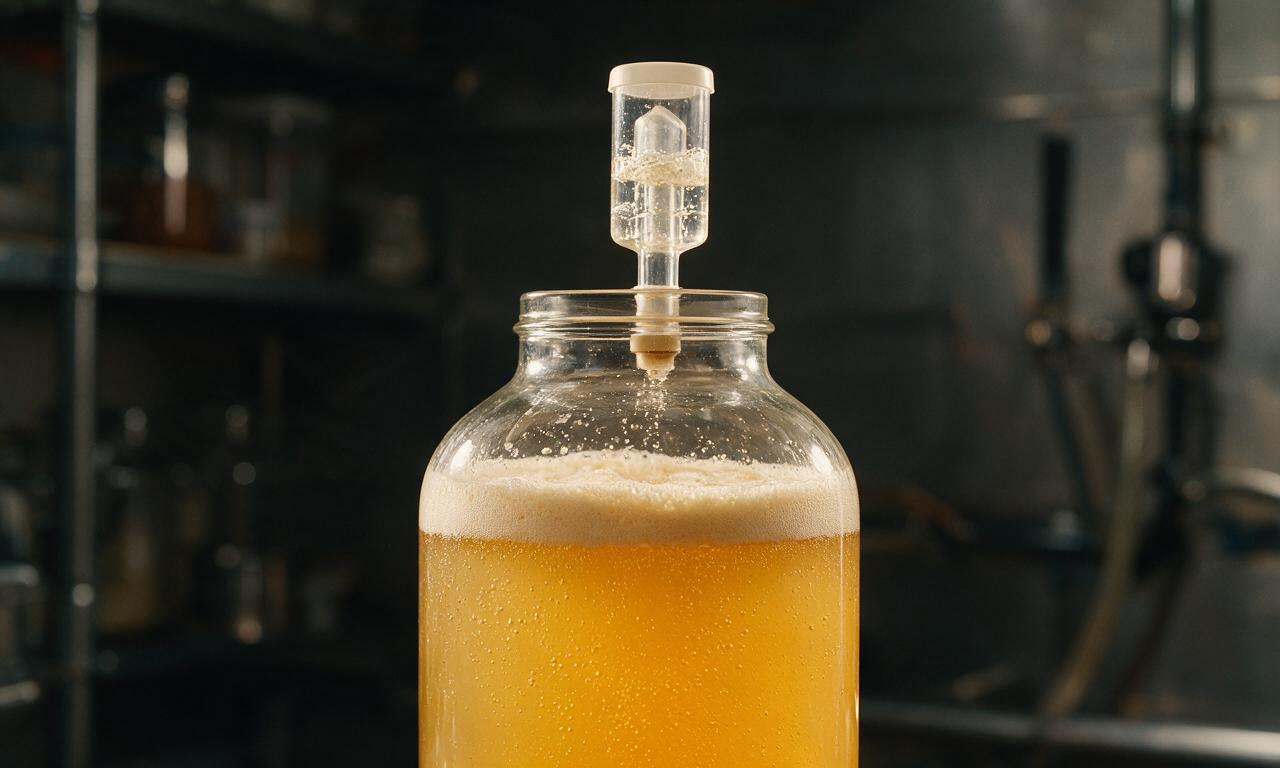
Move the sealed fermentation jug to a dark, temperature-stable location (such as a closet or pantry) held at a steady 18-22°C (65-72°F) for 7 days of primary fermentation. You will see consistent bubbling in the airlock within 24-48 hours as the yeast converts sugar to alcohol and carbon dioxide; avoid moving, jostling, or opening the jug during this period, and wait until bubbling in the airlock stops completely before moving to bottling.
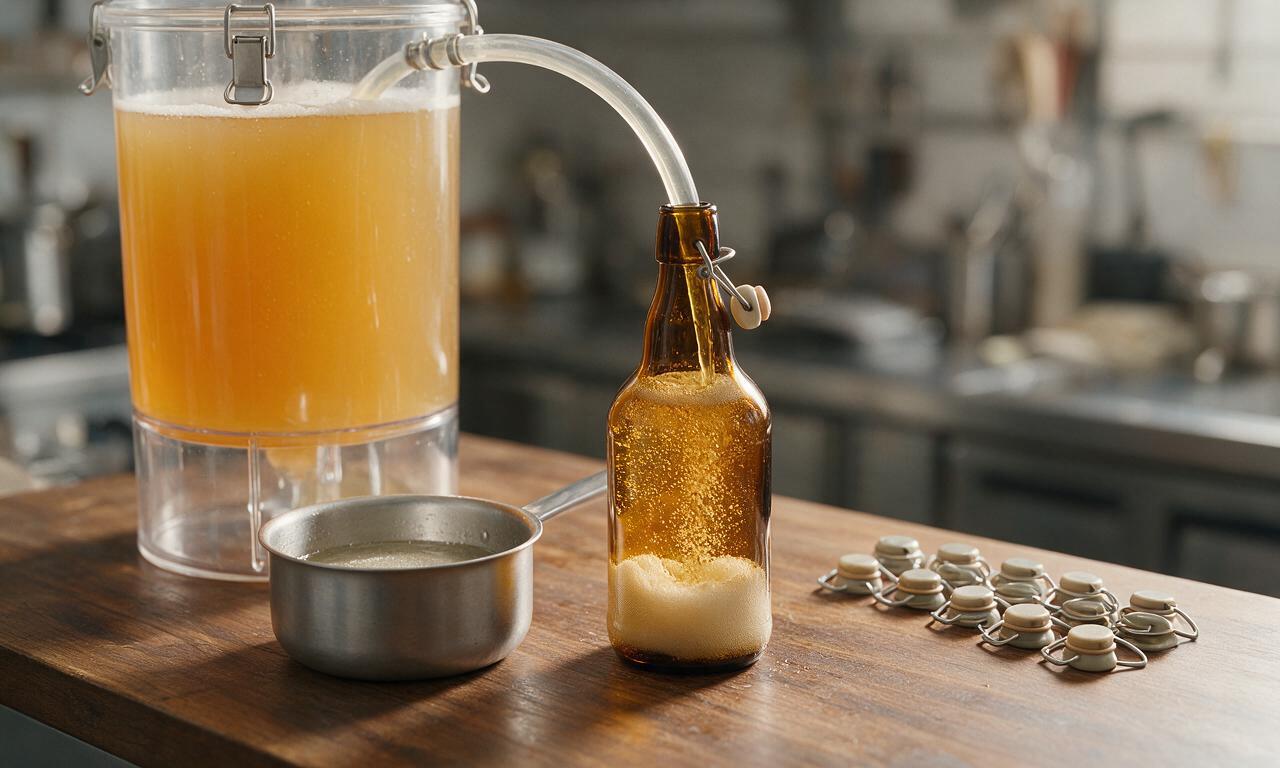
After 7 days of primary fermentation, re-sanitize your siphon, bottling wand, swing-top bottles, and a 4-liter food-grade plastic bottling bucket. Boil the 28 grams (2 tbsp) of corn sugar in 60 ml (1/4 cup) of water over high heat for 5 minutes, cool the solution to 21°C (70°F), and pour it into the sanitized bottling bucket. Siphon the finished beer from the fermentation jug into the bottling bucket, stirring gently with a sanitized spoon to mix the beer evenly with the priming sugar, then fill each sanitized bottle to 2.5 cm (1 inch) below the rim, and seal tightly with the sanitized swing-top caps.
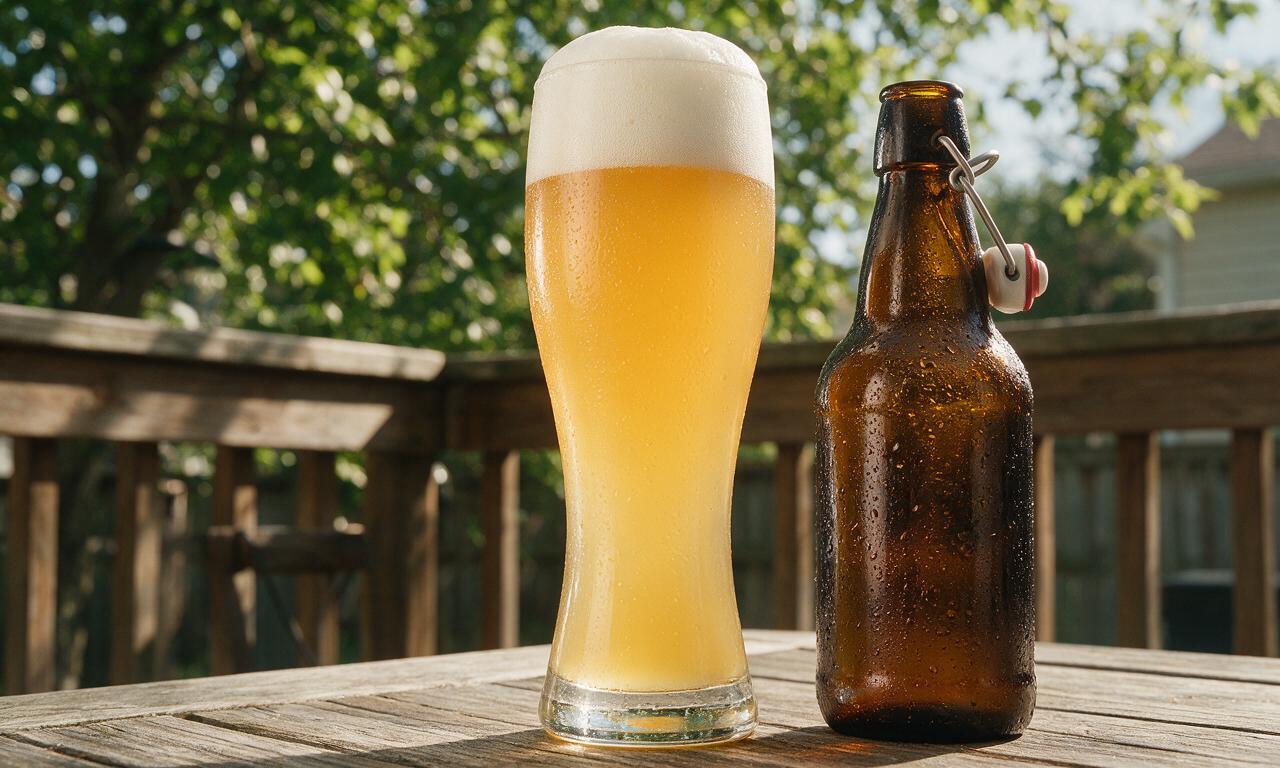
Store the sealed, capped bottles in the same dark, 18-22°C (65-72°F) location for 7 additional days to allow natural carbonation to develop as remaining yeast consumes the priming sugar. After 7 days of bottle conditioning, chill one bottle for 4 hours in the refrigerator, then pour slowly into a tall weizen glass, leaving the last 1 cm (0.4 inch) of yeast sediment in the bottle for a smooth, crisp pour.
Tips
2.Do not squeeze the mesh grain bag after steeping, as this presses harsh, astringent tannins out of the grain husks, which will make your finished beer taste dry, bitter, and puckery.
3.For a more traditional, extra-cloudy hefeweizen pour, gently swirl the last 10ml of beer in the bottle to rouse the settled yeast before pouring it into your glass; this adds subtle bready yeast flavor and the signature hazy appearance.

OMG, this American hefeweizen recipe is a total game changer! I’ve messed up so many homebrew batches that came out too bitter or had that weird skunky aftertaste, but this one turned out perfectly citrusy and smooth with that classic banana-clove note I love. Brought a growler to my buddy’s backyard potluck last weekend and everyone was begging for the recipe. 10/10, will brew again as soon as my current carboy frees up!
Solid recipe overall! My first go at a hefe, I was worried the medium difficulty tag meant I’d be chained to my brew kettle all day, but 60 minutes active time was totally manageable even with my kids running around asking for snacks every two minutes. My only note is I wish I’d chilled the wort a little faster because I got a slightly more fruity ester profile than I expected, but it’s still SO good. My wife said it tastes exactly like the hefe we get at our local taproom.
Just bottled my batch yesterday! The gravity readings were right on target per the instructions, so I’m already hyped for carbonation to finish in two weeks. Snuck a tiny flat sample and it already has that perfect soft, wheat-y backbone. Can’t wait to crack one open after my hike next weekend.
Tried this recipe for my first all-grain batch and I was low-key stressed the whole time, but the step-by-step instructions made it impossible to mess up! Ended up with 5 gallons of perfectly hazy, crisp hefe that went faster than any other batch I’ve made for our monthly neighborhood block party. Even my neighbor who only drinks light macro beer loved it.
I’ve been brewing extract kits for 3 years and decided to branch out with this recipe. Let me tell you — the American yeast strain recommendation here is chef’s kiss. I almost used a German hefe yeast out of habit, but the American strain gives it that bright, zesty kick that’s perfect for summer BBQs. Already planning a second batch with a little raspberry puree added at bottling for a fruit twist.
Followed the recipe exactly and my batch came out a little cloudier than the photos, but honestly? That’s how hefeweizen is supposed to be! Tastes amazing, super refreshing, I’ve been drinking one every evening after walking my pup when it’s 90 degrees out. Worth every minute of prep.
Uh oh, I think I messed up my mash temp? I’m a total newbie, this is my second ever homebrew, and I let the temp creep up to 158 instead of the 152 listed for about 10 minutes before I cooled it down. Is my batch totally ruined? 😭
Brewed this for our annual family reunion cookout and it was such a hit! I made little custom koozies for the growlers I brought, and my uncle who swears he ‘doesn’t like wheat beer’ had three glasses. The two week total wait was torture but so worth it. Pro tip: serve it with a slice of orange on the rim, chef’s kiss.
Solid base recipe! I swapped in a little honey malt for 8 oz of the pale wheat to add a subtle sweetness, and it turned out fantastic. Didn’t mess with the hop schedule at all, the low bitterness is perfect for a crushable summer beer. Will definitely be keeping this in my regular rotation.
Okay I was so intimidated by the medium difficulty tag, but I watched a couple basic homebrew tutorials first and followed this recipe to a T and my batch turned out incredible! I was convinced I’d accidentally contaminate it or something, but no, it’s perfectly hazy, has that classic light banana note, and my roommates are already asking when I’m making more.
Wait, has anyone tried dry hopping this a little? I love my hazy IPAs but want that smooth wheat base, thinking a little late addition of Citra hops would slap but don’t want to ruin the classic hefe vibe.
Made this for our tailgate before the college football game last weekend and it was gone by halftime. Even the guys who bring the cheap store-bought beer were asking where I got it. The 60 minute active brew time was perfect because I didn’t want to spend my whole Saturday inside messing with equipment. 10/10, will be a gameday staple from now on.
Just cracked open my first bottle from the batch I brewed two weeks ago and it’s perfect! Exactly the balance of wheat, light clove, and citrus I was hoping for. I was worried I overcarbonated it at first but the fizz is just right. My kids even thought it smelled like banana bread when I opened the bottle, haha.
I was worried this recipe would require a bunch of fancy expensive equipment I don’t have, but I was able to make it work with my basic beginner brew kit I got for Christmas last year. No fancy pumps or temperature controllers needed, just a good thermometer and sanitizer, which is awesome. Saved me from having to drop $100 on extra gear just to make a good hefe.
Has anyone ever split this batch to make a sour version? I love regular hefe but I’ve been on a huge sour kick lately and wondering if adding a little lacto after primary would work, or if that would throw the whole flavor off.
Not gonna lie, I was skeptical an American hefe could hold a candle to the German imports I usually buy, but this recipe converted me. It’s crisp, not overly yeasty, has that perfect little citrus zing, and it’s way cheaper to brew at home than buy 4 packs every week. Already got my grain bill measured out for batch number two.
Ugh, I forgot to add the late hop addition on my first go at this! I was in the middle of stirring the wort and my dog knocked over the hop bag, I was so frazzled I completely missed the 15 minute left mark. Is it still going to be drinkable? It’s fermenting right now, bubbles are going strong so no contamination that I can tell.