
indian butter
intro
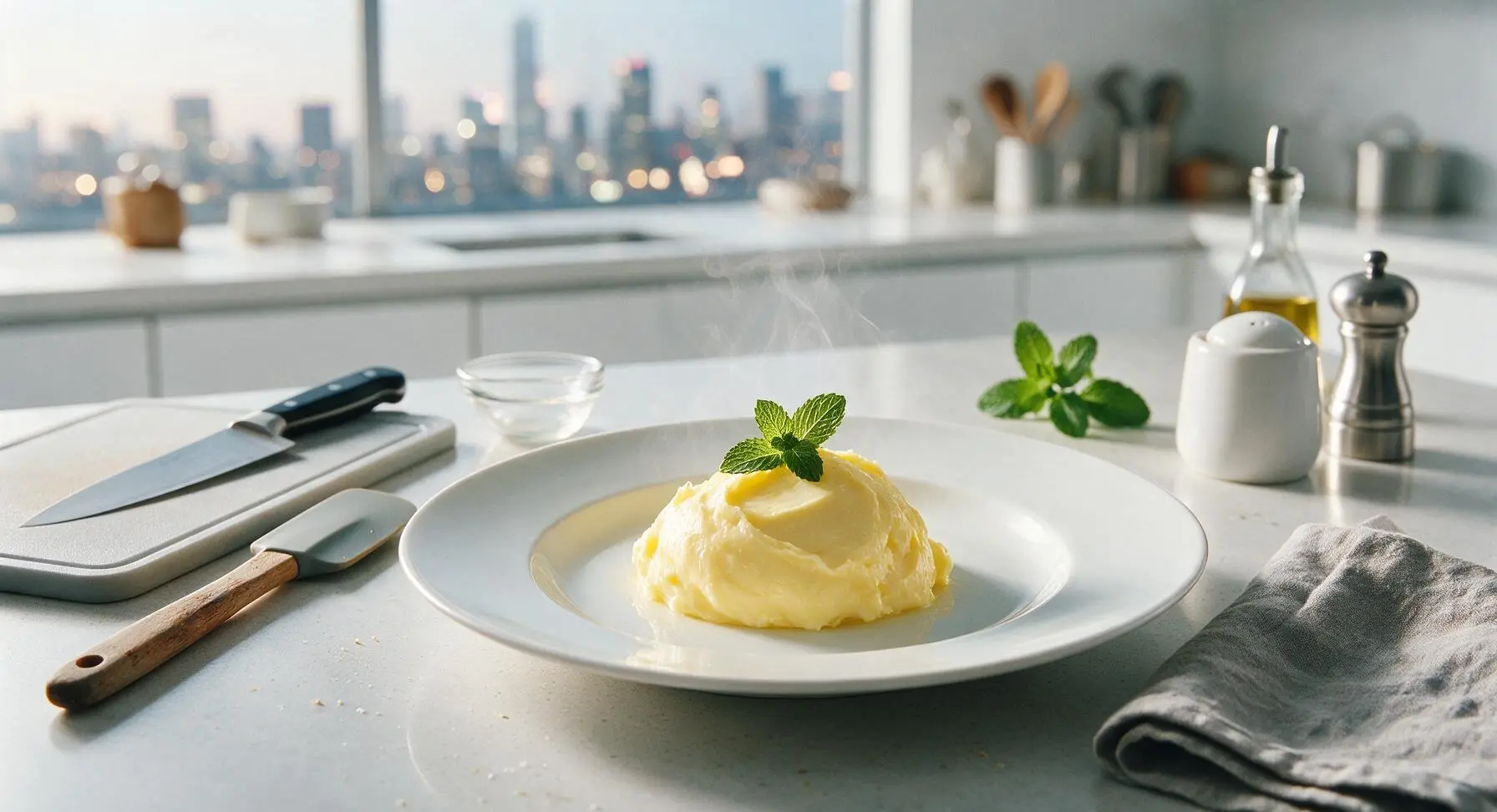
Soft, creamy, subtly tangy traditional North Indian cultured butter (makhan), with a fresh bright flavor that melts instantly into warm flatbreads, far richer than store-bought versions.
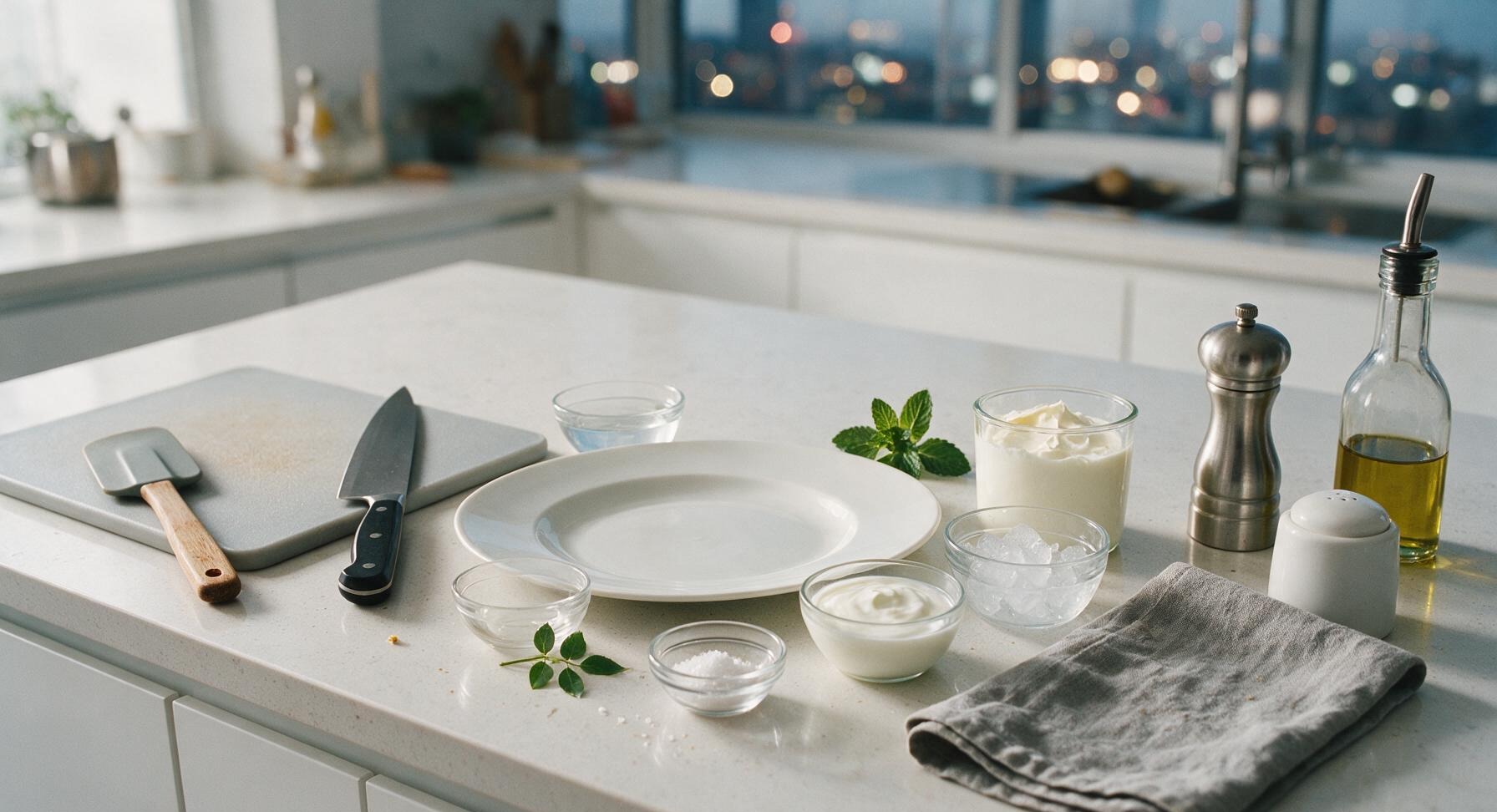
Ingredients
Steps
Culture the Cream
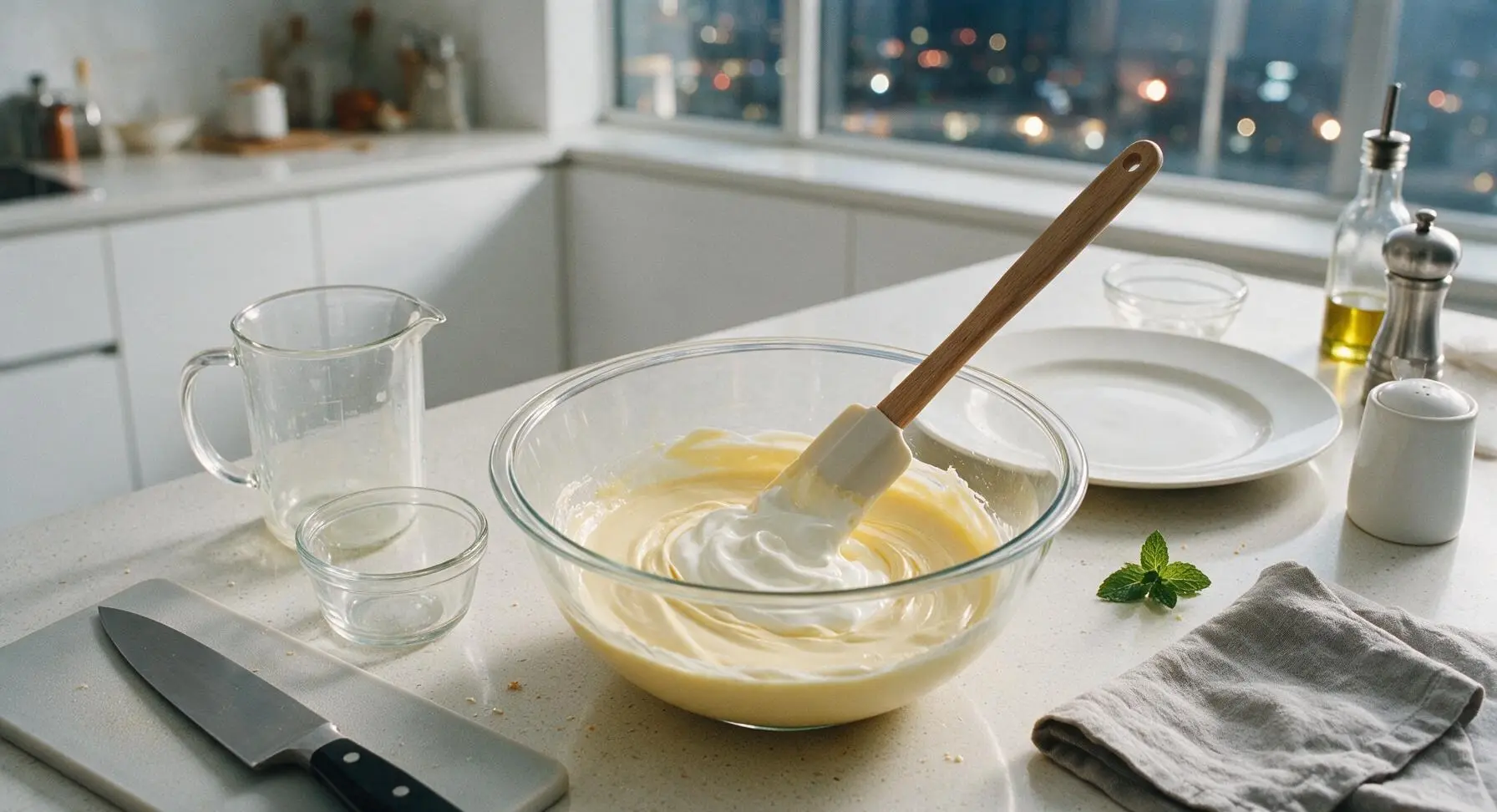
Pour 4 cups of full-fat heavy whipping cream from the measuring jug into the 3L clear glass mixing bowl. Add ¼ cup of plain full-fat live-culture yogurt, stirring gently with the matte white silicone spatula until the mixture is completely smooth, with no visible lumps of yogurt. Cover the bowl loosely with a clean cotton cloth, and let it rest in a warm, draft-free spot (70-75°F / 21-24°C) for 8-12 hours, until the cream thickens to a soft yogurt-like consistency, smells pleasantly tangy, and leaves a faint indent when you drag a spoon across its surface. Do not stir the cream once it sets.
Chill Cultured Cream
Once the cream has fully cultured to a thick, tangy set, cover the glass mixing bowl tightly with a silicone lid, and transfer it to the refrigerator for 2 hours, until the cultured cream chills to exactly 60°F / 15°C. This temperature is ideal for churning: cream that is too warm will produce greasy, soft butter that does not hold its shape, while cream that is too cold will take twice as long to separate into butter and buttermilk.
Churn the Cream
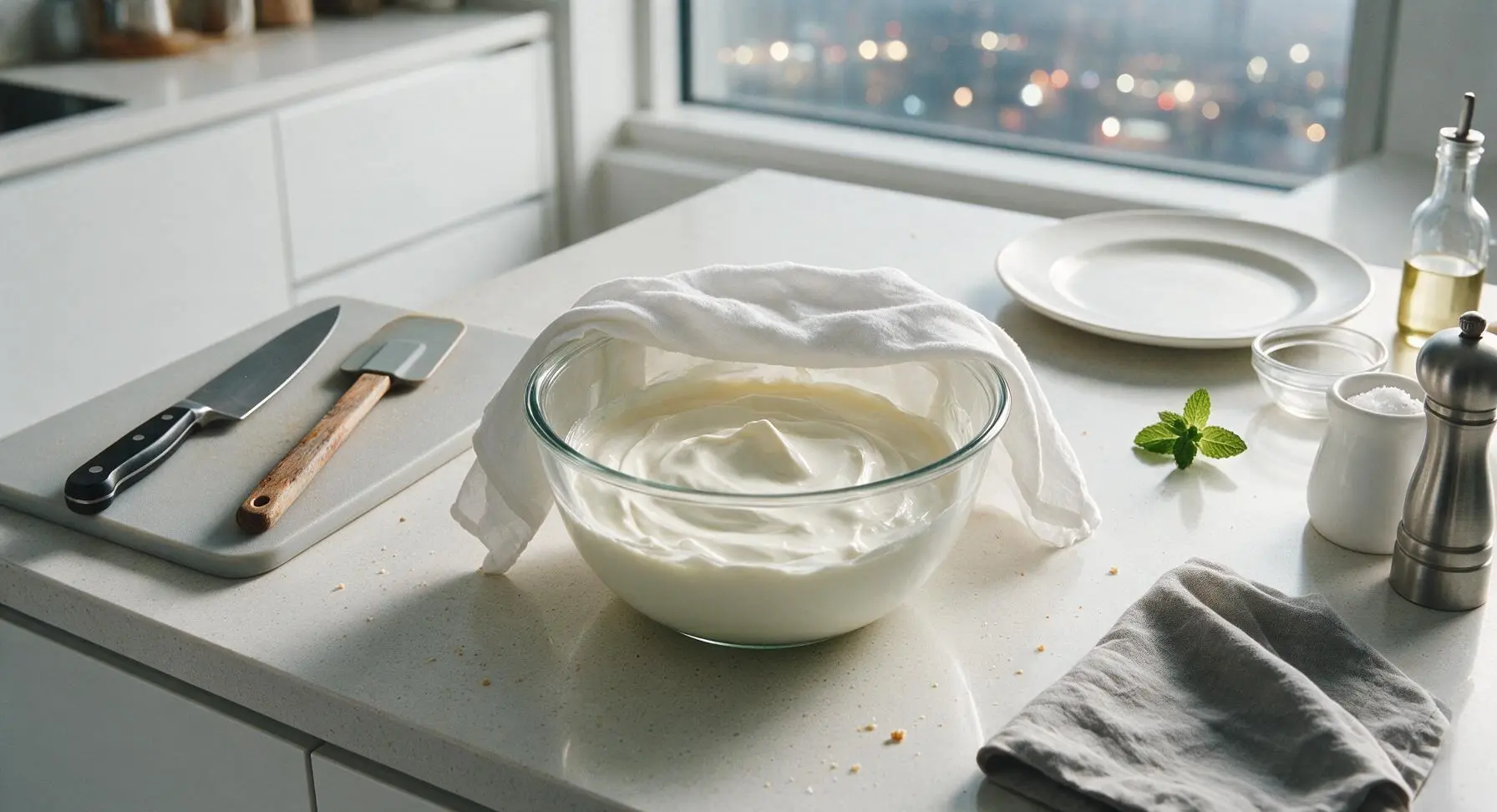
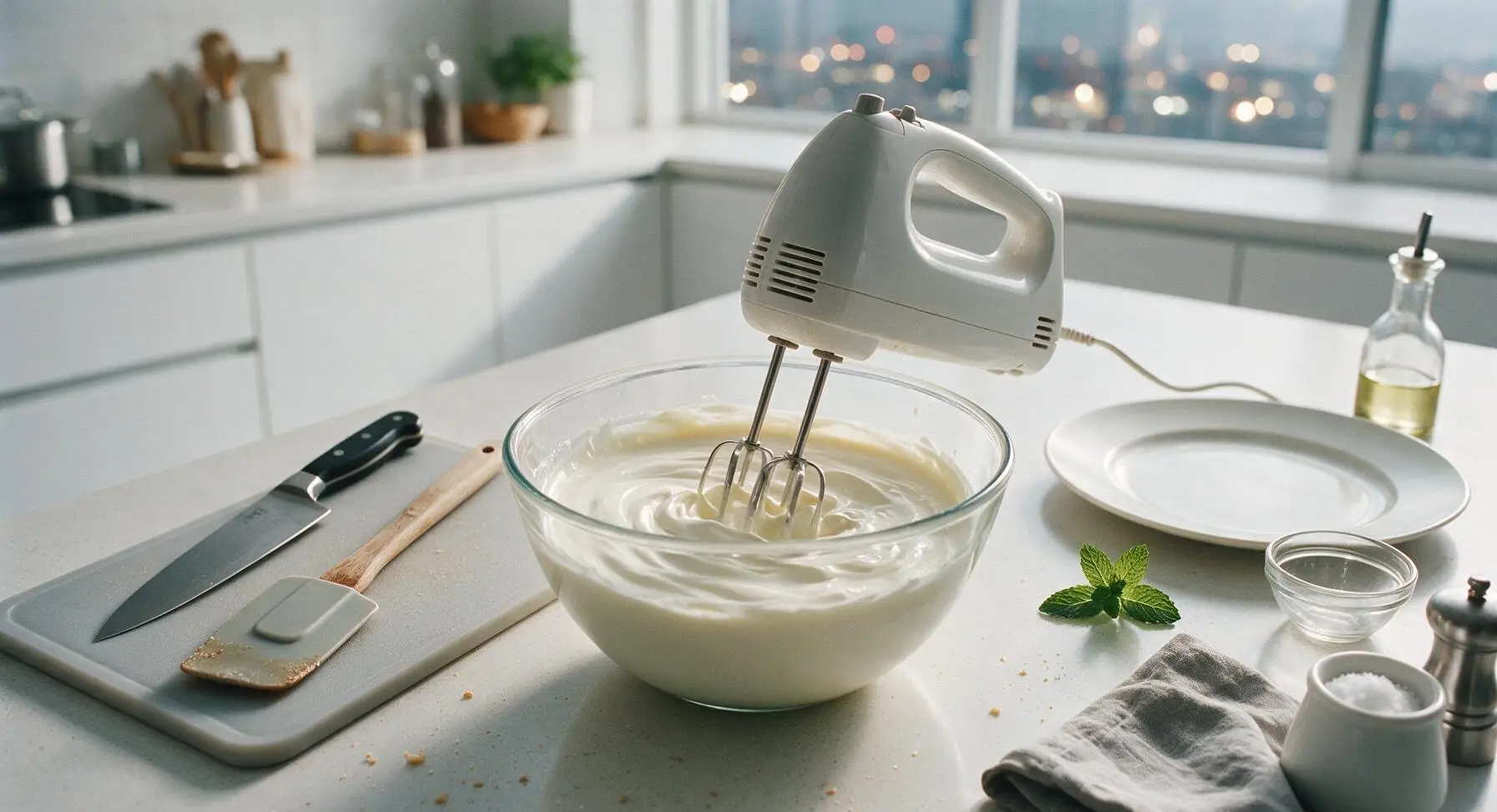
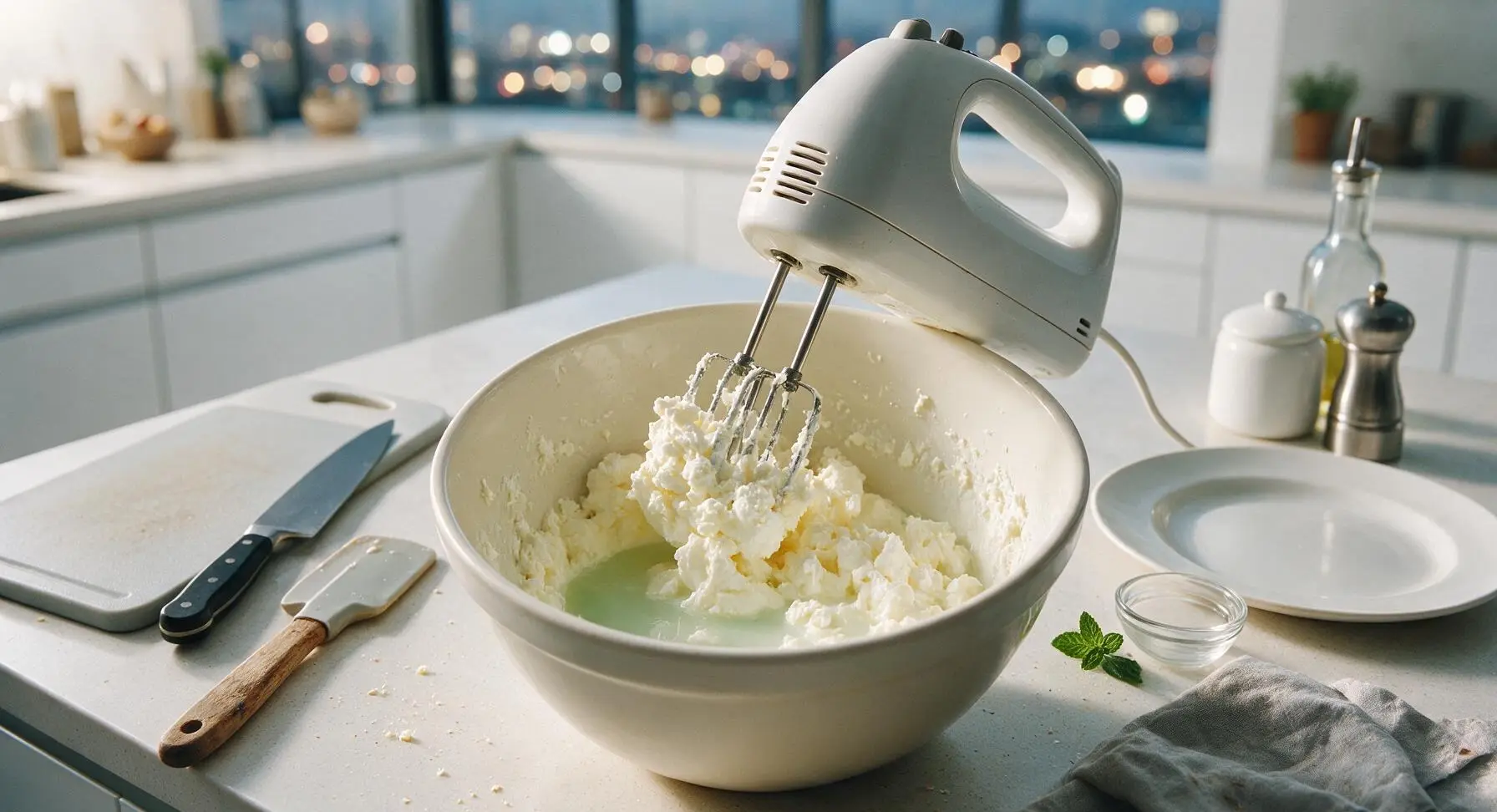
Remove the chilled cultured cream from the fridge, uncover it, and place the bowl back in its fixed position on the counter. Retrieve the matte white electric hand mixer from the under-counter drawer, fit it with the stainless steel beaters, and churn the cream on medium speed for 8-10 minutes. The cream will first whip to stiff, fluffy peaks, then suddenly break apart: you will see clumps of pale white solid butter separate from thin, watery, pale green buttermilk. Stop churning immediately once full separation occurs, as over-churning will make the butter tough and greasy.
Drain the Buttermilk
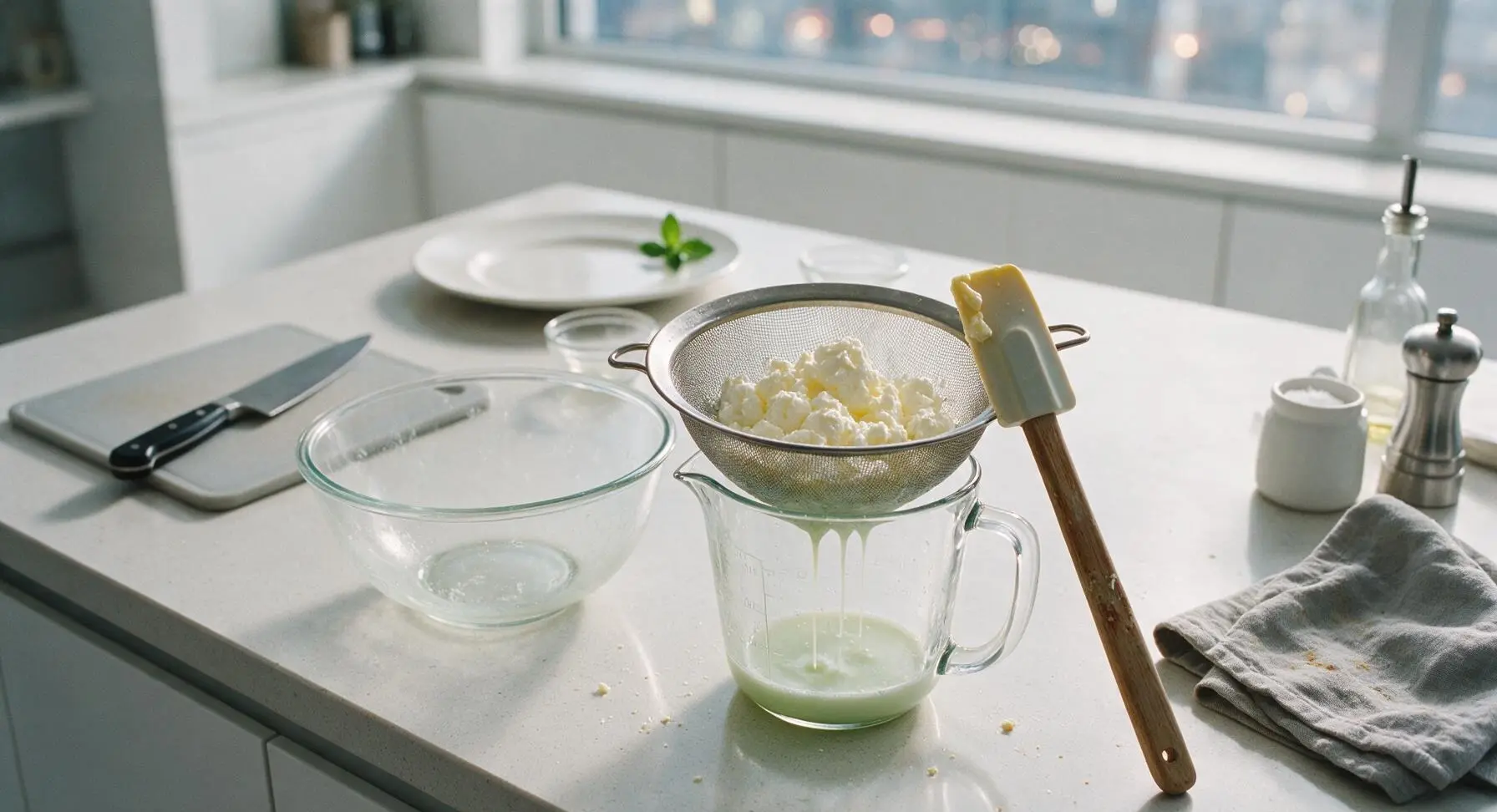
Position the stainless steel fine-mesh sieve over the top of the 1L glass measuring jug. Pour the entire contents of the mixing bowl through the sieve, allowing the thin buttermilk to drain through the mesh into the jug below. Gently press the collected butter solids with the silicone spatula to squeeze out as much trapped buttermilk as possible, taking care not to press hard enough to push soft butter through the sieve holes. Reserve the drained buttermilk in the jug for drinking, adding to curries, or baking, if desired.
Wash Butter Solids
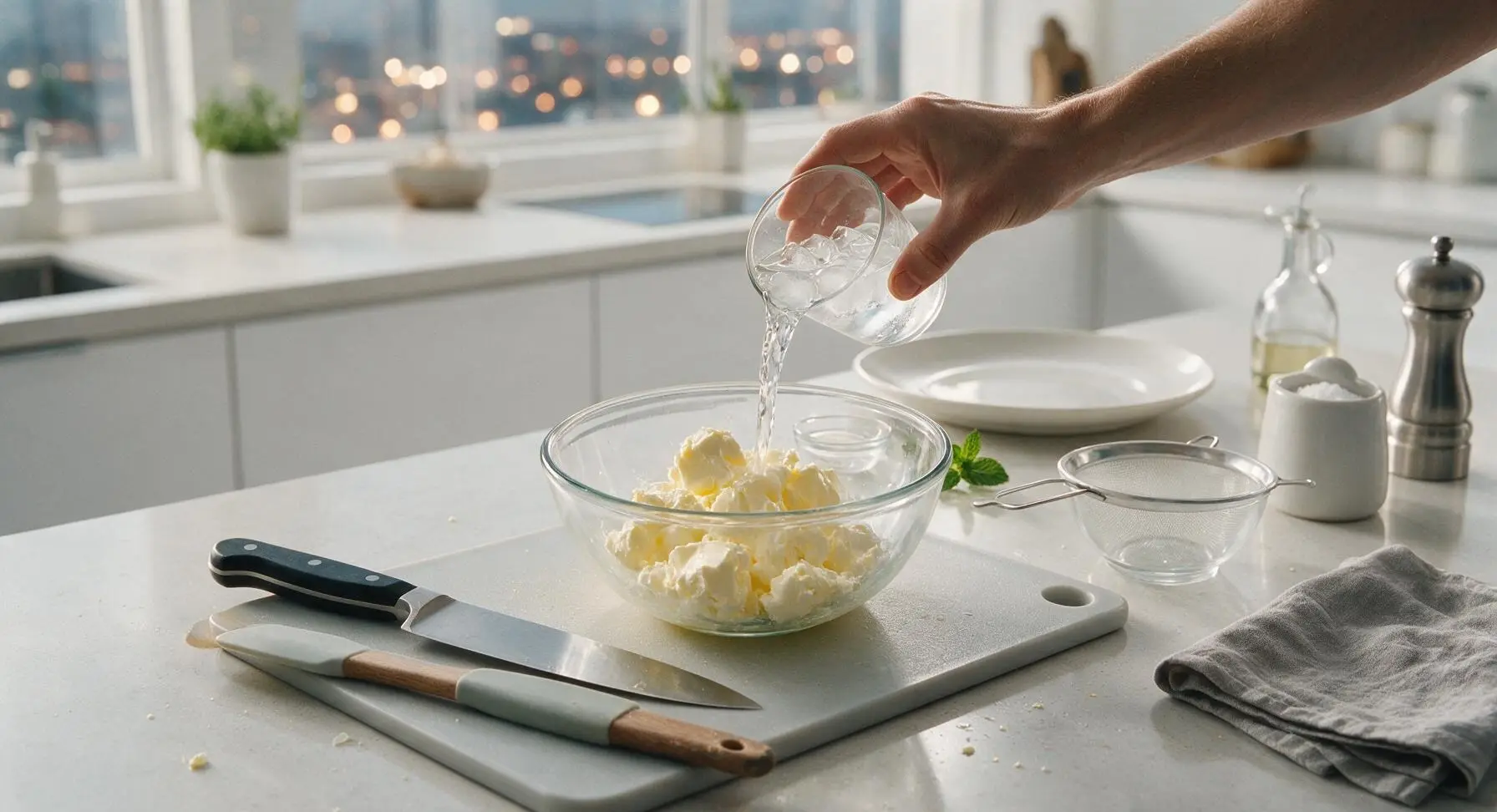
Transfer the drained butter solids from the sieve back into the clean glass mixing bowl. Pour 1 cup of ice-cold filtered water (mixed with crushed ice) over the butter. Use the silicone spatula to press and knead the butter against the side of the bowl, squeezing out remaining trapped buttermilk into the water. Pour off the cloudy, milky water, then repeat this washing process 2-3 more times with fresh ice water, until the water poured off is completely clear with no milky haze. Any remaining buttermilk left in the butter will cause it to spoil quickly, so thorough washing is critical for shelf life.
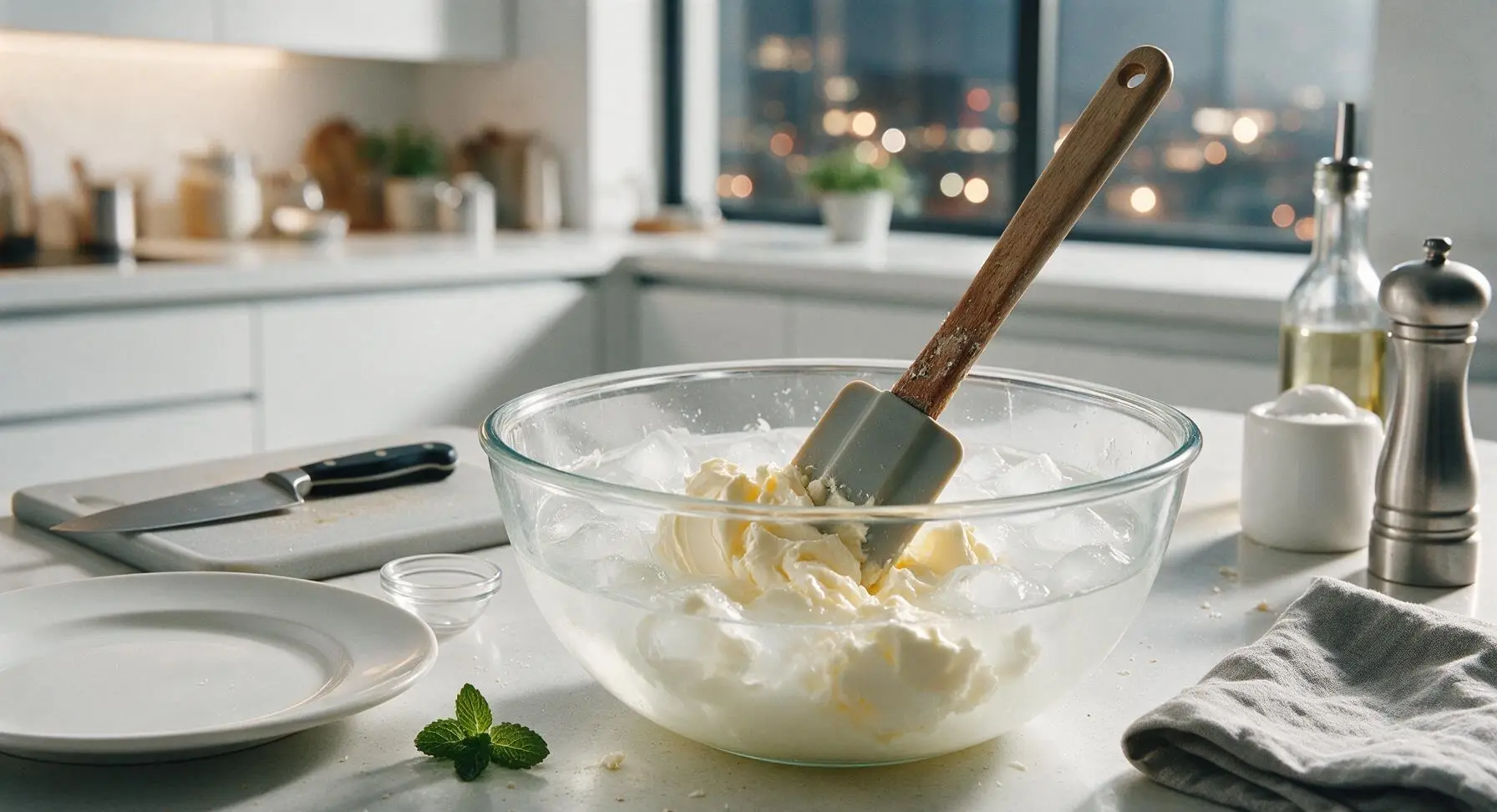
Shape and Season Butter
Once the washing water runs completely clear, pour off all excess water from the bowl, and squeeze the butter mass firmly with the spatula to press out as much trapped water as possible. Sprinkle ¼ tsp of flaky sea salt evenly over the butter. Pick up the two light maple wood butter paddles from their ceramic rest, and use them to press and fold the butter repeatedly, shaping it into a smooth, dense, rounded mound, pressing out any remaining small water droplets as you work. The wooden paddles prevent body heat from melting the butter as you shape it.
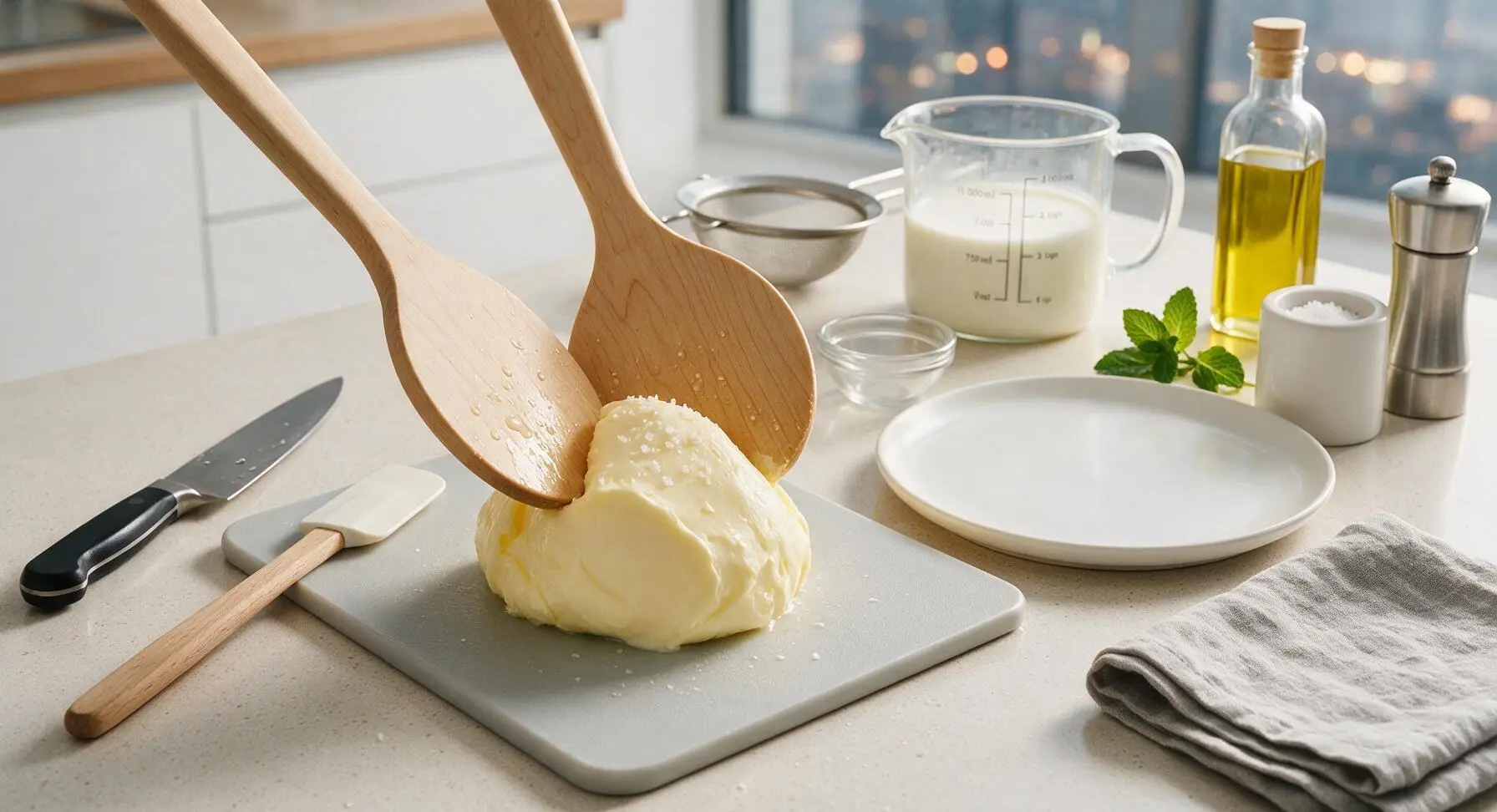
Plate for Serving
Lift the shaped butter mound with the butter paddles, and transfer it gently to the center of the hand-thrown terracotta butter dish. Place one fresh curry leaf on top of the butter as a simple garnish. Let the butter rest at cool room temperature (65°F / 18°C) for 10 minutes before serving, so it softens to a perfect spreadable consistency ideal for slathering on warm rotis or stirring into curries.
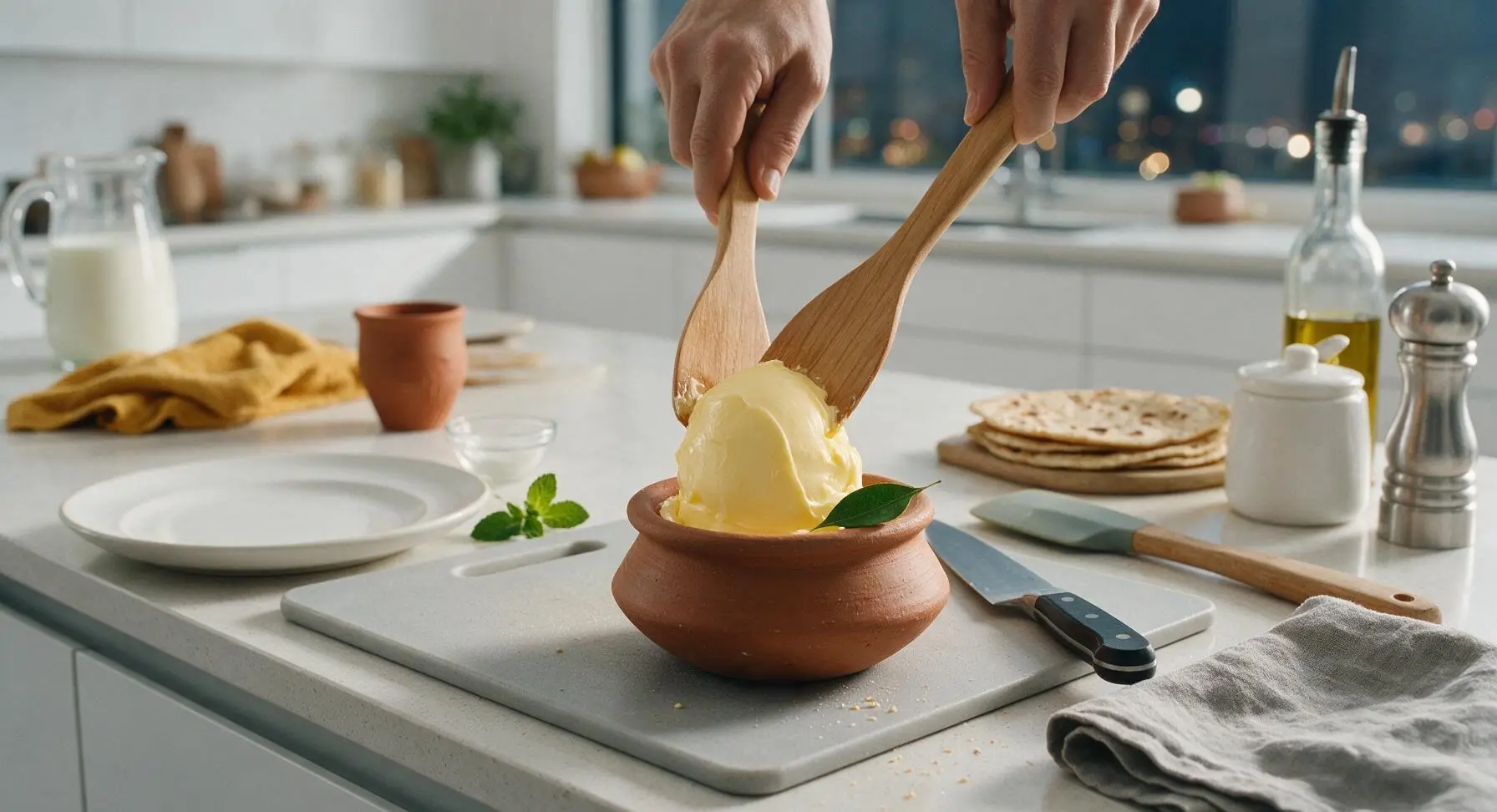
Tips
2.Never skip the ice water washing step: residual buttermilk trapped in butter contains milk sugars and proteins that cause rapid spoilage, leading to rancid butter in as little as 2 days in the fridge. Thoroughly washed makhan will stay fresh for up to 2 weeks when stored in an airtight container in the refrigerator.
3.If you do not have an electric hand mixer, you can churn the butter in a tightly sealed 2L glass jar: pour the chilled cultured cream into the jar, seal the lid tightly, and shake firmly for 12-15 minutes until the butter solids separate. This low-equipment method works perfectly and is a fun activity to do with children.





OMG this is SO much easier than I thought it would be! I’ve been buying expensive cultured butter from the specialty grocery store for ages to slather on my weekend aloo parathas, and this took literally 10 minutes? Total game changer. My kids loved it so much they kept sneaking spoonfuls while I was toasting sourdough for family dinner last night, 10/10 will make a batch every Sunday for meal prep from now on.
I brought a batch of this makhan to our neighborhood Diwali potluck last weekend and every single person was hounding me for the recipe! I was low-key stressed it would be fussy since it’s a traditional preparation, but the steps were so straightforward even for a casual home cook like me. It paired perfectly with the saag paneer I made, people were slathering it on everything from garlic naan to the dinner rolls someone brought. This is going to be a permanent staple in my weekly meal prep rotation.
Tried this yesterday after seeing how short the cook time was, and wow — I can’t believe I slept on making homemade cultured butter for so long! I will say I accidentally over-churned the cream at first and it got a little crumbly, but I rinsed it with ice cold water and patted it together like my grandma used to do, and it turned out totally fine. Slathered a thick pat on my morning corn muffin today and it was SO good, way better than the regular butter I usually buy.
Total game changer. I’ve been trying to cook more traditional Indian meals at home instead of ordering takeout 3 nights a week, and this makhan made my last batch of dal makhani taste exactly like the version from my favorite restaurant downtown. I even saved the leftover buttermilk from churning to make pancakes this weekend, I have a feeling those are gonna be next level.