Italian Easter Bread (Pane di Pasqua)

title 1
Italian Easter Bread (Pane di Pasqua)
⏱️ cook time 2 hours 50 minutes
🍽️ servings 8
⚡ Difficulty medium

intro

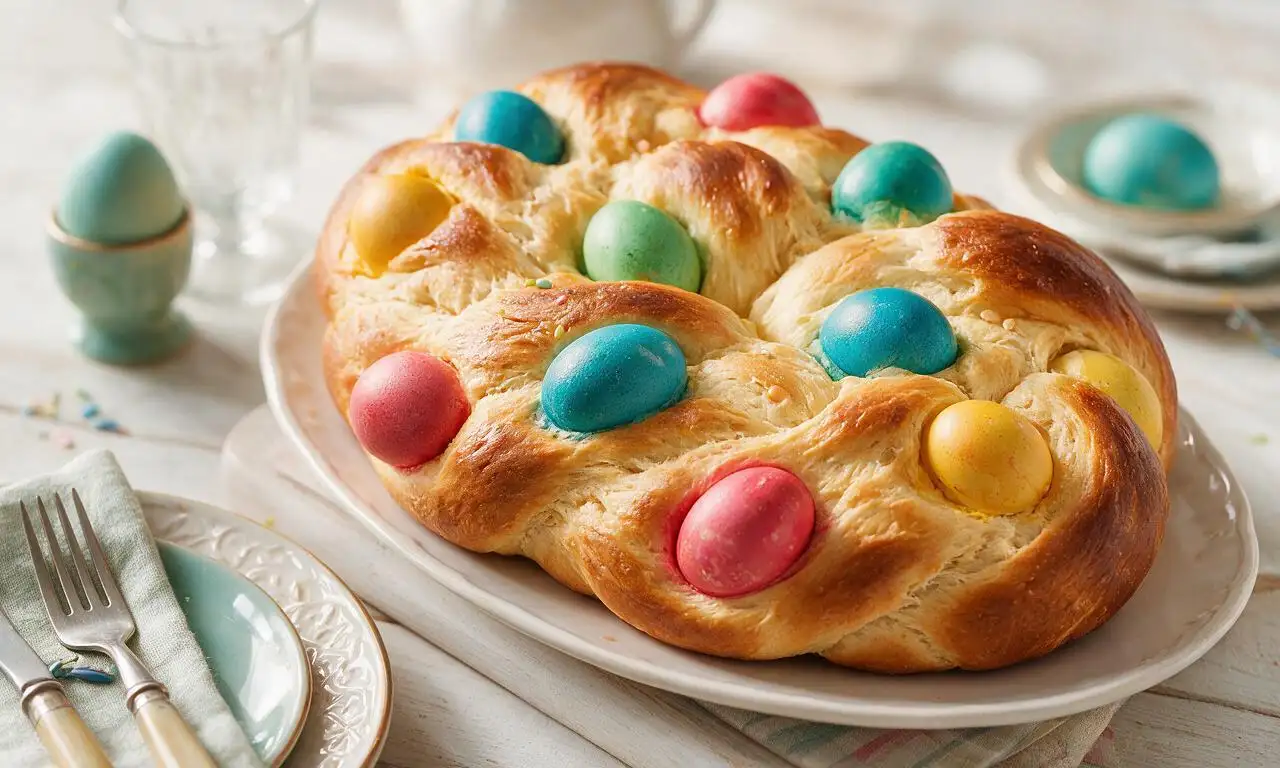
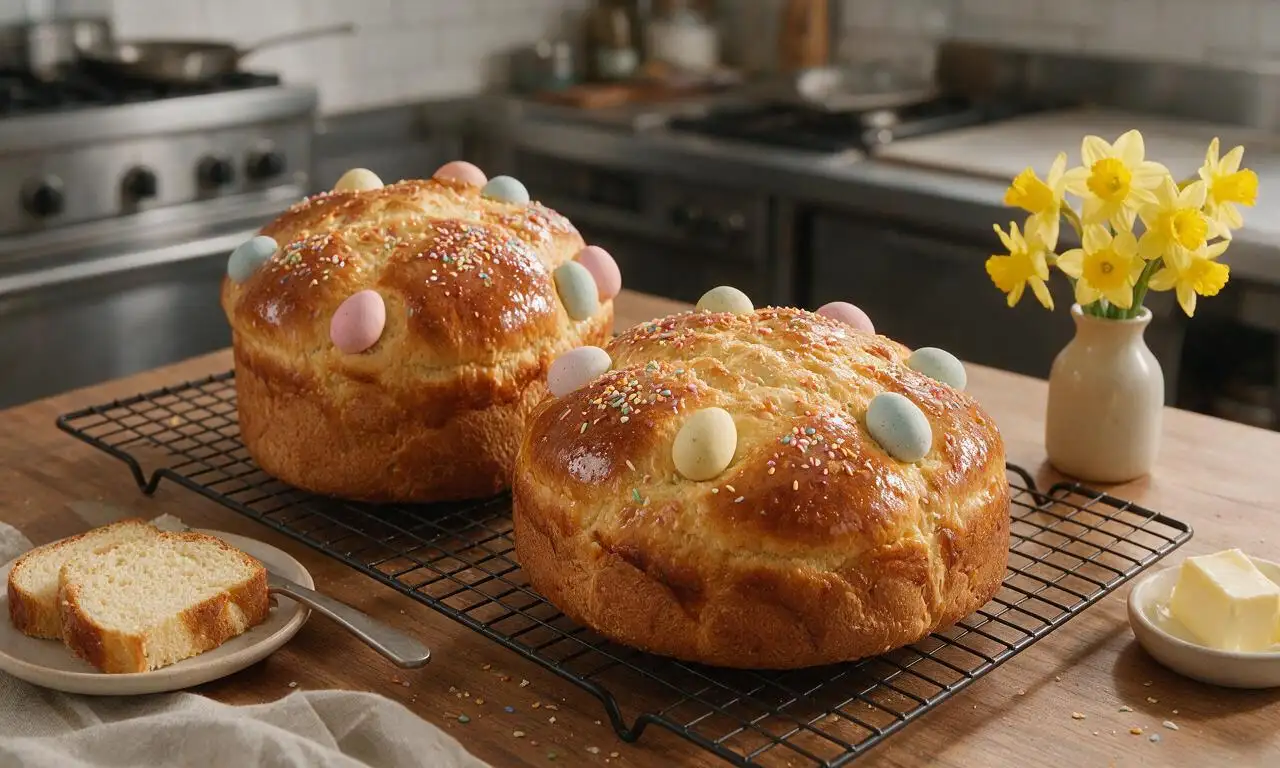
Soft, slightly sweet braided bread studded with colorful dyed eggs, a beloved symbolic Italian Easter treat ideal for holiday brunch gatherings.

Ingredients

All-purpose flour 500g (4 cups)
Active dry yeast 7g (2 1/4 tsp, 1 standard packet)
Whole milk (for dough) 180ml (3/4 cup, warmed to 110°F/43°C)
Granulated sugar 75g (1/3 cup)
Unsalted butter 57g (4 tbsp / 1/2 stick, melted and cooled)
Large eggs (for dough) 3, room temperature
Fine sea salt 5g (1 tsp)
Lemon zest 1 tbsp (from 1 medium lemon)
Vanilla extract 5ml (1 tsp)
Raw food-safe dyed in-shell eggs (for braid decoration) 4, room temperature
Egg wash (1 large egg + 15ml/1 tbsp whole milk, beaten) ~70g (1/4 cup, combined)
Rainbow nonpareil sprinkles (optional) 30g (2 tbsp)

Steps

1

Activate the yeast

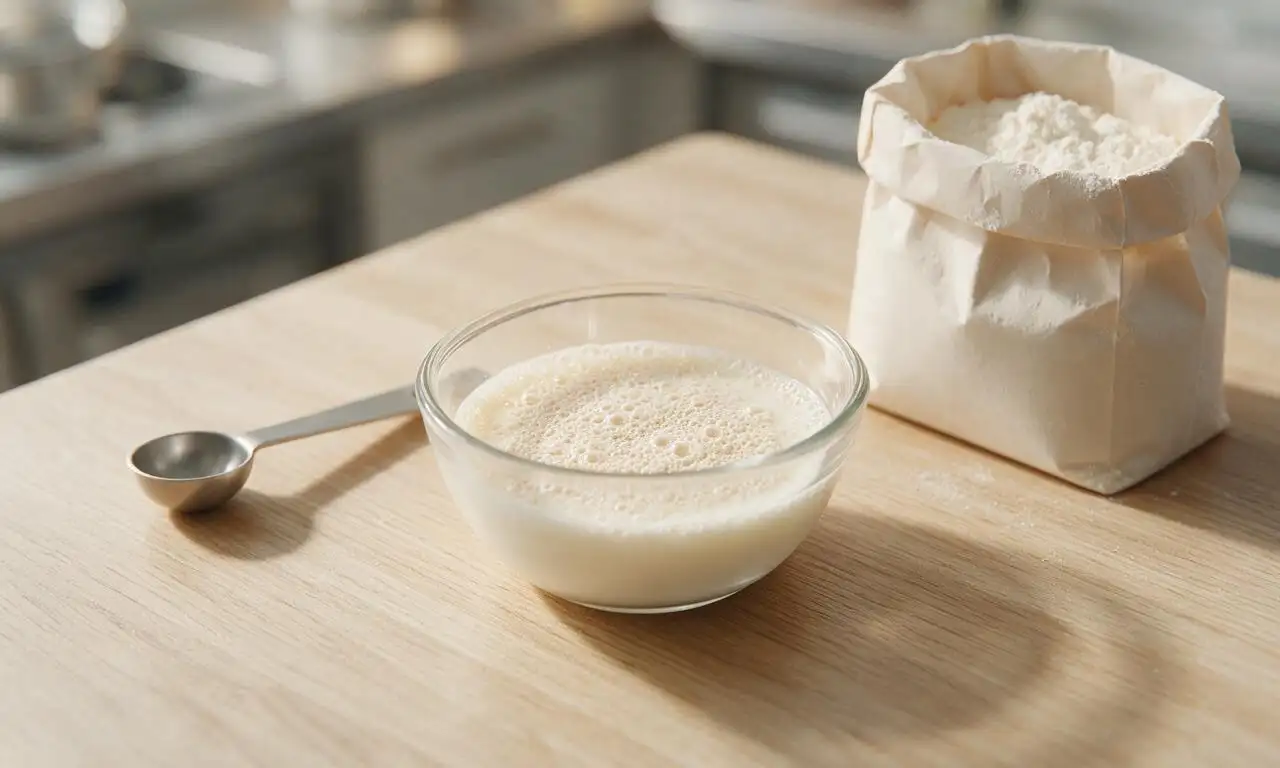
In a small mixing bowl, combine warmed 180ml (3/4 cup) whole milk (heated to exactly 110°F/43°C), 1 teaspoon of the measured granulated sugar, and 7g active dry yeast. Stir gently to dissolve, then let rest for 5-7 minutes at room temperature until the surface is foamy and smells distinctly yeasty, confirming the yeast is active and viable.
Step 1
step1:Activate the yeast
2

Mix and knead dough

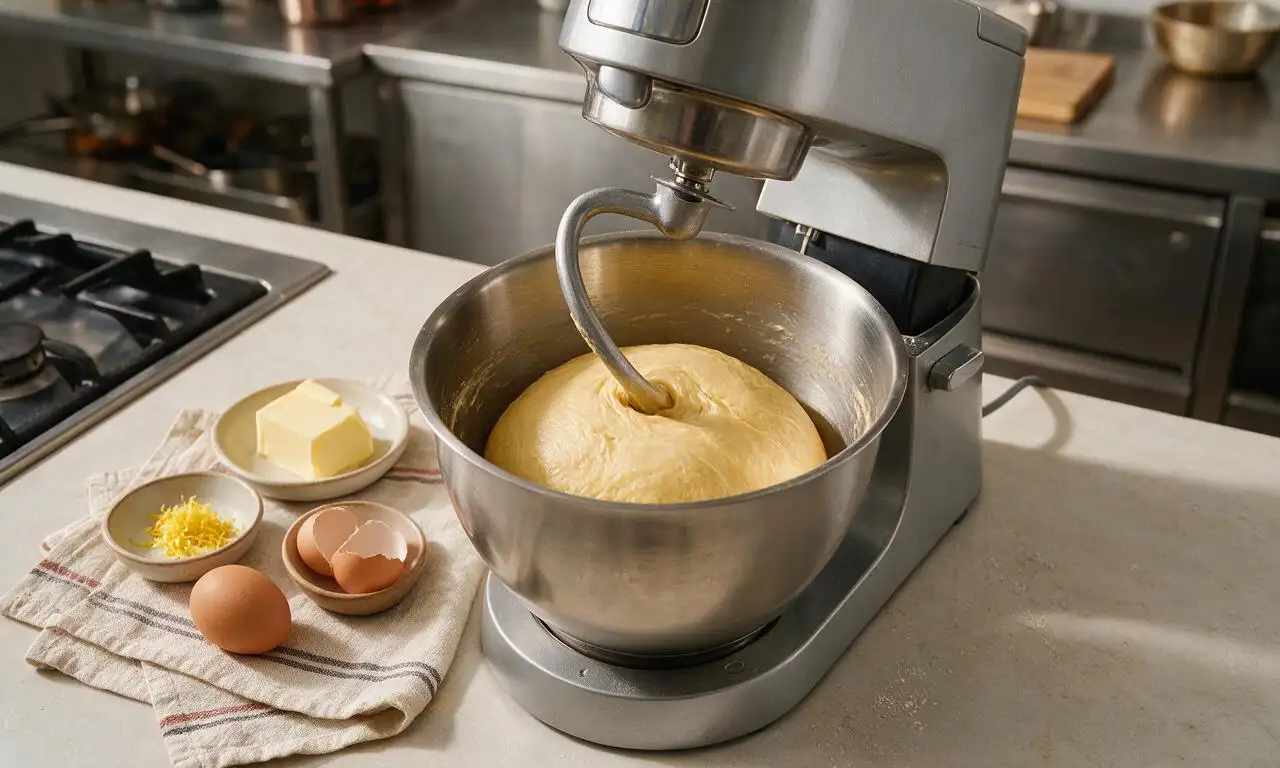
In the bowl of a stand mixer fitted with a dough hook, combine 500g all-purpose flour, remaining granulated sugar, 5g fine sea salt, and 1 tbsp lemon zest. Mix on low speed for 30 seconds to evenly distribute dry ingredients, then add the foamy yeast mixture, 3 room-temperature dough eggs, cooled melted 57g unsalted butter, and 5ml vanilla extract. Mix on low speed for 2 minutes to form a shaggy dough, then increase to medium-low speed (speed 2 on most stand mixers) and knead for 8-10 minutes until the dough is smooth, elastic, and pulls cleanly away from the bowl sides.
Step 2
step2:Mix and knead dough
3

Complete first rise

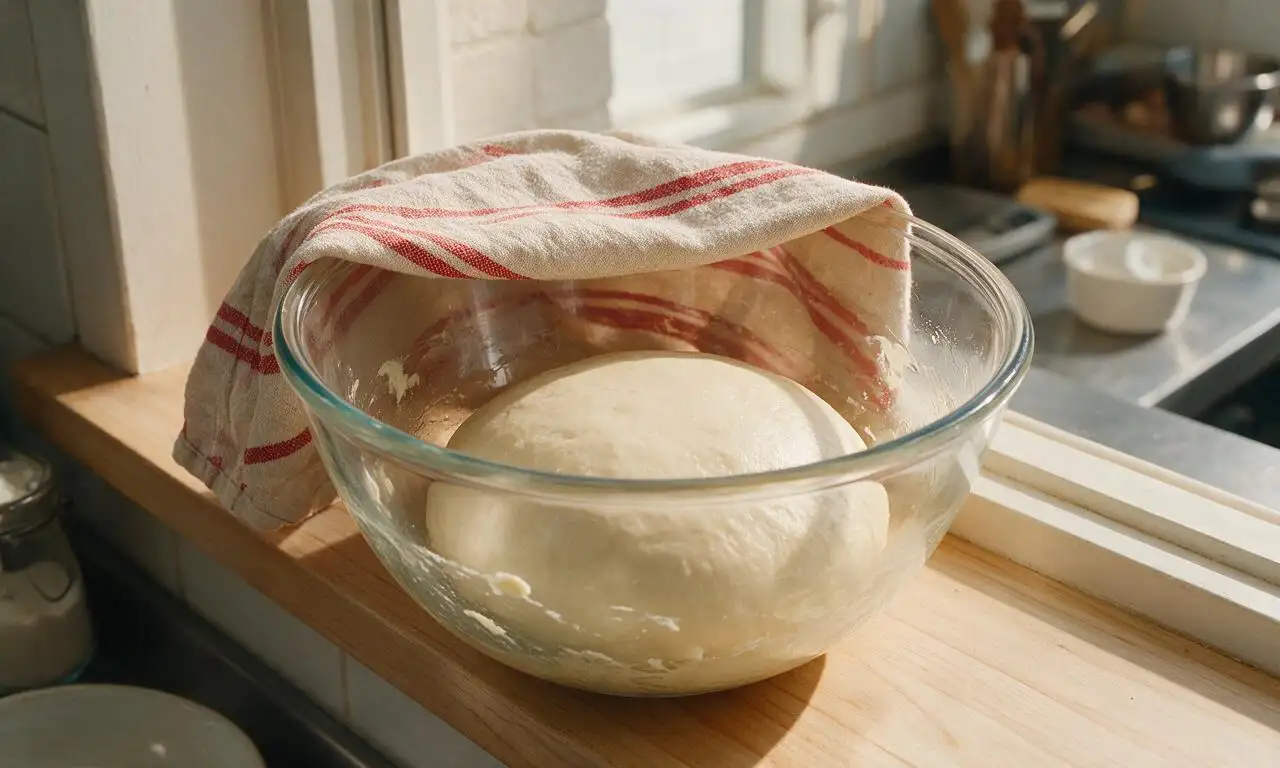
Turn the kneaded dough out onto a lightly floured work surface, form it into a tight, smooth ball, and place it in a large lightly oiled glass bowl. Turn the dough once to coat its entire surface in oil, then cover the bowl tightly with plastic wrap and a clean cotton kitchen towel. Let rise in a warm, draft-free spot (75-80°F/24-27°C) for 60-90 minutes until the dough has fully doubled in volume.
Step 3
step3:Complete first rise
4

Braid the loaves

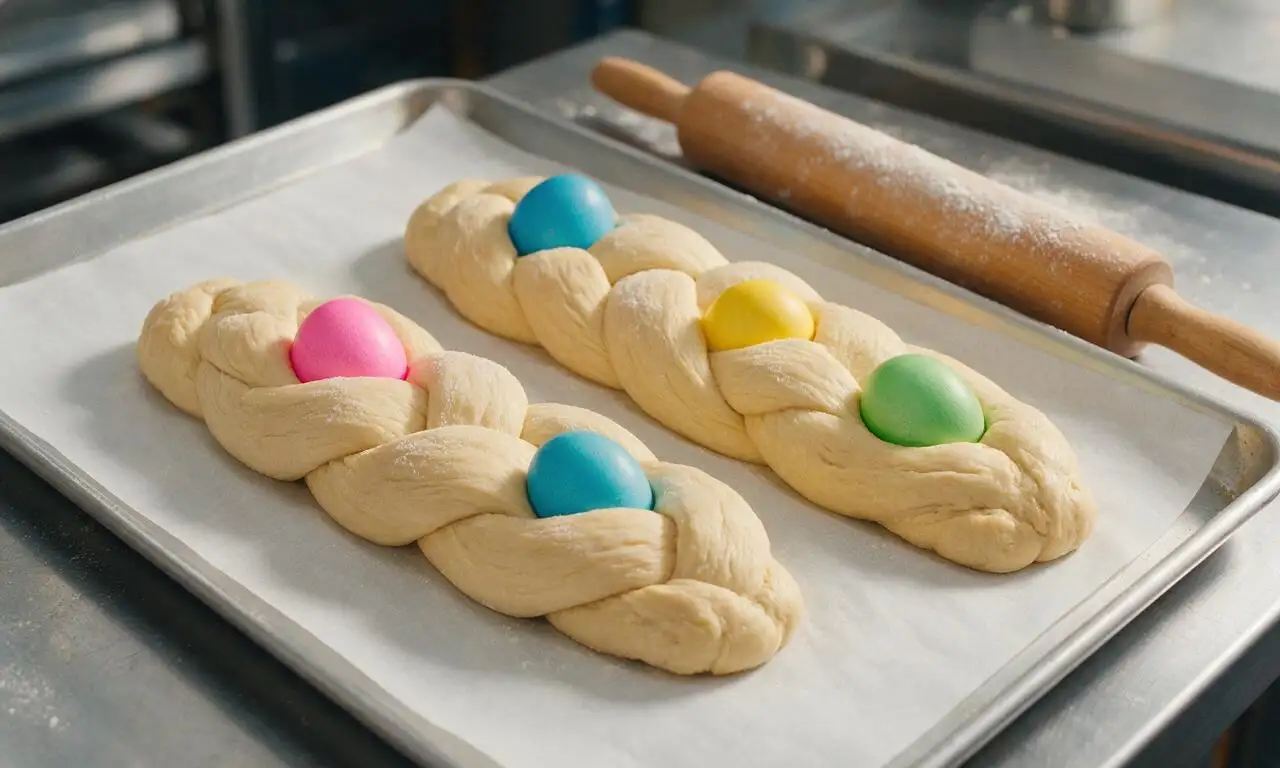
Once doubled, punch the dough firmly in the center to release all trapped air, then turn it out onto a lightly floured surface and divide it into 6 equal pieces (each ~130g). Roll each piece into a 30cm (12-inch) long, evenly thick rope. Use 3 ropes per loaf to form a tight, neat three-strand braid, pinching both ends firmly to seal and tucking them under the loaf for a tidy finish. Nestle 2 raw dyed eggs securely into the gaps of each braid, pressing gently so they sit level with the dough surface.
Step 4
step4:Braid the loaves
5

Complete second rise

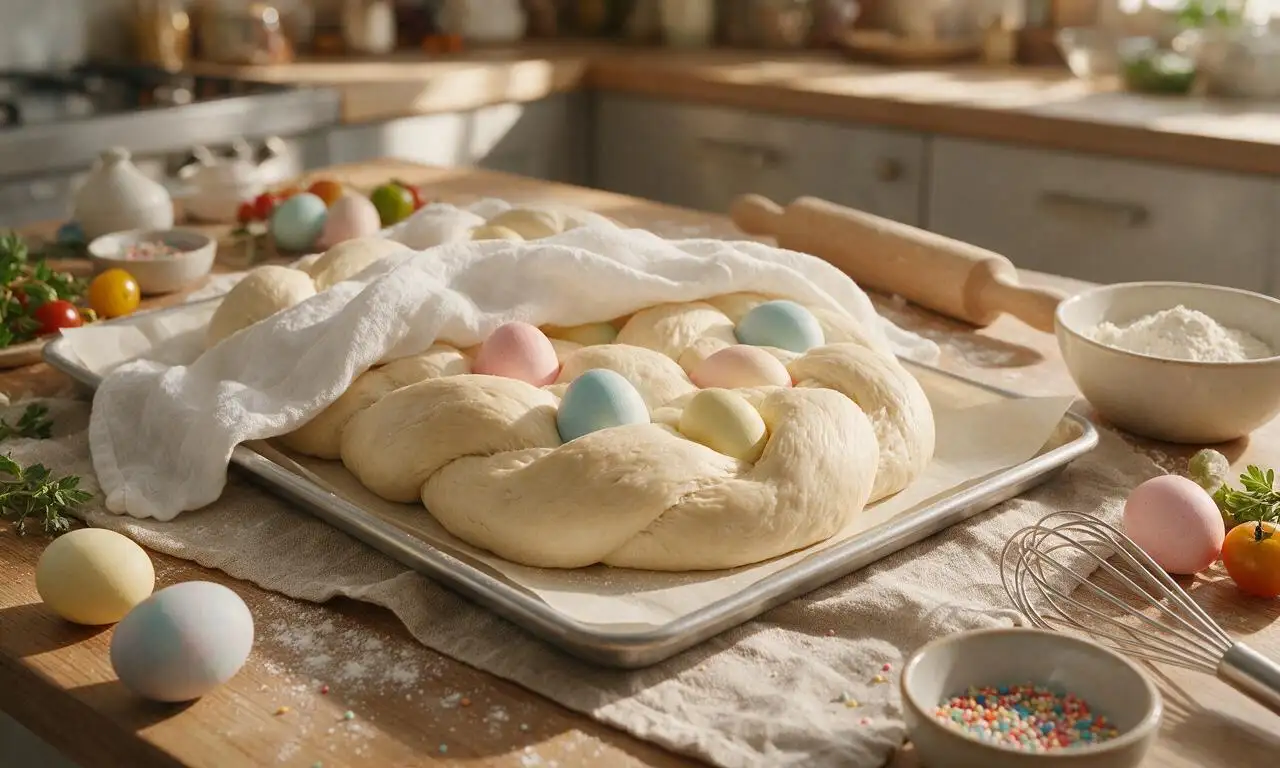
Leave the braided loaves on the parchment-lined baking sheet, leaving 8cm (3 inches) of open space between them to allow for expansion. Cover loosely with a clean kitchen towel, and let rise in the same warm, draft-free spot for 30-40 minutes until the loaves are visibly puffy and hold a shallow indent when gently pressed with a floured finger.
Step 5
step5:Complete second rise
6

Bake to golden brown

Preheat your oven to 180°C (350°F) while the loaves finish their second rise. Once risen, gently brush all exposed dough surfaces (avoiding the dyed egg shells) with the prepared egg wash, then sprinkle evenly with 30g nonpareil sprinkles if using. Bake for 22-27 minutes on the middle oven rack, until the loaves are deep golden brown and reach an internal temperature of 90°C (195°F) when measured with a digital food thermometer. If the tops brown too quickly, tent loosely with aluminum foil after 15 minutes of baking to prevent burning.

Step 6
step6:Bake to golden brown
7

Cool before serving

Once fully baked, remove the baking sheet from the oven and immediately transfer the loaves to a wire cooling rack. Let them cool completely for 30-40 minutes at room temperature before slicing, as the soft crumb will set properly as it cools. Serve sliced with butter or jam for Easter brunch.
Step 7
step7:Cool before serving

Tips

1.Always test your yeast before mixing: if the milk and yeast mixture does not foam after 7 minutes, your yeast is expired or the milk was too hot (killing the yeast) or too cold (not activating it), so start over with fresh yeast for a light, fluffy loaf.
2.Use raw, room-temperature dyed eggs tucked into the braids—they will cook perfectly to hard-boiled consistency during baking, so there is no need to pre-boil them, which prevents rubbery overcooked eggs.
3.For the most tender, even crumb, avoid adding extra flour while kneading unless the dough is actively sticking to your hands; too much extra flour will result in dense, heavy bread instead of the traditional soft, pillowy texture.

✨ You May Also Like

Desserts & Baking
🍜 Italy

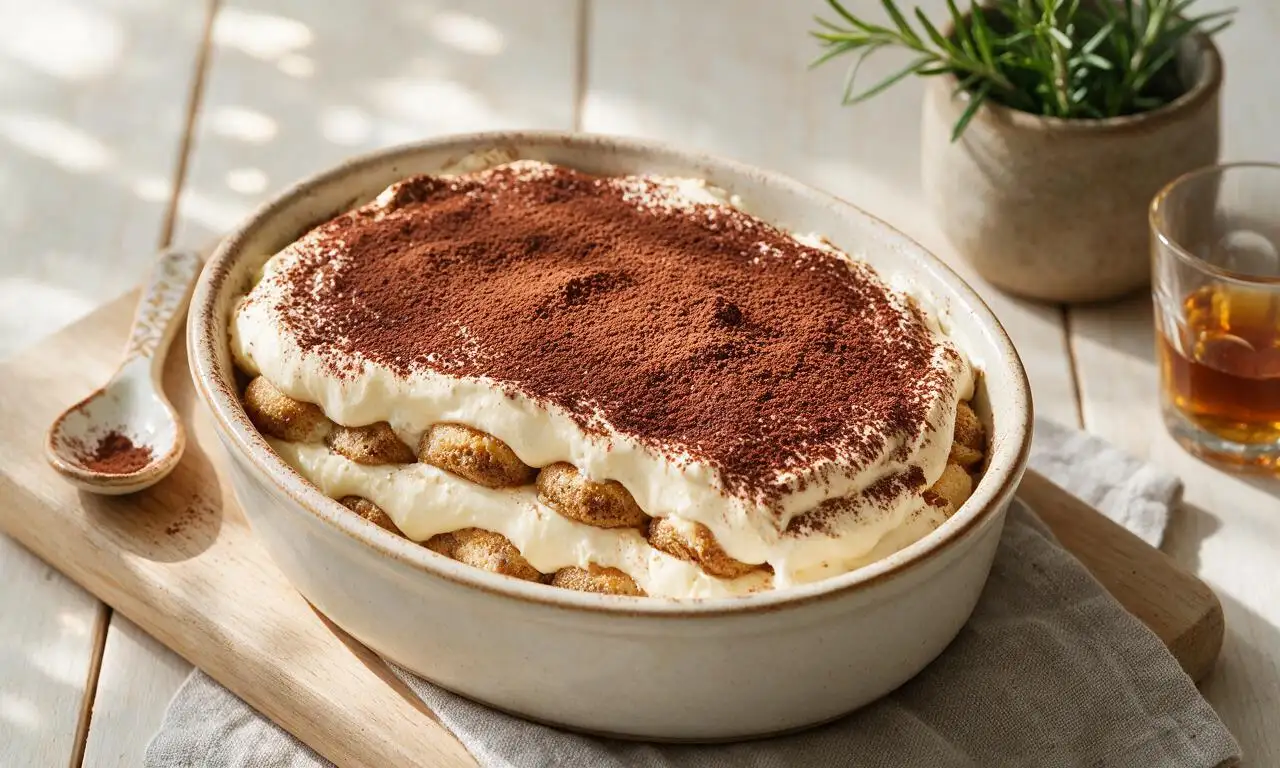
Creamy, coffee-kissed classic Northern Italian no-bake dessert, with layers of rum-spiked mascarpone cream, soft ladyfingers, and a rich cocoa dusting.

⏱️ 4 hours 3Desserts & Baking ★ 4.7
Desserts & Baking
🍜 France

Flaky, shatteringly crisp, buttery French croissants with golden exteriors and soft, airy layered interiors, perfect for pairing with coffee for a special morning treat.

⏱️ 12 hours Desserts & Baking ★ 4.5
Desserts & Baking
🍜 United States

Warm, spiced baked apples topped with a fluffy golden biscuit crust, this cozy dessert pairs perfectly with vanilla ice cream for cool-weather comfort.

⏱️ 55 minuteDesserts & Baking ★ 4.6
Desserts & Baking
🍜 United States

A star-spangled classic American blueberry pie with buttery flaky crust and bright sweet-tart filling, perfect for summer patriotic gatherings.

⏱️ 1 hour 25Desserts & Baking ★ 4.7
Desserts & Baking
🍜 United States

A beloved no-bake regional Maine candy with a chewy coconut-potato center coated in rich dark chocolate, a New England holiday staple since the 1870s.

⏱️ 2 hours 3Desserts & Baking ★ 4.8
Desserts & Baking
🍜 France

Luxuriously creamy, floral frozen custard made with aromatic Tahitian vanilla beans, boasting a smooth, rich texture that melts slowly on the tongue.

⏱️ 3 hours 3Desserts & Baking ★ 4.5

Italian Easter Bread (Pane di Pasqua):Frequently Asked Questions

1.Do the dyed eggs baked into the bread cook all the way through, or do I need to pre-boil them first? ▾
You’ll always want to pre-boil your dyed eggs to a firm hard-cook (9 minutes from a rolling boil) before tucking them into the braids. While the bread bakes at 350°F for 25-30 minutes, that heat won’t fully and evenly set egg yolks on its own, and pre-boiling prevents raw egg seepage that can discolor your soft bread crumb.
2.My active dry yeast didn’t foam when I proofed it—can I still use it for the dough? ▾
If your yeast doesn’t get foamy and bubbly after 5-10 minutes in warm (105-110°F) milk with a pinch of sugar, it’s dead, and you should toss it. Dead yeast won’t make your bread rise, leaving you with a dense, heavy loaf instead of the soft, pillowy texture this Easter bread is known for. Always check yeast expiration dates to avoid this common misstep.
3.Can I make the Pane di Pasqua dough ahead of time to cut down on Easter morning prep? ▾
Absolutely! After the first rise, punch the dough down, wrap it tightly in plastic wrap, and store it in the fridge for up to 24 hours. When you’re ready to bake, pull it out, let it rest at room temp for 30 minutes, braid it, add your eggs, complete the second rise, then bake as normal. This slow chill also deepens the bread’s subtle sweet, buttery flavor.
4.Why did my finished Pane di Pasqua turn out dense instead of light and soft? ▾
Dense loaves almost always trace back to three common issues: not letting the dough double in size for both rises, adding too much extra flour during kneading, or using inactive yeast. Aim for a soft, slightly tacky (not sticky) dough when kneading, and let rises happen in a warm, draft-free spot for the fluffiest results.
5.Should I dye the Easter eggs before tucking them into the bread, or color them after baking? ▾
Always dye your fully cooled, hard-boiled eggs and let the dye dry completely before placing them in the braided dough before the second rise. If you try to dye eggs after baking, you’ll get food coloring all over your golden bread crust, and excess dye moisture can make the areas around the eggs soggy. Pat dyed eggs dry gently before adding them.
6.How should I store leftover Italian Easter Bread to keep it soft for as long as possible? ▾
Once the bread is fully cooled to room temperature, wrap it tightly in two layers of plastic wrap or keep it in an airtight container at room temperature for up to 3 days. Avoid storing it in the fridge, as cold temperatures dry out the tender crumb and make it go stale faster. You can also freeze tightly wrapped loaves for up to 1 month.
7.Can I use instant yeast instead of active dry yeast if that’s what I have on hand? ▾
Yes, you can swap active dry yeast for instant yeast at a 3:4 ratio—for every 1 teaspoon of active dry yeast the recipe calls for, use ¾ teaspoon of instant yeast. You don’t need to proof instant yeast in warm milk; mix it straight in with dry ingredients to cut prep time, and note your rise times will be about 25% shorter.

Comments (10)

2 days ago

OMG this pane di pasqua turned out exactly like my nonna used to make! I was so nervous tackling a medium-difficulty recipe on a weeknight before Easter dinner, but the step-by-step instructions were so clear. My kids fought over the last slice, even the piece with the dyed hard-boiled egg tucked in the middle lol. SO good, will be making this every year from now on.

1 day ago

Wait did you use regular all-purpose flour or bread flour? I’m making this for our church potluck this weekend and don’t want to mess it up!

18 hours ago

So happy it brought back such sweet family memories for you! For anyone wondering, bread flour gives that perfect soft, chewy crumb we love in traditional pane di pasqua, but all-purpose works great too if that’s what you have on hand.

3 days ago

Game changer! I brought this to our extended family Easter brunch and everyone asked for the recipe. The only tweak I made was adding a little extra lemon zest to the glaze, it cut the sweetness perfectly. Total crowd pleaser, even my picky father-in-law went back for a second piece.

2 days ago

Love that lemon zest tweak! Citrus pairs so beautifully with the soft, buttery bread, I’ll have to try that next time I test this recipe. So glad it was a hit at your brunch!

1 week ago

Pretty solid recipe overall! I prepped the dough the night before and let it do the first rise in the fridge, which cut down on day-of work a ton. The bread came out light and fluffy, though I wish the glaze recipe made a little more — mine only covered half the loaves even when I spread it super thin. Still tasty, will double the glaze next time.

5 days ago

Wait, has anyone else had their dough not rise after the first proof? I followed the measurements exactly, used fresh yeast, and let it sit in a warm spot for the full hour but it barely doubled. I’m worried I messed it up before our family dinner tomorrow 😭

4 days ago

I had that happen once too! Turns out my kitchen was a little too cold — I turned my oven on for 1 minute to warm it up, turned it off, then stuck the dough in there with the door cracked and it puffed right up in 20 extra minutes!

4 days ago

Great tip from SunnyInSeattle! Yeast is super sensitive to temperature — if your dough is slow to rise, a slightly warmer (not hot!) draft-free spot is usually all it needs. You can also check that your water wasn’t too hot when you activated the yeast, as that can kill the yeast cells and prevent rising. I’m sure it’ll turn out delicious!

yesterday

My kids loved it! I let them help dye the eggs to tuck into the braids, and they were so proud to show off the bread to their grandparents when they came over for Easter. It was such a fun, festive activity to do together, and the bread tastes even better than the ones we used to pick up from the Italian bakery down the street. 10/10!

20 hours ago

That’s such a cute idea to let the kids help dye the eggs! I’ve been looking for a fun Easter tradition to start with my crew, I’m definitely stealing this.

2 weeks ago

Made this for our post-hike Easter potluck with the trail crew, and it was gone in 10 minutes flat. I didn’t do the dyed eggs since half the group doesn’t love hard-boiled eggs, and it was still incredible. The anise seed gives it such a warm, cozy flavor that I didn’t expect, in the best way.

2 weeks ago

So glad it worked out even without the dyed eggs! The anise is such a classic touch in traditional pane di pasqua, I’m happy that flavor landed for you and your trail crew. Thanks for leaving a review!

2 hours ago

Took me a little longer than the listed 2 hours 50 minutes because my braiding skills are definitely rusty, but it was so worth the extra time. The bread was soft, slightly sweet, and the colorful sprinkles on top made it look so festive on my holiday table. Already sent the recipe to my sister and my cousin!

5 minutes ago

Can you freeze this bread after baking? I love having homemade bread on hand for quick breakfasts during the week, but I don’t know if the glaze and hard-boiled eggs hold up well in the freezer. Don’t want to waste a whole loaf if it gets soggy!

1 minute ago

I froze half my loaf last week! I skipped the eggs in the portion I froze, waited until it was fully thawed to add the glaze, and it tasted just as fresh as the day I baked it. Worked like a charm!

just now

Great question! We recommend freezing the unglazed bread (without the dyed hard-boiled eggs, since those get rubbery in the freezer) for up to 3 months. Thaw it at room temp, then add the glaze and sprinkles right before serving for the best texture, just like FreezerMealFan did!

30 minutes ago

Whoa, I was worried the medium difficulty rating meant I’d be stuck in the kitchen all day, but the braiding was way easier than I thought it would be after watching a quick 10-second tutorial. The bread came out golden brown, smelled like absolute heaven, and my roommate already asked me to make it again for his birthday next month. No notes!

10 minutes ago

Wait did you do the 3-strand braid or the more complicated twisted one? I’m a total beginner and don’t want to end up with a lumpy mess lol

just now

Just pulled my loaves out of the oven and they look perfect! I added a handful of golden raisins to the dough because my grandma always did that in her Easter bread, and the smell is transporting me right back to her kitchen when I was little. Can’t wait to slice into it after Easter mass tomorrow, I know it’s gonna be SO good.