
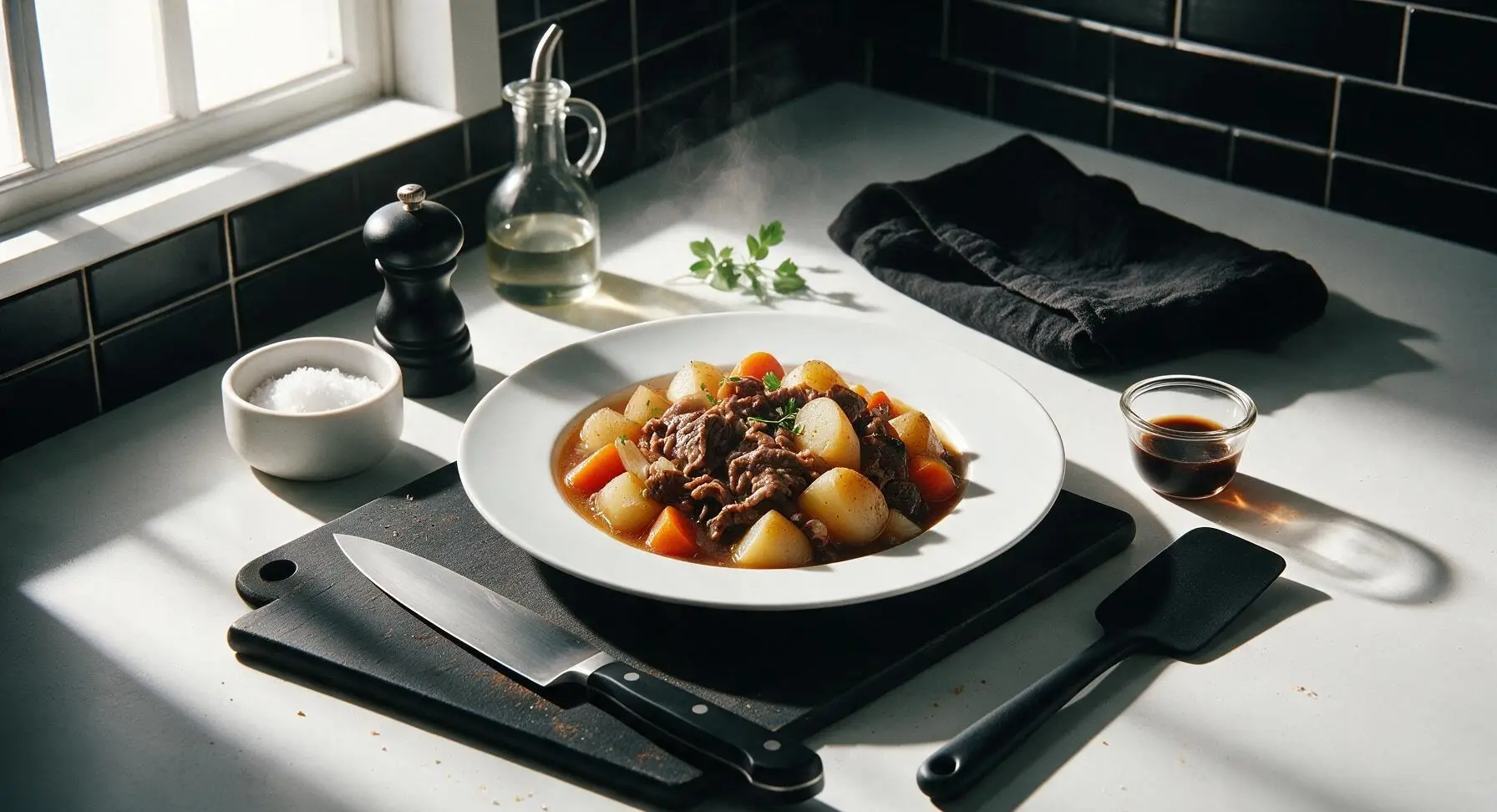
japanese beef stew
intro
Tender, umami-rich simmered beef and root vegetables in a sweet-savory dashi-soy broth, this classic Japanese comfort food is made for cozy cold-weather family meals.
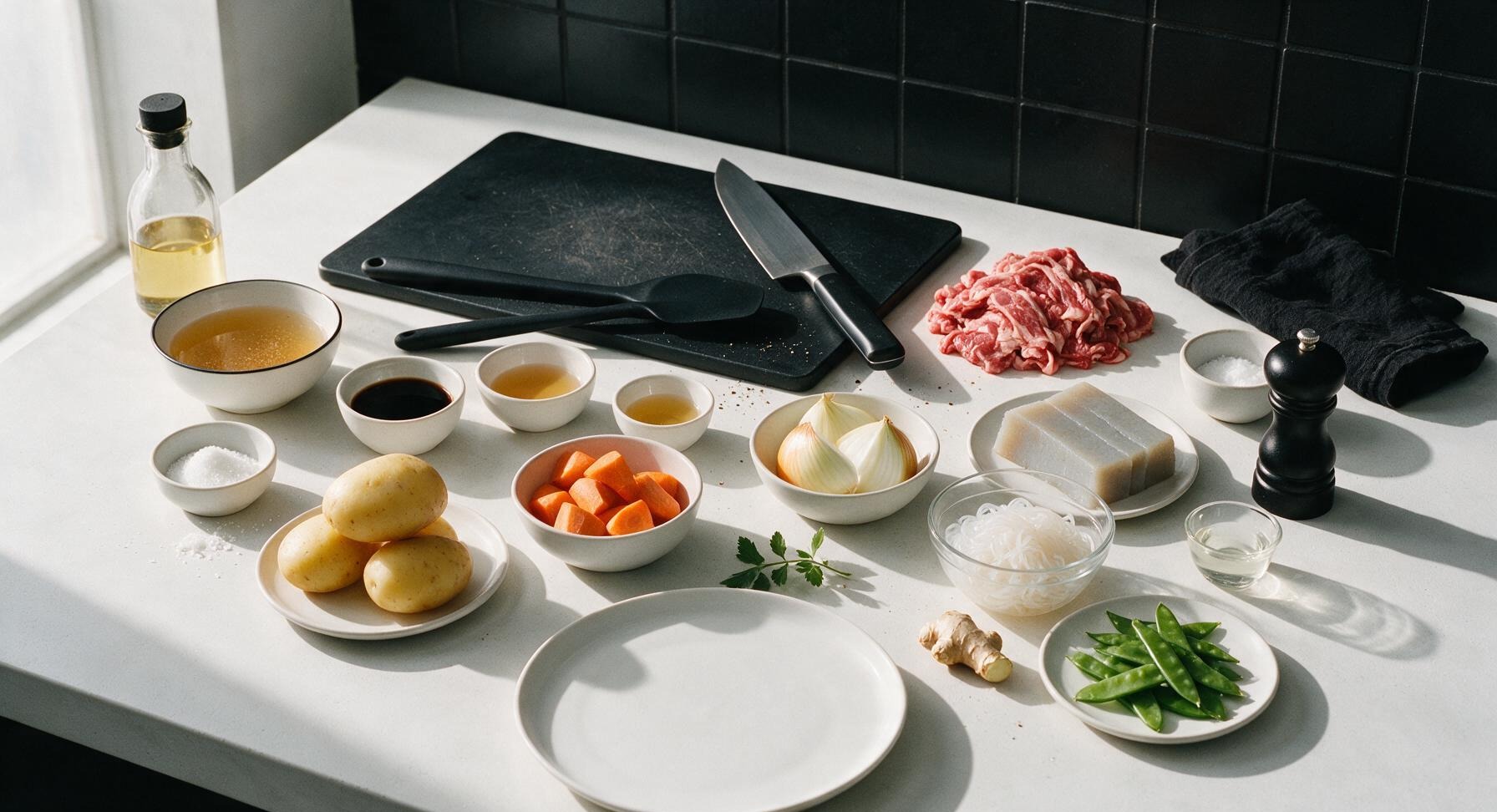
Ingredients
Steps
Prep All Vegetables
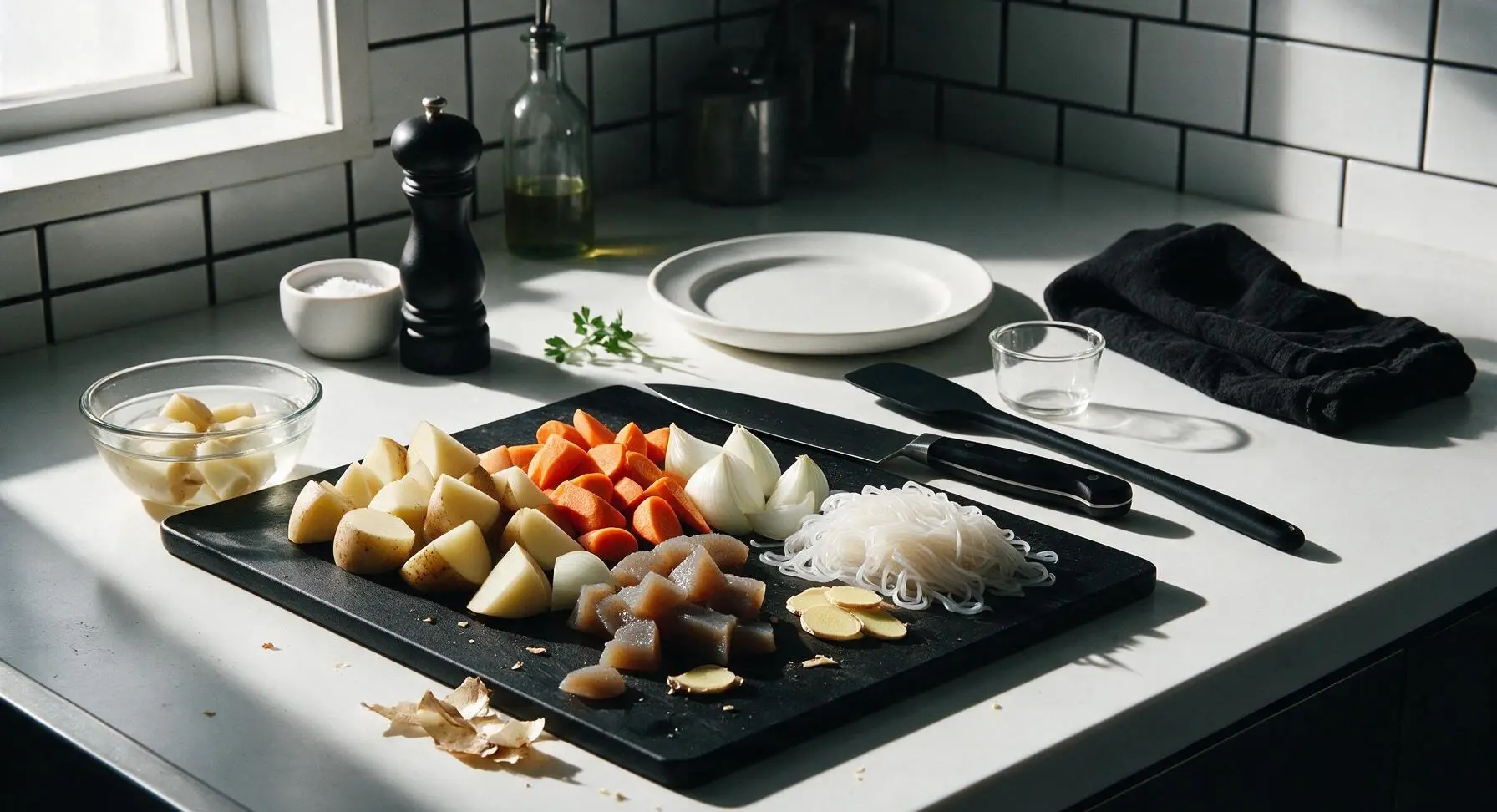
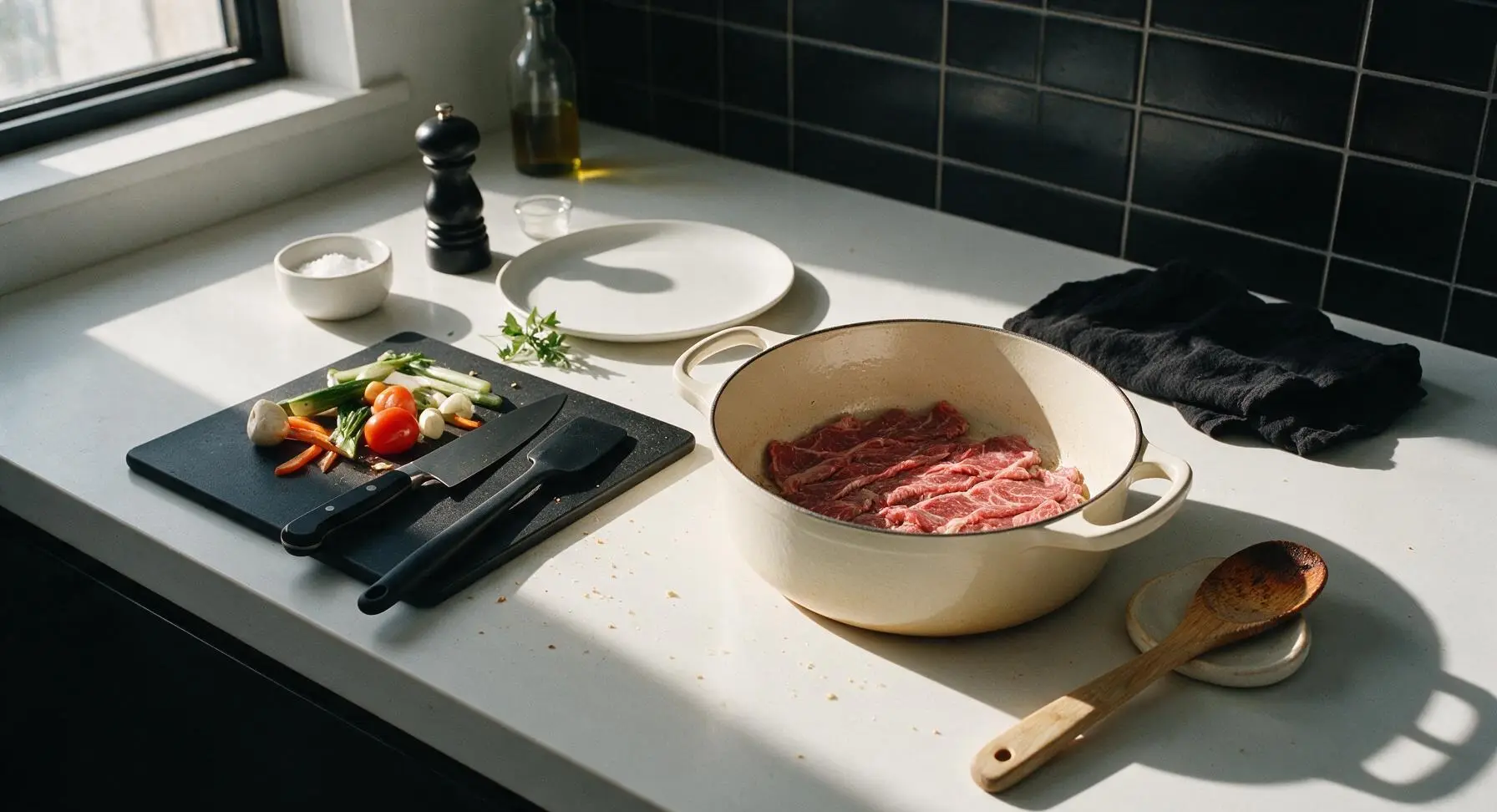
Place the maple cutting board center-left on the counter, with the santoku knife resting on its top edge. Peel potatoes and cut into 5cm rough chunks, submerge in cold water for 10 minutes to remove excess starch. Cut carrots into 4cm rolling wedges, slice onion into 2cm thick wedges, tear konnyaku into 3cm bite-sized pieces (torn edges absorb flavor better than clean cuts), cut rinsed shirataki noodles into 10cm lengths for easier eating, and slice ginger into thin 2mm coins. Drain potatoes well after soaking. Pat all prepped vegetables dry lightly with the edge of the linen towel if damp.
Blanch Konnyaku Briefly
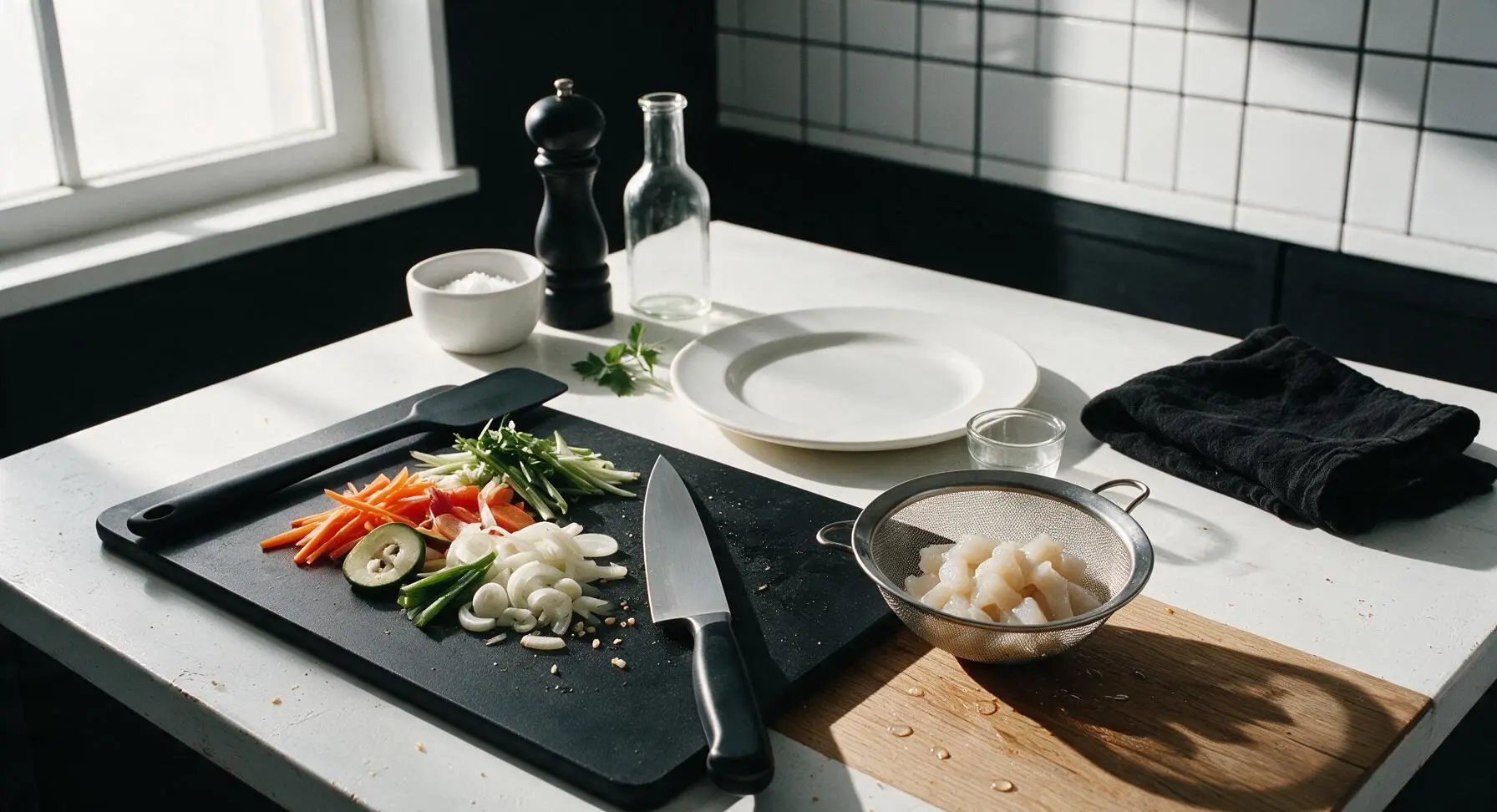
Bring a small stainless steel saucepan of water to a rolling boil, add torn konnyaku pieces and blanch for 2 minutes to remove any bitter earthy taste. Use the fine-mesh strainer to lift konnyaku out, shake off excess water, and set aside on a small corner of the cutting board. Discard blanching water.
Sear Beef Slices Lightly
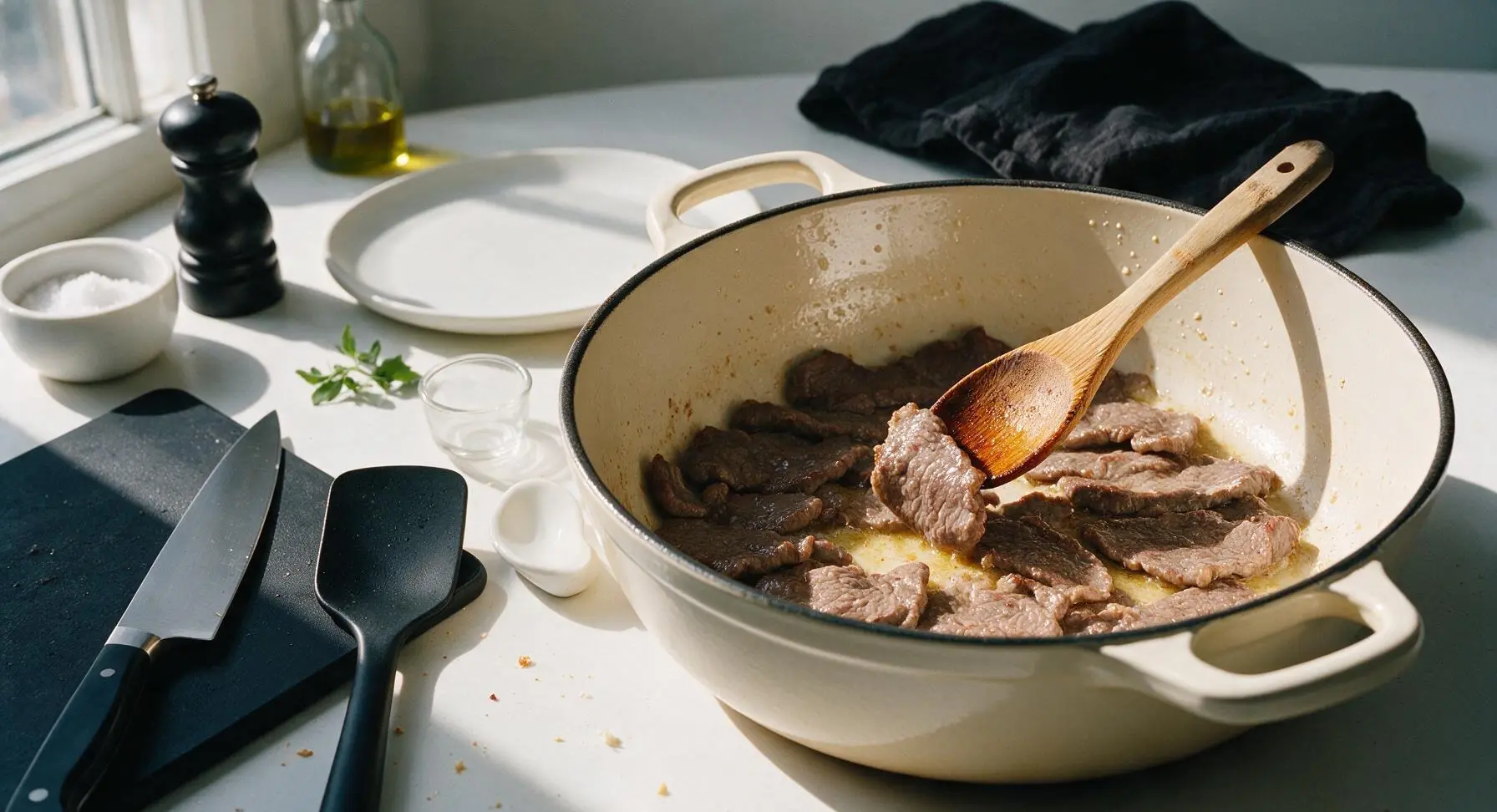
Place the cream enameled Dutch oven center-right on the counter, set the ceramic spoon rest next to it, and heat the pot over medium heat (170C/340F) for 2 minutes. Add beef slices in a single layer, cooking for 1 minute per side until just lightly browned on the edges (do not fully cook through, as it will simmer later). Use the hinoki wood spoon to turn the beef slices, transferring seared pieces to a clean plate temporarily once browned. Leave any rendered beef fat in the pot.
Sauté Aromatics and Veg
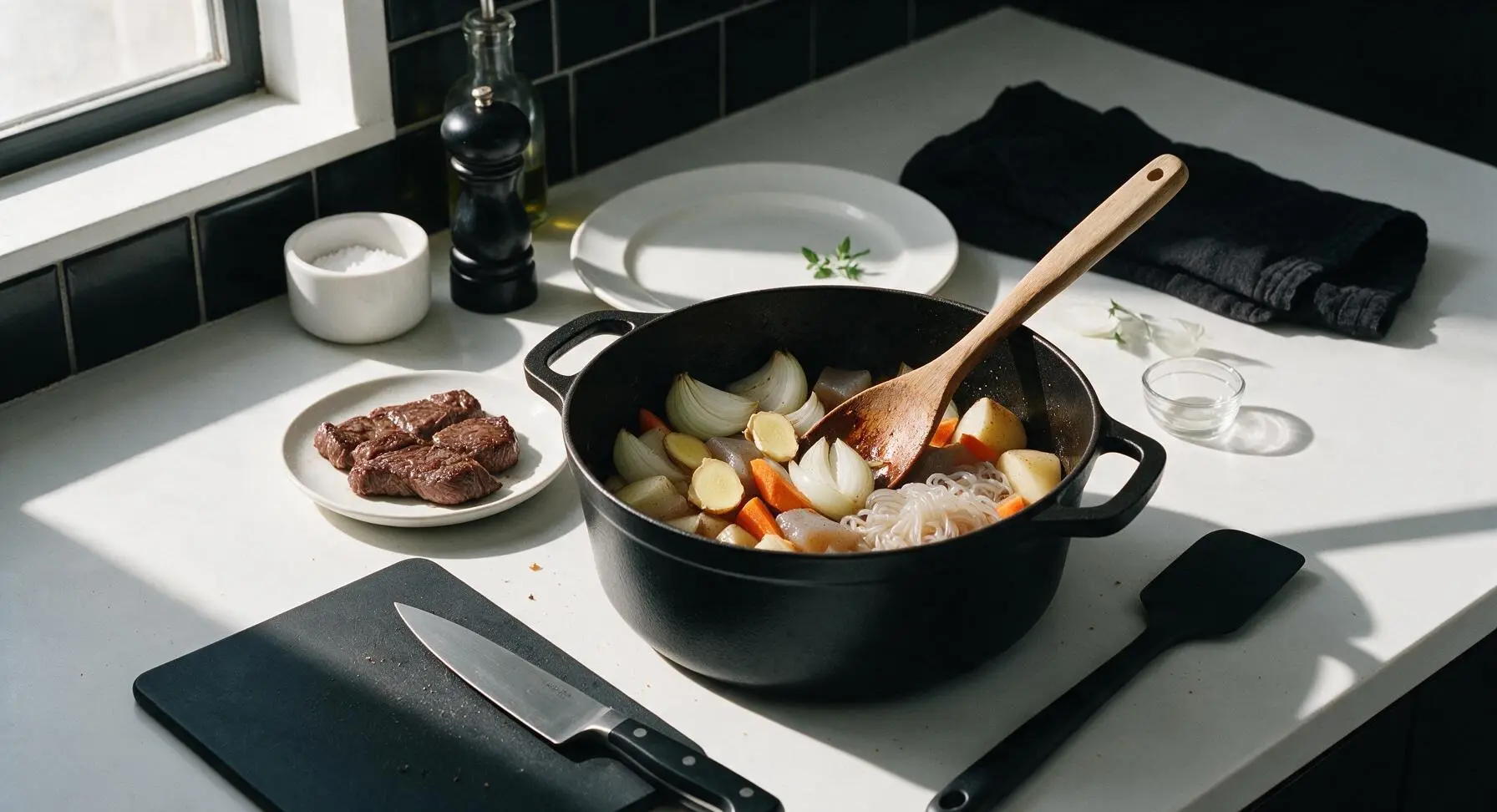
Add ginger slices and onion wedges to the remaining beef fat in the Dutch oven, sauté over medium heat for 3 minutes until onions turn translucent and fragrant. Add carrot wedges, drained potato chunks, blanched konnyaku, and cut shirataki noodles, stirring gently with the wood spoon to coat all pieces in fat for 2 minutes. The vegetable surfaces will take on a slight glossy sheen when fully coated.
Add Broth and Seasonings
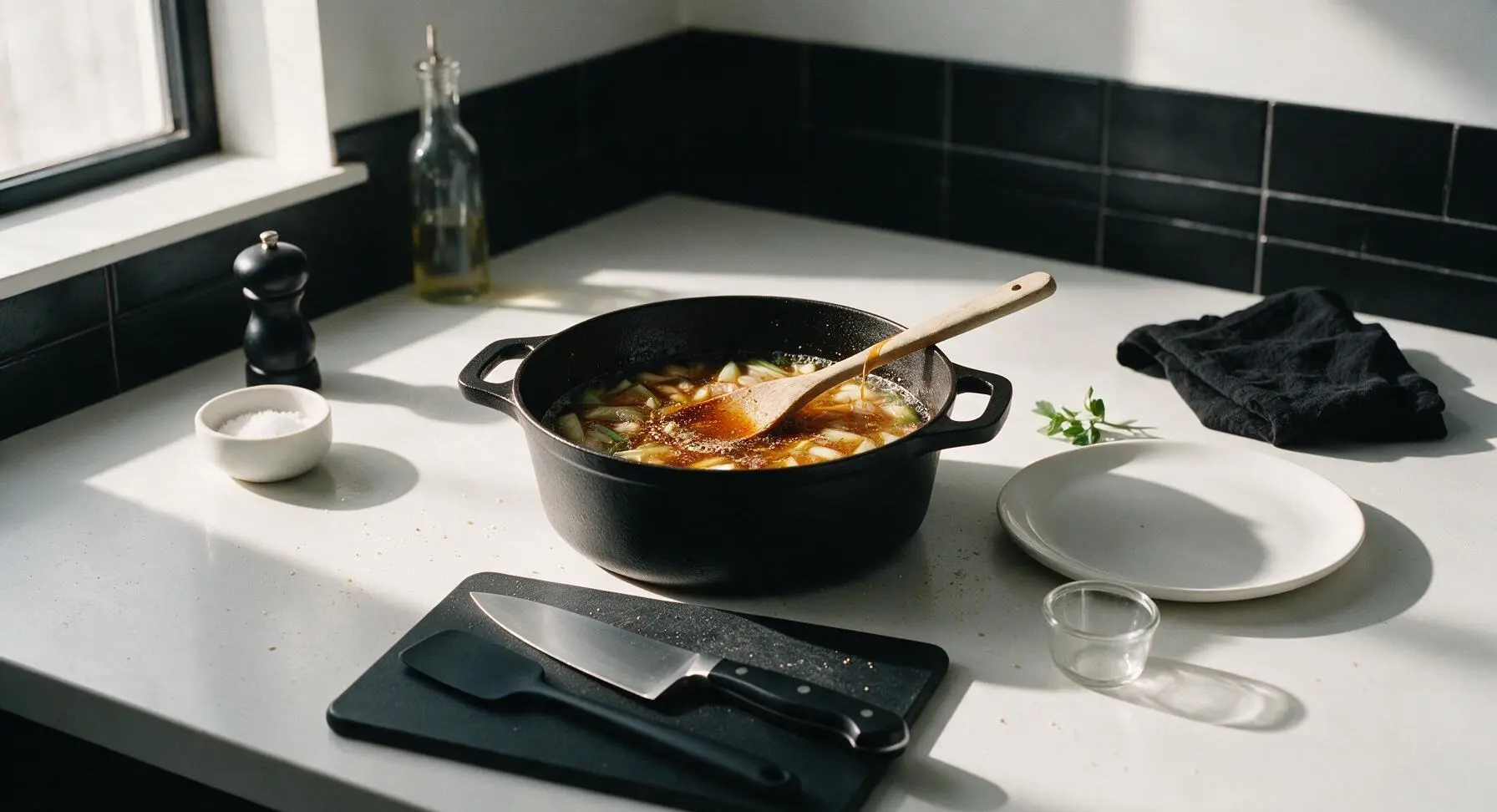
Pour dashi stock, soy sauce, mirin, cooking sake, and sugar into the Dutch oven, stirring gently to dissolve the sugar. The liquid should just barely cover the top of the vegetables; add a splash more dashi if needed to reach this level. Turn heat up to medium-high to bring the liquid to a gentle simmer (small bubbles breaking steadily at the surface, not a rolling boil).
Simmer Until Tender
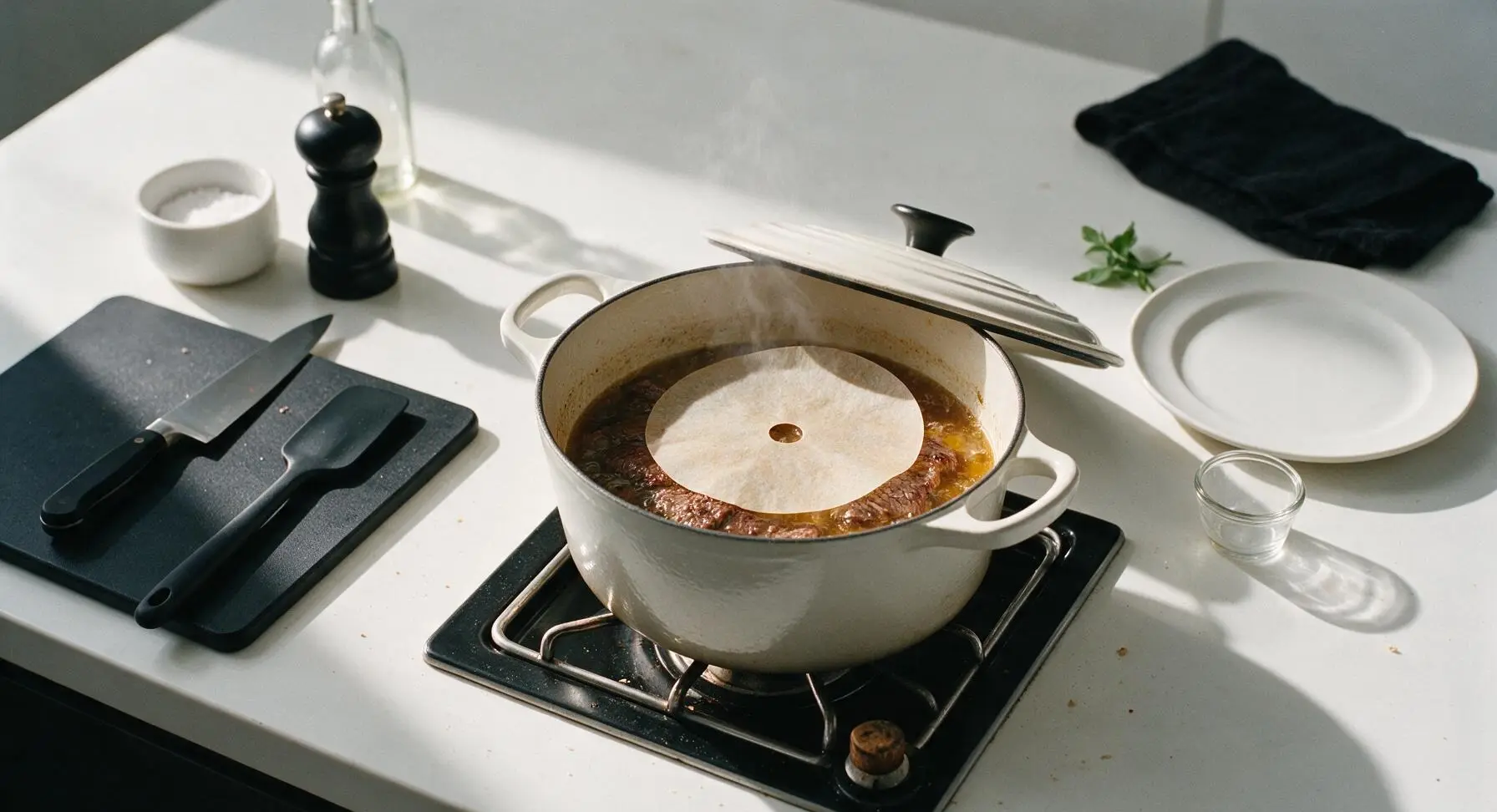
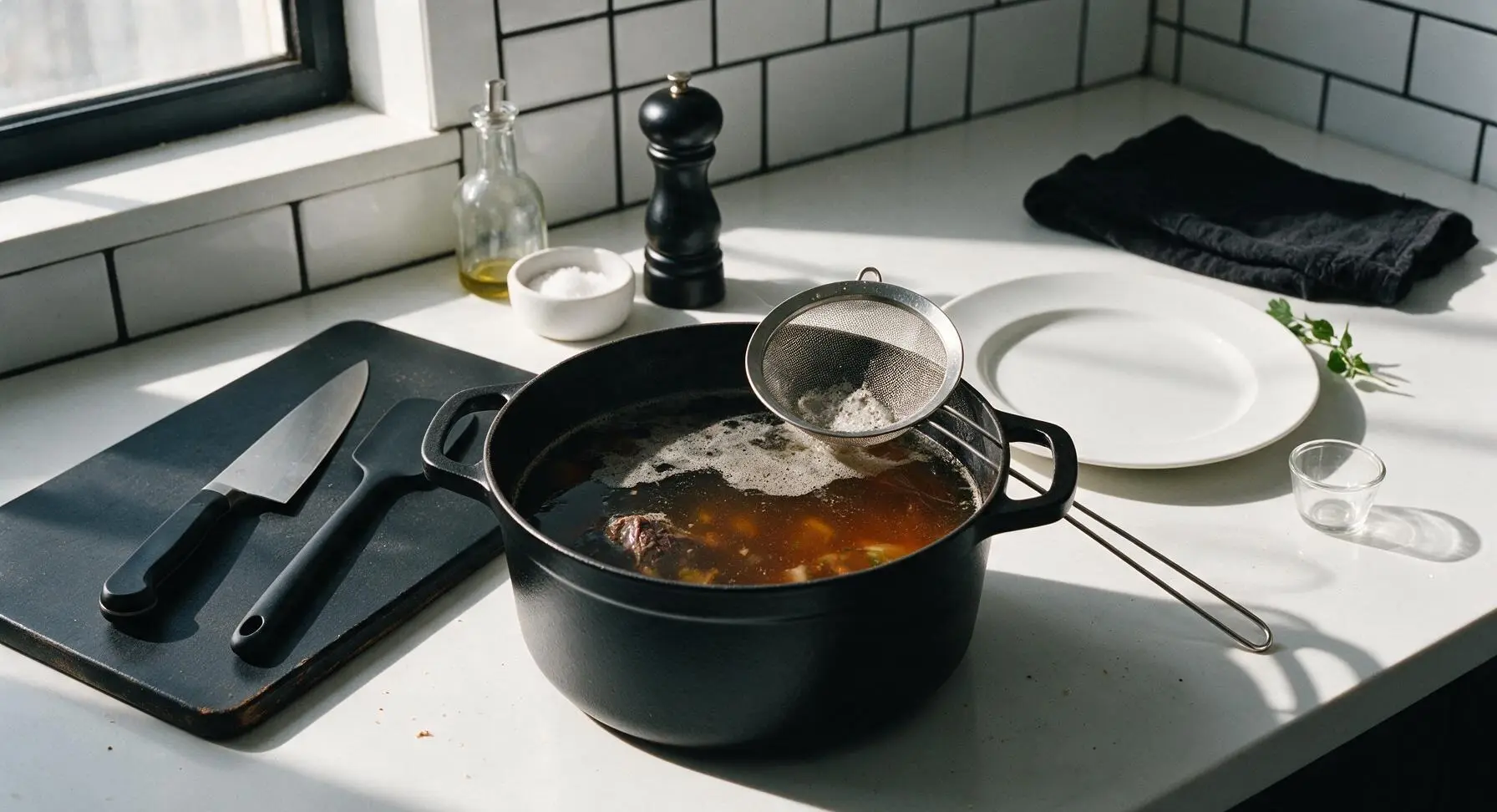
Once liquid reaches a gentle simmer, return the seared beef slices to the pot, tucking them down into the liquid. Place a circle of parchment paper cut to fit the pot diameter (serving as a makeshift otoshibuta/drop lid) on top of the stew to keep ingredients submerged, with a 2cm vent hole cut in the center. Reduce heat to low (130C/265F), cover the Dutch oven with its own lid, and simmer for 40 minutes. After 20 minutes, use the fine-mesh skimmer to remove any grey foam or scum that rises to the surface for a clear broth. Do not stir aggressively during simmering to keep vegetable chunks intact.
Blanch Snow Peas
While the stew finishes simmering, bring a small pot of salted water to a boil, add trimmed snow peas and blanch for 45 seconds until bright crisp-tender green. Immediately transfer to an ice water bath to stop cooking and lock in color, then drain well and set aside in the small ceramic ramekin. Once the stew has simmered 40 minutes, test potato tenderness with the wood cooking chopsticks: the chopstick should slide through a potato chunk with no resistance when done.
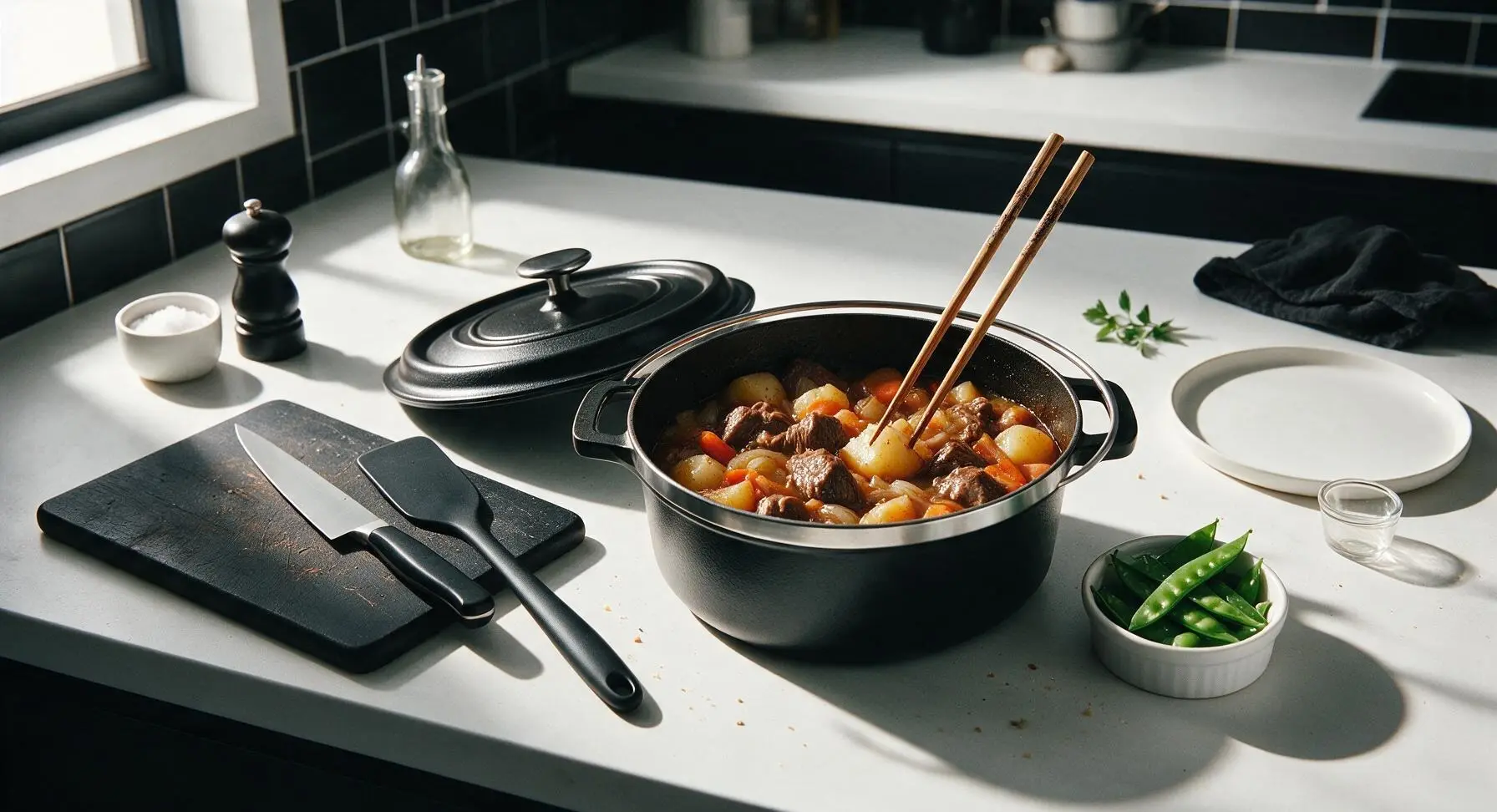
Plate and Serve
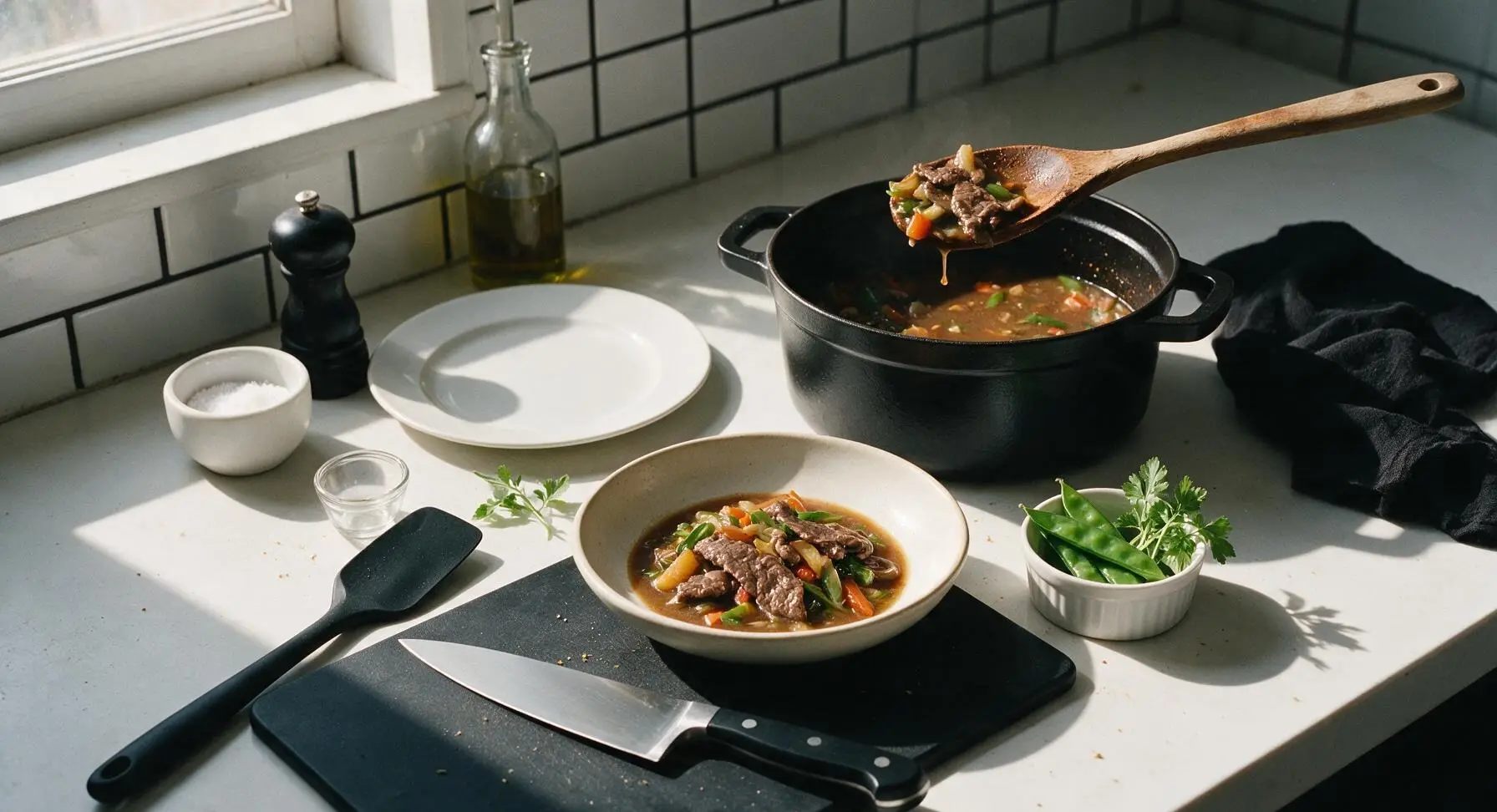
Ladle generous portions of stew into the shallow cream-white ceramic serving bowl, arranging 3-4 beef slices on top of the vegetable and broth mixture for visibility. Tuck 3-4 blanched snow peas against the side of the bowl, and place a small sprig of mitsuba from the glass cup as garnish. Let rest 2 minutes before serving to allow flavors to meld.
Tips
2.Tear konnyaku into pieces instead of cutting it with a knife: rough, uneven torn edges create more surface area to soak up the savory dashi broth, resulting in far more flavorful bites than smooth, knife-cut edges.
3.Use a drop lid (otoshibuta) while simmering: it keeps ingredients evenly submerged in broth without constant stirring, which prevents potato chunks from breaking apart and ensures even cooking. A circle of parchment paper with a 2cm central vent hole works as a perfect substitute if you don’t have a traditional wooden drop lid.




OMG this nikujaga was SO good for our Sunday family dinner! I was worried it would be too complicated for a weeknight but 55 minutes is totally doable even on a busy school night. My 7 year old asked for seconds before he even finished his first bowl, total win.
Brought this to my office potluck last week and people were scraping the pot clean! So many people asked for the recipe, I told them it was way easier than it tastes — nobody believed me that it only takes under an hour to make. The savory-sweet broth is chef’s kiss.
Added this to my weekly meal prep rotation! It reheats like an absolute dream, tastes even better the second day once all the flavors meld together. I swapped in extra carrots because I love them, worked perfectly. 10/10 no notes.
As someone who barely knows how to boil water, this was shockingly easy to pull off! I was craving Japanese takeout but didn’t want to spend $20 on delivery, this hit the spot for a fraction of the cost. Only reason it’s not 5 stars is I forgot to buy green beans so I skipped them, totally my bad! Will make again for sure.
Used homegrown potatoes and green beans from my backyard garden for this and it turned out amazing! The beef got so tender, I didn’t even have to simmer it for hours like other stew recipes. Perfect cozy meal for a rainy Florida evening.
This looks so good, I’m about to start making it for dinner tonight! Quick question: do I have to use thinly sliced beef for this? The only beef I have in my freezer right now is cubed chuck roast, would that work instead?
My kids are so fussy about any food that isn’t chicken nuggets, but they devoured this! I cut the potatoes extra small so they were easier for my toddler to pick up with her fork, no complaints at all. Game changer for weeknight dinners.
Made this after a long cold hike last weekend and it was the exact cozy meal I needed. I didn’t have shirataki noodles so I used udon noodles instead, and it was chef’s kiss. So warm and comforting.
Made this for my partner for our at-home date night when we were doing a Japanese food themed night, and he said it was better than the nikujaga we had at our favorite local izakaya! High praise for sure.
Was looking for a gluten free Japanese comfort food recipe and this fit the bill! I used tamari instead of regular soy sauce and it tasted totally authentic, no weird aftertaste at all. So happy to add this to my rotation.
Wait, when do you add the potatoes? I got distracted while cooking and added them way too early, they turned super mushy. Tasted good but texture was off. Any tips for next time?
Served this with a side of steamed rice and pickled daikon for our Sunday supper and everyone raved. It’s so nice to have a new stew recipe that doesn’t require hours of babysitting on the stove.
This was so good! I added a little extra ginger and a pinch of red pepper flakes for a tiny kick, and it was perfect. Not too spicy, just a little extra warmth. 10/10 will make again for my roommates.
This recipe looks absolutely amazing, I’ve been craving nikujaga for weeks! Can I make this fully vegetarian? My partner doesn’t eat meat, and I’d love to make this for our dinner next week but don’t want to make two separate meals.
Game changer for freezer prep! I made a double batch, froze half in individual portions, and they thaw and reheat perfectly for busy work lunches. No sogginess, no weird texture, just as good as fresh.
Tasted great but I thought it was a little too sweet for my taste! I followed the recipe exactly but next time I’ll cut back a little on the sugar, I prefer more savory stews.
This tastes exactly like the nikujaga my Obaa-chan used to make when I was a kid growing up on Okinawa! I haven’t had it in years because I thought it would be too hard to replicate, but this was spot on. I cried a little eating the first bite, thank you so much for this recipe.