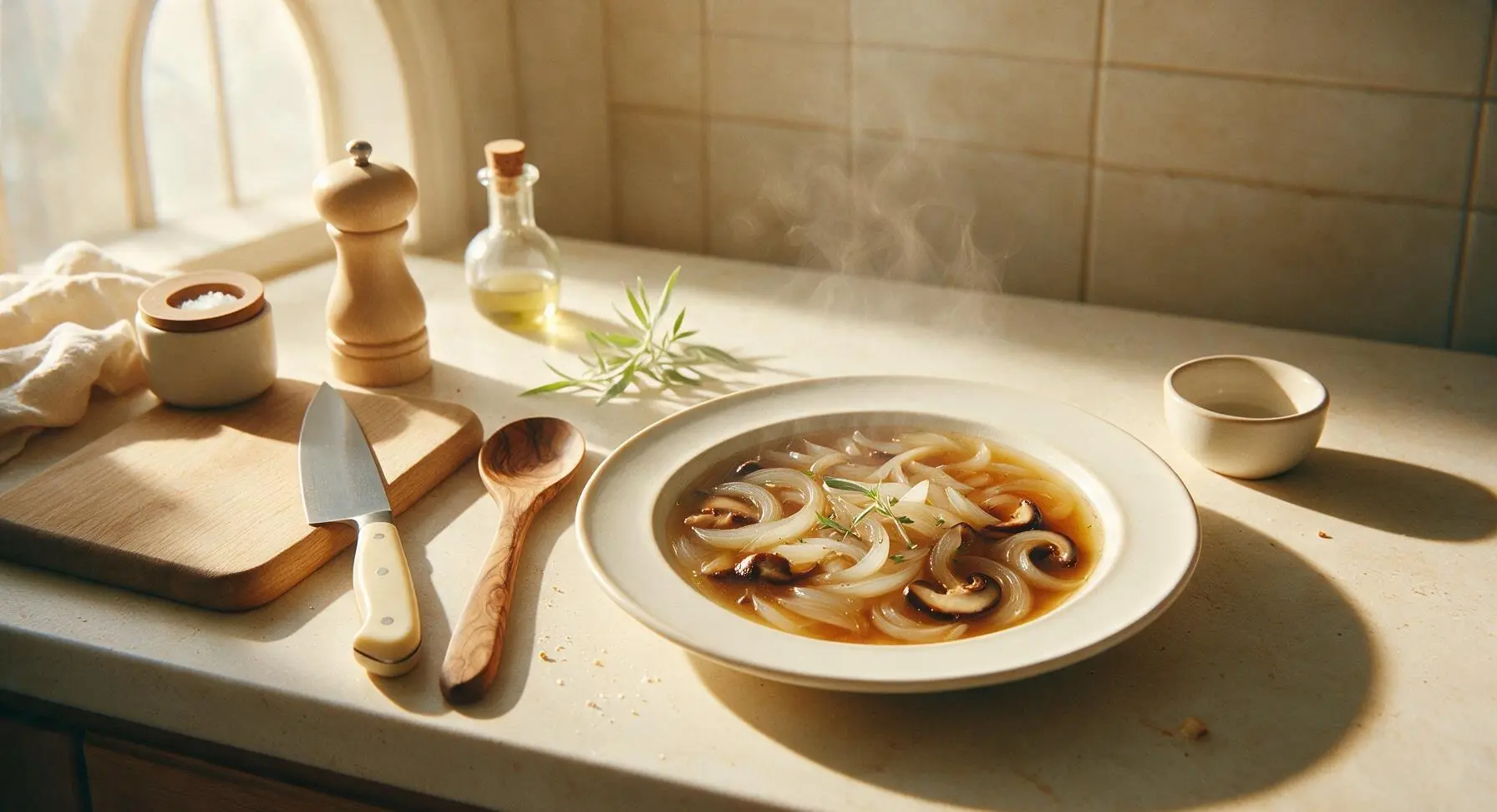
japanese onion soup

title 1
japanese onion soup
⏱️ cook time 25 minutes
🍽️ servings 4
⚡ Difficulty easy

intro

Light, umami-rich clear amber broth brimming with tender sweet onion and earthy shiitake, the classic Japanese steakhouse starter made simple for cozy home meals.

Ingredients
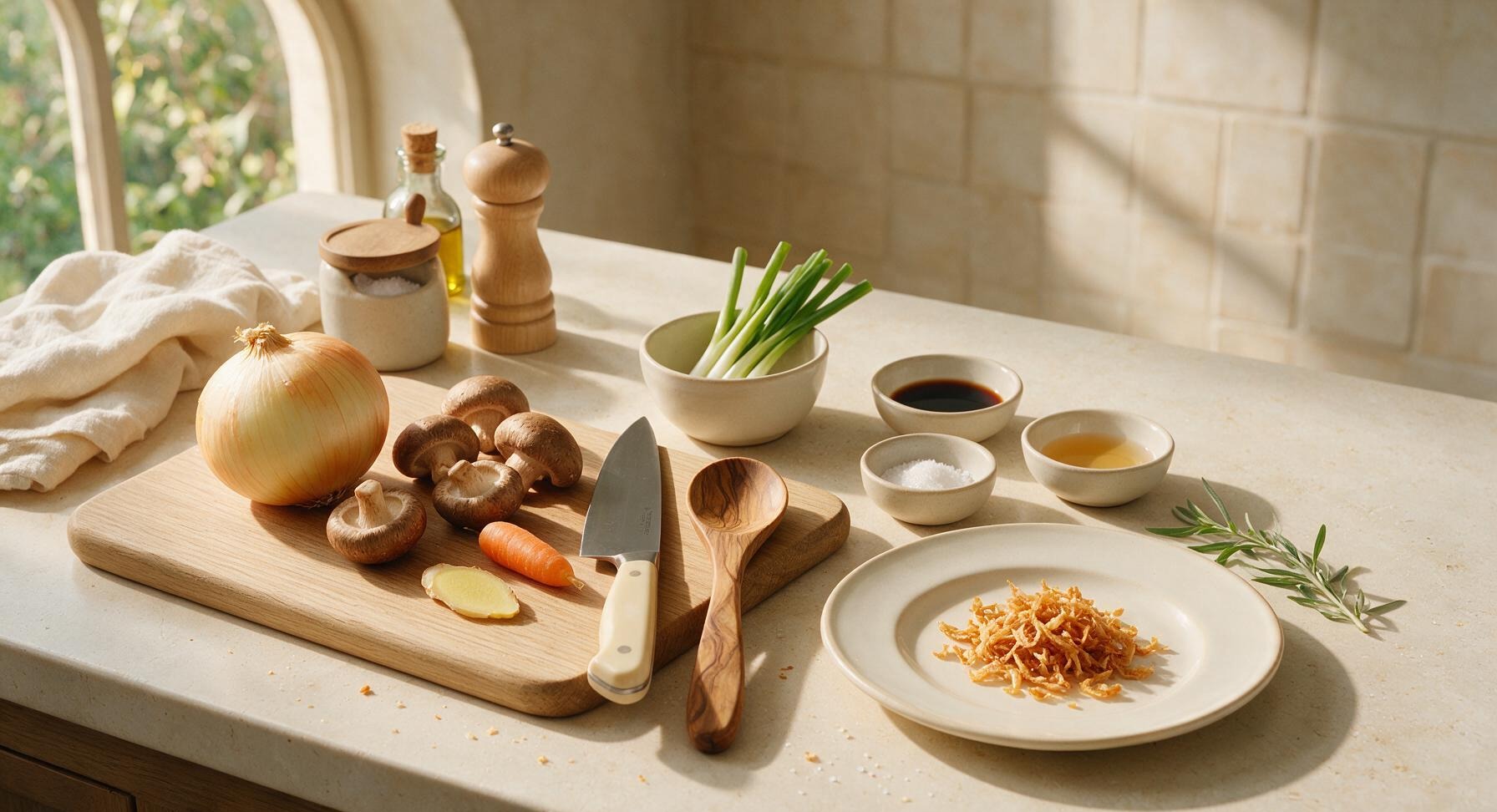
Yellow onion 300g (1 large)
Low-sodium dashi stock 4 cups (960ml)
Shiitake mushrooms 60g (4 medium)
Small carrot 70g (1 small)
Fresh ginger 5g (1 thin slice, peeled)
Scallions 30g (2 stalks, green parts only)
Light soy sauce (usukuchi) 1 tbsp (15ml)
Mirin 1 tsp (5ml)
Fine sea salt 1/4 tsp (1.5g)
Crispy fried onions 2 tbsp (10g)

Steps

1

Prep Soup Aromatics

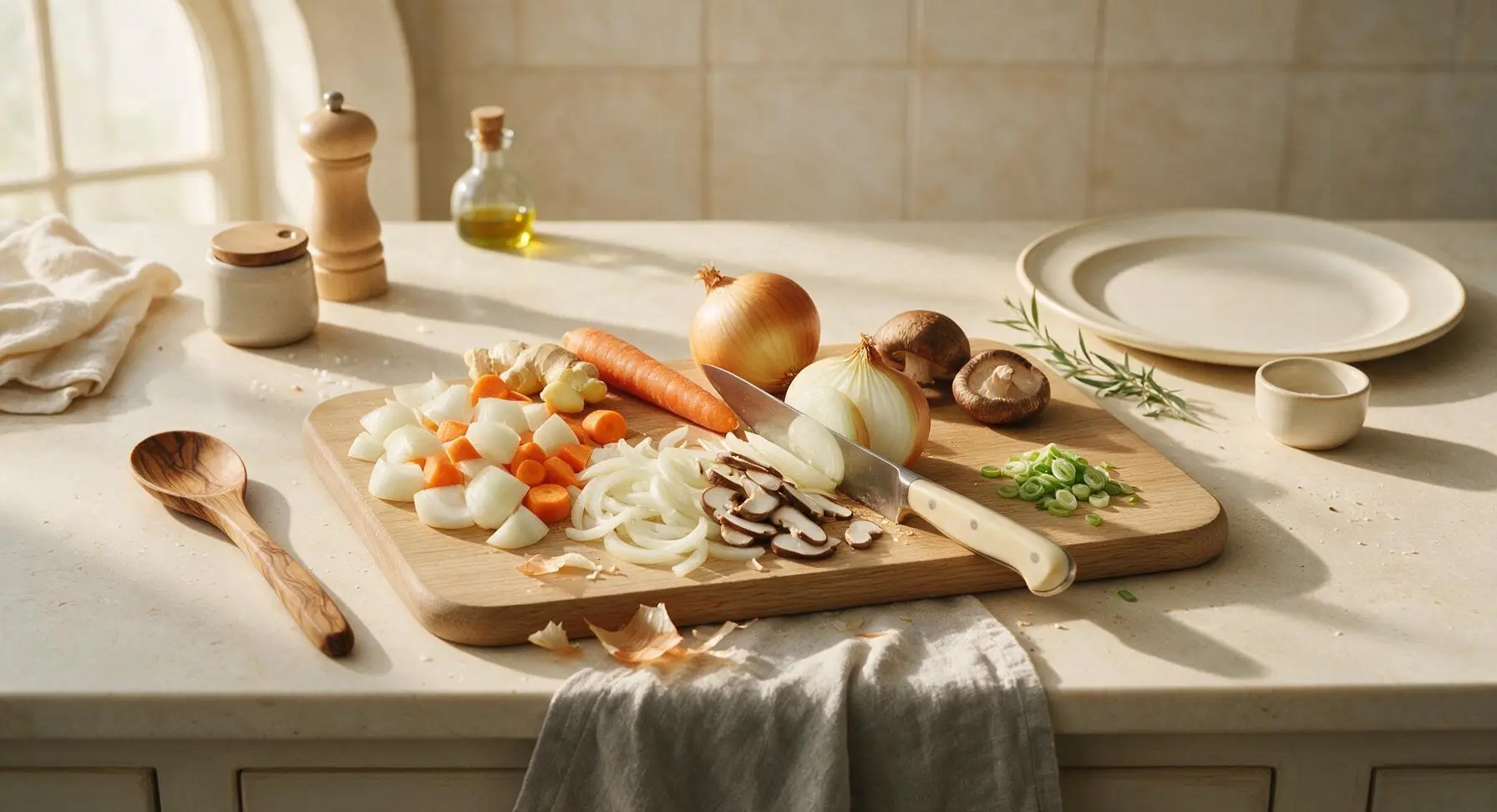
Place the whole yellow onion on the beech wood cutting board. Use the 6-inch matte black-handled chef knife to cut half the onion into 2cm thick chunks for the broth base, and slice the remaining half into thin 3mm half-moons for the finished soup. Cut the small carrot into 2cm chunks, peel the thin ginger slice, wipe any dirt from the shiitake mushroom caps and slice them into 3mm thin strips, and thinly slice the green parts of the scallions into 5mm strips for garnish. Pile the chunked broth vegetables on the left side of the board, keep the thin half-moon onion slices and shiitake slices in a separate middle pile, and set the sliced scallion garnish in a small pile on the right side of the board.
Step 1
step1:Prep Soup Aromatics
2

Simmer Broth Base

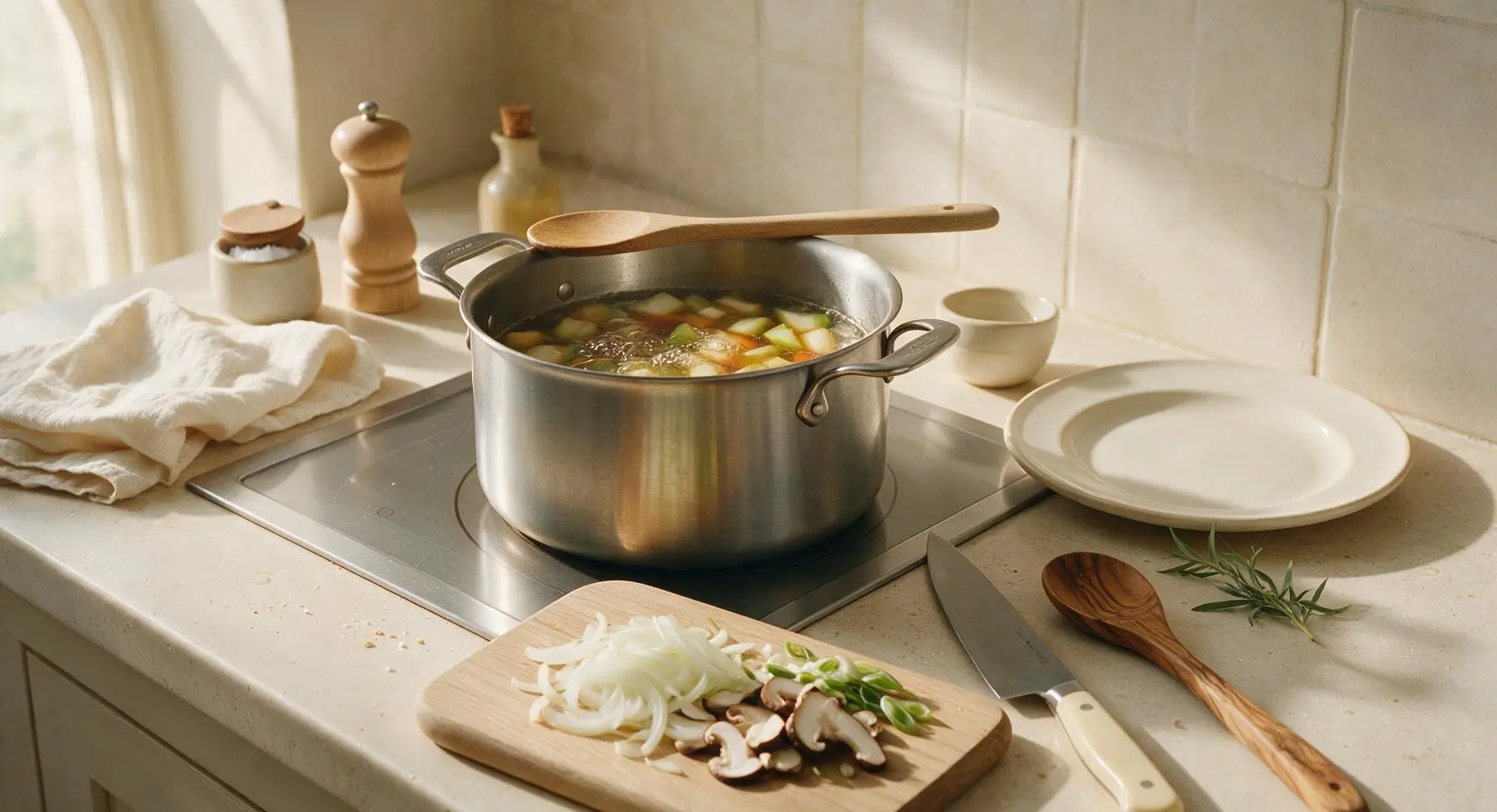
Pour the 4 cups of dashi stock into the 4-quart brushed stainless steel stock pot, set heat to medium to bring the stock to a gentle simmer (85C / 185F, with small bubbles rising slowly, no rolling boil). Add the chunked onion, carrot chunks, and peeled ginger slice to the pot. Let the mixture simmer uncovered for 15 minutes, adjusting heat as needed to maintain a soft bubble, not a hard boil. The vegetables will soften and release their sweet, earthy aroma into the stock as they cook.
Step 2
step2:Simmer Broth Base
3

Skim Broth Impurities

After 15 minutes of simmering, use the fine-mesh stainless steel skimmer to gently lift any pale, foamy impurities that rise to the surface of the broth. Skim only the light foam, not the flavorful stock itself, and deposit the collected foam into the small white ceramic scrap bowl beside the pot. This step ensures the finished soup is perfectly clear, not cloudy.
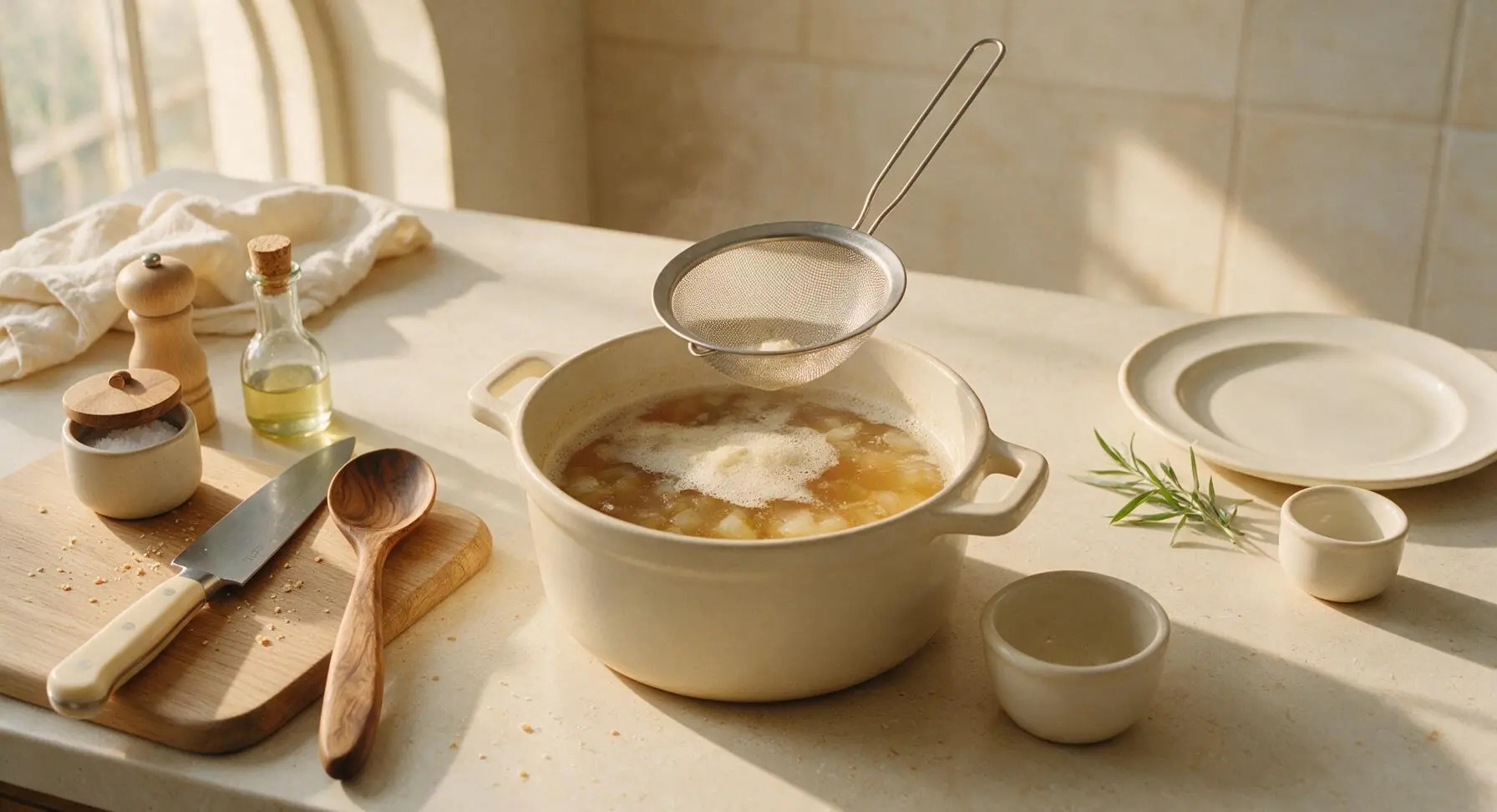
Step 3
step3:Skim Broth Impurities
4

Strain Aromatic Solids

Once the broth has simmered for 15 total minutes and smells deeply of sweet onion, use the skimmer to remove all chunked onion, carrot, and ginger from the pot, leaving only clear, pale amber broth behind. Deposit all spent vegetable chunks into the scrap bowl; these have released all their flavor and will not be served in the finished soup.
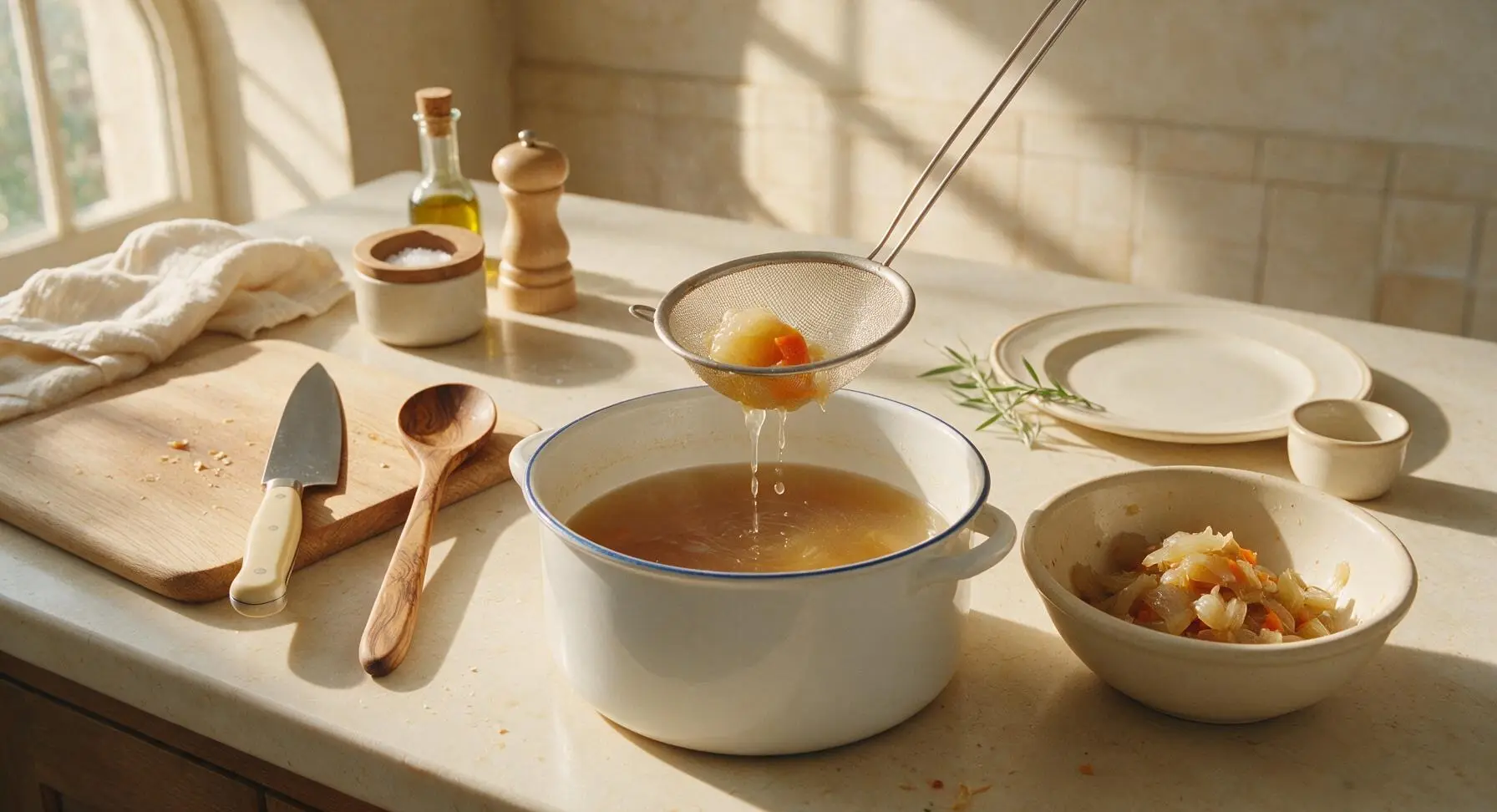
Step 4
step4:Strain Aromatic Solids
5

Cook Tender Vegetables

Add the reserved thin half-moon onion slices and thinly sliced shiitake mushrooms to the clear strained broth. Let the mixture simmer for an additional 5 minutes, until the onion slices are translucent and tender-crisp, not mushy. Stir once gently with the light oak wooden spoon to distribute the vegetables evenly through the broth.
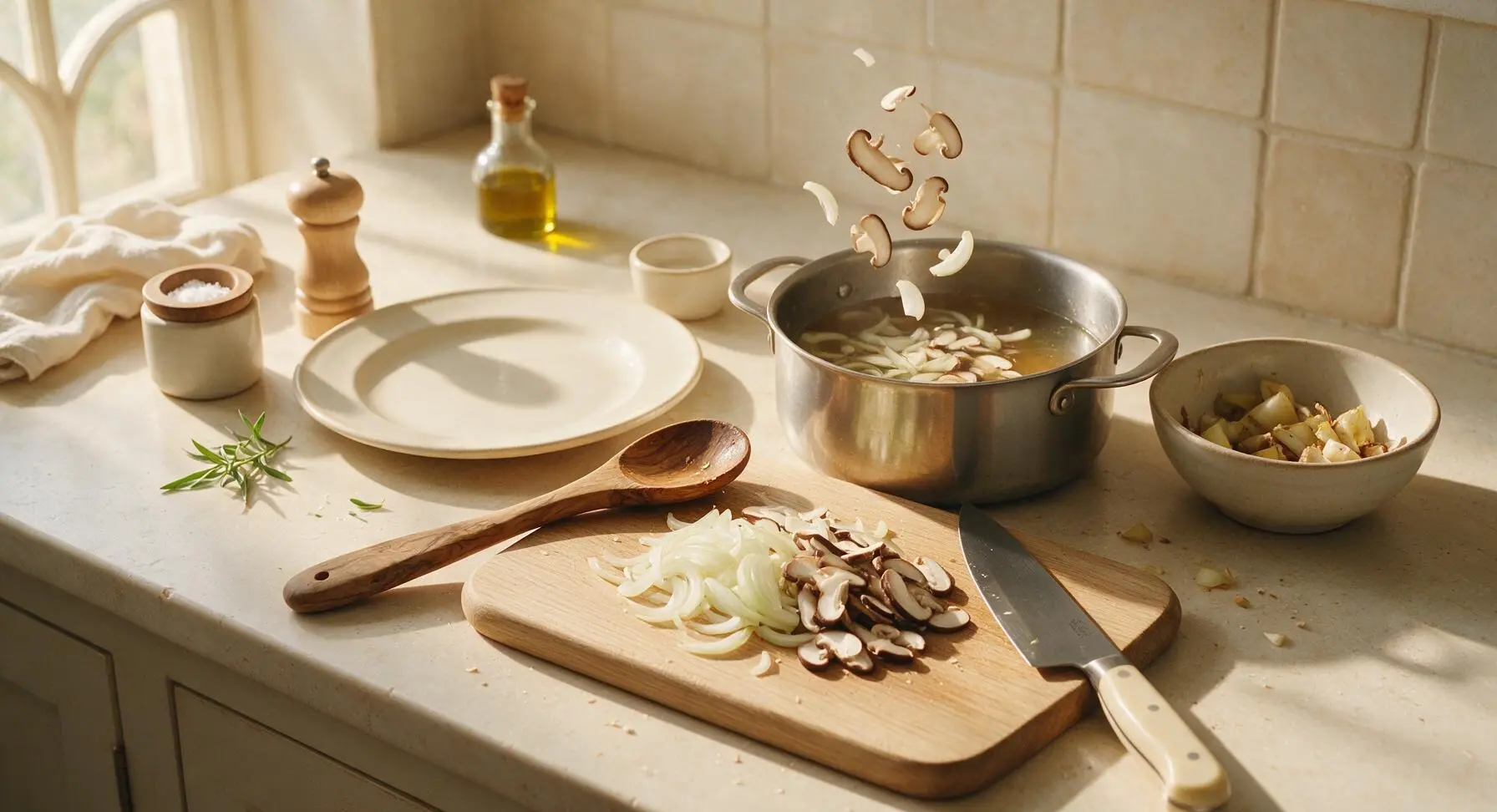
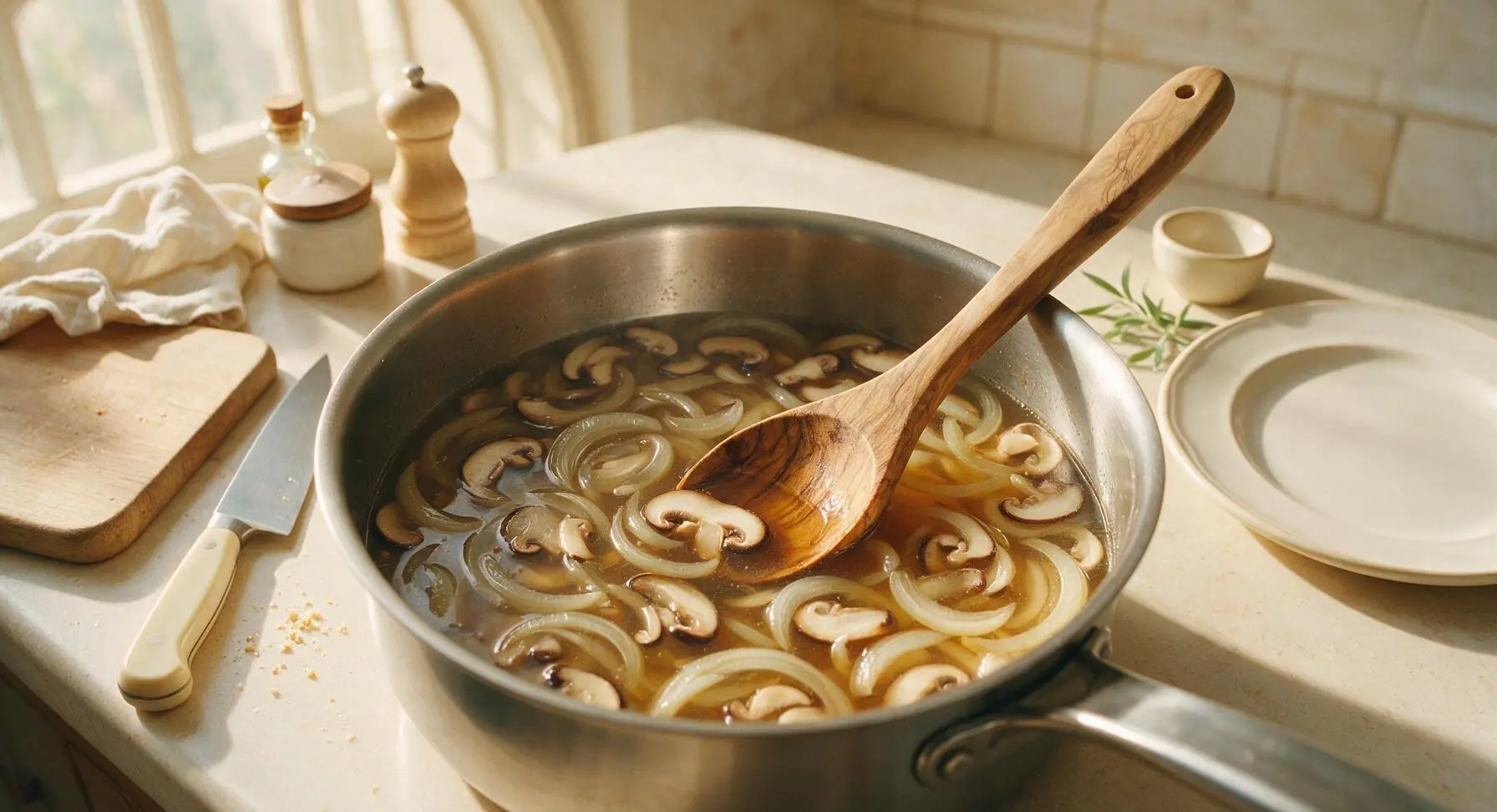
Step 5
step5:Cook Tender Vegetables
Step 5
step5:Cook Tender Vegetables
6

Season Soup Gently

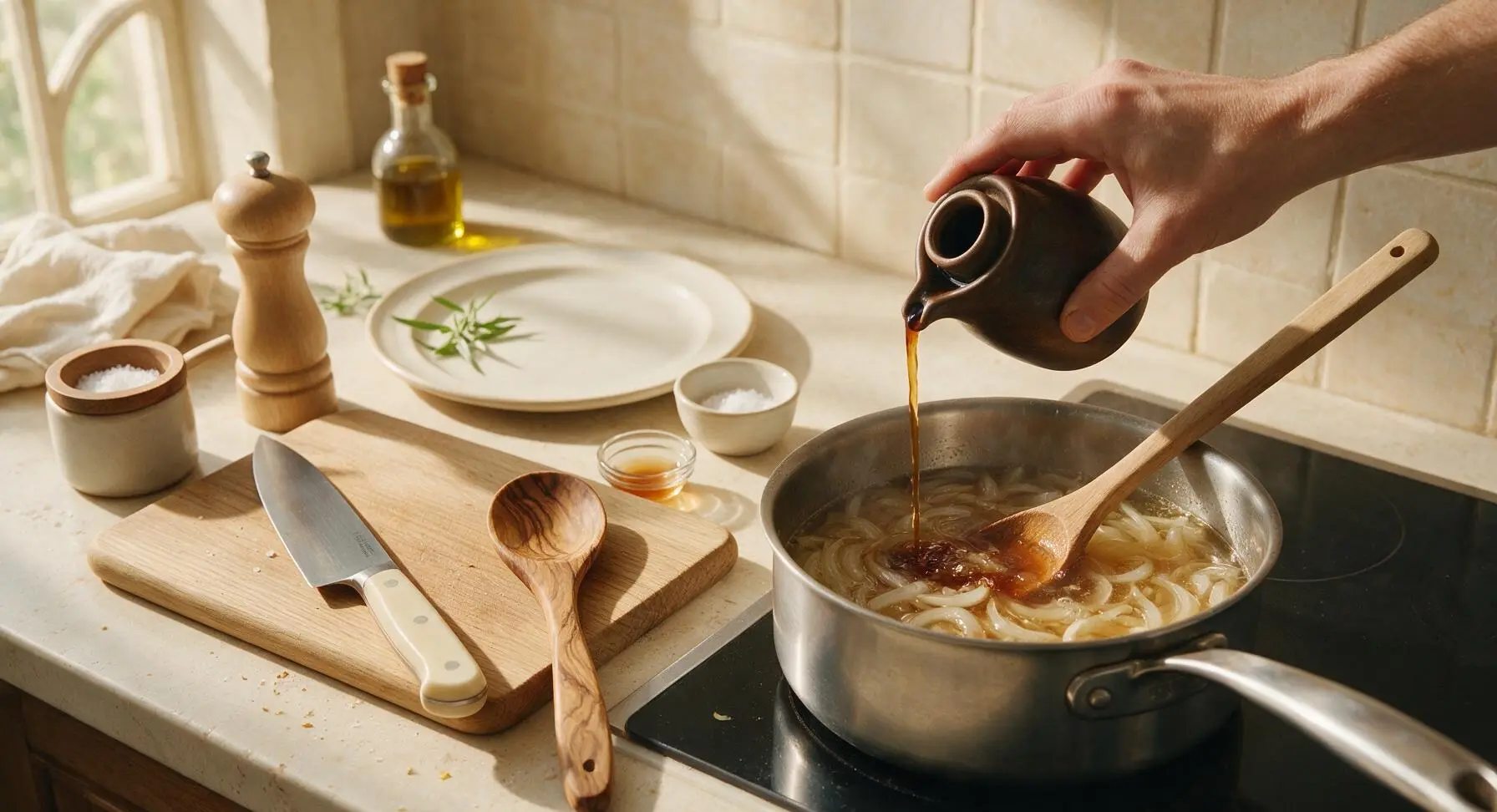
Stir 1 tablespoon light soy sauce and 1 teaspoon mirin into the simmering broth. Taste carefully, and add up to 1/4 teaspoon fine sea salt only if needed (dashi and soy sauce already contain significant sodium, so add salt gradually to avoid over-seasoning). The finished broth should taste balanced: deeply savory, slightly sweet, with bright onion umami, not overly salty.
Step 6
step6:Season Soup Gently
7

Ladle and Garnish

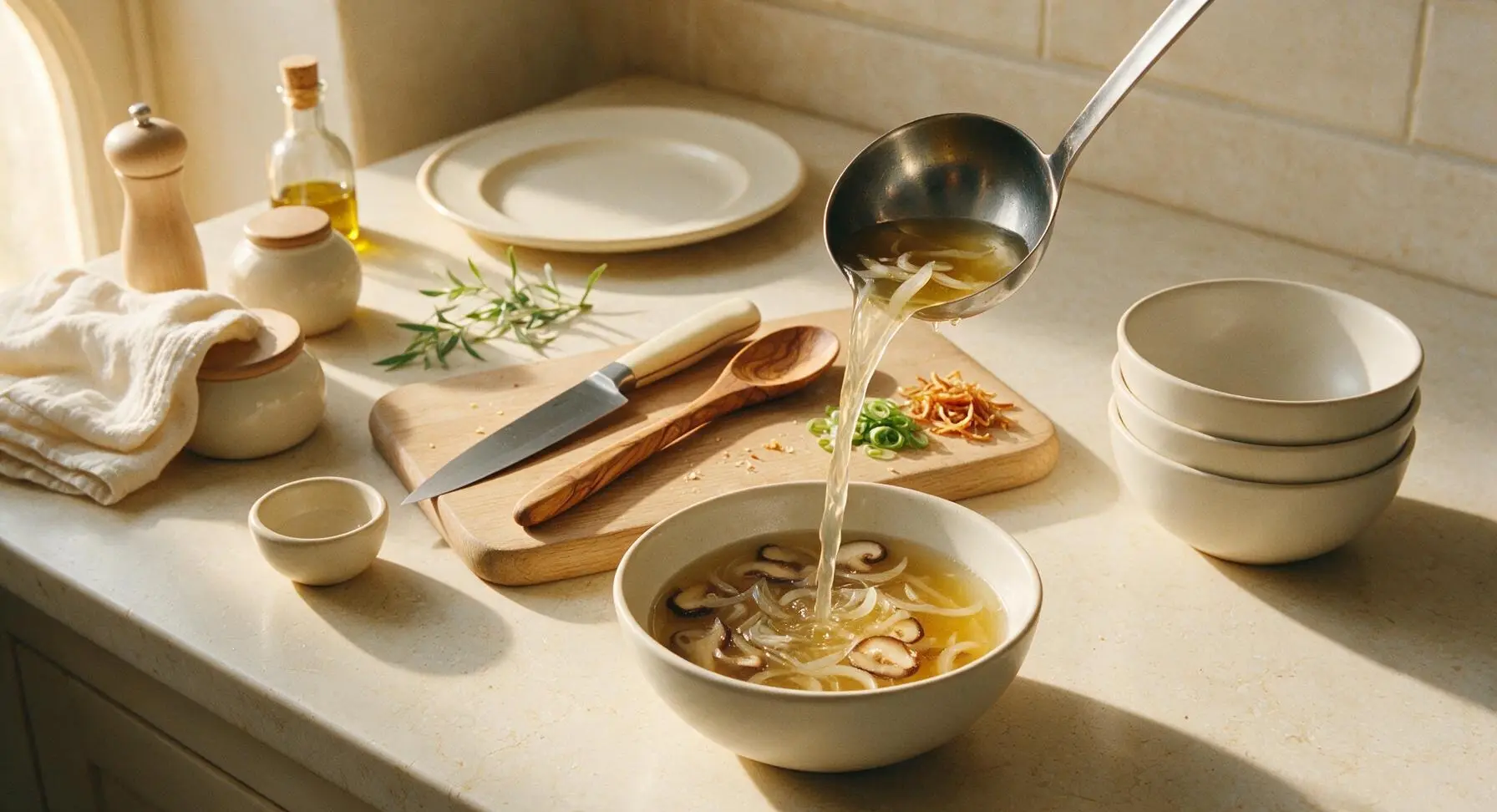
Turn off the heat under the pot. Use the stainless steel ladle to pour equal amounts of broth, tender onion slices, and shiitake slices into each of the 4 matte cream-white ceramic soup bowls. Top each bowl with a pinch of thinly sliced scallion greens and 1/2 tablespoon of crispy fried onions for a subtle, crunchy textural garnish.
Step 7
step7:Ladle and Garnish

Tips

1.Avoid boiling the broth rapidly at any stage: hard, rolling boils will emulsify tiny vegetable particles into the stock, turning the signature clear amber soup cloudy and murky. Keep heat adjusted to maintain only a soft, gentle simmer.
2.Use light (usukuchi) soy sauce instead of dark soy sauce for this recipe: light soy sauce has a paler color and brighter, saltier flavor that seasons the broth without darkening it to a deep, muddy brown, preserving the soup’s classic clear appearance.
3.Do not leave the simmered base vegetables (chunked onion, carrot, ginger) in the finished soup: they become mushy and over-soft after 15 minutes of simmering, and removing them ensures the final soup has a light, delicate texture with only perfectly tender-crisp thin onion and shiitake slices in each bite.

✨ You May Also Like

Soups & Stews
🍜 Japan

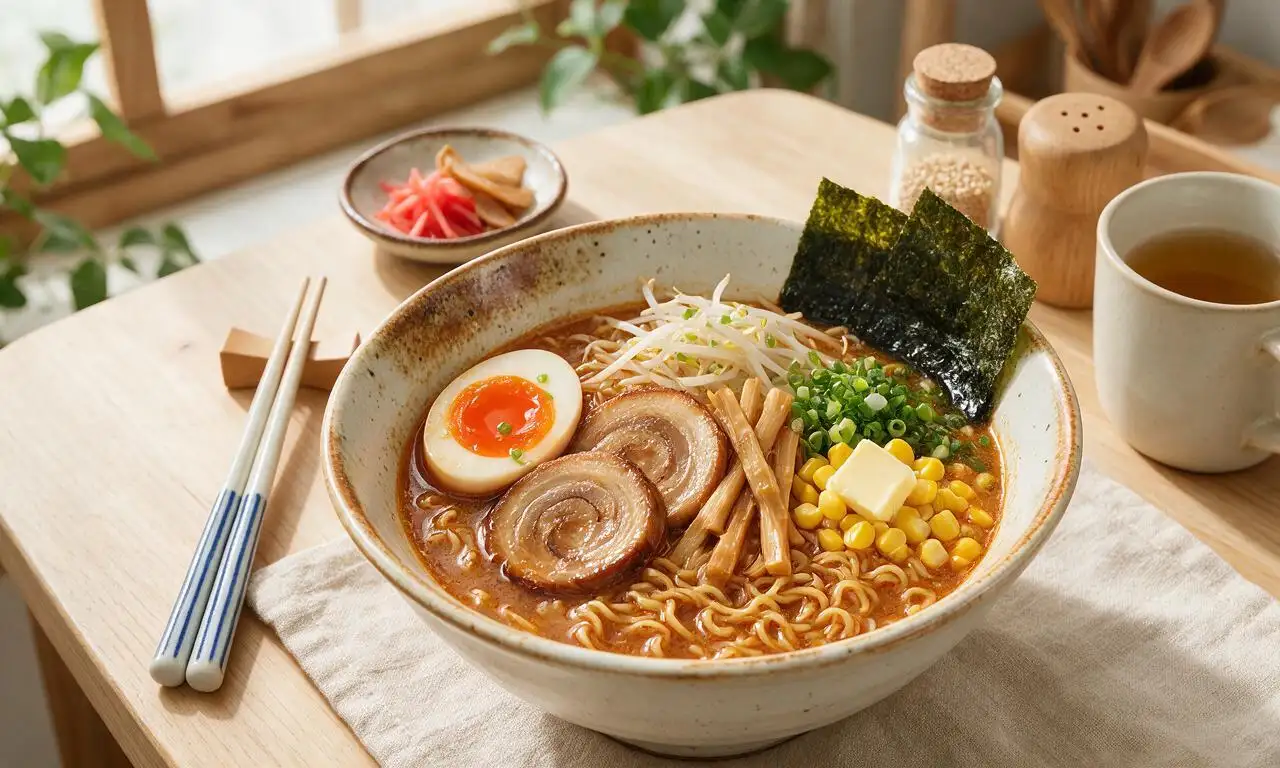
Rich, umami-dense Hokkaido-style miso ramen with chewy noodles, savory fermented broth, and classic toppings, a cozy, deeply satisfying warm meal.

⏱️ 45 minuteSoups & Stews ★ 4.5
Soups & Stews
🍜 United States

A hearty, peppery tripe and root vegetable stew with colonial Philadelphia roots, thick, warming, and packed with bold savory flavor for cold winter days.

⏱️ 2 hours 3Soups & Stews ★ 4.6
Soups & Stews
🍜 Mexico

Hearty, warming red pork posole loaded with tender hominy, slow-simmered in a rich smoky chile broth, served with zesty fresh garnishes for a deeply comforting, satisfying meal.

⏱️ 2 hours 3Soups & Stews ★ 4.7
Soups & Stews
🍜 United States

Warm, soothing classic chicken noodle soup loaded with tender chicken, soft egg noodles, and savory veggies, perfect for chasing chills and feeding the whole family.

⏱️ 40 minuteSoups & Stews ★ 4.9
Soups & Stews
🍜 France

Deeply savory caramelized onion broth topped with crusty bread and bubbly melted Gruyère, a timeless French bistro comfort food ideal for cold days.

⏱️ 1 hour 25Soups & Stews ★ 4.8
Soups & Stews
🍜 United States

Hearty, briny Maryland crab soup loaded with sweet blue crab, tender summer vegetables, and zesty Old Bay, a beloved Chesapeake Bay coastal comfort staple.

⏱️ 55 minuteSoups & Stews ★ 4.9

japanese onion soup:Frequently Asked Questions

1.What makes this classic Japanese onion soup different from French onion soup? ▾
Unlike rich, deeply caramelized French onion soup topped with melted cheese and crusty bread, this version is a light, clear amber dashi-based broth. It features gently simmered (not heavily caramelized) sweet onion, earthy shiitake, and subtle ginger warmth, matching the light starter served at Japanese steakhouses, with no heavy dairy or bread components.
2.Can I use white or red onion instead of the recommended yellow onion? ▾
Yellow onion is ideal for its balanced, mellow sweetness when simmered, but you can substitute sweet white onion in a pinch. Skip red onion—it will leach a dull, purplish color into the clear broth and has a sharper, more peppery bite that throws off the soup’s soft, umami balance, even after long cooking.
3.Do I need to use fresh shiitake mushrooms, or are dried shiitake okay to use? ▾
Fresh shiitake work best for tender, mild earthy flavor and crystal-clear broth, but dried shiitake are a great swap if you reconstitute them first. Use 4-5 dried shiitake, soak in warm water for 20 minutes, strain the grit-free soaking liquid, and add it to the dashi for an extra deep umami boost.
4.Is there a quick substitute if I don’t have pre-made low-sodium dashi stock? ▾
If you don’t have pre-made low-sodium dashi, mix 1 teaspoon of no-salt-added instant dashi powder per 4 cups of water, or make a quick shortcut: simmer a 2-inch piece of kombu and a handful of bonito flakes for 10 minutes, then strain. Skip high-sodium dashi to keep the broth from tasting overly briny.
5.Why does the recipe call for low-sodium dashi instead of regular dashi? ▾
Low-sodium dashi lets you control the final salt level of the soup, since dashi sodium content varies widely between brands. Regular dashi often has enough added salt to overpower the delicate sweet onion, subtle ginger, and earthy shiitake notes, leaving you with briny broth instead of a balanced, umami-rich base.
6.How thin should I slice the onions for the best texture? ▾
Slice your yellow onion into 1/8-inch thick half-moons for ideal texture. If slices are too thick, the onions will stay crunchy and harsh even after simmering; if too thin, they’ll break down completely into mushy bits that cloud the clear amber broth that defines this classic steakhouse-style soup.
7.Do I need to peel the fresh ginger before adding it to the broth? ▾
You don’t have to peel fresh ginger if you give its knobby exterior a thorough scrub under cold running water to remove trapped dirt, since you’ll simmer it in large chunks and fish it out before serving. That said, peeling it with a spoon takes 30 seconds and eliminates any chance of tough, fibrous skin bits in the broth.
8.Can I adjust this recipe to make it vegetarian or vegan? ▾
Absolutely! Just swap standard bonito-based dashi for a kombu and shiitake-based vegan dashi, which is widely available at most major U.S. grocery stores now. All the other core ingredients—yellow onion, shiitake, carrot, ginger—are entirely plant-based, so you won’t lose any of that classic rich umami flavor.
9.What purpose does the small carrot serve in this recipe? ▾
The small carrot adds a subtle, gentle sweet backbone that rounds out the savoriness of the dashi and earthiness of the shiitake, without making the soup taste like carrot soup. Slice it thin, simmer until just tender, and it adds a tiny pop of bright orange color to the otherwise warm amber broth, too.
10.How long should I simmer the soup to get the best flavor? ▾
Simmer the soup over medium-low heat for 15-20 minutes total, after bringing the dashi up to a gentle bubble. Any longer, and the onions will turn mushy while the ginger releases bitter, sharp notes; any shorter, and the vegetables won’t have time to leach their sweet, mellow flavor into the broth.
11.Should I sauté the onions first like I do for French onion soup? ▾
You don’t need to deeply caramelize or even heavily sauté the onions for this soup, unlike French onion. A quick 2-minute sweat over low heat to soften their raw edge is all you need—long sautéing will make the broth cloudy and overly rich, erasing the light, clear quality of this classic Japanese starter.
12.Can I add extra ingredients to make this soup a more filling meal? ▾
You can absolutely bulk this soup up for a light lunch or dinner. Add small cubes of soft silken tofu, thin-sliced cooked chicken, or pre-cooked soba noodles during the last 2 minutes of simmering to heat through. Skip heavy add-ins like croutons or melted cheese, which clash with the soup’s delicate profile.
13.How do I keep the broth perfectly clear instead of cloudy? ▾
To nail that signature clear amber broth, never boil the soup at a rolling, aggressive bubble—keep it at a gentle simmer, and skim any small foamy bits that rise to the surface with a fine mesh skimmer as it cooks. Avoid over-stirring, which breaks down soft vegetable bits and clouds the liquid, too.
14.How long will leftover soup stay good in the refrigerator? ▾
Stored in an airtight container in the fridge, this soup will keep well for 3-4 days. Let it cool completely before sealing and refrigerating, and reheat gently over low stovetop heat rather than microwaving at high power, which can turn vegetables mushy and make the broth turn cloudy.
15.Can I freeze this soup for later meal prep? ▾
This soup freezes really well for up to 3 months, since it has no dairy or thickeners that separate when frozen. Let it cool fully, pour into freezer-safe containers leaving 1/2 inch of headspace for expansion, and thaw in the fridge overnight before reheating gently on the stovetop for best results.
16.What are the traditional garnishes for this soup? ▾
The classic Japanese steakhouse garnish for this soup is a tiny sprinkle of thinly sliced scallion greens and a few crispy fried onion rings added right before serving. You can also add a small pinch of toasted white sesame seeds for a nutty pop, but skip heavy garnishes that sink and cloud the clear broth.
17.I don’t like shiitake mushrooms—what’s a good substitute? ▾
If you don’t care for shiitake, swap them for thinly sliced cremini or button mushrooms, which have a milder, less earthy flavor. Avoid strongly flavored mushrooms like portobello or oyster mushrooms, which have a bold, meaty taste that will overpower the delicate sweet onion and light dashi base of the soup.
18.Why did my soup turn out bitter, and how do I fix that next time? ▾
Bitter soup almost always comes from one of two mistakes: either you simmered the ginger for too long (over 25 minutes, which causes it to release bitter compounds), or you boiled bonito-based dashi too hard, making it sharp and bitter. Next time, keep heat low and fish out large ginger chunks after 15 minutes for milder flavor.
19.Can I make this soup ahead of time for a dinner party? ▾
This soup is perfect for dinner party prep, since it actually tastes better the day after you make it as the flavors meld gently. Make it a full day ahead, store it in the fridge, and skim any small solid bits off the top before reheating gently to serve, for zero last-minute cooking stress.
20.Is this soup naturally gluten-free? ▾
As written, this soup is naturally gluten-free as long as you use a certified gluten-free dashi stock—some commercial dashi blends include small amounts of wheat-based soy sauce as an additive, so always double-check the label. All the core whole ingredients (onion, shiitake, carrot, ginger) have no hidden gluten sources.

Comments (6)

3 days ago

OMG this soup is SO good! I made it for our Sunday family dinner last night and even my super picky 7 year old asked for a second bowl. It was so easy too, I had all the ingredients in my pantry already, total game changer for cold weeknights. Will 100% be adding this to my regular meal prep rotation!

2 days ago

Wait did you add any extra mushrooms? I’m thinking of tossing some shiitakes in when I make it this weekend, curious how that works out!

yesterday

Great question! Sliced shiitake mushrooms make a fantastic addition here—just toss them in with the onions during the last 5 minutes of sautéing so they don’t get too mushy. So glad your family loved the recipe!

1 week ago

Super straightforward recipe, came together way faster than I thought it would. Cook time was spot on 25 minutes, which is perfect for when I get home late from my kid’s soccer practice. Only tweak I made was adding a tiny splash of soy sauce for extra umami, would highly recommend. Tasted exactly like the soup they serve at our local hibachi spot!

5 days ago

Love that soy sauce tweak! A little extra umami never hurts, and we’re so happy it hit that hibachi soup nostalgia for you. Thanks for giving it a try!

yesterday

Brought this to my office potluck yesterday and people were begging me for the recipe before we even got to the main course! It’s light but so flavorful, even folks who said they don’t like ‘fancy Japanese food’ went back for refills. So easy to make a big batch too, no fancy equipment needed.

5 days ago

Wait this is so easy even I, a college student who burns toast 50% of the time, pulled this off perfectly? The steps are super clear, no weird hard to find ingredients, and it’s cheap to make too. I made a big pot on Sunday and ate it for lunch all week, 10/10. Only reason it’s not 5 stars is I wish it was a little more filling on its own, I ended up adding a side of rice to most servings.

3 days ago

Oh adding rice is such a good call! I toss in a handful of cooked white rice right before serving and it makes it so much heartier, no extra work needed.

2 days ago

So glad you found the recipe approachable! Great note about it being light—adding cooked rice, cubed tofu, or even a handful of spinach are all quick ways to bulk it up for a more filling meal. Great call!

2 hours ago

I swapped the regular soy sauce for tamari to make this gluten free and it turned out absolutely perfect! It’s so hard to find takeout Japanese onion soup that doesn’t have hidden gluten, so being able to make this at home in 25 minutes is a total win. My husband said it’s better than the restaurant version, no cap.

2 weeks ago

Made this last night when I had zero dinner plans and a random bag of onions in the crisper, and wow! It was so warm and comforting, perfect for the random cold snap we’re having here. I topped mine with a little sprinkle of green onion and fried shallots, chef’s kiss. Will be making this all fall and winter for sure.

1 week ago

The fried shallot topping is such a chef-level upgrade, love that idea! So happy this came to the rescue for your last-minute dinner, that’s exactly what easy weeknight recipes are for.