1.Why is beef chuck the recommended cut for Kalderetang Baka instead of leaner beef cuts?
▾
Beef chuck has the perfect balance of marbled fat and tough connective tissue that breaks down into rich, silky texture during low, slow braising. Lean cuts like sirloin or round will turn dry and tough even with long cooking, since they lack that fat and collagen to keep meat succulent. Stick to 2-inch cubes so they hold their shape without falling apart too early.
2.Can I make Kalderetang Baka in a slow cooker instead of braising it on the stovetop?
▾
Absolutely! Sear the beef and sauté the onions and garlic first to build deep flavor, then transfer everything to your slow cooker with crushed tomatoes and seasonings. Cook on low for 6 to 8 hours, then add vegetables, olives, and liver spread during the last 30 minutes to keep veggies crisp-tender and prevent liver spread from curdling.
3.What does liver spread do for the stew, and can I skip it if I don’t like liver?
▾
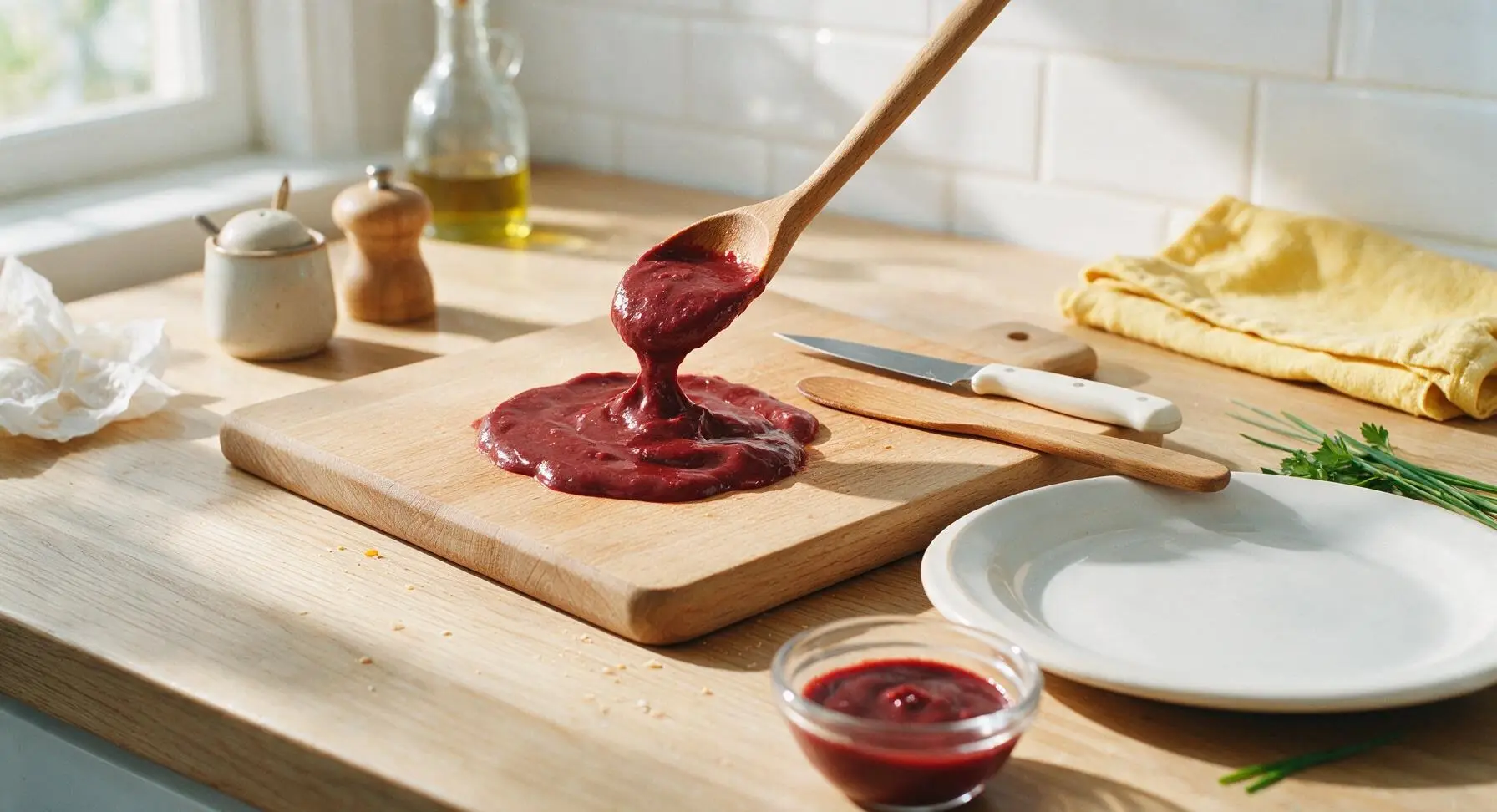
Liver spread is what gives Kalderetang Baka its signature velvety, deep umami thickness that sets it apart from other tomato-based beef stews. If you truly dislike liver, swap it for 2 tablespoons of smooth peanut butter mixed with 1 teaspoon of soy sauce to mimic that rich, thick texture, though the flavor will be slightly less traditional.
4.How do I keep my beef cubes from getting tough when I make this stew?
▾
The two biggest mistakes that lead to tough beef are cooking at too high a boil and skipping the initial sear. First, pat beef dry and sear in hot oil to build a flavorful crust, then keep the braise at a gentle, low simmer—never a rolling boil. Don’t rush cooking; chuck needs at least 90 minutes of slow simmer to break down connective tissue properly.
5.What kind of olives work best for authentic Kalderetang Baka?
▾
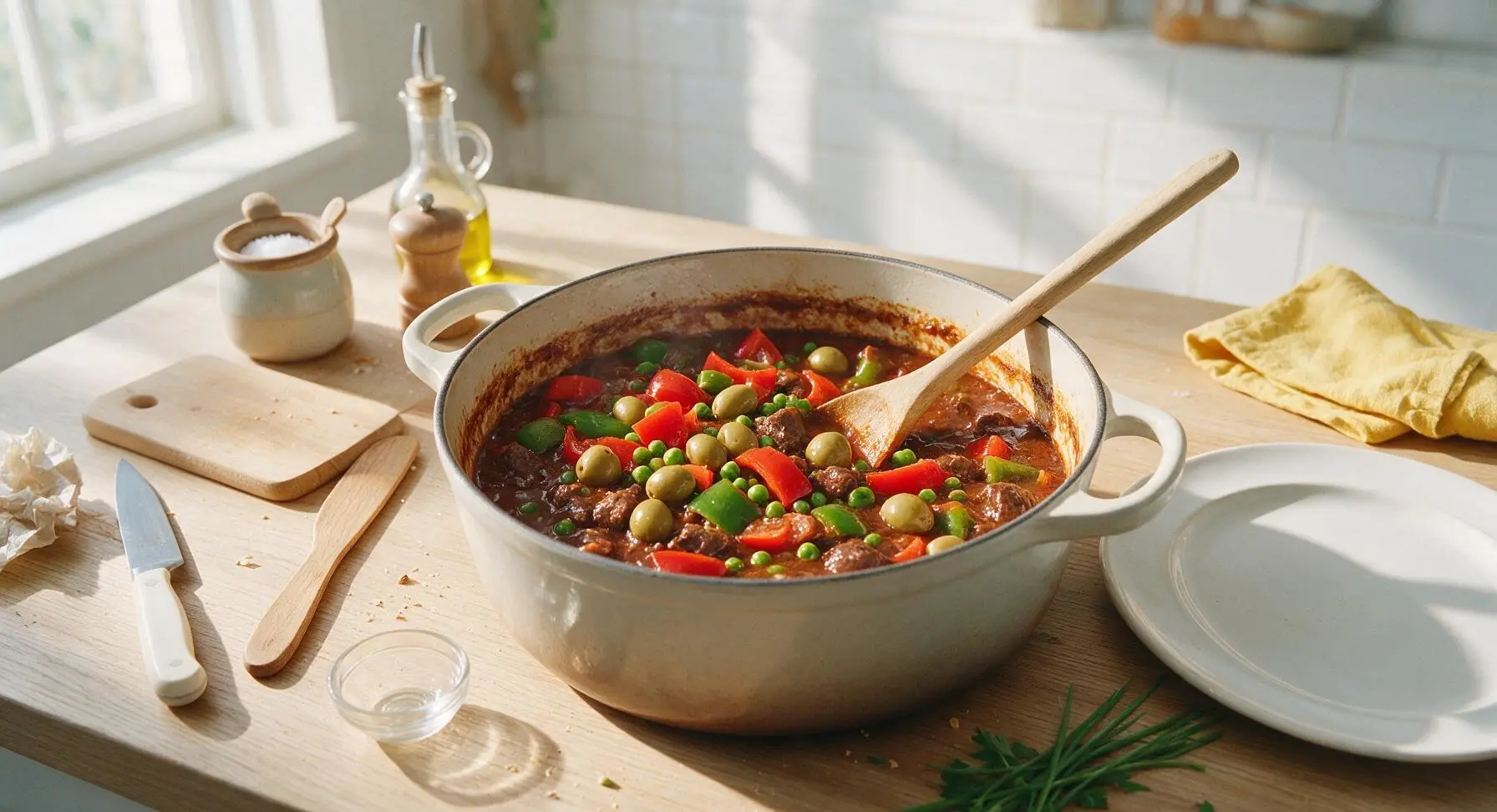
Traditional Kalderetang Baka uses brine-cured green olives, usually pimento-stuffed, for a subtle bright, tangy contrast to the rich, savory stew. Avoid heavily herbed or oil-cured black olives, as they will overpower the delicate tomato and liver flavor profile. Rinse olives briefly before adding if you prefer a less salty final dish.
6.Can I use fresh tomatoes instead of canned crushed tomatoes for this recipe?
▾
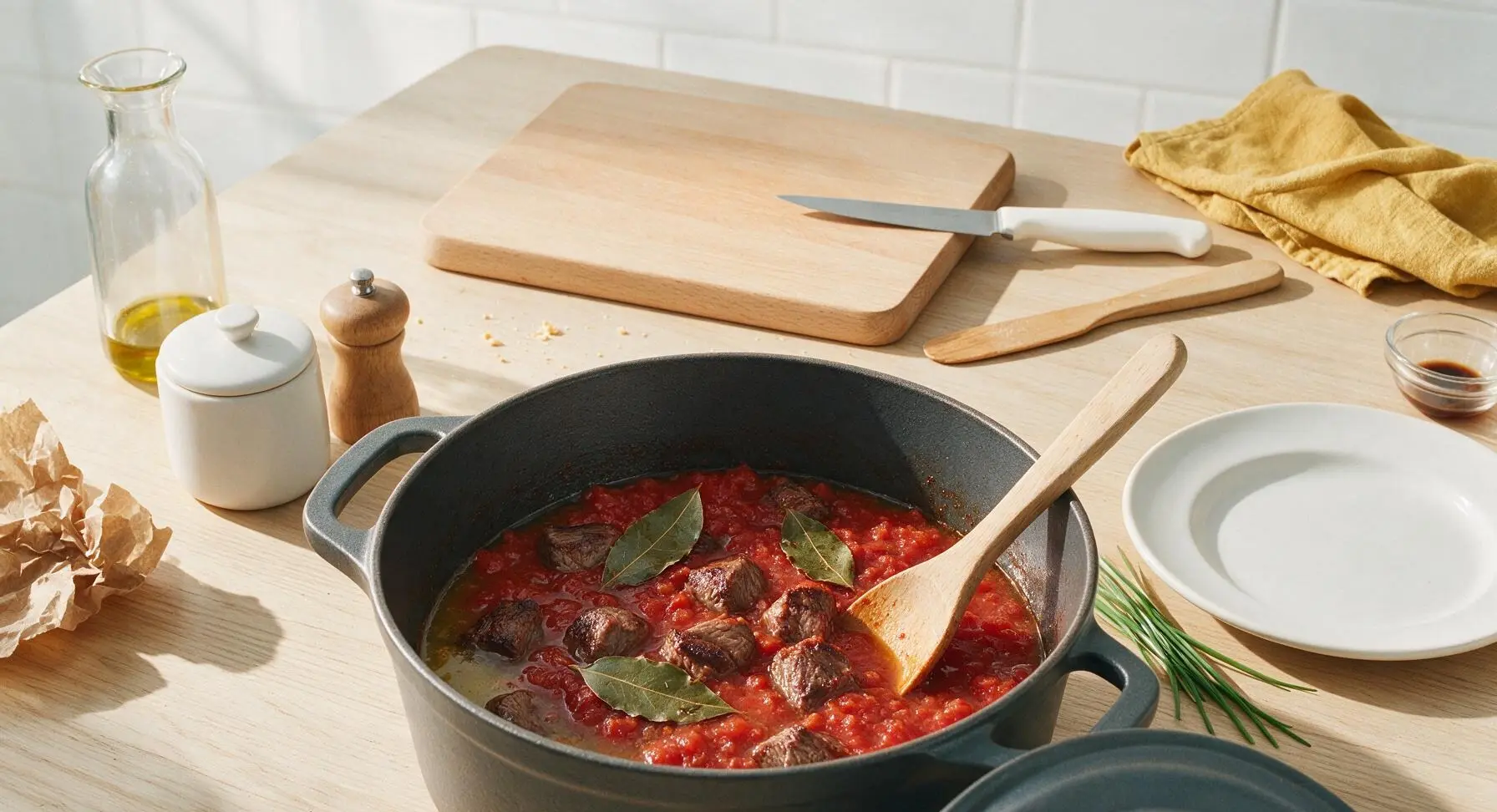
You can, but you’ll need to adjust for texture and flavor. Use 2 pounds of ripe Roma tomatoes, blanched, peeled, seeded, and crushed, plus 2 tablespoons of tomato paste to boost depth, since fresh tomatoes are less concentrated than canned. Canned crushed tomatoes are picked and processed at peak ripeness, so they deliver more consistent, rich flavor year-round.
7.What vegetables are traditionally added to Kalderetang Baka, and when should I add them?
▾
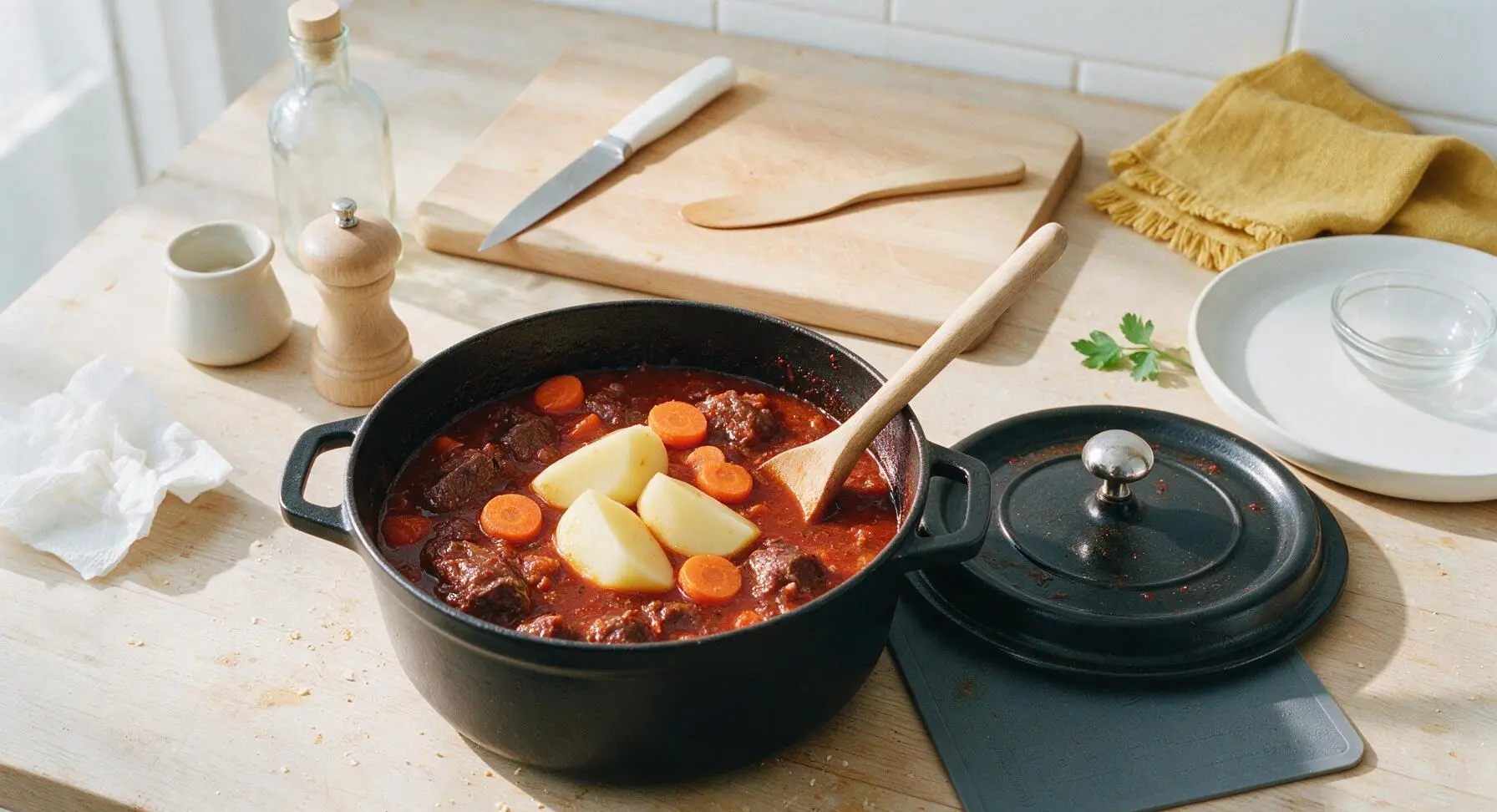
The classic vegetable mix is 1-inch chunks of potato, carrot, and bell pepper (red or green). Add hardy potatoes and carrots during the last 25 minutes of simmering so they cook through without turning mushy, and toss in bell peppers during the final 10 minutes to keep their bright, slightly crisp texture and sweet, fresh flavor.
8.My stew turned out too watery—how do I thicken it properly without making it gummy?
▾
First, remove the lid during the last 10 to 15 minutes of cooking to let excess liquid evaporate, which concentrates flavor as it thickens. If it’s still too thin, make a quick slurry of 1 tablespoon cornstarch mixed with 2 tablespoons cold water, stir it into the simmering stew, and cook 2 to 3 minutes until glossy. Avoid adding too much slurry, as it can dilute deep savory notes.
9.Is extra-virgin olive oil required, or can I use a different cooking oil?
▾
Extra-virgin olive oil adds a subtle fruity, peppery base note that pairs beautifully with the tomato and olive flavors in the stew, but it’s not strictly required. You can swap it for neutral canola oil, avocado oil, or even traditional Filipino coconut oil for a slightly different, equally delicious profile—just make sure the oil is hot enough before searing the beef.
10.How long do leftovers of Kalderetang Baka last, and does it reheat well?
▾
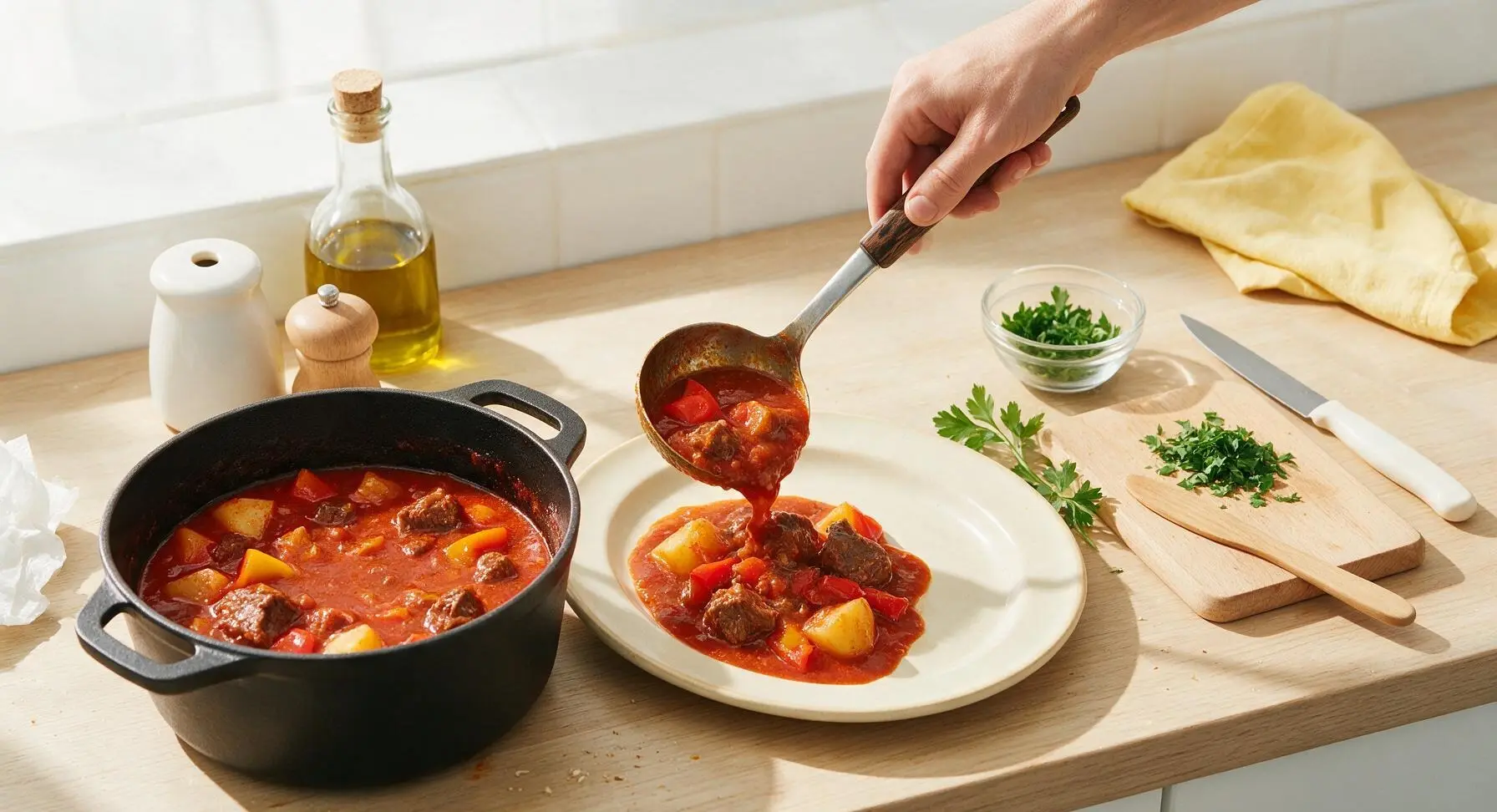
This stew actually tastes better the next day, as flavors meld together as it chills. Store cooled leftovers in an airtight container in the fridge for up to 4 days, or freeze for up to 3 months. Reheat gently on the stovetop over low heat, stirring occasionally, adding a splash of water or beef broth if the sauce thickens too much as it cools.
11.Can I add cheese to Kalderetang Baka like I’ve seen in some restaurant versions?
▾
Many modern Filipino restaurant versions add a handful of grated Edam or mild cheddar stirred in at the end for extra creaminess and a subtle salty tang, and it’s a totally delicious twist. Just add it off the heat so it melts smoothly without clumping, and don’t overdo it—you want cheese to complement, not overpower, the liver and tomato base.
12.Why do the recipe instructions say to dice the onion finely and mince the garlic?
▾
Finely diced onion and minced garlic break down almost completely during the long braise, melting into the sauce to build a seamless, flavorful base rather than leaving big, crunchy chunks in the final stew. If you cut onion too large, you’ll end up with distinct, mushy onion pieces that throw off the smooth, velvety texture Kaldereta is known for.
13.What’s the best side dish to serve with Kalderetang Baka?
▾
The classic, foolproof pairing is steaming hot white jasmine rice, which soaks up the rich, savory sauce perfectly. For a heartier spread, serve it with buttered pandesal (Filipino soft dinner rolls) for dipping, or a simple side of pickled green papaya (atchara) to cut through the stew’s richness with bright, tangy flavor.
14.Can I make this stew with other meats if I don’t eat beef?
▾
Absolutely! While Kalderetang Baka specifically uses beef, the same flavor profile works beautifully with bone-in chicken, goat meat (another traditional Kaldereta variant), or even firm portobello mushrooms for a vegetarian version. Adjust cooking times: chicken cooks in 45 minutes total, while goat needs a similar 2-hour braise to beef chuck.
15.Should I season Kalderetang Baka with fish sauce or soy sauce, and how much?
▾
Both are common seasonings used to add salty, umami depth, but start small. Add 1 tablespoon of fish sauce or light soy sauce when you pour in the crushed tomatoes, then taste and adjust at the end of cooking. Remember that olives and liver spread already add a good amount of salt, so over-seasoning early can lead to an overly salty final stew.
16.Why do my bell peppers sometimes taste bitter in Kalderetang Baka?
▾
Bell peppers add a bright, sweet contrast to the rich stew, but they can turn bitter if cooked for too long at high heat, or if you leave the white inner pith and seeds attached when chopping. Always core peppers fully and scrape out all white membrane, and add them late in the cooking process to keep their sweet flavor and avoid bitter notes.
17.Can I use liver pâté instead of canned liver spread for this recipe?
▾
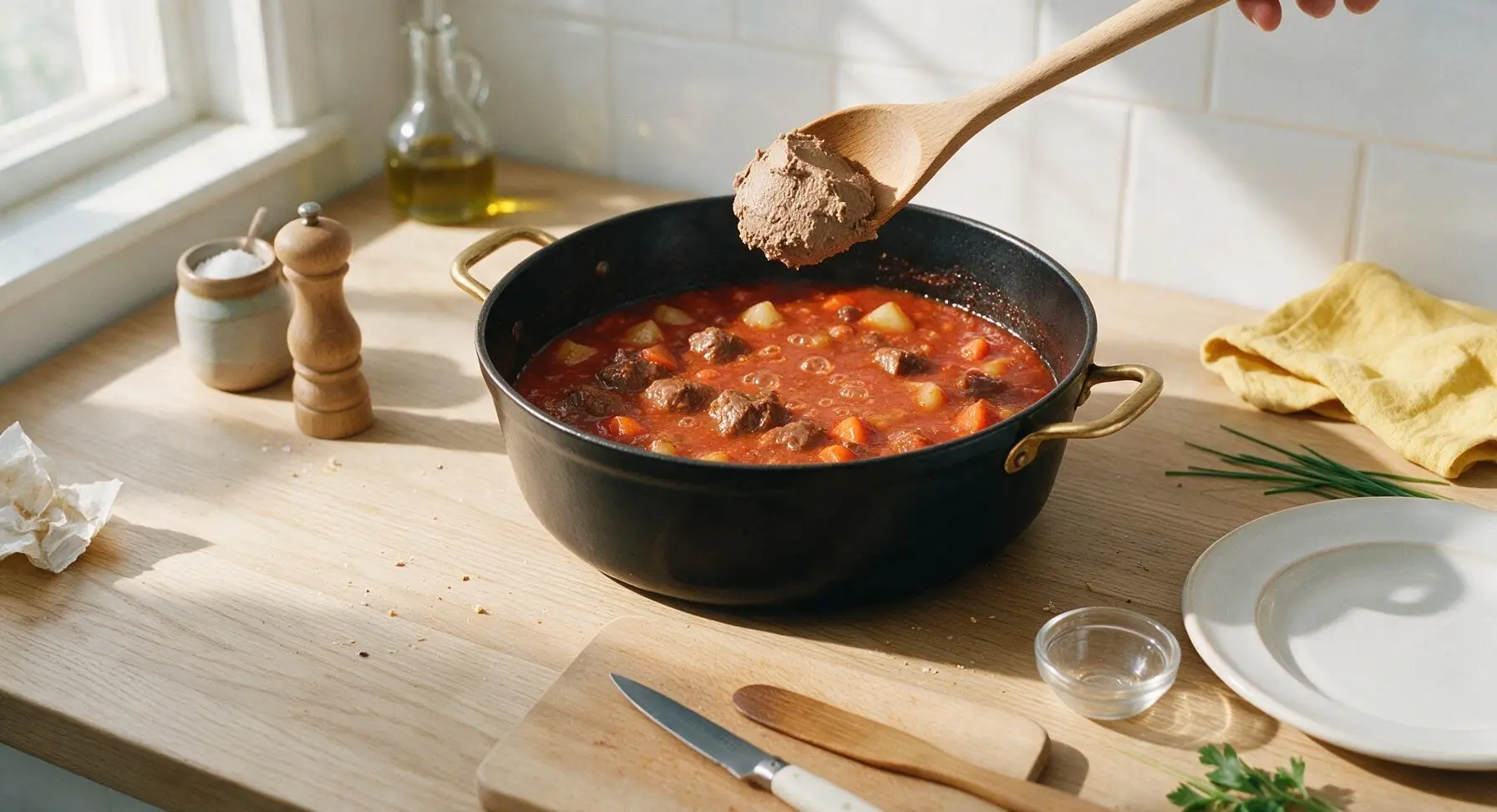
Yes, smooth liver pâté works really well as a swap for canned liver spread—just make sure it’s a plain, unflavored pâté without added herbs, cognac, or fruit that would clash with the stew’s savory profile. Whisk it into the sauce during the last 15 minutes of cooking so it melts smoothly and creates that signature velvety texture without clumping.
18.How do I get a deep, rich sear on my beef cubes without steaming them?
▾
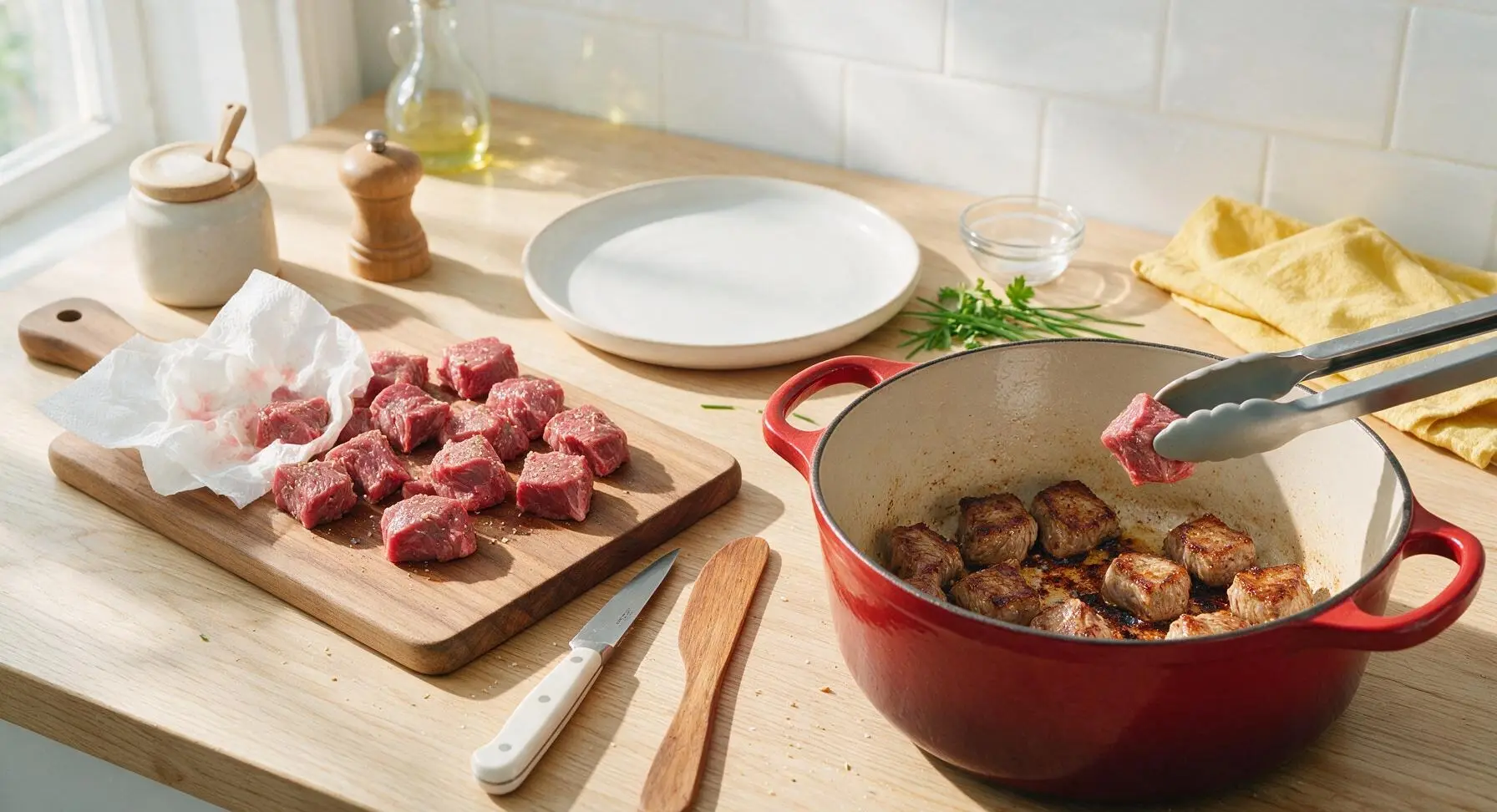
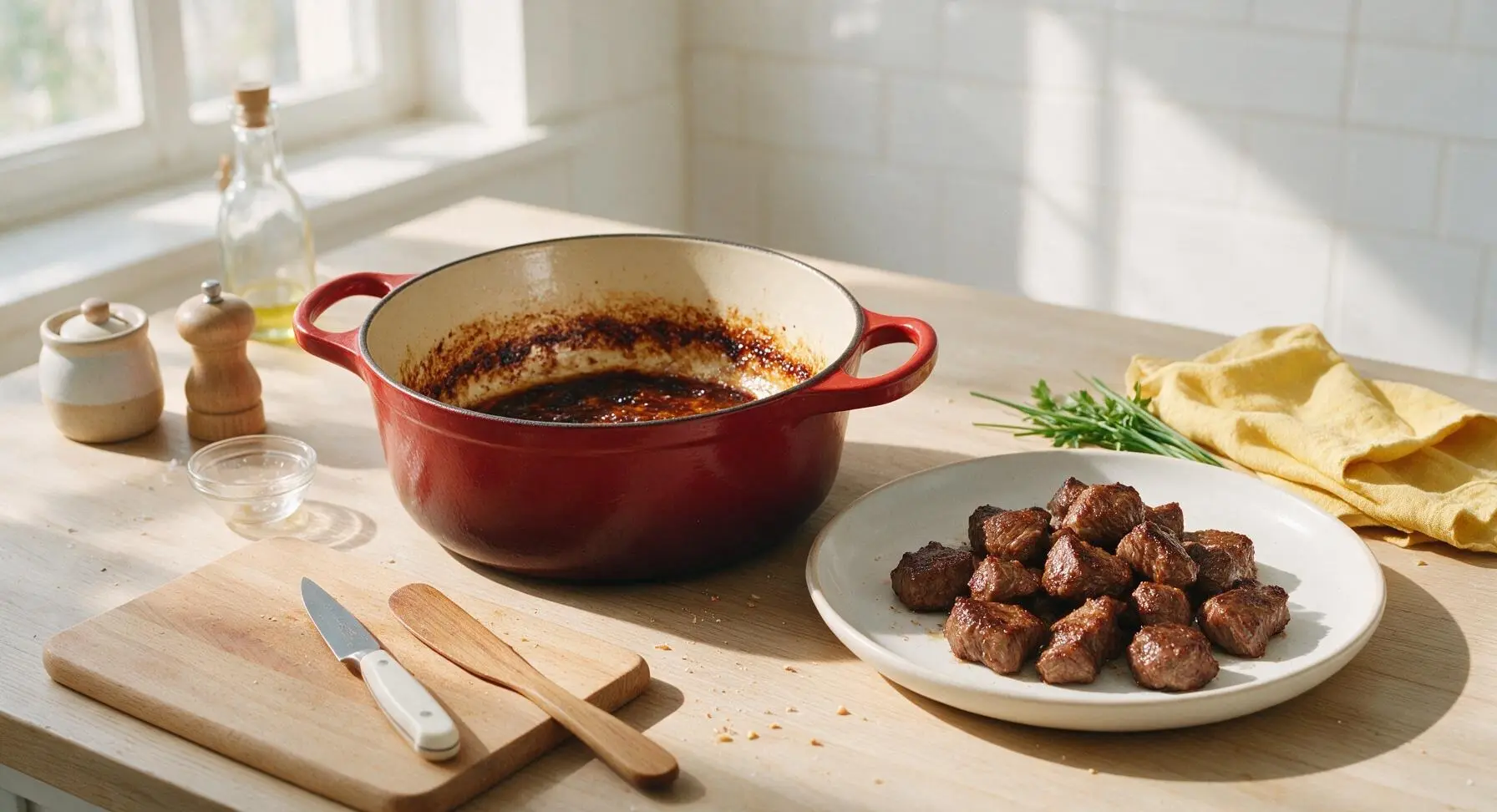
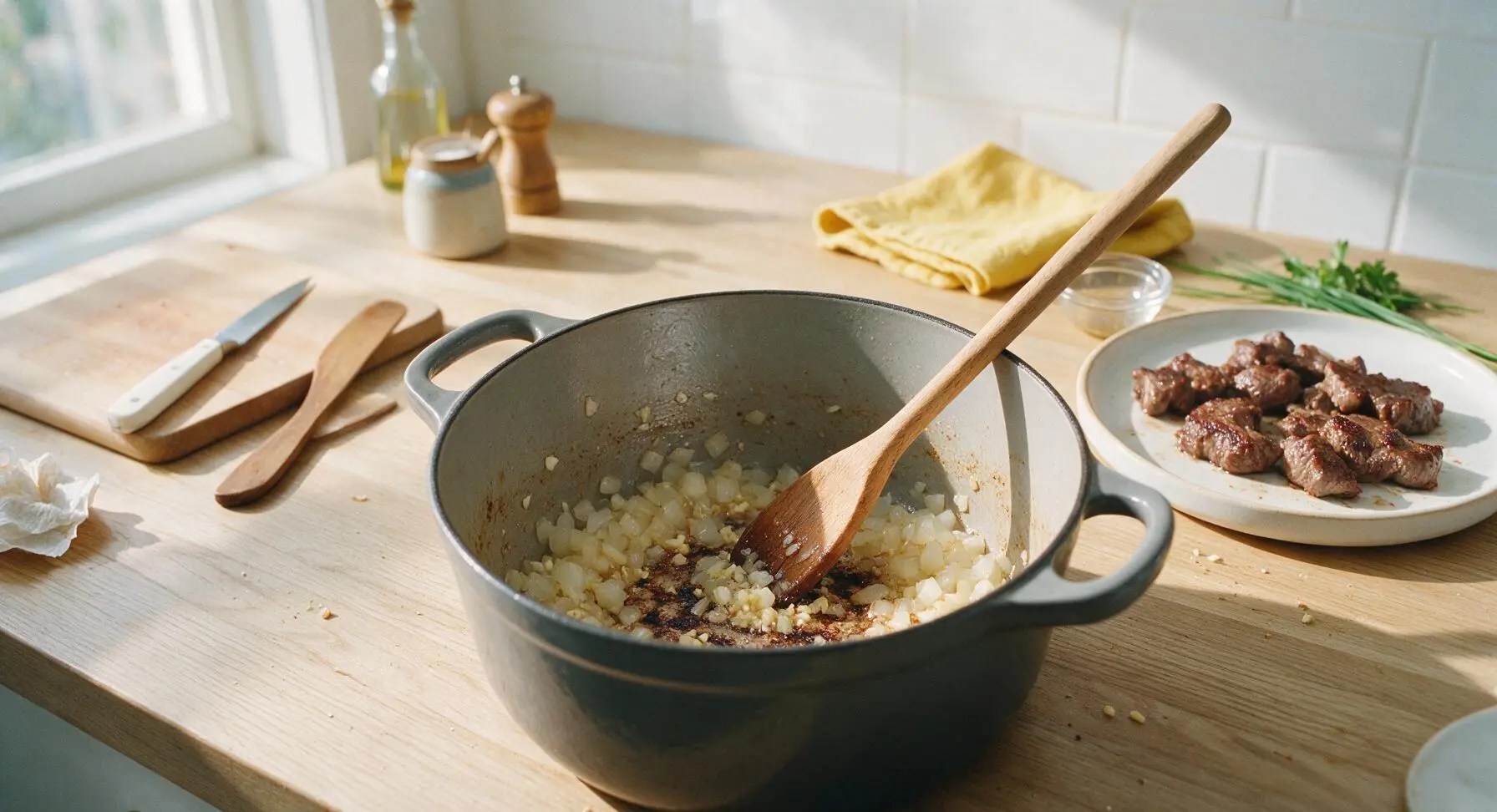
The key is to not overcrowd the pan, and to pat the beef completely dry with paper towels before adding it to hot oil. Cook the beef in 2 to 3 small batches, leaving space between each cube, so moisture released as it cooks can evaporate instead of getting trapped and steaming the meat. A deep golden crust adds massive flavor to the final stew.
19.Is there a way to make this stew spicier, like the versions I tried in the Philippines?
▾
Absolutely! Traditional spicy Kaldereta adds 1 to 2 chopped long green chili peppers or a minced Thai bird’s eye chili when you sauté the garlic and onion, for a slow, gentle heat that builds as you eat. You can also add a pinch of crushed red pepper flakes if you don’t have fresh chilis, adjusting the amount to match your preferred heat level.
20.Why did my potatoes turn mushy and fall apart in my last batch of Kaldereta?
▾
Mushy potatoes almost always come from adding them too early in the braise, or cutting them into too-small chunks. Cut potatoes into uniform 1.5-inch chunks, and only add them during the last 25 minutes of simmering, when the beef is already fully tender. Waxy varieties like Yukon Gold hold their shape better than starchy russets, so they’re a great pick for this stew.

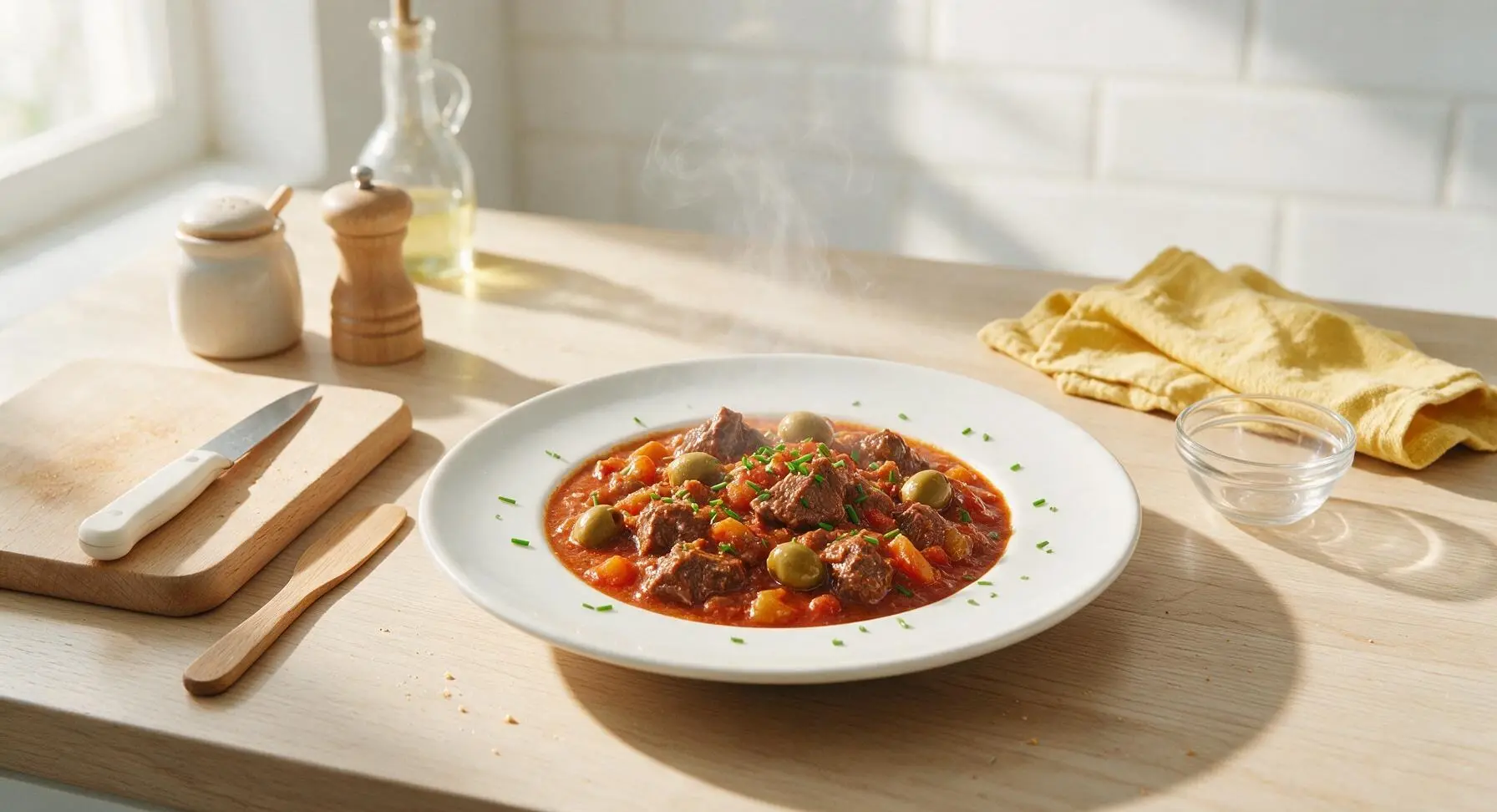
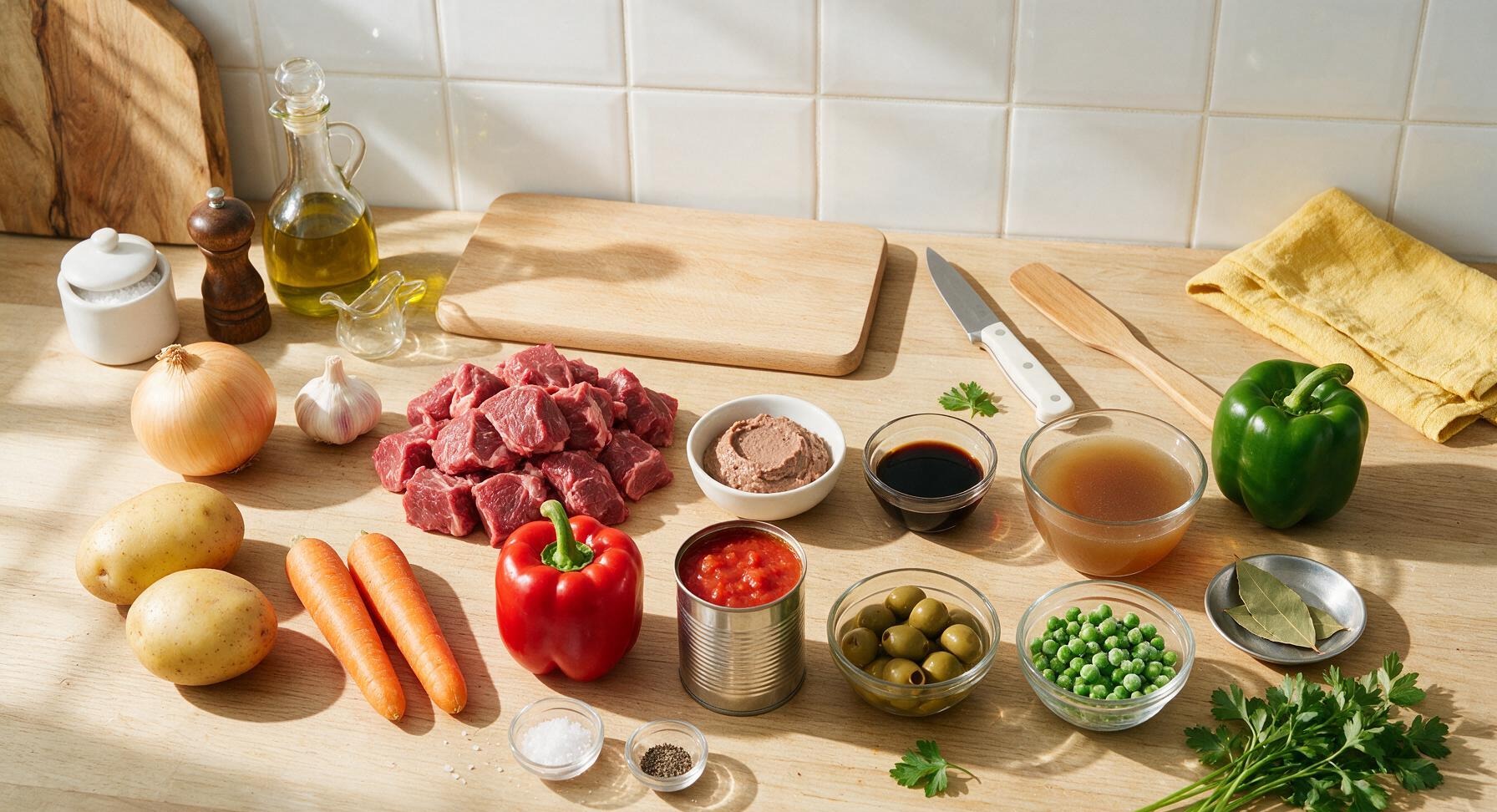
OMG this kalderetang baka is a total game changer! I made this for my husband’s birthday potluck with his coworkers and everyone was begging for the recipe. The beef got so tender after simmering, and that liver spread addition? I was skeptical at first but it adds such a deep, rich flavor I can’t even describe. My 7 year old even asked for seconds, which never happens with stews! 10/10 will be making this again for our next family dinner.
Really solid stew! I will say the 1 hour 50 minute cook time is no joke, especially if you’re using a tougher cut of chuck like I did. I ended up adding an extra 15 minutes of simmer time to get the beef fall-apart tender, but the flavor was spot on. My only note is I wish it had a little more heat, so next time I’ll toss in an extra chili or two. Great for meal prep too, the flavors get even better the next day!
SO good! I was looking for new stew recipes to meal prep for the week and this did not disappoint. I swapped the red bell peppers for green because that’s what I had in the fridge, and it still turned out amazing. Portioned out into 5 containers and it kept perfectly all week. Will be adding this to my regular rotation!
Grew up eating my lola’s kaldereta and I’ve been chasing that flavor for years since she passed. This recipe is the closest I’ve ever gotten! It made me so emotional taking the first bite, it tasted exactly like home. Served it over garlic rice like she always did, and my roommates devoured half the pot before I even got a second serving.
Made this last night for my three teen boys and they ate the entire pot! I added extra potatoes and carrots because those boys can eat their weight in veggies, and I didn’t have any liver spread on hand so I used a little extra tomato paste, but it was still incredible. Even my pickiest eater who hates “weird food” asked when I’m making it again.
Great flavor profile! I made this ahead for a camping trip and reheated it over the campfire, and it held up so well. I did cut the potatoes a little bigger so they didn’t turn to mush when reheated, which worked perfectly. Only reason I’m not giving 5 stars is I felt the recipe was a little light on salt for my taste, but that’s an easy fix. Would recommend to anyone looking for a hearty, filling stew.
Just finished making this for my Filipino husband for our first married anniversary dinner and he’s already gone back for a third helping! I was so nervous I’d mess up a dish that’s such a big part of his childhood, but the step by step instructions were so easy to follow even for someone who’s never cooked Filipino food before. Thank you so much for this recipe!
Wait I’ve had kaldereta at Filipino restaurants before but never thought to make it at home because I thought it would be super complicated? This recipe was so straightforward! I picked up all the ingredients at my local Asian market no problem, and the whole thing came together easier than my usual beef stew. The tang from the tomato sauce combined with the savory liver spread is just chef’s kiss. Can’t wait to make this for my next game night with friends!
As someone who spent 30 years working in professional kitchens, I’m always skeptical of online stew recipes, but this one is really well thought out. The balance of acid from the tomatoes, sweetness from the bell peppers, and umami from the liver spread is perfectly calibrated. I did add a splash of red wine when deglazing the pan for a little extra depth, which worked beautifully. Great recipe overall.