kapusta soup

title 1
kapusta soup
⏱️ cook time 1 hour 30 minutes
🍽️ servings 4
⚡ Difficulty easy

intro

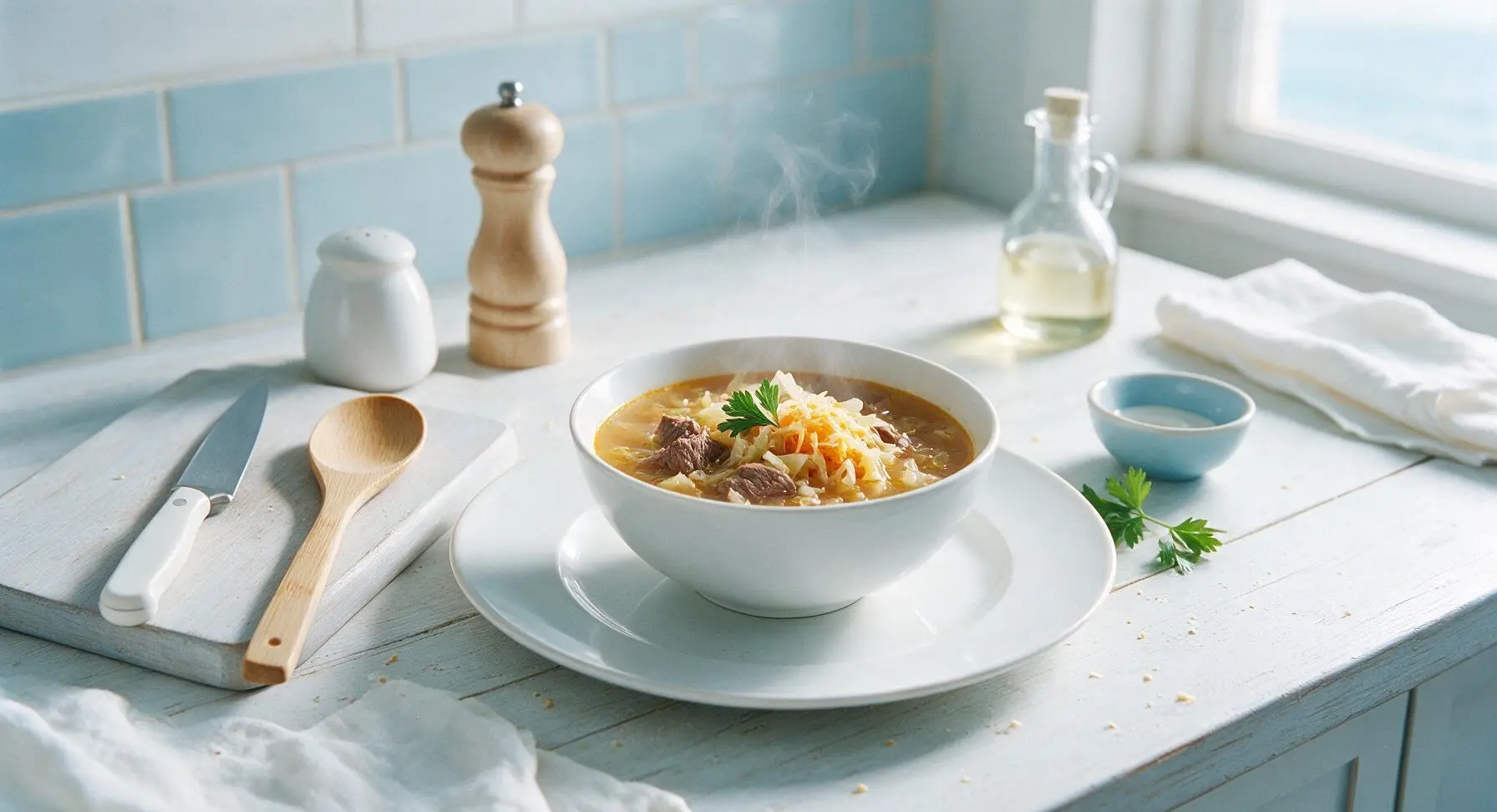
Hearty, tangy Russian kapusta soup balances earthy cabbage, tender beef, and bright sauerkraut for a cozy, nourishing bowl that warms you through on cold winter days.

Ingredients
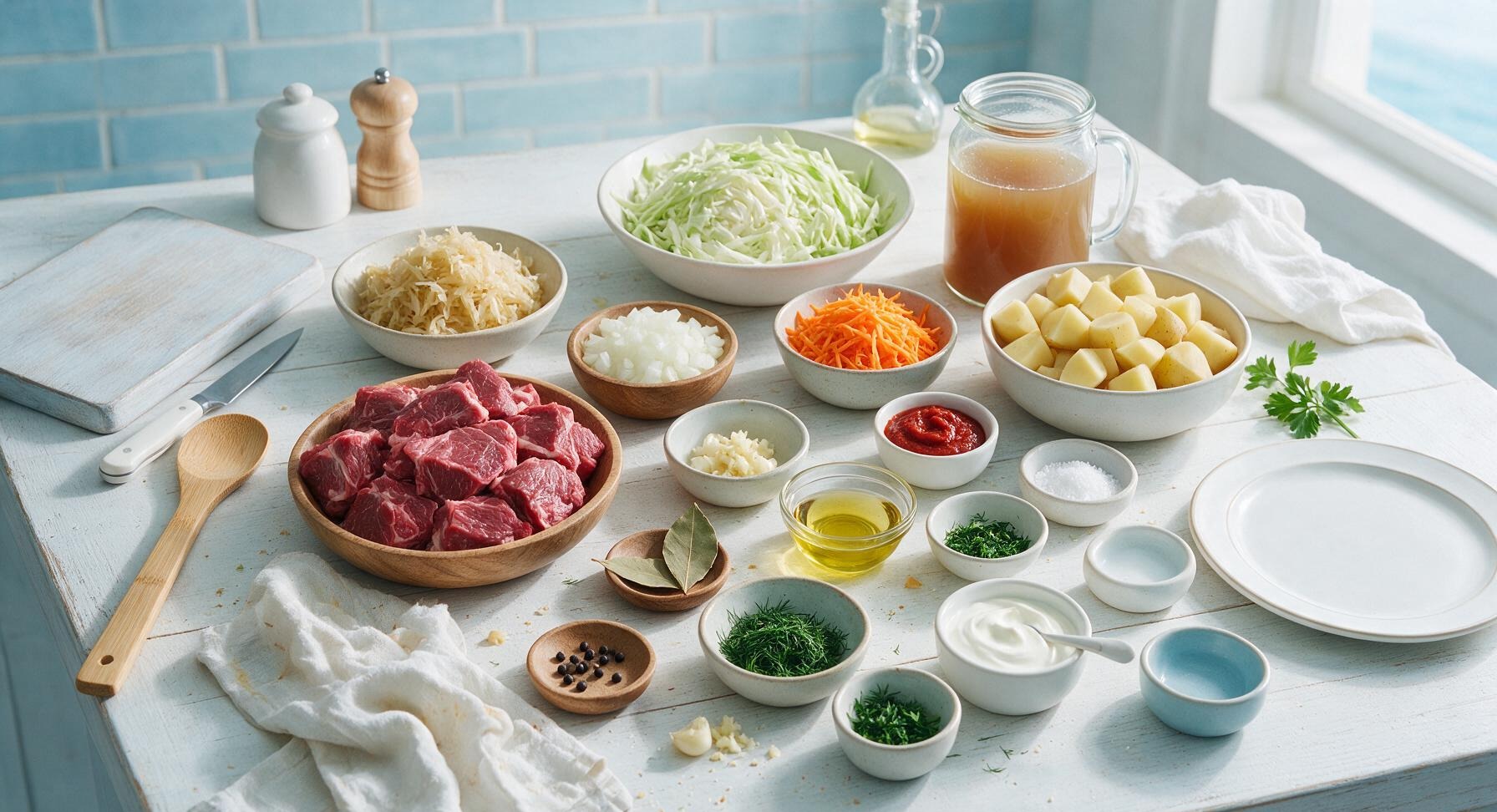
Bone-in beef chuck, cut into 3cm chunks 500g
Sauerkraut, drained and lightly squeezed 300g
Green cabbage, cored and shredded 200g
Yellow onion, peeled and diced 1 medium (150g)
Carrot, peeled and grated 1 medium (120g)
Russet potato, peeled and cut into 2cm cubes 2 medium (300g)
Tomato paste 2 tbsp
Sunflower oil 2 tbsp
Bay leaves 2
Whole black peppercorns 6
Garlic cloves, peeled and minced 2
Fresh dill, chopped (divided) 1/4 cup
Full-fat sour cream (for serving) 1/2 cup
Low-sodium beef broth 1.5L
Kosher salt (to taste) 1 tsp

Steps

1

Sear the beef chunks

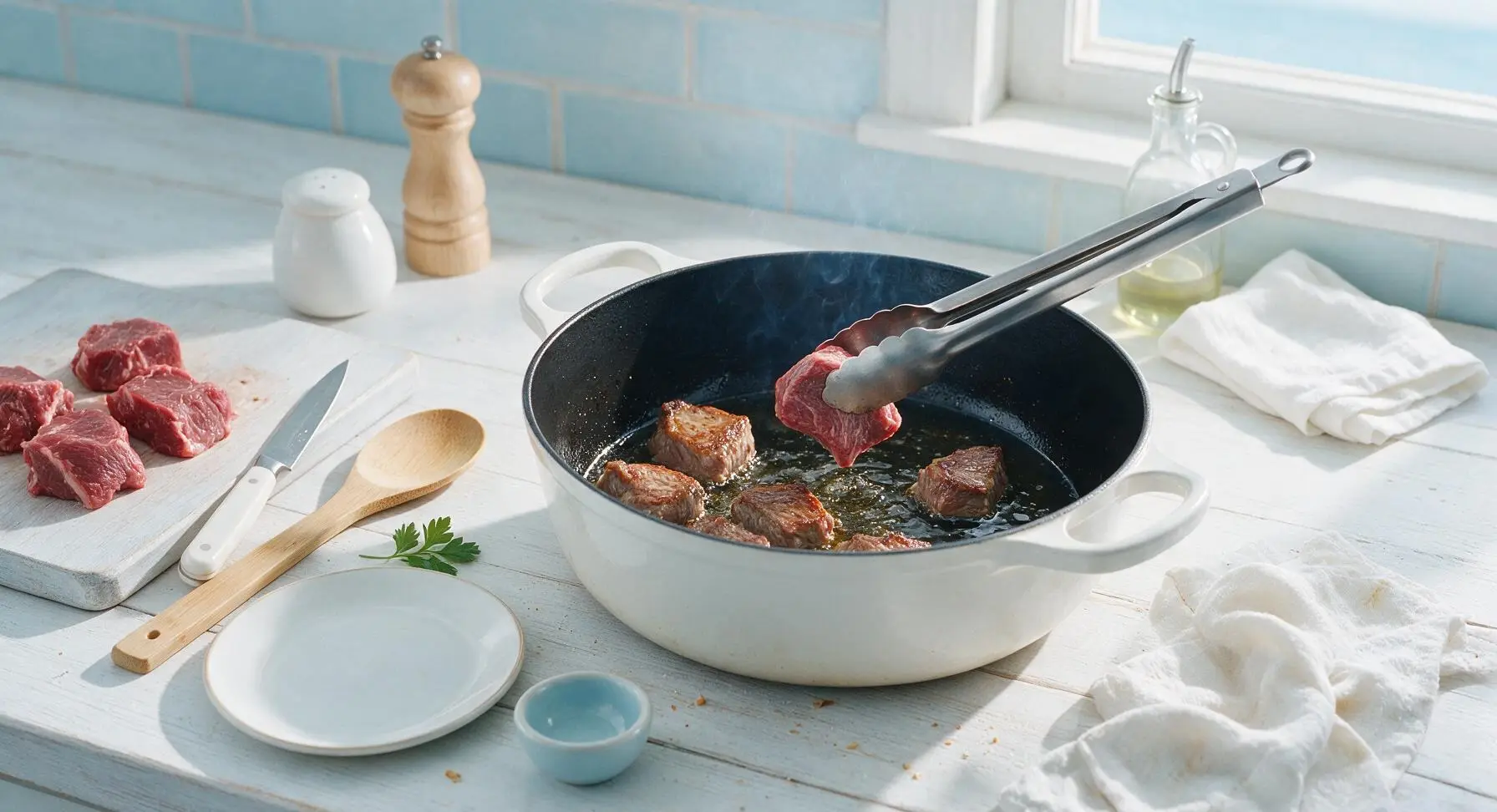
Pat the 500g bone-in beef chuck chunks completely dry with the charcoal linen towel. Heat 1 tablespoon sunflower oil in the enameled Dutch oven over medium-high heat (190C/375F) until the oil shimmers. Working in 2 batches to avoid crowding the pan, sear beef for 3-4 minutes per side until deep golden brown on all edges. Transfer seared beef to the 15cm cream ceramic side plate and set aside; do not wipe out the browned bits (fond) from the pot bottom.
Step 1
step1:Sear the beef chunks
2

Sauté aromatic base

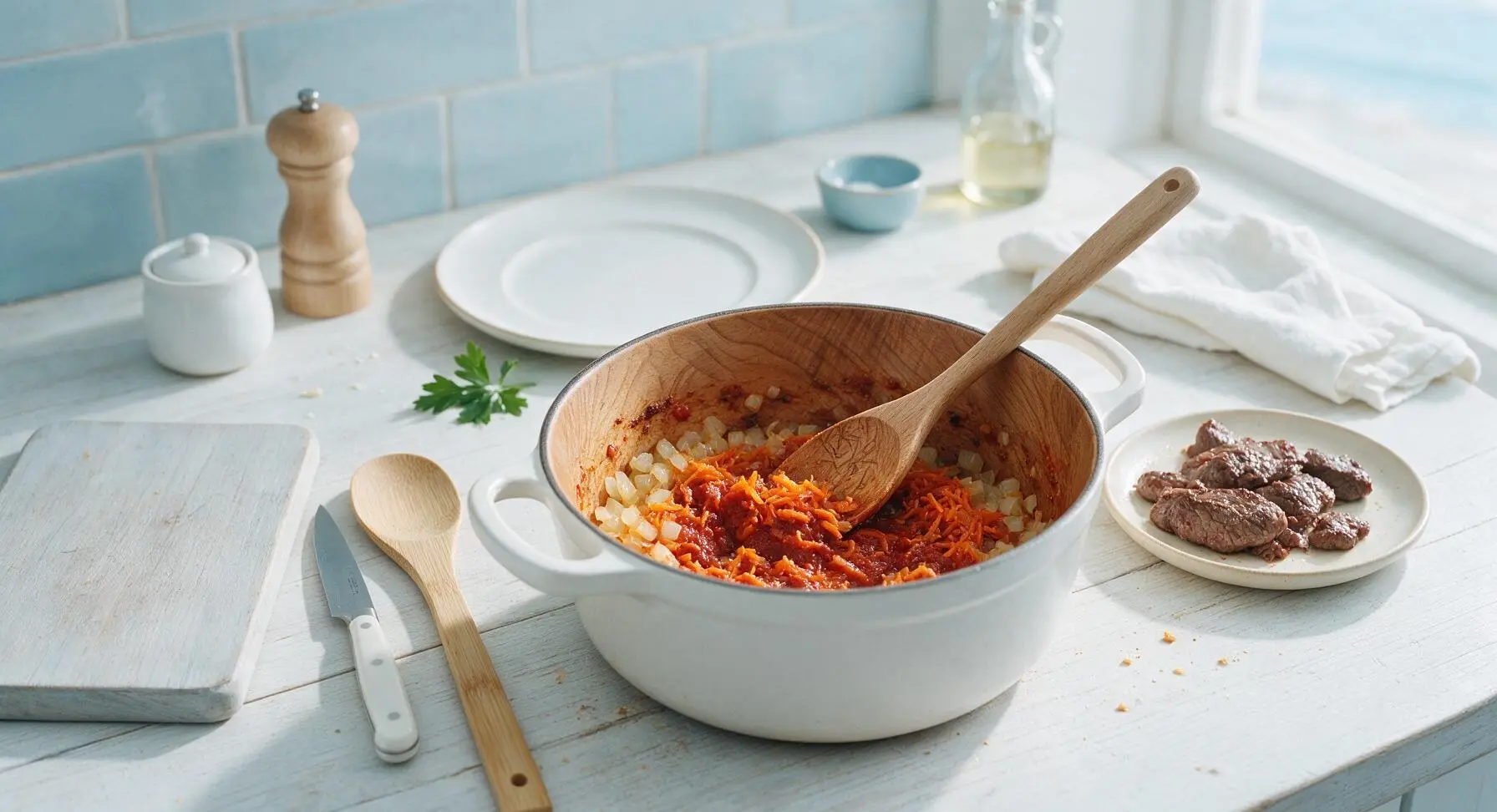
Reduce heat under the Dutch oven to medium (175C/350F). Add the remaining 1 tablespoon sunflower oil, then add diced yellow onion, cooking for 3 minutes until soft and translucent. Add grated carrot, cooking for another 4 minutes until carrot is tender and slightly caramelized at the edges. Stir in 2 tablespoons tomato paste, cooking for 1 minute until the paste darkens to a deep rust color and releases a sweet, rich aroma.
Step 2
step2:Sauté aromatic base
3

Simmer beef broth

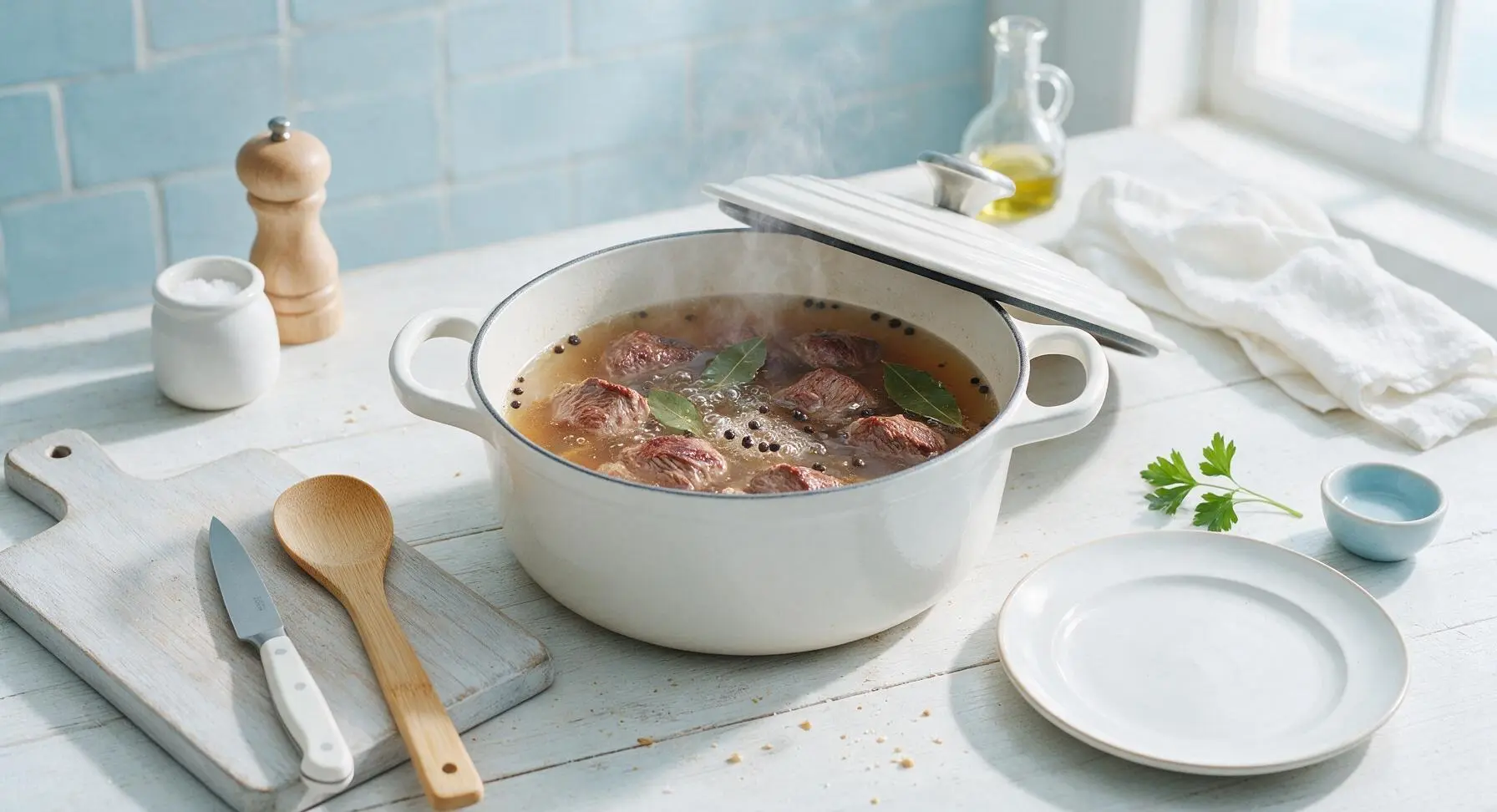
Pour 1.5L low-sodium beef broth into the Dutch oven, scraping the pot bottom firmly with the wooden spoon to lift all browned fond bits into the liquid. Return the seared beef chunks to the pot, add 2 bay leaves and 6 whole black peppercorns. Bring to a rolling boil, then reduce heat to low (95C/200F), cover, and simmer for 40 minutes until the beef is nearly fork-tender.
Step 3
step3:Simmer beef broth
4

Add potato and cabbage

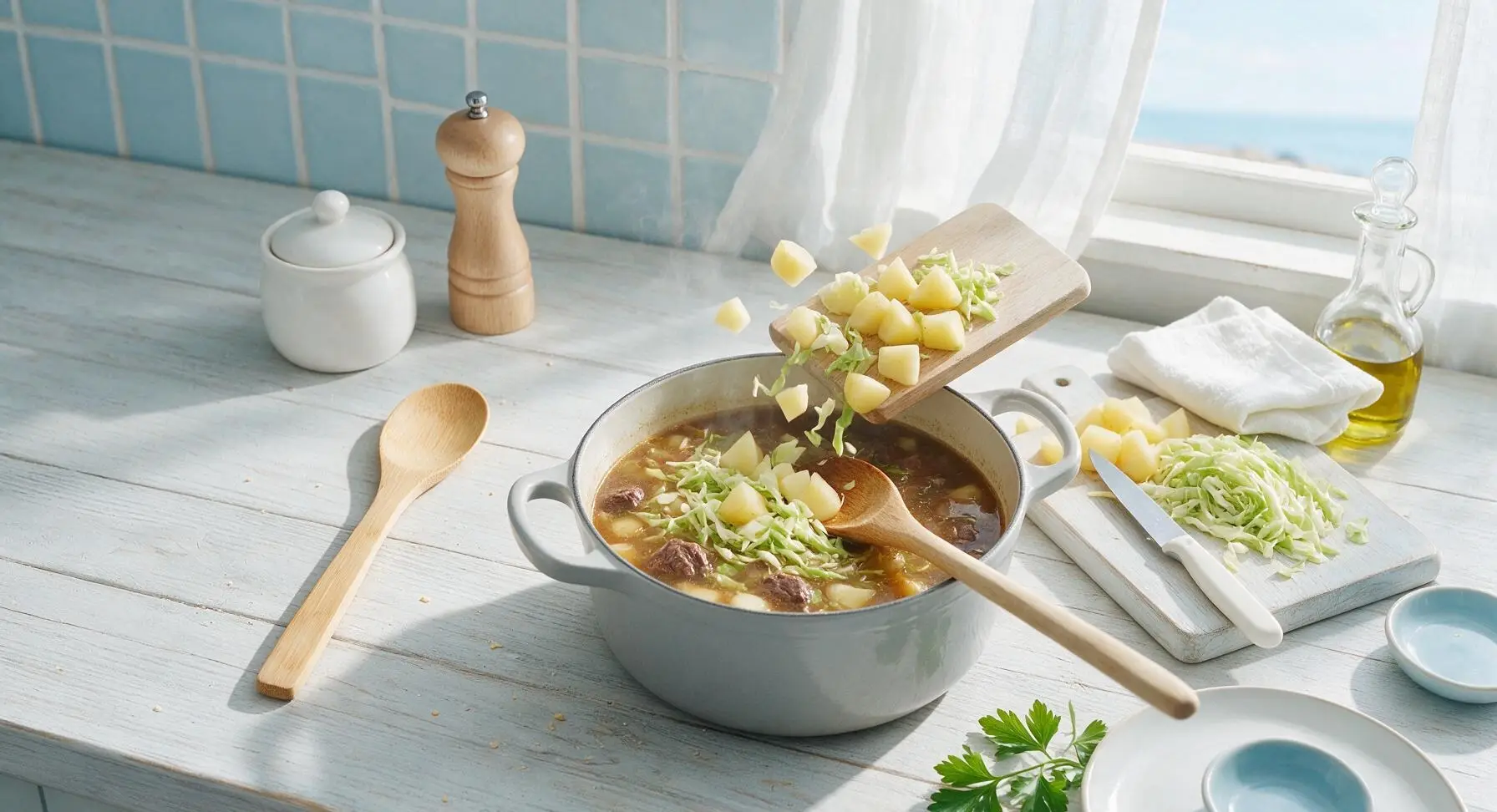
After 40 minutes of simmering, lift the lid from the Dutch oven. Add the cubed russet potatoes and shredded fresh green cabbage, stirring to fully submerge all pieces in the broth. Cover again and simmer for 10 minutes until potatoes are just tender when pierced with a fork, but not soft enough to fall apart.
Step 4
step4:Add potato and cabbage
5

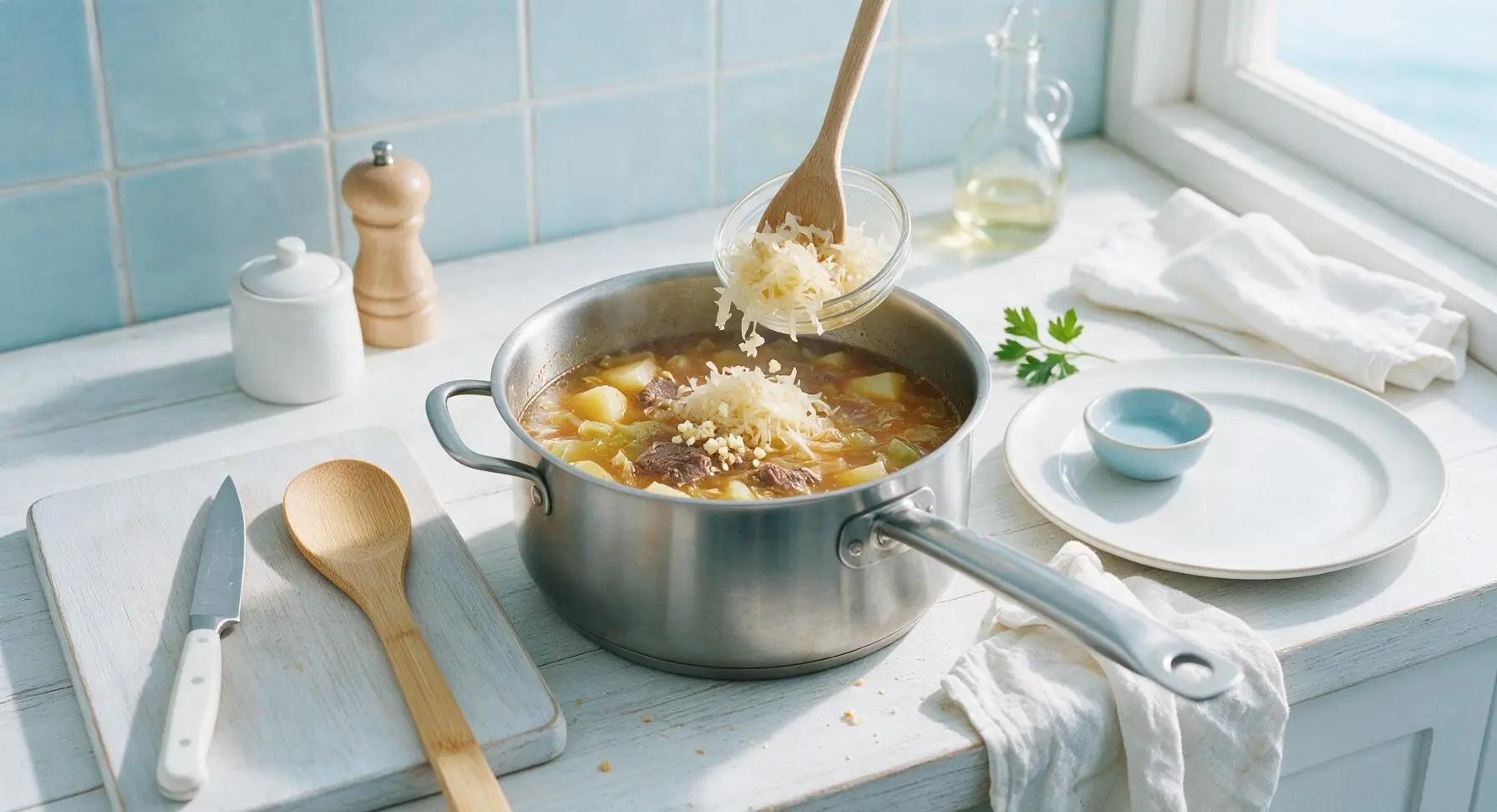
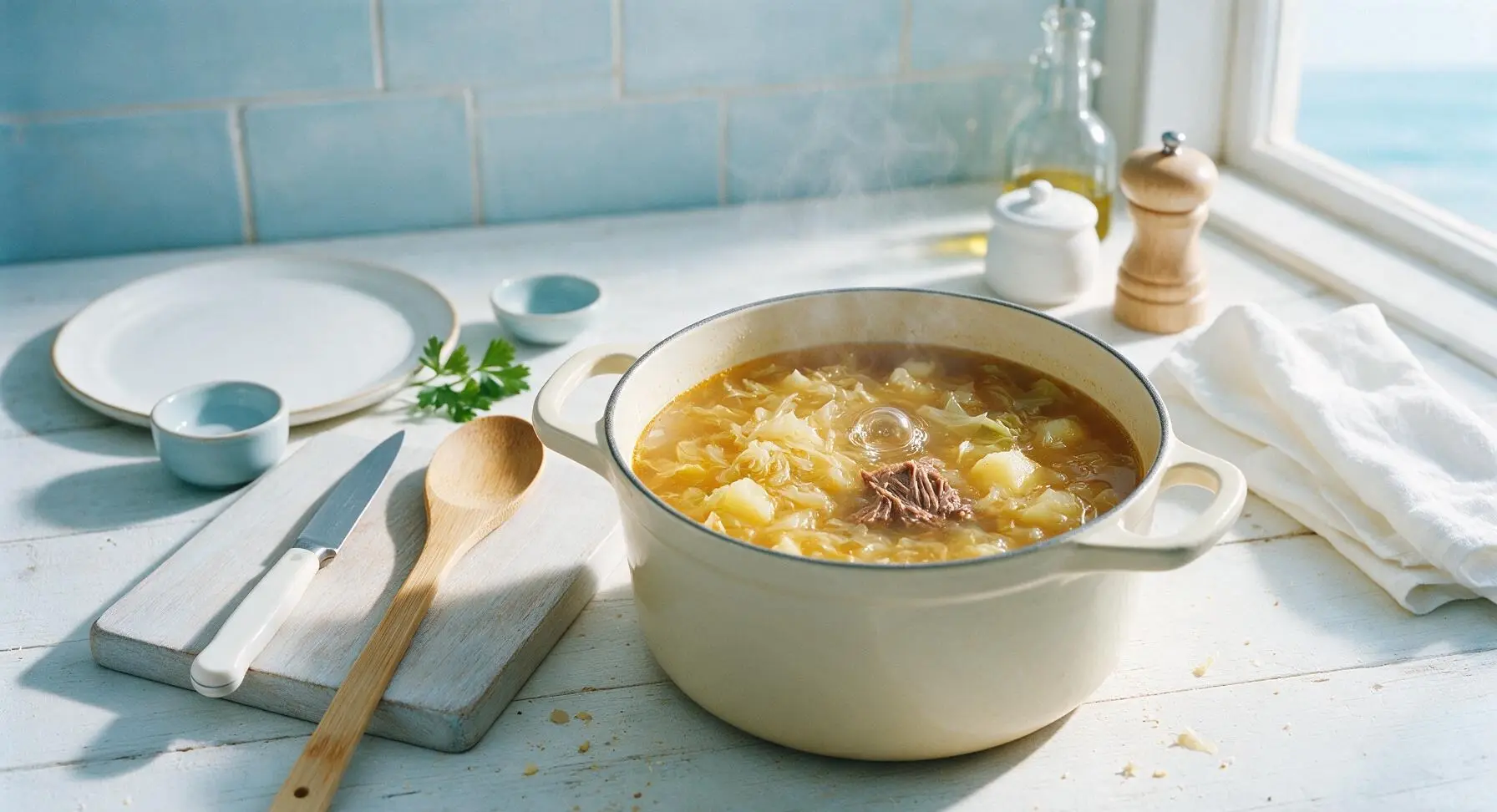
Stir in sauerkraut

Add the drained, lightly squeezed sauerkraut and minced garlic to the pot, stirring well to combine. Return the soup to a gentle simmer, cover, and cook for another 20 minutes, until all vegetables are fully tender, the beef pulls apart easily with a fork, and the broth has a bright, balanced tang from the sauerkraut. Taste and adjust seasoning with up to 1 teaspoon of salt, as needed, depending on the saltiness of your sauerkraut.
Step 5
step5:Stir in sauerkraut
Step 5
step5:Stir in sauerkraut
6

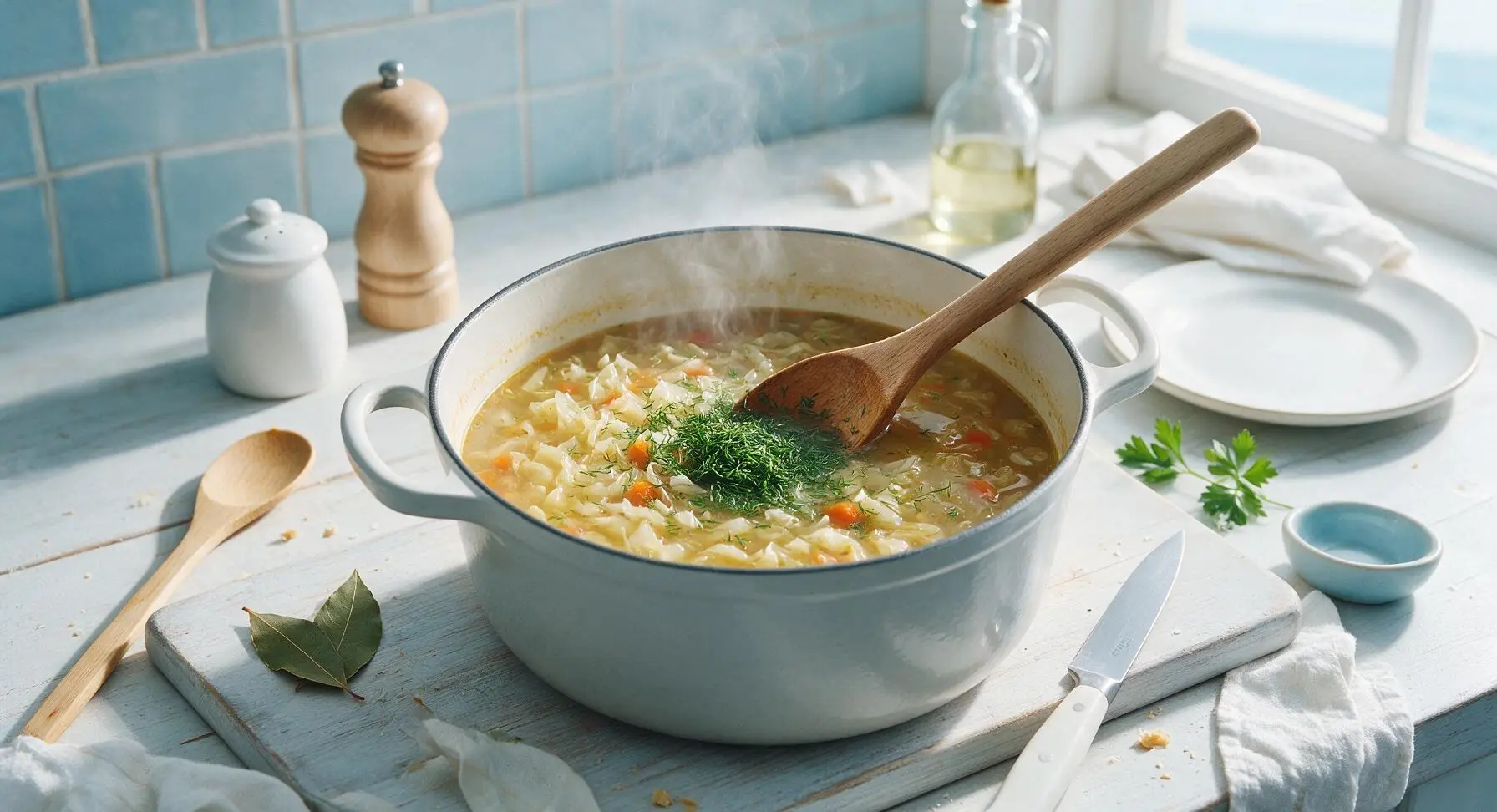
Finish and rest soup

Turn off the heat under the Dutch oven. Fish out and discard the 2 bay leaves from the soup, then stir in half of the chopped fresh dill. Cover the pot and let the soup rest for 10 minutes to allow flavors to meld; this resting step softens the sharp tang of sauerkraut and lets the beef absorb vegetable notes.
Step 6
step6:Finish and rest soup
7

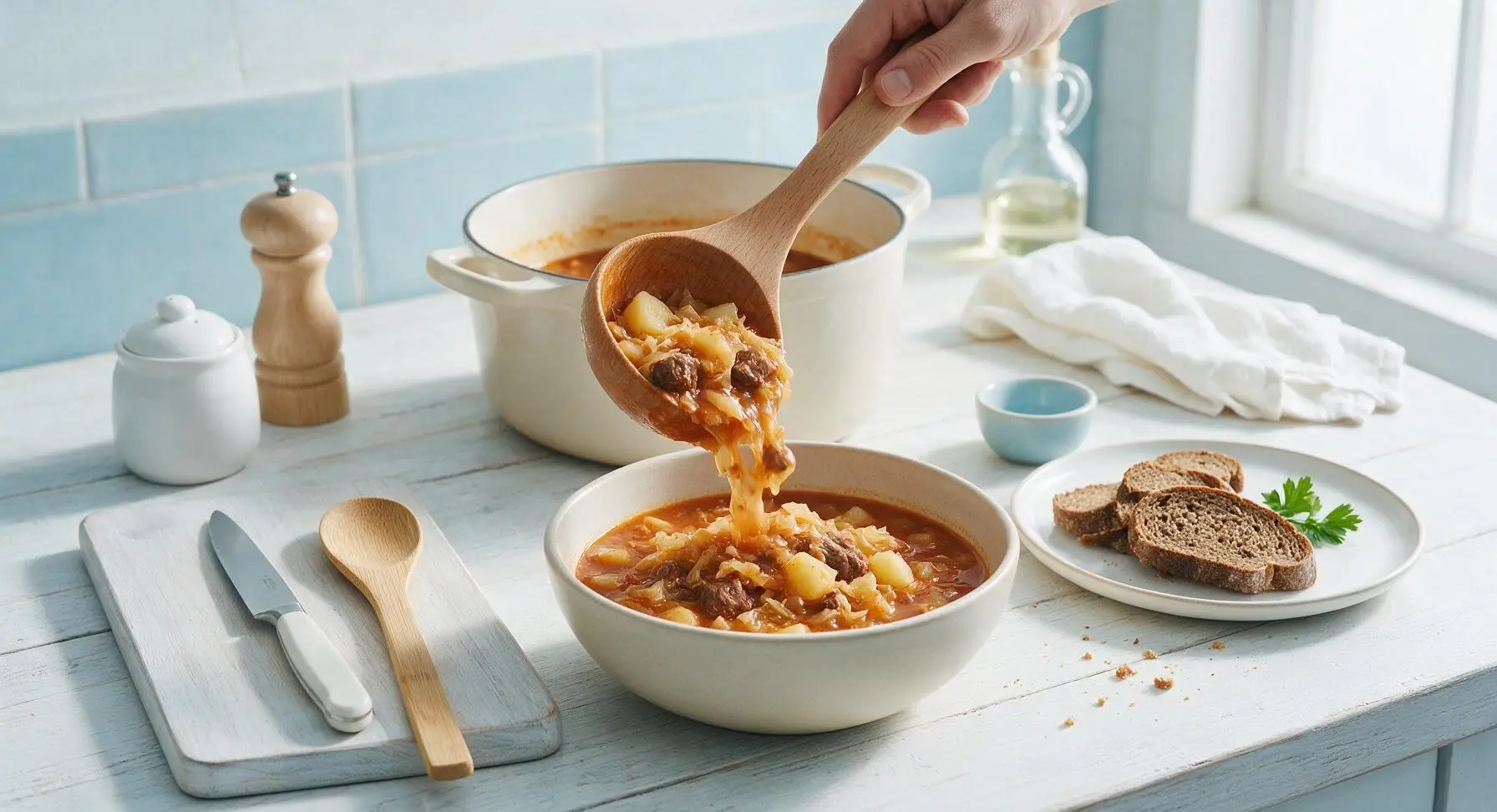
Ladle and garnish

Ladle the hot soup into the matte cream ceramic deep soup bowls, ensuring each serving gets an even mix of beef, potato, cabbage, sauerkraut, and broth. Top each bowl with a 2-tablespoon dollop of full-fat sour cream, a sprinkle of the remaining fresh dill, and a light twist of cracked black pepper. Serve alongside slices of crusty dark rye bread.
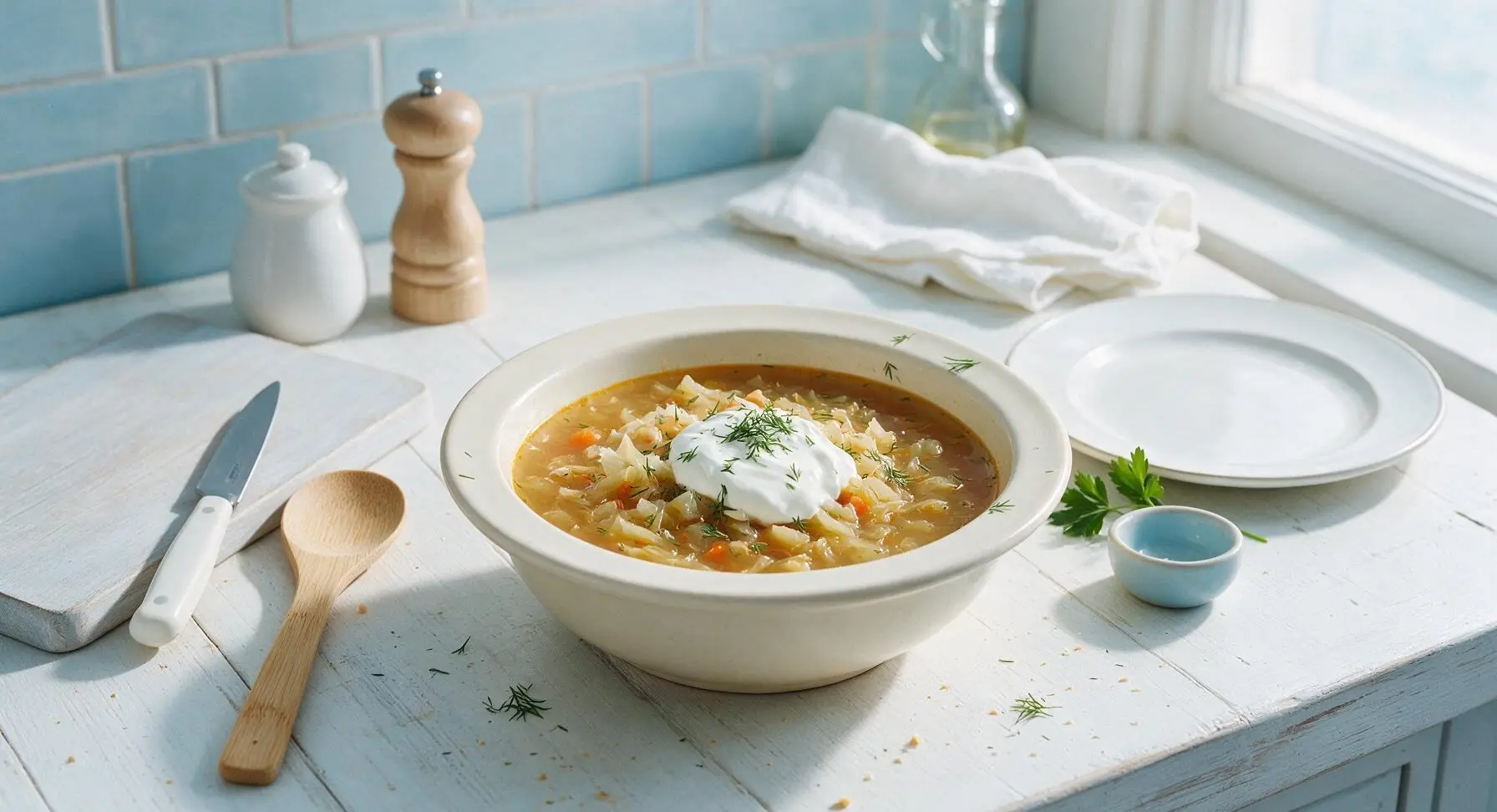
Step 7
step7:Ladle and garnish
Step 7
step7:Ladle and garnish

Tips

1.Always squeeze excess brine from sauerkraut before adding it to the soup: too much free brine will make the broth overly sharp and salty. If you prefer a brighter tang, stir in 1-2 tablespoons of reserved sauerkraut brine at the very end, after tasting the rested soup, to adjust flavor without over-salting during cooking.
2.Sear beef in small batches without crowding the Dutch oven: if too many chunks are added at once, they will release moisture and steam instead of developing a deep golden crust. That browned crust (and the fond left in the pot) creates the rich, savory base that makes the soup taste deep and complex, not flat.
3.Kapusta soup tastes even better the second day: store cooled soup in an airtight container in the fridge for up to 4 days, and reheat gently on the stovetop. The sauerkraut’s tang will mellow and meld with the beef and vegetables as it rests, creating a more rounded flavor than the day it is cooked.


✨ You May Also Like

Soups & Stews
🍜 Japan

Rich, umami-dense Hokkaido-style miso ramen with chewy noodles, savory fermented broth, and classic toppings, a cozy, deeply satisfying warm meal.

⏱️ 45 minuteSoups & Stews ★ 4.5
Soups & Stews
🍜 United States

A hearty, peppery tripe and root vegetable stew with colonial Philadelphia roots, thick, warming, and packed with bold savory flavor for cold winter days.

⏱️ 2 hours 3Soups & Stews ★ 4.6
Soups & Stews
🍜 Mexico

Hearty, warming red pork posole loaded with tender hominy, slow-simmered in a rich smoky chile broth, served with zesty fresh garnishes for a deeply comforting, satisfying meal.

⏱️ 2 hours 3Soups & Stews ★ 4.7
Soups & Stews
🍜 United States

Warm, soothing classic chicken noodle soup loaded with tender chicken, soft egg noodles, and savory veggies, perfect for chasing chills and feeding the whole family.

⏱️ 40 minuteSoups & Stews ★ 4.9
Soups & Stews
🍜 France

Deeply savory caramelized onion broth topped with crusty bread and bubbly melted Gruyère, a timeless French bistro comfort food ideal for cold days.

⏱️ 1 hour 25Soups & Stews ★ 4.8
Soups & Stews
🍜 United States

Hearty, briny Maryland crab soup loaded with sweet blue crab, tender summer vegetables, and zesty Old Bay, a beloved Chesapeake Bay coastal comfort staple.

⏱️ 55 minuteSoups & Stews ★ 4.9

kapusta soup:Frequently Asked Questions

1.Why do you use both fresh green cabbage and sauerkraut in kapusta soup? ▾
That combination creates the soup’s signature balanced, iconic flavor! Fresh shredded green cabbage adds mild, earthy sweetness and soft, tender texture, while lightly squeezed sauerkraut delivers that bright, tangy zing kapusta is known for. Skipping either will leave the soup flat, overly sour, or missing its classic cozy depth.
2.How much should I squeeze my drained sauerkraut before adding it to the soup? ▾
You only need to give it a light, gentle squeeze to remove excess brine that would make the soup unpalatably salty or overly sharp right off the bat. Don’t wring it completely dry—you want to hold onto enough of that tangy brine to flavor the broth, just not so much that it overpowers the beef and fresh vegetable notes.
3.Can I use a different cut of beef if I don’t have bone-in beef chuck? ▾
Bone-in chuck is ideal because its marbled fat and connective tissue break down into melt-in-your-mouth tender chunks and add rich, marrow-forward depth to the broth. If you don’t have it, boneless chuck is the closest swap; just avoid lean cuts like sirloin, which will turn tough and dry during the long, slow simmer the soup needs.
4.Why do you grate the carrot instead of dicing it for this soup? ▾
Grated carrot melts almost seamlessly into the broth as the soup simmers, adding subtle natural sweetness and a faint, golden orange hue without leaving big, firm, distinct carrot chunks that throw off the classic, homey texture. If you prefer heartier vegetable bites, you can dice it, but grated is the traditional prep for smooth, well-integrated flavor.
5.How long do I need to simmer the beef chunks to get them perfectly tender? ▾
Once you’ve seared your 3cm beef chunks and added your broth base, plan for a low, gentle simmer of 1.5 to 2 hours before adding your vegetables. This slow cook gives the tough chuck connective tissue time to break down into juicy, tender bites, and lets the bone marrow infuse the broth with that signature rich, savory base.
6.My soup turned out way too tangy—how can I fix that? ▾
If the sauerkraut made your soup overly sour, stir in a small pinch of sugar or a spoonful of tomato paste a little at a time to balance the tang, or add a splash more low-sodium beef broth to dilute the sharpness. Taste as you adjust so you don’t accidentally make it too sweet, and remember the tang will mellow slightly as the soup rests.
7.Can I make kapusta soup ahead of time, and does it reheat well? ▾
Kapusta actually tastes better the day after you make it! The flavors meld and deepen as it chills in the fridge, and the tang from the sauerkraut softens into a more rounded, balanced note. Store it in an airtight container for up to 4 days, and reheat gently on the stovetop over low heat, adding a splash of broth if it thickens too much.
8.Does classic Russian kapusta soup freeze well for long-term storage? ▾
It freezes beautifully! Let the soup cool fully, then transfer it to freezer-safe, airtight containers, leaving a half-inch of headspace for expansion, and it will keep for up to 3 months. Thaw it in the fridge overnight before reheating, and give it a good stir to recombine any separated broth and vegetable bits as it warms.
9.Is there a vegetarian version of this soup that still tastes authentic? ▾
You can absolutely make a meat-free kapusta that hits all the same cozy notes! Swap the beef chuck for hearty mushrooms like portobello or cremini, use vegetable broth instead of beef broth, and add a can of rinsed white beans for extra protein and heartiness to mimic the rich, filling feel of the classic beef version.
10.Why do you cut the beef chuck into 3cm chunks specifically? ▾
That 3cm size is the sweet spot for perfect texture: it’s large enough that the beef doesn’t shrink down into tiny, overcooked crumbles during the long simmer, but small enough that every bite gets a little bit of tender beef, soft cabbage, and tangy sauerkraut without needing to cut pieces with a knife while eating.
11.Should I sauté the onion and carrot before adding them to the soup? ▾
Yes, a quick sauté of diced yellow onion and grated carrot in a little oil or rendered beef fat before adding them to the broth builds a much deeper, sweeter, more complex flavor than tossing raw veggies straight in. Cook them just until the onion turns translucent and the carrot softens, about 5 minutes, to avoid browning them too much.
12.What are the best traditional toppings to serve with kapusta soup? ▾
The classic serving pairings are simple and cozy: a dollop of full-fat sour cream on top of each bowl, a sprinkle of fresh chopped dill, and a slice of crusty dark rye bread on the side for dipping. Avoid heavy, fancy toppings—this is a rustic, hearty soup meant to be served simply to let its tangy, savory flavors shine.
13.Can I use pre-shredded green cabbage from the grocery store to save prep time? ▾
Store-bought pre-shredded cabbage works perfectly fine here, just give it a quick rinse and pick out any tough, woody core pieces that might be mixed in before adding it to the pot. It will cut down your prep time significantly, and you won’t notice a flavor difference compared to shredding a whole head yourself for this slow-simmered soup.
14.Why is my beef coming out tough and chewy instead of tender? ▾
Tough, chewy beef almost always comes from simmering the soup at too high a boil, or not cooking it long enough. Keep the heat low enough that you only see tiny, gentle bubbles breaking the surface, and give the chuck enough time for its connective tissue to fully break down—rushing this step is the number one reason for tough, unsatisfying beef chunks.
15.Do I need to rinse the sauerkraut before using it in the soup? ▾
You usually don’t need to rinse sauerkraut for kapusta, unless you know the brand you’re using is exceptionally salty or aggressively sour. Rinsing strips away much of the bright, fermented tang that gives the soup its signature flavor, so stick to draining and lightly squeezing unless you’ve tasted the sauerkraut first and know it needs mild toning down.

Comments (4)

2 days ago

OMG this kapusta soup is SO good! I made it for Sunday family dinner last night and even my super picky 7 year old asked for a second bowl. It was way easier than I thought it’d be for a classic Russian recipe, total game changer for cold weeknights. I added a little extra dill on top because we can’t get enough of that stuff, 10/10!

yesterday

Wait adding extra dill is such a good call! I did the same thing when I made it last week, it pairs so perfectly with the sauerkraut tang. I brought a batch to my office potluck and people were begging for the recipe!

yesterday

So glad your whole family loved it! Extra dill is always a fantastic call — there’s no such thing as too much fresh dill with this soup. So happy it was a hit at your family dinner!

3 days ago

Perfect easy meal prep option! I threw this together on Sunday in about an hour and a half exactly like the recipe said, portioned it out for the work week, and it tastes even better reheated. I was worried the sauerkraut would be too tangy for my taste but the balance with the sweet carrots and creamy potatoes is chef’s kiss. Only swap I made was using turkey sausage instead of pork to cut a little fat, and it still turned out incredible.

2 days ago

Love that you adapted this for your meal prep routine! Turkey sausage is such a smart, lighter swap, and I’m thrilled the flavor balance worked for you. You’re so right that the flavors meld even more after a day or two in the fridge, making it perfect for easy weekday lunches.

1 week ago

Made this when we got hit with that random 20-degree cold snap last week and it hit so different. It’s hearty, cozy, and way less fussy than a lot of other soup recipes I’ve tried that require a million ingredients. I served it with buttery sourdough bread for dipping and my roommate said it’s the best thing I’ve cooked all year. Only knock is I wish it had a little more guidance on how salty the sauerkraut should be before adding it — mine was extra briny so I had to add extra potato to mellow it out, but it still turned out great. Will absolutely be keeping this in my regular winter rotation.

2 weeks ago

I’ve been looking for a truly authentic kapusta recipe for literal years! My grandma used to make this when I was little growing up but I never wrote down her exact recipe before she passed. I followed this step by step last weekend and it tasted exactly like I remembered. I cried a little when I took the first bite, no joke. Thank you so much for sharing this, it means more than I can say.

1 week ago

Oh I totally get that feeling! My babushka made this for every family holiday growing up and I’ve chased that exact taste for so long, this recipe is the closest I’ve found too. Pro tip: a big dollop of full-fat sour cream on top takes it right over the edge, just like grandma used to do!