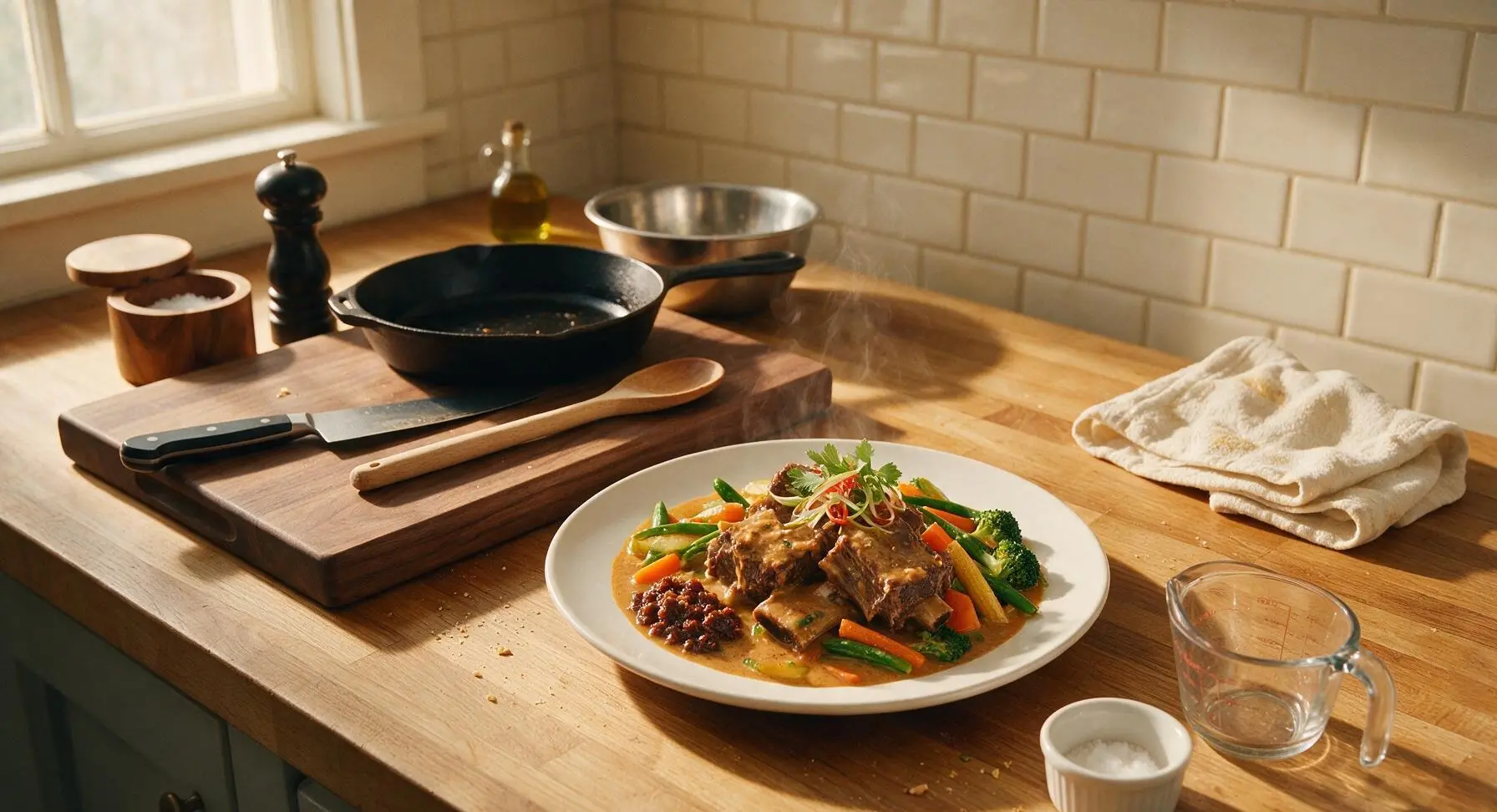
Kare-Kare Ribs

title 1
Kare-Kare Ribs
⏱️ cook time 1 hour 50 minutes
🍽️ servings 4
⚡ Difficulty medium

intro

Rich, nutty Filipino Kare-Kare with fall-off-the-bone tender beef ribs, creamy peanut sauce, bright crisp vegetables, and savory bagoong for iconic, balanced comfort food flavor.

Ingredients
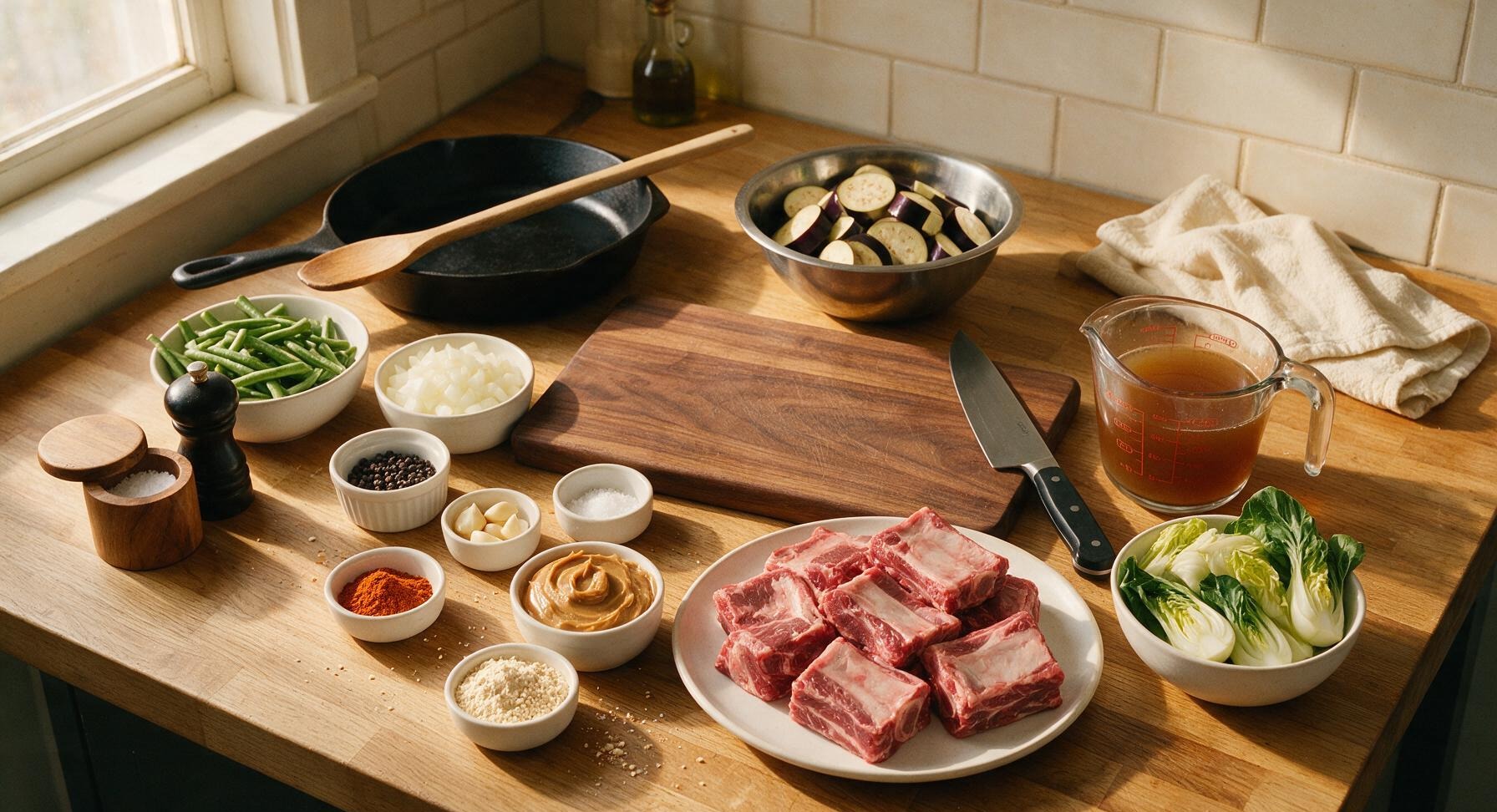
Bone-in beef short ribs 1.2kg (about 2.6 lbs)
Low-sodium beef stock 8 cups (2L)
Yellow onion 1 medium (150g, diced)
Garlic cloves 6 cloves (crushed)
Whole black peppercorns 1 tsp
Annatto (achuete) powder 1 tbsp
Unsweetened creamy peanut butter 1 cup (250g)
Toasted glutinous rice flour 3 tbsp
Japanese eggplant 2 medium (200g, sliced into 5cm rounds)
Yard long beans 1 bunch (150g, cut into 7cm lengths)
Baby bok choy 4 small heads (180g, halved lengthwise)
Coarse sea salt 1 tsp, plus more to taste
Sautéed fermented shrimp paste (bagoong alamang) ¼ cup (for serving)

Steps

1

Trim and Prep Ribs

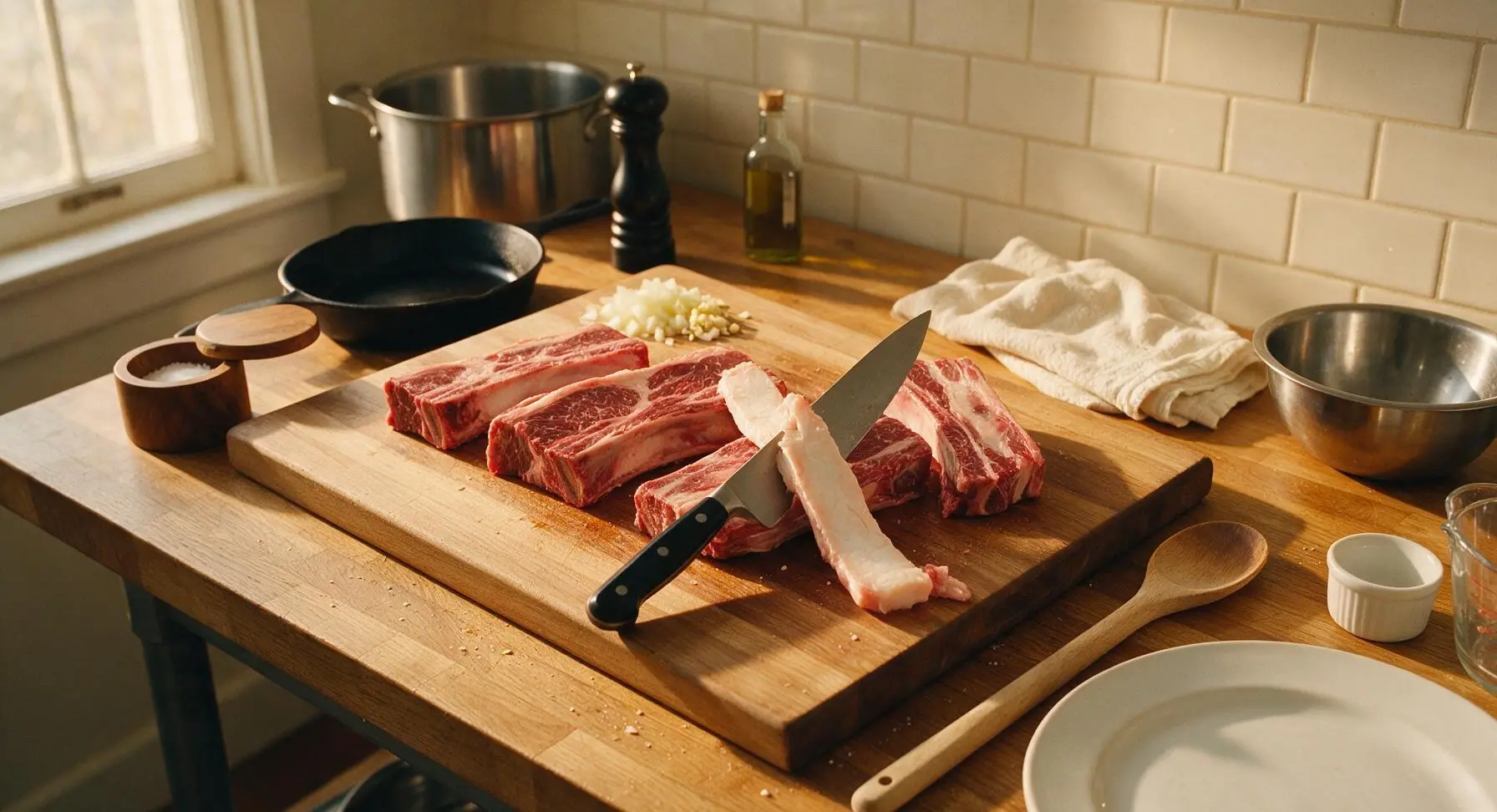
Lay the bone-in beef short ribs on the large acacia cutting board. Use the 8-inch walnut-handled chef knife to trim away thick, tough external fat deposits, leaving a thin ¼-inch fat cap on each rib to keep meat moist during simmering. Pat rib surfaces lightly with the corner of the fixed linen towel to remove excess surface moisture. Dice the yellow onion into 1cm pieces, crush garlic cloves with the flat of the chef knife, and set prepped aromatics in a small pile at the edge of the cutting board.
Step 1
step1:Trim and Prep Ribs
2

Simmer Ribs Until Tender

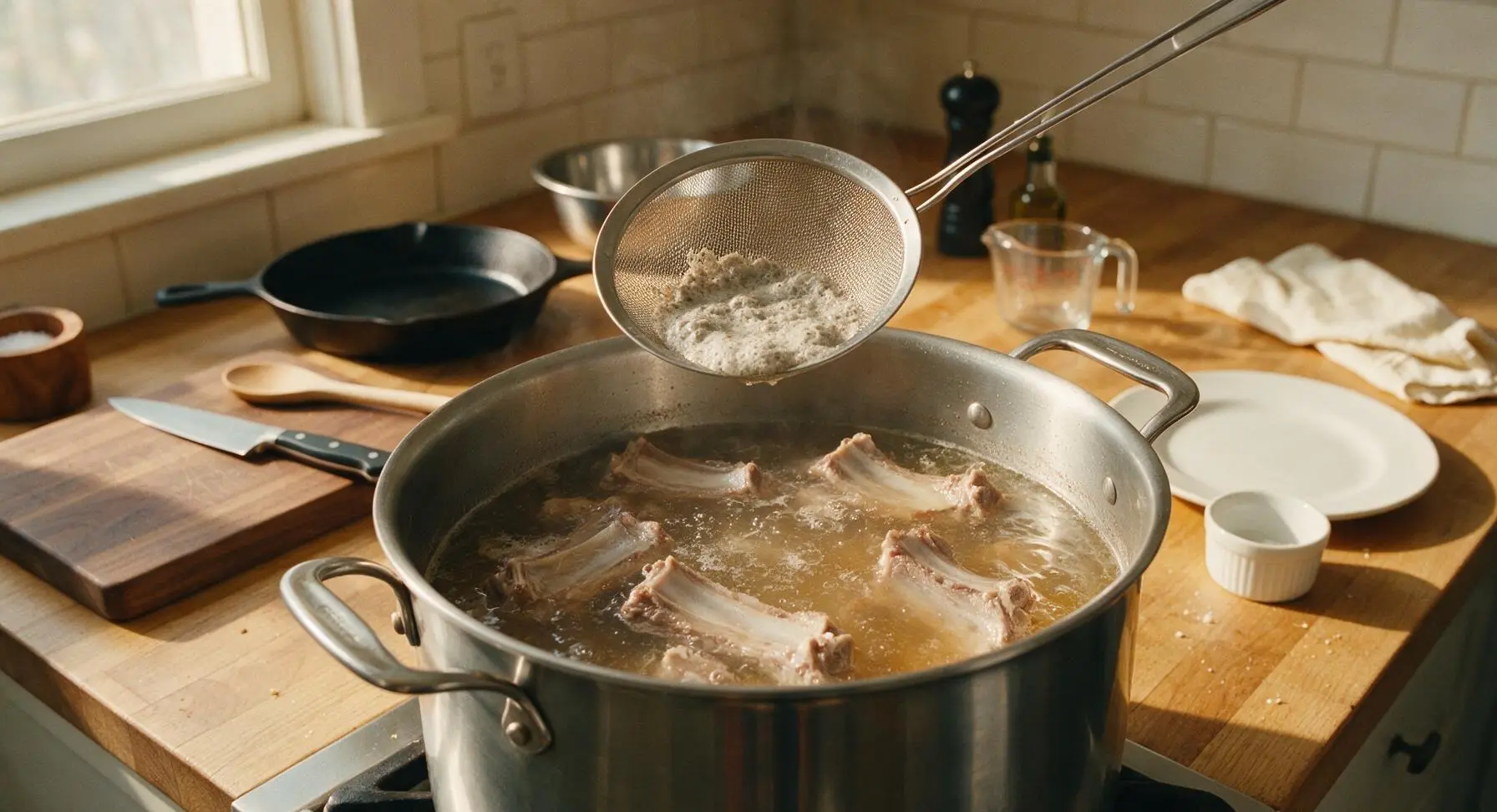
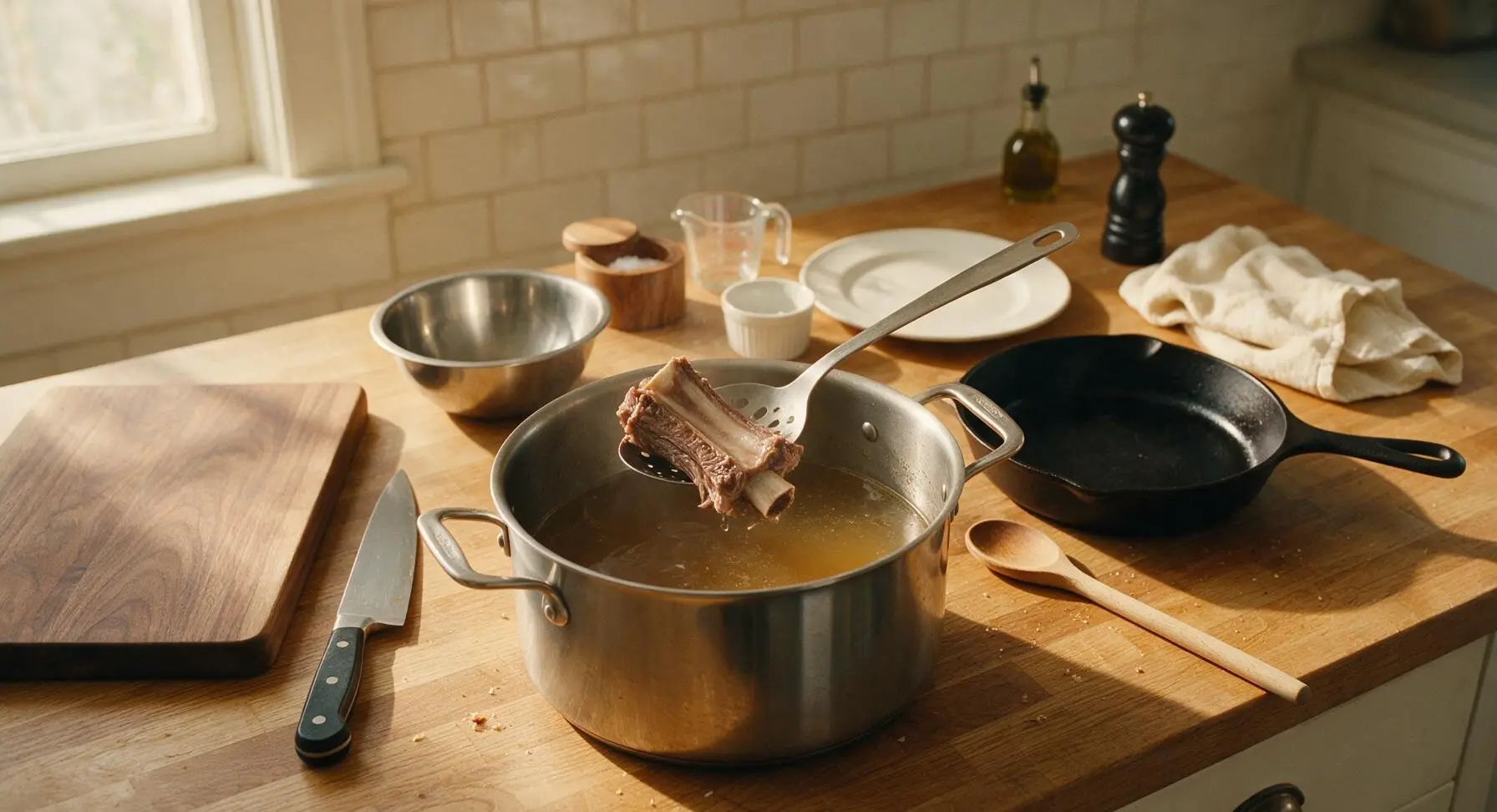
Place trimmed ribs, diced onion, crushed garlic, and whole black peppercorns into the 8-quart stock pot, pour in 8 cups of low-sodium beef stock, and bring to a rolling boil over medium-high heat (approximately 12 minutes). Use the fine-mesh stainless steel skimmer to remove all gray, foamy scum that rises to the surface during the first 10 minutes of boiling, skimming every 2-3 minutes to keep the broth clear and free of bitter impurities. Once no more scum rises to the surface, reduce heat to low, cover the pot with its lid, and simmer for 1 hour 30 minutes, until a fork slides easily into the rib meat but the meat remains firmly attached to the bone.
Step 2
step2:Simmer Ribs Until Tender
Step 2
step2:Simmer Ribs Until Tender
3

Blanch Fresh Vegetables

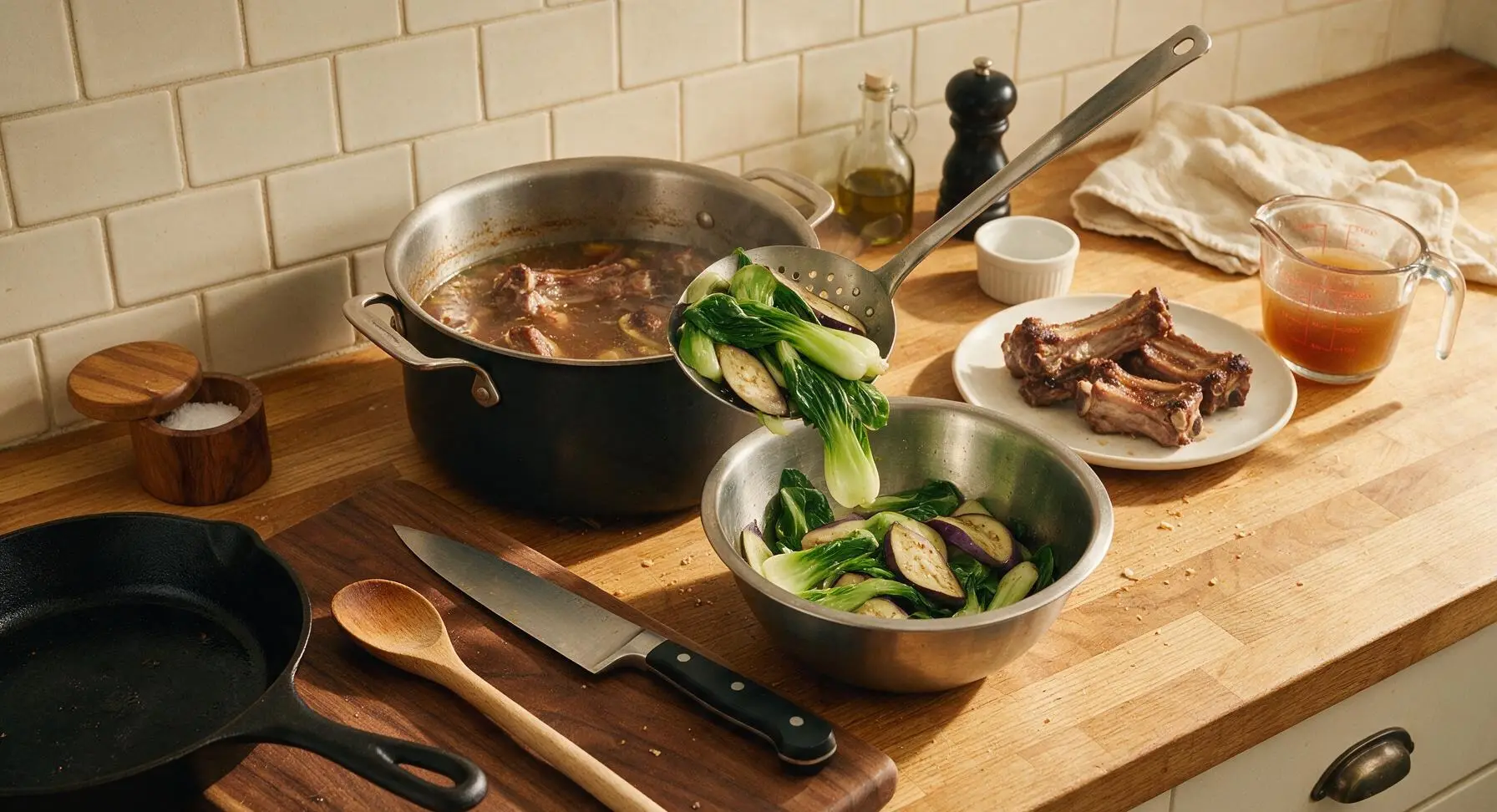
Use the slotted spoon to transfer all cooked ribs from the pot to a clean plate, set aside. Reserve 6 cups of the simmering rib broth in the glass measuring cup, leaving 4 cups of broth in the stock pot. Return the pot to medium heat, add sliced eggplant and cut yard long beans, and simmer for 3 minutes until just crisp-tender. Add halved baby bok choy and cook for 1 additional minute, until leaves are bright green and slightly wilted. Use the slotted spoon to lift all vegetables from the broth, transferring them to the medium stainless steel mixing bowl to stop cooking and prevent mushiness.
Step 3
step3:Blanch Fresh Vegetables
4

Make the Peanut Sauce Base

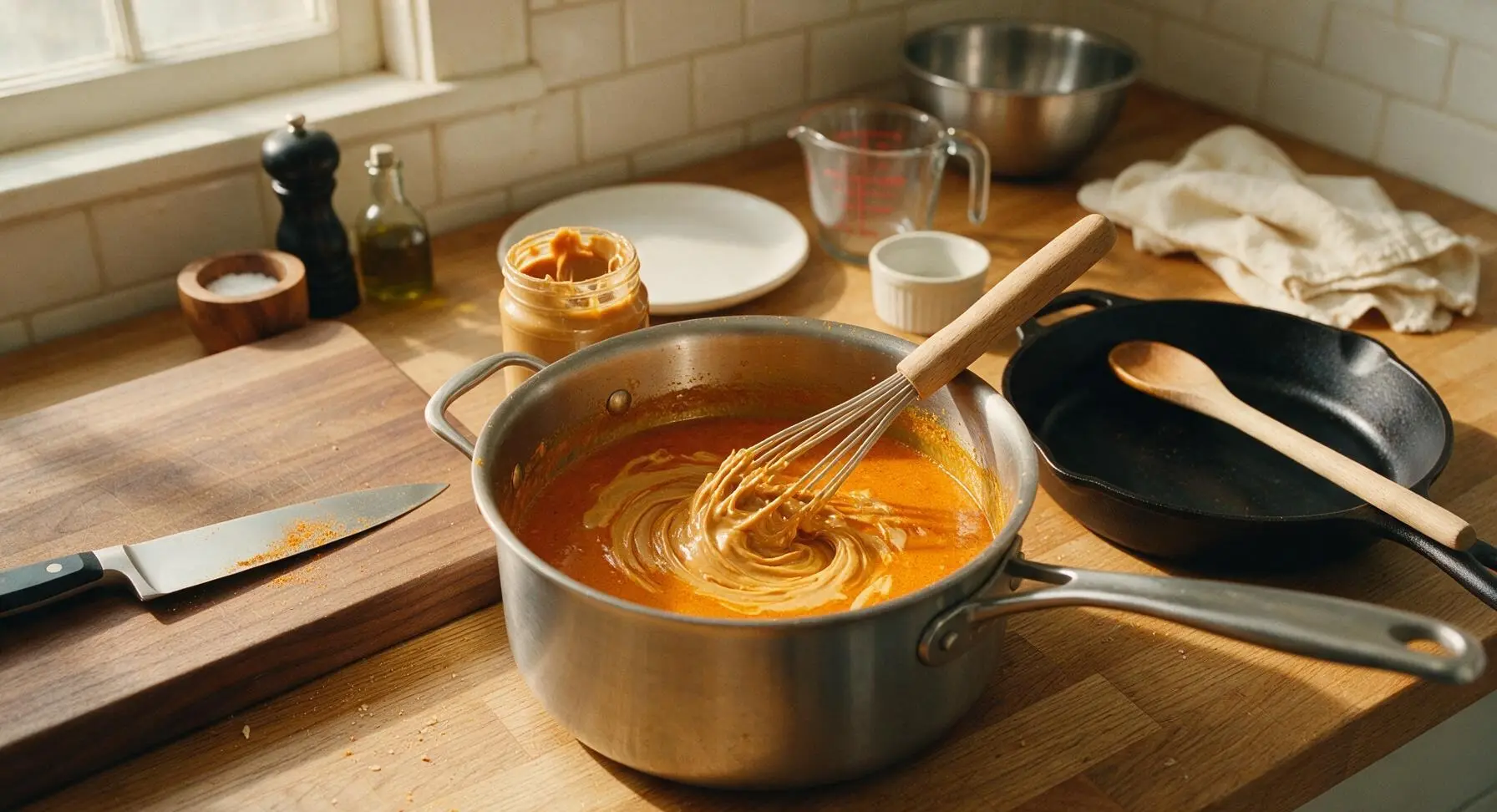
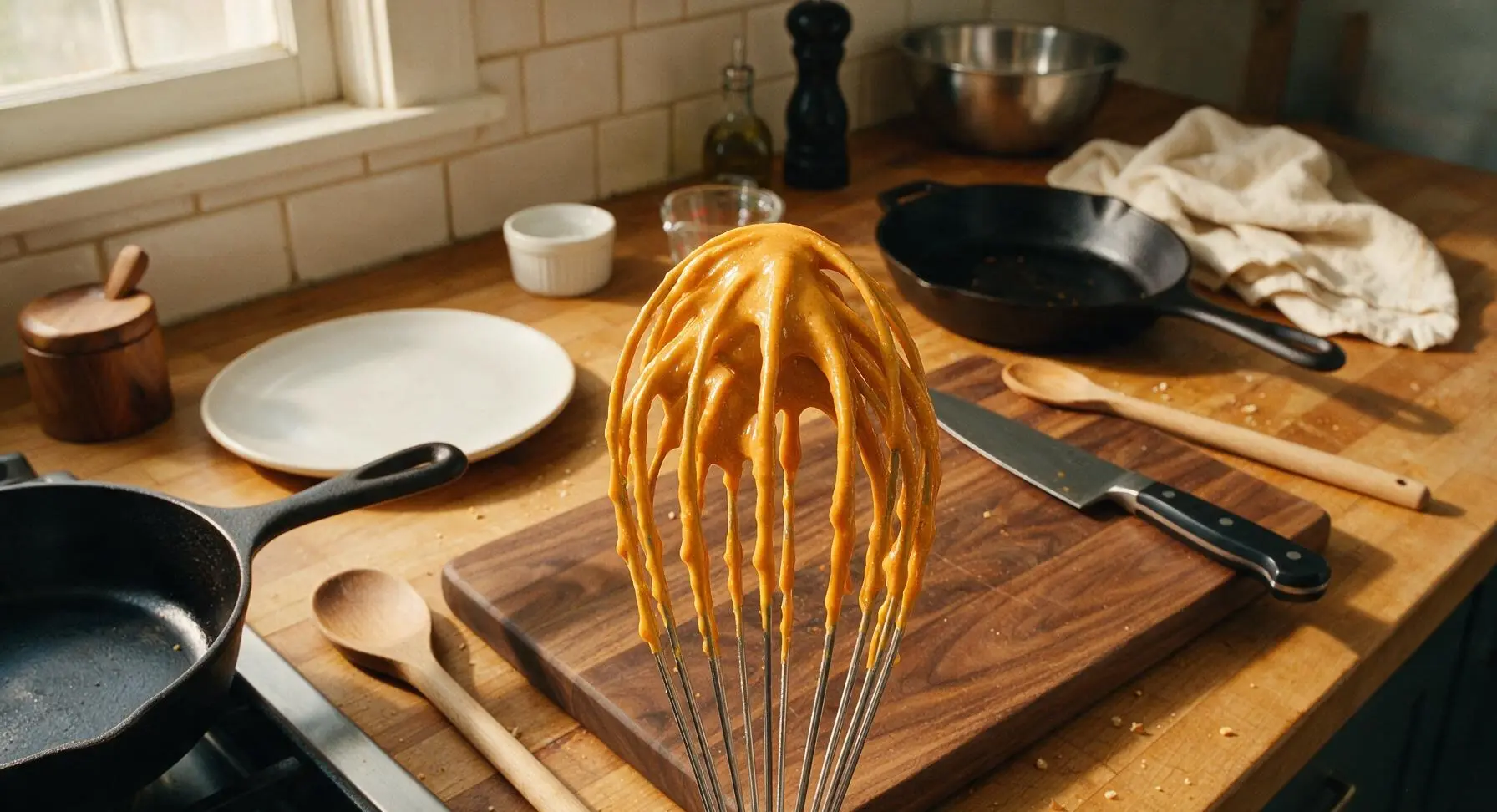
Return the reserved 4 cups of rib broth to the stock pot over medium-low heat. Whisk in 1 tablespoon of annatto powder until fully dissolved, creating a warm, deep orange broth base. Add 1 cup of unsweetened creamy peanut butter, whisking continuously with the silicone whisk to break up lumps, until the mixture is completely smooth. Sprinkle in 3 tablespoons of toasted glutinous rice flour 1 tablespoon at a time, whisking constantly to avoid clumps, then simmer for 5 minutes until the sauce thickens to a gravy-like consistency that coats the back of a spoon. Season with 1 teaspoon of coarse sea salt, tasting to adjust seasoning as needed.
Step 4
step4:Make the Peanut Sauce Base
Step 4
step4:Make the Peanut Sauce Base
5

Coat Ribs in Sauce

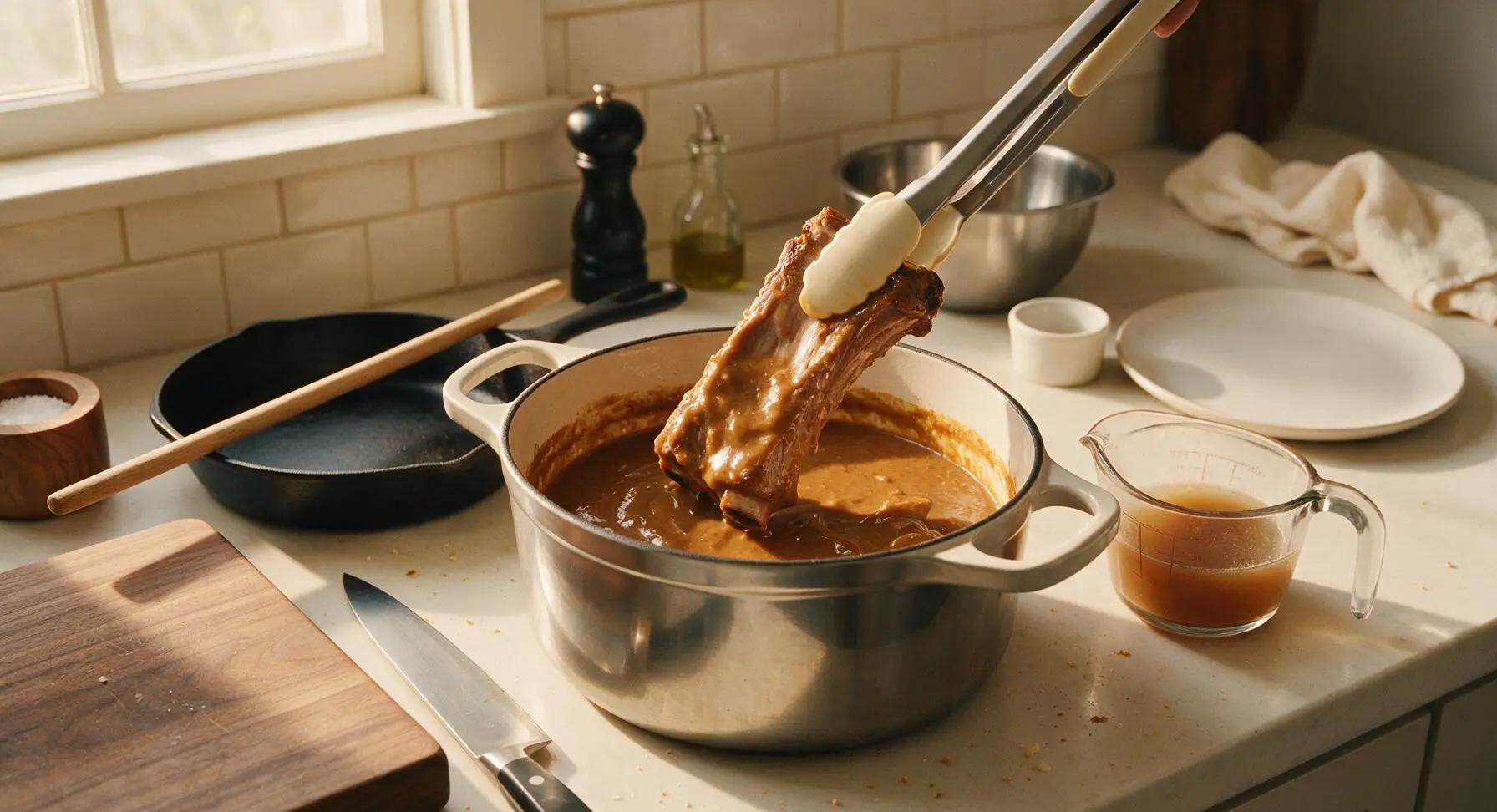
Add the reserved tender cooked ribs back into the pot of thickened peanut sauce, turning each rib gently with the silicone-tipped stainless steel tongs to fully coat every surface in sauce. Simmer uncovered for 5 minutes over low heat, allowing the nutty sauce flavor to penetrate the rib meat. If the sauce becomes too thick, stir in 1-2 tablespoons of reserved rib broth to reach a smooth, pourable consistency.
Step 5
step5:Coat Ribs in Sauce
6

Warm Vegetables Gently

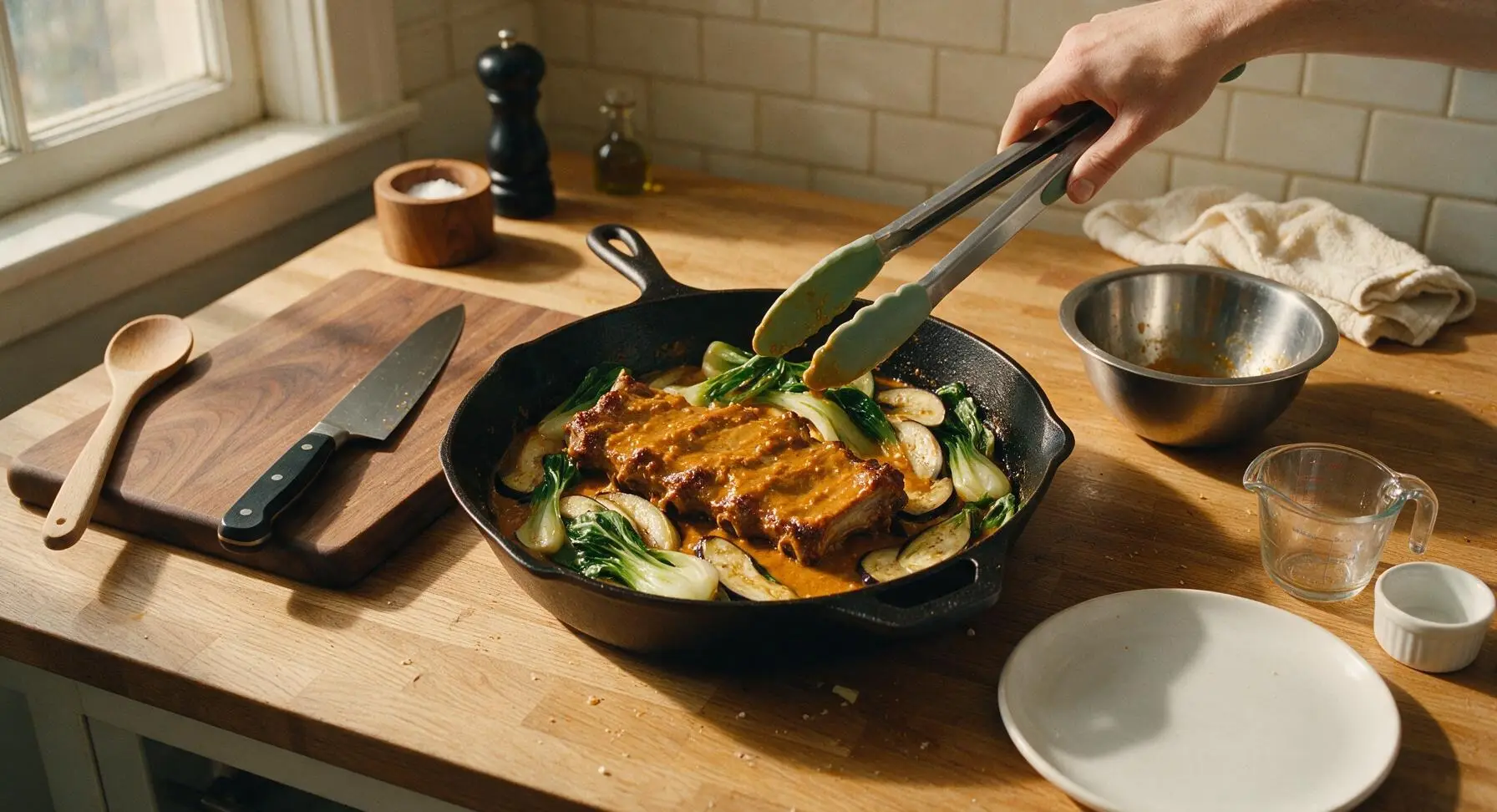
Add the reserved blanched vegetables to the pot with the sauced ribs, tucking them into the sauce around the ribs with the tongs. Turn vegetables very gently to lightly coat their edges in sauce, taking care not to mash the tender eggplant slices. Simmer for 2 minutes over low heat just to warm vegetables through — do not cook longer, as vegetables should retain their bright color and slight firm bite.
Step 6
step6:Warm Vegetables Gently
7

Plate and Serve Hot

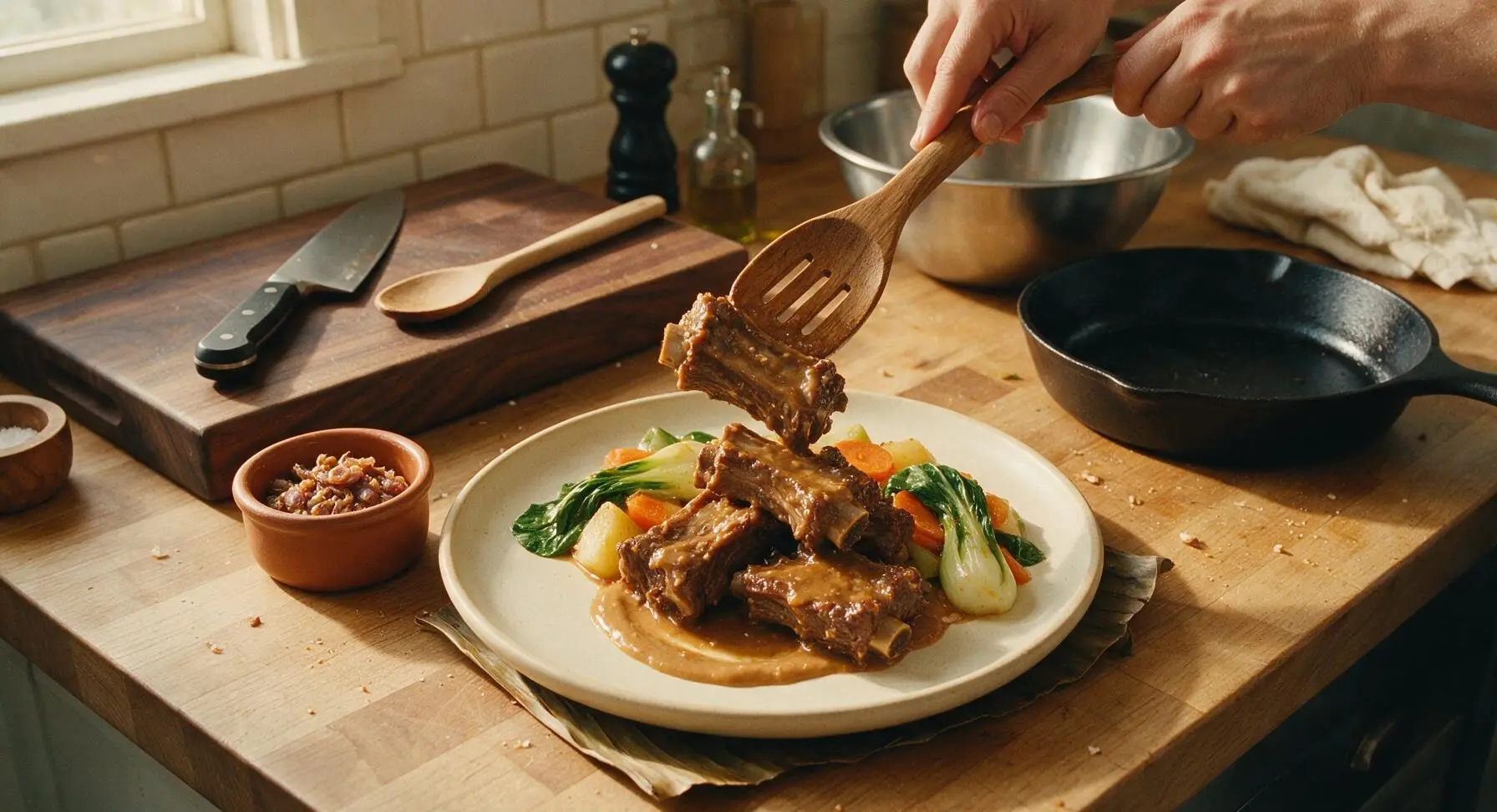
Ladle 2 tablespoons of smooth peanut sauce onto the base of the matte cream ceramic dinner plate, spreading it in a thin circle. Use the slotted spoon to lift 3 sauce-coated ribs from the pot, piling them gently in the center of the plate. Tuck the warmed sauced vegetables around the ribs, arranging bok choy leaves facing outward for color. Spoon 2 extra tablespoons of sauce over the top of the ribs, then fill a small terracotta ramekin with sautéed fermented shrimp paste (bagoong) to serve alongside. Serve immediately while warm, with steamed white rice if desired.
Step 7
step7:Plate and Serve Hot

Tips

1.Use only unsweetened, no-stir creamy peanut butter for this recipe: sweetened peanut butter will give the sauce an odd dessert-like sweetness that clashes with the savory shrimp paste, while oil-separated natural peanut butter can leave the sauce grainy and oily.
2.Never skip skimming the gray scum from the rib broth in the first 10 minutes of boiling: this foam contains meat impurities that will make your peanut sauce look dull, murky, and taste slightly bitter if left in the pot.
3.Blanch vegetables separately before adding them to the peanut sauce: cooking vegetables directly in the thick sauce for long periods will turn them mushy, discolored, and dilute the nutty sauce flavor with excess vegetable water.
✨ You May Also Like

Soups & Stews
🍜 Japan

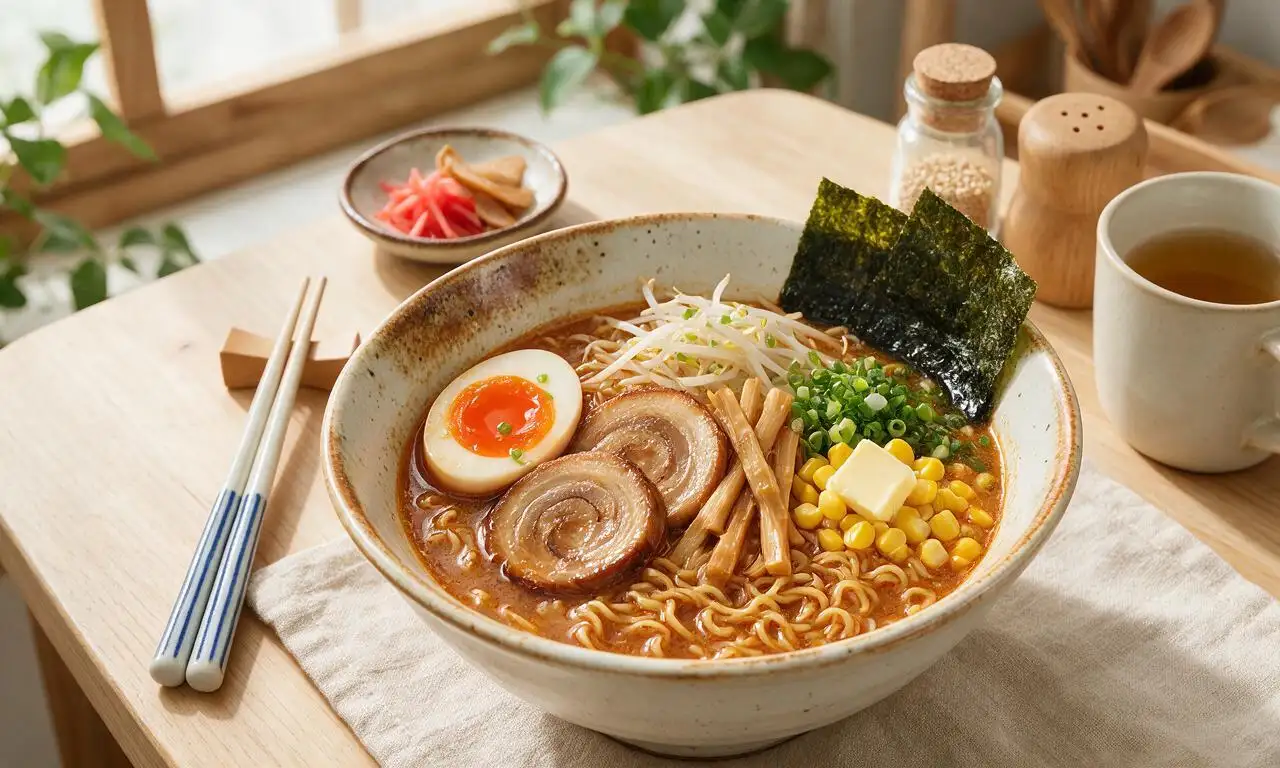
Rich, umami-dense Hokkaido-style miso ramen with chewy noodles, savory fermented broth, and classic toppings, a cozy, deeply satisfying warm meal.

⏱️ 45 minuteSoups & Stews ★ 4.5
Soups & Stews
🍜 United States

A hearty, peppery tripe and root vegetable stew with colonial Philadelphia roots, thick, warming, and packed with bold savory flavor for cold winter days.

⏱️ 2 hours 3Soups & Stews ★ 4.6
Soups & Stews
🍜 Mexico

Hearty, warming red pork posole loaded with tender hominy, slow-simmered in a rich smoky chile broth, served with zesty fresh garnishes for a deeply comforting, satisfying meal.

⏱️ 2 hours 3Soups & Stews ★ 4.7
Soups & Stews
🍜 United States

Warm, soothing classic chicken noodle soup loaded with tender chicken, soft egg noodles, and savory veggies, perfect for chasing chills and feeding the whole family.

⏱️ 40 minuteSoups & Stews ★ 4.9
Soups & Stews
🍜 France

Deeply savory caramelized onion broth topped with crusty bread and bubbly melted Gruyère, a timeless French bistro comfort food ideal for cold days.

⏱️ 1 hour 25Soups & Stews ★ 4.8
Soups & Stews
🍜 United States

Hearty, briny Maryland crab soup loaded with sweet blue crab, tender summer vegetables, and zesty Old Bay, a beloved Chesapeake Bay coastal comfort staple.

⏱️ 55 minuteSoups & Stews ★ 4.9

Kare-Kare Ribs:Frequently Asked Questions

1.How do I get my beef ribs to be perfectly fall-off-the-bone tender without them falling apart during cooking? ▾
Simmer the bone-in short ribs low and slow in low-sodium beef stock with yellow onion, garlic, and whole black peppercorns at a gentle bubble (not a rolling boil) for 2.5 to 3 hours. Test doneness by poking with a fork: the meat should give easily, but stay firmly attached to the bone when you lift a rib out of the pot.
2.Can I use a different beef cut if I don’t have bone-in short ribs on hand? ▾
Absolutely! Bone-in chuck ribs or oxtail make excellent substitutes, as they have the same marbling and tough connective tissue that breaks down into silky, rich tenderness during slow cooking. Skip lean cuts like sirloin or round steak—they’ll turn tough and dry instead of luxuriously soft in the creamy peanut sauce.
3.Why does the recipe call for low-sodium beef stock instead of regular? ▾
Low-sodium stock puts you in full control of the dish’s salt level, which is extra important because kare-kare is traditionally served with salty, umami-packed bagoong (fermented shrimp paste) on the side. Regular stock can lead to an overly salty final dish once paired with bagoong, throwing off the balanced nutty, savory flavor profile.
4.My peanut sauce turned out thick and grainy—what’s the easiest way to fix that? ▾
Grainy sauce usually happens if you didn’t simmer the peanut butter long enough to fully incorporate it, or used chunky peanut butter without straining. Fix it by whisking in warm beef stock 1 tablespoon at a time over low heat to thin it, and strain through a fine-mesh sieve if needed to get that signature silky, smooth consistency.
5.What vegetables go best with kare-kare ribs, and how do I keep them crisp instead of mushy? ▾
Classic vegetable pairings include bok choy, sliced eggplant, long green beans, and banana heart. Cook them separately in boiling salted water for 2 to 3 minutes, then shock immediately in ice water to lock in bright color and crisp-tender texture. Add them to the dish right before serving so they don’t soften in the warm sauce.
6.Is bagoong required to serve with kare-kare, and is there a substitute if I can’t find it? ▾
Bagoong (fermented shrimp paste) is the traditional condiment that cuts through the rich, nutty sauce to give kare-kare its iconic balanced flavor, so it’s highly recommended. If you can’t source it, mix high-quality fish sauce with a tiny pinch of sugar to mimic that salty, deep umami kick, adjusting the amount to your taste.
7.Can I make kare-kare ribs ahead of time, and how should I store leftovers? ▾
This dish actually tastes even better the next day, as the peanut sauce and rib flavors meld together as it chills. Store cooled ribs and sauce in an airtight container in the fridge for up to 4 days, and keep blanched vegetables separate so they don’t turn soggy. Reheat individual portions gently on the stovetop before serving.
8.I have a peanut allergy—can I still make this nutty kare-kare sauce? ▾
You absolutely can! A great allergy-friendly swap is to toast ¼ cup white rice until golden, grind it to a fine powder, then whisk it into the cooking liquid with smooth sunflower seed butter. This combination replicates the rich, thick, nutty depth of traditional peanut sauce without any peanuts, and tastes just as authentic.
9.Should I skim all the fat off the rib cooking liquid before making the peanut sauce? ▾
You don’t need to skim every bit of fat! A small amount of rendered rib fat adds wonderful richness and depth to the peanut sauce, but skim off any thick, excess floating pools (more than about 2 tablespoons) to keep the final sauce from feeling greasy or heavy when you stir in the peanut butter and add the ribs back in.

Comments (18)

2 days ago

OMG these kare-kare ribs were the star of our Sunday family dinner! I was a little nervous about making kare-kare for the first time since I usually just order it at our local Filipino spot, but the recipe was so straightforward. The peanut sauce was perfectly rich, not too thick, and the ribs fell right off the bone. My 7 year old asked for seconds before he even finished his first plate! 10/10 will make again.

3 days ago

Tried this for a neighborhood potluck last weekend and people were hounding me for the recipe all night! I swapped the regular eggplant for grilled Japanese eggplant because that’s what I had on hand, and it worked so well. Cook time was exactly as stated too, which is rare for rib recipes in my experience. SO good.

1 week ago

Made a big batch of these for my weekly meal prep and they held up perfectly all week! I portioned them out with rice and steamed bok choy, and the sauce didn’t get weird or gummy when I reheated it at the office. Total game changer for work lunches, I’m already planning to make another batch next week.

2 weeks ago

I’ve been making kare-kare for 30+ years and was skeptical of a rib-focused version, but this absolutely delivered. I added a tiny extra splash of fish sauce to the bagoong side like I always do, and my whole extended family said it was better than the version I make for fiestas. High praise!

5 days ago

Full transparency, I burned the first batch of the peanut sauce because I got distracted by my dog, but the second try came out amazing! Medium difficulty is no joke, don’t walk away when the sauce is simmering lol. The ribs were so tender even my roommate who hates peanut butter went back for more.

30 minutes ago

Quick question! Can I make the peanut sauce a day ahead and store it in the fridge before cooking the ribs? I’m prepping for a dinner party and want to get as much done ahead of time as possible!

5 minutes ago

Great question! You absolutely can make the peanut sauce 1-2 days ahead — just store it in an airtight container in the fridge, and give it a good stir before adding it to the ribs. You may need to thin it with a splash of warm water or broth if it thickens up too much when chilled!

yesterday

I didn’t have oxtail on hand like I usually use for kare-kare so I gave this rib version a shot, and honestly? I might never go back. The ribs render so much delicious fat into the sauce that it tastes extra indulgent. My partner said it’s restaurant quality, which is the highest compliment he gives.

yesterday

I did the exact same swap last month! I thought I’d miss oxtail but the ribs are so much easier to eat, no tiny bones to pick around. Total win!

5 days ago

Heads up for anyone at higher elevation! I had to add about 20 extra minutes of braising time to get the ribs as tender as the recipe says, but it was 100% worth the wait. The flavor was spot on, I served it with garlic fried rice and it was chef’s kiss.

3 days ago

Thanks so much for that helpful high elevation tip! I’ll add a note to the recipe card for other folks cooking at altitude to adjust braising time as needed. So glad it turned out delicious for you!

2 hours ago

I made this last night and the only thing I wish was that there was more leftover sauce for dipping! I ended up tossing some extra green beans in the remaining sauce after pulling the ribs out and it was *chef’s kiss*. Will double the sauce batch next time for sure.

30 minutes ago

Doubling the sauce is non-negotiable for me now too! I drizzle the extra over my rice and even dip my lumpia in it, it’s that good.

just now

Is there a good nut-free substitute for the peanut base? My kid has a severe peanut allergy and I’ve been craving kare-kare forever but haven’t found a version we can all eat safely.

just now

Great question! You can swap the peanut butter for unsweetened sunflower seed butter for a nut-free version — it has a similar rich, creamy texture and works beautifully with the savory flavors of the dish. Just make sure to pick a no-stir variety to keep the flavor profile right!

1 week ago

I brought these ribs to a friend’s Filipino-American history month potluck and all the lolas there asked me for the recipe! I was low-key nervous because I’m not Filipino and didn’t want to mess up a classic, but everyone said the flavor was so authentic. Win!

5 days ago

That’s such a good call bringing this to that potluck! I brought it to my partner’s family reunion and his lola gave me her official stamp of approval, which felt like winning an award lol.

2 weeks ago

The cook time felt a little long for a weeknight meal, but I did most of the braising in my Instant Pot on high for 35 minutes and it worked perfectly! Cut the total time almost in half, and the ribs were still fall-off-the-bone tender.

2 weeks ago

Thanks for sharing that Instant Pot hack! I know a lot of readers are short on weeknight time, so I’ll add that pressure cooker variation to the recipe tips. Great call!

2 days ago

GAME CHANGER. I made these for my son’s birthday dinner since kare-kare is his absolute favorite, and he said it was better than the version we get at our go-to spot in Little Manila. The bagoong on the side is the perfect salty kick, don’t skip it! My kids loved it so much they asked for it again this weekend.

yesterday

Wait did you use sautéed bagoong or the plain bottled stuff? I’m making this this weekend and want to get that part right!

yesterday

So happy this was a birthday hit! For the bagoong, I recommend lightly sautéing it with a bit of garlic and a pinch of sugar to mellow out the brininess — it pairs perfectly with the rich peanut sauce!

3 days ago

I smoked the ribs for 2 hours before braising them in the kare-kare sauce and oh my god, that smoky flavor took this to a whole new level. My tailgate crew lost their minds over it, we didn’t even have leftovers by the end of the first quarter. Will be making this for every game day from now on.

2 days ago

That smoked rib idea is genius! I have a pellet smoker, what temp did you run it at for that pre-smoke?

2 days ago

I ran it at 225F with hickory wood! Didn’t even wrap them before braising, the bark held up great in the sauce.

2 hours ago

I was so disappointed when I made this last night — my sauce came out super grainy even though I stirred it nonstop while simmering. Did I do something wrong? I used natural separated peanut butter (the kind where oil pools at the top of the jar) instead of the smooth no-stir kind, could that be it?

30 minutes ago

I had that happen the first time too! Natural separated peanut butter does that if you don’t fully emulsify it with the broth before letting it simmer. I mixed my peanut butter with a half cup of warm broth until it was totally smooth before adding it to the pot the second time, no graininess at all!

5 minutes ago

I’m sorry the sauce came out grainy for you! Mae is exactly right — natural separated peanut butter needs to be whisked smooth with warm broth before adding to the simmering pot to avoid that texture. I’ll add a note to the recipe about this for other natural PB fans! If you give it another go, I bet it’ll turn out perfectly.

yesterday

How long do these keep in the freezer? I want to stock up a bunch of single servings for when my husband is deployed, kare-kare is his favorite and I want him to have easy meals to heat up when he gets home.

yesterday

I froze a batch last month for about 3 weeks and it tasted just as fresh when I thawed and reheated it! Just make sure to leave a little room in the container because the sauce expands when it freezes.

yesterday

What a sweet thing to do for your husband! These ribs freeze great for up to 3 months in an airtight, freezer-safe container. Thaw them in the fridge overnight before reheating on the stovetop or microwave, and they’ll taste just as good as the day you made them.

1 week ago

I added a handful of bok choy and some sliced banana blossoms like my lola used to put in her kare-kare, and it tasted exactly like childhood. The rib recipe is such a fun twist on the classic, it feels familiar but new at the same time. 10/10 will be a staple in our house from now on.

5 days ago

I added banana blossoms too! I couldn’t find fresh so I used canned, rinsed really well, and it worked perfectly. Such a nostalgic addition.

3 days ago

Love that you added those classic veggie mix-ins! Bok choy and banana blossoms are such a perfect addition, I’ll add them to the recommended variation list on the recipe. So glad it felt like a taste of home for you!

3 days ago

Wait a second, is there supposed to be tripe in this? I’ve only ever had kare-kare with tripe and oxtail, so I was surprised this recipe only uses ribs, but I tried it anyway and it was delicious. Don’t get me wrong, I’m not complaining, just curious if it’s a regional variation!

2 days ago

It totally depends on the family! My lola from Pampanga uses mostly ribs and pork hock, no tripe, while my mom’s side from Manila always adds tripe and oxtail. No right or wrong way, just different family traditions!

2 days ago

Great observation! This version leans into the rib-forward style that’s popular in a lot of household kare-kare recipes, but you can absolutely add tripe, oxtail, or pork hock if that’s what you’re used to! It’s super customizable to your family’s preferences.