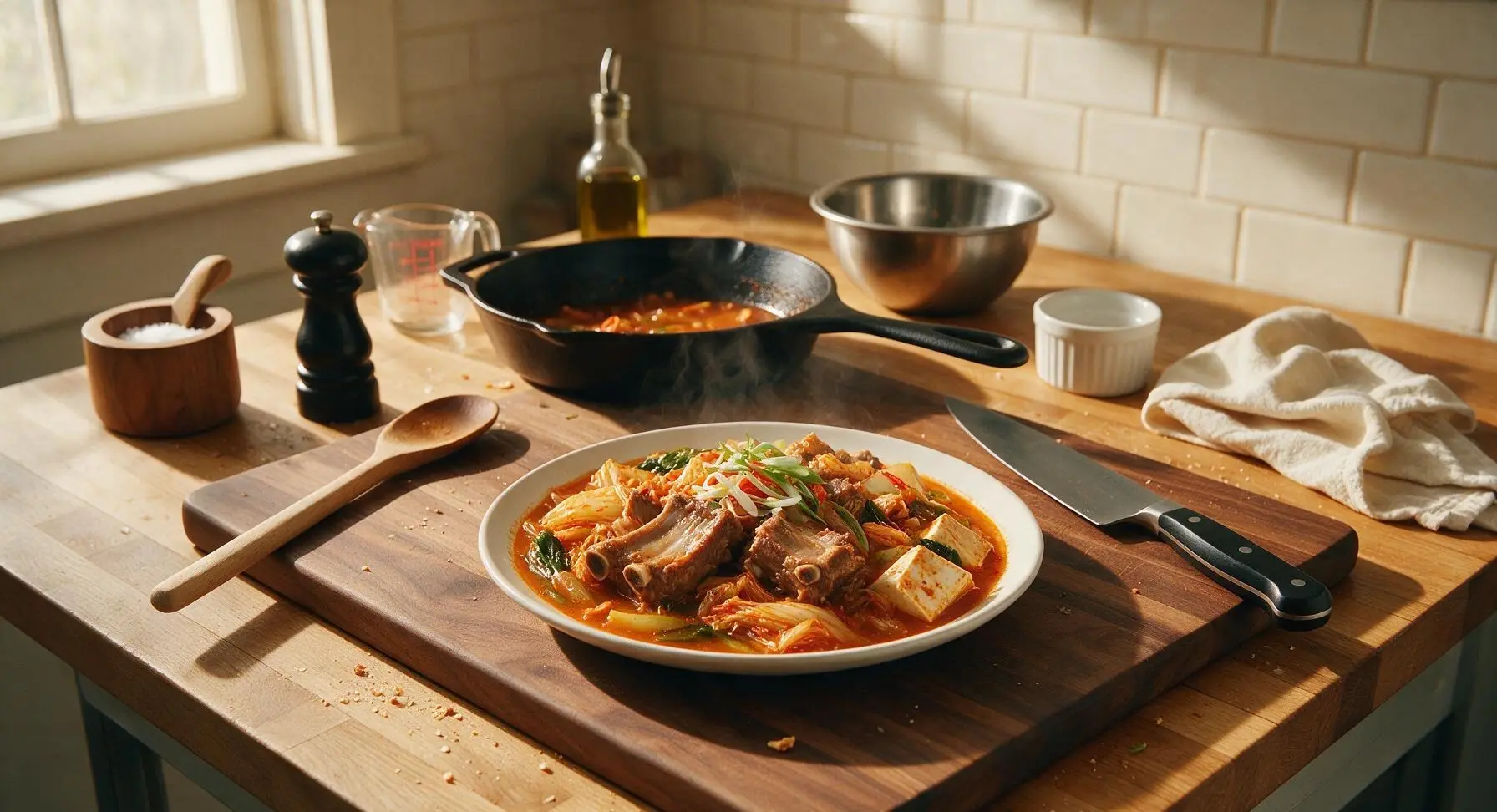
Kimchi Nabe Ribs

title 1
Kimchi Nabe Ribs
⏱️ cook time 1 hour 15 minutes
🍽️ servings 4
⚡ Difficulty medium

intro

Tender fall-off-the-bone pork ribs simmered in tangy, umami-rich kimchi broth with hearty vegetables and soft tofu, this cozy shared hot pot is made for cold winter gatherings.

Ingredients
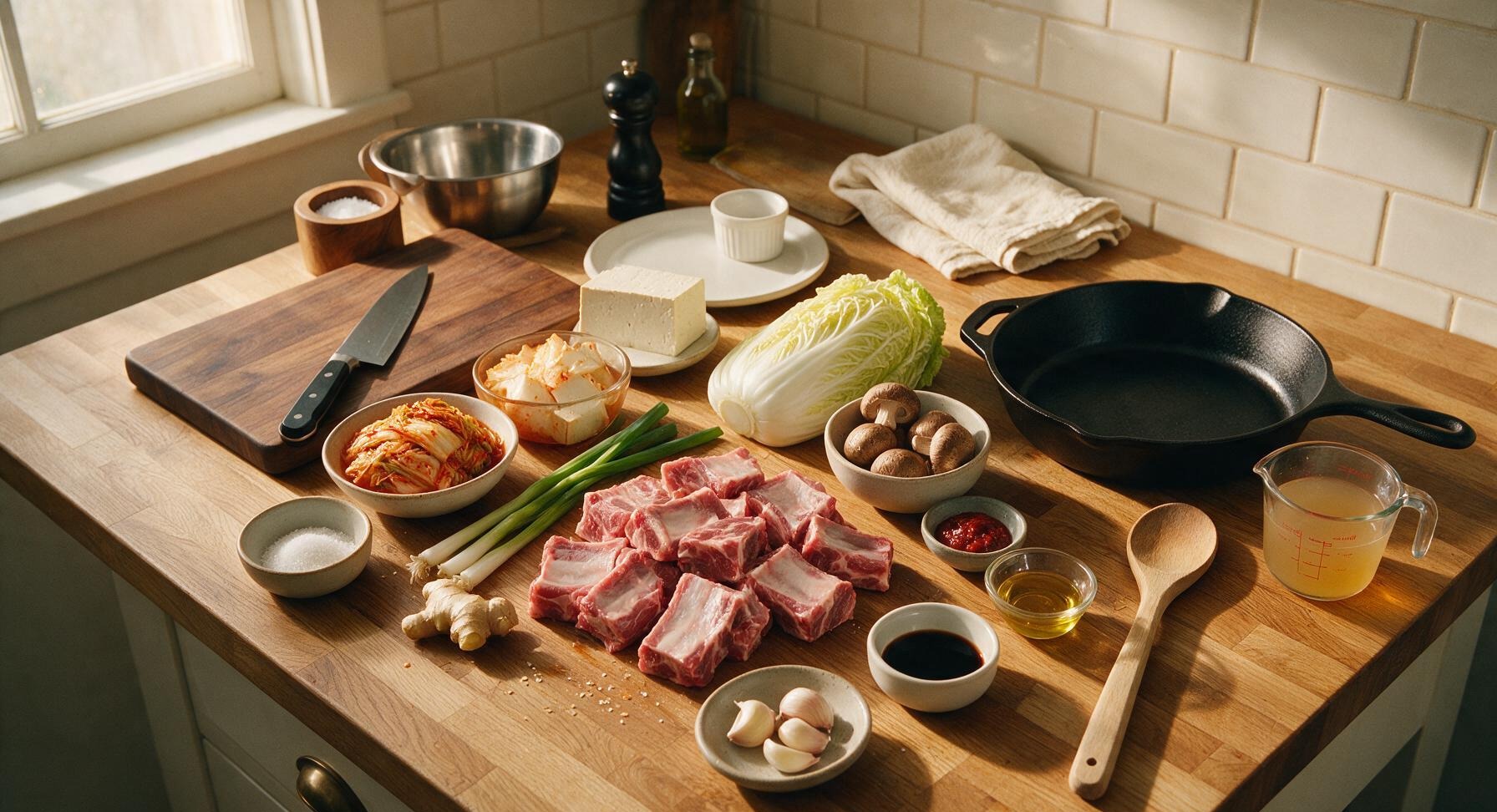
Bone-in pork short ribs (cut into 5cm pieces) 800g
Fermented napa cabbage kimchi (with reserved brine) 300g (2 cups, plus 60ml brine)
Firm tofu 300g
Napa cabbage 200g
Fresh shiitake mushrooms 100g
Scallions 3 stalks
Garlic cloves 4 (about 15g)
Fresh ginger 20g (2-inch knob)
Gochujang (Korean chili paste) 1 tablespoon
Light soy sauce 1 tablespoon
Granulated sugar 1 teaspoon
Toasted sesame oil 1 teaspoon
Neutral canola oil 1 tablespoon
Low-sodium chicken stock (or water) 750ml

Steps

1

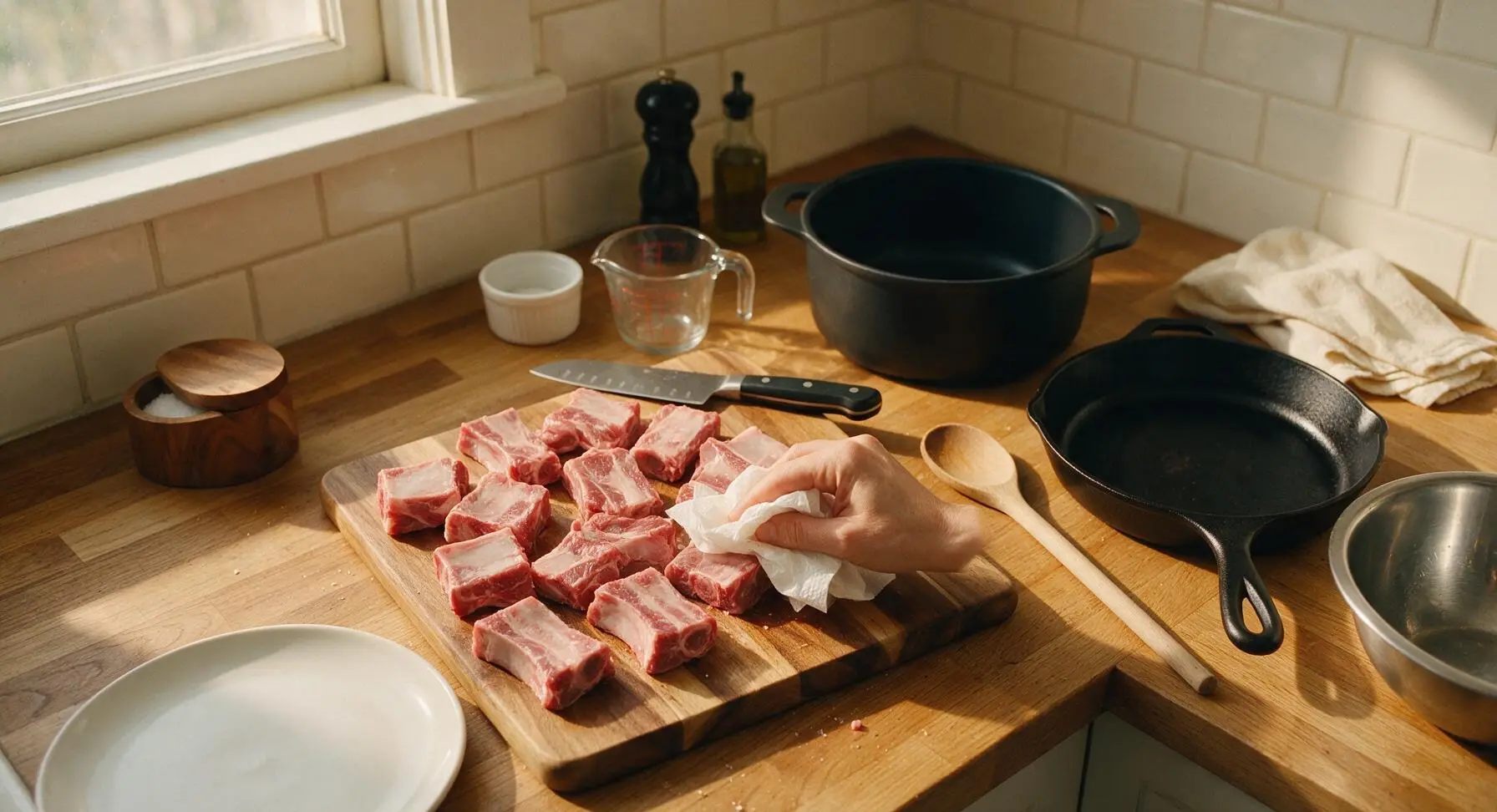
Pat Ribs Dry

Place the 800g pre-cut bone-in pork short ribs (5cm individual pieces) on the acacia wood cutting board. Pat every surface completely dry with paper towels to eliminate excess surface moisture, which is critical for achieving a crisp, golden sear. Season lightly with 1/4 teaspoon coarse sea salt and a single light crack of black pepper, then set aside.
Step 1
step1:Pat Ribs Dry
2

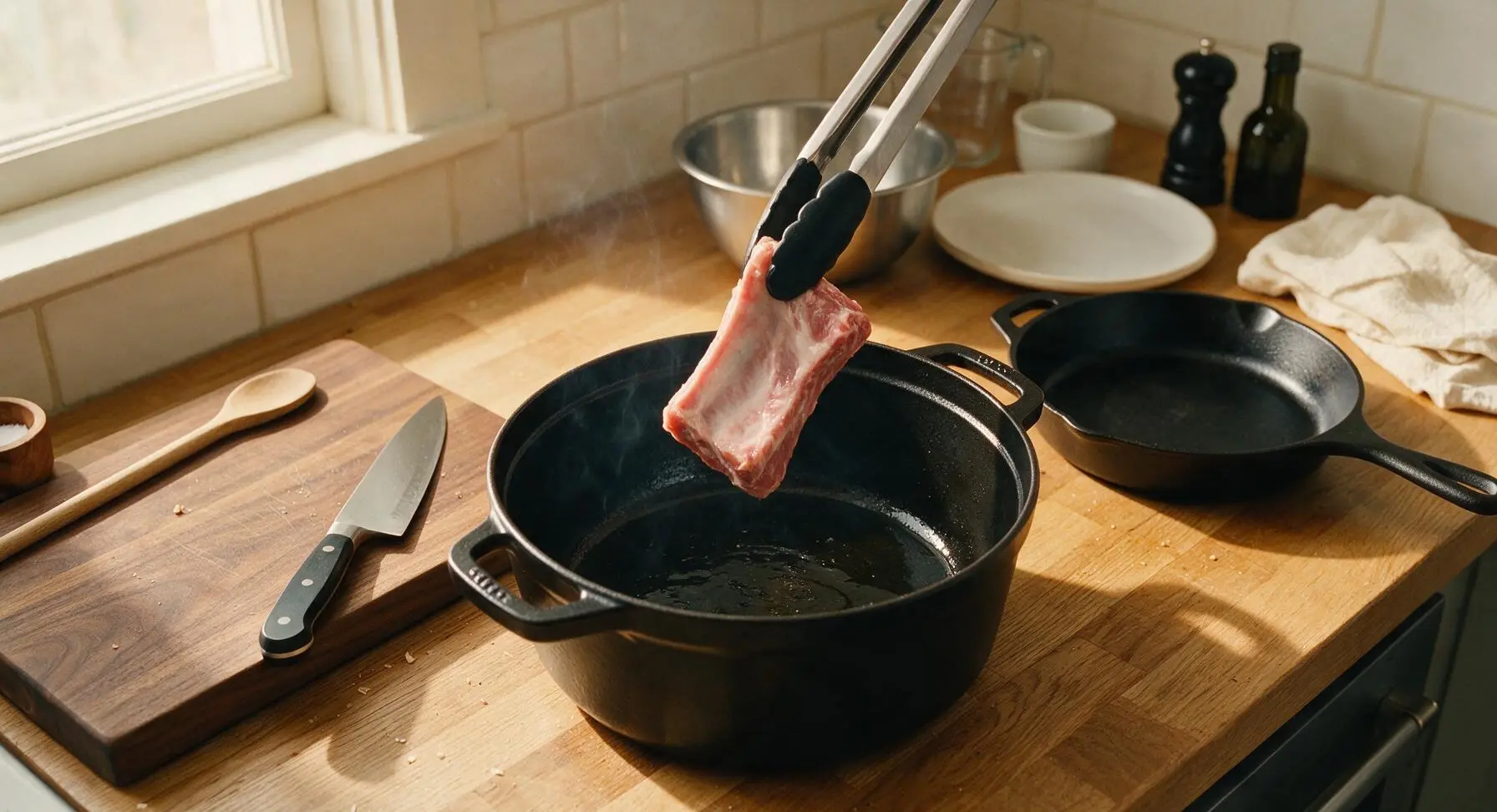
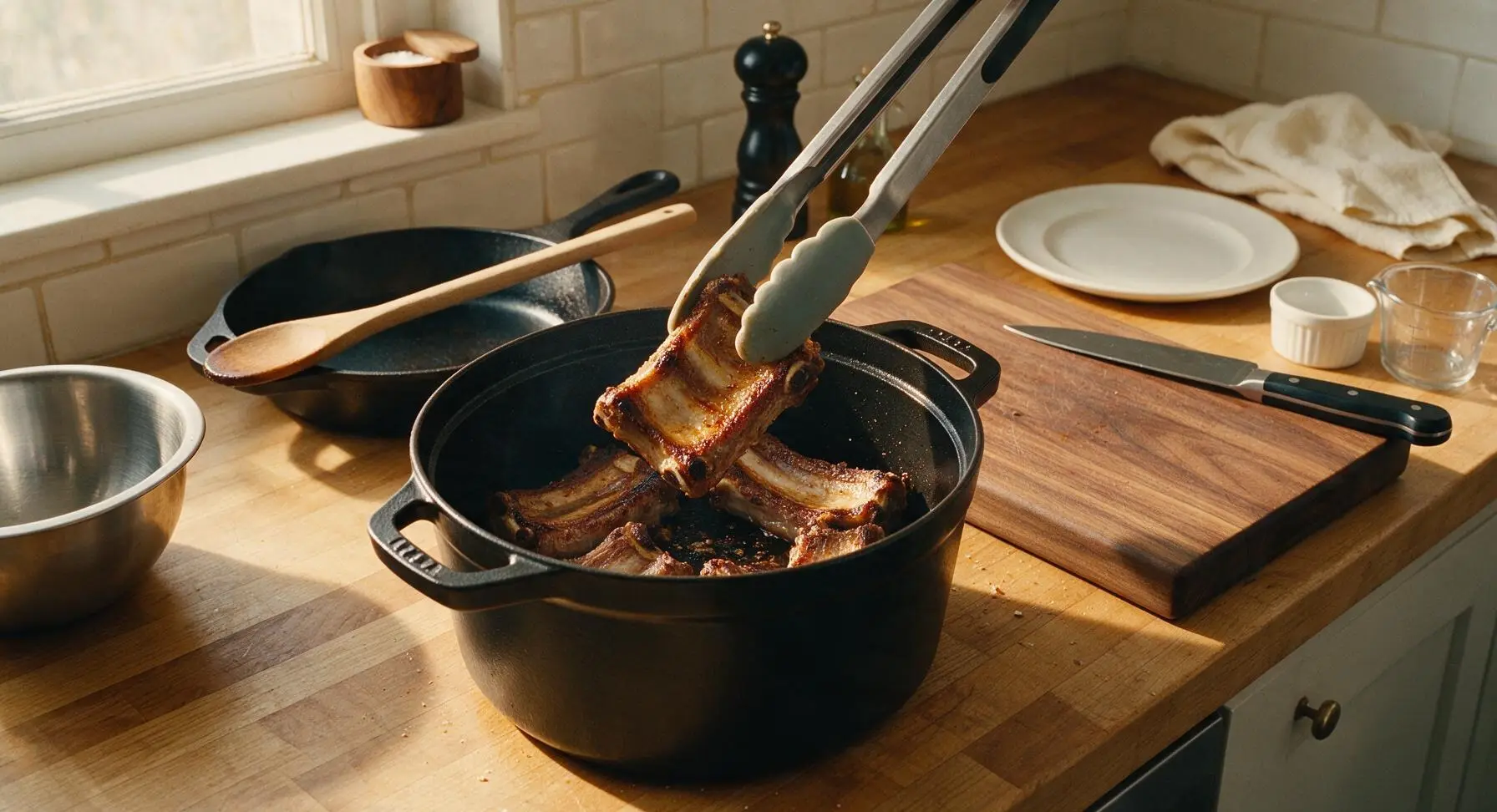
Sear Ribs Until Golden

Heat 1 tablespoon neutral canola oil in the matte black enameled cast iron nabe pot over medium-high heat (180°C/350°F). Working in two batches to avoid crowding the pot (which causes steaming instead of searing), add ribs in a single layer and sear for 3-4 minutes per side, until deep golden brown on all cut surfaces. Use the silicone-tipped tongs to flip ribs, transferring seared ribs to a clean spot on the cutting board once browned. Leave all rendered fat and browned fond bits in the pot for the next step.
Step 2
step2:Sear Ribs Until Golden
Step 2
step2:Sear Ribs Until Golden
3

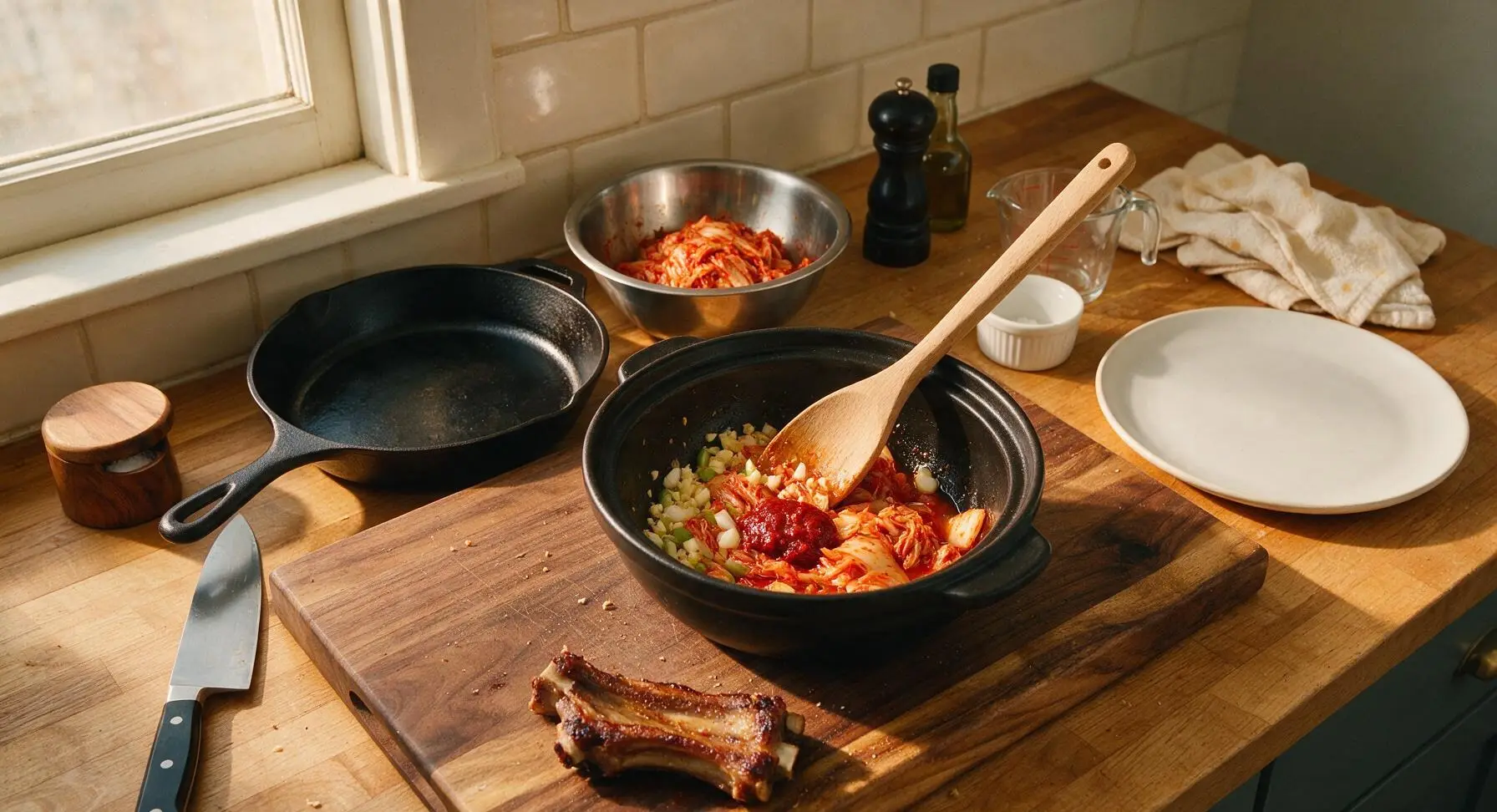
Saute Kimchi Base

Reduce heat under the nabe pot to medium (150°C/300°F). In the remaining rendered rib fat, add the crushed garlic, sliced ginger, and white parts of the cut scallions, sauteing for 30 seconds until fragrant (do not let garlic burn, as it will turn bitter). Add the 300g kimchi (squeezed lightly to remove excess brine, cut into 5cm pieces if left whole) and 1 tablespoon gochujang, stirring with the beech wood spoon for 2-3 minutes until kimchi softens slightly and releases its bright red, spicy aroma.
Step 3
step3:Saute Kimchi Base
4

Simmer Ribs Slowly

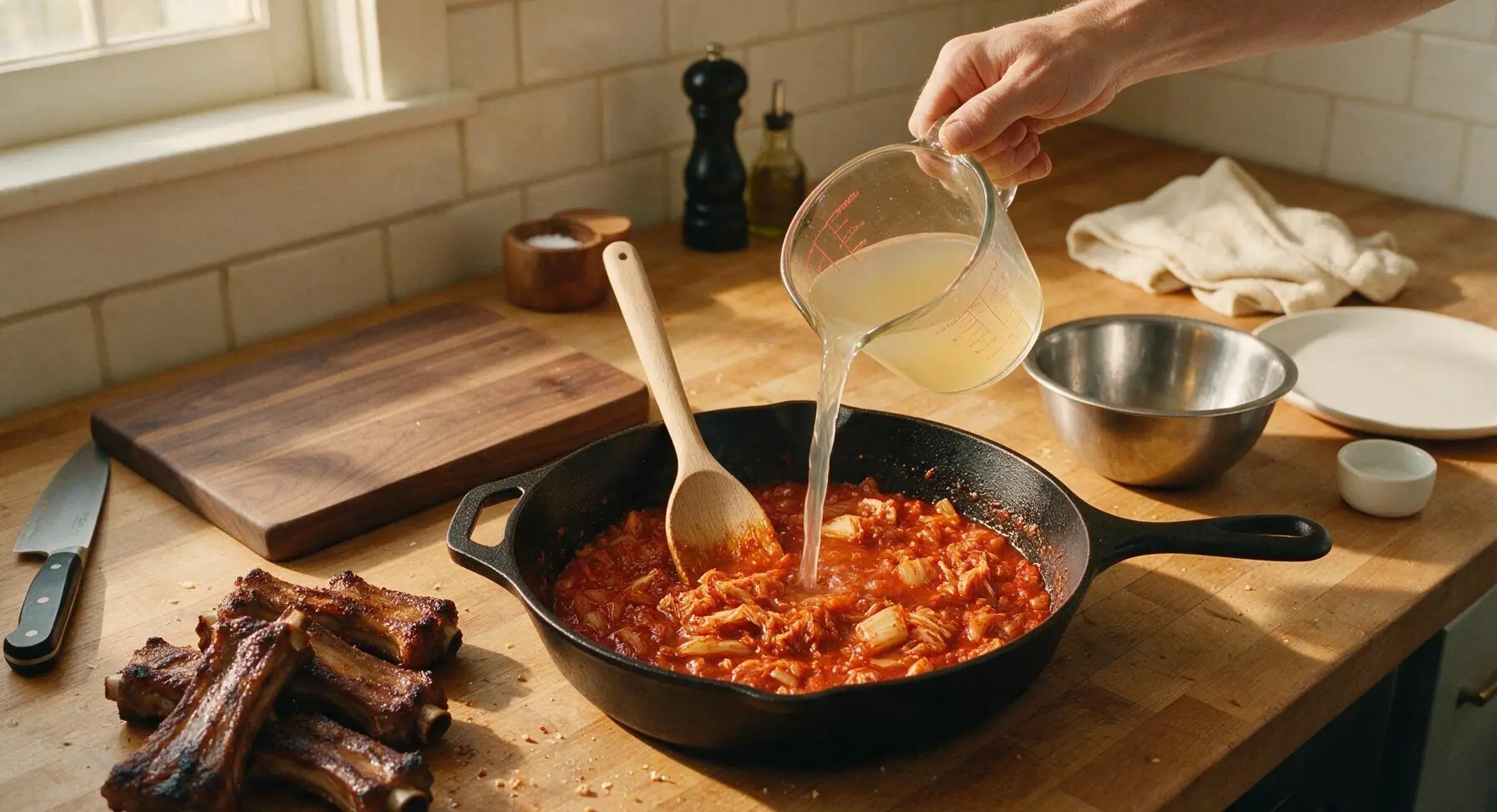
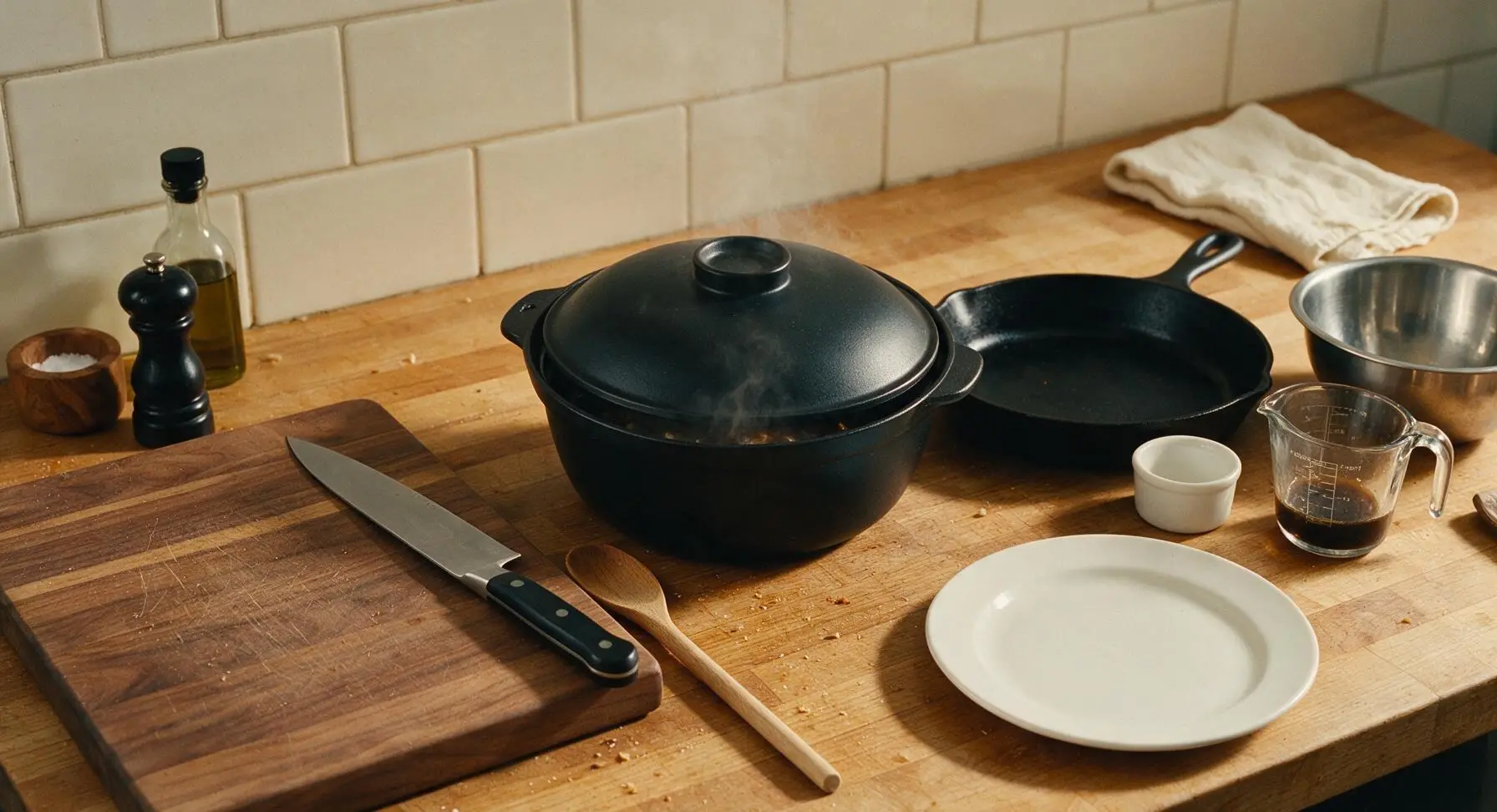
Pour the 750ml low-sodium chicken stock and reserved 60ml kimchi brine into the pot, stirring in 1 tablespoon light soy sauce and 1 teaspoon granulated sugar. Return all seared ribs to the pot, bring the liquid to a gentle rolling boil, then reduce heat to low (95°C/200°F), cover with the nabe pot lid, and simmer for 50 minutes. The ribs are ready for the next step when a fork pierces the meat easily, but the meat does not fall completely off the bone. Skim any thin grey foam from the broth surface every 15 minutes with a spoon for a clean, clear broth.
Step 4
step4:Simmer Ribs Slowly
Step 4
step4:Simmer Ribs Slowly
5

Add Veggies and Tofu

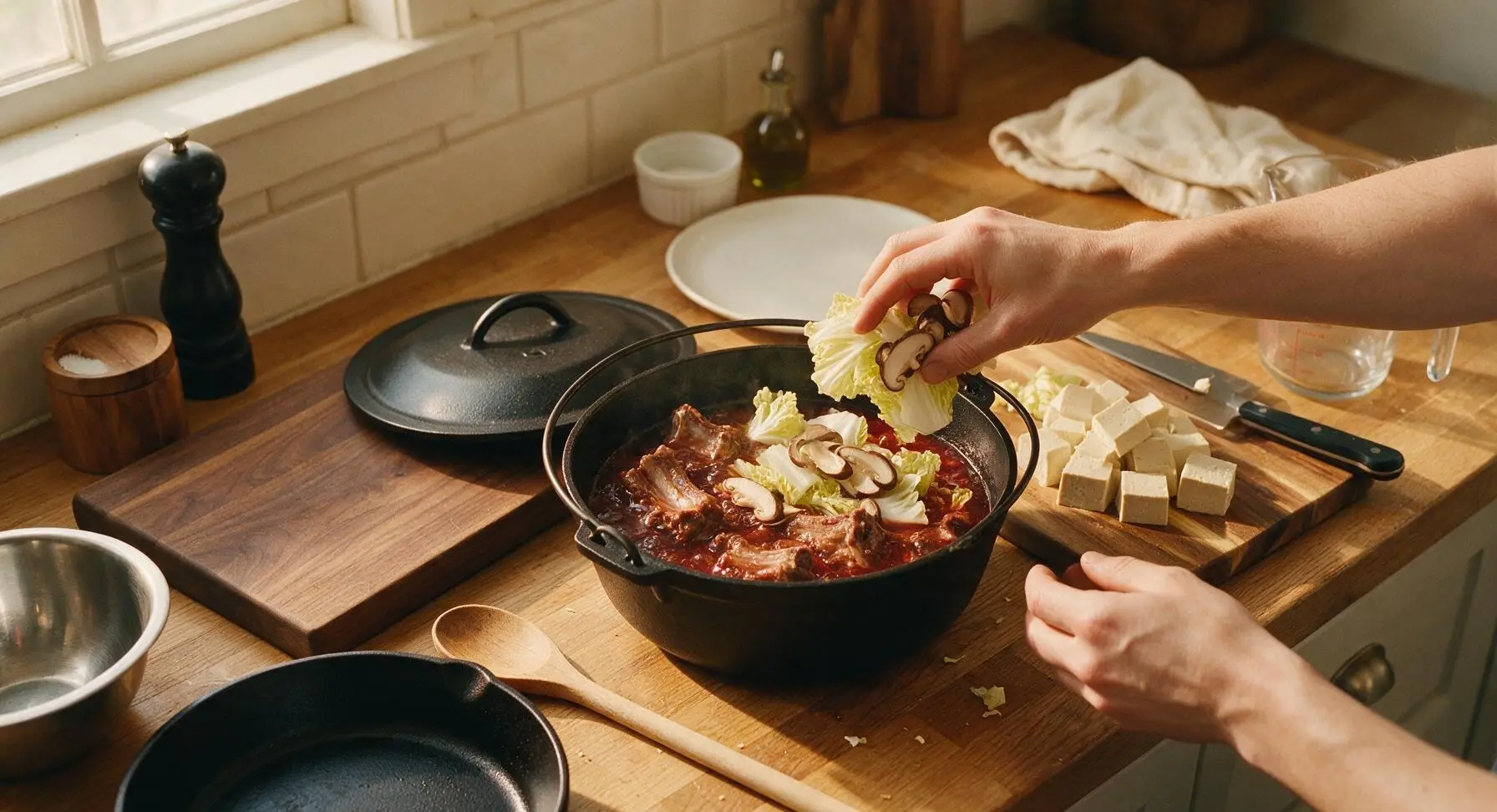
After 50 minutes of simmering, lift the pot lid. Add the 200g napa cabbage chunks and 100g sliced shiitake mushroom caps to the pot, stirring gently to submerge them in the broth, and simmer uncovered for 5 minutes until cabbage starts to turn translucent at the edges. Add the 300g cubed firm tofu, tucking pieces gently into the broth with the spoon to avoid breaking them, and simmer for an additional 5 minutes until tofu is heated through and cabbage is tender but still has a slight crisp bite.
Step 5
step5:Add Veggies and Tofu
6

Season and Garnish

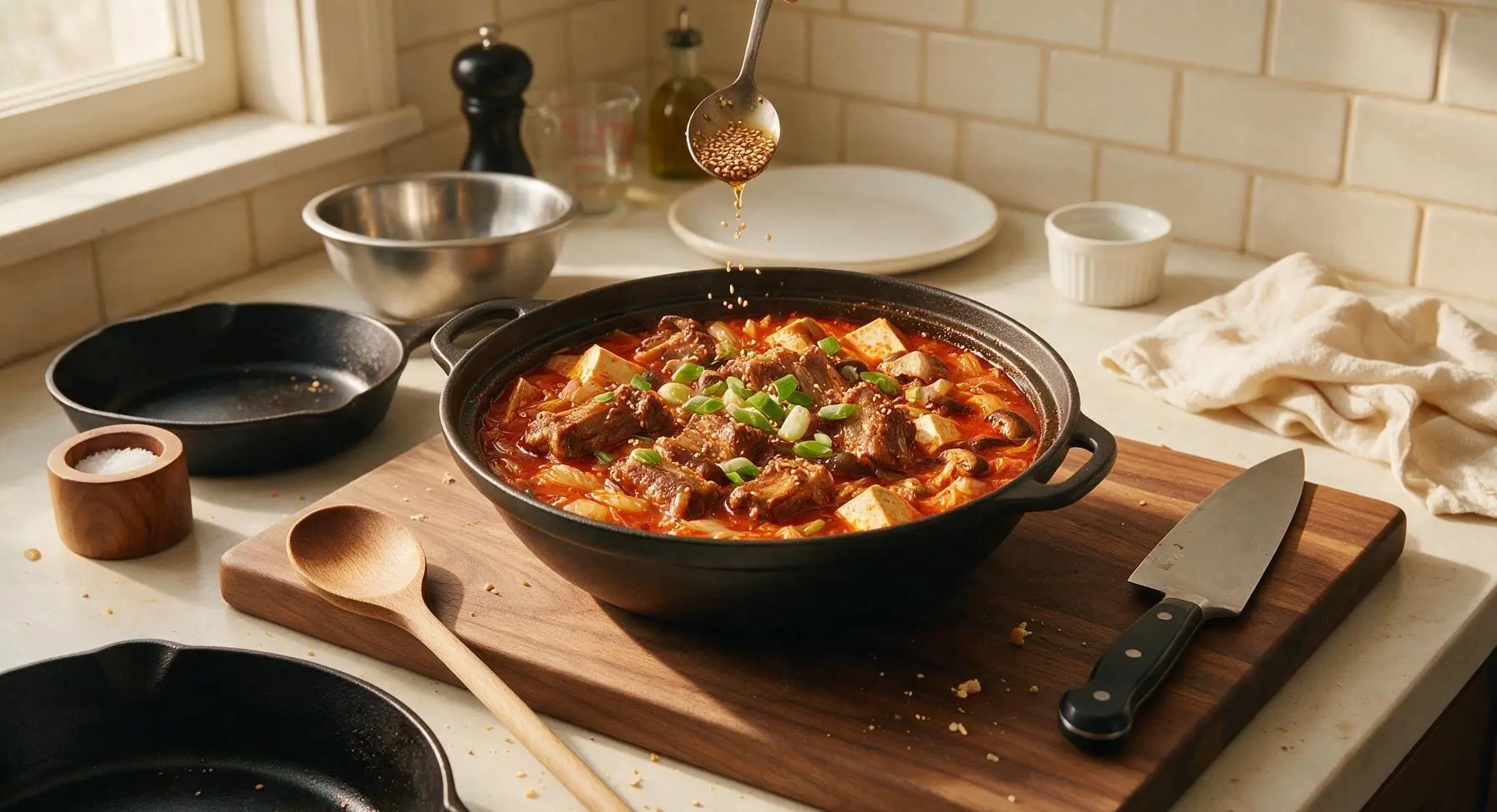
Taste the broth carefully, adjusting with a pinch more salt or sugar if needed (kimchi saltiness varies widely between brands, so always taste before serving). Turn off the heat, drizzle 1 teaspoon toasted sesame oil over the broth surface, and scatter the reserved green scallion pieces across the top of the nabe. Let the pot rest, uncovered, for 2 minutes to allow flavors to meld before serving.
Step 6
step6:Season and Garnish

Tips

1.Use sour, fully fermented kimchi (fermented for 2+ weeks, stored in the fridge past its crisp fresh stage) for the deepest, tangiest umami flavor. Fresh, newly made kimchi will taste flat and lack the complex sour note that balances the rich pork ribs; if your kimchi is too mild, add 1 teaspoon unseasoned rice vinegar to the broth to boost acidity.
2.Avoid crowding the pot when searing ribs, as too many ribs in the pot at once will drop the oil temperature and cause the ribs to steam instead of caramelize. Searing in batches creates deep, meaty flavor from the browned fond that forms the base of the broth, so don’t rush this step.
3.Do not stir the nabe aggressively after adding tofu, as soft tofu will break apart easily and turn mushy. Tuck tofu cubes gently into the hot broth and let them simmer undisturbed to keep their shape and soft, silky texture.

✨ You May Also Like

Soups & Stews
🍜 Japan

Rich, umami-dense Hokkaido-style miso ramen with chewy noodles, savory fermented broth, and classic toppings, a cozy, deeply satisfying warm meal.

⏱️ 45 minuteSoups & Stews ★ 4.5
Soups & Stews
🍜 United States

A hearty, peppery tripe and root vegetable stew with colonial Philadelphia roots, thick, warming, and packed with bold savory flavor for cold winter days.

⏱️ 2 hours 3Soups & Stews ★ 4.6
Soups & Stews
🍜 Mexico

Hearty, warming red pork posole loaded with tender hominy, slow-simmered in a rich smoky chile broth, served with zesty fresh garnishes for a deeply comforting, satisfying meal.

⏱️ 2 hours 3Soups & Stews ★ 4.7
Soups & Stews
🍜 United States

Warm, soothing classic chicken noodle soup loaded with tender chicken, soft egg noodles, and savory veggies, perfect for chasing chills and feeding the whole family.

⏱️ 40 minuteSoups & Stews ★ 4.9
Soups & Stews
🍜 France

Deeply savory caramelized onion broth topped with crusty bread and bubbly melted Gruyère, a timeless French bistro comfort food ideal for cold days.

⏱️ 1 hour 25Soups & Stews ★ 4.8
Soups & Stews
🍜 United States

Hearty, briny Maryland crab soup loaded with sweet blue crab, tender summer vegetables, and zesty Old Bay, a beloved Chesapeake Bay coastal comfort staple.

⏱️ 55 minuteSoups & Stews ★ 4.9

Kimchi Nabe Ribs:Frequently Asked Questions

1.What cut of ribs works best if I can’t find bone-in pork short ribs? ▾
Bone-in pork spare ribs cut to 5cm pieces work as a great swap! Just trim off any thick silver skin first to prevent chewy bites. Note that spare ribs are slightly leaner than short ribs, so add 10 minutes of low simmer time to get that perfect fall-off-the-bone tenderness, and keep the bones in for rich, deep broth flavor.
2.How ripe should my kimchi be for the best nabe broth flavor? ▾
Reach for 2-3 week old, fully fermented, slightly sour kimchi instead of fresh, just-made kimchi! The tangy, deep umami from well-fermented kimchi cuts through the richness of the pork ribs, and don’t forget to reserve all the brine from the jar—it adds a huge punch of flavor you won’t get from the cabbage alone.
3.How do I get my ribs to be fall-off-the-bone tender without getting tough? ▾
The trick is to keep your nabe at a gentle, low simmer instead of a rolling boil! High heat will make the rib muscle seize up and turn chewy. Simmer the ribs in the kimchi broth covered for 45-50 minutes before adding veggies and tofu, and resist lifting the lid too often to keep the heat consistent.
4.Can I use soft silken tofu instead of firm tofu for this recipe? ▾
I don’t recommend silken tofu here, as it will break apart completely into the broth during simmering and leave you with a cloudy, grainy texture. Stick to pressed firm tofu cut into 4cm thick cubes, and add it in the last 10 minutes of cooking so it heats through and soaks up the broth without falling apart.
5.Do I need to pre-boil the ribs before adding them to the kimchi broth? ▾
A quick 3-minute blanch in boiling water with a splash of rice vinegar is a great optional step! It skims off the gray, foamy impurities from the ribs that would make your broth cloudy, and cuts down on any mild gamey pork flavor. Just drain and rinse the ribs well before adding them to your kimchi simmer base.
6.What can I substitute for fresh shiitake mushrooms if I don’t have them? ▾
Dried shiitake mushrooms reconstituted in warm water for 20 minutes work beautifully, and their strained soaking liquid adds even more umami to the broth! You can also use cremini or button mushrooms in a pinch, though they won’t have the same deep, earthy flavor that pairs so well with tangy kimchi and rich ribs.
7.How far in advance can I prep this dish for a winter gathering? ▾
You can simmer the ribs in the kimchi broth 2 days ahead of your gathering and store it covered in the fridge! The flavor actually gets better as it rests, since the kimchi tang melds deeper into the pork. Just reheat gently on the stovetop, then add fresh veggies and tofu right before serving to keep them crisp-tender.
8.Can I make this less spicy for kids or people who don’t tolerate heat? ▾
Absolutely! Rinse half of your kimchi under cool water before adding it to the broth to cut down on chili heat, and skip any extra gochugaru you might be tempted to add. You’ll still get that signature tangy kimchi umami, but the spice level will be mild enough for sensitive palates without losing core flavor.
9.Do I need a special nabe pot to make this recipe? ▾
No special equipment is required! A heavy-bottomed Dutch oven or large deep soup pot works perfectly for stovetop cooking. If you want that classic shared hot pot experience, you can transfer the finished pot to a portable tabletop burner to keep it warm while everyone serves themselves family-style at the table.
10.How much kimchi brine should I add to the broth? ▾
Aim for ½ cup of reserved kimchi brine per 4 cups of stock or water you use for the broth! Start with that amount, then taste and adjust—if you want more tang, add an extra ¼ cup brine, and if it’s too salty or sour, top it off with a little extra low-sodium stock to balance the flavor.
11.Should I use the white parts or green parts of the napa cabbage for this nabe? ▾
Use both! Cut napa cabbage into 5cm wide chunks, adding the thicker, crisp white parts 5 minutes earlier than the tender green leafy parts. The white parts hold up well to simmering and soak up the broth, while the green parts wilt quickly and add a nice fresh, sweet contrast to the rich ribs and tangy kimchi.
12.Can I freeze leftover Kimchi Nabe Ribs? ▾
Yes, leftovers freeze really well for up to 3 months! Just leave out any leftover tofu if you plan to freeze it, since tofu gets crumbly and watery after thawing. Store the cooled ribs, broth, and veggies in an airtight freezer container, and reheat gently on the stovetop, adding fresh tofu when you’re ready to serve.
13.What are the best side dishes to serve with this hot pot? ▾
Stick to simple, complementary sides! Steamed short-grain white rice is a must to soak up the tangy broth, and quick pickled cucumbers or a small side of cold, crisp radish kimchi add a bright, fresh contrast. You can also serve thin wheat noodles to add to the pot at the end for a filling final bite.
14.My broth turned out too salty—how can I fix it? ▾
No need to panic! Add a peeled, quartered waxy potato to the pot and simmer for 10 minutes—it will absorb excess salt as it cooks. You can also dilute the broth with ½ to 1 cup of unsalted stock or plain water, and add a tiny pinch of sugar to balance out sharp salt or sour notes from the kimchi brine.
15.Can I add other vegetables to this nabe besides the ones listed in the recipe? ▾
Definitely! This recipe is super flexible for customizing. Add sliced daikon radish, enoki mushrooms, baby bok choy, or even thin slices of sweet potato in the last 10-15 minutes of cooking. Just avoid adding very soft, quick-cooking veggies like spinach until the last minute so they don’t turn mushy.
16.Why is my kimchi broth tasting flat instead of tangy and umami-rich? ▾
Flat broth usually means your kimchi wasn’t fermented long enough, or you skimped on the reserved brine. Fix it by stirring in 1 teaspoon of unseasoned rice vinegar and a ½ teaspoon of fish sauce (or soy sauce for a vegan swap) to amp up tang and savoriness, then simmer 5 more minutes to let the flavors meld.

Comments (10)

just now

First time making any kind of nabe at home and this did not disappoint! I followed the recipe exactly, no swaps, and the ribs were so tender they were falling off the bone before I even got them out of the pot. The tang from the kimchi balances the fatty ribs so perfectly, I’m already planning to make this again next weekend.

5 minutes ago

Just pulled this off the stove and OMG it smells incredible. I snuck a tiny bite of a rib and it’s so flavorful already, can’t wait for my partner to get home so we can dig in. Already know this is gonna be a regular in our winter dinner rotation!

30 minutes ago

Really solid recipe! The ribs turned out perfect, though I cut the gochugaru amount in half because I’m a total wimp with spice and it was still plenty flavorful. Next time I’ll add more napa cabbage to the pot to soak up more of that amazing broth. Only reason it’s not 5 stars is I wish the cook time breakdown for each step was a little more specific, but overall totally worth the hour and 15 minutes.

2 hours ago

I’ve tried a handful of kimchi rib recipes online and this one is hands down the best. The ratio of kimchi to broth to seasoning is spot on, no need to tweak anything at all. I made this for my buddies during our football watch party and every single bite was gone by halftime. Absolute banger of a recipe.

30 minutes ago

Good to hear! I was gonna test this for my own watch party next weekend, now I’m definitely doubling the recipe so no one leaves hungry.

yesterday

Made this for our Sunday family dinner after seeing it pop up on my feed and my kids LOVED it! Even my teen who turns his nose up at anything “fermented” went back for a second helping. I used baby back ribs instead of spare ribs because that’s what I had on hand and it worked perfectly. Game changer for cold Florida winter nights (yes, it does get cold enough for hot pot down here!)

2 hours ago

Fellow Floridian here! Wait, scratch that, I’m actually in Arizona for work right now but I’m flying home next week and was worried this would be too heavy for our weird 60-degree Florida winter days – but you sold me. Grabbing kimchi and ribs on my grocery run the second I land!

30 minutes ago

So glad the whole family enjoyed it! Baby back ribs are a fantastic swap if that’s what you have handy – they’re a little leaner but soak up that kimchi flavor just as well as spare ribs. Hope you love it when you make it, Rob!

2 days ago

Absolute new staple in our house! I made a big batch on Sunday and ate it for lunch all week, and it somehow tasted even better each day as the flavors melded. I added a handful of tteokbokki rice cakes the last 10 minutes of cooking and *chef’s kiss* – chewy, spicy, perfect. 10/10 would recommend to anyone who loves cozy, bold food.

yesterday

Wait the rice cake addition is genius! I have a bag in my freezer I’ve been trying to use up, I’m definitely throwing those in when I make this this weekend.

2 hours ago

The tteok addition is such a great call! We love adding chewy rice cakes to our nabe recipes too – they soak up all that savory kimchi broth so well. Thanks for the great tip, and so glad this worked for your weekly meal prep!

3 days ago

Made this last night for my roommate’s birthday dinner and everyone was raving! I was a little worried about the medium difficulty since I mostly stick to 30 minute weeknight meals, but the steps were super easy to follow. The kimchi broth is so deeply flavored, I sopped up every last drop with rice. 10/10, already added the ingredients to my weekly meal prep rotation.

2 days ago

Wait did you use fully fermented kimchi or the fresher kind? I wanna make this this weekend but I have a half jar of super sour kimchi in my fridge I need to use up!

yesterday

Great question! Sour, fully fermented kimchi actually works best here – it adds so much more depth to the broth than fresh kimchi. That half jar in your fridge will be perfect!

5 days ago

SO good!!! I’ve made kimchi jjigae a million times but never thought to cook ribs right in the nabe broth. The meat absorbs all that spicy, umami flavor so much better than I expected. My husband said this is top 3 meals I’ve ever made, no exaggeration.

3 days ago

That makes us so happy to hear! So glad you and your husband loved the twist on classic kimchi stew – pro tip: toss in some extra tofu and mushrooms at the 30 minute mark if you want to bulk it up for leftovers!

1 week ago

Really great flavor profile! I grew up eating kimchi jjigae with my grandma and this was such a fun, hearty twist with the ribs. My only note is that I had to simmer mine about 10 minutes longer than the recipe said to get the ribs as tender as I like them, but that might just be my stove being weird. Will definitely make again.

5 days ago

Thanks for the honest feedback! Stove temperatures can vary so much between models, so adding a little extra simmer time is always a great call if your ribs need a bit more time to get tender. We’re so glad you enjoyed the flavor!

2 weeks ago

I brought this to my office potluck last week and people were literally asking me for the recipe before they even finished their first bite! I prepped all the ingredients the night before so I could just toss everything in the pot when I got home from work, which made the whole process so low stress. The broth is addictive, I could drink it straight from the pot tbh.

1 week ago

We love a good make-ahead friendly recipe! Prepping ingredients the night before is such a smart hack for busy weeks, so glad it was a hit at your potluck!