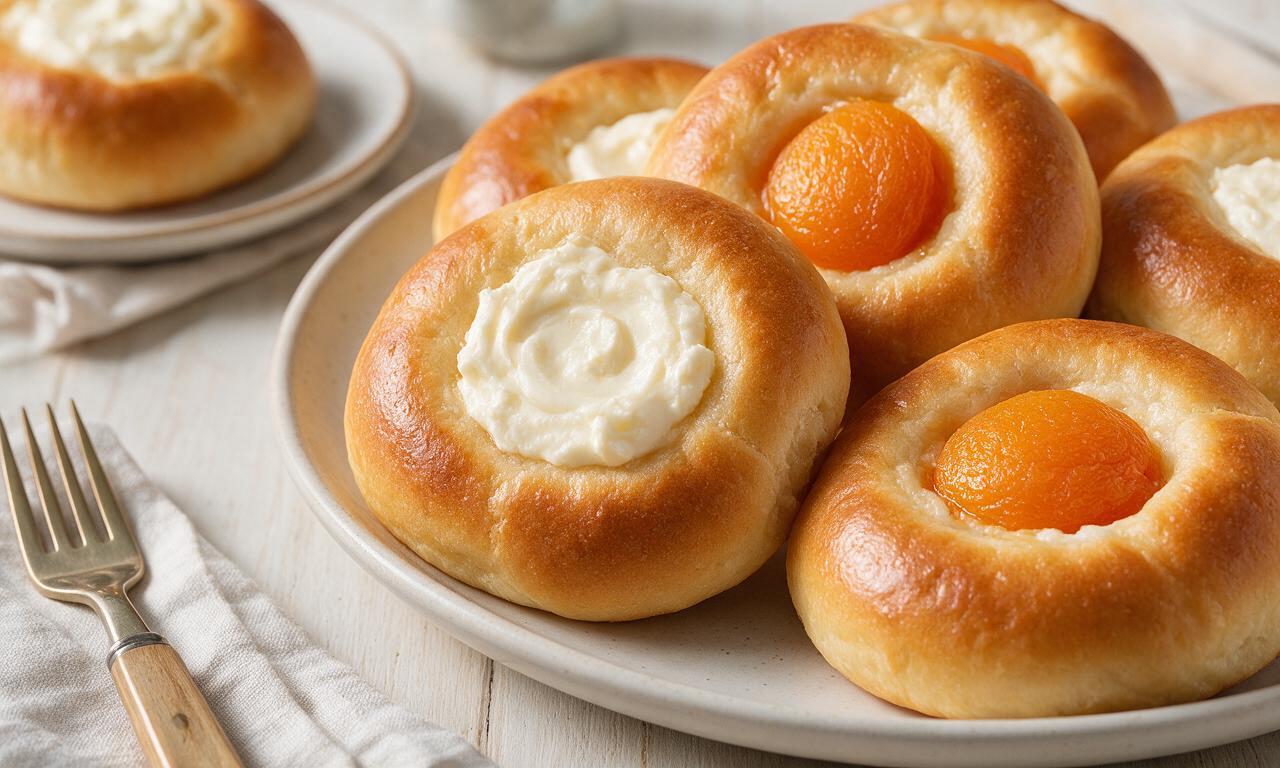
Kolaches

Kolaches
⏱️ cook time 2 hours 30 minutes
🍽️ servings 12
⚡ Difficulty medium

intro

Soft, pillowy yeast pastries filled with sweet cream cheese and apricot, a beloved Czech-Texan baked staple with warm, nostalgic, shareable flavor.

Ingredients

All-purpose flour 500 grams (approx 4 1/4 cups, divided for dough and streusel)
Active dry yeast 7 grams (1 standard packet / 2 1/4 teaspoons)
Whole milk 180 ml (3/4 cup, warmed to 43°C/110°F)
Granulated sugar 75 grams (1/3 cup, divided for dough and streusel)
Unsalted butter 100 grams (approx 7 tablespoons, divided for dough, streusel, and finishing)
Large eggs 2, room temperature, lightly beaten
Fine table salt 5 grams (1 teaspoon)
Full-fat block cream cheese 113 grams (4 oz / 1/2 standard block, softened)
Powdered sugar 15 grams (2 tablespoons)
Lemon zest 1/2 teaspoon (from 1/2 small lemon)
Pure vanilla extract 2.5 ml (1/2 teaspoon)
Thick apricot preserves 120 grams (1/2 cup)
Neutral canola oil 5 ml (1 teaspoon), for greasing

Steps

1

Activate the yeast

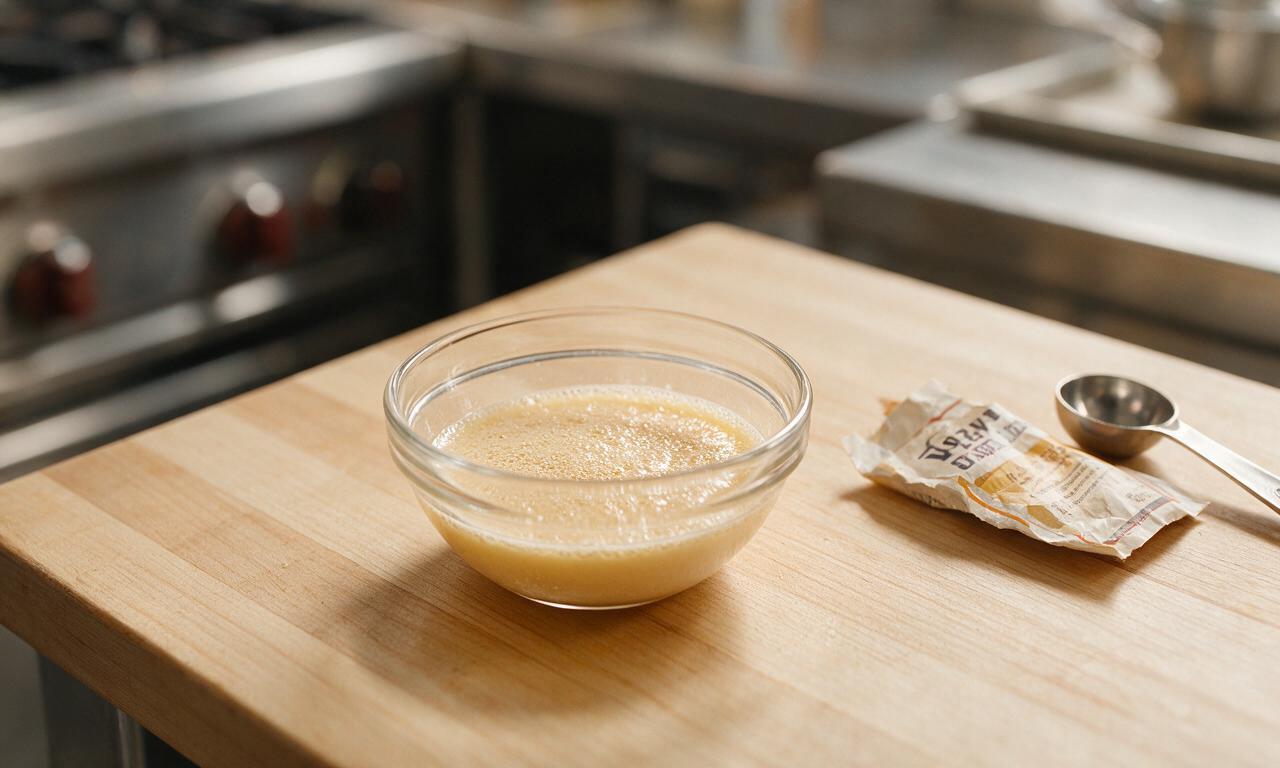
In a small bowl, combine warmed 180ml whole milk (heated to exactly 43°C/110°F, no hotter to avoid killing yeast), 1 teaspoon of the measured granulated sugar, and the 7g packet of active dry yeast. Stir gently once to combine, then let rest for 5-7 minutes in a warm, draft-free spot until the mixture forms a foamy, bubbly layer and smells distinctly of bready yeast. If no foam forms after 7 minutes, your yeast is expired and you will need to replace it before proceeding.
Step 1
step1:Activate the yeast
2

Mix and knead dough

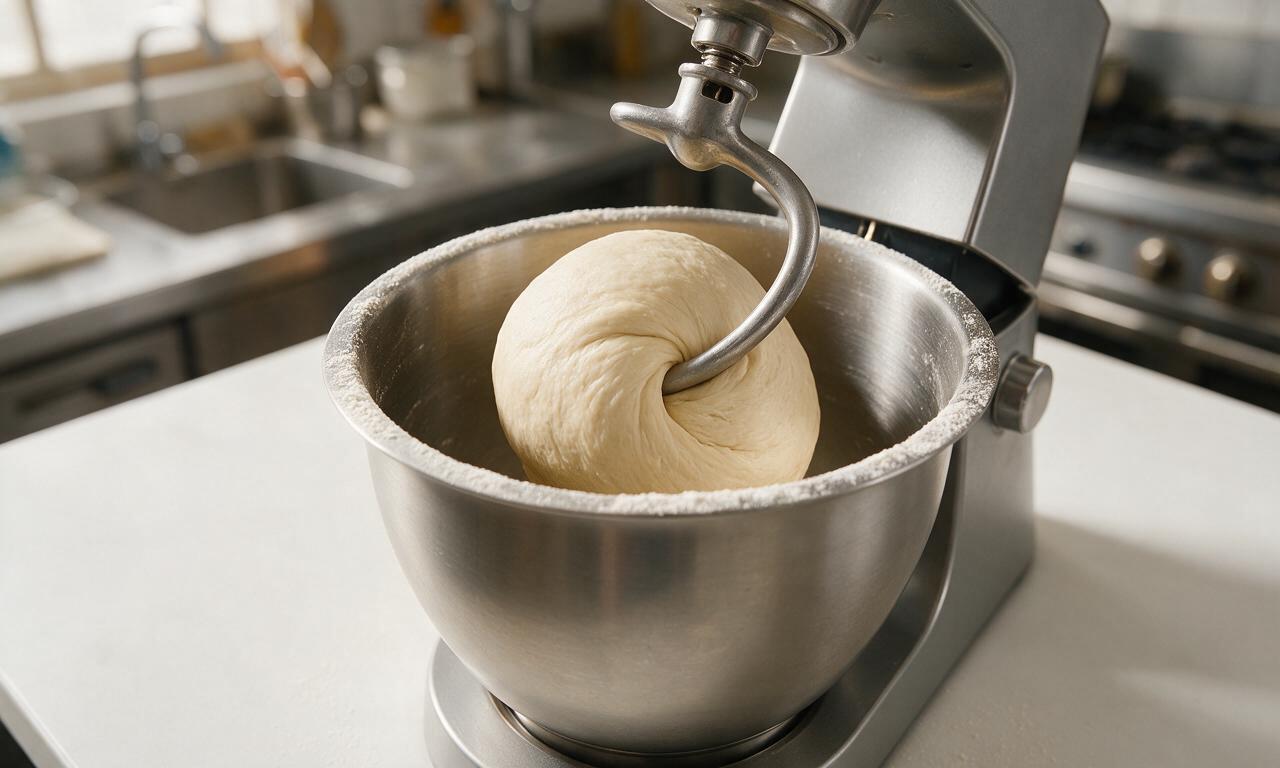
In the bowl of a stand mixer fitted with a dough hook attachment, combine 480g of the all-purpose flour, remaining granulated sugar (minus 2 tablespoons reserved for streusel), 5g fine salt, cooled melted 57g unsalted butter, lightly beaten room-temperature eggs, and the fully activated yeast mixture. Mix on low speed (setting 2 on most household stand mixers) for 8 full minutes, until the dough pulls cleanly away from the bowl sides and forms a smooth, soft, slightly tacky ball. If mixing by hand, turn the shaggy dough onto a lightly floured work surface and knead for 12-14 minutes until the same smooth, elastic texture is achieved.
Step 2
step2:Mix and knead dough
3

Let dough rise

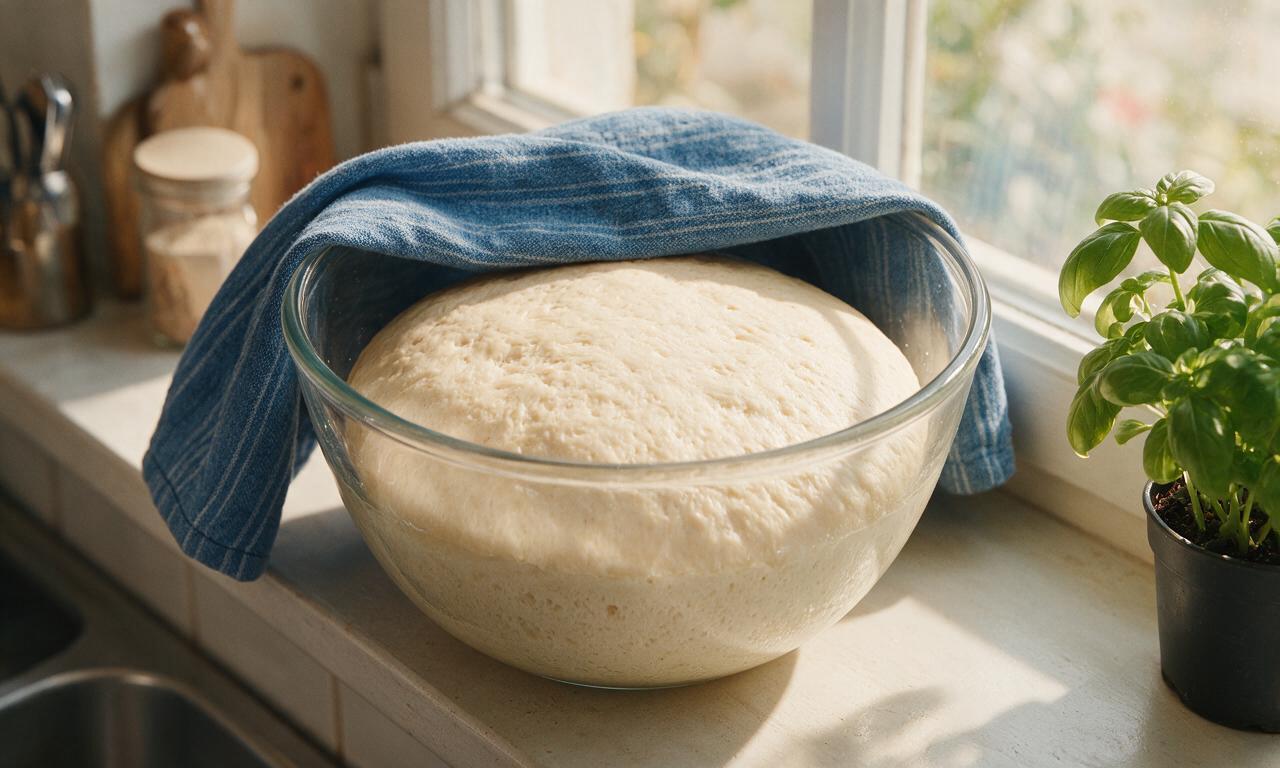
Grease a large clean mixing bowl with 1 teaspoon of neutral canola oil, place the kneaded dough ball inside, and turn it once to coat its entire surface lightly in oil to prevent drying. Cover the bowl tightly with plastic wrap or a damp linen kitchen towel, and set it in a warm (24-27°C/75-80°F), draft-free spot for 60 minutes, until the dough has fully doubled in size. Test for doneness by poking the dough with a floured finger: the indent should slowly rebound halfway, not spring back immediately or deflate completely.
Step 3
step3:Let dough rise
4

Prep fillings and streusel

While the dough completes its first rise, prepare the fillings and crumb topping. Make the cream cheese filling by beating softened 113g block cream cheese, 15g powdered sugar, 1/2 teaspoon lemon zest, and 2.5ml vanilla extract in a small bowl with a spoon or hand mixer until completely smooth, with no visible lumps. Make the traditional posipka streusel topping by combining the remaining 20g all-purpose flour, 2 tablespoons reserved granulated sugar, and 14g cold cubed unsalted butter in a small bowl, pinching with your fingertips until the mixture forms coarse, pea-sized buttery crumbs. Scoop the 120g thick apricot preserves into a third small bowl for easy filling.
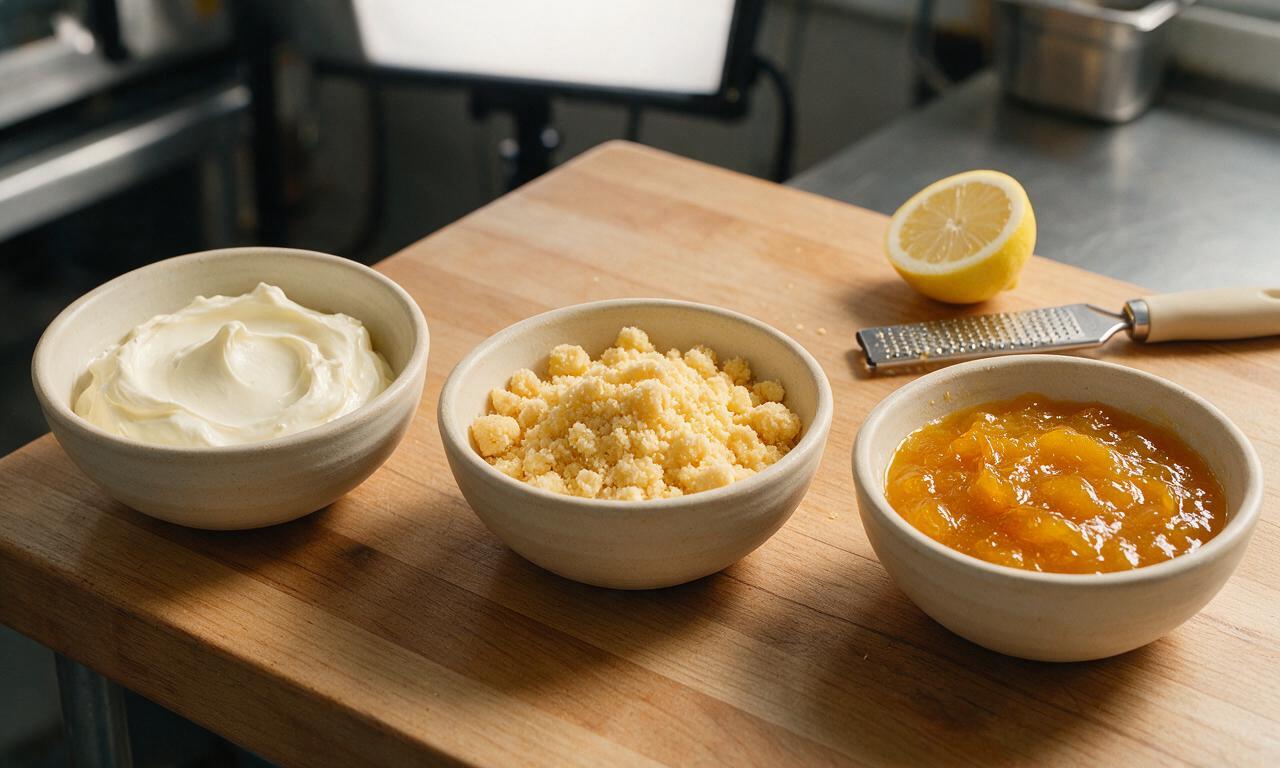
Step 4
step4:Prep fillings and streusel
5

Shape and fill kolaches

Once the dough has doubled, punch it firmly in the center to release all trapped air, then turn it out onto a lightly floured work surface. Divide the dough into 12 equal 70g pieces, rolling each piece into a tight, smooth ball by tucking the edges under. Place the dough balls 5cm (2 inches) apart on two parchment paper-lined baking sheets, then cover loosely with oiled plastic wrap and let rest for 15 minutes to relax the gluten. After resting, use the floured bottom of a 1/4-cup dry measuring cup to press a deep, wide indentation in the center of each dough ball, leaving a 1cm (1/2 inch) raised dough border around the edge. Fill half the indentations with 1 tablespoon (approx 20g) of cream cheese filling, and half with 1 tablespoon (approx 20g) of apricot preserves, then sprinkle 1 teaspoon of streusel topping evenly over each filled kolache.
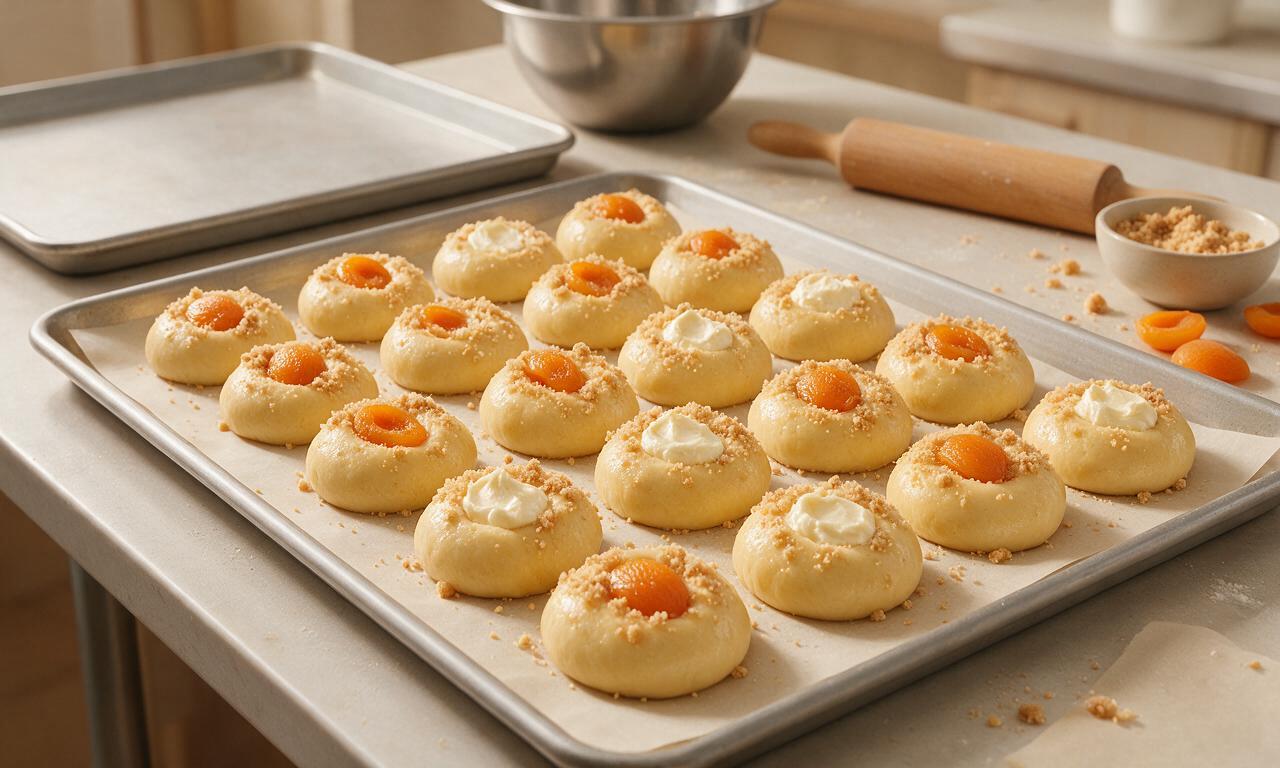
Step 5
step5:Shape and fill kolaches
6

Bake the kolaches

Cover the filled kolaches loosely with oiled plastic wrap again, and let them rise for 25-30 minutes in the same warm, draft-free spot, until the dough borders look puffy and jiggle slightly when the baking sheet is gently shaken. While the kolaches rise, preheat your oven to 190°C (375°F) with racks positioned in the upper and lower thirds. Once risen, remove the plastic wrap and bake the kolaches for 12-15 minutes, rotating the baking sheets from top to bottom and front to back at the 7-minute mark, until the pastry edges are light golden brown and the fillings are just set. Avoid overbaking, as this will result in dry, tough dough.
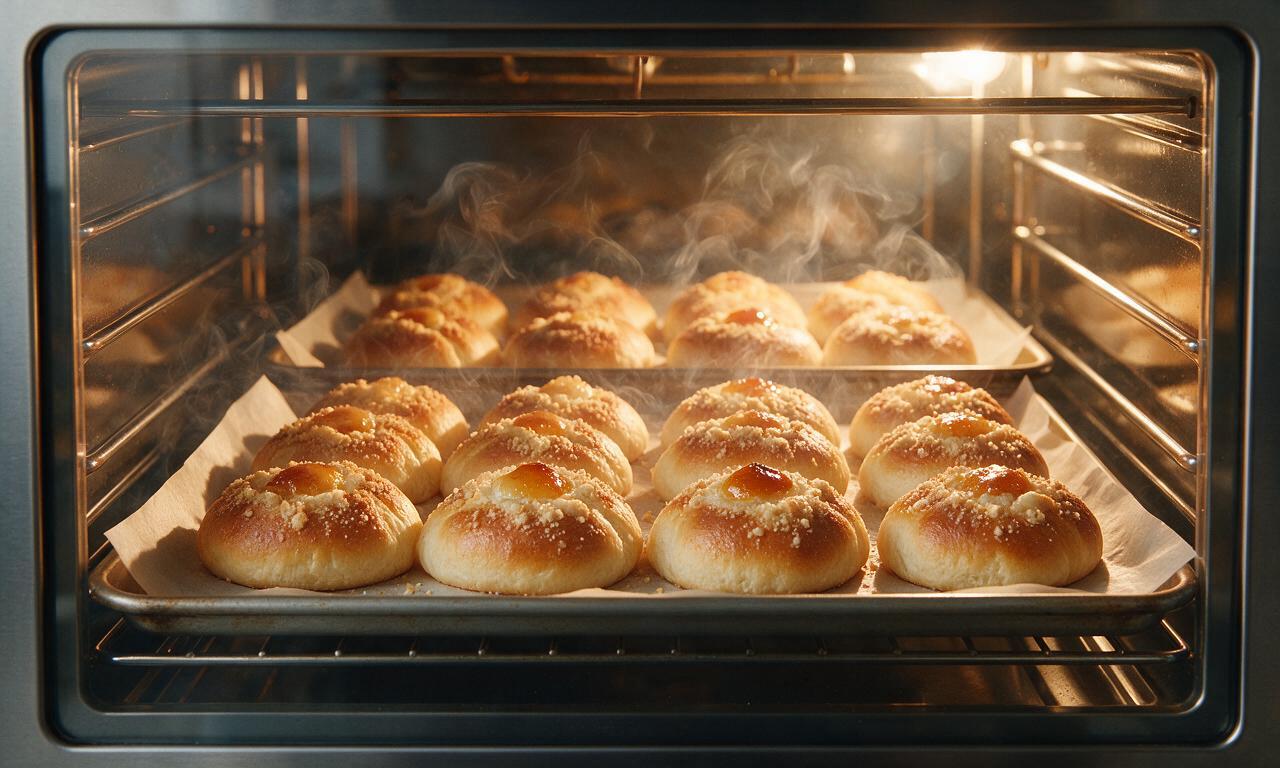
Step 6
step6:Bake the kolaches
7

Finish and cool pastries

Remove the baked kolaches from the oven, and immediately brush the warm dough borders with the remaining 29g melted unsalted butter to create a soft, glossy finish and keep the crust tender. Let the kolaches rest on the hot baking sheets for 10 minutes to set, then transfer them to a wire cooling rack to cool for an additional 10 minutes before serving. Kolaches are best enjoyed warm, on the same day they are baked.
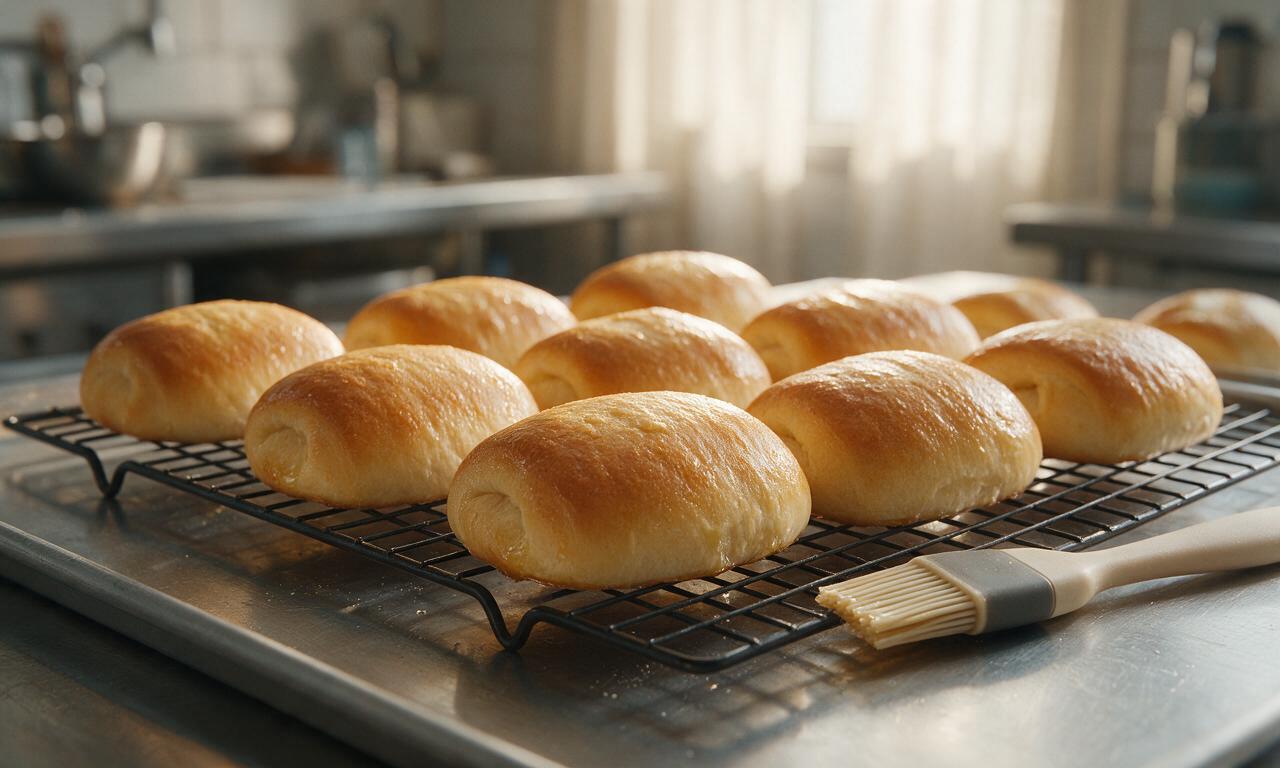
Step 7
step7:Finish and cool pastries

Tips

1.Always test your milk temperature before adding yeast: liquid hotter than 46°C/115°F will kill the live yeast, preventing your dough from rising properly.
2.Use thick, low-moisture preserves or fruit filling for kolaches; thin, syrupy preserves will leak out of the pastry centers and burn onto the baking sheet during baking.
3.If you do not have a warm draft-free spot for rising, place your covered dough bowl on the middle rack of a turned-off oven with the interior light on; this creates a consistent 24-27°C/75-80°F environment ideal for yeast growth.

✨ You May Also Like

Desserts & Baking
🍜 Italy

Creamy, coffee-kissed classic Northern Italian no-bake dessert, with layers of rum-spiked mascarpone cream, soft ladyfingers, and a rich cocoa dusting.

⏱️ 4 hours 3Desserts & Baking ★ 4.8
Desserts & Baking
🍜 France

Flaky, shatteringly crisp, buttery French croissants with golden exteriors and soft, airy layered interiors, perfect for pairing with coffee for a special morning treat.

⏱️ 12 hours Desserts & Baking ★ 4.7
Desserts & Baking
🍜 United States

Warm, spiced baked apples topped with a fluffy golden biscuit crust, this cozy dessert pairs perfectly with vanilla ice cream for cool-weather comfort.

⏱️ 55 minuteDesserts & Baking ★ 4.7
Desserts & Baking
🍜 United States

A star-spangled classic American blueberry pie with buttery flaky crust and bright sweet-tart filling, perfect for summer patriotic gatherings.

⏱️ 1 hour 25Desserts & Baking ★ 4.8
Desserts & Baking
🍜 United States

A beloved no-bake regional Maine candy with a chewy coconut-potato center coated in rich dark chocolate, a New England holiday staple since the 1870s.

⏱️ 2 hours 3Desserts & Baking ★ 4.9
Desserts & Baking
🍜 France

Luxuriously creamy, floral frozen custard made with aromatic Tahitian vanilla beans, boasting a smooth, rich texture that melts slowly on the tongue.

⏱️ 3 hours 3Desserts & Baking ★ 4.6

Kolaches:Frequently Asked Questions

1.What sets Czech-Texan kolaches apart from traditional Czech kolaches?
Traditional Czech kolaches often have a firmer, less sweet dough with a wide range of sweet and savory fillings. The Czech-Texan version, popularized by Central Texas immigrant communities, has an ultra-soft, pillowy, slightly sweeter enriched dough, most classically paired with cream cheese and apricot for that beloved small-town bakery flavor.
2.Can I use instant yeast instead of active dry yeast for this recipe?
Absolutely! Swap active dry yeast for instant yeast at a 3:4 ratio—so for every 1 teaspoon of active dry, use ¾ teaspoon instant. You won’t need to proof instant yeast in warm milk first; just mix it directly with your dry ingredients, cutting about 10 minutes off your first rise with no loss of soft, fluffy texture.
3.How warm should my milk be to activate yeast without killing it?
Aim for whole milk between 105°F and 110°F, which feels like a comfortably warm bath, not hot to the touch. This is the perfect temp to dissolve your granulated sugar and wake up active dry yeast without killing it; milk over 120°F will leave you with dense, flat pastries. If you don’t have a thermometer, test a drop on your inner wrist—it should feel neutral, not scalding.
4.Do I have to use whole milk, or can I substitute lower-fat milk?
Whole milk gives the dough its signature rich, tender crumb and subtle dairy sweetness that makes these kolaches so pillowy. You can use 2% milk in a pinch, but skip skim entirely—it makes drier, less flavorful pastries that stale fast. For a closer texture match, add 1 tablespoon melted butter per cup of 2% milk to boost the fat content.
5.How do I know when I’ve kneaded the kolache dough enough?
The all-purpose flour-based dough is ready when it pulls cleanly away from your mixing bowl sides, feels smooth and elastic (not sticky or lumpy), and passes the windowpane test: pinch a small piece, stretch it thin, and it holds a translucent membrane without tearing. This takes 6-8 minutes with a stand mixer, or 10-12 minutes kneading by hand.
6.How long should the first dough rise take, and what’s the best spot for it?
Let covered, greased dough rise for 1 to 1.5 hours, until it doubles in size. The ideal spot is a draft-free area around 75°F—like a turned-off oven with the light on, or a closed microwave next to a warm mug of water. Skip overly hot spots, which make dough rise too fast and develop a yeasty, off flavor.
7.Can I make the dough ahead to bake fresh kolaches the next morning?
Definitely! After kneading, place covered dough in the fridge for a slow, cold rise of 8 to 12 hours overnight. This cold ferment develops a deeper, buttery flavor and makes dough easier to shape. Take it out 30 minutes before shaping to take the chill off, then proceed with filling and the second rise as directed.
8.Why do my kolaches always spread flat instead of holding a round shape?
Flat, spread-out kolaches usually stem from one of two issues: either you skipped the full 30-minute second rise after shaping, so dough melts and spreads instead of springing up in the oven, or your oven temperature was too low. Always preheat your oven for 20 minutes, and let shaped dough puff fully before baking.
9.Can I use fillings other than cream cheese and apricot?
The classic cream cheese and apricot combo is iconic for a reason, but you can absolutely swap in other fillings! Try prune, poppy seed, lemon curd, or even savory jalapeño cheese for a fun Texas twist. Just make sure fillings are thick—runny fillings will bubble out and burn on your baking sheet mid-bake.
10.How do I keep filling from sinking into the dough as kolaches bake?
To prevent sunken fillings, press a deep, wide indentation into the center of each shaped dough round right after shaping, not just a shallow dimple. Let that indent hold its shape through the full second rise, and add your fillings right before sliding the tray in the oven, instead of adding them too early to dense, unrisen dough.
11.Should I brush kolaches with anything for that classic bakery finish?
For that authentic golden, soft top, brush the exposed dough edges with melted unsalted butter right before baking. As soon as you pull them out of the oven, brush the edges again with a little more melted butter, and add a light dusting of powdered sugar to filled centers if you want a touch of extra sweetness.
12.How do I store leftover kolaches to keep them soft?
Store fully cooled kolaches in an airtight container at room temperature for up to 3 days. Skip the fridge—cold, dry fridge air makes them go stale surprisingly fast. To refresh day-old kolaches, pop them in the microwave for 10 seconds, or warm them in a 300°F oven for 3 minutes to bring back that fresh-baked softness.
13.Can I freeze baked kolaches to enjoy later?
Absolutely! Let baked kolaches cool completely, then wrap each individually in plastic wrap and store in a freezer-safe bag for up to 3 months. Thaw them at room temperature for 1 to 2 hours, or warm them straight from the freezer in a 325°F oven for 8 to 10 minutes for a quick, nostalgic treat any time.
14.What’s the difference between kolaches and klobasneks?
A lot of Texas bakeries mix these up, but traditional Czech-Texan kolaches are the sweet, open-center, fruit or cream cheese-filled pastries this recipe makes. Klobasneks are the savory, fully wrapped sausage-stuffed pastries also popularized by Czech-Texan communities—they’re delicious, but they aren’t technically kolaches!
15.My dough didn’t rise at all—what went wrong, and can I fix it?
If your dough didn’t double after the first rise, your yeast was likely either expired, killed by too-hot milk, or left in a spot that was too cold to activate. You can’t revive dead yeast, so you’ll need to start over with fresh yeast. Always test yeast by letting it sit in warm milk with a pinch of sugar for 5 minutes—it will foam if active.
16.Can I make these kolaches without a stand mixer?
Of course! You don’t need fancy equipment to make great kolaches. Mix the dough with a wooden spoon until it forms a shaggy mass, then turn it out onto a lightly floured counter and knead by hand for 10 to 12 minutes, until smooth and passing the windowpane test. It takes a little extra elbow grease, but the soft, pillowy result is totally worth it.

Comments (4)

3 days ago

OMG, I grew up stopping at the little kolache shop on the way to my grandma’s house outside Houston and I swear these taste exactly like what I remember! I made the apricot and cream cheese filling for half and sausage jalapeño for the savory half, brought them to our neighborhood potluck last weekend and people were begging for the recipe. Total game changer, even my super picky 7 year old ate two for breakfast before school two days in a row. Only note is I had to let my dough rise a little longer than stated because my kitchen is pretty cold this time of year, but that’s an easy fix!

2 days ago

Wait did you use canned apricot filling or make your own? I tried making homemade apricot last time and it was way too runny, oozed everywhere when I baked them!

1 day ago

So glad these brought back those fond Texas memories for you! Great call on adjusting rise time for cooler kitchen temps — dough always rises best around 75°F, so a little extra time is totally normal when it’s chilly out. For the runny fillings, a quick tip is to toss fruit fillings with a teaspoon of cornstarch before adding them to the dough pockets to prevent oozing!

1 week ago

These are SO good, I made a big batch Sunday for weekday breakfasts for my partner and I and they held up perfectly all week in the fridge! I did the poppy seed and prune fillings like my Czech grandpa used to make, and the dough had that perfect soft, slightly sweet texture I was looking for. Knocked a star off only because the medium difficulty rating is no joke — I’m a pretty casual baker and I definitely fumbled the first dough ball when I was sealing the filling in, had a few leak out in the oven. Still tasted amazing though, will absolutely make again!

5 days ago

Thanks so much for giving these a try! The seal can definitely be tricky the first couple tries — pro tip is to make sure you pinch the edges extra tight and place the sealed side down on the baking sheet to prevent leaks as they rise and bake. So glad they worked out for your meal prep, those classic prune and poppy seed fillings are such a timeless pick!

2 days ago

Brought these to my office holiday party and they were the first thing gone off the dessert table! I did a mix of sweet cream cheese with blueberry and savory sausage and cheese, and even my coworkers who’d never heard of kolaches before were going back for thirds. 10/10, worth every minute of the 2.5 hour cook time, I will absolutely be adding this to my regular rotation for family dinners and get-togethers.

yesterday

First time ever making kolaches and I was pretty intimidated by the medium difficulty tag, but the steps were super easy to follow! I made the savory version with smoked sausage from a local Texas-style BBQ shop near me and sharp cheddar, and my whole crew devoured them after our morning hike. Anybody ever tried freezing these after baking? I want to make a double batch for our upcoming camping trip but don’t want them to go bad.

2 hours ago

I freeze mine all the time! Let them cool completely, throw them in a freezer bag with as much air squeezed out as possible, and they last up to 3 months. Just pop them in the microwave for 30 seconds or warm them in the oven when you’re ready to eat, they taste just as fresh as the day you baked them!