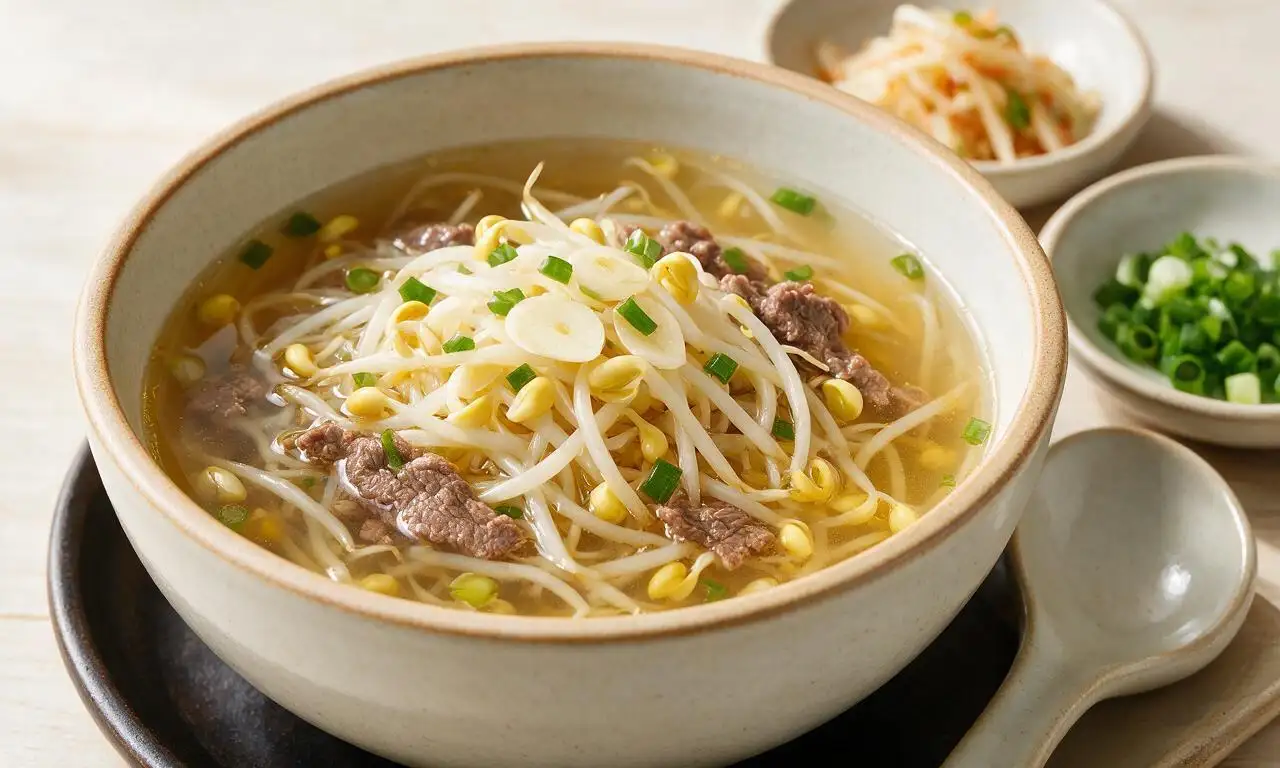
Kongnamul Guk

title 1
Kongnamul Guk
⏱️ cook time 25 minutes
🍽️ servings 4
⚡ Difficulty easy

intro

Light, savory, comforting Korean soybean sprout soup, a quick, nutrient-dense home-style staple perfect for fast, cozy, slurpable hot bowls.

Ingredients

Fresh soybean sprouts (kongnamul) 300 grams
Cold water 6 cups (1440 ml)
Dried gutted anchovies (heads removed) 8 pieces (15 grams)
Dried kelp (dashima) 1 5x5cm piece (10 grams)
Garlic 4 cloves (20 grams, finely minced)
Korean soup soy sauce (gukganjang) 2 tablespoons (30 ml)
Green onions 2 stalks (30 grams, 1cm slices)
Toasted sesame oil 1 teaspoon (5 ml)
Fine sea salt 1 teaspoon (5 grams, to taste)

Steps

1

Prep all base ingredients

First, rinse 300g fresh soybean sprouts 2-3 times under cold running water, discarding any mushy sprouts or loose seed hulls, then drain fully in a colander. Mince 20g peeled garlic, slice 30g green onions into 1cm pieces, and remove heads and dark innards from 15g dried anchovies to prevent bitter broth. Set all prepped items within easy reach of the stovetop; you can complete this prep while the broth heats to save time.
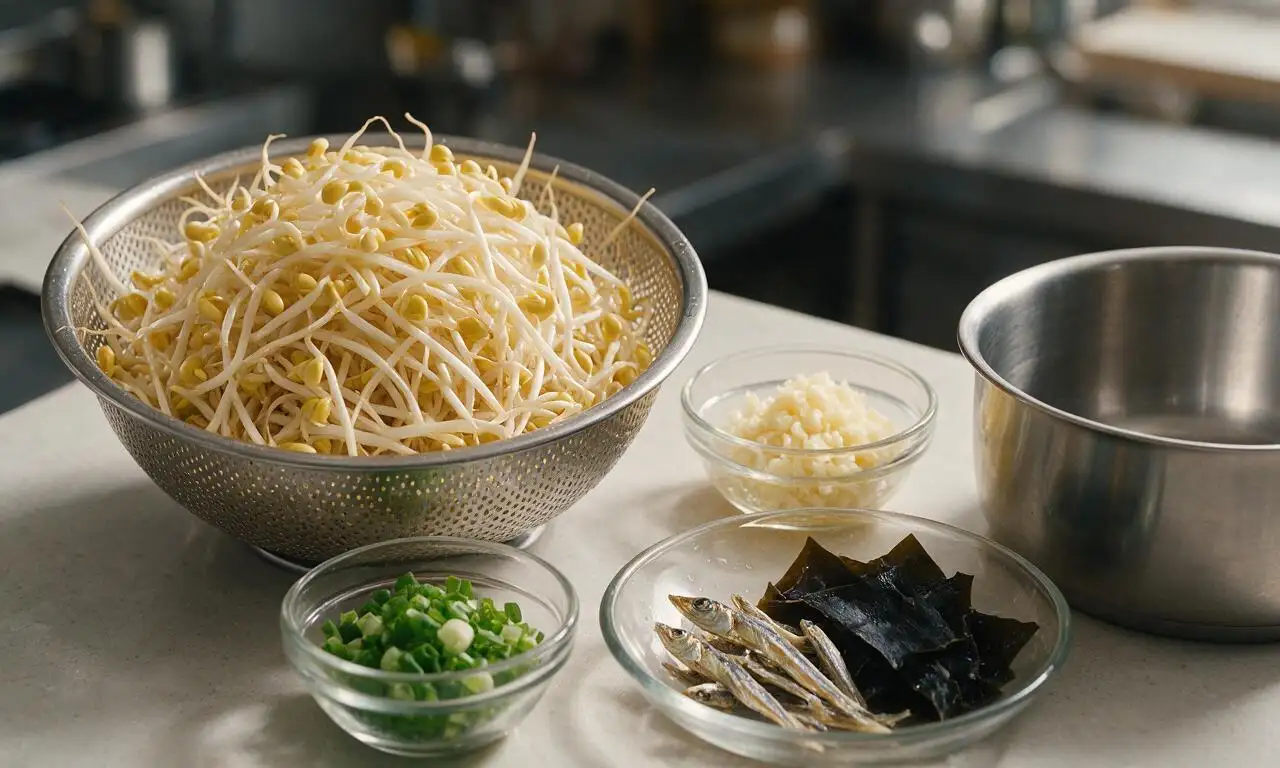
Step 1
step1:Prep all base ingredients
2

Simmer anchovy-kelp broth

Pour 1440ml (6 cups) cold water into a medium stock pot, add the prepared dried anchovies and 10g dried kelp. Place over medium-high heat until the water reaches a gentle rolling boil (about 5 minutes), then immediately use tongs to lift the kelp out of the pot to avoid bitter, slimy flavor. Reduce heat to medium-low and simmer the anchovies in the broth, uncovered, for 8 minutes. Do not fully cover the pot during this step, as trapped steam will lead to murky, off-tasting broth.

Step 2
step2:Simmer anchovy-kelp broth
3

Strain out broth solids

After 8 minutes of simmering the anchovies, use a slotted spoon to fish out all anchovies from the pot, leaving only clear, light golden broth behind. Discard the spent anchovies and earlier-removed kelp, or save them to make a weaker secondary broth for other dishes if desired. Keep the strained broth at a steady low simmer over medium-low heat.
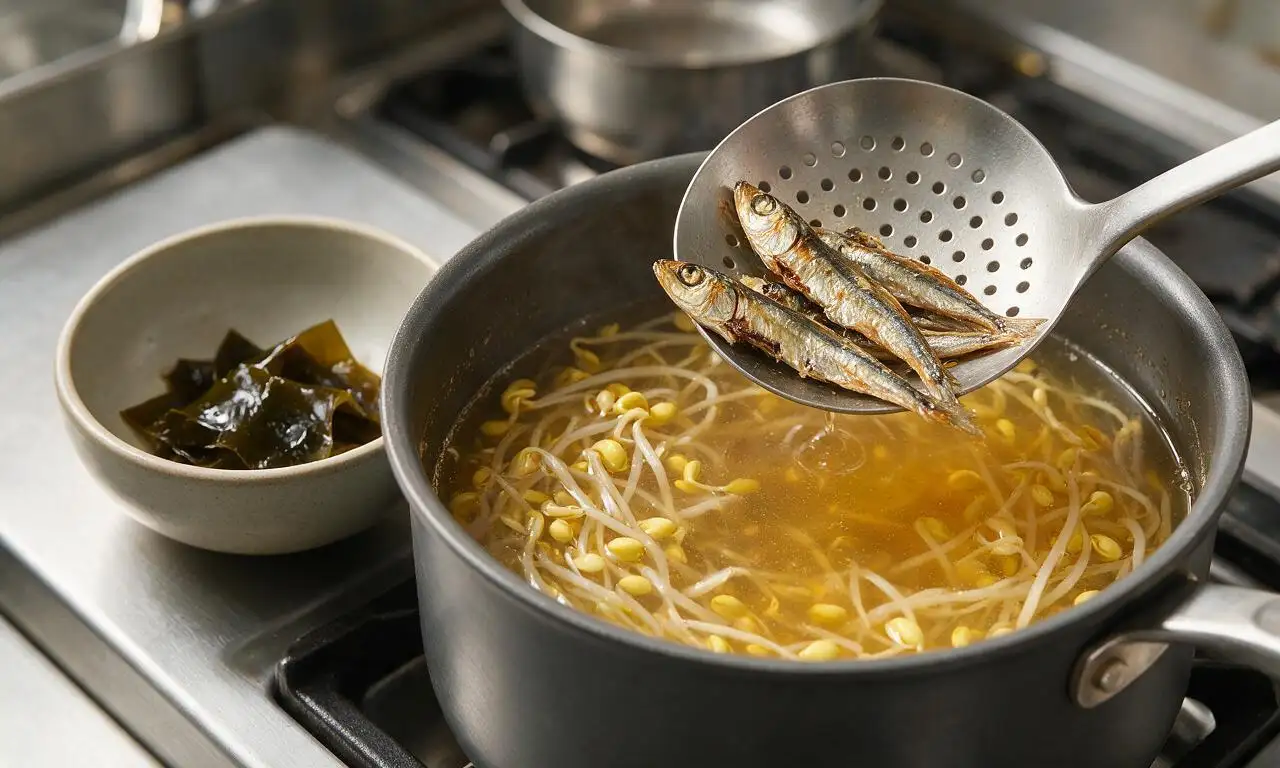
Step 3
step3:Strain out broth solids
4

Cook the soybean sprouts

Add the fully drained 300g soybean sprouts to the simmering broth, turn heat up to medium to bring the liquid back to a gentle boil (about 2 minutes), then seal the pot with a tight-fitting lid and cook for exactly 7 minutes. Do not lift the lid at any point during this cooking window, as releasing built-up steam will result in unevenly cooked sprouts with a raw, grassy beany flavor.

Step 4
step4:Cook the soybean sprouts
5

Season the hot soup

After 7 minutes of covered cooking, turn heat down to low, carefully lift the lid away from your face to avoid steam burns, and stir in 30ml (2 tbsp) Korean soup soy sauce, 20g minced garlic, and 5ml (1 tsp) toasted sesame oil. Stir gently to distribute seasonings evenly, then taste the broth and add up to 5g (1 tsp) fine sea salt as needed to adjust savoriness.
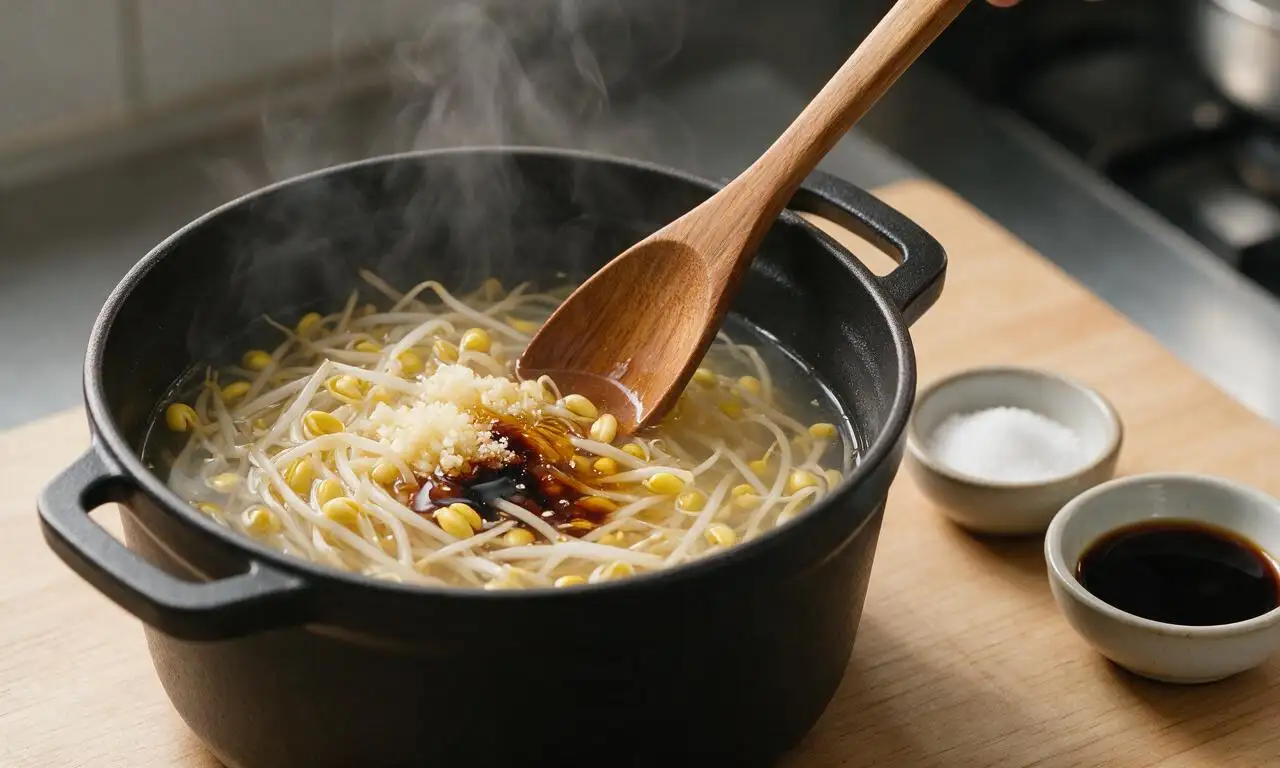
Step 5
step5:Season the hot soup
6

Garnish and serve

Stir 25g of the sliced green onions into the soup (reserving 5g for fresh topping), turn off the heat, cover the pot again, and let the soup rest for 2 minutes to allow the garlic and onion flavors to meld fully. Ladle the hot soup into warm individual bowls, top with the reserved fresh green onions, and serve immediately.

Step 6
step6:Garnish and serve

Tips

1.For a fully vegetarian or vegan version, swap the anchovy-kelp broth for 6 cups low-sodium vegetable broth, and add an extra 1 teaspoon of soy sauce to replace the lost seafood umami depth.
2.Resist the urge to lift the pot lid while sprouts cook for the initial 7 minutes—this classic Korean cooking rule prevents the unpleasant raw, grassy beany aftertaste common in poorly made kongnamul guk.
3.For a heartier meal, add 200g cubed soft silken tofu to the soup when you add the seasonings, letting it warm through for 1 minute before adding green onions; serve with steamed white rice for a complete, balanced meal.

✨ You May Also Like

Soups & Stews
🍜 Japan

Rich, umami-dense Hokkaido-style miso ramen with chewy noodles, savory fermented broth, and classic toppings, a cozy, deeply satisfying warm meal.

⏱️ 45 minuteSoups & Stews ★ 4.5
Soups & Stews
🍜 United States

A hearty, peppery tripe and root vegetable stew with colonial Philadelphia roots, thick, warming, and packed with bold savory flavor for cold winter days.

⏱️ 2 hours 3Soups & Stews ★ 4.6
Soups & Stews
🍜 Mexico

Hearty, warming red pork posole loaded with tender hominy, slow-simmered in a rich smoky chile broth, served with zesty fresh garnishes for a deeply comforting, satisfying meal.

⏱️ 2 hours 3Soups & Stews ★ 4.7
Soups & Stews
🍜 United States

Warm, soothing classic chicken noodle soup loaded with tender chicken, soft egg noodles, and savory veggies, perfect for chasing chills and feeding the whole family.

⏱️ 40 minuteSoups & Stews ★ 4.9
Soups & Stews
🍜 France

Deeply savory caramelized onion broth topped with crusty bread and bubbly melted Gruyère, a timeless French bistro comfort food ideal for cold days.

⏱️ 1 hour 25Soups & Stews ★ 4.8
Soups & Stews
🍜 United States

Hearty, briny Maryland crab soup loaded with sweet blue crab, tender summer vegetables, and zesty Old Bay, a beloved Chesapeake Bay coastal comfort staple.

⏱️ 55 minuteSoups & Stews ★ 4.9

Kongnamul Guk:Frequently Asked Questions

1.Do I have to remove the heads and guts from dried anchovies for this soup? ▾
Yes, this step is key for a clean, non-bitter broth. Anchovy heads and innards carry strong, harsh fishy notes that will make your soup taste murky instead of light and savory. If you’re crunched for time, pick up pre-gutted, headless dried anchovies from most Korean grocery stores to skip this prep step entirely.
2.How do I pick fresh soybean sprouts for the best kongnamul guk? ▾
Look for sprouts with crisp, bright white stems and plump, intact yellow heads, with no slimy spots or brown, mushy ends. Avoid bags with excess murky water or a sour, off smell when opened—those are past their prime and will turn your soup mushy and unpleasantly bitter instead of crisp and sweet.
3.Can I make this soup vegetarian or vegan? ▾
Absolutely! Swap the anchovy and kelp seafood broth for a low-sodium vegetable broth, or make a simple vegan umami base by simmering extra kelp, a small chunk of white radish, and a few dried shiitake mushrooms for 10 minutes before adding sprouts. Add a tiny pinch of light soy sauce or miso to round out savoriness if you want extra depth.
4.Why do some recipes insist on keeping the pot lid on when cooking the sprouts? ▾
This is a classic Korean home cooking tip! If you keep the pot covered the entire time the sprouts cook—from the moment they hit the heating water to the end of simmering—you avoid that distinct raw, grassy bean off-flavor that develops when sprouts are exposed to cool air mid-cook. Keep the lid on for clean, sweet sprout flavor with no harsh aftertaste.
5.How long should I simmer the soup to keep the sprouts crisp-tender? ▾
Once your anchovy-kelp broth comes to a rolling boil, fish out the kelp (it gets slimy and bitter if boiled too long), add your rinsed sprouts and minced garlic, then simmer covered for exactly 7 to 8 minutes over medium heat. Any longer and the sprouts will turn mushy and lose their fresh crunch; any shorter and they’ll taste raw and grassy.
6.Can I add extra ingredients to make this soup more filling? ▾
Of course! This is a flexible home-style staple. Common add-ins include thinly sliced beef brisket, soft tofu cubes, a cracked egg swirled in at the last minute, sliced green onion, or even a handful of chopped kimchi for a tangy twist. Cook denser add-ins like beef before adding sprouts to make sure everything cooks evenly.
7.How should I store leftover kongnamul guk? ▾
Let the soup cool completely to room temperature within 2 hours of cooking, then transfer it to an airtight container and refrigerate for up to 3 days. The sprouts will soften a bit as it sits, but the flavor will actually deepen overnight. Reheat gently on the stovetop over medium-low heat; long microwave bursts will turn sprouts mushy.
8.Why is my kelp making the broth slimy and bitter? ▾
That almost always means you boiled the kelp for too long! Dried kelp releases bitter, slimy alginate compounds if it sits in rapidly boiling water for more than 10 minutes total. For best results, add kelp to cold water, bring it just to a simmer, then fish it out right before the water hits a full rolling boil.
9.Do I need to wash soybean sprouts before cooking them? ▾
Definitely! Give them a good rinse in cold running water, and pick out any brown, mushy sprout husks or discolored stems as you go. You don’t need to soak them for a long time—just a quick 30-second rinse to wash away residual dirt or stray bean hulls that would make the broth cloudy or gritty. Drain well before adding to the pot.
10.What’s the best way to season this soup to taste? ▾
Start with a teaspoon of kosher salt after the sprouts finish cooking, then taste and adjust. Most home cooks skip heavy seasonings like gochujang to keep the flavor light, but you can add a splash of light soy sauce, pinch of black pepper, or tiny drizzle of sesame oil at the end. Add a pinch of gochugaru for a spicy kick if you’d like.
11.Can I use mung bean sprouts instead of soybean sprouts for this recipe? ▾
I don’t recommend it! Mung bean sprouts are much thinner, more delicate, and have a milder, watery flavor compared to hearty, nutty soybean sprouts. They’ll turn mushy in seconds when simmered and won’t give you that signature crisp, sweet bite that defines kongnamul guk. Stick to soybean sprouts for the most authentic result.
12.Is this soup really a good hangover cure like I’ve seen in K-dramas? ▾
It absolutely is! That’s one of its most popular everyday uses in Korean home cooking. The light, electrolyte-rich broth, easily digestible plant protein from the sprouts, and garlic’s anti-inflammatory compounds make it perfect for settling an upset stomach and rehydrating after a night out. Serve it with steamed rice for the best pick-me-up.

Comments (12)

2 hours ago

OMG this soup is SO good! I’ve been intimidated to make Korean food at home but this was so easy, 25 minutes total? No way. Made it for a quick weeknight dinner when I had a random bag of soybean sprouts in the fridge, my partner went back for seconds. Total game changer for busy weeknights.

30 minutes ago

So happy you loved it, Mia! That’s exactly why we love this recipe—super low effort, huge flavor, perfect for using up random veggie odds and ends. Pro tip: toss in a handful of chopped kimchi next time for an extra zing!

3 days ago

Added this to my weekly meal prep rotation! It’s light but filling, doesn’t get soggy in the fridge like some other soups do, and the flavor is so clean. I added a tiny bit of gochugaru at the end for a mild kick, 10/10. Great for work lunches all week.

2 days ago

Wait does it really hold up for 4 days in the fridge? I’ve been nervous to meal prep sprout-based stuff because I thought it’d get mushy!

1 week ago

My kids loved it!!! I was worried the mild anchovy broth would be too fishy for their picky palates but they ate every last drop, even asked if we could have it for dinner again tomorrow. Served it with a side of rice and those little frozen mandu we keep in the freezer, perfect easy family dinner.

5 days ago

Ugh my kids are so picky about any hint of fishy flavor too! I’ve been scared to try this recipe for that exact reason, your comment makes me want to whip it up for them tonight with mandu too.

3 days ago

That’s wonderful to hear! The anchovy broth is super mild when made correctly—if you remove the anchovy heads and black innards before steeping, there’s no harsh fishy aftertaste, just that warm, savory depth kids and adults both love. Serving it with mandu is such a great call!

5 days ago

Wait, quick question—can I make this vegetarian? My roommate doesn’t eat seafood so I usually skip the anchovy broth, but I don’t want to lose all that depth of flavor. Any swaps y’all recommend?

3 days ago

I swapped the anchovy broth for low-sodium vegetable broth and added a teaspoon of white miso paste to bump up the umami! Tasted incredible, didn’t miss the anchovy at all.

2 days ago

Great question! You can absolutely make this vegetarian—use vegetable broth or kelp broth instead of the anchovy broth, and a spoonful of doenjang or white miso works perfectly to add that rich umami depth without seafood. Let us know how it turns out!

1 week ago

Made this when I was super under the weather last week and it hit SO different. It’s warm, savory, not heavy at all, and it was so easy to throw together even when I could barely stand up. Way better than canned chicken noodle soup honestly.

5 days ago

So glad this helped you feel better! There’s something so comforting about a simple, warm bowl of kongnamul guk when you’re under the weather—we always keep a bag of sprouts in the fridge for exactly those days.

2 weeks ago

Brought this to a neighborhood potluck last weekend and people were asking me for the recipe left and right! I added some extra garlic and a sprinkle of sesame seeds on top like the recipe suggested, and it was such a hit. Even people who said they don’t like Korean food loved it.

1 week ago

Wait I was at that potluck!!! I had two bowls of that soup, it was so good I didn’t even think to ask who brought it. Small world!

5 days ago

That makes us so happy to hear! It’s such a crowd-pleaser because it’s mild but super flavorful, perfect for serving to people who might be trying Korean food for the first time. Great call adding extra garlic!

2 days ago

Made this after a long morning hike last weekend and it was the perfect post-hike meal. Light, hydrating, salty enough to replace electrolytes, packed with protein from the sprouts, and it came together so fast when I got home tired and ravenous. Will be making this all summer after outdoor workouts.

30 minutes ago

Wait, I messed up and overcooked the sprouts the first time I made this—they got all mushy, oops. Any tips for getting that perfect crisp-tender texture? I want to try again tomorrow because the broth flavor was so good even when I messed up the sprouts.

5 minutes ago

Don’t boil the sprouts for too long! I throw them in once the broth is rolling, set a timer for 4 minutes, then turn the heat off and add the garlic and scallions. They come out perfect crisp-tender every time, no mush!

yesterday

I love that this is so budget-friendly! A big bag of soybean sprouts is like $1.50 at my local Asian market, the rest of the ingredients are pantry staples, and it makes enough for 4 servings. Feeding my family of 4 for under $5 total? Unbeatable right now with grocery prices so high.

2 hours ago

Right?! I’ve been making this once a week since I found the recipe, cut my weekly grocery bill by almost $20 because I don’t order takeout on busy nights anymore.

30 minutes ago

We love that too! It’s one of the most affordable, nourishing meals you can make, and you don’t need any fancy specialty ingredients to pull it off. So glad it’s helping you save on groceries!

5 days ago

Grew up eating my halmeoni’s kongnamul guk and this recipe tastes exactly like it! I was worried it wouldn’t hit that nostalgic note but the ratio of garlic to sesame oil to soy sauce is spot on. Made me feel like I was a kid sitting at her kitchen table again. 10/10, no notes.

2 days ago

This is great as a base! I added a spoonful of gochujang, some sliced tofu, and a handful of chopped zucchini to bulk it up for dinner last night, and it was chef’s kiss. The simple broth takes add-ins so well, I feel like I can make a different version every week.

yesterday

Love those add-ins! This recipe is super customizable—tofu, zucchini, gochujang, even a handful of clams or leftover cooked beef work beautifully to bulk it up, and the base broth holds up to all of it. Great call!

just now

Made this in my dorm room with a tiny electric hot pot and it came out perfect! No fancy equipment needed, super minimal cleanup, and it’s way healthier than the instant noodles I’ve been surviving on all semester. Saved my wallet and my diet, fr.